GameOn!: A Constructionist Serious Game for Environmental Education and Citizen Science Engagement in Primary Schools


Abstract
1. Introduction
2. Related Work
2.1. Games and Education
2.1.1. Serious Games
2.1.2. Minecraft Education Edition
2.2. Active Citizenship in Education
3. Theoretical Framework
3.1. Game-Based Learning
3.2. Constructionism
3.3. Make-Centred Learning
3.4. Flow
3.5. Citizen Science
4. Project Aims and Objectives
Co-Design, Development and Test-Events
5. Methodology
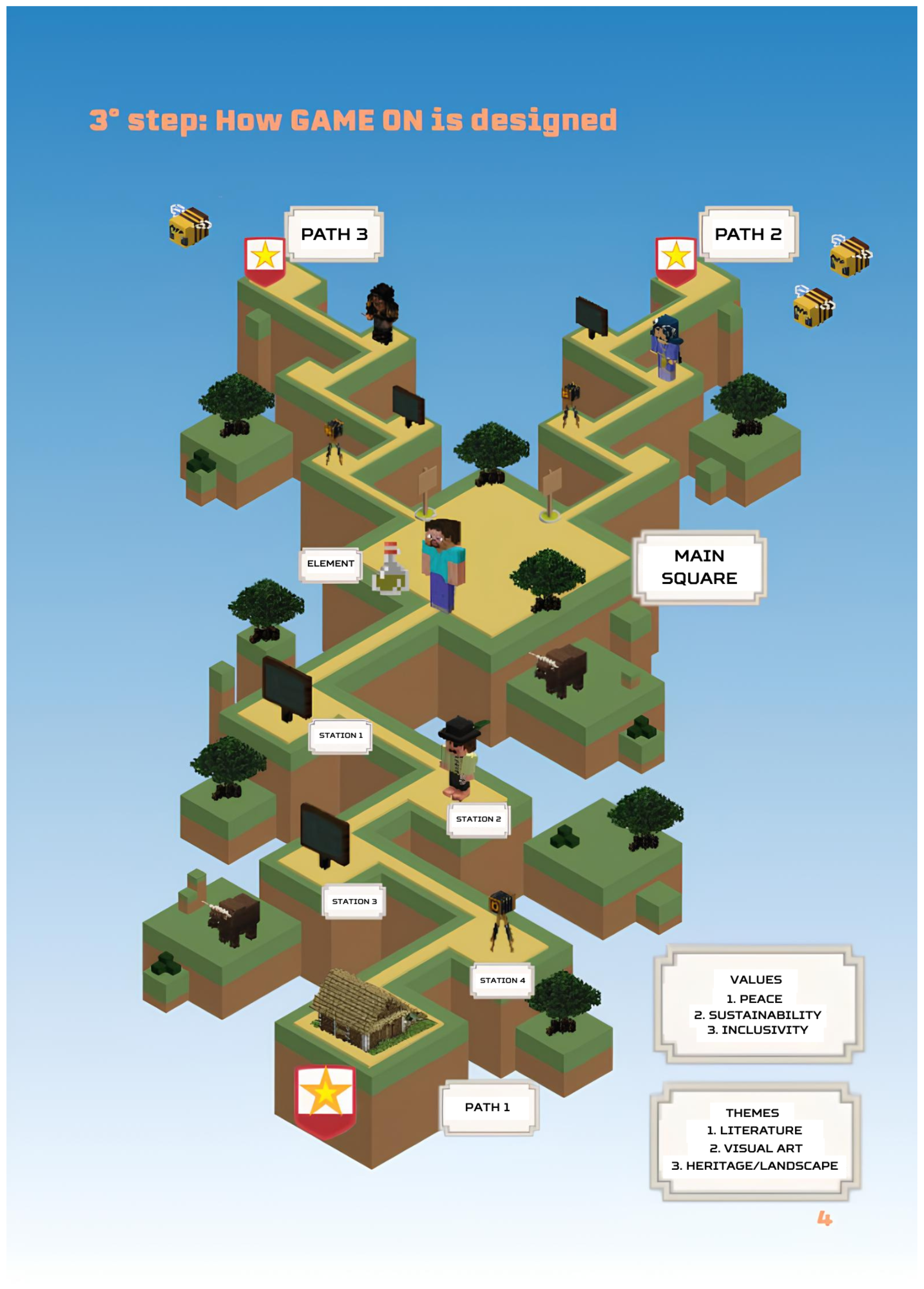
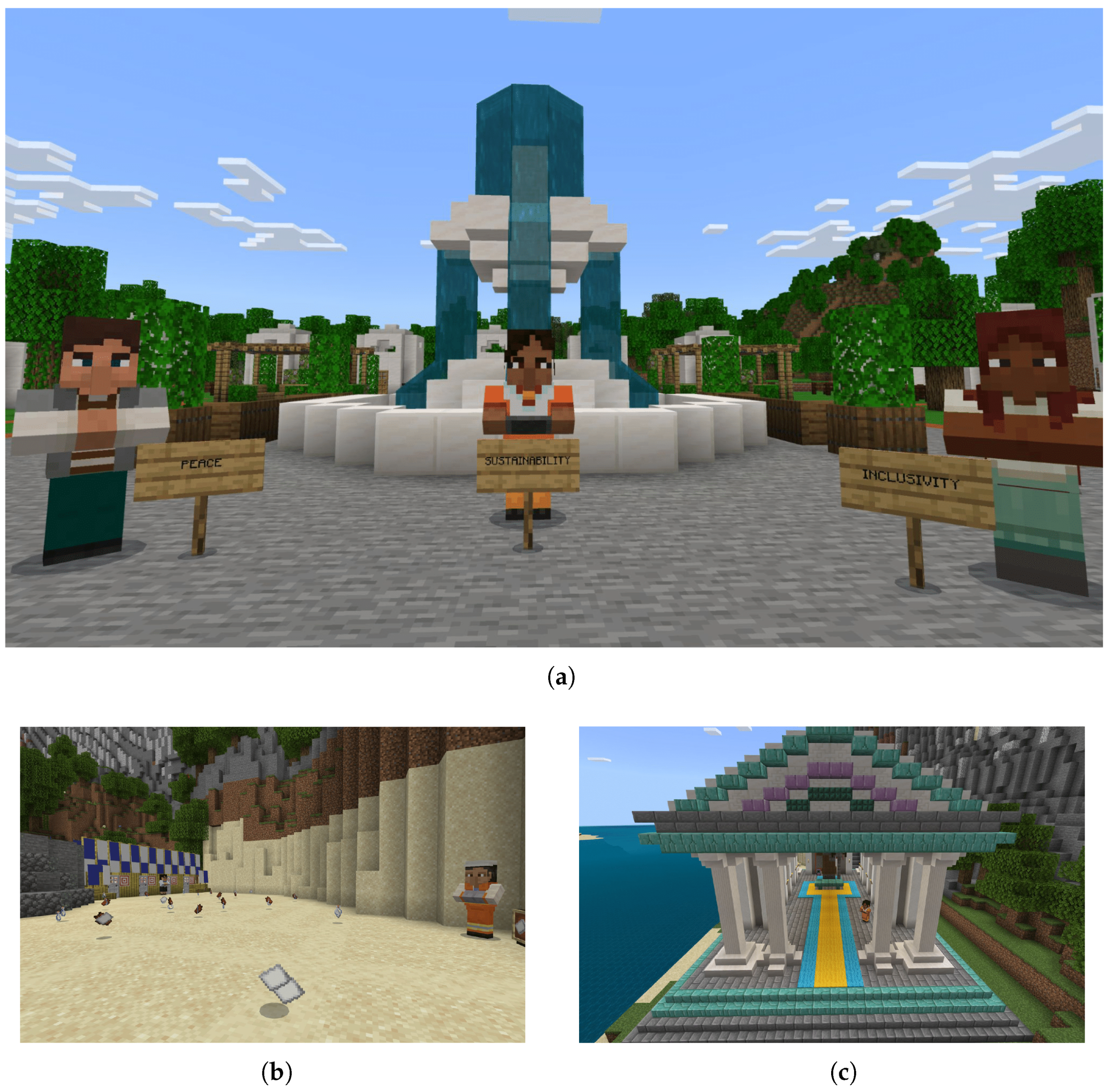
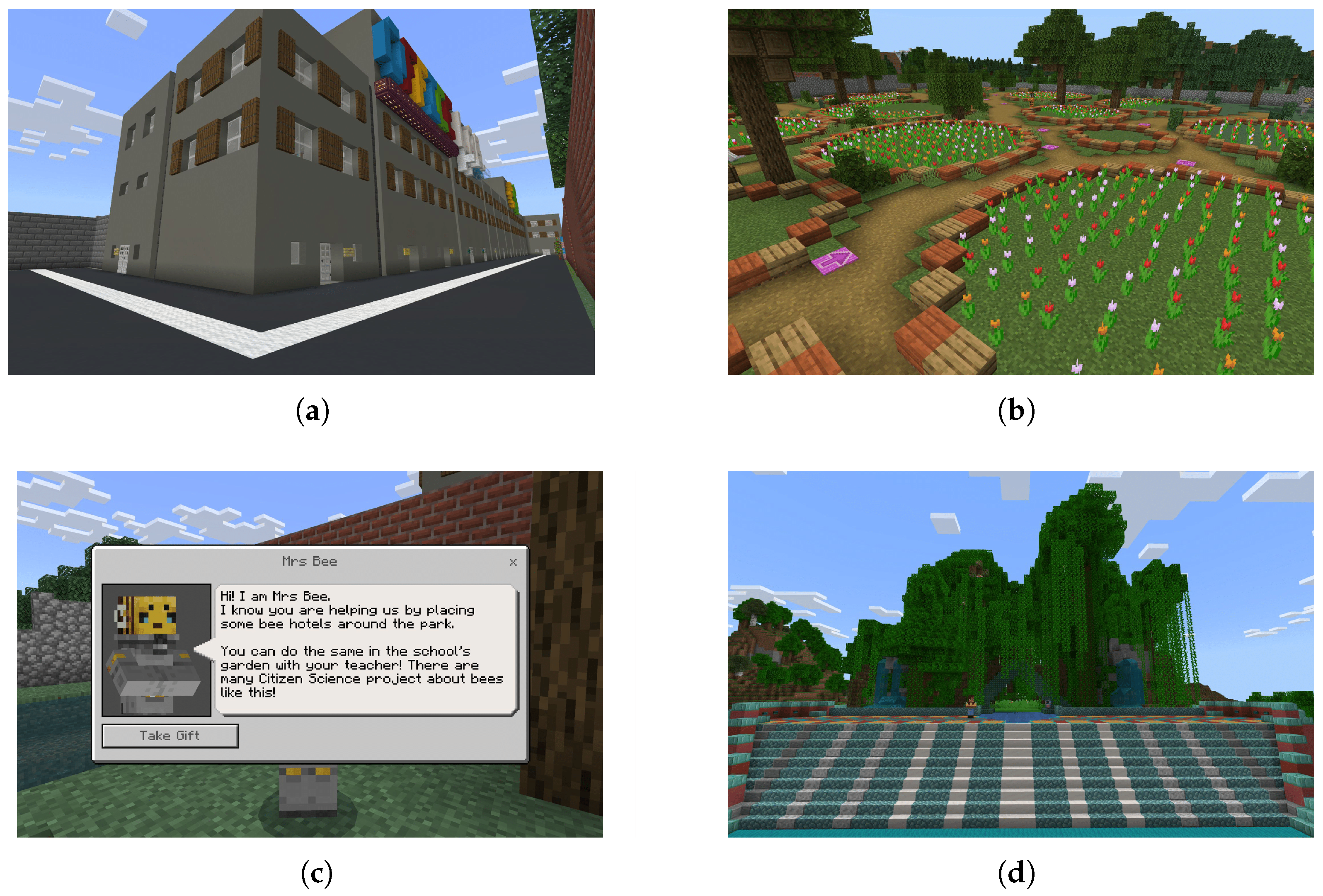
5.1. Description of the GameOn! World and Educational Activities
5.2. Test Event Method
5.2.1. Demographics of Participants
5.2.2. Playtest Sessions
5.3. Data Analysis
5.3.1. Quantitative Data
5.3.2. Qualitative Data
- Comprehension of gameplay mechanics;
- Task engagement and persistence;
- Interaction with peers;
- Responsiveness to guidance and scaffolding.
6. Results
6.1. Questionnaires Results
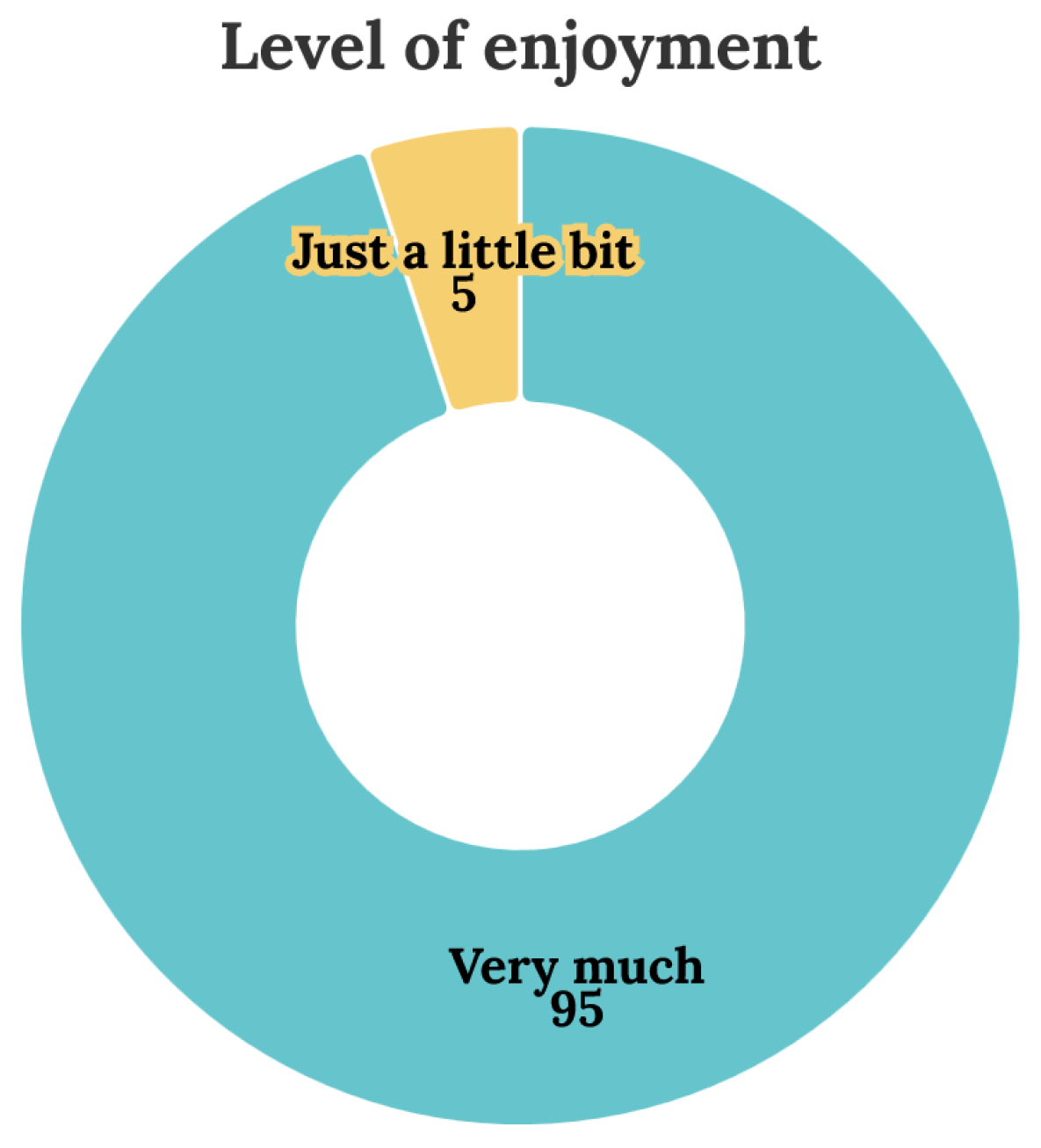
6.1.1. Enjoyment
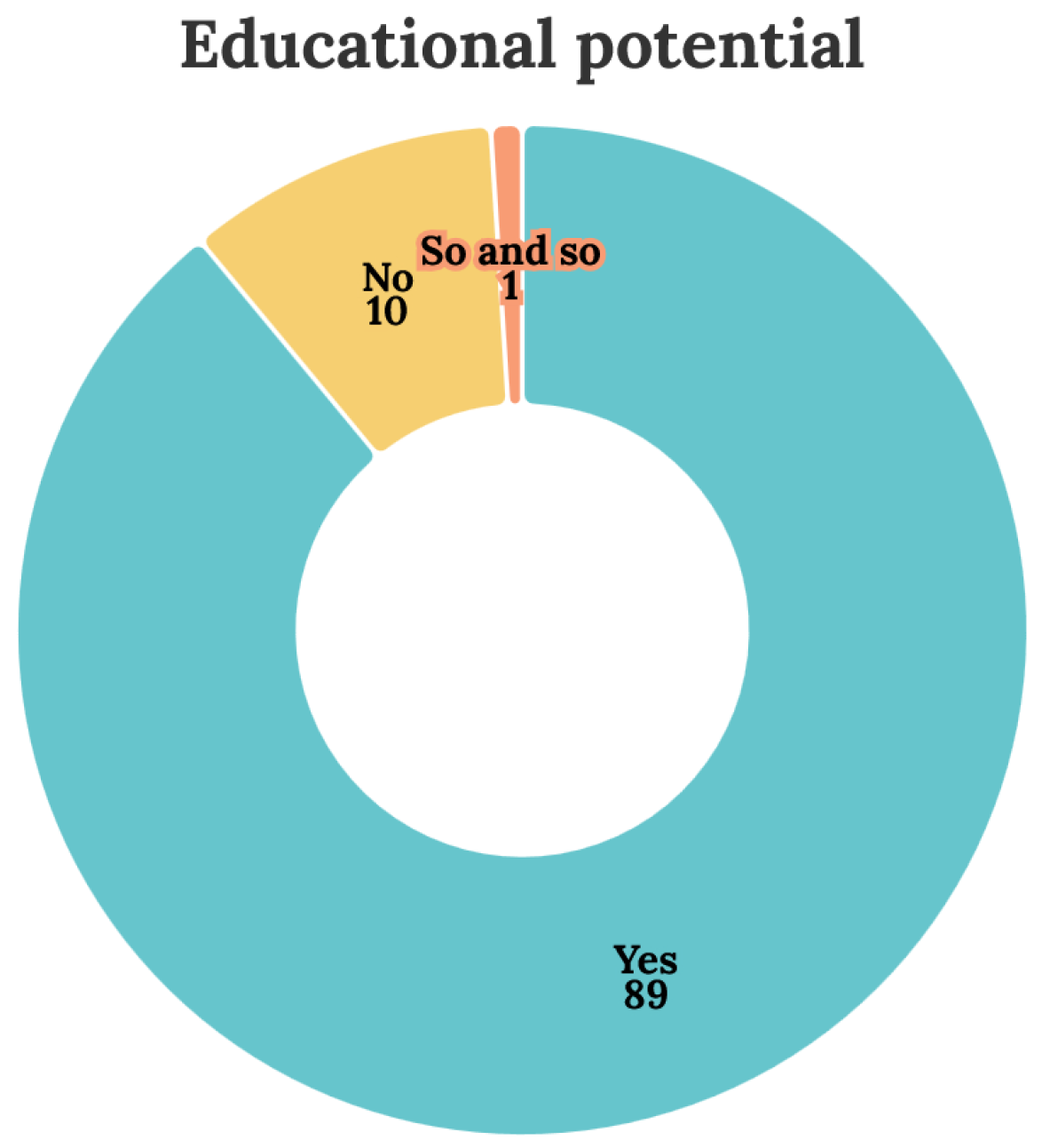
6.1.2. Learning
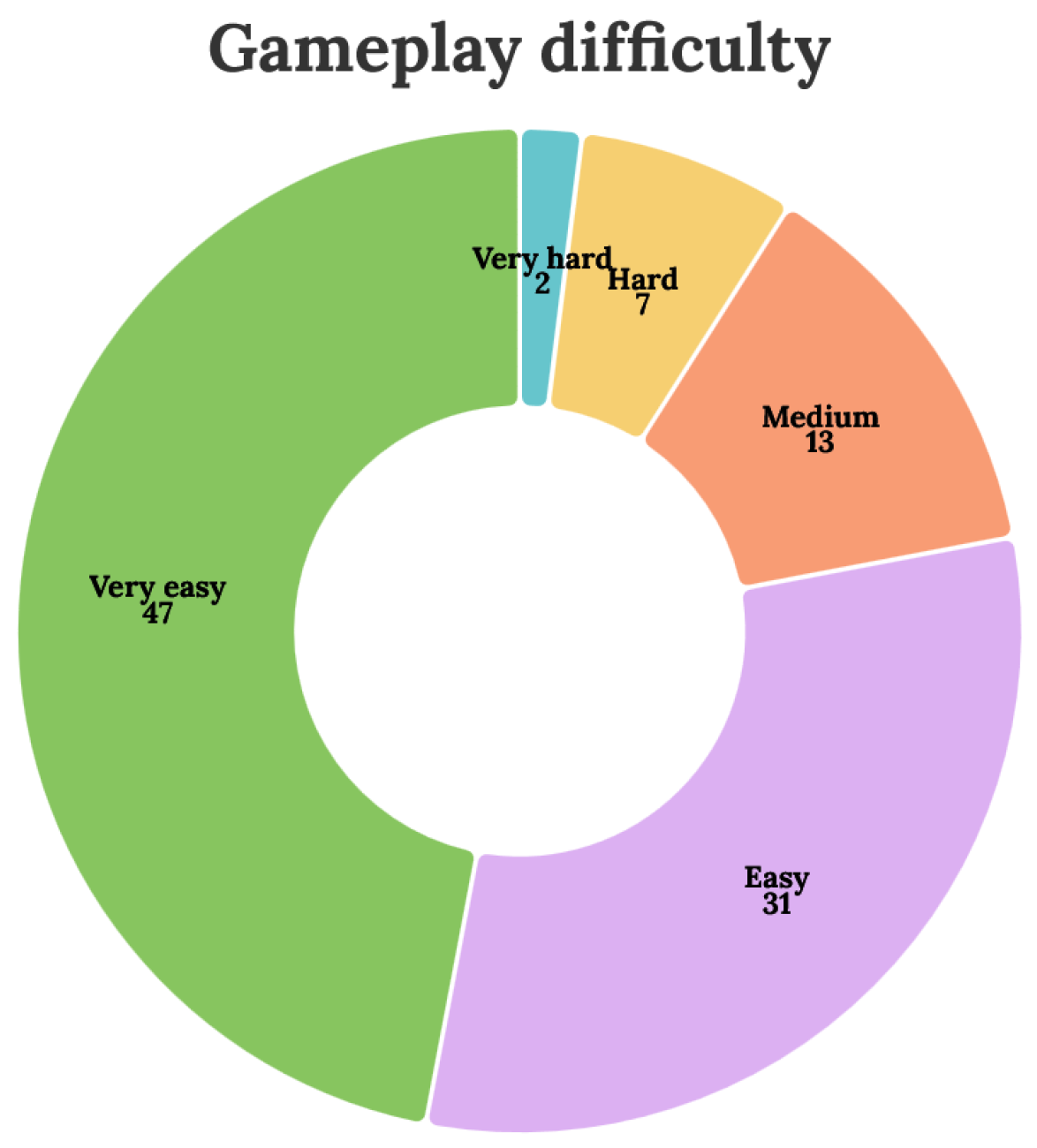
6.1.3. Difficulty
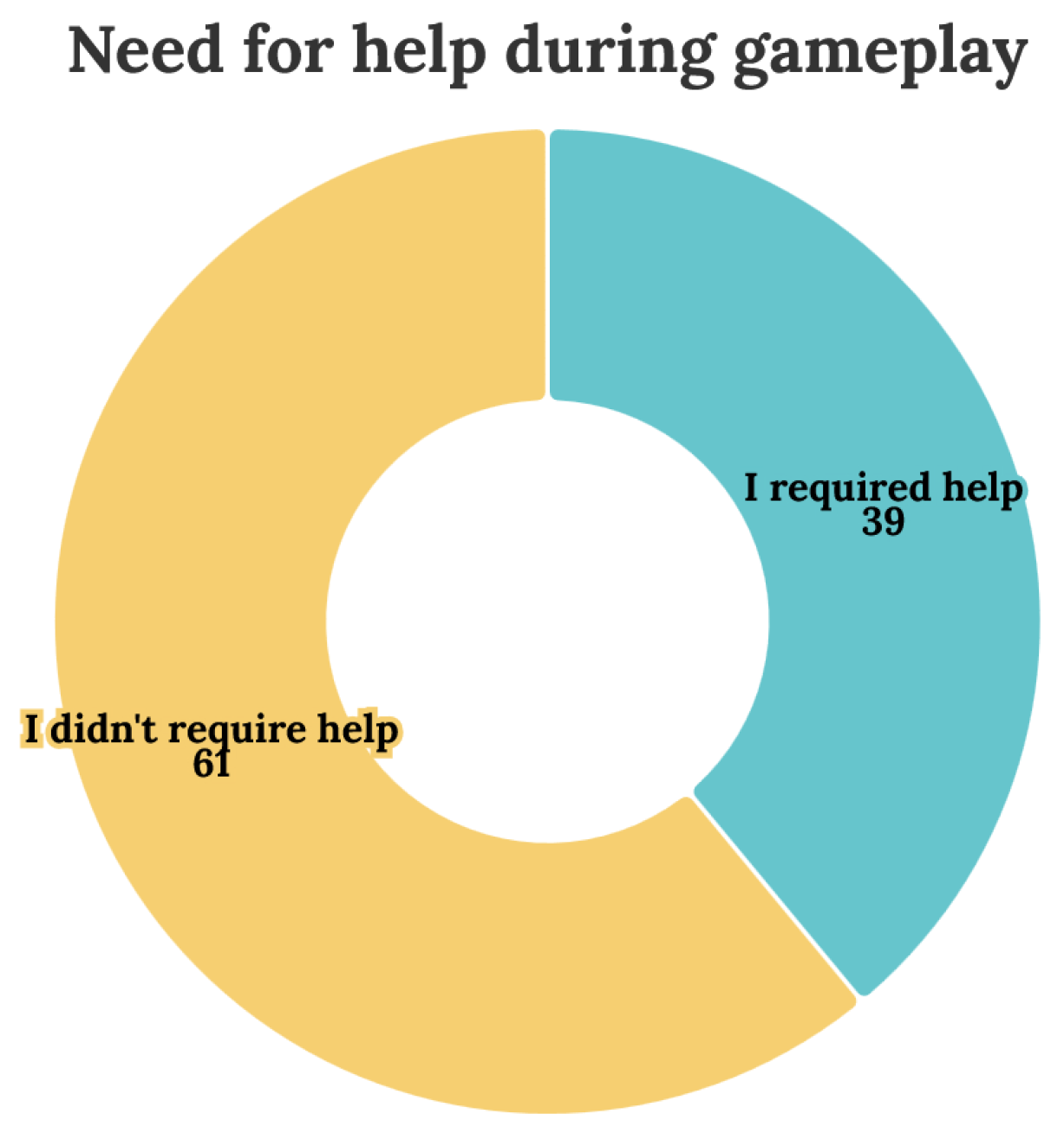
6.1.4. Assistance During Gameplay
6.1.5. Age and Nationality
6.2. Observations During the Test Event
6.2.1. Familiarity with MEE
6.2.2. Engagement & Adaptation
6.2.3. Facilitation Effects
6.2.4. Teacher Feedback
6.2.5. School and Age Differences
7. Discussion
7.1. Engagement and Flow in Game-Based Sustainability Learning
7.2. Extending Game-Based Learning Through Citizen Science
7.3. From In-Game Experience to Real-World Reflection
7.4. Learning Outcomes and Guided Play
7.5. Age and Nationality Effects on Gameplay Experience
7.6. Usability Challenges and Design Implications
7.7. Positioning GameOn! Within Digital Pedagogy and Participatory Gaming
7.8. Delivery
7.9. Limitations
8. Conclusions and Future Work
Author Contributions
Funding
Institutional Review Board Statement
Informed Consent Statement
Data Availability Statement
Acknowledgments
Conflicts of Interest
Abbreviations
| MEE | Minecraft Education Edition |
| CS | Citizen Science |
| SDG | Sustainable Development Goal |
| ELT | Experiential Learning Theory |
Appendix A. Survey
- 1.
- How much did you enjoy playing?Very much/A little/Not at all
- 2.
- Did you learn or discover new and interesting things while playing?Yes/No
- 3.
- How easy was it to play?Very difficult 1 2 3 4 5 Very easy
- 4.
- Did you need help from someone to play?Yes/No
- 5.
- What did you like most about the game?
- 6.
- Would you recommend this game to your friends?Yes/No
- 7.
- What did you like least about the game?
- 8.
- What other things would you like to see in the game?
Appendix B. Observation Protocol
- Purpose.
- Setting and Role of Observers.
- Observation Focus.
- 1.
- Engagement: attention, persistence, emotional responses, and spontaneous expressions of enjoyment or frustration
- 2.
- Interaction and Collaboration: peer communication, cooperative problem-solving, and help-seeking behaviors
- 3.
- Usability: difficulties with controls, navigation, or understanding game mechanics
- 4.
- Learning Indicators: verbal reflections on sustainability, links between gameplay and real-world experiences
- 5.
- Teacher Scaffolding: forms and timing of guidance and their observable effects on gameplay progression
- Data Recording and Use.
- Ethical Considerations.
| 1 | |
| 2 | https://www.bbc.com/news/technology-67105983, accessed on 10 March 2026. |
| 3 | https://finland.accac.global/en/projects/game-on/, accessed on 11 March 2026. |
| 4 | In the context of GameOn!, a pathway refers to one of three distinct educational routes available to the user. Each pathway is divided into shorter segments called levels, which are separated by checkpoints. Within each level, users encounter various stations which can be understood as interactive points of interest designed to enrich the learning experience. |
| 5 | https://borderlands.2k.com/borderlands-3/, accessed on 18 March 2026. |
| 6 | https://borderlands.2k.com/news/borderlands-science/, accessed on 18 March 2026. |
References
- Adamou, A., Georgiou, Y., Paraskeva-Hadjichambi, D., & Hadjichambis, A. C. (2021). Environmental citizen science initiatives as a springboard towards the education for environmental citizenship: A systematic literature review of empirical research. Sustainability, 13(24), 13692. [Google Scholar] [CrossRef]
- Ancheta-Arrabal, A., & Preckler Galguera, M. (2025). Education for global citizenship towards the new European education area. Social Sciences, 14(2), 73. [Google Scholar] [CrossRef]
- Apriyanti, D., Mantoro, T., & Ayu, M. (2014). Public school teachers’ beliefs and attitude on teaching with technology to promote primary students’ higher order thinking skills. Journal of Education and Technology (JET), 2, 2354–8533. [Google Scholar]
- Álamo Bolaños, A. M., Mulero Henríquez, I., & Morata Sampaio, L. (2024). Childhood, education, and citizen participation: A systematic review. Social Sciences, 13, 399. [Google Scholar] [CrossRef]
- Ballard, H. L., Dixon, C. G., & Harris, E. M. (2017). Youth-focused citizen science: Examining the role of environmental science learning and agency for conservation. Biological Conservation, 208, 65–75. [Google Scholar] [CrossRef]
- Bar-El, D., & Ringland, K. E. (2020). Crafting game-based learning: An analysis of lessons for minecraft education edition. In Proceedings of the 15th international conference on the foundations of digital games (pp. 1–4). Association for Computing Machinery. [Google Scholar]
- Becker, K., & Becker, K. (2017). Digital game-based learning: Learning with games. In Choosing and using digital games in the classroom: A practical guide (pp. 25–61). Springer. [Google Scholar]
- Bellotti, F., Kapralos, B., Lee, K., Moreno-Ger, P., & Berta, R. (2013). Assessment in and of serious games: An overview. Advances in Human-Computer Interaction, 2013(1), 136864. [Google Scholar] [CrossRef]
- Bile, A. (2022). Development of intellectual and scientific abilities through game-programming in Minecraft. Education and Information Technologies, 27(5), 7241–7256. [Google Scholar] [CrossRef] [PubMed]
- Bombardelli, O. (2024). Multiperspectivity in the EU project ECCOPS ‘Education for citizenship competence to participation and sustainability’. Education Sciences, 14(12), 1378. [Google Scholar] [CrossRef]
- Bonney, R., Phillips, T. B., Ballard, H. L., & Enck, J. W. (2016). Can citizen science enhance public understanding of science? Public Understanding of Science, 25(1), 2–16. [Google Scholar] [CrossRef]
- Bontchev, B. P., Terzieva, V., & Paunova-Hubenova, E. (2021). Personalization of serious games for learning. Interactive Technology and Smart Education, 18(1), 50–68. [Google Scholar] [CrossRef]
- Boone, H. N., Jr., & Boone, D. A. (2012). Analyzing likert data. The Journal of Extension, 50(2), 48. [Google Scholar] [CrossRef]
- Bourdeau, S., Coulon, T., & Petit, M.-C. (2021). Simulation-based training via a “Readymade” virtual world platform: Teaching and learning with minecraft education. IT Professional, 23(2), 33–39. [Google Scholar] [CrossRef]
- Ceccarini, C., Zambon, T., & Prandi, C. (2023, October 9–13). Exploiting co-design, game thinking and citizen science in a workshop-like experience for stimulating reflections with teens [Conference session]. IASDR 2023: Life-Changing Design, Milan, Italy. [Google Scholar]
- Chelliah, J., & Clarke, E. (2011). Collaborative teaching and learning: Overcoming the digital divide? On the Horizon, 19(4), 276–285. [Google Scholar] [CrossRef]
- Cózar-Gutiérrez, R., & Sáez-López, J. M. (2016). Game-based learning and gamification in initial teacher training in the social sciences: An experiment with MinecraftEdu. International Journal of Educational Technology in Higher Education, 13, 2. [Google Scholar] [CrossRef]
- Cruz-Jesus, F., Vicente, M. R., Bacao, F., & Oliveira, T. (2016). The education-related digital divide: An analysis for the EU-28. Computers in Human Behavior, 56, 72–82. [Google Scholar] [CrossRef]
- Csikszentmihalyi, M. (1990). Flow: The psychology of optimal experience (Vol. 1990). Harper & Row. [Google Scholar]
- Csikzentimihalyi, M. (1975). Beyond boredom and anxiety: Experiencing flow in work and play. Wiley. [Google Scholar]
- Deci, E. L., Olafsen, A. H., & Ryan, R. M. (2017). Self-determination theory in work organizations: The state of a science. Annual Review of Organizational Psychology and Organizational Behavior, 4(1), 19–43. [Google Scholar] [CrossRef]
- De Freitas, S., & Liarokapis, F. (2011). Serious games: A new paradigm for education? In Serious games and edutainment applications (pp. 9–23). Springer. [Google Scholar]
- Deterding, S., Dixon, D., Khaled, R., & Nacke, L. (2011). From game design elements to gamefulness: Defining “gamification”. In Proceedings of the 15th international academic mindtrek conference: Envisioning future media environments (pp. 9–15). Association for Computing Machinery. [Google Scholar]
- Dickinson, J. L., Zuckerberg, B., & Bonter, D. N. (2010). Citizen science as an ecological research tool: Challenges and benefits. Annual Review of Ecology, Evolution, and Systematics, 41(1), 149–172. [Google Scholar] [CrossRef]
- Dorneanu, A., Neamţu, D. M., & Hapenciuc, C. V. (2022). Education and digitalization, the path to a more sustainable, resilient and secure society. In Proceedings of the international conference on business excellence (Vol. 16, pp. 670–681). Bucharest University of Economic Studies. [Google Scholar]
- Ekaputra, G., Lim, C., & Eng, K. I. (2013, December 2–4). Minecraft: A game as an education and scientific learning tool [Conference session]. ISICO 2013, Bali, Indonesia. [Google Scholar]
- Ferguson, B. R., Gillis, J. M., & Sevlever, M. (2013). A brief group intervention using video games to teach sportsmanship skills to children with autism spectrum disorders. Child & Family Behavior Therapy, 35(4), 293–306. [Google Scholar] [CrossRef]
- Gee, J. P. (2003). What video games have to teach us about learning and literacy. Computers in Entertainment (CIE), 1(1), 20. [Google Scholar] [CrossRef]
- Goel, A. (2020). AI-powered learning: Making education accessible, affordable, and achievable. arXiv, arXiv:2006.01908. [Google Scholar] [CrossRef]
- Guitert, M., Romeu, T., & Baztán, P. (2021). The digital competence framework for primary and secondary schools in Europe. European Journal of Education, 56(1), 133–149. [Google Scholar] [CrossRef]
- Hadjichambi, D., Hadjichambis, A. C., Adamou, A., & Georgiou, Y. (2023). A systematic literature review of K-12 environmental Citizen Science (CS) initiatives: Unveiling the CS pedagogical and participatory aspects contributing to students’ environmental citizenship. Educational Research Review, 39, 100525. [Google Scholar] [CrossRef]
- Haklay, M. (2015). Citizen science and policy: A European perspective. UCL Discovery. [Google Scholar]
- Hecker, S., Haklay, M., Bowser, A., Makuch, Z., Vogel, J., & Bonn, A. (2018). 4. Participatory citizen science. In Citizen science: Innovation in open science, society and policy (pp. 52–62). University College London. [Google Scholar]
- Hill, M., Laybourn, A., & Borland, M. (1996). Engaging with primary-aged children about their emotions and well-being: Methodological considerations. Children & Society, 10(2), 129–144. [Google Scholar]
- Honey, M. A., & Hilton, M. L. (2011). Learning science through computer games. National Academies Press. [Google Scholar]
- Huang, R., Adarkwah, M. A., Liu, M., Hu, Y., Zhuang, R., & Chang, T. (2024). Digital pedagogy for sustainable education transformation: Enhancing learner-centred learning in the digital era. Frontiers of Digital Education, 1(4), 279–294. [Google Scholar] [CrossRef]
- IJsselsteijn, W. A., De Kort, Y. A., & Poels, K. (2013). The game experience questionnaire. Technische Universiteit Eindhoven. [Google Scholar]
- Irwin, A. (2002). Citizen science: A study of people, expertise and sustainable development. Routledge. [Google Scholar]
- Jenkins, L. L. (2011). Using citizen science beyond teaching science content: A strategy for making science relevant to students’ lives. Cultural Studies of Science Education, 6, 501–508. [Google Scholar] [CrossRef]
- Joshi, A., Kale, S., Chandel, S., & Pal, D. K. (2015). Likert scale: Explored and explained. British Journal of Applied Science & Technology, 7(4), 396. [Google Scholar] [CrossRef]
- Julia Kelemen-Finan, M. S., & Winter, S. (2018). Contributions from citizen science to science education: An examination of a biodiversity citizen science project with schools in Central Europe. International Journal of Science Education, 40(17), 2078–2098. [Google Scholar] [CrossRef]
- Kafai, Y. B. (2012). Minds in play: Computer game design as a context for children’s learning. Routledge. [Google Scholar]
- Kafai, Y. B., & Resnick, M. (2012). Constructionism in practice: Designing, thinking, and learning in a digital world. Routledge. [Google Scholar]
- Kalimullina, O., Tarman, B., & Stepanova, I. (2021). Education in the context of digitalization and culture. Journal of Ethnic and Cultural Studies, 8(1), 226–238. [Google Scholar] [CrossRef]
- Katsaliaki, K., & Mustafee, N. (2012). A survey of serious games on sustainable development. In Proceedings of the 2012 winter simulation conference (WSC) (pp. 1–13). IEEE. [Google Scholar]
- Kelly, R. M., Hills, K. J., Huebner, E. S., & McQuillin, S. D. (2012). The longitudinal stability and dynamics of group membership in the dual-factor model of mental health: Psychosocial predictors of mental health. Canadian Journal of School Psychology, 27(4), 337–355. [Google Scholar] [CrossRef]
- Kenyon, E., Christoff, A., & Wisdom, S. (2020). Citizen science: Expanding ideas of citizenship and science. Social Studies Research and Practice, 15(1), 83–96. [Google Scholar] [CrossRef]
- Kersánszki, T., Márton, Z., Fenyvesi, K., Lavicza, Z., & Holik, I. (2023). Implementation of minecraft in education to introduce sustainable development goals: Approaching renewable energy through game-based learning. In Conference on smart learning ecosystems and regional development (pp. 219–232). Springer. [Google Scholar]
- Kiili, K. (2005). Digital game-based learning: Towards an experiential gaming model. The Internet and Higher Education, 8(1), 13–24. [Google Scholar] [CrossRef]
- Klimová, N., Šajben, J., & Lovászová, G. (2021). Online game-based learning through Minecraft: Education edition programming contest. In 2021 IEEE global engineering education conference (EDUCON) (pp. 1660–1668). IEEE. [Google Scholar]
- Kolb, D. A. (2014). Experiential learning: Experience as the source of learning and development. FT Press. [Google Scholar]
- Medne, D., Lastovska, A., Lāma, G., & Grava, J. (2024). The development of civic competence in higher education to support a sustainable society: The case of Latvian higher education. Sustainability, 16(6), 2238. [Google Scholar] [CrossRef]
- Ming, G. (2020). The use of minecraft education edition as a gamification approach in teaching and learning mathematics among year five students. International Research Journal of Education and Sciences, 4, 14–17. [Google Scholar]
- Molin, G. (2017). The role of the teacher in game-based learning: A review and outlook. In Serious games and edutainment applications: Volume II (pp. 649–674). Springer. [Google Scholar]
- Mortara, M., Catalano, C. E., Bellotti, F., Fiucci, G., Houry-Panchetti, M., & Petridis, P. (2014). Learning cultural heritage by serious games. Journal of Cultural Heritage, 15(3), 318–325. [Google Scholar] [CrossRef]
- Nakamura, J., & Csikszentmihalyi, M. (2002). The concept of flow. Handbook of Positive Psychology, 89, 105. [Google Scholar]
- Nebel, S., Schneider, S., & Rey, G. D. (2016). Mining learning and crafting scientific experiments: A literature review on the use of minecraft in education and research. Journal of Educational Technology & Society, 19(2), 355–366. [Google Scholar]
- Neys, J. L., Jansz, J., & Tan, E. S. (2014). Exploring persistence in gaming: The role of self-determination and social identity. Computers in Human Behavior, 37, 196–209. [Google Scholar] [CrossRef]
- Nkadimeng, M., & Ankiewicz, P. (2022). The affordances of Minecraft education as a game-based learning tool for atomic structure in junior high school science education. Journal of Science Education and Technology, 31(5), 605–620. [Google Scholar] [CrossRef]
- Occhioni, M., Di Palma, R., & Paris, E. (2021). Teaching urban sustainability with minecraft education edition. In Iceri2021 proceedings (pp. 8169–8173). IATED. [Google Scholar]
- Opmeer, M., Dias, E., De Vogel, B., Tangerman, L., & Scholten, H. (2018). Minecraft in support of teaching sustainable spatial planning in secondary education. In 10th international conference on computer supported education (pp. 316–321). SciTePress. [Google Scholar]
- Panizo-Lledot, Á., Torregrosa, J., Menéndez-Ferreira, R., López-Fernández, D., Alarcón, P. P., & Camacho, D. (2022). YoungRes: A serious game-based intervention to increase youngsters resilience against extremist ideologies. IEEE Access, 10, 28564–28578. [Google Scholar] [CrossRef]
- Papert, S. (1980). Mindstorms: Children, computers, and powerful ideas. Basic Books, Inc. [Google Scholar]
- Papert, S. (1991). Situating constructionism. In Constructionism. Ablex. [Google Scholar]
- Papert, S. (1993). The children’s machine. Technology Review-Manchester NH-, 96, 28. [Google Scholar]
- Pizzolato, L. A., & Tsuji, L. J. (2022). Citizen science in K–12 school-based learning settings. School Science and Mathematics, 122(4), 222–231. [Google Scholar] [CrossRef]
- Plass, J. L., Homer, B. D., & Kinzer, C. K. (2015). Foundations of game-based learning. Educational Psychologist, 50(4), 258–283. [Google Scholar] [CrossRef]
- Prensky, M. (2003). Digital game-based learning. Computers in Entertainment (CIE), 1(1), 21. [Google Scholar] [CrossRef]
- Punch, S. (2002). Research with children: The same or different from research with adults? Childhood, 9(3), 321–341. [Google Scholar] [CrossRef]
- Pusey, M., & Pusey, G. (2015). Using Minecraft in the science classroom. International Journal of Innovation in Science and Mathematics Education, 23(3), 22–34. [Google Scholar]
- Read, J. C., & MacFarlane, S. (2006). Using the fun toolkit and other survey methods to gather opinions in child computer interaction. In Proceedings of the 2006 conference on interaction design and children (pp. 81–88). Association for Computing Machinery. [Google Scholar] [CrossRef]
- Ricoy, M.-C., & Sánchez-Martínez, C. (2019). Tablet use in primary education. Technology, Pedagogy and Education, 28(3), 301–316. [Google Scholar] [CrossRef]
- Roche, J., Bell, L., Galvão, C., Golumbic, Y. N., Kloetzer, L., Knoben, N., Laakso, M., Lorke, J., Mannion, G., Massetti, L., Mauchline, A., Pata, K., Ruck, A., Taraba, P., & Winter, S. (2020). Citizen science, education, and learning: Challenges and opportunities. Frontiers in Sociology, 5, 613814. [Google Scholar] [CrossRef]
- Russoniello, C. V., O’Brien, K., & Parks, J. M. (2009). The effectiveness of casual video games in improving mood and decreasing stress. Journal of CyberTherapy & Rehabilitation, 2(1), 53–66. [Google Scholar]
- Sachinidou, A., Antoniadis, I., & Fragulis, G. F. (2025). Integrating serious games in primary education: A comprehensive analysis. Engineering Proceedings, 107(1), 22. [Google Scholar] [CrossRef]
- Sarlis, I., Kotsifakos, D., & Douligeris, C. (2025). Evaluating educational game design through human–Machine pair inspection: Case studies in Adaptive learning environments. Multimodal Technologies and Interaction, 9(9), 92. [Google Scholar] [CrossRef]
- Schrader, C. (2022). Serious games and game-based learning. In Handbook of open, distance and digital education (pp. 1–14). Springer. [Google Scholar] [CrossRef]
- Schrier, K. (2017). Designing role-playing video games for ethical thinking. Educational Technology Research and Development, 65(4), 831–868. [Google Scholar] [CrossRef]
- Shah, H. R., & Martinez, L. R. (2016). Current approaches in implementing citizen science in the classroom. Journal of Microbiology & Biology Education, 17(1), 17–22. [Google Scholar] [CrossRef]
- Slattery, E. J., Butler, D., Marshall, K., Barrett, M., Hyland, N., O’Leary, M., & McAvinue, L. P. (2024). Effectiveness of a minecraft education intervention for improving spatial thinking in primary school children: A mixed methods two-level cluster randomised trial. Learning and Instruction, 94, 102003. [Google Scholar] [CrossRef]
- Slattery, E. J., Butler, D., O’Leary, M., & Marshall, K. (2023a). Primary school students’ experiences using Minecraft Education during a national project-based initiative: An Irish study. TechTrends, 1–13. [Google Scholar] [CrossRef]
- Slattery, E. J., Butler, D., O’Leary, M., & Marshall, K. (2023b). Teachers’ experiences of using Minecraft Education in primary school: An Irish perspective. Irish Educational Studies, 43, 965–984. [Google Scholar] [CrossRef]
- Snodgrass, J. G., Lacy, M. G., Francois Dengah, H., Fagan, J., & Most, D. E. (2011). Magical flight and monstrous stress: Technologies of absorption and mental wellness in Azeroth. Culture, Medicine, and Psychiatry, 35, 26–62. [Google Scholar] [CrossRef]
- Stanitsas, M., Kirytopoulos, K., & Vareilles, E. (2019). Facilitating sustainability transition through serious games: A systematic literature review. Journal of Cleaner Production, 208, 924–936. [Google Scholar] [CrossRef]
- Tarigan, J. T., Zendrato, N., Isaias, P., & Kommers, P. (2025). Learn, earn, and game on: Integrated reward mechanism between educational and recreational games. Education Sciences, 15(9), 1202. [Google Scholar] [CrossRef]
- Turrini, T., Dörler, D., Richter, A., Heigl, F., & Bonn, A. (2018). The threefold potential of environmental citizen science-Generating knowledge, creating learning opportunities and enabling civic participation. Biological Conservation, 225, 176–186. [Google Scholar] [CrossRef]
- Vygotsky, L. S. (1978). Mind in society: The development of higher psychological processes (Vol. 86). Harvard University Press. [Google Scholar]
- Wack, E., & Tantleff-Dunn, S. (2009). Relationships between electronic game play, obesity, and psychosocial functioning in young men. CyberPsychology & Behavior, 12(2), 241–244. [Google Scholar] [CrossRef]
- Weisberg, D. S., Hirsh-Pasek, K., & Golinkoff, R. M. (2013). Guided play: Where curricular goals meet a playful pedagogy. Mind, Brain, and Education, 7(2), 104–112. [Google Scholar] [CrossRef]
- Zambon, T., Amadori, E., Bernardelli, P., & Prandi, C. (2024). GameOn! Residency: Promoting peace, inclusivity, and sustainability through serious games. In Proceedings of the 2024 international conference on information technology for social good (pp. 462–466). Association for Computing Machinery. [Google Scholar]
- Zambon, T., & Prandi, C. (2023). Culturally-informed co-design of interactive digital tools with citizen science communities. In Proceedings of the 2023 ACM conference on information technology for social good (pp. 517–520). Association for Computing Machinery. [Google Scholar]



| School | Age 8 | Age 9 | Age 10 | Age 11 |
|---|---|---|---|---|
| Scuola primaria Carducci | 27 | 2 | 0 | 0 |
| Scuola primaria Don Baronio | 0 | 33 | 5 | 0 |
| Scuola primaria Aurelio Saffi | 0 | 1 | 28 | 4 |
| Total per Age | 27 | 36 | 33 | 4 |
| Grand Total | 100 | |||
Disclaimer/Publisher’s Note: The statements, opinions and data contained in all publications are solely those of the individual author(s) and contributor(s) and not of MDPI and/or the editor(s). MDPI and/or the editor(s) disclaim responsibility for any injury to people or property resulting from any ideas, methods, instructions or products referred to in the content. |
© 2026 by the authors. Licensee MDPI, Basel, Switzerland. This article is an open access article distributed under the terms and conditions of the Creative Commons Attribution (CC BY) license.
Share and Cite
Zambon, T.; Bernardelli, P.; Amadori, E.; Prandi, C. GameOn!: A Constructionist Serious Game for Environmental Education and Citizen Science Engagement in Primary Schools. Educ. Sci. 2026, 16, 901. https://doi.org/10.3390/educsci16060901
Zambon T, Bernardelli P, Amadori E, Prandi C. GameOn!: A Constructionist Serious Game for Environmental Education and Citizen Science Engagement in Primary Schools. Education Sciences. 2026; 16(6):901. https://doi.org/10.3390/educsci16060901
Chicago/Turabian StyleZambon, Tommaso, Patrizia Bernardelli, Elio Amadori, and Catia Prandi. 2026. "GameOn!: A Constructionist Serious Game for Environmental Education and Citizen Science Engagement in Primary Schools" Education Sciences 16, no. 6: 901. https://doi.org/10.3390/educsci16060901
APA StyleZambon, T., Bernardelli, P., Amadori, E., & Prandi, C. (2026). GameOn!: A Constructionist Serious Game for Environmental Education and Citizen Science Engagement in Primary Schools. Education Sciences, 16(6), 901. https://doi.org/10.3390/educsci16060901