Article

Research on Learning Analytics–Driven AI-Supported Blended Teaching: A Case Study of the Undergraduate Course Combustion Science

School of Mechanical Engineering, Hebei University of Science and Technology, Shijiazhuang 050018, China
*
Author to whom correspondence should be addressed.
These authors contributed equally to this work.
Educ. Sci. 2026, 16(6), 876; https://doi.org/10.3390/educsci16060876
Submission received: 12 March 2026 / Revised: 19 May 2026 / Accepted: 26 May 2026 / Published: 2 June 2026

Abstract

Against the backdrop of the digital transformation in engineering education, this study developed and implemented a Learning Analytics (LA)-driven and Artificial Intelligence (AI)-supported blended learning model to address structural challenges in the “Combustion” course, including highly abstract theories, experimental safety risks, and compressed instructional hours. Moving beyond mere technical stacking, the model establishes a closed-loop data ecosystem that integrates “pre-class adaptive diagnosis, in-class contextualized internalization, and post-class personalized transfer,” while deeply embedding engineering ethics and sustainability issues related to carbon neutrality. A one-semester quasi-experimental study (Experimental N = 60, Control N = 60) was conducted, utilizing a triangulated assessment of final exam scores, platform-based behavioral trajectories, and semi-structured interviews. The results showed that the experimental group achieved significantly higher final assessment scores than the control group (82.4 ± 5.7 vs. 73.2 ± 6.9), with normality tests supporting the use of parametric analysis and Analysis of Covariance (ANCOVA) indicating a significant instructional effect after controlling for Grade Point Average (GPA) and pre-test scores. Furthermore, behavioral analysis confirms that the LA mechanism significantly enhances students’ self-regulated learning and engagement by increasing the visibility of the learning process. This study provides an evidence-based reform paradigm for engineering curricula to achieve the synergistic cultivation of knowledge acquisition, competency development, and value alignment within constrained instructional timeframes.

1. Introduction

Amidst the global paradigm shift in engineering education, blended learning has evolved beyond mere media conversion to become a strategic pathway for driving pedagogical innovation in science, technology, engineering, and mathematics (STEM) fields. When learning objectives, activities, and assessments are constructively aligned, blended learning can significantly optimize learning outcomes and engagement (Min & Yu, 2023). However, as higher education enters a critical stage of digital transformation, the pedagogical paradigm is evolving from an informatization phase, characterized by resource digitization, to an intelligent phase, characterized by evidence-driven approaches (Graham et al., 2018). Within this process, blended learning has been redefined as the “new normal,” aiming to cultivate students’ higher-order thinking skills through the integration of digital intelligence.
Despite its significant potential, blended learning in practice still faces the predicament of “shallow integration.” Existing practices often involve the mechanical superposition of online and offline content, lacking a logically coherent, systemic design, which leads to fragmented learning experiences and severely delayed instructional interventions (Graham, 2006). The root of the problem lies in the fact that instructional decision-making in traditional models remains overly dependent on teachers’ personal experience, lacking real-time perception and data support for the learning process. This bottleneck is particularly prominent in engineering courses, which require students not only to master fragmented knowledge but also to solve complex engineering problems through engineering reasoning in intricate contexts.
Against this backdrop, the rise of Artificial Intelligence (AI) and Learning Analytics (LA) has provided a core engine for the systemic restructuring of instructional models (Zawacki-Richter et al., 2019). AI, with its capacity for multimodal data integration, provides a technical pathway for adaptive interventions (Park & Doo, 2024); meanwhile, LA transforms implicit cognitive processes into explicit evidence bases through the in-depth analysis of learning trajectories, ensuring that technical applications return to the essence of “learning itself” (Gašević et al., 2015; Masiello et al., 2024). The core of their synergy lies in constructing a dynamic regulation mechanism based on “perception–diagnosis–feedback,” enabling instructional interventions to be embedded in the learning process in real time. Meanwhile, discussions surrounding algorithmic transparency and data ethics have established norms for the responsible application of AI in education (Ifenthaler & Schumacher, 2016; Kizilcec & Lee, 2022; Misiejuk et al., 2025). It must be emphasized that the effectiveness of AI stems not from the novelty of algorithms, but from their deep alignment with educational goals; without LA as a logical driver, technology often remains limited to functional enhancements of isolated components, making it difficult to catalyze systemic paradigm shifts (Ifenthaler et al., 2021).
As a fundamental cornerstone of energy, power, and aerospace engineering majors, the disciplinary characteristics of “Combustion” pose severe challenges to instruction. This course is characterized by typical interdisciplinary and strongly coupled features, requiring students to synthetically apply knowledge of thermodynamics, fluid mechanics, and chemical kinetics within rapidly changing multi-physical fields (Garcia Acevedo et al., 2020). The highly nonlinear nature of combustion phenomena creates an extremely high cognitive load, leading students to fall into “conceptual silos” and struggle to develop a systematic engineering intuition. Furthermore, the high risks and costs associated with combustion experiments limit the frequency of physical exploration, weakening students’ deep internalization of safety awareness and complex systems thinking (Koretsky et al., 2011).
Although virtual simulation technology alleviates the pain points of resource constraints, its effectiveness often remains at the demonstration level without precise designs that interface with learning data. Recent studies indicate that evidence-based formative assessment and intelligent tutoring systems can significantly enhance instructional transparency in high-cognitive-load courses, supporting students in conducting efficient self-regulated learning (Ma et al., 2014; Winne, 2022). Simultaneously, data ethics and equity assurance have become integral components of digital-intelligent instruction (Rets et al., 2023). Despite the continuous emergence of relevant empirical studies, the systematic application of AI and LA in the field of engineering education remains fragmented, lacking restructuring experiments oriented toward the overall logic of the curriculum (Salas-Pilco et al., 2022).
However, the deep application of blended learning in engineering professional courses still faces numerous challenges, especially in high-difficulty specialized courses, which often degenerate into a superficial “online + offline” combination. While existing research has extensively explored the empowerment pathways of AI in general educational environments, how to achieve deep coupling between technology and disciplinary logic remains an overlooked area for “Combustion.” This core engineering course involves highly abstract theories, complex non-linear physicochemical processes, and high-risk experimental hazards. Existing blended learning schemes often focus on the digital migration of resources, lacking systemic restructuring tailored to such “high-cognitive-load” disciplines. Therefore, exploring LA-based precision feedback mechanisms is essential to address the persistent challenge of the decoupling between theory and practice.
In light of this, taking the undergraduate “Combustion” course as a case study, this research constructed and implemented a blended learning model driven by LA and supported by AI. This model aims to synergistically cultivate “knowledge-competency-value” through a whole-process data loop and demonstrates its effectiveness in enhancing students’ ability to solve complex engineering problems.

2. Instructional Model Construction for AI-Supported Blended Learning

To address the practical challenges of engineering blended learning, including limited visibility of learning processes, delayed instructional intervention, and fragmented feedback across learning stages, this study constructs an AI-supported blended learning model driven by LA. Rather than simply adding intelligent tools to existing classroom practices, the model takes learning process data as the central linkage and embeds data collection, analytical diagnosis, and adaptive feedback throughout the pre-class, in-class, and post-class stages. The core logic of the model is a closed-loop mechanism of “data sensing–diagnostic analysis–adaptive intervention.” Through this mechanism, students’ learning behaviors and performance data are continuously collected and analyzed, enabling instructors and AI-supported systems to identify learning difficulties, provide timely feedback, and dynamically adjust instructional activities. In this sense, blended learning is not merely a combination of online and offline instruction, but a data-informed pedagogical ecosystem that integrates face-to-face interaction, online self-regulated learning, and post-class reflective consolidation (Garrison & Kanuka, 2004).

2.1. Core Concepts and Design Framework

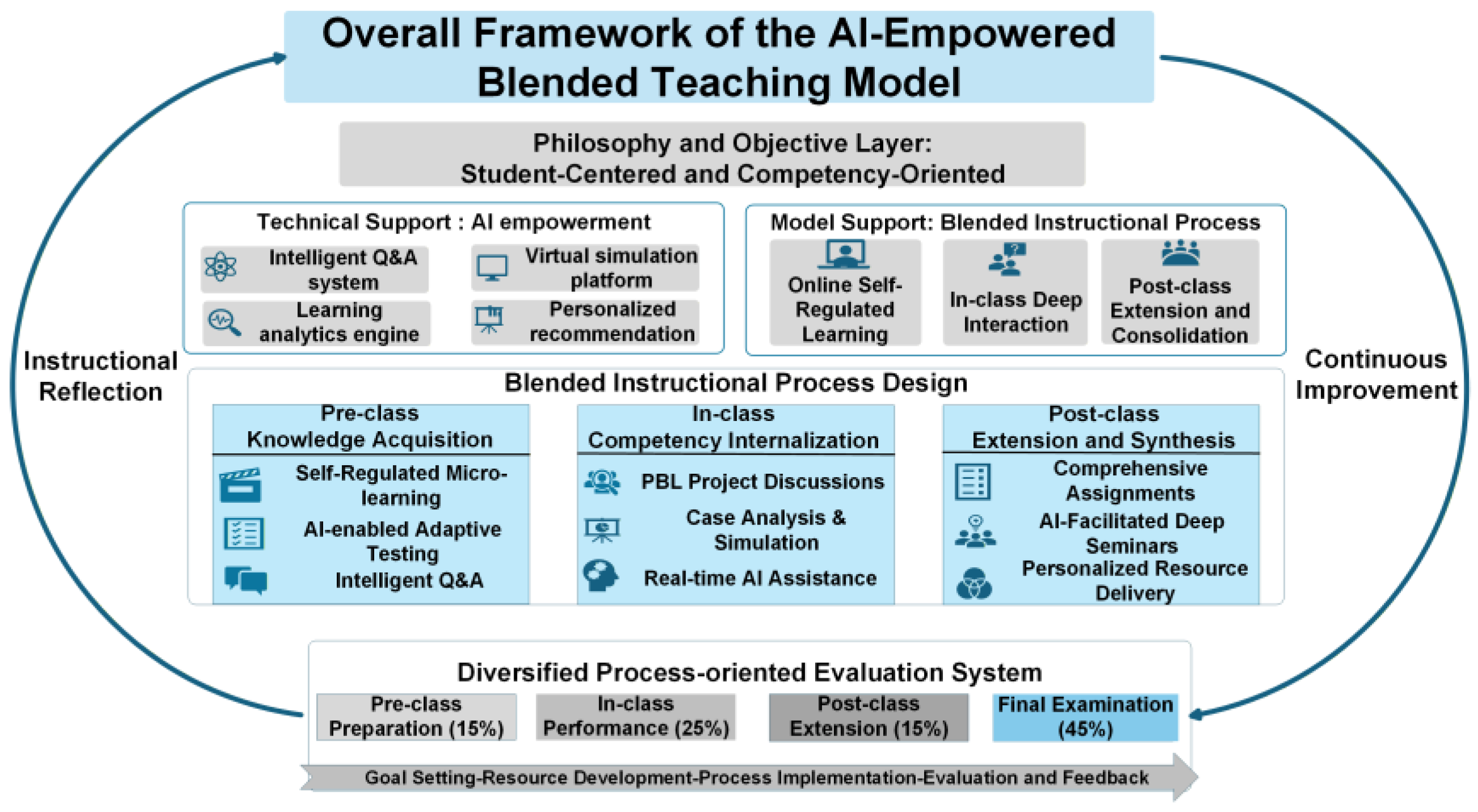
The AI-supported blended learning model developed in this study is grounded in a theory-driven and data-informed pedagogical framework that integrates blended learning, LA, and AI. Guided by Self-Regulated Learning (SRL) and outcome-based education, the framework emphasizes continuous feedback, adaptive regulation, and competency-oriented learning. As illustrated in Figure 1, the model is organized around the closed-loop process of “data sensing–diagnostic analysis–adaptive intervention,” which serves as the core mechanism for instructional regulation and learning support.
Within this framework, blended learning provides the structural foundation for integrating online learning, classroom interaction, and post-class reflection into a coherent instructional process. LA functions as the diagnostic mechanism by capturing and analyzing students’ behavioral and performance data, such as learning duration, interaction frequency, task completion, and assessment results. These analytics transform implicit learning processes into visible pedagogical evidence. Based on such evidence, AI operates as an adaptive support mechanism, providing personalized feedback, intelligent recommendations, and real-time learning assistance. Importantly, AI does not replace instructors’ pedagogical judgment; instead, it enhances instructional responsiveness while instructors remain the primary decision-makers in teaching design, classroom guidance, and value orientation (Luckin et al., 2016).
Overall, the proposed framework transforms blended learning from a static arrangement of online and offline activities into a data-driven instructional ecosystem characterized by intelligent perception, adaptive regulation, and human–AI collaboration. This design addresses the limitations of delayed feedback and insufficient process monitoring in traditional engineering education, while providing a theoretically grounded and practically transferable model for AI-supported blended learning in complex engineering courses.

2.2. Three-Stage Blended Learning Process

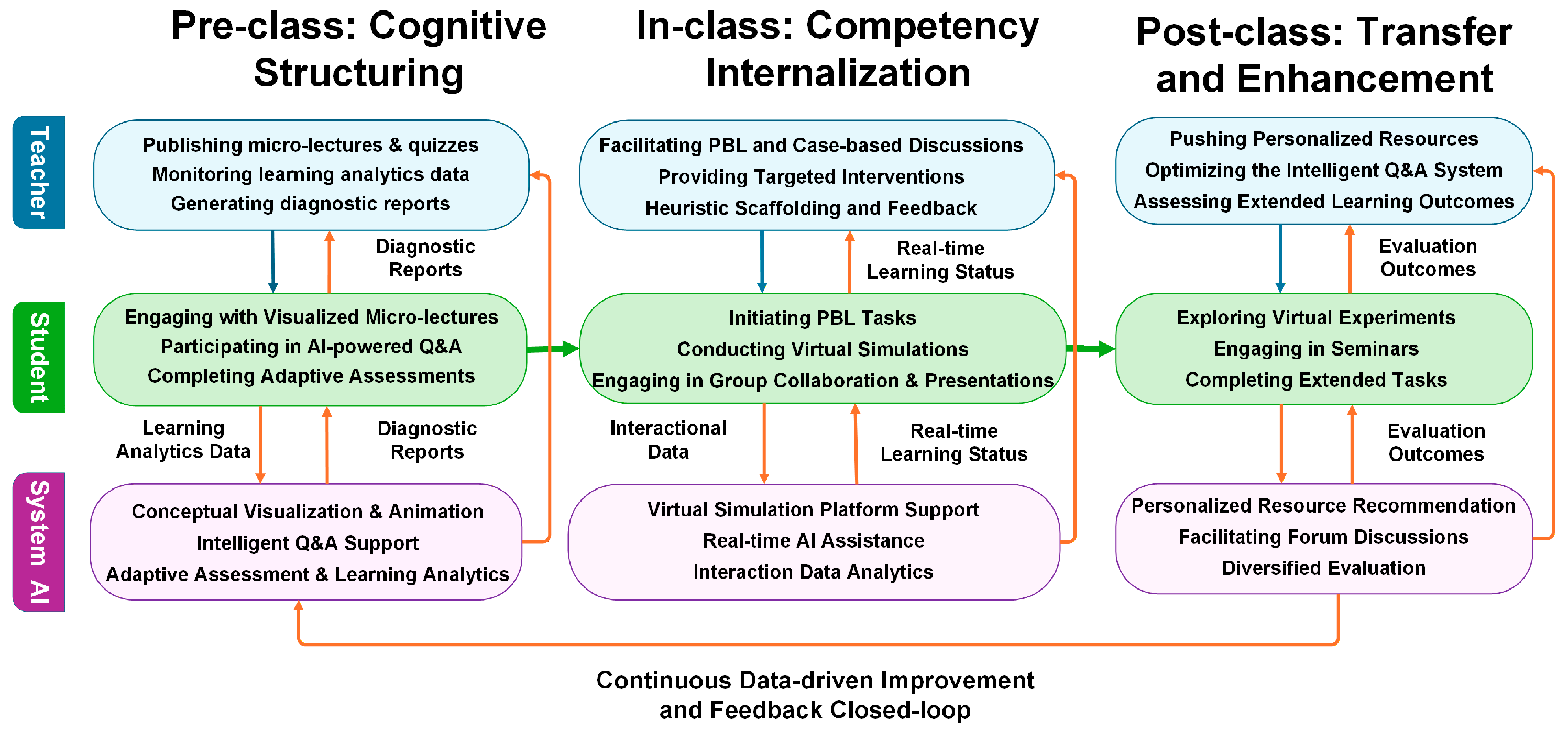
In response to the challenges posed by abstract theoretical content, limited practical opportunities, and compressed instructional hours in the “Combustion” course, this study restructures the instructional process into three interconnected stages: pre-class preparation, in-class internalization, and post-class consolidation. These stages follow the progressive logic of “cognitive construction–competency internalization–transfer and enhancement,” forming a continuous learning support loop based on the accumulation, analysis, and feedback of learning process data.
As illustrated in Figure 2, each stage has distinct instructional objectives, learning activities, and data support mechanisms, while remaining connected through the continuous flow of LA. Data generated in one stage are not treated as isolated records but are fed back into subsequent instructional decisions, enabling timely diagnosis, adaptive feedback, and dynamic regulation. In this way, the model addresses the common problems of fragmented learning stages and delayed feedback in traditional blended learning.
To improve the transparency and reproducibility of the instructional system, the AI-supported blended learning environment adopts a data-driven architecture integrating data collection, analytics processing, and adaptive feedback. The instructional platform continuously records students’ learning behaviors, including learning duration, interaction frequency, quiz attempts, response time, simulation parameter adjustment paths, and task completion records. At the analytics level, descriptive, response pattern, and learning trajectory analyses are used to identify students’ engagement states, cognitive difficulties, and problem-solving strategies. For example, prolonged response time, repeated incorrect attempts, or abnormal interaction patterns are regarded as possible indicators of learning obstacles, while simulation operation paths and parameter adjustment sequences are used to characterize students’ engineering reasoning processes.
Based on these analytics results, the AI-supported system generates adaptive feedback via rule-based recommendations and heuristic scaffolding. When insufficient mastery or inefficient exploration patterns are detected, the system provides supplementary learning materials, contextual prompts, simulation demonstrations, or reflective guidance. Intelligent tutoring systems (ITS) further support immediate responses to factual and procedural questions. To ensure instructional reliability, a human-in-the-loop mechanism is incorporated throughout the process: instructors interpret analytics outputs, validate AI-generated feedback, and adjust intervention strategies according to classroom context and disciplinary expertise.

2.2.1. Pre-Class Stage: AI-Supported Intelligent Pre-Study and Cognitive Construction

The pre-class stage focuses on knowledge acquisition and early diagnosis of students’ learning states through AI-supported resources and adaptive assessment. Students engage with fundamental concepts in “Combustion” through interactive micro-lectures and visualization materials. In this study, micro-lectures refer to short instructional videos, typically 5–10 min long, designed to present discrete knowledge units and support flexible, self-paced cognitive construction. During this process, the instructional platform records students’ learning behaviors, including video viewing duration, pause frequency, response time, and quiz attempts. These data are analyzed through descriptive statistics and response pattern analysis to identify potential cognitive difficulties. For example, repeated incorrect attempts or prolonged response times in modules such as “Chemical Equilibrium” and “Combustion Thermodynamics” are treated as indicators of insufficient conceptual understanding.
Based on the analytics results, the AI-supported system provides personalized feedback and supplementary learning recommendations, including review materials, contextual prompts, and simulation demonstrations. The results are also visualized on the instructor dashboard, enabling instructors to identify common learning obstacles before class and implement targeted in-class interventions (Molenaar & Knoop-van Campen, 2019).

2.2.2. In-Class Stage: AI-Assisted Deep Interaction and Competency Internalization

The in-class stage is the core phase for cultivating engineering reasoning, collaborative inquiry, and complex problem-solving abilities. During this stage, the classroom shifts from knowledge transmission to data-informed interactive learning. Students participate in project-based learning and virtual simulation activities to solve authentic engineering problems related to combustion systems.
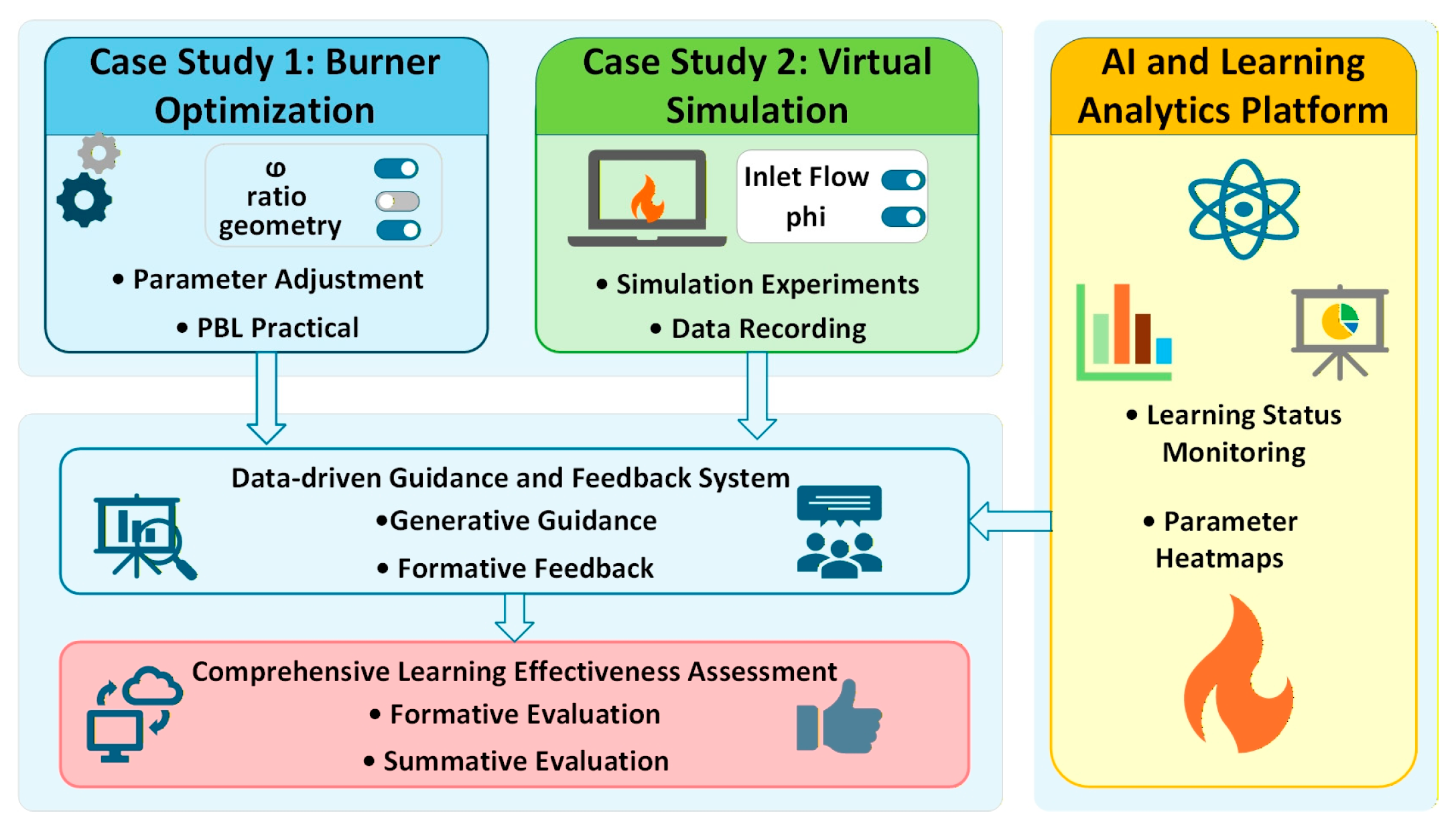
As illustrated in Figure 3, the in-class process includes two representative learning scenarios: “Low-NOx Burner Optimization” and “Virtual Combustion Simulation.”
In the “Low-NOx Burner Optimization” task, students work collaboratively to optimize burner structures by adjusting parameters such as the excess air coefficient and nozzle geometry. The AI-supported system provides contextual prompts, engineering reference cases, and parameter rationality suggestions, helping students identify potential engineering risks and design blind spots while preserving their autonomy in engineering decision-making.
In the “Virtual Combustion Simulation” task, students modify parameters such as equivalence ratio and inlet flow conditions and observe changes in flame structure and pollutant generation. The platform records simulation trajectories, parameter adjustment sequences, trial frequencies, and result comparisons. These data are analyzed through learning trajectory analysis and behavioral pattern recognition to characterize students’ exploration strategies and engineering reasoning processes.
At the instructional support level, the AI-supported LA platform monitors learning states and interaction patterns in real time. When inefficient exploration paths, low discussion participation, or deviations from engineering constraints are detected, the system generates heuristic prompts, parameter heatmaps, supplementary guidance, or relevant research cases. Meanwhile, instructors use real-time analytics outputs, such as group engagement and project progress indicators, to provide targeted support. Through this human–AI collaborative mechanism, the in-class stage achieves dynamic regulation, immediate formative feedback, and competency-oriented learning support.

2.2.3. Post-Class Stage: AI-Guided Extended Learning and Reflective Consolidation

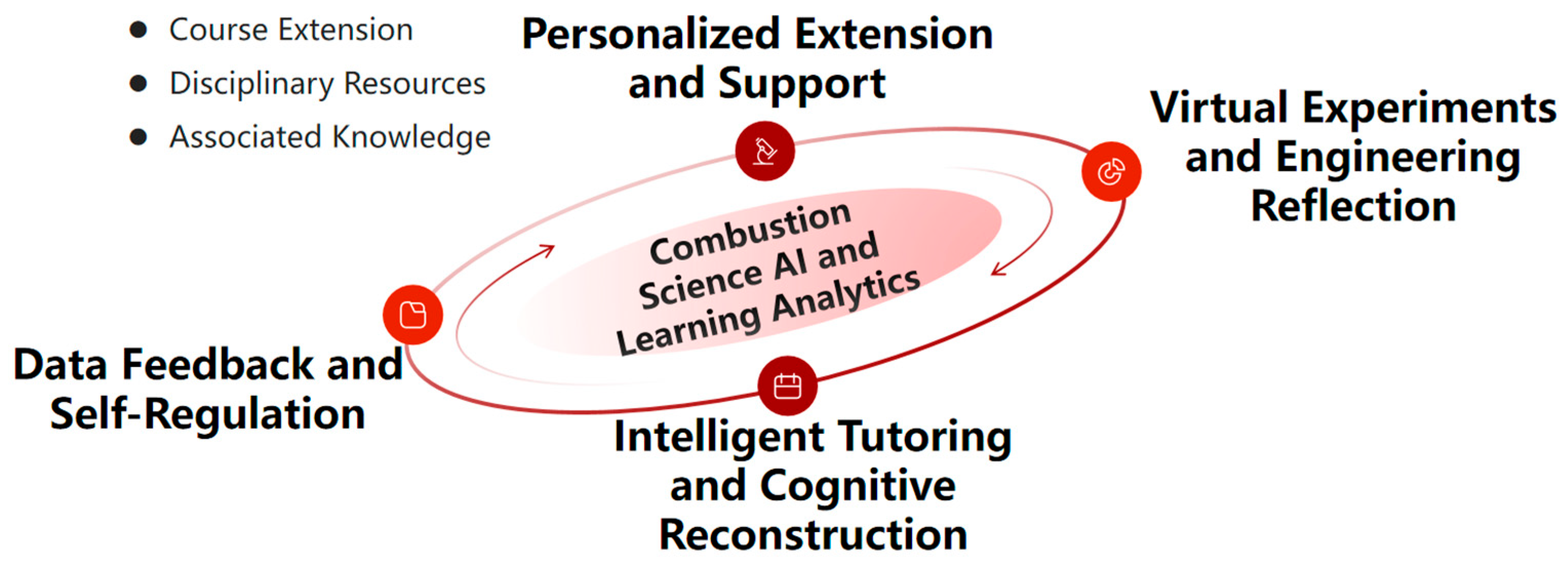
The post-class stage focuses on knowledge consolidation, reflective learning, and competency transfer through continuous feedback and self-regulation. As illustrated in Figure 4, the AI-supported post-class environment integrates “data feedback–intelligent tutoring–personalized extension–engineering reflection” into a closed-loop process that supports students’ self-regulated learning.
The platform integrates behavioral and performance data accumulated throughout the learning process, including task completion records, revision frequency, response accuracy, and simulation performance. These data are used to generate individualized learner profiles reflecting students’ engagement patterns, conceptual mastery, and learning trajectories. Based on these profiles, the system recommends personalized extension resources, such as review materials, advanced engineering cases, disciplinary frontier knowledge, and reflective learning tasks.
At the instructional support level, intelligent tutoring systems provide immediate responses to factual and procedural questions and generate heuristic prompts for deeper conceptual reflection. Virtual experiment review and engineering reflection activities further encourage students to revisit parameter-optimization processes and to evaluate the engineering implications of their decisions. Through real-time feedback and adaptive guidance, the post-class stage shortens the delayed feedback cycle and promotes students’ metacognitive awareness, reflective thinking, and autonomous learning capabilities (Winne, 2017).

2.3. Summary of Model Characteristics and Advantages

The systemic advantages of the proposed model are mainly reflected in its data-flow-driven closed-loop regulation mechanism and human–AI collaboration structure. Its core value lies not in the novelty of individual technical tools but in integrating fragmented learning activities into a coherent instructional framework. Through the continuous connection of pre-class preparation, in-class internalization, and post-class consolidation, the model ensures the continuity, traceability, and adaptability of the learning process.
First, the model strengthens evidence-based decision-making in instruction. By continuously collecting and analyzing learning process data, instructors can identify students’ learning difficulties in a timely manner and implement more precise interventions. Second, the model clarifies the boundary between human and machine roles. AI is mainly responsible for data processing, pattern recognition, personalized recommendation, and immediate feedback, while instructors remain responsible for pedagogical judgment, classroom organization, value guidance, and complex engineering decision-making.
From an engineering education perspective, the model provides a structural framework for the integrated cultivation of knowledge, competency, and values. Its transferability lies not in a specific platform or algorithm, but in the underlying data-driven instructional logic. Therefore, different engineering disciplines can flexibly configure AI modules and LA indicators according to their own disciplinary characteristics. Through this systemic restructuring, blended learning moves beyond a simple allocation of online and offline activities and evolves into a continuously adaptive pedagogical ecosystem that offers a transferable instructional framework.

3. Methods

3.1. Research Design

This study employed a quasi-experimental research design to examine the effectiveness of a LA-driven, AI-supported blended learning model in an authentic instructional context. The independent variable was the instructional model type, namely the AI-supported blended learning model implemented in the experimental class and the traditional instructor-centered lecture model adopted in the control class.
The intervention mechanism was operationalized as a LA-driven blended learning model that integrates learning data collection, evidence generation, diagnostic feedback, and dynamic instructional regulation. By comparing learning outcomes and process-oriented indicators between the experimental and control groups, this study examined the effect pathway of “Learning Analytics–Dynamic Regulation–Performance Improvement.” In addition to final academic performance, learning behavior data and instructional regulation records were analyzed to evaluate both the effectiveness and operational characteristics of the proposed model in engineering education.

3.2. Participants and Instructional Context

This study was conducted in the Energy and Power Engineering program at a regional application-oriented university in China, whose discipline was rated as Category C in the fourth-round national discipline evaluation. This context was selected because it represents a typical engineering education environment undergoing digital-intelligent transformation under limited instructional resources and compressed credit-hour constraints.
Two parallel sophomore classes enrolled in the core professional course “Combustion” were selected through cluster-based sampling based on existing class structures. Sophomore students were chosen because they had completed foundational courses such as Engineering Thermodynamics and Fluid Mechanics and were entering the critical stage of transitioning from basic disciplinary knowledge to higher-order engineering reasoning and professional competency development. Therefore, the “Combustion” course, with its high theoretical abstraction, interdisciplinary integration, and strong engineering applicability, provides an appropriate context for evaluating AI-supported blended learning interventions.
The experimental class (N = 60) implemented the AI-supported blended learning model, while the control class (N = 60) adopted a traditional instructor-centered lecture model. Both classes were taught by the same instructional team following a unified syllabus, identical teaching schedule, and consistent assessment standards. Students in both classes were admitted through the same provincial enrollment system and shared similar academic backgrounds and training requirements.
To ensure baseline equivalence and reduce potential selection bias, homogeneity tests were conducted prior to the intervention. Independent-samples t-tests indicated no statistically significant differences between the two groups in prior Grade Point Average (GPA), foundational disciplinary knowledge, or pre-test scores (p > 0.05), confirming baseline comparability. Although this study adopted a quasi-experimental rather than fully randomized design, the use of parallel classes with similar academic backgrounds enhances the representativeness and transferability of the findings within comparable engineering education contexts.

3.3. Instructional Intervention and Curriculum Restructuring Logic

3.3.1. Intervention Mechanism and Credit Hour Restructuring

The intervention implemented in the experimental class aimed to establish a dynamic instructional regulation system driven by continuous learning evidence, rather than merely adding digital learning resources. Through the collection, analysis, and feedback of students’ learning data, the system supported evidence-based instructional adjustment, adaptive intervention, and targeted teaching support throughout the learning process. At the curriculum level, the original 40 credit hours were streamlined into 32 credit hours to improve instructional efficiency and optimize the allocation of classroom time. In the Chinese higher education system, one credit hour generally corresponds to approximately one hour of classroom instruction per week over a semester. Thus, the restructuring represented not a reduction in learning requirements, but a redistribution of learning activities within the blended learning framework.
Specifically, AI-supported learning platforms and automated feedback mechanisms were used to shift lower-order cognitive tasks, such as memorization, basic comprehension, and preliminary knowledge acquisition, to the pre-class stage. Students completed these tasks through online micro-lectures, adaptive exercises, and personalized feedback before class. Consequently, classroom sessions could be devoted more fully to higher-order learning activities, including engineering problem analysis, project-based learning, collaborative inquiry, and virtual simulation experiments.
Within the restructured curriculum, the credit-hour ratio among fundamental theory, engineering application, and cutting-edge topics was adjusted to 1.5:1.5:1. This design maintained theoretical integrity while increasing the emphasis on engineering application and inquiry-based learning. As a result, the course placed greater focus on cultivating higher-order competencies such as engineering reasoning, problem-solving, collaboration, and practical decision-making.

3.3.2. Modular System and AI Integration Matrix

The curriculum structure is divided into three progressive modules: the Fundamental Theory Module, the Engineering Application Module, and the Cutting-edge Topics Module. The Fundamental Theory Module relies on an adaptive learning system to implement personalized compensatory learning, dynamically pushing differentiated learning resources based on learning behaviors and periodic assessment results. The Engineering Application Module integrates virtual simulation technology to organize contextualized tasks centered on complex engineering problems such as pollutant control, guiding students in problem analysis and scheme optimization. The Cutting-edge Topics Module leverages an intelligent literature recommendation system to support interdisciplinary seminars, fostering students’ understanding and integration of emerging research. As shown in Table 1, the AI support mechanism spans the entire process of pre-class diagnosis, in-class regulation, and post-class enhancement, forming a continuous data-driven support pathway.

3.4. Multidimensional Process-Oriented Instructional Evaluation System

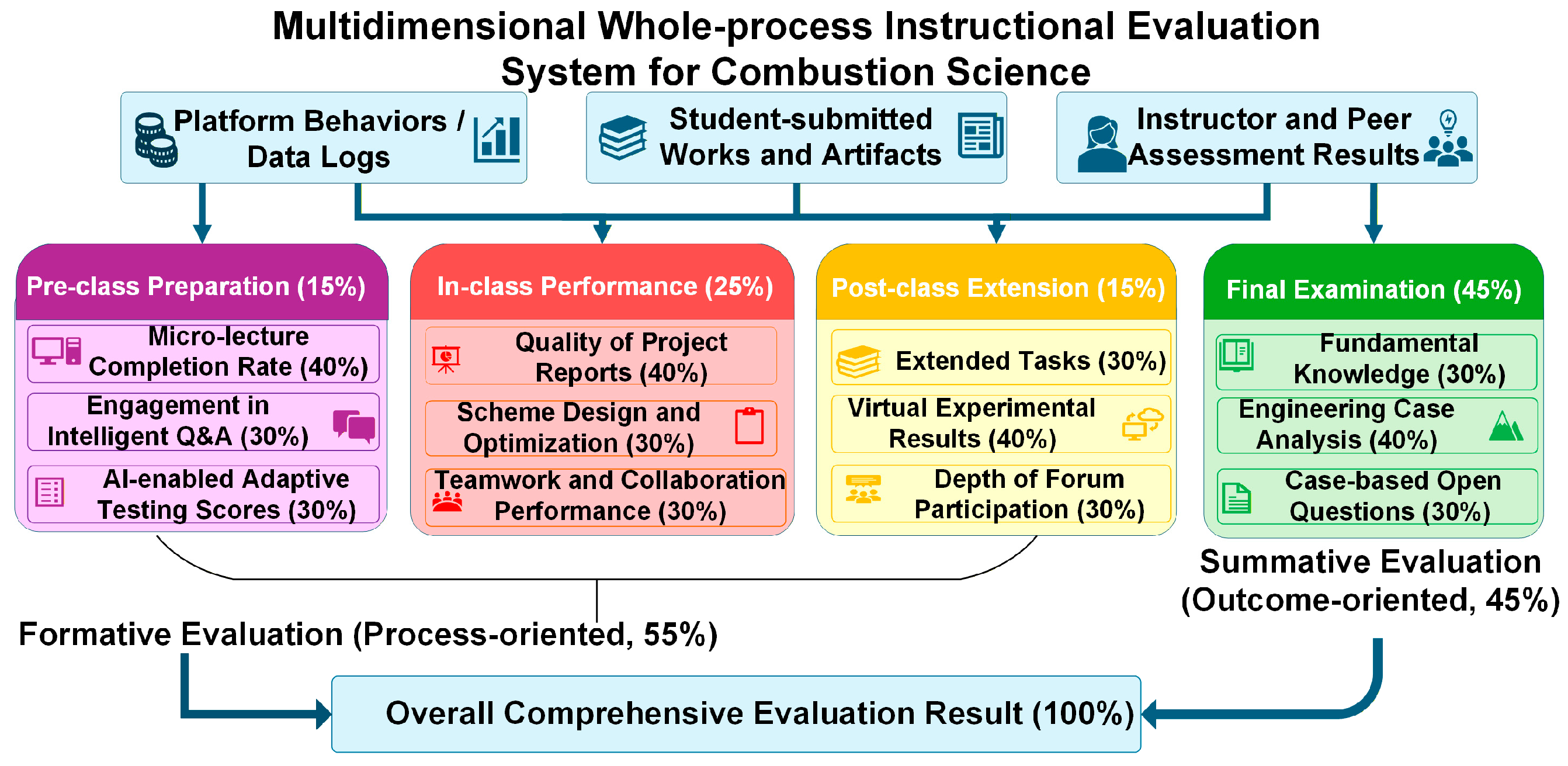
To characterize students’ dynamic development in complex engineering contexts, this study developed a multidimensional, process-oriented evaluation system spanning the pre-class, in-class, and post-class phases. In terms of the evaluation structure, the system increases the proportion of formative assessment, setting its weight at 55%, while the final summative assessment accounts for 45%. The formative assessment consists of three components: pre-class learning engagement trajectories on the AI-supported learning platform (15%), in-class project collaboration performance (25%), and the quality of post-class extended task completion (15%). Specifically, the pre-class engagement trajectories are quantified based on learning behavior data recorded by the platform; in-class project performance is comprehensively assessed according to task completion and collaborative behavior; and post-class tasks emphasize the manifestation of knowledge transfer and application capabilities. The summative assessment takes the form of an open-ended case analysis, evaluating students’ comprehensive analytical and problem-solving skills in complex engineering scenarios.
Within the formative assessment, students’ learning attitudes, sense of responsibility, and engineering ethics cognition are recorded and analyzed through classroom observations and reflective texts. As illustrated in Figure 5, the evaluation system integrates behavioral recording, performance assessment, and comprehensive judgment into a continuous evidence-based feedback process.

3.5. Data Collection and Analysis Strategies

This study employed a mixed-methods design integrating quantitative and qualitative data to examine instructional effectiveness and its underlying mechanisms.
(1) Data Sources and Variable Measurement
Quantitative data were collected from three sources:
(a) Learning behavior logs automatically recorded by the instructional platform, including resource access frequency, learning duration, quiz attempts, response time, task completion records, interaction frequency, and simulation operation logs;
(b) Adaptive quiz scores reflecting students’ mastery of knowledge units; and
(c) Final open-ended case assessment scores measuring comprehensive engineering problem-solving ability. Qualitative data were obtained from semi-structured interviews, classroom observations, and reflective journals.
The independent variable was the instructional model type (0 = traditional lecture-based; 1 = AI-supported blended learning). Dependent variables included learning effectiveness, learning engagement, and engineering competency. Learning engagement was operationalized as a multidimensional construct consisting of behavioral frequency, learning duration, and task completion rate. Engineering competency was evaluated using project rubrics covering engineering reasoning, problem analysis, collaboration, and reflective evaluation. Covariates included students’ prior GPA and baseline academic proficiency scores.
(2) Reliability and Validity Tests
To ensure measurement rigor, reliability and validity tests were conducted for the major constructs. The learning engagement construct showed satisfactory internal consistency, with Cronbach’s alpha reaching 0.86 and all subdimensions exceeding 0.70. Construct validity was supported by exploratory factor analysis, with a KMO value of 0.84 and a significant Bartlett’s test (p < 0.001). CR and AVE values also met recommended thresholds. For the project-based competency rubric, two instructors independently scored students’ final tasks, and the inter-rater reliability coefficient reached 0.82. Incomplete records and abnormal behavioral logs were removed before analysis.
(3) Quantitative Analysis Models
Descriptive statistics, normality tests, and homogeneity tests were first conducted. ANCOVA was used to compare learning effectiveness between groups while controlling for GPA and pre-test scores. HLM was applied to examine longitudinal learning behavior trajectories. SEM was further employed to test the mediating mechanism among LA feedback, self-regulated learning behavior, and learning effectiveness, using maximum likelihood estimation and bootstrapping with 5000 resamples. Effect sizes were reported using Cohen’s d and partial eta squared (η2).
The study included 120 valid participants, which was considered acceptable for exploratory SEM and relatively simple two-level HLM analyses based on previous methodological recommendations (Kline, 2015; Hair et al., 2019; Maas & Hox, 2005). Table 2 summarizes the major data sources, variables, and analytical methods employed in this study.

3.6. Research Ethics and Data Security

This study adhered to academic ethical standards for educational research. The study was conducted as part of routine teaching practice and used anonymized learning data generated during the instructional process. Participation in interviews and the use of learning data for research purposes were voluntary, and all participants provided informed consent. All identifiable information was removed prior to analysis to ensure participant privacy and confidentiality.

4. Results and Discussion

Based on multi-source data collected during the quasi-experimental research, this chapter systematically analyzes the implementation effectiveness of the LA-driven, AI-supported blended learning model in the “Combustion” course. While focusing on changes in summative academic performance, the study further incorporates learning behavior data and instructional regulation records to examine the dynamic evolutionary characteristics of the learning process and their correlation with pedagogical decision-making. By integrating product- and process-oriented evidence, this chapter aims to analyze the practical impact of this instructional model in complex engineering knowledge contexts and to explore the potential pathways through which data-driven regulatory mechanisms enhance students’ capabilities to solve complex engineering problems.

4.1. Empirical Comparison and Mechanism Analysis of Learning Effectiveness

Following the one-semester instructional intervention, quantitative analysis indicates that the experimental group significantly outperformed the control group in terms of learning effectiveness. The mean final assessment score for the experimental group was 82.4 ± 5.7, compared to 73.2 ± 6.9 for the control group. Results from the independent-samples t-test indicate that the difference between the two groups is statistically significant (p < 0.01). A breakdown by question type further reveals that the disparity primarily manifests in higher-order cognitive tasks. This performance gap does not merely stem from the use of technical tools but is closely associated with the continuous support mechanism driven by LA, which addresses the evolving drivers and challenges in the modern educational landscape (Ferguson, 2012). In engineering case analysis problems, the experimental group achieved a scoring rate of 78.5%, significantly higher than the control group’s 60.2%; in open-ended design problems, the experimental group’s scoring rate was 75.8%, versus 60.1% for the control group. These results suggest that the intervention exerted a pronounced facilitative effect on capabilities related to complex engineering problem analysis and scheme design.
Process data analysis further suggested that these improvements were closely associated with the continuous support mechanism enabled by LA. During the pre-class stage, adaptive diagnostic methods based on item response theory were used to identify students’ conceptual weaknesses and provide instructors with targeted pedagogical evidence. For instance, in the Turbulent Combustion unit, the platform identified misconceptions among 42.3% of students. In response, the instructor implemented targeted Peer Instruction activities and provided supplementary visualizations of flame–vortex interactions to support conceptual understanding before simulation practice. This data-driven instructional regulation mechanism enabled continuous intervention across pre-class, in-class, and post-class stages, thereby reducing knowledge gaps and strengthening students’ engineering reasoning and problem-solving capabilities.

4.2. Learning Behavioral Trajectories and the Mediating Effect of Driving Mechanisms

To further examine the mechanisms underlying the intervention’s effectiveness, this study analyzed full-process behavioral data recorded by the intelligent teaching platform. As summarized in Table 3, the experimental group demonstrated stronger learning engagement across the pre-class, in-class, and post-class stages, including higher micro-lecture completion, improved adaptive quiz performance, more frequent classroom interactions, and sustained post-class task completion.
These behavioral trajectory results suggest that the LA-driven mechanism enhanced learning engagement by making students’ learning processes more visible, adjustable, and actionable. Through intelligent dashboards and adaptive feedback, students were able to identify learning weaknesses in real time and conduct targeted remediation within the framework of self-regulated learning. Meanwhile, instructors used LA evidence to provide differentiated guidance, improving the timeliness and precision of instructional interventions.
The SEM results further verified this mediating mechanism. The model showed satisfactory fit, and the significant path coefficients indicated that LA feedback positively predicted self-regulated learning behavior, which in turn promoted learning effectiveness. The significant indirect effect confirmed that self-regulated learning behavior partially mediated the relationship between LA feedback and learning effectiveness.
Overall, these findings indicate that the improvement in learning effectiveness was not solely attributable to AI-supported tools themselves. Rather, LA functioned as a process-oriented regulatory mechanism that strengthened students’ self-regulated learning behaviors and promoted higher-order engineering learning outcomes.

4.3. Qualitative Feedback on Learning Experience and Engineering Literacy Development

In addition to quantitative findings, this study conducted a qualitative analysis to explore students’ learning experiences and the development of engineering competencies. Data were collected from semi-structured interviews, classroom observations, and reflective journals at the end of the semester. Following the thematic analysis approach proposed by Braun and Clarke (2006), the qualitative materials were organized and coded around four themes: learning engagement, conceptual understanding, engineering reasoning, and reflective learning. The coded results were then compared across different data sources to identify recurring patterns and representative student responses.
The results showed that most students perceived the AI-supported learning environment as helpful for understanding abstract combustion concepts. Approximately 87.5% of the interviewed students reported that the intelligent question-answering mechanism and virtual experimentation mechanisms lowered the course’s comprehension threshold. As one student stated, “After adjusting parameters in the virtual simulation system and observing flame structure changes in real time, I could connect formulas with actual engineering phenomena.” Another student noted, “The system could identify where I misunderstood a concept and recommend targeted review materials.” These responses suggest that AI-supported feedback and interactive visualization helped reduce cognitive load and promote deeper conceptual understanding (Mayer, 2014).
From the perspective of engineering literacy development, students also reported that simulation-based parameter optimization tasks strengthened their engineering reasoning, collaborative inquiry, and reflective decision-making. By observing changes in flame structure, pollutant generation, and combustion efficiency under different parameter settings, students were able to evaluate engineering trade-offs more concretely. Several students indicated that tasks related to energy efficiency, emission reduction, and safety constraints enhanced their awareness of engineering ethics and carbon peaking and carbon neutrality (“Dual Carbon”) goals. Overall, the qualitative findings support the quantitative results by showing that the AI-supported blended learning model improved not only the learning experience but also the development of engineering competencies.

4.4. Discussion and Summary

By synthesizing multiple sources of evidence, the instructional model proposed in this study demonstrates positive improvements in learning effectiveness, engagement, and higher-order engineering competencies. The core driver of these improvements lies in the transition from the “formal integration” of technology and teaching toward deeper instructional integration grounded in data-informed regulation toward deeper instructional integration grounded in data-informed instructional regulation. Within this framework, LA serves as a critical mediating mechanism, connecting learning data to micro-level pedagogical decision-making, thereby transforming instructional intervention from post hoc remediation into a process of continuous diagnosis and adaptive adjustment. The integration of AI-supported feedback and LA enables dynamic instructional responsiveness across the pre-class, in-class, and post-class stages, supporting personalized interventions and enhancing students’ self-regulated learning. Although some students experienced adaptation challenges during the initial implementation stage, and further optimization of AI-supported simulation scenarios remains necessary, the model effectively facilitated the synergistic enhancement of knowledge mastery, engineering practice abilities, and learning engagement within compressed credit-hour constraints.
At the instructional outcome level, the experimental group achieved significantly higher learning performance than the control group, with an average final score of 82.4 ± 5.7 compared with 73.2 ± 6.9 in the control class. Nevertheless, several alternative explanations should also be acknowledged. Because this study adopted a quasi-experimental design, potential confounding factors cannot be completely excluded. For example, students in the experimental group may have shown increased engagement partly due to the Hawthorne effect, arising from awareness of participating in an innovative instructional experiment (McCambridge et al., 2014). In addition, the novelty effect of AI-supported learning tools may have temporarily enhanced students’ motivation and participation during the early stage of the intervention. Differences in classroom interaction dynamics may also have contributed to the observed outcomes.
However, several aspects of the research design help mitigate these concerns. First, the intervention lasted for an entire semester, reducing the likelihood that short-term novelty effects alone explain the improvements. Second, the consistency of multiple forms of evidence—including behavioral analytics, assessment outcomes, and qualitative feedback—supports the stability of the observed learning gains. Third, the continuous feedback loop established through LA and AI-supported intervention mechanisms suggests that the improvements are closely associated with the instructional model itself rather than solely attributable to external motivational factors. Overall, the findings not only validate the effectiveness of the proposed model in addressing the tension between compressed instructional hours and expanding disciplinary knowledge but also highlight its practical significance for the digital-intelligent transformation of engineering education. Future research should further employ longitudinal and multi-institutional designs to examine the long-term impact of AI-supported blended learning on engineering competency, professional identity, and social responsibility.

5. Conclusions and Future Work

5.1. Research Conclusions

Set within the context of the undergraduate engineering core course “Combustion,” this study developed and implemented an AI-supported blended learning model driven by LA. Through a one-semester quasi-experimental intervention, the findings indicate that the proposed model effectively addressed instructional challenges, including theoretical abstraction, limited experimental opportunities, and compressed credit hours. Statistical results showed that the experimental class achieved significantly higher learning performance than the control class, with an average final score of 82.4 ± 5.7 compared with 73.2 ± 6.9 in the control group. Normality tests confirmed that the score distributions met the assumptions required for subsequent parametric analyses (p > 0.05). In addition, ANCOVA results demonstrated a statistically significant instructional effect after controlling for GPA and pre-test scores, with a medium-to-large effect size (partial eta squared [η2] > 0.14), indicating substantial practical significance.
At the instructional mechanism level, the observed improvements were closely associated with the “data sensing–intelligent diagnosis–adaptive intervention” closed-loop process established through the integration of AI and LA. Pre-class intelligent pre-study strengthened students’ cognitive foundations; in-class virtual simulation and project-based learning promoted engineering reasoning and competency internalization; and post-class personalized feedback and reflective learning facilitated deeper knowledge transfer. The model also positively influenced learning behaviors: the frequency of teacher–student interaction in the experimental class was approximately 3.2 times higher than that in the control class, and students demonstrated stronger tendencies toward self-regulated learning and higher learning engagement.
Beyond improving academic performance, the model further supported the integration of engineering literacy, engineering ethics, and social responsibility within disciplinary instruction. By embedding carbon peaking and carbon neutrality (“Dual Carbon”) goals and engineering safety constraints into AI-supported simulation tasks, students were encouraged to evaluate technical decisions within sustainability-oriented engineering contexts. The contribution of this study lies in demonstrating how fragmented blended learning activities can be systematically integrated through LA and human–AI collaboration. Rather than relying on highly complex technologies, the proposed model emphasizes an “instructor-led, technology-supported” approach, offering a transferable, practically feasible framework for engineering education reform in the era of digital-intelligent transformation.

5.2. Limitations and Future Work

Although the findings indicate that the LA-driven blended learning model significantly improves learning outcomes at both the summative (final grades) and formative (behavioral engagement and autonomous learning) evaluation levels, several areas for improvement were identified during practical implementation. At the technical level, there is room to improve the accuracy of virtual simulations for handling extreme operating conditions and multiphysics coupling problems; at the behavioral level, some students experienced adaptation challenges in the intelligent learning environment, necessitating further refinement of technical guidance mechanisms.
Future research will focus on expansion in three directions: First, increasing the engineering complexity of simulation resources by incorporating high-fidelity numerical simulation data to enhance the realism and challenge of virtual experiments. Second, conducting longitudinal tracking studies to examine the far-reaching impact of LA support on students’ engineering thinking and self-regulation capabilities. Finally, exploring the promotion and application of this model in cross-institutional and interdisciplinary contexts to further verify its generalizability and stability. Although this study is situated within the Chinese engineering curriculum system, it offers a transferable framework for global engineering education reform in the era of digital intelligence.

Author Contributions

Conceptualization, H.L. and Q.S.; methodology, Y.H. and C.Z.; validation, H.L., Q.S. and Z.H.; formal analysis, Y.H. and C.Z.; investigation, L.L.; resources, Q.S.; data curation, Y.H.; writing—original draft preparation, L.L.; writing—review and editing, H.L. and Q.S.; visualization, H.L.; supervision, Z.H.; funding acquisition, Z.H. All authors have read and agreed to the published version of the manuscript.

Funding

Funded by the Curriculum Politics Project of the Hebei Provincial Department of Education (No. YKCSZ2024055).

Institutional Review Board Statement

Not applicable.

Informed Consent Statement

Not applicable.

Data Availability Statement

The data presented in this study are available on request from the corresponding author.

Acknowledgments

We sincerely thank all the faculty and staff of the School of Mechanical Engineering of Hebei University of Science and Technology for their close cooperation and strong support during our research period.

Conflicts of Interest

The authors declare no conflicts of interest.

References

  1. Braun, V., & Clarke, V. (2006). Using thematic analysis in psychology. Qualitative Research in Psychology, 3(2), 77–101. [Google Scholar] [CrossRef]
  2. Ferguson, R. (2012). Learning analytics: Drivers, developments and challenges. International Journal of Technology Enhanced Learning, 4(5/6), 304–317. [Google Scholar] [CrossRef]
  3. Garcia Acevedo, J., Valencia Ochoa, G., & Obregon, L. G. (2020). Development of a new educational package based on e-learning to study engineering thermodynamics processes: Combustion, energy and entropy analysis. Heliyon, 6(6), e04269. [Google Scholar] [CrossRef]
  4. Garrison, D. R., & Kanuka, H. (2004). Blended learning: Uncovering its transformative potential in higher education. The Internet and Higher Education, 7(2), 95–105. [Google Scholar] [CrossRef]
  5. Gašević, D., Dawson, S., & Siemens, G. (2015). Let’s not forget: Learning analytics are about learning. TechTrends, 59(1), 64–71. [Google Scholar] [CrossRef]
  6. Graham, C. R. (2006). Blended learning systems: Definition, current trends, and future directions. In C. J. Bonk, & C. R. Graham (Eds.), The handbook of blended learning: Global perspectives, local designs (pp. 3–21). Pfeiffer. [Google Scholar]
  7. Graham, C. R., Moskal, P. D., Norberg, A., & Sicilia, N. (2018). Blended learning: The new normal and emerging technologies. International Journal of Educational Technology in Higher Education, 14, 25. [Google Scholar] [CrossRef]
  8. Hair, J. F., Black, W. C., Babin, B. J., & Anderson, R. E. (2019). Multivariate data analysis (8th ed.). Cengage. [Google Scholar]
  9. Ifenthaler, D., Gibson, D., Prasse, D., Shimada, A., & Yamada, M. (2021). Putting learning back into learning analytics: Actions for policy makers, researchers, and practitioners. Educational Technology Research and Development, 69, 2131–2150. [Google Scholar] [CrossRef]
  10. Ifenthaler, D., & Schumacher, C. (2016). Student perceptions of privacy principles for learning analytics. Educational Technology Research and Development, 64(5), 923–938. [Google Scholar] [CrossRef]
  11. Kizilcec, R. F., & Lee, H. (2022). Algorithmic fairness in education. In W. Holmes, & K. Porayska-Pomsta (Eds.), The ethics of artificial intelligence in education (pp. 174–192). Routledge. [Google Scholar] [CrossRef]
  12. Kline, R. B. (2015). Principles and practice of structural equation modeling (4th ed.). Guilford Press. [Google Scholar]
  13. Koretsky, M. D., Kelly, C., & Gummer, E. (2011). Student perceptions of learning in the laboratory: Comparison of industrially situated virtual laboratories to capstone physical laboratories. Journal of Engineering Education, 100(3), 540–573. [Google Scholar] [CrossRef]
  14. Luckin, R., Holmes, W., Griffiths, M., & Forcier, L. B. (2016). Intelligence unleashed: An argument for AI in education. Pearson. [Google Scholar]
  15. Ma, W., Adesope, O. O., Nesbit, J. C., & Liu, Q. (2014). Intelligent tutoring systems and learning outcomes: A meta-analysis. Journal of Educational Psychology, 106(4), 901–918. [Google Scholar] [CrossRef]
  16. Maas, C. J. M., & Hox, J. J. (2005). Sufficient sample sizes for multilevel modeling. Methodology, 1(3), 86–92. [Google Scholar] [CrossRef]
  17. Masiello, I., Mohseni, Z., Palma, F., Nordmark, S., Augustsson, H., & Rundquist, R. (2024). A current overview of the use of learning analytics dashboards. Education Sciences, 14(1), 82. [Google Scholar] [CrossRef]
  18. Mayer, R. E. (2014). The Cambridge handbook of multimedia learning (2nd ed.). Cambridge University Press. [Google Scholar]
  19. McCambridge, J., Witton, J., & Elbourne, D. R. (2014). Systematic review of the Hawthorne effect: New concepts are needed to study research participation effects. Journal of Clinical Epidemiology, 67(3), 267–277. [Google Scholar] [CrossRef]
  20. Min, W., & Yu, Z. (2023). A systematic review of critical success factors in blended learning. Education Sciences, 13(5), 469. [Google Scholar] [CrossRef]
  21. Misiejuk, K., Samuelsen, J., Kaliisa, R., & Prinsloo, P. (2025). Idiographic learning analytics: Mapping the ethical issues. Learning and Individual Differences, 117, 102599. [Google Scholar] [CrossRef]
  22. Molenaar, I., & Knoop-van Campen, C. A. N. (2019). How teachers make dashboard information actionable. IEEE Transactions on Learning Technologies, 12(3), 347–355. [Google Scholar] [CrossRef]
  23. Park, Y., & Doo, M. Y. (2024). Role of AI in blended learning: A systematic literature review. The International Review of Research in Open and Distributed Learning, 25(1), 164–196. [Google Scholar] [CrossRef]
  24. Rets, I., Herodotou, C., & Gillespie, A. (2023). Six practical recommendations enabling ethical use of predictive learning analytics in distance education. Journal of Learning Analytics, 10(1), 149–167. [Google Scholar] [CrossRef]
  25. Salas-Pilco, S. Z., Yang, Y., & Zhang, Z. (2022). Artificial intelligence and learning analytics in teacher education: A systematic review. Education Sciences, 12(8), 569. [Google Scholar] [CrossRef]
  26. Winne, P. H. (2017). Cognition and metacognition within self-regulated learning. In D. H. Schunk, & J. A. Greene (Eds.), Handbook of self-regulation of learning and performance (2nd ed., pp. 36–48). Routledge. [Google Scholar]
  27. Winne, P. H. (2022). Modeling self-regulated learning as learners doing learning science: How trace data and learning analytics help develop skills for self-regulated learning. Metacognition and Learning, 17, 773–791. [Google Scholar] [CrossRef]
  28. Zawacki-Richter, O., Marín, V. I., Bond, M., & Gouverneur, F. (2019). Systematic review of research on artificial intelligence applications in higher education. International Journal of Educational Technology in Higher Education, 16, 39. [Google Scholar] [CrossRef]
Figure 1. Overall framework of the AI-supported blended learning model.
Education 16 00876 g001
Figure 2. The AI-supported three-stage blended learning workflow: Pre-class, In-class, and Post-class.
Education 16 00876 g002
Figure 3. In-class engineering learning activities and data-driven feedback mechanisms supported by AI and LA.
Education 16 00876 g003
Figure 4. Extended learning and reflective regulation mechanisms in the post-class stage supported by AI and LA.
Education 16 00876 g004
Figure 5. Multidimensional process-oriented instructional evaluation system and data flow based on learning process data.
Education 16 00876 g005
Table 1. Restructured “Combustion” course modules and AI intervention matrix.
Module CategoryCredit HoursCore ContentInstructional MethodsCognitive Objectives
Fundamental Theory Module12 hCombustion chemistry, thermodynamics, flame dynamics, and reactive fluid mechanics.Visualized micro-lectures, conceptual animations, and adaptive quizzes.Knowledge memorization and understanding
Engineering Application Module12 hBurner design and optimization, pollutant formation and control, and combustion diagnostics.Virtual experiments, case-based learning, and project-based learningApplication, analysis, and evaluation
Cutting-edge Topics Module8 hCarbon-neutral combustion technologies, AI applications in combustion, and novel combustion concepts.Seminars, literature review, and group presentations.Innovation and transfer
Table 2. Summary of data sources and analytical methods.
Analytical ComponentData/VariableAnalysis MethodPurpose
Learning engagementBehavioral logs, interaction frequency, task completion, learning durationDescriptive statistics; HLMAnalyze learning trajectories and engagement patterns
Learning effectivenessAdaptive quiz scores; final case assessment scoresANCOVA; effect size analysisCompare instructional effectiveness between groups
Engineering competencyProject-based assessment rubricInter-rater reliability analysisEvaluate higher-order engineering competencies
Measurement qualityLearning engagement construct; competency rubricReliability and validity analysisVerify measurement quality
Mediation mechanismLA feedback, self-regulated learning behavior, learning effectivenessSEM with maximum likelihood estimation and bootstrappingTest the mediation mechanism
Qualitative evidenceInterviews, observations, reflective journalsThematic analysis; triangulationSupport interpretation of quantitative findings
Note. ANCOVA = Analysis of Covariance; HLM = Hierarchical Linear Modeling; SEM = Structural Equation Modeling; KMO = Kaiser–Meyer–Olkin; CR = Composite Reliability; AVE = Average Variance Extracted.
Table 3. Behavioral trajectory indicators and SEM mediation results.
CategoryIndicator/PathResultInterpretation
Behavioral trajectoryMicro-lecture completion rate95.2%High pre-class participation
Behavioral trajectoryAdaptive quiz pass rate71.3% → 89.6%Improved knowledge mastery
Behavioral trajectoryTeacher–student and peer interactions1274Enhanced classroom engagement
Behavioral trajectoryInteraction intensity3.2× traditional classroomStronger collaborative participation
Behavioral trajectoryPersonalized task completion rate91.7%High post-class persistence
Model fitΧ2/df1.87Acceptable fit
Model fitCFI0.943Good fit
Model fitTLI0.927Good fit
Model fitRMSEA0.068Acceptable fit
Model fitSRMR0.052Acceptable fit
Direct effectLA feedback → SRL behaviorβ = 0.62, p < 0.001Significant positive effect
Direct effectSRL behavior → Learning effectivenessβ = 0.48, p < 0.001Significant positive effect
Direct effectLA feedback → Learning effectivenessβ = 0.29, p = 0.012Partial mediation
Indirect effectLA feedback → SRL behavior → Learning effectivenessβ = 0.30, 95% CI [0.17, 0.45]Significant mediation effect
Note. LA = learning analytics; SRL = self-regulated learning; SEM = Structural Equation Modeling; CFI = Comparative Fit Index; TLI = Tucker–Lewis Index; RMSEA = Root Mean Square Error of Approximation; SRMR = Standardized Root Mean Square Residual. The mediation effect was tested using 5000 bootstrap resamples.
Disclaimer/Publisher’s Note: The statements, opinions and data contained in all publications are solely those of the individual author(s) and contributor(s) and not of MDPI and/or the editor(s). MDPI and/or the editor(s) disclaim responsibility for any injury to people or property resulting from any ideas, methods, instructions or products referred to in the content.