1. Introduction
Over recent decades, sustainability has become a key priority in science education, driven by environmental and social challenges that call for citizens capable of understanding complex problems and making informed decisions about the use of natural resources. Within this framework, Education for Sustainable Development has emphasised the need to promote forms of learning that integrate scientific knowledge, critical reflection, and social responsibility—not only from a declarative perspective, but also in ways oriented towards action and the transformation of local contexts (
Sterling, 2010;
UNESCO, 2020;
Wals, 2011).
Among the pedagogical approaches that have gained prominence in response, STEM education (Science, Technology, Engineering, and Mathematics) now occupies a central place in educational research. Broadly, integrated STEM seeks to connect disciplines around authentic problems, design processes, and the application of knowledge to real-world situations (
Bybee, 2013;
Honey et al., 2014;
Kelley & Knowles, 2016). At the same time, integrated STEM education remains a heterogeneous field, with substantial variation in how disciplinary integration is conceptualised, in the pedagogical principles involved, and in the kinds of experiences that ultimately reach the classroom. A recent systematic review found broad consensus on elements such as integration, real-world problems, inquiry, design, and collaboration, while also highlighting considerable diversity in how these elements are enacted in practice (
Portillo-Blanco et al., 2024). Likewise, a scoping review of integrated STEM programmes in schools showed that a better understanding is still needed of how this approach translates into consistent school practices and which conditions support its effective implementation (
Deehan et al., 2024).
Against this backdrop, the convergence of sustainability and STEM education has emerged as a particularly promising way to connect scientific learning with socio-environmental issues. Integrating these two perspectives allows school content to be situated in meaningful contexts, promotes the analysis of technological solutions, and fosters a more complex understanding of the relationships between science, technology, society, and the environment. Recent literature confirms sustained growth of interest in this intersection. A recent systematic review of STEM and sustainability in school settings and initial teacher education pointed to the consolidation of the field, while highlighting the need to continue developing robust, well-evaluated proposals in real educational contexts (
Kopbossyn et al., 2025).
Within sustainability education, the concepts of water, energy, and waste occupy a particularly important place. These are areas that allow core scientific knowledge to be connected with highly relevant environmental and social problems, while also facilitating links between the school curriculum, everyday life, and environmental citizenship. Previous studies have also shown that these three areas provide especially valuable frameworks for integrating scientific content, responsible resource management, and socio-environmental reflection across different educational levels (
Martínez-Borreguero et al., 2020a,
2020b,
2024).
However, the literature has also noted that the educational treatment of these topics does not always achieve sufficient integration. In many cases, sustainability appears in a fragmented form—reduced to awareness-raising messages or addressed from a purely declarative perspective—without sufficient articulation between scientific knowledge, technological dimensions, and socio-political analysis (
Sterling, 2010;
Summers et al., 2005). Recent research further shows that, in school curricula, sustainability continues to be presented with an uneven weighting of its scientific, social, and normative dimensions, which may shape the kinds of teaching proposals that are ultimately developed in the classroom (
Dawson et al., 2022;
Martínez-Borreguero et al., 2020b).
From this perspective, STEM projects oriented towards problem-solving may provide a particularly appropriate framework for addressing sustainability in a more integrated way. The analysis and development of technological projects allow students to explore scientific phenomena, understand their applications, and reflect on their environmental and social implications. Moreover, this type of proposal aligns with active methodologies based on inquiry, design, and problem-solving (
Capraro et al., 2013;
Krajcik & Blumenfeld, 2006;
Markula & Aksela, 2022). Available evidence also suggests that integrated STEM education can contribute positively to students’ academic learning, although with considerable variation depending on the design of the intervention, the degree of integration achieved, and the forms of assessment employed. In this regard, a recent meta-analysis of academic achievement concluded that students participating in integrated STEM proposals achieve, on average, better outcomes than students in comparison conditions, although the effects depend on the type of implementation (
Zhou et al., 2025).
Despite this development, a substantial part of the recent literature continues to focus on theoretical reviews, conceptual analyses, curriculum frameworks, or studies on teacher education. By comparison, studies examining the actual classroom implementation of interventions centred on sustainability and integrated STEM remain less common, especially when they specifically analyse students’ conceptual learning in ordinary school settings. This gap is important for two reasons. First, one of the persistent debates in the field concerns precisely the distance between the principles of integrated STEM and their translation into consistent educational practices. Second, studies comparing how this type of proposal functions across different educational stages within a shared intervention framework are still scarce. Recent reviews have pointed to the need for more classroom-based empirical evidence to understand how these proposals are implemented and what outcomes they generate at different school levels (
Deehan et al., 2024;
Kopbossyn et al., 2025;
Portillo-Blanco et al., 2024).
In this context, the present study analyses the classroom implementation of a sustainability-oriented integrated STEM intervention at two different educational stages: Primary Education and Compulsory Secondary Education. The intervention was designed based on an analysis of the national curriculum and the regional curriculum of Extremadura and was structured around three key conceptual areas for environmental and science education: water, energy, and waste. Based on these contents, a teaching unit was developed that combined the construction of scientific concepts with the analysis and application of technological projects linked to the sustainable use of resources.
This study makes three contributions. First, it provides empirical evidence on the implementation of a sustainability-focused STEM intervention in ordinary school settings. Second, it foregrounds students’ conceptual learning—a dimension that has received less attention than motivation, perceptions, or attitudes in STEM education research. Third, it compares two educational stages within the same intervention framework, allowing exploration of whether the pattern of conceptual gain varies by level. In addition, the study is grounded in a prior curriculum analysis of the concepts of water, energy, and waste, thereby strengthening the connection between teaching design, curriculum, and research in science and sustainability education (
Martínez-Borreguero et al., 2020a,
2020b,
2024).
The study is guided by the following main research question: What changes in conceptual learning can be observed among Primary Education and Compulsory Secondary Education students following the implementation of a teaching intervention based on STEM projects for sustainability, in relation to the concepts of water, energy, and waste? In addition, the study explores the following complementary question: Are there differences between the two educational stages in the pattern of conceptual improvement observed after the intervention?
3. Materials and Methods
3.1. Study Design
The study employed a pretest–posttest quasi-experimental design without a control group, aimed at examining changes in students’ conceptual learning following the implementation of a sustainability-oriented integrated STEM intervention in real classroom settings. This design allows changes in performance to be examined before and after the intervention under ordinary school conditions, although it does not permit causal relationships to be established with the same degree of control as an experimental design with a comparison group. Accordingly, the findings are interpreted in terms of observed changes associated with the intervention.
The study was conducted at two educational stages, Primary Education and Compulsory Secondary Education, with the aim of examining the implementation of the same overall pedagogical logic across different school levels. In both cases, the intervention combined an initial phase of conceptual development of scientific content with a subsequent phase of contextualised application through the analysis of technological projects linked to sustainability.
3.2. Study Objectives
The overall aim of this study was to examine changes in students’ conceptual learning following the implementation of a sustainability-oriented integrated STEM intervention in Primary Education and Compulsory Secondary Education. From this overall aim, the following specific objectives were derived:
Specific Objective 1 (SO1): To analyse students’ initial level of knowledge regarding concepts related to water, energy, and waste.
Specific Objective 2 (SO2): To examine the development of students’ conceptual learning following the implementation of the intervention.
Specific Objective 3 (SO3): To determine whether the changes observed between pretest and posttest are statistically significant.
Specific Objective 4 (SO4): To compare the pattern of conceptual improvement between Primary Education and Compulsory Secondary Education students.
Specific Objective 5 (SO5): To analyse changes in learning across the three conceptual domains considered: water, energy, and waste.
3.3. Context and Participants
The study was carried out in two educational institutions in Spain, one corresponding to Primary Education and the other to Compulsory Secondary Education, where the intervention was implemented under ordinary classroom conditions during regular school hours. In this study, ordinary classroom conditions refer to the implementation of the intervention within the usual school timetable, with intact class groups, in the regular classroom spaces of the participating schools, and without altering the normal organisation of the school day. No students were individually selected or withdrawn from their usual class group, and no additional experimental setting or exceptional resources were introduced beyond the materials required for the STEM projects. The total sample comprised 66 students, distributed across two groups: 23 students in the sixth year of Primary Education and 43 students in the third year of Compulsory Secondary Education.
The schools were selected through convenience sampling, based on their willingness to participate, the feasibility of implementing the intervention during regular school hours, and the availability of intact class groups at the educational stages considered. Within each school, the participating class group was selected according to organisational feasibility and timetable compatibility, without random assignment of students or classes. Student participation took place within the ordinary classroom group, subject to informed consent. For inclusion in the analysis, students were required to attend at least 75% of the intervention sessions and to complete both the pretest and the posttest.
Because the intervention was integrated into ordinary classroom activity, the risks associated with attendance were minimal and equivalent to those of regular teaching activities. Non-attendance did not entail any academic penalty or negative consequence for students. Its only effect for research purposes was that students who did not meet the minimum attendance criterion or who did not complete both questionnaires were excluded from the paired pretest–posttest analysis. This procedure was adopted to ensure that the analysed data corresponded to students who had received sufficient exposure to the intervention.
As the purpose of the study was not to compare schools as organisational units, but rather to examine the development of conceptual learning across two different educational stages, the main level of comparison was the educational stage.
3.4. Intervention Design and Procedure
The sustainability-oriented integrated STEM intervention was designed based on an analysis of the national curriculum and the regional curriculum of Extremadura, identifying sustainability-related content across three main conceptual domains: water, energy, and waste. These three domains were selected because of their curricular relevance and their potential to connect science education, the analysis of socio-environmental problems, and technological application in school contexts (
Martínez-Borreguero et al., 2020a,
2020b,
2024).
At both levels, the intervention was delivered by one of the researchers during regular school hours and comprised four 55 min sessions implemented over two consecutive weeks. Two sessions were conducted each week, following the ordinary timetable of each school. The pretest was administered before the beginning of the intervention, and the posttest was administered after completion of the fourth session. The same overall teaching sequence was maintained at both educational stages, although adaptations were made in the level of conceptual complexity, the language used, and the type of activities proposed.
The sequence was organised into two complementary phases.
The first phase, corresponding to the first two sessions, was oriented towards conceptual development. It addressed content related to the distribution of water on Earth, water availability and responsible water use, renewable and non-renewable energy sources, energy efficiency, waste management, and the waste hierarchy. These contents were addressed through dialogic explanation, activation of prior knowledge, contextualised examples, and participatory activities adapted to the educational level. In Primary Education, priority was given to classification activities, brainstorming, and whole-class discussion based on everyday situations. In Compulsory Secondary Education, the sequence also included questions requiring greater conceptual demand and more explicit connections with resource management, environmental impact, and the role of technology.
The second phase, developed over the following two sessions, focused on the contextualised application of the content addressed through the analysis of four projects: a solar oven, an energy-generating waterwheel, a wind turbine, and a model with solar panels. These projects were selected for their capacity to function as teaching contexts for the application and consolidation of the concepts of water, energy, and waste, rather than as isolated or merely demonstrative activities. A notable design feature was that the projects had been built wholly or partly from reused or recycled materials, thereby incorporating sustainability not only as thematic content but also as a design criterion. In this way, students were able to analyse simultaneously the scientific-technological functioning of each device and the material dimension of the proposal, reflecting on reuse, resource efficiency, waste reduction, and the environmental coherence of the design.
During this second phase, students worked in small groups using a teacher-guided analysis worksheet. Work on each project was organised around two complementary dimensions. First, students identified the science, technology, engineering, and mathematics dimensions involved in the device’s functioning. Second, they analysed how each project could serve pedagogically to address the three key sustainability concepts examined in the study. This decision was central to the design of the intervention, as it showed that a given project should not be interpreted solely from its most obvious dimension. For example, the solar oven was directly linked to solar energy and energy transformation, but it also allowed the reduction of resource consumption and the reuse of materials to be addressed. Similarly, the energy-generating waterwheel made visible the relationship between water and energy, while also fostering reflection on technological design, the materials used, and the sustainable use of resources. Thus, the projects were not conceived as independent activities, but as mediators between curriculum, conceptual learning, and sustainability. The pedagogical logic of the intervention consisted in first introducing the key scientific concepts and subsequently using them to analyse contextualised technological situations.
From this perspective, this second application phase did not function merely as a motivational add-on, but as an opportunity to consolidate and reorganise conceptual learning through meaningful contexts. This logic is consistent with studies that emphasise the value of design and modelling experiences for connecting school science, socio-environmental issues, and applied understanding of knowledge (
Evagorou & Puig Mauriz, 2017;
Mang et al., 2023).
Table 1,
Table 2,
Table 3 and
Table 4 present the didactic characterisation of the projects used in the intervention, including their functioning, the reused materials employed, the sustainability concepts addressed, the STEM dimensions involved, and their pedagogical potential in the classroom.
Taken together,
Table 1,
Table 2,
Table 3 and
Table 4 show that the four selected projects not only made it possible to illustrate specific technological applications, but also to address the concepts of water, energy, and waste in an integrated way from a sustainability perspective. This feature was central to the intervention, as it allowed the projects to function as contexts for the application and consolidation of previously introduced scientific content, rather than as isolated or merely demonstrative activities.
To guide cooperative work, the teacher posed guiding questions aimed at helping students identify, in each project, both its STEM dimensions and its potential for addressing water, energy, and waste. These questions enabled the projects to function as contexts for applying the conceptual content previously addressed, thereby strengthening the connection between school science, technology, and sustainability. The pedagogical logic of the proposal did not therefore lie in presenting eye-catching projects in isolation, but in using them as mediators between curriculum, conceptual understanding, and sustainability. The organisation of these questions is presented in
Table 5. In addition to the pretest and posttest questionnaires, the teacher also used open-ended oral questions during the intervention to monitor students’ conceptual development. These questions were posed during whole-class discussions and group-work sharing moments, allowing students to explain their ideas, justify their responses, compare interpretations, and relate the concepts of water, energy, and waste to the STEM projects analysed. Although these oral interactions were not treated as a separate formal data source, they provided contextual evidence that helped the teacher-researcher contrast the questionnaire results with the conceptual progression observed during classroom debates.
3.5. Curricular and Pedagogical Alignment of the Intervention
To ensure the internal coherence of the design, explicit alignment was established between the curriculum content addressed, the key sustainability concepts, the projects analysed, and the items used to assess conceptual learning. This methodological decision was intended to ensure that teaching, the project-based application phase, and assessment all responded to the same design logic.
The three key concepts that structured the intervention—water, energy, and waste—served as the organising axis of both the conceptual phase and the application phase. On this basis, the content addressed in the initial sessions was defined, and the potential of each project to exemplify, reinforce, or contextualise that content was identified. Thus, for example, the energy-generating waterwheel provided a direct means of addressing the relationship between water and energy production; the solar oven, wind turbine, and model with solar panels facilitated work on energy transformation and use; and the use of reused or recycled materials in all the projects allowed the issue of waste to be incorporated in a cross-cutting way.
This connection was particularly important for two reasons. First, it prevented the projects from functioning as decontextualised activities disconnected from the curriculum and the learning objectives. Second, it ensured that the assessment of conceptual learning did not merely measure general knowledge about sustainability but was directly linked to the content addressed during the intervention.
Table 6 summarises the relationship between the key sustainability concepts, the content addressed in the conceptual phase, the projects with the greatest application potential, and the assessment evidence gathered through the pretest and posttest questionnaires.
Although each project showed a more direct connection with one or two key concepts, all were analysed pedagogically from an integrated perspective to explore their potential in relation to water, energy, and waste. In sum,
Table 1,
Table 2,
Table 3,
Table 4,
Table 5 and
Table 6 show that the intervention was designed to articulate curriculum, conceptual learning, and contextualised application through projects in an explicit way, thereby reinforcing the internal consistency of the study. From this perspective, the projects were not incorporated as complementary resources, but as application contexts that made it possible to connect scientific content, technological analysis, and reflection on sustainability within a single teaching sequence.
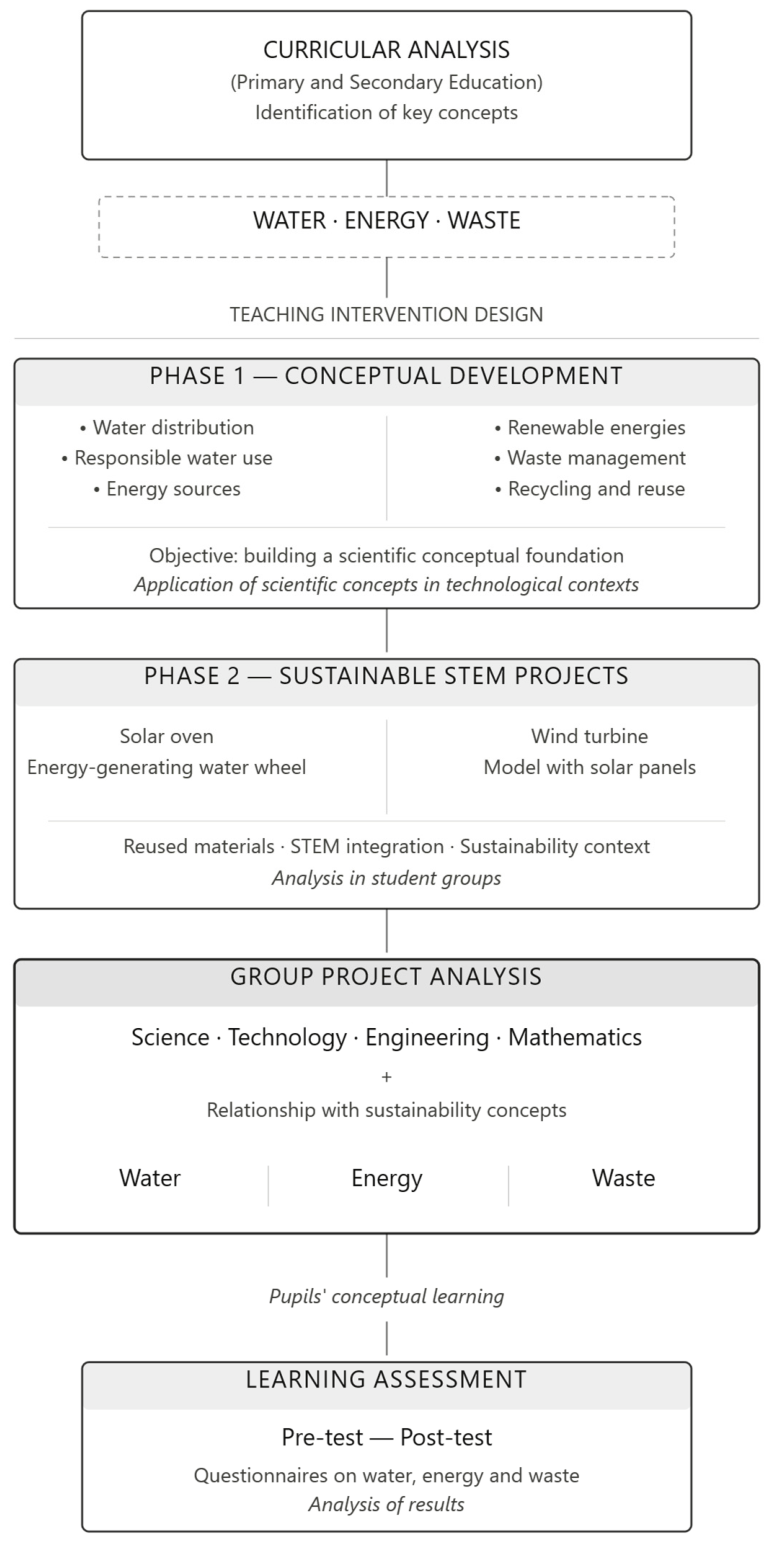
Figure 1 synthesises the didactic model and the general sequence of the intervention, showing the relationship between the initial curriculum analysis, the key sustainability concepts, the two phases of the proposal, and the assessment of conceptual learning.
3.6. Measuring Instruments
Students’ conceptual learning was assessed using multiple-choice questionnaires administered before and after the intervention. The instruments were designed specifically for this study based on the prior curriculum analysis of content related to water, energy, and waste, to ensure correspondence between the concepts addressed during the intervention and those evaluated.
The development of the questionnaires followed a content-alignment procedure. First, the main conceptual contents related to water, energy, and waste were identified from the curriculum analysis. Second, items were written to reflect these contents and the learning objectives of the intervention. Third, the items were reviewed by members of the research team with expertise in science education, STEM education, and sustainability education, in order to assess their curricular relevance, conceptual adequacy, and linguistic clarity for each educational stage. Revisions were made to adapt the wording and cognitive demand of the items to Primary and Compulsory Secondary Education students.
Two versions of the questionnaire were used, adapted to each educational stage.
In Compulsory Secondary Education, the instrument consisted of 40 closed-response items developed from the curriculum content addressed during the intervention. The items covered knowledge related to the distribution and use of water, energy sources and transformations, and waste management and classification, incorporating both basic scientific content and technological applications and sustainability-related situations.
In Primary Education, a questionnaire adapted to the students’ developmental and curricular level was used, consisting of 15 multiple-choice items. This adaptation responded to criteria of appropriateness in terms of length, cognitive complexity, and the linguistic formulation of the items, while maintaining the same organisation around the three conceptual domains of water, energy, and waste.
Both questionnaires were therefore structured around the three key concepts that organised the intervention, enabling analysis of not only the overall development of conceptual learning, but also differentiated improvement in each of the three domains. By way of illustration, the items included questions on the identification of renewable energy sources, the classification of waste into appropriate bins, and the recognition of basic aspects related to the distribution of water on Earth.
To strengthen the traceability between instructional design and assessment, the items were classified in advance according to the key concept to which they contributed most directly. This decision allowed the pretest and posttest results to be interpreted both globally and by conceptual domain.
Table 7 summarises the general characteristics of the instruments used.
This process provided preliminary evidence of content validity; however, the instruments should not be considered fully validated questionnaires. For this reason, the psychometric analyses reported below were used to provide additional exploratory evidence on their performance in the present sample.
3.7. Psychometric Analysis of the Questionnaires
Because the main aim of the study was to examine changes in students’ conceptual learning, the psychometric performance of both questionnaires was analysed. The purpose of this analysis was to assess the adequacy of the instruments for measuring the content addressed and to contextualise the interpretation of the pretest and posttest results.
Three aspects were analysed in both questionnaires: internal consistency using Cronbach’s alpha, item difficulty index, and item discrimination index. Internal consistency was estimated using a coefficient appropriate for dichotomous items, to assess the reliability of the instrument at each administration. The difficulty index was calculated as the proportion of students who answered each item correctly, whereas the discrimination index was used to estimate the ability of each item to distinguish between students with higher and lower overall performance.
These analyses made it possible to identify the overall performance of the instruments and to detect possible differences between educational stages in terms of stability and item functioning. In the case of the Primary Education questionnaire, given its shorter length, the psychometric results were interpreted cautiously and with a primarily exploratory purpose.
To facilitate interpretation of the results, the psychometric indicators were considered for both the pretest and the posttest, allowing assessment of whether the behaviour of the instrument remained reasonably stable after the intervention.
3.8. Data Analysis
The data analysis combined descriptive and inferential procedures. In the first phase, descriptive statistics were calculated to examine students’ initial level of conceptual knowledge and its development after the intervention. Specifically, means, standard deviations, percentages of correct responses, and results differentiated by conceptual domain (water, energy, and waste) were obtained.
In the second phase, the psychometric properties of the questionnaires were analysed by means of indicators of internal consistency, item difficulty, and item discrimination, to contextualise the quality of the measures used.
In the third phase, pretest and posttest scores were compared using tests for related samples to determine whether the changes observed after the intervention were statistically significant (paired-samples t-test). Changes in each of the conceptual domains were also analysed, making it possible to identify potential differences in the pattern of improvement according to the content addressed.
To complement the interpretation of statistical significance, effect sizes were calculated, allowing the magnitude of the observed changes to be estimated and their educational relevance to be assessed beyond the p value.
Because the questionnaires used in Primary Education and Compulsory Secondary Education were not equivalent in length or wording, comparisons between educational stages were conducted with caution. Accordingly, the analysis focused primarily on the pattern of change observed within each stage, with between-stage comparison used in an interpretive sense rather than as a direct metric equivalence of absolute scores.
Given the quasi-experimental nature of the study and the absence of a control group, several precautions were taken to reduce overinterpretation of the results. First, the analysis was based on paired pretest–posttest comparisons using only students with complete data at both time points. Second, effect sizes were reported alongside statistical significance to estimate the magnitude of the observed changes. Third, results were interpreted primarily as within-group changes associated with the intervention, rather than as evidence of causal effects. Nevertheless, possible threats to internal validity, such as maturation, testing effects, or contextual influences, cannot be completely ruled out.
3.9. Ethical Considerations
The study was conducted in accordance with the ethical principles commonly applied in educational research. Students participated within the context of ordinary classroom activities, and anonymity in data processing was always guaranteed, as was the exclusively academic and research use of the information collected. During the analysis phase, all data were anonymised and treated in aggregate form.
4. Results
4.1. Psychometric Quality of the Assessment Instruments
Before analysing changes in students’ conceptual learning, the psychometric properties of the questionnaires used at both educational stages were examined. Given that the instruments consisted of dichotomous items (correct/incorrect), indicators of internal consistency, mean difficulty, and mean discrimination were analysed to assess their suitability for evaluating content related to water, energy, and waste.
In Compulsory Secondary Education, a 40-item questionnaire was used in both pretest and posttest format. The instrument addressed content related to waste management and hierarchy, recycling and reuse, renewable energy and energy consumption, the environmental impact of resource use, as well as the characteristics, availability, and management of water. The questionnaire was administered to 43 students at pretest and to 38 at posttest; consequently, the inferential analysis was conducted using the available matched cases.
In Primary Education, an adapted 15-item questionnaire was used, likewise centred on the three conceptual domains of the study. In this case, the instrument was administered to the same 23 students at both pretest and posttest.
The psychometric results showed differentiated performance across the two instruments. In the case of the Compulsory Secondary Education questionnaire, internal consistency was adequate in both the pretest and the posttest, with values of α = 0.79 and α = 0.73, respectively. The mean test difficulty was in the mid-range (0.54), although some items showed extreme levels of ease or difficulty. Mean discrimination was acceptable (0.23), albeit with some heterogeneity across items. Taken together, these results indicate that the questionnaire showed adequate psychometric properties for assessing the conceptual knowledge of students at this stage.
In the case of the Primary Education questionnaire, internal consistency was lower, especially at pretest (α = 0.38), and moderate at posttest (α = 0.64). This pattern may be related to the shorter length of the instrument, the conceptual diversity of the items, and the presence of questions with very different levels of difficulty. Mean test difficulty was likewise in the mid-range (0.58), whereas mean discrimination was acceptable (0.31). The Primary questionnaire should therefore be interpreted as an exploratory instrument, useful for detecting overall changes in conceptual learning, although open to improvement in future applications. Overall, these psychometric indicators should be interpreted as preliminary evidence of instrument performance in the present sample, rather than as full validation of the questionnaires.
4.2. Overall Changes in Conceptual Learning in Compulsory Secondary Education
The results of the questionnaire administered in Compulsory Secondary Education show an improvement in students’ conceptual knowledge following the teaching intervention. Mean scores, expressed on a 10-point scale, rose from M = 4.76 (SD = 1.22) at pretest to M = 5.94 (SD = 1.33) at posttest. This change is equivalent to an increase from 47.57% to 59.34% correct responses.
To determine whether the observed improvement was statistically significant, a paired-samples t-test was conducted with the 38 students who completed both administrations of the questionnaire. The results showed statistically significant differences between pretest and posttest, t(37) = 4.04, p < 0.001. The effect size was dz = 0.66, indicating a medium effect.
Overall, these results show a significant improvement in the conceptual knowledge of Compulsory Secondary Education students following the implementation of the sustainability-oriented integrated STEM intervention. Although the group’s initial level was relatively low, especially in some water- and waste-related content areas, the intervention was followed by a general increase in the percentage of correct responses.
4.3. Overall Changes in Conceptual Learning in Primary Education
In Primary Education, a clear improvement in student performance was also observed following the intervention. The mean score, expressed on a 10-point scale, increased from M = 6.23 (SD = 1.36) at pretest to M = 7.94 (SD = 1.46) at posttest. This change represents an increase from 62.32% to 79.42% correct responses.
Inferential analysis using a paired-samples t-test showed that this improvement was statistically significant, t(22) = 6.03, p < 0.001. The effect size was dz = 1.26, indicating a large effect.
These results show that Primary Education students experienced a substantial improvement in their conceptual knowledge following the intervention. However, this finding should be interpreted in light of the more exploratory nature of the instrument used at this educational stage, due to its smaller number of items.
4.4. Summary of Overall Results by Educational Stage
Table 8 summarises the overall pretest–posttest results for both educational stages.
In Compulsory Secondary Education, the analysis was conducted with the 38 students who completed both pretest and posttest.
The overall comparison shows statistically significant improvements at both educational stages. In Primary Education, the effect size was large, whereas in Compulsory Secondary Education the improvement, although also significant, was of moderate magnitude.
As the instruments used at the two stages were not equivalent in length or conceptual complexity, these differences should be interpreted with caution and in terms of the general pattern of improvement, rather than as a direct comparison of absolute scores.
4.5. Results by Conceptual Domain
To examine the observed pattern of conceptual learning in greater detail, items in both questionnaires were grouped into three domains: water, energy, and waste. This analysis allowed identification of which conceptual areas showed the greatest changes following the intervention at each educational stage.
4.5.1. Primary Education
In Primary Education, the largest improvements were observed in the water domain, followed by waste, whereas energy showed a more moderate gain. This pattern appears related to students’ initial level of knowledge, as the energy domain had a relatively higher percentage of correct responses at pretest, as shown in
Table 9.
The stronger improvement in the water domain suggests that the intervention was particularly useful in consolidating content that initially showed lower levels of mastery, such as water distribution, availability, and responsible use.
4.5.2. Compulsory Secondary Education
In Compulsory Secondary Education, the largest improvements were also observed in the water and waste domains, whereas the energy domain showed a more moderate increase. Once again, this pattern appears to be linked to students’ initial level of knowledge, which in energy was relatively higher than in the other two domains, as shown in
Table 10.
At this stage, the waste domain showed the lowest initial level, reinforcing the idea that the intervention contributed particularly to improving content areas that were less well consolidated at the outset.
4.6. Comparative Summary of the Pattern of Results
Considered together, the results show a consistent pattern across both educational stages. First, statistically significant improvements were observed in students’ conceptual learning in both Primary and Secondary Education following implementation of the intervention. Second, these improvements were evident across the three conceptual domains analysed, although with different intensities depending on the educational stage and the content considered. Third, the largest gains tended to be concentrated in those domains with lower initial levels of knowledge, especially in the case of water and waste.
Differences between stages were also observed in the magnitude of change. In Primary Education the effect size was large, whereas in Compulsory Secondary Education the effect, although statistically significant, was moderate. As the instruments were not equivalent, this difference should not be interpreted as a direct superiority of one stage over the other, but rather as an indication that the pattern of improvement associated with the intervention was not identical at both educational levels.
Overall, the findings suggest that a sustainability-oriented integrated STEM intervention may be associated with improvements in students’ conceptual learning across different educational stages, particularly when it explicitly articulates curriculum content, environmental problems, and technological applications.
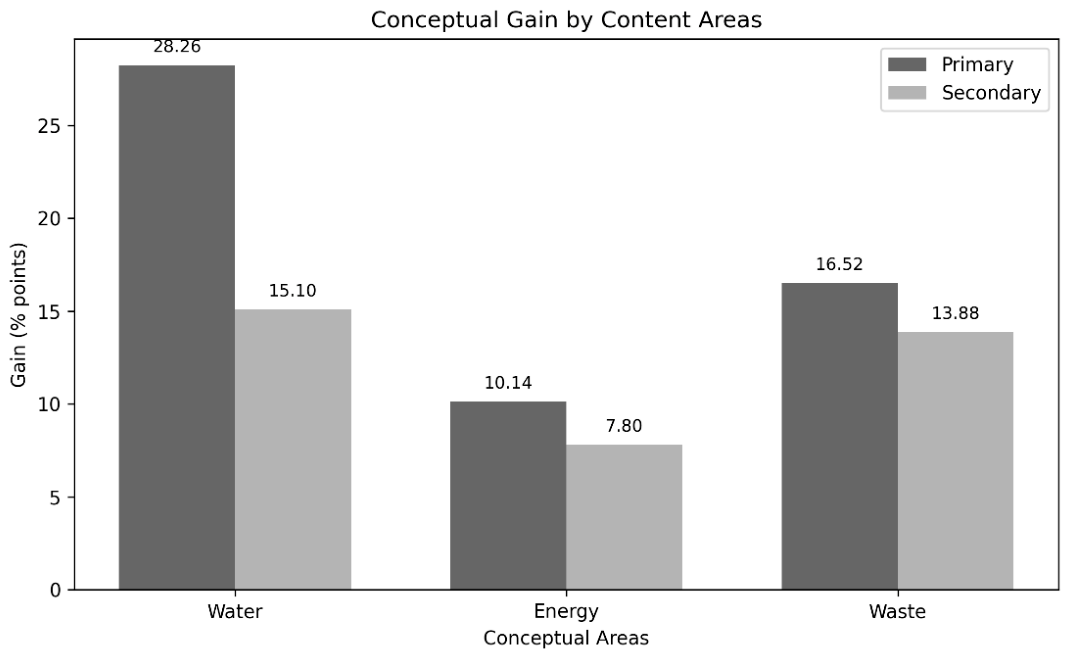
Figure 2 shows the conceptual gain by content domain at both educational stages. In Primary Education, the greatest improvement was observed in the water domain, followed by waste and energy. In Compulsory Secondary Education, the same general pattern is repeated, although with more moderate gains across all three domains.
5. Discussion
The results of this study show that the sustainability-oriented integrated STEM intervention was associated with statistically significant improvements in students’ conceptual learning in both Primary Education and Compulsory Secondary Education. At both stages, mean scores increased from pretest to posttest, although to different degrees. Overall, these findings support the view that articulating scientific content, socio-environmental problems, and technological applications can provide a productive pedagogical framework for science teaching in real school contexts.
This finding is consistent with the broader integrated STEM literature. Several systematic reviews have shown that STEM interventions that integrate scientific and technological disciplines around real-world problems can support learning when they engage students in processes of analysis, design, and contextualised problem-solving (
Honey et al., 2014;
Kelley & Knowles, 2016). Along similar lines, recent studies emphasise that the positive effects of integrated STEM depend largely on the degree of disciplinary integration and on the quality of the instructional design through which scientific content, engineering tasks, and technological applications are articulated (
Portillo-Blanco et al., 2024;
Zhou et al., 2025).
In this study, the projects served not as supplementary or merely motivational activities but as contexts for applying concepts already introduced in relation to water, energy, and waste. This teaching sequence appears to have supported a more explicit relationship between scientific content and the functional use of knowledge. Research on project-based learning in science has likewise indicated that learning experiences tend to produce stronger outcomes when the project is embedded within a structured conceptual sequence, rather than limited to the construction of isolated artefacts or prototypes (
Guo et al., 2020;
Markula & Aksela, 2022).
From the perspective of sustainability education, the results also reinforce the relevance of organising the intervention around the concepts of water, energy, and waste. These three domains allow fundamental scientific content to be connected with contemporary socio-environmental problems and with technological decisions related to resource management. In this regard, the intervention did not merely use sustainability as a thematic context but incorporated it as an organising principle for conceptual learning, aligning curriculum, projects, and assessment. This approach is consistent with the principles of Education for Sustainable Development, which emphasise the need to promote learning that integrates scientific knowledge, an understanding of socio-environmental systems, and informed decision-making (
Sterling, 2010;
UNESCO, 2020;
Wals, 2011).
Another relevant finding is that improvement was not homogeneous across conceptual domains. At both educational stages, the largest gains were concentrated in water and waste, whereas energy showed more moderate increases. This pattern may be explained in part by students’ initial level of knowledge, since domains with lower prior mastery offer greater scope for improvement. However, alternative explanations should also be considered. Differences in the emphasis given to each conceptual domain during the intervention, variations in item difficulty, students’ greater familiarity with some topics, and possible ceiling effects in the energy domain may also have influenced the pattern of gains observed. At the same time, it may also be interpreted from the perspective of conceptual learning. When students can relate new concepts to observable contexts and to experiences involving functional application, opportunities for conceptual reorganisation increase (
Duit & Treagust, 2003). In this study, issues related to water and waste may have offered situations more directly connected to students’ everyday experience, thereby facilitating the construction of new conceptual relationships.
The more moderate improvement in the energy domain calls for a more nuanced interpretation. On the one hand, students showed relatively higher initial levels in this area, which reduced the margin for improvement. On the other hand, familiarity with energy-related artefacts such as wind turbines or solar panels may encourage superficial recognition of the content without necessarily guaranteeing a deep understanding of the scientific principles involved. The STEM education literature has repeatedly cautioned that the use of prototypes or devices does not automatically produce conceptual learning; effectiveness depends on teacher mediation and on making the links between phenomenon, function, and design explicit (
Markula & Aksela, 2022;
Thibaut et al., 2018).
The comparison between educational stages also yields an interesting result. Although significant improvements were observed in both groups, the magnitude of change was greater in Primary Education. This difference should not be interpreted as a direct comparison between educational levels, given that the assessment instruments were not equivalent, but it does suggest that the pattern of improvement associated with the intervention was not identical across the two stages. Consequently, the larger effect size observed in Primary Education should not be interpreted as evidence that the intervention was more effective at this stage, but rather as an indication of a different pattern of pretest–posttest change within the specific instrument and context used. One possible interpretation is that the visual, applied, and contextualised nature of the projects may be especially conducive to learning at earlier ages, when students’ initial understanding of scientific concepts may benefit more directly from concrete examples and tangible experience. Several studies have shown that project-based learning can be particularly effective when tasks enable students to connect school concepts with real situations and with problems that are meaningful to them (
Guo et al., 2020;
Krajcik & Blumenfeld, 2006).
In Compulsory Secondary Education, by contrast, the moderate improvement observed may be interpreted in light of the greater level of conceptual abstraction required by scientific content at this stage. From this perspective, a brief intervention may be sufficient to generate detectable improvements in conceptual knowledge, but not necessarily to consolidate deep understanding across all the content involved. This point is particularly relevant because the intervention comprised only four sessions delivered under ordinary classroom conditions—a design that strengthens ecological validity while also limiting the scope of the observed change.
The study also speaks to a central debate in the STEM education literature: the difference between genuinely integrated proposals and technological activities that merely adopt the STEM label. Several authors have warned that many experiences described as STEM show limited or superficial disciplinary integration, without substantive conceptual articulation among science, technology, engineering, and mathematics (
Thibaut et al., 2018;
Kelley & Knowles, 2016). In the present study, the intervention was explicitly designed to link curriculum content, scientific explanation, and the analysis of technological projects. From this perspective, one of the study’s main contributions is to show that the educational potential of STEM proposals depends less on the mere presence of projects than on the quality of the teaching sequence into which they are integrated.
Finally, this study contributes to a line of research that still requires more empirical evidence from real school settings. Several reviews have pointed out that, despite the growth of the STEM field, a substantial part of the literature has focused on conceptual frameworks, reviews, or teachers’ perceptions, whereas studies analysing actual interventions through learning data remain relatively scarce (
Deehan et al., 2024;
Portillo-Blanco et al., 2024). In this respect, the present study provides empirical evidence on the implementation of a sustainability-oriented integrated STEM intervention across two educational stages, offering data on its association with students’ conceptual learning.
In sum, findings suggest that sustainability-oriented integrated STEM can support conceptual learning in science education when it is grounded in four main conditions: the selection of relevant socio-environmental problems, the articulation between conceptual development and application, the use of projects as contexts for scientific reasoning, and the alignment between teaching and assessment. Meeting these conditions appears to be more decisive than the mere presence of STEM projects in determining whether such interventions translate into meaningful conceptual gains.
6. Conclusions
This study examined changes in students’ conceptual learning after a sustainability-oriented integrated STEM intervention in Primary Education and Compulsory Secondary Education.
First, statistically significant improvements were observed at both educational stages, indicating that the intervention was associated with progress in students’ conceptual knowledge of water, energy, and waste-related content. This finding supports the view that integrating scientific content with technological projects linked to socio-environmental problems may serve as a promising pedagogical strategy for science teaching.
Second, improvement was not uniform across content domains. At both stages, the largest increases were concentrated in the water and waste domains, whereas energy showed more moderate gains. This pattern suggests that the intervention was particularly useful in reinforcing content that was initially less well consolidated and highlights the importance of addressing sustainability through an explicit conceptual structure rather than solely through general awareness-raising.
Third, the pattern of improvement differed across educational stages. Although statistically significant pretest–posttest gains were observed at both stages, the magnitude of change was greater in Primary Education. This finding suggests that interventions based on contextualised projects may be especially productive at earlier stages, when students may benefit particularly from learning experiences that are visual, applied, and closely connected to their everyday environment.
From an academic perspective, the study makes several relevant contributions. First, it provides empirical evidence on the implementation of a sustainability-oriented STEM intervention in real school contexts, a dimension that remains underrepresented in the literature. Second, it places the focus on conceptual learning, an aspect that has received less attention than variables such as motivation or attitudes towards science in the field of STEM education. Third, it examines two different educational stages within the same intervention framework, enabling exploration of how this type of proposal operates at different levels of the education system. Finally, the study highlights the importance of designing teaching sequences based on alignment between curriculum, projects, and assessment, thereby strengthening coherence between teaching and learning.
Nevertheless, the study has several limitations that should be considered. First, the sample size was small, and convenience sampling was used, which limits the generalisability of the findings. Second, the pretest–posttest design without a control group does not allow the observed changes to be attributed exclusively and causally to the intervention. Third, the questionnaires showed uneven psychometric performance, especially in Primary Education, where the instrument should be regarded as exploratory. Although the interpretation of learning gains was based mainly on the pretest and posttest questionnaires, the intervention also included open-ended oral questions and classroom discussions that helped the teacher-researcher monitor students’ conceptual progression during the sessions. However, these interactions were not systematically recorded or analysed as an independent qualitative data source. Fourth, the use of different instruments across educational stages limits direct comparability between Primary and Compulsory Secondary Education. Finally, the duration of the intervention was brief, and no delayed posttest was administered. Consequently, the results should be interpreted as evidence of short-term conceptual change after the intervention, rather than as evidence of long-term learning consolidation or retention. This decision was due to the organisational constraints of the participating schools and the need to implement the study within the ordinary teaching schedule. Future studies should include one or more delayed posttests in order to examine whether the observed gains are maintained once instructional support has been withdrawn.
Despite these limitations, the study offers relevant implications for both educational practice and future research. From a pedagogical perspective, the findings suggest that sustainability-oriented STEM interventions should be designed based on explicit alignment between curriculum content, socio-environmental problems, and technological projects, while also ensuring teacher mediation that makes the underlying scientific principles visible. From a research perspective, future studies could expand the sample, incorporate comparison groups, analyse longer interventions, and develop more refined assessment instruments for each educational stage. Future studies should also incorporate more systematic qualitative evidence, such as audio-recorded classroom discussions, student project outputs, interviews, observation protocols, or analysis of group-work interactions, in order to triangulate questionnaire results more robustly and obtain a deeper understanding of students’ conceptual learning. It would also be valuable to examine in greater depth which types of projects are most conducive to learning in specific conceptual domains, and how these effects vary according to age, prior knowledge, and the degree of disciplinary integration achieved.
Overall, these findings suggest that sustainability-oriented integrated STEM education is a promising pathway for supporting short-term conceptual learning in science when projects are embedded in coherent, conceptually structured teaching sequences linked to socio-environmental problems.




 ,
,