Article

Game-Based Learning for the Promotion of Multidimensional Conceptual Change in Astronomy Education


by
Adriana Cardinot
1,2,*,†,
Veronica McCauley
1,† and
Jessamyn A. Fairfield
3,†
1
School of Education, University of Galway, H91 TK33 Galway, Ireland
2
Postgraduate Program in Natural Sciences, Laboratory of Physical Sciences, Northern Fluminense State University, Campos dos Goytacazes 28013-602, RJ, Brazil
3
School of Natural Sciences, University of Galway, H91 TK33 Galway, Ireland
*
Author to whom correspondence should be addressed.
These authors contributed equally to this work.
Educ. Sci. 2026, 16(6), 845; https://doi.org/10.3390/educsci16060845
Submission received: 19 December 2025 / Revised: 6 May 2026 / Accepted: 8 May 2026 / Published: 27 May 2026

Abstract

Research in astronomy education has traditionally focused on students’ conceptual understanding through a cognitive lens, despite growing recognition that learning is multidimensional and extends beyond the acquisition or re-organisation of ideas. Game-based learning (GBL) is increasingly used to support conceptual learning in science, yet it is rarely examined through a conceptual change lens that accounts for both cognitive and affective dimensions, particularly in authentic post-primary astronomy classrooms. As such, this study compares a game-based learning (GBL) approach with a non-game, teacher-led instructional approach incorporating constructivist elements, with both conditions designed to provide comparable opportunities for multidimensional conceptual change in post-primary astronomy, focusing on cognitive and affective learning outcomes. A mixed-methods quasi-experimental design, including diagnostic knowledge tests, affective learning surveys, focus groups and classroom observations, was employed with a cohort of 474 post-primary students, divided into intervention and control groups. Findings indicate that non-digital games can support sustained multidimensional conceptual change for post-primary students. Statistically significant differences were observed between intervention and control groups across both cognitive and affective outcomes. In addition, the game-based learning (GBL) pedagogical intervention created multiple opportunities for students to review and refine their knowledge and perceptions of astronomy. Overall, the multidimensional framework of conceptual change offers a clearer account of how and why teaching astronomy with non-digital games can be effective, contributing to the advancement of both theory and practice.

1. Introduction

The Solar System is a highly complex and abstract concept, characterised by its dynamic nature, vast spatial dimensions, and different time scales (Hennig et al., 2023; Salimpour et al., 2024). As a result, educators face numerous challenges in assisting students in constructing a more comprehensive understanding of astronomical knowledge. For instance, students often struggle to grasp the temporal and spatial scales associated with astronomical phenomena, given the immense scales involved in astronomy and its frequent misrepresentation in science textbooks and popular culture (Cole et al., 2018). Consequently, despite its popularity, astronomy is perceived as highly demanding in formal education (Chastenay, 2018; Mendes et al., 2026). This is partly because everyday events, such as the phases of the moon or seasonal variation, can only be accurately described through non-obvious and counter-intuitive scientific explanations. In response to these challenges, various aspects of astronomy teaching and learning in formal education have been investigated to improve instructional practices, enhance students’ conceptual understanding, and promote engagement and interest in astronomy within formal educational settings (Korur, 2015; Pompea & Russo, 2020; Vosniadou & Skopeliti, 2017). In particular, the process of conceptual change has been one of the main areas of research in astronomy education in formal settings (Akimkhanova et al., 2023; E. V. Slater et al., 2018).
Conceptual change in the field of astronomy education has primarily centered around the cognitive domain, investigating students’ ideas that either align with or deviate from the scientific view, and, when required, the modification of alternative conceptions (Plummer et al., 2020; Plummer & Zahm, 2010). However, there is a noticeable gap in research that comprehensively explores conceptual change from a multi-dimensional perspective (Nadelson et al., 2018). From this perspective, it is essential to recognise that for conceptual change to truly take place, addressing both cognitive and affective/social dimensions of learning becomes necessary (Heddy et al., 2018). These dimensions are interlinked and play significant roles in shaping students’ knowledge construction process (Li et al., 2023). By expanding the focus beyond the cognitive domain, a more robust understanding of conceptual change can be achieved, leading to more effective instructional strategies in astronomy education (Plummer et al., 2020).
Despite the benefits of a multidimensional instructional approach, the development of a pedagogy that promotes a dialogue between different domains of learning is not an easy task (Duit & Treagust, 2012; Nadelson et al., 2018). In particular, astronomy education poses additional challenges given the lack of opportunities for teachers and students alike to engage formally with the subject (Plummer et al., 2020; Plummer & Zahm, 2010). For instance, astronomy was only included in the post-primary level formal curriculum in recent years in many countries (Cardinot et al., 2022; Igbokwe, 2015; National Council for Curriculum and Assessment, 2015; Schleigh et al., 2015). Thus, teachers and students are only beginning to negotiate this realtively new area of formal science education (Mendes et al., 2026). As a result, the gap between research and practice often prevents the inclusion of a multidimensional instructional approach in real classrooms (Cole et al., 2018). To address this issue, the research objectives outlined in this paper are twofold, seeking to critically examine the process of multidimensional conceptual change in formal education. Firstly, Game-Based Learning (GBL) is explored as a potential pedagogical approach to support multidimensional learning in astronomy education, taking into consideration the complex and often messy environment of the classroom. Secondly, conceptual change is investigated from cognitive and affective dimensions of learning to provide a more robust learning experience for post-primary students.
This paper investigates the effectiveness of non-digital games in fostering students’ conceptual understanding, the intervention targeted three curriculum-aligned topics where students commonly experience difficulties (Cardinot et al., 2022; Galano & Testa, 2025): seasons, gravity, and the Big Bang. These topics are not limited to the Irish curriculum and are included in many other international science syllabi, thus making this research applicable to other contexts. In addition, the evidence provided could serve as a basis for further research in other topics of the curriculum. Research questions are described in more details in Section 3, which includes: In what way does GBL instruction influence conceptual change in the cognitive domain of post-primary students? In what way does GBL instruction influence conceptual change in the affective domain of post-primary students?

2. Theoretical Framework

2.1. Multidimensional Framework of Conceptual Change

Conceptual change is a major area of educational research that has been explored through various theoretical lenses, such as ontological, epistemological views, and affective/social processes (Li et al., 2023). Early influential models on how students operalise learning, as proposed by Posner et al. (1982), placed the role of learners’ prior knowledge and conceptual accommodation as key to conceptual change. Within this classical view of learning, conceptual change was understood primarily as a rational, cognitive process, conceptual change was conceptualised primarily as a rational and cognitive process, driven by learners’ dissatisfaction with prior existing conceptions and their replacement by more intelligible, plausible, and fruitful alternatives (Posner et al., 1982). While highly influential, such models have been criticised for offering a largely unidimensional account of learning, with affective, epistemological, and social factors remaining implicit or overlooked (Amiruddin et al., 2025; Pacaci et al., 2024).
However, as research in science education shifted toward situated classroom contexts, persistent patterns of conceptual instability (Ding et al., 2024; diSessa, 1993; diSessa et al., 2004), coexistence of ideas (Vosniadou, 1994), and affective engagement (Pintrich et al., 1993) highlighted the limitations of analysing conceptual change through a single theoretical perspective. In response, multidimensional conceptual ellaborations were explored to capture the complexity, non-linearity, and context sensitivity of learning processes (Pacaci et al., 2024; Saqr et al., 2025).
One of the earliest explicit theoretical contributions to the multidimensional view of conceptual change within classrooms was provided by Tyson et al. (1997). Rather than proposing a prescriptive instructional model, Tyson et al. introduced a multidimensional interpretative framework designed to “construct a more holistic picture” (p. 398) of learning. Within this framework, conceptual change is understood as emerging from the interaction of multiple dimensions, including ontological, epistemological, cognitive, and affective/social factors. Learning is thus viewed as more than the acquisition of correct scientific ideas as it also involves changes in how learners justify knowledge, how they emotionally engage with learning, and how social contexts shape meaning-making (Pacaci et al., 2024). In this way, Tyson et al. (1997) contribution represents a foundational theoretical shift beyond cognition-centred models such as Posner et al. (1982), providing a critical interpretive lens for undertanding conceptual change.
Building on this foundational work, later studies have elaborated and consolidated multidimensional perspectives by situating conceptual change within broader theoretical views. For instance, Saqr et al. (2025) synthesised conceptual change research to emphasise its complex, dynamic, and context-dependent nature, highlighting the interdependence of cognitive structures, epistemological beliefs, motivational factors, and instructional contexts. More recent research, such as Nadelson et al. (2018); Pacaci et al. (2024), examined conceptual change in formal educational contexts by simultaneously analysing cognitive knowledge, mental models, ontological categorisations, epistemological commitments, motivational beliefs, and instructional strategies. Their findings demonstrated that conceptual development may involve both incremental (‘normal’) and more profound (‘radical’) shifts in understanding, depending on how these dimensions interact within specific learning environments. Further research has also explored the use of multiple theoretical lenses as a means of capturing the complexity of students’ learning in science education (McLure et al., 2020).
Despite the recognised value of multidimensional approaches, their application in science education remains theoretically and methodologically challenging (McLure et al., 2020; Nadelson et al., 2018), and studies adopting such perspectives in astronomy education remain relatively scarce (Bayeck, 2020). To address this gap, the present study adopts Tyson et al. (1997) multidimensional interpretative framework of the learning process as its primary theoretical orientation, given its potential to capture the complexity of learning in authentic classroom settings through both cognitive and affective/social analytical dimensions which are operationalised in the present study. Specifically, conceptual change is examined through two analytically distinct but interacting dimensions: an ontological lens focused on cognitive learning and an affective/social lens focused on motivation and attitudes.

2.1.1. An Ontological Perspective

Achieving conceptual change from an ontological perspective is a long and challenging process that requires sustained learner engagement and strategically designed teaching materials to support the modification of students’ cognitive structure (Li et al., 2023; Pacaci et al., 2024). From this perspective, conceptual change is treated largely as a cognitive phenomenon, involving substantial shifts in how students organise and relate ideas. In particular, it can require reclassifying concepts into ontological categories that are appropriate to the topic of study (Pacaci et al., 2024). Several theoretical frameworks have been suggested to explore students’ conceptual knowledge and its role in learning, such as ontological frameworks (Li et al., 2023) and mental models (Ding et al., 2024; Vosniadou, 1994). While ontological frameworks focus on the categorical commitments underlying learners’ understanding (e.g., whether phenomena are conceptualised as objects, processes, or emergent systems) (Pacaci et al., 2024), mental models describe the coherent but often incomplete internal representations that learners construct to make sense of phenomena (Ding et al., 2024). In this sense, mental models can be understood as representations of learners’ ontological commitments, reflecting how underlying ontological assumptions are organised, stabilised, and expressed in reasoning across contexts.
Although these analytical views of learning explore in great detail how students apply their naive understanding in different situations, they assume that knowledge is a stable network of defined ideas. In contrast, the Knowledge-in-Pieces perspective (diSessa, 1988) describes an alternative view of students understanding in which knowledge is a collection of small elements that are activated to explain a concept (diSessa, 1993). Similarly, the resources framework proposed by Hammer (2000), conceptualises knowledge as comprising small-scale ideas or resources that can be activated in different situations. Learning through this perspective occurs when the resources are deliberately activated and transferred into different contexts. Rather than excluding students’ ideas that are considered incorrect, the resources framework emphasises the productive starting points that students bring, which can be leveraged to support further learning.
Hammer (2000) introduced the resources framework to describe the productive potential of students’ reasoning, focusing on how the ideas learners bring to a situation can support sense-making, while also accounting for the underlying difficulties that may arise in the learning process. Resources are generated from everyday experiences and prior knowledge to make sense of new situations. As Hammer et al. (2005) explain, students’ concepts are “comprised many fine-grained resources that may be activated or not in any particular context” (p. 4). Within this resources framework, resources are neither right nor wrong, instead, their appropriateness depends on the context in which they are activated (Goodhew et al., 2019; Tang & Hammer, 2024). For instance, the resource closer means stronger may be activated in multiple contexts. In astronomy, students frequently use this resource to explain seasonal temperature variation, reasoning that higher temperatures occurs during the summer because Earth is closer to the Sun (Galano & Testa, 2025; Guerra-Reyes et al., 2024). In this context, the resource is applied inappropriately. However, the same resource may be productively activated when students reason about the strength of the gravitational force between two objects, concluding that the closer an object is to Earth, the stronger the gravitational pull it experiences. In this way, the resources framework provides a means of analysing ontological change that extends beyond the binary notions of correctness (Hoehn & Finkelstein, 2018). Furthermore, the resources framework embraces the dynamism of students’ ideas as they progress in education and connect with prior experiences to develop their understanding of a topic (Wittmann et al., 2019). Although there is no consensus on which theoretical perspective best describes ontological change in knowledge construction, the resources framework arguably better captures the diversity and transitional nature of students’ ideas (Tang & Hammer, 2024).
In this study, we adopt the view that learning is ‘messy’, in the sense that students’ ideas are pluralistic and flexible, and are shaped by both social and individual factors. When reasoning about a problem, students may activate their existing resources through either a passive or deliberate mechanism (Suárez et al., 2023; Tang & Hammer, 2024). The activation occurs in a context-sensitive way, as similar conceptual questions may elicit different resources. Also, the resources framework considers that novices and scientists may share resources, and therefore prior knowledge can serve as a seed for further learning (Cardinot et al., 2022).
From this standpoint, cognitive conceptual change involves refining, reorganising or modifying the structure or activation of students’ pre-instructional resources. Accordingly, to interpret the ontological changes in this study, the resources framework is adopted as a primary analitycal lens (Hammer, 2000; Suárez et al., 2023; Tang et al., 2020). Consistent with constructivist principles (Vygotsky, 1978), this framework enables an analysis of how students’ reasoning and discourse can change as a result of instruction that goes beyond the correctness of answers. Since learning through games provides multiple channels of learning (e.g., by analysing the information from the games, discussions and collaborations between peers), the resources framework offers a means of identifying the most commonly activated fine-grained elements (resources) in students’ reasoning that are most likely to support a conceptual change in the cognitive domain of astronomy concepts.
Previous work by the Cardinot et al. (2022) has shown that when reasoning about astronomy, students exhibit a flexible, dynamic and highly context-dependent understanding. Pre-instructional ideas, once known, can be viewed as a malleable base layer for formal learning, where students confront their initial conceptions towards a scientifically informed foundation. Building on this work, we propose an adapted application of the resources framework to investigate cognitive conceptual change by analysing students’ reorganisation of knowledge toward a more sophisticated scientific understanding.

2.1.2. An Affective/Social Perspective

Learning has been shown to depend on the affective domain (also referred to as affective learning in the literature) in several ways (Y.-C. Kuo et al., 2024), such as motivation towards learning, engagement and self-efficacy. The affective domain is defined as how “people emotionally respond to learning” (Cardinot et al., 2022, p. 4), which contributes to the student perception of school experience and cognitive learning. In the context of astronomy education, research has shown that students’ identification with the subject, as well as their content learning, are influenced by two key constructs of affective learning: enjoyment of the subject-task and intentional engagement (Cardinot et al., 2022; DeWitt et al., 2019). Instructional approaches that embrace these affective constructs can encourage students to persist in task completion as well as learn from their mistakes, which may result in greater cognitive change (McLure et al., 2020). Despite this, affective learning has received limited attention in the context of astronomy education (T. F. Slater & Tatge, 2017).
In this study, affective learning is investigated through two key constructs: attitude and motivation to better understand the process of conceptual change beyond the cognitive perspective as well as investigate the importance of these constructs to promote long-term learning.
Attitude refers to a student’s “readiness or predisposition to respond” (Koballa, 1988, p. 117) and encompassess the beliefs, emotions, and behavioural intentions towards learning. However, attitude is a complex concept to define, resulting in a large body of research that focuses on developing scales to measure attitudes towards learning (Bartlett et al., 2018; Marušić & Hadžibegović, 2018; Mills et al., 2023). Moreover, attitudinal responses can be influenced by several factors and are context dependent. For instance, Marušić and Hadžibegović (2018) showed that different factors, such as gender, subject and cross-cultural aspects, also impact post-primary students attitude, perception and self-efficacy towards a subject. However, Eccles and Wigfield (2020) suggests that task value or the importance students place on learning (Vanslambrouck et al., 2018) and self-efficacy (Bandura et al., 1999; Lin & Xu, 2025) are key factors that directly influences attitudes in formal education. Thus, self-efficacy and task value are considered in this research.
Motivational traits also play a key role in affective learning within science education as they can promote positive feelings towards science and encourage long-term engagement with science, which can impact the cognitive learning domain (Valenzuela-Peñuñuri et al., 2024). Traditionally, student motivation has been described through the dichotomy (Kapp, 2012) of intrinsic motivation (driven by internal rewards) and extrinsic motivation (driven by the need for external rewards). However, motivation also involves feelings towards learning, such as enjoyment (Membiela et al., 2023). Although enjoyment of the subject does not necessarily predict students’ participation in science (DeWitt et al., 2013), the authors emphasise that more is needed to increase students’ interest and participation in science, such as science instructional approaches that broaden students views of science and scientific careers through engaging activities. Thus, in this study, motivation is explored through the mediation of feelings (enjoyment) and internal and external responses to learning.

2.2. Game-Based Learning as a Pedagogical Intervention

The constructivist instructional model views learning as a process in which learners build knowledge through active interactions with their environment (Do et al., 2023). GBL has emerged as an innovative teaching approach that follows the constructivist model of learning, as game experiences can offer learners unique opportunities to actively engage, experiment, and reflect while developing a range of cognitive and social skills (Cardinot & Fairfield, 2022). Educational games have been shown to engage players while providing multiple scenarios for learning across different disciplines (All et al., 2017).
GBL refers to the use of a game (physical or digital) as the medium for learning content. Several researchers (Azizan et al., 2018) have highlighted the value of play for learning science. For instance, Gee (2003, p. 3) stated that “games can show us how to get people to invest in new identities or roles, which can, in turn, become powerful motivators for new and deep learning in classrooms and workplaces”. This perspective is particularly relevant in science education, where there is ongoing concern about low uptake of subjects such as physics and astronomy (Gourlay & Mujtaba, 2025).
Learning through games can also create opportunities to connect classroom science to the real world (Othman & Ching, 2024), enhancing several aspects of student affective (Ullah et al., 2022) and cognitive learning (Barz et al., 2024). In astronomy education, games can provide a collaborative, highly interactive environment in which students explore ideas through problem-solving and narrative, supporting meaning-making and knowledge construction (Bayeck, 2020; Chiarello & Castellano, 2016; Law & Chen, 2016). Games also allow learners to build knowledge through multiple modalities such as images, texts, and interactive engagement, offering repeated opportunities to practise, adapt and apply their learning to new problems and contexts (Cheng & Yeh, 2026; Inchingolo et al., 2024).
Despite the widespread use of games in formal education, embedding intended learning outcomes into gameplay remains a challenge (Bayeck, 2020; McCauley & Cardinot, 2025). Oversimplified games may reduce content and negatively influence students’ attitudes towards learning (Hodges et al., 2020), whereas complex or abstract can disrupt gameplay flow and reduce engagement as the game becomes too serious and causes a feeling of boredom (Bayeck, 2020). In this way, educational games should balance game mechanics, learning goals, and motivational factors to maintain students involvement with the game and the content embedded therein (Kafai et al., 2022; C.-H. Kuo et al., 2023).
In this study, non-digital games were employed to investigate how a GBL teaching sequence could promote multidimensional conceptual understanding in astronomy education, building on both the scientific and alternative conceptions students brought to the classroom. In recent years, non-digital games have received increasing attention in science education, as they are accessible across diverse school contexts and do not depend on technological infrastructure. Although non-digital games seem promising in astronomy education, very few studies have applied them to formal instruction at the post-primary level (Bayeck, 2020; Susman & Pavlin, 2020; Tanel & Önder, 2020), and fewer still, have investigated their impact through a multidimensional conceptual change framework (Cardinot & McCauley, 2024; Othman et al., 2025). This study addresses this gap by positioning non-digital GBL as a pedagogical approach capable of supporting both cognitive and affective dimensions of learning within authentic classroom environments.

3. Research Questions

This research presented in this work aims to investigate the process of multidimensional conceptual change in astronomy education through a comparative analysis of two instructional approaches: the GBL and a more conventional instructional approach, which also included elements of constructivist learning theory. This study focuses on exploring the comparison between these two approaches to examine how different instructional strategies relate to students’ conceptual understanding and engagement with scientific knowledge. The goal of this research was not to establish causal relationships but to identify patterns and associations between instructional approaches and students’ learning outcomes within the complex environment of the classroom when teaching through GBL. Thus, the resarch questions are framed as comparative rather than causal, acknowledging the multifaceted nature of learning and the multiple factors that can influence educational outcomes. The central research question guiding this study is: in what way does GBL instruction influence multidimensional conceptual change of post-primary students? To further operationalise this comparison, the study addresses the following sub-questions:
RQ1a: What is the effect of GBL instruction on the alternative conceptions employed in the reasoning of astronomical science by students?
RQ1b: How is cognitive dimension of knowledge influenced when learning astronomy through games in the view of the resource framework?
RQ1c: In what way does GBL instruction influence conceptual change in the affective domain of knowlege?
The data analysis is guided by key indicators commonly employed in science education research, including: (i) evidence of multidimensional conceptual change (i.e., statistically significant gains in affect learning variables, shifts from alternative to scientifically accepted explanations), (ii) overall learning gains in both domains (affective and ontological), and (iii) a decrease in inconsistent or incorrect reasoning patterns.
In comparing these two teaching approaches, it is expected that students engaged in the GBL intervention will demonstrate more significant shifts in their conceptual understanding of astronomy, as well as more positive attitudes and motivation towards learning the subject, compared to those receiving conventional instruction. The comparative analysis will provide insights into the potential benefits of GBL in promoting multidimensional conceptual change in astronomy education, while also acknowledging the complexity of learning processes and the influence of various contextual factors within classroom settings.

4. Materials and Methods

A mixed-methods research design with an explanatory structure was used to investigate how game-based learning could contribute to secondary school students’ understanding and perception of astronomy. This approach enabled the examination of the research questions from complementary quantitative and qualitative perspectives, thereby strengthening the study’s trustworthiness (Creswell & Clark, 2017). The research was conducted over a six-week period to investigate whether non-digital games could promote conceptual change. A quasi-experimental design (non-equivalent groups with pre-, post-testing) was employed to determine if a GBL teaching sequence would enhance students’ conceptual understanding of astronomy (random assignment of students to the intervention and control groups was not feasible due to practical constraints within school settings). However, steps were taken to strengthen internal validity, including the use of representative cohorts across each year group and a balanced gender distribution between groups. The pre- and post-test design allowed for within-subject comparisons (pre- and post-test changes) and helped minimise threats to internal validity.

4.1. Pedagogical Intervention

Drawing on established research on Game-Based Learning, the instructional activities in the present study were designed to incorporate features shown to support students’ scientific thinking and reasoning (Asbury, 2018). In particular, the four non-digital games were developed to align specific game mechanics with targeted learning objectives. This approach is widely recognised in the GBL literature for promoting immersive and engaging learning environments that can foster students’ curiosity and intrinsic motivation to explore scientific concepts (Bayeck, 2020). Games were designed to promote active learning and critical thinking. Each game required students to apply scientific principles, make decisions, and solve problems to progress. This hands-on approach would allow students to experience the scientific method in action, encouraging them to think analytically and logically. As they encountered challenges and obstacles, students had to devise strategies, test hypotheses, and evaluate outcomes, closely mirroring the real-world process of scientific inquiry. Furthermore, the games were designed to provide immediate feedback to students based on their actions and decisions, enabling them to understand the consequences of their choices. This instant feedback mechanism was essential for their metacognitive development, encouraging them to reflect on their thought processes and refine their problem-solving strategies.
Collaborative learning was another integral aspect of the game-based activities. Students had the opportunity to work together in teams or compete in a friendly and supportive atmosphere. Previous studies have shown that collaboration not only encouraged effective communication and teamwork but also exposed students to diverse perspectives and approaches to scientific challenges (Duncan, 2020; Hidayat & Saad, 2025). Through these interactions, students developed crucial social and communication skills, which are vital for successful scientific discourse and collaboration within the scientific community.
The games implemented in this study were grounded with the Irish Junior Cycle science curriculum, as summarised in Table 1. A full description of the learning objectives of the Irish curriculum is provided in the Appendix A. It is important to note that, while the learning outcomes were drawn from the Irish context, similar astronomical concepts such as the solar system, celestial objects, and astronomical observations, are common across many international curricula (Caramaschi et al., 2022; Hirst Bernhardt & Bailey, 2025; Salimpour et al., 2021). This alignment ensured that students engaged with relevant and age-appropriate content, reinforcing their understanding of core scientific concepts; while also supporting the broader applicability of the pedagogical design beyond the local context.
In total, four distinct games were developed, each designed with a specific set of learning objectives in mind. Game rules and materials were structured to encourage active knowledge construction as students engaged with scientific ideas through discussion, manipulation of physical representations and collaborative decision-making with their peers. Together, these games formed a coherent instructional sequence intended to support both cognitive and affective dimensions of learning.

4.2. Implementation

Implementation was carried out across two conditions: an intervention group, which received the non-digital GBL sequence, and a control group, which received teacher-centred instruction covering the same content. Each lesson was designed to fit a standard post-primary class period of approximately 60 min, subject to individual school timetabling constraints. Across the six-week sequence, lessons followed consistent structure to support comparability across classes. At the beginning of each lesson, students were organised into small groups of up to four participants. Group composition was generally student-selected, unless otherwise specified by the teacher. The lesson commenced with a whole-class discussion, facilitated by the researcher, to elicit prior ideas about the topic under investigation, and surface alternative conceptions, with minimal direct instruction.
Following the introductory discussion, the game associated with the lesson was introduced and the game rules explained. Students then engaged in gameplay, during which they interacted with physical materials, negotiated meaning with peers, and applied scientific ideas to progress through the game. After each gameplaying session, the students participated in guided group discussions, allowing them to reflect on their gaming experiences, share insights, and make connections between the game scenarios and real-world astronomical phenomena. These discussions played a vital role in deepening their understanding, encouraging critical thinking, and promoting collaborative learning. To consolidate learning students completed a reflective assignment (writing or concept map) at the end of each lesson.
Non-digital board and card games were employed as the primary instructional tools in the intervention group. The games were developed by the research team with the assistance of science teachers and post-primary students (McCauley & Cardinot, 2025) ensuring alignment with curriculum goals and classroom realities (see Table 2). To minimise the influence of confounding variables related to teaching style or instructor expertise, the same instructors taught both the intervention and control groups. This approach ensured that any observed differences in learning outcomes could be attributed to the pedagogical approach rather than any instructor effects.
In order to assess the effectiveness of the instructional approaches, the first and last lessons were dedicated to evaluating the students’ conceptual knowledge of the specific astronomy topics under investigation. Pre-tests and post-tests were administered to both groups to gauge their understanding and retention of the subject matter over the course of the intervention. Following the six-week instructional period, the final lesson served as the post-intervention evaluation for both groups. The use of equivalent instruments for both groups enabled direct comparison of conceptual change and knowledge acquisitions.

Control Group Intervention

The control group followed a predominantly teacher-led approach within a traditional lesson sequence, but it explicitly incorporated constructivist elements (Honebein, 1996; Vygotsky, 1978) that were aligned with the non-digital game intervention. This included structured elicitation of prior knowledge, guided whole-class and small-group dialogue, scaffolded inquiry prompts and end-of-lesson reflection tasks. The control materials (slides, paper exercises, worksheet prompts, and teacher questions) were aligned with the same learning outcomes as the GBL intervention; the main difference is that students engaged with the content through structured teacher exposition and guided reasoning rather than game mechanics. Control group weekly outline (same learning outcomes as GBL intervention) are describe in Table 3.
The control group lessons were designed to maintain comparable curricular exposure to the intervention in topics, sequencing, and learning objectives. The difference is one of modality: the intervention used games as the primary medium for doing the same cognitive and affective tasks, while the control condition used traditional lecture-like structure with embedded constructivist cues.
Thus, both instructional contexts were intentionally structured to support the development of scientific understanding and to promote student engagement with key concepts. The primary distinction between conditions lies not in the presence or absence of active learning opportunities, but in the specific pedagogical characteristics of the game-based learning (GBL) approach, including narrative structure, feedback systems, challenge progression, or ludic elements. This design allows the study to examine whether differences in outcomes are associated with the distinctive features of GBL, rather than differences in overall instructional quality or opportunities to learn.

4.3. Sample

The research was conducted in post-primary schools located in Ireland. The sample included representatives ( N = 474 ) from the Junior Cycle which compromises three lower post-primary school years in the Irish educational system: Year 1 ( N = 157 ), Year 2 ( N = 160 ) and Year 3 ( N = 157 ). These year groups were selected as they are the target audience for the astronomy curriculum in Ireland (National Council for Curriculum and Assessment, 2015). In addition, these year groups represent a critical stage in students’ educational journey, where they are transitioning from primary to secondary education and are beginning to develop more advanced scientific thinking skills (Earle, 2022). The curriculum at this level includes astronomy topics, such as seasons, gravity and the Big Bang, which are the focus of this study and are present in many other science curricula worldwide (Crisostomo et al., 2020; Plummer et al., 2020).
Table 4 describes the sample included in the intervention ( N = 258 ) and control groups ( N = 221 ), yielding a 98.7 % and 88.2 % response rate respectively. A purposive sampling technique was employed to select schools, ensuring a diverse representation of school types and student demographics. The cohort consisted of ten post-primary schools, one vocational school and one fee paying school, of which nine were mixed gender and three single-gender schools (two all-girls and one all-boys). Students were aged between 12 and 16 years (treatment mean = 13.8 years old, SD = 1.1 ; control mean = 14.0 , SD = 1.4 ). As noted previously, Junior Cycle students mostly are aged within the range of 12–15 years. However, some of the students in our Year 3 group were outside this range. It should be noted that these older students started their Year 3 at 15 years of age.

4.4. Data Collection

As this research focuses on investigating multidimensional conceptual change, a comprehensive approach involving both qualitative and quantitative methods was employed throughout the intervention. An initial quantitative phase was used to examine changes in students’ cognitive and affective learning outcomes, followed by a qualitative data collection to provide deeper insight into student’s learning experiences. Specifically, two quantitative instruments were administered to capture data related to cognitive and affective/social learning aspects. These instruments allowed for a systematic and structured assessment of the participants’ responses. In addition, qualitative data was collected through classroom observations and student focus groups conducted during the final session of the intervention. The inclusion of these qualitative data sources enriched the analysis by providing contextualised insights into students’ perceptions and experiences of learning astronomy through games. Each data collection instrument is described in detail below.

4.4.1. Knowledge Diagnostic Test

In this study, three topics from the astronomy curriculum were selected: gravity (including planetary orbits), seasons and the Big Bang. These topics were identified after a pilot trial study conducted in Irish secondary schools which revealed areas in which students most frequently demonstrated alternative ideas (Cardinot et al., 2022). In addition, in-service science teachers’ views on the astronomy component of the Irish science curriculum (referred as Earth & Space) were consulted to identify the topics perceived as either conceptually challenging of insufficiently supported by existing instructional resources. These topics are not exclusive to the Irish curriculum, and appear in many other science curricula across the world (Crisostomo et al., 2020; Plummer et al., 2020), supporting the broader applicability of the study’s findings.
The knowledge diagnostic test was developed to assess students’ understanding of astronomy in both pre and post-test form. The diagnostic assessment also sought information about the alternative ideas students at post-primary level held and how instruction may affect their understanding. The diagnostic test questions were chosen to highlight the difference between common sense (e.g., knowledge derived from personal experiences with the world around them) and canonical Astronomy concepts. The diagnostic test contained 26 questions adapted from previous studies on Astronomy conceptions at post-primary level (Aretz et al., 2016; Bailey et al., 2012; Bar et al., 2016; Keeley & Sneider, 2012; Trumper, 2001a, 2001b; Williamson & Willoughby, 2012) and published in Cardinot et al. (2022). The test also included common alternative ideas that acted as distractors to evaluate students’ hybrid understanding about astronomy. For instance, the option “there is no gravity in space” was included in a question on astronauts’ apparent weightlessness, allowing the identification of students who combine accurate descriptions of orbital motion with the incorrect assumption that gravity ceases to act beyond Earth’s atmosphere. Thus, the diagnostic test results also provided insight into why some students may resist full acceptance of scientific explantions even following instruction.
Items included in the diagnostic test were a mix of multiple-choice and open-ended questions. The researcher took extensive measures to establish reliability and validity. To ensure content validity, item development and subsequent interpretation were guided by a theory-driven (top-down) analytical approach (Braun & Clarke, 2022), in which students’ responses were examined in relation to categories of understanding and alternative ideas previously documented in the literature. Specifically, questions were elicited following a systematic review of scholarly research on lower secondary students’ ideas about seasons, gravity, and the Big Bang. Drawing on previously items also supported comparability with existing research.
Since different sources were used to guide the instrument development, the final test was given to a sub-group of science teachers ( N = 3 ), post-primary students ( N = 35 ), and external researchers ( N = 3 ) to ensure that all questions were understood and to establish the overall test reliability (resulting Cronbach’s α = 0.72 ). Furthermore, the validation process included conversations with external experts to establish the interpretation of students’ responses, and interviews with students ( N = 5 ) were also carried out to clarify the meaning of their answers. The research instruments’ content validity was further supported by the inclusion of multiple items targeting key conceptual features of each topic. For examples, several item addressed distance-based reasoning in relation to seasons, explosion models associated with the Big Bang and gravity in contexts both within and beyond Earth’s atmosphere. The breadth of coverage strengthened confidence in the generalisability of the findings across the selected astronomy concepts.

4.4.2. Affective/Social Learning Questionnaire

An additional questionnaire was developed to assess the affective/social learning dimension. It consisted of 35 items adapted from previously validated scales, organised into six sections, designed to examine the impact of the pedagogical intervention on students’ affective/social learning constructs (refer to Appendix A). These items were thoughtfully adapted from existing literature to suit the specific context of our study. To ensure consistency and comparability with prior research, participants rated all scale items using a five-point Likert scale, ranging from ‘1 completely disagree’ to ‘5 completely agree’, following best practices recommended in educational research (Cohen et al., 2011). The effect sizes, ranging from η 2 = 0.06 (medium effect) to η 2 = 0.18 (large effect), were utilised to gauge the extent of variance for each section. The internal consistency analysis, presented in Table 5, demonstrated relatively high internal consistency of the constructs, affirming their unidimensionality.
The instrument was subject to a rigorous validation process, encompassing both statistical and qualitative analysis. A factor analysis was performed on halves of the data set ( N = 605 ) to systematically identify latent constructs and understand the correlations between factors and factor loadings. In the first split-half sample ( N = 302 ), an Exploratory Factor Analysis (EFA) was conducted to uncover the factor structure. The principal axis factoring was chosen as the extraction method, and an oblique rotation was utilised due to the expected correlation between underlying factors. The EFA revealed five factors, accounting for 34.2 % , 8.0 % , 7.0 % , 4.3 % , 3.08 % , and 3.4 % of the variance for each respective factor, contributing to a total of 60.9 % of the total variance (see Appendix A). Measures of overall significance and adequacy, including Bartlett’s test of sphericity ( χ 2 ( 595 ) = 5195 , p < 0.001 ) and Kaiser–Meyer–Olkin measure of sampling adequacy ( K M O = 0.88 ), signified the appropriateness of utilising the factor analytic model for this dataset.
Furthermore, a Confirmatory Factor Analysis (CFA) was conducted on the second split-half sample ( N = 305 ) using AMOS 27 to validate the factor structure stability. The goodness of fit of our statistical model (i.e., questionnaire constructs) was assessed, yielding satisfactory results with values of C F I = 0.99 , T L I = 0.99 , R M S E A = 0.035 , and χ 2 / d f = 1.36 , p < 0.001 between the data and the hypothesised model. Additionally, the results indicated significant loading of all items on the latent factors, with all pattern coefficients between 0.45 and 0.84 , statistically different from zero at the p < 0.001 level. Furthermore, the internal consistency analysis for the entire dataset ( N = 605 ) demonstrated that all Cronbach’s alpha coefficients exceeded the threshold of 0.70 , affirming acceptable internal reliability for all scales (as shown in Table 5).
In addition to the statistical analysis, content analysis of the questionnaire was also performed, complemented by interviews with a sample of students representing all Junior Cycle years ( N = 5 ), aimed at confirming the validity of the results. Integrating the qualitative insights derived from open-ended answers and focus groups with the quantitative findings enabled us to achieve a more comprehensive understanding of how the identified factors relate to the intended theoretical constructs. This integrated approach ensured a robust interpretation of the affective/social learning dimension within the context of the pedagogical intervention.
The results demonstrate a reasonable convergence between the factors identified through statistical analyses and the intended theoretical constructs. The factors extracted seem to align well with the underlying dimensions of affective/social learning that were theoretically hypothesised. Moreover, the high internal consistency scores provide additional support for the coherence and unidimensionality of the constructs.

4.4.3. Capturing the Astronomy Learning Experience

Qualitative data were gathered through two vehicles: (a) students focus groups and (b) classroom observations. Six student focus groups across ten schools, involving two or three students in order to promote discussion and support shy students. In total, 15 students took part in the focus groups representing all Junior Cycle year levels. Classroom observation were guided by a structured protocol (see Appendix A) and were used to document student engagement, interaction and reasoning during gameplay. Observation notes constituted the primary qualitative data source and were validated through cross comparison with video and audio recordings. In total, 40 video and audio recordings were collected, with only data from consenting guardian-student pairings included in the analysis. The inclusion of multiple qualitative data sources enabled a richer understanding of students’ views of learning astronomy through games.
Focus groups followed a flexible, semi-structured format designed to generate comparable data while allowing students to freely express their opinions. Each session lasted approximately 25 min and was organised into three sections: (i) learning through games, (ii) perception of astronomy and (iii) challenges in science class. The student focus groups, teacher interviews, and observation notes were transcribed and coded using NVivo 13 (2020, R1) analysis software.

4.5. Data Analysis

Data analysis was conducted in two stages to reflect the multidimensional perspectives of this research. Quantitative data, for both cognitive and affective/social learning, were analysed using inferential and descriptive statistical methods. Percentages, means, distribution and standard deviations were used to describe basic features of the data. For instance, frequencies of answers, distribution and description of students, and changes in pre- and post-means were used to provide a summary and identify patterns. Inferential statistical analysis was performed to examine the correlation between variables under investigation and to answer the research questions. Methods of analysis included, for example, paired t-test, Analysis of Variance (ANOVA) between- (intervention and control groups) and within-subjects (pre- and post-test changes).
Qualitative data were analysed using a thematic analysis approach, guided by a deductive framework informed by previous research (Cardinot et al., 2022) and students documented pre-instructional understanding of astronomy. Coding was conducted iteratively, allowing for the emergence of additional themes where appropriate. To enhance rigour and credibility, two researchers independently analysed the data using the predetermined coding framework, and engaged in regular discussions and reflexive practices to compare coding decisions and reach consensus on final themes. This collaborative approach strengthened the credibility of the qualitative analysis and ensured a robust interpretation of the data. The inter-coder measure of agreement was also statistically significant ( K a p p a = 0.81 ; N = 250 ; p = 0.001 ). Disagreements were discussed between coder until resolved. If at this point there was still disagreement the data were retained for future reference and excluded from the analysis.

5. Results

5.1. Conceptual Change in the Cognitive Domain

Conceptual understanding of astronomy in the cognitive domain was measured using the results of the pre- and post-test. Results were analysed to identify differences by gender, year level and experimental groups. There was no statistical difference in the pre- and post- diagnostic test means by gender ( F ( 1 , 458 ) = 0.168 , p = 0.845 ). In the pre-test, there was no statistical difference between the means of the groups ( F ( 458 , 1 ) = 0.352 , p = 0.553 ), indicating comparable baseline understanding across conditions. Following intervention, students in the GBL group showed a statistically significant ( F ( 462 ) = 36.4 , p < 0.001 ) improvement from pre-test to post-test with a large effect size ( d = 0.87 ). In contrast, the control group showed no improvement on their mean pre-test to post-test ( t ( 220 ) = 0.926 , p = 0.355 ). These findings suggest that the observed learning gains were associated with participation in the game-based intervention. Table 6 presents pre- and post-test means and deviations for each year group. Although all intervention groups had statistically significant differences in their means compared to the control group, the use of GBL teaching sequence with the Year 2 group had a very large effect size ( d = 1.21 ), with a statistically significant increase in mean score from 27.7 % to 55.5 % . Similarly, the Year 1 intervention group also showed a substantial improvement in conceptual understanding over the teaching sequence with a very large effect size ( d = 0.92 ).
Table 6 shows that statistically significant pre-post improvements were observed only in the intervention group across all cohorts, with medium to large effect sizes. In contrast, no significant changes were found in the control group. As shown in Table 7, between-group comparisons confirmed that the gains observed in the intervention group were significantly greater than those in the control group.

5.1.1. Alternative Conceptions Employed in the Reasoning of Astronomical Science

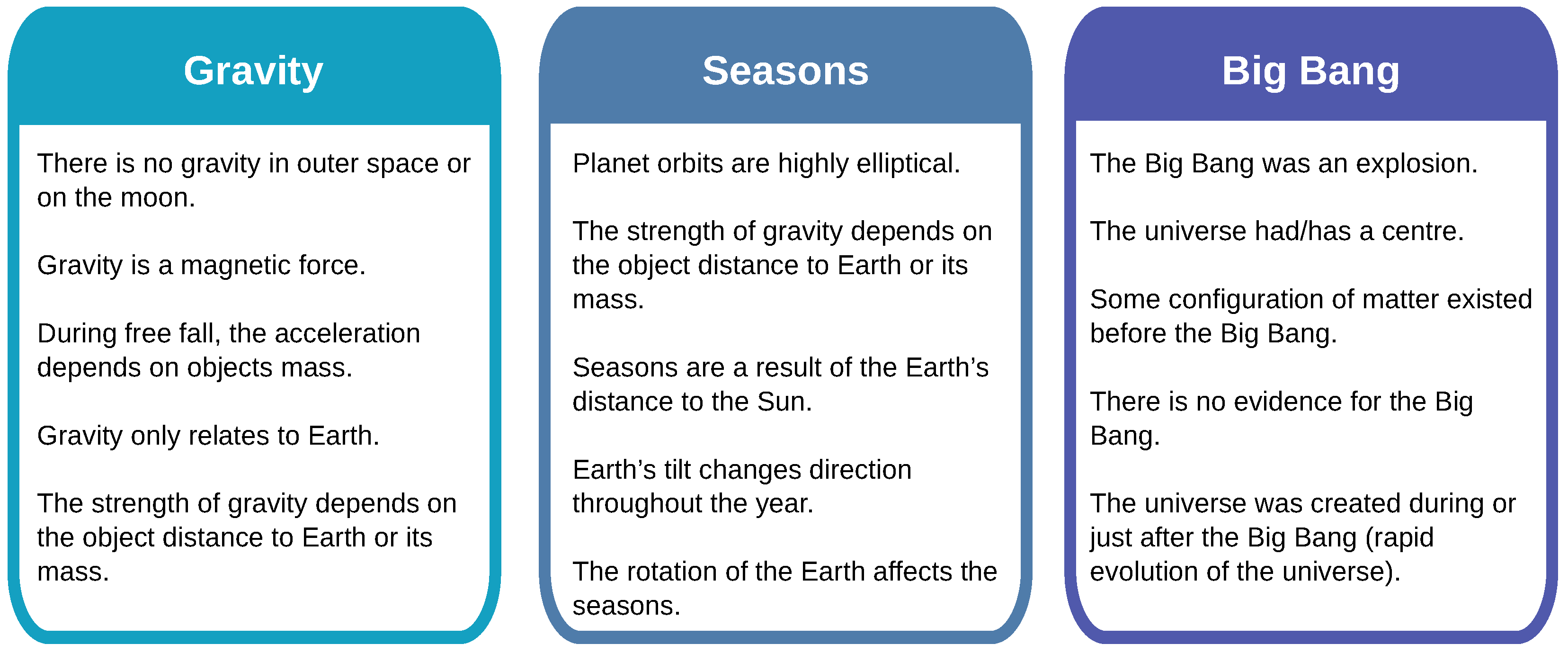
In a previous study, Cardinot et al. (2022) identified 15 alternative ideas (listed in Figure 1) and the four most common conceptual resources (closer means stronger, actuating agency, change in property means change in effect and location-based association) employed in student reasoning on these astronomy topics. Table 8 shows the pre- and post-test frequency of the alternative ideas for intervention and control groups. The data show a reduction in the number of alternative conceptions employed in their reasoning for both groups, with a significantly greater improvement (mean score decrease from 38.2 % to 13.6 % ) in the intervention group compared to the control group ( F ( 1 , 461 ) = 145.9 , p < 0.001 ). This finding indicates that the GBL intervention was more effective in supporting conceptual restructuring than traditional instruction alone. Differences were also observed within the intervention group, across the three topics under investigation: seasons, gravity and the Big Bang. Each of these topics is explored in more detail below.
Seasons was the topic with the greatest significant improvement in post-test across all year groups and the largest reduction in the number of alternative ideas after instruction for the GBL intervention group ( t ( 242 ) = 13.9 , p < 0.001 , d = 0.89 ). A comparison within the intervention group revealed that students in Year 1 and 2 had a similar gain in their post-test mean for the seasons topic (approximately 11.5 increase for both groups) with a very large effect size of d = 1.1 and d = 1.02 , respectively. Students in Year 1 and 2 had, respectively, a 78.2 % and 76.5 % probability1 to obtain a greater score in their post-test compared the Year 1 and 2 students in the control group. Interestingly, for the Year 3 intervention group, seasons was the only topic with a statistically significant increase in post-test mean ( t ( 77 ) = 4.9 , p < 0.001 , d = 0.55 ), despite the increase in their overall post-test mean (see Table 6). Moreover, the distance model was a dominant alternative idea (see Table 8) employed by students in the pre-test to describe the seasons in the open-ended answers. However, on post-test results, the GBL teaching intervention had a greater influence ( t ( 242 ) = 13.9 , p < 0.001 , d = 0.89 ) on reducing the incidence of the distance model to describe the seasons compared to the control group ( p = 0.236 ). In fact, when all other factors are equal, a student that was instructed with the non-digital games (intervention group) would be expected to have a 73.5 % chance of having a higher score in their post-test than a student in the control group.
The Big Bang GBL lesson also had a significant impact on students understanding of this topic. Comparison of intervention and control groups showed a significant difference between the groups ( F ( 1 , 472 ) = 99.2 , p < 0.001 ), with a large effect size favouring the GBL intervention group ( η p 2 = 0.17 ). Within the intervention group, students in Year 3 did not show a statistically significant difference in their post-test mean for the Big Bang topic ( t ( 77 ) = 1.8 , p < 0.072 , d = 0.21 ). However, Year 1 ( t ( 89 ) = 7.4 , p < 0.001 ) and 2 ( t ( 74 ) = 10.5 , p < 0.001 ) of the intervention groups had a statistically significant increase in their post-test score for the Big Bang content with large effects sizes for both groups d = 0.78 and d = 1.2 , respectively. When reasoning about the Big Bang evidenced in pre-test data, students at all levels most often used ideas related to an ‘explosion’ of some kind to describe the beginning of the universe. As shown in Table 8, there was a significant change in their understanding towards a more scientific reasoning of the Big Bang ( t ( 462 ) = 7.6 , p < 0.001 , d = 0.71 ). In fact, there was a 69.2 % probability that students in the GBL intervention group would obtain a positive improvement in their conceptual knowledge about the Big Bang compared to the control group. Students in the Year 2 intervention group displayed the greatest statistically significant decrease in the number of alternative ideas employed in their reasoning compared to the other intervention year level ( t ( 74 ) = 10.5 , p < 0.001 , d = 1.2 ) and to the control group ( F ( 429 ) = 44.4 , p < 0.001 , d = 0.71 ).
The gravity game lesson yielded the smallest impact ( d = 0.42 ) in the post-test mean whilst being statistically significant, compared to the other topics ( t ( 462 ) = 4.5 , p < 0.001 ) and between intervention and control groups ( F ( 1 , 444 ) = 20.5 , p < 0.001 ). Similar to the Big Bang lesson, there was no significant difference from pre- to post-test mean for the Year 3 intervention group ( t ( 77 ) = 1.9 , p = 0.967 ), although there was a small ( d = 0.31 ) significant difference between the intervention and control groups ( F ( 155 ) = 6.2 , p = 0.01 ). The most common alternative idea related to this topic in pre-test was the absence of gravity in space, including the Moon. In their initial conceptual understanding, students stated that anywhere outside Earth’s atmosphere did not have gravity or that gravity was related to the presence of air and hence would lessen above the surface of Earth. Furthermore, when asked about locations where gravity exists, students from all years, in both groups, often used an expression such as “if things float” or “located near large bodies” to measure gravity. However, in the post-test, for the Year 1 and 2 intervention group, there was a significant change in students’ reasoning about gravity. The Year 2 intervention group ( t ( 74 ) = 6.8 , p < 0.001 ) showed a greater improvement ( d = 0.79 ) in the post-test mean and displayed a more advanced understanding of the topic, such as describing gravity as an attractive force between two objects regardless of their proximity to Earth and identifying major factors that affect gravity (e.g., distance and mass). In fact, students in this cohort had a 71.2 % likelihood of having a greater improvement than a student from the same year in the control group. Similarly, the Year 1 intervention group also showed a statistically significant gain in their post-test ( t ( 89 ) = 3.3 , p < 0.001 ) with a medium effect size ( d = 0.35 ).

5.1.2. Cognitive Knowledge Through the Lens of the Resource Framework

The resources framework describes conceptual learning in different forms, including reorganising and refining the role of resources in students’ discourse (Robertson et al., 2021). Our findings show that GBL created multiple opportunities for students to confront and revise their understanding towards a more scientific-informed knowledge. Overall, there was a reduction of the incorrect activation of the conceptual resources in students reasoning for all groups, despite their prior knowledge. To illustrate the process of change towards a heightened level of scientific reasoning, the resource closer means stronger is used here as an illustrative example of how the GBL teaching sequence supported cogntive change.
In the pre-test, this resource was largely employed in two scenarios: to describe the seasons (incorrect activation) and to explain the gravitational force (correct activation). In the first case, students’ responses, from all years with varying percentages (see Table 8), implied that the different seasons are due to a changing distance between the Earth and the Sun throughout the year. These responses use the closer means stronger resource to reason about how changes to the distance due to a moving Earth’s tilt or changing on Earth’s orbit around the Sun affect the temperatures during the year:
I think that because the closer a planet is to the sun the hotter it is and the farther away the colder it is so if Earth tilts slightly away that will cause the climate to be colder.
(Knowledge test open-ended response, Female, Year 1)
During summer Earth’s tilt causes it to be closer to the sun which means there’s more sunlight making it warmer than winter.
(Knowledge test open-ended response, Male, Year 2)
The tilt relates to the change in season because depending on the tilt some place are closer to the sun and other are further away.
(Knowledge test open-ended response, Male, Year 3)
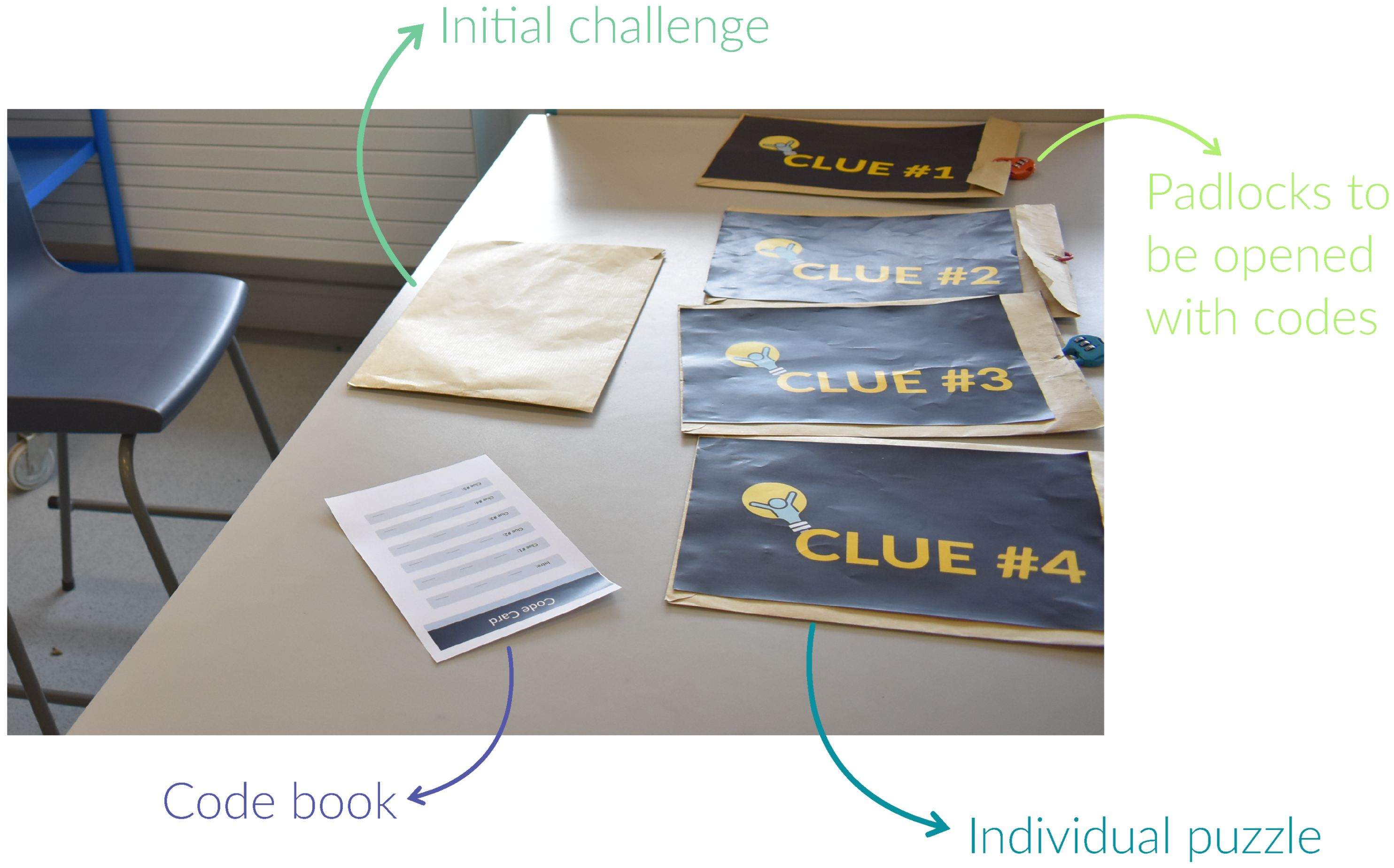
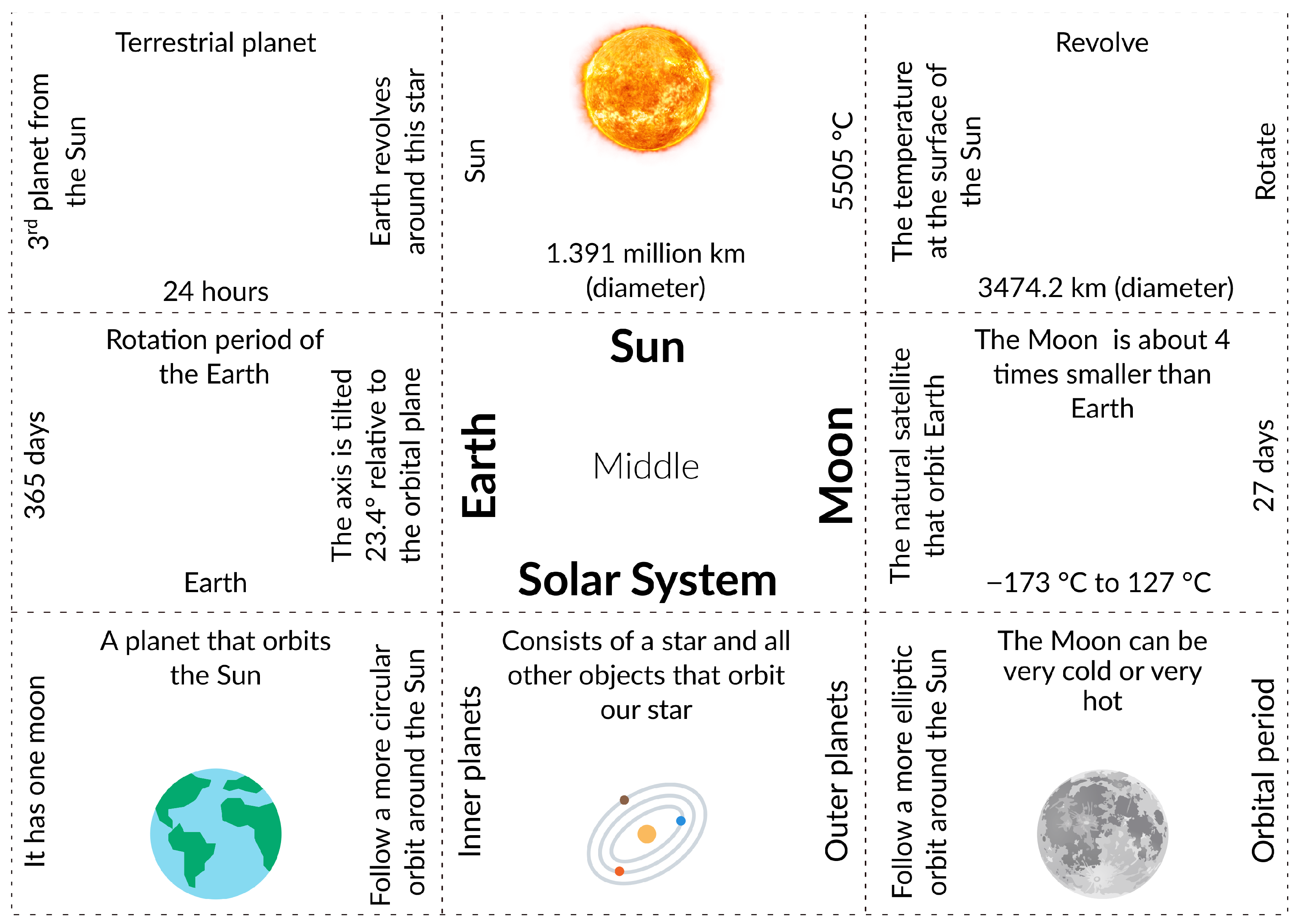
In the examples above, students correctly identify that the Earth’s tilt is related to the seasons, consistent with the scientific view. However, the resource of the distance model is also very persistent as the main reason given to explain the seasons, indicqating that students had a hybrid understanding of the concept. In the proposed teaching sequence, this resource was addressed by two games to provide students with multiple opportunities to revise their current understanding and to apply the new concepts in different scenarios. Firstly, in week 2 of the study, students played an escape room game that included five puzzles, included in the game cards, that had to be solved in order to win the game. One of these puzzles encouraged students to compare different properties of the Solar System planets, such as position in relation to the sun and temperature. Students were challenged to arrange the cards on the board to find the code that would allow them to move to the next puzzle, but only the correct card placement would reveal the numbers. Therefore, students were encouraged to discuss and analyse all of the information on the cards with their peers to find the answer as quickly as possible during gameplay. For instance, cards listed the hottest and coldest planetary temperatures had to be matched with a card that had the planet that they considered to be correct, by placing the card under the planet. The most frequent match for the hottest planet card was Mercury since it is the closest planet to the Sun, showing the incorrect activation of the closer means stronger resource. Since there were a limited number of cards that could be matched with each planet, students had to review their game board to find the correct answer with the assistance of clues cards distributed in the room and, if required, the instructor’s support. This continuous cycle of revision of concepts and conflict with the alternative ideas led students to identify that the proximity to the Sun may not result in higher temperatures and other factors, such as the atmosphere, may impact the planet’s temperature (quotes extracted from video observation 2, all-girls school, Year 2):
[Student A]: What do we have left?
[Student B]: Put them all here (…) Okay so we have these cards left and Mercury doesn’t have space left to it so this is obviously wrong.
[Student C]: Which other planet this could go? Mercury is the closest to the Sun.
[Student A]: Maybe Mars because it’s the red planet!
[Student D]: But Mars is already complete. I think we should look at the clues maybe there’s the answer…
[Student D]: Miss can we look at the clue cards?
[Instructor]: Yes, let me mark this on your group’s card. Now you have three access left to use.
[Student B]: Come look at the planets sheet its has more clues here!
[Student C]: I think it’s Venus the hottest look here says that it has a ‘thick atmosphere that traps heat in a runaway greenhouse effect’2
[Student A]: Well, it can’t be these four (Jupiter, Saturn, Uranus and Neptune) these are the gas and icy planets.
[Student D]: Look Mercury it says here (that) it has almost no atmosphere. It can’t (the hottest planet) be this one, right?
[Student C]: It has to be this one (student points to Venus on the cards arranged on the games board).
[Student B]: Miss I think we know the answer.
[Instructor]: Which one do you think it’s correct?
[Student C]: We think it’s venus because the clouds in the Venus atmosphere make the planet warmer.
In the discussion above, students first discuss why Mercury would be the hottest due to its position from the Sun. However, as they advance through the game, it is clear that the card could not be matched with Mercury, so they try to analyse the remaining options and suggest a planet that makes the most sense based on their prior experience. In this case, Mars is suggested due to its colour, as the students associate the red colour with higher temperatures. After a small discussion, the group decide to look at the clues available which includes planets’ postcards, astronomy posters and planet models. After evaluating the information given in the clues, students attempts to assimilate the new information with their existing conception. Therefore, the game provided an environment for students to learn, both from the content embedded in the games and the incorrect actions taken during gameplay, which informed them that new judgments were needed to accommodate the new information.
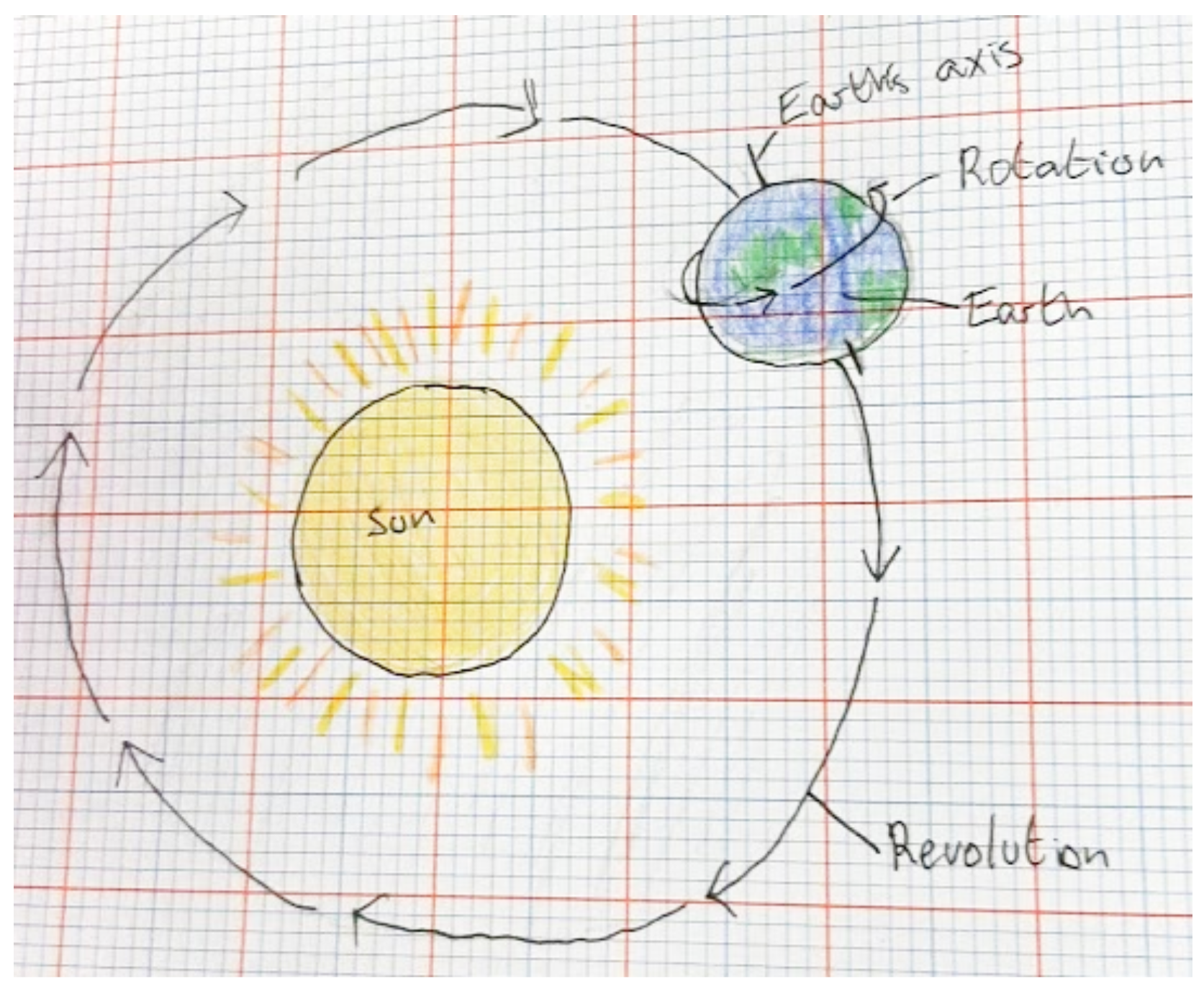
In addition, the following week, the content of the lesson intervention focused on Earth’s seasonal change by describing the different factors that influence this natural phenomenon such as the motion of the planet’s revolution, the Earth’s axis and sunlight. As in the previous game, students were presented with science facts about the seasons, and they were directed to evaluate the information given on the cards and to incorporate new conceptions. Again, the closer means stronger resource was challenged in the game, but from a different perspective. In this game, students evaluated Earth’s path around the sun noticing that, although it is an ellipse, it is not as elongated as they imagined to cause such a difference in the Earth’s distance from the sun. This information was reflected in the writing assignment given at the end of the session as shown in Figure 2.
Thus, the examples described above do not illustrate all the ways in which the closer means stronger resource was challenged during gameplay; rather, they illustrate some of the most common ways it was activated and applied across the game-based lessons. In addition, there was a statistically significant change in overall resource activation from pre- to post- test.
The results reveal a systematic refinement in the activation of conceptual resources following the game-based learning intervention, consistent with a resources-oriented account of conceptual change. As shown in Table 9, students across all year groups initially activated the same set of conceptual resources at relatively high frequencies, indicating that these resources were broadly available and readily cued by the diagnostic contexts. Following the intervention, the frequency of incorrect activation decreased for all resources, although the magnitude of change varied by resource and year level. In particular, the largest reductions were observed for change in property, change in effect and closer means stronger, especially in Years 2 and 3, suggesting that gameplay supported students in reassessing the conditions under which these intuitively appealing resources are applicable. These patterns indicate that the intervention facilitated a selective reorganisation of intuitive reasoning rather than its suppression.
In contrast, actuating agency exhibited more moderate but consistent reductions across year groups (Table 9), reflecting the persistence of agent-based explanatory tendencies that are deeply embedded in everyday reasoning. The smallest changes were observed for location-based association, particularly in Year 3, where post-test activation remained relatively high. This finding highlights the context-sensitive nature of resource activation, especially when spatial cues are salient in astronomical reasoning. Importantly, these results support a non-deficit view of conceptual change, in which intuitive resources are refined and constrained rather than eliminated. Overall, the variation across resources and year groups underscores that conceptual change is neither uniform nor linear, but emerges from the dynamic interaction between learners’ prior knowledge, task demands, and the affordances of the instructional context, as evidenced by the patterns reported in Table 9.
Thus, our results are consistent with the resources framework in which resource activation is context-sensitive and applicable to many situations; hence, the conceptual resources are neither right nor wrong. However, the way in which these resources are activated in different contexts can lead to scientifically accurate or inaccurate explanations. Therefore, the goal of instruction should be to help students refine their resource activation to align with scientific understanding, rather than attempting to eliminate certain resources altogether.

5.2. Impacts on Conceptual Change in the Affective Domain

Analysis of the pre-test mean scores revealed that intervention and control groups did not appear to be significantly different, implying that the two groups involved in the study had equivalent means across all affective constructs under investigation: attitudes ( F ( 1 , 439 ) = 12.2 , p = 0.632 ) and motivation ( F ( 1 , 435 ) = 1.68 , p = 0.196 ), before the study was conducted. As shown in Table 10, although a statistically significant difference in t-test was found between pre and post-questionnaire means for the intervention group, the change was not significant for the control group. Moreover, Table 10 also shows that GBL had a significant effect on all constructs, with ‘task value’ having the higher effect ( d = 0.89 ) between pre- and post-mean for the intervention group. Comparisons between groups also indicated that the intervention group outperformed the control group in all affective constructs investigated in the study.
As described in previous sections, among all Junior Cycle groups, the Year 3 group did not show a statistically significant gain in their cognitive knowledge domain when learning through games. However, the Year 3 intervention group greatly improved their mean score in terms of their affective learning domain in the post-test in all constructs under investigation from 28 % to 41 % with a large effect size (Cohen’s d = 0.79 ). That is, when learning astronomy through games, all other measures being equal, there is a 71.4 % probability that the learner will present a higher increase in their affective learning in comparison to the control group.
Analysis of the affective learning questionnaire indicated that the intervention and control groups were comparable at pre-test across all affective constructs, confirming baseline equivalence prior to the implementation of the game-based learning (GBL) activities. Following the intervention, statistically significant pre-post gains were observed for all year groups within the intervention condition. Specifically, Year 1 students achieved a post-test mean score of M = 3.68 ( S D = 0.43 ), with a significant pre-post difference, t ( 86 ) = 7.2 , p < 0.001 , and a large effect size ( d = 0.71 ). Similarly, Year 2 students showed a significant improvement ( M = 3.78 , S D = 0.52 ) , t ( 80 ) = 5.5 , p < 0.001 , with a large effect size ( d = 0.78 ), while Year 3 students exhibited the strongest pre-post difference ( M = 3.74 , S D = 0.55 ), t ( 89 ) = 9.1 , p < 0.001 , corresponding to a large effect size ( d = 0.79 ). In contrast, no statistically significant pre-post changes were observed in the control group, indicating that the gains found in the intervention group cannot be explained by test-retest effects or general instructional progression.
Further analyses confirmed that these affective gains were systematically associated with the GBL intervention across year levels. As shown in Table 11, significant between-subjects effects were observed for all cohorts, with partial eta-squared values ranging from η p 2 = 0.12 to η p 2 = 0.24 , indicating small-to-moderate effects attributable to group membership. Significant within-subjects effects were also found, with F ( 1 , 145 ) = 15.3 , p < 0.001 for Year 1, F ( 1 , 135 ) = 1.8 , p < 0.001 for Year 2, and F ( 1 , 161 ) = 8.7 , p < 0.01 for Year 3. Notably, despite the absence of statistically significant gains in the cognitive domain for Year 3 students, their affective learning outcomes showed improvements comparable in magnitude to those of Years 1 and 2. This dissociation between cognitive and affective outcomes highlights the role of GBL in fostering motivation, task value, and self-efficacy, even when immediate conceptual gains are limited.

6. Discussion

There is limited classroom-based evidence on how non-digital GBL can support multidimensional conceptual change in post-primary astronomy. Conceptual change is more than replacing “wrong” ideas with “right” ones (Robertson et al., 2021). It is an interaction of cognitive and affective processes (Valenzuela-Peñuñuri et al., 2024). Instructional approaches that target the achievement of higher levels of conceptual change must also consider the role of affective learning constructs and their impact on students’ learning (Duit & Treagust, 2012). Hence, studies exploring multidimensional perspectives of conceptual change in astronomy education remain needed (Hennig et al., 2023; Plummer et al., 2020). The purpose of this study was to examine whether a non-digital GBL sequence could be associated with broader conceptual change compared to a comparison condition that included constructivist-inspired teaching. The data indicate that participation in the intervention was associated with statistically significant gains in both cognitive and affective outcomes, but the quasi-experimental design precludes definitive causal claims.

6.1. Cognitive Conceptual Change Through Non-Digital Games

Results from the knowledge diagnostic tests showed that students in the GBL intervention had larger pre-post gains and a greater reduction in alternative ideas than those in the comparison group. In particular, the patterns for seasons, gravity, and the Big Bang align with previous findings that these topics are susceptible to persistent alternative concepts.
The GBL sequence was designed to immerse students in repeated cycles of prediction, decision-making, feedback, and reflection, which could plausibly promote opportunities for students to confront and revise their existing explanations. This interpretation is consistent with consolidated theories of conceptual change, but it remains a cautious inference rather than a direct demonstration of mechanism in this study. Further research should isolate which features of the intervention, such as game mechanics, collaborative talk, inquiry-oriented scaffolding, or the combination of these features, are responsible for the observed changes.
The findings also highlight a key methodological issue often discussed in this literature, namely the media-comparison problem. It is difficult to determine whether observed differences are primarily attributable to the use of game materials per se or to differences in instructional framework, including the degree of inquiry-orientation and interaction. The comparison condition included teacher-led constructivist elements; the intervention condition combined those elements with explicit game-based structures. Consequently, the results should be discussed as evidence that a game-based teaching sequence is associated with stronger outcomes in this setting, not as proof that any single component is the causal driver.
Consistent with prior research, the largest cognitive gains were observed for seasons, a topic known for conceptual resistance (Galano & Testa, 2025). The reduction in distance-based reasoning is encouraging and suggests the instructional sequence may have helped destabilise this misconception. In the game context, students faced multiple problem instances and had to reconcile inconsistent predictions, which may support schema refinement. This remains a plausible account rather than a confirmed causal pathway.
Such iterative engagement is particularly important in astronomy learning, where everyday intuitions can be highly persistent (Cardinot et al., 2022; Keeley & Sneider, 2012; E. V. Slater et al., 2018). While other active learning approaches can also provide iterative cycles, the game-based configuration in this study integrated task structure, feedback, and collaborative negotiation within a rule-based system. The smaller gains for gravity and the Big Bang, especially among Year 3 students, may reflect more stable prior frameworks and highlight the need for sustained and possibly age-tailored interventions.
Analysis through the resources framework suggested that conceptual change may involve refinement rather than elimination of existing resources (Suárez et al., 2023). The game-based tasks appeared to encourage students to externalise reasoning through discussion and justification, making patterns of thinking visible and available for revision. This account is consistent with the data, but we emphasise that the evidence remains correlational.

6.2. Conceptual Change in the Affective Domain

The intervention group showed pre-post gains in task value, self-efficacy, enjoyment, and intrinsic motivation, with little change in the comparison group. This pattern is important from a practical and pedagogical perspective, but should be interpreted as an association rather than a definitive effect of game content alone.
In year-level comparison, Years 1 and 2 showed gains in both cognitive and affective domains, while Year 3 showed clearer affective than cognitive shifts. This dissociation may indicate that GBL supports affective engagement across age groups even when cognitive gains are more bounded by prior knowledge stability.
Embedding astronomy content in collaborative problem-solving and small cognitive units is consistent with existing literature on motivational design (Skilbeck, 2017). The engagement reported by students may stem from the whole instructional package (games + inquiry-style facilitation), not exclusively from the game artifacts.

6.3. Implications for a Multidimensional Framework of Conceptual Change

The combination of cognitive and affective patterns in this study supports the value of a multidimensional perspective (Duit & Treagust, 2012; Heddy et al., 2018). Affective variables such as motivation and enjoyment appear to co-vary with conceptual measures, aligning with theoretical expectations that conceptual change is embedded in broader learner engagement processes.
It should be noted that, although the comparison group in this study was designed to provide meaningful opportunities for conceptual engagement, the instructional configurations differed in multiple, interrelated ways. As a result, it is not possible to determine whether the observed differences in learning outcomes are attributable to the game-based elements themselves or to the ways in which these elements were integrated with other pedagogical features, such as feedback, inquiry, and student participation.
This study therefore illustrates important limitations of a media-comparison design. The instructional approaches are experienced by students as coherent pedagogical environments, not as isolated variables. From this perspective, the results suggest that the GBL-based sequence, as implemented in this study, constitutes a productive configuration of teaching and learning conditions that can support students’ conceptual development in astronomy. This shifts the focus from identifying the ‘effect’ of a single element to understanding how combinations of pedagogical features function in practice. Consequently, the study contributes to the ongoing discussions in science education research by illustrating both the challenges of isolating instructional variables and the importance of examining how complex teaching approaches operate in authentic classroom settings.
Taken together, these findings suggest that the present data show that non-digital game-based teaching was associated with meaningful improvements in student reasoning and affect in a real classroom setting. For practitioners, this suggests that integrating structured game-based sequences may be beneficial, while researchers should interpret such findings with methodological caution and use them as a basis for more targeted experimental work.
Future research should extend this work with longitudinal designs, larger and more diverse samples, and experimental manipulations of game mechanics and instructional framework to clarify which vehicles and processes most reliably support conceptual change and affective engagement.

7. Limitations

There are four limitations associated with the investigation that authors wish to acknowledge.
  • Sample and context: The sample size was limited to the three year groups of the Irish post-primary astronomy curriculum and students from this cohort, which constrains generalisability. In addition, the use of purposive sampling and intact classroom groups enhances ecological validity but may limit the generalisability of findings beyond the participating schools and educational contexts.
  • Time constraint for each game: Each game was delivered within typical lesson constraints (about one class period), which may have limited the depth of content coverage for certain topics. Therefore, it remains unclear whether the observed conceptual changes were stable over time or whether certain alternative conceptions may re-emerge. Logitudinal studies are recommended to examine the durability of potential impacts on students reasoning and affect towards atsronomy.
  • Transferability: Replication with larger, more diverse cohorts and curricula is needed to test robustness across contexts.
  • Research design: The study adopts a comparative design rather than a controlled experimental design, which limits causal inferences about the specific contribution of game-based elements to the observed outcomes. Therefore, while the findings suggest that the GBL sequence as a whole was associated with improved outcomes, it is not possible to determine whether these improvements were primarily attributable to the game-based elements themselves or to the broader instructional framework in which they were embedded.
  • Methodological limitations: Given the real context in which this study was conducted, it was not possible to isolate the specific contribution of game-based elements from other instructional features. Therefore, while the findings suggest that the GBL sequence as a whole was associated with improved outcomes, without the absence of a controlled comparison isolating the effect of game-based elements or a qualitative analysis of their specific cognitive contributions, the findings provide only limited support for the educational value of game-based learning. Future research should aim to experimentally manipulate specific game mechanics and instructional features to clarify their individual and combined effects on conceptual change and affective engagement.

8. Conclusions

This paper explored non-digital GBL as a pedagogical approach to foster multidimensional conceptual change in astronomy education. Guided by affective and cognitive learning informants, the conceptual change process considered the complex and dynamic environment of a real classroom. Robust evidence, collected through mixed-methods instruments from both teachers and students, demonstrates that the intervention group experienced significant cognitive conceptual understanding changes towards more scientific reasoning in astronomy, in addition to improvements in key affective outcomes (task value, enjoyment, intrinsic motivation, self-efficacy).
Interpreted through Hammer’s resources framework, these shifts did not require the elimination of students alternative ideas. Rather, gameplay and structured reflection appeared to support the reorganisation and more context-appropriate activation of existing conceptual resources. These findings emphasise the potential of GBL to drive meaningful educational transformations and enhance students’ engagement and understanding in the domain of astronomy.

Author Contributions

Conceptualisation, A.C. and V.M.; methodology, A.C. and V.M.; formal analysis, A.C.; data curation, A.C.; writing—original draft preparation, A.C., J.A.F. and V.M.; writing—review and editing, A.C. and V.M.; supervision, J.A.F. and V.M. project administration, A.C. and V.M.; funding acquisition, A.C. All authors have read and agreed to the published version of the manuscript.

Funding

This research was supported by CAPES grant number 88881.128466/2016-01.

Institutional Review Board Statement

This study was conducted in accordance with the Declaration of Helsinki and approved by the Institutional Research Ethics Committee of the University of Galway (Ref: 4 May 2017).

Informed Consent Statement

Informed consent was obtained from all subjects involved in this study.

Data Availability Statement

Data are available on request from the authors. The data are not publicly available due to privacy restrictions.

Acknowledgments

We would like to thank the participating schools, teachers, and students for their collaboration in this research.

Conflicts of Interest

The authors declare no conflicts of interest.

Appendix A

Appendix A.1. Summary of Pre- and Post-Test Results

Table A1. Summary of pre- and post-test results. Although both groups showed changes in the pre and post-test means, the results were larger and statistically significant only for the intervention group.
Intervention Control t-Test (p)
Intervention vs. Control
Pre-Test M (SD) Post-Test M (SD) t-Test (p)
Pre vs. Post
Cohen’s d Pre-Test M (SD) Post-Test M (SD) t-Test (p)
Pre vs. Post
Cohen’s d Differences Between
Pre and Post Tests
Cohen’s d
Year 124.5 (6.2)44.0 (19.6)−8.8 (<0.0001)0.92 23.5 (8.6)23.9 (14.5)−0.16 (0.875)0.02 6.1 (0.0001)0.98
Year 227.7 (6.4)55.5 (21.5)10.5 (<0.0001)1.20 23.8 (7.2)26.5 (15.2)−1.4 (0.175)0.06 7.6 (0.0001)1.24
Year 326.6 (11.7)32.9 (15.9)−2.9 (0.008)0.31 22.9 (5.2)22.6 (6.1)0.33 (0.743)0.08 2.7 (0.009)0.42

Appendix A.2. Percentage Difference of the Alternative Ideas

Table A2. Percentage difference of the alternative ideas held by the students in each group before and after the intervention ( N = 479 ).
Intervention Control
Year 1 Year 2 Year 3 Year 1 Year 2 Year 3
Number Alternative Ideas PRE/POST (%) PRE/POST (%) PRE/POST (%) PRE/POST (%) PRE/POST (%) PRE/POST (%)
1There is no gravity in outer space or on the moon77.6/36.679.2/26.783.1/46.3 70.0/60.787.5/80.471.0/75.0
2Gravity is a magnetic force55.6/16.733.3/12.511.1/4.2 42.9/47.133.3/35.323.8/17.7
3During free fall, the acceleration depends on objects mass69.0/33.364.1/40.044.9/17.1 58/26.760.7/49.354.8/34.2
4Gravity only relates to Earth47.7/36.434.1/15.918.2/13.6 35.0/30.055.0/40.015.0/15.0
5Planet orbits are highly elliptical21.1/14.114.1/10.617.1/12.9 21.9/17.813.5/10.921.0/16.4
6The strength of gravity depends on
the object distance to Earth or its mass
20.8/5.524.7/4.439.3/10.91 33.3/38.626.8/32.921.9/20.3
7Seasons are a result of the Earth’s distance to the Sun54.1/15.756.2/17.957.5/10.9 69.1/62.371.4/97.967.6/52.2
8Earth’s tilt changes direction throughout the year32.0/9.032.0/7.736.0/8.6 37.5/32.837.5/35.225.0/21.9
9The rotation of the Earth affects the seasons43.8/10.943.8/13.712.5/1.6 23.1/19.538.5/35.538.5/32.5
10The Big Bang was an explosion24.1/1.731.0/6.444.8/13.9 33.3/30.050.0/41.716.7/10.0
11The universe had/has a centre50.0/0.033.3/16.716.7/0.0 57.1/49.028.6/24.514.3/12.2
12Some configuration of matter existed before the Big Bang34.3/6.928.6/5.737.1/10.6 35.3/17.741.2/33.323.5/16.7
13There is no evidence for the Big Bang18.2/9.145.5/0.036.4/18.2 22.2/21.444.4/41.233.3/31.5
14The universe was created during or just after
the Big Bang (rapid evolution of the universe)
34.3/6.928.6/5.737.1/10.6 35.3/29.441.2/35.323.5/17.7
15The Big Bang is an expansion of matter into empty space,
i.e., galaxies and planets’ sizes are increasing over time
32.3/6.331.6/6.936.1/33.9 37.7/34.426.4/25.535.9/35.6

Appendix A.3. Data Collection Instruments

The following materials are available online at: Knowledge Diagnostic test instrument (https://doi.org/10.6084/m9.figshare.13066640); Affective learning questionnaire construct validity (https://doi.org/10.6084/m9.figshare.16743988) and item description (https://doi.org/10.6084/m9.figshare.16744009); interview protocol (https://doi.org/10.6084/m9.figshare.13066637) and focus group guide (https://doi.org/10.6084/m9.figshare.16744012).

Appendix A.4. Description of Gamified Lessons

Appendix A.4.1. Week 1: Introduction to Research and Initial Assessments

This lesson aimed to introduce students to the programme of learning astronomy through games, the related research, and initial assessments. Students were given a brief verbal overview of the research and reminded that only those with guardian consent could partake in the research element, and that they could also choose not to partake. Further, students were reminded that they would still all engage in the classroom intervention, regardless involvement with the research element.

Appendix A.4.2. Week 2: The Earth–Moon–Sun Model

This lesson aimed to explore the Earth–Moon–Sun Model and the solar system. It started with a discussion about astronomical phenomena that we experience daily, such as day and night and lunar phases, and how other planets compare to Earth. This discussion was followed by an explanation of the game rules, which involve students finding hidden codes needed for successful completion of the game. The first game consisted of an escape room with different puzzles that students needed to solve in order to win the game. Figure A1 shows the setup of the puzzles at the beginning of the lesson. The puzzles included a suite of 5 challenges (see Figure A2 for a sample of the initial puzzle) including (a) an initial general astronomy puzzle; (b) the description of the day-and-night cycle; (c) the examination of the locations of the earth, moon and sun and a description of their relationship, (d) the creation of earth, moon and sun models, (e) the creation of phases of the moon and the eclipse models. Each puzzle was placed inside an envelope which was sealed with a padlock. The solution of the puzzle revealed the code to open the next puzzle. After the gameplay was finished, the researcher facilitated a group discussion with students and encouraged them to reflect on the content embedded within the games and to compare their initial answers with the new content. The session finished with a reflective assignment.
Figure A1. Table set up with the puzzles employed in week 2 of the intervention.
Education 16 00845 g0a1
Figure A2. Design of the initial puzzle of the escape room. Students were given the cards and had to arrange them on the board matching the information on each side of the card. Once they found the correct arrangement, the code was revealed using a UV light.
Education 16 00845 g0a2

Appendix A.4.3. Week 3: Seasons

The second gamified lesson explored the seasons. The session started with a discussion about the causes and effects of the seasons, to explore common alternative ideas that students may hold about the topic prior to this research. Following the discussion, students played the game which involved cards and a board. In their groups, students needed to: (a) analyse a statement/question and the associated image on each card to identify different mechanisms related to the seasons, (b) define key terms related to seasons (e.g., rotation and revolution), and (c) analyse how the Earth’s axis and planet’s revolution impact the seasons through the application and interpretation of an aligned data set. Students were encouraged to discuss their thoughts with their peers and write their collectively agreed answers on the board. For each correct answer they would gain a set number of points. The winner was the group with the most points, however the questions had different points to allow various groups to win the game. After the gameplay, there was a group discussion with the whole class.

Appendix A.4.4. Week 4: Gravity

This lesson explored the concept of gravity. To elicit students’ prior understanding about gravity, the lesson started with a discussion about where gravity exists and factors that affect the gravitational force, such as distance (e.g., outside Earth, on the Moon) and mass. This introduction also included some videos from the International Space Station to show the effects of a microgravity environment. Then, the game was introduced to the students: a table quiz that challenged students to analyse the causes and effects of gravity. It involved concepts such as the weight force, and students’ capacity to model the relationship between mass and distance relative to the force of gravity between objects, and the relationship between gravity and planetary orbital motion. Each group was given a board game with words related to the initial discussion. Students had to match the definitions shown on the slide presentation with the word on the board game. They were encouraged to work as a group and share their thinking with their peers. If a group struggled with the game, a limited number of clues were made available for each group for this purpose. Once gameplay was finished, there was a group discussion to reflect on the concepts involved in the game.

Appendix A.4.5. Week 5: The Big Bang

The final GBL lesson focused on the Big Bang Theory. The lesson was divided into three parts. The first involved an initial discussion with the class to answer the question: “How did the universe begin?” Students were divided into groups and wrote their ideas on the flipchart provided, which was shared with the class later. The second part of the lesson involved a card game with scientific statements related to the Big Bang. The goal of this game was to help students build inferring and observing skills to judge the soundness of scientific information. This was followed by a group discussion and comparison of the cards’ solutions between groups. The third part involved a different card game to understand the timeline of events that have taken place since the Big Bang. At the end, similar to previous lessons, there was a group discussion with the whole class to reflect on the games and the lesson itself.

Appendix A.4.6. Week 6: Final Assessment and Interviews with Students

Although not a formal part of the intervention, the final lesson with each class group provided an opportunity to distribute the final assessment, organise focus groups with consenting students, and arrange teacher interviews. The final assessment was similar in structure to the initial assessment, with a combination of multiple-choice and open-ended questions to assess students’ understanding of the topics covered during the intervention. The focus groups provided qualitative data on students’ experiences and perceptions of the gamified lessons, while the teacher interviews offered insights into the implementation and effectiveness of the intervention from an educator’s perspective.

Notes

1
Common language effect size statistic (CL) or probability of superiority estimates “that a randomly chosen member of Group 1 scores higher than a randomly chosen member of Group 2” (Ruscio, 2008, p. 5).
2
Information retrieved from NASA Solar System Exploration website.

References

  1. Akimkhanova, Z., Turekhanova, K., & Karwasz, G. P. (2023). Interactive games and plays in teaching physics and astronomy. Education Sciences, 13(4), 393. [Google Scholar] [CrossRef]
  2. All, A., Plovie, B., Castellar, E. P. N., & Van Looy, J. (2017). Pre-test influences on the effectiveness of digital-game based learning: A case study of a fire safety game. Computer and Education, 114, 24–37. [Google Scholar]
  3. Amiruddin, M. Z. B., Suhandi, A., Samsudin, A., Coştu, B., & Kaniawati, I. (2025). Perspectives future research in conceptual change for science education: Systematic literature review. Africa Education Review, 21(2), 1–41. [Google Scholar] [CrossRef]
  4. Aretz, S., Borowski, A., & Schmeling, S. (2016). A fairytale creation or the beginning of everything: Students’ pre-instructional conceptions about the Big Bang theory. Perspectives in Science, 10, 46–58. [Google Scholar] [CrossRef][Green Version]
  5. Asbury, S. (2018). It’s all a game: The history of board games from Monopoly to Settlers of Catan. American Journal of Play, 10(2), 230–232. [Google Scholar]
  6. Azizan, M., Mellon, N., Ramli, R., & Yusup, S. (2018). Improving teamwork skills and enhancing deep learning via development of board game using cooperative learning method in Reaction Engineering course. Education for Chemical Engineers, 22, 1–13. [Google Scholar] [CrossRef]
  7. Bailey, J. M., Coble, K., Cochran, G., Larrieu, D., Sanchez, R., & Cominsky, L. R. (2012). A multi-institutional investigation of students’ preinstructional ideas about cosmology. Astronomy Education Review, 11(1). [Google Scholar] [CrossRef]
  8. Bandura, A., Freeman, W., & Lightsey, R. (1999). Self-efficacy: The exercise of control. Springer. [Google Scholar]
  9. Bar, V., Brosh, Y., & Sneider, C. (2016). Weight, mass, and gravity: Threshold concepts in learning science. Science Educator, 25(1), 22–34. [Google Scholar]
  10. Bartlett, S., Fitzgerald, M. T., McKinnon, D. H., Danaia, L., & Lazendic-Galloway, J. (2018). Astronomy and Science Student Attitudes (ASSA): A short review and validation of a new instrument. Journal of Astronomy & Earth Sciences Education (JAESE), 5(1), 1–22. [Google Scholar] [CrossRef]
  11. Barz, N., Benick, M., Dörrenbächer-Ulrich, L., & Perels, F. (2024). The effect of digital game-based learning interventions on cognitive, metacognitive, and affective-motivational learning outcomes in school: A meta-analysis. Review of Educational Research, 94(2), 193–227. [Google Scholar] [CrossRef]
  12. Bayeck, R. Y. (2020). Examining board gameplay and learning: A multidisciplinary review of recent research. Simulation & Gaming, 51(4), 411–431. [Google Scholar] [CrossRef]
  13. Braun, V., & Clarke, V. (2022). Conceptual and design thinking for thematic analysis. Qualitative Psychology, 9(1), 3. [Google Scholar] [CrossRef]
  14. Caramaschi, M., Cullinane, A., Levrini, O., & Erduran, S. (2022). Mapping the nature of science in the Italian physics curriculum: From missing links to opportunities for reform. International Journal of Science Education, 44(1), 115–135. [Google Scholar] [CrossRef]
  15. Cardinot, A., & Fairfield, J. A. (2021). Alternative conceptions of astronomy: How Irish secondary students understand gravity, seasons, and the big bang. Eurasia Journal of Mathematics, Science and Technology Education, 17(4), em1950. [Google Scholar] [CrossRef] [PubMed]
  16. Cardinot, A., & Fairfield, J. A. (2022). Game-based learning to engage students with physics and astronomy using a board game. In Research anthology on developments in gamification and game-based learning (pp. 785–801). IGI Global Scientific Publishing. [Google Scholar]
  17. Cardinot, A., & McCauley, V. (2024). Non-digital educational games to support conceptual change in astronomy education. Astronomy Education Journal. Available online: https://www.astroedjournal.org/index.php/ijae/article/view/111 (accessed on 6 May 2026). [CrossRef]
  18. Cardinot, A., McCauley, V., & A Fairfield, J. (2022). Designing physics board games: A practical guide for educators. Physics Education, 57(3), 035006. [Google Scholar] [CrossRef]
  19. Chastenay, P. (2018). To teach or not to teach astronomy, that is the question: Results of a survey of Québec’s elementary teachers. Journal of Astronomy & Earth Sciences Education (JAESE), 5(2), 115–136. [Google Scholar] [CrossRef]
  20. Cheng, P.-H., & Yeh, T.-K. (2026). The solar system traveler: A model-based board game to advance primary student interest, knowledge and learning in astronomy. Research in Science Education, 56(3), 763–788. [Google Scholar] [CrossRef]
  21. Chiarello, F., & Castellano, M. G. (2016). Board games and board game design as learning tools for complex scientific concepts: Some experiences. International Journal of Game-Based Learning (IJGBL), 6(2), 1–14. [Google Scholar]
  22. Cohen, L., Manion, L., & Morrison, K. (2011). Research methods in education (7th ed.). Routledge. [Google Scholar]
  23. Cole, M., Cohen, C., Wilhelm, J., & Lindell, R. (2018). Spatial thinking in astronomy education research. Physical Review Physics Education Research, 14(1), 010139. [Google Scholar] [CrossRef]
  24. Creswell, J. W., & Clark, V. L. P. (2017). Designing and conducting mixed methods research. Sage Publications. [Google Scholar]
  25. Crisostomo, L., Uenoyama, S., Sagisaka, K., & Tomita, A. (2020). Comparação de currículos de educação escolar em Astronomia entre Filipinas e Japão. Revista Latino-Americana de Education em Astronomia, (29), 87–102. [Google Scholar]
  26. DeWitt, J., Archer, L., & Moote, J. (2019). 15/16-year-old students’ reasons for choosing and not choosing physics at a level. International Journal of Science and Mathematics Education, 17(6), 1071–1087. [Google Scholar] [CrossRef]
  27. DeWitt, J., Archer, L., & Osborne, J. (2013). Nerdy, brainy and normal: Children’s and parents’ constructions of those who are highly engaged with science. Research in Science Education, 43(4), 1455–1476. [Google Scholar]
  28. Ding, Y., Zhu, G., Bian, Q., & Bao, L. (2024). Analysis of students’ conceptual change in learning Newton’s third law with an integrated framework of model analysis and knowledge integration. Physical Review Physics Education Research, 20(2), 020141. [Google Scholar] [CrossRef]
  29. diSessa, A. A. (1988). Knowledge in pieces. In G. Forman, & P. B. Pufall (Eds.), Constructivism in the computer age (pp. 49–70). Psychology Press. [Google Scholar]
  30. diSessa, A. A. (1993). Toward an epistemology of physics. Cognition and Instruction, 10(2–3), 105–225. [Google Scholar] [CrossRef]
  31. diSessa, A. A., Gillespie, N. M., & Esterly, J. B. (2004). Coherence versus fragmentation in the development of the concept of force. Cognitive Science, 28(6), 843–900. [Google Scholar] [CrossRef] [PubMed]
  32. Do, H.-N., Do, B. N., & Nguyen, M. H. (2023). How do constructivism learning environments generate better motivation and learning strategies? The Design Science Approach. Heliyon, 9(12), e22862. [Google Scholar] [CrossRef] [PubMed]
  33. Duit, R. H., & Treagust, D. F. (2012). Conceptual change: Still a powerful framework for improving the practice of science instruction. In Issues and challenges in science education research (pp. 43–54). Springer. [Google Scholar]
  34. Duncan, K. J. (2020). Examining the effects of immersive game-based learning on student engagement and the development of collaboration, communication, creativity and critical thinking. TechTrends, 64(3), 514–524. [Google Scholar] [CrossRef]
  35. Earle, S. (2022). Transition from primary to secondary. In Debates in science education (pp. 214–226). Routledge. [Google Scholar]
  36. Eccles, J. S., & Wigfield, A. (2020). From expectancy-value theory to situated expectancy-value theory: A developmental, social cognitive, and sociocultural perspective on motivation. Contemporary Educational Psychology, 61, 101859. [Google Scholar]
  37. Galano, S., & Testa, I. (2025). Integrating practice-based activities and visual representations to foster students’ understanding of basic astronomy phenomena: An example about seasonal changes. International Journal of Science and Mathematics Education, 23, 2785–2809. [Google Scholar]
  38. Gee, J. P. (2003). What video games have to teach us about learning and literacy. Computers in Entertainment (CIE), 1(1), 20. [Google Scholar]
  39. Goodhew, L. M., Robertson, A. D., Heron, P. R., & Scherr, R. E. (2019). Student conceptual resources for understanding mechanical wave propagation. Physical Review Physics Education Research, 15(2), 020127. [Google Scholar] [CrossRef]
  40. Gourlay, H., & Mujtaba, T. (2025). Reviewing the role of the physics curriculum and its assessment in post-16 gender disparities. International Journal of Science Education, 47(15–16), 2045–2070. [Google Scholar]
  41. Guerra-Reyes, F., Guerra-Dávila, E., Naranjo-Toro, M., Basantes-Andrade, A., & Guevara-Betancourt, S. (2024). Misconceptions in the learning of natural sciences: A systematic review. Education Sciences, 14(5), 497. [Google Scholar] [CrossRef]
  42. Hammer, D. (2000). Student resources for learning introductory physics. American Journal of Physics, 68(S1), S52–S59. [Google Scholar] [CrossRef]
  43. Hammer, D., Elby, A., Scherr, R. E., & Redish, E. F. (2005). Resources, framing, and transfer. In Transfer of learning from a modern multidisciplinary perspective. Information Age Publishing. [Google Scholar]
  44. Heddy, B. C., Taasoobshirazi, G., Chancey, J. B., & Danielson, R. W. (2018). Developing and validating a conceptual change cognitive engagement instrument. Frontiers in Education, 3, 43. [Google Scholar] [CrossRef]
  45. Hennig, F., Lipps, M., Ubben, M. S., & Bitzenbauer, P. (2023). From the big bang to life beyond earth: German preservice physics teachers’ conceptions of astronomy and the nature of science. Education Sciences, 13(5), 475. [Google Scholar] [CrossRef]
  46. Hidayat, R., & Saad, M. R. M. (2025). A Meta-analysis of the effect of peer tutoring in Science, Technology, Engineering and Mathematics (STEM) subjects. International Journal of Educational Research Open, 8, 100446. [Google Scholar] [CrossRef]
  47. Hirst Bernhardt, C., & Bailey, J. M. (2025). Space for all: A multinational study on the status of astronomy education. International Journal of Science Education, 47(6), 817–840. [Google Scholar] [CrossRef]
  48. Hodges, G. W., Flanagan, K., Lee, J., Cohen, A., Krishnan, S., & Ward, C. (2020). A quasi-experimental study comparing learning gains associated with serious educational gameplay and hands-on science in elementary classrooms. Journal of Research in Science Teaching, 57(9), 1460–1489. [Google Scholar]
  49. Hoehn, J. R., & Finkelstein, N. D. (2018). Students’ flexible use of ontologies and the value of tentative reasoning: Examples of conceptual understanding in three canonical topics of quantum mechanics. Physical Review Physics Education Research, 14, 010122. [Google Scholar] [CrossRef]
  50. Honebein, P. C. (1996). Seven goals for the design of constructivist learning environments. Constructivist Learning Environments: Case Studies in Instructional Design, 11(12), 11–24. [Google Scholar]
  51. Igbokwe, C. O. (2015). Recent curriculum reforms at the basic education level in Nigeria aimed at catching them young to create change. American Journal of Educational Research, 3(1), 31–37. [Google Scholar] [CrossRef]
  52. Inchingolo, G., Toniolo, R., Varano, S., Zanazzi, A., Ligabue, A., & Ricciardi, S. (2024). A board game ludography analysis for game-based learning in astronomy, astrophysics and space science. Astronomy Education Journal, 4(1). Available online: https://www.astroedjournal.org/index.php/ijae/article/view/78 (accessed on 6 May 2026). [CrossRef]
  53. Kafai, Y. B., Xin, Y., Fields, D., & Tofel-Grehl, C. (2022). Teaching and learning about respiratory infectious diseases: A scoping review of interventions in K-12 education. Journal of Research in Science Teaching, 59(7), 1274–1300. [Google Scholar] [PubMed]
  54. Kapp, K. M. (2012). The gamification of learning and instruction: Game-based methods and strategies for training and education. John Wiley & Sons. [Google Scholar]
  55. Keeley, P., & Sneider, C. I. (2012). Uncovering student ideas in astronomy: 45 formative assessment probes. NSTA Press. [Google Scholar]
  56. Koballa, T. R., Jr. (1988). Attitude and related concepts in science education. Science Education, 72(2), 115–126. [Google Scholar] [CrossRef]
  57. Korur, F. (2015). Exploring seventh-grade students’ and pre-service science teachers’ misconceptions in astronomical concepts. Eurasia Journal of Mathematics, Science and Technology Education, 11(5), 1041–1060. [Google Scholar] [CrossRef]
  58. Kuo, C.-H., Chen, M.-J., Nababan, R., & She, H.-C. (2023). Space adventure game-based learning: How games and scaffolds affect eighth graders’ physics learning and game immersion. IEEE Transactions on Learning Technologies, 17, 229–240. [Google Scholar] [CrossRef]
  59. Kuo, Y.-C., Kuo, Y.-T., & Tseng, H. (2024). Exploring the factors that influence K-12 teachers’ use of open educational resources. Education Sciences, 14(3), 276. [Google Scholar] [CrossRef]
  60. Law, V., & Chen, C.-H. (2016). Promoting science learning in game-based learning with question prompts and feedback. Computer and Education, 103, 134–143. [Google Scholar] [CrossRef]
  61. Li, X., Li, Y., & Wang, W. (2023). Long-lasting conceptual change in science education: The role of U-shaped pattern of argumentative dialogue in collaborative argumentation. Science & Education, 32(1), 123–168. [Google Scholar]
  62. Lin, L., & Xu, N. (2025). The role of self-efficacy and task value in self-regulated learning strategies in online Chinese language learning. Language Teaching Research, 13621688251389188. [Google Scholar] [CrossRef]
  63. Marušić, M., & Hadžibegović, Z. (2018). Student attitudes towards astronomy: A bi-country questionnaire results. Revista Mexicana de Física E, 64(1), 61–69. [Google Scholar]
  64. McCauley, V., & Cardinot, A. (2025). Game-based learning in astronomy: Teacher and student perspectives on non-digital games. International Journal of Game-Based Learning (IJGBL), 15(1), 1–19. [Google Scholar]
  65. McLure, F., Won, M., & Treagust, D. F. (2020). A sustained multidimensional conceptual change intervention in grade 9 and 10 science classes. International Journal of Science Education, 42(5), 703–721. [Google Scholar] [CrossRef]
  66. Membiela, P., Acosta, K., Yebra, M. A., & González, A. (2023). Motivation to learn science, emotions in science classes, and engagement towards science studies in Chilean and Spanish compulsory secondary education students. Science Education, 107(4), 939–963. [Google Scholar] [CrossRef]
  67. Mendes, I., Malaquias, I., & Vairinhos, M. (2026). Physics teachers’ perceptions of teaching and learning astronomy in the 7th grade: Challenges and the role of digital technologies. International Journal of Science Education, 1–19. [Google Scholar] [CrossRef]
  68. Mills, R., Whiteford, C., Brown, D., & Tomas, L. (2023). The efficacy of the Dimensions of Attitudes toward Science (DAS) for explaining primary preservice teachers’ intention to teach science. International Journal of Science Education, 45(3), 165–180. [Google Scholar] [CrossRef]
  69. Nadelson, L. S., Heddy, B. C., Jones, S., Taasoobshirazi, G., & Johnson, M. (2018). Conceptual change in science teaching and learning: Introducing the dynamic model of conceptual change. International Journal of Educational Psychology, 7(2), 151–195. [Google Scholar] [CrossRef]
  70. National Council for Curriculum and Assessment. (2015). Junior cycle science curriculum specification. Department of Education and Skills, Government of Ireland.
  71. Othman, M. K., & Ching, S. K. (2024). Gamifying science education: How board games enhances engagement, motivate and develop social interaction, and learning. Education and Information Technologies, 29(18), 24525–24561. [Google Scholar] [CrossRef]
  72. Othman, M. K., Mat, R., & Sim, K. C. (2025). A systematic review of paper-based and digital board games for collaborative science learning. Review of Education, 13(3), e70107. [Google Scholar] [CrossRef]
  73. Pacaci, C., Ustun, U., & Ozdemir, O. F. (2024). Effectiveness of conceptual change strategies in science education: A meta-analysis. Journal of Research in Science Teaching, 61(6), 1263–1325. [Google Scholar] [CrossRef]
  74. Pintrich, P. R., Marx, R. W., & Boyle, R. A. (1993). Beyond cold conceptual change: The role of motivational beliefs and classroom contextual factors in the process of conceptual change. Review of Educational Research, 63(2), 167–199. [Google Scholar] [CrossRef]
  75. Plummer, J. D., Palma, C., Rubin, K., Flarend, A., Ong, Y. S., Ghent, C., Gleason, T., McDonald, S., Botzer, B., & Furman, T. (2020). Evaluating a learning progression for the solar system: Progress along gravity and dynamical properties dimensions. Science Education, 104(3), 530–554. [Google Scholar] [CrossRef]
  76. Plummer, J. D., & Zahm, V. M. (2010). Covering the standards: Astronomy teachers’ preparation and beliefs. Astronomy Education Review, 9(1), 010110–010128. [Google Scholar] [CrossRef]
  77. Pompea, S. M., & Russo, P. (2020). Astronomers engaging with the education ecosystem: A best-evidence synthesis. Annual Review of Astronomy and Astrophysics, 58(1), 313–361. [Google Scholar] [CrossRef]
  78. Posner, G. J., Strike, K. A., Hewson, P. W., & Gertzog, W. A. (1982). Accommodation of a scientific conception: Toward a theory of conceptual change. Science Education, 66(2), 211–227. [Google Scholar] [CrossRef]
  79. Robertson, A. D., Goodhew, L. M., Scherr, R. E., & Heron, P. R. (2021). University student conceptual resources for understanding forces. Physical Review Physics Education Research, 17(1), 010121. [Google Scholar] [CrossRef]
  80. Ruscio, J. (2008). A probability-based measure of effect size: Robustness to base rates and other factors. Psychological Methods, 13(1), 19. [Google Scholar] [CrossRef]
  81. Salimpour, S., Bartlett, S., Fitzgerald, M. T., McKinnon, D. H., Cutts, K. R., James, C. R., Miller, S., Danaia, L., Hollow, R. P., & Cabezon, S. (2021). The gateway science: A review of astronomy in the OECD school curricula, including China and South Africa. Research in Science Education, 51(4), 975–996. [Google Scholar] [CrossRef]
  82. Salimpour, S., Fitzgerald, M., & Hollow, R. (2024). Examining the mismatch between the intended astronomy curriculum content, astronomical literacy, and the astronomical universe. Physical Review Physics Education Research, 20(1), 010135. [Google Scholar] [CrossRef]
  83. Saqr, M., Dever, D., López-Pernas, S., Gernigon, C., Marchand, G., & Kaplan, A. (2025). Complex dynamic systems in education: Beyond the static, the linear and the causal reductionism. In Advanced learning analytics methods: AI, precision and complexity (pp. 289–311). Springer. [Google Scholar]
  84. Schleigh, S. P., Slater, S. J., Slater, T. F., & Stork, D. J. (2015). The new curriculum standards for astronomy in the United States. Latin American Journal of Astronomy Education, 20, 131–151. [Google Scholar] [CrossRef]
  85. Skilbeck, A. (2017). Dewey on seriousness, playfulness and the role of the teacher. Education Sciences, 7(1), 16. [Google Scholar] [CrossRef]
  86. Slater, E. V., Morris, J. E., & McKinnon, D. (2018). Astronomy alternative conceptions in pre-adolescent students in Western Australia. International Journal of Science Education, 40(17), 2158–2180. [Google Scholar] [CrossRef]
  87. Slater, T. F., & Tatge, C. B. (2017). Affective domain research in the planetarium. In Research on teaching astronomy in the planetarium (pp. 101–125). Springer. [Google Scholar]
  88. Suárez, E., Quan, G., Hammer, D., & Atkins, L. (2023). Learning in interaction: Interacting scales of research. In The international handbook of physics education research: Learning physics (pp. 1–32). AIP Publishing LLC. [Google Scholar]
  89. Susman, K., & Pavlin, J. (2020). Improvements in teachers’ knowledge and understanding of basic astronomy concepts through didactic games. Journal of Baltic Science Education, 19(6), 1020. [Google Scholar] [CrossRef]
  90. Tanel, R., & Önder, E. B. (2020). Developing and testing a board game to learn about stars. International Journal of Game-Based Learning (IJGBL), 10(3), 62–73. [Google Scholar] [CrossRef]
  91. Tang, X., Elby, A., & Hammer, D. (2020). The tension between pattern-seeking and mechanistic reasoning in explanation construction: A case from Chinese elementary science classroom. Science Education, 104(6), 1071–1099. [Google Scholar] [CrossRef]
  92. Tang, X., & Hammer, D. (2024). “I think of it that way and it helps me understand”: Anthropomorphism in elementary students’ mechanistic stories. Science Education, 108(3), 661–679. [Google Scholar] [CrossRef]
  93. Trumper, R. (2001a). A cross-age study of junior high school students’ conceptions of basic astronomy concepts. International Journal of Science Education, 23(11), 1111–1123. [Google Scholar] [CrossRef]
  94. Trumper, R. (2001b). A cross-age study of senior high school students’ conceptions of basic astronomy concepts. Research in Science & Technological Education, 19(1), 97–109. [Google Scholar]
  95. Tyson, L. M., Venville, G. J., Harrison, A. G., & Treagust, D. F. (1997). A multidimensional framework for interpreting conceptual change events in the classroom. Science Education, 81(4), 387–404. [Google Scholar] [CrossRef]
  96. Ullah, M., Amin, S. U., Munsif, M., Yamin, M. M., Safaev, U., Khan, H., Khan, S., & Ullah, H. (2022). Serious games in science education: A systematic literature. Virtual Reality & Intelligent Hardware, 4(3), 189–209. [Google Scholar] [CrossRef]
  97. Valenzuela-Peñuñuri, R., Tapia-Fonllem, C. O., Fraijo-Sing, B. S., & Manríquez-Betanzos, J. C. (2024). Academic motivation and affective engagement toward science and math: The mediating role of self-efficacy. Frontiers in Education, 9, 1385848. [Google Scholar] [CrossRef]
  98. Vanslambrouck, S., Zhu, C., Lombaerts, K., Philipsen, B., & Tondeur, J. (2018). Students’ motivation and subjective task value of participating in online and blended learning environments. The Internet and Higher Education, 36, 33–40. [Google Scholar] [CrossRef]
  99. Vosniadou, S. (1994). Capturing and modeling the process of conceptual change. Learning and Instruction, 4(1), 45–69. [Google Scholar] [CrossRef]
  100. Vosniadou, S., & Skopeliti, I. (2017). Is it the Earth that turns or the Sun that goes behind the mountains? Students’ misconceptions about the day-night cycle after reading a science text. International Journal of Science Education, 39(15), 2027–2051. [Google Scholar] [CrossRef]
  101. Vygotsky, L. S. (1978). Socio-cultural theory. In M. Cole, V. John-Steiner, S. Scribner, & E. Souberman (Eds.), Mind in society: Development of higher psychological processes. Harvard University Press. [Google Scholar]
  102. Williamson, K. E., & Willoughby, S. D. (2012). Student understanding of gravity in introductory astronomy. Astronomy Education Review, 11(1), 10105. [Google Scholar] [CrossRef]
  103. Wittmann, M. C., Millay, L. A., Alvarado, C., Lucy, L., Medina, J., & Rogers, A. (2019). Applying the resources framework of teaching and learning to issues in middle school physics instruction on energy. American Journal of Physics, 87(7), 535–542. [Google Scholar] [CrossRef]
Figure 1. List of the most common alternative ideas identified by in lower post-primary students. Image previously published in (Cardinot & Fairfield, 2021)
Education 16 00845 g001
Figure 2. Sample of students work post-intervention to represent Earth’s motion.
Education 16 00845 g002
Table 1. Overview of the game-based learning intervention, indicating weekly focus, core curriculum alignment, and instructional approach.
WeekMain Curricular Focus (Irish Science Curriculum)Instructional Approach (Intervention Group)
1Baseline assessment and introduction to the studyDiagnostic activities and initial questionnaires
2Earth–Sun–Moon system; gravity and comparative planetary propertiesEscape-room activity using physical and conceptual models
3Seasons, Earth’s rotation and revolution, and relationships between celestial bodiesCard-based game focused on Earth’s motion
4Gravity as a force; mass, distance, and planetary orbitsTable-based quiz analysing causes and effects of gravity
5Scientific models of the origin of the universe (Big Bang Theory)Card-based game exploring cosmological evidence
6Post-intervention assessment and interviewsFinal questionnaires and semi-structured interviews
Table 2. Detailed description of learning outcomes, learning objectives, and games employed with the intervention group across the intervention weeks (McCauley & Cardinot, 2025).
WeekAssociated Learning Outcomes (Irish Science Curriculum)Learning ObjectivesGames Used with Intervention Group
1Introduction to research and initial assessmentsBaseline assessment of students’ prior knowledge and attitudes towards astronomy.
2LO3 (Building blocks): Interpret data to compare the Earth with other planets and moons with respect to mass, gravity, size, and composition. LO4 (Systems and interactions): Develop and use a model of the Earth–Sun–Moon system to describe seasons, lunar phases, and eclipses.Describe how day and night occur; Examine the positions of the Earth, Sun, and Moon and describe their relationships; Explain lunar phases through manipulation of models; Use Solar System models to explain eclipses.Escape room: investigating the Earth–Sun–Moon model
3LO1 (Building blocks): Describe relationships between celestial objects. LO3 (Building blocks): Compare Earth with other planets and moons.Identify the four seasons; Define key terminology related to seasonal change; Explain the influence of Earth’s axial tilt and rotation.Card game: exploring Earth’s rotation and revolution
4LO1 (Building blocks): Describe relationships between celestial objects. LO4 (Systems and interactions): Use models to describe predictable phenomena.Identify weight as a force; Model the relationship between mass, distance, and gravity; Explain planetary motion and elliptical orbits.Table quiz: analysing the causes and effects of gravity
5LO2 (Building blocks): Explore scientific models of the origin of the universe.Define scientific theory; Distinguish observation from inference; Explain the Big Bang Theory; Describe redshift, cosmic background radiation, and elemental abundance as evidence.Card game: understanding the Big Bang Theory
6Final assessments and interviewsEvaluation of conceptual understanding and affective outcomes.
Table 3. Control group weekly plan with topic, activities, and student expectations.
WeekTopicActivitiesStudent Expectations
1Introduction and baselineClass discussion of astronomy interest; pretest; review of key conceptsComplete pretest; share prior ideas; set learning goals.
2Earth–Sun–Moon and seasonsShort lecture, teacher-led model drawing, worksheet on rotation/revolution, paired debate on seasonal causes, group summaryDescribe day/night and seasons; explain axial tilt; answer worksheet; contribute to group report.
3SeasonsTeacher presentation + examples; conceptual comparisons (distance vs. tilt) through text-based prompts; small-group think-pair-share; reflective journalAnalyse alternative explanations; justify reasoning with evidence; write reflection on misperceptions.
4GravityLecture-demonstration, guided calculations (mass/distance), case scenarios (planetary orbit); group problem solving with scaffolded promptsApply Newtonian gravity ideas; explain gravity in space contexts; complete application worksheet.
5Big BangExpository instruction on cosmological models, source analysis (text cards), timeline sequencing activity, class discussion of evidenceEvaluate scientific vs. non-scientific ideas; sequence universe events; answer questions on evidence.
6Final assessmentPost-test administration; whole-class reflection; focus question discussion; collect individual synthesis responsesComplete posttest; articulate conceptual change; identify remaining uncertainties.
Table 4. Participants breakdown by gender in pre- and post-test for intervention and control groups.
InterventionControl
Pre (N = 254) Post (N = 253) Pre (N = 210) Post (N = 221)
Female63.4%64.0%42.9%40.3%
Male36.2%34.8%55.7%52.0%
Prefer not to say/Other0.4%1.2%1.4%7.7%
Table 5. Internal consistency (Cronbach’s alpha coefficient), item–rest correlation, and the ability to differentiate between questionnaire sections.
Questionnaire DimensionsConstruct SectionsNumber of ItemsCronbach’s α Item–Rest Correlation
Part A: Perception of astronomy in societyPerception of astronomy in society40.910.66
Part B: Game-based learningLearning through games80.770.76
Part C: Affective learning domainSelf-efficacy40.890.70
Task value40.840.62
Motivation80.740.86
Enjoyment70.700.79
Overall test350.931.00
Table 6. Pre- and post-test means (standard deviations) and within-group comparisons for the intervention and control groups across cohorts.
Intervention Control 
Year Pre M (SD) Post M (SD) p d   Pre M (SD) Post M (SD) p d  
Year 124.5 (6.2)44.0 (19.6)<0.0010.92 23.5 (8.6)23.9 (14.5)0.8750.02 
Year 227.7 (6.4)55.5 (21.5)<0.0011.20 23.8 (7.2)26.5 (15.2)0.1750.06 
Year 326.6 (11.7)32.9 (15.9)0.0080.31 22.9 (5.2)22.6 (6.1)0.7430.08 
Table 7. Between-group comparisons of pre–post test differences between the intervention and control groups across cohorts.
Yearp (Intervention vs. Control)Cohen’s d
Year 1<0.0010.98
Year 2<0.0011.24
Year 30.0090.42
Table 8. Percentage change ( Δ , post–pre) in the prevalence of alternative ideas held by students in the intervention and control groups across three cohorts ( N = 479 ).
Intervention Control
No. Alternative Ideas Year 1 Year 2 Year 3 Year 1 Year 2 Year 3
1There is no gravity in outer space or on the Moon−41.0−52.5−36.8 −9.3−7.1+4.0
2Gravity is a magnetic force−38.9−20.8−6.9 +4.2+2.0−6.1
3During free fall, acceleration depends on an object’s mass−35.7−24.1−27.8 −31.3−11.4−20.6
4Gravity only relates to Earth−11.3−18.2−4.6 −5.0−15.00.0
5Planetary orbits are highly elliptical−7.0−3.5−4.2 −4.1−2.6−4.6
6The strength of gravity depends on distance to Earth or object mass−15.3−20.3−28.4 +5.3+6.1−1.6
7Seasons result from Earth’s distance to the Sun−38.4−38.3−46.6 −6.8+26.5−15.4
8Earth’s tilt changes direction throughout the year−23.0−24.3−27.4 −4.7−2.3−3.1
9Earth’s rotation affects the seasons−32.9−30.1−10.9 −3.6−3.0−6.0
10The Big Bang was an explosion−22.4−24.6−30.9 −3.3−8.3−6.7
11The universe had/has a centre−50.0−16.6−16.7 −8.1−4.1−2.1
12Some configuration of matter existed before the Big Bang−27.4−22.9−26.5 −17.6−7.9−6.8
13There is no evidence for the Big Bang−9.1−45.5−18.2 −0.8−3.2−1.8
14The universe was created during or just after the Big Bang−27.4−22.9−26.5 −5.9−5.9−5.8
15The Big Bang is an expansion of matter into empty space−26.0−24.7−2.2 −3.3−0.9−0.3
Table 9. Pre-test, post-test, and percentage change ( Δ = post–pre) in the incorrect activation of conceptual resources for the intervention group across year levels. Negative values indicate a reduction in the frequency of incorrect resource activation from pre-test to post-test, reflecting refinement of conceptual resources following the game-based learning intervention. Arrows indicate the direction of change.
YearConceptual ResourcePre (%)Post (%) Δ (%)
Year 1Actuating agency23.9510.53−13.42
Change in property → change in effect69.0033.30−35.70
Closer means stronger37.4510.60−26.85
Location-based association18.0011.00−7.00
Year 2Actuating agency40.5019.33−21.17
Change in property → change in effect64.1040.00−24.10
Closer means stronger40.459.65−30.80
Location-based association32.009.00−23.00
Year 3Actuating agency35.5011.79−23.71
Change in property → change in effect44.9017.10−27.80
Closer means stronger48.4010.90−37.50
Location-based association50.0045.00−5.00
Table 10. Differences from pre- to post-test and between groups (intervention and control) were examined, as well as changes in post-means due to GBL instruction. * p < 0.001 .
Affective Constructs ANOVA
Constructs M SD t(272) Cohen’s dF (Between) η p 2 F (1, 444) (Within) η p 2
Self-efficacy4.060.8611.30 *0.5114.20 *0.03162.100.06
Task value3.760.6918.70 *0.8913.40 *0.20210.400.11
Enjoyment4.100.688.20 *0.377.50 *0.19175.500.17
Motivation3.810.879.15 *0.4813.80 *0.14145.700.03
Table 11. ANOVA results for affective learning outcomes in the intervention group. Note that * p < 0.001 , ** p < 0.05 , *** p < 0.01 .
Year GroupBetween Subjects Within Subjects
F η p 2 F η p 2
Year 1 F ( 1 , 145 ) = 4.9 **0.24 F ( 1 , 145 ) = 15.3 *0.18
Year 2 F ( 1 , 135 ) = 1.9 *0.13 F ( 1 , 135 ) = 1.8 *0.09
Year 3 F ( 1 , 161 ) = 11.6 *0.12 F ( 1 , 161 ) = 8.7 ***0.09
Disclaimer/Publisher’s Note: The statements, opinions and data contained in all publications are solely those of the individual author(s) and contributor(s) and not of MDPI and/or the editor(s). MDPI and/or the editor(s) disclaim responsibility for any injury to people or property resulting from any ideas, methods, instructions or products referred to in the content.