Article

Effects of a 16-Week Brain Breaks® Intervention in Mathematics Lessons: Attitudes and Levels of Physical Activity in Primary School-Aged Children

1
Faculty of Kinesiology, University of Zagreb, 10 000 Zagreb, Croatia
2
Faculty of Teacher Education, University of Rijeka, 51 000 Rijeka, Croatia
*
Author to whom correspondence should be addressed.
Educ. Sci. 2026, 16(6), 840; https://doi.org/10.3390/educsci16060840
Submission received: 13 March 2026 / Revised: 21 May 2026 / Accepted: 22 May 2026 / Published: 27 May 2026

Abstract

Background: The main purpose of the present study was to examine the effects of active Brain Breaks® implemented during mathematics lessons on attitudes towards PA and levels of PA in primary school-aged children, with particular emphasis on their potential applicability in inclusive classroom settings. Methods: A total of 229 12-to-14-year-olds were recruited and assigned to the experimental and control groups. The experimental group performed active Brain Breaks® programs over a period of 16 weeks. Outcomes of PA included attitudes towards PA and the level of PA. Results: Post-intervention data revealed that the experimental group significantly increased self-efficacy attitude scale towards PA (mean diff. = 0.38, p = 0.002) in comparison with the control group (mean diff. = 0.14, p = 0.261). After the intervention program, the difference between groups showed significant decreases in PA levels during evenings (mean diff. = −0.26, p = 0.046) and for every day for the last week (mean diff. = −0.35, p < 0.001) in the experimental group, while the control group exhibited increases (during evenings) or maintained similar values (for every day for the last week). Conclusions: This study shows that self-efficacy is the most prominent attitude scale towards PA that can be changed effectively following active Brain Breaks® interventions.

1. Introduction

Participating in regular physical activity (PA) has become one of the cornerstones of a healthy lifestyle, especially in children and adolescents (Aubert et al., 2021; Demchenko et al., 2025; Sampaio et al., 2025). This period has been well documented as a critical timepoint when PA starts to rapidly decline (Farooq et al., 2018). On the other hand, there is strong evidence that embracing habits related to positive health outcomes may have beneficial effects on adults’ health and well-being, indicating that PA should be promoted at early ages (Lum et al., 2022). Although evidence suggests that PA plays a crucial role in preventing non-communicable diseases and cause-specific and all-cause mortality (Perry et al., 2023; Esteves & Stanford, 2024; Koolhaas et al., 2018; Yu et al., 2025), estimates indicates that only 20% of children and adolescents follow the recommended levels of PA proposed by the World Health Organization (WHO, 2020), which is doing on average at least 60 min of moderate–vigorous PA (MVPA) daily. A lack of engagement in PA and more time spent in sedentary behaviours (SBs) has alarmed global initiatives and policy makers to create and promote habits for PA reinforcement (Aubert et al., 2021; Donnelly et al., 2016).
Among a few potential ways to examine and impact PA patterns in children and adolescents (Murphy et al., 2025), school days are very important since they spend most of their waking time in school environment (Jones et al., 2020). Thus, schools can have the potential to provide PA opportunities and omit barriers for every children, regardless of the level of physical ability (Cooper et al., 2015). However, children and adolescents spend most of their time sitting in schools, limiting their recommendations for PA (Kretschmer et al., 2023). Also, most of schools fail to promote PA because of a tight schedule, the lack of spacious gymnasiums for physical education (PE), or by promoting other subjects (Grunseit et al., 2020). In most European countries, it is proposed that school-going children and adolescents have PE classes two times per week, which may not be enough to meet the PA recommendations (Silva et al., 2018). Since most youth spend their free time during schooldays in front of screens (mobile phones, tablets) and do not perform enough PA (Górna et al., 2023), a multilevel approach combining modern technology and bodily movements to increase PA levels and decrease sitting time is warranted (González-González et al., 2021).
Mathematics lessons represent one of the most cognitively demanding parts of the school day, requiring sustained attention, working memory, and problem-solving abilities. In such contexts, prolonged sedentary behaviour may negatively affect students’ concentration and engagement. Integrating short bouts of physical activity within mathematics instruction may therefore provide a dual benefit—supporting both students’ physical activity levels and their readiness to engage in cognitively demanding mathematical tasks. Additionally, such approaches may be particularly valuable in inclusive classrooms, where students differ in their cognitive, motivational, and physical characteristics. The importance of designing effective and innovative learning environments that support in-depth understanding of individual learners, optimising cognitive and emotional engagement, and fostering a positive classroom climate is strongly emphasised (Čepić & Papak, 2021).
One of these solutions—a video exercise intervention called Brain Breaks®—has become a popular exercise tool during school hours involving an excess amount of sitting (Hills et al., 2015). The Brain Breaks® solutions are web-based 3–5 min programs designed from short videos to facilitate learning experience while motivating students to increase their PA habits through learning new motor skills, expanding coordination abilities, and performing integrated structural movements connected to higher brain structures and neuromuscular development (Infantes-Paniagua et al., 2021). This approach has been accepted and implemented worldwide as a new initiative for tackling physical inactivity in children and adolescents (Kuan et al., 2019; Zhou et al., 2021).
Most research of active Brain Breaks® has focused on examining the effects on attitudes towards PA (Zhou et al., 2021; Balasekaran et al., 2021; Glapa et al., 2018; Mok et al., 2020; Emeljanovas et al., 2018; Popeska et al., 2018; Holik et al., 2021) and levels of PA (McLoughlin & Graber, 2021; Podnar et al., 2018; Broad et al., 2023; Cline et al., 2021; Melo et al., 2025). In general, findings suggests that classroom-based PA periods positively affect student attitudes towards PA, especially in terms of the perceived PA benefits and importance, learning from the videos, self-efficacy in using exercise videos, increased interest in doing PA, and improved orientation toward personal best goals (Glapa et al., 2018; Mok et al., 2020; Popeska et al., 2018). However, some studies have shown that only self-efficiency in the area of learning increases, yet knowledge and self-awareness remain unchanged (Popeska et al., 2018). Also, conflicting findings have been presented for the effects of active Brain Breaks® on PA levels, where the intervention program often leads to small and non-significant changes in PA (McLoughlin & Graber, 2021). Some studies have speculated that the 5 min periods of active Brain Breaks® may not be long enough to exhibit positive effects for PA promotion in school-going children (Papadopoulos et al., 2022). In Croatia, only a handful of studies have examined the effects of active Brain Breaks® on attitudes (Holik et al., 2021) and levels of PA (Podnar et al., 2018), stating that although physically active breaks lead to improved attitudes, pre-post changes are considered trivial to small (Holik et al., 2021). On the other hand, a study by Podnar et al. (2018) showed no changes in total energy expenditure, the number of daily steps, and moderate-to-vigorous PA.
Since more than one-third of Croatian school-aged children are overweight or obese (Šimunović et al., 2024), and the prevalence of low PA is rapidly increasing (Pedišić et al., 2023), the importance of active Brain Breaks® in school-based settings may be a good starting point for creating future interventions and strategies to increase the level of PA. The pyramid scheme between teachers implementing interesting and academically oriented videos and students embracing and engaging in them can empower schools as places that can influence children’s attitudes and levels of PA, without interfering with academic outcomes (Mok et al., 2020).
Therefore, the main purpose of the present study was to examine the effects of active Brain Breaks® on attitudes towards PA and levels of PA in primary school-aged children. Based on previous research (Mok et al., 2020; Holik et al., 2021; Podnar et al., 2018), we hypothesised that active Brain Breaks® would yield positive effects on attitudes towards PA, but levels of PA following the interventions would remain unchanged.

2. Materials and Methods

2.1. Study Participants

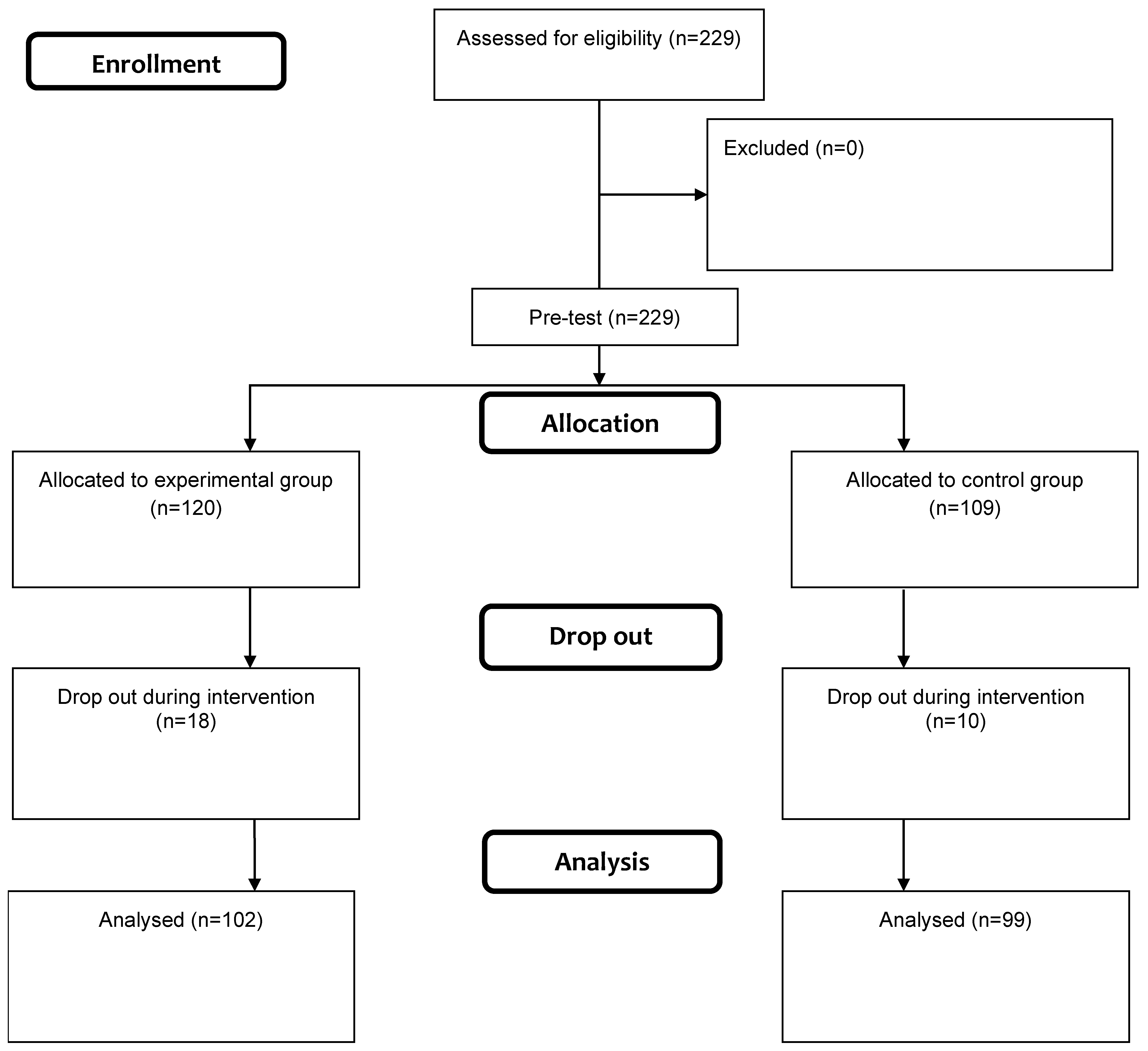
In this 16-week, two-parallel study, we recruited 229 students from the “Bogoslav Šulek” primary school, located in the city of Slavonski Brod, Brodsko-posavska county, Croatia. The group sample of respondents consisted of a total of 12 classes, including two experimental and two control classes in the 6th, 7th, and 8th grades. Of the total of 229 students at the beginning, 201 students (88%) completed the study (Figure 1). Given the longer duration of the study and the greater number of absences from mathematics classes, 28 students were not included in the final statistical data processing, and their partial results were removed. The reasons for the absences were primarily health-related or due to moving to other schools in the city. In order to make the study as objective as possible and to include as few subject teachers as possible, three mathematics teachers, in whose classes the video-based experiment was conducted, and the principal of the primary school where the experiment was conducted gave their approval for the experiment. Based on an error (α) of 0.05, a statistical power of 0.8, and an effect size (d) of 0.4 (Fedewa & Ahn, 2011), a minimum sample size of 52 students was estimated. Students who did not have health aberrations and whose parents, after being informed about the aim and purpose of the study, signed a written informed consent form and participated in the study. Consent to conduct the study was also approved by the competent Committee for Scientific Work and Ethics of the Faculty of Kinesiology, University of Zagreb, number: 65/2019. All interventions were implemented during regular mathematics lessons, providing a structured and academically relevant context for examining the integration of physical activity into cognitively demanding subjects and inclusive classroom environments.

2.2. Attitudes Towards PA

Students’ attitudes towards PA were assessed by the Croatian version of the Attitudes towards Physical activity Scale (APAS) (Mok et al., 2015). The questionnaire consists of a total of 58 questions, which are answered with scores ranging from “2” to “5”, where “5” indicates the highest level of agreement with the stated statement and “2” indicates the lowest level of agreement. The APAS questionnaire consists of 7 dimensions: (1) benefits of PA, (2) importance of PA, (3) learning, (4) self-efficacy, (5) fun, (6) physical fitness, and (7) personal record/performance (Mok et al., 2015). At the beginning of the study, the internal consistency of the APAS questionnaire was checked on the entire sample of the experimental and control groups because the 5 min exercise intervention in the experimental group had not yet been implemented and as such could not have influenced changes in the values of attitudes towards PA. Considering the entire questionnaire and the included questions within individual categories, the internal consistency was alpha = 0.96. Factor analysis confirmed 7 components of the questionnaire, and as far as the specificity of each question was concerned, the internal validity was as follows: (1) benefits of PA = 0.83; (2) importance of PA = 0.76; (3) learning = 0.88; (4) self-efficacy = 0.83; (5) fun = 0.93; (6) physical fitness = 0.91; and (7) personal best = 0.89. When the final values of each category were considered, the internal consistency of the questionnaire was alpha = 0.88, and the correlation between the categories was r = 0.23–0.73, p < 0.001.

2.3. PA Questionnaire

The level of PA was assessed using the Physical Activity Questionnaire for Children (PAQ-C), designed to assess the overall level of physical activity in younger school-age children (Crocker et al., 1997). The Croatian version of the PAQ-C questionnaire was used, which showed satisfactory reliability properties (alpha = 0.81) (Podnar et al., 2017). The questionnaire consists of 9 questions rated on a 5-point scale, and the overall PA score is predicted based on the arithmetic mean of the answers given. Based on the results, it is possible to classify respondents: score 1 to 2—insufficiently physically active; 3—moderately physically active; and 4 to 5—very physically active. In this study, the PAQ-C showed a satisfactory level of internal consistency (alpha = 0.76).

2.4. Experimental Design

This study lasted 22 weeks; however, the intervention was carried out in experimental classrooms for 16 weeks, starting on 16 September and ending on 7 February 2020. In the first week of the research (from 9 September to 13 September 2019), initial measurements were taken in all control and experimental classrooms. During the implementation of the experiment, unexpected events occurred that extended the initially planned research duration of 14 weeks to the final 16 weeks of the intervention. Namely, in the period from 10 October to 2 December 2019, all teachers spent a total of 16 working days on strike and classes were not held, with a constant strike in the period from 19 November to 2 December 2019. Due to the aforementioned events and the winter school holidays that lasted from 24 December to 3 January, the research was extended for an additional 5 weeks, until 7 February 2020.
Five-minute active breaks were based on a multimedia approach and video technology, which allowed teachers to take a short break from teaching in an innovative and simple way. At the same time, videos should encourage students to think about the positive values of PA, as well as to follow the further part of the lesson more actively and successfully, through better focus on work and concentration when completing teaching tasks. During the intervention period in the experimental classes, teachers conducted active breaks in every mathematics lesson (four times a week) during the lesson, in the middle of the 45 min lesson (20th–25th min). For the purposes of this research, 22 high-quality videos lasting 4 to 6 min were recorded and shown to students during the active break. The content of the videos consisted of basic kinesiological movements from various sports disciplines, such as swimming, athletics, football, basketball, boxing, and dance. At the beginning of each video, students performed preparatory exercises with the aim of stretching the body, while in the continuation of the video, athletes demonstrated specific exercises for each individual sports discipline. For example, in videos with the theme of swimming, students imitated movements related to the acquisition of crawl, breaststroke, and backstroke techniques; in athletics, they imitated exercises from the school of walking and running; and in football, the basic technique of kicking the ball, as well as exercises for developing balance. In videos with the theme of basketball, students tried to imitate basic basketball movements and manipulations with the ball as successfully as possible. Imitations of basic kicks and their combinations were shown in videos with the theme of boxing, while in dance, small dance choreographies were performed, which were adapted for both sexes. All movement structures that were shown to students were familiar from regular physical education classes. The number of repetitions of each exercise was not specified, but the athletes who were filmed tried to demonstrate the exercises as precisely as possible and at the same time tried to motivate the students to participate as actively as possible in the active rest. During the research, the subject teacher in the experimental classes could show each video three times, which reduced the frequency of repetition of each video to the lowest possible number, with the note that the video was not allowed to be shown a second time before all the other videos were shown. The movements that the students imitated were of moderate intensity, and everything was adjusted to the age of the students, all with the aim of giving the students a break from the lecture but also preparing them for the continuation of the educational process. The teachers had the opportunity to freely choose video work that differed in content.
The active break began with students pulling up their chairs in the classroom and imitating the movements shown by the video projector and computer at their workstations. The rest of the lesson in the experimental classes and the entire lesson in the control classes was conducted according to the mathematics curriculum. Before the start of the research, all mathematics teachers involved in the research participated in a one-hour training session, during which they were informed about the aim and purpose of the research, video examples of five-minute active breaks, and a detailed research implementation plan. The implementation within mathematics lessons ensured that the intervention did not interfere with curriculum delivery, while also allowing the inclusion of all students regardless of their physical abilities, supporting an inclusive classroom approach.

2.5. Data Analysis

Statistical data processing was performed using Statistical Packages for Social Sciences, version 24.0 (Chicago, IL, USA). As part of the descriptive analysis, arithmetic means and standard deviations for normally distributed variables and the median and interquartile range (25th to 75th percentiles) for variables that deviate significantly from the standard distribution were presented. The normality of the distribution was tested with the Kolmogorov–Smirnov test. Levene’s test also determined the homogeneity of variances between the experimental and control groups. At the beginning of the testing, the initial differences between the experimental and control groups were calculated with the analysis of covariance (ANCOVA) for all variables in the study, where the age and gender of the participants were shown in the model as covariates. Changes in the attitudes towards PA and assessing PA levels during the intervention in the experimental group and without intervention in the control group were tested using a parametric two-factor (group × time) analysis of covariance for repeated measures (RMANCOVA), where the covariates were age and gender (Pejić Papak et al., 2021). Partial eta squared was used to determine the effect size (ES) within the experimental and control groups before and after the intervention, and it was classified by size as follows: (1) 0.01 (small effect), 0.06 (medium effect), and 0.14 or higher (large effect), which explained a percentage (%) of the unique variance (Richardson, 2011). Statistical significance for all tests was set at p < 0.05, and it was two-sided.

3. Results

Sex- and age-related distributions are presented in Table 1. No significant differences in sex and age proportions were observed (p > 0.05).
Table 2 shows pre-post changes in seven scales in the experimental and control groups. Over 16 weeks, the within-group and post-pre analysis revealed that the experimental group significantly increased self-efficacy (mean diff. = 0.38, 95% CI 0.14 to 0.62, p = 0.002) in comparison to the control group (mean diff. = 0.14, 95% CI −0.10 to 0.38, p = 0.261). In other attitudes towards PA, non-significant main effects for ‘time’ and ‘time × group’ were observed (p > 0.05).
Pre-post changes in PAQ-C for the experimental and control groups are presented in Table 3. After the intervention program, a within-group and post-pre analysis showed significant decreases in PA levels during evenings (mean diff. = −0.26, 95% CI −0.51 to −0.01, p = 0.046) and for every day for the last week (mean diff. = −0.35, 95% CI −0.54 to −0.16, p < 0.001) in the experimental group, while the control group exhibited increases (during evenings) or maintained similar values (for every day for the last week). In other variables, no significant ‘time × group’ interactions were observed (p > 0.05).

4. Discussion

The main purpose of the present study was to examine the effects of active Brain Breaks® on attitudes towards PA and levels of PA in primary school-aged children. The findings of the study suggest that the experimental group who received the 5 min active Brain Breaks® improved additional self-efficacy, while PA levels did not increase and in some indicators slightly declined compared with the control group. In the context of mathematics education, these findings are particularly relevant, as self-efficacy represents an important predictor of student engagement, persistence, and success when dealing with cognitively demanding mathematical tasks. The effective implementation of classroom activities requires a solid grounding in didactic principles, systematic instructional planning, and continuous evaluation of the extent to which intended learning outcomes have been achieved (Pejić Papak et al., 2021). These findings of the attitudes towards PA are partially in line with previous studies, which mainly reported increases in benefits (Zhou et al., 2021; Balasekaran et al., 2021; Mok et al., 2020; Emeljanovas et al., 2018; Popeska et al., 2018), importance (Zhou et al., 2021; Balasekaran et al., 2021), learning (Zhou et al., 2021; Balasekaran et al., 2021; Mok et al., 2020; Emeljanovas et al., 2018; Popeska et al., 2018), self-efficacy (Zhou et al., 2021; Balasekaran et al., 2021; Glapa et al., 2018; Mok et al., 2020; Emeljanovas et al., 2018; Popeska et al., 2018), fun (Balasekaran et al., 2021; Glapa et al., 2018; Mok et al., 2020; Emeljanovas et al., 2018), fitness (Balasekaran et al., 2021; Glapa et al., 2018; Emeljanovas et al., 2018) and personal best (Zhou et al., 2021; Balasekaran et al., 2021; Mok et al., 2020; Emeljanovas et al., 2018). However, two studies reported that self-efficacy exhibited large increases following the intervention program (Mok et al., 2020; Popeska et al., 2018), as opposed to other attitude factors related to PA. In a study by Mok et al. (2020), the outcome of self-efficacy increased by 40.2% in the experimental group and by 2.8% in the control group. In Macedonian primary school children, the experimental group also increased the same parameter by 14.6%, yet the control group exhibited a decrease by 1.4% (Popeska et al., 2018). The experimental group in the present study increased self-efficacy by almost 10.0%, and it represented the only factor that significantly changed after the intervention, while other factors remained unchanged. Previous studies have reported that education-related videos implemented in the teaching process may provide a satisfactory and enjoyable learning experience after doing PA (Sun & Gao, 2016) without interfering with academic achievement or other curriculum outcomes. Similar findings have been noted (Popeska et al., 2018), where the experimental group improved the scale self-efficacy accompanied by video exercises, stating that these findings are important for effective implementation of active Brain Breaks® into everyday school routine. This is not surprising, since self-efficacy has been constantly proven as one of the most dominant correlates of active life-long engagement in PA (Sallis et al., 2015). From a mathematics education perspective, increased self-efficacy may contribute to students’ willingness to engage in problem-solving, reduce avoidance of challenging tasks, and support more positive learning behaviours during mathematics lessons.
The Brain Breaks® intervention may be particularly suitable for inclusive classroom settings. Since the activities are short, structured, and based on video modelling, they allow participation of students with diverse abilities, including those with lower physical fitness, learning difficulties, or attention-related challenges. The use of visual and movement-based instructions provides multimodal learning opportunities, which may benefit students who struggle with traditional verbal instruction. Furthermore, the absence of performance pressure and the possibility to imitate movements at an individual pace make the intervention adaptable to a wide range of learners. Importantly, the observed increase in self-efficacy may be especially relevant for students who typically experience lower confidence in academic settings, potentially contributing to greater inclusion and participation during mathematics lessons.
The reason for the discrepancy and relative heterogeneity between the studies is that the educational and school systems in individual countries are different, and in some countries (for example, China), more attention is paid to the educational component and academic achievement, as well as traditional pedagogical learning styles, than to the structural implementation of physical activity during the school day (Zhou et al., 2021). In the study by Zhou et al. (2021), another contributing factor was that teachers were responsible for selecting video content for the implementation of active breaks, and students did not have direct access to the selection of content and exercises. Most of the videos were oriented towards traditional Chinese learning practices, a large number of students in class, class size, protection, and as few distractions as possible that would affect learning outcomes during classes (Zhou et al., 2021). In order to help students in modern teaching to learn independently in the process of active learning, an environment must be provided in which teaching is characterised by a stimulating classroom atmosphere, where the teacher has positive attitudes towards students’ success and adapts learning activities (Sun & Gao, 2016). The literature suggests that teachers are the main components of engaging in PA during the school day/hour for children in primary and secondary schools (Breda et al., 2018). Interestingly, a lack of significant improvements in fitness in this study is primarily due to the selection of low-intensity PA video materials (stretching exercises, lighter movements in the field of dance, and low-intensity movement structures) that lasted about 5 min. Such types of low-intensity activities were not sufficient to produce positive changes in fitness (Zhou et al., 2021). The type and level of PA were also found to be non-standardised, i.e., different in other studies, where it was of moderate intensity and students could also choose the videos (Popeska et al., 2018). This was confirmed in a previous study, where physical activity during the day must be of relatively high intensity and interval type (HIIT training), and this type of training showed extremely positive effects on physical fitness and overall health, considering the number of repetitions, duration, and intensity (Batacan et al., 2017).
This study failed to find increases in the level of PA in the experimental group after the intervention of the active Brain Breaks® program over a period of 16 weeks. Most research has shown that the level of PA increases when using objective methods (pedometers, accelerometry (McLoughlin & Graber, 2021; Broad et al., 2023; Cline et al., 2021; Melo et al., 2025)). Indeed, recent data have indicated increases in MVPA during both intervention and the time spent in school (Watson et al., 2017). However, our findings are in line with previous results conducted among Croatian youth (Podnar et al., 2018). A study by Podnar et al. (2018) on a sample of 126 primary school students and using Senswear Bodymedia accelerometers showed that there were small but insignificant positive effects of 5 min active Brain Breaks® interventions on the total level of energy expenditure, number of steps, time spent in total PA, time spent in SBs, and MVPA. Namely, during the 12-week intervention and the presentation of video animations, the authors confirmed no significant increases in the total level of PA, nor different intensities (Podnar et al., 2018). The assumption for obtaining non-significant changes in PA levels is that active breaks lasting 5 min are not sufficient to produce positive changes, i.e., an increase in overall PA levels. Furthermore, it has been assumed that children spend more time in SBs by the end of the school day after the implementation of the active breaks intervention (Podnar et al., 2018). On the other hand, the implementation of 5 min active breaks showed that it did not have negative effects on the potential reduction of academic achievement in mathematics or attitudes towards PA in this study, and as such, it could be used to increase students’ perceptions of a higher level of PA. However, the lack of increase in overall physical activity levels suggests that short-duration interventions alone may not be sufficient, particularly for students with already low baseline activity levels. This highlights the need for combining classroom-based strategies with broader school or community-level interventions.
This study is not without limitations. Although an effort was made to implement an active Brain Breaks® intervention lasting 5 min over 16 weeks in a relatively large sample of primary school-aged children, the level of PA was measured using subjective methods (PAQ-C), and it was possible that students did not perceive/understand the questions well enough or overestimated their results for the sake of social approval. Many previous studies have used objective methods to collect data on time spent in different intensities of PA (sedentary behaviour, low, moderate, and high levels), number of steps, metabolic units, and total energy expenditure (for more information, see the Section 4). Second, during the implementation of the intervention program, a mass teacher protest took place in the Republic of Croatia, which lasted from October to December; then, until early February teachers in primary and secondary schools had so-called ‘circular teaching’, and children from different counties were deprived of normally planned and programmed teaching. Since previous research on the same topic has shown relatively small positive effects of active breaks attitudes towards PA and PA levels, due to insufficient continuity of the intervention and encouragement of active breaks by teachers, it was logical to expect that the duration of the intervention and active breaks within the intervention was not sufficient for positive effects. Third, physiological, i.e., biochemical parameters and growth and development status (maturation status), were not measured during the study, which could potentially serve as mediating factors between the active break intervention and outcomes. Fourth, the parameter of teacher/teacher and parental engagement during the implementation of the intervention was unknown. Namely, research has shown that teachers and parents have a significant influence on the motivation of students/children to remain in the study and the overall implementation of the intervention (Yan et al., 2025). Finally, we should acknowledge that ignoring classroom clustering (as treating children from each class as an individual cluster) may inflate statistical significance—and that the reported p-values should therefore be interpreted with caution. Given the limitations of this study, future research that will study the effectiveness of the active breaks intervention on attitudes towards PA and overall PA levels should use objective methods for data collection of PA and analyse the complete anthropological profile of students and the child–teacher–parent connection. Also, the time of the intervention, the time of active breaks, the intensity of PA, and the type of exercises play a significant role in the effectiveness of the intervention itself, which still needs to be investigated in future research.
The findings of this study provide several practical implications for mathematics teaching and inclusive educational practice. First, teachers can incorporate short (3–5 min) Brain Breaks® during the mid-point of mathematics lessons to reduce fatigue and improve students’ attention during cognitively demanding activities. Second, in inclusive classrooms, video-based physical activity can support diverse learners by offering multimodal instruction (visual, auditory, and kinaesthetic), thereby increasing accessibility and engagement. Third, activities can be easily adapted in terms of intensity and complexity, allowing participation of students with different physical and cognitive abilities. Finally, given that the intervention did not lead to increases in overall physical activity levels, it is recommended that such classroom-based strategies be complemented with longer or more intensive physical activity programs.

5. Conclusions

In summary, the study showed that children assigned to an experimental program increased their self-efficacy level attitude towards PA, while trivial and non-significant changes in other attitude scales were observed. We also found that active Brain Breaks® did not lead to higher levels of PA, and in some indicators, the level of PA declined. Although hypotheses within this study were not supported and confirmed by the results, mainly due to limitations during implementation, active recess interventions during school hours have become an innovative tool through which a positive and beneficial impact can be made. When implemented within mathematics lessons, such interventions may additionally support inclusive teaching practices and enhance students’ self-efficacy, although their impact on overall physical activity levels remains limited. The application of strategies, such as active Brain Breaks®, is important for designing effective and innovative learning environments that support deep understanding of individual students, optimise cognitive and emotional engagement, and foster a positive classroom climate, which is strongly emphasised in contemporary educational research.
In the context of this study, the concept of an inclusive classroom environment refers to the organisation of the instructional process in a manner that enables equal participation of students with diverse abilities, needs, and learning styles in shared classroom activities. Brain Breaks® interventions may be considered potentially suitable for inclusive classroom settings due to their short and structured format, the use of video modelling, and the possibility of adapting activities to different levels of students’ physical and cognitive abilities. Such an approach may be particularly relevant for students with attention difficulties, lower levels of physical fitness, or learning difficulties, as it provides a multimodal approach to learning and participation without imposing significant performance pressure.
However, it should be emphasised that the findings of the present study do not provide direct empirical evidence regarding the effects of the intervention on the inclusiveness of the classroom environment. Specifically, the study did not include measures related to students’ social inclusion, the level of participation of students with special educational needs, sense of classroom belonging, quality of peer interactions, or perceptions of the inclusive classroom climate. The empirical findings primarily indicate an increase in students’ self-efficacy and partial changes in attitudes toward physical activity. Therefore, claims concerning the inclusive potential of Brain Breaks® interventions should be interpreted as theoretically grounded assumptions derived from the characteristics of the intervention itself.
Accordingly, future research should incorporate objective indicators of classroom inclusiveness. In particular, it would be important to examine the level of participation of students with diverse abilities, perceptions of social support and classroom belonging, engagement during the instructional process, teacher and student evaluations of the inclusive classroom climate, and patterns of social interaction during the implementation of the intervention. Such an approach would enable a more precise understanding of the potential contribution of Brain Breaks® activities to the development of inclusive educational practice.

Author Contributions

Conceptualization, I.H. and V.P.; methodology, I.H.; software, I.H.; validation, I.H., V.P. and P.P.P.; formal analysis, I.H.; investigation, I.H.; resources, V.P.; data curation, I.H.; writing—original draft preparation, I.H., V.P. and P.P.P.; writing—review and editing, I.H., V.P. and P.P.P.; visualization, I.H.; supervision, V.P.; project administration, I.H.; funding acquisition, V.P. All authors have read and agreed to the published version of the manuscript.

Funding

This research received no external funding.

Institutional Review Board Statement

The study was conducted in accordance with the Declaration of Helsinki, and approved by the Ethics Committee for Scientific Work and Ethics of the Faculty of Kinesiology, University of Zagreb (protocol code 65/2019 and date of approval 30 October 2019).

Informed Consent Statement

Informed consent was obtained from all subjects involved in the study.

Data Availability Statement

The original contributions presented in this study are included in the article. Further inquiries can be directed to the corresponding author(s). Further dataset is available on request from the authors.

Conflicts of Interest

The authors declare no conflict of interest.

References

  1. Aubert, S., Brazo-Sayavera, J., González, S. A., Janssen, I., Manyanga, T., Oyeyemi, A. L., Picard, P., Sherar, L. B., Turner, E., & Tremblay, M. S. (2021). Global prevalence of physical activity for children and adolescents; inconsistencies, research gaps, and recommendations: A narrative review. The International Journal of Behavioral Nutrition and Physical Activity, 18(1), 81. [Google Scholar] [CrossRef]
  2. Balasekaran, G., Ibrahim, A. A. B., Cheo, N. Y., Wang, P. K., Kuan, G., Popeska, B., Chin, M. K., Mok, M. M. C., Edginton, C. R., Culpan, I., & Durstine, J. L. (2021). Using Brain-Breaks® as a technology tool to increase attitude towards physical activity among students in singapore. Brain Sciences, 11(6), 784. [Google Scholar] [CrossRef]
  3. Batacan, R. B., Jr., Duncan, M. J., Dalbo, V. J., Tucker, P. S., & Fenning, A. S. (2017). Effects of high-intensity interval training on cardiometabolic health: A systematic review and meta-analysis of intervention studies. British Journal of Sports Medicine, 51(6), 494–503. [Google Scholar] [CrossRef]
  4. Breda, J., Jakovljevic, J., Rathmes, G., Mendes, R., Fontaine, O., Hollmann, S., Rütten, A., Gelius, P., Kahlmeier, S., & Galea, G. (2018). Promoting health-enhancing physical activity in Europe: Current state of surveillance, policy development and implementation. Health Policy, 122(5), 519–527. [Google Scholar] [CrossRef]
  5. Broad, A. A., Bornath, D. P. D., Grisebach, D., McCarthy, S. F., Bryden, P. J., Robertson-Wilson, J., & Hazell, T. J. (2023). Classroom activity breaks improve on-task behavior and physical activity levels regardless of time of day. Research Quarterly for Exercise and Sport, 94(2), 331–343. [Google Scholar] [CrossRef] [PubMed]
  6. Cline, A., Knox, G., De Martin Silva, L., & Draper, S. (2021). A process evaluation of a UK classroom-based physical activity intervention-‘busy brain breaks’. Children, 8(2), 63. [Google Scholar] [CrossRef] [PubMed]
  7. Cooper, A. R., Goodman, A., Page, A. S., Sherar, L. B., Esliger, D. W., van Sluijs, E. M., Andersen, L. B., Anderssen, S., Cardon, G., Davey, R., Froberg, K., Hallal, P., Janz, K. F., Kordas, K., Kreimler, S., Pate, R. R., Puder, J. J., Reilly, J. J., Salmon, J., … Ekelund, U. (2015). Objectively measured physical activity and sedentary time in youth: The International children’s accelerometry database (ICAD). The International Journal of Behavioral Nutrition and Physical Activity, 12, 113. [Google Scholar] [CrossRef] [PubMed]
  8. Crocker, P. R., Bailey, D. A., Faulkner, R. A., Kowalski, K. C., & McGrath, R. (1997). Measuring general levels of physical activity: Preliminary evidence for the physical activity questionnaire for older children. Medicine and Science in Sports and Exercise, 29(10), 1344–1349. [Google Scholar] [CrossRef]
  9. Čepić, R., & Papak, P. P. (2021). Challenges of curriculum planning and achieving learning outcomes: A case study of croatian elementary school teachers’ experiences. Revista Romaneasca Pentru Educatie Multidimensionala, 13(1Sup1), 78–100. [Google Scholar]
  10. Demchenko, I., Aubert, S., & Tremblay, M. S. (2025). Global Matrix 4.0 on physical activity for children and adolescents: Project evolution, process evaluation, and future recommendations. Journal of Physical Activity & Health, 22(4), 457–469. [Google Scholar] [CrossRef]
  11. Donnelly, J. E., Hillman, C. H., Castelli, D., Etnier, J. L., Lee, S., Tomporowski, P., Lambourne, K., & Szabo-Reed, A. N. (2016). Physical activity, fitness, cognitive function, and academic achievement in children: A systematic review. Medicine and Science in Sports and Exercise, 48(6), 1197–1222. [Google Scholar] [CrossRef]
  12. Emeljanovas, A., Mieziene, B., MoChingMok, M., Chin, M., Cesnaitiene, V. J., Fatkulina, N., Trinkūnienė, L., Sánchez, G. F., & Suárez, A. D. (2018). The effect of an interactive program during school breaks on attitudes toward physical activity in primary school children. Anales De Psicologia, 34, 580–586. [Google Scholar] [CrossRef]
  13. Esteves, J. V., & Stanford, K. I. (2024). Exercise as a tool to mitigate metabolic disease. American Journal of Physiology-Cell Physiology, 327(3), C587–C598. [Google Scholar] [CrossRef] [PubMed]
  14. Farooq, M. A., Parkinson, K. N., Adamson, A. J., Pearce, M. S., Reilly, J. K., Hughes, A. R., Janssen, X., Basterfield, L., & Reilly, J. J. (2018). Timing of the decline in physical activity in childhood and adolescence: Gateshead millennium cohort study. British Journal of Sports Medicine, 52(15), 1002–1006. [Google Scholar] [CrossRef]
  15. Fedewa, A. L., & Ahn, S. (2011). The effects of physical activity and physical fitness on children’s achievement and cognitive outcomes: A meta-analysis. Research Quarterly for Exercise and Sport, 82(3), 521–535. [Google Scholar] [CrossRef]
  16. Glapa, A., Grzesiak, J., Laudanska-Krzeminska, I., Chin, M. K., Edginton, C. R., Mok, M. M. C., & Bronikowski, M. (2018). The impact of brain breaks classroom-based physical activities on attitudes toward physical activity in polish school children in third to fifth grade. International Journal of Environmental Research and Public Health, 15(2), 368. [Google Scholar] [CrossRef] [PubMed]
  17. González-González, C. S., Gómez Del Río, N., Toledo-Delgado, P. A., & García-Peñalvo, F. J. (2021). Active game-based solutions for the treatment of childhood obesity. Sensors, 21(4), 1266. [Google Scholar] [CrossRef] [PubMed]
  18. Górna, S., Pazdro-Zastawny, K., Basiak-Rasała, A., Krajewska, J., Kolator, M., Cichy, I., Rokita, A., & Zatoński, T. (2023). Physical activity and sedentary behaviors in Polish children and adolescents. Archives de Pediatrie: Organe Officiel de la Societe Francaise de Pediatrie, 30(1), 42–47. [Google Scholar] [CrossRef]
  19. Grunseit, A. C., O’Hara, B. J., Drayton, B., Learnihan, V., Hardy, L. L., Clark, E., Klarenaar, P., & Engelen, L. (2020). Ecological study of playground space and physical activity among primary school children. BMJ Open, 10(6), e034586. [Google Scholar] [CrossRef]
  20. Hills, A. P., Dengel, D. R., & Lubans, D. R. (2015). Supporting public health priorities: Recommendations for physical education and physical activity promotion in schools. Progress in Cardiovascular Diseases, 57(4), 368–374. [Google Scholar] [CrossRef]
  21. Holik, I., Kitak, M., Petrić, V., Pejić Papak, P., & Štemberger, V. (2021). Physically active breaks in the teaching process: Impact on the pupils’ educational achievements. Collegium Antropologicum, 45(3), 235–242. [Google Scholar] [CrossRef]
  22. Infantes-Paniagua, Á., Silva, A. F., Ramirez-Campillo, R., Sarmento, H., González-Fernández, F. T., González-Víllora, S., & Clemente, F. M. (2021). Active school breaks and students’ attention: A systematic review with meta-analysis. Brain Sciences, 11(6), 675. [Google Scholar] [CrossRef] [PubMed]
  23. Jones, M., Defever, E., Letsinger, A., Steele, J., & Mackintosh, K. A. (2020). A mixed-studies systematic review and meta-analysis of school-based interventions to promote physical activity and/or reduce sedentary time in children. Journal of Sport and Health Science, 9(1), 3–17. [Google Scholar] [CrossRef]
  24. Koolhaas, C. M., Dhana, K., Schoufour, J. D., Lahousse, L., van Rooij, F. J. A., Ikram, M. A., Brusselle, G., Tiemeier, H., & Franco, O. H. (2018). Physical activity and cause-specific mortality: The rotterdam study. International Journal of Epidemiology, 47(5), 1705–1713. [Google Scholar] [CrossRef]
  25. Kretschmer, L., Salali, G. D., Andersen, L. B., Hallal, P. C., Northstone, K., Sardinha, L. B., Dyble, M., Bann, D., & International Children’s Accelerometry Database (ICAD) Collaborators. (2023). Gender differences in the distribution of children’s physical activity: Evidence from nine countries. The International Journal of Behavioral Nutrition and Physical Activity, 20(1), 103. [Google Scholar] [CrossRef]
  26. Kuan, G., Rizal, H., Hajar, M. S., Chin, M. K., & Mok, M. M. C. (2019). Bright sports, physical activity investments that work: Implementing brain breaks in Malaysian primary schools. British Journal of Sports Medicine, 53(14), 905–906. [Google Scholar] [CrossRef] [PubMed]
  27. Lum, M., Wolfenden, L., Jones, J., Grady, A., Christian, H., Reilly, K., & Yoong, S. L. (2022). Interventions to improve child physical activity in the early childhood education and care setting: An umbrella review. International Journal of Environmental Research and Public Health, 19(4), 1963. [Google Scholar] [CrossRef] [PubMed]
  28. McLoughlin, G. M., & Graber, K. C. (2021). The contribution of physical education to physical activity within a comprehensive school health promotion program. Research Quarterly for Exercise and Sport, 92(4), 669–679. [Google Scholar] [CrossRef]
  29. Melo, J. C. N., Tejada, J., Silva, E. C. M., Ywgne, J., Oliveira, D. N., Gandarela, L., & Silva, D. R. (2025). Effects of physically active lessons and active breaks on cognitive performance and health indicators in elementary school children: A cluster randomized trial. The International Journal of Behavioral Nutrition and Physical Activity, 22(1), 96. [Google Scholar] [CrossRef]
  30. Mok, M. M. C., Chin, M. K., Chen, S., Emeljanovas, A., Mieziene, B., Bronikowski, M., Laudanska-Krzeminska, I., Milanovic, I., Pasic, M., Balasekaran, G., Phua, K. W., & Makaza, D. (2015). Psychometric properties of the attitudes toward physical activity scale: A Rasch analysis based on data from five locations. Journal of Applied Measurement, 16(4), 379–400. [Google Scholar]
  31. Mok, M. M. C., Chin, M. K., Korcz, A., Popeska, B., Edginton, C. R., Uzunoz, F. S., Podnar, H., Coetzee, D., Georgescu, L., Emeljanovas, A., Pasic, M., Balasekaran, G., Anderson, E., & Durstine, J. L. (2020). Brain Breaks® physical activity solutions in the classroom and on attitudes toward physical activity: A randomized controlled trial among primary students from eight Countries. International Journal of Environmental Research and Public Health, 17(5), 1666. [Google Scholar] [CrossRef]
  32. Murphy, C. M., Howie, E. K., Barenie, M. J., Weber, K. A., & Thomsen, M. R. (2025). Examining relationships between U.S. children’s physical activity levels during recess, school days, and weekend days. Preventive Medicine Reports, 55, 103120. [Google Scholar] [CrossRef]
  33. Papadopoulos, N., Mantilla, A., Bussey, K., Emonson, C., Olive, L., McGillivray, J., Pesce, C., Lewis, S., & Rinehart, N. (2022). Understanding the benefits of brief classroom-based physical activity interventions on primary school-aged children’s enjoyment and subjective wellbeing: A systematic review. The Journal of School Health, 92(9), 916–932. [Google Scholar] [CrossRef] [PubMed]
  34. Pedišić, Ž., Strika, M., Matolić, T., Sorić, M., Šalaj, S., Dujić, I., Rakovac, M., Radičević, B., Podnar, H., Greblo Jurakić, Z., Jerković, M., Radašević, H., Čvrljak, J., Petračić, T., Musić Milanović, S., Lang Morović, M., Krtalić, S., Milić, M., Papić, A., … Jurakić, D. (2023). Physical activity of children and adolescents in Croatia: A global matrix 4.0 systematic review of its prevalence and associated personal, social, environmental, and policy Factors. Journal of Physical Activity and Health, 20(6), 487–499. [Google Scholar] [CrossRef]
  35. Pejić Papak, P., Valenčič Zuljan, M., & Zuljan, D. (2021). Student-centred instruction in science and technology: A model of factors at organizational and individual levels. Revija za Elementarno Izobraževanje, 14(4), 501–517. [Google Scholar] [CrossRef]
  36. Perry, A. S., Dooley, E. E., Master, H., Spartano, N. L., Brittain, E. L., & Pettee Gabriel, K. (2023). Physical activity over the lifecourse and cardiovascular disease. Circulation Research, 132(12), 1725–1740. [Google Scholar] [CrossRef] [PubMed]
  37. Podnar, H., Kunješić, M., & Radman, I. (2017). Internal consistency and retest reliability of the croatian version of PAQ-C. Croatian Journal of Education, 19(1), 45–62. [Google Scholar] [CrossRef]
  38. Podnar, H., Novak, D., & Radman, I. (2018). Effects of a 5-minute classroom-based physical activity on on-task behaviour and physical activity levels. Kinesiology, 50(2), 251–259. [Google Scholar] [CrossRef]
  39. Popeska, B., Jovanova-Mitkovska, S., Chin, M. K., Edginton, C. R., Mo Ching Mok, M., & Gontarev, S. (2018). Implementation of Brain Breaks® in the classroom and effects on attitudes toward physical activity in a macedonian school setting. International Journal of Environmental Research and Public Health, 15(6), 1127. [Google Scholar] [CrossRef] [PubMed]
  40. Richardson, J. T. (2011). Eta squared and partial eta squared as measures of effect size in educational research. Educational Research Review, 6, 135–147. [Google Scholar] [CrossRef]
  41. Sallis, J. F., Owen, N., & Fisher, E. (2015). Health behavior: Theory, research, and practice. Ecological models of health behavior (5th ed.). Jossey Bass. [Google Scholar]
  42. Sampaio, B. O. A., de Alencar Santos, A. R., Nascimento-Ferreira, M. V., & De Moraes, A. C. F. (2025). Global prevalence of barriers and facilitators to physical activity in children and adolescents: A systematic review with meta-analysis. Preventive Medicine Reports, 58, 103230. [Google Scholar] [CrossRef]
  43. Silva, D. A. S., Chaput, J. P., Katzmarzyk, P. T., Fogelholm, M., Hu, G., Maher, C., Olds, T., Onywera, V., Sarmiento, O. L., Standage, M., Tudor-Locke, C., & Tremblay, M. S. (2018). Physical education classes, physical activity, and sedentary behavior in children. Medicine and Science in Sports and Exercise, 50(5), 995–1004. [Google Scholar] [CrossRef]
  44. Sun, H., & Gao, Y. (2016). Impact of an active educational video game on children’s motivation, science knowledge, and physical activity. Journal of Sport and Health Science, 5(2), 239–245. [Google Scholar] [CrossRef] [PubMed]
  45. Šimunović, I., Mrčela, D., Karin, Ž., Pogorelić, Z., & Markić, J. (2024). Prevalence of overweight and obesity among primary school students in split, Croatia. Nutrients, 16(20), 3488. [Google Scholar] [CrossRef]
  46. Watson, A., Timperio, A., Brown, H., Best, K., & Hesketh, K. D. (2017). Effect of classroom-based physical activity interventions on academic and physical activity outcomes: A systematic review and meta-analysis. The International Journal of Behavioral Nutrition and Physical Activity, 14(1), 114. [Google Scholar] [CrossRef]
  47. WHO. (2020). Recommendations. In Guidelines on physical activity and sedentary behaviour. World Health Organization. Available online: https://www.ncbi.nlm.nih.gov/books/NBK566046/ (accessed on 14 February 2026).
  48. Yan, Y., Zhang, D., & Liu, Y. (2025). Promoting physical activity during recess in small sized elementary school: A pilot study. BMC Public Health, 25(1), 3249. [Google Scholar] [CrossRef]
  49. Yu, R., Duncombe, S. L., Nemoto, Y., Araujo, R. H., Chung, H. F., & Mielke, G. I. (2025). Physical activity trajectories and accumulation over adulthood and their associations with all-cause and cause-specific mortality: A systematic review and meta-analysis. British Journal of Sports Medicine, 59(17), 1228–1241. [Google Scholar] [CrossRef]
  50. Zhou, K., He, S., Zhou, Y., Popeska, B., Kuan, G., Chen, L., Chin, M. K., Mok, M. M. C., Edginton, C. R., Culpan, I., & Durstine, J. L. (2021). Implementation of brain Breaks® in the classroom and its effects on attitudes towards physical activity in a Chinese school setting. International Journal of Environmental Research and Public Health, 18(1), 272. [Google Scholar] [CrossRef] [PubMed]
Figure 1. Flow chart diagram of participants’ enrolment, allocation, drop-out and final analysis.
Education 16 00840 g001
Table 1. Basic descriptive statistics of the study participants calculated on the baseline allocation sample, according to sex and age (n = 229).
AgeExperimental Group (n = 120)Control Group (n = 109)p
Boys, n (%)Girls, n (%)Boys, n (%)Girls, n (%)
11-year-olds7 (11.9)6 (9.8)4 (7.4)8 (14.5)0.780
12-year-olds21 (35.6)19 (31.1)22 (40.7)16 (29.1)
13-year-olds18 (30.5)25 (41.0)15 (27.8)24 (43.6)
14-year-olds13 (22.0)11 (18.1)13 (24.1)7 (12.7)
Table 2. Descriptive statistics of the experimental and control groups in the seven scales calculated by the RMANCOVA a; data are presented as the mean ± SD.
VariablesGroupsPre-TestPost-TestMain Effects
TimeTime × Group
F (p) η2F (p) η2
BenefitsExperimental4.10 ± 0.614.02 ± 0.68
Control4.09 ± 0.584.02 ± 0.692.953 (ns)0.0140.009 (ns)0.000
ImportanceExperimental4.44 ± 0.524.42 ± 0.64
Control4.50 ± 0.554.35 ± 0.670.183 (ns)0.0013.079 (ns)0.015
LearningExperimental3.31 ± 0.743.16 ± 0.80
Control3.56 ± 0.773.19 ± 0.910.045 (ns)0.0003.190 (ns)0.015
Self-efficacyExperimental3.82 ± 0.914.20 ± 1.04
Control3.94 ± 0.893.81 ± 1.160.330 (ns)0.0029.242 **0.043
FunExperimental3.97 ± 0.693.92 ± 0.72
Control3.94 ± 0.733.78 ± 0.901.783 (ns)0.0091.184 (ns)0.006
FitnessExperimental4.14 ± 0.734.25 ± 0.64
Control4.09 ± 0.794.06 ± 0.980.349 (ns)0.0021.613 (ns)0.008
Personal bestExperimental4.37 ± 0.664.37 ± 0.71
Control4.37 ± 0.744.34 ± 0.960.103 (ns)0.0010.098 (ns)0.000
Overall scoreExperimental4.02 ± 0.544.05 ± 0.53
Control4.07 ± 0.573.99 ± 0.620.115 (ns)0.0012.841 (ns)0.014
ns = Non-significant (p > 0.05); *** p < 0.001; ** p < 0.01; * p < 0.05. a RMANCOVA results are based on the smaller analysed sample shown in the flow diagram.
Table 3. Descriptive statistics of the experimental and control groups for the PAQ-C calculated by the RMANCOVA a; data are presented as the mean ± SD.
VariablesGroupsPre-TestPost-TestMain Effects
TimeTime × Group
F (p)η2F (p)η2
In spare timeExperimental1.71 ± 0.451.79 ± 0.54
Control1.88 ± 0.441.81 ± 0.500.327 (ns)0.0023.772 (ns)0.017
During PEExperimental4.29 ± 0.884.34 ± 1.12
Control4.31 ± 0.904.48 ± 0.758.021 **0.0360.416 (ns)0.002
During breaksExperimental2.05 ± 0.962.01 ± 0.97
Control2.10 ± 0.912.04 ± 0.965.710 *0.0260.010 (ns)0.000
During lunchExperimental1.97 ± 0.811.91 ± 0.97
Control2.03 ± 0.942.02 ± 0.906.978 **0.0320.092 (ns)0.000
After schoolExperimental3.03 ± 1.432.89 ± 1.19
Control3.42 ± 1.383.04 ± 1.442.149 (ns)0.0101.339 (ns)0.006
During eveningsExperimental3.10 ± 1.292.84 ± 1.23
Control3.12 ± 1.373.24 ± 1.310.066 (ns)0.0003.836 *0.018
During last weekendExperimental3.21 ± 1.053.08 ± 1.23
Control3.24 ± 1.283.17 ± 1.212.858 (ns)0.0130.104 (ns)0.000
Self-evaluatedExperimental3.21 ± 1.152.97 ± 1.15
Control3.30 ± 1.223.23 ± 1.230.107 (ns)0.0010.801 (ns)0.004
Daily for the last weekExperimental3.34 ± 0.952.99 ± 1.03
Control3.25 ± 1.153.25 ± 0.980.361 (ns)0.0025.767 *0.026
Total PA levelExperimental2.88 ± 0.602.76 ± 0.74
Control2.96 ± 0.642.92 ± 0.720.495 (ns)0.0020.803 (ns)0.004
ns = Non-significant (p > 0.05); PE = physical education; *** p < 0.001; ** p < 0.01; * p < 0.05. a RMANCOVA results are based on the smaller analysed sample shown in the flow diagram.
Disclaimer/Publisher’s Note: The statements, opinions and data contained in all publications are solely those of the individual author(s) and contributor(s) and not of MDPI and/or the editor(s). MDPI and/or the editor(s) disclaim responsibility for any injury to people or property resulting from any ideas, methods, instructions or products referred to in the content.