Article

Living Labs for Enhanced Student Learning Experiences: Lab Leaders’ Perceptions on Learning Environments and Stakeholder Collaboration


by
Molebogeng Makofane
1,*,
Lehlogonolo Rudolf Kanyane
1,
Henry Odiri Igugu
1,
Rudzani Glen Muthelo
1,
Sachin Sewpersad
1,
Hannele Niemi
2 and
Jari Lavonen
2
1
Faculty of Engineering and the Built Environment, Tshwane University of Technology, Staatsartillerie Road, Pretoria 0183, South Africa
2
Faculty of Educational Sciences, University of Helsinki, 00170 Helsinki, Finland
*
Author to whom correspondence should be addressed.
Educ. Sci. 2026, 16(4), 660; https://doi.org/10.3390/educsci16040660

Submission received: 4 November 2025 / Revised: 23 March 2026 / Accepted: 25 March 2026 / Published: 21 April 2026

Abstract

Living Labs offer immersive learning in Higher Education Institutions (HEIs), yet their core nature and value for competency development remain underexplored, particularly from the perspective of lab leaders. To address the knowledge gap, this study examines the perspectives of lab leaders on the potential of living labs as dynamic learning settings. Specifically, it explores two dimensions: (1) how living labs structure learning processes, and (2) the influence of collaboration with societal partners on learning outcomes, framed by the Quadruple Helix Model (academia, industry, government, and community). The study adopts a qualitative research design via semi-structured interviews with seven laboratory leaders across five well-established living labs in Finnish Universities of Applied Sciences. Interview transcripts were analyzed using Julius.ai and in vivo coding to identify and categorize themes. The respondents highlighted that in their experience, combining physical and digital settings often facilitates experiential, reflective, and innovative learning while equipping students with practical skills and competencies that improve their employability. Furthermore, the respondents reported that engagement with stakeholders fosters co-creation and well-rounded innovation. These collaborations also help ensure that the living labs can effectively sustain their operation, offering students the opportunities to engage in globally relevant issues such as digital transformation. Nonetheless, obstacles include resource limitations, maintaining enduring teamwork, and adjusting to rapid technological changes. The paper concludes that living labs serve as supplementary instruments and their adoption can help match academic learning curricula and practices with industry needs, while also enhancing student learning in preparation for the world of work.

1. Introduction

Recent education policy documents by leading organizations such as the African Union Commission (2019), European Commission (2025), and the United Nations Industrial Development Organization (UNIDO) (2021) have explored how Higher Education ought to prepare students for the future. To address the complexities of the rapidly evolving labor markets that originate from advancements in technology and digitalization, Higher Education Institutions (HEIs) have been actively enhancing learning environments. The prevailing need is often to foster the development of skills that enhance the employability of learners, while concurrently cultivating globally competent citizens (Purcell et al., 2019). One promising solution is the adoption of living lab environments, which immerse learners in real-world work settings. These labs facilitate the co-creation of innovative ideas, products, and services while promoting active, collaborative, and contextual learning (J. Kim et al., 2019; Leminen et al., 2012; Rogers et al., 2023). By bridging the gap between academia and industry, living labs equip students with practical experience and essential competencies, preparing them for the evolving demands of the modern workforce.
Over two decades have passed since the beginning of research on living labs, after the phrase was created by Professor William J. Mitchell in the 1990s (Leminen & Westerlund, 2019). The literature discusses living labs as both a conceptual framework for academics and a tool for practitioners to solve current challenges (Hossain et al., 2019; Greve et al., 2021; Tercanli & Jongbloed, 2022). Historically, there have been several active living labs all over the world (Dutilleul et al., 2010), with many in Europe and growing globally. Living labs are also viewed as platforms with shared resources, which organize their stakeholders into collaboration networks that rely on representative governance, participation, and diverse activities and methods. The collaboration concept institutionalizes enduring partnerships between HEIs, communities, industries, and governments.
Another important aspect of the living lab phenomenon, which researchers have investigated, is sustainability (Verhoef et al., 2020; Baran & Berkowicz, 2021; Bronson et al., 2021; Compagnucci et al., 2021). According to Bergvall-Kåreborn et al. (2009), sustainability in the context of a living lab “…refers to its viability and responsibility to the community within which it operates.” This means that living labs can focus on a broad range of concerns, including environmental, economic, and social impacts. In essence, living labs provide a real-life platform which can be designed to explore not only technologies and their associated risks, but also user behaviors and aspects of operation (Molinari et al., 2023). The platform allows students the opportunity to cultivate additional expertise and acquire new competencies in preparation for the world of work (Maas et al., 2017). Moreover, the living lab concept puts emphasis on user participation to co-create new technologies, products or services in an open and real-life environment (Chapagain & Mikkelsen, 2023). This user-centric approach to creating innovation is particularly relevant when it comes to complex problems and challenges that require the active involvement of users to define their needs (Chapagain & Mikkelsen, 2023). It helps match students’ skills with professional competencies and fosters conditions that promote authentic learning experiences. Various studies also argue that collaboration with societal partners (such as researchers, corporations, and communities) strengthens the opportunity to gather, create, communicate, and deliver new knowledge. Ultimately, living labs aid in facilitating and validating solutions, professional development, and social impact in real-life contexts (Dutilleul et al., 2010; Cascone et al., 2024; Hossain et al., 2019; Massari et al., 2023; Molinari et al., 2023).
Despite the growing research on living labs, their fundamental composition and the alignment of academic practices with the involvement of societal partners remain inadequately examined (Hossain et al., 2019; Koens et al., 2024), particularly from the perspective of operating and managing living labs. Studies such as Koens et al. (2024) often reflect on the impact of living labs on learning, with a specific focus on students and educators. However, the input of management perspectives to the living labs discourse is still lacking. Recent studies have also highlighted the knowledge gap and emphasized the need to explore the role of learning environments and stakeholder collaboration in living labs (Leminen & Westerlund, 2025). To address this gap, this paper focuses on the perceptions of lab leaders who take on the tasks and responsibilities of managing existing living labs.
This study has been conducted in HEIs, specifically at the University of Applied Sciences. As a result, it examines how lab leaders in HEIs view the key functions of living labs, focusing on two essential tasks: (1) how living labs as learning environments promote students’ learning, and (2) the role of stakeholder relationships in living labs. The lab leaders have specific responsibilities, including managing lab infrastructure and spaces, and designing learning environments in collaboration with societal stakeholders within the HEI community. Quite rightly, their direct engagement with diverse stakeholder groups further supports their ability to contribute experiential knowledge to the study.
Using their respective living labs as case studies, this paper explores the experiences and opinions of lab leaders regarding the creation of authentic learning environments to enhance HEI students’ learning experiences. The paper is discussed using the following structure. Firstly, it briefly highlights the approach adopted by living labs across various regional contexts to enhance student learning. Thereafter, the theoretical perspectives which underpin this study are discussed, and research questions are outlined. Furthermore, the methodology implemented in the study is described. Afterwards, the results and findings obtained during the research are discussed in response to the research questions. The paper concludes with a discussion of the research’s implications. Future research and recommendations are also highlighted.

2. Living Labs as a Learning Environment

2.1. Case Studies of Living Labs

Living labs often adopt different kinds of learning environment formats depending on their goals. For instance, the University of California demonstrates how living labs empower students to actively engage in meaningful research on critical issues like sustainability, thereby enhancing their involvement and career preparedness in fields related to sustainability (Nansen, 2024). The lab demonstrates that by incorporating critical themes into the curriculum, HEIs can motivate students to devise and implement new solutions to urgent global challenges. Moreover, the University of Edinburgh’s diverse programs exemplify this approach, showing practical implementation of sustainability objectives via student-led initiatives, encompassing energy monitoring and circular economy practices (University of Edinburgh, 2024).
The European Network of Living Labs (ENoLL) has more than 470 members, and it states that “living labs are open innovation ecosystems in real-life environments based on a systematic user co-creation approach that integrates research and innovation activities in communities, placing citizens at the centre of innovation.” Living labs as real-life test and experimentation environments foster co-creation and open innovation among the main actors of the Quadruple Helix Model, namely: citizens, government, industry, and academia. Living labs often involve students, educators, and local communities in initiatives centred on sustainable urban development and smart cities (Dutilleul et al., 2010). Projects can encompass the development of energy-efficient structures and the design of public spaces through partnership with local inhabitants and enterprises. An essential determinant of success is the amalgamation of interdisciplinary academic research with user feedback to improve the urban environment.
An additional significant example is MIT’s Living Labs initiative, which emphasizes environmental sustainability. A prominent initiative in this regard is the Sustainable Campus Initiative, in which students and teachers collaborate to reduce the campus’s carbon footprint. This living lab engages the campus community in the design, testing, and implementation of renewable energy technology and sustainable practices, establishing the university as a paradigm of urban sustainability.
It is equally essential to emphasize some projects of Living Labs in Africa, despite the limited uptake of the concept. For instance, CORDIS reports that the University of Cape Town in South Africa operates the Smart Sustainable Districts Living Lab, which seeks to address issues with water shortages, energy accessibility, and waste management (CORDIS-Eu, 2020). This effort integrates scholarly research with indigenous knowledge to create technologies and tactics that enhance urban sustainability. Community involvement guarantees that solutions are customized to the local context, hence improving their efficacy and scalability. Ultimately, these applications of the living labs concept across diverse global contexts show increasing momentum in their adoption to facilitate learning.

2.2. Theoretical Perspectives

2.2.1. Classification of Learning Environments

The study by Ifenthaler (2012) defined the design of learning environments as an approach which involves systematic analysis, intentional planning and development, pragmatic implementation, and continuous assessment of physical or virtual environments to provide platforms in which learning occurs. The different learning environments are often classified into three types (i.e., physical, digital, and blended). Each classification identifies potential opportunities and challenges in delivering authentic learning experiences to students and facilitating innovation.
Clark (2002) noted that physical learning environments (often interpreted as physical spaces or buildings) are critical for advancing research and teaching activities. Interest in analyzing physical learning environments and their role in HEIs is substantially increasing. However, it is important that the analysis methods are contextualized rather than generic (Cleveland & Fisher, 2014). On the other hand, Kovtoniuk et al. (2022) identified key considerations for creating virtual learning environments, highlighting the role of different agents (i.e., students, teachers, etc.). Virtual learning environments have also received increasing engagement and focus since the disruptions of COVID-19, with researchers such as Turnbull et al. (2021) and Bygstad et al. (2022) exploring HEIs’ transition into digital models of learning.
Other studies have begun to investigate the potential impact of integrating physical and virtual learning environments, specifically focusing on how the integration can provide a more comprehensive learning experience for students (Lim & Morris, 2009; Shamsuddin & Kaur, 2020; Vo et al., 2020). This is often referred to as a blended learning environment. Critical factors researched in line with blended learning environments include the intersection of student attributes and design properties (Lim & Morris, 2009), the nature of different fields of study and their impact on students’ academic grades (Vo et al., 2020) and the learning styles of students (Shamsuddin & Kaur, 2020). This study specifically uses these classifications to frame the questions and analyze the results. Its purpose is to understand how living labs align decisions about their learning environments with their purpose. This approach is expected to provide insight into the opportunities and challenges in creating and operating living labs, emphasizing the need for adaptable frameworks that can evolve alongside educational goals, as highlighted by Ifenthaler (2012).
This paper further grounds the research using the design of learning processes in living labs and the Quadruple Helix Model. The learning theoretical frameworks discussed in the following section help to effectively align the identified practices with the intended outcomes of this research paper. The perspectives of lab leaders on these surroundings and collaborations could significantly influence living labs’ capacity to promote engagement, creativity, and skill development, thereby equipping students to address real-world problems.

2.2.2. Learning Processes in Living Labs

Several studies have investigated students’ learning in living labs. For example, Rogers et al. (2023) suggested that living labs offer authentic and spontaneous environments in which innovations and technologies can be co-created in collaborative conditions, and this type of environment is supportive for learning. Moreover, they promote empowerment, inclusivity, and sustainability, where activities and results can be spontaneous. The authors argued that learning in a living lab environment provides opportunities for students to develop applied skills, work in a transdisciplinary manner, and co-create and collaborate on datasets. Similarly, J. Kim et al. (2019), emphasized that user-focused experimental environments in which users and producers co-create innovative solutions in real-life settings are supportive for learning in a living lab. Real-life environments with the participation and co-creation of users, partners, and other parties are seen as crucial for learning, also by Leminen et al. (2012). Few studies have explored in depth the role of students’ reflections and self-assessments of their learning in the living lab. However, Gorbunovs (2014) studied the influence of reflection on stimulating students’ learning in a living lab and recognized that the reflection-stimulating ePortfolio system had a direct positive impact on students’ competence development, achievements and learning outcomes. As a summary, students’ active role in collaborating, contextualizing their learning experiences, and using technology or digital tools in learning can better enhance their capacity to develop the competencies needed in working life. Moreover, self-regulation, reflection and self-evaluation are supportive mechanisms for learning.
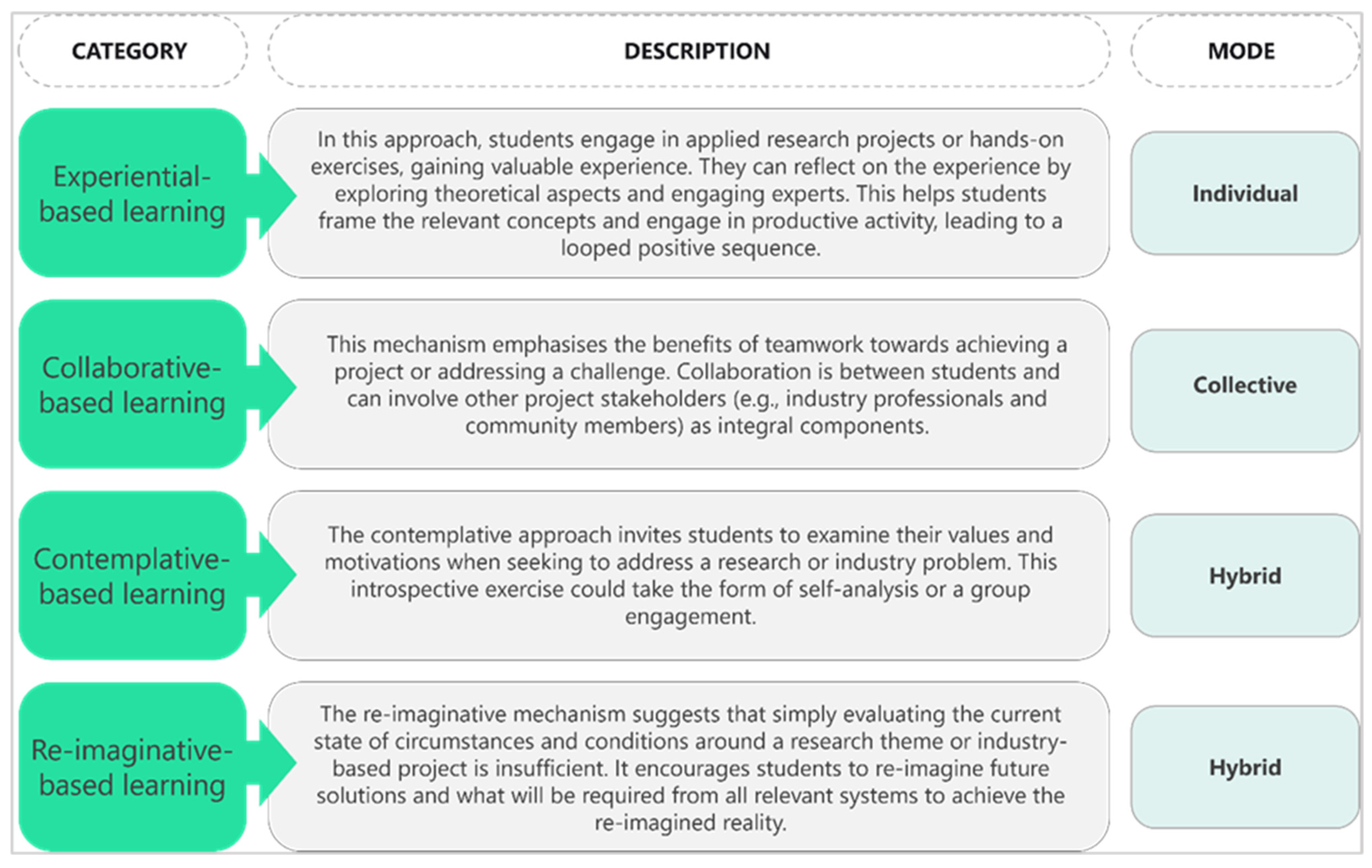
The study by van der Wee et al. (2024) identified four approaches for framing learning processes in living labs. Essentially, learning processes could be:
(1)
Experiential-based,
(2)
Collaborative-based,
(3)
Contemplative-based,
(4)
Re-imaginative in approach.
The real-world application of these learning processes has been discussed in several studies, including Larsson and Holmberg (2018), Thorpe and Rhodes (2018), Roysen and Cruz (2020), and Hodgson et al. (2018). In this section, Figure 1 is developed by extracting and summarizing the definitions of the four learning processes, highlighting the modes in which students can learn (i.e., as individuals, as a collective, or a combination of both modes). On reflection, the experiential approach to framing learning experiences, as defined by van der Wee et al. (2024), can be both collaborative and individual. For instance, students can participate in applied research projects individually or in groups. The nature of the learning process implemented in a living lab ultimately depends on the lab’s goals.
Following this line of inquiry, the study engages these learning processes as a framework to understand the various learning environments and the influence of industrial partners within a Living Lab’s thematic focus. Furthermore, the modes help in assessing the opportunities for learning by students. In addition, the study also uses the frames of learning processes to classify the respondents’ views, providing further context for the reader.

2.2.3. Quadruple Helix Model

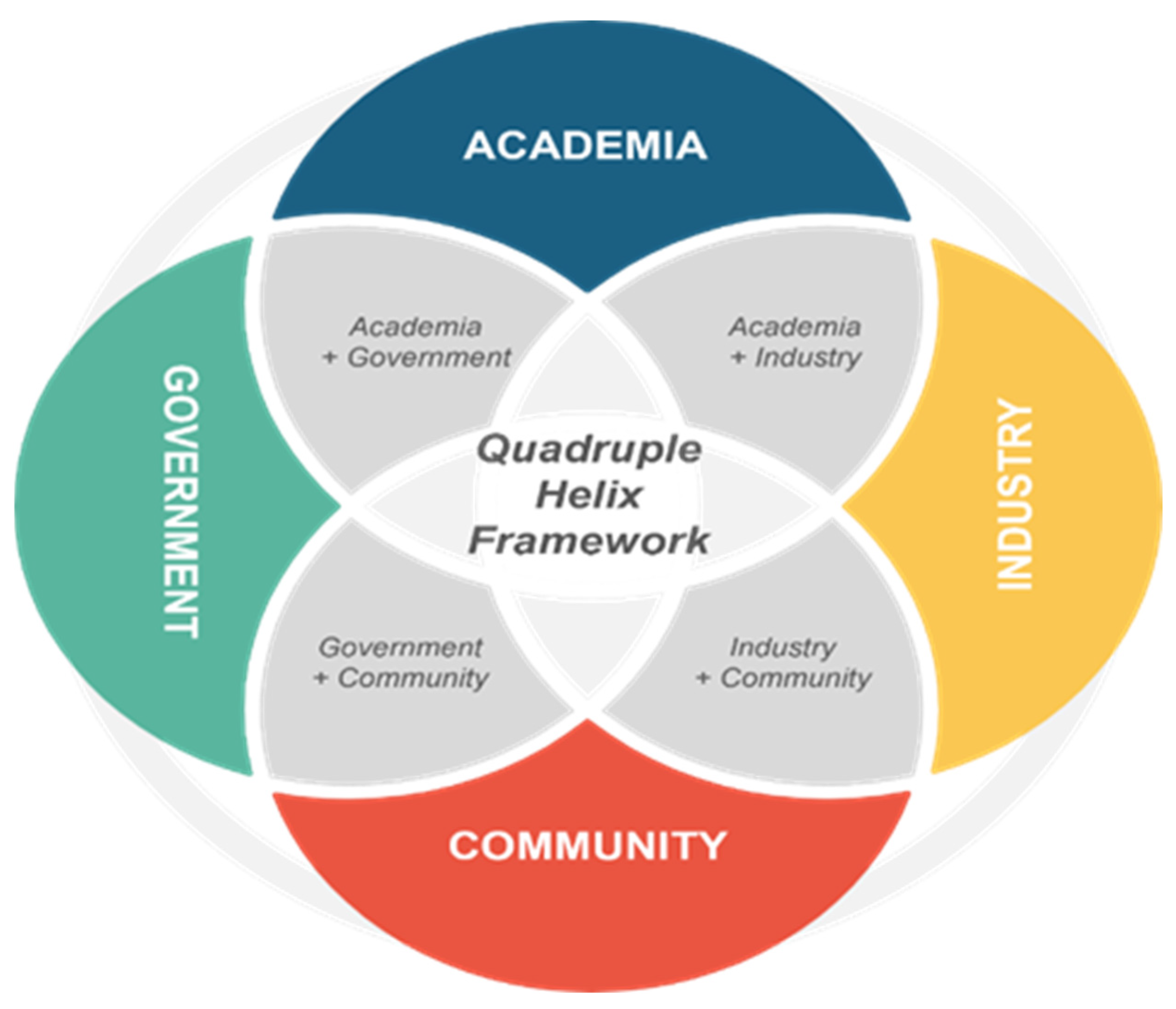
According to Cai and Lattu (2022), the Triple Helix, Quadruple Helix, and Quintuple Helix models are three widely used theoretical frameworks in innovation studies. Specifically, the initial three helices capture the intersection between academia, industry, and government. The Quadruple Helix model adds civil society as a fourth layer and key actor in innovation, with the natural environment being a potential fifth layer (i.e., Quintuple Helix) (Merino-Barbancho et al., 2023). Considering the scope of the study, the Quadruple Helix model is appropriate because it encourages “… a democratic approach to innovation through which strategy development and decision-making are exposed to feedback from key stakeholders…” (Carayannis & Campbell, 2012). In addition, Nguyen and Marques (2022) argued that the Quadruple Helix model effectively defines the living labs concept. Table 1 enumerates several potential benefits and challenges of engaging the Quadruple Helix Model.
For this study, the Quadruple Helix Model is primarily used to examine stakeholder relationships in living labs (as illustrated in Figure 2) and their roles in enhancing the learning experience. Specifically, it provides the opportunity to analyze the results within the context of the four actors to understand the shared expectations, possible benefits from the collaboration, and characteristic difficulties.

2.3. Research Questions

Based on the theoretical frameworks discussed above, the following research questions define the focus of the study:
  • RQ1: How do lab leaders frame the students’ learning processes in living labs to enhance the learning experience of students?
  • RQ2: What are lab leaders’ perceptions of collaboration with societal partners (specifically industry, government and community) for enhancing student learning experiences?

3. Methodology

This section offers an overview of the participants, data collection techniques, and data analysis procedures. The study utilized a qualitative case study research design, employing semi-structured in-depth interviews with living lab leaders to examine the essential components and advantages of implementing living labs in HEIs. It is often the case that qualitative approaches, such as interviews and observations, provide rich, contextualized insights that quantitative approaches may not be able to capture. Given the study’s primary focus, a qualitative approach was appropriate, as it enabled a more nuanced exploration of experiences and interpretations.
The research was carried out in Finland, which features many living labs that are integrated in HEIs with well-established innovation processes and examples. The study focused on living labs at Universities of Applied Sciences, where the labs are integrated into the curriculum, and students earn credits. The Finnish university featured in this paper serves over 10,000 students and has more than two decades of living labs activities. To maintain confidentiality, the identities of the interviewees and their organizations as well as the names of the living labs, are omitted. However, the sectoral focus of the living labs is included to provide context.

3.1. Selection of Participants

In this study, the aim was to investigate lab leaders in Living Labs in the context of Finnish HEIs. The study uses a purposive sampling approach to select participants. Etikan et al. (2016) argued that respondents can be selected intentionally when specific, predefined criteria for participation exist. Campbell et al. (2020) further asserts this claim, stating that it helps to better align “…the sample to the aims and objectives of the research…” Therefore, this paper engages an expert sampling approach. Using expert sampling, the focus is on the respondents’ depth of understanding regarding a given thematic area (Etikan & Bala, 2017; Frey, 2018). In this case, seven lab leaders from five living labs were purposively selected for their considerable experience and knowledge of the operation and management of these living lab experiments.
The lab leaders are responsible for developing learning environments, sourcing equipment and funding, managing support teams, and managing strategic partnerships with various stakeholders. These characteristics and roles of lab leaders provided the opportunity to gain in-depth insight to effectively address the research questions. Using their respective living labs as case studies, this paper critically explores the experiences and opinions of lab leaders regarding the creation of authentic learning environments that enhance the learning experiences of HEI students.

3.2. Data Collection, Preparation, and Analysis

The investigation primarily focused on living labs in the engineering and the built environment sectors with well-developed learning environments and evidence of stakeholder collaboration. Following this process, seven living lab leaders from five labs, as discussed earlier, were identified and invited voluntarily to semi-structured interviews, which collectively lasted over six hours. The focus of each individual living lab varies, as highlighted in the overview presented in Table 2. The variations allow for dynamic views and experiences to be captured, thereby enriching the study.
The semi-structured interviews aimed to investigate their viewpoints on learning processes, physical and digital learning settings, the necessary digital tools, stakeholder relationship management, and the outcomes of living labs for genuine teaching and learning. During the interview, a total of nine questions were posed to each participant. These questions were structured into three sections to aid the interview process (see Supplementary Data S1 for more details about the interview protocol and guiding questions):
  • Section A: Spaces, infrastructure, and support,
  • Section B: Partnerships and collaborations,
  • Section C: Conclusion.
The use of semi-structured interviews enabled flexibility in probing participants’ perspectives while maintaining consistency across core thematic areas aligned with the research questions. All interviews were conducted face-to-face. The interviews were recorded for transcription and analysis. Several topics identified during the interviews were subsequently elaborated upon through additional telephone conversations or emails. Following the interviews, the audio recordings were transcribed precisely.
The researchers analyzed the refined transcripts in four main steps, outlined as follows:
  • Step 1—Data cleaning and anonymization: The researchers refined the transcripts to ensure precision and eliminate any extraneous material, such as word fillers. This procedure was essential to protect the integrity and reliability of the data. As previously shown in Table 2, respondent identifiers and lab identifiers were assigned in this stage to anonymize the data.
  • Step 2—Data coding: The researchers engaged both deductive and inductive coding to analyze the data, fostering a more comprehensive and objective narrative position (Roberts et al., 2019). This coding of the interview transcripts was executed in three rounds, which are described as follows:
    First round: The transcripts were uploaded into Julius.ai for initial analysis and the tool mostly picked up repetitive words more than relevant themes.
    Second round: The researchers created a Microsoft Excel spreadsheet that categorized and tabulated the responses of participants according to the interview questions and keywords (i.e., deductive coding). This spreadsheet was uploaded into Jiulius.ai with a prompt to determine participants’ values, attitudes, and beliefs. The main output is a tabulated value system matrix (VSM) of the participants’ responses (See Supplementary Data S2).
    Third round: This stage involved manual screening of the interview transcripts by the researchers using the VSM as a guiding tool to align and categorize the responses according to the theoretical frameworks that underpin this study. Ultimately, this step allowed the researchers to identify new themes and codes for the study (i.e., inductive coding).
  • Step 3—Data compilation: In this phase, the researchers compiled and organized the responses using the codes. This allowed for thematic grouping in line with the study’s theoretical frameworks to answer the research questions.
  • Step 4—Coding validation: As the final step of the data analysis process, the coding exercise was reviewed by separate researchers to ensure clarity and validate alignment. The final categories and codes are presented in Table 3, showing examples of quotes that align with each classification.

3.3. Informed Consent and Ethical Considerations

The Finnish National Board on Research Integrity (TENK) regulates the ethical review process for non-medical research involving human participants. According to the TENK guidelines on ethical review in human sciences research, a formal ethics-committee statement is required only when the study design includes intervention in participants’ physical integrity, research involving minors under 15 without parental consent, exposure to exceptional psychological stress, security risk or deviation from informed consent procedures (Finnish National Board on Research Integrity TENK, 2023). This study involved adult university lab leaders who voluntarily participated and provided prior informed consent. The study did not entail any physical interventions or procedures beyond everyday activities and thus posed no foreseeable risk of harm to the participants. In line with the TENK guidelines, this research adhered to all national and institutional ethical standards for the responsible conduct of research in Finland.

3.4. Role of the Interviewers

As discussed earlier, living labs have the potential to foster better learning experiences for students in HEIs and better connections to working life. The authors of this paper from South Africa are independent researchers who visited Finland to observe the living lab system first-hand. Guided by the theoretical frameworks (i.e., Learning Processes and Quadruple Helix Model), this research was conducted with the purpose of exploring their applicability for potential replication in the South African and broader African context. In addition, the findings aim to equip readers with critical insight into key considerations for establishing living labs, especially showcasing considerations from the manager’s perspective.

4. Results and Findings

4.1. Learning Processes Implementation in Living Labs

The aim of this section is to answer the first research question, which is “how do lab leaders frame the students’ learning processes in living labs to enhance the learning experience of students?” Living labs provide various opportunities and advantages, including offering students practical, real-world experiences that improve their learning. These platforms connect theoretical knowledge with practical application by merging physical and digital learning settings. Students can engage in new initiatives, collaborate with industry leaders, and cultivate abilities that are valued by employers. R1 highlighted that:
“The Living Lab(s) success is facilitated by the physical and digital learning environments, which integrate technology, foster interdisciplinary collaboration, and allow students to actively engage in the learning process. Students are provided with hands-on experiences”.
(R1)
The primary objectives of constructing living labs are diverse, concentrating on improving education, promoting innovation, and connecting academia with industry. Several respondents such as R1, R2 and R5 discussed this main objective, which is to provide students with practical, experiential learning opportunities. Ultimately, the living lab concept provides substantial advantages for skill enhancement by affording students the opportunity to address real-world challenges:
“Living labs enable students to implement their theoretical knowledge in practical environments, cultivating vital skills and comprehending the complexities associated with diverse domains, including interdisciplinary projects”.
(R1)
“Students can apply their theoretical knowledge to practical scenarios, enhancing the relevance and impact of their learning”.
(R2)
It is important to note that one essential reason why their practical experience is valued by companies is that it illustrates the students’ capacity to tackle real-world business cases, as R3 remarked:
“…what we provide is the opportunity for a hands-on learning experience… to apply the theory learnt in school”.
(R3)
In addition to the benefits of practical experience acquired by students, lab managers emphasized that this approach typically improves subject matter comprehension and expertise among the students, thereby enhancing their competitiveness in the job market. R2 and R5 asserted this claim, stating the following:
“Engaging in projects that tackle substantial challenges enables students to cultivate a more profound comprehension and an expanded skill set”.
(R5)
“This environment enables students to apply their knowledge on the subjects we address and investigate, practicing the implementation of concepts acquired in their studies”.
(R2)
Following further analysis of the participants’ responses, three central matters were emphasized by lab leaders which impact the development and effectiveness of learning processes in living labs. These issues are listed as follows, and further discussed:
  • The role and design of physical and digital learning environments.
  • The concept of adaptability as a core principle.
  • The obstacles that lab leaders encounter which need to be resolved.

4.1.1. Physical and Digital Learning Environments

The lab leaders indicated that establishing efficient learning spaces with meticulous attention directed at both physical and digital components is critical for enhancing the learning experiences of students while catering to the needs of modern education. During the interviews, lab leaders often highlighted deliberate strategies they implemented, often emphasizing the significance of creating environments that foster multidisciplinary learning and innovation. Infrastructure and accessibility constitute the cornerstone of effective learning settings, one respondent states (R1). While learning environments are often constrained to physical spaces, their physical infrastructure is often augmented with digital environments and resources, as another respondent remarked (R2),
“We guarantee students access to cloud services and more powerful computers to manage AI and software-intensive tasks”.
(R2)
R2’s emphasis on guaranteeing students access to these resources suggests a strong philosophy of managing living labs in a manner that provides the foundation on which students can explore ideas. These essential provisions facilitate practical experimentation and eliminate obstacles to learning. In addition, the amalgamation of physical and digital elements enriches the educational experience of students: R4–R5 highlighted that,
“There exist physical spaces such as L4… alongside digital elements like virtual reality solutions to enhance the physical infrastructure”.
(R4)
“We aimed to amalgamate various systems, both physical and digital, into a singular platform for enhanced analysis and control”.
(R5)
Living labs frequently incorporate varying physical environments that are designed to meet distinct requirements. Some of the observed physical learning environments include specialist laboratories for disciplines such as farming, robotics, 3D printing, AI and optometry care. Essentially, these environments enable students to interact directly with relevant technologies and real-world situations, offering a concrete context for their theoretical study, as stated by R3:
“The efficiency of the living lab is ascribed to the presence of these tangible elements, enabling students to ‘touch, feel, and learn’ while observing the immediate effects of their efforts”.
(R3)
The utilization of digital components in living labs is also essential because these digital components provide unique resources that are crucial for testing and learning, while not being limited by the constraints of physical space. For instance, the utilization of digital automation and control systems in simulated apartments or buildings can facilitate the development of comprehensive data sources for student projects. Technologies such as extended reality (XR), digital twins, and simulation environments further enhance the students’ learning experience by providing alternatives in situations where physical components are unavailable:
“The digital environment enables remote access and flexibility, allowing students to work on projects even if they are not physically present in the lab”.
(R2)
Furthermore, the strategic implementation of project management tools and platforms facilitates ongoing education and collaboration. R2 and R4 also mentioned that,
“They conduct regular remote meetings every two weeks to evaluate progress, utilizing project management methodologies”.
(R2 & R4)
By integrating both physical and digital learning environments, lab leaders establish settings that are inclusive, inventive and aligned with the changing requirements of interdisciplinary education. By continuously evaluating the infrastructure, as well as accessibility, integration, adaptability, practical application and cooperation, HEIs may cultivate learning environments that proficiently equip students for real-world issues while promoting innovation and participation.

4.1.2. Adaptability as a Principle

Another fundamental principle that the participants identified is adaptability. Lab leaders expressed that this principle is essential due to the wide variety and spontaneity of the projects that need to be executed in these facilities:
“The objective was to develop versatile spaces, instruments, and software to facilitate various projects”.
(R3)
This adaptability guarantees that educational settings stay relevant and efficient over time. In addition, students’ gain advantages from practical engagement with technology and the versatility of these facilities enhances their functionality by accommodating diverse projects and changing needs. Several responses from R3 succinctly capture these remarks:
“We are perpetually acquiring new components for the laboratory to guarantee we can address future requirements and avoid declining new projectsWe have robots and robotic arms available for students to interact with, allowing them to perceive the immediate effects of their efforts in the tangible world… The physical environment is engineered for adaptability, facilitating flexibility and modifications as projects and requirements progress”.
(R3)
Ultimately, living labs can be developed and managed effectively when continuous enhancement and flexibility are integrated as core strategies. As emphasized by the lab leaders based on their experience, this approach can help to improve the learning experiences of students while ensuring HEIs can progress alongside the rapidly evolving technology and education landscapes.

4.1.3. Obstacles in Developing Living Labs

Several obstacles exist which can hinder the development and effective management of living labs. Firstly, lab leaders highlighted the need for considerable amounts of resources to sustain and enhance both physical and digital elements to keep the students engaged. The respondents also stated that securing, managing and promoting multidisciplinary collaboration can be resource intensive, demanding a skilled workforce that can support students, and the acquisition of new facilities and equipment, as well as other routine logistical requirements such as maintenance.
The respondents also stated that incorporating digital tools with real-world scenarios can be challenging, particularly in domains where experiential interaction is essential for education. In addition, the results showed that one significant challenge has been navigating the impact of the COVID-19 pandemic which is demonstrative of instances where societal occurrences create unique challenges that require a departure from established teaching norms, as R3 and R6 emphasized,
“The pandemic highlighted the necessity of keeping the projects and topics relevant to the current context to maintain student engagement and learning”.
(R3)
“The challenges are evolving; thus, the emphasis of innovation hubs may shift in accordance with those requirements”.
(R6)
This difficulty necessitated adaptable solutions and a willingness to adopt new project techniques as R3 further stated that:
“Staying open to new ideas and having a modular solution approach has been vital to adapting to different projects and requirements over time”.
(R3)

4.2. Learning Processes Implementation in Living Labs

This section seeks to address RQ2, which asks the following: “What are lab leaders’ perceptions of collaboration with societal partners (specifically industry, government and community) for enhancing student learning experiences?”
Collaboration is essential for interdisciplinary learning, since it generates, and merges varied perspectives and expertise to tackle complicated problems within our society. R6 emphasized the significance of collaboration in tackling global issues via living labs, asserting:
“The objective of the innovation hub…, is to unite regional, national, and international stakeholders from academia, industry, the public sector, and civil society to collectively learn and co-create innovations to enhance life for everyone”.
(R6)
Living labs also seek to promote multidisciplinary collaboration by uniting students, researchers, and industry personnel from various backgrounds. This collaborative setting fosters the amalgamation of diverse viewpoints and expertise, essential for innovative problem-solving as stated by R3. By engaging a diverse range of individuals, these labs ensure that ideas and innovations are rooted in practical applications. Furthermore, collaboration is essential for surmounting obstacles in interdisciplinary undertakings. R7 also emphasized this cooperative aspect, which is required in problem-solving within living labs, asserting the following:
“Living labs facilitate the engagement of diverse stakeholder groups’ corporate representatives, citizens, and researchers to identify challenges and collaboratively address them”.
(R7)
“The consolidation of diverse perspectives is essential for developing solutions that are relevant in practical contexts in Living Lab environment”.
(R3)
By promoting effective communication and mutually beneficial collaboration in learning environments among stakeholders, students’ learning experience is enhanced. Furthermore, the living labs will have a stronger likelihood of generating sustainable results that positively impact communities in the long term. Ultimately, the incorporation of varied groups is a fundamental aspect of interdisciplinary learning. It also fosters effective knowledge transfer within and across teams. R5 substantiated this claim, stating the following:
“Knowledge and skills are disseminated among all Living Lab personnel, enthusiasts, and part-time employees”.
(R5)
As earlier stated, a crucial objective is to bridge the gap between education and industry. From the conversations with the lab leaders, it was apparent that incorporating industry partners in living labs, with an aim to tackle real-world difficulties and equip students for the requirements of the job market also creates an ecosystem of learning that transcends the academic helix, as captured by R4:
“The collaboration fosters the co-creation of innovative solutions and promotes knowledge transfer between academia and industry”.
(R4)
In addition to these benefits of collaboration, lab leaders indicated that their approach to managing their living labs offers significant advantages in providing networking opportunities for students and industry professionals. This helps establish a direct pathway to prospective employment. Companies participating in living lab projects can directly assess students’ technical skills and initiative, thus transforming the cooperation into a protracted job interview. The following excerpt from R6 asserts this claim:
“Companies need to do research, develop and innovate to be able to grow to have sustainable development, so the universities are a good place to help in that… we can help the companies and the whole ecosystem to grow and develop… our role is to plan those solutions… and how we connect students and companies”.
(R6)
The above responses highlight how this engagement is advantageous for both parties, enabling firms to discover and hire skilled candidates while offering students essential industry connections and insights into the working world. Furthermore, the diverse and international characteristics of numerous living lab projects cultivate a vibrant atmosphere for the interchange of ideas and creativity, hence augmenting the collaboration experience. R6 emphasized that the incorporation of multidisciplinary and international teams in projects enriches the learning experience by amalgamating diverse expertise and strengths. This collaborative structure is crucial for tackling intricate real-world issues, as it utilizes the combined experience of many parties. Essentially, academia and industry actors can collaborate on projects to drive innovation that is informed by communities and supported by government:
“Living Labs promote collaboration by offering a platform for stakeholders from diverse backgrounds to collaborate”.
(R7)
The focus on practical application, transparency in project reporting, and the incorporation of many perspectives ensures that all participants are included and can contribute effectively, resulting in more inventive and comprehensive outputs. Ultimately, living labs want to involve the local community by offering essential services and facilities. This initiative advantages the community and offers students experiential learning in their respective disciplines. R4 mentioned that:
“Engaging with the community benefits the local population and provides students with practical experience in their fields of study”.
(R4)

5. Concluding Discussions

This study’s findings offer significant insights into the design, implementation, and effects of living labs in HEIs. The findings underscore the significance of amalgamating physical and digital learning settings, promoting stakeholder engagement, and developing authentic learning experiences that equip students for real-world complexities. This discourse examines the mechanisms of learning processes, the importance of stakeholder engagement, and the significance for competency development and interdisciplinary learning from the perspectives of living lab managers, while referencing pertinent literature to enhance the analysis.
The research identified four primary learning processes which could be applied in living labs: the experiential, collaborative, contemplative, and re-imaginative approaches. These mechanisms correspond with the extensive literature on active and authentic learning, which underscores the significance of experiential learning, cooperation, reflection, and creativity in education (van der Wee et al., 2024). Notably, the experiential-based approach was emphasized as a vital element of living labs, allowing students to implement theoretical knowledge in practical situations. This corresponds with the conclusions of Larsson and Holmberg (Larsson & Holmberg, 2018), who assert that experiential learning promotes enhanced comprehension and skill acquisition.
The meditative and re-imaginative techniques, albeit less overtly stated by the respondents during the interviews, are of equal significance. These strategies motivate students to contemplate their experiences and devise innovative answers to urgent global issues. This corresponds with the findings of Hodgson (Hodgson et al., 2018), who assert that reflective practices are crucial for promoting critical thinking and innovation. The re-imaginative method specifically promotes creative thinking and the development of novel solutions, which is a primary purpose of living labs.
The design of educational environments is a crucial determinant in the efficacy of living labs. Ifenthaler (2012) presented a thorough framework for the design of learning environments, highlighting the significance of systematic analysis, deliberate planning, and ongoing evaluation. This framework corresponds with the study’s findings, emphasizing the necessity for adaptable and flexible learning environments capable of accommodating varied projects and shifting educational objectives. Furthermore, the amalgamation of physical and digital learning settings is especially crucial in living labs. Clark (2002) mentioned that physical learning spaces are essential for enhancing research and instructional endeavors, whereas digital learning environments offer flexibility and distant accessibility. This study found that integrating physical and digital components enhances the educational experience, allowing students to interact with real-world technologies and situations. This discovery aligns with the research conducted by Bygstad et al. (2022), which examined the obstacles and opportunities associated with the shift to digital learning models in HEIs.
The research respondents reported that in their perspective, living labs offer substantial advantages for competency enhancement, especially regarding practical skills, problem-solving capabilities, and interdisciplinary cooperation. Participants observed that students engaged in living labs acquire practical experience with real-world scenarios, hence augmenting their technical and conceptual competencies. This discovery aligns with Nansen (2024) assertion that living labs enable students to actively engage in tackling urban sustainability issues. The focus on trans-disciplinary education in living labs is significant. The research participants emphasized that interdisciplinary collaboration promotes innovation and equips students for the intricacies of contemporary employment environments. This corresponds with the findings of Rogers et al. (2023) who demonstrated that interdisciplinary collaborations yield more imaginative and holistic solutions. It also aligns with the research of Almakaty (2024), who emphasized the significance of digital platforms in promoting cross-disciplinary and cross-cultural collaboration. Further, incorporating varied perspectives and expertise fosters a paradigm in which students cultivate a comprehensive grasp of the challenges they confront, thereby augmenting their capacity to contribute to economic, social and environmental development. The research also determined that living labs offer significant networking prospects for students, linking them with industry experts and prospective employment. In addition, the worldwide characteristic of numerous projects, especially in well-established living lab amplifies networking opportunities, offering students international exposure which can be vital to their career development.
The importance of a collaborative approach was highlighted, with participants indicating that interdisciplinary cooperation is crucial for tackling urgent and relevant societal issues. This discovery aligns with the research of S.-W. Kim and Lee (2022), who illustrated that interdisciplinary collaborative learning improves problem-solving skills and fosters innovative thinking. The incorporation of varied viewpoints from academia, industry, and civil society guarantees that solutions are thorough and pertinent to actual needs. This cooperative setting not only improves educational results but also equips students for the collaborative dynamics of contemporary businesses. Collaboration among stakeholders emerged as a major subject in the study, with participants underscoring the significance of alliances between academics, industry, government, and civil society. Howbeit, the roles and contributions of government towards living labs were sparse in the responses of the participants. This could indicate potential for government actors to improve their support towards living labs. Ultimately, the Quadruple Helix model offered a valuable framework for comprehending these relationships, emphasizing the contributions of each stakeholder group in fostering innovation and tackling societal issues. This discovery corresponds with the research of Carayannis and Campbell (2012), who contend that the Quadruple Helix model fosters a democratic approach to innovation, enabling the inclusion of varied perspectives in decision-making processes.
The research indicated that collaboration with industry partners is essential for closing the gap between academics and the employment market. Participants said that industry engagement in living labs offers students practical experience and improves their employability. This finding aligns with the research of Carayannis and Campbell (2012), who established that structured interdisciplinary programs enhance student retention rates and graduate employability. Industry partners benefit from these relationships by gaining access to innovative solutions and prospective future employees. Government and civil society stakeholders are essential in conferring legitimacy and support for living labs. Participants emphasized the need to maneuver through regulatory frameworks and obtaining financing for enduring viability. This corresponds with the conclusions of Dell’era and Landoni (2014), who assert that governmental and institutional collaborators are crucial for the efficacy of living labs. The participation of civil society guarantees that solutions are customized to local circumstances and meet community demands, hence increasing their effectiveness and scalability.
Notwithstanding the numerous advantages of living labs towards enhanced student learning experiences, the study also recognized significant problems, such as resource limitations, sustaining stakeholder involvement, and adjusting to technology advancements. Participants indicated that maintaining enduring collaboration among institutions, communities, and industrial partners is a considerable difficulty. This discovery corresponds with the research of Herth et al. (2025), who emphasized the challenges of sustaining momentum in co-creation initiatives following the first project phase. The research indicated that merging digital tools with physical learning environments can pose difficulties, especially in disciplines where experiential engagement is crucial. This discovery aligns with the research conducted by Bygstad et al. (2022), which examined the difficulties associated with the shift to digital learning frameworks in HEIs. Participants also underscored the significance of adaptability and modular solutions in tackling these difficulties, ensuring that living labs retain their relevance and efficacy throughout time.
This study offers significant insights into the design, implementation, and effects of living labs at HEIs. The results emphasize the necessity of merging physical and digital learning environments, promoting stakeholder engagement, and developing genuine learning experiences that equip students for real-world difficulties and the following conclusions are deduced:
Living labs are not recommended as a replacement for the current teaching methods, but a tool to enhance the learning experiences.
  • One problem identified in this research is sustaining long-term engagement among institutions, communities, and industrial partners. Numerous living labs encounter difficulties in maintaining the momentum of co-creation following the conclusion of the initial project cycle. Further investigation is required to examine sustainable frameworks for ongoing collaboration and engagement.
  • Literature reveals barriers connected to developing and managing living labs; the most prominent ones are lack of funding, vacating initiators/champions, and vague or hard to trace impacts (Molinari et al., 2023).

6. Limitations of the Study, Future Research, and Recommendations

Future study and practice should concentrate on further implications of learning processes and stakeholder engagement for competency development and interdisciplinary learning. Future research could also establish sustainable structures for continuous cooperation and engagement in living labs. This encompasses investigating novel financial frameworks, improving stakeholder communication, and utilizing emerging technology to facilitate trans-disciplinary education. The study emphasizes the necessity for additional research that quantitatively and directly evaluates the influence of living labs on student learning outcomes, specifically with competency development and employability. Further work is also needed to improve the integration of academic goals with stakeholders’ practical requirements, while promoting interdisciplinary collaboration and addressing resource limitations. Finally, this study was conducted within the context of reasonably well-established living labs. Further study could also investigate the potential applicability of these findings in other geographic contexts.

Supplementary Materials

The following supporting information can be downloaded at: https://www.mdpi.com/article/10.3390/educsci16040660/s1, Supplementary Data S1: Interview Protocol; Supplementary Data S2: Value System Matrix (VSM).

Author Contributions

Conceptualization, M.M., L.R.K., H.O.I., R.G.M., S.S., H.N. and J.L.; methodology, M.M., L.R.K., H.O.I., S.S. and H.N.; software, M.M. and S.S.; validation, L.R.K., H.O.I., H.N. and J.L.; formal analysis, M.M., L.R.K., H.O.I., S.S., H.N. and J.L.; investigation, M.M., L.R.K., H.O.I. and S.S.; resources, R.G.M. and H.N.; data curation, M.M., L.R.K., H.O.I. and S.S.; writing—original draft preparation, M.M., L.R.K., H.O.I., S.S. and J.L.; writing—review and editing, M.M., L.R.K., H.O.I., R.G.M., H.N. and J.L.; visualization, M.M., L.R.K. and H.O.I.; supervision, R.G.M., S.S., H.N. and J.L.; project administration, M.M., R.G.M. and H.N.; funding acquisition, H.N. All authors have read and agreed to the published version of the manuscript.

Funding

This research was funded by Business Finland, grant number [3229/31/20], and the APC was supported by the Tshwane University of Technology.

Institutional Review Board Statement

The study was conducted in accordance with the ethical requirements of the University of Helsinki and the Tshwane University of Technology.

Informed Consent Statement

Informed consent was obtained from all subjects involved in the study.

Data Availability Statement

The data presented in this study are available on request from the corresponding author due to ethical reasons.

Conflicts of Interest

The authors declare no conflicts of interest.

References

  1. African Union Commission. (2019). African framework of standards and competences for the teaching profession. African Union. [Google Scholar]
  2. Almakaty, S. S. (2024). New trends in communication and media education in the digital age: A global analysis and comparison study. Preprint. [Google Scholar] [CrossRef]
  3. Baran, G., & Berkowicz, A. (2021). Digital platform ecosystems as living labs for sustainable entrepreneurship and innovation: A conceptual model proposal. Sustainability, 13(11), 6494. [Google Scholar] [CrossRef]
  4. Bergvall-Kåreborn, B., Eriksson, C. I., Ståhlbröst, A., & Svensson, J. (2009, December 8–11). A milieu for innovation: Defining living labs. 6th ISPM Innovation Symposium: Innovation in the Asian Century, Melbourne, Australia. [Google Scholar]
  5. Bronson, K., Devkota, R., & Nguyen, V. (2021). Moving toward generalizability? A scoping review on measuring the impact of living labs. Sustainability, 13(2), 502. [Google Scholar] [CrossRef]
  6. Bygstad, B., Øvrelid, E., Ludvigsen, S., & Dæhlen, M. (2022). From dual digitalization to digital learning space: Exploring the digital transformation of higher education. Computers & Education, 182, 104463. [Google Scholar] [CrossRef]
  7. Cai, Y., & Lattu, A. (2022). Triple helix or quadruple helix: Which model of innovation to choose for empirical studies? Minerva, 60, 257–280. [Google Scholar] [CrossRef]
  8. Campbell, S., Greenwood, M., Prior, S., Shearer, T., Walkem, K., Young, S., Bywaters, D., & Walker, K. (2020). Purposive sampling: Complex or simple? Research case examples. Journal of Research in Nursing, 25(8), 652–661. [Google Scholar] [CrossRef] [PubMed]
  9. Carayannis, E. G., & Campbell, D. F. J. (2012). Mode 3 knowledge production in quadruple helix innovation systems: 21st-century democracy, innovation, and entrepreneurship for development. Springer. [Google Scholar]
  10. Cascone, G., Scuderi, A., Guarnaccia, P., & Timpanaro, G. (2024). Promoting innovations in agriculture: Living labs in the development of rural areas. Journal of Cleaner Production, 443, 141247. [Google Scholar] [CrossRef]
  11. Chapagain, M. R., & Mikkelsen, B. E. (2023). Is a living lab also a learning lab?—Exploring co-creational power of young people in a local community food context. Youth, 3(2), 753–776. [Google Scholar] [CrossRef]
  12. Clark, H. (2002). Building education: The role of the physical environment in enhancing teaching and research. Issues in practice. ERIC. [Google Scholar]
  13. Cleveland, B., & Fisher, K. (2014). The evaluation of physical learning environments: A critical review of the literature. Learning Environments Research, 17, 1–28. [Google Scholar] [CrossRef]
  14. Compagnucci, L., Spigarelli, F., Coelho, J., & Duarte, C. (2021). Living labs and user engagement for innovation and sustainability. Journal of Cleaner Production, 289, 125721. [Google Scholar] [CrossRef]
  15. CORDIS-Eu. (2020). Long term EU-Africa partnership for research and innovation actions in the area of renewable energy. Available online: https://cordis.europa.eu/programme/id/H2020_LC-SC3-JA-5-2020/en (accessed on 16 October 2024).
  16. Dell’era, C., & Landoni, P. (2014). Living Lab: A methodology between user-centred design and participatory design. Creativity and Innovation Management, 23(2), 137–154. [Google Scholar] [CrossRef]
  17. Dutilleul, B., Birrer, F. A., & Mensink, W. (2010). Unpacking European living labs: Analysing innovation’s social dimensions. Central European Journal of Public Policy, 4(1), 60–85. [Google Scholar]
  18. Etikan, I., & Bala, K. (2017). Sampling and sampling methods. Biometrics & Biostatistics International Journal, 5, 00149. [Google Scholar]
  19. Etikan, I., Musa, S. A., & Alkassim, R. S. (2016). Comparison of convenience sampling and purposive sampling. American Journal of Theoretical and Applied Statistics, 5(1), 1–4. [Google Scholar] [CrossRef]
  20. European Commission. (2025). Basic skills and STEM action plan to support education and training. European Commission. Available online: https://education.ec.europa.eu/news/basic-skills-and-stem-action-plan-to-support-education-and-training (accessed on 24 April 2025).
  21. Finnish National Board on Research Integrity TENK. (2023). Ethical review in human sciences. Available online: https://tenk.fi/en/ethical-review/ethical-review-human-sciences (accessed on 5 August 2024).
  22. Frey, B. B. (2018). The SAGE encyclopedia of educational research, measurement, and evaluation. Sage Publications. [Google Scholar]
  23. Gorbunovs, A. (2014, May 23–24). Reflective ePortfolio system-development and assessment in living lab. 6th International Conference on Computer Supported Education (pp. 385–391), Barcelona, Spain. [Google Scholar]
  24. Greve, K., Vita, R. D., Leminen, S., & Westerlund, M. (2021). Living labs: From niche to mainstream innovation management. Sustainability, 13(2), 791. [Google Scholar] [CrossRef]
  25. Herth, A., Verburg, R., & Blok, K. (2025). How can campus living labs thrive to reach sustainable solutions? Cleaner Production Letters, 8, 100078. [Google Scholar] [CrossRef]
  26. Hodgson, N., Vlieghe, J., & Zamojski, P. (2018). Education and the Love for the World: Articulating a post-critical educational philosophy. Foro de Educación, 16(24), 7–20. [Google Scholar] [CrossRef]
  27. Hossain, M., Leminen, S., & Westerlund, M. (2019). A systematic review of living lab literature. Journal of Cleaner Production, 213, 976–988. [Google Scholar] [CrossRef]
  28. Ifenthaler, D. (2012). Design of learning environments. In N. M. Seel (Ed.), Encyclopedia of the sciences of learning. Springer. [Google Scholar]
  29. Kim, J., Kim, Y. L., Jang, H., Cho, M., Lee, M., Kim, J., & Lee, H. (2019). Living labs for health: An integrative literature review. European Journal of Public Health, 30(1), 55–63. [Google Scholar] [CrossRef]
  30. Kim, S.-W., & Lee, Y. (2022). Developing students’ attitudes toward convergence and creative problem solving through multidisciplinary education in Korea. Sustainability, 14(6), 9929. [Google Scholar] [CrossRef]
  31. Koens, K., Stompff, G., Vervloed, J., Gerritsma, R., & Horgan, D. (2024). How deep is your lab? Understanding the possibilities and limitations of living labs in tourism. Journal of Destination Marketing & Management, 32, 100893. [Google Scholar] [CrossRef]
  32. Kovtoniuk, M. M., Kosovets, O. P., Soia, O. M., & Tyutyun, L. L. (2022). Virtual learning environments: Major trends in the use of modern digital technologies in higher education institutions. Educational Technology Quarterly, 2022(3), 183–202. [Google Scholar] [CrossRef]
  33. Larsson, J., & Holmberg, J. (2018). Learning while creating value for sustainability transitions: The case of Challenge Lab at Chalmers University of Technology. Journal of Cleaner Production, 172, 4411–4420. [Google Scholar] [CrossRef]
  34. Leminen, S., & Westerlund, M. (2019). Living labs: From scattered initiatives to a global movement. Creativity and Innovation Management, 28(2), 250–264. [Google Scholar] [CrossRef]
  35. Leminen, S., & Westerlund, M. (2025). Future research avenue for living labs and collaborative innovation. Journal of Innovation Management, 13, XXXII–XLV. [Google Scholar] [CrossRef]
  36. Leminen, S., Westerlund, M., & Nyström, A.-G. (2012). Living labs as open-innovation networks. Technology Innovation Management Review, 2(9), 6–11. [Google Scholar] [CrossRef][Green Version]
  37. Lim, D. H., & Morris, M. L. (2009). Learner and instructional factors influencing learning outcomes within a blended learning environment. Journal of Educational Technology & Society, 12(4), 282–293. [Google Scholar]
  38. Maas, T., Van Den Broek, J., & Deuten, J. (2017). Living labs in Nederland: Van open testfaciliteit tot levend lab. Rathenau Instituut. [Google Scholar]
  39. Massari, S., Galli, F., Mattioni, D., & Chiffoleau, Y. (2023). Co-creativity in living labs: Fostering creativity in co-creation processes to transform food systems. JCOM: Journal of Science Communications, 22(03), A03. [Google Scholar] [CrossRef]
  40. Merino-Barbancho, B., Abril Jiménez, P., Mallo, I., Lombroni, I., Cea, G., López Nebreda, C., Cabrera, M. F., Fico, G., & Arredondo, M. T. (2023). Innovation through the Quintuple Helix in living labs: Lessons learned for a transformation from lab to ecosystem. Frontiers in Public Health, 11, 1176598. [Google Scholar] [CrossRef]
  41. Molinari, M., Anund Vogel, J., Rolando, D., & Lundqvist, P. (2023). Using living labs to tackle innovation bottlenecks: The KTH Live-In Lab case study. Applied Energy, 338, 120877. [Google Scholar] [CrossRef]
  42. Nansen, C. (2024). Active learning, living laboratories, student empowerment, and urban sustainability. Sustainability, 16(10), 3902. [Google Scholar] [CrossRef]
  43. Nguyen, H. T., & Marques, P. (2022). The promise of living labs to the Quadruple Helix stakeholders: Exploring the sources of (dis)satisfaction. European Planning Studies, 30(6), 1124–1143. [Google Scholar] [CrossRef]
  44. Purcell, W. M., Henriksen, H., & Spengler, J. D. (2019). Universities as the engine of transformational sustainability toward delivering the sustainable development goals. International Journal of Sustainability in Higher Education, 20(8), 1343–1357. [Google Scholar] [CrossRef]
  45. Roberts, K., Dowell, A., & Nie, J.-B. (2019). Attempting rigour and replicability in thematic analysis of qualitative research data; a case study of codebook development. BMC Medical Research Methodology, 19, 66. [Google Scholar] [CrossRef]
  46. Rogers, S., Jeffery, A., Pringle, J., Law, A., Nobajas, A., Szkornik, K., Turner, A., Moolna, A., Davenward, B., & Hobson, L. (2023). Experiential and authentic learning in a living lab: The role of a campus-based living lab as a teaching and learning environment. Journal of Learning Development in Higher Education. [Google Scholar] [CrossRef]
  47. Roysen, R., & Cruz, T. C. (2020). Educating for transitions: Ecovillages as transdisciplinary sustainability “classrooms”. International Journal of Sustainability in Higher Education, 21(5), 977–992. [Google Scholar] [CrossRef]
  48. Shamsuddin, N., & Kaur, J. (2020). Students’ learning style and its effect on blended learning, does it matter? International Journal of Evaluation and Research in Education, 9(1), 195–202. [Google Scholar] [CrossRef]
  49. Tercanli, H., & Jongbloed, B. (2022). A systematic review of the literature on living labs in higher education institutions: Potentials and constraints. Sustainability, 14(19), 12234. [Google Scholar] [CrossRef]
  50. Thorpe, A., & Rhodes, S. (2018). The public collaboration lab—Infrastructuring redundancy with communities-in-place. She Ji: The Journal of Design, Economics, and Innovation, 4(1), 60–74. [Google Scholar] [CrossRef]
  51. Turnbull, D., Chugh, R., & Luck, J. (2021). Transitioning to E-learning during the COVID-19 pandemic: How have higher education institutions responded to the challenge? Education and Information Technologies, 26, 6401–6419. [Google Scholar] [CrossRef] [PubMed]
  52. United Nations Industrial Development Organization (UNIDO). (2021). Making the 4th industrial revolution work for all: Development dialogues on the UNIDO 4IR strategic framework 2021–2030. UNIDO. Available online: https://tii.unido.org/sites/default/files/publications/Making%204IR%20Work%20for%20All_2021.pdf (accessed on 23 April 2025).
  53. University of Edinburgh. (2024). Sustainability in teaching and learning: Living lab projects. The University of Edinburgh. Available online: https://sustainability.ed.ac.uk/teaching-learning/living-lab (accessed on 28 April 2025).
  54. van der Wee, M. L. E., Tassone, V. C., Wals, A. E. J., & Troxler, P. (2024). Characteristics and challenges of teaching and learning in sustainability-oriented Living Labs within higher education: A literature review. International Journal of Sustainability in Higher Education, 25(9), 255–277. [Google Scholar] [CrossRef]
  55. Verhoef, L. A., Bossert, M., Newman, J., Ferraz, F., Robinson, Z. P., Agarwala, Y., Wolff, P. J., Jiranek, P., & Hellinga, C. (2020). Towards a learning system for university campuses as living labs for sustainability. In W. Leal Filho, A. L. Salvia, R. W. Pretorius, L. L. Brandli, E. Manolas, F. Alves, U. Azeiteiro, J. Rogers, C. Shiel, & A. Do Paco (Eds.), Universities as living labs for sustainable development: Supporting the implementation of the sustainable development goals. Springer International Publishing. [Google Scholar]
  56. Vo, M. H., Zhu, C., & Diep, A. N. (2020). Students’ performance in blended learning: Disciplinary difference and instructional design factors. Journal of Computers in Education, 7, 487–510. [Google Scholar] [CrossRef]
Figure 1. Summative description of the mechanisms of learning processes.
Education 16 00660 g001
Figure 2. Diagram illustrating the Quadruple Helix Model.
Education 16 00660 g002
Table 1. Selected benefits and challenges of the quadruple helix model in Living Labs research, adapted from (Cai & Lattu, 2022) and (Nguyen & Marques, 2022).
Key PointsReferences
Benefits
  • Sufficient flexibility exists which allows new considerations and key players to be integrated into the Living Lab model.
  • The impacts of innovation evolve beyond entrepreneurial gains to include societal advantages.
  • Potential to extend insights into the global context.
  • Improved understanding of the intersection and relationship between multiple stakeholders, the opportunities for collective benefit, and the shared difficulties.
Cai and Lattu (2022); Nguyen and Marques (2022)
Challenges
  • Increased difficulty in employing the model for empirical research due to the higher complexity resulting from the four helices.
  • Civil society is often perceived differently compared to the academic, industry and government layers.
  • An inherent risk that key concerns may only be addressed at a conceptual, not factual or tested level.
Table 2. Overview of the respondents and their research participation.
Respondent IdentifierLiving Lab IdentifierLiving Labs’ Field of FocusInterview DatesInterview Duration (hh:mm:ss)
R1L1Agricultural Technology 5 September 202400:36:48
R2L2Artificial Intelligence and 4IR Technologies 5 September 202401:00:04
R3L3Automation, Robotics, and Engineering5 September 202400:46:36
R4L4Sustainable Cities and Innovative Infrastructure6 September 202401:05:09
R5L3Automation, Robotics, and Engineering13 September 202400:32:46
R6L5Technology and Innovation13 September 202400:42:48
R7L5Technology and Innovation 3 October 202401:30:59
Table 3. Data analysis process using qualitative research design and in vivo coding.
CategoriesCodesQuote Examples
Learning processes Innovation-driven mindset“Engaging in projects that tackle substantial challenges enables students to cultivate a more profound comprehension and an expanded skill set.” (R5).
Experiential learning focus“This space allows students to come and actually apply their knowledge on the topics that we work on and explore and practice actually implementing the things that they learn in their studies.” (R2)
Practice-oriented approach
Cross-disciplinary learning “The goal is to have a pool of students from different fields of study to take part in club activities for their own interest.” (R2)
“The Living Lab(s) success is facilitated by the physical and digital learning environments, which integrate technology, foster interdisciplinary collaboration, and allow students to actively engage in the learning process. Students are provided with hands-on experiences.” (R1)
Professional development emphasis“Living labs enable students to implement their theoretical knowledge in practical environments, cultivating vital skills and comprehending the complexities associated with diverse domains, including interdisciplinary projects” (R1).
Solution-oriented mindset“This environment enables students to apply their knowledge on the subjects we address and investigate, practicing the implementation of concepts acquired in their studies.” (R2).
Real-world projects enhance learning“Students can apply their theoretical knowledge to practical scenarios, enhancing the relevance and impact of their learning” (R2–R5).
Physical and digital learning environmentsBalancing physical and digital spaces“There exist physical spaces such as L4… alongside digital elements like virtual reality solutions to enhance the physical infrastructure” (R4–R5).
“I think the success, if you can call it success, comes from the fact that we actually have physical things here that students can actually touch, feel and learn.” (R3)
“We have approximately 20 different learning environments. You can research, you can develop, you can innovate, and you can learn in them” (R6)
Adaptability as a principleAdaptability to new tools“The focus of the innovation hubs can change depending on the need… it is continuous development” (R6)
“The aim is to create easy solutions for working; spaces, tools and software that support the work, as well as theme are the project… The theme does not always have to be set in stone…” (R5)
Obstacles in developing LLsNavigating the pandemic“The pandemic highlighted the necessity of keeping the projects and topics relevant to the current context to maintain student engagement and learning.” (R3).
Costs to operate “The costs to operate this LL are also a challenge. We try to balance the costs, much of our funding comes from the university.” (R2)
Motivated students “We had a lot of challenges in getting the right students to the right projects… through teachers we got access to the students.” (R2)
Collaboration with societal partners to enhance learning Industry testing ground “In this place, they [Company X] wanted to test and have a platform or this LL which is a parallel system.” (R4)
Industry-academia partnership “Companies need to do research, develop and innovate to be able to grow to have sustainable development, so the universities are a good place to help in that… we can help the companies and the whole ecosystem to grow and develop… our role is to plan those solutions… and how we connect students and companies’” (R6)
Community engagement“Engaging with the community benefits the local population and provides students with practical experience in their fields of study.” (R4).
Stakeholder involvement“The objective of the innovation hub…, is to unite regional, national, and international stakeholders from academia, industry, the public sector, and civil society to collectively learn and co-create innovations to enhance life for everyone.” (R6)
Open to partnerships
Industry exposure benefits students“The collaboration fosters the co-creation of innovative solutions and promotes knowledge transfer between academia and industry.” (R4 & R5)
Disclaimer/Publisher’s Note: The statements, opinions and data contained in all publications are solely those of the individual author(s) and contributor(s) and not of MDPI and/or the editor(s). MDPI and/or the editor(s) disclaim responsibility for any injury to people or property resulting from any ideas, methods, instructions or products referred to in the content.