Article

Laboratory Affordances for Early-Stage Pedagogical Content Knowledge Development in Chemistry Teacher Education: A Comparative Qualitative Case Study in Kazakhstan and Türkiye

by
Mataev Mukhametkali Musagalievich
1,
Ayşe Yalçın Çelik
2,
Abdraimova Moldir Rashidkyzy
1,
Mukatay Bagdara Talgatkyzy
1,*,
Nurbekova Marzhan Abdyzhaparovna
1 and
Tursyn Zhanar Iliyaskyzy
1
1
Department of Chemistry, Institute of Natural Sciences, Kazakh National Women’s Teacher Training University, Almaty 050000, Kazakhstan
2
Department of Chemistry Education, Gazi Education Faculty, Gazi University, Ankara 06500, Türkiye
*
Author to whom correspondence should be addressed.
Educ. Sci. 2026, 16(4), 645; https://doi.org/10.3390/educsci16040645
Submission received: 30 December 2025 / Revised: 24 March 2026 / Accepted: 11 April 2026 / Published: 17 April 2026

Abstract

Laboratory courses in chemistry teacher education are commonly framed as spaces for mastering experimental procedures; however, they may also function as pedagogical environments where pre-service teachers begin integrating content knowledge (CK) with pedagogical knowledge (PK). Rather than measuring Pedagogical Content Knowledge (PCK) as an outcome, this comparative study examines how laboratory structures create opportunities for CK–PK integration and PCK-related reasoning in chemistry teacher education programs in Kazakhstan and Türkiye. A qualitative comparative case study design was employed. Data were collected through 60 h of in situ observations and semi-structured interviews with 46 third-year pre-service chemistry teachers at two public universities. The analysis focused on how laboratory organization, instructional facilitation, time allocation, assessment, and material resources shape conditions for analytical and reflective engagement. Findings identify four interrelated dimensions of laboratory affordances: structural organization, pedagogical facilitation, experiential engagement, and reflective regulation. Extended laboratory sessions and dedicated laboratory credits in the Turkish case supported sustained inquiry and reflection, whereas shorter, combined lecture–laboratory formats in the Kazakhstani case constrained extended pedagogical reasoning. The proposed Laboratory Affordance Model highlights how laboratory design influences early-stage PCK-related reasoning, offering implications for curriculum design and chemistry teacher education policy.

1. Introduction

The teacher education process is a complex and multidimensional endeavor that requires the integration of Content Knowledge (CK) and Pedagogical Knowledge (PK). In chemistry teacher education, this integration is particularly critical due to the abstract nature of chemical concepts, which demand specialized instructional strategies, laboratory-based teaching approaches, and pedagogical reasoning that effectively bridges theory and practice (Boesdorfer, 2019; Munawwarah & Cahyani, 2025; Vesterinen & Aksela, 2013).
Shulman (1986) conceptualized teachers’ professional knowledge as comprising seven core components and identified Pedagogical Content Knowledge (PCK) as the central element of teacher professionalism. PCK represents the intersection of content knowledge and pedagogy, emphasizing how subject matter is transformed for teaching. Subsequent scholars further elaborated this concept. Tamir (1988) extended PCK by incorporating teachers’ reflective thinking, while Magnusson et al. (1999) systematized PCK in science education into components such as instructional strategies, assessment knowledge, curriculum knowledge, and understanding students’ conceptions. Later, Park and Oliver (2008) conceptualized PCK as a dynamic system that evolves through teaching experience and contextual engagement.
Although CK and PCK are closely related, they differ in both structure and function. CK refers to a teacher’s mastery of chemistry as a discipline, including fundamental concepts, principles, and theoretical frameworks, and is primarily developed through university-level subject preparation. In contrast, PCK may emerge through instructional experiences, pedagogical training, and reflective practice, particularly during laboratory instruction and field-based teaching (Hidayah et al., 2023; Munawwarah & Cahyani, 2025; Nixon et al., 2016).
Teachers’ professional development is therefore supported through modeling by experienced instructors, the establishment of clear instructional expectations, and hands-on practice during laboratory courses. However, teacher education curricula often fail to systematically connect CK with PK, resulting in fragmented professional preparation (Magnusson et al., 1999; Sarkar et al., 2024). This disconnect limits novice teachers’ ability to conduct effective classroom and laboratory demonstrations, use appropriate analogies and representations, and select student-centered instructional strategies (De Jong et al., 2002). Consequently, opportunities for PCK-related learning depend on structured, practice-oriented preparation and learning environments situated in authentic educational contexts.
Given that chemistry instruction at the school level encompasses both theoretical and laboratory-based learning, laboratory instruction plays a critical role in students’ conceptual understanding. International studies indicate that laboratory work is regarded as a core component of chemistry education. For example, within the Senior High School Chemistry Curriculum Standards adopted in China, laboratory instruction contributes directly to the development of key competencies such as evidence-based reasoning and modeling and scientific inquiry and innovation. Through experimental practice, students develop scientific reasoning skills by collecting data, drawing evidence-based conclusions, and modeling chemical phenomena (He et al., 2021). These findings highlight the pedagogical importance of laboratory instruction not only for student learning, but also for the professional preparation of future chemistry teachers.
Accordingly, graduates of chemistry teacher education programs must possess comprehensive professional competencies that enable them to implement laboratory instruction grounded in scientific reasoning and pedagogical effectiveness. Laboratory courses have long been recognized as essential components of science education. Since the 1960s, laboratory activities have been incorporated into curricula to foster inquiry, discovery, critical questioning, and problem-solving (Hofstein, 2004). The evolution of laboratory instruction can be characterized by three major phases:
  • 1960–1980—modernization of experimental content and emphasis on the scientific method;
  • 1980–1990—adoption of constructivist learning approaches;
  • 1990–2010—recognition of the laboratory as a learning environment shaped by social, cultural, and contextual factors (Hofstein & Hugerat, 2021; Hofstein & Lunetta, 2004);
  • 2010–present—integration of digital technologies, including computer-supported experiments, virtual and remote laboratories, and simulation-based modeling environments (De Jong et al., 2002).
Research has demonstrated that laboratory courses significantly contribute to students’ theoretical understanding and practical skills (Gurung & Gurung, 2023; Högström et al., 2010). The effectiveness of laboratory instruction depends not only on teachers’ content knowledge but also on how instructional practices create opportunities to integrate CK and PK, which are associated with laboratory-related PCK (Hidayah et al., 2023). Studies by Bond-Robinson (2005) and Taber (2015) indicated that novice teachers, despite possessing strong theoretical knowledge, often lack the PCK required to manage laboratory classes, interpret experimental results, analyze cause-and-effect relationships, and facilitate meaningful student discussions. Therefore, the laboratory should be viewed not merely as a site for conducting experiments but as a pedagogical space for constructing scientific meaning.
When teachers lack well-developed PCK, lesson quality declines, student engagement decreases, and laboratory activities are implemented inconsistently (Copriady, 2014). According to Karataş (2016) and Cooper and Kerns (2006), laboratory instruction becomes effective only when teachers clearly understand educational objectives and align laboratory activities with those goals. Furthermore, effective laboratory teaching requires sensitivity to contextual factors, including student characteristics, learning environments, and safety regulations (Yalcin-Celik et al., 2017). Previous studies have identified major challenges faced by prospective chemistry teachers, such as insufficient CK, time constraints, limited resources, inadequate experience in selecting appropriate PCK strategies, and difficulties in fostering active student participation.
Understanding how laboratory courses are structured to support opportunities for PCK development across different educational contexts is therefore essential. Comparative analyses enable the examination of how PCK components—such as instructional strategies, curriculum interpretation, and assessment practices—are shaped by subject matter and educational systems. For instance, Chen and Wei (2015) found that in China, chemistry teachers adapt standardized curriculum materials to students’ abilities and examination requirements, demonstrating that teachers’ instructional decisions are guided primarily by their PCK rather than by curriculum materials alone.
Similarly, Hidayah et al. (2023) reported that chemistry teacher education programs in Indonesia insufficiently address key laboratory-related PCK components, including the organization of safe laboratory activities and the effective use of equipment. In Brazil, Arrigo et al. (2022) identified weak laboratory PCK among prospective chemistry teachers, largely due to limited integration between lesson planning and laboratory implementation. These findings suggest that inadequate alignment between CK, PK, and instructional practice restricts teachers’ ability to translate theoretical knowledge into meaningful laboratory learning experiences.
A comparative study by Masalimova et al. (2024) examined the state of science education across the BRICS nations—Brazil, Russia, India, China, and South Africa—and revealed convergent priorities focused on strengthening teacher preparation, fostering learner-centered pedagogy, integrating technology, and enhancing educational quality through research-based instruction. Despite these shared aspirations, persistent challenges such as limited resources, assessment-oriented teaching cultures, and difficulties in adapting scientific knowledge to local contexts continue to constrain reform efforts. Within this broader international discourse, a comparative analysis of chemistry teacher education programs in Kazakhstan and Türkiye holds particular significance, as it provides valuable insights into how PCK develops in laboratory-based instruction and how structural and methodological features shape that process. Although teacher education curricula in many countries, including Kazakhstan and Türkiye, incorporate both CK and PK (Matayev et al., 2025), the quality and organization of practice-oriented laboratory modules designed to integrate these domains vary considerably. Previous studies by Bond-Robinson (2005), Hidayah et al. (2023), and Masalimova et al. (2024) consistently indicate that, while pre-service teachers demonstrate solid theoretical preparation, their opportunities to apply PCK effectively in laboratory contexts remain limited—a constraint that undermines the development of research competence, scientific reasoning, and the meaningful integration of theory and practice.
However, despite extensive research on PCK and laboratory instruction, limited studies have examined how the structural and pedagogical organization of laboratory courses creates early-stage opportunities for CK–PK integration and PCK-related reasoning, particularly within comparative international contexts.
Understanding these structural and pedagogical conditions is essential for improving laboratory-based teacher education and strengthening early-stage development of pedagogical content knowledge.
This study addresses this gap by conceptualizing laboratory courses as pedagogical affordance systems and by comparatively examining how institutional structures and instructional practices shape opportunities for early-stage PCK-related learning. A comparative analysis of these two contexts provides valuable insights into how different institutional designs and instructional structures influence the pedagogical transformation of chemistry content in laboratory-based teacher education. Therefore, a comparative study of laboratory courses within chemistry teacher education programs in Kazakhstan and Türkiye, with a focus on opportunities for laboratory-related PCK development, provides an important foundation for identifying effective practices, existing gaps, and potential directions for curriculum improvement.

Research Aim

In this context, the aim of this study was to comparatively examine the structure, organization, and implementation of laboratory courses in chemistry teacher education programs at two public universities—one in Kazakhstan and one in Türkiye—with a particular focus on the opportunities these laboratory courses provide for the development of laboratory-related PCK.
To address this aim, the following research questions guide the study:
RQ1: How are CK and PK structured and integrated within chemistry teacher education programs as foundations for opportunities to develop PCK?
RQ2: How are CK, PK, and potential PCK-related elements represented in the syllabi of Organic Chemistry II and Physical Chemistry laboratory courses?
RQ3: How do laboratory organization, instructional roles, available resources, and assessment systems differ in shaping opportunities for laboratory-related PCK development?

2. Materials and Methods

This study was conducted within the qualitative research paradigm to explore laboratory-based learning processes in their natural educational contexts. A multiple case study design was employed, following the framework proposed by Yin (2018). This design enables an in-depth and systematic comparison of similar phenomena across different institutional settings and enhances the credibility and explanatory power of the findings.
The study focused on laboratory courses within chemistry teacher education programs at two public universities—one in Kazakhstan and one in Türkiye. Each university laboratory was treated as an independent case, and similarities and differences between the two cases were examined comparatively.

2.1. Participants and Sampling

Participants were selected using purposive sampling. The study involved a total of 46 third-year pre-service chemistry teachers, including 25 students from Kazakhstan and 21 students from Türkiye. All participants were enrolled in chemistry teacher education programs and were actively attending Organic Chemistry II and Physical Chemistry laboratory courses during the data collection period.
The third year of study was selected because it represents a stage at which students have completed foundational chemistry coursework and are engaged in advanced laboratory experiences that integrate theoretical and practical components. The sample size was considered appropriate for qualitative case study research.
Table 1 presents an overview of participant demographics. The predominance of female participants reflects typical enrollment patterns in chemistry teacher education programs.
To describe the professional experience of the instructors who conducted the Organic Chemistry II and Physical Chemistry laboratory classes observed in this study, it should be noted that at both institutions, the instructors responsible for laboratory teaching hold bachelor’s and master’s degrees in chemistry teacher education. For these two courses, the instructors at the Turkish university had at least 15 years of teaching experience, whereas those at the Kazakhstani university had a minimum of 10 years of professional experience.

2.2. Course Selection Rationale

Two chemistry laboratory courses—Organic Chemistry II and Physical Chemistry—were purposefully selected for analysis for two main reasons. First, both courses were offered during the same semester in the two participating universities, which enabled direct comparison of instructional organization, laboratory practices, and learning opportunities under equivalent temporal conditions.
Second, the core topics covered in these courses correspond closely to content that chemistry teachers are expected to teach at the secondary school level in both Kazakhstan and Türkiye. As such, these laboratory courses hold direct pedagogical relevance for pre-service chemistry teachers and provide a meaningful context for examining opportunities for PCK-related learning.
While these courses are also taken by non-teaching chemistry or STEM majors, the present study focuses specifically on pre-service chemistry teachers enrolled in teacher education programs and examines how laboratory instruction within this shared disciplinary context affords or constrains opportunities for PCK-related reasoning and reflection.

2.3. Data Collection

To enhance trustworthiness, methodological triangulation was employed by integrating classroom observations and semi-structured interviews (Yıldırım & Simsek, 1999).

2.4. Classroom Observations

A total of 60 h of in situ classroom observations were conducted, comprising 30 h at each university. Observations were carried out during Organic Chemistry II and Physical Chemistry laboratory sessions in authentic laboratory environments.
An observation protocol was developed based on four analytical dimensions derived from the PCK literature (Magnusson et al., 1999; Park & Oliver, 2008):
  • Structural organization (credit allocation, time structure, sequencing of activities)
  • Pedagogical facilitation (questioning patterns, modeling, scaffolding)
  • Experiential engagement (hands-on experimentation, autonomy, inquiry cycles)
  • Reflective regulation (assessment practices, feedback, reflective dialogue)
Field notes were recorded during and immediately after each session. The observation process focused on instructors’ roles and teaching practices, student participation and interaction, laboratory organization, adequacy of equipment and materials, and opportunities for analytical and reflective reasoning.
The adequacy of laboratory equipment and materials was determined through methodological triangulation. Interview data indicated that some students were unable to complete certain laboratory tasks due to insufficient reagents and equipment. These perceptions were compared with syllabus analysis, particularly in the Kazakhstani Organic Chemistry II course, where virtual laboratory activities were included as part of the instructional design. In addition, in situ observations were used to assess the availability and functionality of laboratory materials required for the planned experiments. This combination of data sources allowed resource adequacy to be interpreted not only as a physical condition but also as a factor shaping opportunities for laboratory engagement.
The adequacy of equipment and materials was defined as the availability and functionality of resources required to complete scheduled laboratory tasks as specified in the course syllabi.

2.5. Semi-Structured Interviews

Semi-structured interviews were conducted with 22 participants on a voluntary basis, including 11 students from Kazakhstan and 11 students from Türkiye. The interview protocol consisted of 10 open-ended questions addressing laboratory organization, time allocation, instructional clarity, group versus individual work, availability of equipment and resources, assessment practices, and perceived learning outcomes.
Example interview questions included:
-
How are laboratory classes conducted, and what aspects of laboratory instruction do you think need improvement?
-
How much time is allocated to laboratory classes each week, and is this time sufficient for effective learning?
-
Do you find group work or individual work more effective during laboratory sessions, and why?
-
Are laboratory equipment and instructional materials sufficient to support your learning?
Each interview lasted approximately 20–30 min and was audio-recorded with participants’ consent. Interviews were transcribed verbatim, and where necessary, transcripts were translated into English for analysis.
The term PCK was not explicitly introduced during the interviews. Participants were encouraged to describe their laboratory experiences using their own language. PCK was applied subsequently as an analytical framework during the data analysis phase.

2.6. Data Analysis

Qualitative data were analyzed using thematic content analysis following the six-phase approach proposed by Braun and Clarke (2006). Analysis began with repeated reading of observation notes and interview transcripts to achieve data familiarization. Initial codes were generated inductively and subsequently organized into broader themes through iterative comparison.
Observation and interview data were analyzed comparatively using methodological triangulation (Cohen et al., 2002). PCK was used as an analytical lens rather than as a directly measured construct, allowing for the identification of opportunities for integrating CK and PK within laboratory contexts.
To enhance analytical reliability, coding was independently conducted by three experts in educational sciences with experience in qualitative research and science teacher education. Intercoder agreement was calculated for the interview data, as interview coding involved interpretive categorization of participants’ responses. Percentage agreement was used to assess reliability, and the intercoder agreement reached 85%, indicating a high level of consistency among coders. Following independent coding, discrepancies were discussed until consensus was reached.

2.7. Ethical Considerations

Ethical approval was obtained from the ethics committees of both participating universities (Türkiye: Approval No. E.1234193; Kazakhstan: Protocol No. 1, approved on 11 January 2025). All participants were informed about the study’s purpose, procedures, and voluntary nature. Written informed consent was obtained prior to data collection.
Confidentiality and anonymity were ensured by removing identifying information from all data sources. The study adhered to institutional and international ethical standards for educational research.

3. Results

The Structure and Integration of CK and PK in Chemistry Teacher Education Programs as Foundations for Developing PCK.
In the two university contexts examined, chemistry teachers are prepared through subject-specific teacher education programs rather than broad general science teacher education tracks. According to the State Educational Standards of the Republic of Kazakhstan, chemistry teacher education is classified as a distinct pedagogical program leading to qualification as a chemistry teacher, with a strong emphasis on disciplinary chemistry coursework combined with pedagogical training (Ministry of Education and Science of the Republic of Kazakhstan, 2018). Similarly, in Türkiye, the Council of Higher Education (YÖK) defines chemistry teacher preparation within structured teacher education pathways, either through Chemistry Education programs or Science Education programs with explicit chemistry specialization, which qualify graduates to teach chemistry at the secondary level (Council of Higher Education [YÖK], 2021).
These programs prepare graduates specifically for teaching chemistry at the secondary school level, leading to qualification as chemistry teachers rather than professional chemists. However, the structural logic through which CK and PK are distributed across the curriculum differs.
In Türkiye, teacher education curricula are centrally regulated through nationally defined proportional distributions across curriculum components. This structure creates a relatively visible progression from foundational CK to increasingly pedagogical coursework. In contrast, Kazakhstan regulates teacher education through compulsory curriculum blocks without fixed percentage allocations, granting universities institutional autonomy in determining credit distribution. As a result, CK–PK sequencing is shaped more locally and may vary in depth and timing.
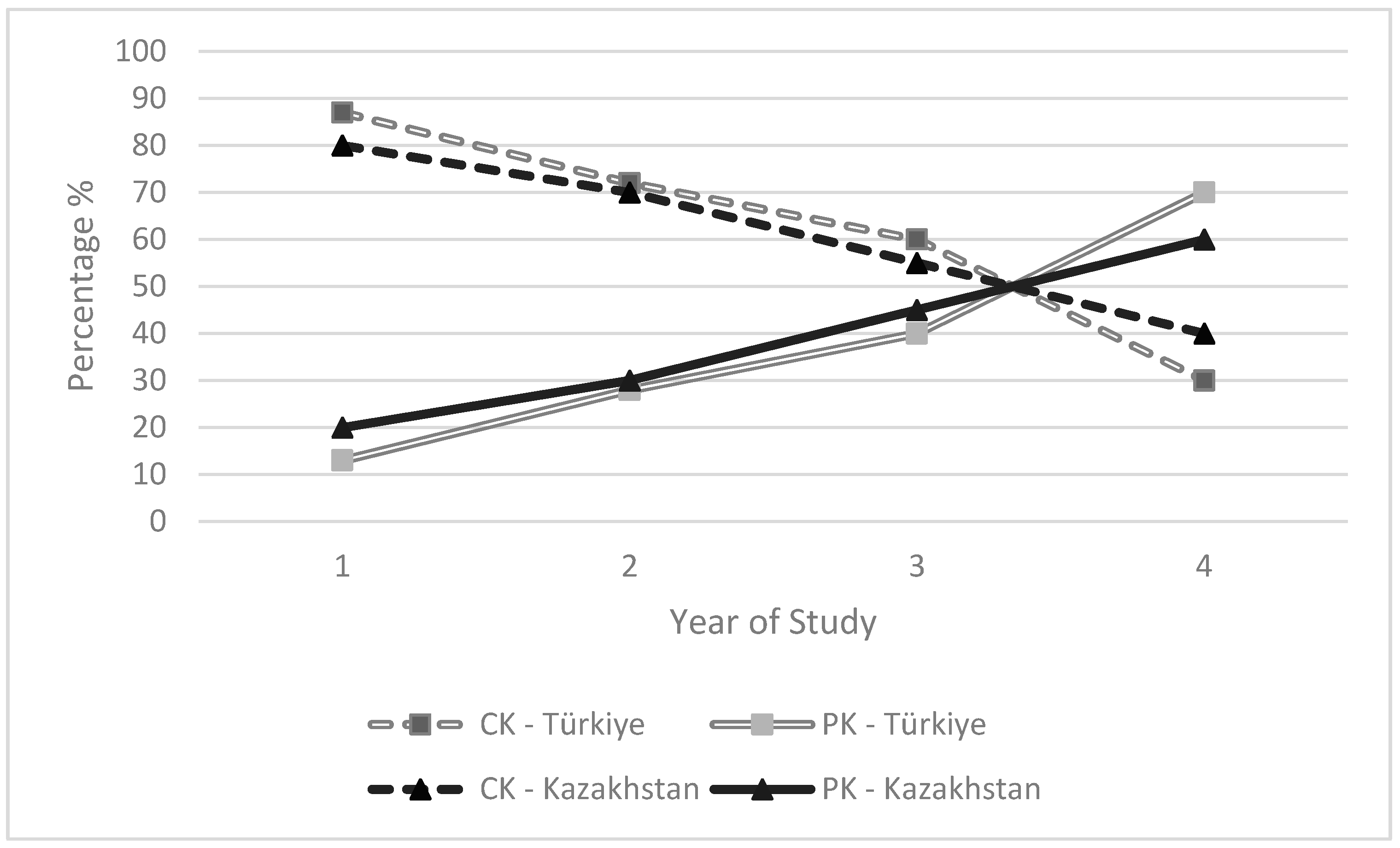
To identify structural opportunities for CK–PK integration, the proportion of CK- and PK-related courses was calculated for each academic year. Courses were classified based on their dominant orientation (disciplinary or pedagogical), and the relative proportion was computed as:
CK or PK (%) = (Number of courses related to CK or PK/Total number of courses in one academic year) × 100
As shown in Figure 1, both programs prioritize CK during the first year. However, the Turkish program demonstrates earlier and more explicit curricular mechanisms for transforming CK into pedagogical forms (e.g., through subject-specific teaching methods courses), whereas in the Kazakhstani case, integration becomes more visible at later stages.
As illustrated in Figure 1, both programs prioritize content knowledge during the early stages of teacher education. In the first year, CK constitutes approximately 87% of the curriculum in the Turkish university and 80% in the Kazakhstani university, while PK accounts for only 13% and 20%, respectively. This indicates that both programs initially emphasize disciplinary preparation, with limited pedagogical integration.
In the second year, PK components increase in both contexts; however, the Turkish program demonstrates earlier and more explicit mechanisms for transforming CK into pedagogical forms. PK constitutes approximately 28% of the curriculum in the Turkish university and 30% in the Kazakhstani university. In the Turkish case, courses such as Material Design in Chemistry Education explicitly focus on translating disciplinary knowledge into instructional content, whereas in the Kazakhstani program, initial pedagogical courses begin to establish the CK–PK relationship but remain less systematically integrated.
By the third year, both programs show a more balanced distribution between CK and PK. CK accounts for approximately 60% of the curriculum in the Turkish university and 55% in the Kazakhstani university, while PK increases to 40% and 45%, respectively. At this stage, subject-specific teaching methods and laboratory-oriented courses create structured opportunities for integrating disciplinary and pedagogical knowledge.
In the fourth year, pedagogical knowledge becomes dominant, particularly in the Turkish university program. PK constitutes approximately 70% of the curriculum in the Turkish university and 60% in the Kazakhstani university, while CK decreases to 30% and 40%, respectively. This shift reflects a transition from disciplinary preparation toward pedagogical practice and professional competence development.
These findings suggest that opportunities for PCK-related reasoning are not solely determined by laboratory practice but are structurally embedded within the broader curricular architecture. The earlier and more explicitly scaffolded CK–PK progression observed in the Turkish program provides more continuous opportunities for pedagogical transformation of disciplinary knowledge. In contrast, the later and less structured integration observed in the Kazakhstani program may delay systematic engagement with pedagogical reasoning.
Thus, curricular sequencing functions as a structural affordance that shapes when and how pre-service teachers begin to reinterpret chemistry content through pedagogical lenses.
Representation of CK, PK, and PCK-related elements in the syllabi of Organic Chemistry II and Physical Chemistry laboratory courses in both countries.
Course syllabi were analyzed as a key data source for examining how CK and PK components are embedded within laboratory-based chemistry instruction and how opportunities for their integration are structured. Syllabi specify course objectives, expected learning outcomes, instructional methods, laboratory activities, and assessment approaches, allowing for an analysis of the relative emphasis placed on disciplinary content and pedagogical practices.
As presented in Table 2, CK elements were identified based on theoretical content included in each syllabus, such as chemical laws, reaction mechanisms, structural and functional group properties, calculations, and other discipline-specific concepts directly related to chemistry. PK elements were identified through the instructional approaches and learning activities described in the syllabi, including demonstrations, virtual or hands-on laboratory work, analytical exercises, collaborative activities, problem-solving tasks, time management requirements, and laboratory safety practices. CK and PK elements were coded separately for each course to enable a systematic comparison between Kazakhstan and Türkiye universities.
In Organic Chemistry II, the Kazakhstani university’s syllabus places greater emphasis on the theoretical coverage of heteroatoms, heteroaromatic, and heterocyclic compounds. Pedagogical elements are primarily embedded through demonstrations and virtual laboratory activities, which support procedural understanding, safety awareness, and data interpretation skills. However, these approaches provide limited opportunities for extended hands-on experimentation. In contrast, the Turkish university’s syllabus emphasizes hands-on laboratory work, real chemical syntheses, and analytical techniques. This instructional design offers more frequent opportunities for students to engage in problem-solving, experimental decision-making, and reflective analysis.
In Physical Chemistry laboratory courses, both programs incorporate real laboratory experiments; however, the instructional focus differs. In the Kazakhstani university context, laboratory activities are closely aligned with broad theoretical concepts and physicochemical processes, emphasizing conceptual understanding and process-oriented experimentation. In the Turkish university context, laboratory work focuses more explicitly on quantitative measurements, calculations, and data-driven analysis, requiring students to interpret numerical results and make instructional decisions based on experimental outcomes.
Overall, while CK is strongly represented in the syllabi of both courses in both universities, differences emerge in how PK is operationalized through instructional methods and laboratory practices. However, these differences are not merely methodological variations; they signal distinct pedagogical orientations embedded within the syllabus design.
In the Turkish case, the integration of hands-on experimentation, analytical reasoning, and quantitative interpretation creates structured moments in which disciplinary knowledge must be actively transformed into procedural, explanatory, and decision-based forms. In contrast, the Kazakhstani syllabus, while conceptually rich, embeds pedagogical elements primarily through demonstration and guided execution, which may constrain opportunities for independent pedagogical reasoning.
Thus, syllabus design functions as a curricular affordance that conditions whether laboratory work operates primarily at a procedural level or becomes a site for deeper CK–PK transformation. These structural distinctions suggest that opportunities for laboratory-related PCK-related learning emerge at the level of course documentation and instructional framing, prior to classroom enactment.
Table 2 illustrates that differences in syllabus design extend beyond content variation and reflect contrasting pedagogical structuring of laboratory engagement. While both contexts demonstrate strong CK foundations, the Turkish syllabus more consistently embeds situations requiring analytical transformation and experimental decision-making. In contrast, the Kazakhstani syllabus structures laboratory engagement in ways that consolidate disciplinary knowledge but provide fewer explicit affordances for independent pedagogical reasoning.
Organization of Laboratory Courses, Facilities, Instructor Roles, and Assessment Systems in Shaping Laboratory-Related PCK Development.
Observations conducted in naturalistic laboratory settings revealed substantial differences in the organization and implementation of laboratory courses between the two universities. These differences were associated with program structure, time allocation, instructional practices, and assessment systems, which collectively shaped the opportunities available for integrating CK and PK within laboratory instruction.
As summarized in Table 3, laboratory courses in the Turkish university case are allocated as separate modules with 4 European Credit Transfer and Accumulation System (ECTS) credits dedicated exclusively to laboratory work, whereas in the Kazakhstani university case, laboratory and lecture components are combined within a single 5 ECTS course. This structural distinction affects the depth and pacing of laboratory instruction. In the Turkish university case, extended laboratory time supports multi-stage instructional sequences that include preparation, experimentation, analysis, and reflection. In contrast, shorter laboratory sessions in the Kazakhstani university case limit the extent to which full experimental cycles can be implemented within a single session.
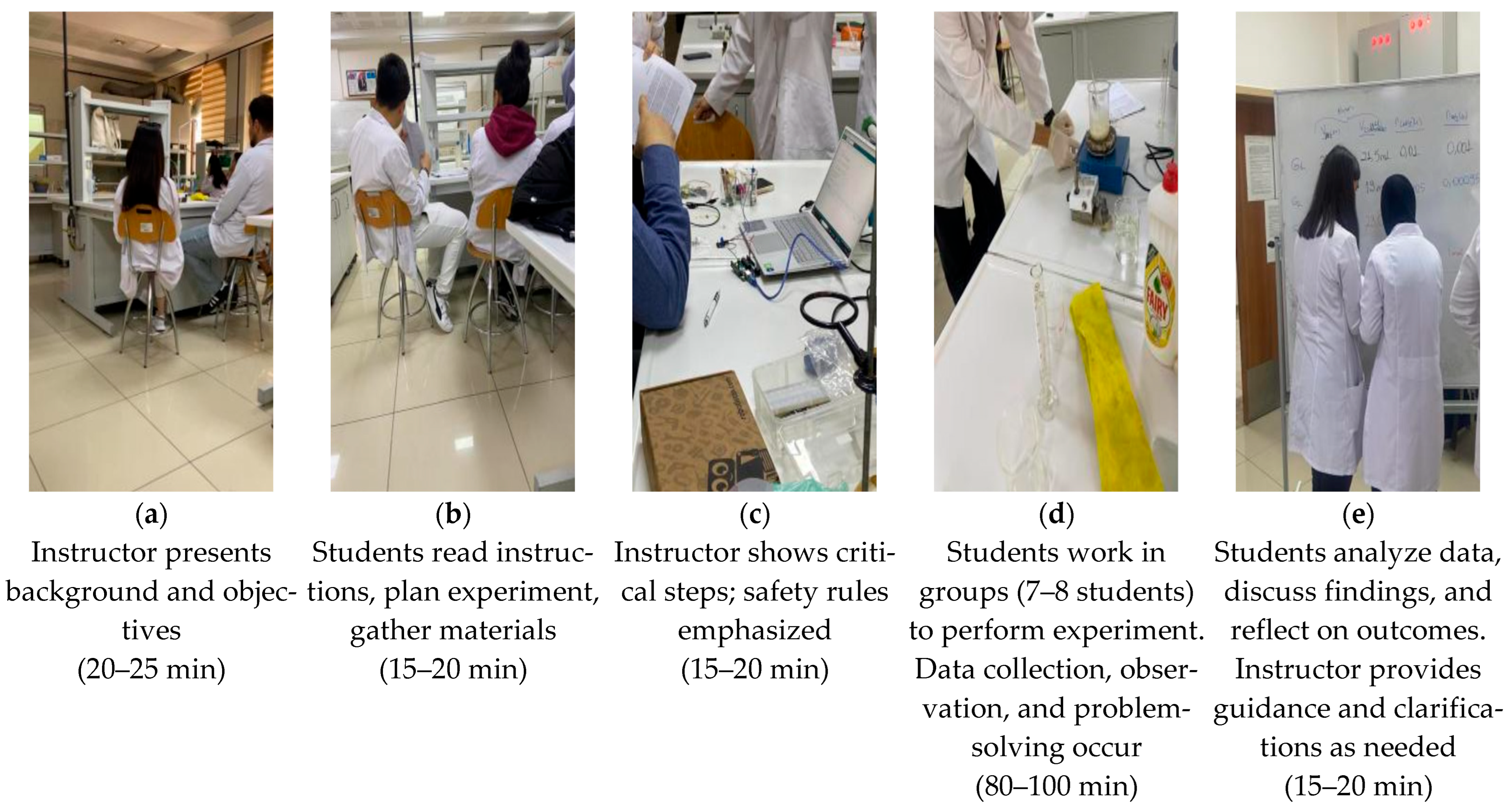
In the Turkish university case, laboratory sessions typically follow a structured sequence consisting of a brief theoretical introduction, preparatory written tasks, instructor demonstration, extended group-based experimentation, and concluding discussion. This sequence creates opportunities for students to engage in experimental planning, data interpretation, and reflective discussion. Figure 2 illustrates the main stages of laboratory work observed in the Turkish university laboratory sessions.
The structural sequencing observed in the Turkish laboratory sessions reflects a full inquiry cycle that includes conceptual framing, procedural planning, experimentation, data interpretation, and reflective discussion. Such sequencing creates extended opportunities for CK–PK integration by positioning pre-service teachers not only as performers of experiments but also as interpreters of scientific meaning. In contrast, the more condensed laboratory structure observed in the Kazakhstani context prioritizes procedural completion within limited time frames, which may constrain opportunities for extended pedagogical reasoning and reflective analysis. These differences suggest that laboratory organization functions as a structural affordance that either enables or restricts deeper PCK-related engagement.
In the Kazakhstani university, laboratory sessions last 100 min, typically structured as 40 min of Q&A, 40 min of hands-on experiments, and 20 min for writing results. In this context, the instructor primarily assumes an observer role, intervening only when students encounter difficulties.
In the Kazakhstani university, the participation of third-year students in a five-week school internship during the spring semester shortened the duration of theoretical and practical courses to 10 weeks. Consequently, traditional 2 h weekly laboratory sessions were extended to 3 h. Student opinions were divided into two perspectives: some participants argued that 3 h were necessary for Organic Chemistry and 2 h sufficient for Physical Chemistry, while others viewed 2 h as adequate for both courses.
In the Turkish university, weekly laboratory sessions were allocated as follows: 4 h for Organic, Physical, and Analytical Chemistry, and 2 h for General Chemistry. Observations indicated that students adapted well to the longer sessions, completed tasks on time, and worked methodically without rushing.
During interviews, students indicated that a separate preparatory lecture is necessary for laboratory courses because the topics in the syllabus and laboratory exercises were not always fully aligned, and the provided information was sometimes insufficient. Preparatory materials primarily guided procedural implementation rather than fostering deeper scientific understanding. Among Turkish students, the majority reported that laboratory content did not fully align with the course plan, while several participants indicated that they did not fully understand the importance of the steps provided. One student commented:
“It feels like cooking—you add one thing, then another—and it’s done. But why did we add that acid? What was supposed to happen? We want to understand this.”
Observations of laboratory sessions revealed notable differences in instructional approaches between Kazakhstan and Turkish universities. In the Kazakhstani university, instructors predominantly employed a student-centered approach that focused on achieving outcomes without explicitly explaining underlying principles. Instructors intervened only when students encountered difficulties, providing brief explanations, drawing diagrams, and highlighting essential information. Most questions posed to students were knowledge-based and did not require critical thinking, which limited students’ engagement with the deeper concepts of the laboratory exercises and which constrained opportunities for extended CK–PK integration.
In the Turkish university, laboratory sessions were guided by an inquiry-based teaching approach. Students were actively involved in conducting experiments and verbally defending their results. Instructors posed critical questions that required students to analyze and interpret findings, thereby supporting opportunities for PCK-related reasoning. Nevertheless, the instructors’ dominant role in guiding the research process occasionally restricted students’ ability to make independent decisions and organize experiments autonomously.
Observations of student activities revealed differences in participation patterns and engagement in laboratory sessions across Kazakhstan and Turkish universities.
In the Kazakhstani university, students actively engaged in laboratory activities according to pre-prepared instructions. However, much of their work was rote-based: students primarily recorded procedures in notebooks, memorized steps, and presented results without fully understanding the underlying principles of the experiments.
In the Turkish university, students also followed pre-prepared instructions, but the cumulative assessment system applied before exams sometimes led to students attending sessions unprepared. This resulted in frequent questions directed at instructors, decreased attention, and occasional failure to notice critical points, which hindered full comprehension of the laboratory exercises.
Group work was common in both countries; however, larger group sizes (7–8 students) reduced individual participation. One Turkish student reported:
“In our third year, we worked in groups of 5–6, and sometimes 1–2 students did nothing and just observed. Therefore, we believe groups of no more than 3 are more effective.”
Kazakhstani students further highlighted challenges with comprehension in larger groups:
“When the topic is difficult, only half of the group understands, and the rest try to learn by observation.”
Assessment methods differ between the two countries. In the Turkish university, laboratory results are evaluated at the end of the semester through cumulative reports and written exams. Evaluation criteria include theoretical understanding, analytical thinking, and accuracy of practical application.
In the Kazakhstani university, assessment is conducted weekly, incorporating participation and written work from each session. Students from both countries generally perceive their respective assessment systems as fair. However, interview data indicate that the weekly assessment in the Kazakhstani university sometimes promotes rote learning and limits deep understanding. Turkish students valued the analytical nature of the end-of-term assessment but emphasized the need for post-class feedback and formative assessment, which are important for fostering metacognitive skills and creating opportunities for PCK-related reasoning.
“Due to individual assessment of theory, it is better to perform laboratory work and write reports independently.”
During interviews, students frequently highlighted insufficient reagents and equipment in the Organic Chemistry II and Physical Chemistry laboratories at the Kazakhstani university. Consequently, several Kazakhstani students reported that the lack of materials and equipment prevented them from completing all scheduled laboratory exercises as outlined in the syllabus.
“There are not enough reagents for individual work, and the instructor cannot fully monitor all students.”
These limitations reduced opportunities for individual experimentation and the application of inquiry-based learning approaches. In the Turkish university, laboratories were generally better supplied with essential materials and instruments, allowing students to conduct experiments in groups. Students’ answers suggest that the adequacy of laboratory resources plays a crucial role in supporting opportunities for CK–PK integration and PCK-related reasoning by enabling meaningful connections between theoretical content and practical application.
Overall, the findings under RQ3 indicate that opportunities for laboratory-related PCK learning are not solely shaped by content coverage but by the structural and pedagogical affordances embedded within laboratory organization. Extended instructional time, inquiry-oriented questioning, formative feedback, and adequate material resources collectively create conditions for deeper CK–PK integration. Conversely, condensed time structures, limited materials, and assessment systems emphasizing procedural completion may constrain opportunities for reflective pedagogical reasoning. These findings reinforce the argument that laboratory design itself functions as a pedagogical mechanism shaping the quality and depth of PCK-related engagement.

4. Discussion

4.1. Comparative Structure of CK and PK in Chemistry Teacher Education Programs

The study results indicate that opportunities for students’ PCK-related learning are not solely dependent on instructor modeling during lessons or on providing students with opportunities to practice skills. Rather, these opportunities are shaped by program objectives, curriculum structure, credit allocation, and syllabus design, which together create conditions for how content knowledge may be pedagogically transformed (Chapoo, 2020; Kind, 2009; Shulman, 1986).
In the Turkish university programs, learning objectives and expected outcomes primarily emphasize content knowledge development, with laboratory courses allocated separate credits. In contrast, in the Kazakhstani university, lectures and laboratory sessions share a single credit, which limits time for extended inquiry, reflection, and pedagogical reasoning. Prior studies have shown that insufficient laboratory time constrains opportunities for reflective practice and limits students’ ability to reconceptualize content knowledge for instructional purposes (Abrahams & Millar, 2008; Hofstein & Lunetta, 2004).
The allocation of separate laboratory credits in Türkiye enables students to connect theory with practice and engage in reflective learning. This aligns with Shulman’s (1986) assertion that “the integration of content and pedagogy forms the core of teacher professional knowledge”. Furthermore, students’ independent execution of experiments and subsequent analysis supports inquiry-based learning, which is recognized as a foundational component for PCK-related learning (Magnusson et al., 1999; Park & Oliver, 2008).
Conversely, in the Kazakhstani university, limited instructional time and resource constraints hinder students from completing full inquiry cycles and from deeply understanding cause-and-effect relationships. This finding is consistent with Bond-Robinson (2005) and Copriady (2014), who argue that effective laboratory instruction requires instructors to position students as researchers rather than procedural executors.
As shown in Figure 2, the distribution of CK and PK differs considerably between the two programs. In the Turkish university model, PK-related components are introduced systematically from the second year onward, supporting gradual transformation of CK into pedagogical representations. In the Kazakh university model, CK–PK integration occurs later and is more practice-oriented. Research suggests that delayed pedagogical integration may limit opportunities for early pedagogical reasoning and reflection (Grossman, 1990; Loughran et al., 2012).

4.2. Comparative Analysis of CK and PK in Chemistry Courses Based on Syllabi

As shown in Table 2, PK-related learning opportunities in the Kazakhstani university’s Organic Chemistry II course rely largely on virtual laboratories, whereas in Türkiye, hands-on laboratory work is emphasized through individual and group experiments. Hands-on laboratory experiences have been shown to better support procedural understanding, scientific reasoning, and the foundations of pedagogical decision-making than virtual or demonstration-based approaches alone (De Jong et al., 2002; Hofstein, 2017).
In Physical Chemistry, laboratory exercises combined with problem-solving activities in the Kazakhstani university contribute to CK consolidation, while in Türkiye, extended laboratory engagement serves as the primary context for PK-related skill formation and engagement. However, research cautions that laboratory activity alone does not ensure opportunities for PCK-related learning unless explicit pedagogical reflection is incorporated (Abell, 2013; Nilsson & Loughran, 2012).
Misalignment between syllabus content and laboratory activities may hinder conceptual understanding and reflective learning. Preparatory materials focused primarily on procedural guidance often fail to support conceptual integration or pedagogical reasoning (Abrahams & Reiss, 2012). Aligning syllabus objectives, laboratory tasks, and reflective components is therefore critical for fostering both CK and PK foundations of PCK (Kind, 2009).

4.3. Organization of Laboratory Courses

Observation and interview data reveal notable differences in laboratory organization. In the Turkish university, 200 min laboratory sessions are structured to include theoretical framing, preparation, instructor demonstration, inquiry-based group work, and reflective evaluation. Such multi-phase structures align with evidence-based laboratory models that promote higher-order thinking and pedagogical reasoning (Högström et al., 2010; Hofstein & Lunetta, 2004).
In contrast, 100 min laboratory sessions in the Kazakhstani university emphasize question–answer formats and procedural accuracy, with limited time for inquiry and reflection. While this approach supports CK acquisition, it offers fewer opportunities for reflective thinking and pedagogical interpretation, which are essential components of PCK (Abell, 2013; Magnusson et al., 1999).
Högström et al. (2010) identified effective laboratory instruction as involving explicit sequencing: conceptual framing, purpose clarification, guided inquiry, reflection, and discussion. Turkish laboratory sessions closely follow this sequence, whereas time and resource constraints in the Kazakhstani university often result in the omission of reflective stages.
These findings are consistent with international science education frameworks that emphasize inquiry, structured reflection, and contextualized practice as important conditions for meaningful science teacher preparation (NGSS Lead States, 2013; UNESCO, 2020, 2021).

4.3.1. Role and Teaching Style of the Instructor

In the Kazakhstani university, instructors primarily adopt a facilitative and observational role, intervening mainly to correct procedural errors. Research suggests that while student-centered approaches are valuable, insufficient conceptual explanation and limited questioning reduce opportunities for deep learning and pedagogical reasoning (Kirschner et al., 2006; Taber, 2015).
In the Turkish university laboratories, instructors employ inquiry-based teaching strategies, prompting students to justify results and interpret findings. Such dialogic instruction supports analytical reasoning and the foundations of PK (Chin & Osborne, 2008). However, overly directive guidance may limit students’ autonomy, highlighting the need for balanced instructional scaffolding (Hmelo-Silver et al., 2007).

4.3.2. Student Engagement and Interaction Level

Although students in both contexts actively participate, engagement quality differs. Procedural, memorization-based laboratory practices—observed more frequently in the Kazakhstani university—are associated with surface learning (Hofstein & Lunetta, 2004). In the Turkish university case, cumulative assessment promotes accountability, but insufficient pre-laboratory preparation reduces conceptual engagement, echoing findings by Johnstone and Al-Shuaili (2001).
Smaller group sizes enhance collaboration, responsibility, and conceptual discussion, consistent with Hofstein and Mamlok-Naaman (2007) recommendations for effective laboratory learning environments. Without structured reflection, however, even collaborative inquiry may fail to support pedagogical reasoning (Loughran et al., 2012).

4.3.3. Assessment and Feedback System

Assessment practices shape learning focus. Cumulative assessments in Türkiye encourage integrative thinking and delayed reflection, which supports metacognitive development (Nicol & Macfarlane-Dick, 2006; Taber, 2015). Weekly assessments in the Kazakhstani university promote consistency but may reinforce procedural compliance rather than conceptual integration. Balancing formative and summative assessment is essential for supporting reflective learning and pedagogical awareness in teacher education programs (Black & Wiliam, 2009).

4.3.4. Materials, Equipment, and Resources

Adequate laboratory resources enable inquiry, experimentation, and reflection, all of which are essential for pedagogical learning (Hofstein & Kind, 2012). Resource limitations reported in the Kazakhstani university constrained individual experimentation and inquiry depth, whereas well-equipped laboratories in Türkiye supported authentic scientific engagement. Prior research emphasizes that material conditions are inseparable from pedagogical quality in science education (Magnusson et al., 1999; UNESCO, 2021).
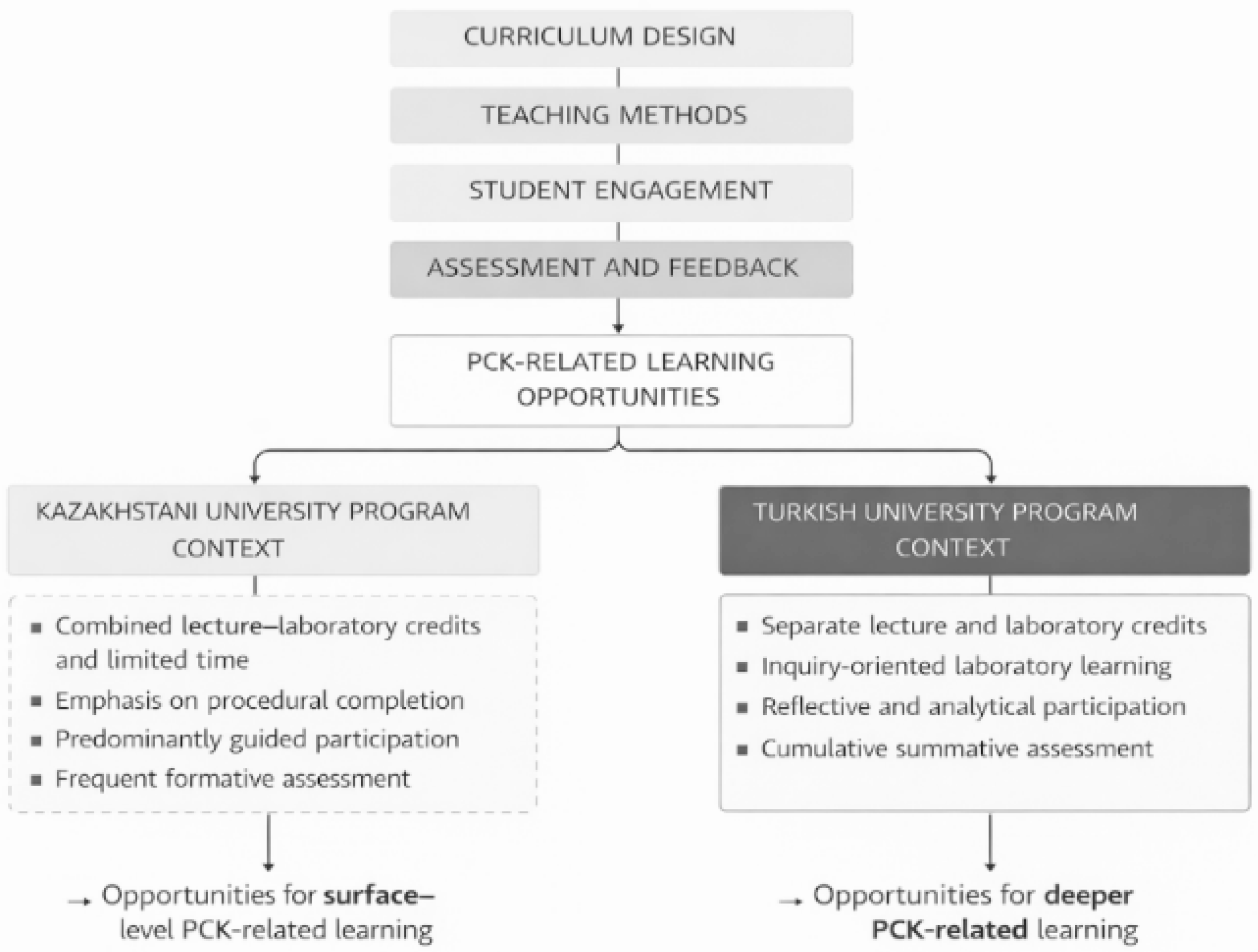
As shown in Figure 3, differences in curriculum structure, instructional practices, assessment strategies, and resource availability create distinct pathways for surface- and deep-level opportunities for PCK development across the two program contexts.
Rather than indicating direct PCK outcomes, the framework highlights how differences in curriculum structure, instructional practices, assessment strategies, and resource availability create distinct pathways for surface- and deep-level PCK-related learning across the two program contexts. The model provides an analytical lens for interpreting laboratory-based teacher education programs across diverse educational systems.
Taken together, these findings extend existing PCK research by conceptualizing laboratory environments not merely as instructional settings but as structural and pedagogical affordance systems. While prior studies have emphasized teachers’ knowledge components, this study highlights how curriculum design, time allocation, assessment regimes, and material resources function as enabling or constraining mechanisms for CK–PK integration. The proposed framework therefore shifts analytical attention from individual teacher competence to systemic laboratory conditions, offering a comparative perspective that may inform curriculum reform in science teacher education beyond the two national contexts examined.

4.4. Positioning the Laboratory Affordance Model in Relation to Existing PCK Frameworks

Traditional PCK frameworks of Magnusson et al. (1999) and Park and Oliver (2008) primarily conceptualize PCK as an individual teacher’s knowledge system composed of components such as instructional strategies, assessment knowledge, curriculum knowledge, and knowledge of students’ understanding. In contrast, the Laboratory Affordance Model proposed in this study shifts the analytical focus from what teachers know to what the laboratory environment makes possible during pre-service teacher learning. Rather than treating PCK development as an outcome to be measured, the model conceptualizes laboratory courses as affordance systems in which structural (e.g., credit allocation and time), pedagogical (e.g., facilitation and questioning), experiential (e.g., autonomy and hands-on inquiry), and reflective (e.g., feedback and regulation) conditions jointly enable or constrain CK–PK integration. This contribution is therefore not a new “component model” of PCK, but an environment-centered explanatory framework that specifies how institutional design features and enacted pedagogical routines shape the depth of PCK-related reasoning opportunities in laboratory-based teacher education.
Practical implications for chemistry teacher education:
  • Dedicated laboratory credits may protect laboratory learning time and support complete inquiry cycles that include preparation, experimentation, analysis, and pedagogical reflection.
  • Extended instructional time enables sustained hands-on engagement and reduces procedural “rush,” creating space for deeper reasoning about how chemical concepts can be represented and taught.
  • Inquiry-oriented facilitation (productive questioning, scaffolding, and feedback) strengthens students’ interpretation of experimental evidence and supports early-stage CK–PK integration as a foundation for laboratory-related PCK.

5. Conclusions

The findings indicate that differences in curriculum design and laboratory organization are associated with markedly different opportunities for PCK-related learning in chemistry laboratory courses. In the Turkish university program examined in this study, the allocation of separate laboratory credits, extended hands-on laboratory sessions, and active instructor facilitation provided structurally supportive conditions for inquiry, reflection, and for establishing connections between chemical content and its potential classroom representation. In contrast, in the Kazakhstani university program analyzed, shorter laboratory sessions, combined lecture–laboratory credits, and limited material resources constrained opportunities for independent experimentation and reflective engagement, potentially limiting early opportunities for PCK-related reasoning.
Beyond contextual comparison, this study contributes to science teacher education research by conceptualizing laboratory courses as pedagogical affordance systems. Rather than viewing laboratory work solely as a technical or procedural component of chemistry education, the findings demonstrate how structural and instructional conditions function as enabling or constraining mechanisms for CK–PK integration. In this sense, opportunities for PCK-related reasoning are not only shaped by individual cognitive processes but are also influenced by institutional design and pedagogical organization.
These findings have important implications for teacher education policy and practice. Designing laboratory courses with dedicated credits, sufficient instructional time, explicit opportunities for reflection, and alignment between laboratory activities and pedagogical goals may strengthen the conditions under which pre-service teachers begin to integrate content knowledge with pedagogical thinking. Supporting instructors in adopting balanced inquiry-oriented facilitation roles and ensuring adequate laboratory resources can further enhance the pedagogical value of laboratory experiences.
Given that this study was limited to one institution in each country and did not include direct data from laboratory instructors, the findings should be interpreted within this contextual scope and should not be generalized to national teacher education systems as a whole. Nevertheless, the results offer valuable analytical insights into how institutional structures and instructional practices shape opportunities for PCK-related learning in chemistry laboratory courses. Future research should employ longitudinal and multi-institutional designs, incorporate instructor perspectives, apply explicit PCK measurement frameworks, and examine how structural laboratory conditions influence the trajectory of CK–PK integration over time.

Author Contributions

Conceptualization, M.M.M. and M.B.T.; methodology, A.Y.Ç. and A.M.R.; software, M.B.T.; validation, N.M.A., T.Z.I. and M.B.T.; formal analysis, A.Y.Ç. and M.M.M.; investigation, M.M.M., M.B.T. and A.M.R.; resources, N.M.A., T.Z.I. and A.M.R.; data curation, M.M.M., M.B.T. and A.M.R.; writing—original draft preparation, M.M.M., M.B.T., A.Y.Ç. and A.M.R.; writing—review and editing, M.B.T. and A.Y.Ç.; visualization, N.M.A. and T.Z.I.; supervision, M.M.M. All authors have read and agreed to the published version of the manuscript.

Funding

This research received no external funding.

Institutional Review Board Statement

The study was conducted in accordance with the Declaration of Helsinki and approved by the Institutional Review Board (Ethics Committee) of Gazi University, Türkiye (Approval No: E.1234193, approved on 28 April 2025) and Kazakh National Women’s Teacher Training University, Kazakhstan (Protocol No: 1, approved on 11 January 2025).

Informed Consent Statement

Written informed consent was obtained from participants involved in the study.

Data Availability Statement

The data that support the findings of this study are available from the corresponding author upon reasonable request, due to privacy restrictions.

Conflicts of Interest

The authors declare no conflicts of interest.

Abbreviations

The following abbreviations are used in this manuscript:
PCKPedagogical Content Knowledge
CKContent Knowledge
PKPedagogical Knowledge

References

  1. Abell, S. K. (2013). Research on science teacher knowledge. In Handbook of research on science education (pp. 1105–1149). Routledge. [Google Scholar]
  2. Abrahams, I., & Millar, R. (2008). Does practical work really work? A study of the effectiveness of practical work as a teaching and learning method in school science. International Journal of Science Education, 30(14), 1945–1969. [Google Scholar] [CrossRef]
  3. Abrahams, I., & Reiss, M. J. (2012). Practical work: Its effectiveness in primary and secondary schools in England. Journal of Research in Science Teaching, 49(8), 1035–1055. [Google Scholar] [CrossRef]
  4. Arrigo, V., Lorencini Júnior, Á., & Broietti, F. C. D. (2022). The pedagogical content knowledge (PCK) of a chemistry student teacher: An experience in pre-service education. International Journal of Research in Education and Science, 8(1), 167–186. [Google Scholar] [CrossRef]
  5. Black, P., & Wiliam, D. (2009). Developing the theory of formative assessment. Educational Assessment, Evaluation and Accountability (Formerly: Journal of Personnel Evaluation in Education), 21(1), 5–31. [Google Scholar] [CrossRef]
  6. Boesdorfer, S. B. (2019). Growing teachers and improving chemistry learning: How best practices in chemistry teacher education can enhance chemistry education. In Best practices in chemistry teacher education (pp. 1–6). American Chemical Society. [Google Scholar] [CrossRef]
  7. Bond-Robinson, J. (2005). Identifying pedagogical content knowledge (PCK) in the chemistry laboratory. Chemistry Education Research and Practice, 6(2), 83–103. [Google Scholar] [CrossRef]
  8. Braun, V., & Clarke, V. (2006). Using thematic analysis in psychology. Qualitative Research in Psychology, 3(2), 77–101. [Google Scholar] [CrossRef]
  9. Chapoo, S. (2020). The development of pre-service teachers’ pedagogical content knowledge (PCK) through CoRe design. Elementary Education Online, 19(4), 322–328. [Google Scholar] [CrossRef]
  10. Chen, B., & Wei, B. (2015). Examining chemistry teachers’ use of curriculum materials: In view of teachers’ pedagogical content knowledge. Chemistry Education Research and Practice, 16(2), 260–272. [Google Scholar] [CrossRef]
  11. Chin, C., & Osborne, J. (2008). Students’ questions: A potential resource for teaching and learning science. Studies in Science Education, 44(1), 1–39. [Google Scholar] [CrossRef]
  12. Cohen, L., Manion, L., & Morrison, K. (2002). Research methods in education. Routledge. [Google Scholar] [CrossRef]
  13. Cooper, M. M., & Kerns, T. S. (2006). Changing the laboratory: Effects of a laboratory course on students’ attitudes and perceptions. Journal of Chemical Education, 83(9), 1356. [Google Scholar] [CrossRef]
  14. Copriady, J. (2014). Teachers competency in the teaching and learning of chemistry practical. Mediterranean Journal of Social Sciences, 5(8), 312–317. [Google Scholar] [CrossRef]
  15. Council of Higher Education [YÖK]. (2021). Teacher education undergraduate programs. Available online: https://www.yok.gov.tr/ (accessed on 20 November 2025).
  16. De Jong, O., Veal, W. R., & Van Driel, J. H. (2002). Exploring chemistry teachers’ knowledge base. In Chemical education: Towards research-based practice (pp. 369–390). Springer. [Google Scholar] [CrossRef]
  17. Grossman, P. L. (1990). The making of a teacher: Teacher knowledge and teacher education. Teachers College Press. [Google Scholar]
  18. Gurung, R., & Gurung, B. B. (2023). Laboratory work and its impact in learning chemistry at middle secondary schools of Trongsa, Bhutan. Asian Journal of Education and Social Studies, 48(3), 175–184. [Google Scholar] [CrossRef]
  19. He, P., Zheng, C., & Li, T. (2021). Development and validation of an instrument for measuring Chinese chemistry teachers’ perceptions of pedagogical content knowledge for teaching chemistry core competencies. Chemistry Education Research and Practice, 22(2), 513–531. [Google Scholar] [CrossRef]
  20. Hidayah, F. F., Imaduddin, M., Yuliyanto, E., Djunaidi, M. C., & Qomariyah, S. (2023). Strengthening pedagogical content knowledge in designing laboratory activity based on small scale chemistry practicum approach. European Journal of Educational Research, 12(4), 1631–1644. [Google Scholar] [CrossRef]
  21. Hmelo-Silver, C. E., Duncan, R. G., & Chinn, C. A. (2007). Scaffolding and achievement in problem-based and inquiry learning: A response to Kirschner, Sweller, and. Educational Psychologist, 42(2), 99–107. [Google Scholar] [CrossRef]
  22. Hofstein, A. (2004). The laboratory in chemistry education: Thirty years of experience with developments, implementation, and research. Chemistry Education Research and Practice, 5(3), 247–264. [Google Scholar] [CrossRef]
  23. Hofstein, A. (2017). The role of laboratory in science teaching and learning. In Science education: An international course companion (pp. 357–368). SensePublishers. [Google Scholar] [CrossRef]
  24. Hofstein, A., & Hugerat, M. (2021). Teaching and learning in the school chemistry laboratory (Vol. 8). Royal Society of Chemistry. [Google Scholar]
  25. Hofstein, A., & Kind, P. (2012). Learning in and from science laboratories. In B. Fraser, K. Tobin, & K. McRobbie (Eds.), Second handbook of research in science teaching (pp. 189–208). Springer. [Google Scholar] [CrossRef]
  26. Hofstein, A., & Lunetta, V. N. (2004). The laboratory in science education: Foundations for the twenty-first century. Science Education, 88(1), 28–54. [Google Scholar] [CrossRef]
  27. Hofstein, A., & Mamlok-Naaman, R. (2007). The laboratory in science education: The state of the art. Chemistry Education Research and Practice, 8(2), 105–107. [Google Scholar] [CrossRef]
  28. Högström, P., Ottander, C., & Benckert, S. (2010). Lab work and learning in secondary school chemistry: The importance of teacher and student interaction. Research in Science Education, 40(4), 505–523. [Google Scholar] [CrossRef]
  29. Johnstone, A. H., & Al-Shuaili, A. (2001). Learning in the laboratory; some thoughts from the literature. University Chemistry Education, 5(2), 42–51. [Google Scholar]
  30. Karataş, F. Ö. (2016). Pre-service chemistry teachers’ competencies in the laboratory. Chemistry Education Research and Practice, 17(1), 100–110. [Google Scholar] [CrossRef]
  31. Kind, V. (2009). Pedagogical content knowledge in science education: Perspectives and potential for progress. Studies in Science Education, 45(2), 169–204. [Google Scholar] [CrossRef]
  32. Kirschner, P. A., Sweller, J., & Clark, R. E. (2006). Why minimal guidance during instruction does not work: An analysis of the failure of constructivist, discovery, problem-based, experiential, and inquiry-based teaching. Educational Psychologist, 41(2), 75–86. [Google Scholar] [CrossRef]
  33. Loughran, J., Berry, A., & Mulhall, P. (2012). Understanding and developing scienceteachers’ pedagogical content knowledge (Vol. 12). Springer Science & Business Media. [Google Scholar]
  34. Magnusson, S., Krajcik, J., & Borko, H. (1999). Nature, sources, and development of pedagogical content knowledge for science teaching. In Examining pedagogical content knowledge: The construct and its implications for science education (pp. 95–132). Springer. [Google Scholar]
  35. Masalimova, A. R., Zheltukhina, M. R., Sergeeva, O. V., Kosarenko, N. N., Tsomartova, D. A., & Smirnova, L. M. (2024). Science teaching in BRICS: A systematic review of pedagogical approaches and challenges. EURASIA Journal of Mathematics, Science and Technology Education, 20(4), em2432. [Google Scholar] [CrossRef]
  36. Matayev, M. M., Mukatay, B. T., & Abdraimova, M. R. (2025). Training chemistry teachers: Evaluation of curricula in Kazakhstan and Türkiye. Scientific Journal of Pedagogy and Economics, 417(5), 164–182. [Google Scholar] [CrossRef]
  37. Ministry of Education and Science of the Republic of Kazakhstan. (2018). Order No. 604 on approval of state compulsory educational standards for all levels of education (October 31, 2018). Available online: https://adilet.zan.kz (accessed on 20 November 2025).
  38. Munawwarah, M., & Cahyani, V. P. (2025). Pedagogical content knowledge in chemistry education: Its significance for pre-service chemistry teachers. Journal of Tropical Chemistry Research and Education, 7(1), 61–75. [Google Scholar] [CrossRef]
  39. NGSS Lead States. (2013). Next generation science standards: For states, by states. The National Academies Press. [Google Scholar] [CrossRef]
  40. Nicol, D. J., & Macfarlane-Dick, D. (2006). Formative assessment and self-regulated learning: A model and seven principles of good feedback practice. Studies in Higher Education, 31(2), 199–218. [Google Scholar] [CrossRef]
  41. Nilsson, P., & Loughran, J. (2012). Exploring the development of pre-service science elementary teachers’ pedagogical content knowledge. Journal of Science Teacher Education, 23(7), 699–721. [Google Scholar] [CrossRef]
  42. Nixon, R. S., Campbell, B. K., & Luft, J. A. (2016). Effects of subject-area degree and classroom experience on new chemistry teachers’ subject matter knowledge. International Journal of Science Education, 38(10), 1636–1654. [Google Scholar] [CrossRef]
  43. Park, S., & Oliver, J. S. (2008). Revisiting the conceptualisation of pedagogical content knowledge (PCK): PCK as a conceptual tool to understand teachers as professionals. Research in Science Education, 38(3), 261–284. [Google Scholar] [CrossRef]
  44. Sarkar, M., Gutierrez-Bucheli, L., Yip, S. Y., Lazarus, M., Wright, C., White, P. J., Ilic, D., Hiscox, T. J., & Berry, A. (2024). Pedagogical content knowledge (PCK) in higher education: A systematic scoping review. Teaching and Teacher Education, 144, 104608. [Google Scholar] [CrossRef]
  45. Shulman, L. S. (1986). Those Who Understand: Knowledge Growth in Teaching. Educational Researcher, 15(2), 4–14. [Google Scholar] [CrossRef]
  46. Taber, K. S. (2015). The role of “practical” work in teaching and learning chemistry. School Science Review, 96(357), 75–83. [Google Scholar]
  47. Tamir, P. (1988). Subject matter and related pedagogical knowledge in teacher education. Teaching and Teacher Education, 4(2), 99–110. [Google Scholar] [CrossRef]
  48. UNESCO. (2020). Science education for sustainable development: A roadmap for teachers. Monograph online. UNESCO. Available online: https://unesdoc.unesco.org/ark:/48223/pf0000374896 (accessed on 24 November 2025).
  49. UNESCO. (2021). Reimagining our futures together: A new social contract for education. Monograph online. UNESCO. Available online: https://unesdoc.unesco.org/ark:/48223/pf0000379707 (accessed on 24 November 2025).
  50. Vesterinen, V. M., & Aksela, M. (2013). Design of chemistry teacher education course on nature of science. Science & Education, 22(9), 2193–2225. [Google Scholar] [CrossRef]
  51. Yalcin-Celik, A., Kadayifci, H., Uner, S., & Turan-Oluk, N. (2017). Challenges faced by pre-service chemistry teachers teaching in a laboratory and their solution proposals. European Journal of Teacher Education, 40(2), 210–230. [Google Scholar] [CrossRef]
  52. Yin, R. K. (2018). Case study research and applications (Vol. 6). SAGE. [Google Scholar]
  53. Yıldırım, A., & Şimşek, H. (1999). Sosyal bilimlerde nitel araştırma yöntemleri. Seçkin Yayıncılık. [Google Scholar]
Figure 1. Longitudinal Progression of CK and PK Distribution Across Four Years in Chemistry Teacher Education Programs in Kazakhstan and Türkiye.
Education 16 00645 g001
Figure 2. Stages of Laboratory Work Observed in the Turkish University Case (ae).
Education 16 00645 g002
Figure 3. Conceptual Framework Illustrating Instructional Conditions Associated With Surface- and Deep-level Opportunities for PCK Development in the Two Programs.
Education 16 00645 g003
Table 1. Demographic Characteristics of Participants.
CountryFemalesMalesTotal
Türkiye19221
Kazakhstan25025
Total44246
Table 2. Comparative Analysis of CK and PK Elements in Chemistry Courses Based on Syllabi in Kazakhstan and Türkiye Universities.
CourseCKPKKey Differences
Organic Chemistry IIKazakhstan: The main content covers heteroatoms, heteroaromatic and heterocyclic compounds. Students acquire theoretical knowledge on nomenclature, isomerism, organic reaction mechanisms, functional group properties, and synthesis.
Türkiye: The main content includes aromatic compounds, phenols, carbonyl compounds, carboxylic acids and derivatives, active methylene compounds, amines, and pericyclic reactions. Students learn to apply theoretical knowledge through understanding reaction mechanisms.
Kazakhstan: Primary instructional methods include demonstrations and virtual laboratory activities, supporting procedural understanding, safety awareness, and data interpretation skills.
Türkiye: Instructional methods emphasize hands-on laboratory work, real chemical syntheses, and spectroscopic analyses, supporting problem-solving, time management, and analytical skills.
Instructional approach: Virtual laboratories and demonstrations are emphasized in the Kazakhstani university, whereas hands-on laboratory experimentation is emphasized in Türkiye.
Emphasis: Greater theoretical breadth in the Kazakhstani university; stronger practical and experimental orientation in Türkiye.
Physical ChemistryKazakhstan: The syllabus focuses on electrochemistry, phase equilibria, colloid chemistry, physical laws, reaction rates, energy transformations, and molecular–macroscopic relationships.
Türkiye: The syllabus emphasizes physicochemical laws, thermodynamics, kinetics, and electrochemistry, including calculations and analysis of enthalpy, entropy, and Gibbs energy.
Kazakhstan: Laboratory activities involve real experiments, data collection, calculations, and investigation of physicochemical processes, supporting safety and data interpretation skills.
Türkiye: Laboratory work emphasizes measurements, phase and kinetic experiments, and data-driven analysis, supporting analytical thinking and decision-making skills.
Focus of laboratory work: Broader conceptual and process-oriented experiments in the Kazakhstani university; greater emphasis on quantitative measurements and calculations in Türkiye.
Table 3. Comparative Features of Laboratory Courses in Two Higher Education Institutions in Türkiye and Kazakhstan.
ParameterTurkish Public UniversityKazakh Public UniversityDescriptive Comparison
Credits4 ECTS (only labs)5 ECTS (lecture + lab)Separate laboratory credits in Türkiye allow extended laboratory engagement
Number of Instructors2 instructors per group1 instructor per groupMultiple instructors support monitoring and safety
Course Duration200 min100 minLonger sessions enable inquiry-oriented activities
Teaching MethodInquiry-based, problem-focusedStudent-centered teachingInstructional emphasis differs in depth of inquiry
Assessment SystemEnd-of-term comprehensive report and examContinuous assessment in each sessionAssessment structures shape student preparation
Student Group Size20–24 students (4 subgroups, 7–8 students each)12–14 students (2 subgroups, 6–7 students each)Larger groups may limit individual participation
Disclaimer/Publisher’s Note: The statements, opinions and data contained in all publications are solely those of the individual author(s) and contributor(s) and not of MDPI and/or the editor(s). MDPI and/or the editor(s) disclaim responsibility for any injury to people or property resulting from any ideas, methods, instructions or products referred to in the content.