Article

Promoting Parent-Teachers’ Wellbeing in Remote Instruction: Work–Family Conflict as a Mediator Between Support and Parental Self-Efficacy Among Parent-Teachers During the Pandemic

Department of Education and Psychology, The Open University of Israel, Tel Aviv-Yafo 4353701, Israel
*
Author to whom correspondence should be addressed.
Educ. Sci. 2026, 16(4), 628; https://doi.org/10.3390/educsci16040628
Submission received: 26 January 2026 / Revised: 25 March 2026 / Accepted: 8 April 2026 / Published: 15 April 2026
(This article belongs to the Special Issue Collaborative and Resilience-Oriented Practices and Teacher Wellbeing)

Abstract

This study examines how protective factors contribute to teacher resilience and sustainable wellbeing during remote teaching, focusing specifically on parent-teachers who are balancing professional responsibilities with childcare. Within the broader context of research on educator resilience and professional practice, it explores the associations between social and organizational support, work–family conflict (WFC), and parenting self-efficacy (SE) and satisfaction, factors linked to educators’ capacity to manage dual roles effectively. The hypotheses were that (1) WFC would negatively correlate with parenting SE and satisfaction; (2) support from friends and family and from the workplace would be associated with lower WFC and higher parenting SE and satisfaction; and (3) WFC would mediate the relationship between support and parenting outcomes. Using a mixed-methods design with quantitative scales combined with open questions, data were collected through retrospective self-report questionnaires in relation to the COVID-19 lockdowns. The sample included 474 teachers who teach in schools in Israel and have children aged 0–12. The predictive mediation model confirmed the first two hypotheses, with partial support for the third. Qualitative findings provide insight into parent-teachers’ experiences, including gender-based differences, and emphasize factors associated with their adjustment to remote instruction. These findings contribute to understanding how social and organizational support—forms of collaborative and resilience-promoting mechanisms—may have an important role in promoting educator wellbeing through their negative association with work–family conflict. The findings should be examined further in longitudinal or experimental research and in additional cultural and educational contexts to examine their generalizability, as well as causality. Nonetheless, the findings provide possible directions for policy and interventions aimed at fostering resilience and sustainable wellbeing among teachers, particularly those navigating dual roles in their personal and professional lives.

1. Introduction

During the COVID-19 pandemic, countries around the globe transitioned to remote teaching and learning. Consequently, many parents were laid off or had to take unpaid leave to care for their children, while others, especially women, combined remote work with childcare (Kantamneni, 2020). Parent-teachers were among those who had to maintain the balance between childcare and working from home, at the same time as rapidly adjusting their teaching methods to distant learning. It is evident that teachers coped with particularly complex and intensive work demands during the lockdowns, whilst caring for their children at home, and experienced work–family conflict particularly strongly (Amri et al., 2020).
This situation highlights the importance of identifying and supporting protective mechanisms that help teachers navigate such dual roles. This investigation of work–family conflict, different sources of support, and parenting self-efficacy and satisfaction relates to broader discussions of resilience-oriented supports that may contribute to teachers’ sustainable functioning and wellbeing during periods of crisis, such as during natural disasters, pandemics, and war, as well as in the transition to novel educational settings that require adjustment and coping, such as hybrid learning.
Studies have shown that intensive work from home combined with childcare is related to increased role conflict between work and other domains of life among individuals working in different professions (Schieman et al., 2021). Furthermore, studies have found that the COVID-19 pandemic increased gender stereotype roles (Chan et al., 2023). In accordance, work–family conflict was found to be particularly prominent among women during the COVID-19 lockdowns, including more arduous demands in relation to housekeeping and childcare than usual, coinciding with routine work commitments (Adisa et al., 2021; Jalongo, 2021).
It seems that parent-teachers, especially female parent-teachers, were in a particularly difficult position during lockdowns and thus were likely to have experienced significant tension between the intensive work demands of adjusting to remote teaching in a short space of time and the need to care for their own children at home. This unique situation is an important context for examining work–family conflict and its association with parenting self-efficacy. Nonetheless, while a number of studies have been conducted on work–family conflict among teachers in the midst of emergency remote teaching during the COVID-19 pandemic, the majority of studies have focused on teaching outcomes, such as job satisfaction, motivation, teaching self-efficacy, and burnout, and general wellbeing outcomes. In contrast, very few studies have examined the associations between work–family conflict and teachers’ parenting self-efficacy, especially during remote teaching, despite its importance in educators’ wellbeing and capacity to manage dual roles effectively. Thus, this study sets out to add to the literature on educator resilience and professional practice by exploring the associations between social and organizational support, work–family conflict (WFC), and parenting self-efficacy (SE) and satisfaction.
Furthermore, this study adds to the general literature on WFC by examining a model in which it functions as a mediator between organizational and social support and parenting self-efficacy, which has not been examined in previous research to our knowledge. Thus, this study has the potential to add knowledge on the complex mechanisms through which different forms of support, work–family conflict, and psychological functioning in the parenting role are related to one another.

1.1. Work–Family Conflict

Work–family conflict is defined as inter-role conflict, in which pressure from work and family roles creates mutual incongruence between the roles (Greenhaus & Beutell, 1985). This concept is based on the assumption that people have limited resources in terms of time and energy that are used to fulfill their various roles in life (Barnett, 1998). Role conflict emerges in situations where people have multiple roles with excessive and competing demands, leading to a clash between roles (Eby et al., 2005). The literature discusses two types of conflict between work and family roles: “family–work conflict” (FWC) refers to a state in which caring for the family (e.g., caring for children; housework) and having a lack of family support interfere with an individual’s work life, whereas “work–family conflict” (WFC) refers to the situation in which work pressure (e.g., long work hours; lack of support from colleagues and superiors) impedes family life (Mahpul & Abdullah, 2011). Such conflict can be a result of difficulty dividing one’s time between the two roles, discordance between one’s expectations of the two roles, or incompatibility between expected behaviors in the two roles (Bruck et al., 2002; Greenhaus & Beutell, 1985). Among teachers, WFC has become more prominent in recent years due to the integration of technology in teaching, leading to greater work demands from teachers (Weisberger et al., 2021).

1.2. Factors Associated with WFC

The research literature has found various factors to be correlated with WFC, including organizational support and climate, supervisory support and management style, employment characteristics (e.g., job stability; autonomy), working conditions such as job demands, social factors such as family support, and individual characteristics, such as socioeconomic status and coping strategies (Sohal et al., in press). In accordance, one of the prominent predictors of WFC is considerable demands in family life and at work, work stress, and having a heavy workload (Bilodeau et al., 2020). For example, a recent study on teachers in India found that excessive teaching demands were positively associated with WFC (Chakravorty & Singh, 2021). In accordance, job stress has been found to be associated with greater WFC among teachers, which in turn leads to higher levels of burnout (Zhao et al., 2022). Similarly, an additional study found that a higher number of work hours were associated with greater WFC and that fewer years of experience teaching was associated with greater FWC among teachers in Israel (Cinamon & Rich, 2005).
A factor that is important to note that has been found to be protective of WFC is support from family members and different forms of organizational support (e.g., French et al., 2018; Van Daalen et al., 2006). For example, a study on the association between social support and WFC found that support from one’s general manager and direct manager was associated with a lower level of conflict (Lambert et al., 2017). Similarly, an additional study found that receiving higher levels of family support and direct managerial support was associated with a lower level of WFC (Drummond et al., 2016). In addition, findings have indicated that a positive organizational climate, characterized by opportunities for involvement, stability, flexibility, and clearly defined goals, is associated with a lower level of WFC among kindergarten teachers (Ji & Yue, 2020).

1.3. The Implications of WFC

WFC can have various negative implications for people in various areas of their life, affecting their personal wellbeing (e.g., Houle et al., 2009; Uslukaya et al., 2025) and emotional exhaustion (Muasya, 2024), as well as their ability to function well at work (e.g., performance, commitment, burnout, and satisfaction at work) and at home, in their relationships with their partner and family (e.g., satisfaction; relationship quality; Cui et al., 2025). In the family realm, studies have found that FWC is associated with parental stress (Shreffler et al., 2011), as well as lower levels of satisfaction with parenting (Matias et al., 2017; Shreffler et al., 2011) and with participants’ relationship with their partner (Wulandari et al., 2019). Furthermore, findings indicate that a higher level of WFC is associated with a lower level of parental warmth, a higher level of parental irritability (Cooklin et al., 2014), and less consistent parenting (Cooklin et al., 2016). In addition, a higher level of WFC has been found to be associated with people’s perception of their relationship with their partner as poorer in quality, as well as a greater tendency for argumentativeness in the relationship with their partner (Cooklin et al., 2014). An additional study found that a higher level of WFC led to depressive and anxious symptoms, as well as parental stress, which in turn led to less mindful parenting (Moreira et al., 2019).

1.4. The Association Between WFC and Parenting Self-Efficacy

Self-efficacy (SE) (Bandura, 1994) refers to the belief that one is capable of performing a task successfully. People may have different SE beliefs in relation to different parts of their lives (e.g., work, parenting, partnership, and studies), including work SE and parenting SE. There are four central factors which are thought to shape SE in different areas of people’s lives, including past experiences (successes/failures), observing role models, social persuasion, and the experience of physical and emotional responses, such as stress responses. In accordance with the importance of past experiences and stress responses to different situations, it is expected that the experience of conflict between work and family roles may produce stress and negative feelings in relation to people’s functioning in these roles, and will be negatively associated with parenting SE. In accordance, previous studies have found a higher level of FWC or WFC to be associated with a low level of parenting SE among parents (G. Liu et al., 2024; Houle et al., 2009) and specifically among teachers (Cinamon et al., 2007). In contrast, a positive association has been found between work–family balance and parenting SE (Figueroa et al., 2017). While few studies have examined WFC and parenting self-efficacy, even fewer have examined this association among parent-teachers during remote teaching, and no studies were found which examined the associations between social and organizational support, WFC, and parenting self-efficacy. Thus, this study contributes to the general literature on WFC, as well as the literature on WFC among teachers.

1.5. WFC and Remote Work

Studies on work–family conflict (WFC) among employees engaged in remote work during the COVID-19 pandemic have shown that the transition indeed led to less clear boundaries between work roles and family roles, as wTell as increased demands to integrate technology at work and to be able to cope emotionally and psychologically with these changes (Chan et al., 2023). This is in line with findings indicating that working from home during the lockdowns involved changing work patterns and blurred boundaries between work and family life, leading to burnout, exhaustion, and inter-role conflict (Adisa et al., 2022). Furthermore, findings have indicated that WFC is negatively associated with workers’ functioning and wellbeing in their family role; specifically, WFC has been linked to reduced wellbeing (Al-Jubari et al., 2022) and to parental stress and relationship conflicts with partners (Chung et al., 2023).
In addition, studies have emphasized the important role of organizational demands and support in these associations. Specifically, support from direct managers has been found to be linked to lower levels of WFC among remote employees (Yorulmaz & Sevinc, 2021), while excessive work demands has been linked to higher levels of WFC (Nikmah et al., 2020). Organizational support during the pandemic was also found to mediate the relationship between work stress and WFC (Hasmi et al., 2021). Similarly, additional findings indicated that work–family conflict and organizational support mediated the association between technostress and workplace flourishing during the pandemic (Harunavamwe & Ward, 2022). These findings emphasize the potential role of workplace support structures in mitigating the impact of remote work challenges.
Research focusing on WFC during remote work among parent-teachers suggests that parent-teachers represent a particularly vulnerable group. Teachers experienced particular difficulty with the balance and conflict between work and family roles during the pandemic (Ünal & Dulay, 2022), with the considerable dual burden it presented for them, especially for women (Febrianto et al., 2022). This had a negative impact on their wellbeing (Bhattacharya & Tandon, 2023; Ünal & Dulay, 2022) and was associated with higher levels of stress, burnout (Kotowski et al., 2022), work-related stress (Batool et al., 2020), and lower levels of job satisfaction (Punzalan et al., 2022). For example, a qualitative study conducted in Turkey found that school teachers reported insufficient support from their schools during the pandemic, contributing to their experience of WFC, elevated stress levels, and diminished motivation and job satisfaction (Kara et al., 2021). Similarly, an additional study found that teachers reported increased work hours during the pandemic and poorer work–family balance, which was in turn associated with lower quality of life (Lizana & Vega-Fernadez, 2021). Furthermore, a study found that role conflict, characterized by family interrupting work, led to emotional exhaustion among the teachers (Hsieh et al., 2022).
While studies indicate that job demands were positively associated with conflict between work and family roles, job resources were negatively associated with role conflict (Hsieh et al., 2022). In relation to job demands, technostress was found to be associated with WFC (Shaukat et al., 2022), indicating that the transition to online teaching may have presented major challenges for teachers. In contrast, organizational support has been found to contribute to work–family balance among teachers (Ünal & Dulay, 2022).
Nonetheless, studies indicate that the associations between the risk factors, protective factors, and outcomes may be complex and involve WFC mediating the associations between sources of stress and support and psychological outcomes. For example, a study among female pre-school teachers during the pandemic found that parenting stress and work overload were negatively associated with job satisfaction through the mediating role of work–family conflict (Hong et al., 2021). Furthermore, social and organizational support have been found to be negatively associated with teaching self-efficacy through the mediating role of WFC (Rabin et al., 2024).
These findings highlight the relevance of understanding how organizational and social supports act as protective factors against WFC in the specific context of parent-teachers, contributing to broader discussions of teacher resilience and wellbeing during periods of crisis. Furthermore, while there are numerous studies which have examined the associations between WFC, organizational support, and wellbeing or work outcomes among teachers prior to the pandemic and during the pandemic, few studies have focused on the associations between WFC, support, and parenting, especially during remote teaching. This is despite the clear importance of parenting and family life for the resilience, wellbeing, and work performance of teachers. One previous study found significant associations between WFC and parenting and teaching self-efficacy among teachers during the pandemic (Göksün et al., 2025). The current study aims to add to the sparse literature on the associations between WFC, social and organizational support, and parenting self-efficacy among workers in general, and among teachers in particular, thus contributing to the overall literature on WFC, as well as to the understanding of the functions of role conflict and social support in teachers’ resilience and psychological functioning.

1.6. The Current Study

As described above, despite the importance of the topic, very few studies have examined the associations between work–family conflict and parenting self-efficacy, especially among teachers and during remote teaching. Furthermore, no studies were found that examined the associations between social and organizational support, WFC, and parenting self-efficacy. This is especially important among teachers, given the increasing role of technology and remote teaching and learning in education today. Understanding the mechanisms that support parent-teachers’ ability to balance professional and family demands is essential for promoting teacher resilience and wellbeing in evolving educational contexts.
To address these research gaps, the current study aimed to examine parent-teachers’ experience of WFC during remote teaching and its association with support from friends and family and from the workplace, parenting self-efficacy (SE), and parenting satisfaction. Specifically, the study had three goals:
  • To examine the association between teachers’ WFC and their parenting SE and satisfaction. The first hypothesis was that a negative association would be found between parent-teachers’ WFC and their parenting SE and satisfaction during remote teaching. This hypothesis was based on previous research conducted prior to the pandemic, which indicated that higher levels of WFC were associated with lower levels of parenting SE (Cinamon et al., 2007) and satisfaction (Matias et al., 2017; Shreffler et al., 2011).
  • To examine the relationship between parent-teachers’ social and organizational support, WFC, and parenting SE and satisfaction during remote work. The second hypothesis was that lower levels of support from friends and family and from the workplace would be associated with higher levels of WFC and lower levels of parenting SE and satisfaction.
  • To examine whether WFC mediated the relationship between teachers’ support from friends and family and from the workplace and their parenting SE and satisfaction. The third hypothesis was that greater support from friends and family and from the workplace was expected to be related to less WFC, which was in turn expected to be related to greater parenting SE and satisfaction.
These hypotheses were grounded in prior studies showing that organizational support and support from family members is negatively associated with WFC (e.g., French et al., 2018; Van Daalen et al., 2006), as well as research indicating that WFC is negatively correlated with parenting SE (Cinamon et al., 2007) and that social support is positively linked to parenting SE (e.g., Y. Liu & Aungsuroch, 2019; Suzuki et al., 2009; Wang et al., 2015). Furthermore, a number of studies have found that work–family conflict mediates the association between protective or risk factors and psychological work functioning outcomes (e.g., Harunavamwe & Ward, 2022; Hong et al., 2021; Rabin et al., 2024). By exploring these associations, this study aims to contribute to understanding how social and organizational supports may serve as protective factors that promote resilience and wellbeing among teachers facing combined professional and parenting challenges.

2. Materials and Methods

2.1. Participants

The sample consisted of 474 male and female teachers with at least one child who was between the ages of 0 and 12. A message about the study was posted in teachers’ social media groups and through survey companies. In total, 961 respondents began answering the questionnaire, 600 (69%) of whom were parent-teachers. A total of 474 (79%) filled in the questionnaire and met the study inclusion criteria (i.e., were parents to a child whose age ranged from 0 to 12 years and were teachers in a Hebrew-speaking secular or religious school in Israel), among which 140 (29.5%) were recruited from online social networks and 334 (70.5%) from survey companies. No significant differences in the study variables and in participants’ demographics were found between teachers in the two groups.
The sample’s sociodemographic characteristics are presented in Table 1. Stratified sampling was used according to gender, to ensure the representation of men and women in the sample. Thus, 82% of the sample were women and 18% men, in accordance with the gender proportion in the Israeli educational system (Zered, 2019). The majority of the participants were married, with three children on average, in accordance with the average number of children among Jewish women in Israel, which was 2.90 children in 2020 according to the Central Bureau of Statistics (CBS, 2022).

2.2. Measures

Background variables: The participants’ sex (male/female), age, number of years of teaching experience, the type of school which they teach in (elementary school, middle school, secondary school, other), family status (single, married, divorced, separated, other), how many children they have, and their children’s ages.
Work–family conflict: A translation of the Work–Family Conflict Scale (Haslam et al., 2015), which includes two subscales: work–family conflict (WFC) and family–work conflict (FWC). The questionnaire includes 10 items which participants rate their agreement with on a 7-point Likert scale. The average score is calculated separately for each of the two subscales, with higher scores indicating higher levels of conflict. The reliability scores were 0.87 and 0.82, respectively.
Parenting self-efficacy: A Hebrew translation of the Parenting Self-Efficacy Scale (PSOC; Gibaud-Wallston & Wandersman, 1978). The questionnaire includes two subscales: parenting satisfaction (9 items) and parenting SE (7 items). Items are rated on a 6-point Likert scale, and the average score is calculated separately for each of the two subscales, with higher scores indicating higher levels of parenting satisfaction and SE. Previous studies have indicated that the questionnaire is a valid measure for both mothers and fathers and is related to parents’ self-esteem and the difficulty they experience raising their children (Johnston & Mash, 1989). Each of the subscales was examined separately, and a reliability score of 0.77 was found for the parenting satisfaction subscale and 0.83 for the parenting SE subscale.
Social support: The Multidimensional Social Support Questionnaire (Zimet et al., 1988) was used. The scale consists of 12 items, which assess the level of support from family, friends, and the participants’ significant other. The mean score was calculated for each of the three sources of social support separately, as well as an overall social support score, with a higher score indicating higher levels of social support. High reliability scores were found, specifically, overall social support: 0.94; support from family: 0.88; support from friends: 0.92; support from the participants’ significant other: 0.88.
Organizational support: A Hebrew translation of the brief version of the Survey of Perceived Organizational Support (SPOS; Eisenberger et al., 1986), which assesses workers’ belief that the organization appreciates its workers and cares for their wellbeing. The scale consisted of 22 items, which participants rate their agreement with on a 4-point Likert scale. The mean score is calculated on these items, with a higher score reflecting greater organizational support, as perceived by the participants. The questionnaire was found to have a high reliability score (α = 0.94).
Open questions about work–family conflict: Participants were asked to describe any conflicts that they experienced between their roles in their family life and their work life during the lockdowns in their own words. In addition, they were requested to describe any factors that helped them cope with these conflicts. These questions were included in the questionnaire in order to collect additional information about the conflicts that they experienced while engaging in remote teaching, and their coping mechanisms.

2.3. Procedure

The study combines quantitative and qualitative methodology through analysis of data collected from retrospective self-report questionnaires in relation to two lockdown periods of the pandemic, a significant limitation of the study’s validity which is addressed in the Section 4. Participants retrospectively reported on the study variables in relation to the first and second COVID-19 lockdowns (March–October 2020) in Israel. Throughout the lockdowns, schools replaced conventional face-to-face learning with online distant learning. Thus, parent-teachers participating in the study retrospectively reported on their experiences of WFC, parenting SE, and social and organizational support during the first and second COVID-19 lockdowns. In addition, they answered open questions about their experiences of work–family conflict over the relevant periods of time and the factors which helped them cope with the conflict.
This study received funding from the Chief Scientist of the Ministry of Education. After receiving approval from the Institutional Ethics Committee and from the Chief Scientist of the Ministry of Education, respondents were recruited to complete the questionnaires using online social networks and survey companies. Respondents recruited by the survey companies received a small financial compensation from the company following completion of the questionnaire. Participants were informed that participation in the study is voluntary and anonymous, and they provided informed consent to participate before completing the questionnaire. Questionnaires were completed online using the Qualtrics platform.

2.4. Data Analysis

The quantitative analysis included initial Pearson correlations to examine the associations between the study variables and background variables. To test the hypothesized mediation models, path analyses were employed using the Lavaan package in R, building upon the mediation frameworks outlined by Baron and Kenny (1986) and Hayes (2009). As the tested models were fully saturated (df = 0), standard goodness-of-fit indices are not applicable. Consequently, the evaluation focused on the unstandardized and standardized path coefficients, their significance levels, and the bootstrapped 95% confidence intervals to determine the significance of the indirect effects.
Qualitative coding was based on a thematic content analysis of the responses of 448 parent-teachers who completed the open-ended questions (among the entire sample of 474 parent-teachers) on conflicts and facilitative factors during the COVID-19 lockdowns. Only complete responses were included in the thematic content analysis. The coding was not exclusive, meaning that the different statements could correspond to more than one category. To assess inter-rater reliability, 25% of the data was re-coded by a second rater. The level of agreement between two raters, who are researchers in the field of educational technology, was high (Cohen’s Kappa = 0.88). Gender differences were examined through chi-square tests of independence in relation to the overall number of relevant statements separately for each category and each subcategory.

3. Results

3.1. Quantitative Results

3.1.1. Hypothesis 1: A Negative Association Will Be Found Between Parent-Teachers’ WFC and Parenting SE and Satisfaction

The first hypothesis, namely, that a negative association would be found between WFC and parenting SE and satisfaction, was examined by conducting Pearson correlations between the study variables (Table 2). Findings supported the first hypothesis and indicated significant negative associations between WFC and parenting SE and satisfaction, as well as between FWC and parenting SE and satisfaction. That is to say, the greater the WFC and FWC reported by parent-teachers, the lower the parenting SE and satisfaction that they reported.

3.1.2. Hypothesis 2: Lower Levels of Social and Organizational Support Will Be Associated with Higher Levels of WFC and Lower Levels of Parenting SE and Satisfaction

The findings indicated (Table 2) that higher levels of all of the measures of social and organizational support were significantly negatively associated with WFC and FWC, and significantly positively associated with parenting SE and satisfaction. That is to say, in support of hypothesis 2, reporting having less support from friends and family and from the workplace was associated with higher levels of WFC and lower levels of parenting SE and satisfaction.

3.1.3. Hypothesis 3: WFC Will Mediate the Relationship Between Support from Family and Friends and from the Workplace and Parenting SE and Satisfaction

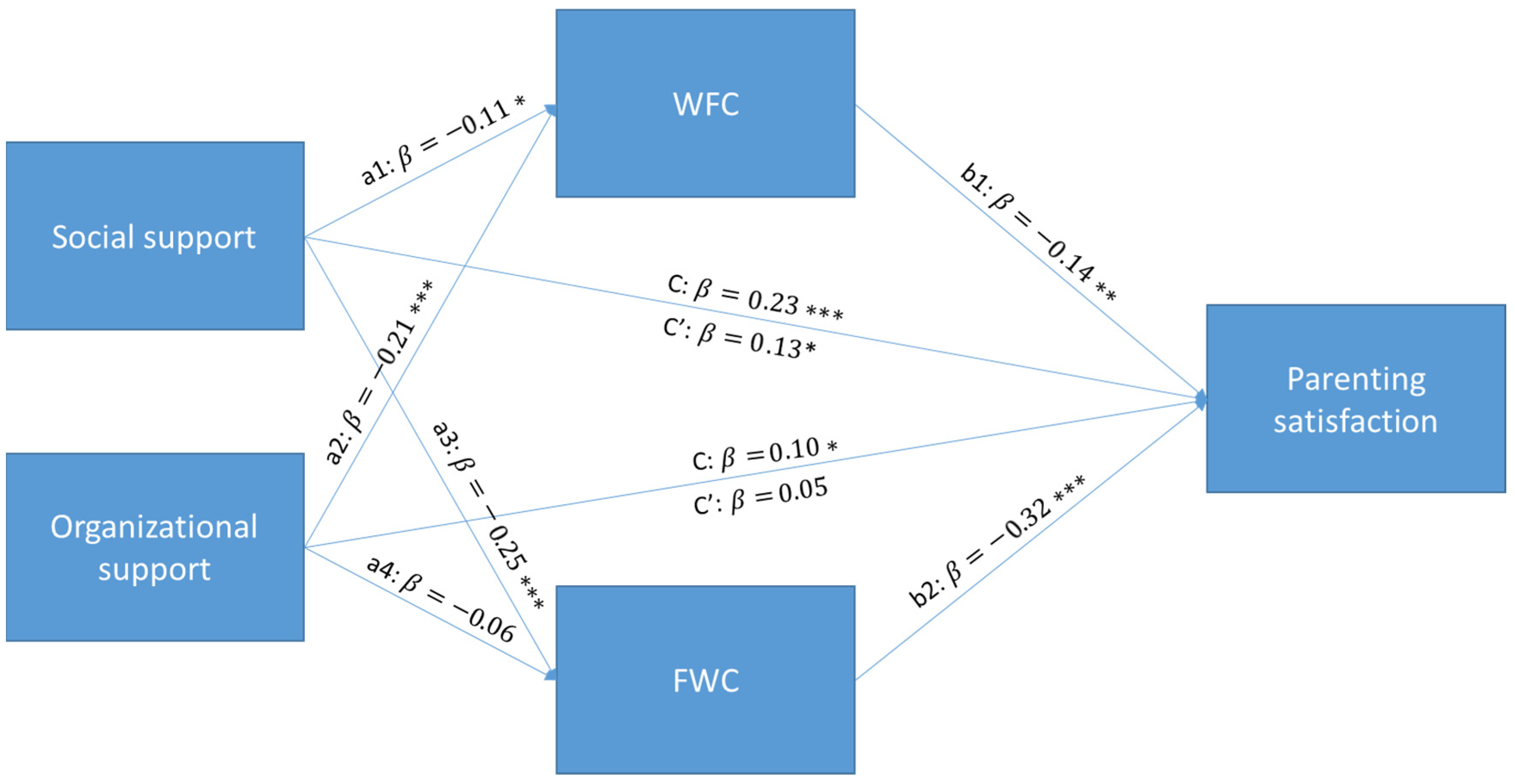
In order to examine hypothesis 3, the mediation model was examined through a SEM path analysis. Table 3 presents the standardized and unstandardized coefficients of the paths from social support, organizational support, WFC, FWC, parental gender, and the youngest child’s age to parenting SE. The significance of the indirect paths was calculated through the Bootstrapping method, indicating that WFC partially mediates the association between social support and parenting SE ( b = 0.01 , s e = 0.01 , 95 % C I   [ 0.0003 , 0.03 ] ) . Furthermore, FWC was found to partially mediate the association between social support and parenting SE ( b = 0.03 , s e = 0.01 , 95 % C I   [ 0.01 , 0.05 ] ) . Similarly, WFC was found to fully mediate the association between organizational support and parenting SE ( b = 0.02 , s e = 0.01 , 95 % C I   [ 0.003 , 0.03 ] ) . FWC was not found to mediate the association between organizational support and parenting SE ( b = 0.005 , s e = 0.004 , 95 % C I   [ 0.003 , 0.01 ] ) . Figure 1 presents the mediation model that was found. All analyses controlled for the parent’s gender and the youngest child’s age.
Table 4 presents the standardized and unstandardized coefficients of the paths from social support, organizational support, WFC, FWC, parental gender, and the youngest child’s age to teachers’ parenting satisfaction. The findings indicated that WFC partially mediates the relationship between social support and parenting satisfaction ( b = 0.01 , s e = 0.01 ,   95 % C I   [ 0.001 , 0.03 ] ) . Furthermore, FWC was found to partially mediate the association between social support and parenting satisfaction ( b = 0.07 , s e = 0.02 ,   95 % C I   [ 0.04 , 0.10 ] ) . Similarly, WFC was found to fully mediate the association between organizational support and parenting satisfaction ( b = 0.02 , s e = 0.01 ,   95 % C I   [ 0.005 , 0.03 ] ) . However, FWC was not found to mediate the association between organizational support and parenting satisfaction ( b = 0.01 , s e = 0.01 ,   95 % C I   [ 0.01 , 0.03 ] ) .
Figure 2 presents the mediation model that was found. All analyses controlled for the parent’s gender and the youngest child’s age.

3.2. Qualitative Results

The participants were asked to describe the conflicts and challenges that they experienced, as well as the factors which helped them. Among 474 parent-teachers who completed the questionnaire, 448 (94.5%) answered the open-ended questions. The participants’ responses revealed two main categories (N = 1090): conflicts (N = 532, 23%) and facilitating factors (N = 558, 24%). Each of these two categories included subcategories, which will be described below.

3.2.1. Parent-Teachers’ Conflicts During Remote Work

This category included 532 statements (representing 23% of the statements), and can be divided into seven main conflicts (subcategories) that parent-teachers dealt with when working remotely during the pandemic. An additional subcategory was reporting a lack of conflict. The results of the chi-square test of independence, examining gender differences in the overall proportion of statements in this category, indicated no significant difference between men (N = 95) and women (N = 437; χ2(1) = 0.018; p = 0.893). Table 5 presents the proportion of statements for each subcategory for the entire sample, and for men and women separately.
As can be seen in Table 5, the following subcategories of conflicts were described by the participants:
Teachers needed to work in parallel to running their home and helping their own children learn from home. The highest number of statements revealed that parent-teachers experienced a significant conflict between functioning as teachers and functioning as parents to their own children, who were at home during this period: “I worked from home, so the need to carry on working and in parallel continue to run the house with children learning from home was the conflict”. The difficulty that parent-teachers experienced with this conflict often led them to feel that they were losing out on both fronts: “I was failing with my kids and with my work. I wasn’t able to function properly, the way I’m used to, in either environment”.
Work interfering with family functioning was the second largest subcategory. A gender difference was found, with women expressing more statements reflecting this subcategory in comparison with men. Parent-teachers reported putting their work demands before their family, resulting in frustration on their part: “I have a young child and his siblings had to look after him for a significant amount of time. He didn’t receive the care that I would have wanted him to receive. I saw how hard it was for my children to learn and I didn’t support them enough in remote learning because of work”. Another parent stated: “When you work from home, and the children are also at home, it comes at their expense”.
Time management between work and home—Many parent-teachers reported that the conflict that they experienced was managing their time properly between taking care of their home and children and spending the required time working: “The conflict was dividing my time between my students and my children. During the lockdown the boundaries were completely blurred; there was no clear definition of work hours.”
Considerations when dividing work between partners at home—Parent-teachers reported that one of the conflicts that they dealt with was how to divide the housework and childcare between themselves and their partner: “I sometimes fought with my husband about dividing the childcare between us”; “There were many arguments at home—whose work is more important? Who earns more? Who should take care of the children?”
Family obligations interfering with functioning at work—Some parent-teachers, both men and women, reported that caring for the family interfered with their work: “It’s hard to teach on Zoom when the children are crying in the background”. Some parent-teachers reported that their students’ parents complained and criticized them regarding the noise in their house while teaching: “The parents’ horrible criticism that it was noisy at my house made it hard for me”.
Dividing resources and electronic devices between work and home—Parent-teachers reported difficulty dividing the devices at home between themselves and their children, who were engaged in remote learning: “I don’t have my own equipment, a work computer. I tried to teach on Zoom when the children weren’t learning on the computer.”
Conflicts between personal time and other tasks—Some participants reported that the conflict for them was how to find personal time to restore their strength and energy: “The need to respond to my children and students’ academic and emotional needs in parallel with my own. The understanding that there is no room for me as a person.”
Reporting no conflicts—Male teachers, to a greater extent than female teachers, reported experiencing no conflicts while working remotely during the lockdown periods.

3.2.2. Facilitating Factors for Parent-Teachers During Remote Work

This category included 588 statements, which were divided into nine facilitating factors that helped parent-teachers cope during the COVID-19 lockdowns. An additional subcategory was reporting a lack of facilitating factors (24% of the statements). The results of the chi-square test of independence, examining gender differences in the overall proportion of statements in this category, indicated no significant difference between men (N = 103) and women (N = 455; χ2 (1) = 0.054; p = 0.816). Table 6 presents the proportion of statements for each subcategory for the entire sample, and for men and women separately.
As can be seen in Table 6, the following subcategories of facilitating factors were described by the participants:
Internal psychological resources—Parent-teachers reported that various internal psychological resources, such as their sense of SE, optimism, and the use of coping mechanisms (e.g., acceptance; planning), helped them cope with the conflicts and challenges that presented themselves during the lockdowns: “What helped me was knowing that everything is for the best. I’m happy to say that I was able to take care of things ahead of time”; “What helped me is that I’m an optimistic person and I see the glass half full”.
Support from one’s partner—Support from the parent-teachers’ partner, including receiving advice from the partner, sharing the workload, and having someone to share experiences with, was reported to be highly significant during this difficult period: “The person who helped me was my supportive partner who took responsibility for things and during stressful situations took care of things at home by himself”; “Conversations with my partner about how the situations required me to work so many hours and the support that my wife gave me”.
Support from extended family, friends, and professionals—Parent-teachers reported support from their extended family, friends, paid help, and professionals to be significant during this time: “I received help from family members, who looked after my youngest son, conversations with friends from different professions.” In extreme situations, some teachers reported needing psychological treatment.
Time management and establishing priorities—Parent-teachers reported that their ability to manage their time and to establish a hierarchy of their priorities helped them during this period. This was reported among men to a greater extent than among women: “I set times when I worked with my students, and times when I could be with my family”.
Support from the parent-teachers’ children—An additional facilitative factor that some parent-teachers reported was the support that they received from their own children, especially their older children, and their children’s ability to understand what their parent was going through: “Conversations with my own children about the complexity of working in the situation”; “The facilitative factor was my children, especially the older children, who understood my difficulties.”
Workplace flexibility and support—Parent-teachers reported that flexibility and support from their workplace helped them cope with the difficulties that they experienced: “There was flexibility from the workplace. I lowered my expectations of myself and the classes I teach my students. The staff and principal at the school were understanding of this. I felt supported by the school staff.”
Personal time—Parent-teachers reported that finding personal time for hobbies and rest helped them deal with their work and their own children with renewed energy: “I invested one hour a day (in the evening) to myself, to rest and not think about work”.
Sense of professional commitment—A number of parent-teachers reported that their sense of professional commitment to the teaching profession helped them and motivated them to act during this period: “What helped me was my commitment and devotion to work. I am a homeroom teacher and coordinator in the first grade—so I am very committed to my work.”
Communication with students and parents—Very few parent-teachers reported communicating with their students and with parents as a facilitating factor: “I updated my students that occasionally I would need to help my children. This helped establish empathy and a deeper mutual understanding between us.”
No facilitating factors—Some parent-teachers, unfortunately, reported that there were no factors that helped them get through this complicated period: “Nothing helped. The thought that I needed to provide for my children left me with no choice.”

4. Discussion

This study set out to examine the associations between parent-teachers’ social and organizational support, work–family conflict (WFC), and parenting self-efficacy (SE) and satisfaction in the context of remote work. The study’s hypotheses were that (1) a negative association would be found between teachers’ WFC and their parenting SE and satisfaction during remote work, (2) teachers’ support from friends and family and from the workplace would be negatively associated with WFC and positively associated with parenting SE and satisfaction, and (3) teachers’ WFC would mediate the relationship between support from friends and family and from the workplace and parenting SE and satisfaction.
A mixed-methods analysis was employed to examine the study findings. The quantitative analysis revealed support for the first and second hypotheses, and partial support for the third hypothesis. In addition to the quantitative findings, the qualitative analysis revealed seven types of conflicts that parent-teachers managed during remote teaching, alongside nine facilitating factors that helped them cope with these challenges. These findings highlight the layered challenges parent-teachers faced during remote teaching and indicate the important, though differential, roles of social and organizational supports in helping them manage competing professional and family demands, contributing to their overall resilience and wellbeing.

4.1. The Association Between WFC and Parenting SE and Satisfaction During Remote Work

The findings indicated that, in support of the first hypothesis, there were significant negative associations between WFC and parenting SE and satisfaction, as well as between FWC and parenting SE and satisfaction. These findings are in accordance with research conducted before the worldwide spread of COVID-19, indicating that WFC has negative implications in relation to the wellbeing of parents and is associated with increased levels of parental stress (Moreira et al., 2019; Shreffler et al., 2011), less consistent parenting (Cooklin et al., 2016) and lower levels of parental satisfaction (Matias et al., 2017; Shreffler et al., 2011) and self-efficacy (Cinamon et al., 2007; Houle et al., 2009; G. Liu et al., 2024). Furthermore, these findings are in line with recent study findings indicating that during the COVID-19 lockdowns, WFC was associated with reduced wellbeing (Al-Jubari et al., 2022) and increased stress at work (Batool et al., 2020), and among teachers, with poorer wellbeing (Bhattacharya & Tandon, 2023; Ünal & Dulay, 2022) and quality of life (Lizana & Vega-Fernadez, 2021), higher levels of stress (Batool et al., 2020), burnout (Kotowski et al., 2022), and emotional exhaustion (Hsieh et al., 2022), and lower levels of teaching self-efficacy (Rabin et al., 2024) and job satisfaction (Kara et al., 2021; Punzalan et al., 2022). Nonetheless, few studies have examined the association between WFC and parenting self-efficacy, and the vast majority of the studies on WFC during COVID-19 focused on general wellbeing or work outcomes of work–family conflict, rather than outcomes related to family life and parenting. This study adds to the few previous studies that have found a negative association between WFC and parenting outcomes, such as parental stress, conflicts with one’s partner (Chung et al., 2023), and parenting self-efficacy (Göksün et al., 2025), during the pandemic, as well as the few studies (Cinamon et al., 2007; Göksün et al., 2025; Houle et al., 2009; G. Liu et al., 2024) which have examined the association between WFC and parenting self-efficacy in general. The findings underscore the relevance of WFC to parenting self-efficacy, which is particularly important, given the significance of self-efficacy in different life roles for individuals’ ability to function well and persevere in the face of challenges, transitions, and adversity (Bandura, 1994). Thus, the findings emphasize the significance of taking work–family conflict into account in relation to psychological functioning in the parenting role, as an important consideration when addressing the resilience, wellbeing, and work performance of teachers.

4.2. The Associations Between Social and Organizational Support and WFC, Parenting SE, and Satisfaction

The study findings indicate that, in support of the second hypothesis, lower levels of social and organizational support were associated with higher levels of WFC and lower levels of parenting SE and satisfaction. These findings are in accordance with previous research indicating that whereas increased work demands and stress are associated with higher levels of WFC (Bilodeau et al., 2020; Chakravorty & Singh, 2021; Cinamon & Rich, 2005), support from family members, friends, and the workplace is associated with lower levels of WFC (Drummond et al., 2016; French et al., 2018; Lambert et al., 2017; Van Daalen et al., 2006). Similarly, findings from the COVID-19 lockdowns indicate that receiving support from the direct manager at work is associated with a lower level of WFC (Yorulmaz & Sevinc, 2021), whereas excessive work demands are related to greater WFC (Nikmah et al., 2020). Furthermore, organizational support was found to mediate the association between work stress and WFC during the lockdowns (Hasmi et al., 2021). Thus, these findings are in line with previous research and emphasize the potential protective role of support from the workplace and from family and friends in relation to WFC and parental psychological functioning during remote work.

4.3. WFC as a Mediator Between Sources of Support and Parenting SE and Satisfaction

Findings indicate, in partial support of the third hypotheses, that while WFC and FWC partially mediated the relationship between support from friends and family and parenting SE and satisfaction, WFC was found to fully mediate the association between organizational support and parenting SE and satisfaction, and FWC was not found to mediate the association between organizational support and parenting SE and satisfaction. That is to say, higher levels of social support were related to less WFC and FWC, which in turn were related to greater parenting SE and satisfaction. In addition, higher levels of organizational support were found to be associated with lower levels of WFC, which in turn were associated with higher levels of parenting SE and satisfaction. These findings are in accordance with previous research which has found WFC to mediate the association between sources of stress and support and psychological outcomes, for example, between parenting stress and work overload and job satisfaction (Hong et al., 2021) and between social and organizational support and teaching self-efficacy (Rabin et al., 2024). These findings add to the literature by indicating the importance of considering WFC as a mediator between sources of support and psychological functioning in the realm of family life, especially in relation to parental self-efficacy (which has not yet been studied extensively in the WFC literature), as well as work–life. Nonetheless, this study is cross-sectional and based on retrospective report, and thus causality cannot be assumed and results must be interpreted cautiously.
Interestingly, FWC was not found to mediate the association between organizational support and parenting SE and satisfaction. The reason for this could be that organizational support is more closely associated with WFC than FWC, as indicated in the stronger correlations between organizational support and WFC than with FWC. These correlations show that support from the workplace may have a stronger potential to be associated with less interference of work demands in family life than vice versa. Thus, the findings might indicate that while social support can be considered a wide-ranging protective factor that is associated with higher levels of parenting SE and satisfaction both directly and indirectly through its broad association with lower levels of both WFC and FWC, organizational support is associated with higher parenting SE and satisfaction through its more targeted negative association with WFC. This is a potentially important novel finding in relation to the complex associations between different forms of support, WFC, FWC, and parental self-efficacy, that should be examined further in future research. Nonetheless, as stated before, the results must be interpreted with caution and examined further in longitudinal or experimental research to test hypotheses regarding causality, which cannot be assumed from the analysis.
Furthermore, when considering the mediation findings of this study in relation to previous findings on mediation and complex associations between stress at work, organizational, support, work–family conflict, and workplace psychological functioning, it is important to examine more complex theoretical mediation models in future studies. For example, the previous literature indicated that organizational support mediates the association between work stress and WFC (Hasmi et al., 2021), and emphasizes the mediating roles of work–family conflict and organizational support in the association between technostress and workplace flourishing during the pandemic (Harunavamwe & Ward, 2022). Similarly, an additional study found that parenting stress and work overload were negatively associated with job satisfaction through the mediating role of work–family conflict among female pre-school teachers during the pandemic (Hong et al., 2021). Thus, taking these findings and the current findings into account, it may be interesting to examine a more complex mediation model in the future, which takes into account work and family characteristics, social and organizational support, work–family conflict, and parental self-efficacy and satisfaction. This could add to the understanding of the complex associations between these variables and the possible mediating role of work–family conflict.

4.4. Qualitative Findings

The qualitative findings indicate that parent-teachers experienced various conflicts during engagement in remote work, including having to work in parallel to caring for children and the home, work interfering with family functioning, time management between work and home, dividing tasks between partners at home, family demands interfering with functioning at work, dividing resources and electronic devices between work and home, and conflict between personal time and other tasks. As is evident, the majority of these conflicts revolve around work–family conflict and family–work conflict, which is not surprising given the extreme demands in both domains for parents who were working as teachers during the lockdowns. These findings are in line with research indicating that intensive work from home combined with childcare is associated with increased inter-role conflict among individuals working in different professions (Schieman et al., 2021), including teachers (Ünal & Dulay, 2022). Furthermore, these findings are in accordance with previous studies indicating that teachers did not receive enough support from schools in relation to distant teaching (Kara et al., 2021) and reported increased work hours during the pandemic (Lizana & Vega-Fernadez, 2021). Finally, the findings align with previous studies that have found excessive teaching demands (Chakravorty & Singh, 2021), a high number of working hours (Cinamon & Rich, 2005), and greater job stress (Zhao et al., 2022) to be associated with work–family conflict among teachers.
Parent-teachers reported various factors that helped them cope with the conflicts that emerged during remote work. These include internal psychological resources such as their sense of SE, optimism, and the use of coping mechanisms, support from their partner extended family, friends, and professionals, time management and establishing priorities, support from children, workplace flexibility and support, having personal time, their sense of professional commitment, and communication with students and parents. These findings are in line with previous research indicating the comprehensive set of factors that are associated with work–family conflict, including individual factors (e.g., coping mechanisms), work factors (e.g., job demands; organizational support), and environmental factors (e.g., social support; Sohal et al., in press). These factors provide preliminary possible directions for interventions to prevent increased levels of WFC and its potential negative sequelae, as well as designing supportive frameworks to assist parent-teachers during remote work in the future. The results indicate the importance of interventions and frameworks that target a comprehensive range of individual, work, and environmental factors. Specifically, interventions might benefit from including components to promote teachers’ sense of SE and commitment, optimism, problem-solving, time management, and use of adaptive coping strategies, as well as provision of organizational support and flexibility and childcare solutions. Such components may have the potential to reduce the WFC that parent-teachers experience during such times, although further research is needed to examine the qualitative and quantitative results of this study further, as they are limited in their generalizability and are based on teachers’ retrospective self-report in the context of the lockdowns in Israel. Nonetheless, such intervention components could be important directions in potentially increasing teachers’ resilience in the face of the challenges associated with remote teaching, through the acquisition of adaptive psychological resources.
It is important to note that a gender difference was found in the percentage of parent-teachers who reported experiencing work interfering with family functioning, with women expressing more statements reflecting this subcategory in comparison with men. Furthermore, more men were found to report not experiencing conflicts than women and men reported using time management and establishing priorities as a facilitating factor more than women. A possible explanation is that this finding reflects gender roles in childcare that are still prominent today, with women taking more responsibility for childcare, while often also working, in comparison with men, leading them to potentially experience greater conflict between their work and family life in general, and during remote work in particular. This finding is in accordance with studies that have found that WFC was particularly prominent among women during the COVID-19 lockdowns (Febrianto et al., 2022), including more arduous demands in relation to housekeeping and childcare than usual, coinciding with routine work commitments (Adisa et al., 2021; Jalongo, 2021). Nonetheless, it is important to note that the current study found a gender difference in reporting that work impedes family functioning rather than family life interfering with work functioning. This finding may represent different priorities among men and women in terms of family and work roles, in line with stereotypical gender roles. Given these findings, in addition to the previous literature described above, it is evident that it may be particularly important to provide women with support during such times, since they may be at greater risk of experiencing work–family conflict and its potential negative sequalae.

4.5. Study Limitations

This study has various limitations. Although quite large stratified sampling was used to enable proportional sampling of participants according to the gender and educational level of students, the participants were recruited from social network groups and by survey companies. This may have influenced the pool of participants included, namely, those who responded to the message about the study on these platforms, which may not reflect all parent-teachers in Israel and may produce biases in the results. Furthermore, the study was conducted among Israeli parent-teachers and thus may not be generalizable to other cultural contexts. Thus, the findings should be generalized to other populations with caution. Additional studies should be conducted on additional populations, employing additional recruitment methods. Furthermore, this study was a correlational study and thus causality cannot be inferred in relation to the associations between the variables. Longitudinal and experimental study designs could be utilized to examine the direction of influence between the different variables in the study. In addition, this study relied on participants’ retrospective self-reports, which may not be accurate memories of previous events, potentially limiting the validity of the findings. Finally, the majority of the participants in the study were women. In order to reflect men’s experiences during remote work better, as well as gender differences, it is important to conduct a study including more male parent-teachers.

4.6. Conclusions

During the pandemic, parent-teachers had to cope with significant stress and conflict, adjusting to the demands of remote teaching while caring for their children at home. Despite this being an important topic, few studies have examined the association between work–family conflict (WFC) and parenting self-efficacy, particularly among parent-teachers and particularly during engagement in remote work during the pandemic. Furthermore, this study adds to the literature by examining the mediating role of WFC in the association between social and organizational support and parenting SE, which has not been examined previously. The findings emphasize the potential protective role of organizational and familial social support in terms of WFC and parent-teachers’ self-efficacy (SE) and satisfaction as parents, and the mediating role of WFC in the associations between sources of support and parenting measures. Interestingly, FWC was not found to mediate the association between organizational support and parenting measures, indicating potentially important differences in the associations with WFC and parenting SE and satisfaction between social support and organizational support.
The qualitative findings provide additional insight into the experiences of parent-teachers, identifying sources of conflict and facilitating factors that helped them cope, as well as gender differences in these experiences. Collectively, these findings underscore the importance of social and organizational support as possible protective factors that may be beneficial in helping parent-teachers manage competing professional and family demands, although additional longitudinal and experimental research in diverse cultural settings is needed to examine this further. Strengthening such support could potentially contribute to fostering resilience and wellbeing among educators navigating dual roles, although additional research is needed in order to support the generalizability of findings and to examine causality. These findings are especially important given the increasing role of technology and remote teaching and learning in education today, highlighting preliminary directions for targeted interventions that promote sustainable professional and personal functioning among teachers.

Author Contributions

Conceptualization: S.C.G., E.R. and I.B.; Methodology: S.C.G., E.R. and I.B.; Formal analysis: E.R.; Investigation: S.C.G. and E.R.; Validation: S.C.G. and E.R.; Writing—original draft preparation: S.C.G.; Writing—review and editing: E.R. and I.B.; Project administration: S.C.G. and E.R. All authors have read and agreed to the published version of the manuscript.

Funding

This research was funded by the Chief Scientist’s Office of the Ministry of Education [IL]. All authors were recipients of this grant. No grant number is associated with this funding.

Institutional Review Board Statement

The study was conducted in accordance with relevant guidelines and regulations. It was approved by the Ethics Committee of the Open University of Israel (approval No.3325) and by the Chief Scientist’s Office of the Israeli Ministry of Education (approval No. 11591).

Informed Consent Statement

Informed consent was obtained from all participants involved in the study.

Data Availability Statement

The data are available from the corresponding author upon reasonable request.

Conflicts of Interest

The authors declare no conflict of interest.

References

  1. Adisa, T. A., Aiyenitaju, O., & Adekoya, O. D. (2021). The work-family balance of British working women during the COVID-19 pandemic. Journal of Work-Applied Management, 13(2), 241–260. [Google Scholar] [CrossRef]
  2. Adisa, T. A., Antonacopoulou, E., Beauregard, T. A., Dickmann, M., & Adekoya, O. D. (2022). Exploring the impact of COVID-19 on employees’ boundary management and work–life balance. British Journal of Management, 33, 1694–1709. [Google Scholar] [CrossRef]
  3. Al-Jubari, I., Mosbah, A., & Salem, S. F. (2022). Employee well-being during the COVID-19 pandemic: The role of adaptability, work-family conflict, and organizational response. SAGE Open, 12(3), 21582440221096142. [Google Scholar] [CrossRef]
  4. Amri, A., Abidli, Z., Elhamzaoui, M., Bouzaboul, M., Rabea, Z., & Ahami, A. O. T. (2020). Assessment of burnout among primary teachers in confinement during the COVID-19 period in Morocco: Case of the Kenitra. Pan African Medical Journal, 35, 92–96. [Google Scholar] [CrossRef] [PubMed]
  5. Bandura, A. (1994). Self-efficacy. In V. S. Ramachaudran (Ed.), Encyclopedia of human behavior (Vol. 4, pp. 71–81). Academic Press. [Google Scholar]
  6. Barnett, R. C. (1998). Toward a review and reconceptualization of the work/family literature. Genetic, Social, and General Psychology Monographs, 124(2), 125. [Google Scholar]
  7. Baron, R. M., & Kenny, D. A. (1986). The moderator-mediator variable distinction in social psychological research: Conceptual, strategic, and statistical considerations. Journal of Personality & Social Psychology, 51, 1173–1182. [Google Scholar]
  8. Batool, S. B., Cheema, B. A., & Siddique, S. (2020). Online teaching during COVID-19: Prevalence of occupational stress among the university faculty in Pakistan. Journal of Research and Reflections in Education, 14, 194–210. [Google Scholar]
  9. Bhattacharya, A., & Tandon, A. (2023). The multifaceted challenges of teaching from home: A study of schoolteachers’ well-being during the COVID-19 pandemic. Psychology in the Schools, 60, 3206–3227. [Google Scholar] [CrossRef]
  10. Bilodeau, J., Merchand, A., & Demers, A. (2020). Work, family, work-family conflict and psychological distress: A revisited look at the gendered vulnerability paths. Stress & Health, 36, 75–87. [Google Scholar]
  11. Bruck, C. S., Allen, T. D., & Spector, P. E. (2002). The relation between work–family conflict and job satisfaction: A finer-grained analysis. Journal of Vocational Behavior, 60(3), 336–353. [Google Scholar] [CrossRef]
  12. CBS. (2022). Births and fertility in Israel, 2020. Central Bureau of Statistics. Available online: https://www.cbs.gov.il/he/mediarelease/DocLib/2022/062/01_22_062b.pdf (accessed on 24 March 2026).
  13. Chakravorty, A., & Singh, P. (2021). Burnout among government school teachers: The mediating role of work-family conflict. Journal of Human Values, 27, 126–140. [Google Scholar] [CrossRef]
  14. Chan, X. W., Shang, S., Brough, P., Wilkinson, A., & Lu, C. Q. (2023). Work, life and COVID-19: A rapid review and practical recommendations for the post-pandemic workplace. Asia Pacific Journal of Human Resources, 61, 257–276. [Google Scholar] [CrossRef]
  15. Chung, G., Chan, X., Lanier, P., & Ju, P. W. Y. (2023). Associations between work-family balance, parenting stress, and marital conflicts during COVID-19 pandemic in Singapore. Journal of Child and Family Studies, 32(1), 132–144. [Google Scholar] [CrossRef]
  16. Cinamon, R. G., & Rich, Y. (2005). Work-family conflict among female teachers. Teaching and Teacher Education, 21, 365–378. [Google Scholar] [CrossRef]
  17. Cinamon, R. G., Weisel, A., & Tzuk, K. (2007). Work-family conflict within the family: Crossover effects, perceived parent-child interaction quality, parental self-efficacy, and life role attributions. Journal of Career Development, 34(1), 79–100. [Google Scholar] [CrossRef]
  18. Cooklin, A. R., Westrupp, E. M., Strazdins, L., Giallo, R., Martin, A., & Nicholson, J. M. (2014). Mothers’ work-family conflict and enrichment: Associations with parenting quality and couple relationship. Child: Care, Health, and Development, 41, 266–277. [Google Scholar] [CrossRef] [PubMed]
  19. Cooklin, A. R., Westrupp, E. M., Strazdins, L., Giallo, R., Martin, A., & Nicholson, J. M. (2016). Fathers at work: Work-family conflict, work-family enrichment and parenting in an Australian cohort. Journal of Family Issues, 37, 1611–1635. [Google Scholar] [CrossRef]
  20. Cui, H. L., Tham, J., & Khatibi, A. (2025). A literature review of the work-family conflict. Economics & Business Management, 2(2), 91–101. [Google Scholar] [CrossRef]
  21. Drummond, S., O’Driscoll, M. P., Brough, P., Kalliath, T., Siu, O. L., Timms, C., Riley, D., Sit, C., & Lo, D. (2016). The relationship of social support with wellbeing outcomes via work-family conflict: Moderating effects of gender, dependents and nationality. Human Relations, 70, 544–565. [Google Scholar] [CrossRef]
  22. Eby, L. T., Casper, W. J., Lockwood, A., Bordeaux, C., & Brinley, A. (2005). Work and family research in IO/OB: Content analysis and review of the literature (1980–2002). Journal of Vocational Behavior, 66(1), 124–197. [Google Scholar] [CrossRef]
  23. Eisenberger, R., Huntington, R., Hutchison, S., & Sowa, D. (1986). Perceived organizational support. Journal of Applied Psychology, 71(3), 500–507. [Google Scholar] [CrossRef]
  24. Febrianto, P. T., Mas’udah, S., & Megasari, L. A. (2022). Female teachers’ double burden during the pandemic: Overcoming challenges and dilemma between career and family. Sociologia, Problemas e Práticas, 100, 87–105. [Google Scholar] [CrossRef]
  25. Figueroa, A. J., Urrutia, V. G., & Palomo-Vélez, G. (2017). Work-family balance, participation in family work and parental self-efficacy in Chilean workers. Canadian Journal of Family and Youth, 9(1), 1–25. [Google Scholar]
  26. French, K. A., Dumani, S., Allen, T. D., & Shockley, K. M. (2018). A meta-analysis of work-family conflict and social support. Psychological Bulletin, 144, 284–314. [Google Scholar] [CrossRef] [PubMed]
  27. Gibaud-Wallston, J., & Wandersman, L. P. (1978, August 28–September 1). Development and utility of the parenting sense of competence scale. 86th Annual Convention of the American Psychological Association, Toronto, ON, Canada. [Google Scholar]
  28. Göksün, D. O., Sunar, A. S., & Rabin, E. (2025). Work-family conflict among Turkish teachers during lockdown. Social Sciences and Humanities Open, 11, 101358. [Google Scholar] [CrossRef]
  29. Greenhaus, J. H., & Beutell, N. J. (1985). Sources of conflict between work and family roles. Academy of Management Review, 10(1), 76–88. [Google Scholar] [CrossRef]
  30. Harunavamwe, M., & Ward, C. (2022). The influence of technostress, work-family conflict, and perceived organizational support on workplace flourishing amidst COVID-19. Frontiers in Psychology, 13, 921211. [Google Scholar] [CrossRef] [PubMed]
  31. Haslam, D., Filus, A., Morawska, A., Sanders, M. R., & Fletcher, R. (2015). The Work–Family Conflict Scale (WAFCS): Development and initial validation of a self-report measure of work–family conflict for use with parents. Child Psychiatry and Human Development, 46, 346–357. [Google Scholar] [CrossRef]
  32. Hasmi, M., Asaari, A. H., & Desa, N. M. (2021). Work stress, work-family conflict, and work performance with mediation of organizational support among public and private employees: Case of COVID-19 pandemic. International Journal of Asian Social Science, 11, 76–87. [Google Scholar] [CrossRef]
  33. Hayes, F. H. (2009). Beyond Baron and Kenny: Statistical mediation analysis in the new millennium. Communication Monographs, 76(4), 408–420. [Google Scholar] [CrossRef]
  34. Hong, X., Liu, Q., & Zhang, M. (2021). Dual stressors and female pre-school teachers’ job satisfaction during the COVID-19: The mediation of work-family conflict. Frontiers in Psychology, 12, 691498. [Google Scholar] [CrossRef]
  35. Houle, L., Chiocchio, F., & Favreau, O. E. (2009). Role conflict and well-being among employed mothers: The mediating effects of self-efficacy. Gender in Management: An International Journal, 24(4), 270–285. [Google Scholar] [CrossRef]
  36. Hsieh, C. C., Liang, J. K., & Li, H. C. (2022). Bi-directional work-family conflict of home-based teachers in Taiwan during COVID-19: Application of job demands-resources model. Journal of Professional Capital and Community, 7(4), 353–367. [Google Scholar] [CrossRef]
  37. Jalongo, M. R. (2021). The effects of COVID-19 on early childhood education and care: Research and resources for children, families, teachers, and teacher educators. Early Childhood Education Journal, 49, 763–774. [Google Scholar] [CrossRef]
  38. Ji, D., & Yue, Y. (2020). Relationship between kindergarten organizational climate and teacher burnout: Work-family conflict as a mediator. Frontiers in Psychiatry, 11, 408. [Google Scholar] [CrossRef]
  39. Johnston, C., & Mash, E. J. (1989). A measure of parenting satisfaction and efficacy. Journal of Clinical Child Psychology, 18(2), 167–175. [Google Scholar] [CrossRef]
  40. Kantamneni, N. (2020). The impact of the COVID-19 pandemic on marginalized populations in the United States: A research agenda. Journal of Vocational Behavior, 119, 103439. [Google Scholar] [CrossRef]
  41. Kara, S. B. K., Gunes, D. Z., & Tuysuzer, B. S. (2021). Work-family conflict during working from home due to pandemic: A qualitative research on female teachers. International Journal of Curriculum and Instruction, 13, 251–273. [Google Scholar]
  42. Kotowski, S. E., Davis, K. G., & Barratt, C. L. (2022). Teachers feeling the burden of COVID-19: Impact on well-being, stress, and burnout. Work, 71, 407–415. [Google Scholar] [CrossRef]
  43. Lambert, E. G., Hogan, N. L., Keena, L. D., Williamson, L., & Kim, B. (2017). Exploring the associations between different types of social support with role stress, work-family conflict, and turnover intent among private prison staff. Journal of Applied Security Research, 12, 203–223. [Google Scholar] [CrossRef]
  44. Liu, G., Jin, Z., Zheng, X., Wang, Z., & Liu, W. (2024). Associations between teacher parent relationships and preschool children’s social behavior problems—The chain mediating roles of work–family conflict and parenting self-efficacy. Frontiers in Psychology, 15, 1349652. [Google Scholar] [CrossRef]
  45. Liu, Y., & Aungsuroch, Y. (2019). Work stress, perceived social support, self-efficacy and burnout among Chinese registered nurses. Journal of Nursing Management, 27(7), 1445–1453. [Google Scholar] [CrossRef]
  46. Lizana, P. A., & Vega-Fernadez, G. (2021). Teacher teleworking during the COVID-19 pandemic: Association between work hours, work–family balance and quality of life. International Journal of Environmental Research and Public Health, 18, 7566. [Google Scholar] [CrossRef]
  47. Mahpul, I. N., & Abdullah, N. A. (2011). The prevalence of work-family conflict among mothers in peninsular Malaysia. International Journal of Humanities and Social Sciences, 1(17), 154–161. [Google Scholar]
  48. Matias, M., Ferreira, T., Vieira, J., Cadima, J., Leal, T., & Mena Matos, P. (2017). Workplace family support, parental satisfaction, and work–family conflict: Individual and crossover effects among dual-earner couples. Applied Psychology, 66(4), 628–652. [Google Scholar] [CrossRef]
  49. Moreira, H., Fonseca, A., Caiado, B., & Canavarro, M. C. (2019). Work-family conflict and mindful parenting: The mediating role of parental psychopathology symptoms and parenting stress in a sample of Portugeuse employed parents. Frontiers in Psychology, 10, 635. [Google Scholar] [CrossRef] [PubMed]
  50. Muasya, G. (2024). The influence of family and work support in moderating work family conflict and emotional exhaustion among female urban public school teachers with young children in Kenya, Africa. Education Review, 20(1–2), 75–91. [Google Scholar] [CrossRef]
  51. Nikmah, F., Indrianti, T., & Pribadi, J. D. (2020). The effect of work demand, role conflict, and role ambiguity on work-family conflict (impact of work from home due to the COVID-19 pandemic). Journal of Family Sciences, 5, 82–102. [Google Scholar]
  52. Punzalan, J. M., Abiad, M. J. A., Luaton, P. M. A. P., Roxas, M. F. S., Sapit, N. D., & Torrazo, L. E. (2022). Social support, work-family conflict and job satisfaction of teachers during COVID-19 pandemic. North American Journal of Psychology, 25(1), 1–6. [Google Scholar]
  53. Rabin, E., Goldberg, S., & Blau, I. (2024). Mediation of work-and-family conflict in the relationship between social-and-organizational support and teaching self-efficacy: The case of parent-teachers working remotely. Education and Information Technologies, 29, 22545–22566. [Google Scholar] [CrossRef]
  54. Schieman, S., Badawy, P. J., Milkie, M. A., & Bierman, A. (2021). Work-life conflict during the COVID-19 pandemic. Socius: Sociological Research for a Dynamic World, 7, 2378023120982856. [Google Scholar] [CrossRef]
  55. Shaukat, S., Bendixen, L. D., & Ayub, N. (2022). The impact of technostress on teacher educators’ work–family conflict and life satisfaction while working remotely during COVID-19 in Pakistan. Education Sciences, 12, 616. [Google Scholar] [CrossRef]
  56. Shreffler, K. M., Meadows, M. P., & Davis, K. D. (2011). Firefighting and fathering: Work-family conflict, parenting stress, and satisfaction with parenting and child behavior. Fathering: A Journal of Theory, Research & Practice about Men as Fathers, 9, 169–188. [Google Scholar]
  57. Sohal, A., Sharma, D., & Sharma, S. (in press). Work-family conflict: A systematic literature review and research agenda. European Management Journal.
  58. Suzuki, S., Holloway, S. D., Yamamoto, Y., & Mindnich, J. D. (2009). Parenting self-efficacy and social support in Japan and the United States. Journal of Family Issues, 30(11), 1505–1526. [Google Scholar] [CrossRef]
  59. Uslukaya, A., Demirtaş, Z., Alanoglu, M., & Zincirli, M. (2025). Exploring the moderating roles of family-work conflict in the relationship between work-family conflict and teacher well-being. Psychology in the Schools, 62, 1271–1282. [Google Scholar] [CrossRef]
  60. Ünal, I., & Dulay, S. (2022). Teachers’ work-life balance in emergency remote teaching during the COVID-19 pandemic. Asian Journal of Distance Education, 17(2), 89–108. [Google Scholar]
  61. Van Daalen, G., Willemsen, T. M., & Sanders, K. (2006). Reducing work–family conflict through different sources of social support. Journal of Vocational Behavior, 69, 462–476. [Google Scholar] [CrossRef]
  62. Wang, C. M., Qu, H. Y., & Xu, H. M. (2015). Relationship between social support and self-efficacy in women psychiatrists. Chinese Nursing Research, 2(4), 103–106. [Google Scholar] [CrossRef]
  63. Weisberger, M., Grinshtein, Y., & Blau, I. (2021). How do technological changes in formal education shape the social roles of teachers who are mothers? Teaching and Teacher Education, 103, 103344. [Google Scholar] [CrossRef]
  64. Wulandari, D. A., Hamzah, H. B., & Abbas, N. A. H. B. (2019, October 8). Correlation between work-family conflict, marital satisfaction and job satisfaction. 8th UPI-UPSI International Conference 2018, Bandung, Indonesia. [Google Scholar]
  65. Yorulmaz, M., & Sevinc, F. (2021). Supervisor support and turnover intentions of yacht captains: The role of work–family conflict and psychological resilience during the COVID-19 pandemic. International Journal of Contemporary Hospitality Management, 33(5), 1554–1570. [Google Scholar] [CrossRef]
  66. Zered, E. (2019). Teachers in the education system in Israel. (Policy Paper No. 15.2024). Research and Knowledge Center, Israel Knesset. Available online: https://www.taubcenter.org.il/wp-content/uploads/2025/01/Education-2024-ENG-2.pdf (accessed on 24 March 2026).
  67. Zhao, W., Liao, X., Li, Q., Jiang, W., & Ding, W. (2022). The relationship between teacher job stress and burnout: A moderated mediation model. Frontiers in Psychology, 12, 784243. [Google Scholar] [CrossRef]
  68. Zimet, G. D., Dahlem, N. W., Zimet, S. G., & Farley, G. K. (1988). The multidimensional scale for perceived social support. Journal of Personality Assessment, 52, 30–41. [Google Scholar] [CrossRef]
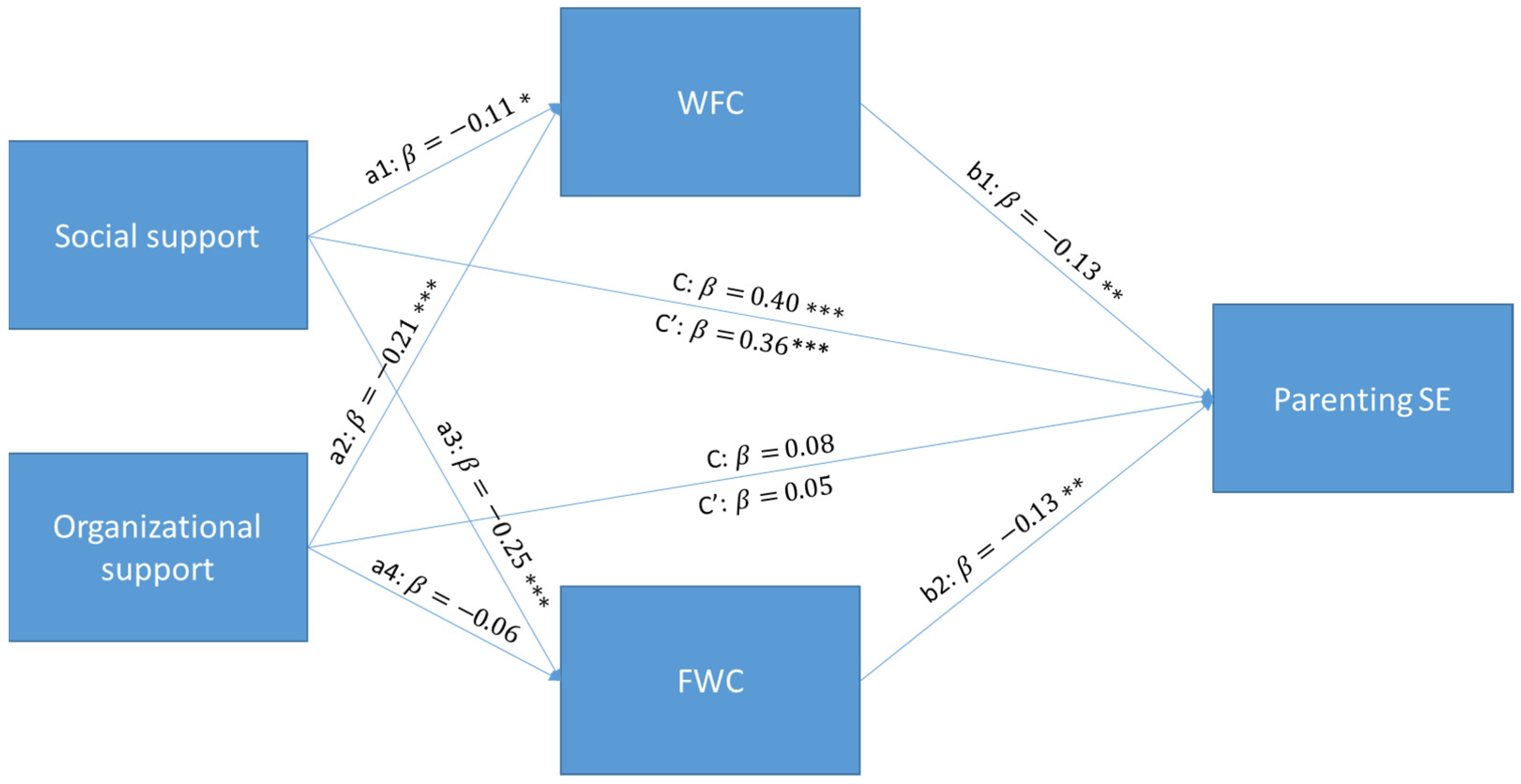
Figure 1. Mediation model predicting teachers’ parental SE. * p < 0.05; ** p < 0.01; *** p < 0.001.
Education 16 00628 g001
Figure 2. Mediation model predicting teachers’ parental satisfaction. * p < 0.05; ** p < 0.01; *** p < 0.001.
Education 16 00628 g002
Table 1. The sample’s sociodemographic characteristics.
VariablesPercentage (Frequency)/Mean (SD)Range
Sex
Male18.2% (86)
Female81.8% (387)
Age38.84 (6.85)22–60
Family status
Single2.7% (13)
Married90.3% (428)
Divorced5.3% (25)
Separated0.6% (3)
Other1.1% (5)
Number of children3.16 (1.45)1–10
Age of the youngest child4.51 (3.35)0–12
Age of the oldest child11.18 (5.85)0–35
Experience teaching (in years)10.93 (6.81)1–40
School level that the participants teach
Elementary54.9% (260)
Middle17.1% (81)
Secondary21.3% (101)
Other6.8% (32)
Table 2. Descriptive statistics and Pearson correlations between the study variables (n = 472).
VariableMeanSD12345678
1. WFC4.181.41--------
2. FWC2.891.210.36 ***-------
3. General social support5.750.98−0.16 ***−0.25 ***------
4. Support from significant other5.961.05−0.13 **−0.23 ***0.90 ***-----
5. Support from family member5.851.11−0.17 ***−0.24 ***0.89 ***0.78 ***----
6. Support from friend5.431.19−0.11 *−0.19 ***0.84 ***0.60 ***0.56 ***---
7. Organizational support4.781.28−0.27 ***−0.15 ***0.32 ***0.26 ***0.25 ***0.32 ***--
8. Parenting SE4.250.75−0.24 ***−0.27 ***0.43 ***0.39 ***0.41 ***0.32 ***0.21 ***-
9. Parenting satisfaction4.000.79−0.28 ***−0.41 ***0.25 ***0.26 ***0.27 ***0.14 **0.18 ***0.53 ***
* p < 0.05; ** p < 0.01; *** p < 0.001.
Table 3. Mediation model predicting teachers’ parenting SE (standardized and unstandardized path coefficients).
VariablebseΒeta95% CI
Social support0.27 ***0.030.36 ***(0.21, 0.34)
Organizational support0.030.030.05(−0.02, 0.08)
WFC−0.07 **0.02−0.13 **(−0.12, −0.02)
FWC−0.08 **0.03−0.13 **(−0.014, −0.03)
Parental gender0.020.080.01(−0.14, 0.18)
Youngest child’s age−0.010.01−0.05(−0.01, 0.004)
Constant3.27 ***0.34 (2.60, 3.93)
** p < 0.01; *** p < 0.001. R 2 = 0.23 ,   F 6,465 = 23.20 ,   p < 0.001 .
Table 4. Mediation model predicting teachers’ parenting satisfaction (standardized and unstandardized path coefficients).
VariablebseΒeta95% CI
Social support0.11 **0.040.13 **(0.04, 0.18)
Organizational support0.030.030.05(−0.02, 0.09)
WFC−0.08 **0.03−0.14 **(−0.13, −0.03)
FWC−0.21 ***0.03−0.32 ***(−0.27, −0.15)
Parental gender−0.100.09−0.05(−0.27, 0.08)
Youngest child’s age0.0010.0050.01(−0.01, 0.01)
Constant4.12 ***0.36 (3.41, 4.82)
** p < 0.01; *** p < 0.001. R 2 = 0.22 ,   F 6,465 = 21.23 , p < 0.001 .
Table 5. Role conflicts reported by participants.
SubcategoryNumber of Statementsχ2
Entire SampleWomen (N = 367)Men (N = 81)
Working in parallel to running their home and helping their own children learn from home18242.2%33.3%χ2(1) = 1.294
Work interfering with family functioning11929.7%12.3%χ2(1) = 7.524 **
Time management between work and home7816.1%23.5%χ2(1) = 2.076
Considerations when dividing work between partners at home4610.1%11.1%χ(1) = 0.068
The family interfering with functioning at work398.4%9.9%χ2(1) = 0.156
Dividing resources and electronic devices between work and home254.9%8.6%χ2(1) = 1.661
Conflict between personal time and other tasks 191.9%2.5%-
Reporting no conflicts345.7%16.0%χ2(1) = 9.325 **
Sum of statements53243795
** p < 0.01. 1 Note: Chi-square tests were not conducted for cells that did not fit the test’s assumptions.
Table 6. Facilitating factors reported by participants.
SubcategoryNumber of Statementsχ2
Entire SampleWomen (N = 367)Men (N = 81)
Teachers’ internal psychological resources11524.3%32.1%χ2(1) = 1.592
Support from and communication with one’s partner11425.1%27.2%χ2(1) = 0.114
Support from extended family, friends, and professionals10625.6%14.8%χ2(1) = 3.270, p = 0.070
Time management and establishing priorities7514.7%25.9%χ2(1) = 4.98 *
Support from children6315.3%8.6%χ2(1) = 2.06
Workplace flexibility and support234.6%7.4%χ2(1) = 0.995
Personal time203.5%3.7%χ2(1) = 0.995
Sense of professional commitment 1153.5%2.5%-
Communication with students and parents 151.1%1.2%-
Reporting no facilitating factors 1225.2%3.7%-
Sum of statements53243795
* p < 0.05. 1 Note: Chi-square tests were not conducted for cells that did not fit the test’s assumptions.
Disclaimer/Publisher’s Note: The statements, opinions and data contained in all publications are solely those of the individual author(s) and contributor(s) and not of MDPI and/or the editor(s). MDPI and/or the editor(s) disclaim responsibility for any injury to people or property resulting from any ideas, methods, instructions or products referred to in the content.