1. Introduction
In today’s rapidly evolving world, employability and transferable skills, such as communication, problem-solving, adaptability, collaboration, and critical thinking, are increasingly recognised as central determinants of graduate career success. As the job market continues to change, the demand for Higher Education Institutions (HEIs) to equip students with these skills has intensified, particularly as employers place growing emphasis on graduates’ ability to apply knowledge flexibly across contexts (
Harvey, 2001;
Tomlinson, 2017). Despite this demand, many HE programmes remain content-driven, offering limited opportunities for the systematic development, practice, and assessment of employability and transferable skills, which are often treated as implicit or extracurricular outcomes rather than core curricular objectives. Developing these competencies not only benefits students but also helps them become effective and productive members of society (
Yorke, 2006).
Employability is increasingly conceptualised not as a discrete outcome but as a complex set of achievements, skills, understandings, and individual attributes that enable graduates and future workers to secure and sustain meaningful employment (
Yorke, 2006). The World Economic Forum also highlights a move towards addressing employability more thoroughly as this is becoming increasingly important in a dynamic and constantly evolving job market, putting demand on potential workers to possess transferable, human-centred skills capable of problem-solving (
Di Battista et al., 2023). Research has repeatedly reported that graduate employability depends not only on technical knowledge but also on the capability of career management, self-regulation, and personal agency, which are often overlooked aspects in traditional HE programmes (
Bridgstock, 2009;
Jackson, 2016).
To meet these evolving demands, educational institutions are increasingly exploring technological advancements to enhance teaching and learning methods. Among these, GenAI has emerged as a powerful tool, with its use and development at an all-time high. Newsweek magazine alone reported a staggering growth rate of 38% in functional and standalone GenAI applications released on a weekly basis in 2023. Gartner points out that the influence of generative AI will be focused on enhancing specific activities, and not on replacing entire jobs, placing the potential of 100 million individuals working in support of synthetic virtual colleagues (
Yan et al., 2024). With the rapid adoption of GenAI and its potential capability to co-create, the understanding of what constitutes collective intelligence is beginning to shift, increasingly accepting the applications of GenAI (
Feuerriegel et al., 2024). Despite this surge, the integration of AI in HE has been scarce in terms of universities teaching employability and transferable skills, as they often are not explicitly embedded in HE curricula. Furthermore, traditional teaching methods often struggle to provide personalised, scalable, and adaptive learning opportunities to develop and enhance these skills.
3. Methodology
This study employs a combination of quantitative and qualitative research methods that complement each other without being systematically integrated into a mixed-method design according to the framework proposed by
Bryman (
2006). The study focuses on examining student learning engagement within a GenAI-supported learning environment. Following established engagement frameworks (
Fredricks et al., 2004;
Henrie et al., 2015), engagement in this study is primarily operationalised through behavioral indicators derived from platform analytics.
In this study, engagement is operationalised primarily as behavioral engagement, measured through observable platform interaction metrics such as completion rates, time spent on lessons, and frequency of interaction with the AI teacher. While the engagement literature conceptualises engagement as behavioural, cognitive, and emotional (
Fredricks et al., 2004), the present study focuses on behavioural indicators derived from learning analytics. Qualitative reflections from learners provide complementary insights into perceived cognitive engagement but were not used as direct measures.
Behavioural engagement indicators were derived from raw platform log data using consistent extraction and aggregation procedures across cohorts. Completion rate was calculated as the proportion of learners who reached the designated endpoint of a lesson or programme. Time spent per lesson was computed by summing time-stamped activity durations recorded between lesson entry and exit events. Interaction frequency was operationalised as the total count of learner–AI exchanges within a lesson, including initial prompts, follow-up questions, and feedback interactions, recorded through both text and voice modalities. All metrics were processed using identical definitions and logging rules across institutional cohorts to enhance transparency and reproducibility.
The key behavioral variables were derived from raw platform log data. Completion rate was defined as the proportion of students who completed the lesson or reached its designated endpoint. Time spent was calculated from activity timestamps recorded during lesson participation. Interaction counts were generated by counting the number of learner–AI exchanges logged within each lesson, including prompts and follow-up interactions. These indicators were extracted and aggregated using the same procedures within each cohort to support transparency and reproducibility.
These indicators serve as behavioral proxies for student engagement, reflecting the extent to which learners actively participate in and persist within the AI-supported learning environment. Although such indicators do not directly measure emotional or cognitive engagement, prior research demonstrates that interaction frequency and sustained participation in digital platforms are reliable indicators of behavioral engagement in technology-mediated learning environments (
Henrie et al., 2015).
To complement these behavioral metrics, participants were also asked open-ended questions about their experiences using the GenAI tool. These qualitative responses provide additional insights into learners’ perceived value of the platform and their interaction with the AI teacher, offering partial indications of cognitive and experiential aspects of engagement. The research is concentrated on an employability programme provided to students from three different universities based on convenience sampling from three different continents, Africa, Asia and Europe.
Learners from Catholic University East Africa (CUEA), Kenya.
Learners from Bahria University, Pakistan.
Learners from Brunel University of London, United Kingdom.
For the Kenyan and Pakistani students, the programme was divided into 9 topics. The lessons were:
Goal setting and Motivation.
CV Writing.
Effective Communication Skills.
Self-Awareness and Wellbeing (Including social media use).
Presentation Skills.
Time Management and Procrastination.
Leadership and Personal Growth.
Organising and Problem Solving.
Critical Thinking.
For the UK students, the programme consisted only of five lessons which overlapped with the other batches. The lessons were as follows:
- -
Presentation Skills.
- -
Critical Thinking Skills.
- -
Organising and Problem Solving.
- -
The art of CV writing.
- -
Leadership and Personal Growth.
- -
How to use OIAI was also added as a lesson where students learned how the platform worked through interacting with the AI.
For the Kenyan and Pakistani learners, there were three extra lessons that they could join once they completed the programme:
The lessons were created by the AI system by uploading content of the topic in pdf. These were then pushed through the learners, and they engaged with the content through the AI teachers. The lessons were designed to be informative and engaging, and they included a variety of activities, such as extra readings and quizzes. For each batch of learners, the programme was available for 6 weeks. The learners could access the platform any time they wanted at their own convenience. Prior to the start of the programme, all learners and relevant staff of their institution were invited to a webinar where the GenAI tool was demonstrated so they got a better understanding of how to navigate and interact with the platform. Learners were invited to join the platform during the webinar and had the opportunity to ask any questions. Following this, the recording of the webinar along with a short instruction document and contact information were sent to the learners. They could reach out to the organisation in case they had any queries or experienced difficulties. As the Kenyan and Pakistani batches were quite large, a WhatsApp group was set up to answer questions in real-time, and the other learners also benefited from the responses.
The AI-enabled teaching environment in this study extended beyond standard digital content delivery by incorporating generative AI-based dialogue within a structured lesson design. Students did not simply access pre-prepared materials; they interacted with an AI teacher that responded to prompts, supported follow-up questioning, and provided immediate feedback in relation to the learning task. The pedagogical logic of the system was therefore grounded in active and dialogic learning, with personalisation occurring mainly through real-time interaction rather than through fully individualised learning pathways. This interactional responsiveness distinguishes the environment from conventional digital learning tools and provides a clearer basis for situating the study within AI-in-education research.
At the end of the programme, learners were asked for their feedback on the platform. Learners rated the AI teacher on its usefulness and on their overall satisfaction through a 5-point Likert-type rating. In addition, learners were asked what they would like to learn next, what their views were on using the platform (e.g., what they liked and did not like) and if they would refer it to others.
4. Findings
First, the findings will be presented from learner’s data of each institution, which is followed by an analysis comparing the findings between the different institutions. Given the variation in course structures, lesson sequencing, programme length, and optional content across the participating higher education institutions, comparisons across cohorts should be interpreted with caution. The primary analytic emphasis of this study is placed on within-cohort patterns of behavioural engagement, including completion rates, time spent, and interaction levels within each institutional context.
Cross-cohort comparisons are therefore presented as indicative and exploratory, rather than as strictly comparable outcomes. These comparisons are used to identify broad engagement tendencies across settings and to contextualise how GenAI-enabled teaching environments may function differently across diverse institutional and cultural contexts. The learning environments were not fully standardised across sites, and this diversity is treated as part of the ecological validity of the study rather than as a basis for causal or equivalence-based inference.
For the inferential analyses, the analytical unit was the lesson-level engagement outcome within each cohort. As students could participate across multiple lessons in the same AI-enabled environment, the observations may not be fully independent. We therefore treat these statistical tests as exploratory indicators of variation in engagement patterns rather than as estimates based on fully independent repeated measures. This limitation should be considered when interpreting cross-lesson and cross-cohort differences. While lesson-level engagement observations may not be fully independent due to repeated participation by individual learners across multiple lessons, the analytical approach adopted remains appropriate for the study’s exploratory objectives. The purpose of the statistical analyses is not to establish causal effects or precise effect estimation, but to identify broad patterns and potential sources of variation in behavioral engagement within and across GenAI-supported learning contexts. Treating these analyses as exploratory indicators allows for the detection of meaningful engagement trends while maintaining transparency regarding analytical constraints. This approach aligns with prior research that employs learning analytics to explore engagement patterns in complex, non-experimental educational environments.
4.1. Learners from Institution 1 (Kenya)
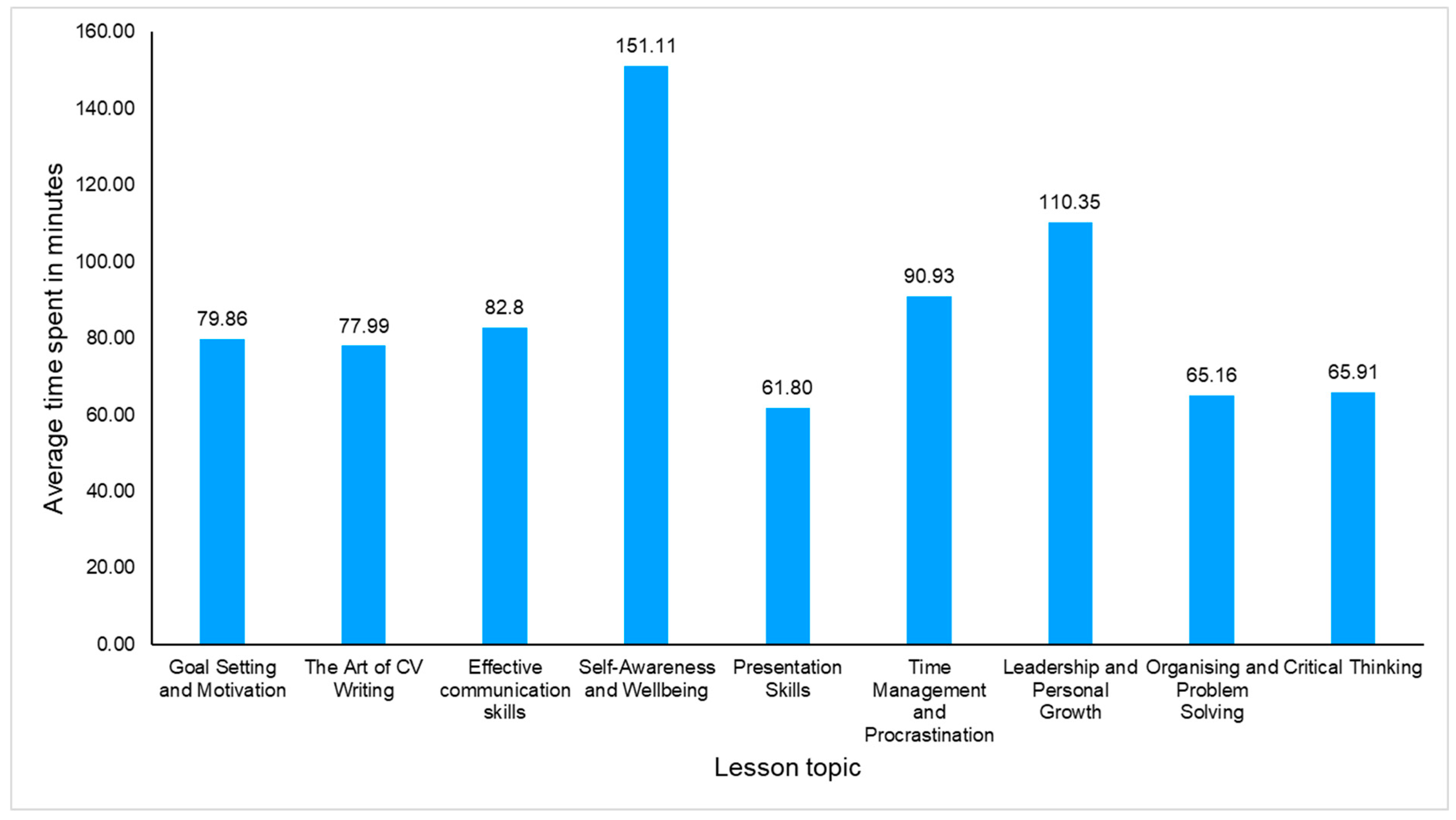
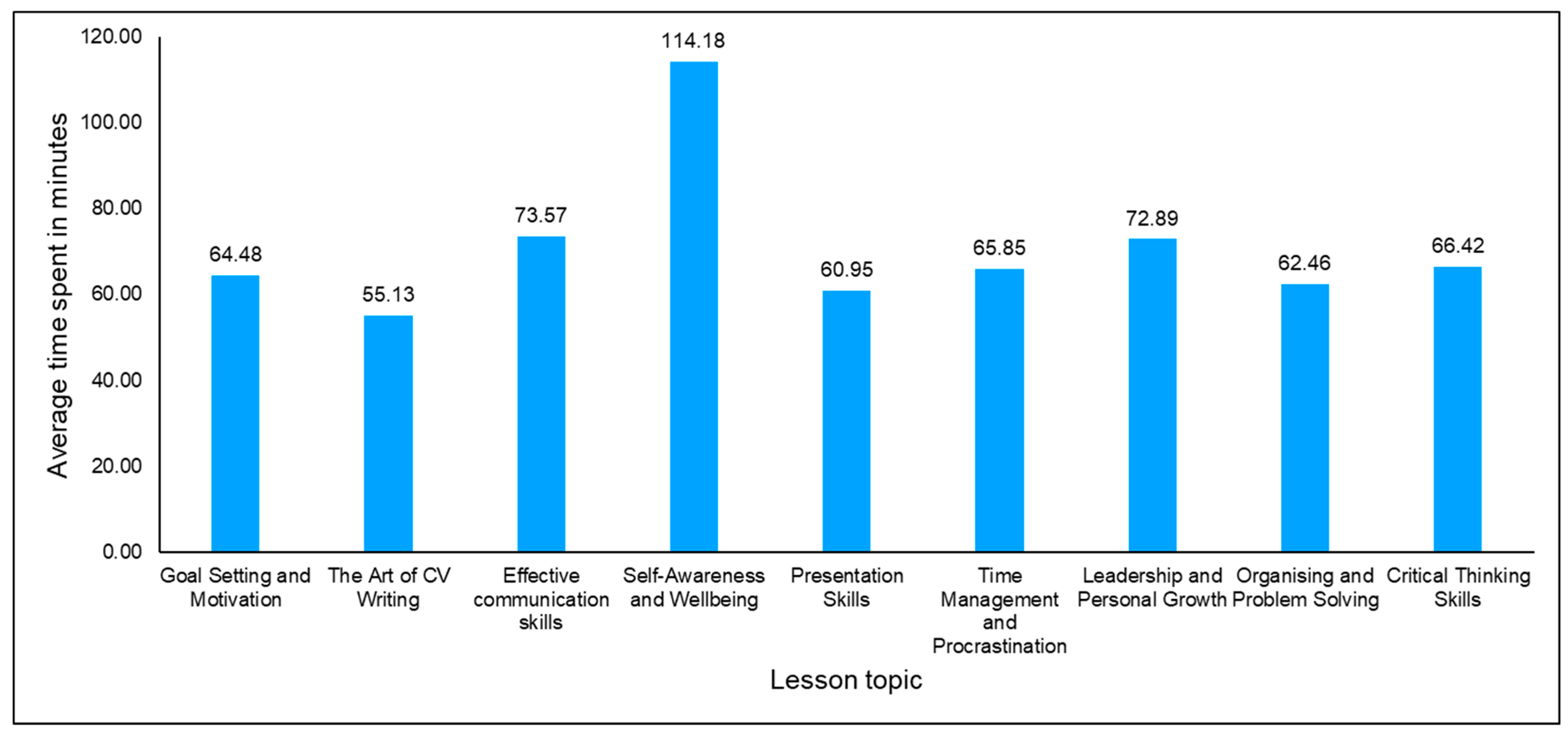
A total of 209 learners were invited to the platform, of whom 193 learners joined. Fifty-one learners completed all nine lessons, resulting in a 26.4% completion rate. In terms of learner engagement, the average time spent per lesson is depicted in
Figure 1. On average, learners spent more than 60 min per lesson, which aligns with the intended lesson design (approximately 60–70 min). Some lessons show a notably higher average time spent. Further inspection of the data revealed that learners who spent longer on a lesson also engaged more frequently in conversations with the AI teacher, thereby increasing total time spent.
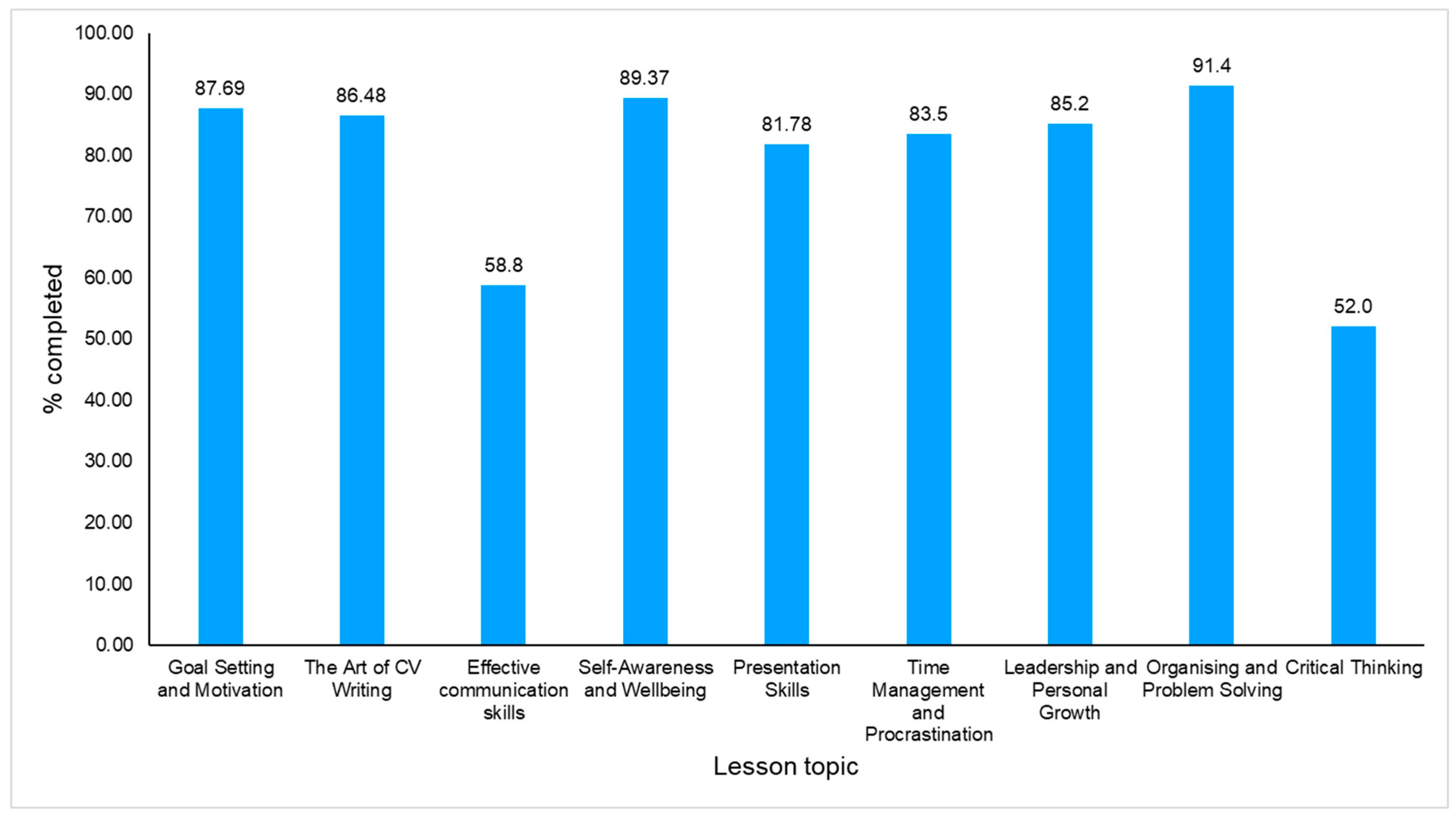
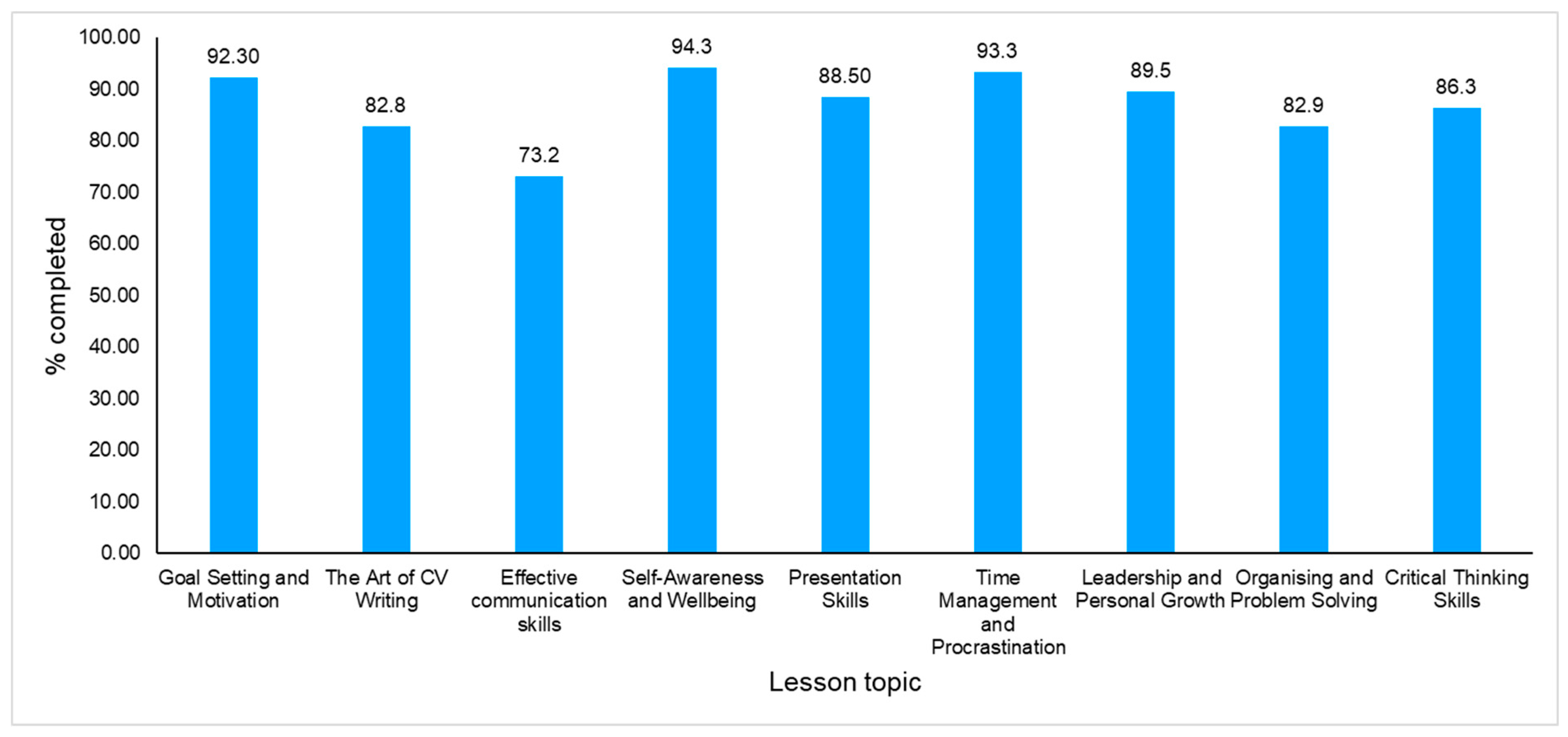
Regarding completion rates per topic,
Figure 2 illustrates the percentage of learners completing each lesson. Overall, most topics demonstrated high completion rates, apart from Effective Communication Skills, which showed a comparatively lower completion rate.
Three additional optional topics were provided to learners. A total of 144 learners accessed at least one of these topics, of whom 12.3% joined “Job Interviews in a Digital Era,” 26.3% joined “Sustainability in the Local Community,” and 61.4% joined “Email Etiquette.” This level of voluntary participation suggests strong learner motivation and interest in extending employability-related learning beyond mandatory content.
When asked whether they would refer the programme to others, 91.9% of learners indicated that they would recommend it. In terms of what the learners liked about the programme, they mentioned that they liked the teacher and the clear explanations, and many appreciated that whilst they can do the course at their own pace, they receive the same quality as a traditional course, this is also shown in some quotes below:
“Self-paced learning depending on my schedule”
“The fact that one can ask questions with confidence and receive answers”
“What I like most about the AI teacher is the patience, understanding of students fears and concerns and adjusting were applicable”
“The AI teacher was explaining the content well, chances were given such that when I got the question wrong, I was able to try again until I got the correct answer. This was extremely great.”
Learners also expressed interest in future AI-supported learning topics, including cybersecurity, marketing, machine learning, intellectual property, public speaking, diplomacy and international relations, human rights and activism, and computer applications.
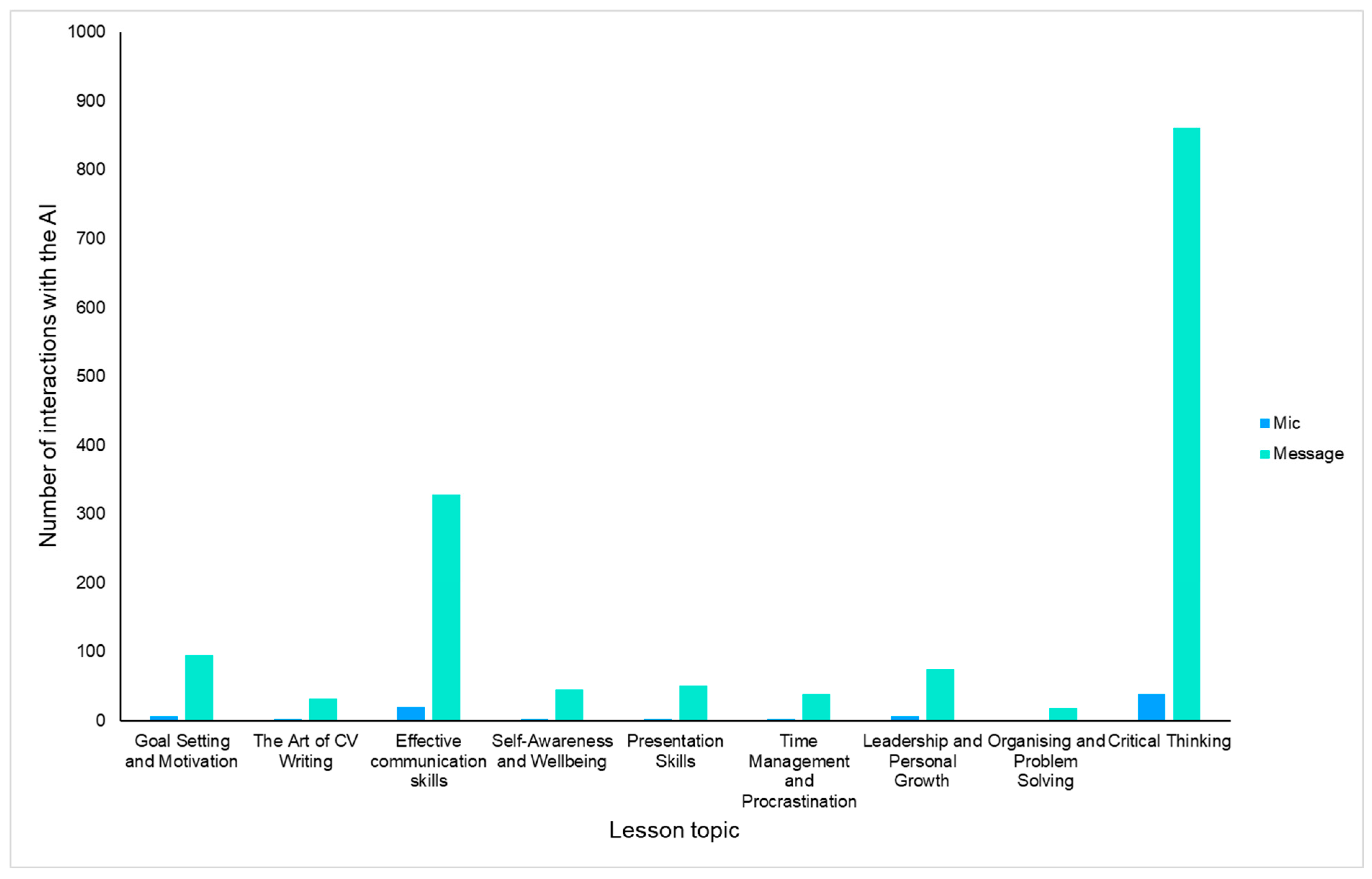
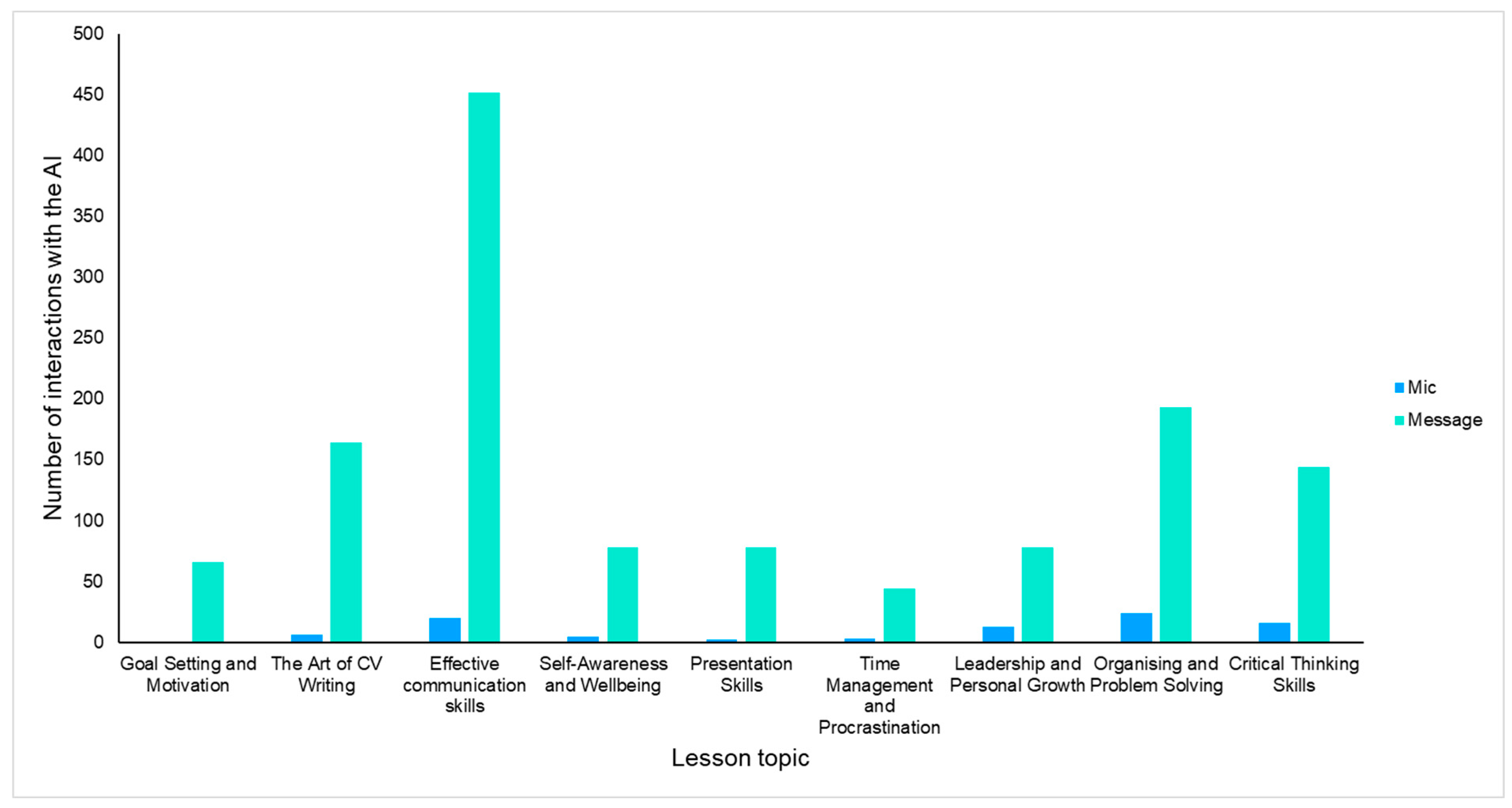
Learner engagement with the AI teacher was further examined through interaction data.
Figure 3 shows the number of interactions, distinguishing between voice (microphone) and text-based messaging.
Regarding perceived usefulness, 33.3% of learners rated the AI teacher as extremely useful and 61.3% as very useful. Overall satisfaction ratings were similarly high, with 32.0% extremely satisfied and 58.7% very satisfied.
4.2. Learners from Institution 2 (Pakistan)
A total of 328 learners were invited to the platform, with 322 learners joining. Of these, 147 learners completed all nine lessons, resulting in a 45.6% completion rate. The average time spent per lesson is shown in
Figure 4. Learners spent more than 55 min per lesson on average, which is consistent with the intended lesson duration. As observed in Institution 1, longer lesson durations were associated with more frequent interactions with the AI teacher.
Figure 5 presents completion rates by topic. Most topics demonstrated high completion rates, with Effective Communication Skills again showing a comparatively lower rate, mirroring the Kenyan cohort.
Three optional topics were also offered to this cohort. A total of 110 learners joined the additional topics, with 11.5% selecting “Job Interviews in a Digital Era,” 48.9% selecting “Sustainability in the Local Community,” and 39.6% selecting “Email Etiquette.” These findings further indicate learner interest in extending employability-related skills through optional GenAI-supported learning.
As with the Kenyan cohort, 91.9% of learners reported that they would recommend the programme. Learners emphasised the informative nature of the lessons and the clarity of explanations provided by the AI teacher. Example feedback included:
“I think the AI tool is so far so good and the lessons are normal not very boring”
“Liked for clear explanations and accessibility, expecting continual improvements in content and personalised learning experiences”
“I liked AI tool very much and it is so much better and helpful than I expected it to be.” Also reported upon was; “The detailed breakdown of subjects by the instructor, paired with their use of clear language, helped me retain all the valuable information.”
“I could ask questions and listen to the whole lecture again and again if something was unclear to me the first time.”
Learners expressed interest in additional topics such as decision making, stress management, entrepreneurship, marketing, public speaking, and receiving feedback and criticism.
Figure 6 illustrates interaction patterns, showing that most interactions occurred through text-based messaging rather than voice input.
In terms of usefulness, 23.3% rated the AI teacher as extremely useful and 54.0% as very useful. Overall satisfaction ratings indicated that 19.3% were extremely satisfied and 51.5% very satisfied.
4.3. Learners from Institution 3 (United Kingdom)
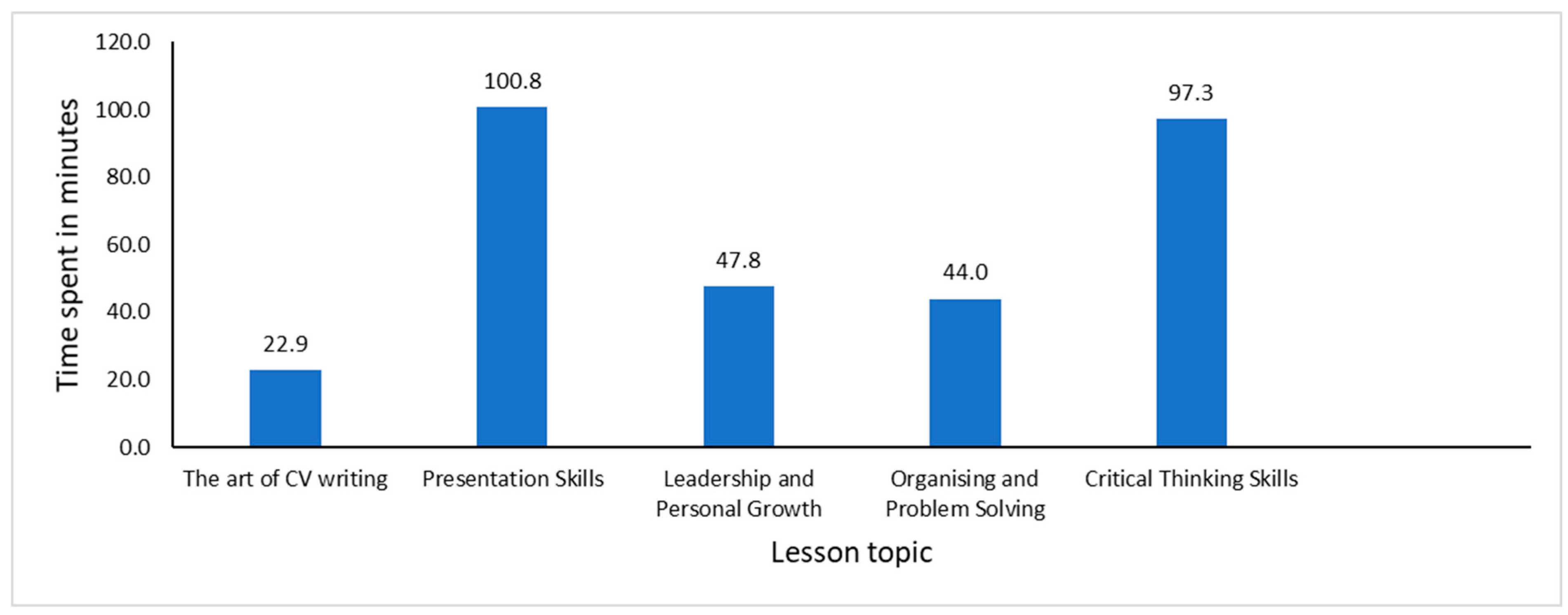
A total of 220 learners were invited to the platform, 81 learners joined, and 50 learners accessed at least one lesson. Forty-four learners received a certificate of attendance, while six learners completed all five lessons, resulting in a 12.0% completion rate. The average time spent per lesson is presented in
Figure 7. Time spent varied substantially across topics, differing from the more consistent patterns observed in the Kenyan and Pakistani cohorts. As in other institutions, higher time spent was associated with more extensive interaction with the AI teacher.
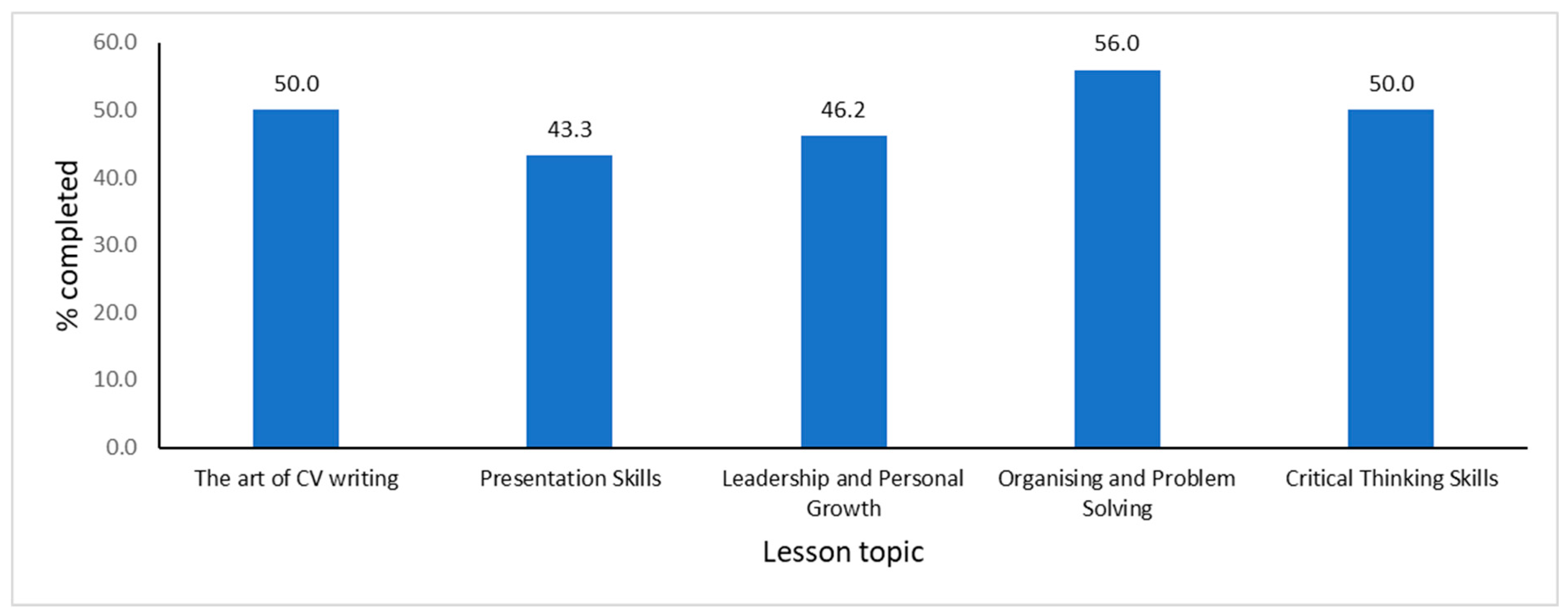
Completion rates per topic are shown in
Figure 8. Most topics demonstrated completion rates of approximately 50%, which contrasts with the higher topic-level completion observed in the other cohorts.
No additional optional topics were offered beyond an introductory lesson on “How to Use the AI Teacher.” Learners highlighted the interactive and personalised nature of the GenAI-supported learning experience, particularly in relation to employability and transferable skills development. One learner reflected:
“I’m excited to share that I have successfully completed a course with the AI teacher where I honed essential skills for personal and professional growth. Through this course, I gained valuable insights and practical experience in: Presentation Skills, Critical Thinking, Organizing and Problem-Solving, The Art of CV Writing, Leadership and Personal Growth. The program was a transformative journey, equipping me with tools to navigate challenges effectively and excel in diverse environments. Looking forward to applying these skills in my future endeavours and continuing to grow both personally and professionally.”
Some general comments about the use of the AI teacher:
“To be honest, the AI teacher was incredibly beneficial and far from boring, unlike my experience in the actual classroom. I thoroughly enjoyed the topics covered and greatly appreciate the exceptional management of this outstanding institute.”
Additional feedback noted strong engagement with the AI teacher compared to traditional classroom experiences. Notably, learners from the UK cohort interacted exclusively via text-based messaging and did not use the voice interaction feature.
To support clearer interpretation of engagement differences across institutional contexts,
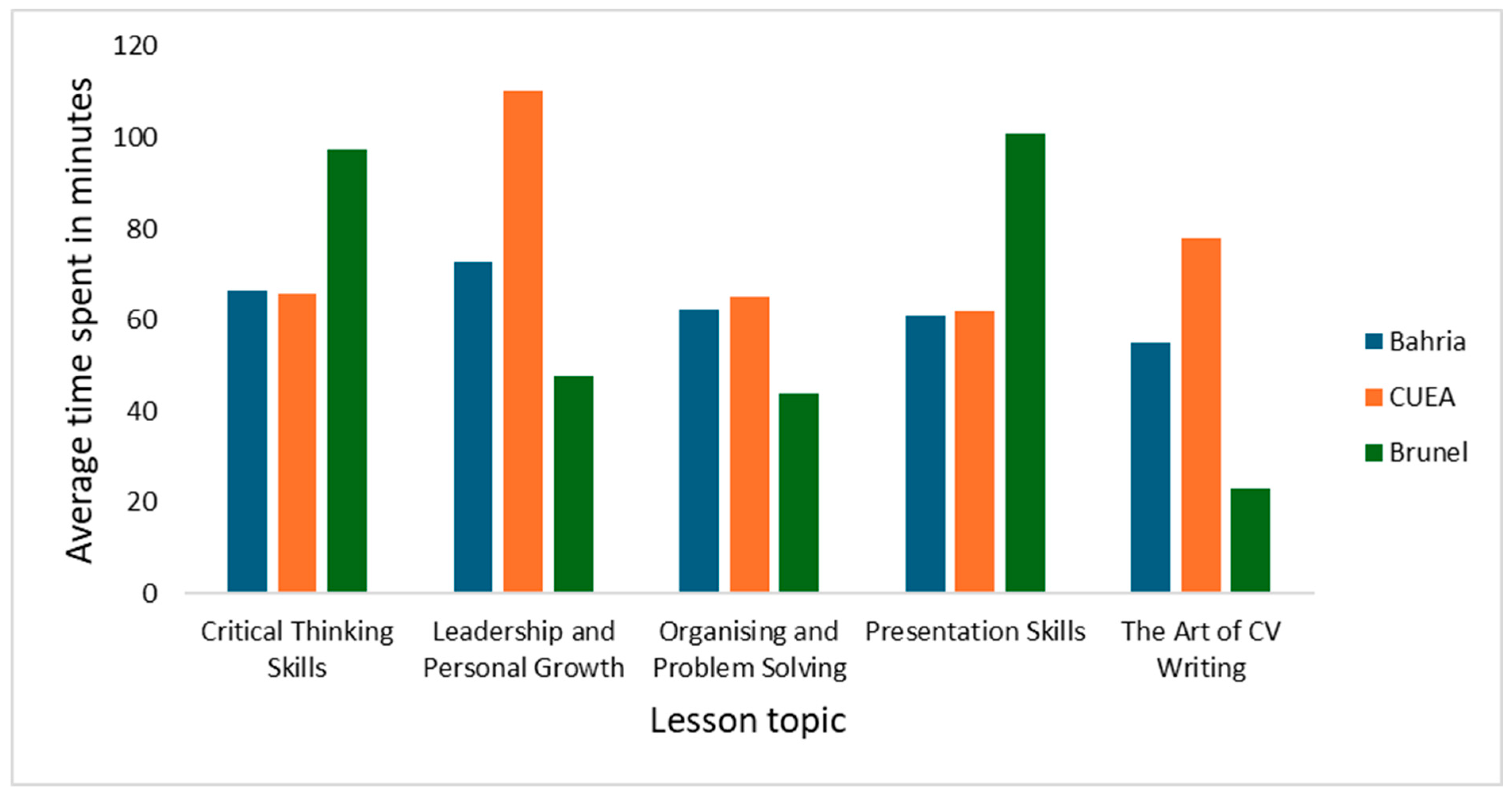
Figure 9 provides a comparative visualisation of average time spent per topic across the three cohorts, restricted to the five lessons common to all institutions. This visual overview complements the statistical analyses and allows readers to more intuitively assess cross-cohort patterns in learner interaction with the AI teacher.
When looking at the total average time spent and focusing on all lessons offered to the learners, learners from Pakistan (
M = 67.3 ± 149.5) spent significantly less time than learners from Kenya (
M = 84.6 ± 154.5)
t(2784) = 2.78,
p = 0.005,
d = 0.12. When comparing the time spent per topic across the three institutions (and only looking at the 5 topics (
Figure 9) that were done by all learners) through a one-way ANOVA, there was only a significant difference found for the lesson “The Art of CV Writing”,
F(2, 246) = 0.011, η
2 = 0.036. Post-hoc tests revealed that there was only a significant difference between time spent by learners from Kenya compared to learners from the UK. Learners from Kenya spent significantly more time (
M = 78.0 ± 58.4) on the Art of CV Writing lesson compared to learners from the UK (
M = 22.9 ± 24.3),
p = 0.020.
5. Discussion
This paper presents how an AI teacher can enable functional support and thereby contribute to minimising existing skills and knowledge gaps for students. Drawing on three international cases, the lessons and student interactions have been analysed. The urgency of being able to apply learnings in a professional life, places emphasis on enabling more autonomous learners who can adapt their practices based on the acquired employability and transferable skills sets, reflecting the capacity for self-regulation, adaptability, and career management identified as critical for graduate success (
Yorke, 2006;
Bridgstock, 2009;
Jackson, 2016). The use of an AI tool to support transferable skills development demonstrates that complex human-oriented competencies, such as critical thinking, problem solving, and leadership, can be meaningfully addressed through GenAI-supported learning environments. Interpersonal skills, such as presentation skills, also benefit from AI-supported learning, as learners can engage in repetitive practice and receive immediate, formative feedback.
In interpreting these findings, it is important to situate the results within the multidimensional framework of student engagement proposed by
Fredricks et al. (
2004), which distinguishes between behavioral, cognitive, and emotional engagement. The present study primarily operationalises behavioral engagement, as reflected in observable indicators derived from learning analytics, including completion rates, time spent on lessons, and frequency of interaction with the AI teacher. These metrics capture the extent to which learners actively participate in and persist within the GenAI-supported learning environment. The relatively high levels of interaction with the AI teacher, sustained time spent on lessons, and voluntary participation in optional topics across several cohorts suggest that the AI-supported environment was effective in promoting active behavioral participation in learning activities. In digital learning contexts, such behavioral indicators are commonly used as observable proxies for engagement because they reflect learners’ willingness to interact with course materials and persist through learning tasks.
Although the present study did not directly measure cognitive or emotional engagement through validated survey instruments, qualitative learner reflections provide indications that the AI teacher may also stimulate elements of cognitive engagement, such as reflection, clarification, repeated questioning, and iterative interaction with learning content. Several learners reported asking questions repeatedly, revisiting explanations, and engaging in extended dialogue with the AI teacher to better understand course material. These interaction patterns suggest that conversational AI systems may support deeper engagement processes beyond simple task completion. Nevertheless, emotional engagement, such as feelings of enjoyment, interest, or sense of connection with the learning environment, was not systematically measured in the present study. Future research could therefore complement behavioral analytics with validated engagement scales to capture the full multidimensional nature of engagement in GenAI-supported educational environments.
These results indicate that integrating AI tools into HE can significantly enhance learning engagement and perceived learning value, aligning with prior studies such as
Schön et al. (
2023). Additionally, as this study was conducted across three different countries, it provides valuable insights into how AI tools perform in diverse educational and cultural contexts. The findings further build on existing research, such as
Aditya et al. (
2024), by confirming that AI-driven learning is effective and efficient in teaching employability and transferable skills. The results also align with
Kim et al. (
2020), demonstrating that AI tools can achieve high student satisfaction by offering personalised learning experiences, continuous accessibility, and engaging instructional interactions.
The findings of this study align with prior research indicating that AI adoption is characterised by a comparatively high degree of implementation complexity, stemming from both its technical characteristics and the knowledge barriers associated with GenAI use (
Granić, 2025). This complexity was evident across the three international higher education contexts examined, where variation in how AI teachers were adopted could not be explained by access to technology alone. Rather, the results indicate that effective adoption is contingent on the degree to which AI readiness factors are aligned with a clearly articulated AI adoption purpose.
This alignment appears particularly important in educational settings where AI teachers are intended to support sustained learning engagement rather than isolated task completion. Where adoption purpose was implicitly or explicitly defined, readiness conditions more effectively supported meaningful interaction with the AI teacher. Conversely, in contexts where such alignment was weak, AI use tended to remain instrumental, limiting its pedagogical impact. These findings suggest that AI readiness and adoption purpose function together as critical explanatory mechanisms for understanding differences in how AI teachers are integrated and experienced across international higher education contexts.
Building on the AI readiness framework proposed by
Jöhnk et al. (
2021), this study highlights the importance of defining a context-sensitive adoption purpose as a prerequisite for meaningful AI integration. In the present study, this purpose was consistently oriented towards enhancing student learning engagement and employability-related skills through sustained interaction with an AI teacher, rather than towards efficiency or automation. This finding resonates with
Berglund’s (
2024b) argument that AI teachers must be pedagogically integrated in ways that highlight learning processes and reflective engagement, rather than functioning as standalone technological solutions.
The results further indicate that a holistic understanding of AI readiness, encompassing technological, human, organisational, and ethical dimensions, conditions how students engage with AI teachers across diverse contexts. By operationalising AI readiness through illustrative indicators, this study contributes to understanding how readiness alignment supports more consistent and meaningful learning engagement. Where such alignment was evident, student interactions with the AI teacher were characterised by deeper cognitive engagement and reflective use; where it was absent, engagement tended to remain instrumental.
While AI teachers are not yet widely implemented across HE, this is partly due to the absence of clear institutional guidance and consistent implementation practices, which may hinder scalable adoption. As proposed by
Mahrishi et al. (
2024), rapid advancements in AI underscore the need for coherent policy direction in HE. Without responsible deployment, institutions may face challenges related to fairness, academic integrity, and alignment with pedagogical objectives. Beyond implementation challenges, ethical considerations, such as AI bias, data privacy, over-reliance on automated systems, and reduced independent thinking, must also be carefully managed.
This study further suggests that to effectively implement AI teachers, HEIs should develop guiding principles and governance mechanisms that support ethical, transparent, and pedagogically aligned deployment (
Nguyen et al., 2022). Rather than positioning AI teachers as replacements for human educators, they should be designed to complement academic teaching by supporting engagement, practice, and feedback. Human educators remain central to mentorship, social interaction, and higher-order cognitive development, while AI teachers can extend learning opportunities beyond traditional constraints. As suggested by
Chan (
2023), AI policy frameworks must consider multiple dimensions including pedagogical, governance, and operational factors, when designing effective regulations.
Ongoing monitoring and evaluation of AI-supported learning systems are necessary to maintain oversight and alignment with educational goals (
Mouta et al., 2024). Clear communication about the role and functionality of AI teachers can further enhance trust and learner confidence. Encouraging collaborative AI–human teaching models may help prevent over-reliance on AI while safeguarding pedagogical integrity.
Overall, while GenAI presents significant opportunities for enhancing engagement and employability-focused learning in HE, its value is maximised when embedded within thoughtful pedagogical design and supported by appropriate institutional frameworks. By addressing both opportunities and challenges, HEIs can responsibly leverage AI teachers to support student learning and skills development at scale.
6. Conclusions
This paper provides important empirical evidence on how Higher Education Institutions (HEIs) can integrate employability and transferable skills using an AI tool. Based on the findings, existing programmes can benefit in different ways depending on their level of experience and institutional context; nevertheless, a substantial proportion of learners perceived the AI tool as useful in delivering a functional and engaging learning experience. The results indicate that GenAI-enabled instructional support can play a meaningful role in addressing gaps in traditional HE provisions, particularly in relation to skills development. This paper aims to inspire further international integration efforts, where learners’ perceived usefulness, engagement, and satisfaction are placed at the centre of evaluation. It also seeks to encourage more HEIs to systematically test, refine, and promote the thematic integration of AI-enabled tools across courses and programmes, particularly those focused on employability and transferable skills development.
6.1. Future Research
This research provides valuable insights into educational practice and learner outcomes resulting from the integration of an AI tool to support transferable skills development. While the continued use and adoption of AI tools is expected to contribute to ongoing skills development, limited evidence currently exists regarding long-term learning outcomes and sustained impact across institutions. Future studies should therefore focus on longitudinal investigations and comparative analyses across universities and disciplines.
Although HEIs have begun experimenting with AI tools, many GenAI-supported learning environments remain underexplored, highlighting the need for further research into effective pedagogical integration across diverse educational contexts. In addition, greater attention to the iterative interaction patterns between learners and AI tools may offer deeper insights into how engagement, motivation, and perceived learning value develop over time. Such research would be particularly valuable for educators, instructional designers, and system developers responsible for designing, implementing, and scaling AI-supported learning environments. These efforts may ultimately contribute to more effective, ethical, and responsible uses of AI tools in HE.
6.2. Industry Implications
This research offers a practical benchmark for industry professionals, educational technology developers, and learning designers seeking to further explore the interface design, tutoring capacity, and engagement potential of AI tools. As AI-driven education continues to evolve, the role of AI tools is expected to expand, enabling more adaptive and personalised learning experiences tailored to individual learner needs. While the design and implementation of AI-enabled teachers are still evolving, advances in machine learning, natural language processing, and affective computing are likely to enhance their pedagogical capabilities.
These advancements may result in more sophisticated and human-like interaction models, particularly when embedded within sound pedagogical frameworks and evidence-based instructional strategies. At the same time, the increasing integration of AI in education necessitates ongoing consideration of ethical issues, including data privacy, bias mitigation, transparency, and the role of human oversight in AI-supported learning environments. The effectiveness and acceptance of AI tools will depend not only on technological innovation but also on their alignment with cognitive learning theories and educational best practice.
By establishing a foundation for further research and practical exploration, this study contributes to ongoing academic and industry discourse on the role of GenAI in education and its implications for the future of teaching, learning engagement, and employability-focused skills development.