Article

New to Town: How Novice, Newcomer Teachers Approach Asset-Based, STEM Pedagogy in a Remote Montana Community

College of Education, Health & Human Development, Montana State University, Culbertson Hall, 100, Bozeman, MT 59717, USA
*
Author to whom correspondence should be addressed.
Educ. Sci. 2026, 16(4), 599; https://doi.org/10.3390/educsci16040599
Submission received: 31 January 2026 / Revised: 4 April 2026 / Accepted: 6 April 2026 / Published: 9 April 2026
(This article belongs to the Special Issue Practice and Policy: Rural and Urban Education Experiences)

Abstract

The purpose of this instrumental case study, employing both qualitative and quantitative data, was to investigate how novice teachers from non-local and urban areas used community assets and local funds of knowledge (FoK) in their STEM instruction in a remote Montana town. While non-local teachers often make up a large share of many rural communities’ teaching workforce, those teachers might lack the social, cultural, and community knowledge that they need to teach with place-conscious approaches. Therefore, this study explored how “new-to-town” teachers, with limited personal ties to a community, learn about their rural community and how they apply this knowledge to their teaching context. Additionally, this study examined which research-established factors that improve rural STEM education were deemed most important for novice, rural teachers. The exploration employed a floodlight research approach, whereby a census of the authentic pedagogical actions of the subjects was documented rather than investigating the efficacy of a single method. Data sources included qualitative instruments like concept maps and semi-structured interviews, alongside quantitative measures like ranked best-practices data and place-conscious lesson ratios, to provide both depth of interpretation and breadth of comparison across participants. Results from the deductive thematic analysis suggest that novice teachers aspire to implement asset-based pedagogical approaches in STEM instruction and possess some methods for integration but struggle to learn of local community assets without modeling and mentorship. Additionally, an unexpected pattern emerged from the findings: Novice, newcomer teachers that employed place-conscious lessons were more likely to remain teaching in their position. While this association cannot be interpreted causally, it might suggest that place-conscious mentorship practices may play a role in improving instruction and support the retention of non-local teachers in rural communities however, further, more robust exploration is warranted of this exploratory finding. Findings from this study can be used to inform recommendations for school districts, post-secondary institutions, and rural communities on how best to support beginning rural teachers with limited community connections.

1. Introduction

Teacher shortages are a persistent issue in the United States with a shortcoming of over 45,582 teachers reported in June of 2025 with another 365,967 teachers who were not certified for their teaching appointment (Learning Policy Institute, 2025). However, teacher shortages are not felt uniformly across the country; rural schools have experienced a 14.8% decline in teacher workforce from 2008–2018, with high-poverty rural schools experiencing an annual teacher turnover rate of 27.9% (Ingersoll & Tran, 2023). Further, several research studies have documented “spatial inequality,” whereby rural communities have fewer resources, higher teacher turnover, demographic challenges such as an aging workforce and an insufficient number of local people willing to enter the teaching (Azano et al., 2020; Harris & Hodges, 2018; Tran, 2023).

1.1. Teacher Recruitment

Rural communities have attempted several strategies to attract and retain teachers, including “Grow Your Own” (GYO) programs where the local citizens of rural communities are recruited to become teachers as high school students or adults with the hope that they will remain in or return to their home community (Gelber, 2022). While GYO programs hold promise as a reliable tool to increase the number of teachers in rural communities, they are often not enough to fully address the local need for teachers, due to factors such as inconsistent funding, limited support and shifting demographics (Edwards et al., 2025). Numerous rural communities in Montana have met staffing needs through any means possible including the consolidation of schools, hiring international and emergency-authorized teachers, offering courses through distance-learning platforms, offering childcare, partnerships with community colleges and universities and attempting to attract teachers from more urban areas (Rispens, 2023; Shain, 2024; Yoon et al., 2019). Recruiting teachers from more urban or non-local areas to rural communities may have historically seemed like an improbable labor pool; however, persistent staffing challenges have made such candidates attractive to school districts. Real and felt hardships, which emerged during the COVID-19 pandemic, increased the openness of those living in metropolitan areas to consider living and working in more rural communities (González-Leonardo et al., 2022; Rispens, 2023).
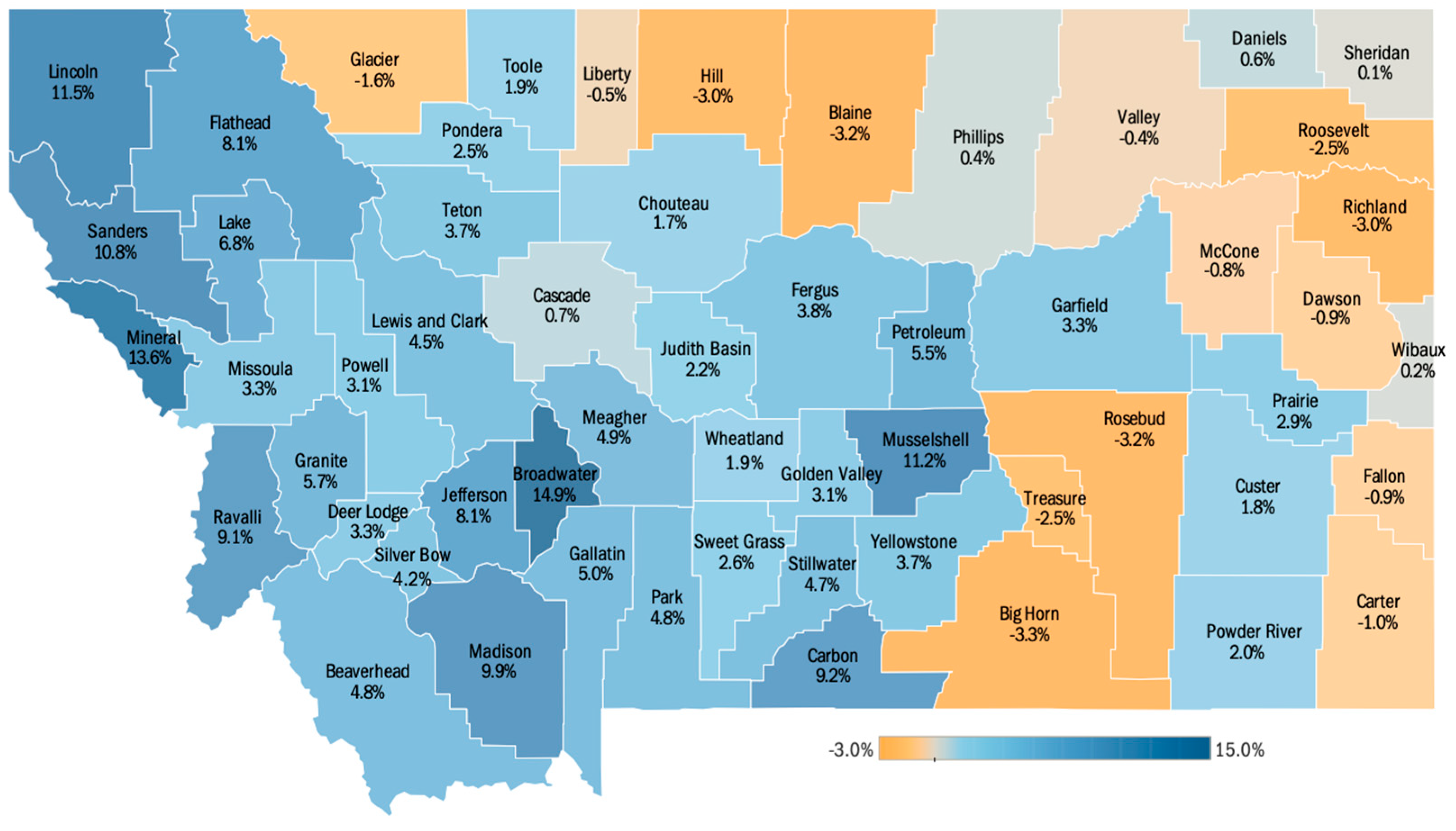
Montana experienced net positive migration from 2020-2022 (Montana Department of Labor and Industry, 2023). Figure 1 provides a county-by-county map of net migration as a percentage of the total Montana population from 2020 to 2022. Forty-two out of fifty-six Montana counties experienced a net gain of residents. However, many of these newcomers settled in urban-adjacent communities within an hour’s drive to a center with a population of 10,000 or more (Montana Department of Labor and Industry, 2023). It should be noted that the largest city in Montana is Billings, MT, classified as a mid-sized city by the National Center for Education Statistics (Geverdt, 2015) and had a population of 121,483 in 2024 (US Census Bureau, 2024). Billings has a comparatively small population when compared to metropolitan coastal cities and highlights the ever-present struggle of defining ‘rural’ and ‘urban’ (Azano et al., 2020).
People moving to rural areas in Montana identified quality of life factors influencing the decision to move such as access to the outdoors, less congestion, a slower pace of life and living in a small community as top reasons for moving (Montana State University Extension, 2021). This population can be thought of as ‘choosers,’ as they moved to rural areas purposefully for numerous personal reasons. The net migration to Montana precipitated the rapid rise of cost-of-living expenses, particularly housing, and was a catalyst for subsequent in-state migration to more rural areas (Burlington, 2023). This sub-population of rural movers was priced out of more urban centers and may be thought of as ‘reluctant movers’ and more represented by within state movers, compared to ‘choosers,’ who were more often from out of state (Burlington, 2023). New residents, especially those who are teachers in rural areas, may have settled in their new communities by choice or by economic necessity, but they represent a unique population of teachers with no or limited pre-existing connection to the community in which they teach that is worthy of study. The research gaps our study addressed are how newcomer teachers in their first years of teaching learn about community assets and how they integrate them into their STEM instruction.
K. S. Nelson and Nguyen (2023), in the development of their Community Assets and Relative Rurality (CARR) index, suggest that community assets support individual and community well-being. Research focused on the application of the CARR index in teacher education contexts (Liu et al., 2025) found that community assets influence new teacher recruitment and retention in rural areas, with particular focus on Gen Z teachers. Given this previous research suggesting the influence of access to and integration of community assets on teacher recruitment and retention, the purpose of this research study is to explore how novice teachers from urban or non-local areas gain knowledge of local rural assets and funds of knowledge (FoK) present in the community where they are employed. FoK are the sources of cultural, social and intellectual capital of the local and regional community (González-Leonardo et al., 2022; F. Nelson, 2022). We also aim to better understand how they use their local community’s rural assets in their STEM teaching, and which FoK identified as being the most relevant to them. As the implementation of the Next Generation Science Standards (National Research Council, 2013) evolves towards leveraging local and community-based knowledge (Hammack et al., 2024) to increase the number of rural students choosing STEM careers, learning how teachers develop their knowledge of local assets and expertise in rural communities is a critical first step. A more robust understanding of these issues could inform induction and mentorship practices, professional development for new-to-town teachers, and practices at post-secondary institutions that facilitate rural teaching experiences.

1.2. Place-Conscious STEM Pedagogy Utilizing Local Funds of Knowledge (FoK) and Rural Assets

The development of a nationally available and voluntarily adopted standards for science education (the Framework) has served to focus and standardize K-12 science and engineering knowledge and skills (National Research Council, 2011). While there are numerous advantages of common standards that are widely adopted by states throughout the US, including more curriculum materials, fewer barriers to sharing lessons between teachers, and a common pedagogical language to communicate ideas, challenges to full adoption remain. Early critics of the Next Generation Science Standards identified the loss of local control of the content standards and the absence of local content. In more recent years, there has been a concerted effort to incorporate the principles of place-based education into the application of the NGSS which includes FoK (González-Leonardo et al., 2022; F. Nelson, 2022). Place-based education is very broadly defined in literature, but most commonly refers to the curriculum and pedagogical practices that incorporate local contexts, cultures, and the environment (Yemini et al., 2023). Place-conscious pedagogy is an even broader and more encompassing construct that describes unique philosophical orientations to the world and ways of being in the world influenced by culture, politics, history, social norms, and values (Fraser, 2016). When we compare place-based pedagogy and place-conscious pedagogy, the former may be better applied to lesson implementation, while the latter may help rural educators understand how rural students experience learning differently than urban students (Fraser, 2016). Morales (2019) found that rural students are more likely to manipulate lab materials in novel ways, persist in difficult tasks, and make connections between classroom tasks and real-world problems. This mindset of rural learners was defined by the author as “rural dexterity.” The concept of rural dexterity challenges the deficit language around rural students’ knowledge and skills in STEM and their likelihood to pursue STEM careers (Saw & Agger, 2021) and may influence teachers’ perceptions of their rural students. A comprehensive study by the National Academies of Sciences Engineering Medicine (2025) suggests the use of an asset lens, which identifies the resources, strengths and expertise present in a community or FoK, as the foundation for the formation of several recommendations to improve the rural STEM workforce. Utilizing rural FoK may help mitigate challenges and barriers to the delivery of effective STEM education in rural contexts and may subsequently broaden STEM representation.
Harris and Hodges (2018) identify several barriers to quality STEM education in rural areas including funding, the lack of qualified teachers capable of teaching numerous STEM subjects, remoteness and challenges in administering teacher support, but acknowledge the positive influence of place-based curriculum on the number of students entering STEM fields based on the original work by Zimmerman and Weible (2017). Additionally, numerous researchers identify insufficient broadband accessibility and reliability as a barrier to effective STEM education in rural settings (Sundeen & Kalos, 2022; Wu et al., 2022; Zenda & Dlamini, 2023). Leveraging local, rural community assets may decrease the reliance on technology to access high-quality learning experiences and reframe K-12 students’ conceptions of STEM careers to include many of the applied science professions prevalent in rural areas (Saw & Agger, 2021). These approaches could address issues of the underrepresentation of rural students in STEM fields and may also address rural STEM brain drain (Schwager & Gates, 2024) by highlighting rural and STEM identities may co-exist in careers such as precision agriculture, land and resource management, extraction-based industries, rural community health care, and others.
Prior to the commencement of our study, the authors examined the intersectionality of FoK and rural STEM education. The authors identified research-based factors that influence K-12 science learning in rural communities, including foundational work by Moll et al. (1992) that describes FoK as an inner culture that exists in families and communities and research that applies a FoK lens to STEM education (Civil, 2016; Denton & Borrego, 2020; Sherfinski et al., 2020; St. Clair & McNulty, 2021). Four themes emerged from the review of literature: (1) Infrastructure & Access; (2) Teacher & Student Agency; (3) Relational Teacher Capital and (4) Community Capital.
Statti and Torres (2020) identified basic infrastructure and reliable access to broadband, devices, and digital resources as a foundational prerequisite to quality STEM instruction in rural communities while noting economic and geographic disparities between rural and urban communities as well as between rural communities (Zenda & Dlamini, 2023). Additionally, teacher-agency in choosing curriculum and pedagogical approaches that are well-suited to teachers’ teaching contexts is a key to opening the door to bringing local rural assets into the classroom (Barley, 2009). Further opportunities for student choice allow students to access their personal FoK (Lakin et al., 2021; Zimmerman & Weible, 2017).
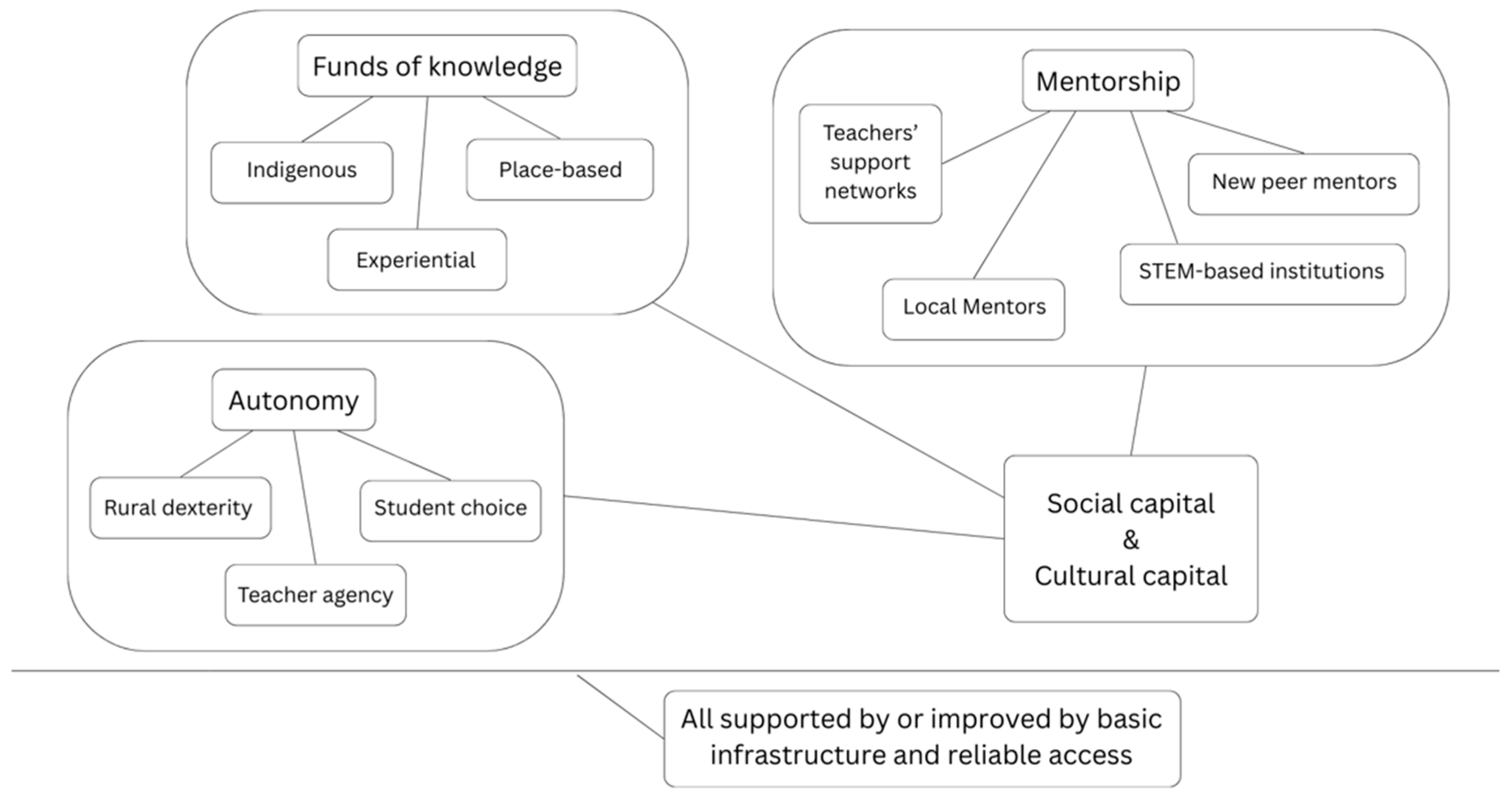
Other factors focus on diverse types of “capital” that rural communities possess. Relational teacher capital describes access to local mentors, peer and near-peer mentors (Lakin et al., 2021), access to rural STEM teacher networks (Hammack et al., 2024; Thiele & Bogdon, 2022; Thompson et al., 2022) as well as connections to experts at STEM-based institutions (Lakin et al., 2021; Mejia & Wilson-Lopez, 2015; Shume et al., 2022; Wu et al., 2022). These attributes may help teachers gain awareness of and access to resources and expertise that exist outside of themselves and their classroom. Community capital describes a broad section of skills, values, and expertise that exists in rural communities and includes social capital. Social capital describes access to social networks and relationships (Volman & Gilde, 2020), which describes students’ language and cultural practices (Borgerding, 2017; Davies & Rizk, 2018; Rios-Aguilar et al., 2011). Indigenous FoK, which includes cultural practices and ways of knowing (Anderson et al., 2017; Cajete, 2000; Caughman, 2022). Experiential FoK describes students’ direct learning experiences with the local environment (Morales, 2019). Place-based education FoK describes having one’s geographic identity acknowledged (Westbrook, 2022; Yemini et al., 2023) and valued and rural dexterity (Morales, 2019; Westbrook, 2022; Yemini et al., 2023) that describes rural students’ skills to do practical and technical hands-on tasks. This body of existing research was used by the authors to create and define a list of teacher practices that was the basis for deductive analyses performed in this study.
When we consider the differences in how rural, K-12 students experience STEM learning (Morales, 2019) and the importance of elevating rural STEM careers to address issues of rural STEM representation, it is important that newcomer teachers leverage the breadth and depth of local community assets in their STEM instruction. Furthermore, identifying how novice, non-local and urban teachers learn about local FoK and how they integrate them into their rural classrooms provides valuable information to craft meaningful professional development and mentorship experiences. While there is a significant body of research highlighting the importance of place-conscious, asset-based STEM pedagogy, there is a notable research gap regarding how novice, non-local teachers learn about community assets and how they use such assets in their instruction.
Our study examined the following research questions: How do novice, non-local teachers learn about a rural community’s funds of knowledge (FoK) and local community assets? Which research-established factors known to support rural STEM education do non-local, novice teachers feel are the most important to them in their teaching position? How do non-local, novice teachers incorporate FoK and rural community assets into their teaching?

2. Materials and Methods

This instrumental case study examines how four non-local beginning teachers with less than three years of teaching experience, from more urban areas, utilize rural community assets in their STEM instruction. Within the instrumental case study, we analyzed the experiences of individual teachers, the case study’s embedded units, to understand the phenomenon across multiple perspectives within the bounded rural context. This examination focused on their use of local FoK in their STEM instruction, their perceived importance of diverse types of FoK, and how they acquired knowledge of community assets in a remote, rural town in Eastern Montana.
The study site’s main industries are agriculture, oil and gas, and limited tourism. A community college that specializes in trades education and offers associate degrees is in the town and draws students from smaller surrounding communities. This site was selected because it is remote with the nearest community of over 100,000 people more than three hours away. Further, the site was selected because it had a population of beginning teachers with no or limited personal connections (non-familial/non-relational) prior to living in the community. Consequently, the research team determined that this site could provide insight into how ‘newcomer teachers’ learn about rural community assets and how they incorporate them into their teaching.

2.1. Study Design

Instrumental case studies seek to refine or extend theory by selecting a case that may show new relationships between existing knowledge (Ridder, 2022) or extend theory application to new contexts or sub-populations. The authors applied a multi-methods approach within an instrumental case study design, combining qualitative instruments like concept maps and semi-structured interviews, with quantitative measures including ranked best-practices data and lesson-log ratios. This integration allowed the research team to examine participants’ instructional practices with both breadth across units and interpretive depth within the units. The authors used this approach to understand the phenomenon of how the newcomer, beginning teachers, teaching in a rural setting, learn about rural STEM community assets and incorporate them into their teaching. The instrumental case is bounded to the remote town study site school district. Further, it is bound to those teachers who were in their first three years of teaching and responsible for STEM instruction. The participants were from more urban areas than the study site, had either limited or no personal connections to the study site school district prior to employment, and their positions were their first teaching positions. The case is temporally bounded to the 2023-2024 school year.
For our study, each individual participant is considered an embedded unit within the case study. Data from each embedded unit were first analyzed individually to examine the teachers’ experiences. We then compared findings across all four participants to identify common themes (Huberman et al., 1994). We selected an instrumental case study technique where a case study’s findings can be applied to other, similar contexts (Baxter & Jack, 2008) as the recommendations for practice from our study could inform approaches to rural induction programs and higher education pre-service teacher preparation.
This work is grounded in Constructivist Theory (Vygotsky, 1978). The authors used existing research on FoK classroom implementation as the codebook for the analysis. Additionally, the premise of learning that leverages FoK is anchored in constructivism. This lens is framed by the perspective that individuals bring their previous experiences and knowledge to the classroom (Moll et al., 1992).
We chose a study design that emphasized qualitative data to investigate this phenomenon as it aligns with a research gap exposed by previous research. Wargo and Simmons (2021) suggest that much of the research on STEM and technology education is studied using a spotlight method to test the efficacy of individual interventions. Further, limited research exists on what techniques teachers naturally employ to access FoK in their classrooms. The floodlight method proposed by Wargo and Simmons (2021), which identifies the natural inclinations of study participants and answers questions of “how” and “why,” aligns with the case study technique (Yin, 2018). Our study attempts to use the floodlight approach by identifying which FoK suggested in the extant literature are most important to beginning teachers, how they see the relationships between different FoK, how they incorporate rural assets into their instruction and how they acquire knowledge of rural community assets.

2.2. Participants

The four participants were selected on the criteria of having less than three years of teaching experience, originating from communities larger than the study site, and because they had limited or no connections to the study site and because their work focused on STEM instruction. At the time of the study, one of the participants taught high school math, another taught middle school math, one taught in a lower elementary grade, and another taught middle school special education that included science and math.
David participated in a week-long rural practicum experience at the study site location and was an emergency authorized instructor of record for middle school math during his fifteen-week student teaching experience. We describe David as having ‘limited connection’ to the study site prior to employment based on the criteria of having no personal family or friends in the town or region and no partner with ties to the study site. David was in his first year of certified teaching when the study was conducted. David’s hometown was classified as Town-Fringe and was the only participant born and raised in Montana. David continues to teach middle school math at the study site.
Vick, a high school math teacher in his third year of teaching at the time of the study, had moved to the area from out of state during the COVID-19 pandemic. He taught freshmen, sophomores, juniors, and seniors. His hometown is classified as Town, Distant according to NCES Locale codes (Geverdt, 2015), but it was less than an hour from a metropolitan area. He accepted his position, knowing little about the town, and was motivated by limited employment opportunities in his home state. After his third year of teaching, Vick returned to his home state to continue his teaching career.
Gemma was a K-8 certified elementary teacher, emergency authorized to teach special education. She was one of two middle school special education teachers when the study was conducted. She was working towards her special education endorsement while teaching full-time in her first year of teaching. Like David, Gemma completed a week-long rural practicum placement and fifteen-week student teaching experience at the study site location and had no family or personal connections to the town. Gemma had limited experience with rural life as she came from a large city in the mountains in another state but stated her sense of adventure was what opened her up to taking a rural placement as a pre-service teacher. Gemma continues to teach at the study site but is now teaching elementary special education.
Ally, originally from a large coastal city, participated in the same week-long rural practicum and fifteen-week student teaching experience as Gemma and David at the study site. Ally was completing her student teaching during the data collection period. At the completion of her student teaching, Ally accepted a job in a small city in Montana, despite having the opportunity to remain in the area.
It should be noted that the three alumni had similar pre-service preparation and socially interacted outside of work, while the fourth participant was known to the others, but had limited interaction with them in the community.

2.3. Data Collection

Four data sources were used in our study to provide insight into how novice rural teachers use local assets and FoK in their instruction. Those data sources included participants’ teaching logs, a rural STEM best-practices ranking activity, participant-created concept maps, and a final semi-structured interview. These data sources were compared to determine agreement between data sources and between theory and practice with the ranking instrument and concept map being used to reveal participants’ conceptual values and the teaching logs and semi-structured interviews to reveal how these values manifest themselves in the classroom.

2.3.1. Teaching Logs

First, the team used the participants’ teaching logs to examine their instructional practices. Participants maintained these teaching logs during a two-week period in Fall of 2023 and used the process to document their STEM-related instruction. This duration of time was chosen to retain a snapshot of the participants’ classroom activities, without being burdensome to novice teachers with numerous new courses to prepare. Participants used a table provided by the research team to document their STEM-based lesson. We used the teaching logs to help contextualize the STEM lessons, and to examine the frequency and nature of place-conscious versus place-agnostic lessons they employed.
For the teaching logs, the participants recorded their current STEM technology practices. Further, during data analysis, the research team explored the distance of these assets to their classroom and the novice teacher’s assessment of the effectiveness of their practice on student learning. In the logs, participants were also asked to classify their approach using themes generated from a comprehensive review of research on best practices for STEM integration in rural school environments.
We chose to omit rural assets or FoK prompts from the inventory to maintain an objective view of the totality of the novice teacher’s actions in the classroom. The distance of the resources to the classroom was used to ascertain if any of the practices used local FoK/rural assets with the classification of ‘within school,’ ‘within town,’ ‘within tribal reservation,’ ‘within Montana,’ ‘national,’ ‘international’ or ‘virtual.’ These classifications were based on Bronfenbrenner’s ecological model, which is frequently used when studying teacher-community interactions (Azano et al., 2020). However, it should be noted that the authors changed some of the classifications based on further depth and detail that came from the semi-structured interviews.

2.3.2. Best-Practices Ranking Activity

Second, we used the existing literature (Wargo & Simmons, 2021) to create a rural STEM-asset best-practices ranking activity to better understand which research-based practices are more important to non-local, novice, and rural teachers. For this activity, the participants ranked the best practices for STEM integration in rural school environments. The research team derived this ranking list from a literature review to define each practice.

2.3.3. Concept Map

After completing the best-practices ranking activity, participants were asked to create a concept map demonstrating how they perceived the practices from the ranking activity grouping together while reflecting on their practice. The concept maps were used to determine their perception of the relationships between the best practices and to provide further insight into perceived importance.

2.3.4. Semi-Structured Interview

Finally, a semi-structured interview was conducted. During the interviews, participants were asked to explain their rationale for their concept map. They were also asked to share their experiences integrating rural assets into their classroom and how they acquired knowledge of the rural assets/FoK.

2.3.5. Data Collection Timeline

Data were collected over the study period. Participants completed their teaching logs during a two-week period in Fall 2023. During that period, the research team virtually met with the teachers for further data collection. During those meetings, the participants completed the STEM Inventory Instrument, then the best-practices ranking activity, and lastly, the concept mapping activity. Finally, semi-structured interviews were conducted to explore participants’ reflections about the data sources and their experiences integrating rural assets. Member-checking was also employed during data analysis.

2.4. Data Analysis

Data analysis began with first examining the data sources for each individual participant, with the inventory, the ranking of best practices and the concept map providing insight into what each participant was doing in their classroom and which best practices are most important to them as early career, rural teachers. The semi-structured interview (Rabionet, 2009) enabled confirmatory analysis of participants’ responses to the concept map exercise, while also yielding classroom vignettes that revealed how the novice rural teachers integrate community assets and FoK into their STEM instruction. This process also included an analysis of the participants’ teaching logs, focusing on whether the lessons were place-conscious and connected to the local community, or if they were place-agnostic and not connected in any way to the local community. Log entries, such as the one detailing an egg drop activity at the local airport, were coded as place-conscious lessons, because they leverage local knowledge, assets, and Fok. For example, reflecting on the activity, the teacher stated, “The middle school did an egg drop, and most of the schools went out to the airport to see it happen.” Entries that referred to non-modified use of other curricular or supplementary resources such as “sometimes we’ll play a Mark Rober video from YouTube…” were classified as place-agnostic. Deductive thematic analysis (DeJonckheere et al., 2024), using the best practices for STEM education that leverages local community assets in rural settings identified from a literature review, was used to code the responses. When more than one practice was applicable to a response, the response was coded with the theme with the greatest alignment listed first. Initial coding was conducted by one of the authors; the findings were member-checked for accuracy, followed by confirmatory coding by the second author.
As stated, we used this deductive thematic approach to establish how factors identified from the existing research influence the use of local community assets and FoK. These factors were used to build the codebook for the interviews and as the basis for the ranking exercise and concept map. Table 1 provides an excerpt from the resulting codebook.
Analysis across the units was then conducted by comparing inventory data distance classifications, ratio of place-agnostic to place-conscious lessons, ranking data of best practices, and by comparing theme frequency derived from interview data using predetermined codes identified in the literature. This deductive thematic approach grounds the study from the existing body of FoK research and factors that influence the incorporation of local community assets into STEM instruction and aligns with the aim of transferability of instrumental case studies to other contexts.
The research did use generative artificial intelligence (AI) during data analysis. More specifically, the team used ChatGPT (OpenAI, https://chatgpt.com/) to provide table structure suggestions on how best to communicate findings to the reader for the data analysis tables. In addition, the research team used ChatGPT to group the priority tiers when analyzing the ranked importance of rural STEM assets after participants shared the rankings data. These priority tiers were then re-analyzed and confirmed by the research team.

2.4.1. Trustworthiness

Trustworthiness was an important consideration throughout this study design and the data analysis, as an instrumental case study seeks to establish findings that can be applied to similar contexts (Baxter & Jack, 2008). Deductive thematic analysis increases the reliability of our findings by grounding our analysis in established themes from other, peer-reviewed research. To address transferability, thick descriptions of our case study including each individual participant as a unique case were addressed through the collection of data such as rurality of each participant’s hometown, teaching assignment, the types of lessons taught and interviews that focused not only on what community assets were being used in their teaching, but how they obtained knowledge of rural assets in a community that they had limited familiarity with prior to accepting their teaching position. Triangulation was addressed via multiple data sources including a ranked list, a concept map, a lesson log and a semi-structured interview for each participant; these varied data sources enhance dependability by employing overlap methods where the comparative strengths and weaknesses of one data type are compensated for by another data type (Lincoln & Guba, 1985). Additional strategies to address trustworthiness include an audit trail, member checking, and dual coders.

2.4.2. Limitations

First, the authors recognize the inherent constraints of small-sample instrumental case study research and encourage the study’s findings to be interpreted as theoretical transferability rather than empirical generalizability. The authors also recognize that the choice of a deductive framework could constrain the emergence of novel codes and themes. However, this methodological choice was deliberate and theoretically grounded in the floodlight approach (Wargo & Simmons, 2021) and constructivist theory. The reliance on self-reported data without direct observational data also introduces the potential for social desirability bias that could influence reported data versus actual practice. Future studies could include more observational data to complement the self-reported data. We also recognize that the short data collection period of two weeks for the teaching logs is only a snapshot of the teachers’ practices and does not capture a teacher’s practice across an entire academic year. This short data collection window was selected so as to not overburden the participants who have numerous teaching responsibilities. However, a longer-term data collection window for the logs could provide more depth into how novice teachers develop and refine their practice of integrating local assets. Another potential limitation is the shared pre-service teacher training the participants received, which could result in a sense of cohort-level bias in their enactment. However, it should be noted that the participants had little to minimal shared training in their current contexts and no familial connections to the study site.
During the data analysis, the researchers used frequency counts to summarize deductive themes across interview data. This was intended to provide a descriptive overview of how teachers employ local assets in their teaching, as well as to facilitate cross-unit comparisons. However, the authors acknowledge that the frequency data does not necessarily correspond to teachers’ semantic depth. Consequently, a limitation of this study is that this approach risks favoring a quantitative lens to what are fundamentally interpretive findings. Therefore, frequency data should be read as comparative rather than inferential, and it is the accompanying qualitative vignettes that served as the main evidence base for thematic claims.
Other limitations of our study include overlap in meaning of some of the best practices pulled from the research. For example, FoK can be an example of a community asset, and community assets may exist as FoK. In our analysis, the best practices were used for thematic analysis, and we noted that some of the themes grouped together in their ranking by the participants. However, we cannot know the nature of the relationship between these factors without performing structural equation modeling, although that analysis may be a next step in the research of this phenomenon. Similarly, real life phenomena can rarely be classified into a single theme. For example, in our study, the airplane egg drop can be an example of social capital (having a community member who can fly a private plane), but also cultural capital as study community values recreational flying and the use of planes for agricultural purposes such as applying fertilizer or pesticides. When doing triangulation, there was more agreement between the ranking data and the concept map than between these two pieces of data and the interviews. One explanation for this variance is that while the themes were defined using the words of the original authors, contextual examples of what these themes could look like in the classroom were not provided to study participants. While this was done intentionally so as not to influence the participants’ responses, it may signal difficulty connecting the pedagogical terms to classroom practice. As stated, there is also value in a more longitudinal data collection period to gain insight into the progression of how pre-service teachers acquire knowledge of rural community assets and integrate them into their classroom over time.

3. Results

The purpose of this instrumental, embedded case study was to examine how four novice, non-local teachers learn about and incorporate rural STEM assets into their instruction. We used the following research questions to guide the study: Our study examined the following research questions: How do novice, non-local teachers learn about a rural community’s funds of knowledge (FoK) and local community assets? Which research-established factors known to support rural STEM education do non-local, novice teachers feel are the most important to them in their teaching position? How do non-local, novice teachers incorporate FoK and rural community into their teaching? Through the analysis of the four data sources, we conducted an analysis of participants’ individual data sets, and analyses comparing those data sources across units, for insight into their practices and rural asset acquisition. Results from the individual and comparative analyses are provided in the following section.
Ally
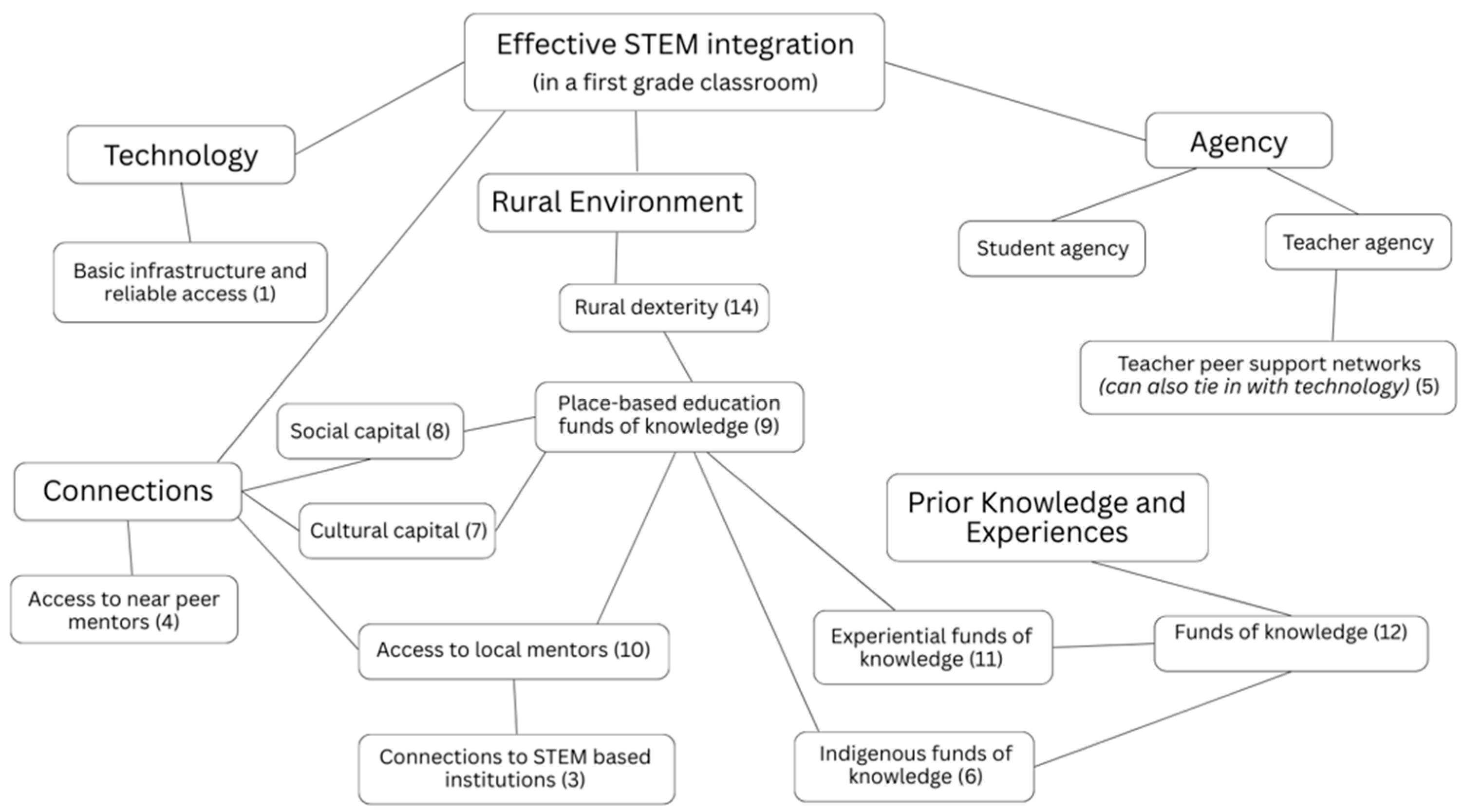
Ally, a 1st grade teacher, suggested that there is limited time to teach outside of the commercially purchased curriculum which aligns with her lesson log. Ally had some training in culturally responsive pedagogy through a National Science Foundation Research Experience for Teachers project. She indicated time constraints were a barrier to the integration of the practices learned in her professional development into her teaching. While debriefing her concept map construction, Ally suggested that while she recognized the importance of these aspects to her teaching, “there’s just not enough time in the day.” The researchers’ analysis of Ally’s teaching log indicated a 1:5 ratio of place-conscious to place-based approaches. Ally’s concept map is provided below in Figure 2.
Vick
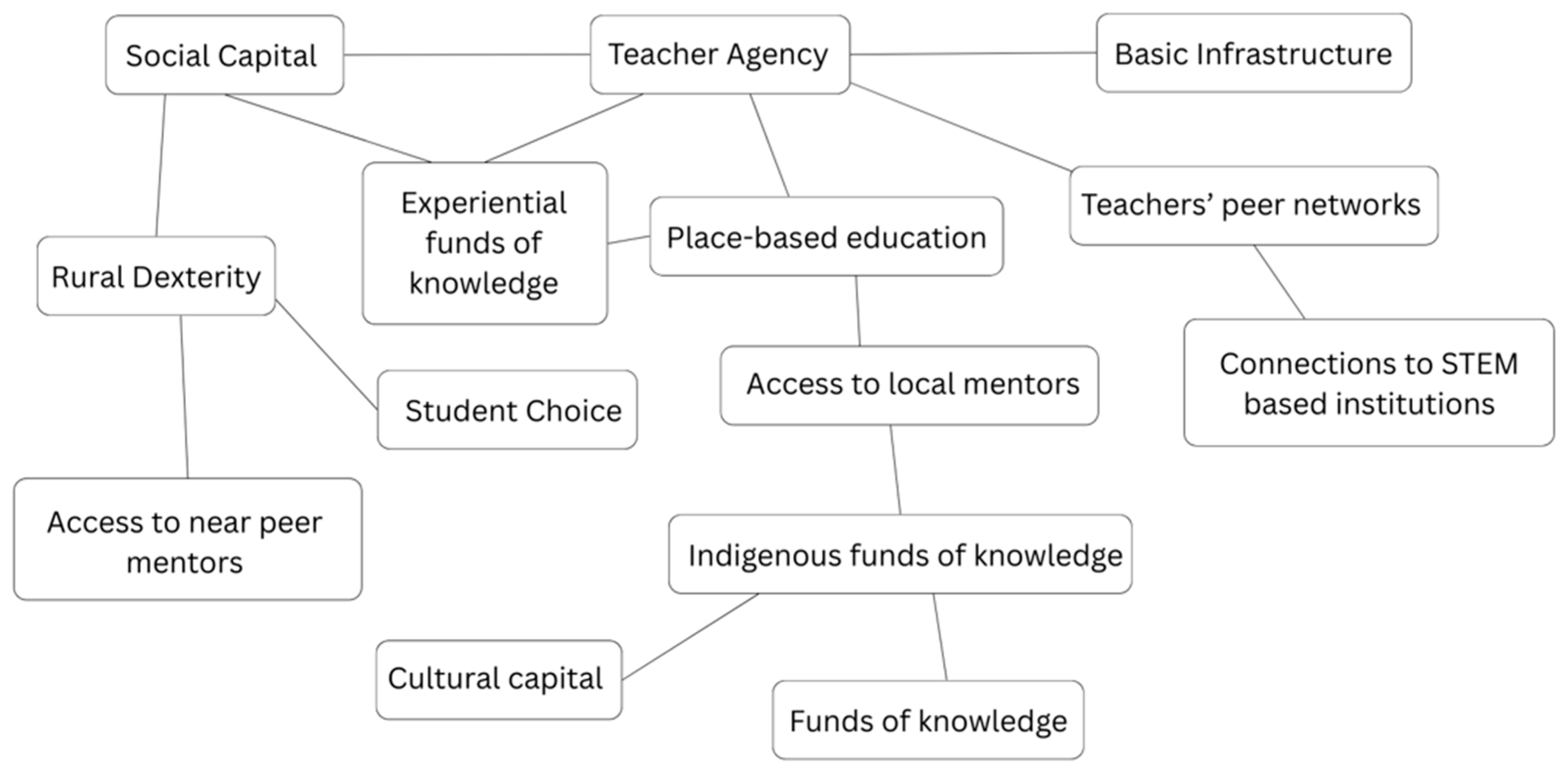
Vick’s debriefing of his concept map suggested that he experienced a delay in even being able to learn about community assets due to the COVID-19 pandemic that was afoot as he started his teaching career. With that said, he also shared that he viewed community connections to add relevance to classroom content and to engage his learners. Further, Vick indicated that a lack of mentoring and access to place-based assets resulted in him overly relying on the prescribed curriculum, especially in his first year. He stated, “You know, the first year I got here, we had, like, a really old textbook, and that was basically it, and I was like, oh, here you go… Like, here’s your resources to develop your, you know, STEM curriculum and math curriculum.” Vick also recognized the role that collaboration and connections among students can play in effective instruction. He stated, “when students…work together and learn together, that’s the best way that I’ve seen them cement their knowledge always with Math and overcome difficulties.” The researchers’ analysis of Vick’s log found a 1:4 ratio of place-conscious to place-agnostic approaches. Vick’s concept map is provided below in Figure 3.
David
David highlighted the role that industry connections can play in supporting his students’ learning. He noted that the students often shared in class that they had family members who work in oil and gas and recognized the potential value those experts from the community might have for his STEM instruction. Debriefing on the concept maps also indicated that David sees place-based learning as an effective way to engage students, but these approaches need to be balanced with the pacing of his curriculum. This was most notable when David described the egg drop activity they conducted at the local airport, which resulted in an enduring learning experience for his students. The researchers’ analysis of David’s teaching log resulted in a ratio of 3:1 with place-conscious to place-agnostic lessons employed. It should be noted that in his teacher log, David’s articulation of a national mathematics curriculum he implemented suggested a place-agnostic approach. However, through the interview, it became clear that the mathematics curriculum was applied with a place-conscious approach in his classroom. For example, he shared that he routinely embedded place-specific examples to the curriculum throughout its implementation. David’s concept map is provided below in Figure 4.
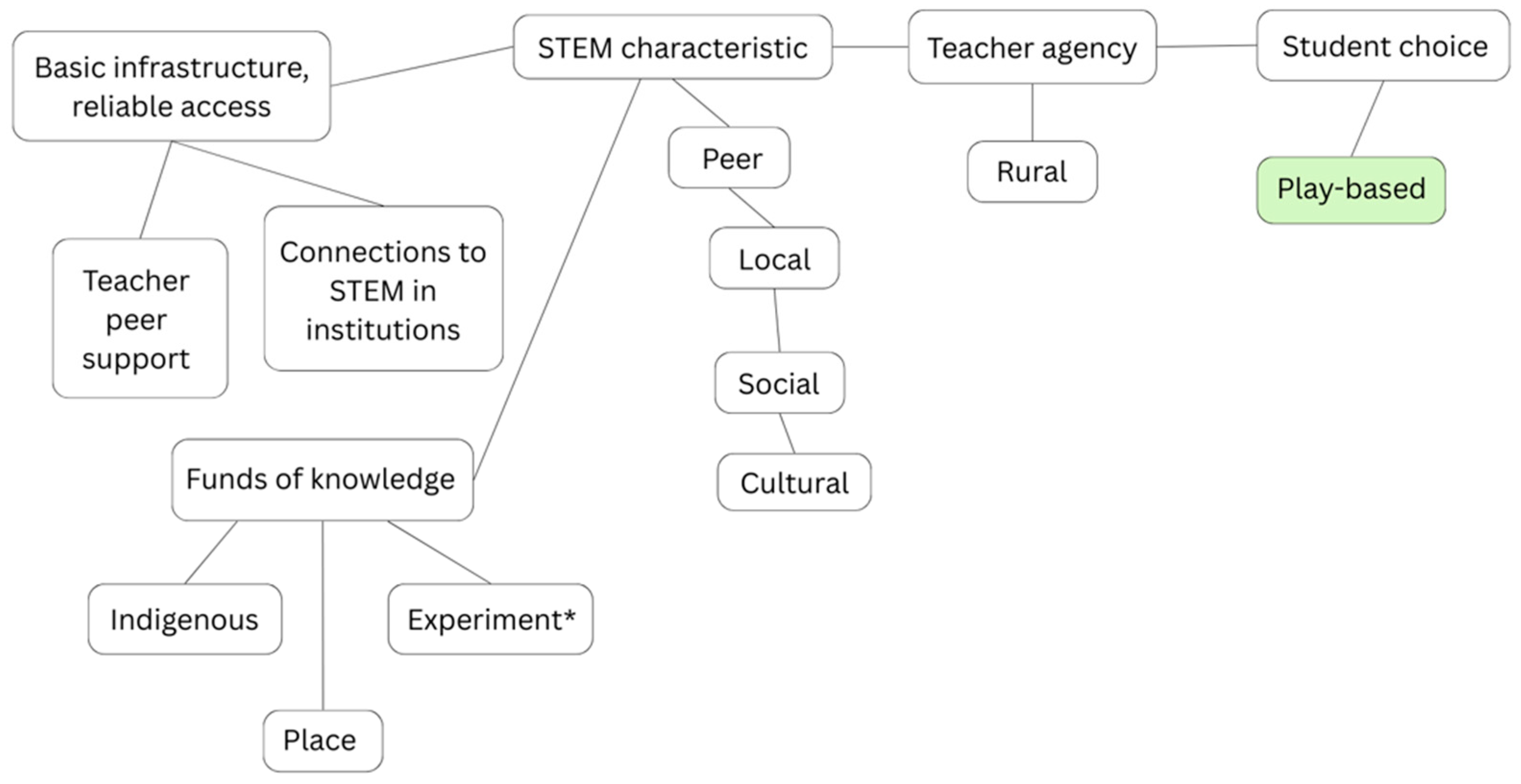
Gemma’s instructional focus was unique among her colleagues in the study. She worked with special education students and focused on life skills instruction. During the debriefing, one compelling insight became known from Gemma’s reflection: She noted that the concept mapping exercise made her realize that despite the focus on life skills, she was integrating STEM across her teaching. In this process, she noted that she has added play-based learning as a dimension of student choice that she found especially useful in engaging students in STEM learning. She also suggested that the demographics of her students’ community and lack of connection to multicultural contexts resulted in indigenous FoK not as emphasized as the other FoK. It should be noted that in her teacher log, Gemma’s articulation of several STEM-based activities she uses in her life skills class suggested a place-agnostic approach. However, during the interview, she indicated that she formed a series of partnerships with local or state mentors and partner teachers and leveraged those collaborations to teach the skills in a more place-conscious manner. Results from the analysis suggest that Gemma indicated a ratio of 5:2 for place-conscious to place-agnostic lessons in her log. Gemma’s concept map is provided below in Figure 5.
Comparative Analysis.
Following analysis of individual participants’ data, we performed comparative analysis to determine the degree of agreement between different instruments, followed by a comparison of aggregated results to identify any patterns that may be applied to similar contexts. The teaching logs of the participants were analyzed to determine the ratio of place-agnostic lessons described as lessons having no ties to the local community to place-based lessons that made references to local community assets or FoK. The National Center for Education Statistics Locale Codes (Geverdt, 2015) were used to classify the size of the hometown communities for each of the novice teachers as well as the subsequent community for the novice teachers who left the study site. Aggregated results are provided in Table 2 and include contextual information about each participant and the ratio of place-conscious lessons to place-agnostic lessons.
Participants were asked to rank possible rural STEM assets, with a rank of “1” being the most important and “14” being the least important. We calculated the mean and median rank for the ranked factors to determine a relative order of importance for rural, novice teachers with limited ties to the community. This resulted in a ranked list suggesting the level of importance the participants placed on rural STEM assets, from the highest priority to the lowest priority. We found a high level of congruence across the concept map, ranking data and interviews of the foundational importance of ‘basic infrastructure/reliable access and autonomy-related factors such as ‘teacher agency’ and ‘student choice.’ This ranked list is provided in Table 3.
After examining the median and mean of the ranking instrument and comparing the results to the groupings established by the participants in their concept maps, we found that some of the factors identified in the research grouped together and used this data to generate aggregated themes. The aggregated themes of ‘agency’ and ‘community capital/rural assets’ had a great deal of agreement, while ‘relational teacher capital’ had a larger range of ranking value. This pattern suggests an additional category or a progression as peers are known and exist as more concrete connections than unknown local mentors and unknown STEM institutions. This category may exhibit a pattern aligned with Bronfenbrenner’s Ecological Model (Bronfenbrenner, 1979) as peers are more proximate to the teacher than community members and a STEM institution, which may be hundreds of miles away. Table 4 details these aggregated themes and median ranked distributions.
Interview data using established themes from existing research was coded by two raters, and disagreements were discussed until widespread agreement was achieved after consensus discussion. The frequency of each code was calculated to do within unit analysis- to determine the degree of agreement between instruments for each participant representing their own case and cross-case analysis to determine themes that may be applied to similar contexts to fulfill the requirements of an instrumental case study. In instances where a single quote could be categorized in multiple ways, it was counted under all applicable categories. The authors noted some complexity with the data due to overlapping meaning in how each term was operationalized by previous researchers and nuances of the contexts described in participant quotations. For example, ‘peer support networks,’ ‘near peer mentors’ and ‘local mentors’ may all be categorized as ‘social capital.’ In our study, ‘Social capital’ was defined as students’ social networks, parental involvement, family-school relationships (Rios-Aguilar et al., 2011); students’ social networks can have significant overlap with novice teachers’ mentors as parents can be teachers or actively involved community members. The numerous identities and roles a single community member can play could be more pronounced in rural communities with smaller populations. Additionally, those who may be considered a “near peer mentor” may be more encompassing a smaller school staff in rural areas than in urban areas. Table 5 details these frequency distributions of themes that emerged across all interviews.

4. Discussion

For this study, the researchers asked the following research questions: Our study examined the following research questions: How do novice, non-local and urban teachers learn about a rural community’s funds of knowledge (FoK) and local community assets? Which research-established factors known to support rural STEM education do non-local, rural, novice teachers feel are the most important to them in their teaching position? How do non-local, rural, novice teachers incorporate FoK and rural community assets into their teaching?
In our findings, non-local, rural, novice teachers indicated that they learned about rural assets and FoK through relationships with administrators, mentors, peers, and community members. The semi-structured interviews provided vignettes and reflections on the importance of relational teacher capital (peer support networks, near-peer mentors, local mentors, and STEM institutions) that aided their classroom instruction. Relational teacher capital factors were deemed less important in the ranking data and concept map instruments. The participants emphasized concrete factors such as reliable access and basic infrastructure as essential to their rural STEM instruction over the more complex constructs of FoK and social capital. Analysis of the participants’ concept maps suggest that infrastructure along with teacher agency and student choice may be the perceived prerequisites to the integration of rural community assets and FoK. Analysis of the semi-structured interviews suggests the most common way the newcomer teachers might incorporated local assets and FoK into their instruction was by using local examples during instruction and leveraging personal and professional relationships to find out more about their community. In addition to these findings, the following themes emerged during data analysis:

4.1. Theme 1: Integration of Community Assets and FoK May Positively Influence STEM Efficacy and Identity for Students and Novice Teachers

The first theme to emerge during the data analysis focused on the integration of K-12 students’ funds of knowledge (FoK), social capital, cultural capital and local community assets, and how that integration may increase rural student and teacher engagement in STEM learning and may positively influence rural STEM identity formation.
Ally, an elementary teacher, observed that connecting learning to students’ community can happen for even the youngest learners and that “…finding people more knowledgeable than (her)…” in the community can bring in outside expertise and knowledge that she may not possess. The action of inviting community members into the classroom is a hallmark of place-based education (Fraser, 2016) and can leverage social capital that exists in the learning community to improve learning.
Vick, a high school math teacher described how meeting a local engineer helped him contextualize math education for his students by making connections with local activities such as “how much fertilizer he’s going to put in or how to maximize an area of pasture given certain fencing constraints.” Vick shared that bringing the engineer into the classroom could challenge students who “don’t see the value in taking calculus.” David observed similar patterns in his classroom, “…as soon as students see that the math we’re working on isn’t just something they have to do, and it’s something that can… create a tangible item or product or do something… that changes their perspective on how interested they are in doing it”. Morales (2019), acknowledges that it can be difficult for rural students to connect their lived experiences and formal schooling, particularly as approved curricula are increasingly place-agnostic. While a substantive body of research on cultural capital examines deficits in rural and low-socioeconomic classes (Davies & Rizk, 2018), this vignette showcases an asset focused application of the cultural capital (Rios-Aguilar et al., 2011) that is present in the farming and ranching activities of the study site that could be leveraged to show the applicability of the course content to students. This suggests that when students can see that their lived experiences constitute STEM knowledge, teachers may be able to broaden students’ understanding of STEM careers and representation of rural students in STEM fields (Mejia & Wilson-Lopez, 2015).
Gemma, a special education teacher serving students at the middle school and elementary level, noted that it can be challenging for rural educators to “realize they’re doing STEM-based instruction,” suggesting that teachers may also benefit from broadening the definition of STEM learning. In her Life Skills course, Gemma aspired to “go to the grocery store with my students and cook a meal,” a process that involves considerable STEM knowledge and skills but does not adhere to traditional STEM archetypes and iconography that can exist. This may have implications for teacher identity as teachers who see themselves doing STEM instruction may be more likely to identify as STEM instructors. While we collected no identity-specific data, further research would be needed to make concrete claims about Gemma’s STEM teacher identity formation. Gemma also identified parallels between students and teachers on the theme of rural dexterity (Morales, 2019). She identifies challenges of finding materials to support instruction in rural communities by reflecting, “sometimes we have to do activities with not most ideal resources because the grocery store didn’t carry them or whatnot” and that “being able to adapt and use what we were able to find” models this kind of resourcefulness for the students. While rural dexterity was ranked low by participants, it was a frequent theme in the interviews, with 14 comments. The focus of the research originally conducted by Morales (2019) was on youth, but there could be merit in replicating the study by comparing rural and urban teachers’ resourcefulness and persistence when challenged by difficult tasks to determine teachers’ rural dexterity.
The decision of rural youth to pursue STEM careers is based on knowledge of available STEM careers, but also on the formation of STEM self-efficacy and identity (Bhaduri et al., 2022). Kwok et al. (2025), coded their findings on asset-based pedagogy used by novice teachers in a hierarchical fashion where instructional practices are a foundation, followed by social-emotional learning and finally, increasing connection to families. David recalled that some of his students frequently shared that their dad or family members worked in agriculture and the oil and gas industry during instruction. These types of student-teacher conversations could be used to build upon the development of STEM identities in rural youth. The findings of our study may support connections between those found by Kwok et al. (2025) research and with Gutiérrez’s (2008) work in hybrid identities. A progression towards the consolidation of STEM identity, cultural and social identities and rural identity could begin with the development of culturally responsive, place-conscious lessons that incorporate rural community assets and funds of knowledge. Further investigation in this area may help better understand this phenomenon and define factors that contribute to greater representation of rural students in STEM fields to mitigate the untapped STEM potential that exists in rural communities (Harris & Hodges, 2018; Saw & Agger, 2021).

4.2. Theme 2: Modeling How to Acquire Knowledge of Local FoK and Rural Assets May Aid Novice Teachers’ Ability to Use Asset-Based Pedagogical Approaches

The second theme to emerge highlighted how the integration of students’ funds of knowledge (FoK) and local community assets is complex work. However, modeling by colleagues and community members can provide a road map to success. Further, this theme focused on how modeling is of greater importance for rural, novice teachers who are new to the community.
Incorporating students’ social capital, cultural capital, and FoK is one form personalized learning can take (Volman et al., 2025). Gunawardena et al. (2024) applied Complexity Theory to account for challenges teachers experienced in the implementation of personalized learning. Findings from our study indicated participants could define personalized learning and identified it as a best practice but struggled with tasks such as personalizing prescribed curriculum to individual students or leveraging individual student interest to increase engagement. Statements from the participants of our study, particularly Ally, described similar challenges. Ally observed “there has not been a ton of time to integrate STEM…” and that skills such as “…reading and critical thinking take priority…” in the younger grades. Gemma identified the strategy of “…asking fellow teachers if I’m stuck on a specific problem or specific issue with this kid…” and there was value in “…using the community who maybe knows the student longer than I have…”. Volman et al. (2025) and Gunawardena et al. (2024) also noted that instructional strategies were often chosen based on their popularity instead of an alignment to student needs. These findings may provide an explanation for why the participants of our study ranked students’ FoK and social and cultural capital, factors that are inherently complex, as less important than more tangible factors such as reliable infrastructure/reliable access and student choice and teacher agency. Interview data from this study suggests that modeling the use of individual FoK and rural community assets by more senior teachers, administrators, community college and university faculty and community members helped to provide procedural knowledge for novice, rural teachers to attempt similar actions in their classrooms, findings that are supported in existing research (Cooper, 2007), but contradicted the ranking data. Vick, hired during the COVID-19 pandemic, noted that his first couple of years in the district, he “didn’t really have any local resources” and it was not until large meetings resumed that he was able to connect with colleagues and community members. Gemma’s comment stated, “I’m new so new to town that I don’t have the connections to be able to use, like my own social capital…” but ended her thought on a hopeful note that this situation will “get better with time.” Both participants observed that local resources and community assets were out there in their community, but knowledge of what, who or where these assets are, remained elusive. Applying Complexity Theory, we would describe this phenomenon as ‘known unknowns’ as the participants acknowledged the unknowns exist, but without detailing what these unknowns are (Gunawardena et al., 2024).
Three of the four participants described a vignette where a local teacher integrated the classic “egg drop” science experiment with local FoK and rural community assets by finding a local pilot and dropping the egg apparatuses from a plane at the community airport. David also reflected on the power of salient experiences as he described students in his district dropping egg protection apparatuses out of airplanes at the local airport by noting, “you’re going to remember that you got to drop your egg contraption out of a plane in middle school.” The superintendent capitalized on this event by having students and teachers from across the district watch the egg drop to provide a concrete example of how the community can be leveraged to deepen understanding and passion for learning. Modeling FoK integration to novice teachers may help build the skills of novice teachers (Nicholas et al., 2012) and provide a road map for their own projects. One of the participants noted that they could not see such an event happening in a more urban area and noted their school context provided more opportunities for “creativity” and “flexibility” than they had experienced in more urban classrooms. While there is a significant body of research that provides rationale for using students’ FoK and local community assets in the classroom (Cooper, 2007; Fraser, 2016; Koerner & Abdul-Tawwab, 2006; Nicholas et al., 2012) there is limited research on how pre-service teachers can acquire knowledge of their students’ FoK and rural community assets (Nicholas et al., 2012) in deep, meaningful ways.
Application of place-conscious pedagogy learned by pre-service teachers at university that addresses the unique challenges and opportunities of rural classrooms may be a type of cultural border crossing that is challenging for beginning teachers to navigate on their own (Cooper, 2007). However, this interpretation extends beyond what the data can confirm and warrants investigation in future studies. Kwok et al. (2025) observed that acknowledgement of the value of asset-based pedagogy falls short of preparing teachers to enact these practices in their classrooms. Hollingsworth et al. (2024) found that community asset mapping (a strategy to identify community assets that include resources, infrastructure, social capital, and FoK), completed by pre-service teachers focused on physical assets with limited identification of other types of assets. The authors of that study suggest that the pre-service teachers may have a more comprehensive understanding of the community’s assets, including FoK, had they learned with community members instead of learning about or learning from the community. In our study, Vick noted that connections with a local engineer helped him think of local tasks that employed math skills, while David’s principal and connection from the local Chamber of Commerce helped him create a project where his students improved their local community. Gemma and Ally both acknowledged their colleagues as sources of information about rural assets. The recurrent statements from participants of our study suggest community member interactions were salient learning experiences that increased their knowledge of community assets and local FoK which aligns with the recommendations of the authors.
A common barrier to place-conscious lesson planning identified by our study participants was structured curriculum, as identified by Ally, and employing teacher strategies that balance engagement with pacing, as identified by David, as he sought to “find the balance where I’m hitting what I need to as far as the curriculum goes”. As a lower elementary teacher, Ally noted the tension that exists between STEM instruction and other learning goals, “from what I have seen… there has not been a ton of time to integrate STEM”, and while she also identified integration with other subjects as a potential strategy, she felt that critical thinking and reading were prioritized. While she participated in summer STEM related professional development, she lamented that “we just don’t have time to use it- and that’s a bit of a bummer.” Such structural barriers to the implementation of asset-based pedagogy have also been identified in existing research (Morales, 2019; Rincón & Rodriguez, 2021), however, the novice teachers in our study noted that “working with my administrators and my mentor teacher, working with people who have done this kind of thing before…” will help them navigate these challenges. The integration of students’ FoK and local community assets is a worthy endeavor to increase rural student engagement and broaden participation in STEM fields (Harris & Hodges, 2018; Lakin et al., 2021; Volman et al., 2025; Volman & Gilde, 2020). The process for acquiring knowledge of rural assets and integrating them into the classroom while balancing other expectations is a complex and cognitively demanding process. Effective modeling may help novice teachers develop these skills.

4.3. Theme 3: Mentoring That Focuses on Local FoK and Community Assets May Influence Both Instruction and the Decision of Rural, Non-Local, Novice Teachers to Stay in the Community

The final theme to emerge focused on the role of purposefully mentoring novice, rural teachers on how to use students’ funds of knowledge (FoK) and community assets. Further, this theme addresses how mentoring could potentially serve a dual purpose of increasing instructional effectiveness and the likelihood of teacher retention. The authors acknowledge that although further, focused exploration of the association between teachers’ use of FoK and community assets and retention is needed, the initial exploratory findings of our study are worth noting.
All participants in our study were rural, novice, newcomer teachers with no or limited previous personal connections to the rural community where they taught. One year after the data collection period, one of the teachers moved out of state to another rural community that was in closer proximity to an urban area, while another participant moved to a rural community that was significantly larger than the study site community. The two novice teachers who stayed in the community expressed that their rural teaching positions provided them with opportunities for creativity, flexibility, and autonomy that they would not have in more urban locations, known factors that contribute to rural STEM teacher retention (Goodpaster et al., 2012). David noted that the airplane egg drop would be impossible in the more urban area where he grew up and in a subsequent conversation, he challenged the rural deficit narrative (Rios-Aguilar et al., 2011), and he felt he could do more in his rural teaching position than in a different context. It should be noted that these two participants also ranked teacher agency as a high priority, suggesting possible alignment between their personal values and their current teaching context.
Interestingly, the two participants who stayed in the rural community had a greater ratio of place-conscious to place-agnostic lessons 3:1 and 5:2 versus the teachers who left for other communities, 1:5, 1:4. While we hypothesize that the ratio of place-conscious to place agnostic lessons may be an indirect measure of integration into the community and the likelihood of staying in their positions, further research is needed to investigate this possible connection. This pattern could also be the result of an underlying characteristic or orientation to rural teaching possessed by non-local teachers who decide to stay in the community that is absent in those who decide to leave. Whether a teacher’s ratio of place-conscious to place-agnostic instruction reflects something meaningful about their integration into the community or their likelihood of staying in that community is a hypothesis the current data cannot evaluate, but one that a longitudinal study could examine more systematically.
Our findings are also consistent with Goodpaster et al. (2012) who identified positive social connections of rural STEM teachers to their community positively influenced teacher retention. Further, in their interviews the “stayers” gave more specific examples of community connections, student FoK, and rural assets during their interviews. David noted “the more and more you get connected to a community… the more you’re going to become attached to that community… and feeling like a part of the community is a huge reason [for me] to stay.” He noted personal connections with a local business owner, and the local and state Chamber of Commerce employees who helped him with classroom projects. A few months after the interview, a classroom project to create a regulation-sized basketball court on the blacktop at his school yard was approved. This idea originated with his students and was made possible through funding and support from the relationship he formed with the director of the Chamber of Commerce and encouragement from his principal. This project exemplifies how teachers can honor students’ FoK and rural dexterity (Morales, 2019), as the students completed the math calculations to design the court and completed all the work themselves. Whether experiences of this kind influence students’ STEM self-efficacy or identity formation is a question that the current study was not designed to answer.
Further, this project leveraged the social capital in the community by mentoring the students on how to create an application for funding to the Community Foundation. Two of the four participants noted that their mentor teacher and/or administrators were key figures in helping them learn about community assets and often facilitated introductions with community members. David acknowledged his administrator as a key resource by saying “my administration is very supportive and so I think if I came to them with ‘hey, I would like to do something within the community,’ I think they would help me…” Our findings align with established research that identifies modeling and mentoring as key mechanisms to develop asset-based pedagogy skills in novice teachers (Barley, 2009; Sherfinski et al., 2020). However, it suggests further exploring how the mentor teachers, who are adept at incorporating community assets into instruction, may also assist in connecting novice teachers more deeply to their community. Azano et al. (2020) identify that collegial and deep community connections as factors that can move beginning teachers from surviving to thriving in rural schools and as factors that may support teacher retention. Our study resonates with those recommendations and provides further rationale for the importance of those deep connections and sense of belonging.

4.4. Recommendations for Practice

Based on the findings of this study and recommendations from the study participants, we composed the following recommendations for practice for stakeholders at universities, rural school districts and for novice, new to town teachers themselves.

4.4.1. For Universities

  • Define post-graduation services and support available to teachers offered by STEM institutions as well as mechanisms for continuous contact with teacher alumni.
  • Explicitly teach pre-service teachers how to acquire knowledge of local assets and FoK prior to teaching asset-based pedagogy. Extend asset-based pedagogy beyond culturally responsive lesson planning to include social emotional learning and connecting schools and families.
  • Explicitly teach pre-service teachers how the use of FoK can lead to hybrid identity development to broaden representation of rural youth in STEM fields. Model how to enhance national or place-agnostic curriculum with local examples that are relevant to students and honor their FoK, social and cultural capital.
  • Model teacher rural dexterity principles to equip novice teachers with the skills and dispositions towards curiosity, persistence, and resourcefulness to navigate challenges of isolation and limited resources

4.4.2. For Rural School Districts

  • While hiring teachers with previous ties to the communities can come with many benefits, celebrate the unique talents and skills newcomer teachers bring to the school and community.
  • Include community assets as part of induction and mentoring programs, identify teacher leaders in this area, and connect novice teachers, particularly ‘new to the community’ teachers with community members; these efforts may not only lead to place-conscious instruction, but increase the likelihood of teacher retention.
  • When adopting a new curriculum, create a locally developed curriculum guide that includes place-based connections unique to the community in which the school is based.
  • In addition to assigning a content mentor to novice, newcomer teachers find someone local in the community who can act as a community navigator to aid in the integration of newcomer teachers into the community at large.

4.4.3. For Novice, Newcomer Rural Teachers

  • Ask colleagues, community members, and students about their experiences in the community to determine FoK and community assets
  • Read the local newspaper, attend local events, interact with local historians or community facing organizations such sports organizations, volunteer groups, visitor centers, local government, or non-profit organizations.
  • Identify topics in prescribed curriculum that could be personalized with local FoK and community assets
  • Identify the affordances provided by many rural teaching contexts such as greater teacher autonomy and opportunities for creativity and consider how these affordances can help address contextual challenges
  • Have structured and regular conversations with mentors about integration into the community/community assets that can be used in the classroom.
  • Have your students create a photo inventory of STEM community assets or what STEM learning looks like in their everyday lives to use as conversation starters to begin the work of nurturing hybrid rural/STEM identities
  • “I think I would tell them, to not be afraid to ask people questions…everyone’s willing to help you”—Gemma, novice, newcomer teacher.
  • “It is okay to have fun” with the students while teaching content—David, novice, newcomer teacher.
The list of recommendations for universities, school districts, and non-local teachers may be further enhanced through university-community partnerships. In those partnerships, supportive programming could be co-constructed. Intentional reflection by non-local, novice teachers on their acquisition of knowledge of local FoK and use of asset-based pedagogy in their classrooms, may help them to become near-peer mentors in their school districts and important sources of expertise for universities.

5. Conclusions

Non-local, novice, rural teachers are a population worthy of study as they fill teaching positions in many small schools and communities. This study investigated newcomer teachers who are white, US Citizens, teaching in a predominantly white, agrarian community. We acknowledge that there is considerable diversity among newcomer teachers who may be from different countries, cultures or races teaching in contexts that are dramatically different than their home communities. Consequently, these variables could influence how these teachers acquire knowledge of community assets/FoK and implement them into their instruction. Subsequent research in this area could be supported through studies that employ structural equation modeling to determine relationships between distinct types of FoK, social and cultural capital and factors such as agency and infrastructure that influence rural STEM instruction. Further research could include a longitudinal study whereby participants are reassessed to determine if more classroom experience influences their perceptions of known factors that support rural STEM instruction and the techniques used to integrate students’ FoK and community assets. The latter may provide an insight into the professional trajectory in which new teachers refine their approaches to asset-based pedagogy, and examination through a Complexity Theory (Gunawardena et al., 2024) lens may provide useful. Furthermore, exploration of the association between intentional mentoring of novice teachers around asset-based pedagogy and how these efforts may lead to greater awareness of community assets, greater integration into the community and an increased likelihood of remaining in a community, in which the teacher had no or limited previous ties, is warranted. Event-centered epistemological approaches (Novak, 1988) may help researchers understand how novice teacher participation in memorable activities that leverage FoK and community assets influences their professional practice. From the interview data, we learned the airplane egg drop was a salient event for not only students, but teachers as it modeled what is possible with asset-based pedagogy in rural communities; in the words of one of our study participants, “the sky is the limit.”

Author Contributions

Conceptualization, M.R. and N.L.; methodology, N.L. and M.R.; software, N.L.; validation, M.R., and N.L.; formal analysis, M.R. and N.L.; investigation, M.R. and N.L.; resources, M.R. and N.L.; data curation, M.R. and N.L.; writing—original draft preparation, M.R. and N.L.; writing—review and editing, M.R. and N.L.; visualization, N.L. and M.R.; supervision, M.R. and N.L.; project administration, M.R. and N.L. All authors have read and agreed to the published version of the manuscript.

Funding

This research was funded by the Montana State University Center for Research on Rural Education. The APC was also funded by the Montana State University Center for Research on Rural Education.

Institutional Review Board Statement

The study was conducted in accordance with the Declaration of Helsinki and approved by the Institutional Review Board (or Ethics Committee) of Montana State University (protocol code 2023-792 and date of approval, 24 April 2023) for studies involving humans.

Informed Consent Statement

Informed consent was obtained from all subjects involved in the study.

Data Availability Statement

Consistent with the approved ethics, data is not available for general access.

Acknowledgments

During the preparation of this manuscript/study, the authors used ChatGPT (OpenAI, https://chatgpt.com/) to provide table structure suggestions on how best to communicate findings to the reader for the data analysis tables. In addition, the research team used ChatGPT to group the priority tiers when analyzing the ranked importance of rural STEM assets after participants shared the rankings data. The authors have reviewed and edited the output and take full responsibility for the content of this publication.

Conflicts of Interest

The funders had no role in the design of the study; in the collection, analyses, or interpretation of data; in the writing of the manuscript; or in the decision to publish the results.

Abbreviation

The following abbreviation is used in this manuscript:
FoKFunds of Knowledge

References

  1. Anderson, J., Horton, L., Kendrick, M., & McTavish, M. (2017). Children’s funds of knowledge in a rural northern canadian community: A telling case. Language and Literacy, 19(2), 20–32. [Google Scholar] [CrossRef]
  2. Azano, A. P., Brenner, D., Downey, J., Eppley, K., & Schulte, A. K. (2020). Teaching in rural places: Thriving in classrooms, schools, and communities (1st ed.). Routledge. [Google Scholar] [CrossRef]
  3. Barley, Z. A. (2009). Preparing teachers for rural appointments. The Rural Educator, 30(3), 10–15. [Google Scholar] [CrossRef]
  4. Baxter, P., & Jack, S. (2008). Qualitative case study methodology: Study design and implementation for novice researchers. The Qualitative Report, 13(4), 544–559. [Google Scholar] [CrossRef]
  5. Bhaduri, S., Biddy, Q., Elliott, C. H., Jacobs, J., Rummel, M., Ristvey, J., Sumner, T., & Recker, M. (2022). Co-designing a rural research practice partnership to design and support STEM pathways for rural youth. Theory & Practice in Rural Education, 12(2), 45–70. [Google Scholar] [CrossRef]
  6. Borgerding, L. A. (2017). High school biology evolution learning experiences in a rural context: A case of and for cultural border crossing. Cultural Studies of Science Education, 12, 53–79. [Google Scholar] [CrossRef]
  7. Bronfenbrenner, U. (1979). The ecology of human development: Experiments by nature and design. Harvard University Press. [Google Scholar]
  8. Burlington, J. (2023). In montana, an avalanche of wealth is displacing workers. Available online: https://inthesetimes.com/article/displaced-montana-workers-luxury-housing-2 (accessed on 29 January 2026).
  9. Cajete, G. (2000). Native science: Natural laws of interdependence. Clear Light Publishers. [Google Scholar]
  10. Caughman, L. (2022). Integrating a sustainability education model into STEM courses at a tribal college: Building diverse scientists via science identity development. Theory & Practice in Rural Education, 12(2), 9–43. [Google Scholar] [CrossRef]
  11. Civil, M. (2016). STEM learning research through a funds of knowledge lens. Cultural Studies of Science Education, 11, 41–59. [Google Scholar] [CrossRef]
  12. Cooper, J. E. (2007). Strengthening the case for community-based learning in teacher education. Journal of Teacher Education, 58(3), 245–255. [Google Scholar] [CrossRef]
  13. Davies, S., & Rizk, J. (2018). The three generations of cultural capital research: A narrative review. Review of Educational Research, 88(3), 331–365. [Google Scholar] [CrossRef]
  14. DeJonckheere, M., Vaughn, L. M., James, T. G., & Schondelmeyer, A. C. (2024). Qualitative thematic analysis in a mixed methods study: Guidelines and considerations for integration. Journal of Mixed Methods Research, 18(3), 258–269. [Google Scholar] [CrossRef]
  15. Denton, M., & Borrego, M. (2020). Funds of knowledge in STEM education: A scoping review. Studies in Engineering Education, 1(2), 71–92. [Google Scholar] [CrossRef]
  16. Edwards, D. S., Kraft, M. A., Christian, A., & Candelaria, C. A. (2025). Teacher shortages: A framework for understanding and predicting vacancies. Educational Evaluation and Policy Analysis, 47(3), 703–729. [Google Scholar] [CrossRef]
  17. Fraser, E. W. (2016). Place-conscious pedagogy and sackville, new brunswick, as a learning community. Journal of New Brunswick Studies Revue d’études Sur Le Nouveau-Brunswick, 7(1). Available online: https://journals.lib.unb.ca/index.php/JNBS/article/view/25200 (accessed on 29 January 2026).
  18. Gelber, S. (2022). “We are gonna miss too many of them”: Rurality, race, and the history of grow your own teacher programs. American Journal of Education, 129(1), 29–51. [Google Scholar] [CrossRef]
  19. Geverdt, D. (2015). Education demographic and geographic estimates program (EDGE): Locale boundaries user’s manual. Available online: http://nces.ed.gov/pubsearch (accessed on 29 January 2026).
  20. González-Leonardo, M., Rowe, F., & Fresolone-Caparrós, A. (2022). Rural revival? The rise in internal migration to rural areas during the COVID-19 pandemic. Who moved and Where? Journal of Rural Studies, 96, 332–342. [Google Scholar] [CrossRef]
  21. Goodpaster, K. P., Adedokun, O. A., & Weaver, G. C. (2012). Teachers’ perceptions of rural STEM teaching: Implications for rural teacher retention. Rural Educator, 33(3), 9–22. [Google Scholar] [CrossRef]
  22. Gunawardena, M., Bishop, P., & Aviruppola, K. (2024). Personalized learning: The simple, the complicated, the complex and the chaotic. Teaching and Teacher Education, 139, 104429. [Google Scholar] [CrossRef]
  23. Gutiérrez, K. D. (2008). Developing a Sociocritical literacy in the third space. Reading Research Quarterly, 43(2), 148–164. [Google Scholar] [CrossRef]
  24. Hammack, R., Robinson, J., Boz-Togu, T., Lee, M. J., Summers, R., Iveland, A., Minouye, M., Macias, M., Zaman, M., Galisky, J., Johansen, N., & Ringstaff, C. (2024). Supporting elementary engineering instruction in rural contexts through online professional learning and modest supports. Available online: https://par.nsf.gov/biblio/10513809 (accessed on 29 January 2026).
  25. Harris, R. S., & Hodges, C. B. (2018). STEM education in rural schools: Implications of untapped potential. National Youth Advocacy and Resilience Journal, 3(1), 3–12. [Google Scholar] [CrossRef]
  26. Hollingsworth, H., Buchanan, L., Wilson, A. M., Robinson, F., & Carpenter, J. P. (2024). Community mapping in teacher preparation: Developing undergraduate students’ knowledge of community assets. Action in Teacher Education, 46(4), 296–312. [Google Scholar] [CrossRef]
  27. Huberman, A. M., Miles, M. B., Denizen, N. K., & Lincoln, Y. S. (1994). Handbook of qualitative research (Vol. null). SAGE Publications. [Google Scholar]
  28. Ingersoll, R. M., & Tran, H. (2023). Teacher shortages and turnover in rural schools in the US: An organizational analysis. Educational Administration Quarterly, 59(2), 396–431. [Google Scholar] [CrossRef]
  29. Koerner, M. E., & Abdul-Tawwab, N. (2006). Using community as a resource for teacher education: A case study. Equity & Excellence in Education, 39(11), 37–46. [Google Scholar] [CrossRef]
  30. Kwok, A., Waddington, J., Davis, J., Halabi, S., Huston, D., & Hemsley, R. (2025). Beginning teachers and strategies for asset-based pedagogy. American Journal of Education, 131(2), 237–270. [Google Scholar] [CrossRef]
  31. Lakin, J. M., Stambaugh, T., Ihrig, L. M., Mahatmya, D., & Assouline, S. G. (2021). Nurturing STEM talent in rural setting. Phi Delta Kappan, 103(4), 24–30. [Google Scholar] [CrossRef]
  32. Learning Policy Institute. (2025). An overview of teacher shortages: 2025. Learning Policy Institute. [Google Scholar]
  33. Lincoln, Y., & Guba, E. (1985). Naturalistic inquiry (Vol. null).
  34. Liu, Y., Lam, C. B., Anglum, J. C., & Nguyen, T. D. (2025). New Teachers in rural America. Phi Delta Kappan, 107(1–2), 28–35. [Google Scholar] [CrossRef]
  35. Mejia, J. A., & Wilson-Lopez, A. (2015). STEM education through funds of knowledge: Creating bridges between formal and informal resources in the classroom. The Agricultural Education Magazine, 87(5), 14–16. [Google Scholar]
  36. Moll, L. C., Amanti, C., Neff, D., & Gonzalez, N. (1992). Funds of knowledge for teaching: Using a qualitative approach to connect homes and classrooms. Theory into Practice, 31(2), 132–141. [Google Scholar] [CrossRef]
  37. Montana Department of Labor and Industry. (2023). Hello, I’m new here, migration and the labor force. Available online: https://lmi.mt.gov/_docs/Publications/EAG-Articles/EAG-0723_Final.pdf (accessed on 29 January 2026).
  38. Montana State University Extension. (2021). Montana movers study 2021 report. Available online: https://www.montana.edu/extension/communitydevelopment/montanamovers.html (accessed on 29 January 2026).
  39. Morales, A. (2019). Valuing rural dexterity: Experiential funds of knowledge, science education and rural kids. Great Plains Research, 29, 33–40. [Google Scholar] [CrossRef]
  40. National Academies of Sciences Engineering Medicine. (2025). K-12 STEM education and workforce development in rural areas. The National Academies Press. [Google Scholar] [CrossRef]
  41. National Research Council. (2011). A framework for K-12 science education: Practices, crosscutting concepts, and core ideas (Prepublication copy. ed.). National Academies Press. [Google Scholar]
  42. National Research Council. (2013). Next generation science standards: For states, by states. The National Academies Press. [Google Scholar] [CrossRef]
  43. Nelson, F. (2022). All kinds of text: Investigating a phenomenon through multimodal media. Theory & Practice in Rural Education, 12, 221–227. [Google Scholar] [CrossRef]
  44. Nelson, K. S., & Nguyen, T. D. (2023). Community assets and relative rurality index: A multi-dimensional measure of rurality. Journal of Rural Studies, 97, 322–333. [Google Scholar] [CrossRef]
  45. Nicholas, T. M., Baker-Sennett, J., McClanahan, L., & Harwood, A. (2012). Building preservice teachers’ connections with communities through inquiry. International Journal of Teaching and Learning in Higher Education, 24(2), 221. [Google Scholar]
  46. Novak, J. D. (1988). Learning science and the science of learning. Studies in Science Education, 15(1), 77–101. [Google Scholar] [CrossRef]
  47. Rabionet, S. E. (2009). How I learned to design and conduct semi-structured interviews: An ongoing and continuous journey. The Qualitative Report, 16(2), 563–566. Available online: http://www.nova.edu/ssss/QR/QR16-2/rabionet.pdf (accessed on 29 January 2026).
  48. Ridder, H.-G. (2022). Instrumental case study. In The SAGE encyclopedia of research design (2nd ed.). SAGE Publications, Inc. [Google Scholar]
  49. Rincón, B. E., & Rodriguez, S. (2021). Latinx students charting their own STEM pathways: How community cultural wealth informs their STEM identities. Journal of Hispanic Higher Education, 20(2), 149–163. [Google Scholar] [CrossRef]
  50. Rios-Aguilar, C., Kiyama, J. M., Gravitt, M., & Moll, L. C. (2011). Funds of knowledge for the poor and forms of capital for the rich? A capital approach to examining funds of knowledge. Theory and Research in Education, 9(2), 163–184. [Google Scholar] [CrossRef]
  51. Rispens, S. (2023). Montana schools address teacher shortage by adopting four-day weeks to better recruit and retain educators. Montana Free Press. Available online: https://montanafreepress.org/2023/12/18/montana-schools-address-teacher-shortage-by-adopting-four-day-weeks-to-better-recruit-and-retain-educators/ (accessed on 29 January 2026).
  52. Saw, G. K., & Agger, C. A. (2021). STEM pathways of rural and small-town students: Opportunities to learn, aspirations, preparation, and college enrollment. Educational Researcher, 50(9), 595–606. [Google Scholar] [CrossRef]
  53. Schwager, K. A., & Gates, M. (2024). Mitigating rural brain drain in STEM-related fields in Louisiana and Montana. Available online: https://ir.vanderbilt.edu/items/49a1d45e-ac22-4c58-83ea-c2e3d8b5465c (accessed on 29 January 2026).
  54. Shain, S. (2024). This Montana school solved its teacher shortage by opening a day care. High Country News. Available online: https://www.hcn.org/articles/this-montana-school-solved-its-teacher-shortage-by-opening-a-day-care/ (accessed on 29 January 2026).
  55. Sherfinski, M., Hayes, S., Zhang, J., & Jalalifard, M. (2020). Grappling with funds of knowledge in rural appalachia and beyond: Shifting contexts of pre-service teachers. Action in Teacher Education, 43(2), 106–127. [Google Scholar] [CrossRef]
  56. Shume, T., Bowen, B., Altimus, J., & Kallmeyer, A. (2022). Rural secondary STEM teachers’ understanding of the engineering design process: Impacts of participation in a Research Experiences for Teachers program. Theory & Practice in Rural Education, 12(2), 89–103. [Google Scholar] [CrossRef]
  57. Statti, A., & Torres, K. M. (2020). Digital literacy: The need for technology integration and its impact on learning and engagement in community school environments. Peabody Journal of Education, 95(1), 90–100. [Google Scholar] [CrossRef]
  58. St. Clair, T., & McNulty, K. (2021). From theory to practice: Funds of knowledge as a framework for science teaching and learning. Innovations in Science Teacher Education, 6(2). Available online: https://innovations.theaste.org/from-theory-to-practice-funds-of-knowledge-as-a-framework-for-science-teaching-and-learning/ (accessed on 29 January 2026).
  59. Sundeen, T. H., & Kalos, M. (2022). Rural educational leader perceptions of online learning for students with and without disabilities before and during the COVID-19 pandemic. Theory & Practice in Rural Education, 12(2), 105–128. [Google Scholar] [CrossRef]
  60. Thiele, J., & Bogdon, O. (2022). Building a virtual STEM professional learning network for rural teachers. Theory & Practice in Rural Education, 12(2), 129–151. [Google Scholar] [CrossRef]
  61. Thompson, S. L., Curcio, R., Adgerson, A., Harbour, K. E., D’Amico, L. K., West, H. S., Roy, G. J., Baker, M. A., Guest, J., & Compton-Lilly, C. (2022). Virtual summer institutes as a method of rural science teacher development. Theory & Practice in Rural Education, 12(2), 153–178. [Google Scholar] [CrossRef]
  62. Tran, H. (2023). Confronting spatial injustice: The Role of leadership in improving equitable rural educator recruitment and retention. Educational Administration Quarterly, 59(2), 384–395. [Google Scholar] [CrossRef]
  63. US Census Bureau. (2024). Quick facts. Billings city. Available online: https://www.census.gov/quickfacts/fact/table/billingscitymontana/INC110223 (accessed on 29 January 2026).
  64. Volman, M., Gaikhorst, L., & Hogg, L. (2025). Toward inclusive curricula: The role of funds of knowledge and identity. In Oxford research encyclopedia of education. Oxford Academic. Available online: https://oxfordre.com/education/view/10.1093/acrefore/9780190264093.001.0001/acrefore-9780190264093-e-2060 (accessed on 29 January 2026).
  65. Volman, M., & Gilde, J. (2020). The effects of using students’ funds of knowledge on educational outcomes in the social and personal domain. Learning, Culture and Social Interaction, 28, 100472. [Google Scholar] [CrossRef]
  66. Vygotsky, L. S. (1978). Mind in society: Development of higher psychological processes. Harvard University Press. [Google Scholar]
  67. Wargo, E., & Simmons, J. (2021). Technology storylines: A narrative analysis of the rural education research. The Rural Educator, 42, 35–50. [Google Scholar] [CrossRef]
  68. Westbrook, E. (2022). STEMulating interest with a rural place-conscious curriculum. Theory & Practice in Rural Education, 12(2), 197–220. [Google Scholar] [CrossRef]
  69. Wu, D., Zhou, C., & Liang, X. (2022). Integrating technology into teaching: Factors influencing rural teachers’ innovative behavior. Education and Information Technologies, 27, 5325–5348. [Google Scholar] [CrossRef]
  70. Yemini, M., Engel, L., & Ben Simon, A. (2023). Place-based education—A systematic review of literature. Educational Review, 77(2), 640–660. [Google Scholar] [CrossRef]
  71. Yin, R. K. (2018). Case study research and applications: Design and methods (6th ed.). Sage Publications. [Google Scholar]
  72. Yoon, S. Y., Mihaly, K., & Moore, A. (2019). A snapshot of educator mobility in Montana: Understanding issues of educator shortages and turnover. Institute of Education Sciences.
  73. Zenda, R., & Dlamini, R. (2023). Examining factors that influence teachers to adopt information and Communication Technology in rural secondary schools: An empirical study. Education and Information Technologies, 28, 815–832. [Google Scholar] [CrossRef]
  74. Zimmerman, H. T., & Weible, J. L. (2017). Learning in and about rural places: Connections and tensions between students’ everyday experiences and environmental quality issues in their community. Cultural Studies of Science Education, 12(1), 7–31. [Google Scholar] [CrossRef]
Figure 1. Net Migration as a Percent of Population by County from 2020–2022 (Montana Department of Labor and Industry, 2023).
Education 16 00599 g001
Figure 2. Ally’s concept map.
Education 16 00599 g002
Figure 3. Vick’s concept map.
Education 16 00599 g003
Figure 4. David’s concept map.
Education 16 00599 g004
Figure 5. Gemma’s concept map.
Education 16 00599 g005
Table 1. Excerpt from the codebook.
CodeDescriptionExamples
Social CapitalStudents’ social networks, parental involvement, and family-school relationships (Rios-Aguilar et al., 2011).“A lot of the time, like on Halloween parents just brought treats out of the blue for the kids, which was really sweet. I think like four different parents did that. A lot of the parents will bring like communal snacks for the kids. Once again like without really even being asked.” (Ally interview)
Teachers’ Peer Support NetworksTeachers sharing resources and experience related to technology in teaching work and encouraging those who are experiencing difficulty (Wu et al., 2022).“It’s really just, kind of like I said, like, interacting with, different teachers because those are the people that I guess I have contact with the most. I have coached seventh grade basketball, and I’ll sometimes, you know, like, my assistant coach this year works on the railroad. And so, like, I kind of learned things through him as well, but it’s mostly through, I guess, you know, like, the teacher peer networks, I guess.” (Vick interview)
Experiential FoKDirect learning experiences with students’ local environment (Morales, 2019).“…went to [TOWN] Airport, and they dropped the students’ eggs, to, like, egg protector things out of a plane and we all got to sit, like, on the runway, but, like, right up next to the runway, and watch these planes fly by and drop, you know, the students’ egg creations.” (David interview)
Basic Infrastructure/Reliable AccessConsistent access to broadband internet, technological infrastructure, devices, and digital resources (Statti & Torres, 2020).“I like to do with my precalc class a cryptography unit and right now we have kind of stay at, like, basic levels because we need, like, access to WolframAlpha to really, like, go in-depth with that. And I really wish I could do that, but it’s not something, you know, kind of within the cards, I guess, you know? If money were an issue, like that’s what I would like to have, you know?” (Vick interview)
Table 2. Participant Context, Community Distance, and Place-Based Instructional Ratios.
ParticipantTeaching ContextHometown Locale (NCES)Community OutcomeDistance ClassificationPlace-Conscious: Place-Agnostic 1
AllyElementaryLarge CityLeft for Small CitySchool (5), Town (1)1:5
VickHigh SchoolSuburban FringeLeft for Suburban FringeSchool (1), National (4)1:4
DavidMiddle SchoolSuburban FringeStayedState (2), National (2)3:1
GemmaElementary (Special Ed.)Large CityStayedSchool (5), Town (1), State (1)5:2
1. Ratio of place-conscious to place-agnostic lessons from participants’ logs.
Table 3. Ranked Importance of Rural STEM Assets.
Priority TierAssetMean RankMedian Rank
Highest PriorityStudent Choice3.503.0
Basic Infrastructure/Reliable Access4.752.0
Teacher Agency5.504.5
High PrioritySocial Capital6.006.5
Teachers’ Peer Support Networks7.256.5
Moderate PriorityPlace-Based Funds of Knowledge7.507.0
Indigenous Funds of Knowledge7.757.0
Experiential Funds of Knowledge7.757.5
Funds of Knowledge (General)7.508.5
Lower PriorityCultural Capital8.758.5
Rural Dexterity9.258.5
Access to Near-Peer Mentors8.258.0
Lowest PriorityAccess to Local Mentors10.0010.0
Connections to STEM Institutions10.7513.0
Table 4. Aggregated Themes and Median Rank Distributions.
Aggregated ThemeConstituent FactorsMedian Rank Range
InfrastructureBasic infrastructure/reliable access2.0
AgencyStudent choice; Teacher agency3.0–4.5
Community Capital/Rural AssetsSocial capital; Place-based, Indigenous, experiential FoK; Cultural capital; Rural dexterity6.5–8.5
Relational Teacher CapitalPeer networks; Near-peer mentors; Local mentors; STEM institutions6.5–13.0
Table 5. Frequency of Deductive Themes Across Participant Interviews.
Theme CategorySpecific CodeAllyDavidGemmaVickTotal
InfrastructureBasic infrastructure/reliable access01113
AgencyStudent choice11103
Teacher agency841417
Community CapitalSocial capital822113
Place-based FoK721111
Indigenous FoK00101
Experiential FoK14106
General FoK01102
Rural dexterity353314
Cultural capital20114
Relational Teacher CapitalPeer support networks244414
Near-peer mentors11316
Local mentors21126
STEM institutions12205
Disclaimer/Publisher’s Note: The statements, opinions and data contained in all publications are solely those of the individual author(s) and contributor(s) and not of MDPI and/or the editor(s). MDPI and/or the editor(s) disclaim responsibility for any injury to people or property resulting from any ideas, methods, instructions or products referred to in the content.