Brief Report

Evaluating an Experiential Learning Approach to Training and Supporting Early-Stage Researchers

RTI International, Research Triangle Park, Durham, NC 27709, USA
*
Author to whom correspondence should be addressed.
Educ. Sci. 2026, 16(4), 547; https://doi.org/10.3390/educsci16040547
Submission received: 25 January 2026 / Revised: 20 March 2026 / Accepted: 20 March 2026 / Published: 1 April 2026
(This article belongs to the Section STEM Education)

Abstract

The All of Us Researcher Academy Internship Program provided a 3-month experiential learning opportunity for graduate and undergraduate students to train on analyzing health data from the All of Us Research Program. Thirteen interns were paired with mentors who have ongoing projects using the All of Us Researcher Workbench, a cloud-based data analysis platform. Interns also participated in networking activities, attended weekly internship supervisor and mentor meetings, and had access to virtual courses. The internship concluded with virtual presentations to share project results. Topics studied included sickle cell disease, cancer, diabetes, sleep disorders, allergic conditions, cardiovascular health, mental health, and healthcare access. The purpose of this evaluation study was to assess the All of Us Researcher Academy Internship Program’s impact on student outcomes during the first two cohorts (2023 and 2024). The study employed a post-only evaluation design. Ten interns completed post-internship surveys that inquired about their overall internship experience, Researcher Workbench use, and research skills development. The 2024 cohort also participated in a focus group discussion that probed their perceptions about the internship experience. Evaluation results revealed that 90% of interns strongly agreed that their overall research skills and self-efficacy improved, and 80% of interns reported interest in future use of the Researcher Workbench. Interns offered positive feedback on their mentorship experiences and reported a strong sense of support and belonging. The All of Us Researcher Academy Internship Program offers an effective model for skills-based experiential learning in biomedical research.

1. Introduction

Internships provide a profound opportunity to prepare students for successful careers in biomedical research and science, technology, engineering, and mathematics (STEM) fields, offering practical experiences that bridge the gap between theoretical knowledge and real-world application (Elkhider et al., 2025). Hands-on experiential learning opportunities are particularly important in STEM fields because complex concepts and advanced technologies are often best understood through direct engagement with the subject matter (Suherman et al., 2025). Moreover, internships play a critical role in providing students with transformative access to valuable resources as well as opportunities to foster meaningful connections and develop their professional networks (Hernandez et al., 2014). For students from relatively under-resourced institutions, in particular, these experiences can serve as an equalizer by mitigating gaps that have historically complicated research contributions (Southwell et al., 2024). For example, addressing barriers to accessing data through cloud-based data availability combined with offering both orientation to that data and technical support could ensure that more researchers are able to answer research questions than previously has been the case.
The All of Us Researcher Academy Internship Program (Internship Program) presented a unique opportunity for students to conduct biomedical research with large datasets. The program leveraged the All of Us Researcher Workbench (Workbench), a cloud-based platform that provides access to a vast array of health data contributed by participants from a wide range of backgrounds across the United States. The Internship Program was designed to enhance the biomedical research workforce by training and mentoring students at various types of institutions to use the Workbench in their research (Southwell et al., 2024). The 3-month Internship Program was an experiential learning opportunity focused on enhancing students’ research skills and fostering an understanding of complex health issues through real-world data analysis. We describe the design of the internship program and the program components in Section 2.1 of this article.
The All of Us Researcher Academy Internship has afforded students a chance to develop technical competencies in data analysis while contributing to ongoing biomedical studies aimed at improving health outcomes, just as experiential learning opportunities have done in other sectors. The importance of such programs extends beyond the acquisition of knowledge, as they provide valuable networking and career development opportunities for students who may otherwise face challenges entering the research field (Kardash, 2000).

1.1. Theoretical Rationale

Our development and evaluation of the Internship Program was guided by social cognitive theory (Bandura, 1977) and social support theory (House, 1981). Consistent with social cognitive theory, a primary goal of the Internship Program was to increase interns’ self-efficacy to perform specific research behaviors, including working with large datasets, conducting statistical analysis, writing research abstracts, and presenting/communicating research. Similarly, we anticipated that participation in the Internship Program would enhance interns’ perceived social support through interpersonal interactions with their mentors, the internship coordinator, and their fellow internship cohort members during activities such as their mentor meetings, weekly intern connect meetings, and weekly internship coordinator meetings. Germane to the All of Us Researcher Academy Internship Program and the constructs of focus for our program evaluation, recent research has shown that students’ participation in STEM Intervention Programs that promote self-efficacy and provide social support is positively associated with their persistence and sense of belonging in STEM (Shortlidge et al., 2024).

1.2. Research Questions

This brief report presents evaluation results from the All of Us Researcher Academy Internship Program. Based on the demonstrated positive impact internships can have on knowledge and skills, we examined the following research questions as they relate to the interns’ experience in this Internship Program.
  • What were interns’ perceptions about the overall value of the All of Us Researcher Academy Internship?
  • What technical research skills did interns report gaining or improving during their participation in the All of Us Researcher Academy Internship?
  • How did the All of Us Researcher Academy Internship impact interns’ ability to use the Researcher Workbench to conduct research?
  • What were interns’ perceptions about their mentorship experiences in the All of Us Researcher Academy Internship?

2. Materials and Methods

We conducted a post-internship evaluation survey and focus group study with Internship Program participants to gather their perceptions and attitudes regarding their research skills development, experience using the All of Us Researcher Workbench to conduct research, and sense of support and belonging in the Internship Program. The study was reviewed and approved by the All of Us Research Program Research Compliance Branch and was classified as a program evaluation. For the evaluation survey, we sent all 2023 and 2024 cohort interns an email inviting them to participate in a one-time online post-internship evaluation survey at the conclusion of their internship. A link in the email directed prospective participants to a survey introduction page, which included information about the purpose and content of the study, and stated the study was voluntary and confidential. Individuals who agreed to participate were directed to the survey after checking a box to indicate their agreement to participate. Similarly, we sent all 2024 cohort interns an email inviting them to participate in a one-time virtual focus group at the conclusion of their internship. The email provided information about the purpose of the focus group, the voluntary nature of the focus group study, and provided information regarding confidentiality. We obtained verbal consent at the beginning of the focus group, where we asked all individuals, “Do you agree to participate in today’s discussion?” and “Do you agree to audio- and video- record today’s discussion?” We did not provide an incentive for survey or focus group participation, so as to minimize social desirability bias in participant responses.

2.1. Internship Program Design

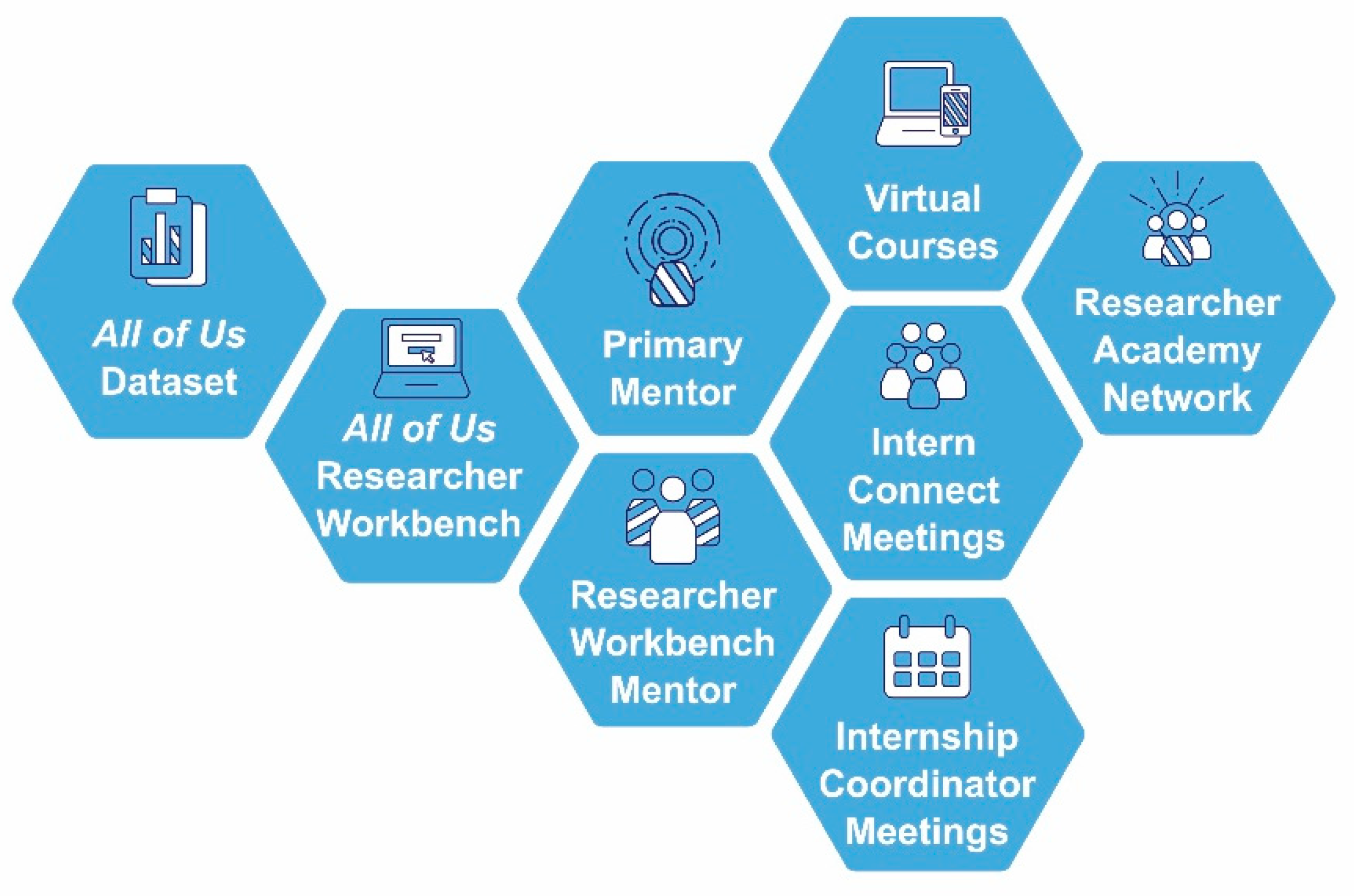
The Internship Program was designed as a 3-month virtual research experience for undergraduate and graduate students. Key components of the Internship Program included a mentoring team consisting of a primary and secondary mentor. Primary mentors had ongoing All of Us projects and offered subject matter expertise for interns’ research, and secondary mentors (Researcher Workbench mentors) provided the interns with support in navigating the All of Us Researcher Workbench and analyzing data (given their expertise in the programming languages used by the interns and their technical knowledge of the Workbench); access to virtual courses to provide technical training; access to the All of Us dataset and Researcher Workbench; weekly one-on-one meetings with the internship coordinator to share project updates and discuss any administrative support needs; weekly “intern connect” group meetings where interns connected with their cohort members and shared their research project experiences; and connections to the larger Researcher Academy network through the Academy’s online networking portal and quarterly newsletter (Figure 1). During both cohorts, the Internship Program initiated an onboarding meeting for the mentors, interns, and internship team (each intern and their mentors). During orientation, mentors received training and resources for supporting and engaging with students from a range of socioeconomic backgrounds. Interns and mentors received a stipend for their participation in the Internship Program. The inaugural Internship Program cohort (Cohort 1) took place in summer 2023 and Cohort 2 took place in summer 2024, supporting 13 students across the two groups.

2.2. Internship Participants

Individuals were eligible for participation in the Internship Program if they met the following criteria: (1) were a full-time undergraduate or graduate student at a Historically Black College or University (HBCU), (2) were enrolled in a health or social sciences degree program, (3) had a minimum cumulative grade point average of 2.7, (4) were proficient in Microsoft Office, and (5) could intern a minimum of five hours a week, either in person or remotely.
A total of 13 individuals participated in the Internship Program, including six interns in Cohort 1 and seven interns in Cohort 2 (Table 1). All six Cohort 1 interns self-identified as female, and among Cohort 2 interns, five interns self-identified as female and two self-identified as male. Most interns (12 out of 13) identified their race/ethnicity as Black or African American and one intern identified as Two or More Races. A notable difference between Cohort 1 and Cohort 2 interns was the interns’ academic level at the time of participation. Cohort 1 primarily comprised undergraduate students, whereas all the interns in Cohort 2 were graduate students.

2.3. Intern Project Topics

Interns explored a broad range of public health and biomedical research topics using the All of Us dataset. Topics studied by interns included sickle cell disease complications, breast cancer, colorectal cancer, lung cancer, cardiovascular health, diabetes, mental health, atopic triad (cluster of three allergic conditions including eczema, asthma, and hay fever), sleep disorders, and health care access. Given the All of Us dataset’s wealth of genetic data, several interns focused their analyses on exploring genetic associations related to their respective health topics.

2.4. Data Collection

The theoretical constructs of self-efficacy and social support guided our development of the data collection tools used in the Internship Program evaluation. Internship evaluation data was collected using both quantitative and qualitative methods. We administered an evaluation survey to both cohorts at the end of their internships. Additionally, Cohort 2 interns participated in a moderated post-internship focus group discussion. The focus group was conducted to collect qualitative data to complement and provide context for the quantitative survey data. The survey and focus group data collection instruments used for this study are available as Supplemental documents. Demographic information for Cohort 1 participants was collected from the interns’ applications. Demographic information for Cohort 2 participants was collected through questions included in a pre-internship survey administered prior to the start of the internship.

2.4.1. Internship Evaluation Survey

We administered a brief online internship evaluation survey using REDCap. The one-time survey took between 5 and 10 minutes to complete. The survey included closed-ended and open-ended questions and consisted of six domains: research skills development (8 items), overall internship experience (4 items), Researcher Workbench experience (10 items), primary mentor experience (7 items), secondary mentor (Researcher Workbench mentor) experience (7 items), and internship resources (6 items). Quantitative survey responses were assessed using a 4-point Likert scale ranging from 1 (strongly disagree) to 4 (strongly agree). We employed a 4-point scale without a neutral response option to ensure variability in participant responses, as previous survey methodology research has shown that removal of midpoint response options assists with reducing central tendency bias, enhances analytic clarity, and promotes the collection of meaningful data (Flaskerud, 2012). All survey items and scales analyzed for data presented in this article were developed internally. Items in the research skills development domain were assessed via a scale (α = 0.79) and inquired about interns’ research skills development during their participation in the Internship Program. Overall internship experience domain items asked interns to rate their satisfaction with the Internship Program and to indicate whether they would recommend the Internship Program to others. This domain also included two open-ended response questions asking interns to share the highlights of their internship experience and provide suggestions for anything that could have improved their internship experience. The Researcher Workbench experience domain consisted of a 9-item scale (α = 0.89), where survey respondents evaluated the user interface and navigation, collaboration and communication, data analysis tools, and support resource features of the Researcher Workbench. One additional categorical item not included in the scale assessed interns’ intention to use the Researcher Workbench in their future research. Items in the domains assessing interns’ mentorship experience inquired about the interns’ primary mentor and secondary mentor (Researcher Workbench mentor) separately. For both mentors, survey respondents were asked to rate the extent to which their mentors improved their ability to effectively work with the Researcher Workbench and improved their confidence in the research skills they used during the internship. Survey respondents were also asked to rate the extent to which the mentor was available for and capable of answering their questions. Additionally, the survey asked interns to rate their overall experience with each of their mentors. The mentorship experience domains also included two open-ended questions for respondents to provide qualitative feedback about each of their mentors. Specifically, they were asked to share what they liked most and what they liked least about working with each of their mentors. Finally, items in the internship resources domain asked participants to rate the utility of specific resources offered during the Internship Program, including the intern connect meetings and virtual courses. Survey respondents also received a comprehensive list of the Internship Program features/resources and were asked to indicate which features/resources they found to be most useful and least useful. The survey concluded with an optional open-ended field prompting survey respondents to share any additional feedback they would like to provide about the Internship Program.

2.4.2. Internship Evaluation Focus Group

We conducted a 60-minute virtual focus group discussion with Cohort 2 interns to qualitatively evaluate the Internship Program. The focus group occurred during the final weekly check-in meeting of the Internship Program and was facilitated by a master’s-level research analyst, who was accompanied by a trained notetaker. To mitigate power dynamics and minimize social desirability bias, the internship coordinator who led each of the weekly meetings was not present for the focus group. We audio- and video-recorded the focus group and produced a verbatim transcript using Zoom. Following the focus group, the transcript was reviewed for accuracy by a study team member, and any transcription errors observed were corrected prior to analysis.
The purpose of the focus group was to contextualize the Cohort 2 survey findings. A semi-structured interview guide was developed to align with the internship evaluation survey and was used to facilitate the discussion regarding the following domains: Feedback on Internship Features and Resources (2 questions), Mentorship Experience (4 questions), Research Skills Development (5 questions), Challenges and Barriers Experienced (3 questions), and Likelihood of Recommending the Internship (2 questions). Specifically, focus group participants were asked to share their perceptions about resources offered during the internship, experiences working with their primary and secondary mentors, perceived benefits of working with the All of Us dataset, perceptions about how the internship experience has impacted their growth and development as researchers, challenges they faced during the internship, and suggestions for improving the Internship Program. Interns were also asked to share whether they would recommend the program to other students.

2.5. Data Analysis

2.5.1. Quantitative Data Analysis

Descriptive statistics (frequencies and proportions) were calculated to present participant characteristics for each internship cohort. To analyze quantitative items in the internship evaluation survey, we calculated the mean for each survey item for the aggregate 2023 and 2024 internship sample.

2.5.2. Qualitative Data Analysis

We used a deductive coding approach (Fife & Gossner, 2024) to systematically analyze qualitative data obtained from open-ended survey questions and the focus group. Codes were established a priori in alignment with the survey domains to ensure that the qualitative findings complemented and contextualized the quantitative survey findings. Coders identified and extracted illustrative quotes related to the following domains: Research Skills Development, Mentorship Experiences, All of Us Researcher Workbench Experience, Support and Belonging, Internship Value, Challenges Experienced, and Recommendations for Improvement. To reduce coding bias and ensure the validity of the qualitative analysis results, we employed a consensus coding procedure (Morgan, 1997). Using this approach, two study team members independently reviewed and coded the qualitative survey responses and focus group transcripts. Following the independent coding, the two coders met to reach a consensus on the codes applied to the excerpts selected for illustrative quotes. If there was any discrepancy in coding, the team discussed the codes further to reach consensus, and involved a third team member for the discussion, if needed. Illustrative quotes were only included in the results if the coders reached full agreement about them following consensus discussion and deliberation.

3. Results

3.1. Internship Evaluation Survey Results

A total of 10 individuals completed the internship evaluation survey, including four Cohort 1 interns (67% response rate) and six Cohort 2 interns (86% response rate), for a total response rate of 77%.

3.1.1. Interns’ Perceptions of the Overall Value of the Internship

Survey respondents reported that their experiences with the Internship Program were positive. Most respondents (90%) rated their overall experience in the Internship Program as extremely satisfactory. All interns indicated they would recommend the Internship Program to other students. Survey respondents identified several Internship Program resources and features as being especially useful, including mentors (90%, n = 9), networking opportunities (60%, n = 6), and internship supervisor meetings (60%, n = 6).

3.1.2. Technical Research Skills Gained or Improved During the Internship

Most survey respondents (90%) strongly agreed that the Internship Program increased their overall confidence as a researcher and 90% of respondents strongly agreed that the internship was useful for advancing their overall research skills development. Competency-specific survey results for the Research Skills and Development domain are presented in Table 2. Respondents assigned high overall ratings to the improvement of their technical and analytical skills during the internship. Survey data indicate that interns’ highest improvements were in presenting/communicating research (M = 3.90, SD = 0.32) and working with large datasets (M = 3.89, SD = 0.33), followed by using the All of Us Researcher Workbench (M = 3.78, SD = 0.44), using Python (versions 3.11-3.13) to analyze data (M = 3.75, SD = 0.71), research abstract writing (M = 3.60, SD = 0.70), and using R (versions 4.2-4.4) to analyze data (M = 3.40, SD = 0.84).

3.1.3. Internship Impact on Interns’ Use of the All of Us Researcher Workbench

Responses to items in the Researcher Workbench experience survey domain were positive and yielded an overall mean score of 3.68 (SD = 0.35). All survey respondents agreed that the Internship Program increased their proficiency in using the All of Us Researcher Workbench (M = 3.78, SD = 0.44). Most respondents (80%) indicated that they intend to use the All of Us Researcher Workbench in their future research, while 20% of respondents reported that they were unsure if they would.

3.1.4. Interns’ Perceptions of Their Mentorship Experiences

Internship mentor evaluation results are presented in Table 3. Overall ratings for primary mentors and secondary mentors were high for both internship cohorts. All respondents rated their overall experience with their mentors as “extremely satisfactory” (M = 4.00, SD = 0.00). Secondary mentor ratings improved between Cohort 1 and Cohort 2, where ratings for secondary mentors’ improvement of interns’ ability to work with the Researcher Workbench and ratings for secondary mentors’ availability for answering questions both increased from 3.75 to 4.00.

3.2. Qualitative Results from Post-Internship Focus Group and Surveys

Four of the seven Cohort 2 interns participated in the post-internship focus group that was conducted with Cohort 2. Open-ended qualitative responses were obtained and analyzed from the internship evaluation surveys. Domains and illustrative quotes are presented in Table 4.
Qualitative feedback from interns was largely positive and added valuable context to the quantitative survey results. Interns’ qualitative feedback highlighted the program’s positive impact on interns’ research skills development, ability to use the Researcher Workbench, and sense of support and confidence as researchers. Interns reported feeling supported, empowered, and better equipped to pursue advanced research. They emphasized the value of having supportive mentors, hands-on experience with the All of Us dataset, and a welcoming, affirming community of peers and professionals. Several interns noted that the Internship Program filled gaps left by their home institutions and prepared them for future dissertation work. When asked about recommendations to strengthen the Internship Program, interns identified technical and administrative challenges as areas for improvement, particularly around in-person networking opportunities and stipend processing.

4. Discussion

The primary purpose of the All of Us Researcher Academy Internship Program evaluation was to assess the perceived influence of the Internship Program among interns on learning outcomes related to their research skills and proficiency in working with large datasets, analyzing data, and disseminating research results through written and oral communications. The evaluation also assessed interns’ perceptions regarding their overall internship experience and assessed their experiences with specific aspects of the Internship Program, including mentors, the Researcher Workbench, and other resources offered, such as free short courses and cohort networking and support meetings. Although previous internship evaluations have largely focused on assessing the impact of in-person internships, our evaluation study adds preliminary evidence around the impact and effectiveness of virtual internships. Moreover, the All of Us Researcher Academy virtual internship specifically focused on enhancing skills needed to access and analyze large datasets. Offering such applied experience is imperative, as publicly available datasets, such as All of Us, are increasingly accessible for researchers to utilize in making scientific discoveries.
Findings from the Researcher Academy Internship Program evaluation provide helpful insight for future internship programs designed to prepare undergraduate and graduate students for careers in STEM and biomedical research fields. Internships are complex learning environments where the student learning experience is carefully attended to and monitored through mentoring and other supports (Hora et al., 2023). Our evaluation results underscore the importance of thoughtfully designing program components to ensure effective implementation, impactful experiences, and demonstrated growth in interns’ research skills.
The All of Us Researcher Academy Internship Program demonstrates the value of experiential learning in fostering research skills and biomedical career interest among early-stage researchers. Evaluation results from our Cohort 1 and Cohort 2 interns reinforce known learning benefits of STEM internship participation, including growth in key skill areas such as knowledge application, analytical ability, and technology (McAlexander et al., 2022; Siby et al., 2024), as well as interns’ growth in confidence and career goals preparation (Schnoes et al., 2018). Additionally, our results mirror recently published results by Elkhider et al. (2025), which demonstrated a positive impact on interns’ professional development in scientific research and on their oral and written communication skills. The internship experience also helped to supplement the learning experiences of students who attend institutions with limited research infrastructure.
The success of the Researcher Academy Internship Program was rooted in its accessibility. Participating in internship programs is an invaluable opportunity that remains out of reach for many students (Hora et al., 2019). The design and implementation of the Internship Program were intentional about acknowledging, addressing, and removing barriers to participation. Virtual internships have been recognized as highly successful learning experiences (Jenkins et al., 2023). The literature notes several benefits of virtual learning, including accessibility, flexibility, and cost savings (Kraft et al., 2019; Pittenger, 2021). For example, virtual internship formats provide cost-saving benefits for host institutions and interns, as they allow students to learn and engage with the internship without incurring overhead expenses related to travel, lodging, and meals. The Researcher Academy Internship Program’s virtual format offered flexible scheduling that afforded interns the opportunity to participate in ways that were convenient for them. Several interns were able to maintain their status in summer school classes, lab fellowships, and even secondary jobs while completing the Researcher Academy Internship Program. An additional benefit of the virtual internship format was that it allowed students and mentors to participate from a wide range of geographic locations, thus affording them opportunities to network with others from different institutions, states, and regions. Virtual internships have also been cited as an appropriate approach for engaging students in the use of digital tools (Franks & Oliver, 2012). The Researcher Academy Internship Program was particularly amenable to a virtual format, given the emphasis on teaching students to access and analyze data online using the Researcher Workbench.
A virtual, mentor-supported internship model can effectively reduce participation barriers and support greater access to research data and resources (Knox et al., 2024). Moreover, studies have shown that online mentoring experiences help fulfill career and psychosocial support needs that students may not receive at their home institutions (Byars-Winston & Dahlberg, 2019). Researcher Academy interns overwhelmingly shared that the mentorship component was a highlight of their internship experience, as the mentorship evaluation results were largely positive and reflected a high level of satisfaction. These findings contribute to a growing body of literature demonstrating the positive relationship between mentoring support and outcomes such as internship satisfaction (D’abate et al., 2009; Hora et al., 2023; Liu et al., 2011). In their qualitative evaluations, interns expressed appreciation for their mentors’ support, communication, availability, and investment in their learning and development as researchers. These findings support a recently published work by Hora et al. (2023), which reported that mentors’ communication, availability, and attention to interns’ learning were key elements of intern-mentor relations that influenced interns’ perceptions of their internship experiences.
A notable feature of the Researcher Academy’s mentorship component was the structured mentorship approach, which consisted of a primary and secondary mentor. Mbogo (2019) defines structured mentorship as “organized mentorship, with specific goals and measurable expectations,” which complements students’ traditional classroom learning (p. 1110). Mbogo also highlights other important aspects of structured mentorship models, such as specifying mentors’ level of involvement and frequency and format of mentorship meetings (Mbogo, 2019). Structured mentorship through experiential learning has been evidenced to foster STEM and biomedical sciences career retention and success (Romney & Grosovsky, 2023; Smith et al., 2025). Our interns were intentionally paired with mentors based on research interests, research skills, and mentorship needs. This structured mentorship approach provided interns with in-depth support and guidance in navigating the Researcher Workbench, developing their programming and coding skills, expanding their professional network, and enhancing their confidence and ability to effectively use the Researcher Workbench to conduct meaningful health research. The success of our program suggests possibilities for replicating or scaling the structured mentor model in the future. It is important to acknowledge that our secondary mentors shared relatable qualities with our interns, such as the university they attended, cultural backgrounds, and even the experience of pursuing a degree as a first-generation and/or working student. Deep-level similarity and culturally aware mentoring foster a sense of belonging in mentees, and this was evidenced by responses from our intern cohort (Tuma & Dolan, 2024; Zaniewski & Reinholz, 2016).
The cohort-based structure of the Researcher Academy Internship Program contributed to interns’ positive experiences. Higher education pedagogy scholars have cited several positive outcomes associated with cohort-based learning, including enhanced problem-solving skills, co-learning, a sense of belonging, emotional support, and network building (Akhtar et al., 2024; Pradyutha, 2024). Similar outcomes were identified in our internship evaluations, where several interns commended the opportunity to take part in an experience where they could be their authentic selves, engage with students from other institutions, and learn together. These findings support previous research emphasizing that STEM students greatly benefit from cohort-based internships (Villafañe-Delgado et al., 2020). Although students were individually paired with mentors to complete their projects, our team intentionally included opportunities for the interns to convene as a group. For example, the weekly “intern connect” meetings allowed interns to meet and form a community, engage in peer-to-peer learning by discussing their project experiences, share successes and pain points, and brainstorm about solutions to overcome any project challenges. Several of the intern connect meetings also included guest speaker presentations by experienced research professionals, offering space for the interns to learn from and network with influential researchers. Romney and Grosovsky (2023) note that “these relationships can form the foundation for a long-standing professional network of colleagues” (p. 6). Our evaluation results demonstrate the value of internships for building the personal and professional networks of early-stage researchers, as interns expressed gratitude for the opportunity to interact with other scientists.
Finally, our evaluation results highlight the importance of structuring internships to facilitate students’ engagement with publicly available datasets. The Researcher Academy Internship Program specifically focused on enhancing the skills needed to access and analyze large datasets. A growing body of literature cites several benefits of working with large datasets, including quantitative skills development, improved quantitative reasoning, and improved critical thinking skills (O’Reilly et al., 2022; Tsai, 2024; Varlamis, 2025). Kjelvik and Schultheis (2019) emphasize that data literacy (i.e., the ability to understand, evaluate, and communicate information obtained from data) is a vital skill needed for students to successfully prepare for and thrive in STEM and biomedical science careers, especially as science and society are becoming more dependent on findings from publicly available data. Thus, providing such applied experiences is imperative for students interested in STEM and biomedical science, as publicly available datasets, such as All of Us, are increasingly becoming accessible for researchers to make ground-breaking scientific discoveries using authentic data collected from real-life phenomena. Moreover, working with authentic data fosters a sense of meaning and purpose, and gives real-world relevance to students’ research (Kjelvik & Schultheis, 2019). For example, in their evaluation, one Researcher Academy intern expressed a sense of pride in their ability to produce research findings that could be used to help people in the future. Interns also strongly agreed that their research skills, particularly in analyzing complex and genetic data, improved through their participation in the program. Closely related, our survey results in Table 2 demonstrate that internship participants reported improvements in their skills and proficiency in using R (versions 4.2-4.4) and Python (versions 3.11-3.13) to analyze data, which are essential for analyzing genomic datasets. These findings are especially promising for future development of the genomic workforce, as the increasingly available genomic datasets require well-trained researchers who are skilled in analyzing and interpreting complex genetic data (Lukhele et al., 2025). Several doctoral-level interns reported intentions to use the All of Us dataset for their dissertations.

4.1. Considerations

Despite the success of our Internship Program, we did identify additional helpful feedback that could be beneficial to other programs. A few interns suggested having a more streamlined process for distributing stipends. To prevent delays in payment and sustain ongoing engagement throughout the full length of paid internships, we recommend distributing a stipend in three installments: half of the total amount at the start of the program, one-third of the remaining balance at the program’s midpoint, and the third and final payment during the last week of the internship.
Although virtual internships enhance accessibility, they can also present challenges such as reduced engagement, isolation, and limited networking opportunities (Irwin et al., 2022; Jenkins et al., 2023). In their evaluations, some interns shared that they desired more opportunities for connection, including in-person convenings. For both cohorts, we extended opportunities for interns to have in-person meetings at the host site headquarters and satellite offices where they were geographically located. However, budget constraints prevented us from covering the travel expenses of all interns to convene in a common location. When possible, we recommend conducting internships in the virtual setting as well as offering an optional in-person component. If internship program budgets permit, we strongly encourage planners to build in at least one opportunity for interns to meet in person at the host site for a 1- or 2-day visit, to aid in fostering a greater sense of connectedness to the host institution and other interns.

4.2. Limitations and Strengths

Limitations of the evaluation study included the small sample size, which limited the generalizability of the findings. We also acknowledge the potential for social desirability bias, as interns may have felt inclined to report more favorable experiences and outcomes, particularly given their relationships with program mentors and supervisors. The study team took steps to mitigate this potential bias, including employing self-administered online surveys to collect evaluation data. Additionally, the team selected a neutral focus group moderator and notetaker who were external to the Internship Program leadership team so that interns would feel more comfortable sharing their honest feedback. Also, in the email invitation and prior to the start of the discussion, focus group participants were informed that their names would not be linked to their responses. In addition, the post-test only design limited our ability to infer causal relationships between interns’ exposure to program components and outcome variables assessed. Despite these limitations, the mixed-methods data collection approach used for the evaluation allowed our study team to gain a more holistic perspective of interns’ experiences and outcomes. Qualitative data obtained from the open-ended evaluation survey responses and focus group discussions provided important context to complement the quantitative data collected in the evaluation surveys. Insights gained from the mixed-methods evaluation offer important considerations for informing the design and implementation of future internship programs.

5. Conclusions

The evaluation findings provide preliminary evidence that our structured virtual Internship Program was beneficial to both undergraduate and graduate-level students. The Internship Program helped to build interns’ skills and confidence in working with large datasets, conducting statistical analysis of data, and communicating research results. Insights from the Researcher Academy Internship Program evaluation are useful in informing components for consideration in future internships designed to support STEM and biomedical science students’ research training needs. Our evaluation results demonstrate that thoughtful planning and implementation of structured internship program components, including carefully selected mentors, a cohort-based format, and network-building opportunities, facilitate interns’ positive learning experience and sense of belonging. Finally, by facilitating access to the All of Us Researcher Workbench, the Internship Program strengthened undergraduate and graduate students’ interest in using the All of Us dataset for educational purposes beyond the internship, such as their theses or dissertations. As datasets become more available for analysis by researchers, future internships can also leverage these resources to enhance students’ real-world research experience and data analysis skills.

Implications

Overall, our findings provide support for the value of training programs aimed at increasing researchers’ skills and engagement with publicly available datasets. The structure and components of our Internship Program could be adapted and applied to other domains within or outside the context of health to support research with public data. For example, our program approach could inform programs developed for researchers interested in using Census, Geographic Information System (GIS), or meteorological data for analysis, as well as a variety of other fields that involve training researchers to work with large public datasets. Moreover, the carefully planned program components implemented in our structured Internship Program can apply to a wide range of disciplines and have implications for informing the strategic planning of structured research training programs hosted by academic institutions, STEM program designers, and professional development providers.

Supplementary Materials

The following supporting information can be downloaded at: https://www.mdpi.com/article/10.3390/educsci16040547/s1, Survey Instrument S1: All of Us Researcher Academy Internship Evaluation Survey Questions; Focus Group Questions S1: All of Us Researcher Academy Internship Focus Group Discussion Questions.

Author Contributions

Conceptualization, S.H., H.S., and M.A.L.; Methodology, S.H., H.S., and C.R.; Formal analysis, S.H., H.S., S.T., and S.P.; writing—original draft preparation, S.H., H.S., C.R., I.A., S.P.; writing—review and editing, S.H., H.S., M.A.L., J.D.U., B.S., J.K.C., T.-R.H., and B.M. All authors have read and agreed to the published version of the manuscript.

Funding

This research was, in part, funded by the National Institutes of Health (NIH) All of Us Research Program, award number OT2OD028395. The views and conclusions contained in this document are those of the authors and should not be interpreted as representing the official policies, either expressed or implied, of the NIH.

Institutional Review Board Statement

The evaluation study materials and protocols were approved by the Institutional Review Board approved by the All of Us Research Program Research Compliance Branch (2023 Cohort 1 evaluation submission number: RCB-2023-NHSR014; 2024 Cohort 2 evaluation, submission number: RCB-2024-NHSR007).

Informed Consent Statement

Informed consent was obtained from all subjects involved in the study.

Data Availability Statement

The data analyzed during this study is not publicly available due to privacy or ethical restrictions.

Acknowledgments

We would like to extend a special thank you to our funder, NIH, which made the All of Us Internship Program and evaluation study possible. We would also like to express our gratitude to the Internship Program evaluation study participants for taking the time to share invaluable feedback regarding their experiences in the program.

Conflicts of Interest

The authors declare no conflicts of interest.

Abbreviations

The following abbreviations are used in this manuscript:
STEMScience, technology, engineering, and mathematics
HBCUHistorically Black College or University

References

  1. Akhtar, S., Gao, Y., Keshwani, A., & Neubauer, L. C. (2024, December). Cohort-based learning to transform learning in graduate public health: Key qualitative findings from a pilot study. In Frontiers in education (Vol. 9, p. p. 1457550). Frontiers Media SA. [Google Scholar]
  2. Bandura, A. (1977). Self-efficacy: Toward a unifying theory of behavioral change. Psychological Review, 84(2), 191–215. [Google Scholar] [CrossRef] [Scilit]
  3. Byars-Winston, A., & Dahlberg, M. L. (2019). The science of effective mentorship in STEMM. Consensus study report. National Academies Press. [Google Scholar]
  4. D’abate, C. P., Youndt, M. A., & Wenzel, K. E. (2009). Making the most of an internship: An empirical study of internship satisfaction. Academy of Management Learning & Education, 8(4), 527–539. [Google Scholar] [CrossRef] [Scilit]
  5. Elkhider, I., Edwards, N. T., Goodwin, R. L., Chosed, R. J., Lowe, L. L., Driggins, S., Harris, R. H., Shorter, K., Gao, Z., Ojo, S., Karunwi, O., Igwe, N., & Nathaniel, T. I. (2025). Empowering underrepresented minority students: A STEM-focused research internship program bridging the path to graduate and professional success. Innovative Higher Education, 50, 2043–2065. [Google Scholar] [CrossRef] [Scilit]
  6. Fife, S. T., & Gossner, J. D. (2024). Deductive qualitative analysis: Evaluating, expanding, and refining theory. International Journal of Qualitative Methods, 23. [Google Scholar] [CrossRef] [Scilit]
  7. Flaskerud, J. H. (2012). Cultural bias and likert-type scales revisited. Issues in Mental Health Nursing, 33(2), 130–132. [Google Scholar] [CrossRef] [Scilit]
  8. Franks, P. C., & Oliver, G. C. (2012). Experiential learning and international collaboration opportunities: Virtual internships. Library Review, 51(4), 272–285. [Google Scholar] [CrossRef] [Scilit]
  9. Hernandez, K. E., Bejarano, S., Reyes, F. J., Chavez, M., & Mata, H. (2014). Experience preferred: Insights from our newest public health professionals on how internships/practicums promote career development. Health Promotion Practice, 15(1), 95–99. [Google Scholar] [CrossRef] [Scilit] [PubMed]
  10. Hora, M. T., Chen, Z., & Benbow, R. J. (2019). Problematizing college internships: Exploring issues with access, program design, and developmental outcomes [Wisconsin Center for Education Research Working Paper]. Wisconsin Center for Education Research. Available online: https://wcer.wisc.edu/docs/working-papers/Working_Paper_No_2019_1.pdf (accessed on 28 May 2025).
  11. Hora, M. T., Chen, Z., Wolfgram, M., Zhang, J., & Fischer, J. J. (2023). Designing effective internships: A mixed-methods exploration of the sociocultural aspects of intern satisfaction and development. The Journal of Higher Education, 95(5), 579–606. [Google Scholar] [CrossRef] [Scilit]
  12. House, J. S. (1981). Work stress and social support. Addison-Wesley. [Google Scholar]
  13. Irwin, A., Perkins, J., Hillari, L. L., & Wischerath, D. (2022). Is the future of internships online? An examination of stakeholder attitudes towards online internships. Higher Education, Skills and Work-based Learning, 12(4), 629–644. [Google Scholar] [CrossRef] [Scilit]
  14. Jenkins, C. M., McQueen, S., & Wiley, S. L. (2023). Zoom or gloom: The challenges of a virtual internship experience. Journal of Political Science Education, 19(2), 307–320. [Google Scholar] [CrossRef] [Scilit]
  15. Kardash, C. M. (2000). Evaluation of an undergraduate internship program: A focus on the role of the mentor. Journal of Career Development, 26(3), 275–284. [Google Scholar] [CrossRef]
  16. Kjelvik, M. K., & Schultheis, E. H. (2019). Getting messy with authentic data: Exploring the potential of using data from scientific research to support student data literacy. CBE Life Sciences Education, 18(2), es2. [Google Scholar] [CrossRef] [Scilit]
  17. Knox, C. J., Ab Latif, F. M., Cornejo, N. R., & Johnson, M. D. (2024). Mentoring across difference and distance: Building effective virtual research opportunities for underrepresented minority undergraduate students in biological sciences. MBio, 15(1), e0145223. [Google Scholar] [CrossRef] [Scilit]
  18. Kraft, C., Jeske, D., & Bayerlein, L. (2019). Seeking diversity? Consider virtual internships. Strategic HR Review, 18(3), 133–137. [Google Scholar] [CrossRef] [Scilit]
  19. Liu, Y., Xu, J., & Weitz, B. A. (2011). The role of emotional expression and mentoring in internship learning. Academy of Management Learning & Education, 10(1), 94–110. [Google Scholar] [CrossRef] [Scilit]
  20. Lukhele, S. T., Ras, V., & Mulder, N. (2025). Workforce development in genomic data science for health: A worldview. Annual Review Genomics Human Genetics, 26(1), 449–471. [Google Scholar] [CrossRef] [Scilit]
  21. Mbogo, C. (2019, February). A structured mentorship model for computer science university students in Kenya. In Proceedings of the 50th ACM technical symposium on computer science education (pp. 1109–1115). Association for Computing Machinery. [Google Scholar] [CrossRef] [Scilit]
  22. McAlexander, S. L., McCance, K., Blanchard, M. R., & Venditti, R. A. (2022). Investigating the experiences, beliefs, and career intentions of historically underrepresented science and engineering undergraduates engaged in an academic and internship program. Sustainability, 14(3), 1486. [Google Scholar] [CrossRef] [Scilit]
  23. Morgan, D. L. (1997). Focus groups as qualitative research (Vol. 16). Sage. [Google Scholar] [CrossRef] [Scilit]
  24. O’Reilly, C. M., Josek, T., Darner, R. D., & Fortner, S. K. (2022). Pedagogy of teaching with large datasets: Designing and implementing effective data-based activities. Biochemistry and Molecular Biology Education, 50(5), 466–472. [Google Scholar] [CrossRef] [Scilit] [PubMed]
  25. Pittenger, K. K. (2021). Virtual internships–A new reality. Developments in Business Simulation and Experiential Learning, 48. [Google Scholar]
  26. Pradyutha, A. C. (2024). Cohort-based learning: Fostering collaborative education. In T. Premalatha, K. Arunkumar, & S. Nithya (Eds.), Changing landscape of education (pp. 95–102). Shanlax Publications. [Google Scholar]
  27. Romney, C. A., & Grosovsky, A. J. (2023). Mentoring to enhance diversity in STEM and STEM-intensive health professions. International Journal of Radiation Biology, 99(6), 983–989. [Google Scholar] [CrossRef] [Scilit]
  28. Schnoes, A. M., Caliendo, A., Morand, J., Dillinger, T., Naffziger-Hirsch, M., Moses, B., Gibeling, J. C., Yamamoto, K. R., Lindstaedt, B., McGee, R., & O’Brien, T. C. (2018). Internship experiences contribute to confident career decision making for doctoral students in the life sciences. CBE—Life Sciences Education, 17(1), ar16. [Google Scholar] [CrossRef] [Scilit]
  29. Shortlidge, E. E., Gray, M. J., Estes, S., & Goodwin, E. C. (2024). The value of support: STEM intervention programs impact student persistence and belonging. CBE Life Sciences Education, 23(2), ar23. [Google Scholar] [CrossRef] [Scilit]
  30. Siby, N., Ammar, M., Bhadra, J., Elawad, E. F. E., Al-Thani, N. J., & Ahmad, Z. (2024). A tailored innovative model of “research internship” aimed at strengthening research competencies in STEM undergraduates. Higher Education, Skills and Work-Based Learning, 14(5), 1058–1069. [Google Scholar] [CrossRef] [Scilit]
  31. Smith, D., Hendricks, L., Stewart, D., Guerin, A., Smith, M., & Maiden, J. (2025). The role of mentorship and research experiences in shaping STEM careers: A quantitative analysis. American Journal of STEM Education, 9, 65–88. [Google Scholar] [CrossRef] [Scilit]
  32. Southwell, B., Hood, S., Carter, J., Richardson, C., Cates, S., Sow, H., Branigan, M., Hawkins, T.-R., Atkinson, K., Uhrig, J., & Lewis, M. (2024). A model for supporting biomedical and public health researcher use of publicly available All of Us data at Historically Black Colleges and Universities. Journal of the American Medical Informatics Association, 31(12), 2989–2993. [Google Scholar] [CrossRef] [Scilit] [PubMed]
  33. Suherman, S., Vidákovich, T., Mujib, M., Hidayatulloh, H., Andari, T., & Susanti, V. D. (2025). The role of STEM teaching in education: An empirical study to enhance creativity and computational thinking. Journal of Intelligence, 13(7), 88. [Google Scholar] [CrossRef] [Scilit] [PubMed]
  34. Tsai, Y. C. (2024). Empowering students through active learning in educational big data analytics. Smart Learning Environments, 11(1), 14. [Google Scholar] [CrossRef] [Scilit]
  35. Tuma, T. T., & Dolan, E. L. (2024). What makes a good match? Predictors of quality mentorship among doctoral students. CBE Life Sciences Education, 23(2), ar20. [Google Scholar] [CrossRef] [Scilit]
  36. Varlamis, I. (2025). Messy data in education: Enhancing data science literacy through real-world datasets in a master’s program. Education Sciences, 15(4), 500. [Google Scholar] [CrossRef] [Scilit]
  37. Villafañe-Delgado, M., Johnson, E. C., Hughes, M., Cervantes, M., & Gray-Roncal, W. (2020). STEM leadership and training for trailblazing students in an immersive research environment. In 2020 IEEE integrated STEM education conference (ISEC) (pp. 1–4). IEEE. [Google Scholar]
  38. Zaniewski, A. M., & Reinholz, D. (2016). Increasing STEM success: A near-peer mentoring program in the physical sciences. International Journal of STEM Education, 3, 14. [Google Scholar] [CrossRef] [Scilit]
Figure 1. Researcher Academy Internship Program components.
Education 16 00547 g001
Table 1. Demographic characteristics for Cohort 1 and Cohort 2 internship participants.
CharacteristicsCohort 1Cohort 2
N = 6%N = 7%
Gender
  Male 00229
  Female 6100 571
Race/Ethnicity
  Black/African American583 686
  Two or More Races117 114
Student Enrollment Level
  Undergraduate Junior350 00
  Undergraduate Senior233 00
  Master’s Student00114
  PhD Student117 686
Major Area of Study
  Biomedical sciences/STEM467 571
  Social sciences233 229
Table 2. Competency-specific research skills and development results from the internship evaluation survey.
Research Skills DevelopmentM (SD)
The All of Us Researcher Academy
Internship Improved my Skills and
Proficiency in…
Cohort 1
N = 4
Cohort 2
N = 6
Overall
working with large datasets 4.00 (0.00)3.83 (0.41)3.89 (0.33)
using R to analyze data 3.75 (0.50)3.17 (0.98)3.40 (0.84)
using Python to analyze data 3.00 (1.4)4.00 (0.00)3.75 (0.71)
using the All of Us Researcher Workbench 3.75 (0.50)3.80 (0.45)3.78 (0.44)
research abstract writing3.25 (0.96)3.83 (0.41)3.60 (0.70)
presenting/communicating research4.00 (0.00)3.83 (0.41)3.90 (0.32)
Table 3. Internship mentor evaluation results.
Cohort 1
N = 4
Cohort 2
N = 6
Overall
N = 10
My primary mentor…
improved my ability to effectively work with the
All of Us Researcher Workbench
4.00 (0.00)3.67 (0.52)3.80 (0.42)
improved my confidence in research skills gained throughout the internship 4.00 (0.00)4.00 (0.00)4.00 (0.00)
was available when needed for answering questions 4.00 (0.00)4.00 (0.00)4.00 (0.00)
was capable of answering my questions 4.00 (0.00)4.00 (0.00)4.00 (0.00)
My secondary mentor…
improved my ability to effectively work with the
All of Us Researcher Workbench
3.75 (0.50)4.00 (0.00)3.89 (0.33)
improved my confidence in research skills gained throughout the internship 4.00 (0.00)4.00 (0.00)4.00 (0.00)
was available when needed for answering questions 3.75 (0.50)4.00 (0.00)3.89 (0.33)
was capable of answering my questions 4.00 (0.00)4.00 (0.00)4.00 (0.00)
Table 4. Domains and illustrative quotes from post-internship focus group and surveys.
DomainsIllustrative Quotes
Research Skills Development“This internship propelled my research tools and skills, I feel more confident with using them.” (Cohort 2 intern)
“I started out with no experience coding in R, and it was really satisfying to repeatedly run (functional) code and obtain interpretable results…. I was proud to have produced something that could be used to help people in the future.” (Cohort 1 intern)
“A new skill I learned was how to combine genetic data and be able to read it. I had never done that before, having that experience using the
All of Us dataset was very interesting.” (Cohort 2 intern)
“One thing I was really looking forward to was working with a large amount of genetic data, and I definitely got hands-on experience doing that.” (Cohort 2 intern)
“The Researcher Academy Internship Program was very beneficial to me. It provided me with the opportunity and platform towards developing my research dissertation and writing a publication.” (Cohort 2 intern)
Quality of Mentorship and Support“Though there was a learning curve, my mentor did not make me feel unintelligent. [My mentor] built a trusting relationship with me.” (Cohort 1 intern)
“I feel like I have a village behind me that supports me. I didn’t just gain experience, I gained really valuable mentors that will help me…. Both mentors were very helpful past the internship, like facilitating growth that will help me with graduating and furthering my research. Speaking for students who don’t have a lot of resources at their institution, meeting the students where their needs are and helping to fulfill them are really important.” (Cohort 2 intern)
“[mentor name removed] was very affirming and helped me understand a lot of technical coding.... He also boosted my confidence in my research and presentation skills. I also felt like I could relate with him as he was another Black person (and [institution name removed] [alum]) in research.” (Cohort 1 intern)
“Throughout the entire internship experience, [mentor name removed] was extremely understanding and supportive. I greatly appreciated how he helped me navigate coding in the workbench/data analysis while still giving me control over my project. I never felt like I was working from scratch or without direction.” (Cohort 1 intern)
“She [my mentor] was always available to answer any questions and provide assistance. Her feedback throughout my research experience was invaluable.” (Cohort 2 intern)
“He [my mentor] was always available for questions or concerns, provided invaluable feedback and asked a lot of thought-provoking questions that helped me become a better researcher. He also provided a lot of guidance throughout the process, which helped me greatly.” (Cohort 2 intern)
All of Us
Researcher
Workbench
“Having access and conducting research analysis with the Workbench was very resourceful.” (Cohort 2 intern)
“I didn’t have experience using the Researcher Workbench prior to the internship, and the internship gave me the chance to familiarize myself with the Researcher Workbench. I intend to use the All of Us dataset for my dissertation, so I needed to learn about [how] to build cohorts and things. This internship taught me those things and will make my dissertation process easier.” (Cohort 2 intern)
Support and
Belonging
“Very open and welcoming environment. Felt like I could be myself!” (Cohort 1 intern)
“It was a really wonderful experience, getting to meet other interns from other schools and hearing about their research, everyone on the [All of Us Researcher Academy] team was very personable. We could ask any questions and never felt like we couldn’t express ourselves.”
(Cohort 2 intern)
Internship Value“I really enjoyed the opportunity to learn and network with other scientists of all disciplines.” (Cohort 1 intern)
“What you can take away from this program is more substantial than other internships. It helped me grow as a researcher—and as a person.” (Cohort 2 intern)
“The knowledge and experience gathered from the internship will have a vertical impact towards my career path.” (Cohort 2 intern)
“I would recommend it [the internship] to other students because it is very rare to get an experience like this and have access to so many mentors.” (Cohort 2 intern)
Challenges and Recommendations“I feel like there could have been more bonding opportunities for interns…I would have loved to spend more time networking and bonding with them.” (Cohort 1 intern)
“I think having a day to be in person would’ve been nice.”
(Cohort 2 intern)
“Only thing I would recommend is streamlining the stipend process…” (Cohort 2 Intern)
Disclaimer/Publisher’s Note: The statements, opinions and data contained in all publications are solely those of the individual author(s) and contributor(s) and not of MDPI and/or the editor(s). MDPI and/or the editor(s) disclaim responsibility for any injury to people or property resulting from any ideas, methods, instructions or products referred to in the content.