Reimagining Educational Governance Through Blockchain: Decentralized Trust and Transparency in a Hybrid Analysis




Abstract
1. Introduction
2. Research Foci, Directions and Guiding Questions
3. Method
3.1. Methodological Framework and Research Design
3.2. Research Strategy
“(blockchain AND education AND (governance OR transparency OR decentralization OR trust OR equity OR innovation)”.
3.3. Analytical Approach and Data Processing Process
4. Findings
5. Discussion
6. Conclusions and Recommendations
7. Limitations and Future Research Agenda
Author Contributions
Funding
Institutional Review Board Statement
Informed Consent Statement
Data Availability Statement
Conflicts of Interest
References
- Alonso-Muñoz, S., González-Sánchez, R., González-Mendes, S., & García-Muiña, F. (2025). The role of blockchain-related technologies in transforming the tourism and hospitality industry: An overview and research guidelines. International Journal of Contemporary Hospitality Management, 37(13), 84–102. [Google Scholar] [CrossRef]
- Alsobhi, H. A., Alakhtar, R. A., Ubaid, A., Hussain, O. K., & Hussain, F. K. (2023). Blockchain-based micro-credentialing system in higher education institutions: Systematic literature review. Knowledge-Based Systems, 265, 110238. [Google Scholar] [CrossRef]
- Arar, K., Tlili, A., Schunka, L., Salha, S., & Saiti, A. (2025). Reimagining educational leadership and management through artificial intelligence: An integrative systematic review. Leadership and Policy in Schools, 24(1), 4–26. [Google Scholar] [CrossRef]
- Arar, K. H., Özen, H., Polat, G., & Turan, S. (2025). Artificial intelligence, generative artificial intelligence and research integrity: A hybrid systemic review. Smart Learning Environments, 12(1), 44. [Google Scholar] [CrossRef]
- Aria, M., & Cuccurullo, C. (2017). Bibliometrix: An R-tool for comprehensive science mapping analysis. Journal of Informetrics, 11(4), 959–975. [Google Scholar] [CrossRef]
- Bhaskar, P., Tiwari, C. K., & Joshi, A. (2021). Blockchain in education management: Present and future applications. Interactive Technology and Smart Education, 18(1), 1–17. [Google Scholar] [CrossRef]
- Booth, A., Sutton, A., & Papaioannou, D. (2021). Systematic approaches to a successful literature review (3rd ed.). SAGE Publications. [Google Scholar]
- Braun, V., & Clarke, V. (2006). Using thematic analysis in psychology. Qualitative Research in Psychology, 3(2), 77–101. [Google Scholar] [CrossRef]
- Bucea-Manea-Țoniş, R., Martins, O. M., Bucea-Manea-Țoniş, R., Gheorghiță, C., Kuleto, V., Ilić, M. P., & Simion, V. E. (2021). Blockchain technology enhances sustainable higher education. Sustainability, 13(22), 12347. [Google Scholar] [CrossRef]
- Capece, G., Levialdi Ghiron, N., & Pasquale, F. (2020). Blockchain technology: Redefining trust for digital certificates. Sustainability, 12(21), 8952. [Google Scholar] [CrossRef]
- Casino, F., Dasaklis, T. K., & Patsakis, C. (2019). A systematic literature review of blockchain-based applications: Current status, classification and open issues. Telematics and Informatics, 36, 55–81. [Google Scholar] [CrossRef]
- Chen, X., Zou, D., Cheng, G., Xie, H., & Jong, M. (2023). Blockchain in smart education: Contributors, collaborations, applications and research topics. Education and Information Technologies, 28(4), 4597–4627. [Google Scholar] [CrossRef]
- Choudhary, A., Chawla, M., & Tiwari, N. (2025). Analyzing functional, technical and bibliometric trends of blockchain applications in education: A systematic review. Multimedia Tools and Applications, 84(8), 4003–4048. [Google Scholar] [CrossRef]
- Cruz-Gonzalez, C., Domingo Segovia, J., & Lucena Rodriguez, C. (2019). School principals and leadership identity: A thematic exploration of the literature. Educational Research, 61(3), 319–336. [Google Scholar] [CrossRef]
- De Alwis, A., Shrestha, A., & Sarker, T. (2025). Exploring governance for accreditation in the education sector using blockchain technology: A systematic literature review. Discover Education, 4(1), 57. [Google Scholar] [CrossRef]
- Delgado-von-Eitzen, C., Anido-Rifón, L., & Fernández-Iglesias, M. J. (2021). Blockchain applications in education: A systematic literature review. Applied Sciences, 11(24), 11811. [Google Scholar] [CrossRef]
- Donthu, N., Kumar, S., Mukherjee, D., Pandey, N., & Lim, W. M. (2021). How to conduct a bibliometric analysis: An overview and guidelines. Journal of Business Research, 133, 285–296. [Google Scholar] [CrossRef]
- Fedorova, E. P., & Skobleva, E. I. (2020). Application of blockchain technology in higher education. European Journal of Contemporary Education, 9(3), 552–571. [Google Scholar] [CrossRef]
- Fu, Y., & Weng, Z. (2024). Navigating the ethical terrain of AI in education: A systematic review on framing responsible human-centered AI practices. Computers and Education: Artificial Intelligence, 7, 100306. [Google Scholar] [CrossRef]
- Galeano-Barrera, C. J., Arango Ospina, M. E., Mendoza García, E. M., Rico-Bautista, D., & Romero-Riaño, E. (2022). Exploring the evolution of topics and research fields of territorial development: A comprehensive bibliometric analysis. Sustainability, 14(11), 6515. [Google Scholar] [CrossRef]
- Grewal, D., Motyka, S., & Levy, M. (2018). The evolution and future of retailing and retailing education. Journal of Marketing Education, 40(1), 85–93. [Google Scholar] [CrossRef]
- Hood, W. W., & Wilson, C. S. (2001). The literature of bibliometrics, scientometrics and informetrics. Scientometrics, 52(2), 291–314. [Google Scholar] [CrossRef]
- Hussain, K., Ahmed, I., & Akram, M. S. (2025). Remote and hybrid work research: Key trends and thematic developments over two decades. Management Review Quarterly, 1–37. [Google Scholar] [CrossRef]
- Kosmarski, A. (2020). Blockchain adoption in academia: Promises and challenges. Journal of Open Innovation: Technology, Market, and Complexity, 6(4), 117. [Google Scholar] [CrossRef]
- Kyun, S., Yang, H., & Seo, H. (2025). The trends and foci of blockchain applications in higher education. Educational Technology & Society, 28(3), 419–449. [Google Scholar]
- Lam, T. Y., & Dongol, B. (2022). A blockchain-enabled e-learning platform. Interactive Learning Environments, 30, 1229–1251. [Google Scholar] [CrossRef]
- Liu, Y., Lu, Q., Zhu, L., Paik, H. Y., & Staples, M. (2023). A systematic literature review on blockchain governance. Journal of Systems and Software, 197, 111576. [Google Scholar] [CrossRef]
- Lizcano, D., Lara, J. A., White, B., & Aljawarneh, S. (2020). Blockchain-based approach to create a model of trust in open and ubiquitous higher education. Journal of Computing in Higher Education, 32(1), 109–134. [Google Scholar] [CrossRef]
- Loukil, F., Abed, M., & Boukadi, K. (2021). Blockchain adoption in education: A systematic literature review. Education and Information Technologies, 26, 5779–5806. [Google Scholar] [CrossRef]
- Mustafa, G., Rafiq, W., Jhamat, N., Arshad, Z., & Rana, F. A. (2025). Blockchain-based governance models in e-government: A comprehensive framework. International Journal of Law and Management, 67(1), 37–55. [Google Scholar] [CrossRef]
- Nakamoto, S. (2008). Bitcoin: A peer-to-peer electronic cash system. Bitcoin. [Google Scholar]
- Nazzal, A., Sánchez-Rebull, M. V., & Niñerola, A. (2023). Foreign direct investment in emerging economies: A comprehensive bibliometric analysis. International Journal of Emerging Markets, 20(13), 244–269. [Google Scholar] [CrossRef]
- Nuryahati, I. K., Adam Assim, M. I. S., Kurniasih, N., Nuriman, H., Pradana, M., & Pramiyanti, A. (2025). Blockchain in education: A bibliometric study and future research agenda. Cogent Arts & Humanities, 12(1), 2508028. [Google Scholar] [CrossRef]
- Ocheja, P., Agbo, F. J., Oyelere, S. S., Flanagan, B., & Ogata, H. (2022). Blockchain in education: A systematic review and practical case studies. IEEE Access, 10, 99525–99540. [Google Scholar] [CrossRef]
- OECD. (2023). OECD digital education outlook 2023: Towards an effective digital education ecosystem. OECD Publishing. [Google Scholar]
- Ortiz-Esparza, M. A., Arias-Chávez, D., Ramos-Quispe, T., Cangalaya-Sevillano, L. M., Acra-Despradel, C., Cornejo-Paredes, D., & Pumahuanca-Gonzales, F. (2023). Blockchain technology in education: A bibliometric review. CEUR Workshop Proceedings, 3693, 215–228. [Google Scholar]
- Page, M. J., McKenzie, J. E., Bossuyt, P. M., Boutron, I., Hoffmann, T. C., Mulrow, C. D., Shamseer, L., Tetzlaff, J. M., Akl, E. A., Brennan, S. E., Chou, R., Glanville, J., Grimshaw, J. M., Hróbjartsson, A., Lalu, M. M., Li, T., Loder, E. W., Mayo-Wilson, E., McDonald, S., … Moher, D. (2021). The PRISMA 2020 statement: An updated guideline for reporting systematic reviews. BMJ, 372, n71. [Google Scholar] [CrossRef]
- Raimundo, R., & Rosário, A. (2021). Blockchain system in higher education. European Journal of Investigation in Health, Psychology and Education, 11(1), 276–293. [Google Scholar] [CrossRef]
- Ralston, S. J. (2021). Higher education’s microcredentialing craze: A postdigital-Deweyan critique. Postdigital Science and Education, 3(1), 83–101. [Google Scholar] [CrossRef]
- Reis-Marques, C., Figueiredo, R., & de Castro Neto, M. (2021). Applications of blockchain to higher education: A bibliometric analysis. European Journal of Investigation in Health, Psychology and Education, 11(4), 1406–1421. [Google Scholar] [CrossRef]
- Saja, K., & Stecyk, A. (2023). Blockchain-based certification: Enhancing transparency and trust in higher education. European Research Studies Journal, 26(3), 363–380. [Google Scholar] [CrossRef]
- Samala, A. D., Mhlanga, D., Bojić, L., Howard, N. J., & Pereira Coelho, D. (2024). Blockchain technology in education: Opportunities, challenges, and beyond. International Journal of Interactive Mobile Technologies, 18(1), 20–42. [Google Scholar] [CrossRef]
- Sharples, M., & Domingue, J. (2016). The blockchain and kudos: A distributed system for educational record, reputation and reward. In European conference on technology enhanced learning (pp. 490–496). Springer International Publishing. [Google Scholar]
- Shuhaimi, J., Awang, H., & Jafar, M. F. (2024). Worldwide research history and trends on blockchain applications in education: A bibliometric analysis (2017–2022). Multidisciplinary Reviews, 7(3), 2024053. [Google Scholar] [CrossRef]
- Skiba, D. J. (2017). The potential of blockchain in education and health care. Nursing Education Perspectives, 38(4), 220–221. [Google Scholar] [CrossRef] [PubMed]
- Snyder, H. (2019). Literature review as a research methodology: An overview and guidelines. Journal of Business Research, 104, 333–339. [Google Scholar] [CrossRef]
- Steiu, M. F. (2020). Blockchain in education: Opportunities, applications, and challenges. First Monday, 25(9). [Google Scholar] [CrossRef]
- Sun, H., Wang, X., & Wang, X. (2018). Application of blockchain technology in online education. International Journal of Emerging Technologies in Learning, 13(10), 252. [Google Scholar] [CrossRef]
- Swan, M. (2015). Blockchain: Blueprint for a new economy. O’Reilly Media. [Google Scholar]
- Tlili, A., Huang, R., Shehata, B., Liu, D., Zhao, J., Metwally, A. H. S., Wang, H., Denden, M., Bozkurt, A., Lee, L.-H., Beyoglu, D., Altinay, F., Sharma, R. C., Altinay, Z., Li, Z., Liu, J., Ahmad, F., Hu, Y., Salha, S., … Burgos, D. (2022). Is metaverse in education a blessing or a curse? A combined content and bibliometric analysis. Smart Learning Environments, 9(1), 24. [Google Scholar] [CrossRef]
- Tlili, A., Shehata, B., Salha, S., Bozkurt, A., Mishra, S., Panda, S., Huang, R., & Altinay, F. (2024). A 60 years analysis of blended learning: Path towards clarity or obscurity in distance learning? In Case studies on blended learning in higher education: Policy, planning and quality assurance (pp. 245–266). Springer Nature. [Google Scholar]
- Torraco, R. J. (2016). Writing integrative literature reviews: Using the past and present to explore the future. Human Resource Development Review, 15(4), 404–428. [Google Scholar] [CrossRef]
- Uddin, M., Obaidat, M., Manickam, S., Laghari, S. U. A., Dandoush, A., Ullah, H., & Ullah, S. S. (2024). Exploring the convergence of metaverse, blockchain, and AI: A comprehensive survey. Wiley Interdisciplinary Reviews: Data Mining and Knowledge Discovery, 14(6), e1556. [Google Scholar] [CrossRef]
- Ullah, N., Mugahed Al-Rahmi, W., Alzahrani, A. I., Alfarraj, O., & Alblehai, F. M. (2021). Blockchain technology adoption in smart learning environments. Sustainability, 13(4), 1801. [Google Scholar] [CrossRef]
- UNESCO Institute for Statistics. (2018). Re-orienting EMIS towards inclusive and equitable quality education and lifelong learning. UNESCO. [Google Scholar]
- UNICEF Innocenti. (2025). Data governance for EdTech: Policy recommendations. UNICEF. [Google Scholar]
- van Eck, N. J., & Waltman, L. (2010). VOSviewer: A computer program for bibliometric mapping. Scientometrics, 84(2), 523–538. [Google Scholar] [CrossRef]
- Van Nunen, K., Li, J., Reniers, G., & Ponnet, K. (2018). Bibliometric analysis of safety culture research. Safety Science, 108, 248–258. [Google Scholar] [CrossRef]
- Vincent-Lancrin, S., & González-Sancho, C. (2023). Data and technology governance: Fostering trust in data use. In OECD digital education outlook 2023. OECD Publishing. [Google Scholar]
- Wang, X., Younas, M., Jiang, Y., Imran, M., & Almusharraf, N. (2024). A systematic review on blockchain in education: Solutions and challenges. IEEE Access, 13, 13264–13284. [Google Scholar] [CrossRef]
- Zhaisanova, D., & Mansurova, M. (2024). Blockchain concept for the educational purposes: Bibliometric analysis and conceptual structure. Procedia Computer Science, 231, 753–758. [Google Scholar] [CrossRef]
- Zhao, M., Liu, W., Saif, A. N. M., Wang, B., Rupa, R. A., Islam, K. M. A., Rahman, S. M. M., Hafiz, N., Mostafa, R., & Rahman, M. A. (2023). Blockchain in online learning: A systematic review and bibliographic visualization. Sustainability, 15(2), 1470. [Google Scholar] [CrossRef]
- Zheng, X. R., & Lu, Y. (2022). Blockchain technology—Recent research and future trend. Enterprise Information Systems, 16(12), 1939895. [Google Scholar] [CrossRef]
- Zupic, I., & Čater, T. (2015). Bibliometric methods in management and organization. Organizational Research Methods, 18(3), 429–472. [Google Scholar] [CrossRef]



| Criterion Type | Inclusion Criteria | Exclusion Criteria |
|---|---|---|
| Publication Type | Peer-reviewed journal articles indexed in Web of Science (WoS) Core Collection or Scopus. | Non-peer-reviewed publications, including conference proceedings, book chapters, dissertations, editorials, reports, and gray literature. |
| Language | Articles published in English, ensuring conceptual consistency and comparability across the dataset. | Articles written in languages other than English. |
| Time Interval | Publications from 2017 to 29 May 2025. | Publications released before 2017 or after 29 May 2025. |
| Discipline | Studies categorized under education, educational research, social sciences, or governance-related interdisciplinary fields. | Publications from domains such as Computer Science, Engineering, Finance, Cryptography, or ICT, unless they explicitly connect blockchain to educational governance |
| Subject Suitability | Studies focusing on blockchain applications in education, specifically addressing governance, transparency, trust, decentralization, identity management, accountability, credentialing, or data integrity. | Studies discussing blockchain solely from a technical, engineering, cryptographic, financial, or industry-focused perspective without an educational or governance component. |
| Accessibility and Data Integrity | Publications with accessible full-texts and complete bibliographic metadata (authors, title, abstract, keywords, journal). | Publications lacking full-text access or containing incomplete bibliographic metadata. |
| Methodological Suitability | Studies that present theoretical, empirical, conceptual, or socio-technical insights relevant to blockchain-based educational governance. | Publications that do not establish a clear methodological, conceptual, or thematic link to educational governance, transparency, trust, or decision-making processes. |
| No. | Title | Author’s Name | Total Citations (TC) | TC per Year | Normalized TC |
|---|---|---|---|---|---|
| 1 | Blockchain technology adoption in smart learning environments. | Ullah, Nazir; Al-Rahmi, Waleed Mugahed; Alzahrani, Ahmed Ibrahim; Alfarraj, Osama; Alblehai, Fahad Mohammed | 140 | 28.0 | 3.0 |
| 2 | The potential of blockchain in education and health care. | Skiba Diane J. | 112 | 12.4 | 1.0 |
| 3 | Blockchain-based approach to create a model of trust in open and ubiquitous higher education. | Lizcano, David; Lara, Juan A.; White, Bebo; Aljawarneh, Shadi | 96 | 16.0 | 2.5 |
| 4 | The evolution and future of retailing and retailing education. | Grewal, Dhruv; Motyka, Scott; Levy, Michael | 86 | 10.7 | 1.3 |
| 5 | Blockchain in education: Opportunities, applications, and challenges. | Steiu, Mara-Florina | 86 | 14.3 | 2.2 |
| 6 | Higher education’s microcredentialing craze: A postdigital-Deweyan critique. | Ralston, Shane J. | 83 | 16.6 | 1.8 |
| 7 | Blockchain adoption in education: A systematic literature review. | Loukil, Faiza; Abed, Mourad; Boukadi, Khouloud | 80 | 16.0 | 1.7 |
| 8 | Blockchain technology enhances sustainable higher education. | Bucea-Manea-Țoniş, Rocsana; Martins, Oliva M. D.; Bucea-Manea-Țoniş, Radu; Gheorghiță, Cătălin; Kuleto, Valentin; Ilić, Milena P.; Simion, Violeta-Elena | 74 | 14.8 | 1.6 |
| 9 | Blockchain technology: Redefining trust for digital certificates. | Capece, Guendalina; Levialdi Ghiron, Nathan; Pasquale, Francesco | 59 | 9.83 | 1.5 |
| 10 | Blockchain adoption in academia: Promises and challenges. | Kosmarski, Artyom | 56 | 9.3 | 1.4 |
| 11 | A blockchain-enabled e-learning platform. | Lam, Tsz Yiu; Dongol, Brijesh | 47 | 11.7 | 3.8 |
| 12 | Application of blockchain technology in online education. | Sun, Han; Wang, Xiaoyue; Wang, Xinge | 47 | 5.8 | 0.7 |
| 13 | Application of blockchain technology in higher education. | Fedorova, Elena P.; Skobleva, Ella I. | 43 | 7.2 | 1.1 |
| 14 | Towards utilising emerging technologies to address the challenges of using Open Educational Resources: a vision of the future. | Tlili, Ahmed; Zhang, Jingjing; Papamitsiou, Zacharoula; Manske, Sven; Huang, Ronghuai; Kinshuk; Hoppe, H. Ulrich | 41 | 8.2 | 0.9 |
| 15 | Revitalizing blockchain technology potentials for smooth academic records management and verification in low-income countries. | Alnafrah, Ibrahim; Mouselli, Suliman | 40 | 8.0 | 0.8 |
| 16 | Blockchain technology application: Authentication system in digital education. | Amitkumar; Sanni, M. Ifran; Apriliasari, Dwi | 36 | 7.2 | 0.8 |
| 17 | Maintaining trust in a technologized public sector. | Bodó, Balázs; Janssen, Heleen | 29 | 7.2 | 2.3 |
| 18 | Collaborative learning supported by Blockchain Technology as a model for improving the Educational process. | Bjelobaba, Goran; Savić, Ana; Tošić, Teodora; Stefanović, Ivana; Kocić, Bojan | 22 | 7.3 | 2.2 |
| 19 | Blockchain technology for sustainable education. | Savelyeva, Tamara; Park, Jae | 21 | 5.2 | 1.7 |
| 20 | Current status, issues, and challenges of blockchain applications in education. | Ma, Yan; Fang, Yiming | 21 | 3.5 | 0.5 |
| RQ | Thematic Cluster | Sub-Themes/Focus (Condensed) | Micro-Summary and Relation to RQ (Condensed) |
|---|---|---|---|
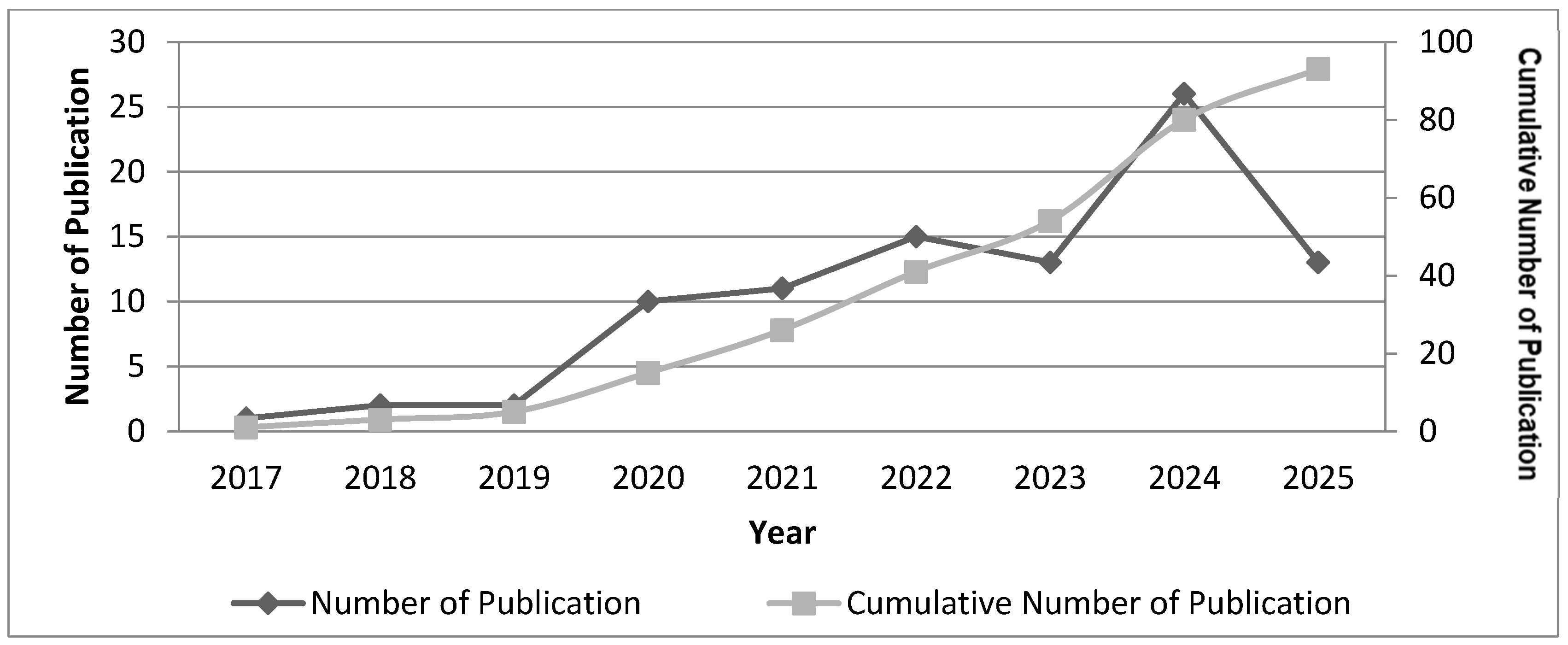
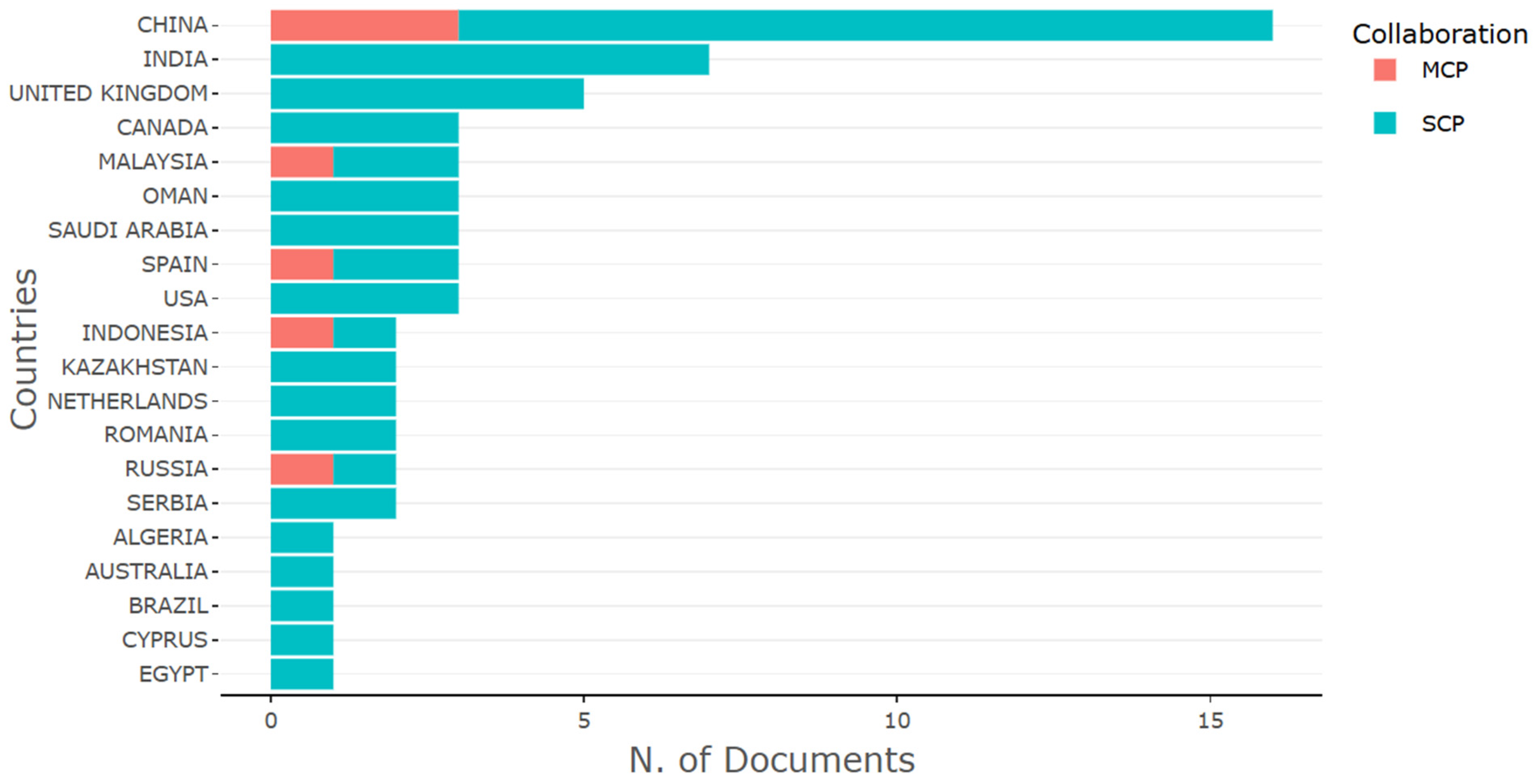
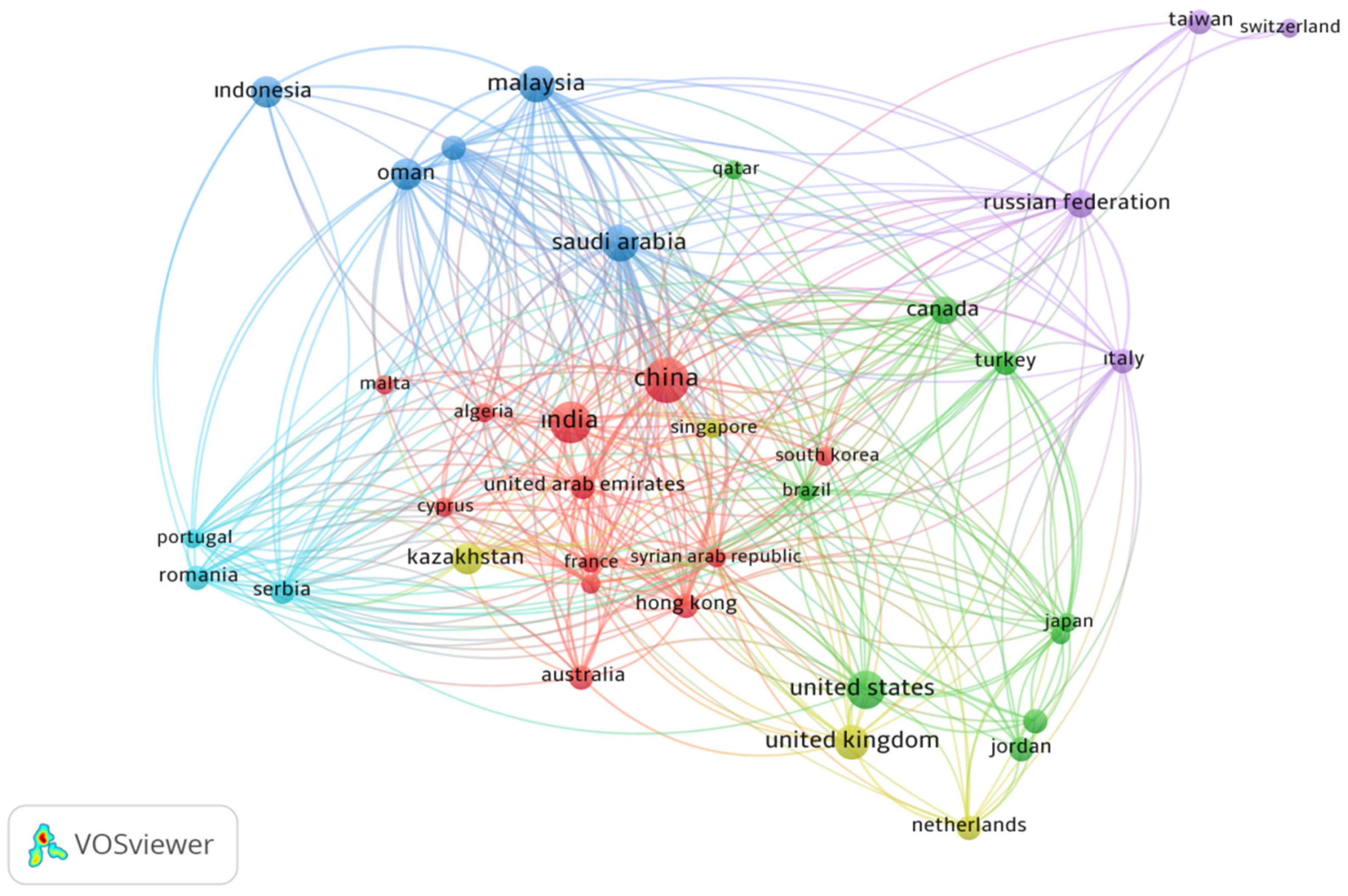
| RQ1 | Publication Trends and Country/Actor Profile | Annual and cumulative outputs; country productivity; SCP/MCP; collaboration patterns | Shows a three-phase evolution (exploration–acceleration–maturation, 2017–2025) and identifies China, India, UK, USA as structural hubs shaping the blockchain-in-education discourse. |
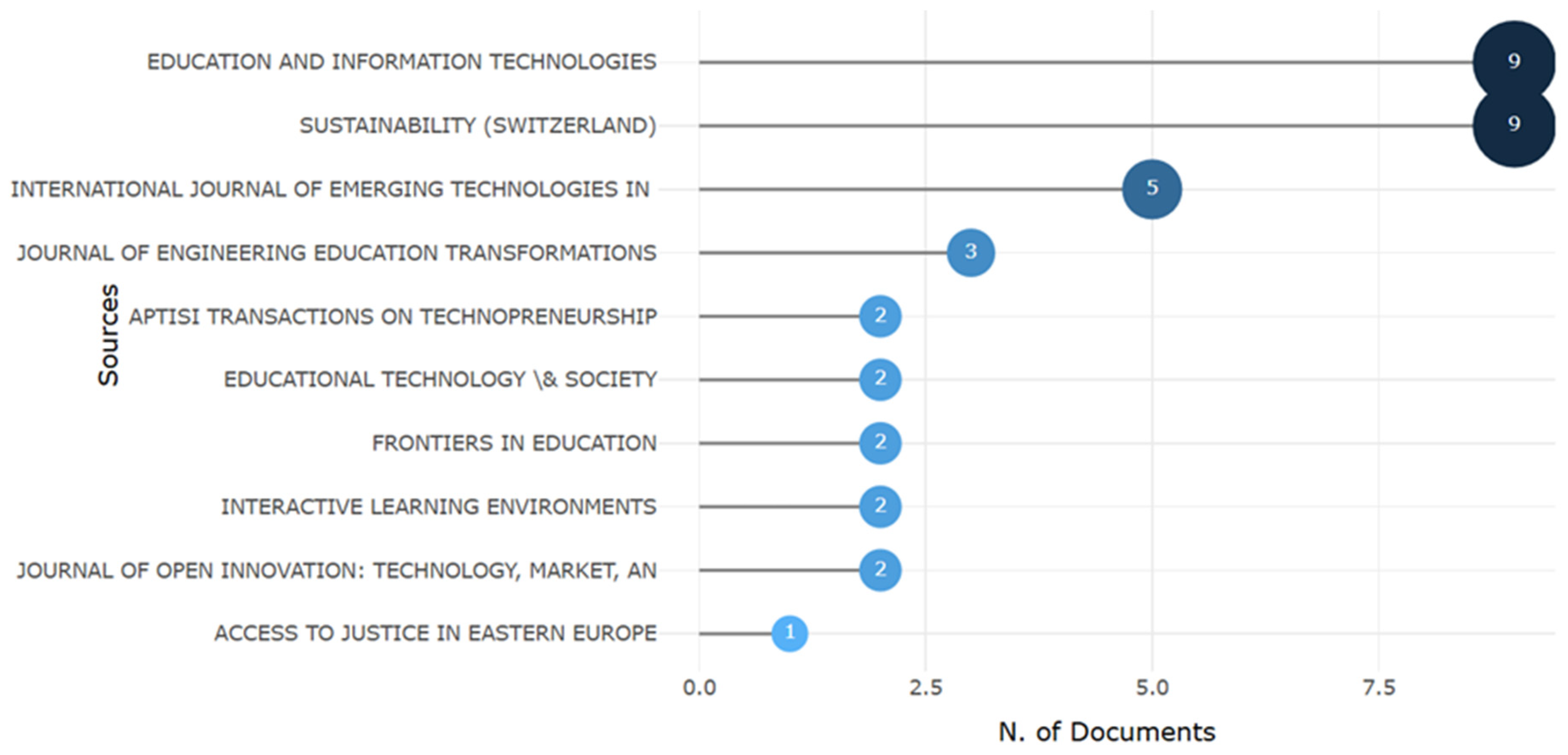
| Journals and Institutional Anchoring | Top 10 journals; edtech, sustainability, open-innovation outlets | Locates where the field is institutionally hosted and shows that discourse is mainly organized around edtech, transparency and credential/record-related themes. | |
| RQ2 | Trust, Identity Verification and Record Management | Digital ID, certificates, verification; micro-credentials; diploma/transcript systems | Positions blockchain as a core governance tool for transparency and verifiability, especially in higher education, where academic identity and record integrity are being redefined. |
| Digital Pedagogies, Decentralization and New Ecosystems | E-learning, exam security, smart education; decentralization, DAO, metaverse; lifelong learning; sustainable/AI-enhanced education | Reveals a multi-layered landscape in which online learning, new incentive/ownership regimes and AI–blockchain synergies drive increasingly decentralized and data-intensive ecosystems. | |
| RQ3 | Identity–Document–Assessment Trust Governance | Digital credentials; immutable records; smart-contract grading/recognition | Explains how blockchain rebuilds trust by encoding authenticity and assessment into verifiable, tamper-proof protocols for identity, documents and evaluation. |
| Ecosystem–Data–Policy Governance and Tensions | Learning histories; timestamped data; interoperability; policy automation; surveillance/market risks; token regimes | Shows that learner-centered, interoperable data architectures emerge alongside surveillance, profiling and marketization risks, with token and mobility frameworks reinforcing this logic. | |
| RQ4 | Micro- and Meso-Level Operational Architecture | Classroom assessment; token/badge motivation; institutional records; diploma/transcript; curriculum–competence frameworks; quality assurance | Clarifies that blockchain renders class-level processes transparent and traceable, while at the meso level it recentralizes quality assurance, archiving and performance monitoring on a single ledger. |
| Macro-Level Ecosystem and Policy Governance | Credit transfer and mobility; national platforms; standards; open science; intellectual property | Shows that system-wide processes of mobility, recognition, QA and scholarly communication are being re-designed through blockchain-based infrastructures at national and transnational levels. | |
| RQ5 | Trust–Transparency–Automation and Administrative Rationalization | Credential verification; fraud prevention; smart-contract accreditation; error/cost reduction | Conceptualizes blockchain as a governance infrastructure for secure, transparent and automated management of credentials and assessment, promising standardization and rationalization. |
| Learner-Centered Portability, Incentive Regimes and Critical Tensions | Self-sovereign ID; portable records; cross-border transfer; tokens/badges; surveillance/market logics | Shows that learner data sovereignty and mobility are strengthened, yet token/reputation systems tether participation and performance to market- and surveillance-driven governance, linking RQ3–RQ4 into a purpose-driven logic. |
Disclaimer/Publisher’s Note: The statements, opinions and data contained in all publications are solely those of the individual author(s) and contributor(s) and not of MDPI and/or the editor(s). MDPI and/or the editor(s) disclaim responsibility for any injury to people or property resulting from any ideas, methods, instructions or products referred to in the content. |
© 2026 by the authors. Licensee MDPI, Basel, Switzerland. This article is an open access article distributed under the terms and conditions of the Creative Commons Attribution (CC BY) license.
Share and Cite
Arar, K.; Özen, H.; Polat, G.; Turan, S. Reimagining Educational Governance Through Blockchain: Decentralized Trust and Transparency in a Hybrid Analysis. Educ. Sci. 2026, 16, 532. https://doi.org/10.3390/educsci16040532
Arar K, Özen H, Polat G, Turan S. Reimagining Educational Governance Through Blockchain: Decentralized Trust and Transparency in a Hybrid Analysis. Education Sciences. 2026; 16(4):532. https://doi.org/10.3390/educsci16040532
Chicago/Turabian StyleArar, Khalid, Hamit Özen, Gülşah Polat, and Selahattin Turan. 2026. "Reimagining Educational Governance Through Blockchain: Decentralized Trust and Transparency in a Hybrid Analysis" Education Sciences 16, no. 4: 532. https://doi.org/10.3390/educsci16040532
APA StyleArar, K., Özen, H., Polat, G., & Turan, S. (2026). Reimagining Educational Governance Through Blockchain: Decentralized Trust and Transparency in a Hybrid Analysis. Education Sciences, 16(4), 532. https://doi.org/10.3390/educsci16040532