Systematic Review

Using Magic Tricks to Promote Social–Emotional Reciprocity and Peer Relationships Among Students with Autism Spectrum Disorder in Inclusive Settings: A Systematic Narrative Review


School of Teacher Education, College of Community, Innovation, and Education, University of Central Florida, Orlando, FL 32816, USA
Educ. Sci. 2026, 16(3), 453; https://doi.org/10.3390/educsci16030453
Submission received: 30 October 2025 / Revised: 28 February 2026 / Accepted: 9 March 2026 / Published: 16 March 2026
(This article belongs to the Special Issue Special and Inclusive Education: Challenges, Policy and Practice)

Abstract

With the goal of maximizing opportunities for inclusivity for students with autism spectrum disorder (ASD), this systematic narrative review, which allows for more interpretive inferences, investigates the use of magic-based interventions to determine if the skills needed for learning and performing magic tricks have commonality with skills needed to improve social skills deficits, as described in the Diagnostic and Statistical Manual of Mental Disorders (5th ed.) (i.e., deficits in social–emotional reciprocity, nonverbal communication used for social interaction, and developing, maintaining, and understanding relationships). The main purpose of this article is to highlight empirical studies that explore how using magic tricks with students with ASD might be beneficial in social skills development, particularly social–emotional reciprocity. Following the Preferred Reporting Items for Systematic Reviews and Meta-Analyses (PRISMA) guidelines and using predetermined inclusion and exclusion criteria, a systematic narrative review was conducted. This resulted in a total of 129 articles reviewed and discussed using an integrative narrative synthesis approach. The findings reveal elements in common in both learning and performing magic tricks and skills needed to improve social skills, including nonverbal communication skills used for social interactions. Skills gained when learning and performing magic tricks also share overlapping elements needed to create and maintain friendships. Conceptually, findings suggest that learning and performing magic tricks provide a natural setting to practice skills needed to successfully attain social–emotional reciprocity, which could, theoretically, increase inclusion opportunities for students with ASD. Therefore, educators may consider including magic tricks in the classroom setting as a strategy to improve social skills deficits of students with ASD.

1. Introduction

“Abracadabra,” “Alakazam,” “Hocus Pocus,” “Presto,” and “Bibbidi-Bobbidi-Boo” are magic words often associated with professional magicians’ magic shows performed on a professional stage. These magic words may also set the “classroom stage” and help teach social skills (e.g., social–emotional reciprocity) to students with autism spectrum disorder (ASD). The use of magic-based interventions as a strategy to address the social skills deficits described in the criteria from the Diagnostic and Statistical Manual of Mental Disorders (DSM) will be explored in this article.
The criteria for ASD, in reference to the communication domain, have evolved over the years. Beginning in 1980, the DSM-III was the first edition to focus on ASD as a separate category (American Psychiatric Association, 1980). In 1987, DSM-III-R broadened the criteria for communication to include verbal and nonverbal communication (American Psychiatric Association, 1987). The criteria of language development delay and repetitive language use were added to the diagnosis in the DSM-IV (American Psychiatric Association, 1994) and DSM-IV-TR (American Psychiatric Association, 2000). The most current edition, DSM-5, refers to ASD as a neurodevelopmental disorder “characterized by persistent deficits in social communication and social interaction across multiple contexts, including deficits in social reciprocity, nonverbal communicative behaviors used for social interaction, and skills in developing, maintaining, and understanding relationships” (American Psychiatric Association, 2013, p. 31).
In this current edition, social and communication impairments were combined into one domain to recognize that socialization is linked to the development of communication skills (Watkins et al., 2017). To further clarify the diagnostic criteria for ASD, the American Psychiatric Association (2013) expanded social reciprocity by adding the word “emotional” to the criteria as “deficits in social–emotional reciprocity, ranging, for example, from abnormal social approach and failure of normal back-and-forth conversation; to reduced sharing of interests, emotions, or affect; to failure to initiate or respond to social interactions” (p. 50). For students with ASD, experiencing positive social interactions through the use of magic tricks could be an effective intervention to promote inclusion and encourage more social interactions.
Historically, magic has not been used in educational settings. Modern teaching methods have primarily focused on academic content, with little room for what might be considered entertainment. Over the past few decades, magic has ever so slowly emerged as a tool in educational and therapeutic settings. Although throughout history there are a few reports of using magic outside of entertainment purposes, it was not until 1981 when the world-famous magician David Copperfield and occupational therapist Julie DeJean launched Project Magic that the first major shift in the perception of magic from a form of entertainment to a therapeutic tool began. Project Magic was primarily used for occupational therapy goals of improving fine motor skills for individuals recovering from injuries. The success of this therapeutic approach prompted educators to explore how magic could be used to meet educational needs (e.g., improving social skills in inclusive settings).
In recent years, researchers in the field of special education have discovered many benefits of using simple magic tricks in educational settings to meet a variety of needs (Ashcraft et al., 2025; Ezell, 2025; Ezell & Klein-Ezell, 2003; Spencer, 2012; Yuen et al., 2023). The employment of magic tricks in the classroom has been used to foster inclusion and acceptance of students with ASD, which has been a priority need for many years (Fidosieva, 2025). The use of magic tricks as an educational tool has gained traction over the years and is now considered an option for teachers to use in the classroom setting (Wiseman & Watt, 2018). This article examines the possibility of using magic tricks in the classroom to create positive social experiences for students with ASD and examines how learning and performing magic tricks may provide authentic experiences for practicing social–emotional reciprocity to improve social skills deficits, including nonverbal communication used in social interactions. Implementing magic tricks as a strategy to develop, maintain, and understand relationships (e.g., establishing meaningful friendships) is also investigated. Increasing positive social experiences of students with ASD can lead to the ultimate goal of inclusion and acceptance by their peers who are not on the spectrum.
Magic-based interventions (e.g., learning and performing magic tricks) are different from well-established social skills interventions (e.g., social stories and peer-mediated instruction). Social stories often rely on students exploring a hypothetical social situation from a presented story. With prompts from the teacher, the student may verbally reflect on the social norms. This may involve role-playing the appropriate social expectations, while the verbal reflection often remains hypothetical. Although role-playing can be part of learning a magic trick, the performance of a magic trick has social skills embedded that occur in a real social situation. Magic-based interventions move beyond verbally reflecting. Peer-mediated instruction relies heavily on typically developing peers learning how to prompt and guide students with ASD to the desired social norms. In this instructor role, the typically developing peer functions as a “helper” and may perform artificial prompts rather than the social experience evolving authentically. Magic-based interventions have the potential to be more reciprocal in nature and develop a more shared emotional experience than peer-mediated instruction.
Social skills not only have a huge impact on the quality of life of students with ASD in their childhood years but also when they become adults (Badiah, 2018), which ultimately determines their quality of life for its entirety. Therefore, it is essential that educators focus on social skills development for students with ASD (Weiss & Harris, 2001). The ability of an individual to competently interact appropriately in a social situation is an essential part of the American Psychological Association (APA) definition of social skills (American Psychological Association, 2015). This includes the skills needed to make friends and the ability to regulate feelings and behavior, which are critical among students with ASD (Badiah, 2018). The ultimate goal is to create social competence where students with ASD are able to evaluate a social situation, know the appropriate behavior expected, and act accordingly (American Psychological Association, 2015). According to Grover et al. (2020), social skills are defined as “the requisite abilities needed to perform competently in social situations” (p. 19). Attaining social competence is the ultimate goal for students with ASD because this leads to inclusion and acceptance. Social competence is needed to build personal friendships and work relationships and resolve conflicts, which are essential skills needed to lead a happy, successful life. The use of simple magic tricks in the classroom may provide a solution for teaching and practicing social skills to students with ASD in a fun and authentic environment (Yuen et al., 2023).
Research Question #1: For students with autism spectrum disorder (ASD), do the skills needed for learning and performing magic tricks have commonality with skills needed to improve social skills deficits, as described in DSM-5 (i.e., deficits in social–emotional reciprocity, nonverbal communication used for social interaction, and developing, maintaining, and understanding relationships)?
Research Question #2: For students with autism spectrum disorder (ASD), do learning and performing magic tricks increase opportunities for inclusion?

2. Methodology

A systematic narrative review of social skills deficits of students with ASD and how magic tricks are used in education and with students with ASD was conducted according to the PRISMA criteria (Page et al., 2021). PRISMA is a structured, transparent process used to screen and extract data from the literature using predefined inclusion/exclusion criteria. Due to heterogeneity in study designs, a quantitative meta-analysis was not appropriate. A systematic narrative review allows for more theoretically informed conclusions and interpretive inferences than a more rigid, quantitative approach. The qualitative analysis allows a more flexible exploration of the various literature nuances, with the goal of attaining a deeper contextual insight. Therefore, findings were synthesized using a structured narrative approach based on the connection to the research questions using abductive logic and interpretative reasoning.
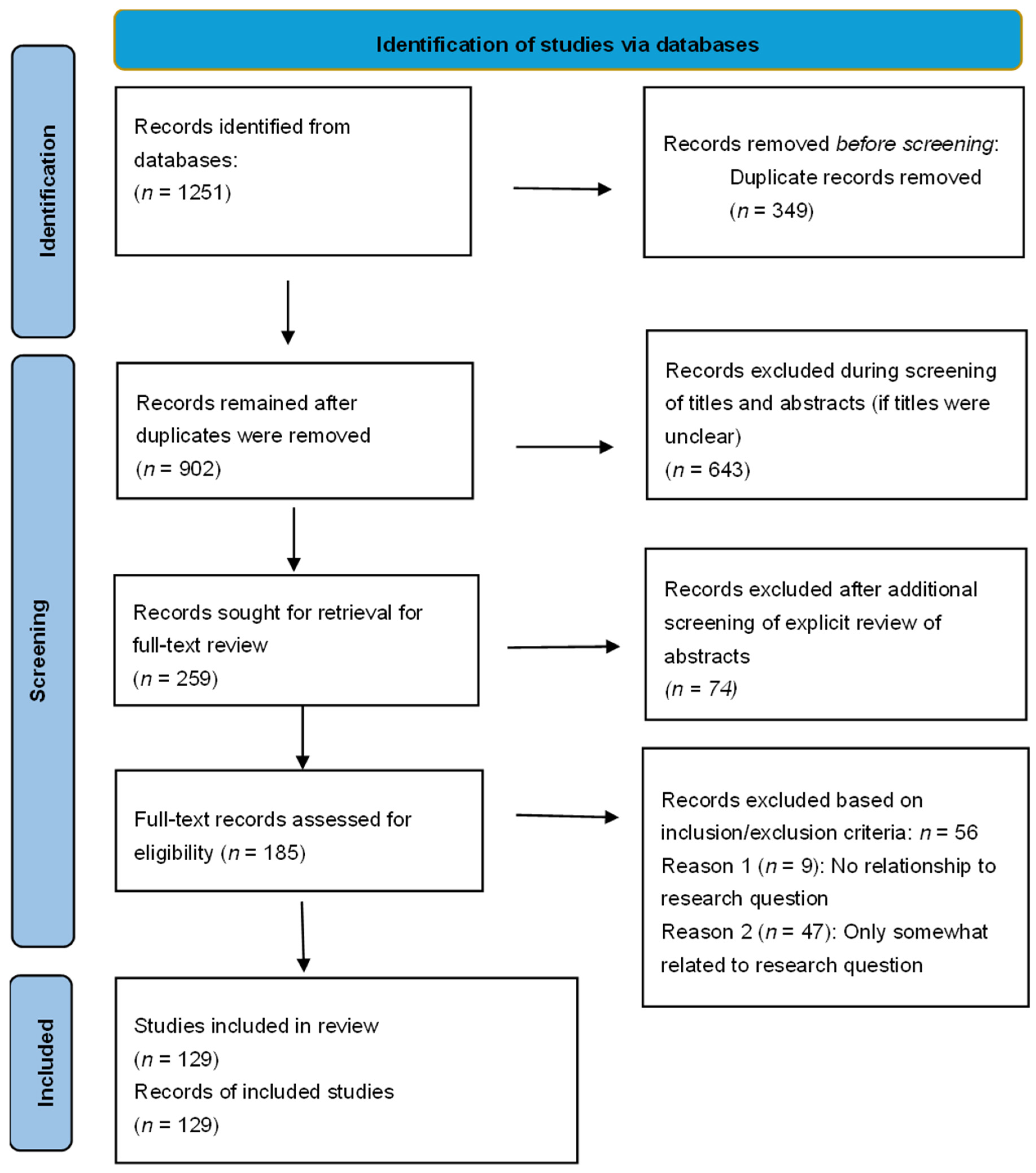
The PRISMA 2020 flow diagram for new systematic reviews was utilized to illustrate the screening process of papers (see Figure 1). Using systematic criteria, a keyword search was done using six databases: JSTOR, ERIC, DOAJ, EBSCO, ProQuest, and Google Scholar. The keyword search terms “inclusion classrooms and autism spectrum disorder (ASD)”; “social skills deficits and students with ASD”; “social–emotional reciprocity”; “ASD and friendships”; “ASD and nonverbal communication”; and “magic tricks” were used in the initial search (see Appendix A).
Some articles were added using the reference sections of the articles found in the initial keyword search. The review timeline was from July to September 2025. To be included in this review, manuscripts were required to (1) be published in English, (2) be published in a peer-reviewed journal, (3) use empirical data or a conceptual framework, (4) include keywords in the title, abstract, or keyword section, (5) be published in or after 1980, (6) use quantitative and/or qualitative studies, and (7) be related to the research question (e.g., addressing social skills deficits of students with ASD or magic tricks used in educational settings). Manuscripts were excluded if (1) not published in English, (2) published prior to 1980, (3) magic-related experiences were not related to teaching and learning in educational settings (e.g., attending a magic show for entertainment purposes only, with the content having no relationship to the research questions), (4) written as editorial or opinion pieces, or (5) not related to the research question (e.g., addressing social skills in other populations other than people with ASD).
To minimize bias and strengthen the credibility of the review, an independent reviewer was asked to screen articles using the inclusion/exclusion criteria. As an extra checkpoint, the independent reviewer was asked to appraise the quality of all sources included in the review. Each source was evaluated against predefined quality criteria, and studies were assessed for methodological quality. All sources were assessed for a relevant connection to the research questions. Appraisal judgments were resolved through discussion and consensus, which ultimately resulted in 100% agreement. A protocol was not registered for this review. While this limits transparency regarding pre-specified methods, all review steps were reported following PRISMA 2020 guidelines.
The first search strategy was to include all elements of the research question to see if there were studies that specifically addressed the use of magic tricks as a tool to address all of the elements of social–emotional reciprocity deficits for students with ASD. There were several studies that addressed magic-based interventions and social skills more broadly with ASD, and a few that indirectly addressed the research questions, but no study was found that specifically and explicitly addressed magic-based interventions and social–emotional reciprocity among people with ASD. Since the literature has yet to address this connection sufficiently, the main purpose of this review is to explore the possibility of making the connection between magic-based interventions and the documented components of social–emotional reciprocity.
Using the six databases, JSTOR, ERIC, DOAJ, EBSCO, ProQuest, and Google Scholar, 1251 articles were identified to be included in this review, which included articles that were added using the backward citation searching process. After removing 349 articles due to duplication, 902 articles remained. Records were next reviewed by title and then by abstract when titles were unclear or inconclusive. This screening step eliminated 643 articles, which left 259 articles for full-text review. Seventy-four (74) articles were then removed after an additional screening of the abstracts because they did not focus explicitly on the article’s research agenda, which left 185 articles remaining for further screening. After removing unrelated articles (i.e., those not relating to the research question and using the inclusion/exclusion criteria) (n = 56), 129 remained to be included. Based on the final selection of articles, the distribution based on decade of publication was as follows: 2020–2025 (42%), 2010–2019 (40%), 2000–2009 (12%), 1990–1999(4%), and 1980–1989 (2%).
The systematic narrative review process was first developed based on a predefined categorical framework (established criteria) within the research questions concerning social skills deficits from the DSM-5 definition of ASD. Subsequently, further coding was conducted within and across domains to identify emergent patterns. Codes were repeated and refined through constant comparison, and themes emerged to conceptually explain the possible relationships between categories of social skills deficits and elements of learning and performing magic tricks in inclusive settings (see Appendix B). To establish consistency, the independent reviewer and the author independently coded the included articles. Discrepancies were discussed and resolved through consensus, and the coding scheme was refined accordingly.
A targeted search strategy was used to explore thematic patterns. Sources were systematically reviewed and analyzed using a thematic approach. The results were organized according to the emergent thematic patterns that had the most relevant connection to the research questions. Using abductive reasoning, findings were prioritized to identify meaningful themes and inferences as they related to the research questions.

3. Results

The review of the literature revealed a wide variety of educational practices with overlapping elements relating to the following themes: 1. ASD and Social Reciprocity. 2. ASD and Social–Emotional Reciprocity. 3. ASD and Positive Social Experiences. 4. ASD and Turn-Taking. 5. ASD and Perspective-Taking. 6. ASD and Joint Attention. 7. ASD and Interpreting Social Cues. 8. ASD and Initiating Social Interactions and Responding to Social Initiations. 9. ASD and Repairing Social Interactions. 10. ASD and Social Referencing. 11. ASD and Nonverbal Communication Used for Social Interaction. 12. ASD and Developing, Maintaining, and Understanding Relationships. 13. Magic Tricks in Education, Magic and Students with ASD and Other Disabilities, and Magic Cognition/Misdirection. The literature showed overlapping essential elements between learning and performing magic tricks and social skills deficits in students with ASD.
For students with ASD, gaining social competence is a complex and difficult challenge with few effective treatments (Yuen et al., 2023). Positive social experiences occur in healthy social interactions and lead to social competence, which includes a broad set of skills (Grover et al., 2020). The main component of social competence is social–emotional reciprocity, which includes turn-taking, perspective-taking, joint attention, interpreting social cues, initiating and repairing social interactions, responding to social initiations, and social referencing (Yavuz et al., 2017; Yuan et al., 2025). Additionally, nonverbal communication, including body language, understanding gestures, and facial expressions, is used for social interactions and contributes to social competence (Yavuz et al., 2017). All of these skills are the foundation to meaningful connections and play a vital role in developing, maintaining, and understanding relationships (e.g., creating and maintaining friendships) (Gresham et al., 2006, 2010). Social competence facilitates positive peer interactions and promotes inclusion and acceptance (e.g., where every student feels seen, heard, and accepted) (Yavuz et al., 2017). Social competence is the foundation for inclusive environments, which can bridge the social gap between students with ASD and their neurotypical peers (Llorent et al., 2024).

3.1. ASD and Social Reciprocity

For students with ASD, social skills development is a high priority and needs to be consistently and explicitly taught throughout all school grades, not just preschool and kindergarten (Majoko, 2016). When students have social competence, they have the self-esteem and confidence needed to be successful academically, not just to succeed in social situations (Silveira-Zaldivar et al., 2021). Students with ASD have difficulty with social reciprocity, which is one of the most important skill sets to master for social competence (Apicella et al., 2013). Social reciprocity is the back-and-forth, give-and-take of social interactions that requires an understanding of how to respond to others’ social cues (Apicella et al., 2013). Social reciprocity is mutual engagement in a social situation where one person acts, and the other person responds (Schwartz et al., 2021). Mastering the rules of social interactions helps the flow of conversations (e.g., Person 1: “Nice to meet you.” Person 2: “Nice to meet you as well.”). Understanding how to initiate and respond to communication and share attention by taking turns in conversations are key factors of social reciprocity (Schwartz et al., 2021). Students with ASD have deficits in these areas and need explicit lessons to gain success in social reciprocity (Leach & LaRocque, 2011). The goal for communication is to feel connected with others, and conversations need to be meaningful. Social reciprocity is the foundation of connected and meaningful relationships. Without social reciprocity, interactions can feel one-sided, disconnected, and not genuine (Whitcomb et al., 2013). Understanding social dynamics helps students build friendships and promotes inclusion (Fusaroli et al., 2025). Students with ASD often struggle with interpreting social cues and may find it difficult to initiate or maintain conversations (Sally & Hill, 2006). Some students with ASD may prefer a more predictable and solitary activity over interactive ones (Whitcomb et al., 2013). Experiencing positive social interactions promotes inclusion and encourages more social interactions (Llorent et al., 2024; Pozas et al., 2021).

3.2. ASD and Social–Emotional Reciprocity

Social–emotional reciprocity is a subset of the more general term “social reciprocity” and specifically includes emotions, interests, and social connections (Wiley & Siperstein, 2015). Social–emotional reciprocity and social reciprocity are related terms and have similar elements, but there is a clear difference, specifically in relation to an ASD diagnosis. A student with ASD may have some elements of social reciprocity but lack the emotional connection, may exhibit monotone speech or irregular pitch variations during social interactions, or may engage in conversations with, for example, atypical prosody without expressing a genuine emotional connection (Grice et al., 2023). According to DSM-5, individuals with ASD have deficits in social communication and interaction including deficits in social–emotional reciprocity (e.g., difficulty with the back-and-forth flow of a conversation that shows emotional understanding and connection), nonverbal communication (e.g., difficulty maintaining appropriate eye contact or lack of facial expressions), and developing, maintaining, and understanding relationships (e.g., difficulty making friends in an inclusive environment) (American Psychiatric Association, 2013). Deficits in social–emotional reciprocity are a core part of the definition of ASD (Whitcomb et al., 2013). Social–emotional reciprocity could be returning a smile when someone smiles, noticing when a friend is sad, or showing interest when someone tells a personal story (Yuan et al., 2025). Social–emotional reciprocity goes beyond responding to social cues and general back-and-forth social interactions and involves showing emotions within the social context (e.g., sharing excitement or comforting a friend) (Yuan et al., 2025). Students with ASD need explicit social skills instruction and opportunities to practice social–emotional reciprocity in authentic settings (e.g., turn-taking, greeting a peer) (Weiss & Harris, 2001).

3.3. ASD and Positive Social Experiences

Positive social experiences are social interactions where an individual experiences a genuine meaningful connection within a social context, feels accepted, and leaves the social exchange feeling good about the social interaction (Cummins & Lau, 2003). Positive social experiences are part of social–emotional reciprocity because they involve mutual emotional connections enjoyed by all involved (Mahar et al., 2012). In an inclusive setting, positive social experiences can create a sense of belonging, where one feels like their presence matters (Badiah, 2018; El-Daw & Hammoud, 2015). Positive social experiences can be described as joyful interactions (e.g., sharing a smile or laughing together) (Heinsch et al., 2020). Students with ASD have fewer positive social experiences than their peers who are not on the spectrum (Locke et al., 2017). Students with ASD experience more social stigma and social isolation; therefore, it is particularly important to foster an inclusive environment where positive social experiences can occur often (Mamas et al., 2021). When students with ASD feel included, accepted, connected, and valued, it fosters emotional wellbeing and self-confidence (Heinsch et al., 2020). Positive social experiences can increase their social skills and increase their ability to use these skills in future social situations (El-Daw & Hammoud, 2015).
There are certain characteristics that must be present to create positive social experiences, such as the feeling of social inclusion, where the student with ASD is actively involved and not just physically present (Soresi et al., 2011). In a social context, there should be mutual respect and enjoyment, where the student with ASD feels a sense of belonging and feels valued as part of the group (Gur & Bina, 2022). The Universal Design for Learning (UDL) principles promote social inclusion with a goal of every student feeling comfortable and supported (Klonowska & Chen, 2024; Praveen et al., 2024). UDL has been supporting the diverse needs of students since 2008 and is considered the exemplar for creating an inclusive environment. In July 2024, UDL added the consideration of nurturing joy and play to increase student engagement (Gronseth et al., 2025). The joy and play consideration also has a key role in creating a positive social–emotional experience (Valerio, 2012; Whitebread et al., 2012). When students experience joy and play in a social context, they will leave the social situation feeling good about the social exchange (Valerio, 2012). To increase the likelihood of creating positive social experiences, teachers can design activities that foster social–emotional reciprocity but also nurture UDL’s joy and play consideration (Pollak et al., 2024).

3.4. ASD and Turn-Taking

Students with ASD have deficits in turn-taking skills and need explicit instruction (Lee & Staggs, 2021). Life is full of situations that require taking turns, and it is an essential skill for students with ASD because it directly supports their social–emotional reciprocity goals (Fusaroli et al., 2025). Turn-taking is a fundamental part of communication in a conversation (e.g., understanding the back-and-forth flow of taking turns talking) (Lee & Schertz, 2020). Reciprocal conversations require learning how to pause, listen, and then respond (Hood et al., 2017). Nonverbal activities also require turn-taking (e.g., understanding how to share and take turns during a game of basketball) (Mlakar et al., 2021). Experiencing delayed gratification and knowing how to control impulses are key elements of successful turn-taking (Dozie et al., 2023). Without the skill of taking turns, students with ASD will have difficulty engaging appropriately with their peers, which could lead to social isolation and peer rejection (Gantman et al., 2012). Following expected patterns of social interaction can lead to peer inclusion, acceptance, and friendship (Kamps et al., 1992). Ultimately, knowing how to take turns promotes inclusion and acceptance (Vincent et al., 2018).

3.5. ASD and Perspective-Taking

For students with ASD, perspective-taking can be a challenging area, especially in an inclusive environment (Blackwell & Stockall, 2021). Perspective-taking is the ability to see things from another person’s point of view (Heasman & Gillespie, 2020). Considering another person’s thoughts and feelings can be a difficult task for students with ASD (Hughes et al., 2016). Prioritizing teaching skills of perspective-taking is essential for students with ASD to gain success with their social–emotional reciprocity goals (Silveira-Zaldivar et al., 2021). Learning that others’ thoughts and emotions may be different from their own is part of perspective-taking (Pronin et al., 2002). Without these skills, students with ASD may misinterpret social cues and appear insensitive (Heasman & Gillespie, 2018). In an inclusive environment, learning perspective-taking skills helps students with ASD connect with others in more meaningful ways and can lead to making and maintaining friendships.

3.6. ASD and Joint Attention

Joint attention, which is the ability to share the same focus with other people, is often delayed or underdeveloped for students with ASD (Charman, 1998). Joint attention is a key part of building social–emotional reciprocity (e.g., together looking at a bird outside a window and shifting attention back and forth between the person and the bird) (Montagut-Asunción et al., 2022). Sharing focus on the same object, event, or activity is an important skill and can be considered the foundation for communication (Mundy et al., 1990). Joint attention often requires eye contact and the use of appropriate gestures. Without joint attention, communication can become one-sided and disconnected (Schwartz et al., 2021). Social connectedness occurs when we share enjoyment and reactions with others (Delgado et al., 2023). Internally, students with ASD may be interested in a conversation but, without joint attention skills, may appear to be uninterested (Gernsbacher et al., 2008). Emotional bonding happens when connections with others are made in a reciprocal manner (Lai et al., 2020). Students with ASD who develop high levels of joint attention skills are more engaged in learning tasks and more likely to connect with their peers socially, which is an important element of successful inclusion (Gillespie-Lynch et al., 2012).

3.7. ASD and Interpreting Social Cues

Social cues are the unspoken rules of a social interaction (Grover et al., 2020). Interpreting social cues is deeply connected to social–emotional reciprocity (i.e., understanding the give-and-take in a social interaction) and is needed to appropriately respond to others in social situations (L. Liu et al., 2024). Tones of voice, body language, facial expressions, eye contact, gestures, personal space, sarcasm, and humor are all interpreted through social cues (Abdulghafor et al., 2022). Students with ASD have many challenges understanding social cues (e.g., knowing when to enter and exit a conversation) (American Psychiatric Association, 2013). Communication is guided by interpreting social cues correctly, and without appropriate interpretation, misunderstanding occurs (Cohen et al., 2022). Students not on the spectrum usually learn and understand social cues through observation and experience; however, students with ASD have many challenges with learning incidentally (i.e., it is not an automatic process) (Bean Ellawadi & McGregor, 2016). Because of this, students with ASD need to be explicitly taught how to interpret social cues (Grenier & Yeaton, 2019). When students with ASD do not know how to respond in a social situation, it can create anxiety and frustration (Müller et al., 2008). When students with ASD are explicitly taught how to read and interpret social cues, they have less anxiety (Ahlers et al., 2017). In addition to explicit instruction, students with ASD need consistent opportunities to practice interpreting social cues (L. Liu et al., 2024). Interpreting social cues appropriately promotes inclusion and is essential for social interactions (Grenier & Yeaton, 2019).

3.8. ASD and Initiating Social Interactions and Responding to Social Initiations

At the heart of social–emotional reciprocity is understanding how to initiate and respond to social initiations appropriately (Paul, 2008). For students with ASD, initiating an interaction in a social situation is a foundational skill for social development and is a major challenge to overcome (American Psychiatric Association, 2013; Chen et al., 2024). The initiation of a social interaction starts with a social exchange, and lacking this skill can negatively impact the ability to make friends and engage socially in a group setting (Schwartz et al., 2021). Equally important is the skill of responding to a social initiation (e.g., responding appropriately to a greeting from a peer), which is also a deficit for students with ASD (American Psychiatric Association, 2013; L. K. Koegel et al., 2014). Initiating and responding to social interactions are essential elements for participation in a conversation (L. K. Koegel et al., 2012) and are key elements needed for successful inclusion. Creating a supportive peer environment is crucial when teaching students with ASD to initiate and respond to social interactions (Morrison et al., 2001). For students with ASD, initiating and responding to social interactions do not develop at the same rate, nor do they acquire these skills incidentally as do their peers who are not on the spectrum, and it is important to provide consistent opportunities to practice initiating and responding to social interactions (Yizengaw, 2021).

3.9. ASD and Repairing Social Interactions

The need to repair social interactions (i.e., the ability to effectively respond to a request for clarification) is more likely to be experienced by students with ASD, where misunderstandings may be more frequent due to communication and social deficits associated with their disability (Keen, 2003). Repairing social interactions is an advanced skill of social–emotional reciprocity (Volden, 2004). Social interactions can have breakdowns, and knowing how to repair/fix a communication mishap is a critical component of social competence (Martin et al., 2020). For students with ASD, the ability to repair social interactions is often overlooked, yet it is the main component needed to maintain positive relationships (Volden, 2004). Students with ASD have difficulty with social awareness (e.g., recognizing the need to repair or clarify a social interaction) (Keen, 2003). Students with ASD may have limited expressive language and may not know when to clarify or apologize (Sigman & Kasari, 1995). In addition, literal thinking makes it hard to identify jokes or sarcasm, which can lead to a communication breakdown (Wilson & Srikanth, 2024). When breakdowns occur, knowing how to quickly repair the social interaction prevents breakdowns from escalating out of control (e.g., small issues of misunderstanding can escalate into conflict) (Barstein et al., 2018). Gates et al. (2023) noted that students with ASD have more difficulty, compared to their peers without ASD, in understanding and predicting social events (i.e., how a peer will interpret their statement), which can lead to their peers feeling confused or offended, even though that was not the intent of the message.
Having skills in appropriately repairing social interactions can help students with ASD build and better maintain friendships and foster an environment of trust and respect (e.g., “I apologize for how loud that came out. That was not my intention”) and encourage more positive future interactions (L. K. Koegel et al., 2014). When students with ASD know how to better recover from communication mishaps, their confidence in their ability to perform social skills increases, and they become more encouraged to take social risks (Gates et al., 2023). With more social awareness skills and confidence, students with ASD can socially interact positively with their peers and successfully participate in group activities, class discussions, and social situations (Tsou et al., 2024). In an inclusive environment, mastering the skill of repairing social interactions is a key pragmatic skill crucial for students with ASD to maintain successful communicative interactions (Martin et al., 2020).

3.10. ASD and Social Referencing

When a student with ASD looks at their teacher’s face after hearing a loud noise to determine if it is safe, it is an example of social referencing (Sivaraman et al., 2020). Social referencing plays a key role in social–emotional reciprocity and is needed to connect emotionally and socially with others (DeQuinzio et al., 2016). Students with ASD have difficulty watching someone else’s facial expression, tone, or body language and use it to reference and guide their own responses (Paul et al., 2009). When engaging in social referencing successfully, there is a form of nonverbal, emotional back-and-forth of social reciprocal interaction (Sivaraman et al., 2022). Without the ability to read emotional cues and understand how to respond in unfamiliar situations, engagement in reciprocal interactions will not occur, and students with ASD may react in ways that may seem “out of sync” with the group (Zampella et al., 2020). Missing emotional cues that guide social behavior and not participating appropriately in shared emotional experiences can be a huge challenge in an inclusive environment (Yeo & Teng, 2015). Having the ability to look at others, read their emotions, and respond in a manner that supports a shared understanding is an essential skill needed for students with ASD (Bar et al., 2025).

3.11. ASD and Nonverbal Communication Used for Social Interaction

Social–emotional reciprocity, the natural give-and-take of a social interaction, includes nonverbal communication (Zampella et al., 2020). We communicate a high percentage of what we “say” nonverbally (e.g., facial expressions, body language, tone, and hand gestures) (Fontenot, 2018). Reading someone’s nonverbal cues and knowing when someone wants to talk enables smooth turn-taking in a conversation (Kendrick et al., 2023). Even when verbal communication is present, nonverbal communication supersedes the verbal, making nonverbal communication of high importance (Fontenot, 2018). For students with ASD, nonverbal communication is more of a challenge than it is for their peers who are not on the spectrum (American Psychiatric Association, 2013; Harms et al., 2010). In a conversation, a student with ASD may not pick up on nonverbal cues to notice when a peer is upset or sad and not respond with concern. This missed nonverbal cue could break the social–emotional reciprocity loop needed to maintain an emotional connection (Radford et al., 2025). Without appropriately interpreting nonverbal cues, reciprocal communication stops (e.g., misreading a playful tone as an insult instead of a joke) (Wilson & Srikanth, 2024). In the classroom setting, understanding nonverbal communication is key to improving social connections and successful inclusion of students with ASD (Ayasrah et al., 2022).

3.12. ASD and Developing, Maintaining, and Understanding Relationships

Developing, maintaining, and understanding relationships (e.g., creating meaningful friendships) requires social competence including social–emotional reciprocity (Rodda & Estes, 2018). Students with ASD have difficulty making friends (American Psychiatric Association, 2013; Petrina et al., 2016). There are a variety of reasons that make friendships a challenge for students with ASD (Black et al., 2024). This may be in part due to a lack of interest and a preference for solitary activities, thereby creating a need to encourage social interactions (Calder et al., 2013). Students with ASD may not adjust their social interactions to different social situations (e.g., may talk to their teacher the same as their peers or vice versa) (Y. Liu et al., 2024). In some cases, students with ASD may not even notice when they are excluded (Trimmer et al., 2017). Sometimes students with ASD may not understand social norms, including social–emotional reciprocity skills (Calder et al., 2013), and interrupt conversations, speak too loudly, or stand too close. In other cases, students with ASD may have difficulty with literal language interpretations (e.g., difficulty understanding sarcasm, jokes, or figures of speech) (Wilson & Srikanth, 2024). Regardless of the reason, students with ASD need to be taught the skills needed to create, maintain, and understand friendships (Badiah, 2018; Bauminger & Shulman, 2003). Friendships can lead to social inclusion and acceptance and provide opportunities for students to practice social skills in authentic settings, which is essential for the successful inclusion of students with ASD (Koster et al., 2009).

3.13. Magic Tricks in Education, Magic and Students with ASD and Other Disabilities, and Magic Cognition/Misdirection

The review of the literature outlines many experiences of learning and performing magic tricks that are relevant to the skills needed for social competence and to improve deficits in social–emotional reciprocity, nonverbal communication used for social interaction, and developing and understanding relationships among students with ASD. At the time of writing this systematic narrative review, no empirical studies were found that explicitly investigated magic tricks and social–emotional reciprocity for students with ASD; however, commonality elements were found in the literature that can be applied as social skills development interventions for students with ASD. Ezell (2025), who completed a systematic review of the use of magic tricks with students with disabilities (including ASD), reported the top two benefits of magic-based interventions are “social skills and positive attention gained from peers without disabilities” (p. 16). Ezell (2025) further concluded that the use of “magic tricks can be an integral part of the solution for inclusivity because it involves social interaction in a joyful, playful manner, thereby providing opportunities for students to feel connected and accepted” (p. 22).
Learning and performing magic tricks have been used in various educational settings with researchers reporting many benefits (Ashcraft et al., 2025; Bagienski & Kuhn, 2019; Ezell, 2025; Ezell & Klein-Ezell, 2003; Kovács, 2023; Luis et al., 2023; Spencer, 2012; Wiseman & Watt, 2018, 2020; Yuen et al., 2023). Ezell (2025) suggests that performing magic tricks releases dopamine and activates the brain’s reward system, which provides an extra opportunity for students with disabilities to feel good about themselves. Children have a natural interest in magic and magical thinking (Phelps & Woolley, 1994), and magic creates curiosity and wonderment (Lamont, 2017; Subbotsky, 2010). Since learning magic tricks is naturally fun and engaging, it makes social learning lessons more attractive and increases student participation (Spencer, 2012). When students are self-motivated, it increases success, and tapping into students’ natural interests is the ideal situation, particularly for students with ASD (R. Koegel et al., 2013). After learning magic tricks, students with ASD reported being “eager to perform magic effects for others” (Ashcraft et al., 2025, p. 7). Performing magic tricks provides an opportunity for students to practice social skills in an authentic setting (Spencer, 2012).
Ashcraft et al. (2025) conducted a study that involved students with ASD learning magic tricks, and after only three weeks of introducing magic tricks, they reported improved social motivation and communication. Ashcraft et al. (2025) suggested that for students with ASD, performing magic tricks may provide the tools needed to engage socially with their peers. In a similar study, Yuen et al. (2023) also worked with students with ASD and reported significant improvements in social skills as measured by the Social Skills Improvement System (SSIS). Spencer (2012) conducted a study evaluating the academic and functional benefits of using magic tricks in the classroom setting with special education students. In this study, students with ASD experienced success in learning and performing magic tricks, and the study suggested this may have been due to the students’ ability to think in patterns and sequences (Spencer, 2012). Ezell and Klein-Ezell (2003) conducted a study involving children with various disabilities who were taught simple magic tricks and reported a significant increase in self-confidence as measured by the self-confidence dimension of the self-image domain of the Student Self-Concept Scale (SSCS). In the research findings of Spencer (2011), it was noted that because of learning and performing magic tricks, a student with ASD socially interacted with peers in a manner not typically observed prior to the magic program. Learning and performing magic tricks level the playing field because all students, regardless of their disability, start at the same place (Spencer, 2012).
Students with ASD who learn magic tricks “can experience enhanced social skills and self-esteem” (Yuen et al., 2023, p. 5). Performing magic tricks requires students with ASD to have knowledge of social rules and can “move a child toward achieving self-actualization” (Spencer, 2012, p. 95). Emotional regulation fosters social–emotional reciprocity and plays an important role for students with ASD being accepted or rejected by their peers who are not on the spectrum (Feldman et al., 2022). According to Wiseman and Watt (2018), performing magic tricks may nurture emotional regulation and interpersonal skills. Wiseman and Watt (2018) also suggest that when performing magic tricks, self-esteem is increased due to the performer creating an unusual experience that the audience perceives as something they cannot do. From the audience’s perspective, not knowing the secret behind the trick adds a level of respect and appreciation for the performance. According to a study by Ezell and Klein-Ezell (2003), this admiration, when shown in an outward visible expression of laughter and surprise, could lead to increased feelings of self-esteem and confidence.
In an inclusive classroom setting, the use of magic tricks may foster positive social experiences and could lead to students with ASD feeling connected and accepted by their peers who are not on the spectrum. Ezell (2025) suggests that using magic tricks in the classroom setting can be an effective tool to create positive social experiences between students with disabilities and their peers without disabilities. Connecting students emotionally through magic tricks fosters a positive learning environment and results in feelings of joy and excitement (Ezell, 2025). Receiving positive accolades can be part of a positive social experience. Ashcraft et al. (2025) reported that after students with ASD performed magic tricks, they received positive praise from their friends. Incorporating magic tricks with students with disabilities provides an opportunity to focus on their abilities, increase positive attention, and promote an inclusive classroom culture (Crossman, 2013).
According to Fusaroli et al. (2025), “Social interaction depends on turn-taking and adapting to one’s conversational partner” (p. 1). For students with ASD, learning and performing magic tricks provide opportunities to practice turn-taking (Yuen et al., 2023), which is an integral part of social interactions. Turn-taking and practicing patience are important elements of learning and performing magic tricks in a group setting (Kovács, 2023). According to Spencer (2012), incorporating magic tricks provides opportunities to build teamwork and fosters skills needed to socially interact successfully with others. Wiseman and Watt (2018) also report that magic-based interactions create opportunities to build teamwork skills because magic provides pathways for giving and receiving constructive feedback, which can ultimately build a stronger community.
Realizing and considering others’ perspectives strengthens one’s own understanding. The use of magic tricks may be an effective strategy for students with ASD to practice perspective-taking (i.e., understanding someone else’s perspective) by observing the audience’s reaction to their magic performance. Spencer (2012) reports how magic tricks provide opportunities to talk about perspectives and how one situation can be viewed from different perspectives. According to Kovács (2023), when performing magic tricks, the student performer must be aware of their audience’s reaction while continuing to perform the steps of the magic trick. Kovács (2023) suggests this requires “divided attention” by learning to not only monitor their own actions but also monitor their audience’s reactions. A form of social referencing occurs when the magicians monitor the audience’s reactions and adjust their performance accordingly (Rissanen et al., 2014). Using magic tricks in an inclusive environment to see the world from different perspectives can broaden and strengthen students’ own understanding and enhance their conversational skills among their peers (Spencer, 2012).
Research has primarily focused on joint attention with infants; however, school-aged students with ASD have deficits in joint attention, and interventions are crucial for their long-term social functioning (L. Liu et al., 2024). Magicians use joint attention as a form of social misdirection. When performing a magic trick, “a spectator will tend to look where the magician looks” (Sokol, 2008, p. 443). Magicians use their own gaze and facial orientation to guide the audience’s attention away from the secret method behind the trick (i.e., social misdirection), creating joint attention focusing in the same direction desired by the magician (e.g., audience and magician both looking at the same coin simultaneously). Social misdirection using social cues (e.g., eye gaze) captures the audience’s attention and positively influences the deception of the magic trick (Camí et al., 2020; Kuhn & Martinez, 2012; Tachibana & Kawabata, 2014).
Students with ASD have difficulty interpreting social cues (e.g., understanding facial expressions and eye movements) (J. Liu et al., 2025). Magicians use a variety of social cues to misdirect their audience’s attention (Kuhn et al., 2016). According to Kuhn et al. (2016), magicians commonly ask a question while maintaining eye contact with the audience as a form of social misdirection (e.g., a question usually causes the audience to look at the magician’s face). For students with ASD, eye contact is particularly important for interpreting social cues (L. Liu et al., 2024). Not interpreting social cues appropriately can lead to misunderstanding and hamper social interactions (J. Liu et al., 2025), and according to Rissanen et al. (2014), during a magic performance, magicians should monitor social cues from the audience continuously.
After learning and performing magic tricks, students with ASD may be more likely to initiate and respond to social interactions and engage in conversations with others. Ashcraft et al. (2025) reported that after students with ASD learned magic tricks, they had more social motivation and were “more likely to initiate and engage in social communication with others” (p. 5). Parents of children with ASD reported that learning and performing magic tricks gave their children the “confidence to perform magic effects and engage socially with their typically developing peers” (Ashcraft et al., 2025, p. 6). In a pilot study, Spencer and Balmer (2020) found that learning and performing magic tricks can support initiating social interactions. According to Ezell (2025), after learning and performing magic tricks, “students with disabilities are more engaged, confident and possess the skill set to positively interact with their peers” (p. 21).
For students with ASD, learning and performing magic tricks could play an important role in practicing how to repair social interactions. Repairing social interactions requires one to see things from another person’s perspective, and according to Spencer (2012), magic tricks provide the possibility to discuss different perspectives and show how “two individuals may perceive the same situation differently” (p. 96). Understanding that there are different perspectives requires divergent thinking, and magic tricks have been shown to positively impact divergent thinking (Wiseman et al., 2021).
When divergent thinking is applied, it enhances problem-solving abilities because multiple solutions to a problem can be seen, instead of one “right” answer (Fauziah et al., 2020). Magicians with strong divergent thinking capabilities are more flexible, and if things go wrong during a magic performance, they use their improvisational skills (Rissanen et al., 2014). Spencer (2012) emphasizes the importance of encouraging students to take risks when performing magic tricks and to be ok to make mistakes because “through mistakes, they develop self-determination, critical thinking, observational techniques, and problem solving abilities” (p. 96). These skills are needed in repairing social interactions. When participants were taught a magic trick in a study by Wiseman et al. (2021), they reported that “learning magic tricks may provide an effective way of enhancing divergent thinking in the classroom and beyond” (p. 9), which increases the possibility of finding multiple solutions for repairing social interactions.
Magicians create memorable experiences by using good communication skills, both verbal and nonverbal. Magicians manipulate nonverbal communication with “carefully controlled body language to achieve the necessary deception for the magical effect” (Bagienski & Kuhn, 2019, p. 58). Sokol (2008) reports that magicians use nonverbal and verbal cues to guide their audiences’ attention by using “their eyes, body language, movements, voice and other subtleties to direct a spectator’s attention” (p. 443). Students with ASD can acquire social skills through learning and performing magic tricks to better help them communicate using facial expressions and gestures (Yuen et al., 2023). In a study where school-aged children with disabilities were taught to perform magic tricks, the researchers role-played their nonverbal expressions and were “encouraged to over-exaggerate their nonverbal and verbal expressions of surprise by opening their mouths and eyes widely and convincingly saying ‘OOHS’ and ‘AHHS’ at the precise moment the amazing part of the trick was performed” (Ezell & Klein-Ezell, 2003, p. 445). When performing magic tricks, the magician must read the facial expressions of the audience to see if they are engaged and respond appropriately.
Students with ASD “often experience peer relationship difficulties” (Feldman et al., 2022, p. 1). When performing magic tricks, students with disabilities often receive positive attention from their peers without disabilities (Ezell & Klein-Ezell, 2003). For students with ASD, performing magic tricks can lead to friendships with their peers who are not on the spectrum (Ashcraft et al., 2025). Magic-based interventions provide opportunities for students to work together. In a study by Spencer (2012), teachers observed students with disabilities interacting with their peers “that were not normally a part of their peer group” (p. 94). Including students with and without disabilities together when learning magic tricks “can create new bonds and form a positive social connection that can be used outside of the magic program” (Ezell, 2025, p. 16). According to Ezell (2025), this connection “can lead to acceptance in other social settings, such as being invited to play a game at recess” (Ezell, 2025, p. 16). When students with disabilities perform magic tricks, their peers without disabilities are usually impressed and bestow positive attributes on them. Ashcraft et al. (2025) reported that students “were often met with praise and positive feedback from the audience” (p. 7). According to Ezell and Klein-Ezell (2003), after a child with a disability performed a magic trick, a peer without a disability said, “ I wish I were smart enough to figure out how to do that!” (p. 447). In a study by Spencer (2012), a teacher stated that during the magic lesson, “I was amazed at the camaraderie between the kids and the friendship skills they showed” (p. 94). Conceptually, these positive aspects from magic-based interventions may lead to friendships, inclusion, and acceptance. Overall, the goal is to maximize inclusion opportunities for students with ASD.
Several studies reported many benefits of magic-based interventions in educational settings, with some studies specifically addressing students with ASD (see Table 1). Table 1 also outlines the collection of resources that were used to make educational inferences of how learning and performing magic tricks can positively impact the components of social–emotional reciprocity for students with ASD. Overall, the goal is to maximize inclusion opportunities for students with ASD.
Several studies reported many benefits of magic-based interventions in educational settings, with some studies specifically addressing students with ASD. To facilitate cross-study comparisons, Table 1 presents the characteristics and key findings of studies that are included in this review. In addition, each study is accompanied by codes that correspond to the themes that emerged during the synthesis process. A legend describing the codes is provided in Appendix B. The collection of resources that were used to make educational inferences of how learning and performing magic tricks may make a positive impact on the components of social–emotional reciprocity for students with ASD can be found in Table 1.

4. Discussion

To maximize inclusion opportunities, social skills deficits, as described by DSM-5, for students with ASD need to be improved. There are many commonality elements (see Table 2) in both learning and performing magic tricks and the skills needed to improve social skills (e.g., interpreting social cues, initiating social responses, and social referencing). Nonverbal communication skills used for social interactions also share commonalities with the skills needed to learn and perform magic tricks (see Table 2). In addition, skills gained when learning and performing magic tricks share overlapping elements (see Table 2) needed to develop, maintain, and understand relationships (e.g., fostering friendships). Therefore, educators may consider including magic tricks in the classroom setting to improve social skills deficits of students with ASD.
When discussing the pedagogical implications for teachers, Spencer (2012) evaluated the benefits of using magic tricks in the classroom for various students with disabilities, including ASD. Spencer (2012) emphasized that we should never “lose sight of the concept that learning can be fun” (p. 97). According to Ezell (2025), implementing magic tricks in the classroom has many educational benefits, including creating positive social experiences for students with disabilities, which promotes acceptance in inclusive environments. Ezell (2025) also discovered that the elements needed to nurture joy and play align with the elements of learning and performing magic tricks.
There is a magic myth that most magic tricks are difficult to learn, and most involve sleight of hand and should only be performed by professional magicians. The truth is that many simple magic tricks can be learned and performed with merely a few minutes of practice and have zero sleight-of-hand requirements. Ezell (2025) states that “Teachers should not feel they need to be professional magicians to perform magic tricks for their students” (p. 27). Magic can be enjoyed at any skill level (Ezell, 2025). Finding the right magic trick with the appropriate skill level is the key (Ezell, 2025). Ezell (2025) emphasized the importance of not putting too much pressure on the magic performance. While it is important not to reveal the secret behind the magic tricks, focusing on the enjoyment aspect is most important. Learning social skills through creating positive social experiences and having fun while learning and performing magic tricks should be the main focus. There are many magic tricks for everyone to enjoy, with some only requiring minimal skills and only taking 30 s to perform (Ezell, 2025).
Developing social skills in context is crucial to the success of any social skills program (Niu et al., 2025). It is conceptually compelling that learning and performing magic tricks provide an authentic context in which to learn social skills. Building self-esteem and confidence by learning and performing magic tricks are added bonuses (Ezell & Klein-Ezell, 2003). Having high self-esteem and confidence positively contributes to effective social skills development (El-Daw & Hammoud, 2015).

4.1. Magic and Inclusion

Inclusion and acceptance are critically important for students with ASD. The implementation of magic tricks could be a catalyst for learning social skills, which are essential for successful inclusion. When students with ASD are accepted by their peers, it improves the overall tone of an inclusive environment. For students with ASD, learning and performing magic tricks encourages social interactions with their peers who are not on the spectrum and provides a chance for them to shine in a unique way. Ezell (2025) suggests that “the use of magic tricks is an effective tool to connect students with disabilities in a positive way with their peers without disabilities in the classroom setting” (p. 22). A magic trick performance naturally draws attention and curiosity and opens the door for social engagement, which could lead to meaningful connections. It is so important for educators to move beyond merely including students with ASD physically in the general education classroom to an environment where everyone is socially accepted and valued. Performing magic tricks could be the key to navigating the pathway for social inclusion for students with ASD. In an inclusive environment, magic tricks could be the tool that leads to meaningful connections by creating positive social experiences.

4.2. Magic and Social–Emotional Reciprocity

When comparing the skills needed to learn and perform magic tricks, they overlap with skills of social–emotional reciprocity (see Table 2). Performing magic tricks provides the context for practicing social skills and allows educators to teach joint attention, perspective-taking, turn-taking, and other communication skills that are essential elements of social–emotional reciprocity. Learning and performing magic tricks may offer a fun and effective strategy to teach social–emotional reciprocity to students with ASD. Recognizing and responding appropriately to others’ emotions and understanding how to share emotional experiences (e.g., laughing together during a magic performance) are important elements of social–emotional reciprocity. Conceptually, through learning and performing magic tricks, social–emotional reciprocity skills are practiced in an authentic context.

4.3. Magic and Positive Social Experiences

Using magic tricks to connect students with ASD to their peers who are not on the spectrum can successfully create positive social experiences, which is crucial for inclusive environments (Ezell, 2025). When students with ASD perform magic tricks for their peers who are not on the spectrum, it can create positive social experiences, which may be due to the positive feedback and praise they receive (Ashcraft et al., 2025). Educators who create activities that encourage social–emotional reciprocity increase positive social experiences and nurture UDL’s consideration of joy and play (Niu et al., 2025). Learning and performing magic tricks have many overlapping elements with nurturing joy and play, and the implementation of magic tricks encourages social interactions in a joyful and playful manner, which ultimately leads to students with disabilities feeling connected and accepted (Ezell, 2025). In an inclusive setting, a sense of belonging can be created, all while sharing a smile and the enjoyment of a magic trick performance, resulting in everyone involved having a positive social experience. Since students with ASD experience more social isolation and have fewer positive social experiences, having this extra magic experience might be just what is needed for successful social inclusion. Creating positive social experiences (e.g., feeling good about social exchanges) may be the key to an inclusive environment.

4.4. Magic and Turn-Taking

Magic tricks naturally foster turn-taking skills and provide a fun setting to practice them. The turn-taking part of social–emotional reciprocity is essential to the success of social inclusion of students with ASD (Fusaroli et al., 2025). Magic trick performances have structured interactions with clear performer and audience roles. Many magic tricks involve an audience member examining or inspecting an item before or after the trick is performed. In addition, many magic tricks require audience participation by asking questions or giving specific directions. Knowing when it is the magician’s turn versus the audience’s turn is vital to a successful magic trick performance. The student magician learns when to wait for their turn to speak or act and when it is appropriate to engage or respond. The performance of magic also requires patience and timing. The performer must wait for the right moment to reveal something or pause for dramatic effect and let the audience react before continuing. All of these elements help the students regulate impulses, which is an essential part of turn-taking. Performing magic tricks naturally models turn-taking and provides a fun, interactive way for students with ASD to learn in a real, genuine hands-on context (Kovács, 2023; Yuen et al., 2023).

4.5. Magic and Perspective-Taking

Learning and performing magic tricks provides an authentic way for students with ASD to practice and understand perspective-taking, which is the ability to understand how others think, feel, or perceive a situation. Different people see things differently, and magic tricks provide opportunities to understand that people can interpret the same event in different ways (Spencer, 2012), which can lead to an understanding of how different perspectives enrich a better understanding of differences. Understanding what the audience sees and perhaps feels is an essential element of performing a magic trick (Rissanen et al., 2014). The performer must put themselves in the shoes of the audience and ask, “What will they notice when I do this?” or “What will they expect to happen if I do this?” Basically, the magician guesses how the audience will perceive the performance based on their actions.
Misdirection, which is getting the audience to look away from a magic secret, is a key element of many magic tricks. To use misdirection effectively, the magician must think like the audience and predict where they will be looking at various points of the performance. The magician must predict what they think the audience believes is happening and use their performance to direct the audience’s attention where it is needed so the trick will be presented in the most deceptive manner. Misdirection requires the magician to think about what others are perceiving, so they can guide the attention appropriately. When performing, the magician sometimes adjusts the performance based on how the audience reacts (Rissanen et al., 2014), which requires the magician to be attuned to what they think the audience is feeling. Magicians step outside their own point of view and consider what others think, feel, and see, and they anticipate the audience’s reactions, which are all elements of perceptive taking. In an interview study by Rissanen et al. (2014), a magician reported, “I try to watch all the time my audience to know their feelings” (p. 7). Learning perspective-taking skills helps students with ASD have meaningful conversations, which may enhance friendships in an inclusive classroom.

4.6. Magic and Joint Attention

Social misdirection directly parallels the components of joint attention (e.g., following the magician’s lead). Social misdirection enhances the deception and reduces the likelihood of the audience detecting the secret method of the trick (Camí et al., 2020; Kuhn & Martinez, 2012; Tachibana & Kawabata, 2014). Developing joint attention skills, which are a fundamental social skill, can be nurtured by learning and performing magic tricks. Joint attention is the shared focus of two or more people on the same object, event, or activity, which often requires eye contact and appropriate gesturing. When performing magic tricks, both the magician and the audience are focused on the same objects and actions. Magicians rely on joint attention when using misdirection during their performance. Following the audience’s gaze to see if they are looking where they need to be looking is an important part of the magic performance. Many magic tricks require the magician to look at or point to specific objects in order to direct the audience’s attention. Magicians can use gestures or language to direct attention to specific moments or objects (e.g., “Watch closely and never take your eyes off the deck of cards!”) to create joint attention. Magicians respond to the audience’s attention or lack of it, which can strengthen both expressive and receptive features of joint attention. Noticing an audience member not paying attention and taking action to gain their attention is an important skill in a magic performance. Conceptually, performing magic tricks helps students develop joint attention skills by encouraging eye contact, pointing and gesturing, and using descriptive language to direct attention to a shared fun magical experience.

4.7. Magic and Interpreting Social Cues

Magicians use social cues (e.g., gestures and eye gaze) to direct the audience’s attention and to enhance the magic effect (Camí et al., 2020). Interpreting social cues is often a core social skills deficit for students with ASD. Learning and performing magic tricks creates a social situation filled with opportunities to practice how to read and respond to others. Audiences will naturally react with excitement, surprise, and curiosity, and the student performer will need to look at the faces and body language to monitor how the magic trick is perceived. Interpreting social cues is essential when determining if the audience is paying attention and enjoying the magic trick performance. This helps the magician to know if they should do another trick or stop. Rissanen et al. (2014) reported, during a magic performance, that “It is essential, in real-time, to be able to heed the audience’s behavior and react to it continuously” (p. 8). When learning magic tricks, teachers can review possible audience responses (e.g., various facial expressions of surprise, gasps, laughter, cheering, or clapping) and practice how to read and respond to these social cues. Role-playing possible scenarios may increase the success of the performance later on.

4.8. Magic and Initiating Social Interactions

Within a social situation, greeting others appropriately is an important skill when initiating social interactions. A magic trick gives students with ASD an easy, structured way to start a conversation and removes the pressure of figuring out a social icebreaker. In a social situation, initiating a conversation is often a major challenge for students with ASD. Spencer and Balmer (2020) reported that initiating social interactions is a benefit of learning and performing magic tricks. Performing simple magic tricks captures attention and interest and naturally draws curiosity and engagement from peers. It creates a shared moment of excitement that can lead to social bonding and positive connections. Performing magic tricks helps the student with ASD feel competent and recognized by their peers in a positive manner (Spencer, 2012). Having a positive social experience when initiating social interactions may lead to confidence in future social interactions.

4.9. Magic and Responding to Social Initiations

It is important for students with ASD to appropriately respond to social initiations. Ashcraft et al. (2025) reported that after students with ASD learned magic tricks, they were more engaged in social interactions. Showing that you heard and understood a response, verbal or nonverbal, is part of effective communication in a social situation. During and after a magic trick is performed, peers may ask questions (e.g., “How did you do that?”). The magician can recognize this social initiation verbally (e.g., “Magician’s secret!”) or nonverbally (e.g., playful grimace with a shrug of the shoulders). Peers may clap, cheer, and say, “Do it again!” These are all situations that give the student with ASD an opportunity to recognize and respond to a social initiation. Performing magic tricks provides structured practice in responding to their peers, and responses can be prepared in advance when learning the magic tricks. Responses such as “I am sorry, I can’t reveal the magic secret” or “Thank you! Would you like to see another trick?” can be rehearsed when learning the magic tricks. Thinking ahead as to how the audience might react can be an important opportunity to reinforce appropriate social responses to various social initiations.

4.10. Magic and Repairing Social Interactions (With Illustrative Examples)

Repairing social interactions (e.g., correcting miscommunication) starts with identifying when there is a problem (e.g., noticing someone is upset), moves to coming up with several possible solutions and choosing a repair strategy (e.g., offering clarification and an apology), and finally progresses to the evaluation stage where one checks if the interaction has been successfully repaired or if more action is needed to repair the social interaction. Students with ASD have difficulty in repairing social interactions and need opportunities to practice these skills. Noticing when there is a communication breakdown and clarifying and repeating when something is misunderstood are essential elements of social–emotional reciprocity. In social situations, when something goes wrong or does not go as planned, it is important to know how to repair the social interaction, and this may require divergent thinking and the capacity to produce various solutions to a problem (e.g., finding multiple pathways to respond to a person who is offended).
Divergent thinking is an important element of problem-solving and has been linked to magic (Wiseman et al., 2021). Repairing a social interaction may come in the form of reframing a misunderstanding and figuring out how to move forward without confusion. Magicians often give certain steps for an audience member to follow; sometimes they can be misunderstood by the audience, and reframing is necessary (e.g., an audience member places the third card behind his back, but the steps were “Count down three cards from the top and put the next card behind your back”). When this happens, it is important that the magician notices the mistake and repairs the situation. Performing magic tricks naturally creates unpredictable social situations, giving the performer many opportunities to repair the interactions. Possible scenarios can be practiced when learning magic tricks. Teachers can review what to do if things go wrong or do not go as planned. Teachers can demonstrate how to identify communication breakdowns and if someone looks confused or disinterested.
Responding to facial expressions, tone of voice, and body language are all key elements to recognize when repairing social interactions. Knowing when to repeat the magic directions, slow down, clarify instructions, or repeat a certain part of the trick (e.g., “I will show that part again. Watch closely!”) are important social cues to notice to be able to repair social interactions. Sometimes a trick does not work because the magician forgot a step or simply makes a mistake with the presentation. This provides an opportunity for students to respond to mistakes with flexibility and perhaps redirect attention to a new trick or say, “Let’s try that again.” Repairing a failed interaction without giving up is an important skill to learn. Even though students can practice possible scenarios ahead of time, things can still go wrong during a performance. Unforeseen things can happen during a magic performance, and having improvisation skills is critically important (Rissanen et al., 2014). Students may be encouraged to use humor or lightheartedness to reconnect and ease any tension (e.g., “Oops, I may need a little more woofle dust to make this work. Let me try this again.”). Plausibly, performing magic tricks provides students with ASD opportunities to think on their feet and problem-solve in real time and can build self-awareness and adaptability, which are crucial when repairing social interactions.

4.11. Magic and Social Referencing

Social referencing is looking at someone else for social cues (e.g., facial expressions) to understand how to react in a social situation (e.g., interpreting an ambiguous social situation). Students with ASD may have difficulty noticing or interpreting social cues of others, which is essential for social referencing. Performing magic requires the magician to pay attention to others’ reactions (Kovács, 2023). Interactions between the magician and the audience are continuous and are used as a guide for the performance (Rissanen et al., 2014). Monitoring the reactions of others during the magic performance provides an authentic activity to practice social referencing (e.g., “Did the audience have facial expressions of joy, surprise, amusement, curiosity, or confusion?”).
Theoretically, performing magic in a social setting offers a natural way to practice social referencing by watching the faces of the audience. Teachers can also video the student performance from the magician’s point of view. This allows an opportunity for students and teachers to review the reactions of the audience. Teachers can point out the attributes of various facial expressions and invite the students to reflect on the reactions of the audience. This reflection allows students with ASD to link facial expressions with the performance events and understand how their actions affected someone (e.g., facial expression of surprise when a coin disappears). Observing the emotional expressions of others during a magic performance reinforces how to recognize and interpret nonverbal cues. Usually, audiences’ reactions are exaggerated, which makes it easier for students with ASD to notice and interpret. Using social referencing is essential to developing social understanding. Performing magic tricks offers a natural way to practice the skills needed for social referencing.

4.12. Magic and Verbal/Nonverbal Communication Used for Social Interaction

In general, social communication skills, both verbal and nonverbal, can be strengthened for students with ASD through learning and performing magic tricks (Yuen et al., 2023). To successfully perform a magic trick, good social communication skills are needed and often require the magician to give clear and specific directions (e.g., “Pick a card, remember it, and then show it to the audience. Finally, turn the card face down and put it back in the deck.”) (Wiseman & Watt, 2020). Magicians use concise, sequenced language that guides the audience through each phase of the performance. Storytelling makes a magic trick more entertaining and engages the audience (e.g., “I found this magic genie bottle while walking on the beach!”). Often magicians create a script of what they will say, which requires them to organize their thoughts ahead of time; however, improvisation skills are also needed. Rissanen et al. (2014) stated, “A successful performance involves moment-to-moment improvisation combined with well-scripted elements” (p. 11).
During the performance, the magician needs to speak clearly and use appropriate descriptive language that supports the deceptive objective of the magic trick. Magicians also use an expressive tone and project their voice to the size of their audience. Performing magic tricks also strengthens nonverbal social communication. Magicians use body language to enhance the deception of a magic trick (Bagienski & Kuhn, 2019). Facial expressions, eye contact, and body language are all crucial components of creating suspense for a magic performance.
Some tricks are performed to music, which rely heavily on nonverbal communication skills such as hand gestures and facial expressions. Sometimes magicians adjust their performance based on the reactions of the audience, requiring them to pay attention and actively listen (Rissanen et al., 2014), which are essential elements of social communication. Conceptually, social communication elements practiced when performing magic tricks are valuable real-world communication skills needed to be an effective communicator.

4.13. Magic and Developing, Maintaining, and Understanding Relationships

Developing, maintaining, and understanding relationships is an important part of the DSM-5 criteria for ASD diagnosis (American Psychiatric Association, 2013). In an inclusive classroom, learning and performing magic tricks can be used as a tool to foster friendships for students with ASD (Ashcraft et al., 2025). Attaining successful skills in social–emotional reciprocity is the foundation of any strong relationship because it leads to feelings of fairness and mutual respect, which are key to long-lasting friendships. When using magic-based interventions in Spencer’s (2012) study, friendship skills were observed between children with and without disabilities. Having balanced conversations where friends take turns listening and talking is a key factor that leads to strong friendship connections, and Yuen et al. (2023) reported that magic-based interventions allow students with ASD to practice turn-taking. Without this balance, joint attention and shared enjoyment will be lacking, and conversations can become one-sided without a positive emotional connection. Recognizing each other’s responses appropriately allows each person to feel heard and understood, which can lead to positive friendship bonds being formed. Without social reciprocity, developing true and meaningful friendships becomes more challenging, especially for students with ASD. Because social–emotional reciprocity (e.g., joint attention, perspective-taking, turn-taking, and interpreting social cues) skills are embedded in learning and performing magic tricks, theoretically, they can be a powerful tool to help to facilitate friendships.
Conceptually, although empirical validation remains limited, magic-based interventions align with the skills needed to develop social–emotional reciprocity. Therefore, learning and performing magic tricks is theorized to support the development of skills required for social–emotional reciprocity.

5. Conclusions

This review suggests a strong conceptual rationale for using magic-based interventions as a strategy to support social–emotional reciprocity for students with ASD. The value of magic-based interventions lies in their theoretical alignment with the elements of social–emotional reciprocity. While empirical studies that specifically included the use of magic tricks in educational settings are limited, conceptual support for magic-based interventions is consistent across all sources, with all reporting beneficial outcomes.
In this review, there were several studies that specifically included the use of magic with students with ASD, and they all reported positive outcomes (Ashcraft et al., 2025; Spencer, 2012; Yuen et al., 2023). There were no studies using magic-based interventions that reported negative impacts. The magic-based studies in this review did not specifically address the term “social–emotional reciprocity” as a benefit for students with ASD, but they did report positive outcomes that specifically related to the documented components of social–emotional reciprocity. For this reason, this review made the educational inference that magic-based interventions could potentially positively impact social–emotional reciprocity skills for students with ASD.
For students with ASD, learning magic tricks to perform for others provides opportunities to gain experience and practice social skills explicitly and implicitly. Research supports the idea that when learning social skills, students with ASD need to be explicitly taught (Weiss & Harris, 2001). Learning magic tricks offers a pathway to explicitly teach social skills (e.g., writing a script for each magic trick and including social skills prompts). Planning for magic performances also provides an opportunity to review social skills previously taught in non-magic social skills lessons. When videoing the magic performances, it offers the opportunity to review with the students the social skills used during the performance and discuss what went well and what might need to be included to improve the next performance. An added bonus is that learning and performing magic tricks may also offer a pathway to learn social skills implicitly. Ashcraft et al. (2025) found in their study that students with ASD “implicitly learned various social skills, such as listening and following directions” (p. 7). Magic-based interventions provide both explicit and implicit opportunities to learn and practice social skills. In conclusion, for students with ASD, learning and performing magic tricks may theoretically have the potential to positively influence their social experiences and meet the needs of their social skills deficits, particularly with regard to social–emotional reciprocity and facilitating meaningful friendships with their peers who are not on the spectrum.
The review of the literature clearly revealed commonality elements with the skills needed for learning and performing magic tricks and the skills needed to improve social skills deficits (see Table 2) as described in the American Psychiatric Association (2013) DSM-5 (i.e., deficits in social–emotional reciprocity, nonverbal communication used for social interaction, and developing, maintaining, and understanding relationships). Conceptually, learning and performing magic tricks has the potential to create a motivating environment and foster fun for both teachers and students.
Although there are some empirical studies exploring the use of magic-based interventions in educational settings, predominantly, the conceptual literature exceeds empirical confirmation. Even with the absence of robust empirical testing, the benefits of using magic tricks in the classroom have a strong theoretical foundation, given the many proposed benefits of using magic-based interventions that are reported in the literature.
Magic-based interventions can be easily added to any social skills program already in place or any future curriculum considered for adoption. With the goal of creating social competence for students with ASD, the art of magic may be a consideration for classroom teachers to use to teach and practice social skills in a natural setting. For students with ASD, creating social competence maximizes opportunities for inclusion. Therefore, the findings of this review conceptually support the use of magic tricks to promote social–emotional reciprocity and peer relationships for students with ASD in inclusive settings.
  • Recommendation 1: More empirical research is needed to examine the impact of magic-based interventions for students with ASD. Using randomized control research designs to compare the use of magic-based interventions and well-established social skills interventions (e.g., social stories, peer-mediated instruction) may strengthen the correlation between learning and performing magic tricks and social skills development, which could greatly enhance the research base on school-based interventions with students with ASD.
  • Recommendation 2: Professional development is needed for teachers to understand how to appropriately use magic tricks with students with ASD. Professional development could include such topics as selecting developmentally appropriate magic tricks that match the student’s cognitive, language, and motor abilities; coaching on how to scaffold the teachable steps using visual supports and other resources; learning how to intentionally target social skills (e.g., eye contact, taking turns, interpreting social cues); and using a reliable method to assess and monitor magic-based activities.
  • Limitation 1: The author is a professional magician and an educator and has used magic in educational settings with students with ASD for many years. The author acknowledges having a preconceived bias that the use of magic tricks with students with ASD positively impacts their social skills development. Because of this bias, the author asked a professor familiar with systematic narrative reviews to assess articles for contradictory evidence. This was incorporated as an additional check to determine if the literature selected was appropriate for this review and had a relevant connection to the research questions. All sources were determined to be relevant and appropriate for this review.
  • Limitation 2: For this review, a PRISMA protocol was not registered. While this limits transparency regarding pre-specified methods, all review steps were reported following PRISMA 2020 guidelines.

Funding

This research received no external funding.

Institutional Review Board Statement

Not applicable.

Informed Consent Statement

Not applicable.

Data Availability Statement

No new data were created or analyzed in this study.

Conflicts of Interest

The author declares no conflicts of interest.

Appendix A

Search Strategy Log

DatabaseProQuest
Extract Search Date27 July 2025
Number Items505
Duplicates10
Search String(((autism OR ASD OR “autism spectrum disorder”))) AND (“inclusion classrooms”) AND (“social skills deficits”) OR (“magic tricks”) OR (“social–emotional reciprocity”) AND (“friendships”) AND (“nonverbal communication”)
DatabaseProQuest—Run #2
Extract Search Date27 July 2025
Number Items64
Duplicates30
Search String(((autism OR ASD OR “autism spectrum disorder”))) AND (“magic tricks”)
DatabaseERIC—Run #1
Extract Search Date17 August 2025
Number Items248
Duplicates139
Search String(((autism OR ASD OR “autism spectrum disorder”))) AND (“inclusion classrooms”) AND (“social skills deficits”) OR (“magic tricks”) OR (“social–emotional reciprocity”) AND (“friendships”) AND (“nonverbal communication”)
DatabaseERIC—Run #2
Extract Search Date17 August 2025
Number Items26
Duplicates12
Search String(((autism OR ASD OR “autism spectrum disorder”))) AND (“magic tricks”)
DatabaseDOAJ—Run #1
Extract Search Date24 August 2025
Number Items0
Duplicates0
Search String(((autism OR ASD OR “autism spectrum disorder”))) AND (“inclusion classrooms”) AND (“social skills deficits”) OR (“magic tricks”) OR (“social–emotional reciprocity”) AND (“friendships”) AND (“nonverbal communication”)
DatabaseDOAJ—Run #2
Extract Search Date24 August 2025
Number Items0
Duplicates0
Search String(((autism OR ASD OR “autism spectrum disorder”))) AND (“magic tricks”)
DatabaseEBSCO—Run #1
Extract Search Date20 September 2025
Number Items110
Duplicates46
Search String(((autism OR ASD OR “autism spectrum disorder”))) AND (“inclusion classrooms”) AND (“social skills deficits”) OR (“magic tricks”) OR (“social–emotional reciprocity”) AND (“friendships”) AND (“nonverbal communication”)
DatabaseEBSCO—Run #2
Extract Search Date20 September 2025
Number Items0
Duplicates0
Search String(((autism OR ASD OR “autism spectrum disorder”))) AND (“magic tricks”)
DatabaseJSTOR—Run #1
Extract Search Date21 September 2025
Number Items13
Duplicates0
Search String(autism) AND (“inclusion classrooms”) AND (“social skills deficits”) OR (“magic tricks”) OR (“social–emotional reciprocity”) AND (“friendships”) AND (“nonverbal communication”)
DatabaseJSTOR—Run #2
Extract Search Date21 September 2025
Number Items9
Duplicates1
Search String(((autism OR ASD OR “autism spectrum disorder”))) AND (“magic tricks”)
DatabaseGoogle Scholar—Run #1
Extract Search Date27 September 2025
Number Items100
Duplicates64
Search Stringautism OR ASD OR “autism spectrum disorder” AND “inclusion classrooms” AND “social skills deficits” OR “magic tricks” OR “social–emotional reciprocity” AND “friendships” AND “nonverbal communication”
Google Scholar Handling Rules
  • Results were sorted by “relevance.”
  • The first 100 results (approximately the first 10 pages) were screened, as relevance significantly declined beyond this point.
DatabaseGoogle Scholar—Run #2
Extract Search Date27 September 2025
Number Items100
Duplicates47
Search String(((autism OR ASD OR “autism spectrum disorder”))) AND (“magic tricks”)
Google Scholar Handling Rules
  • Results were sorted by “relevance.”
  • The first 100 results (approximately the first 10 pages) were screened, as relevance significantly declined beyond this point.

Appendix B

Table A1. Code Legend. 
CodeDescriptionHeadings and
Subheadings Locations
SD-IASD–Inclusion3.0 to 4.13
M-IM–Inclusion4.1
ASD-SRASD–Social Reciprocity3.1
ASD-SERASD–Social–Emotional Reciprocity3.2
M-SERM–Social–Emotional Reciprocity4.2
ASD-PSEASD–Positive Social Experiences3.3
M-PSEM–Positive Social Experiences4.3
ASD-TTASD–Turn-Taking3.4
M-TTM–Turn-Taking4.4
ASD-PTASD–Perspective-Taking3.5
M-PTM–Perspective-Taking4.5
ASD-JAASD–Joint Attention3.6
M-JAM–Joint Attention4.6
ASD-ISCASD–Interpreting Social Cues3.7
M-ISCM–Interpreting Social Cues4.7
ASD-ISI&RSIASD–Initiating Social Interactions and Responding to Social Initiations3.8
M-ISIM–Initiating Social Interactions4.8
M-RSIM–Responding to Social Initiations4.9
ASD-RepSIASD–Repairing Social Interactions3.9
M-RepSIM–Repairing Social Interactions4.10
ASD-SRefASD–Social Referencing3.10
M-SRefM–Social Referencing4.11
ASD-NVCASD–Nonverbal Communication Used For Social Interactions3.11
M-NVCM–Nonverbal Communication Used For Social Interactions4.12
ASD-DMURASD–Developing, Maintaining, and Understanding Relationships3.12
MEMagic in Education3.13
M-ASDMagic–ASD3.13
M-IWDMagic–Individuals with Disabilities3.13
M-C/MMagic–Cognition/Misdirection3.13
M-DMURM–Developing, Maintaining, and Understanding Relationships4.13

References

  1. Abdulghafor, R., Turaev, S., & Ali, M. A. H. (2022). Body language analysis in healthcare: An overview. Healthcare, 10, 1251. [Google Scholar] [CrossRef]
  2. Ahlers, K. P., Gabrielsen, T. P., Lewis, D., Brady, A. M., & Litchford, A. (2017). Supporting individuals with autism spectrum disorder in understanding and coping with complex social emotional issues. School Psychology International, 38(6), 586–607. [Google Scholar] [CrossRef]
  3. American Psychiatric Association. (1980). Diagnostic and statistical manual of mental disorders (3rd ed.). American Psychiatric Association. [Google Scholar]
  4. American Psychiatric Association. (1987). Diagnostic and statistical manual of mental disorders (3rd ed., revised). American Psychiatric Association. [Google Scholar]
  5. American Psychiatric Association. (1994). Diagnostic and statistical manual of mental disorders (4th ed.). American Psychiatric Association. [Google Scholar]
  6. American Psychiatric Association. (2000). Diagnostic and statistical manual of mental disorders (4th ed., text revision). American Psychiatric Association. [Google Scholar]
  7. American Psychiatric Association. (2013). Diagnostic and statistical manual of mental disorders (5th ed.). American Psychiatric Association. [Google Scholar]
  8. American Psychological Association. (2015). APA dictionary of psychology (2nd ed.). American Psychological Association. [Google Scholar]
  9. Apicella, F., Chericoni, N., Costanzo, V., Baldini, S., Billeci, L., Cohen, D., & Muratori, F. (2013). Reciprocity in interaction: A window on the first year of life in autism. Autism Research and Treatment, 2013(1), 705895. [Google Scholar] [CrossRef] [PubMed]
  10. Ashcraft, R., Delzell, E., Mckinney, M., Horne, D., Hall, H., Anderson, C., Vogtle, L. K., Spencer, K., Qu, H., Tabaer-Doughty, T., Li, P., Schwartz, J. C., & Yuen, H. K. (2025). Enhancing social skills in autistic children through magic arts. Health Psychology Research, 13(2), e81240003. [Google Scholar] [CrossRef]
  11. Ayasrah, M. N., Alkhawaldeh, M. A., Khasawneh, M. A. S., & Alnajjar, F. Y. A. (2022). The role of teacher interpersonal communication with autistic students in developing social skills. Clinical Schizophrenia & Related Psychoses, 10, 1–5. [Google Scholar]
  12. Badiah, L. I. (2018, November). The importance of social skills for autism. In 2nd INDOEDUC4ALL-Indonesian education for all (pp. 20–24). Atlantis Press. [Google Scholar]
  13. Bagienski, S., & Kuhn, G. (2019). The crossroads of magic and wellbeing: A review of wellbeing-focused magic programs, empirical studies, and conceivable theories. International Journal of Wellbeing, 9(2), 41–65. [Google Scholar] [CrossRef][Green Version]
  14. Bar, I., Eden, S., & Golan, O. (2025). Is the association between emotion recognition and social functioning mediated by cognitive empathy and emotional language? An examination of school-aged autistic children. International Society for Autism Research, 18(9), 1830–1839. [Google Scholar] [CrossRef]
  15. Barstein, J., Martin, G. E., Lee, M., & Losh, M. (2018). A duck wearing boots?! Pragmatic language strategies for repairing communication breakdowns across genetically based neurodevelopmental disabilities. Journal of Speech, Language, and Hearing Research, 61(6), 1440–1454. [Google Scholar] [CrossRef] [PubMed]
  16. Bauminger, N., & Shulman, C. (2003). The development and maintenance of friendship in high-functioning children with autism: Maternal perceptions. Autism, 7(1), 81–97. [Google Scholar] [CrossRef]
  17. Bean Ellawadi, A., & McGregor, K. K. (2016). Children with ASD can use gaze to map new words. International Journal of Language & Communication Disorders, 51(2), 212–218. [Google Scholar]
  18. Black, M. H., Kuzminski, R., Wang, J., Ang, J., Lee, C., Hafidzuddin, S., & McGarry, S. (2024). Experiences of friendships for individuals on the autism spectrum: A scoping review. Review Journal of Autism and Developmental Disorders, 11(1), 184–209. [Google Scholar] [CrossRef]
  19. Blackwell, W., & Stockall, N. (2021). Incidental teaching of conversational skills for students with autism spectrum disorder. Teaching Exceptional Children, 54(2), 116–123. [Google Scholar] [CrossRef]
  20. Calder, L., Hill, V., & Pellicano, E. (2013). ‘Sometimes I want to play by myself’: Understanding what friendship means to children with autism in mainstream primary schools. Autism, 17(3), 296–316. [Google Scholar] [CrossRef] [PubMed]
  21. Camí, J., Gomez-Marin, A., & Martínez, L. M. (2020). On the cognitive bases of illusionism. PeerJ, 8, e9712. [Google Scholar] [CrossRef]
  22. Charman, T. (1998). Specifying the nature and course of the joint attention impairment in autism in the preschool years: Implications for diagnosis and intervention. Autism, 2(1), 61–79. [Google Scholar] [CrossRef]
  23. Chen, W. C., Wang, L. H., Lin, W. S., & Cheng, Y. F. (2024, July). Using intelligent augmented reality to enhance social-emotional reciprocity skills for children with autism spectrum disorder. In International conference on artificial intelligence and virtual reality (pp. 143–158). Springer. [Google Scholar]
  24. Cohen, S., Koegel, R., Koegel, L. K., Engstrom, E., Young, K., & Quach, A. (2022). Using self-management and visual cues to improve responses to nonverbal social cues in adults with autism spectrum disorder. Behavior Modification, 46(3), 529–552. [Google Scholar] [CrossRef]
  25. Crossman, D. C. (2013). Fostering creativity within the classroom [Unpublished Masters Project, Department of Creative Studies, Buffalo State College]. [Google Scholar]
  26. Cummins, R. A., & Lau, A. L. (2003). Community integration or community exposure? A review and discussion in relation to people with an intellectual disability. Journal of Applied Research in Intellectual Disabilities, 16(2), 145–157. [Google Scholar] [CrossRef]
  27. Delgado, M. R., Fareri, D. S., & Chang, L. J. (2023). Characterizing the mechanisms of social connection. Neuron, 111(24), 3911–3925. [Google Scholar] [CrossRef]
  28. DeQuinzio, J. A., Poulson, C. L., Townsend, D. B., & Taylor, B. A. (2016). Social referencing and children with autism. The Behavior Analyst, 39(2), 319–331. [Google Scholar] [CrossRef]
  29. Dozie, C. P., Ekwuribe, C. F., & Ajileye, M. O. (2023). Turns, turn-taking, and or interruptions! A pragmatic approach to discourse. International Journal of Scientific Research in Education, 16(4), 439–446. [Google Scholar]
  30. El-Daw, B., & Hammoud, H. (2015). The effect of building up self-esteem training on students’ social and academic skills 2014. Procedia-Social and Behavioral Sciences, 190, 146–155. [Google Scholar] [CrossRef]
  31. Ezell, D. (2025). Exploring the use of magic tricks with students with disabilities to meet the Universal Design for Learning engagement consideration of nurturing joy and play: A systematic narrative review. Education Sciences, 15(9), 1212. [Google Scholar] [CrossRef]
  32. Ezell, D., & Klein-Ezell, C. (2003). M.A.G.I.C. W.O.R.K.S (motivating activities geared-to instilling confidence-wonderful opportunities to raise kid’s self-esteem). Education and Training in Developmental Disabilities, 38(4), 441–450. [Google Scholar] [CrossRef]
  33. Fauziah, M., Marmoah, S., Murwaningsih, T., & Saddhono, K. (2020). Profile of divergent thinking ability of elementary school student in thematic learning. Ilkogretim Online, 19(2), 624–640. [Google Scholar] [CrossRef]
  34. Feldman, M., Hamsho, N., Blacher, J., Carter, A. S., & Eisenhower, A. (2022). Predicting peer acceptance and peer rejection for autistic children. Psychology in the Schools, 59(11), 2159–2182. [Google Scholar] [CrossRef]
  35. Fidosieva, H. R. (2025). Educational support for students with autism spectrum disorders: A pedagogical model for inclusive learning environments. European Journal of Special Education Research, 11(5), 44–68. [Google Scholar] [CrossRef]
  36. Fontenot, K. A. (2018). Nonverbal communication and social cognition. Salem Press Encyclopedia of Health, 4, 4. [Google Scholar]
  37. Fusaroli, R., Cox, C., Weed, E., Szabó, B. I., Fein, D., & Naigles, L. (2025). The development of turn-taking skills in typical development and autism. Cognitive Science, 49(7), e70082. [Google Scholar] [CrossRef]
  38. Gantman, A., Kapp, S. K., Orenski, K., & Laugeson, E. A. (2012). Social skills training for young adults with high-functioning autism spectrum disorders: A randomized controlled pilot study. Journal of Autism and Developmental Disorders, 42, 1094–1103. [Google Scholar] [CrossRef]
  39. Gates, J. A., McNair, M. L., Richards, J. K., & Lerner, M. D. (2023). Social knowledge & performance in autism: A critical review & recommendations. Clinical Child and Family Psychology Review, 26(3), 665–689. [Google Scholar] [CrossRef]
  40. Gernsbacher, M. A., Stevenson, J. L., Khandakar, S., & Goldsmith, H. H. (2008). Why does joint attention look atypical in autism? Child Development Perspectives, 2(1), 38–45. [Google Scholar] [CrossRef]
  41. Gillespie-Lynch, K., Sepeta, L., Wang, Y., Marshall, S., Gomez, L., Sigman, M., & Hutman, T. (2012). Early childhood predictors of the social competence of adults with autism. Journal of Autism and Developmental Disorders, 42, 161–174. [Google Scholar] [CrossRef] [PubMed]
  42. Grenier, M., & Yeaton, P. (2019). Social thinking skills and cooperative learning for students with autism. Journal of Physical Education, Recreation & Dance, 90(3), 18–21. [Google Scholar] [CrossRef]
  43. Gresham, F. M., Elliott, S. N., Cook, C. R., Vance, M. J., & Kettler, R. (2010). Cross-informant agreement for ratings for social skill and problem behavior ratings: An investigation of the Social Skills Improvement System—Rating Scales. Psychological Assessment, 22(1), 157. [Google Scholar] [CrossRef]
  44. Gresham, F. M., Van, M. B., & Cook, C. R. (2006). Social skills training for teaching replacement behaviors: Remediating acquisition deficits in at-risk students. Behavioral Disorders, 31(4), 363–377. [Google Scholar] [CrossRef]
  45. Grice, M., Wehrle, S., Krüger, M., Spaniol, M., Cangemi, F., & Vogeley, K. (2023). Linguistic prosody in autism spectrum disorder—An overview. Language and Linguistics Compass, 17(5), e12498. [Google Scholar] [CrossRef]
  46. Gronseth, S., Flood, M., & Galvin, T. (2025). What is next for Universal Design for Learning? UDL 3.0 and implications for diverse settings. The International Journal of Universal Design and Universal Design for Learning, 1(1), 237–247. [Google Scholar]
  47. Grover, R. L., Nangle, D. W., Buffie, M., & Andrews, L. A. (2020). Defining social skills. In D. W. Nangle, C. A. Erdley, & R. A. Schwartz-Mette (Eds.), Social skills across the life span: Theory, assessment, and intervention (pp. 3–24). Elsevier Academic Press. [Google Scholar]
  48. Gur, A., & Bina, R. (2022). Facilitators of sense of belonging among people with intellectual and developmental disabilities: A systematic review. Journal of Intellectual Disabilities, 27(2), 516–538. [Google Scholar] [CrossRef]
  49. Harms, M. B., Martin, A., & Wallace, G. L. (2010). Facial emotion recognition in autism spectrum disorders: A review of behavioral and neuroimaging studies. Neuropsychology Review, 20(3), 290–322. [Google Scholar] [CrossRef]
  50. Heasman, B., & Gillespie, A. (2018). Perspective-taking is two-sided: Misunderstandings between people with Asperger’s syndrome and their family members. Autism, 22(6), 740–750. [Google Scholar] [CrossRef]
  51. Heasman, B., & Gillespie, A. (2020). Perspective-taking. In The Palgrave encyclopedia of the possible. Palgrave Macmillan. [Google Scholar]
  52. Heinsch, M., Agllias, K., Sampson, D., Howard, A., Blakemore, T., & Cootes, H. (2020). Peer connectedness during the transition to secondary school: A collaborative opportunity for education and social work. Australian Educational Researcher, 47(2), 339–356. [Google Scholar] [CrossRef]
  53. Hood, S. A., Luczynski, K. C., & Mitteer, D. R. (2017). Toward meaningful outcomes in teaching conversation and greeting skills with individuals with autism spectrum disorder. Journal of Applied Behavior Analysis, 50, 459–486. [Google Scholar] [CrossRef]
  54. Hughes, D. E., Vasquez, E., & Nicsinger, E. (2016, May 11–13). Improving perspective taking and empathy in children with autism spectrum disorder. 2016 IEEE International Conference on Serious Games and Applications for Health (SeGAH) (pp. 1–5), Orlando, FL, USA. [Google Scholar]
  55. Kamps, D. M., Leonard, B. R., Vernon, S., Dugan, E. P., Delquadri, J. C., Gershon, B., Wade, L., & Folk, L. (1992). Teaching social skills to students with autism to increase peer interactions in an integrated first-grade classroom. Journal of Applied Behavior Analysis, 25(2), 281–288. [Google Scholar] [CrossRef]
  56. Keen, D. (2003). Communicative repair strategies and problem behaviours of children with autism. International Journal of Disability, Development and Education, 50, 53–64. [Google Scholar] [CrossRef]
  57. Kendrick, K. H., Holler, J., & Levinson, S. C. (2023). Turn-taking in human face-to-face interaction is multimodal: Gaze direction and manual gestures aid the coordination of turn transitions. Philosophical Transactions of the Royal Society B, 378(1875), 20210473. [Google Scholar] [CrossRef]
  58. Klonowska, K., & Chen, E. Z. (2024, June). Meet the demands of the future today with Universal Design for Learning (UDL). In Conference proceedings. The future of education 2024. Pixel-online.net. [Google Scholar]
  59. Koegel, L. K., Park, M. N., & Koegel, R. L. (2014). Using self-management to improve the reciprocal social conversation of children with autism spectrum disorder. Journal of Autism and Developmental Disorders, 44(5), 1055–1063. [Google Scholar] [CrossRef]
  60. Koegel, L. K., Vernon, T. W., Koegel, R. L., Koegel, B. L., & Paullin, A. W. (2012). Improving social engagement and initiations between children with autism spectrum disorder and their peers in inclusive settings. Journal of Positive Behavior Interventions, 14(4), 220–227. [Google Scholar] [CrossRef] [PubMed]
  61. Koegel, R., Kim, S., Koegel, L., & Schwartzman, B. (2013). Improving socialization for high school students with ASD by using their preferred interests. Journal of Autism and Developmental Disorders, 43(9), 2121–2134. [Google Scholar] [CrossRef] [PubMed]
  62. Koster, M., Nakken, H., Pijl, S. J., & Van Houten, E. (2009). Being part of the peer group: A literature study focusing on the social dimension of inclusion in education. International Journal of Inclusive Education, 13(2), 117–140. [Google Scholar] [CrossRef]
  63. Kovács, I. J. (2023). Young magicians in kindergarten: Skill development through performing magic tricks. Theory into Practice, 62(2), 155–165. [Google Scholar] [CrossRef]
  64. Kuhn, G., & Martinez, L. M. (2012). Misdirection–past, present, and the future. Frontiers in Human Neuroscience, 5, 172. [Google Scholar] [CrossRef]
  65. Kuhn, G., Teszka, R., Tenaw, N., & Kingstone, A. (2016). Don’t be fooled! Attentional responses to social cues in a face-to-face and video magic trick reveals greater top-down control for overt than covert attention. Cognition, 146, 136–142. [Google Scholar] [CrossRef] [PubMed]
  66. Lai, S. S., Tsai, C. H., Wu, C. C., Chen, C. T., Li, H. J., & Chen, K. L. (2020). Identifying the cognitive correlates of reciprocity in children with autism spectrum disorder. Journal of Autism and Developmental Disorders, 50(6), 2007–2018. [Google Scholar] [CrossRef] [PubMed]
  67. Lamont, P. (2017). A particular kind of wonder: The experience of magic, past and present. Review of General Psychology, 21(1), 1–8. [Google Scholar] [CrossRef]
  68. Leach, D., & LaRocque, M. (2011). Increasing social reciprocity in young children with Autism. Intervention in School and Clinic, 46(3), 150–156. [Google Scholar] [CrossRef]
  69. Lee, K., & Schertz, H. H. (2020). Brief report: Analysis of the relationship between turn taking and joint attention for toddlers with autism. Journal of Autism and Developmental Disorders, 50(7), 2633–2640. [Google Scholar] [CrossRef]
  70. Lee, K., & Staggs, A. (2021). Defining turn taking in intervention for young children with autism: A review of the literature. Journal of Childhood, Education & Society, 2(2), 139. [Google Scholar] [CrossRef]
  71. Liu, J., Chen, H., Wang, H., & Wang, Z. (2025). Neural correlates of facial recognition deficits in autism spectrum disorder: A comprehensive review. Frontiers in Psychiatry, 15, 1464142. [Google Scholar] [CrossRef]
  72. Liu, L., Li, S., Tian, L., Yao, X., Ling, Y., Chen, J., Wang, G., & Yang, Y. (2024). The impact of cues on joint attention in children with autism spectrum disorder: An eye-tracking study in virtual games. Behavioral Sciences, 14(10), 871. [Google Scholar] [CrossRef]
  73. Liu, Y., Tian, X., Mao, H., Cheng, L., Wang, P., & Gao, Y. (2024). Research on pragmatic impairment in autistic children during the past two decades (2001–2022): Hot spots and frontiers—Based on CiteSpace bibliometric analysis. Frontiers in Psychology, 15, 1276001. [Google Scholar] [CrossRef]
  74. Llorent, V. J., Núñez-Flores, M., & Kaakinen, M. (2024). Inclusive education by teachers to the development of the social and emotional competencies of their students in secondary education. Learning and Instruction, 91, 101892. [Google Scholar] [CrossRef]
  75. Locke, J., Williams, J., Shih, W., & Kasari, C. (2017). Characteristics of socially successful elementary school-aged children with autism. Journal of Child Psychology and Psychiatry, 58(1), 94–102. [Google Scholar] [CrossRef]
  76. Luis, M. D. L. R., de León, J. M. R. S., Caballero-Julia, D., & de Diego González, Á. (2023). Magic and communicative competencies in the educational context. A systematic review. YMER, 22(12), 1446–1468. [Google Scholar]
  77. Mahar, A. L., Cobigo, V., & Stuart, H. (2012). Conceptualizing belonging. Disability and Rehabilitation, 35(12), 1026–1032. [Google Scholar] [CrossRef]
  78. Majoko, T. (2016). Inclusion of children with autism spectrum disorders: Listening and hearing to voices from the grassroots. Journal of Autism and Developmental Disorders, 46(4), 1429–1440. [Google Scholar] [CrossRef]
  79. Mamas, C., Daly, A. J., Cohen, S. R., & Jones, G. (2021). Social participation of students with autism spectrum disorder in general education settings. Learning, Culture and Social Interaction, 28, 100467. [Google Scholar] [CrossRef]
  80. Martin, G. E., Barstein, J., Patel, S., Lee, M., Henry, L., & Losh, M. (2020). Longitudinal analysis of communication repair skills across three neurodevelopmental disabilities. International Journal of Language & Communication Disorders, 55(1), 26–42. [Google Scholar]
  81. Mlakar, I., Rojc, M., Verdonik, D., & Majhenič, S. (2021). Can turn-taking highlight the nature of non-verbal behavior: A case study. In X. Jiang (Ed.), Types of nonverbal communication (Chapter 6). IntechOpen. [Google Scholar]
  82. Montagut-Asunción, M., Crespo-Martin, S., Pastor-Cerezuela, G., & D’Ocon-Giménez, A. (2022). Joint attention and its relationship with autism risk markers at 18 months of age. Children, 9(4), 556. [Google Scholar] [CrossRef]
  83. Morrison, L., Kamps, D., Garcia, J., & Parker, D. (2001). Peer mediation and monitoring strategies to improve initiations and social skills for students with autism. Journal of Positive Behavior Interventions, 3, 237–250. [Google Scholar] [CrossRef]
  84. Mundy, P., Sigman, M., & Kasari, C. (1990). A longitudinal study of joint attention and language development in autistic children. Journal of Autism and Developmental Disorders, 20, 115–128. [Google Scholar] [CrossRef] [PubMed]
  85. Müller, E., Schuler, A., & Yates, G. B. (2008). Social challenges and supports from the perspective of individuals with Asperger syndrome and other autism spectrum disabilities. Autism, 12(2), 173–190. [Google Scholar] [CrossRef]
  86. Niu, S. J., Niemi, H., Yang, J., Wang, J., Wang, H., Li, J., & Liu, F. (2025). From play to progress: Student learning of social skills with a solution-focused approach. Education Sciences, 15(2), 218. [Google Scholar] [CrossRef]
  87. Page, M. J., McKenzie, J. E., Bossuyt, P. M., Boutron, I., Hoffmann, T. C., Mulrow, C. D., Shamseer, L., Tetzlaff, J. M., Akl, E. A., Brennan, S. E., & Moher, D. (2021). The PRISMA 2020 statement: An updated guideline for reporting systematic Reviews. BMJ, 372, n71. [Google Scholar] [CrossRef]
  88. Paul, R. (2008). Interventions to improve communication in autism. Child and Adolescent Psychiatric Clinics of North America, 17(4), 835–856. [Google Scholar] [CrossRef]
  89. Paul, R., Orlovski, S. M., Marcinko, H. C., & Volkmar, F. (2009). Conversational behaviors in youth with high-functioning ASD and Asperger syndrome. Journal of Autism and Developmental Disorders, 39(1), 115–125. [Google Scholar] [CrossRef]
  90. Petrina, N., Carter, M., Stephenson, J., & Sweller, N. (2016). Perceived friendship quality of children with autism spectrum disorder as compared to their peers in mixed and non-mixed dyads. Journal of Autism and Developmental Disorders, 46(4), 1334–1343. [Google Scholar] [CrossRef]
  91. Phelps, K. E., & Woolley, J. D. (1994). The form and function of young children’s magical beliefs. Developmental Psychology, 30(3), 385. [Google Scholar] [CrossRef]
  92. Pollak, I., Stiehl, K. A., Birchwood, J., Schrank, B., Zechner, K. A., Wiesner, C., & Woodcock, K. A. (2024). Promoting peer connectedness through social-emotional learning: Evaluating the intervention effect mechanisms and implementation factors of a social-emotional learning programme for 9 to 12-year-olds. Journal of Youth and Adolescence, 53(1), 89–116. [Google Scholar] [CrossRef] [PubMed]
  93. Pozas, M., Letzel, V., Lindner, K. T., & Schwab, S. (2021). DI (differentiated instruction) does matter! The effects of DI on secondary school students’ well-being, social inclusion and academic self-concept. Frontiers in Education, 6, 729027. [Google Scholar] [CrossRef]
  94. Praveen, A., Bashir, F., Ganie, A. N., Jan, S., & Zimik, P. (2024). The use of UDL in an inclusive classroom: A review based study. International Journal for Multidisciplinary Research, 6(4). [Google Scholar]
  95. Pronin, E., Puccio, C., & Ross, L. (2002). 36. Understanding misunderstanding: Social psychological perspectives. In T. Gilovich, D. Griffin, & D. Kahneman (Eds.), Heuristics and biases: The psychology of intuitive judgment (pp. 636–665). Cambridge University Press. [Google Scholar]
  96. Radford, H., Reidinger, B., Kapp, S. K., & de Marchena, A. (2025). “There is just too much going on there”: Nonverbal communication experiences of autistic adults. PLoS ONE, 20(7), e0325465. [Google Scholar] [CrossRef]
  97. Rissanen, O., Pitkänen, P., Juvonen, A., Kuhn, G., & Hakkarainen, K. (2014). Expertise among professional magicians: An interview study. Frontiers in Psychology, 5, 1484. [Google Scholar] [CrossRef] [PubMed]
  98. Rodda, A., & Estes, A. (2018). Beyond social skills: Supporting peer relationships and friendships for school-aged children with autism spectrum disorder. Seminars in Speech and Language, 39(2), 178–194. [Google Scholar] [CrossRef] [PubMed]
  99. Sally, D., & Hill, E. (2006). The development of interpersonal strategy: Autism, theory-of-mind, cooperation and fairness. Journal of Economic Psychology, 27(1), 73–97. [Google Scholar] [CrossRef]
  100. Schwartz, L., Beamish, W., & McKay, L. (2021). Understanding social-emotional reciprocity in autism: Viewpoints shared by teachers. Australian Journal of Teacher Education (Online), 46(1), 24–38. [Google Scholar] [CrossRef]
  101. Sigman, M., & Kasari, C. (1995). Joint attention across contexts in normal and autistic children. In C. Moore, & P. Dunham (Eds.), Joint attention: Its origins and role in development (pp. 189–203). Lawrence Erlbaum Associates. [Google Scholar]
  102. Silveira-Zaldivar, T., Øzerk, K., & Özerk, G. (2021). Developing social skills and social competence in children with autism. International Electronic Journal of Elementary Education, 13(3), 341–363. [Google Scholar] [CrossRef]
  103. Sivaraman, M., Virues-Ortega, J., Maes-Dhaeyere, L., Saelaert, E., & Roeyers, H. (2022). Social referencing training in children with autism spectrum disorder: A randomized controlled study. Journal of Applied Behavior Analysis, 55(3), 763–781. [Google Scholar] [CrossRef] [PubMed]
  104. Sivaraman, M., Virues-Ortega, J., & Roeyers, H. (2020). Social referencing skills in children with autism spectrum disorder: A systematic review. Research in Autism Spectrum Disorders, 72, 101528. [Google Scholar] [CrossRef]
  105. Sokol, D. K. (2008). Medicine as performance: What can magicians teach doctors? Journal of the Royal Society of Medicine, 101(9), 443–446. [Google Scholar] [CrossRef]
  106. Soresi, S., Nota, L., & Wehmeyer, M. L. (2011). Community involvement in promoting inclusion, participation and self-determination. International Journal of Inclusive Education, 15(1), 15–28. [Google Scholar] [CrossRef]
  107. Spencer, K. (2011). Hocus Focus: Evaluating the benefits of integrating magic tricks in the classroom. Journal of the International Society for Teacher Education, 2(16), 87–99. [Google Scholar]
  108. Spencer, K. (2012). Hocus focus: Evaluating the academic and functional benefits of integrating magic tricks in the classroom. Journal of the International Association of Special Education, 13, 87–99. [Google Scholar]
  109. Spencer, K., & Balmer, S. (2020). A pilot study: Magic tricks in the ELL classroom increasing verbal communication initiative and self-efficacy. English Language Teaching and Linguistics Studies, 2(1), 11–32. [Google Scholar] [CrossRef][Green Version]
  110. Subbotsky, E. (2010). Curiosity and exploratory behavior towards possible and impossible events in children and adults. British Journal of Psychology, 101, 481–501. [Google Scholar] [CrossRef] [PubMed]
  111. Tachibana, R., & Kawabata, H. (2014). The effects of social misdirection on magic tricks: How deceived and undeceived groups differ. i-Perception, 5(3), 143–146. [Google Scholar] [CrossRef]
  112. Trimmer, E., McDonald, S., Kelly, M., & Rushby, J. A. (2017). The physiological and psychological effects of ostracism in adults with ASD. Journal of Autism and Developmental Disorders, 47(8), 2326–2335. [Google Scholar] [CrossRef]
  113. Tsou, Y. T., Kovács, L. V., Louloumari, A., Stockmann, L., Blijd-Hoogewys, E. M., Koutamanis, A., & Rieffe, C. (2024). School-based interventions for increasing autistic pupils’ social inclusion in mainstream schools: A systematic review. Review Journal of Autism and Developmental Disorders, 1–24. [Google Scholar] [CrossRef]
  114. Valerio, K. M. (2012). Intrinsic motivation in the classroom. Journal of Student Engagement: Education Matters, 2(1), 30–35. [Google Scholar]
  115. Vincent, L. B., Openden, D., Gentry, J. A., Long, L. A., & Matthews, N. L. (2018). Promoting social learning at recess for children with ASD and related social challenges. Behavior Analysis in Practice, 11(1), 19–33. [Google Scholar] [CrossRef]
  116. Volden, J. (2004). Conversational repair in speakers with autism spectrum disorder. International Journal of Language & Communication Disorders, 39(2), 171–189. [Google Scholar] [CrossRef]
  117. Watkins, L., Kuhn, M., Ledbetter-Cho, K., Gevarter, C., & O’Reilly, M. (2017). Evidence-based social communication interventions for children with autism spectrum disorder. The Indian Journal of Pediatrics, 84(1), 68–75. [Google Scholar] [CrossRef]
  118. Weiss, M. J., & Harris, S. L. (2001). Teaching social skills to people with autism. Behavior Modification, 25(5), 785–802. [Google Scholar] [CrossRef] [PubMed]
  119. Whitcomb, S., Rodrigues, V. L., & Merrell, K. W. (2013). Social emotional reciprocity. In Interventions for Autism spectrum disorders: Translating science into practice (pp. 217–232). Springer. [Google Scholar]
  120. Whitebread, D., Basilio, M., Kuvalja, M., & Verma, M. (2012). The importance of play (pp. 1–55). Toy Industries of Europe. [Google Scholar]
  121. Wiley, A. L., & Siperstein, G. N. (2015). SEL for students with high-incidence disabilities. In J. A. Durlak, C. E. Domitrovich, R. P. Weissberg, & T. P. Gullotta (Eds.), Handbook of social and emotional learning: Research and practice (pp. 213–228). The Guilford Press. [Google Scholar]
  122. Wilson, J., & Srikanth, P. (2024). Socioemotional reciprocity difficulties in children living with autism spectrum disorder. The Journal of Neurobehavioral Sciences, 11(1), 27–28. [Google Scholar] [CrossRef]
  123. Wiseman, R., & Watt, C. (2018). Achieving the impossible: A review of magic-based interventions and their effects on wellbeing. PeerJ, 6, e6081. [Google Scholar] [CrossRef] [PubMed]
  124. Wiseman, R., & Watt, C. (2020). Conjuring cognition: A review of educational magic-based interventions. PeerJ, 8, e8747. [Google Scholar] [CrossRef]
  125. Wiseman, R., Wiles, A., & Watt, C. (2021). Conjuring up creativity: The effect of performing magic tricks on divergent thinking. PeerJ, 9, e11289. [Google Scholar] [CrossRef]
  126. Yavuz, H. M., Selçuk, B., & Korkmaz, B. (2017). Social competence in children with autism. International Journal of Developmental Disabilities, 65(1), 10–19. [Google Scholar] [CrossRef]
  127. Yeo, K. J., & Teng, K. Y. (2015). Social skills deficits in autism: A study among students with autism spectrum disorder in inclusive classrooms. Universal Journal of Educational Research, 3(12), 1001–1007. [Google Scholar] [CrossRef]
  128. Yizengaw, S. S. (2021). Effect of social skills training on interpersonal interactions of children with autism: An interventional research. International Journal of Developmental Disabilities, 68(6), 858–866. [Google Scholar] [CrossRef]
  129. Yuan, C., Wang, L., Matus, J., Hart Barnett, J. E., & Rotheram-Fuller, E. (2025). Reexamining reciprocity in autism: A systematic review. Review Journal of Autism and Developmental Disorders, 1–14. [Google Scholar] [CrossRef]
  130. Yuen, H. K., Spencer, K., Edwards, L., Kirklin, K., & Jenkins, G. R. (2023). A magic trick training program to improve social skills and self-esteem in adolescents with autism spectrum disorder. The American Journal of Occupational Therapy, 77(1), 7701205120. [Google Scholar] [CrossRef]
  131. Zampella, C. J., Csumitta, K. D., Simon, E., & Bennetto, L. (2020). Interactional synchrony and its association with social and communication ability in children with and without autism spectrum disorder. Journal of Autism and Developmental Disorders, 50(9), 3195–3206. [Google Scholar] [CrossRef]
Figure 1. PRISMA framework. Note: The PRISMA framework outlines the entire filtering and inclusion selection process (Page et al., 2021).
Education 16 00453 g001
Table 1. Study Characteristics and Key Findings. 
No.CodesAuthors
and Years
Study
Purpose
Key
Research Findings
Research
Approach
Research
Participants
1ASD-ISC(Abdulghafor et al., 2022)To show the potential use of analyzing body language in health careBodily language encompasses all nonverbal forms of communicationQualitative Research
Surveys/Literature Review
Research studies on analyzing body language
2ASD-ISC(Ahlers et al., 2017)To explore existing research on challenging areas of social–emotional development experienced by individuals with ASDCaregivers, educators, mental health professionals, and peers can provide needed support as individuals with ASD learn strategies Literature ReviewResearch studies on social–emotional development in individuals with ASD
3ASD-SR(Apicella et al., 2013)To describe the phenomenon of reciprocity in infant–caregiver interaction Infants with early-onset ASD may display both motor and vocal impairmentsQuantitative Analysis10 children with ASD and 9 typically developing children in Pisa, Italy
4M-ASD
M-PSE
M-RSI
M-DMUR
M-I
M-ISI
M-ISC
M-SRef
M-IWD
(Ashcraft et al., 2025)To measure whether social skills would be enhanced for students with ASD after learning and performing magic tricksSocial skills among children with ASD improved after participating in the magic programQualitative with Thematic AnalysisN = 15 children ages 8–17 with ASD
5ASD-NVC
ASD-I
ASD-DMUR
(Ayasrah et al., 2022)To determine the significance of interpersonal interaction between instructors and children with autism in the process of gaining social skillsStudents with autism benefited from practicing greeting new people and othersQualitative ResearchN = 2 teachers of students with ASD
6ASD-I
ASD-PSE ASD-DMUR
ASD-NVC
(Badiah, 2018)To identify the importance of social skills and procedures that are useful for teaching social skills to autistic children for inclusion in community lifeStudents with autism need social skills interventions to help them participate in the communityLiterature ReviewLiterature studies on social skills interventions for students with autism
7ME
M-IWD
M-NVC
M-PSE
M-DMUR
M-I
(Bagienski & Kuhn, 2019)To review wellbeing-focused magic programs, empirical studies, and conceivable theoriesMagic has been used to improve wellbeing in physical, affective, cognitive, and social domainsLiterature ReviewAges 3 to adulthood (including individuals with disabilities) across various settings
8ASD-RepSI(Barstein et al., 2018)To examine the ability to repair breakdowns in communication
in students with genetically based neurodevelopmental disabilities
Males who were typically developing and males who had Fragile X syndrome and ASD used fewer effective strategies than femalesQuantitative
Research
N = 225
Children and adolescents
9ASD-DMUR
ASD-I
(Bauminger & Shulman, 2003)To investigate mothers’ perceptions of friendship in high-functioning children with autism and in typically developing childrenBoth groups tended to have same-gender and same-age friendships
Friendships of children with autism differ compared with typical children’s friendships in terms of the number of friends, friendship duration, frequency of meetings, and type of activities
Quantitative
Research
Mothers of 28 children: 14 highfunctioning
children with autism and 14 children with typical
development
10ASD-ISC(Bean Ellawadi & McGregor, 2016)To determine whether children with ASD use gaze in learning words when given multiple trials with highly reliable eye-gaze cuesThe only significant difference found was that compared with the TD group, a lower proportion of the ASD group shifted and followed the examiner on eye gazeQuantitative ResearchN = 15 children with ASD, with a mean age of 59 months, and N = 15 typically developing (TD) peers with a mean age of 37 months
11ASD-DMUR
ASD-I
(Black et al., 2024)To understand the perspectives of friendships with children with autism Creating inclusive environments that foster sharing interests and reducing anxiety may help to improve friendship outcomes for children with autismLiterature
Research
N = 22 studies exploring autistic perspectives of
friendship
12ASD-DMUR
ASD-I
(Calder et al., 2013)To investigate the extent and nature of children with autism’s friendships from their perspectives, as well as those of their mothers, teachers, and classroom peersThe social motivation of children with autism emerged as a key factor in parents’ and teachers’ reports in determining both the nature and extent of their friendshipsQuantitative Research/ Qualitative Research/Social Network MethodsN = 12 families of 12 children with autism from 9 London-based mainstream primary schools
13M-C/M;
M-JA;
M-ISC
(Camí et al., 2020)To explore pre-sensory and cognitive phenomena that lead to the illusion of impossibility in magic Social cues are used to strengthen the effectiveness of magic effectsLiterature ReviewResearch focused on a wide variety of literature relating to cognitive processes and magic
14ASD-JA(Charman, 1998)To examine concurrent and longitudinal associations between joint attention and other social communication abilities in infantsJoint attention ability was positively connected to language gains
Social and communication symptoms and imitation ability were also positively associated with later language
Qualitative ResearchN = 18 infants with autism and related pervasive developmental disorders at age 20 months, and language and symptom severity at age 42 months
15ASD-ISI&RSI(Chen et al., 2024)To explore the integration of Artificial Intelligence (AI) and Augmented Reality (AR) technologies to assist children with ASD who have problems with social–emotional reciprocityThe system effectively identified learning challenges via the AI module and significantly improved the participants’ social–emotional abilities, and has the potential of combining intelligent tutoring with AR to foster personalized, engaging learning experiences for individuals with ASDQuantitative ResearchN = 5 children with ASD aged 6–13
16ASD-ISC(Cohen et al., 2022)To examine the efficacy of self-management with textual cues to teach adults with ASD to recognize and respond to targeted nonverbal cuesThere were substantial gains across all participants in their recognition and responsiveness to the targeted nonverbal cuesQuantitative Research and Case Studies N = 3 adult males with ASD and N = 12 conversation partners
17ASD-PSE(Cummins & Lau, 2003)To review the issue of community integration of individuals with intellectual disabilitiesFor individuals with intellectual disabilities, the “sense of community” is more likely to be found within families or groups of people who have an intellectual disabilityLiterature ReviewResearch studies on the integration of people with intellectual disabilities
18ASD-JA(Delgado et al., 2023)To highlight the psychological and neural mechanisms that enable us to connect with others to address stress and isolationThree neural and psychological processes common in social connections were identifiedLiterature ReviewResearch
studies on social connectedness
19ASD-SRef(DeQuinzio et al., 2016)To present a conceptualization of social referencing and the implications for improving social referencing deficits in children with autismInterventions that addressed social referencing deficits could prove beneficial for long-term social and language gains in children with autismLiterature
Review
Research studies on social referencing in children with autism
20ASD-PSE(Locke et al., 2017)To examine the
characteristics of socially successful children with ASD
A number of factors significantly predicted playground peer engagement and social networkingQuantitative ResearchN = 148 elementary-aged children with ASD in 130 classrooms
21ASD-PSE(El-Daw & Hammoud, 2015)To analyze the effect of the “Building Up Self-Esteem Program” on academic and social skills The integration of students with special needs helped in decreasing behavior problems Qualitative ResearchN = 116 general and special needs students in Lebanon
22ME
M-IWD
M-I
M-DMUR M-PSE
(Ezell, 2025)To explore if learning and performing magic tricks could nurture joy and playThere are overlapping elements between learning and performing magic and nurturing joy and playSystematic Narrative ReviewResearch focused on students with disabilities
23ME
M-IWD
M-I
M-DMUR M-PSE
(Ezell & Klein-Ezell, 2003)To investigate whether the use of magic tricks can increase self-esteem and self-confidence Pre- and post-test, there was a statistical increase in the self-image domain from the self-confidence dimension on the Student Self-Concept Scale Quantitative
Analysis
N = 26 children with various disabilities (both elementary and secondary school students)
24ASD-I
ASD-DMUR
(Fidosieva, 2025)To explore in depth the meaning of educational support, focusing on the real interactions, processes, and experiences that occur within the classroomStructured, consistent, and individualized support strategies significantly improve adaptive, communicative, and cognitive functioning in students with ASDQuantitative Research58 children and students with ASD, aged between 4 and 18 years
25ASD-SR
ASD-TT
(Fusaroli et al., 2025)To determine the typical and atypical development of turn-taking and adapting to one’s conversational partnerLatencies in autism might be faster than in typical development and turn-taking in fine-grained developmental and interpersonal contextsQualitative ResearchN = 64 parents, 32 typically developing children, and 32 children with autism
26ASD-TT(Gantman et al., 2012)To test the effectiveness of an evidence-based, caregiver-assisted
social skills intervention known as PEERS for Young Adults
Loneliness significantly decreased and social skills knowledge improved in high-functioning young adults, while caregivers reported improvements in young adults’ overall social skills, social responsiveness, empathy, and get-together frequenciesQuantitative
Research
High-functioning young adults with ASD (ages 18–23) and their caregivers
27ASD-RepSI(Gates et al., 2023)To identify the current status and future directions of the literature on social knowledge and performance deficits in interventions for individuals with autismSocial knowledge is rarely sufficient to understand and define autism, nor to achieve the intended social outcome Literature
Review
Research on social knowledge and interventions for individuals with autism
28ASD-JA(Gernsbacher et al., 2008)To determine why children with autism are less likely to initiate joint attention and why they are less likely to respond to bids for their joint attention Children with autism’s atypical resistance to distraction, atypical skill at parallel perception, and atypical execution of volitional actions underlie their atypical manifestations of joint attentionLiterature
Review
N = 50 studies in child development literature
29ASD-JA(Gillespie-Lynch et al., 2012)To determine if responsiveness to joint attention predicts adult outcomesAdaptive behaviors changed with development, but not the symptoms of autism Quantitative
Research
N = 20 participants with ASD from the ages of 3.9–26.6
30ASD-SER(Grice et al., 2023)To contribute to the current knowledge of prosodic competence in individuals with ASD over the life spanRule-based aspects of prosody are more developed than others that require more flexibility in communicationNarrative ReviewResearch on prosodic competence in individuals with ASD
31ASD-PSE(Gur & Bina, 2022)To synthesize the available literature regarding factors that facilitate a sense of belonging in people with intellectual and developmental disabilitiesSense of belonging is enhanced by feeling respected and valued in a familiar and safe environment with access to platforms for social interactionsSystematic Literature ReviewResearch on the sense of belonging in people with intellectual and developmental disabilities
32ASD-NVC(Harms et al., 2010)To review behavioral and neuroimaging studies on decoding the facial expressions of individuals with ASDIndividuals with ASD decode facial expressions differently than typically developing individualsLiterature
Review
Research on decoding the facial expressions of individuals with ASD
33ASD-PT(Heasman & Gillespie, 2018)To map out misunderstandings within 22 dyads consisting of people with Asperger’s syndrome and their family membersPeople with Asperger’s are able to predict lower scores from family members, despite disagreeing with their viewsQualitative ResearchN = 22 people with autism and their chosen family members
34ASD-PSE(Heinsch et al., 2020)To better understand the relationship between school connectedness and youth mental healthPositive peer relationships appeared to increase happiness and feelings of safety, offer support during difficult periods, and facilitate secondary school adjustmentLongitudinal Study/Focus GroupsN = 99 students, 9 months after their transition to secondary school
35ASD-TT(Hood et al., 2017)To teach skills that are important during an initial interaction with an unfamiliar personParticipants demonstrated generalization and maintenance, and all parents reported high overall satisfaction with their child’s greeting/conversation skills post-teachingQualitative
Research/Case Studies
N = 3 (2 teenagers and 1 child), all of whom have ASD, referred for treatment for social skills deficits
36ASD-PT(Hughes et al., 2016)To research whether the children in this study show an increase in
emotional discrimination, engagement, and observable behavior
Children with ASD are able to understand basic emotions and facial expressions in avatars more easily than in real-world interactionsQuantitative Research N = 10 similarly functioning elementary-aged children with ASD
37ASD-TT(Kamps et al., 1992)To investigate the use of social skills groups to facilitate increased social interactions for students with autism and their non-disabled peers in an integrated first-grade classroomThe frequency of engagements, the duration of social interactions, and the responsivity of students and peers to each other all increasedQuantitative ResearchN = 3 male students with autism
38ASD-RepSI(Keen, 2003)To examine possible links between the occurrence of prosodic changes to vocalizations and gestures and the use of problem behaviors by children with autism when attempting to repair communication breakdownsChildren attempted to repair breakdowns in communication that occurred while interacting with their mothers
Most children used both non-problematic and problematic behaviors
Quantitative Research N = 6 children with autism aged 2–5 years and with fewer than 10 words or signs
39ASD-TT
ASD-NVC
(Kendrick et al., 2023)To test the extent to which the vocal–auditory channel alone can predict turn transitions and may contribute to observable turn-takingThe coordination of transitions involves not only linguistic resources but also visual gestural onesQualitative Research and Quantitative ResearchN = 20, divided into 10 dyads of conversational pairs of individuals
aged 19–68 years
40ASD-PSE(Klonowska & Chen, 2024)To examine if Kristianstad University (HKR) can improve the reception of students during their first time at the university by implementing
Universal Design for Learning (UDL) in two courses
HKR revised its education by adapting the principles of UDL
into course curricula and ensuring they align with HKR regulations
Qualitative ResearchHRK sampling of the
university’s staff and students in two courses in the Software Development program
41ASD-ISI&RSI
ASD-RepSI
(L. K. Koegel et al., 2014)To examine the effectiveness of a self-management interventionReciprocal social conversation improved through elaborated responses and on-topic question-askingQuantitative ResearchN = 3 (2 children and 1 adolescent with autism)
42ASD-DMUR
ASD-I
(R. Koegel et al., 2013)To determine if incorporating preferred interests could improve adolescents with ASD’s engagement with typical peers, initiations made to typical peers, and their overall affect during social activities in an inclusive high school settingBoth the level of engagement and the rate of initiations made to typical peers increasedQuantitative
Research
Seven high school students with a diagnosis of ASD
43ASD-ISI&RSI(L. K. Koegel et al., 2012)To assess whether socialization would improve if more general interests of children on the autism spectrum that would also be of interest to their typical peers were incorporated into activitiesAll three children demonstrated large increases in the amount of time engaged with peers as a result of the activitiesQuantitative ResearchN = 3 children with autism, who were included in regular education
4443.
ASD-DMUR; ASD-I
(Koster et al., 2009)To evaluate children with autism and their interactions and friendships with their peers The assumption that the social dimension of inclusion is described in numerous ways was confirmedLiterature
Review
N = 62 articles on autism and interactions and friendships with peers
45ME
M-TT
M-SRef
(Kovács, 2023)To explore skill development through the Hungarian Mini Magic ProgramIntegrating magic tricks in a kindergarten setting can be a versatile tool for the development of various skillsQualitative Analysis and Anecdotal ObservationsKindergarten classrooms in Budapest, Hungary
46M-C/M(Kuhn et al., 2016)To explore the relationship between eye movements and change detection while watching tricksEye movements are used to prioritize relevant information and play an important role in nonverbal communicationQuantitative Analysis N = 112 college students
47M-C/M
M-JA
(Kuhn & Martinez, 2012)To explore the scientific findings of the elements of misdirection used in magic tricksMisdirection in magic generally relies on manipulating covert over overt
Individuals with autism had difficulty allocating attention fast enough, resulting in higher levels of deception
Literature ReviewFocused on a wide variety of studies (some with ASD) with a broad spectrum of settings
48ASD-JA(Lai et al., 2020)To examine the cognitive correlations of reciprocity in children with ASDChildren with ASD who are goal-directed and future-oriented may have a better capacity for reciprocityQuantitative ResearchN = 59 children with autism
49M-C/M(Lamont, 2017)To explore the experience of wonder as it relates to magic tricksWonder is where the audience suspends their disbelief based on shared assumptions within a socio-historical contextLiterature Review Focused on a wide variety of literature related to the experience of wonder
50ASD-TT
ASD-JA
(Lee & Schertz, 2020)To determine the relationship between turn-taking and joint attentionA positive relationship between the two forms of social communication was foundQuantitative
Research
N = 61 toddlers with autism and their caregivers
51ASD-TT(Lee & Staggs, 2021)To investigate how turn-taking is operationally defined in research on interventions for young children with autism Turn-taking has been promoted through different intervention approaches that incorporate diverse agents, settings, and methodologiesLiterature ReviewResearch on turn-taking interventions for young children with autism
52ASD-ISC
ASD-JA
(L. Liu et al., 2024)To compare and analyze the eye-tracking data of children with ASD and their typically developing peers during virtual games Different cue types significantly impacted the game scores of children with ASD, but had no significant effect on typically developing childrenQualitative Research N = 71 age-matched children aged between 6 and 9 years (40 with ASD and 31 typically developing children)
53ASD-DMUR ASD-I(Y. Liu et al., 2024)To construct a knowledge map to dissect the academic hotspots in research related to pragmatic impairment in children with autismResearch has evolved from initial descriptions and interpretations of autism to exploring the theory of mind in high-functioning, school-aged childrenLiterature Research Research on pragmatic impairment in children with autism
54ASD-SR
ASD-SER
(Llorent et al., 2024)To analyze the relationship between the inclusive education by teachers and the social and emotional competencies of their students A positive relation was found between inclusive education by teachers and their students’ social and emotional competencies in the three levelsQuantitative AnalysisN = 294 teachers and N = 3550 of their students from 40 schools and 174 classrooms of Spanish compulsory secondary education
55ASD-PSE(Locke et al., 2017)To examine the characteristics of socially successful children with ASDAge was the only stable factor that significantly predicted social network salienceQuantitative ResearchN = 148 elementary-aged children with ASD in 130 classrooms in 47 public schools
56ME
M-DMUR
M-NVC
M-I
M-PSE
M-IWD
(Luis et al., 2023)To investigate magic tricks on the development of communication skills in educationCommunicative impact was reported to be positive and generated interest, curiosity, and increased emotional bondingSystematic ReviewFocused on a wide variety of studies with a broad spectrum of settings
57ASD-PSE(Mahar et al., 2012)To develop a transdisciplinary conceptualization of social belonging that could be used to guide measurement approaches aimed at evaluating the effectiveness of community-based programs for people with disabilitiesFive intersecting themes were identified: subjectivity; groundedness to an external referent; reciprocity; dynamism; and self-determinationLiterature
Review
Research in the field of social belongingness
58ASD-SR(Majoko, 2016)To establish the social barriers and enablers of inclusion of children with ASDSocial rejection, communication impairments, and behavioral challenges of children with ASD interfered with inclusion in mainstream classroomsQuantitative Analysis21 regular primary school teachers in
Zimbabwe
59ASD-PSE(Mamas et al., 2021)To examine how the inclusion of students with ASD in general K-12 settings shapes their social participation statusStudents with ASD were found to maintain a lower social participation status within their schools
At the secondary school level, students with ASD were found to face more challenges than their peers in social interactions
Systematic
Review
24 studies in relation to the four key aspects of social participation for students with ASD
60ASD-RepSI(Martin et al., 2020)To follow up on a longitudinal research study examining the important pragmatic skill of communication repairWith age, male groups performed more comparably, decreasing their use of inappropriate responses, in spite of relatively little change observed in general cognitive or structural language abilities in the clinical groupsLongitudinal Quantitative
Research Study
N = 60 young individuals with Fragile X and ADS; N = 38 with Fragile X; N = 38 with ASD; N = 42 with Down Syndrome; and N = 41 with typical development
61ASD-TT(Mlakar et al., 2021)To explore nonverbal behavior that manages turns in naturally occurring conversationsDialog acts and nonverbal communicative intent share the same underlying nature, implying a duality of the two conceptsQuantitative
Research/Case Studies
Video recordings of nonverbal students with ASD
62ASD-JA(Montagut-Asunción et al., 2022)To evaluate joint attention skillsEarly joint attention skills had a pivotal role in defining early manifestations of ASD and showed that the variables of initiating joint attention at 8 months and responding to joint attention at 12 months were linked to the risk of ASD at 18 months of ageLongitudinal Study/Quantitative ResearchN = 32 infants at two developmental moments (8 and 12 months)
63ASD-ISI&RSI(Morrison et al., 2001)To teach how to use and monitor social skills while playing games Adult teaching and peer mediation of skills, paired with reinforcement for skill use and student monitoring, increased initiations and social interaction time with peers Quantitative
Research
N = 4 students with autism and a group of non-disabled peers
64ASD-ISC(Müller et al., 2008)To describe the perspectives of individuals with ASD regarding social challenges and supportA number of common experiences were identified, including a profound sense of isolation, difficulty initiating social interactions, and other challengesQualitative
Analysis of
Interview Transcripts
N = 18 adults with ASD
65ASD-JA(Mundy et al., 1990)To examine the degree to which individual differences in gestural joint attention skills predict language development among children with autismChildren with autism displayed deficits in gestural joint attention skills 13 months apart, and the measure of gestural nonverbal joint attention was a significant predictor of language development in the autistic sampleQuantitative
Research
N = 15 autistic children matched with one group of children with intellectual disabilities
66ASD-ISI&RSI(Paul, 2008)To explore differences in conversational difficulties among speakers with ASD in comparison to those with typical developmentDetailed information regarding the deficits seen in the conversational skills of speakers with ASD when compared with age-mates with typical development was providedQuantitative
Research/Transcript Interviews
N = 29 youth with ASD and N = 26 with typical development between 12 and 18 years of age
67ASD-SRef(Paul et al., 2009)To examine differences in reciprocity, intonation, and gaze management between youth with ASD and typically developing peersSignificant differences were found among groups in terms of reciprocity, intonation, and gaze managementQualitative
Research/
Structured Interviews
N = 29 youth with autism spectrum disorders and N = 26 with typical development
68ASD-DMUR ASD-I(Petrina et al., 2016)To explore the similarity of perception of friendship quality between children with ASD and their friendsStudents with ASD reported substantial differences in perceptions of their friendship quality as compared to their nominated friendsQuantitative
Research
N = 45 children with ASD (37 boys and
8 girls, between the ages of 6.4 and 10.4 years old) and their friends
69M-C/M(Phelps & Woolley, 1994)To explore how young children use magic to explain eventsYoung children use magic to explain events that violate their expectationsQuantitative AnalysisN = 48 children ages 4–8
70ASD-PSE(Pollak et al., 2024)To assess effects on social–emotional skills, peer connectedness, happiness, and the student and teacher classroom climateRelationships between social–emotional skills, connectedness, and happiness do exist, and universal school-based social–emotional-leaning programs are effective approaches Quantitative
Research
N = 19 intervention classrooms (N = 399) and N = 16 waitlist-control classrooms (N = 281)
71ASD-SR(Pozas et al., 2021)To investigate the effects of differentiated instruction (DI) on students’ wellbeing, social inclusion, and academic self-conceptStudents’ ratings of their teachers’ DI practice are positively associated with their school wellbeing, social inclusion, and academic self-conceptQuantitative AnalysisN = 379 students from 23 inclusive and regular classes in secondary schools in Austria
72ASD-PSE(Praveen et al., 2024)To provide insight into Universal Design for Learning (UDL) and
how it functions within a complete learning environment classroom
Compared to their peers, students who took UDL-based courses indicated
greater levels of fulfilment, optimism, and commitment
Literature
Review
Research studies on Universal Design for Learning
73ASD-PT(Pronin et al., 2002)To determine how cognitive and motivational biases fuel interpersonal and intergroup conflictsParticipants rated themselves higher than their peers in terms of self-knowledge Quantitative Research—QuestionnaireStanford students
74ASD-NVC(Radford et al., 2025)To understand the experiences of adults with autism using nonverbal communication in interactionsNew insight into internal and external factors that impact nonverbal communication experiences of adults with autism was provided, mainly in terms of the cognitive processes involvedQualitative
Research
Research on nonverbal communication in adults with autism
75M-C/M
M-PT
M-ISC
M-RepSI
M-SRef
M-NVC
(Rissanen et al., 2014)To explore the central domains of professional magicians Magicians’ professional activities involve three core areas: magic tricks, performance, and audienceQuantitative Research and
Qualitative
Analysis
N = 16 professional magicians from Finland
76ASD-DMUR ASD-I(Rodda & Estes, 2018)To build an understanding of peer relationships and friendships in school-aged children with ASD, and how to best support them by identifying characteristics of peer relationships and friendshipsSocial skills groups, interventions implemented by peers, and interventions implemented by paraeducators in schools appear to be promising for increasing peer interactionsLiterature ReviewN = 24 studies on social skills group interventions
77ASD-SR(Sally & Hill, 2006)To examine the relationship between mentalizing and three types of strategic games—Prisoners’ Dilemma, Dictator, and Ultimatum Young children were more cautious about initiating cooperation than their older peers Quantitative ResearchN = 60 children with and without ASD
78ASD-ISI&RSI ASD-JA
ASD-SR
ASD-SER
ASD-TT
(Schwartz et al., 2021)To determine in what ways teachers of students with ASD perceive social–emotional reciprocitySome preliminary insights into social–emotional reciprocity from a teacher’s perspective were providedQuantitative AnalysisN = 3 experienced teachers at an Australian autism-specific school
79ASD-PT
ASD-SR
(Silveira-Zaldivar et al., 2021)To explain the constructs of social competence, social skills, and adaptive skills in a manner accessible and relatable to educatorsThere are more than 24 evidence-based methods, practices, strategies, and procedures for improving the social and adaptive skills of children with ASDLiterature ReviewResearch on social competence methods and strategies
80ASD-SRef(Sivaraman et al., 2020)To conduct a systematic review to highlight the existing conceptualizations of social referencing, and study the social referencing repertoire in children with ASDOf the 54 studies, deficits in social referencing were reported in 7 studies, and data from all studies indicated atypical attention shifts between social and non-social stimuli in children with ASDSystematic Narrative ReviewResearch on social referencing in children with ASD
81ASD-SRef(Sivaraman et al., 2022)To evaluate the
effectiveness of multiple-exemplar training, prompting, and social reinforcement to teach social referencing
Participants in the treatment group showed significantly higher social referencing scoresQuantitative ResearchN = 25 children with ASD
82M-C/M(Sokol, 2008)To explore what medical doctors can learn from magiciansMedical doctors can improve patient care by using techniques from magiciansLiterature ReviewLiterature relating to magic and medical fields
83ASD-PSE ASD-I
ASD-DMUR
(Soresi et al., 2011)To examine changes and innovations in inclusion and recommend ways to facilitate the involvement of community members in promoting inclusion, participation, and self-determinationInclusion at school, at work, and in the community, as well as the self-determination of people with disabilities, is essential to improve participation and enhance the quality of life of people with disabilitiesLiterature ReviewResearch on the inclusion and self-determination of people with disabilities
84ME
M-ASD
M-DMUR
M-I
M-IWD
M-PT
M-ISI
M-NVC
M-PSE
(Spencer, 2011)To examine the benefits of magic trick programs for students with disabilitiesAfter the magic-based interventions, there were several benefits Qualitative Research and Quantitative ResearchN = 76 students with various disabilities, including ASD
85ME
M-ASD
M-DMUR
M-I
M-IWD
M-PT
M-ISI
M-NVC
M-PSE
(Spencer, 2012)To determine if using a magic trick program would have academic and functional benefits for students with disabilities After the magic-based interventions, there were improvements in on-task behaviors, socialization, fine motor skills, and meaningful conversations Qualitative Research and Quantitative ResearchN = 76 students ages 12–21 with various disabilities, including ASD
86ME
M-ISI
M-DMUR
M-I
M-PSE
(Spencer & Balmer, 2020)To explore the use of magic tricks in the classroom as a way to increase verbal communication and self-efficacy for English Language Learners (ELLs)The implementation of magic tricks can improve communication, self-confidence, and social skills for ELLs as measured by the Self-Efficacy Scale Condensed Version, the Rosenberg Self-Esteem Scale, and the Duckworth 8-Item Grit ScaleQualitative Research and Quantitative ResearchN = 21 students from 7th to 9th grade identified as ELLs
87M-C/M(Subbotsky, 2010)To explore the curiosity of possible (scientific explanation) and impossible (magical explanation) eventsPerceived impossible, unusual events (magic tricks) elicit stronger curiosity than possible eventsQuantitative
Research
4 experiments: ages 4–9 year olds and adults
88M-C/M
M-JA
(Tachibana & Kawabata, 2014)To explore social misdirection used with magic tricksSocial misdirection captures attention and influences the deception of magic tricksQuantitative
Research
N = 20 adults
89ASD-DMUR ASD-I(Trimmer et al., 2017)To explore the psychological and physiological effects of ostracismIndividuals with ASD experienced heightened physiological
arousal
Quantitative Research N = 26 individuals with a diagnosis of high-functioning ASD and N = 26 nonclinical
control individuals
90ASD-RepSI(Tsou et al., 2024)To systematically review school-based interventions for socially including students with autism in mainstream schoolsThe accessibility of school activities to students with autism increased, but the reciprocity was not necessarily improvedSystematic Narrative ReviewN = 56 studies on school-based interventions
91ASD-TT(Vincent et al., 2018)To systematically evaluate whether the FRIEND Playground Program yields increased social engagement and initiations with peers during recessThe FRIEND Playground Program produced meaningful increases in social engagement and social initiationsQuantitative ResearchN = 7 participants with ASD or other social challenges
92ASD-RepSI(Volden, 2004)To determine whether school-aged, high-functioning children with ASD responded to a stacked series of Requests for Clarification (RQCLs) in a way similar to children matched for language ageChildren with ASD responded similarly to language age-matched control children to RQCLs and employed a variety of repair strategiesQuantitative and Qualitative ResearchN = 9 school-aged, high-functioning children with ASD and N = 9 control group children matched based on language level
93ASD-SER(Weiss & Harris, 2001)To examine a range of useful procedures for teaching social skills to people with autism, including skills that are adult-, peer-, and child-with-autism-mediatedClass-wide interventions and the use of scripts have been determined as useful for teaching social skillsLiterature ReviewResearch studies on ASD
94ASD-SR
ASD-SER
(Whitcomb et al., 2013)To provide an overview of specific deficits in social–emotional
reciprocity and effective interventions
Adaptive skills in social–emotional reciprocity are critical and will ultimately generate more positive outcomes for this populationLiterature Review and Case StudiesChildren with ASD
95ASD-SER(Wiley & Siperstein, 2015)To present critical issues and knowledge related to improving the social–emotional competence of students with disabilitiesMulti-tiered interventions that promote positive peer interactions are an essential part of increasing the social inclusion of students with disabilities Literature
Review
Research on students with disabilities
96ME
M-IWD
M-DMUR
M-I
M-PSE
(Wiseman & Watt, 2018)To review magic-based interventions and their effects on wellbeingMagic-based interventions revealed physical and psychological benefits Literature
Review
Children with varying age ranges, adults, and individuals with disabilities
97ME
M-NVC
(Wiseman & Watt, 2020)To review educational magic-based interventionsMagic-based interventions in educational contexts are beneficial but more empirical evidence with control groups is needed to confirm this findingLiterature ReviewFocused on a wide variety of studies with a broad spectrum of settings
98M-C/M
M-RepSI
(Wiseman et al., 2021)To examine the impact of learning and performing magic tricks on divergent thinkingAccording to Guilford’s Alternate Uses Test (AUT), magic tricks may enhance divergent thinking in the classroomQuantitative
Analysis
Two groups of ages 10 and 11: N = 31 received magic-based interventions and N = 31 received art-based interventions
99ASD-SER ASD-TT
ASD-PT
ASD-JA
ASD-ISI&RSI ASD-RepSI ASD-SR
ASD-DMUR ASD-I
ASD-NVC
(Yavuz et al., 2017)To investigate associations of social competence with cognitive representation and communication skills in children with ASDImprovements in nonverbal communication skills in children with ASD might increase their positive social relationsQuantitative AnalysisN = 45 Turkish children with a diagnosis of ASD, their mothers, and their teachers
100ASD-SRef(Yeo & Teng, 2015)To identify the most frequently occurring social skills deficits among students with ASD in inclusion settingsMost observed social skills deficits fall under behavioral and affective areasQuantitative ResearchN = 34 teachers in three schools with inclusive classrooms in Malaysia
101ASD-ISI&RSI(Yizengaw, 2021)To see the effect of social skills training on the interpersonal interactions of children with autismChildren in both groups demonstrated positive changes in their overall social skillsQualitative ResearchN = 8 children using the Autism Social Skills Profile Rating Scale
102ASD-SER ASD-SR
ASD-TT
ASD-PT
ASD-JA
ASD-ISI&RSI
ASD-RepSI
(Yuan et al., 2025)To examine how
researchers in ASD studies have measured
social reciprocity and assessed its current understanding in the field
The overall inconsistency in results reveals varied interpretations of reciprocity, and cultural considerations were not specific to social reciprocitySystematic ReviewResearch on ASD
103ME
M-TT
M-NVC
M-DMUR
M-I
M-SER
M-ASD
M-IWD
M-PSE
(Yuen et al., 2023)To explore the efficacy of a magic trick program designed to improve social skills and self-esteem in adolescents with ASDAdolescents with ASD who participated in the magic program had enhanced social skills and self-esteem as measured by the Rosenberg Self-Esteem Scale and the Social Skills Improvement SystemQuantitative
Analysis
N = 17 adolescents with ASD
104ASD-SRef ASD-NVC(Zampella et al., 2020)To rate children with ASD’s conversations for movement synchrony and verbal synchronyChildren with ASD exhibited less interactional synchrony with familiar and unfamiliar partners than their peersQuantitative ResearchN = 20 children with ASD and N = 17 typically developing children
Table 2. Common Elements Between Social Skills Deficits and the Skills Involved in Learning and Performing Magic Tricks. 
Characteristics Associated
with ASD
Social Skills
Deficits
Skills for Learning and Performing Magic TricksElements of Commonality
Yes ✔ OR No X
Social–emotional reciprocity(American Psychiatric Association, 2013)
(Grice et al., 2023)
(Yuen et al., 2023)
(Wiseman & Watt, 2018)
Positive social experiences(Locke et al., 2017)
(Mamas et al., 2021)
(Ezell, 2025)
(Ashcraft et al., 2025)
Turn-taking(Lee & Staggs, 2021)
(Gantman et al., 2012)
(Yuen et al., 2023)
(Kovács, 2023)
Perspective-taking(Blackwell & Stockall, 2021)
(Heasman & Gillespie, 2018)
(Spencer, 2012)
(Kovács, 2023)
Joint attention(Charman, 1998)
(Schwartz et al., 2021)
(Sokol, 2008, p. 443)
(Camí et al., 2020)
Interpreting social cues(American Psychiatric Association, 2013)
(Grenier & Yeaton, 2019)
(Kuhn et al., 2016)
(Rissanen et al., 2014)
Initiating social interactions(American Psychiatric Association, 2013)
(Chen et al., 2024)
(Ashcraft et al., 2025)
(Ezell, 2025)
Responding to social initiation(American Psychiatric Association, 2013)
(L. K. Koegel et al., 2014)
(Wiseman et al., 2021)
(Rissanen et al., 2014)
Repairing social interactions (Keen, 2003)
(Sigman & Kasari, 1995)
(Wiseman & Watt, 2018)
(Rissanen et al., 2014)
Social referencing (Paul et al., 2009)
(Zampella et al., 2020)
(Kovács, 2023)
(Rissanen et al., 2014)
Nonverbal communication used for social interaction
  • Body language
  • Understanding gestures
  • Facial expressions
(American Psychiatric Association, 2013)
(Harms et al., 2010)
(Sokol, 2008, p. 443)
(Yuen et al., 2023)
Developing, maintaining, and understanding relationships
to facilitate meaningful friendships
(American Psychiatric Association, 2013)
(Petrina et al., 2016)
(Ashcraft et al., 2025)
(Spencer, 2012, p. 94)
Disclaimer/Publisher’s Note: The statements, opinions and data contained in all publications are solely those of the individual author(s) and contributor(s) and not of MDPI and/or the editor(s). MDPI and/or the editor(s) disclaim responsibility for any injury to people or property resulting from any ideas, methods, instructions or products referred to in the content.