Article

Implementing and Evaluating a Teaching Learning Sequence to Enhance Energy Understanding and Science Self-Efficacy in Primary School

by
Giusy Giarratano
1,
Aurelio Agliolo Gallitto
2,
Claudio Fazio
2,* and
Onofrio Rosario Battaglia
2
1
Department of Psychological, Pedagogical, Physical Exercise and Training Sciences, University of Palermo, 90128 Palermo, Italy
2
Department of Physics and Chemistry - Emilio Segrè, University of Palermo, 90128 Palermo, Italy
*
Author to whom correspondence should be addressed.
Educ. Sci. 2026, 16(2), 209; https://doi.org/10.3390/educsci16020209
Submission received: 18 November 2025 / Revised: 12 January 2026 / Accepted: 22 January 2026 / Published: 29 January 2026
(This article belongs to the Special Issue Teaching and Learning Sequences: Design and Effect)

Abstract

Energy is a central yet complex scientific concept that is often taught superficially in primary education. At this school level, teaching energy-related concepts is often done through textbooks that provide only simplistic definitions and little emphasis on energy conversion, and do not necessarily support the development of an integrated understanding among students. At the same time, promoting Science Self-Efficacy (SSE) in children is crucial, as research indicates that gender differences in SSE can emerge as soon as in primary school and become more pronounced throughout schooling, with potential implications for students’ future engagement in science. This study presents the design, implementation and evaluation of a Teaching–Learning Sequence (TLS) aimed at both supporting conceptual understanding of energy and fostering SSE. The TLS was carried out with N = 75 fifth-grade students over 12 h and was based on Inquiry-Based Science Education methodology. To assess its effectiveness, two instruments were administered in pre- and post-intervention phases: a test on energy concepts and a questionnaire on SSE. The results, which will be discussed in detail, provide evidence that the TLS may enhance students’ conceptual learning and contribute to the development of SSE at the primary school level.

1. Introduction

Energy is widely regarded as one of the most fundamental and far-reaching scientific concepts. Although it is a ubiquitous topic in school science, it is often taught superficially, in ways that do not necessarily support the development of an integrated understanding among students (Linn & Eylon, 2006; Nordine et al., 2011). Many widely used primary school science textbooks adopt an instructional approach that provides only a simple operational definition of energy (e.g., “the ability to do work” or “the ability to cause change”), despite the lack of a universally satisfactory definition (Nordine et al., 2011). Moreover, these textbooks typically present one form of energy at a time, overlooking the central role of energy conversion in everyday, non-idealized phenomena with which students can directly engage (Biggs et al., 2008).
Conversely, most children encounter the term energy in informal contexts well before they are introduced to it in the classroom and therefore begin formal instruction with a set of preexisting ideas (Nordine et al., 2011).
To foster meaningful connections and promote integrated understandings of concepts such as energy, curricula must create opportunities for students to refine and reorganize their knowledge (Duit & Treagust, 1998). In addition to promoting active forms of learning (Harackiewicz et al., 2016; Ballen et al., 2017; Zhang & Ma, 2023), researchers and educators should also nurture students’ motivation, interest, and Science Self-Efficacy (SSE). Studies have shown that gender differences in SSE can emerge as early as primary school (Bian et al., 2017; King et al., 2021), becoming more pronounced over time and potentially shaping students’ future career choices (Liou et al., 2023). Enhancing SSE is therefore critical, not only for supporting conceptual learning but also for fostering long-term engagement with science. To reduce the gender gap that continues to persist in STEM fields, early interventions are essential (Toma et al., 2019; Hendrickson, 2021). Effective teaching strategies at the primary level can help challenge stereotypes before they become deeply rooted and negatively influence students’ motivation and confidence in science (Master, 2021).
Researchers have developed a variety of research-based instructional strategies aimed at enhancing students’ learning. A significant line of work focuses not on long-term curricula, but on topic-specific learning sequences for science teaching (Méheut & Psillos, 2004). The term teaching–learning sequence (TLS) is used to emphasize the strong connection between planned teaching and the learning outcomes expected from students (Psillos & Kariotoglou, 2016). A TLS serves both as a research intervention and as a product comparable to a curriculum unit, comprising well-designed activities that are empirically adapted to students’ reasoning (Psillos & Kariotoglou, 2016). Its development typically draws on studies of students’ conceptions, the characteristics of the scientific domain in question, epistemological assumptions, learning perspectives, current pedagogical approaches, and contextual educational factors (Méheut & Psillos, 2004).
In response to these challenges, we developed a TLS designed to introduce primary school students to the scientific concept of energy while also supporting the development of their SSE. The TLS represents a significant departure from traditional textbook-based instruction: it does not involve calculations of work or energy, avoids operational definitions, and instead emphasizes energy conversion.
The TLS was implemented following the principles of Inquiry-Based Science Education (IBSE) (Bybee, 2015). We choose IBSE because it has been shown to be positively associated with the promotion of motivation, creativity, and collaboration (Ölçer, 2025). Studies in the literature confirm that active methodologies like IBSE foster the development of meaningful and lasting learning (Hendrickson, 2021), but it is essential to also analyze the correlation with affective and social variables, such as motivation and self-efficacy (Ganajová et al., 2025; Y. Liu & Wang, 2022).
TLS’s effectiveness is evaluated both in terms of students’ conceptual understanding of energy and in terms of the promotion of their science self-efficacy.

2. Literature Review

2.1. Energy Concept

Energy is one of the four main cognitive organizers that have great conceptual and cultural importance in the first school cycle (MIUR, 2018). It is a core idea in all science disciplines but is also considered a crosscutting concept (Nordine et al., 2011; Constantinou & Papadouris, 2012).
Apart from its scientific understanding, energy is associated with various everyday connotations and gets extensive media attention due to socio-economically or environmentally relevant topics such as climate change, (renewable) energy sources, health issues or globalization. As a result, students’ understanding of energy is influenced by both everyday and scientific contexts (Solomon, 1983; Boyes & Stanisstreet, 1990; Jin & Anderson, 2012). Through its recurring position in science and engineering, energy as a crosscutting concept is to help students organize knowledge and core ideas from different subjects into a more coherent and scientific understanding of the world (National Research Council, 2010).
Energy is often addressed superficially in ways that are unlikely to promote an integrated understanding in students (Linn & Eylon, 2006). In addition, studies on the teaching of energy have revealed many common-sense conceptions that students hold about the concept of energy and about energy conversion, energy transfer, and energy sources (Solomon, 1983; Millar, 2005; Opitz et al., 2015; Bezen et al., 2016). It has also emerged that students tend to identify energy as a quasi-material substance that can flow from one object to another (Millar, 2005; Colonnese et al., 2012). Another widespread common-sense conception concerns the tendency to associate energy with living beings. This occurs because students often link energy exclusively to effects that are directly perceptible (Brook & Wells, 1988). Carr & Kirkwood (Carr & Kirkwood, 1988) further note that questions about energy in static situations frequently cause confusion among students and, in many cases, cannot be answered in a meaningful way.
Generally, studies have identified four energy aspects (Opitz et al., 2015; X. Liu & Ruiz, 2008). These are required for a working understanding of the concept: (1) energy as a property of a system, (2) manifestations of energy in different forms and sources, as well as the nature of energy, (3) energy transfer and conversion, (4) energy degradation and dissipation (Millar, 2005; Chen et al., 2014).

2.2. Energy in Primary School

We will particularly focus on studies conducted in primary school (Opitz et al., 2015; X. Liu & Ruiz, 2008; Colonnese et al., 2012; Mariani et al., 2012). These studies highlight the capacity of relatively young children to construct preliminary mental representations of energy. Most studies (Linn & Eylon, 2006; Boyes & Stanisstreet, 1990; Opitz et al., 2015; Colonnese et al., 2012; Delegkos & Koliopoulos, 2020; Sissamperi & Koliopoulos, 2021) emphasize the usefulness of designing TLSs on energy that address the content in a qualitative rather than a quantitative way, given the young age of the students. Such an approach provides the foundation for subsequent TLS in which the concept of energy can also be explored from a quantitative perspective.
We have collected and followed the main recommendations emphasized in the studies already present in the literature.
The study conducted by Colonnese (Colonnese et al., 2012) suggests not introducing the concept of work in primary school, as it is probably beyond the grasp of students at this age, given that it depends on the concept of force and requires considerable effort to distinguish the scientific meaning of work from its everyday use. Similarly, the study suggests that the principle of energy conservation should be only hinted at but not explicitly emphasized. We follow the recommendation that energy concepts be invoked in situations in which observable changes are taking place: wheels spinning more quickly, objects falling from higher to lower positions, temperatures increasing, etc. (Carr & Kirkwood, 1988, Colonnese et al., 2012).
The study proposed by Driver et al. (2004) proposed that students’ energy conceptions progressed through a fairly common sequence. Students start from a conception that is largely defined by their own sense of feeling energetic, extend that sense of energy to other living and then nonliving things, become aware of stored energy, and finally become aware of energy conservation.
Sissamperi and Koliopoulos (2021) argue that introducing problem situations is essential for eliciting students’ mental representations. Engaging students in such activities aims to support a gradual shift from their initial representations toward more sophisticated ones. More precisely, this series of interrelated problem-situations is designed through “hypotheses based on the elements of students’ prior knowledge, from which they can construct new knowledge, and not only on the prior knowledge which has to be modified” (Tiberghien, 1997, p. 359).

2.3. Science Self Efficacy

One of the variables most closely linked to science learning is self-efficacy. This construct has been the focus of extensive research, as it has been shown to strongly influence students’ motivation to learn, academic achievement, and career choices (Mackay & Parkinson, 2010, Nugent et al., 2015; Mohtar et al., 2019).
Bandura (1977) defined self-efficacy as the beliefs in one’s ability to perform a specific task, emphasizing the task’s specificity. As described by Lent and Brown (2006), self-efficacy is not a single, fixed trait of an individual; rather, it consists of a dynamic set of beliefs that are closely tied to specific tasks or actions. For instance, a student may feel highly confident in their ability to perform well in a mathematics course yet feel uncertain about their ability to ask questions during lectures. While the student’s self-esteem may remain consistent across these situations, their self-efficacy can vary substantially depending on the context.
The OECD (OECD, 2019) considers self-efficacy a cognitive factor closely tied to well-being. When students perceive themselves as competent in learning, they experience less stress and anxiety, factors that often undermine school well-being (Caprara et al., 2008). Thus, self-efficacy, motivation, and well-being are closely interconnected in learning and profoundly influence students’ academic success and development.
According to Bandura’s theory, self-efficacy beliefs are formed through the processing of four sources: Mastery Experience, Vicarious Experience, Verbal Persuasion and Emotional State. These are some of the most important indicators through which self-efficacy can be analyzed (Bandura, 1977; Pajares & Schunk, 2002; Usher & Pajares, 2006; Webb-Williams, 2018; Carroll et al., 2024). Mastery Experience is derived from past experiences of successfully performing specific tasks and has been demonstrated to be the strongest predictor of self-efficacy (Bandura, 1977). Vicarious experience refers to the process by which individuals assess their own self-efficacy by observing the performance of others (Bandura, 1977). Verbal persuasion refers to situations in which an individual’s self-efficacy is influenced through encouragement, feedback, or praise regarding their abilities (Bandura, 1977). Emotional state refers to the feelings and mental conditions individuals experience while carrying out tasks (Bandura, 1977).
When we discuss self-efficacy in science, we talk about Science Self-Efficacy (SSE). It can be described as a person’s belief in successfully completing science-related activities (Bandura, 1977; Webb-Williams, 2018). Students’ SSE influences their choices of science-related activities, the effort they expend on those activities, the perseverance they show when encountering difficulties, and the ultimate success they experience in science (Bandura, 1977; Webb-Williams, 2018; Carroll et al., 2024).
Perceptions of science self-efficacy begin to develop as early as preschool and become progressively reinforced throughout schooling, shaped by both socialization and education (Bian et al., 2017; King et al., 2021). Research also highlights a marked decline in interest in science and in science self-efficacy, which often occurs between the end of primary school and the beginning of secondary school (Liou et al., 2023; Toma et al., 2019).
Particularly, studies conducted in primary school have reported different results. Several studies have found higher levels of SSE in boys than in girls (Toma et al., 2019; Caprara et al., 2008; Gorard & See, 2009). At times, these studies report statistically significant gender differences in SSE, although not strongly pronounced (Britner & Pajares, 2006; Carroll et al., 2024). Conversely, some research has found no significant differences between boys and girls at the primary level (Webb-Williams, 2018). Nevertheless, it can be stated that gender differences in SSE become increasingly evident during secondary school (Liou et al., 2023; Hand et al., 2017).
Studies (Hendrickson, 2021; Pajares & Schunk, 2002) suggest that when students are actively involved in the construction of knowledge, as is the case with IBSE, they develop a sense of competence and control over their learning abilities, thus increasing their self-efficacy. The study conducted by Fauth et al. (Fauth et al., 2014) investigates how active methodologies, such as inquiry-based science learning, influence students’ perceptions of teaching quality and the impact on their self-efficacy and motivation. The study found that this approach promotes self- efficacy, as students feel more competent in solving complex problems through the autonomous application of critical and analytical thinking strategies.

3. Theoretical Framework

The Teaching Learning Sequence

Teaching–Learning Sequence (TLS) (Méheut & Psillos, 2004) refers to a medium-scale curriculum designed to teach a specific science topic. Such a sequence is progressively refined through iterative implementations, with research data informing its continuous improvement and enrichment (Lijnse, 2004). TLSs are widely regarded as an effective pedagogical strategy for teaching targeted content, as they are empirically aligned with students’ reasoning processes (Psillos & Kariotoglou, 2016). According to Psillos and Kariotoglou (Psillos & Kariotoglou, 2016), in most studies the development of a TLS is shaped by design principles, which consist of recommendations grounded in both theoretical frameworks and empirical findings. These principles typically concern students’ ideas and the didactic transformation of the subject matter.
The constructivist perspective holds that students actively build knowledge within specific social and natural contexts. In this process, their common-sense conceptions play a key role, serving as the foundation on which new understanding is constructed (Duit & Treagust, 1998). It is therefore crucial to examine how such knowledge emerges and develops. The notion of learning pathways (Méheut & Psillos, 2004; Lijnse, 2004) describes the mental steps students follow to grasp a scientific domain, moving from initial cognitive states rooted in everyday knowledge toward a scientific perspective. Tracing these pathways makes it possible to identify conceptual change, that is, the gradual shift from common-sense knowledge to scientifically accepted concepts (Duit & Treagust, 2003). In the design of a TLS, learning pathways can also guide evaluation (Méheut & Psillos, 2004), supporting more effective design choices (Niedderer et al., 1992). As Scott (Scott, 1992) points out, focusing on these pathways provides deeper insight into how students’ conceptions evolve and helps shape teaching strategies that best foster this progression.
Often TLSs are implemented using active learning methodology. This methodology is based on constructivist theories, which assert that individuals actively construct their own understanding and knowledge of the world through experiences and reflection on those experiences (Bybee, 2015; Ölçer, 2025). Among these methodologies, we focus here on IBSE. In IBSE, through an active exploration process, critical, logical, and creative skills are employed to ask questions about specific situations of interest and to engage in finding answers to those questions (Bybee, 2015). It explicitly refers to the typical methods followed by scientists to conduct research, defined as an “Investigation Cycle.” According to Bybee (Bybee, 2015), a model of instruction known as “the 5E model” can be applied, each E corresponding to a specific pedagogical phase: Engage, Explore, Explain, Extend, and Evaluate.
IBSE stimulates curiosity and motivation by starting from meaningful, real-world questions and involving students in hands-on, active experiences (Ölçer, 2025; Persano Adorno et al., 2018). Research shows IBSE supports critical thinking, creativity, problem solving, communication, and collaboration—even at the primary school level (Ölçer, 2025; Fauth et al., 2014).
In this study, these theoretical perspectives are intentionally integrated within the design of the TLS: research on students’ learning pathways in energy informs the conceptual structure of the TLS, IBSE provides its pedagogical enactment, and Bandura’s sources of self-efficacy guide the design of learning activities aimed at simultaneously supporting conceptual understanding and Science Self-Efficacy.
Within this perspective, IBSE is adopted not merely as an active instructional approach, but as a design framework through which the TLS operationalizes both conceptual learning pathways in energy and motivational dimensions related to SSE. By engaging students in hypothesis generation, experimentation, and collective discussion, IBSE supports conceptual reorganization while simultaneously embedding key sources of self-efficacy, such as mastery experiences, vicarious learning, and verbal persuasion (Bybee, 2015; Fauth et al., 2014). The concrete implementation of these principles across the TLS activities is described in Section 4.4.

4. The Research

4.1. Methodology

Based on the previous considerations, we designed a Teaching–Learning Sequence on the topic of energy for Italian 5th graders (10–11 years old). The main goals of the planned methodological activities were to help students become aware of the concept of energy and to promote their Science Self-Efficacy. The TLS was implemented using the IBSE methodology (Bybee, 2015), which is consistent with the constructivist approach (Duit & Treagust, 1998) and has been shown to be positively associated with the promotion of motivation, creativity, and collaboration (Ölçer, 2025).
The classes come from a single institute, and students voluntarily chose to participate in the project. The implementation was carried out by one of the researchers (G.G.) who developed the TLS in all participating classes and acted as a researcher/teacher. The activities were conducted following the same timeline and using the same procedures across all classes, and the participants were therefore considered a single working group.
The following three research questions (RQs) were posed in the study:
RQ1.
What common-sense conceptions do primary school students highlight about energy?
RQ2.
To what extent is the planned TLS effective in familiarizing primary school pupils with the key concept of energy?
RQ3.
To what extent can the planned TLS promote an improvement in male and female pupil’s science self-efficacy?

4.2. Contents

Given the age of the students, we focused primarily on qualitative aspects of energy. Following previous studies (Colonnese et al., 2012; Mariani et al., 2012; Delegkos & Koliopoulos, 2020) we focused on the following three energy aspects: (1) energy as a property of a system in a particular condition (a state property, described in everyday terms); (2) the manifestations of energy in different forms and sources (kinetic energy, potential energy, internal energy), associated with internal structure and temperature, and energy associated with light; (3) energy transfers and conversion. We decided not to focus on the fourth fundamental aspect of energy—(4) energy degradation and dissipation—because, based on previously conducted studies (Millar, 2005; Mariani et al., 2012; Colonnese et al., 2012), we consider these contents not suitable for primary school students.
In developing the TLS, we explicitly drew recommendations from existing literature to foster more effective student learning. The principle of energy conservation was not addressed explicitly but rather introduced implicitly, allowing it to emerge as a natural extension in subsequent learning experiences (Millar, 2005; Colonnese et al., 2012).
Following Driver’s suggestions (Driver et al., 2004), we proposed a TLS that “initially exploits the tendency of pupils to feel energetic and then extends that sense of energy to other living and then nonliving things”. The TLS begins with the notion of “human energy”, emphasizing the food-energy relationship, which is readily accessible and familiar to children, thereby providing a meaningful entry point (Nordine et al., 2011; Millar, 2005; X. Liu & Ruiz, 2008). The energy concept was consistently embedded in contexts involving observable changes—such as wheels spinning at increasing speeds, objects falling from higher to lower positions, or rising temperatures—so that students could directly relate abstract concepts to empirical evidence (Colonnese et al., 2012; Carr & Kirkwood, 1988). Furthermore, the initial and final states of systems were systematically highlighted to ensure that students’ attention was directed toward the specific changes under consideration, thereby reducing potential conceptual distractions (Brook & Wells, 1988). In addition, we proposed some simple activities to highlight the most important differences between renewable and non-renewable energy sources.

4.3. Data Collection and Analysis

At the beginning and at the end of the TLS two questionnaires were administered, as pre-instruction and post-instruction tests: one questionnaire on the energy concept and the other one on Science Self Efficacy.

4.3.1. Questionnaire on Energy Concept

The first is an open-response questionnaire on the energy concept, adapted from the study by Colonnese et al. (Colonnese et al., 2012) The questions included in the questionnaire are the following:
Q1.
What do you know about energy?
Q2.
As far as you know, are there things that make energy?
Q3.
As far as you know, are there things that have/possess energy?
Q4.
Is energy conserved? In your answer, explain what is meant by “conserved”.
Q5.
Can energy be converted? Explain, giving two examples.
Q6.
Can energy be lost? Explain, giving two examples.
Q7.
What types of energy do you know about?
To adapt the questionnaire to the specific content addressed during the teaching intervention, an additional question was added. Particularly, as the intervention included a reflection on energy sources, distinguishing between renewable and non-renewable ones, the following question was added:
Q8.
What is the difference between renewable and non-renewable energy sources?
The open responses to the knowledge questionnaire were classified into common-sense knowledge, partially scientific knowledge, and scientific knowledge, through a phenomenographic analysis (Sherman & Webb, 2001).
This classification allows the evaluation not only of the correctness of the answers but also of the quality and the level of scientific thinking of the students. In educational research, this type of distinction makes it possible to monitor students’ learning processes and progress (Duit & Treagust, 2003).
We identified a classification rubric (Duit & Treagust, 1998; Driver et al., 2004; Krippendorff, 2019) to categorize the responses obtained, as shown in Table 1.
Responses classified as common-sense knowledge included all statements in which students did not use scientific language, referred to everyday life experiences, and displayed evident conceptual errors (Chrzanowski et al., 2018). In the case of energy, such responses often reflect ideas related to electricity, the use of household appliances, movement, and food (Yeh et al., 2017).
Responses classified as partially scientific knowledge included statements that used partially scientific language and were incomplete or not entirely accurate. We also included responses that contained standard definitions of energy but lacked explanation, These were defined as declarative, as they simply restated what had been previously learned without any attempt to establish cause–and–effect relationships.
Responses classified as scientific knowledge included all statements demonstrating correct use of scientific language and a clear understanding of the concepts. Specifically, this category included responses that accurately and precisely described the experiments carried out during the TLS.
The responses were analyzed separately by three of the researchers. Each one categorized the responses into the three categories, and the results were compared and contrasted during a series of meetings. Initial inter-rater agreement was 90% between researcher 1 and researcher 2, 93% between researcher 1 and researcher 3, and 89% between researcher 2 and researcher 3. Disagreements were resolved through iterative discussions among the researchers, resulting in full consensus on the final coding and analysis.

4.3.2. Questionnaire on Science Self-Efficacy

The second questionnaire is a Likert-scale instrument developed to analyze the science self-efficacy of primary school pupils. The questionnaire was approved by the Ethics Committee of the University of Palermo. It only requested anonymous data; informed consent was obtained from all subjects involved in the study.
It is called Self Efficacy in Science (SE-IS) and is reported in Appendix A. It was developed based on questionnaires already present in the literature (OECD, 2019; Carroll et al., 2024) and was linguistically and age-adapted for students (Giarratano et al., 2024). The questionnaire preparation was followed by preliminary validation. First, an “a priori” analysis of the potential student responses to the questionnaire items was conducted (Brousseau, 1997). To further enhance the validity of the questionnaire, the a priori analysis was carried out independently by two researchers. A consensus was then reached through discussion, resulting in a final, shared version optimized for the research objectives. To further test the validity of the questionnaire and highlight any other issues with the questions, such as unclear or ambiguous terminology, a face-validation (Jensen, 2003) involving a fifth-grade class from the same school has been conducted. For further details on the validation of the SE-IS see (Giarratano et al., 2024).
The questionnaire is divided into 5 sections: the first 4 are composed of a 5-level Likert scale, the last section (E) is composed of an 11-level Likert scale (from 0 to 10). Within it, 11 variables (see Table 2) were identified based on the literature (OECD, 2019; Carroll et al., 2024) and for each of them the mean scores and standard deviations were calculated and analyzed. The mean scores of the pre-instruction and post-instruction of the self-efficacy questionnaire were also analyzed for both males and females. Subsequently, a comparison between the two gender groups was made. A t-test was conducted, and Cohen’s d was calculated. The last section (E) corresponds to variable 11, consisting of an 11-level Likert scale and was analyzed separately from the previous variables.
This analysis made it possible to observe any statistically significant changes in the variables identified in the questionnaire between the first and the second administration.

4.4. The Teaching Learning Sequence

This first version of the TLS was implemented in the 2023–2024 academic year in five fifth-grade classes with 75 students (M = 40, F = 35) aged between 10 and 11 years. The intervention was divided into seven sessions. During the first and the last sessions, each lasting one hour, the self-efficacy questionnaire and the test related to the energy concept were administered. The remaining five sessions lasted two hours each, during which the TLS was developed by presenting the scientific content, carrying out experiments, etc.
The TLS was implemented according to the principles of IBSE, which provided the pedagogical framework through which both conceptual learning about energy and the development of SSE were operationalized. The TLS was aligned with the 5E instructional model: Engage, Explore, Explain, Extend, Evaluate.
The Engage phase activated students’ common-sense knowledge and everyday meanings of energy through brainstorming and guided discussions (Session 1), eliciting their initial conceptions while fostering a supportive emotional climate. The Explore phase was realized through hands-on, small-group inquiry activities (Sessions 2–4), in which students formulated and tested hypotheses in a non-evaluative context. These activities supported qualitative understandings of energy transfer and conversion while promoting mastery and vicarious experiences, two key sources of self-efficacy. The Explain phase was embedded in collective discussions following each activity, during which students articulated observations and the teacher progressively introduced scientific terminology, supporting conceptual reorganization and verbal persuasion. The Extend phase involved applying emerging energy concepts to new situations (Sessions 4 and 5), strengthening conceptual integration and reinforcing students’ sense of competence. Finally, the Evaluate phase was implemented through ongoing discussions and pre/post questionnaires, allowing the assessment of both conceptual understanding and SSE.
Overall, embedding IBSE within the TLS enabled conceptual learning about energy and the development of SSE to be addressed as mutually reinforcing dimensions of the same instructional design.
An account of what was done during the five working sessions is given below.

4.4.1. First Session

The researcher/teacher proposed a brainstorming activity to start a guided initial discussion on energy. The activity introduced the topic in a simple way, starting from the students’ common-sense conceptions and from what they had often heard about energy in different contexts (Nordine et al., 2011).
In the second activity, the concepts of renewable and non-renewable energy were introduced. Students were divided into small groups and observed some images projected on the interactive whiteboards available in the classrooms, showing different energy sources. Short videos on renewable and non-renewable energy were then shown to prompt a discussion on source pollution, their longevity and the ease with which they can be obtained. The final part of the lesson was dedicated to exploring the link between food and energy, to build on the pupils’ natural inclination on this topic (Millar, 2005; Driver et al., 2004; Ölçer, 2025).
On request of the researcher/teacher, pupils brought some packaged food items to class, which were used to read labels and to start a discussion about which foods allow one to “get more energy”. In pairs, pupils discussed the meaning of the energy values shown. Finally, they were explained that digestion affects how energy is transferred from food to the body, so people can eat the same amount yet have different body shapes due to metabolic differences.

4.4.2. Second Session

The researcher/teacher asked how we can use the energy we obtain from food, starting a discussion in circle time (Lown, 2002). They were then asked to try to name this form of energy. Among the most common suggestions were movement energy, body energy, human energy, sports energy, vital energy, muscular energy.
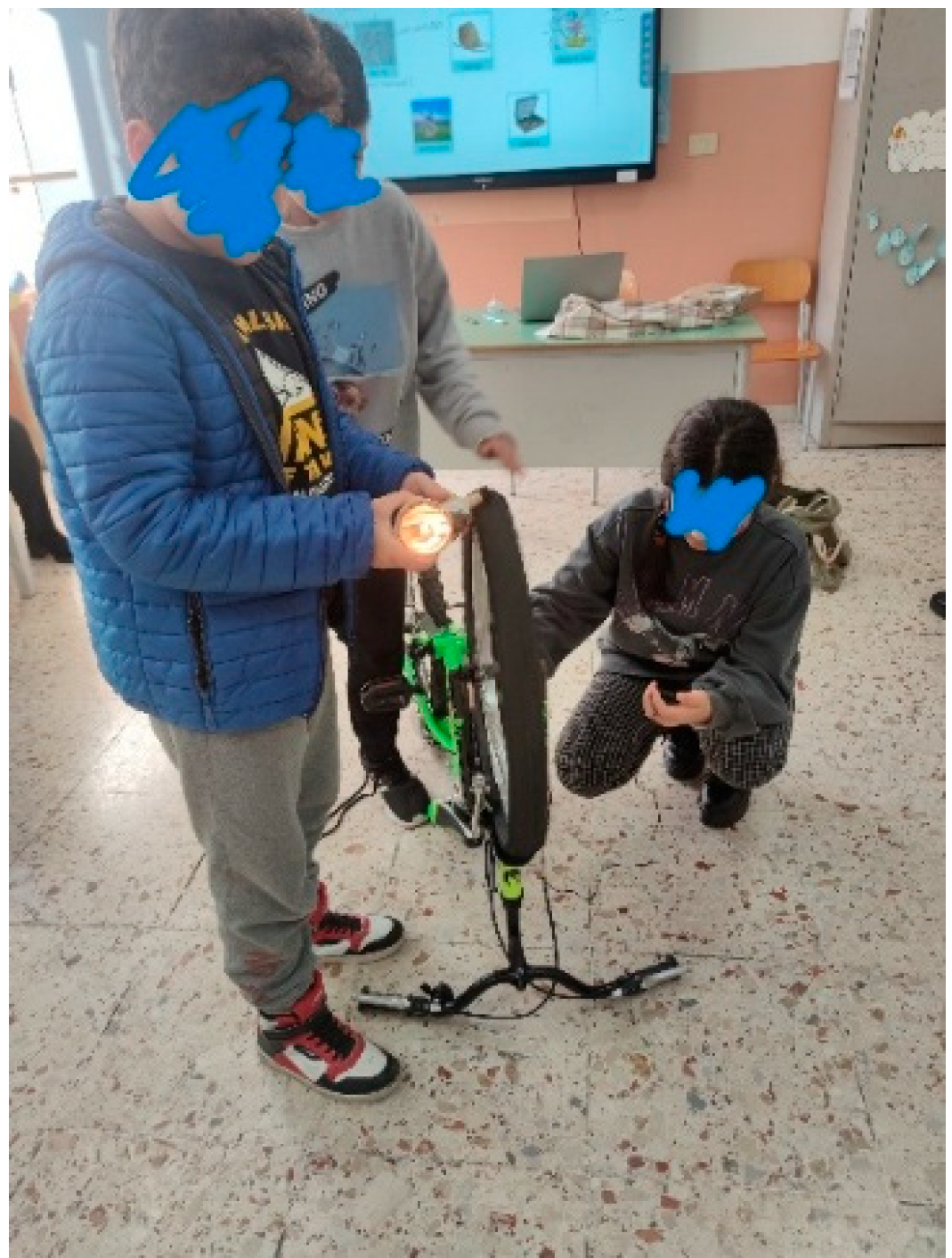
The subsequent activity involved the use of a bicycle and a dynamo. The researcher/teacher turned the bike upside down, explained how the dynamo worked, and asked students, in groups, to hypothesize how to light the bulb. They tested several ideas, at first unsuccessfully. It is worth noting that students were left free to propose even “unconventional” ideas and hypotheses, without any judgment or evaluation of their scientific correctness (Etkina et al., 2019). By dividing the tasks, every student tried the experiment: one child had the role of keeping the bike steady, one pedaled and the last held the dynamo in contact with the wheel (see Figure 1).
Students discussed the activity at length, aided by the teacher’s prompting questions.

4.4.3. Third Session

The researcher/teacher showed a smaller dynamo with an LED, normally used to demonstrate wind energy, and repurposed it to model electricity generation from other sources (e.g., a small waterfall). The wind blades were removed so students could independently explore different ways to produce electricity and light the LED.
In small groups, students built a simple water turbine using a bottle cap and wooden skewers. Working in pairs, one student held the turbine while the other poured water to try to light the LED. Through repeated trials, they concluded that water must be poured from sufficient height to generate light.
Students discussed the experiment, focusing primarily on the height and the “force” of the water. The researcher/teacher invited pupils to reflect on energy transfer and suggested scientific terms to use. Moreover, pupils asserted that “by placing the bottle too low, the energy reaching the ‘turbine’ is low, too”. The researcher/teacher asked them to consider this statement and imagine what would happen as the height kept decreasing.

4.4.4. Fourth Session

The researcher/teacher displayed a toy turbine and some sand. She asked pupils to try pouring sand onto the turbine, as they had done previously with water. Initially, the researcher/teacher asked the children to pour the sand from a lower height and then from a greater height, allowing them to observe how the falling speed of the sand and the rotation speed of the small turbine varied.
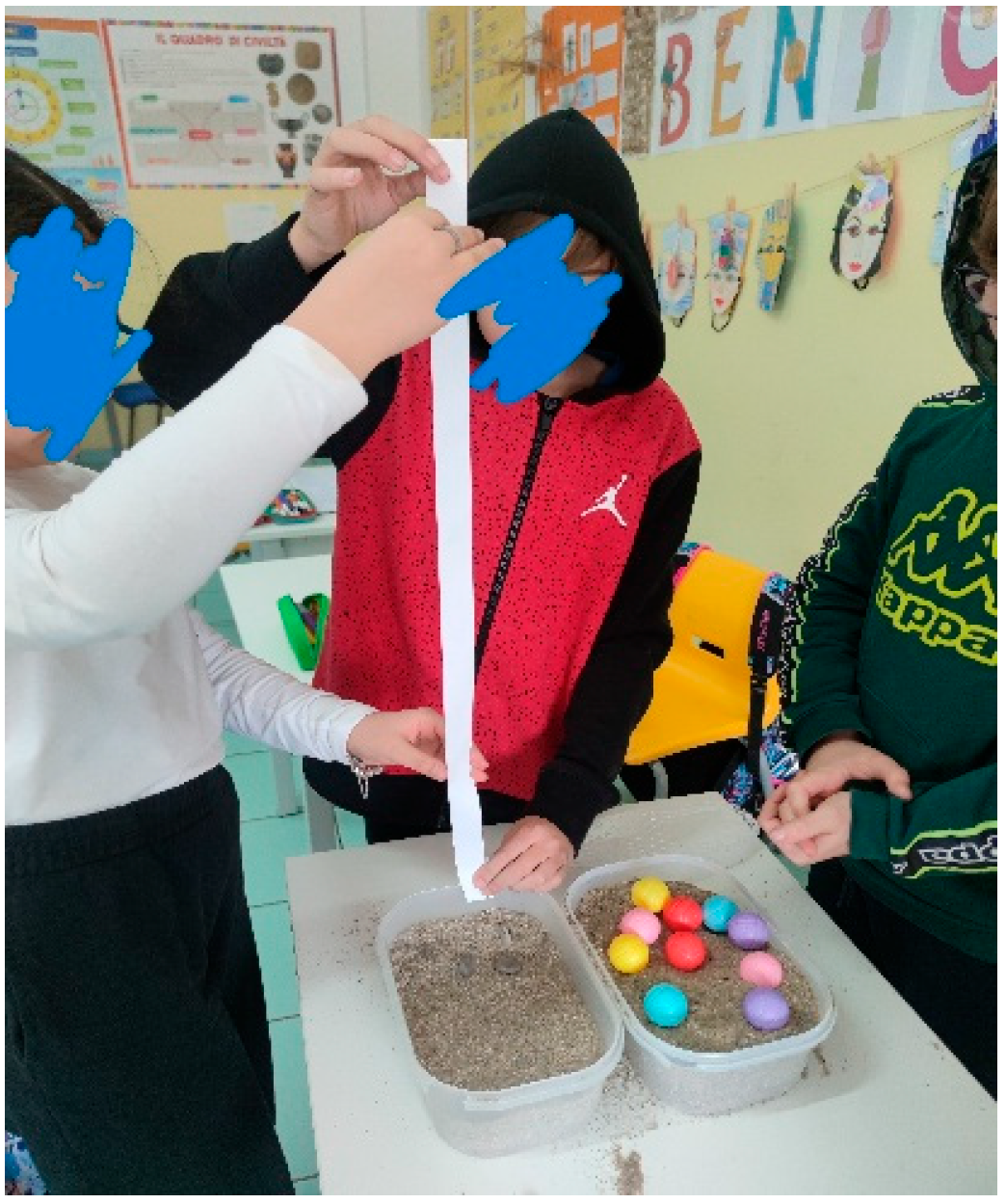
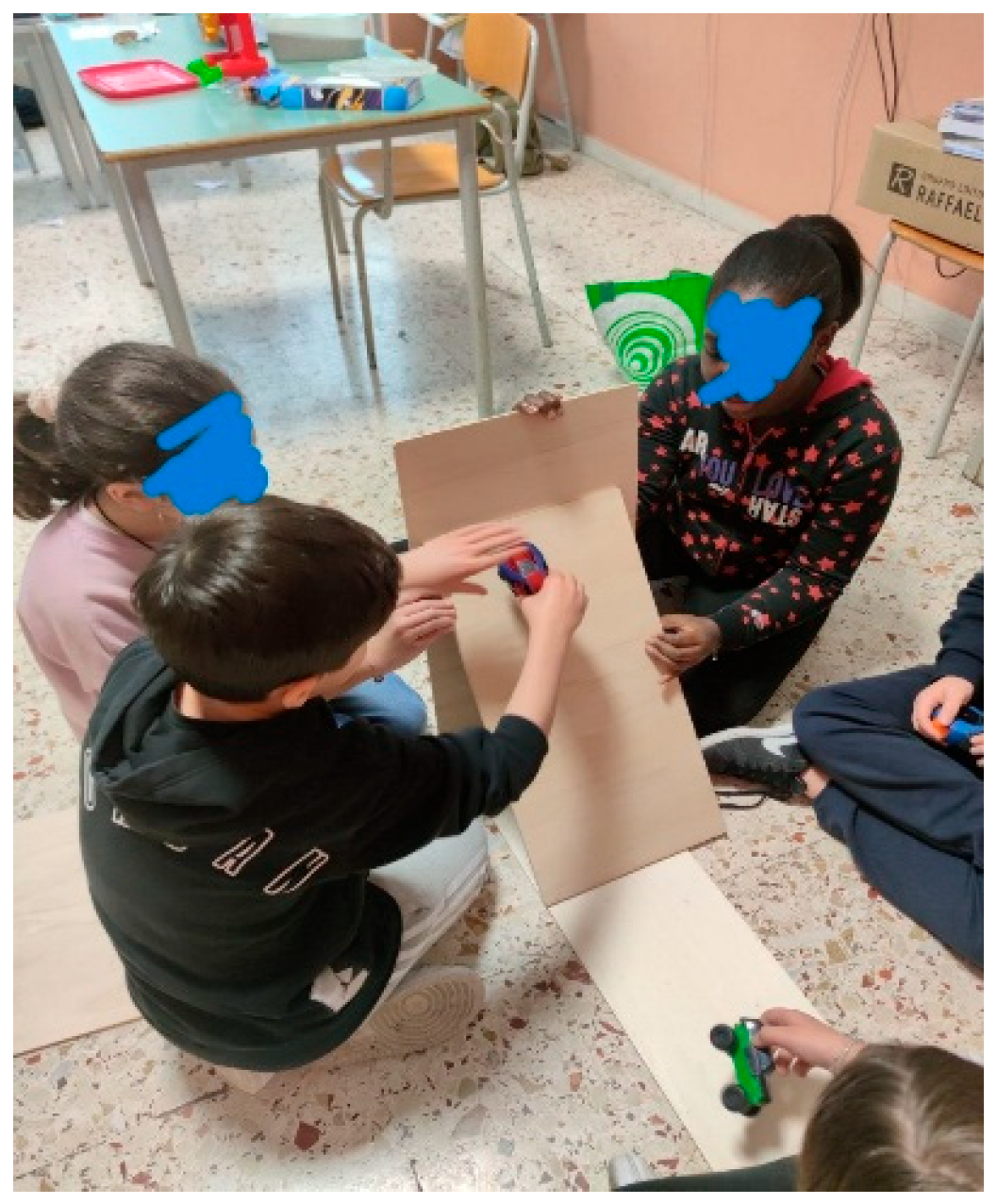
Each group carried out two experiments at separate workstations. In the first they used, with no instructions, a container with sand, balls, and a meter (see Figure 2), dropping balls from different heights and observing the holes formed in the sand. The depth of the holes was linked to the objects’ energy, with greater depth indicating greater energy (Colonnese et al., 2012). In the second experiment, groups used wooden boards of different lengths and toy cars of varying weights (see Figure 3), conducting several trials), again without instructions, and recording observations. Finally, each group shared their notes and hypotheses with the class, discussing the energy of falling objects, initially referred to as “falling energy” or “gravity energy.”

4.4.5. Fifth Session

The researcher/teacher brought a container of water and a manual kitchen whisk, asking pupils to describe the energy conversion observed and what happens to the whisk’s energy. Students discussed and exchanged ideas about what they called the “kinetic energy of the whisk”, then considered how the water’s temperature might change during the experiment.
The teacher explained how a thermal camera works and let pupils explore how it detects objects at different temperatures. Working in pairs, one student stirred the water while the other measured its temperature before, during, and after, observing a slight increase.
Another experiment reinforced the idea of kinetic-to-thermal energy conversion. Pupils used the thermal camera to measure a desk’s temperature before and after rubbing an eraser on it. Unlike the previous experiment (performed with a liquid), the solid surface showed a larger, noticeable temperature change, making the energy conversion easy to observe.
After describing the activities carried out, the teacher asked pupils to express verbally what they had understood about energy during the intervention.

5. Results

5.1. Observation During the TLS

In the first session, during the brainstorming activity, several common aspects emerged across all classes. Students mentioned technological devices (e.g., mobile phones, computers, TV sets, refrigerators, tablets), wind and solar energy, and concepts related to movement, the human body, and sports. By contrast, only a few pupils referred to heat (or fire) and food.
In the second activity, focused on renewable and non-renewable energy sources, pupils observed a set of images depicting different energy sources. Working autonomously in groups, they were asked to classify the sources into two categories. They correctly grouped power plants, oil, and gasoline together, and solar panels and wind turbines in the other group. Most pupils justified their choices by stating that “renewable energies produce energy from natural sources, whereas non-renewable energies are made by humans.” Notably, the term produce was used extensively in their explanations.
During the second session, students actively participated in a circle-time discussion and proposed numerous examples of activities that can be carried out “thanks to energy,” such as living, walking, running, jumping, getting dressed, riding a bike, swimming, playing soccer, and pushing objects. Subsequently, they attempted to name this “type” of energy, proposing labels such as movement energy or energy of motion.
In the experiment involving a bicycle and a dynamo, pupils explored and tested several initial ideas, which were mostly unsuccessful. After multiple attempts and with the support of the researcher/teacher’s prompting questions, they realized that it was necessary to make the small wheel turn through the circular motion of the bicycle wheels. They formulated hypotheses such as: “My energy went into the wheel and now it moves”; “I gave my energy to the bike and the dynamo”; “Some of the wheel’s energy goes to the bulb and becomes light energy”; and “The bike takes energy from the child, and the bulb takes energy from the bike.”
In the third session, the researcher/teacher introduced a dynamo connected to a small LED. Pupils were asked to identify possible ways of producing electrical energy and, consequently, light. They proposed several hypotheses, most of which involved wind; only later did some pupils suggest water as a possible source. Subsequently, working in small groups, students built a rudimentary water turbine. Initially, the LED did not light up. Pupils discussed possible reasons, suggesting that “maybe it only works with wind,” “maybe more water is needed,” or “the water needs to be poured more forcefully.” They experimented with different conditions, including a strong and continuous stream of water, a weaker stream, and an intermittent flow. Eventually, they began to understand that the strength of the water jet increases with the height from which the water is poured, and under these conditions they were able to light the LED.
The subsequent discussion focused mainly on the height and the “force” of the water. Pupils stated that “the energy of the water passes to the blades and then to the lamp,” that “the water’s energy becomes kinetic energy and then light energy,” and that “the bulb lights only if the jet is strong enough and if the water is poured from a sufficient height.” They concluded that “energy also depends on height” and that “this energy becomes zero when h = 0 m.”
In the fourth session, during the first experiment (“balls and sand”), most pupils demonstrated an understanding of how to use the available materials and showed manual skills and creativity. The second experiment (involving simple machines) proved more challenging. Many students initially struggled to use the materials appropriately: some groups placed the wooden boards horizontally on the floor, others arranged them between two tables to create a U-shaped ramp, and others leaned them against the classroom wall (see Figure 3). Only a few pupils noticed that the distance traveled by the toy cars depended on the height from which they were released. Researcher/teacher intervention, through guiding questions and targeted observations, was necessary to direct students’ attention to the relevant variables. At the end of the activity, all groups agreed that the outcome depended primarily on one factor: height.
In the fifth session, the researcher/teacher introduced a container of water and a manual kitchen whisk used to stir it. Pupils were asked to describe the type of energy transformation taking place and to explain what happened to the whisk’s energy. The most common hypothesis was that the energy simply ended or “dissolved” in the water. Most pupils believed that the water temperature remained unchanged, while some expected it to increase. After observing the experiment with a thermal camera, pupils offered different explanations, such as: “The temperature increased because of the whisk,” “It increased because the whisk makes the water move,” and “The kinetic energy of the whisk went into the water.” This latter statement, along with similar ones, was used by the researcher/teacher as a starting point to introduce and discuss energy transformation and thermal energy.
At the end of the fifth session, pupils discussed the aspects of energy they felt they had understood. Most statements focused on energy transformation and the different forms of energy, indicating a clear and robust understanding of the fundamental concepts.

5.2. Results from Energy Concept Questionnaire

Below we report the results of the pre- and post-instruction phases of the knowledge test administered to the 75 students who followed the learning path described above.
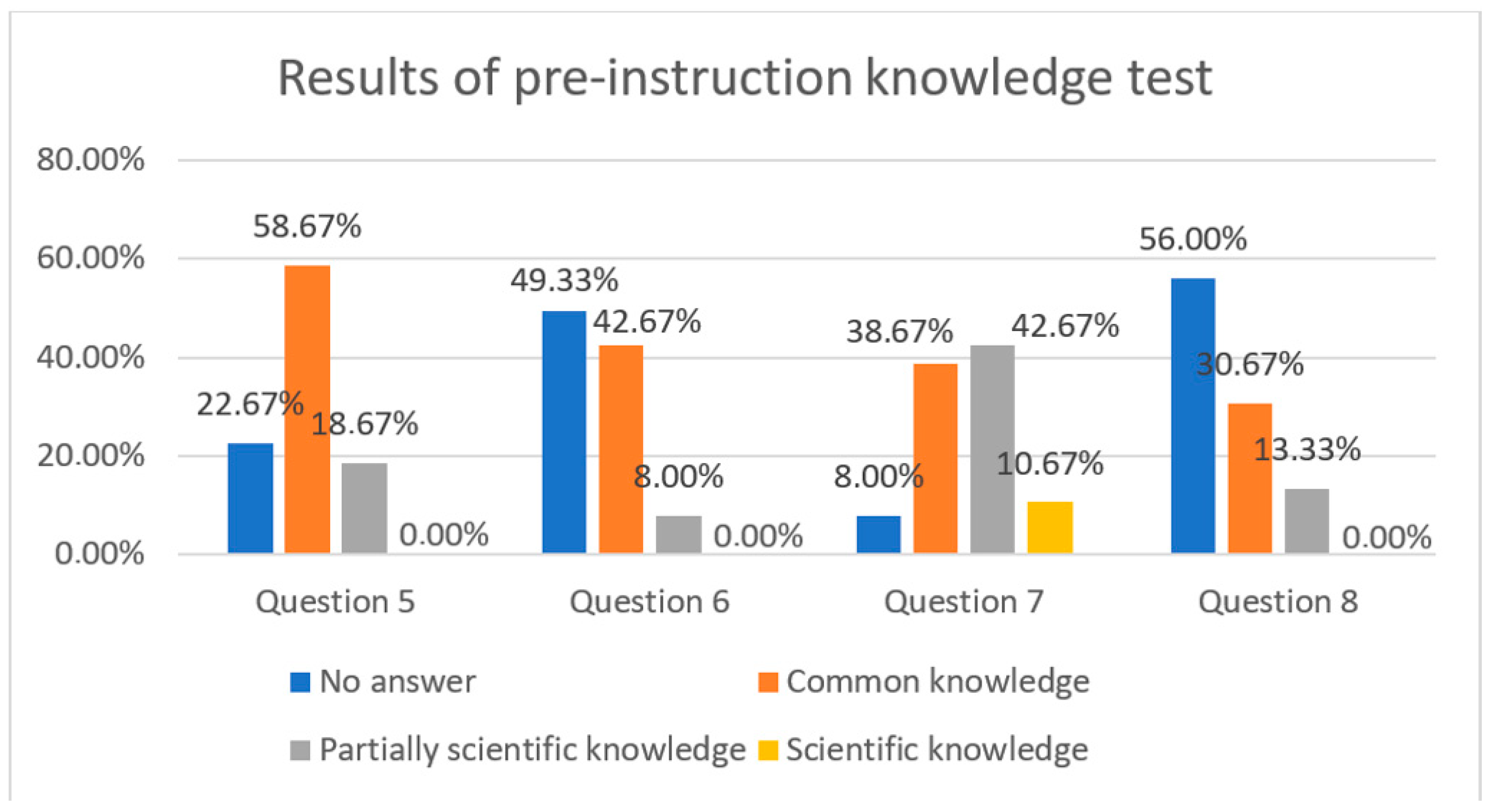
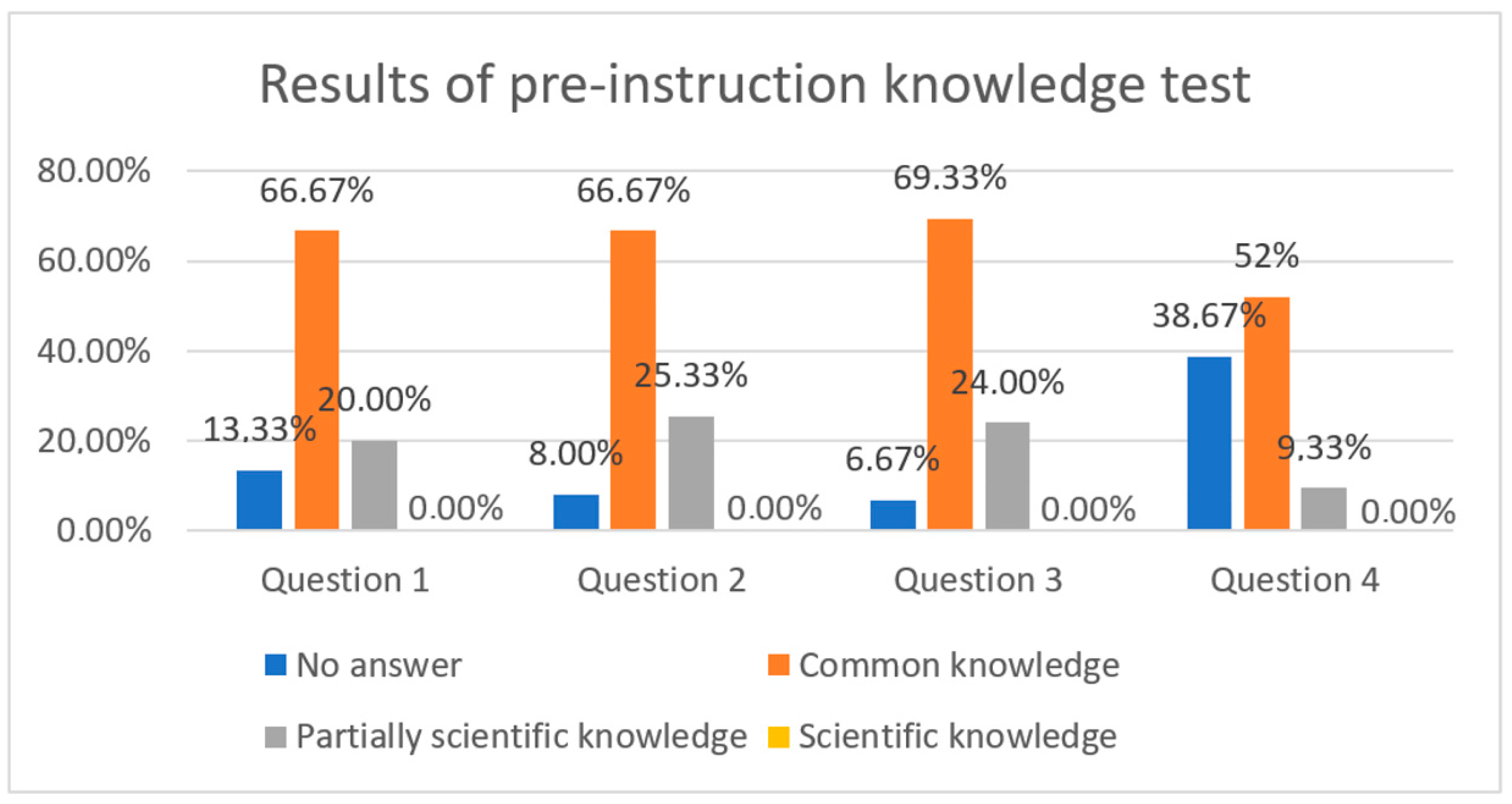
In the pre-instruction phase, most of the answers were classified as common-sense knowledge. Only a few answers were left blank, except for questions 4, 6, and 8, where the percentage of missing responses increased. No answers were classified as scientific knowledge, except for a small percentage in question 7 (see Figure 4 and Figure 5).
Most pupils (about 70%) described energy using definitions related to everyday life (15 answers), such as “it allows us to live,” “it’s a force inside us,” “it’s essential”; to technology (25 answers), such as “we need it to produce light,” “it’s a source of electricity”; and to movement (10 answers), such as “it helps the body move.” Nine pupils described energy by referring to different types of energy, which were not elaborated upon. When asked what things “have energy”, pupils mainly mentioned food (32 answers), technological objects (13 answers) such as Wi-Fi, light, and phones, atmospheric agents (4 answers) such as water, wind, and the sun, and combustible materials (4 answers) such as oil and gasoline. Responses categorized as partially scientific knowledge accounted for about 25% of the total. In these, students mentioned solar panels/wind turbines (10 answers), specific “types” of energy (5 answers), such as “solar energy” or “wind energy,” and various kinds of power plants (4 answers). In question 4, concerning the conservation of energy (see Figure 4), about 40% of students did not answer, and roughly half of the answers given were classified as common-sense knowledge. Pupils interpreted “conservation” literally, meaning keeping something so that it lasts longer and does not get wasted (30 answers), with responses like “Conserving energy means not using it for a while so you can use it later” or “I think it means not wasting it.” They also referred to technological objects (9 answers), such as “it means we store it in batteries and use it later” or “for example, when you are charging your phone.” In answers classified as partially scientific knowledge, 7 pupils mentioned solar panels), such as “energy is stored in solar panels and used when we need it.” When explaining energy conversion, 25 pupils referred to food, such as “when we eat, biological cells convert food into energy,” electricity (13 answers), such as “energy can turn into light,” and everyday experiences (6 answers), such as “it can become mental energy” or “if we sleep, we can convert our energy.” Answers categorized as partially scientific knowledge referred to solar panels/wind turbines (11 answers), such as “energy from solar panels transforms into light,” and power plants (3 answers), such as “energy converts in power stations.”
In question 6, about energy loss (see Figure 5), a high percentage of missing answers was recorded—nearly 50%. Many pupils associated “energy loss” with energy waste (16 answers), such as “energy is lost if we leave the lights on too long,” and with physical energy (16 answers), such as “if I get very tired, it means I’ve lost energy” or “for example, when I play soccer, I lose energy.” Answers classified as partially scientific knowledge accounted for 8%; in these, students (6 answers) gave partially correct but limited answers, such as “energy can never be lost.”
In the last question, concerning the distinction between renewable and non-renewable energy sources, more than half of the children (42 answers) did not respond. The remaining answers mainly referred to the literal meaning of the terms, for example,: “renewable ones can be remade, and non-renewable ones can’t” or “renewable energy can be renewed, non-renewable cannot,” and to the reuse of sources (7 answers), such as “non-renewable sources cannot be reused; renewable sources can.”
Among the answers classified as partially scientific knowledge, pupils referred to natural/artificial sources (5 answers) and environmental risk (5 answers), such as “renewable ones are not harmful to the environment, while non-renewable ones are.”
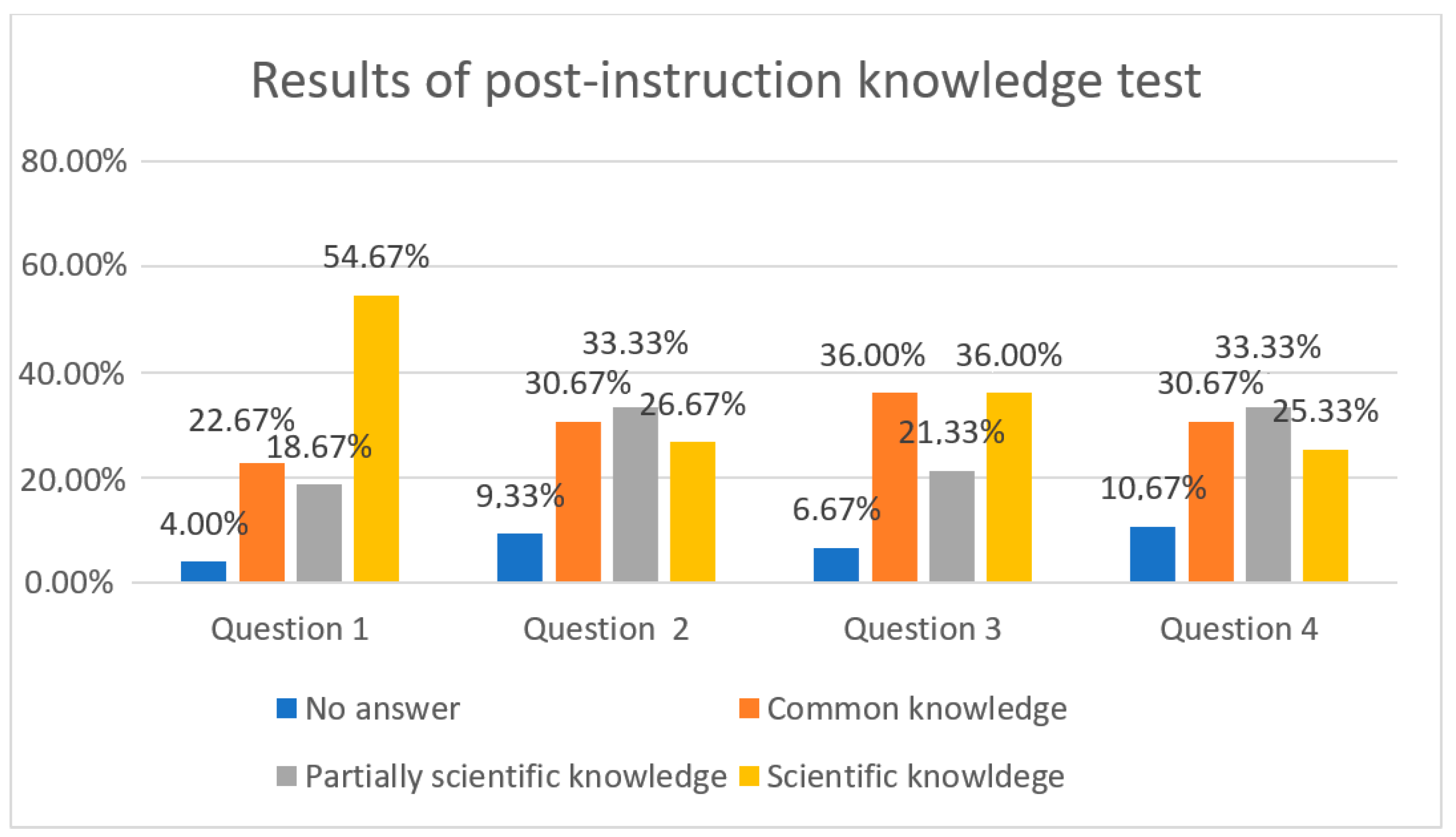
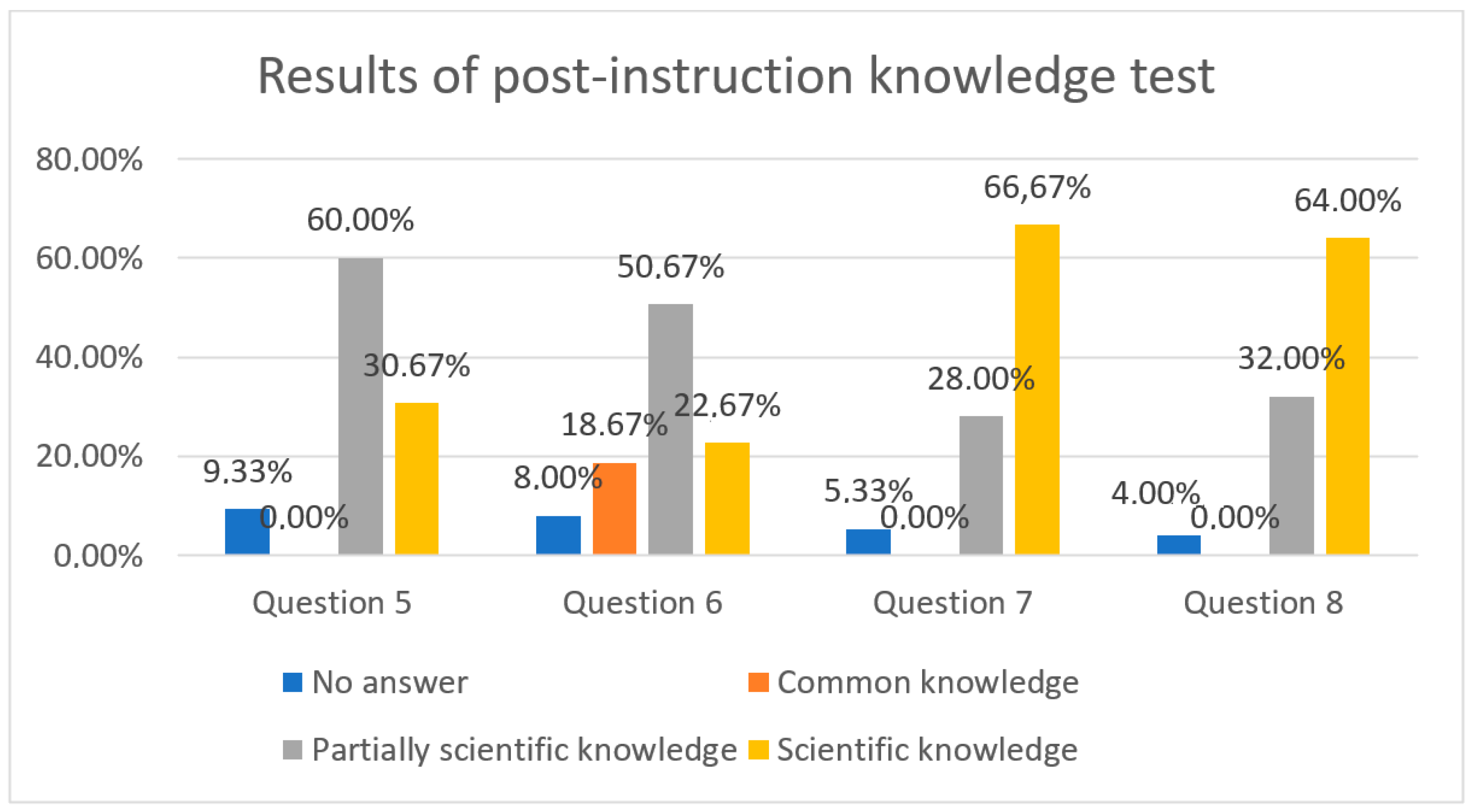
In the post-instruction phase, most answers were categorized as partially scientific or scientific knowledge (see Figure 6 and Figure 7). Only a few answers were missing.
Eighteen percent of pupils described energy using definitions related to everyday life (10 answers), movement (4 answers), such as “energy allows us to move,” and technology (3 answers). Answers classified as partially scientific knowledge referred to the difference between renewable and non-renewable energy sources (12 answers) and the existence of nuclear power plants (2 answers). About 50% of responses were classified as scientific knowledge: in these, energy was described through its transformative properties (21 answers), such as “energy cannot be seen or touched, but it is everywhere and can be perceived through transformation,” and through its different forms related to various sources (20 answers), such as “I know energy can be kinetic, wind, potential, etc.” When asked what things “possess” or “produce” energy, some pupils mentioned food (15 answers), natural elements (6 answers) such as sun, wind, and water, and light (2 answers). In responses classified as scientific knowledge, all pupils referred to examples explored during the learning path (20 answers), such as object falls, movement, and heat.
In question 4, concerning the conservation of energy, about 30% of answers were classified as common-sense knowledge (see Figure 6), as pupils referred to subsequent uses (6 answers), non-dispersion (6 answers), or the body as an energy reserve (10 answers), for example: “our body stores some energy”. Responses classified as scientific knowledge were about 25%; in these, pupils defined conservation as transformation (7 answers) and cited examples from the learning activities (15 answers), such as “in the bicycle experiment, we saw that the energy of the wheels is conserved and transformed into light energy.”
Pupils explained the concept of energy conversion through the experiments carried out during the TLS. Specifically, 45 answers were classified as partially scientific knowledge and 22 as scientific knowledge. The criteria used for this distinction were a) the use of scientific language, and b) precision and accuracy in the description of the phenomena. In the first group, examples included: “If we spin the wheel with our hands, we transmit our energy into kinetic energy.” In the second group: “In the bicycle experiment, we made the wheel spin by pushing it with our arms, and by doing so, our kinetic energy turned into rotational kinetic energy. Then we placed a dynamo on the wheel and realized that our kinetic energy was converted into the rotational kinetic energy of the bicycle, which in turn became the light energy of the torch”.
Seventy-three percent of students stated that energy cannot be lost (see Figure 7). Particularly, they justified this by referring to the experiments conducted during the TLS. Among the responses classified as partially scientific knowledge (34 answers), there were examples of limited reasoning, mentioning energy transmission without thorough explanation.
All students, except for the four who did not answer question 7, mentioned types of energy discussed during the course (kinetic, potential, thermal, light, solar, wind). Among the partially scientific responses, in addition to the types mentioned above, other examples appeared, such as static energy (8 ans.), electric energy (7 ans.), and dynamic energy (4 ans.).
Finally, in question 8 on the difference between renewable and non-renewable sources (see Figure 7), pupils described various examples of energy sources (8 answers), such as “Renewable energy is, for example, wind or solar energy, while non-renewable energy uses oil and coal,” and referred to their reusability (16 answers), such as “non-renewable energy can run out” or “renewable energy can be reused.” Among answers classified as scientific knowledge, pupils explained the difference between renewable and non-renewable sources by emphasizing the limited nature of resources (21 answers), environmental pollution risks (17 answers), the contrast between natural and artificial sources (5 answers), and availability (6 answers), for example: “renewable energy sources are not always available to us”.

5.3. Results on Self-Efficacy In Science (SE-IS) Questionnaire

From the independent t-test analysis, statistically significant differences emerged between males and females in the pre-instruction phase (see Table 3). Particularly, before the TLS, boys showed significantly higher mean scores in V2 (Growth Mindset), V3 (General Academic Self-Efficacy), V5 (Knowledge-specific SSE: Physical/Chemical Sciences), V7 (Mastery Experience), V9 (Verbal Persuasion), and V10 (Emotional State) compared to girls. We found p-values lower than 5% for V2, V3, V5, V7, and V9, and a p-value lower than 1% for V10. A very strong Cohen’s d effect size was found in V10, indicating that female students reported experiencing significantly higher levels of anxiety towards science compared to male students, as also reported in the literature (Toma et al., 2019; Master, 2021).
No significant differences were observed between boys and girls for V1 (Desire to Learn), V4 (Knowledge-specific SSE: Life Sciences), V6 (Attitude towards Science) and V8 (Vicarious Experience).
Through the dependent t-test analysis, statistically significant variations between the pre and post evaluations of male pupils (see Table 4) were found only in V11 (Skills-related school SSE). In the other 10 variables, male pupils maintained an equivalent average score in both evaluations. In general, both in pre- and post-instruction, males reported satisfactory levels in all variables, except for variable 10 (Emotional State), where we can observe a lower score, which indicates lower anxiety and stress related to science.
For the female pupils, the dependent t-test revealed statistically significant differences between pre- and post-instruction (see Table 5) in V5 (Knowledge specific—SSE: physics and chemistry), V6 (Attitudes towards science), V7 (Mastery Experience) and V10 (Emotional State). According to Cohen’s d, the most intense variations among these are V5 and V10. In both the pre- and post-test, female students reported high average scores in V1 (Desire to Learn and extend), V4 (Knowledge-specific SSE: Life Sciences), and V8 (Vicarious Experience). In the pre-instruction, they showed higher levels of self-efficacy in life sciences compared to physics/chemistry. In the post-instruction differences between V4 (Knowledge-specific SSE: Life Sciences) and V5 (Knowledge-specific SSE: physics/chemistry) have decreased.
From a comparison between the post-instruction scores of males and females (see Table 6), we found a p-value lower than 5% in V1 and a p-value lower than 1% in V10. The effect size of Cohen’s d is medium in both variables. There are no longer significant differences between males and females in V2 (Growth Mindset), V5 (Knowledge-specific SSE), V7 (Mastery Experience) and V9 (Verbal Persuasion). Moreover, while in the pre-evaluation the scores of boys and girls in V1 (Desire to learn and extend) were similar, in the post-evaluation, girls reported a higher level than their male peers. As indicated by the p-value (<0.011) and Cohen’s d (0.600), significant differences between boys and girls remain in the post-instruction in V10 (Emotional State). However, examining the data reveals a reduction in the gap between the two values. Additionally, female students showed a greater decrease in anxiety and stress towards science compared to their male peers.
With respect to V10 (Emotional State), gender differences persist in the post-instruction phase, though with a reduced gap compared to the initial situation. In other words, girls continue to display higher anxiety levels than boys, but to a lesser extent than before the TLS. This suggests that the intervention also had a positive emotional effect, contributing to a more reassuring and inclusive learning environment for female students, even if it did not completely eliminate the emotional gap between the two groups.
Thus, by the end of the TLS, girls reported significant improvements in all these variables. Conversely, for V10 (Emotional State), a lower average score was observed in the post-test, indicating that the girls’ levels of anxiety had decreased.

6. Discussion

One of the aims of the present research was to analyze what common-sense conceptions primary school students highlight about energy (RQ1).
Most of the responses given in the pre-instruction phase are classified as common-sense knowledge, as they are based on everyday life experiences and on what children can observe.
The collected data confirms what has been reported in the literature (Nordine et al., 2011; Boyes & Stanisstreet, 1990; Millar, 2005; Brook & Wells, 1988). Analysis of the students’ responses indicates that energy is conceptualized as something—almost a material substance—that can be possessed exclusively by living beings and is therefore closely associated with life and movement (Nordine et al., 2011; Millar, 2005). Moreover, a strong confusion with electricity emerged (Chen et al., 2014). On the one hand, students’ responses highlighted the idea that energy can be possessed only by living beings and is therefore inextricably linked to food (which provides energy) and movement (as evidence that someone “has or possesses” energy). On the other hand, energy was often confused with electricity (Millar, 2005). Thus, smartphones, tablets, computers, and technological devices were seen as able to produce, store, or convert energy. Energy was viewed as “something that gives life or strength,” a quality rather than a quantity (Trumper, 1990).
Based on their daily experiences, some pupils referred to solar, wind, and hydroelectric energy as sources that provide energy. As already noted in the literature (Shepardson et al., 2011; Zyadin et al., 2012), students demonstrated some basic but fragmentary and incomplete knowledge about renewable and non-renewable energy. Particularly, they intuitively distinguished “clean and natural sources that regenerate” from those that “pollute and do not regenerate.” According to some studies, this information comes from media, advertising, and cartoons, which are often rich in references to new energy sources (Evans et al., 2007).
Among the most difficult concepts for pupils were energy conservation and energy loss. Particularly, it emerged that most students interpreted energy conservation as saving energy, differently from the physical principle (Boyes & Stanisstreet, 1990). Students imagined energy as a substance that “is consumed” and can be “kept aside” (Trumper, 1990). Similarly, the concept of “energy loss” was often understood in an everyday or bodily sense, not a physical one. Pupils tended to conceive energy as something that “is used and lost,” and therefore can disappear after use (Duit & Treagust, 1998).
Regarding RQ2, we analyzed the students’ post-instruction responses to understand how the planned and implemented TLS modified students’ common-sense conceptions and supported the development of the energy concept. Most responses were classified as partially scientific or scientific knowledge, while the number of unanswered items or common-sense knowledge responses decreased considerably. The results showed a significant improvement in students’ understanding of the concept of energy.
At the end of the TLS, pupils’ ideas became more clearly defined: about 70% of them described energy consistently with the scientific viewpoint, no longer relying solely on examples from everyday life. Operational definitions of energy emerged, mainly related to its properties (transformation, conservation, abstract nature) and to the various forms of energy explored during the TLS. Pupils were able to distinguish between energy and electricity. Technological devices such as smartphones and computers were no longer considered “energy producers”. After instruction, the human body became less central than experimental setups (e.g., a water turbine or a bicycle), which enabled students to discuss energy processes more effectively. Pupils developed the idea that all systems possess energy—not only living beings—and they also mentioned examples involving inanimate objects such as bicycles, stones, and balls. Students explained the concept of energy conversion coherently, referring specifically to the activities carried out during the TLS and describing the experiments in detail. However, not all pupils were able to correctly relate energy conversions to the principle of energy conservation. This finding is not surprising, as reported in Colonnese (Colonnese et al., 2012), since the idea of energy conservation was mentioned but not explored in depth. It is, however, interesting to note a shift in pupils’ ideas toward the notion of conversion and transmission of constant (not-dispersing) and indefinite property. The understanding that energy cannot be lost, but only converted and transferred, was another important viewpoint competently expressed by 60% of pupils in the post-test, compared to the 80% who were confused or held the opposite opinion before the intervention, as, for example in Colonnese (Colonnese et al., 2012).
Finally, regarding RQ3, we administered the SE-IS questionnaire to analyze how the planned TLS promoted improvement in students’ science self-efficacy. In the pre-instruction phase, statistically significant differences emerged between boys and girls in SSE. This finding suggests that the gender gap in the perception of one’s own abilities is already present in primary school, although not extensive (Bian et al., 2017; Toma et al., 2019; Carroll et al., 2024). Before the TLS, differences were found in favor of boys in Growth Mindset, General Academic Self-Efficacy, Knowledge-Specific SSE: physical/chemistry Sciences, Mastery Experience, Verbal Persuasion, and Emotional State. Thus, boys experienced less anxiety in science and felt more prepared in the physics/chemistry content covered during primary school. In the context of SSE, this suggests that boys in this study may have had more opportunities to draw upon the four sources of SSE (Bian et al., 2017; Corbett & Hill, 2015; Hand et al., 2017). Girls report feeling more anxiety towards science than boys, as noted in the literature (Toma et al., 2019; Whitcomb & Singh, 2020; Carroll et al., 2024). This suggests they experience stress or anxiety when doing science-related activities, which has a negative effect on SSE.
Despite the effectiveness of the TLS, male students did not show significant improvements across most variables. Both before and after the intervention, boys already demonstrated satisfactory levels in key areas such as desire to learn, growth mindset, and positive attitudes towards science. This initial high performance likely limited the potential for further growth, a phenomenon commonly referred to as the ceiling effect, where individuals who start with elevated scores have less room to show measurable improvement (Salkind, 2010). Therefore, we expected to obtain similar data.
In contrast, girls, who begin with lower scores in several areas, may have been more open or receptive to change. In the post-instruction, girls reported a significant improvement in Attitude toward science, Mastery Experience and Knowledge-specific SSE: physics/chemistry sciences. Most girls expressed a significant increase in confidence regarding the points discussed in the activities. Additionally, they reported a decrease in their Emotional State score. We can affirm that a brief TLS has contributed to an improvement in the female students’ emotional perception of science related subjects. Female pupils achieved scores comparable to their male counterparts, except for V1 (Desire to learn and extend) and V10 (Emotional State). In this last variable, significant differences between boys and girls are evident even in the post-test, but by examining the data we can observe a reduction in the gap between the two values. This suggests that TLS had a positive effect on girls, particularly in the emotional variables that influence the perception of self-efficacy (Hendrickson, 2021; Carroll et al., 2024).

7. Conclusions

This study examines the design, implementation, and evaluation of a Teaching–Learning Sequence (TLS) on energy with 75 primary school pupils aged 10–11. Focusing on the qualitative aspects of energy, the TLS was conducted using the Inquiry-Based Science Education (IBSE) approach. The study also explored gender differences in science self-efficacy (SSE), with a twofold aim: to investigate changes in students’ understanding of energy and to assess shifts in SSE at the beginning and end of the course using the SE-IS questionnaire.

7.1. Key Contributions of the Study

The TLS is characterized by a design that is aligned with the cognitive and developmental level of primary school pupils. By focusing on the qualitative aspects of energy rather than on formal or quantitative treatments, the sequence allowed the students to engage meaningfully with a complex scientific concept without cognitive overload. This design choice proved effective in supporting early conceptual understanding and in laying a solid foundation for later, more formal learning.
A further strength of the TLS lies in its coherent implementation of the Inquiry-Based Science Education (IBSE) methodology. Inquiry activities, hands-on experiments, and guided discussions were not used as supplementary elements but were central to the learning process. This structure enabled students to actively construct knowledge and supported a gradual transition from common-sense explanations of energy toward more scientifically grounded conceptions (as also found by Opitz et al. (2015) and Ölçer (2025)). The explicit attention to students’ prior ideas and everyday meanings of energy allowed the TLS to function as a mechanism for conceptual restructuring rather than simple error correction. This design feature represents an innovative aspect of the sequence, as it promotes conceptual change through experience-based reasoning rather than through formal definitions alone.
The TLS also proved effective in promoting the use of scientifically appropriate language. Over the course of the sequence, students moved from vague or misleading expressions toward more coherent and discipline-consistent descriptions of energy. This indicates that the design successfully integrated conceptual development with the refinement of scientific discourse, an aspect that is often overlooked in primary science instruction.
Beyond conceptual learning, an important strength of the TLS is its positive impact on students’ science self-efficacy. The results obtained using the SE-IS indicate that certain gender differences in SSE are already present at the primary school level, although the gap between boys and girls is relatively small. Statistically significant, albeit modest, differences were observed in Mastery Experience, Verbal Persuasion, and Emotional State. Boys exhibited a more positive attitude toward science and reported lower levels of anxiety compared to girls. Following the implementation of the TLS, improvements were observed across several SSE dimensions, with especially notable gains among female students. This pattern aligns with prior research suggesting that SSE at this developmental stage can be effectively enhanced through targeted pedagogical approaches (Nordine et al., 2011; Fauth et al., 2014; Pajares & Schunk, 2002).
From an innovative perspective, the TLS stands out for its integrated focus on both conceptual understanding and affective outcomes. The simultaneous examination of students’ energy conceptions and science self-efficacy represents a deliberate and forward-looking design choice that extends beyond traditional content-focused teaching sequences. Moreover, by explicitly addressing gender-related differences in science self-efficacy at the primary school level, the TLS demonstrates the potential of early, inquiry-based interventions to mitigate emerging disparities and promote more equitable learning experiences. Another innovative aspect of the TLS design is the strong alignment between inquiry activities and targeted conceptual goals. Students’ improved understanding of energy was closely tied to the experimental activities they carried out, indicating that the sequence was carefully structured to ensure coherence between actions, reflections, and conceptual outcomes. Overall, the TLS demonstrates how an IBSE-oriented design can simultaneously support conceptual learning, scientific language development, and motivational outcomes.
Finally, the integration of the SE-IS questionnaire within the evaluation of the TLS represents a methodological innovation, as it allowed for a systematic and empirically grounded assessment of affective dimensions of learning alongside conceptual gains.

7.2. Limitations of the Study

The results of this study are encouraging, indicating positive associations between the use of the IBSE approach and both the enhancement of scientific knowledge and improvements in students’ self-efficacy, particularly among girls. However, the absence of a control group and the relatively small sample size limit the generalizability of these findings. Consequently, the conclusions drawn here require confirmation through further research. Building on these results, we plan to design a revised version of the TLS on the concept of energy and to implement it with both an experimental group and a control group in primary schools to more rigorously evaluate the effects of active learning methodologies on conceptual understanding and the development of SSE. Moreover, the initial phase of validation of the SE-IS questionnaire yielded promising results, demonstrating its usefulness for measuring scientific self-efficacy in primary school students. Accordingly, we intend to conduct a factor analysis with a larger sample in future studies (Fabrigar & Wegener, 2019).

Author Contributions

Conceptualization, G.G. and C.F.; Methodology, G.G.; Software, C.F. and O.R.B.; Validation, G.G., A.A.G., C.F. and O.R.B.; Formal analysis, O.R.B.; Investigation, G.G.; Resources, C.F.; Data curation, A.A.G. and O.R.B.; Writing—original draft, G.G.; Writing—review and editing, G.G., A.A.G., C.F. and O.R.B.; Visualization, C.F.; Supervision, C.F. and O.R.B.; Project administration, C.F.; Funding acquisition, O.R.B. and C.F. All authors have read and agreed to the published version of the manuscript.

Funding

This research received no external funding.

Institutional Review Board Statement

The Ethics Committee of the University of Palermo 75369-2025 2025-05-12.

Informed Consent Statement

Informed consent was obtained from all subjects involved in the study.

Data Availability Statement

The data presented in this study are available on request from the corresponding author.

Conflicts of Interest

The authors declare no conflicts of interest.

Appendix A

Self-Efficacy In Science Questionnaire (SE-IS)

Info
Age Gender
School Classroom
Var.Section A
How much do you agree with these statements?
Not at allA littleSomewhatA lotCompletely
I am a very curious
1I like learning new things
I think learning new things is boring
I am very creative.
Not at allA littleSomewhatA lotCompletely
There are people who do poorly in science, no matter how much they study
2When tasks become difficult, I give up
I can think quickly
Section B
How well could you do the following…
TerriblyPoorlyNeither well nor poorlyWellPerfectly
Italian
3Math
Science
English
Section C
How well could you answer questions on the following science topics?
TerriblyPoorlyNeither well nor poorlyWellPerfectly
Plants
4Animals
Human body
Water cycle
TerriblyPoorlyNeither well nor poorlyWellPerfectly
States of matter
Liquids
Solutions and mixtures
Energy
5Heat and temperature
Forces
The Universe and the Solar System
Electricity
Magnets
Section D
How well do you agree with the following?
Strongly disagreeDisagreeNeither agree nor disagreeAgreeStrongly agree
Science is one of my favorite subjects
I like science assignments
Science is easy for me
6I enjoy learning new science topics.
I can’t wait to do science
I lose interest during science lessons.
I am interested in learning topics related to science.
Strongly disagreeDisagreeNeither agree nor disagreeAgreeStrongly agree
I received excellent grades in science tests.
Even when I study very hard, I do poorly in science
When science topics are explained to me, I understand the concepts very well
7I can usually answer questions or science tasks well.
I have always been successful with science.
I do well even on the more difficult science assignments.
I learn science quickly.
Strongly disagreeDisagreeNeither agree nor disagreeAgreeStrongly agree
When I see my teacher doing science experiments, I imagine doing them myself
8When I see how another student does a science experiment, I would like to do it too
Strongly disagreeDisagreeNeither agree nor disagreeAgreeStrongly agree
9My classmates like to work with me in science because they think I’m good at it
My teacher tells me that I am good at science.
Strongly disagreeDisagreeNeither agree nor disagreeAgreeStrongly agree
10I am unable to think clearly when doing science work.
I feel anxious when I have to do science
Section E
How capable do you think you are of performing these activities?
0123456 78 910
Connecting science topics with each other
Explaining science topics to my classmates if they haven’t understood something
Working together with my classmates to better understand science topics
11Write a good report about an experiment
Correctly use instruments during an experiment
Encouraging my classmates to participate in discussions.
Conducting science experiments using practical materials

References

  1. Ballen, C. J., Wieman, C., Salehi, S., Searle, J. B., & Zamudio, K. R. (2017). Enhancing diversity in undergraduate science: Self-efficacy drives performance gains with active learning. CBE—Life Sciences Education, 16(4). [Google Scholar] [CrossRef]
  2. Bandura, A. (1977). Self-efficacy: Toward a unifying theory of behavioral change. Psychological Review, 84(2), 191–215. [Google Scholar] [CrossRef]
  3. Bezen, S., Bayrak, C., & Aykutlu, I. (2016). Physics teachers’ views on teaching the concept of energy. Eurasian Journal of Educational Research, 2016(64), 109–124. [Google Scholar] [CrossRef][Green Version]
  4. Bian, L., Leslie, S.-J., & Cimpian, A. (2017). Gender stereotypes about intellectual ability emerge early and influence children’s interests. Science, 355(6323), 389–391. [Google Scholar] [CrossRef]
  5. Biggs, A., Daniel, L., & Feather, R. M. (2008). Glencoe science. Glencoe/McGraw-Hill. [Google Scholar]
  6. Boyes, E., & Stanisstreet, M. (1990). Pupils’ ideas concerning energy sources. International Journal of Science Education, 12(5), 513–529. [Google Scholar] [CrossRef]
  7. Britner, S. L., & Pajares, F. (2006). Sources of science self-efficacy among middle school students. Journal of Research in Science Teaching, 43(5), 485–499. [Google Scholar] [CrossRef]
  8. Brook, A. J., & Wells, P. (1988). Conserving the circus? An alternative approach to teaching and learning about energy. Physics Education, 23(2), 80–85. [Google Scholar] [CrossRef]
  9. Brousseau, G. (1997). Theory of didactical situations in mathematics. Mathematics Education Research Journal, 19, 86–87. [Google Scholar]
  10. Bybee, R. W. (2015). The BSCS 5E instructional model: Creating teachable moments. NSTA Press. [Google Scholar]
  11. Caprara, G. V., Fida, R., Vecchione, M., Del Bove, G., Vecchio, G. M., Barbaranelli, C., & Bandura, A. (2008). Longitudinal analysis of perceived self-efficacy for self-regulated learning. Journal of Educational Psychology, 100(3), 525–534. [Google Scholar] [CrossRef]
  12. Carr, M., & Kirkwood, V. (1988). Teaching and learning about energy in New Zealand secondary school junior science classrooms. Physics Education, 23(2), 86–91. [Google Scholar] [CrossRef]
  13. Carroll, S., McCauley, V., & Grenon, M. (2024). Science self-efficacy beliefs of upper primary students in Ireland. International Journal of Science Education, 46(6), 503–523. [Google Scholar] [CrossRef]
  14. Chen, R. F., Eisenkraft, A., Fortus, D., Krajcik, J., Neumann, K., Nordine, J., & Scheff, A. (2014). Teaching and learning of energy in K–12 education. Springer. [Google Scholar] [CrossRef]
  15. Chrzanowski, M. M., Grajkowski, W., Żuchowski, S., Spalik, K., & Ostrowska, E. B. (2018). Vernacular Misconceptions in Teaching Science—Types and Causes. Journal of Turkish Science Education, 15(4), 29–54. [Google Scholar]
  16. Colonnese, D., Heron, P., Michelini, M., Santi, L., & Stefanel, A. (2012). A vertical pathway for teaching and learning the concept of energy. Review of Science, Mathematics and ICT Education, 6(1), 21–50. [Google Scholar] [CrossRef]
  17. Constantinou, C. P., & Papadouris, N. (2012). Teaching and learning about energy in middle school: An argument for an epistemic approach. Studies in Science Education, 48(2), 161–186. [Google Scholar] [CrossRef]
  18. Corbett, C., & Hill, C. (2015). Solving the equation: The variables for women’s success in engineering and computing. AAUW. [Google Scholar]
  19. Delegkos, N., & Koliopoulos, D. (2020). Constructing the “energy” concept and its social use by students of primary education in Greece. Research in Science Education, 50(2), 393–418. [Google Scholar] [CrossRef]
  20. Driver, R., Rushworth, P., & Wood-Robinson, V. (2004). Making sense of secondary science: Support material for teachers. Taylor & Francis. [Google Scholar]
  21. Duit, R., & Treagust, D. F. (1998). Learning in science: From behaviorism towards social constructivism and beyond. In B. J. Fraser, & K. G. Tobin (Eds.), International handbook of science education (pp. 3–25). Springer. [Google Scholar]
  22. Duit, R., & Treagust, D. F. (2003). Conceptual change: A powerful framework for improving science teaching and learning. International Journal of Science Education, 25(6), 671–688. [Google Scholar] [CrossRef]
  23. Etkina, E., Brookes, D. T., & Planinsic, G. (2019). Investigative science learning environment. Morgan & Claypool. [Google Scholar] [CrossRef]
  24. Evans, G. W., Brauchle, G., Haq, A., Stecker, R., Wong, K., & Shapiro, E. (2007). Young children’s environmental attitudes and behaviors. Environment and Behavior, 39(5), 635–658. [Google Scholar] [CrossRef]
  25. Fabrigar, L. R., & Wegener, D. T. (2019). Exploratory factor analysis. Oxford University Press. [Google Scholar]
  26. Fauth, B., Decristan, J., Rieser, S., Klieme, E., & Büttner, G. (2014). Student ratings of teaching quality in primary school: Dimensions and prediction of student outcomes. Learning and Instruction, 29, 1–9. [Google Scholar] [CrossRef]
  27. Ganajová, M., Orosová, R., Sotáková, I., & Letošníková, P. (2025). The effect of inquiry-based teaching on students’ attitudes toward science as an academic subject as well as science and technology in general. Frontiers in Education, 10, 1708139. [Google Scholar] [CrossRef]
  28. Giarratano, G., Battaglia, O. R., Termini, G., & Fazio, C. (2024, August 26–30). A didactic pathway on the concept of energy in primary school: Cognitive well-being and self-efficacy based on gender [Conference session]. IV World Conference on Physics Education, Kraków, Poland. [Google Scholar]
  29. Gorard, S., & See, B. H. (2009). The impact of socioeconomic status on participation and attainment in science. Studies in Science Education, 45(1), 93–129. [Google Scholar] [CrossRef]
  30. Hand, S., Rice, L., & Greenlee, E. (2017). Exploring teachers’ and students’ gender role bias and confidence in STEM. Social Psychology of Education, 20(4), 929–945. [Google Scholar] [CrossRef]
  31. Harackiewicz, J. M., Smith, J. L., & Priniski, S. J. (2016). Interest matters. Policy Insights from the Behavioral and Brain Sciences, 3(2), 220–227. [Google Scholar] [CrossRef]
  32. Hendrickson, P. (2021). Effect of active learning techniques on student excitement, interest, and self-efficacy. Journal of Political Science Education, 17(2), 311–325. [Google Scholar] [CrossRef]
  33. Jensen, M. P. (2003). Questionnaire validation: A brief guide for readers of the research literature. Clinical Journal of Pain, 19, 345–352. [Google Scholar] [CrossRef]
  34. Jin, H., & Anderson, C. W. (2012). A learning progression for energy in socio-ecological systems. Journal of Research in Science Teaching, 49(9), 1149–1180. [Google Scholar] [CrossRef]
  35. King, T. L., Scovelle, A. J., Meehl, A., Milner, A. J., & Priest, N. (2021). Gender stereotypes and biases in early childhood: A systematic review. Australasian Journal of Early Childhood, 46(2), 112–125. [Google Scholar] [CrossRef]
  36. Krippendorff, K. (2019). Content analysis: An introduction to its methodology. SAGE. [Google Scholar]
  37. Lent, R. W., & Brown, S. D. (2006). On conceptualizing and assessing social cognitive constructs in career research: A measurement guide. Journal of Career Assessment, 14(1), 12. [Google Scholar] [CrossRef]
  38. Lijnse, P. (2004). Didactical structures as an outcome of research on teaching–learning sequences? International Journal of Science Education, 26(5), 537–554. [Google Scholar] [CrossRef]
  39. Linn, M. C., & Eylon, B. (2006). Science education: Integrating views of learning and instruction. In W. M. Reynolds, & G. E. Miller (Eds.), Handbook of educational psychology (2nd ed.). Erlbaum. [Google Scholar]
  40. Liou, P. Y., Lin, Y. M., Huang, S. C., & Chen, S. (2023). Gender differences in science motivational beliefs and their relations with achievement over Grades 4 and 8: A multinational perspective. International Journal of Science and Mathematics Education, 21(1), 233–249. [Google Scholar] [CrossRef]
  41. Liu, X., & Ruiz, M. E. (2008). Using data mining to predict K–12 students’ performance on assessment items related to energy. Journal of Research in Science Teaching, 45(5), 554–573. [Google Scholar] [CrossRef]
  42. Liu, Y., & Wang, J. (2022). The mediating–moderating model of inquiry-based learning and science self-efficacy: Evidence from PISA 2015. International Journal of Science Education, 44(7), 1096–1119. [Google Scholar] [CrossRef]
  43. Lown, J. (2002). Circle time: The perceptions of teachers and pupils. Educational Psychology in Practice, 18(2), 93–102. [Google Scholar] [CrossRef]
  44. Mackay, J., & Parkinson, J. (2010). Gender, self-efficacy and achievement among South African technology teacher trainees. Gender and Education, 22(1), 87–103. [Google Scholar] [CrossRef]
  45. Mariani, C., Laurenti, E., & Corni, F. (2012). Hands-on, minds-on activities to construct the concept of energy in primary school: Experiments, games and group discussions. Latin American Journal of Physics Education, 6(Suppl. 1), 105–111. [Google Scholar]
  46. Master, A. (2021). Gender stereotypes influence children’s STEM motivation. Child Development Perspectives, 15(3), 203–210. [Google Scholar] [CrossRef]
  47. Méheut, M., & Psillos, D. (2004). Teaching–learning sequences: Aims and tools for science education research. International Journal of Science Education, 26(5), 515–535. [Google Scholar] [CrossRef]
  48. Millar, R. (2005). Teaching about energy. University of York. [Google Scholar]
  49. MIUR. (2018). Indicazioni nazionali e nuovi scenari. Ministry of Education, Italy. [Google Scholar]
  50. Mohtar, L. E., Halim, L., Abd Rahman, N., Maat, S. M., Iksan, Z. H., & Osman, K. (2019). A model of interest in STEM careers among secondary school students. Journal of Baltic Science Education, 18(3), 404–416. [Google Scholar] [CrossRef]
  51. National Research Council. (2010). A framework for K–12 science education: Practices, crosscutting concepts, and core ideas. National Academies Press. [Google Scholar]
  52. Niedderer, H., Goldberg, F., & Duit, R. (1992). Towards learning process studies. In R. Duit, F. Goldberg, & H. Niedderer (Eds.), Research in physics learning: Theoretical issues and empirical studies (pp. 10–28). IPN—Institute for Science Education. [Google Scholar]
  53. Nordine, J., Krajcik, J., & Fortus, D. (2011). Transforming energy instruction in middle school to support integrated understanding and future learning. Science Education, 95(4), 670–699. [Google Scholar] [CrossRef]
  54. Nugent, G., Barker, B., Welch, G., Grandgenett, N., Wu, C., & Nelson, C. (2015). A model of factors contributing to STEM learning and career orientation. International Journal of Science Education, 37(7), 1067–1088. [Google Scholar] [CrossRef]
  55. OECD. (2019). PISA 2018 results (Volume II): Where all students can succeed. OECD. [Google Scholar] [CrossRef]
  56. Opitz, S. T., Harms, U., Neumann, K., Kowalzik, K., & Frank, A. (2015). Students’ energy concepts at the transition between primary and secondary school. Research in Science Education, 45(5), 691–715. [Google Scholar] [CrossRef]
  57. Ölçer, S. (2025). Inquiry-based science teaching in primary school. Journal of Child Development and Education, 1, 55–66. [Google Scholar]
  58. Pajares, F., & Schunk, D. H. (2002). Self and self-belief in psychology and education. In S. Graham, & H. Harris (Eds.), Improving academic achievement (pp. 3–21). Elsevier. [Google Scholar] [CrossRef]
  59. Persano Adorno, D., Pizzolato, N., & Fazio, C. (2018). Long term stability of learning outcomes in undergraduates after an open-inquiry instruction on thermal science. Physical Review Physics Education Research, 14, 010108. [Google Scholar] [CrossRef]
  60. Psillos, D., & Kariotoglou, P. (2016). Iterative design of teaching–learning sequences: Introducing the science of materials in European schools. Springer. [Google Scholar]
  61. Salkind, N. (2010). Encyclopedia of research design. SAGE. [Google Scholar] [CrossRef]
  62. Scott, P. H. (1992). Pathways in learning science: A case study of the development of one student’s ideas relating to the structure of matter. In R. Duit, F. Goldberg, & H. Niedderer (Eds.), Research in physics learning: Theoretical issues and empirical studies (pp. 203–224). IPN. [Google Scholar]
  63. Shepardson, D. P., Niyogi, D., Choi, S., & Charusombat, U. (2011). Students’ conceptions about the greenhouse effect. Climatic Change, 104(3–4), 481–507. [Google Scholar] [CrossRef]
  64. Sherman, R. R., & Webb, R. B. (2001). Qualitative research in education: Focus and methods. Routledge Falmer. [Google Scholar]
  65. Sissamperi, N., & Koliopoulos, D. (2021). How students of primary school understand large scale energy systems: The case of thermal power plant. Journal of Technology and Science Education, 11(1), 129–145. [Google Scholar] [CrossRef]
  66. Solomon, J. (1983). Learning about energy: How pupils think in two domains. European Journal of Science Education, 5(1), 49–59. [Google Scholar] [CrossRef]
  67. Tiberghien, A. (1997). Learning and teaching: Differentiation and relation. Research in Science Education, 27, 359–382. [Google Scholar] [CrossRef]
  68. Toma, R. B., Greca, I. M., & Orozco Gómez, M. L. (2019). Attitudes towards science and views of nature of science among elementary school students in terms of gender, cultural background and grade level variables. Research in Science & Technological Education, 37(4), 492–515. [Google Scholar] [CrossRef]
  69. Trumper, R. (1990). Being constructive: An alternative approach to teaching the energy concept—Part one. International Journal of Science Education, 12(4), 343–354. [Google Scholar] [CrossRef]
  70. Usher, E. L., & Pajares, F. (2006). Sources of academic and self-regulatory efficacy beliefs of entering middle school students. Contemporary Educational Psychology, 31(2), 125–141. [Google Scholar] [CrossRef]
  71. Webb-Williams, J. (2018). Science self-efficacy in the primary classroom. Research in Science Education, 48(5), 939–961. [Google Scholar] [CrossRef]
  72. Whitcomb, K. M., & Singh, C. (2020). Gender inequities throughout STEM: Women with higher grades drop STEM majors while men persist. arXiv, arXiv:2004.00560. [Google Scholar]
  73. Yeh, S.-C., Huang, J.-Y., & Yu, H.-C. (2017). Analysis of energy literacy and misconceptions of junior high students in Taiwan. Sustainability, 9(3), 423. [Google Scholar] [CrossRef]
  74. Zhang, L., & Ma, Y. (2023). A study of the impact of project-based learning on student learning effects: A meta-analysis study. Frontiers in Psychology, 14, 1202728. [Google Scholar] [CrossRef] [PubMed]
  75. Zyadin, A., Puhakka, A., Ahponen, P., Cronberg, T., & Pelkonen, P. (2012). School students’ knowledge and attitudes toward renewable energy in Jordan. Renewable Energy, 45, 78–85. [Google Scholar] [CrossRef]
Figure 1. Experiment with the bike and the dynamo.
Education 16 00209 g001
Figure 2. Experiment with sand and balls.
Education 16 00209 g002
Figure 3. Experiment with toy cars.
Education 16 00209 g003
Figure 4. Results of the pre-instruction knowledge test administered—part I.
Education 16 00209 g004
Figure 5. Results of the pre-instruction knowledge test administered—part II.
Education 16 00209 g005
Figure 6. Results of the post-instruction knowledge test administered—part I.
Education 16 00209 g006
Figure 7. Results of the post-instruction knowledge test administered—part II.
Education 16 00209 g007
Table 1. Classification rubric.
LevelCriteriaExamples
Common-sense knowledgeReferences to everyday experiences; intuitive explanations; conceptual errors“Energy is used for moving.”
“Energy is stored in the electric wires.”
Partially scientific knowledgePresence of scientific terms without correct or complete connections; partially scientific language; declarative responses that report notions without contextualization; examples explored during the learning sequence but reported in an incomplete and/or partially correct way.“Wind turbines have energy.”
“Energy cannot be created or destroyed.”
“The bicycle transferred some of its energy to the bulb, and it became light energy.”
Scientific knowledgeCorrect and consistent use of scientific language; examples explored during the learning sequence, contextualized and clearly explained; identification of cause–effect relationships.“If we take a whisk and a bowl full of water and start stirring the whisk inside the bowl, the water will warm up because the kinetic energy of the whisk has been transformed into thermal energy.”
Table 2. Variables in SE-IS.
VVariables
V1Desire to learn and extend
V2Growth Mindset
V3General academic SE
V4SE in specific knowledge—life science
V5SE in specific knowledge—physics/chemistry
V6Attitude towards science
V7Mastery Experience
V8Vicarious Experience
V9Verbal Persuasion
V10Emotional State
V11Specific skills in Science
Table 3. Pre-test: comparison between boys (ma) and girls (fe).
Mean PRE maDev. st. PRE maMean PRE feDev. st. PRE feStudent’s tp-ValueCohen’s d
V13.9400.4474.0060.480−0.6130.5440.142
V23.8250.5103.4100.6713.0200.0030.697
V33.9130.4473.6500.6482.0060.0490.471
V44.1690.4694.0430.5831.0210.3110.238
V53.7310.4583.2950.6323.4380.0010.788
V64.0610.5483.8610.6781.4100.1630.324
V73.7710.6083.4570.6712.1230.0370.491
V84.2000.8064.2000.7140.0001.0000.000
V93.7380.6083.3860.6862.3500.0210.543
V102.1500.9003.2000.566−5.9320.0001.397
V117.4251.1807.5441.050−0.4830.6460.106
Note: significant p value (p ≤ 0.05) in bold. d 0.80: large; d = 0.50–0.79: medium; d = 0.20–0.49: small; d = 0.00–0.19: very small.
Table 4. Male pupils: comparison between pre- and post-instruction.
Mean PRE maDev. st. PRE maMean POST maDev. st. POST maStudent’s tp-ValueCohen’s d
V13.9400.4473.9200.4800.1810.8570.043
V23.8250.5103.8000.6000.1890.8510.045
V33.9130.4473.8500.5000.5740.5680.132
V44.1690.4694.1130.5200.5340.6000.114
V53.7310.4583.8890.316−1.8560.0710.402
V64.0610.5484.1890.387−1.2560.1770.271
V73.7710.6083.8860.316−1.0430.3030.236
V84.2000.8064.3000.648−0.7260.4720.137
V93.7380.6083.6500.6080.7140.4800.144
V102.1500.9002.1000.7140.2570.7900.062
V117.4251.1807.8610.687−2.8190.0070.451
Note: significant p value (p ≤ 0.05) in bold. d 0.80: large; d = 0.50–0.79: medium; d = 0.20–0.49: small; d = 0.00–0.19: very small.
Table 5. Female pupils: comparison between pre- and post-instruction.
Mean PRE feDev. st. PRE feMean POST feDev. st. POST feStudent’s tp-ValueCohen’s d
V14.0060.4804.2000.480−1.7040.0970. 405
V23.4100.6713.5620.748−1.1130.2740.214
V33.6500.6483.8430.520−1.3440.1870.328
V44.0430.5834.1070.548−0.4470.6580.114
V53.2950.6323.7560.469−3.5350.0010.827
V63.8610.6784.1880.566−2.7150.0100.523
V73.4570.6713.7920.616−2.7820.0080.520
V84.2000.7144.4290.600−1.6040.1180.347
V93.3860.6863.5860.781−1.2680.2130.272
V103.2000.5662.5860.8943.3700.0010.821
V117.5441.0507.8571.182−1.2810.2080.280
Note: significant p value (p ≤ 0.05) in bold. d 0.80: large; d = 0.50–0.79: medium; d = 0.20–0.49: small; d = 0.00–0.19: very small.
Table 6. Post-instruction: comparison between boys (ma) and girls (fe).
Mean POST maDev. St. POST maMean POST feDev. St. POST feStudent’s tp-ValueCohen’s d
V13.9200.4804.2000.480−2.5230.0140.584
V23.8000.6003.5620.7481.5250.1320.351
V33.8500.5003.8430.5200.0610.9520.014
V44.1130.5204.1070.5480.0440.9650.010
V53.8890.3163.7560.4691.4390.1540.333
V64.1890.3874.1880.5660.0140.9890.003
V73.8860.3163.7920.6160.8330.4070.192
V84.3000.6484.4290.600−0.8820.3810.206
V93.6500.6083.5860.7810.3990.6910.092
V102.1000.7142.5860.894−2.6060.0110.600
V117.8610.6877.8571.1820.0160.9290.020
Note: significant p value (p ≤ 0.05) in bold. d 0.80: large; d = 0.50–0.79: medium; d = 0.20–0.49: small; d = 0.00–0.19: very small.
Disclaimer/Publisher’s Note: The statements, opinions and data contained in all publications are solely those of the individual author(s) and contributor(s) and not of MDPI and/or the editor(s). MDPI and/or the editor(s) disclaim responsibility for any injury to people or property resulting from any ideas, methods, instructions or products referred to in the content.