Article

The Bright Future of Online Programming for Girls’ STEM Identity Development

1
School of Teacher Education, Anne’s College, Florida State University, Tallahassee, FL 32306, USA
2
Department of Sociology, College of Social Science and Public Policy, Florida State University, Tallahassee, FL 32306, USA
3
National Girls Collaborative Project, Seattle, WA 98105, USA
4
SJLR Consulting, West Palm Beach, FL 33412, USA
5
Smart Girls HQ, Charlotte, NC 28202, USA
*
Author to whom correspondence should be addressed.
Educ. Sci. 2026, 16(1), 98; https://doi.org/10.3390/educsci16010098
Submission received: 17 November 2025 / Revised: 23 December 2025 / Accepted: 31 December 2025 / Published: 8 January 2026
(This article belongs to the Section STEM Education)

Abstract

Informal STEM education programs (ISEs) can be a successful vehicle for addressing the underrepresentation of girls in STEM by expanding their views of what constitutes science and debunking stereotypes related to who succeeds in STEM careers. Research has demonstrated how in-person ISEs provide opportunities for girls to engage in hands-on, authentic science experiences, interact with diverse women role models, and understand the real-world application of STEM to improve their STEM identity development (i.e., STEM competence, performance, self and external recognition, and sense of belonging within STEM). But few studies have focused on STEM identity development in online spaces. Our study addresses this gap through a mixed methods study that investigates how an online program (Brite), held in 2023, influenced the STEM identities of the participating girls. Our results highlight the aspects of the online program that improved the STEM identity for participants as well as lessons learned for future programs. The influential programmatic pieces were role model interactions and the supportive Brite community that included program educators, the other girls, and the Brite facilitators, which helped girls feel inspired and motivated to continue along their STEM identity trajectories.

1. Introduction

Women’s underrepresentation in many science, technology, engineering, and mathematics (STEM) fields at the college and workforce levels continues to be a national issue in the United States (NASEM, 2021; NSB, 2021; NSF, 2023). Women make up half of the U.S. population (U.S. Census Bureau, 2020) but only 35% of the STEM workforce (NSF, 2023). This underrepresentation for women is starkest in computer science, engineering, and physical science disciplines (NSB, 2021; NSF, 2023). The causes for this underrepresentation are not differences in abilities but rather barriers that result from the multiple and compounding impacts of intersectional inequalities related to gender, race/ethnicity, and class operating within larger systems of oppression (King & Pringle, 2019; Wing, 1997). These barriers can discourage and hinder the identification of girls within STEM fields as early as elementary school but truly take hold in middle and high school, influencing their career trajectories and long-term participation in STEM (Archer et al., 2012; Carlone & Johnson, 2007; Carlone et al., 2015; Hughes et al., 2024; Kang et al., 2019; NASEM, 2021; Tan et al., 2013).
This lack of belonging can be enforced by teachers and peers in formal STEM classrooms (Calabrese Barton et al., 2013; Ladson-Billings, 2006). However, informal STEM education programs (ISEs) have demonstrated positive improvements in sense of belonging and other STEM identity components (Hughes et al., 2024; Ibourk et al., 2022; King & Pringle, 2019). Effective practices within these programs include hands-on and collaborative learning experiences and engagement with diverse role models (Chan et al., 2020; Hughes et al., 2020a, 2020b; Kitchen et al., 2018; Roberts & Hughes, 2022). However, there is little research on how these approaches transfer to an online setting, specifically as it relates to girls’ STEM identity development (Erstad & Sefton-Green, 2012; Ito et al., 2018; Parker et al., 2018). Consequently, the purpose of this study was to fill this gap by investigating the influence of Brite—an online program for self-identifying girls designed with the goal of engaging them in community-building, hands-on STEM activities, and interactions with role models—on participating girls’ STEM identity.

1.1. Conceptual Framework

Both the Brite program and the research design were informed by a STEM identity lens (Archer et al., 2016; Calabrese Barton et al., 2013; Carlone & Johnson, 2007; Master et al., 2016). Our definition of STEM identity is based on Carlone and Johnson’s science identity model. According to this framework, individuals must develop competence in their chosen STEM field through the development of skills which we defined in our study as STEM career awareness, problem solving, learning from mistakes, and perseverance. Individuals must have opportunities to perform their STEM skills and be recognized by peers, teachers, and other STEM experts (e.g., scientists, mentors). Even when individuals are recognized by others as STEM people, their STEM identity is still dependent on their ability to see themselves as STEM people (e.g., self-recognition). Through the process of performance and recognition, individuals begin to feel they belong in their chosen STEM field (Archer et al., 2016; Carlone et al., 2014; Hughes & Schellinger, 2023; Master et al., 2016). However, motivation to perform within relevant STEM communities is intricately connected to individuals’ sense of belonging and perceived future success in STEM fields (e.g., answering questions in school science classes, attending after school science clubs or other ISEs) (Carlone et al., 2015; Hughes et al., 2020b, Lave & Wenger, 1991). Our goal for the Brite program was to improve girls’ sense of belonging and recognition as a STEM person through participation in the platform and curriculum that engaged girls in hands-on activities, role model interactions, and a supportive community. Thus, the four constructs of STEM identity that drove our program development and research study are competence (Carlone & Johnson, 2007; self-efficacy in STEM competence, Dou & Cian, 2021), performance (Archer et al., 2016; Carlone & Johnson, 2007; Carlone et al., 2014), recognition by oneself and other socializers like family, peers and teachers (Calabrese Barton et al., 2013; Carlone & Johnson, 2007; Vincent-Ruz & Schunn, 2018), and sense of belonging (Calabrese Barton et al., 2013; Carlone & Johnson, 2007; Anderson-Butcher & Conroy, 2002).

1.2. Barriers to STEM Identity Development

The identity work girls engage in to fit into STEM involves conforming to or resisting normative performances of gender related to the stereotypes associated with STEM fields (Collins & Bilge, 2020; Harding, 1998; Ireland et al., 2018). Research highlights a history of androcentrism in science, demonstrating the entanglement of the disciplines of STEM with whiteness and masculinity (Archer et al., 2012; Harding, 1998). Research demonstrates that STEM spaces, structures, and stereotypes make it difficult for girls and women, particularly those of color, to feel like they belong (Apugo et al., 2023; Young et al., 2017). For example, girls often have limited exposure to STEM careers or role models who look like them (Farland-Smith, 2015; Jethwani et al., 2017; O’Brien et al., 2016; Riedinger & Taylor, 2016). Even as girls develop STEM skills and perform those skills within STEM spaces, they are often not recognized for their STEM competence, which affects their sense of belonging (Apugo et al., 2023; Hughes et al., 2020a; Roberts & Hughes, 2022). In this regard, STEM spaces not only uphold norms of hegemonic masculinity but reflect value systems privileging whiteness, further exacerbating myths of who does STEM (Collins & Bilge, 2020; Harding, 1998; Ireland et al., 2018).

1.3. Informal STEM Spaces and Girls’ Identity Development

Informal STEM education programs (ISEs) play an important role in fostering STEM interest, sense of belonging, and participation for girls of color (Hughes et al., 2024; Kang et al., 2019; King & Pringle, 2019; NRC, 2009; Riedinger & Taylor, 2016; Tan et al., 2013). ISEs are also a vehicle for addressing underrepresentation by expanding views of what constitutes science and debunking norms of participation (Calabrese Barton et al., 2013; Gonsalves et al., 2013; Kang et al., 2019; Tan et al., 2013). Research demonstrates how in-person ISEs provide opportunities for girls to engage in hands-on, authentic science experiences, interact with diverse women role models, and understand real-world applications of STEM (Calabrese Barton et al., 2013; King & Pringle, 2019; Riedinger & Taylor, 2016; Robinson et al., 2016). To that end, the Brite program—the focus of this study—was developed to incorporate the best practices of in-person spaces. The Brite program included daily asynchronous hands-on activities, opportunities to engage asynchronously on the platform, and a daily live virtual session where all girls would come together to meet a role model.
Community Engagement. The first design principle of the Brite platform was community engagement both in the asynchronous aspects of the platform (e.g., posts on each other’s pages) and during the live sessions. Engaging girls in a supportive community where they meet role models and peers who look like them and can show them the possibilities of a positive STEM future is important to the development of STEM identity (King & Pringle, 2019). Educators were trained in ways to help build community in online spaces. In addition to the training, educators were provided with an Educator Guide that gave examples of how educators could engage in community building on the platform. This included encouraging the girls in their respective programs to post pictures of their activities on the Gallery page on the Brite platform. The Guide also provided examples for daily icebreakers, discussion prompts, and reflection questions for educators to use with their respective girls. In addition, each organization was given a page on the platform to engage with each other, which could be updated with their group norms, description, and a chat box where all members could share their thoughts. During the live sessions, girls could comment in the chat and unmute to interact with each other and the role models during the live role model sessions. These community engagement group activities were designed to help encourage communication and collaboration among girls, and to help girls build their sense of belonging as they recognized each other and were recognized by educators and role models (Archer et al., 2016; Carlone et al., 2014; Hughes & Schellinger, 2023).
Hands-on Activities. The second design principle of the Brite program was hands-on activities. These were designed by the Brite team to help the girls develop STEM skills, defined as STEM career awareness, problem solving, learning from mistakes, and perseverance (Carlone & Johnson, 2007). The activities connected to the role models’ careers so that the girls would have multiple opportunities (e.g., through the hands-on activity and role model sessions) to see diverse possibilities in STEM beyond stereotypical career options (Calabrese Barton et al., 2013; Kang et al., 2019). Educators from each organization could determine how to engage their girls in the hands-on activities. Educators were encouraged to have the girls share a picture of their projects on the Gallery page of the platform to be viewed by girls within their organization as well as members of the Brite program from other organizations.
Role Model Interactions. The live role model talks were designed to provide girls with opportunities to learn from role models, perform their STEM identities and be recognized for these performances to strengthen their sense of belonging (Carlone & Johnson, 2007; Carlone et al., 2015; Hughes et al., 2020b). For each role model session, two members of the Brite leadership team would facilitate the activities (e.g., answer logistical questions, ensure girls’ questions were being answered). Twelve role models were recruited for the Brite 2023 program. Diversity of race/ethnicity, STEM interest, career stage, and job type were central to the selection criteria, with the goal of providing girls with multiple opportunities to connect with role models from computer science, physical science, and engineering disciplines. Before the program, role models were asked to participate in two 60 min online training sessions developed in partnership with Techbridge Girls™. These trainings were developed to help role models make their presentations more relevant to the girls by describing how to create a safe and welcoming space and talk about their work in age-appropriate ways. Role models were encouraged to use slides as visuals and integrate games to convey their STEM interests, successes, challenges, and their interests and hobbies, even those that may seem unrelated to STEM to connect with the girls. During the talks, girls were encouraged to ask questions verbally or use the chat feature, where they had the opportunity to converse with each other through the chat feature.
On Thursday of each week, the role model talk became the Brite Fest, wherein not only would the role model discuss their career path and answer questions, but then each organization would showcase the activities that they had worked on during the week through a PowerPoint presentation by girls who volunteered. Before the Thursday Brite Fest, educators were encouraged to have their girls work together in their Brite Groups to prepare their PowerPoint slide to share with the Brite community during the project showcase. Hence, the role model talks and Brite Fest aimed to provide girls with multiple opportunities to perform their STEM competence, interact with the role models and their peers socially, and be recognized as valued members of the Brite community as well as potential members of the STEM community.

1.4. Online Programming and Girls’ Identity Development

Our reason for developing and studying the Brite 2023 program was to better understand the impact that these programs can have, particularly given the rapid move to online learning during the COVID-19 pandemic, and its continuation since the pandemic. Research on the influence of online programming on girls’ STEM identity development is both timely and critical. Virtual learning can connect students with peers and educators from across the nation and around the world, allowing for the sharing of ideas from a variety of perspectives. Students are also able to access learning materials regardless of their physical location (Black et al., 2021; Erstad & Sefton-Green, 2012; Ito et al., 2018). However, online learning also requires students to have access to specific resources, such as a stable Internet connection and a device (e.g., computer or tablet) to access the learning platform (Black et al., 2021). Additionally, much of the online learning research has focused on asynchronous formats, without incorporating live virtual programing. Asynchronous programing alone can be difficult for students to find motivation or develop persistence if they are confused about how to start a project (Black et al., 2021; Digital Learning Collaborative, 2024).
Even those studies on online ISEs have focused on transitions to online during COVID-19 (Kitch et al., 2021; Warren et al., 2021). These studies compared online programs to pre-pandemic programs. In Warren and his colleagues’ study, they found that participants in both the pre-pandemic in-person and pandemic virtual camp formats increased their interest, understanding, and excitement for engineering from pre- to post-camp. Additionally, the two virtual programs allowed students from more geographic regions to participate; however, they also found that there were slightly less underrepresented minority students in the virtual programs (Warren et al., 2021).
These studies hint at the positive impact of virtual ISE programs on girls’ STEM interest. However, these studies did not focus on STEM identity more broadly. Instead, these articles focused on pre- to post-program outcomes, rather than describing how these outcomes occurred—a gap this study will address. To that end, our study focuses on the following research questions:
  • How do girls engage in the Brite program, a virtual program that included asynchronous and synchronous formats?
  • What influence does this engagement have on participating girls’ STEM identity development?

2. Methods

2.1. Research Setting

The Brite program was an online, interdisciplinary STEM program for girls ages 13–16, originally developed in 2020 by the National Girls Collaborative Project and partners to fill the void in summer learning loss exacerbated by the COVID-19 Pandemic. For this study, we will be focusing on the 2023 program as it was funded by the National Science Foundation that year. With this funding support, the team developed a customized online platform that included community engagement, hands-on STEM activities, and role model interactions. Organizations that served girls were recruited to participate from across the nation. The organizations were responsible for recruiting at least 10 girls for their respective programs and selecting a lead educator to participate in two virtual training sessions leading up to the summer. Educators and girls were expected to access the platform through a 1:1 device provided by Brite. The Brite 2023 program ran for three weeks in the summer, Monday to Thursday. Each week focused on a specific STEM area: (1) Week 1: Coding and Computer Science; (2) Week 2: Engineering; (3) Week 3: Physical Science. These three STEM topics were selected because their respective fields have the least representation of women in the professional STEM workforce (NSB, 2021; NSF, 2023). Each day included a hands-on activity that introduced girls to careers related to the weekly theme (e.g., computer science, engineering, and physical science). Educators for each organization decided how to incorporate the hands-on activity—having girls work on the project together or individually. The culmination of each day was the live interactive role model sessions where all the girls came together and engaged with each other and the invited role model in a virtual space. Table 1 outlines the schedule and lists the activities for the program.

2.2. Participating Organizations

Eight organizations from across the United States signed up to participate in the program at no charge. Priority was given to organizations that were entirely virtual. However, some programs who held in-person programs wanted to participate. We allowed both types of programs (i.e., virtual or in-person) and asked them to utilize the 1:1 device for their girls, which were also provided at no cost. Each organization was responsible for recruiting and selecting at least 10 girls for their respective programs but could have more than these 10 girls as participants. Consequently, organizations did not have to restrict the program to just girls. Table 2 includes the group pseudonyms, the number of girls who completed the necessary consent and assent forms to take part in the research study, and their self-identified race/ethnicity and grade levels. Not all girls provided their race/ethnicity and/or grade levels. Note, these are only the girls who signed consent forms and do not indicate the number of total participants. Our study can only focus on those individuals who consented to the research. Data for all other participants was deleted from the research study.
Educators from each organization were required to facilitate the day-to-day hands-on activities and provide information regarding logistics (e.g., reminders about the schedule) for their respective girls. Educators were staff or interns with one of the eight participating organizations. The lead educator from each organization participated in two training sessions before the summer where the Brite facilitators introduced them to the platform and research study. A step-by-step Educator Guide was developed to provide educators with detailed guidance on implementing all curricular components of the program, which the next section will describe. Each Friday during the camp, the Brite facilitators held open office hours for educators to check in if they had questions. A Brite facilitator was also available during the sessions to answer questions or address technical difficulties.

2.3. Data Collection

The research study included both quantitative and qualitative data collection to help us answer our research questions. A total of 70 girls consented to the research study, which included a signed assent form from the girl and a signed consent form from one of their parents. Note, this is not the total number of girls who were part of the program, it is only the number of girls who consented to participate in the research. The data for all non-consenting youth was deleted. Of the 70 girls, nine did not participate in any data gathering portions of the program (e.g., survey responses, posting on the gallery, commenting during the live sessions). We could not measure login attempts so we do not know if these girls ever logged into the platform.
Survey. Brite participants were sent a pre-survey (T0) before entering the Brite platform and a post-survey at the end of each week (T1, T2, T3), and a final survey six months after the program (T4). These survey questions allowed us to measure STEM identity constructs over time to determine what influence the program had on the participating girls. These surveys included Likert scale questions as well as open-ended qualitative questions, which can be found in Appendix A. The Likert scale questions measured three components of STEM identity: (1) their self-efficacy in their STEM competence (Dou & Cian, 2021; eight questions); (2) their sense of recognition as a STEM person—both self and recognition from socializers like family, peers and teachers (Vincent-Ruz & Schunn, 2018; four questions); and (3) their sense of belonging within STEM (Anderson-Butcher & Conroy, 2002; six questions). For the open-ended survey questions, the pre-survey asked why they were interested in being part of the program and which, if any, STEM careers they were interested in. Then on each post-survey, participants were asked to describe their favorite role model, activity, and other aspects of the program.
To improve the response rate, the Brite facilitators would encourage girls to complete the weekly post survey by sharing reminders on the platform, emailing educators to ask them to send reminders, and by sharing verbal reminders during Brite Fest, the final role model talk of each week. Unfortunately, this did not improve the response rate, and we saw a steady decline in survey completion each week.
Platform Engagement. The Brite platform was designed so that each girl had the option of creating their own page and interacting asynchronously with each other, the role models, and their educators by posting comments on those pages. In addition, girls could post pictures of their activities on the Gallery page.
Role Model Sessions. Another source of engagement data came from the role model sessions. These live Zoom sessions were recorded and transcribed verbatim. These transcripts included the role models’ presentations and conversations along with the girls’ comments and interactions in the chat as well as their verbal comments.

2.4. STEM Identity Constructs

The conceptual framework motivated the design of the Brite program as well as the research study methodology. Table 3 provides a description of how the Brite program components (i.e., hands-on activities, role models, and community building), STEM identity constructs, and data collection were connected. The Brite platform was designed so that girls could develop their competence through hands-on activities with their respective groups. Then girls were encouraged to perform these competencies by engaging asynchronously (e.g., by posting pictures of their respective activities to the Brite Gallery or by asking questions on each other’s pages). These asynchronous formats also provided opportunities for girls, role models, and educators to recognize these posts with comments. The Brite program also offered live opportunities during the Role Model Sessions and Brite Fest for girls to perform their STEM competence and be recognized. The Brite platform was designed to strengthen community building through the opportunities for performance and recognition described above. It was our hypothesis that supportive comments both in live sessions and on the platform as well as inspirational interactions with role models would help the girls to feel like they belonged not just in Brite but in STEM.
Consequently, we had planned for girls to engage with the platform and each other on their individual tablets. However, some of the programs met in person as a group, while others met completely virtually. Those groups who met together in person typically used one device and assigned a girl or educator to ask questions during the role model talks. When girls shared a device, we could not determine which girls were participating outside of the one who asked questions for the day. Sometimes the educator would post the questions for the group and again, we could not be sure which girl asked the question.

2.5. Data Analysis

Quantitative. In the initial pre-survey phase, 60 participants responded to the survey; nine did not respond to the Likert questions, reducing the effective sample size to 51. The sample sizes for the pre-survey, week 1 post-survey, week 2 post-survey, week 3 post-survey, and final post survey were 45, 27, 16, 15, and 18, respectively, with “prefer not to answer” responses removed (Nadler et al., 2015; Simms et al., 2019). Among these students, 14 completed the first two surveys, seven completed the first three surveys, three completed the first four surveys, and one completed all five surveys. The small sample size paired with substantial attrition and the fact that different students contributed data across the timepoints resulted in a low statistical power, which prevented us from engaging in further complex longitudinal modeling. Even comparisons of means are not a sufficient indication of changes over time since the same girls did not take the survey each week. We therefore restrict our quantitative analyses to descriptive statistics, summarizing observed patterns and treating these findings as exploratory.
We included another quantitative data source so as not to rely exclusively on surveys. These sources were the counts for posts on the Gallery page and/or individual pages within the platform (e.g., a role model’s page). These data served as a source of triangulation for performance (for original posts) and recognition (for responses to posts).
Qualitative. The qualitative data included open-ended survey questions at 5 timepoints. Forty-two girls responded to at least one open-ended question on the pre-survey, 23 on the week 1 post survey, 14 on the week 2 post survey, and 15 on the week 5 post-survey. Only girls who had responded to at least one previous survey were sent the final post-survey and of those, 18 responded to at least one open-ended survey. The research team (authors 1–4) conducted an in vivo analysis without predetermined codes to highlight what themes came directly from the girls as it related to the influential components of the program (Creswell & Plano Clark, 2011). Initially, each team member read through the open-ended surveys and developed codes. Then we met to review codes. During this meeting, the team agreed on the common themes that will be discussed in Section 3.
Another source of data were the transcripts from the role model sessions and Brite Fests. Of the 70 girls who had consent forms, we saw the following number of girls engage during these sessions by posting a comment or question for each day in week 1 (23, 24, 19, 26), week 2 (7, 11, 9, 16), and week 3 (20, 8, 10, 17). For this analysis we began by using the codes derived from our conceptual framework: performance and recognition. The research team individually reviewed three transcripts to code and then met to discuss our coding. During this discussion we realized we needed to create subcategories for our codes. Consequently, performance codes were divided into either: Social interaction performances or STEM performances. Social interaction performances were non-STEM related comments that allowed girls to use the platform to connect. These comments could be as simple as saying “hello” or more specific, such as asking the role model about their hobbies (e.g., “Are you a fan of Kpop?”) or sharing relevant personal comments (e.g., “That’s my dream school”). STEM performances were any comments related to STEM. These included girls responding to STEM questions posted by role models, asking questions about their careers (e.g., “What are some specific skills that engineers have?”), or sharing their experiences with STEM (e.g., “I actually used to do [robotics] competitively”). We then assigned these comments a 1 under the two codes to determine the frequency of both performances across the three weeks for each girl. For recognition, we created three subcodes: (1) simple recognition (e.g., “I see that Sarah has a question”), (2) belonging recognition (e.g., “thanks for sharing,” “great question”), and (3) STEM recognition (e.g., when a girl’s comment or question was brought into the conversation). We separated these forms of recognition by peers, educators/Brite facilitators, and role models to determine not only the types of recognition, but who was engaging in each. The team then met to code the three transcripts together to discuss any misalignment on coding definitions. Then the team coded the remainder of the transcripts. Again, we did a frequency count of the types of recognition each girl received over the course of the program.

3. Results

Our research questions focused on how girls engaged with the platform and how this engagement influenced their STEM identity. For Section 3, we will focus on asynchronous and then synchronous engagement to describe how girls engaged in these formats and how this type of engagement appeared to influence their STEM identity.

3.1. Girls’ Asynchronous Engagement on the Brite Platform

The Brite asynchronous formats included the opportunity to post comments on each other’s pages and to post pictures of their hands-on activities on the Gallery page. Unfortunately, very few girls created an individual page, and no girls posted on each other’s page for this program. The role models each had a page that was populated by the Brite facilitators with their general information. Of the 12 role models, only seven personalized their Brite page by adding more details about themselves. Girls could post questions on each role model’s page. At least one girl posted a question to each role model page. Only four role models responded to these questions. Table 4 shows the number of girls who commented on a role model page and whether or not the role model responded. The results from these observations demonstrate that the individual pages were not widely used as a source for performance and recognition.
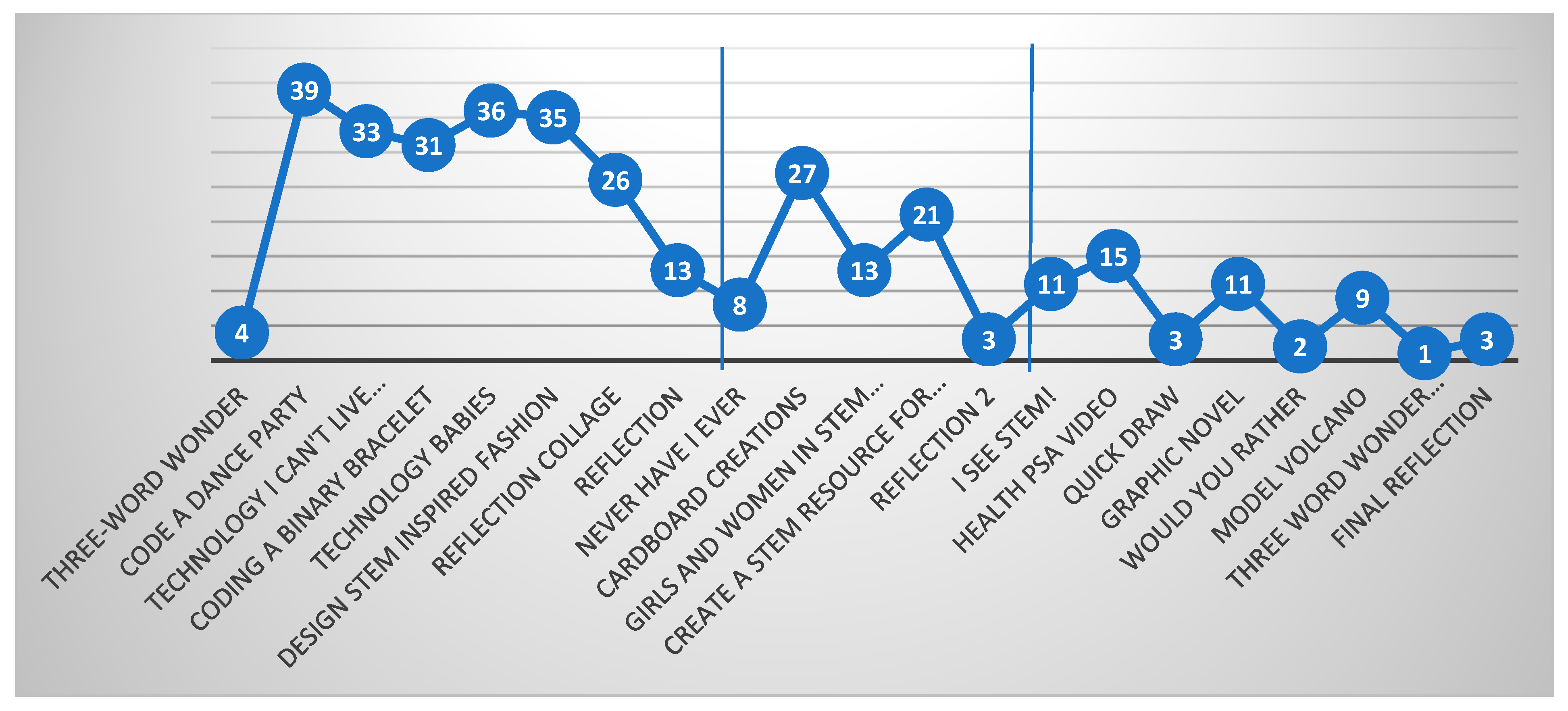
Another quantitative source of data was the asynchronous posting of pictures on the Gallery page. Fifty girls posted at least once in the Gallery. Figure 1 shows the number of girls who posted a picture under each of the activities. The vertical lines denote the end of each week, although girls could post at any time. The highest level of posts occurred for the week 1 activities, ranging from four girls posting a response to the Three Word Wonder activity to 39 girls posting a picture of their Coded Dance Party. Since we did not take attendance, we cannot infer from this data that participation levels decreased over the three weeks. Although the lower number of posts matches the lower number of survey respondents over the weeks. This data does indicate that girls were interested in posting on the Gallery even if they were not as active in their comments on individual pages. These results show that posting pictures was utilized more than updating individual pages, but these STEM performances were not recognized, which could have been a reason for the decline in posting over the three weeks.
One interesting observation was that twelve of the girls who posted at least once to the Gallery (ranging from 2 posts to 12) did not participate in the synchronous parts of the program. Three of these asynchronous only users responded to the open-ended survey responses and indicated that they enjoyed the live sessions. One girl explained that she liked RM4 and RM8 because they “combined their love of art and STEM and dance and STEM.” Another one of these girls said that “listening to the Brite talks have kept me more engaged and open to STEM jobs.” And a third said “The activity from the program that stands out the most to me would be the role models and meeting and getting to talk with them. Talking with all the role models and getting to know them inspired me in so many ways.” These responses demonstrate that girls did not have to actively engage during the role model talks to be influenced by them. This provides evidence to support that some girls utilized the option of asynchronous performances rather than synchronous and still felt like they were developing their STEM identity by learning more about STEM careers from the role models.

3.2. Girls’ Synchronous Engagement on the Brite Platform

The synchronous aspects of the Brite program were the live afternoon Zoom sessions wherein girls had the opportunity to write comments and questions in the chat or unmute to ask their question directly to the role models. The Brite facilitators helped to monitor the chat and ensured girls’ questions were answered. Fifty girls participated at least once during the live zoom sessions. Table 5 shows the number of individual girls who commented during a role model session and the number of girls who referenced that specific role model in one of their open-ended survey responses. This data highlights that the Brite Fests had the most girls participate each week: 26 in week 1, 16 in week 2, and 17 in week 3. These sessions explicitly asked girls to participate by presenting what they had learned which could be a reason for the higher numbers compared to the Role model talks.
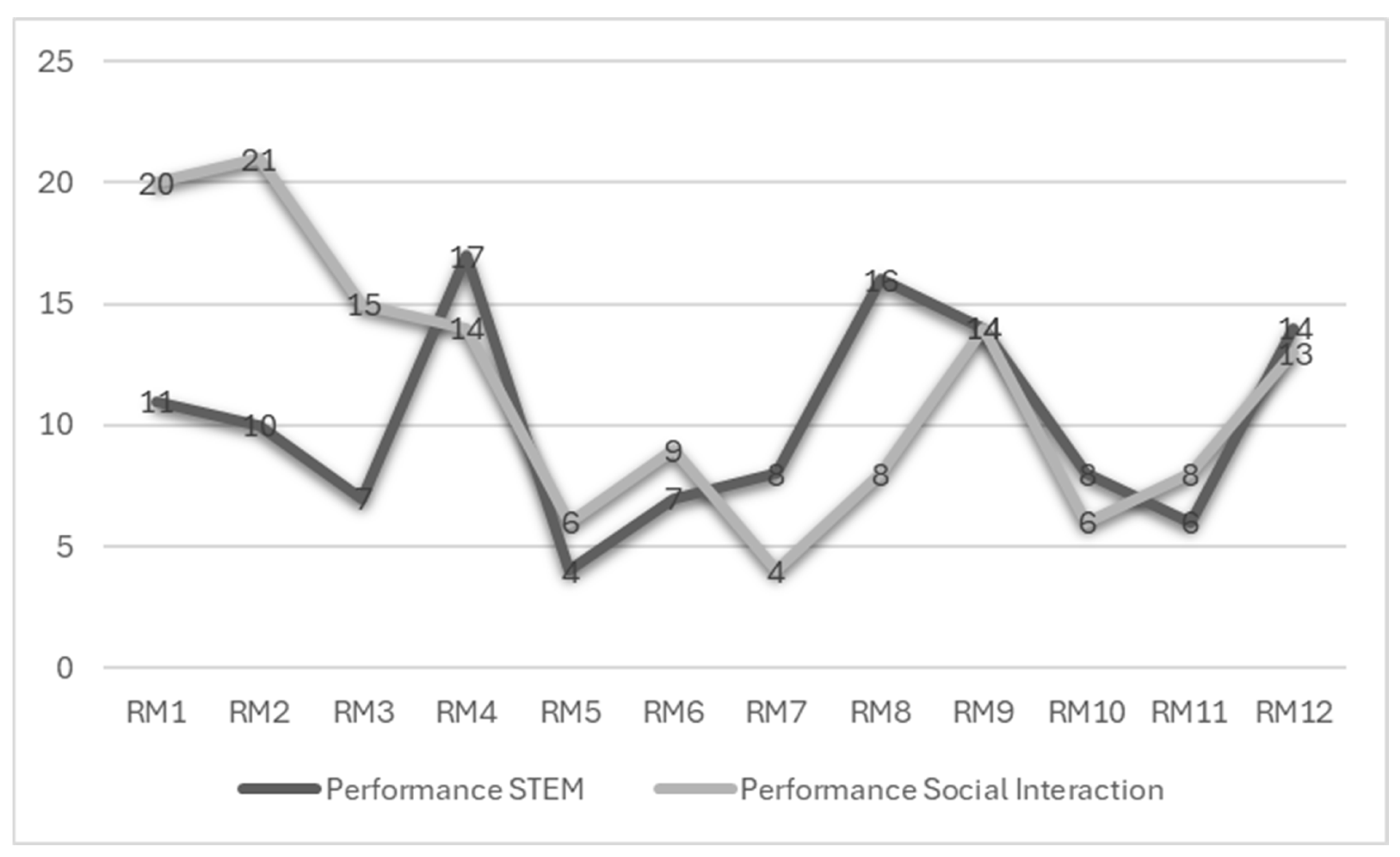
The qualitative data analysis also helped us to better understand how the girls engaged in these sessions. Figure 2 shows the number of girls who engaged in either a STEM performance or a social interaction performance over the course of the program. The figure shows that initially more girls were engaged in social interaction performances. But by the end of the three weeks, a similar number of girls were engaging in each. STEM performances tended to peak at the end of each week during the Brite Fest. This data shows us that more girls were engaging in STEM performances. This trend could be related to the encouragement they received and the recognition they witnessed others receiving for their STEM performances.
To understand how the performances were recognized, we coded for three types of recognition (i.e., simple, belonging, and STEM) across the three types of participants (i.e., peers, educators/facilitators, and role models). Table 6 highlights a number of findings. First, although girls were engaging in the two types of performances, very few girls recognized each other’s performances. Peer recognition only occurred in one talk (RM4), and this included both simple and belonging. The Educators and Brite Facilitators engaged in simple recognition (35 times) and belonging recognition (61 times) more often than STEM recognition (24 times). This shows that educators and facilitators were creating a community of support and encouragement for the girls, with a lesser focus on STEM recognition. The role models mainly utilized belonging (53 times) and STEM recognition (83 times). This shows how the role models were recognizing the girls in ways that helped them to feel like they belonged in Brite as well as STEM more often than the Brite Facilitators and educators.
The two Role Models who engaged in belonging and STEM recognition the most were RM4 and RM9. These blocks are highlighted in Table 6. Both of these role models included interactive questions—asking girls to guess what scientific concept was highlighted in a picture and pausing to ask girls questions related to the presentation, respectively—and recognized girls accordingly. These results provide support for the recommendation of interactivity for role models to use in their presentations because they provide opportunities for girls to perform and consequently to be recognized.
Table 7 provides an example of an interaction between RM4 and five of the girls to highlight the ways in which girls engaged with the role models. This table also includes the codes for each section of the transcript. This example highlights how role models encouraged girls to chat and made them feel welcome, “I’d love to hear from you,” and then strengthened their sense of belonging through the recognition that they provided.

3.3. Influence of Program on STEM Identity

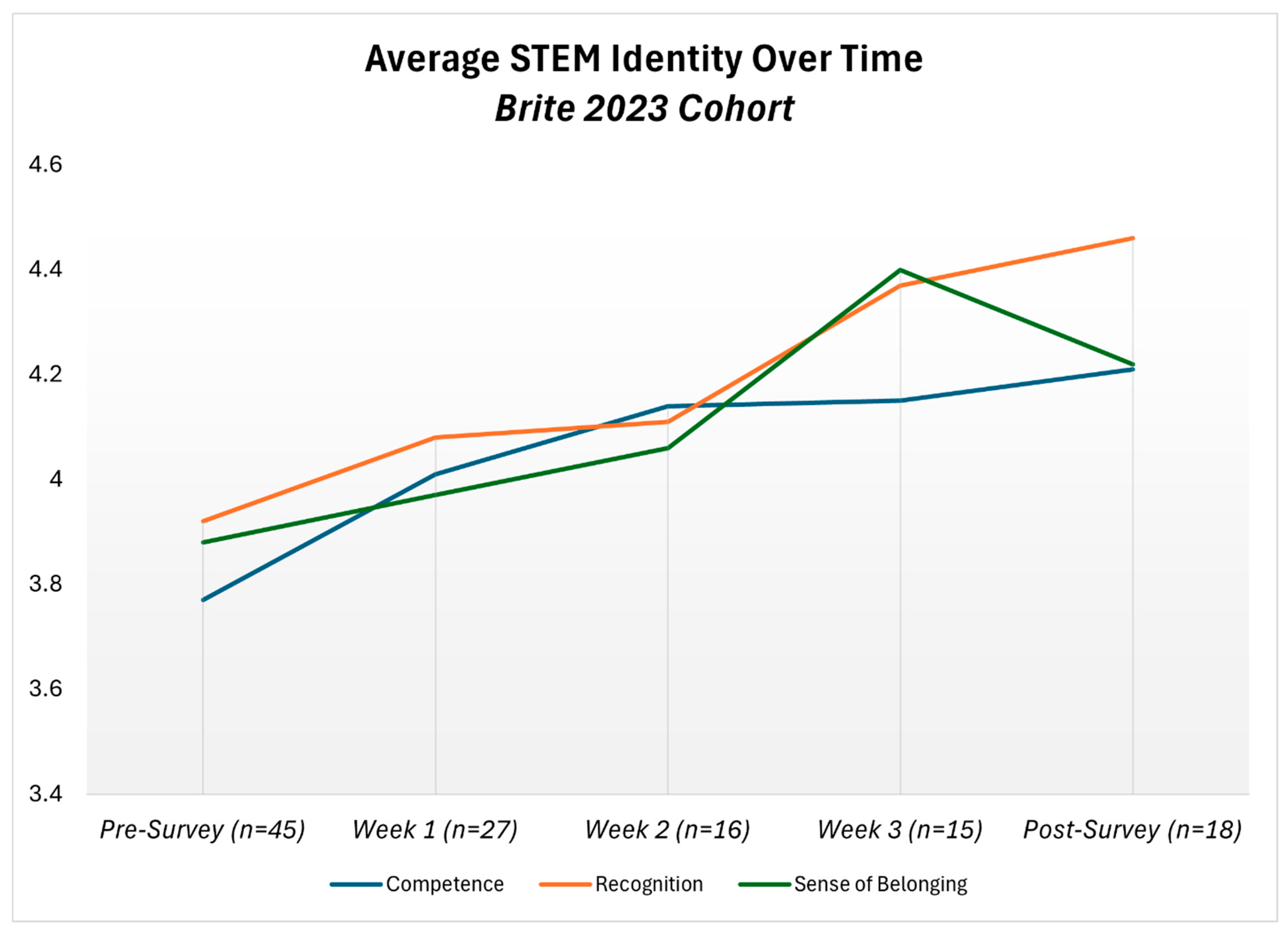
As noted in Section 2, after removing the response “prefer not to answer,” the sample sizes for the pre-survey, week 1 post-survey, week 2 post-survey, week 3 post-survey, and final post-survey were 45, 27, 16, 15, and 18, respectively. Figure 3 displays the changes in means for each of the three STEM scales over time. These results show that mean competence, recognition, and sense of belonging scores increased over the three weeks for the girls who completed the survey. However, the number of survey participants is too small to do any deeper statistical analysis.
The synchronous data from the role model sessions highlights increases in STEM performances which is an indication that girls were feeling more comfortable, despite the lack of survey data to support this. To better understand how the girls’ engagement influenced STEM identity development, we turned to the open-ended survey data and let the girls tell us. The weekly post surveys included open-ended questions asking girls the following: (1) What are the activities that stand out? Why?; (2) Which role models stood out? Why?; (3) Which other people stood out? Why? These questions were developed to assess the impact of the core features of Brite: (1) hands-on activities, (2) role model interactions, and (3) community-building. Table 8 shows the summary of influential Brite components as reported by the girls. Table 8 shows the in vivo codes and number of girls who referenced them for each of the core features.
These responses highlight what aspects of the program were most influential to the girls’ experience. The most cited activity by the girls was the engagement they had with role models (i.e., across all four post surveys, 37 girls highlighted a favorite role model and 15 mentioned it as a favorite activity overall), describing the role model sessions as “unique” and describing the role models as “inspirational due to their perseverance” and “relatable” due to shared interests. In addition, the girls highlighted multiple hands-on activities (e.g., coding bracelets, volcano, and cardboard creations) where they said that they “learned skills,” “felt like they could be creative,” and “had fun.” Lastly, the girls indicated that there were other components of Brite that stood out to them, referencing program educators (i.e., across the four post surveys, 22 individual girls over the three weeks), the other girls in the program (i.e., across the four post surveys, 17 girls over the three weeks), and the Brite facilitators (i.e., across the four post surveys, 2 of the girls). All of these people are part of the Brite community and references to them indicate that the girls saw these community members as beneficial to their experience. These results indicate that Brite was able to create influential hands-on activities, inspirational interactions with role models, and a supportive community where girls felt inspired and creative mainly for girls who participated virtually rather than in-person.

3.4. Limitations

We realized during the three weeks that the in-person programs did not utilize a 1:1 device with their girls. Rather, some groups would have the girls watch the Zoom on one device and an educator would post questions on the girls’ behalf. This made it difficult to determine which girls were performing. We recommend future programs explain the importance of the 1:1 device and its importance for individual girl’s interactions on the platform as not only the metric for measuring but also the opportunities for girls to further develop their STEM identities. Without this data, it is difficult to fully determine how all the participants were engaging with the platform and/or performing.
In addition, there were some components of the Brite program that were not utilized by the girls or role models, including asynchronous comments on each other’s pages. We had thought this would be a useful tool for performance and recognition. We recommend future programs model and/or gamify these posts. For example, we could have encouraged educators to post on pages more to model the options for the girls and we could have encouraged the role models to check in more with their pages. This also points to an important need for future research as it relates to virtual ISE programs—the role of educators in facilitating engagement in these platforms. Lastly, peer recognition rarely occurred during the asynchronous and the synchronous sessions. This is worth investigating in future research to determine if virtual spaces limit peer interaction.

4. Discussion and Future Research

Despite these limitations, our study described how girls engaged asynchronously and synchronously in the virtual Brite program and helped us to understand the influence this engagement had on their STEM identities. This study is one of the first to research the influence of a virtual ISE program on participating girls’ STEM identity. Although our sample sizes for the Likert surveys were small, the means for these categories showed improvement over the course of the three weeks. This combined with the Gallery postings and participation during the live role model sessions showed us that girls took advantage of both asynchronous and synchronous formats. For the asynchronous formats, girls did not take advantage of the individual pages as a way to express themselves. Future programs could encourage educators to model the use of the pages and encourage them to recognize posts more often. The posting on the Gallery allowed 50 girls to engage, which was promising. However, no one recognized these posts, which could have been a main reason why the numbers declined over the course of the three weeks. Again, future programs could have educators or facilitators model recognition for these posts so that girls could feel more comfortable recognizing each other.
One promising support for the asynchronous components came from the open-ended survey responses from three of the 12 girls who participated solely in the asynchronous format. These open-ended responses indicated the influence of the program on their interest and sense of belonging in STEM despite these girls not being recognized individually. Rather they were posting and then potentially watching girls be recognized in the live sessions. Even this level of engagement showed positive results for the three girls who provided feedback. This provides some positive support for offering both formats to give girls who may be less comfortable with live interactions an opportunity to engage.
The live role model sessions were our richest source of data and provided examples of how girls performed and were recognized for these performances by educators, Brite facilitators and role models. The educators and Brite facilitators engaged in simple recognition and recognition for belonging formats the most, whereas the role models engaged in recognition for belonging and STEM recognition formats more. This combination of recognition appears to have created the community support necessary for girls to feel more comfortable engaging, as seen through the steady increase in STEM performances over the course of the three weeks. Girls supported this observation through their own open-ended survey responses where they highlighted their growing sense of belonging through the fun activities, relatable role models and supportive community.
These results highlight that virtual spaces, like Brite, can influence STEM identity development in similar ways to in-person spaces (Chan et al., 2020; Hughes et al., 2020a, 2020b; Kitchen et al., 2018). The open-ended responses from the girls showed us that despite not being able to see the girls complete hands-on activities, these projects were listed as influential by them. The virtual platform for role model engagement demonstrated that girls felt inspired, even those who might not have posted a comment or question. In addition, the girls referred to feeling like they were part of a community through the support of their educators, the role models, and to a lesser extent their peers. These are all components that have demonstrated efficacy in in-person ISE programs (Hughes et al., 2024; Kang et al., 2019; King & Pringle, 2019; NRC, 2009; Riedinger & Taylor, 2016; Tan et al., 2013) that our study shows can also occur in a virtual space.
Future research needs to include how the intersectionality of various identities (e.g., gender, race, ethnicity, and class) can influence STEM identity development within a virtual program (Apugo et al., 2023; Annamma et al., 2016). In addition, future research should create opportunities to measure the engagement of girls who might not feel comfortable sharing in a live session. Perhaps interviews with girls who engage in asynchronous formats to better understand why they feel comfortable engaging in that format and not the other. Future research should also investigate whether recognition from role models differs from recognition from educators to see what role both types of socializers play in STEM identity development. More research with a larger sample size would be beneficial to understanding how specific identities (e.g., race/ethnicity) and their intersections with each other affect how girls engage in online spaces.
In conclusion, in-person ISE programming has demonstrated promise as a way to expand the views of what constitutes STEM and debunk stereotypes associated with STEM (e.g., white, male), which can improve the STEM identities of girls (Calabrese Barton et al., 2013; Gonsalves et al., 2013; Kang et al., 2019; Tan et al., 2013). Our research has demonstrated that Brite, a virtual program, can incorporate some of the best practices of these in-person spaces (e.g., interactions with diverse women role models, and a community that supports and engages them) in ways that improve girls’ STEM identity development as well. This research can inform other programs trying to reach a broader audience through virtual or online programming and improve the STEM identity of girls more broadly.

Author Contributions

Conceptualization, R.H.; methodology, R.H., R.D., K.L., S.N.; software, R.H., R.D.; validation, B.B., S.L.-R., A.O., A.S.; formal analysis, R.H., R.D., K.L., S.N., K.Z.; investigation, R.H., R.D., K.L., S.N.; resources, R.H., B.B., A.O.; data curation, R.D.; writing—original draft, R.H., R.D., K.L., S.N.; writing—review and editing, R.H., R.D., K.L., S.N., B.B., S.L.-R., A.O., A.S., K.Z.; visualization, R.D., K.L., B.B., A.S.; supervision, R.H.; project administration, R.H.; funding acquisition, R.H., K.L., A.O. All authors have read and agreed to the published version of the manuscript.

Funding

This work was supported through the National Science Foundation, Division of Research on Learning, Directorate of STEM Education, Advancing Informal Science Learning award #DRL-2215138.

Institutional Review Board Statement

This study was performed in line with the principles of the Declaration of Helsinki. Approval was granted by the Human Subjects Committee of Florida State University (7 June 2022, STUDY00003273).

Informed Consent Statement

All participants consented to their participation and its use in an eventual publication. Those participants under the age of 18 signed an assent form and their parent/guardian signed a consent form. All participants 18 or older signed a consent form.

Data Availability Statement

The data presented in this article are not readily available because publicly sharing verbatim responses and/or deidentified data was not included in the consent/assent forms signed by youth and their parents.

Conflicts of Interest

Author Sheri Levinsky-Raskin is the founder and President of SJLR Solutions LLC; Abi Olukeye is the founder and CEO of Smart Girls HQ. The remaining authors declare that the research was conducted in the absence of any commercial or financial relationships that could be construed as a potential conflict of interest.

Appendix A. Survey Questions

Appendix A.1. Likert Scale Questions on Pre-Survey, Week 1, Week 2, Week 3, and Final Survey (Strongly Agree, Agree, Not Sure, Disagree, Strongly Disagree)

  • I think I’m pretty good at understanding science topics.
  • Compared to other people my age, I think I can quickly understand new science topics.
  • It takes me a long time to understand new science topics. (reverse coded)
  • I feel confident in my ability to explain science topics to others.
  • I think I’m pretty good at following instructions for scientific activities.
  • Compared to other people my age, I think I can do scientific activities pretty well.
  • It takes me a long time to understand how to do scientific activities. (reverse coded)
  • I feel confident in my ability to explain how to do scientific activities to others.
  • I am a STEM person
  • My family sees me as a STEM person
  • My friends see me as a STEM person
  • My teachers see me as a STEM person
  • I don’t have many friends interested in STEM (reverse coded)
  • I feel comfortable in STEM-related settings
  • Other people have made me feel wanted and accepted in STEM settings
  • I am committed to pursuing STEM opportunities
  • I am supported in STEM settings
  • I am accepted in STEM settings

Appendix A.2. Open-Ended Questions

Appendix A.2.1. Pre-Survey

  • Why are you interested in being part of this program? (do they recognize themselves as a science person)
  • What, if any, STEM careers are most interesting to you right now? (are they interested in science)
  • How did you learn about these careers? (performance—are they actively engaged in looking for STEM career)

Appendix A.2.2. Week 1, Week 2, and Week 3

Think about your experience this week in Brite…
  • What activity from the program stands out to you the most? Why? (helps us to understand which activities influenced the girls, metric for competence)
  • Which role model stands out to you most? Why? (helps us understand how the role models influenced the girls, metric for recognition and sense of belonging)
  • Besides the role models, who stands out from the program? Why? (helps us understand the role of the community, metric for recognition and sense of belonging)

Appendix A.2.3. Final Survey

  • What activity from the program stands out to you the most? Why? (helps us to understand which activities influenced the girls, metric for competence)
  • Which role model stands out to you most? Why? (helps us understand how the role models influenced the girls, metric for recognition and sense of belonging)
  • Besides the role models, who stands out from the program? Why? (helps us understand the role of the community, metric for recognition and sense of belonging)

References

  1. Anderson-Butcher, D., & Conroy, D. E. (2002). Factorial and criterion validity of scores of a measure of belonging in youth development programs. Educational and Psychological Measurement, 62(5), 857–876. [Google Scholar] [CrossRef]
  2. Annamma, S. A., Anyon, Y., Joseph, N. M., Farrar, J., Greer, E., Downing, B., & Simmons, J. (2016). Black girls and school discipline: The complexities of being overrepresented and understudied. Urban Education, 54(2), 211–242. [Google Scholar] [CrossRef]
  3. Apugo, D., Castro, A. J., & Dougherty, S. A. (2023). Taught in the matrix: A review of Black girls’ experiences in U.S. schools. Review of Educational Research, 93(4), 559–593. [Google Scholar] [CrossRef]
  4. Archer, L., DeWitt, J., Osborne, J., Dillon, J., Willis, B., & Wong, B. (2012). “Balancing acts”: Elementary school girls’ negotiations of femininity, achievement, and science. Science Education, 96(6), 967–989. [Google Scholar] [CrossRef]
  5. Archer, L., Moote, J., Francis, B., DeWitt, J., & Yeomans, L. (2016). The “exceptional” physics girl. American Educational Research Journal, 54(1), 88–126. [Google Scholar] [CrossRef]
  6. Black, E., Ferdig, R., & Thompson, L. A. (2021). K-12 virtual schooling, COVID-19, and student success. JAMA Pediatrics, 175(2), 119. [Google Scholar] [CrossRef]
  7. Calabrese Barton, A., Kang, H., Tan, E., O’Neill, T., Bautista-Guerra, J., & Brecklin, C. (2013). Crafting a future in science. American Educational Research Journal, 50(1), 37–75. [Google Scholar] [CrossRef]
  8. Carlone, H. B., & Johnson, A. (2007). Understanding the science experiences of successful women of color: Science identity as an analytic lens. Journal of Research in Science Teaching, 44(8), 1187–1218. [Google Scholar] [CrossRef]
  9. Carlone, H. B., Johnson, A., & Scott, C. M. (2015). Agency amidst formidable structures: How girls perform gender in science class. Journal of Research in Science Teaching, 52(4), 474–488. [Google Scholar] [CrossRef]
  10. Carlone, H. B., Scott, C. M., & Lowder, C. (2014). Becoming (less) scientific: A longitudinal study of students’ identity work from elementary to middle school science. Journal of Research in Science Teaching, 51(7), 836–869. [Google Scholar] [CrossRef]
  11. Chan, H. Y., Choi, H., Hailu, M. F., Whitford, M., & DeRouen, S. D. (2020). Participation in structured STEM-focused out-of-school time programs in secondary school: Linkage to postsecondary STEM aspiration and major. Journal of Research in Science Teaching, 57(8), 1250–1280. [Google Scholar] [CrossRef]
  12. Collins, P. H., & Bilge, S. (2020). Intersectionality. Polity. [Google Scholar]
  13. Creswell, J. W., & Plano Clark, V. L. (2011). Designing and conducting mixed methods research (2nd ed.). Sage Publications, Inc. [Google Scholar]
  14. Digital Learning Collaborative. (2024). Snapshot 2024: The post-pandemic digital learning landscape emerges. Digital Learning Collaborative. [Google Scholar]
  15. Dou, R., & Cian, H. (2021). Constructing STEM identity: An expanded structural model for STEM identity research. Journal of Research in Science Teaching, 59(3), 458–490. [Google Scholar] [CrossRef]
  16. Erstad, O., & Sefton-Green, J. (Eds.). (2012). Identity, community, and learning lives in the digital age. Cambridge University Press. [Google Scholar] [CrossRef]
  17. Farland-Smith, D. (2015). Struggles of underrepresented girls as they become women: Understanding how race & gender that impact personal science identity construction. Journal of Educational Issues, 1(1), 114. [Google Scholar] [CrossRef][Green Version]
  18. Gonsalves, A. J., Rahm, J., & De Carvalho, A. T. (2013). “We could think of things that could be science”: Girls’ re-figuring of science in an out-of-school-time club. Journal of Research in Science Teaching, 50(9), 1068–1097. [Google Scholar] [CrossRef]
  19. Harding, S. (1998). Women, science, and society. Science, 281(5383), 1599–1600. [Google Scholar] [CrossRef]
  20. Hughes, R., Ibourk, A., Wagner, L., Jones, K., & Crawford, S. (2024). #Resilience is not enough for Black women in STEM: Counterstories of two young Black women becoming a STEM person. Journal of Research in Science Teaching, 61(4), 744–771. [Google Scholar] [CrossRef]
  21. Hughes, R., & Schellinger, J. (2023). Gatekeepers to science and engineering: Informal science and engineering educator’s role in positioning and recognizing girls’ identity performances. International Journal of Informal Science and Environmental Education, 3(1). Available online: https://www.diopress.com/jisel (accessed on 22 December 2025).
  22. Hughes, R., Schellinger, J., Billington, B. L., Britsch, B., & Santiago, A. (2020a). A summary of effective gender equitable teaching practices in informal STEM education spaces. Journal of STEM Outreach, 3(1), 1–9. [Google Scholar] [CrossRef]
  23. Hughes, R., Schellinger, J., & Roberts, K. (2020b). The role of recognition in disciplinary identity for girls. Journal of Research in Science Teaching, 58(3), 420–455. [Google Scholar] [CrossRef]
  24. Ibourk, A., Hughes, R., & Mathis, C. (2022). “It is what it is”: Using storied-identity and intersectionality lenses to understand the trajectory of a young Black woman’s science and math identities. Journal of Research in Science Teaching, 59(7), 1099–1133. [Google Scholar] [CrossRef]
  25. Ireland, D. T., Freeman, K. E., Winston-Proctor, C. E., DeLaine, K., Lowe, S. M., & Woodson, K. M. (2018). (Un)Hidden figures: A synthesis of research examining the intersectional experiences of Black women and girls in STEM education. Review of Research in Education, 42(1), 226–254. [Google Scholar] [CrossRef]
  26. Ito, M., Martin, C., Pfister, R. C., Rafalow, M. H., Salen, K., & Wortman, A. (2018). Affinity online: How connection and shared interest fuel learning. New York University Press. Available online: https://openlibrary.org/books/OL28694740M/Affinity_Online (accessed on 12 December 2021).
  27. Jethwani, M., Memon, N., Seo, W. H., & Richer, A. (2017). “I can actually be a super sleuth”: Promising practices for engaging adolescent girls in cybersecurity education. Journal of Educational Computing Research, 55(1), 3–25. [Google Scholar] [CrossRef]
  28. Kang, H., Barton, A. C., Tan, E., Simpkins, S. D., Rhee, H., & Turner, C. (2019). How do middle school girls of color develop STEM identities? Middle school girls’ participation in science activities and identification with STEM careers. Science Education, 103(2), 418–439. [Google Scholar] [CrossRef]
  29. King, N. S., & Pringle, R. (2019). Black girls speak STEM: Counterstories of informal and formal learning experiences. Journal of Research in Science Teaching, 56(5), 539–569. [Google Scholar] [CrossRef]
  30. Kitch, W. A., Robledo, A. L., & Green, W. J. (2021, July 26–29). A model for conducting K-12 STEM summer outreach programs during the COVID-19 pandemic. [Conference paper]. 2021 American Society for Engineering Education (ASEE) Annual Conference, Virtual. [Google Scholar] [CrossRef]
  31. Kitchen, J. A., Sonnert, G., & Sadler, P. M. (2018). The impact of college- and university-run high school summer programs on students’ end of high school STEM career aspirations. Science Education, 102(3), 529–547. [Google Scholar] [CrossRef]
  32. Ladson-Billings, G. (2006). From the achievement gap to the education debt: Understanding Achievement in U.S. schools. Educational Researcher, 35(7), 3–12. [Google Scholar] [CrossRef]
  33. Lave, J., & Wenger, É. (1991). Situated learning: Legitimate peripheral participation (1st ed.). Cambridge University Press. [Google Scholar] [CrossRef]
  34. Master, A., Cheryan, S., & Meltzoff, A. N. (2016). Computing whether she belongs: Stereotypes undermine girls’ interest and sense of belonging in computer science. Journal of Educational Psychology, 108(3), 424–437. [Google Scholar] [CrossRef]
  35. Nadler, J. T., Weston, R., & Voyles, E. C. (2015). Stuck in the middle: The use and interpretation of Mid-Points in items on questionnaires. The Journal of General Psychology, 142(2), 71–89. [Google Scholar] [CrossRef]
  36. National Academies of Sciences, Engineering, and Medicine (NASEM). (2021). Transforming trajectories for women of color in tech. The National Academies Press. [Google Scholar] [CrossRef]
  37. National Research Council (NRC). (2009). Learning science in informal environments: People, places, and pursuits. The National Academies Press. [Google Scholar] [CrossRef]
  38. National Science Board (NSB). (2021). Science and engineering indicators 2022: The state of U.S. science and engineering (NSB-2022-1). Available online: https://ncses.nsf.gov/pubs/nsb20221 (accessed on 12 December 2022).
  39. National Science Foundation (NSF). (2023). Diversity and STEM: Women, minorities, and persons with disabilities 2023 (Special report NSF 23-315). Available online: https://www.nsf.gov/reports/statistics/diversity-stem-women-minorities-persons-disabilities-2023 (accessed on 19 April 2023).
  40. O’Brien, L. T., Hitti, A., Shaffer, E., Van Camp, A. R., Henry, D. R., & Gilbert, P. (2016). Improving girls’ sense of fit in science. Social Psychological and Personality Science, 8(3), 301–309. [Google Scholar] [CrossRef]
  41. Parker, K., Horowitz, J., Brown, A., Fry, R., Cohn, D., & Igielnik, R. (2018). What unites and divides urban, suburban and rural communities. Pew Research Center. Available online: https://www.pewresearch.org/social-trends/2018/05/22/what-unites-and-divides-urban-suburban-and-rural-communities/ (accessed on 19 April 2023).
  42. Riedinger, K., & Taylor, A. (2016). “I could see myself as a scientist”: The potential of out-of-school time programs to influence girls’ identities in science. Afterschool Matters, 23, 1–7. [Google Scholar]
  43. Roberts, K., & Hughes, R. (2022). Recognition matters: The role of informal science education programs in developing girls’ science identity. Journal for STEM Education Research, 5(2), 214–232. [Google Scholar] [CrossRef]
  44. Robinson, A., Pérez-Quiñones, M. A., & Scales, G. (2016). African-American middle school girls: Influences on attitudes toward computer science. Computing in Science & Engineering, 18(3), 14–23. [Google Scholar] [CrossRef]
  45. Simms, L. J., Zelazny, K., Williams, T. F., & Bernstein, L. A. (2019). Does the number of response options matter? Psychometric perspectives using personality questionnaire data. Psychological Assessment, 31(4), 557–566. [Google Scholar] [CrossRef]
  46. Tan, E., Barton, A. C., Kang, H., & O’Neill, T. (2013). Desiring a career in STEM-related fields: How middle school girls articulate and negotiate identities-in-practice in science. Journal of Research in Science Teaching, 50(10), 1143–1179. [Google Scholar] [CrossRef]
  47. U.S. Census Bureau. (2020). Annual estimates of the resident population by sex, age, race, and Hispanic origin for the United States: April 1, 2010 to July 1, 2019 (NC-EST2019-ASR6H). Available online: https://www.census.gov/data/tables/time-series/demo/popest/2010s-national-detail.html (accessed on 12 December 2022).
  48. Vincent-Ruz, P., & Schunn, C. D. (2018). The nature of science identity and its role as the driver of student choices. International Journal of STEM Education, 5(1), 48. [Google Scholar] [CrossRef]
  49. Warren, A. R., Harp, K., Aissa, N. B., & Specking, E. (2021, September 13–15). Responding to COVID-19: Insights into making summer camps virtual. Conference paper]. 2021 American Society for Engineering Education (ASEE) Midwest Section Conference, Fayetteville, AR, USA. [Google Scholar] [CrossRef]
  50. Wing, A. K. (Ed.). (1997). Critical race feminism: A reader. NYU Press. [Google Scholar]
  51. Young, J. L., Feille, K., & Young, J. (2017). Black girls as learners and doers of science: A single-group summary of elementary science achievement. The Electronic Journal of Science Education, 21(2), 1–20. Available online: https://files.eric.ed.gov/fulltext/EJ1187988.pdf (accessed on 12 December 2022).
Figure 1. Gallery Posts by Girl.
Education 16 00098 g001
Figure 2. Number of Girls Each Session by Performance Type.
Education 16 00098 g002
Figure 3. Average STEM Identity Scores Over Time, Brite 2023 Cohort.
Education 16 00098 g003
Table 1. Brite Schedule.
MondayTuesdayWednesdayThursday
Week 1: Code, Create, Collaborate (Computer Science)
Hands-on activitiesDance Party—Code a Dance Party on Code.org. Binary Bracelets—Code a binary bracelet with your name or initials.STEM-Inspired Fashion—Create STEM-inspired fashion designs using digital or non-digital materials.Reflect—Write or record a short reflection on the week.
Live zoom sessionsRole Model talk: African American PhD Computer Scientist faculty member.Role Model talk: Indian American computer scientist who works in the private industry.Role Model talk: Middle Eastern FabLab designer who attended graduate school in the US but returned to her home country in the Middle East.Role Model talk: White PhD biologist working as a postdoc who combines art and fashion with computer science and biology.
BriteFest—Girls present on projects from the week.
Week 2: Dream, Design, Discover (Engineering)
Hands-on activitiesCardboard Challenge—Design and create a solution to a problem using cardboard.Girls in STEM Case Study—Gather facts and research about girls and women in STEM to create a case study.STEM Resource—Create a STEM resource (e.g., picture book, song, video, etc.) for a younger girl.Brite Fest
Girls present on projects from the week.
Reflect—
Write or record a short reflection on the week.
Live zoom sessionsRole model talk: White and neurodivergent early career engineer who has worked for multiple space craft development companiesRole model talk: Latina first generation immigrant retired PhD engineer from IntelRole model talk: Asian American entrepreneur who also communicates engineering projects on social media.Role model talk:
African American MIT engineer who combines her love of dance and STEM in her work
BriteFest
Girls present on projects from the week.
Week 3: Investigate, Innovate, Inspire (Physical Science)
Hands-on activitiesHealth PSA—Create a Public Service Announcement or “PSA” video on a health topic. Graphic Novel
Create a graphic novel about a STEM topic you are interested in.
Volcanoes
Explore volcanoes and create an erupting model volcano.
Brite Fest
Girls present on projects from the week.
Reflect
Write or record a short reflection on the week.
Live zoom sessionsRole Model talk: African first generation immigrant biochemist focusing on cancer research.Role model talk: Asian American first generation immigrant PhD who explains her physical science research through graphic novelsRole model talk: Latina first generation immigrant PhD physicist who combines her love of physics and activismRole Model talk: Volcanologist who also works as a science communicator through multiple media forms
BriteFest
Girls present on projects from the week
Table 2. Organizations, Demographics, and Structure.
Organization (n), FormatRace/Ethnicity (n)Grade Levels (n)
Group 1 (9), VirtualBlack or African American (3)
White or Caucasian (1)
Asian or Asian American (3)
American Indian or Alaska Native (1)
Hispanic or Latina (1)
9th Grade (2)
10th Grade (1)
Group 2 (7), VirtualHispanic or Latina (6)
Multiracial (1)
8th Grade (1)
9th Grade (1)
10th Grade (1)
Group 3 (5), VirtualWhite or Caucasian (1)
Black or African American (2)
Hispanic or Latina (1)
9th Grade (1)
10th Grade (3)
Group 4 (10), VirtualAsian or Asian American (5)
White or Caucasian (1)
Black or African American (1)
8th Grade (3)
9th Grade (2)
10th Grade (1)
Group 5 (7), In-personAsian or Asian American (2)
Black or African American (4)
8th Grade (1)
10th Grade (3)
Group 6 (14), In-personAsian or Asian American (2)
Black or African American (8)
6th Grade (1)
8th Grade (3)
9th Grade (1)
10th Grade (2)
Group 7 (4), In-personHispanic or Latina (3)
Black or African American (1)
8th Grade (1)
9th Grade (1)
Group 8 (14), In-personHispanic or Latina (1)
White or Caucasian (2)
Black or African American (4)
American Indian or Alaska Native (3)
7th Grade (1)
8th Grade (3)
9th Grade (1)
10th Grade (4)
Table 3. Connections between Conceptual Framework, Program Design, and Data Collection.
STEM Identity ConstructBrite Platform Design componentMetric
CompetenceGallery page for girls to post pictures or videos of their activities

Role model sessions
Likert scale survey questions on surveys over 5 timepoints (Dou & Cian, 2021)

Observations during role model sessions to see the types of questions and comments related to STEM
PerformanceGallery page for girls to post pictures or videos of their activities.

Role Model sessions designed for girls to interact with role models.
Count of how many girls posted and how many individuals recognized these posts

Observations during role model sessions to see the types of STEM performances and resulting recognition

Recognition Likert scale survey questions over 5 timepoints (Vincent-Ruz & Schunn, 2018)
RecognitionGallery page for girls to be recognized by peers and other members of the community.

Role model sessions where girls received supportive comments from the community and interact with role models
Sense of belongingOpportunities for girls to perform and be recognized across the platform including role model sessions

Gallery and individual page posts for girls to post pictures or videos of their activities
Sense of belonging Likert scale survey questions over 5 timepoints (Anderson-Butcher & Conroy, 2002)

Count of how many girls posted and how many individuals recognized these posts as a metric for their level of confidence and belonging to post on each other’s pages.

Open-ended survey questions asking them about the impact of the program
Table 4. Asynchronous Role Model Interactions.
RM1RM2 *RM3RM4RM5RM6RM7 *RM8 *RM9 *RM10RM11RM12 *
Number of girls who posted on their page321111122411
Response from role modelyesnonoyesnononononoyesyesno
* Did not personalize Brite page.
Table 5. Number of Girls who Commented during Each Role Model Session.
RM1RM2RM3RM4RM5RM6RM7RM8RM9RM10RM11RM12
Number of girls who commented232419267119162091017
Number of girls who mentioned this role model as the one who stood out *534815341114
* Survey responses by week: week 1 = 23, week 2 = 15, week 3 = 13.
Table 6. Rates of Performances and Recognition.
Number of GirlsNumber of Times a Peer, Educator/Facilitator, or Role Model Recognized
PerformanceRecognition SimpleRecognition BelongingRecognition STEM
STEMSocial InteractionPeerEducator/FacRMPeerEd/FacRMPeerEd/FacRM
RM11120060053008
RM21021031013068
RM3715020032046
RM4171414011013009
RM546021021024
RM679020011034
RM784030032016
RM81680800127027
RM914140220080013
RM1086000052005
RM1168010062056
RM1214130200139017
Total 13541615302483
Table 7. Example of Performance and Recognition during a Role Model Talk.
Transcript Data and SpeakerCode
RM4: I’m going to show you a drawing or basically I’m going to show you a picture, I’d love to hear what you see in it. And no guesses are wrong.Recognition belonging—she says that she wants to hear from them and building on the skill of problem solving and learning from mistakes
Girl 1: looks like two cells dividing or a bowtie
Girl 2: Cells splitting?
Educator: cells dividing
Girl 3: cells dividing
Girl 4: cells splitting?
Girl 5: cell division
Girls STEM performances
RM4: Oh, I see already a comment in a chat. It looks like two cells dividing or a bow tie. I love that. Yeah, you are all awesomeRecognition belonging—showing that she is excited to hear from them
RM4: Are there any similarities or differences that you notice in here or any questions that come up, any research questions that you’re curious about? I see a question saying what makes the colors? I will come to that in a little bit. It’s a really great questionRecognition STEM—bringing their comments into the discussion.
Table 8. Influential Components of Brite.
Activities (n),
Reasons Why
Role Models (n),
Reasons Why (n)
Other People (n),
Reasons Why
Talking to role models (15), unique opportunity

Binary Bracelet (14), increased/sparked interest in coding, developed skills, fun

Volcano (10), fun, cool

Cardboard creations (6), fun, impactful, enjoyed being creative, inspirational

STEM case study (4), inspirational
STEM fashion (2)

Creating STEM resource for younger girls (1), relatable

Comic book (1)

Coding dance party (1), fun and creative

Share outs in Brite Fest (1)
All 12 role models received a mention ranging from 1 mention to 9 (mean 3.75), relatable (n = 8) inspirational (n = 6), perseverance (n = 3),
giving back/helping others (n = 1)
Respective Program Teachers/Educators (22), makes it fun and relatable and provides support

Other girls/peers (17), great questions, positive influence of being around smart girls interested in science, encouragement, supportive, inspirational

Brite facilitators (2), created a welcoming space, great questions
Disclaimer/Publisher’s Note: The statements, opinions and data contained in all publications are solely those of the individual author(s) and contributor(s) and not of MDPI and/or the editor(s). MDPI and/or the editor(s) disclaim responsibility for any injury to people or property resulting from any ideas, methods, instructions or products referred to in the content.