


Abstract
Universities must prepare future professionals with critical thinking skills to effectively address complex social and environmental challenges. In engineering degrees, while technical competences are strongly developed, the acquisition of ethical and social skills remains challenging within the framework of traditional subjects. This paper explores how the integration of the Sustainable Development Goals (SDGs), following a competence-based educational model, can contribute to the development of ethical, social, and sustainability-related competences in an engineering degree. A set of activities, exercises, and tasks grounded in real professional contexts was designed to encourage students to explore sustainable solutions to social and environmental problems, supported by experiential learning and visible thinking routines. These activities were coherently aligned through interdisciplinary coordination among professors teaching in the degree. The results indicate that the proposed approach was positively received by both professors and students, who valued its contribution to personal and professional development. Students demonstrated enhanced critical thinking and greater awareness of the social and environmental implications of engineering decisions. This work aims to support and inspire educators seeking to integrate SDGs into their teaching by offering a feasible, transferable, and easy-to-implement framework for embedding ethical, social and sustainability-related competences in engineering teaching.
1. Introduction
1.1. Background
The 2030 Agenda for Sustainable Development, approved by United Nations members in 2015, promotes a framework of collaboration and respect among humans and with our planet (United Nations, 2025). The definition of sustainable development provided by the United Nations in 1987 is “development that meets the needs of the present without compromising the ability of future generations to meet their needs” (Brundtland, 1987, p. 292), whose essence is practically the same nowadays, even though have passed more than three decades, as Heleta and Bagus (2021) have recently analyzed. Although this definition includes the idea of meeting the needs of the present without compromising the future, frankly different realities and societies exist. In this sense, the culture of globalization and comfort in which society is currently immersed supposes significant environmental damage and can jeopardize the achievement of this premise (Yamin, 2019).
To achieve a more sustainable environment, the current United Nations Agenda has marked 17 Sustainable Development Goals (SDGs) to be achieved by 2030, which include eliminating poverty and hungriness, developing sustainable cities with efficient energy systems, and enabling a better environment for the rest of the inhabitants of our planet, among many others. According to the United Nations (2025), at the end of December 2025, 8550 actions were implemented globally to achieve the SDGs.
The 2030 Agenda focuses on education directly through SDG4-Quality education, and indirectly through many other goals such as SDG5-Gender equality, SDG8-Decent work and economic growth, and SDG13-Climate action. Therefore, the educational system plays a key role in the success of this agenda. Specifically, higher education or tertiary education has become an indispensable actor in the achievement of the marked challenges. As Chankseliani and McCowan (2021) have stated, it was largely forgotten in previous agendas, the Millennium Development Goals (MDGs, 2015) (United Nations, 2025) and Education for All (EFA) (GMR, 2015), in which strikingly only focuses of action framed in primary and secondary education were considered.
Universities are places of research and learning for sustainable development (Junyent & Geli de Ciurana, 2008). It is crucial that university students realize that their decisions in their future jobs can contribute to achieving SDGs. Students should acquire knowledge related to their respective fields from the acquisition of the different skills that make up the professional profile, while environmental and sustainability criteria enable them to approach their activities in their careers from a sustainability viewpoint (Tilbury, 2004). In fact, this is expressly included in target 4.7 of the 2030 Agenda (United Nations, 2025).
The integration of SDG-based education into universities is being studied in different European countries and in the United States, among others. The European project “University Educators for Sustainable Development (UE4SD, 2015)” has been carried out from an agreement of 53 partners from 33 countries active around Education for Sustainable Development (ESD) at European Higher Education Institutions (HEIs). Pedagogical approaches and ESD framing varied among the examples but generally included mainly participatory approaches and action learning, which laid the foundations for this work. Today, it is important to promote students’ engagement in teaching and learning to agree between curriculum design and students’ achievements and to prepare them for an ever evolving and increasingly demanding profession (Boarin et al., 2019). Leal Filho et al. (2019) highlighted the importance of developing [-ing], testing [-ing], and using [-ing] new contents, learning methods, and transformative approaches to take advantage of the opportunities to address sustainable development instances through practical applications, with the need to engage the student community as a whole and to reach out to the wider community beyond the education system to fully implement and commit to the SDGs.
Over the past few decades, both professors and students have increasingly urged university leaders to address sustainability-related issues and to promote awareness and visibility of national and international policies linked to the Sustainable Development Goals (Ralph & Stubbs, 2014). In addition, European legislation recognizes SDG-related competences as part of the basic competences in higher education (Aznar-Minguet & Ull, 2009; Tuning Educational Structure in Europe, 2003). Although higher education programs envisage that students acquire theoretical, practical, and attitudinal knowledge—together constituting the professional competences required to promote sustainable development—methodological guidelines on how to achieve this are often not clearly defined (García-González et al., 2017).
Therefore, different educational centers face a complex scenario for addressing education in terms of sustainable development, considering the contemporary and future effects that may cause society. More specifically, higher education centers have an added risk; that is, their students are imminently going to be professionals. Therefore, this is a good opportunity to strengthen sustainable development in their training in addition to their own lifelong learning.
1.2. Sustainability in Higher Education Programs and Teaching on SDGs
Recent studies highlight that the integration of the Sustainable Development Goals into higher education curricula remains uneven across disciplines and institutions. SDGs are most frequently embedded in bachelor’s programs, particularly in engineering, social sciences, and business, often through workshops, stand-alone courses, project-based activities, and real-life collaborations, whereas their inclusion in health and teacher education programs is more limited (Molina et al., 2023; Leal Filho et al., 2019; Avelar et al., 2023). These findings reflect the broader challenge faced by higher education institutions: not only incorporating sustainable development into curricula but doing so in an effective and systematic manner.
Although engineering degrees are highly effective in developing technical competences, the acquisition of non-technical professional skills—such as interpersonal relations, communication, and empathy—is also essential for engineers’ professional practice and career development. These competences, commonly referred to as transversal or soft skills (Yorke, 2004), encompass ethical, social, and relational dimensions that are increasingly recognized as central to sustainability education, yet they often receive limited practical attention despite being explicitly included in engineering curricula. The ethics of the engineering profession, social responsibility, empathy towards people, and concern for planetary health are closely linked to sustainable development and correspond to key sustainability competences identified in established frameworks, such as systems thinking, normative, and interpersonal competences (Wiek et al., 2011), as well as the values- and action-oriented dimensions emphasized in the European GreenComp framework (Bianchi et al., 2022). These competences are therefore directly aligned with the Sustainable Development Goals.
However, previous analyses of engineering study plans in Spain, particularly in computer and industrial engineering degrees, have revealed a gap between the formal inclusion and the actual implementation of these transversal competences (Miñano, 2019). In that study, the presence of ethical competences in subject teaching guides was analyzed, showing that 80% included references to ethics, but only 50% explicitly addressed them within the specific subject syllabus. While technical competences are acquired objectively and expressly evaluated across the subjects that make up a study plan and their assessment methodologies, competences related to ethical and social issues are often acquired and evaluated in a more subjective manner. This situation is particularly critical in engineering degrees, especially in light of emerging discussions on the growing role of engineers in achieving the Sustainable Development Goals (Beagon et al., 2023).
Several initiatives aimed at promoting sustainable development in higher education have been reported in the literature (Mulder, 2017). In this context, Sánchez-Carracedo et al. (2019) analyzed how SDGs are incorporated into university curricula by examining the number of subjects addressing SDGs in several bachelor’s degrees, including Early Childhood Education, Primary Education, Pedagogy, and Social Education. Their results indicated that most degrees address sustainable development concepts, although with varying emphasis on specific competences depending on the university and degree program, revealing the absence of a common framework. Similar conclusions were drawn by Shephard and Furnari (2013, p. 1583), who identified a dichotomy between professors “who do on balance educate for sustainability and those who don’t”. These findings are consistent with the fact that students are often not exposed to mandatory, clearly defined sustainability-related activities that are consistently implemented across the institutional framework.
Institutional initiatives also highlight the relevance of faculty engagement and coordination. At University Jaume I, Collazo and Granados (2020) developed and implemented a faculty training course aimed at guiding the inclusion of SDG education into university curricula. Delivered three times and involving 55 professors, this initiative demonstrated that participatory approaches and active learning strategies guided by competency-based teaching are essential for embedding SDGs in higher education and for assessing the effectiveness of specific learning tools. Such competency-based models place students in situations involving transversal and progressively complex knowledge, requiring decision-making under conditions of uncertainty contexts they are likely to encounter in their professional lives (Lizitza & Sheepshanks, 2020). Consequently, a major educational challenge lies in preparing university students to become both professionally competent and ethically responsible citizens in increasingly complex socio-professional environments.
Beyond curriculum content, the effectiveness of SDG integration depends strongly on pedagogical approaches. Sustainability assessment tools have been identified as useful instruments to support the transition towards sustainability in higher education (Hasna, 2008). Moreover, active methodologies are particularly well suited to current student profiles: millennial-generation students tend to prefer interactive, collaborative, and visually engaging learning resources, which can significantly improve learning effectiveness and reduce error rates (Ranky, 2010; Orozco-Messana et al., 2020). Accordingly, previous studies recommend clearly defining professional responsibility and ethics, integrating sustainability-related skills with academic objectives, and actively involving professors in the teaching process (Colby & Sullivan, 2008; Forment et al., 2015).
Integrating the SDG concept of sustainable development into higher education courses contributes to overcoming university inertia and aligning education with current societal and environmental needs. Salmi and Bassett (2010, p. 590) highlight that sustainable development and growth cannot be achieved “without the capacity-building contribution of an innovative higher education system.” Furthermore, Heleta and Bagus (2021, p. 166) argue that “to meet local, regional, and global challenges, countries need institutions of higher learning that can contribute through teaching, research, and engagement to the development and progress of society”, fully supporting the view that higher education is crucial for sustainable development (Heleta & Bagus, 2021).
Once the most relevant content for comprehensive education in sustainable development has been defined, it becomes necessary to address the “how,” namely, the pedagogical approaches required to shape the profile of future graduates and prepare them to contribute to the societal and market transformations needed to achieve the global SDGs (Boarin & Martinez-Molina, 2022). In this regard, pedagogical approaches such as project-based learning, experiential industry collaboration, and work-integrated learning have been shown to enhance students’ SDG knowledge, sustainability competences, and employability, although changes in attitudes and values tend to develop more gradually (Alm et al., 2022; Espino-Díaz et al., 2025; Angelaki et al., 2024; Alimehmeti et al., 2024).
1.3. Teaching-Learning Methodologies
The use of appropriate teaching-learning methodologies is necessary for students to acquire skills based on the SDGs, which are included in the teaching plans of higher degrees. In this study, three complementary pedagogical frameworks were selected in order to address sustainability education from a curricular, cognitive, and competency-oriented perspective. One teaching-learning methodology considered very useful for teaching for sustainable development is proposed by Sterling (Sterling, 2004) where the concept of “levels of knowing” is introduced. This framework was chosen because it provides a conceptual structure to analyze how sustainability can be progressively embedded in higher education, moving from superficial inclusion to meaningful curricular integration. It is based on a systems view of thought and is composed of three levels, as detailed in Sammalisto and Lindhqvist (2008):
- -
- Level 1: “bolting-on”. At this level, the concept of sustainability is added to the existing system. In fact, this level is known as “education about sustainability” and proposes to teach this concept to students through additional courses.
- -
- Level 2: “building-in”. The concept of sustainability is incorporated into the curriculum and institutional operations, for example, by integrating sustainability issues into regular discipline-specific courses. This level could be called “education for sustainability.”
- -
- Level 3: “transformation”. This implies a complete redesign and restructuring of the education methodology, which should be based on sustainable development principles. “This level would require a paradigm change so that education would be built on learning as change and education as sustainability” (Sammalisto & Lindhqvist, 2008, p. 129). Therefore, as commented in this study, it would be necessary to set an educational goal for sustainable development using different disciplines to achieve this transformation.
While Sterling’s framework provides the pedagogical rationale for integrating sustainability at the curricular level, additional methodological tools are needed to operationalize this integration in classroom practice and to support students’ learning processes. For this reason, the second methodology used in this study is based on “visible thinking”. In Project Zero (2024) of Harvard University, this concept is defined as “a flexible and systematic research-based conceptual framework, which aims to integrate the development of students’ thinking with content learning across subject matters.” This framework was selected because it offers concrete strategies to make students’ reasoning processes explicit, which is particularly relevant when addressing ethical, social, and environmental dimensions related to the SDGs.
The promotion of thinking requires making it visible through thinking skills or routines that encourage questioning, documenting, listening, analyzing, and proposing. In Project Zero (2024), researchers developed different routines to help students engage in topics or problems that may initially seem distant or unrelated to their disciplinary interests. In the context of this study, visible thinking routines serve as a bridge between sustainability concepts and students’ critical and ethical reflection within engineering subjects.
The third teaching–learning methodology considered in this study is the competency-based model, which allows the development of a set of theoretical–practical and attitudinal knowledge that enables students to face major global and local societal challenges. This model was selected because it provides an analytical framework for assessing whether the integration of SDGs and the use of active methodologies effectively contribute to the acquisition of ethical and social skills. The competency-based model has been widely applied in engineering education with satisfactory results (Brauer, 2021).
Lunev et al. (2013) compared competency-based models in different Russian and European universities for engineering degrees, assessing whether graduating students had acquired the competences established in the subjects through surveys of students, academics, and employers. The authors emphasized that the acquisition of generic competences across disciplines is crucial for graduates’ employability. Similarly, Esparragoza et al. (2013) developed competency-based projects to expose students to the knowledge, skills, and attitudes required for global competitiveness, highlighting the development of collaborative work, social awareness, ethical responsibility, and management skills.
Taken together, these three frameworks are integrated in this study as follows: Sterling’s model guides the level at which sustainability is embedded in the curriculum; visible thinking provides the cognitive and pedagogical tools to support students’ reflection and engagement; and the competency-based model allows the analysis and evaluation of the ethical and social skills developed through the proposed activities. This combined approach strengthens the analytical coherence of the study and supports the interpretation of the findings.
Additionally, to methodologies used to acquire skills based on the SDGs, Coordination activities allow coherence and continuity among the different subjects belonging to different academic departments and actions that make up the degrees. Good alignment helps to go much deeper into the different skills to be covered through multiple subjects in addition to optimizing resources. Through university teaching practices attributed to innovation projects, it has been shown that teaching coordination reduces absenteeism, contributes to better weighing the student’s workload, avoids unnecessary overlapping of content, and advances towards an efficient use of work time and, consequently, efficient learning of students (Turull et al., 2020).
Interdisciplinary coordination is an integrating principle of work based on the cooperation between areas of knowledge. Coordinated work makes it possible to face many of the current problems owing to their complexity, considering the existing diversity and the different scientific perceptions that approach them (Ciesielski et al., 2017). The positive perception of interdisciplinary practices constitutes teaching work practices that are socially perceived as common benefits (Graf, 2019), since they not only seek to generate knowledge but also to solve social-specific problems. This type of coordination offers innovative visions, focusing on turning teaching into an inclusive process. It has enabled effective communication systems and the strengthening of skills to be developed, in this case, those of SDGs. This type of coordination appears pertinent when the gaze focuses its attention on the principle of disciplinary interdependence to apply new teaching models that incorporate holistic vision to the resolution of social problems that require the conjunction of different knowledge (Escobar & Escobar, 2016). The interdisciplinary integration of sustainable development in engineering degrees that effectively promotes the acquisition of ethical, social, and environmental skills is necessary (Pérez-Foguet & Lazzarini, 2019). Likewise, interdisciplinary teaching teams are necessary to face emerging profiles in new professional degrees.
1.4. Research Question
With all the above, we pose the following research question: Could the introduction of SDGs in teaching contribute to the acquisition of ethical, social and sustainability-related skills for an engineering degree?
This work introduces SDGs in engineering subjects as a tool to facilitate the acquisition of some skills (mainly social, ethical and sustainability-related) according to the overall competency-based model using engineering degrees. Activities based on the Sterling model and visible thinking were designed to measure their effect and significance in the students’ concepts of learning and skills development.
2. Methodology
The methodology used can be considered as action research, learning to improve a particular teaching learning process in a specific context (Gibbs et al., 2017).
2.1. The Context
The university where this research was developed was where the authors teach. This fact allowed them to have a diagnosis on how SDG were afforded in these engineering programs. Since SDGs were weakly covered, they lead a teaching reinforcement project to promote them in some subjects.
This work is framed in the second academic year of the Degree in Aerospace Engineering at the School of Industrial and Aerospace Engineering of the University of Castilla—La Mancha (EIIA-UCLM, 2025) and has been designed to achieve two main purposes based on academic terms and ethical and social skills. Thus, it seeks to comply with all the competences (basic, general, specific, transversal, and additional) included in the study plan and promote compliance with the 2030 Agenda. As indicated in paragraphs above, transversal skills have to do with soft skills such as ethical and social issues related skills.
2.2. Participants
The participants were part of a convenience sample. They were students and university professors from the following academic years:
- -
- Students in their 1st year (freshman) of aerospace engineering and industrial engineering degrees (around 150 students).
- -
- 50 students in the 2nd year (sophomore) of aerospace engineering degree.
- -
- 15 professors of the 2nd year of the aerospace engineering degree, of which 6 are responsible for Welcoming Days.
No ethical approval was required for this work. Verbal consent was obtained from the teachers and students who participated in the study.
2.3. Actuation Design
An in-depth study was conducted to select the possible activities to develop in the university community and those that could be integrated into different subjects to achieve the proposed objectives, considering the competences related to SDGs in the study plan.
As stated, the planning of the activities has been developed from the principles of competency-based teaching focused on sustainable development, standing out from the catalog of these principles, which requires interdisciplinary coordination, as previously described. Proof of this is the first of the activities described below.
The conceptual structure of the educational research design is depicted in Figure 1.
Figure 1.
Activities and participants.
To address and achieve this challenge, a didactic procedure based on the design and planning of activities was proposed. The didactic procedure is in accordance with the Sterling model discussed above. For this work, the two first levels are addressed more deeply: Level 1 “bolting-on” adding the concept of sustainability to the system, and Level 2 “building-in”, searching that students find concepts of different subjects related with the sustainable development, in accordance with the previous interdisciplinary coordination work.
In this work, the “visible thinking” methodology, has been chosen, based on the development of thinking routines through which students objectively acquire the skills included in their study plan and expand their training in accordance with the SDGs of the 2030 Agenda. The activities proposed to carry out this study are described in this section. In these activities, the students used thinking routines framed in the previous considerations of Ritchhart and Perkins (2008): (i) learning is a result of thinking, (ii) good thinking is not just a matter of cognitive abilities but of a good disposition towards learning, and (iii) the development of thinking implies a social effort (enculturation of interdisciplinary thinking).
Activity 1. Selection of competences to be covered in different subjects and confrontation with the SDGs.
The first activity involved selection from among all competences of the subjects, which may be addressed through the SDGs. To do this, a meeting between professors was organized to select competences in a coordinated manner through brainstorming (Osborn, 1953). As a result, the target competences were identified, and a coordinated set of activities involving all subjects of the second year of the Aerospace Engineering degree was designed to foster their achievement. These activities aim to promote better use of available resources, as well as greater respect for people and the environment. The subjects and professors involved in this study are listed in Table 1.
Table 1.
Subjects and professors.
The competences to be addressed have a direct relationship with conceptual, procedural, and attitudinal knowledge, among others.
- -
- Knowledge of contemporary problems.
- -
- Comprehension and Integration.
- -
- Ethical and Professional Responsibility.
- -
- Critical thinking.
Material and methods
Instrument:
Report verification of the aerospace engineering degree of the University of Castilla-La Mancha (EIIA-Aerospace Engineering Degree, 2025).
Procedure:
Search, in the description of each of the competences, keywords such as social issues, ethical issues, reflection, social impact, environmental impact, ethical commitment, professional deontology, and SDGs.
Participants:
- -
- Professors of 2nd year of the aerospace engineering degree.
- -
- Students in this action don’t participate.
Evaluation method:
Collect the target competences among the subjects involved in the engineering course concerned.
Activity 2. Poll about the SDGs’ previous knowledge of students and workshops on SDGs in the Welcoming Days of the new students of the EIIA.
The reason for asking and evaluating surveys by the students’ SDGs is to know if the actions carried out in primary or secondary school or those promoted by regional or national governments that could impact them outside the educational system are efficient. The use of surveys is common because they are considered a quick and direct way to obtain feedback about the topic raised, as commented by Berends (2006).
Material and methods
Instrument:
A poll was proposed for the freshmen at the beginning of the academic course. The questions are shown in Figure 2.
Figure 2.
Poll about previous knowledge about SGDs.
After sharing the polls, a workshop about the 2030 Agenda was held at the Welcoming Days Activities, which was developed according to the flow shown in Figure 3. For this workshop, the collaboration of the non-profitable organization ONGAWA, Engineering for Human Development (ONGAWA, 2025) was required and achieved.
Figure 3.
Workshop on world current problems. What can be done by engineering to solve them?
Participants:
- -
- Professors responsible for Welcoming Days.
- -
- Students of 1st year (freshman) of aerospace engineering and industrial engineering degrees. Although initially this work was aimed at Aerospace Engineering, it was considered interesting to record the knowledge of this topic from electrical and electronic engineering (named as industrial) students, since both groups coexist in the same school. Therefore, this poll was conducted during the Welcoming Days of all new students of the EIIA.
Evaluation method:
The evaluation of this activity will be carried out by analyzing students’ responses to the survey design.
Activity 3. To evaluate second-year students’ knowledge of the SDGs.
Before carrying out training and dissemination tasks, it is necessary to know students’ level of knowledge about the SDGs. To evaluate this, in the second year of the Degree in Aerospace Engineering, the students were surveyed about the 2030 Agenda at the beginning of the course.
Material and methods
Instrument:
The poll shown in Figure 2 was also proposed for second-year students. The results obtained were shared with the working group of professors.
Participants:
Professors and students of the 2nd year of Degree in Aerospace Engineering.
Evaluation method:
The evaluation of this activity will be carried out by analyzing students’ responses to the survey design.
Activity 4. Proposed activities in the SDGs context in the subjects of the 2nd year of the Degree in aerospace engineering.
In this study, the integration of sustainable development into student training aims to generate multiple and multiplier effects on society. To this end, students enrolled in second-year subjects of the Degree in Aerospace Engineering were proposed a set of exercises, projects, and learning activities explicitly related to different Sustainable Development Goals (SDGs). Through both theoretical and practical classes, concepts such as energy efficiency, responsible consumption, waste management, emissions reduction, and the use of renewable energy sources were progressively introduced within the disciplinary context of aerospace engineering.
Material and methods
Instrument:
Examples of the teaching proposals developed within this activity are provided in Appendix A. The projects and activities addressed, among others, the following learning outcomes:
- -
- Development of a critical mindset and analytical capacity regarding variables influencing technological development.
- -
- Familiarization with environmental concepts related to SDGs, pollution, and treatment processes.
- -
- Understanding of atmospheric, water, and soil pollution problems associated with the aerospace industry, including pollutant sources and mitigation strategies.
- -
- Identification of waste-related challenges in aerospace engineering, including sources, treatment methods, and recycling systems.
- -
- Comprehension of energy-related and physical pollution issues, their sources, and potential solutions.
The instructional strategies adopted combined project-based learning, service learning, cooperative learning, problem-based learning, and competency-based learning. Specific learning techniques included brainstorming, case studies, guided discussions, research and consultation activities, creative expression, and the development of audiovisual materials. Examples of activities implemented across the different subjects are included in Appendix A. To complete the training of the 2nd year students, many more activities were carried out in this direction in all subjects.
All activities were framed around contemporary problems addressing ethical, social, and environmental challenges relevant to professional engineering practice. In this way, students applied engineering and technological tools not only to solve technical problems, but also to think critically about the broader consequences of their decisions. The assessment of these skills followed the standard evaluation systems established for each subject, including exercises, exams, progress tests, laboratory practices, and project work.
Once designed and adapted to the syllabus of each subject, the activities were implemented to analyze their impact on students’ learning and skill development. Throughout the process, students engaged in structured thinking routines derived from problem-based learning, service learning, cooperative learning, and challenge-oriented strategies, which are particularly suitable for teaching the SDGs and in line with the transfer of the skills that they are acquiring.
Special attention was paid to ensuring a clear alignment between the intended learning outcomes of each subject and specific SDGs relevant to aerospace engineering education. The activities were deliberately structured to address concrete dimensions of selected SDGs, particularly those most closely connected to the professional context of the degree.
In particular, SDG 7 (Affordable and Clean Energy) was addressed through activities focused on energy efficiency, optimization of energy systems, and the use of renewable energy sources in aerospace applications. SDG 12 (Responsible Consumption and Production) was incorporated through projects related to resource efficiency, waste management, recycling processes, and life-cycle considerations of materials and systems used in the aerospace industry. Additionally, SDG 13 (Climate Action) was integrated by framing activities around climate change, emissions reduction, atmospheric pollution, and the environmental impact of aerospace technologies.
Beyond their technical scope, these activities explicitly incorporated ethical, social, and environmental considerations linked to the SDGs. Students were therefore encouraged to reflect on professional responsibility, environmental stewardship, and the long-term social and environmental consequences of engineering solutions. This approach supported the development of transversal, general, and subject-specific competences aligned with the principles of sustainable development and Education for Sustainable Development.
The intentional alignment between activities, targeted SDGs, and competency development was embedded in the instructional design and implementation of the courses. The identification of specific competences included in the degree syllabi and their correspondence across subjects is subsequently analyzed in the Results section, based on evidence collected during the implementation phase.
Participants:
Professors and students of different subjects of the 2nd year of the Degree in Aerospace Engineering.
Evaluation method:
The evaluation was conducted following the standard assessment systems established for each subject and by analyzing students’ responses to the proposed teaching activities in terms of:
- -
- Knowledge of contemporary problems, including climate change, social inequality, the energy crisis, artificial intelligence and ethics, global public health, geopolitical conflicts, the circular economy, gender equality, digital culture, and social networks.
- -
- Comprehension and integration.
- -
- Ethical and Professional Responsibility
- -
- Critical thinking.
Activity 5. Disclosure of actions.
To make the second-year students’ immersion in the SDGs more complete, different informative activities were carried out outside the classroom and in addition to the syllabus of the subjects. These activities are carried out to deepen and expand students’ knowledge of the SDGs. Therefore, these activities are nonmandatory and nonassessable. Looking for the benefit for all students at this school, many of these actions are also intended for students of Industrial Engineering and students from all academic years, not just for second-year Aerospace Engineering students.
Materials and methods
Instruments:
Dissemination actions of the 2030 Agenda among the members and students of the EIIA, including informative talks of the SDGs given by professors of the working group and invited talks where heads of companies and public bodies explain how their company or institution develops its activity in accordance with the SDGs. These actions are completely framed at the industrial level for students to become familiar with the professional environment.
Participants:
Professors and students of the Industrial and Aerospace Engineering School.
3. Results
The results are shown for each activity carried out.
Activity 1. With the development of the professors’ coordination performed in Activity 1, the competences shown in Table 2 are those present in the syllabi of most subjects in the concerned engineering course. These competences are classified by subject (see Table 2), and the acronyms and numbers used in this table are the same as those used in the verification report of the aerospace engineering degree to designate each specific competence (EIIA-Aerospace Engineering Degree, 2025).
Table 2.
Competences to be covered by each subject.
- -
- Basic Competence, BC3: That Students can gather and interpret relevant data (usually within their area of study) to make judgments that include reflection on relevant social, scientific, or ethical issues.
- -
- General Competence, GC7: Ability to analyze and assess the social and environmental impacts of technical solutions.
- -
- Transversal Competence, TC4: To Know ethical commitment and professional deontology.
- -
- Specific Competence, SC20: Adequate and applied knowledge to Engineering of: The fundamentals of sustainability, maintainability, and operability of space systems.
- -
- Additional Competence, AC6: Ability to identify and assess the effects of any solution in the field of Aeronautical Technical Engineering within a broad and global context and the ability to interrelate the solution to an engineering problem with other variables beyond the technological field, which must be considered.
Finally, the selected competences were confronted with different development goals in which they could be framed. For example, covering the General Competence GC7 in the subject of Technical Thermodynamics and Heat Transfer could be integrated into SDG 12, which is Responsible Production and Consumption.
Activities 2 and 3. The results of the poll correspond to students of Aerospace Engineering (30 and 42 students in two consecutive courses, respectively) and those of Industrial Engineering (23 and 52 in courses 1 and 2, respectively) are shown in Figure 4 (left). The percentage of positive answers was similar in both academic years; all these students included “their own definition” of the linked SDGs. These answers indicated that most of these students considered SDGs mainly to environment (greenhouse emissions, pollution, etc.) and only some of them commented “are ways to preserve the planet.” In this sense, it is necessary to broaden their perception of SDGs. As shown in Figure 4 (right), TV and the Internet are the two channels on which students have heard the most about SDGs. It is striking the high percentage of Aerospace Engineering students (course 1) that selected “others” channel communications, which probably indicates that other possibilities such as word to mouth or learnt at secondary school may be also included as communication channels.
Figure 4.
Answers about the students’ knowledge about SDGs and Communication channels for this knowledge (left and right).
The workshop was held in different editions for new students of the Degrees in Aerospace Engineering and Industrial Engineering. It was observed that students were highly concerned about environmental issues, especially climate change. Students proposed creative solutions to solve the problems they found around their towns and at the university. In addition, the gender gap is a hot topic that raises interesting discussions among students.
In Activity 3, the results indicated that the percentage of students with any knowledge of the SDGs was somewhat lower (18%) by approximately half of the positive answers of first-year students. This difference was striking, especially considering that these students were only one year older. One possible explanation is that the students participating in the Welcoming Days know, some days before, the workshops to be done, and they may look for information about these topics, while the second-year students had no previous information about this poll. Motivated by the results obtained, a short talk on the basic concepts of the 2030 Agenda and the SDGs was presented to some of the subjects to introduce students to these topics.
Activity 4. Through the implementation of the activities developed on the course within the framework of Activity 4, notable progress has been made in the students who have developed and demonstrated a stronger critical character when interpreting their results. In addition, the students showed a growing awareness of the impact that their decisions can generate, and they better understood the ethical, social, and environmental implications of their work. This progress reflects the success of training objectives in fostering an analytical and responsible perspective. Thus, in the exercises, debates, and discussions carried out in class, students reason and justify the solutions they propose with arguments as follows:
- -
- For the application in question, I selected this material and its forming process because it is more sustainable. That is, it contributes to meeting current needs without compromising the ability of future generations to meet their own needs, ensuring a balance between economic growth, environmental care, and social well-being.
- -
- I discarded this material because it is not recyclable and instead use this other one that is.
- -
- For the design of the proposed installation, the use of energy that does not originate from a renewable energy source is not considered in any case.
- -
- Conventional nylon is not biodegradable, and improper disposal of products containing nylon can cause more contamination by microplastics. In this sense, nylon is not known to be a particularly sustainable material; however, its environmental damage is much less than that produced by epoxy resin.
- -
- By optimizing aircraft lifting structures, it is possible to contribute to achieving the following SDGs: Good health and well-being, affordable and clean energy, industry, innovation and infrastructure, responsible production and consumption, climate action, and life on land.
Activity 5. For instance, one of the disclosure activities framed in Activity 5 organized by our School of Engineering was entitled “Women speaking about engineering in big companies”. In the first session, the invited speakers were managers of an international utility company’s sustainability department. The presenters showed how their company is involved in the 2030 Agenda and explained the actions they have implemented in recent years to achieve social and SDGs. The second session was devoted to breaking the gender gap and empowering female students by showing them female references to the industry. Female engineers from the aviation and electricity sectors spoke about their careers and how they faced the barriers they found in their companies due to their gender. The satisfaction of the students was shown by the multiple questions and comments they made to the presenters during and after the session.
To introduce other social agents into the university, the authors collaborated with the promotion of the “Global Challenge,” a training and volunteering project developed by ONGAWA Engineering for Human Development (ONGAWA, 2025). The aim of this project is to train, sensibilize, and involve students in the envision of engineering to solve the major problems of our planet. This project motivates students to take an online course on the consequences of climate change and, consequently, to join a community of students ready to share their knowledge and enthusiasm to provide solutions for climate change. Many other social and environmental activities were also included in the project.
Moreover, thanks to collaboration with ONGAWA, the students were able to participate in the Project Lab organized by Fundación Vodafone España (2025). This call is intended for student group participants to choose a problem close to their environment and provide a possible solution that will be exposed to the rest of the members of the Project Lab. These activities help students acquire communication, teamwork, and time-management skills. A group of students from the EIIA participated in this program in 2021 and were very satisfied.
4. Discussion
The aim of this work was to answer the research question of whether the introduction of the Sustainable Development Goals (SDGs) in teaching can contribute to the acquisition of ethical, social and sustainability-related skills in an engineering career. The results indicate that integrating SDGs into engineering teaching, through competency-based methodologies and visible thinking routines, can effectively foster the development of these skills, benefiting both professors’ teaching practices and students’ learning processes.
From the perspective of activity design, the Sterling model provides an appropriate pedagogical framework for proposing activities aimed at promoting sustainable development in engineering subjects (Sterling, 2004). In this study, the activities represent a clear example of the second level of Sterling’s methodology, “building-in”, in which sustainability concepts are incorporated into existing curricula and disciplinary content. The development of these activities involved several phases of student interaction. Initially, many students showed surprise and limited awareness of the SDGs, perceiving the proposed challenges as distant from their disciplinary context. This situation has been widely reported in higher education, where a lack of understanding and awareness of sustainable development issues often leads to confusion and limited engagement (Evangelinos & Jones, 2009; Wright, 2010). However, integrating SDGs through discipline-specific activities facilitated students’ progressive involvement and engagement.
The performance observed in the resolution of the proposed tasks can be associated with the development of productive thinking habits fostered by the activities, such as reflexivity, evaluation of alternatives, exploration of strategic solutions, construction of explanations, and metacognitive dispositions (Costa & Kallick, 2013; Ritchhart et al., 2009). In this sense, the proposed activities constitute a clear example of the second level of implementation of Sterling’s methodology, which challenges instructors to explore the relationships between their disciplines and sustainable development (Appel et al., 2004, p. 214). By linking subject content with ethical, social, and environmental considerations, the activities promoted critical and ethical thinking aligned with professional and social responsibility.
Achieving the third level of Sterling’s framework, transformative learning, would require a more comprehensive curricular redesign, systematic interdisciplinary integration, and sustained institutional support to embed sustainability principles across courses and assessment practices. At the institutional level, staff readiness, professional development, and cross-departmental coordination have been identified as key enablers for the systemic integration of SDGs, complementing discipline-specific and university-wide strategic frameworks for structured implementation, as highlighted in recent studies (Tomasella et al., 2024; De Wilde et al., 2025; Makrakis et al., 2025). While the implementation presented in this work does not reach this ultimate level, it lays important foundations for such transformative processes by familiarizing both professors and students with sustainability-oriented thinking and ethical–social reflection.
The relevance of visible thinking in higher education is further supported by Project Zero (2024), which highlights the role of thinking routines across disciplines and educational contexts. Making thinking visible allows students to explicitly engage with ethical and social implications, documenting, questioning, and analyzing problems critically. Peng et al. (2024) demonstrated that visible thinking methodologies can reduce achievement gaps and promote more equitable student engagement. In this study, these approaches helped students articulate the social and environmental consequences of engineering decisions, strengthening the acquisition of ethical, social, and sustainability competences.
Regarding Activity 1, which focused on professors, the processes of reflection and coordination inherent to action research (Gibbs et al., 2017) aligned with other effective initiatives in engineering education. Similar experiences have been reported in Spanish engineering programs (Collazo & Granados, 2020) and the European project UE4SD (UE4SD, 2015), where collaborative working groups among professors promoted participatory approaches and peer learning related to sustainability and the 2030 Agenda. These initiatives highlight the importance of interdisciplinary coordination and institutional support in embedding SDGs within higher education teaching practices. Nevertheless, challenges remain, including the additional effort required for professors to coordinate interdisciplinary activities and the need to maintain sustained engagement across semesters and courses.
From the students’ perspective, Activities 2 to 5 constituted experiential learning processes centered on real-world problems related to the SDGs. These experiences align with Kolb’s experiential learning model (Kolb, 2014), which has also been successfully applied in other technical disciplines, such as computer engineering (Konak et al., 2014), as well as in other higher education contexts. Throughout the activities, students increasingly took ownership of current social and environmental challenges, connecting SDG-related issues to course content and contemporary events. This engagement fostered deeper critical thinking, reflection, and active participation, highlighting the effectiveness of experiential learning in promoting ethical, social, and environmental skills in higher education. Potential limitations include the initial resistance of students to issues perceived as peripheral to technical content and the difficulty of objectively assessing the full range of ethical and social competences acquired.
The quality of students’ responses reflects the integration of technical knowledge with ethical and social considerations, supported by the critical selection and use of information from diverse sources, as described by Wallace and Jefferson (2013). These findings suggest that SDG-oriented teaching enables a more objective assessment of ethical and social skills, which have traditionally been perceived as subjective or difficult to evaluate in engineering education (Ermer & VanderLeest, 2002).
Although the implementation of these activities in early and mandatory courses may present challenges due to their foundational nature, introducing ethical, social, and environmental dimensions at early stages allows students to become familiar with these concepts and to deepen them progressively throughout subsequent courses. Moreover, the approach encouraged professors to adopt more intentional and systematic strategies to promote critical thinking, reflection, and metacognition in higher education. Maintaining these practices over time could support a progressive move towards transformative learning.
From a broader perspective, this study contributes to the existing literature on sustainability in higher education by demonstrating how SDGs can be meaningfully integrated into everyday teaching practices through competency-based and active learning methodologies. In line with previous research (Holt, 2003; Tilbury et al., 2005; Nomura & Abe, 2010), the findings support the idea that higher education can fulfill its educational, research, and engagement functions through coherent approaches that integrate teaching, sustainability, and societal needs. Furthermore, consistent with Chankseliani and McCowan (2021), the results suggest that progress towards sustainable development can be achieved even when SDGs are not treated as isolated objectives but embedded within pedagogical practice.
Overall, the discussion supports the conclusion that integrating SDGs into engineering teaching through coordinated, feasible, and easy-to-implement activities can contribute significantly to the development of ethical and social skills, enhancing both educational quality and the social responsibility of future engineers. While challenges and limitations exist, the study provides practical guidance for educators seeking to advance sustainability education and lays the groundwork for progressively achieving transformative learning in line with Sterling’s highest level.
Overall, the discussion supports the conclusion that integrating SDGs into engineering teaching through coordinated, feasible, and easy-to-implement activities can contribute significantly to the development of ethical and social skills, enhancing both educational quality and the social responsibility of future engineers.
5. Conclusions
Although many engineering curricula have been updated by incorporating SDGs among their skills, only limited insight is available on how these are included and acquired within the framework of specific subjects. This research provides practical insights to address this knowledge gap by showing how SDG-oriented competences can be operationalized within regular engineering courses through accessible, well-structured, and easily transferable pedagogical interventions. In this sense, the study contributes empirical evidence on how pedagogy can be adapted to foster ethical, social, and environmental competences while promoting meaningful change in higher education.
Through the development of this work, it has been possible to verify that the benefits of contemplating and incorporating ethical, social, and environmental skills in university teaching are enormous and unquantifiable. The implementation of the pro-posed practical activities and the way of proceeding using active teaching and learning methodologies causes an irrepressible change in the way of thinking and proceeding of both the professors and the students they train. These changes extended beyond the classroom, encouraging sustainability-oriented thinking, ethical reflection, and social awareness, with potential benefits throughout life and the professional trajectory of all the personnel involved.
The planning of teaching activities under a competency-based education model, combined with the introduction of visible thinking routines, proved to be an effective and enriching approach. Professors showed strong interest in defining activities that were simple to implement within the framework of their subjects. Brainstorming techniques and intensive interdisciplinary coordination among professors were particularly effective in designing integrated activities across subjects, reinforcing both technical concepts and competences promoted. Furthermore, professors involved in this work, once they included activities based on SDGs in their teaching, progressively internalized and maintained this way of proceeding in subsequent courses.
Most of the competences associated with each subject were acquired by the majority of students, as reflected in the answers provided in questionnaires, exercises, polls, and so on. Many students demonstrated enhanced critical thinking and a deeper under-standing of the social and ethical implications of engineering practice, particularly in relation to environmental and sustainability challenges. Indeed, it was observed that some students began to debate current issues (related to concepts discussed in the lectures) outside the teaching time. As the course progressed, professors observed that some students solved the tasks/exercises included in the subjects not only by writing the numerical solution or a concise answer, but also by adding deep comments or reflections about these results and their social and environmental implications, even if the exercise itself only asked for the numerical answer. This reveals a great difference with respect to the assignments of the students of previous courses, in which the activities described in this paper were not carried out. These findings suggest a clear increase in students’ awareness of the 2030 Agenda and its relevance to their future professional responsibilities, reinforcing the role of engineering education in fostering sustainable development. This fact is very important because these students will be part of future professionals, and the consequences of their decisions will revert to technological, social, and environmental progress.
Overall, these results demonstrate that simple, well-aligned SDG-oriented activities can enrich higher education, strengthen ethical and social competences, and promote sustained engagement with sustainability issues among engineering students. While the proposed approach does not yet constitute a fully transformative curricular model, it lays the groundwork for such transformation by familiarizing both students and professors with sustainability-oriented thinking and ethical-social reflection.
This study is considered preliminary, providing foundational strategies that can be maintained and further refined over time. Future research could include longitudinal follow-up studies and more systematic quantitative assessment methods to better measure the development and persistence of competences over time. Beyond its academic contribution, this work serves as a practical guide and source of inspiration for educators who have not yet integrated SDGs into their teaching, offering a replicable and scalable model that combines pedagogical rigor with real-world relevance.
Author Contributions
Conceptualization, A.R.G. and R.G.-C.; methodology R.F.-C.; formal analysis, A.R.G., R.G.-C., R.F.-C. and M.T.B.-F.; investigation, A.R.G., R.G.-C., R.F.-C. and M.T.B.-F.; resources, A.R.G., R.G.-C. and R.F.-C.; writing—original draft preparation, A.R.G. and R.G.-C.; writing—review and editing, A.R.G., R.G.-C., R.F.-C. and M.T.B.-F.; visualization, A.R.G. and R.G.-C.; supervision, A.R.G. and R.G.-C.; project administration, A.R.G. and R.G.-C. All authors have read and agreed to the published version of the manuscript.
Funding
This research received no external funding.
Institutional Review Board Statement
The study was conducted in accordance with the Declaration of Helsinki, and approved by the Ethics Committee of the Universidad de Castilla-La Mancha (UCLM) (approved on 20 March 2020).
Informed Consent Statement
Informed consent was obtained from all subjects involved in the study.
Data Availability Statement
The original contributions presented in this study are included in the article. Further inquiries can be directed to the corresponding authors.
Acknowledgments
The authors would like to acknowledge the support from the University of Castilla La Mancha, under innovation and teaching improvement call “XI Convocatoria de proyectos de Innovación y mejora Docente (2019–2021)”. The authors also thank Ruth Domínguez for her great and inexhaustible work, support, and involvement in the ethical, social, and environmental nature.
Conflicts of Interest
The authors declare no conflicts of interest.
Abbreviations
The following abbreviations are used in this manuscript:
| BTS | Basic Training Subject |
| CS | Compulsory Subject |
| EIIA | School of Industrial and Aerospace Engineering |
| ESD | Education for Sustainable Development |
| HEIs | Higher Education Institutions |
| MDGs | Millennium Development Goals |
| SDGs | Sustainable Development Goals |
| UCLM | University of Castilla—La Mancha |
| UE4SD | University Educators for Sustainable Development |
Appendix A
Engineering Activities Framed in SDGs
- -
- Mathematical Methods, Thermodynamics Engineering and Materials Science
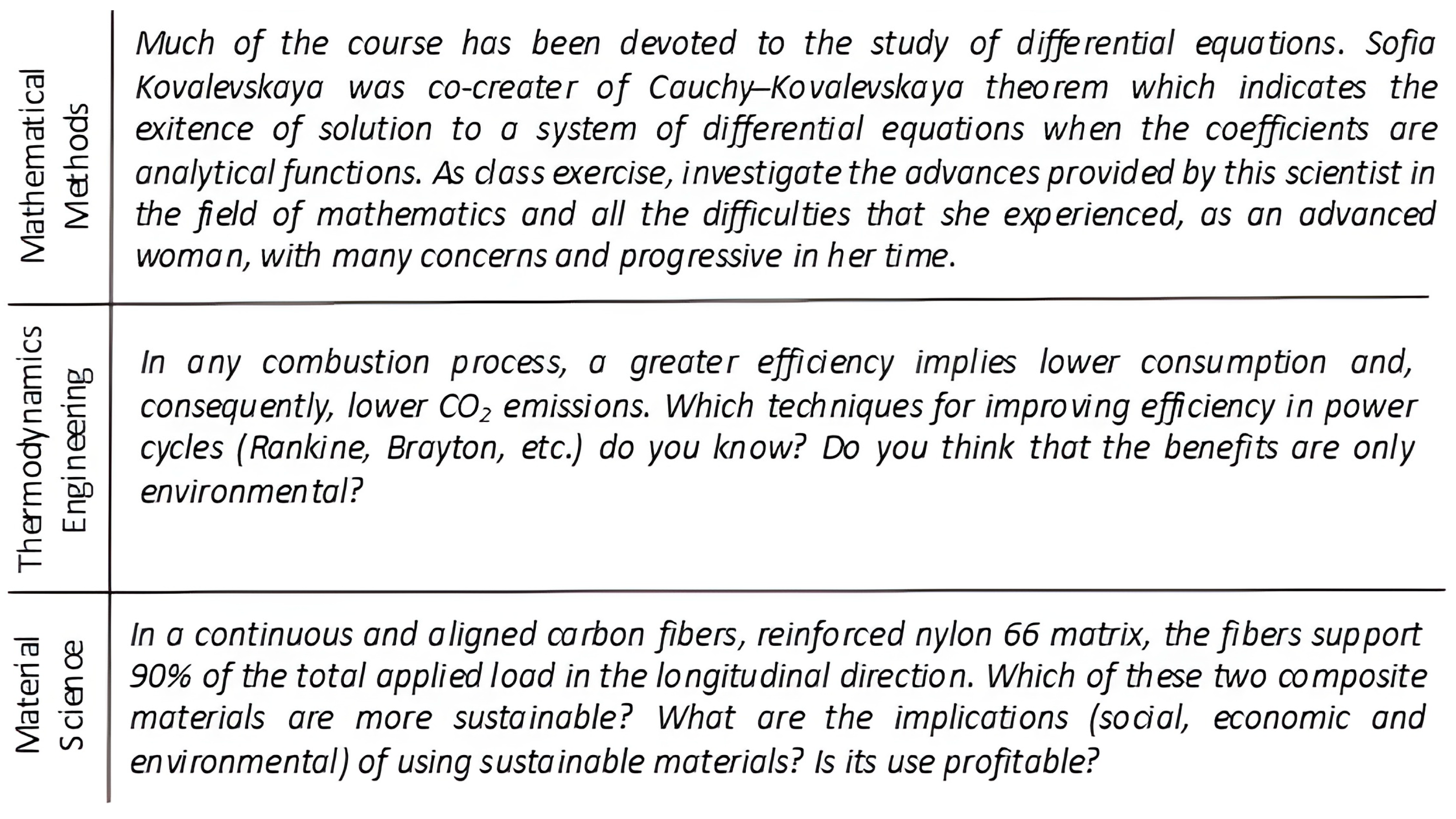
For other subjects such as Mathematical Methods, Thermodynamics Engineering and Materials Science, in some questions and exercises proposed by the teachers about the content taught, their possible relationship with SDGs were included, strengthening the acquisition of skills such as critical thinking and social implications. Figure A1 shows some examples of these questions, in which the students were asked about the social and environmental implications of some of the concepts imparted in different subjects. These types of questions are a very clear example of how teachers intend for students to acquire certain skills (ability to identify and assess the effects of any solution in a specific field, to make judgments that include a reflection on relevant social, scientific or ethical issues, etc.) by relating technical concepts with their effect in the environment and societal development.
Figure A1.
Example of questions related to society’s implications of the concepts taught in different subjects.
- -
- Strength of Materials
An exercise consisted of thinking about the importance of this subject’s content in the aerospace sector:
“In the subject “Strength of materials” you work on the dimensioning of structures formed by the union of bars. With the elastic sizing of bars, the aim is to provide a solution to the structure, seeking a design with the lowest possible weight that meets the conditions of balance, rigidity, resistance, and stability. It must be considered that in aerospace applications, lighter aircraft can carry out transport activities with less need for structural materials and fuel. This contributes to sustainable development, because it is not only related to the lower price of the structure as there is less need for material, but it could also have an impact on the environment by generating lower CO2 emissions in flight”. Apart from the different exercises proposed for dimensioning structures, the teacher included the following question: List the SDGs that you think may be related to this activity. Also, comment on the possible effects that the poor dimensioning of a structure could have (for example, oversizing) and the benefits of achieving optimal dimensioning.”
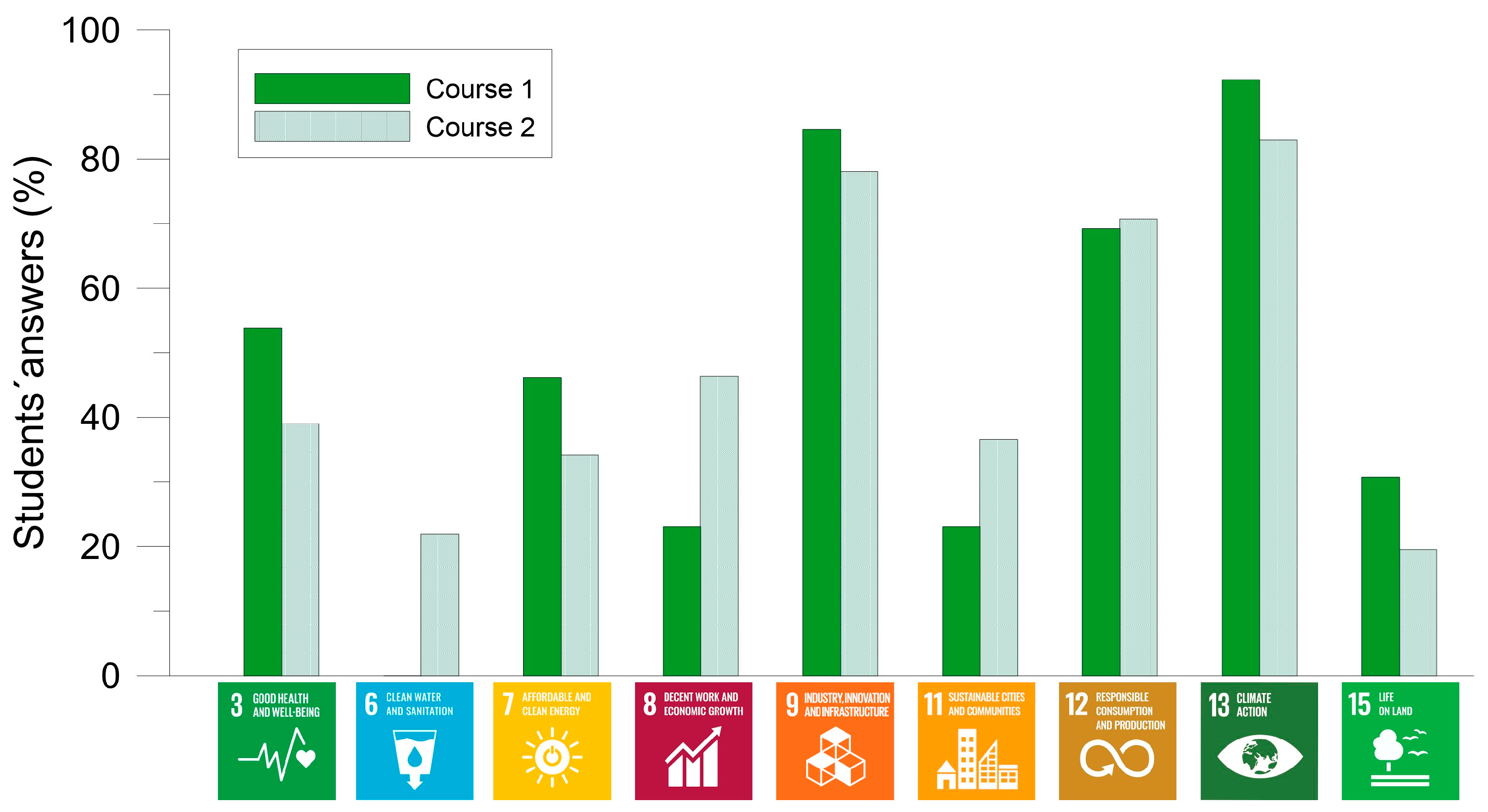
The lessons learned, in which this activity was integrated, included fundamental concepts of the theory of structures: displacement, force, stress, calculation, and dimensioning of simple structures. The results (in percentages) correspond to the students’ answers regarding the information required in this activity are presented in Figure A2. This activity was proposed for two consecutive academic courses, which allowed us to compare the responses of different student groups. From Figure A2, it can be concluded that most students had similar perspectives because the SDGs selected were, in general, the same and at similar percentages. The Sustainability Development Goals most cited were numbers 9 (Industry, Innovation and Infrastructure), 12 (Responsible Consumption and Production), and 13 (Climate Action). It should be noted that most of the answers included the reason why this SDG had been selected and a deep justification and criticism of the issues raised.
Figure A2.
Students’ answers about the question asked in “Strength of Materials” subject.
- -
- Electric Circuits
In Electric Circuits, a research activity was proposed for students to investigate how the aviation industry is facing the challenges immersed in the 2030 Agenda. To do this, the students had as their main source of information the webpage of the association “Aviation benefits beyond borders’ (Aviation Benefits, 2021). Additionally, this activity encouraged students to develop several working teams (three to four students), and with this, communication and teamwork skills, which are also promoted in other works related to sustainability (Sales de Aguiar & Paterson, 2017). Each group had to investigate one of the following topics: climate action on aviation, improving air quality, greener manufacturing, circular economy, and the impact of aviation on the environment.
Since this course takes place in the second semester, it is assumed that students already have some knowledge related to the SDGs. The activity was proposed by the middle of the semester and carried out as follows:
- The professor commented on the widely available information on the internet about the SDGs in aviation and how easy it is to access and understand this information considering the perspective of the students. Based on this, the professor prepared an explanation for the assignment.
- The professor explained the activity in one of the lectures, starting with a brief introduction to the SDGs and noticing the importance that the aviation industry, through the webpage, gives to these goals (Aviation Benefits, 2021), followed by explaining the objectives of the proposed research activity and finishing with the criteria for the assignment. The assignment consisted of (i) preparing a presentation or report with the main ideas and conclusions obtained from the selected topic, (ii) performing an oral presentation of about 10–15 min to the rest of the classmates and professors about the conclusions of the research, and (iii) attending other presentations and answering questions to their classmates. The assignment can add extra points to the final mark of the course.
- Two weeks later, the students submitted their presentations and reports to the Moodle platform and presented their conclusions to the rest of the student class. To conclude the activity, the professor evaluated the assignments and provided feedback to students.
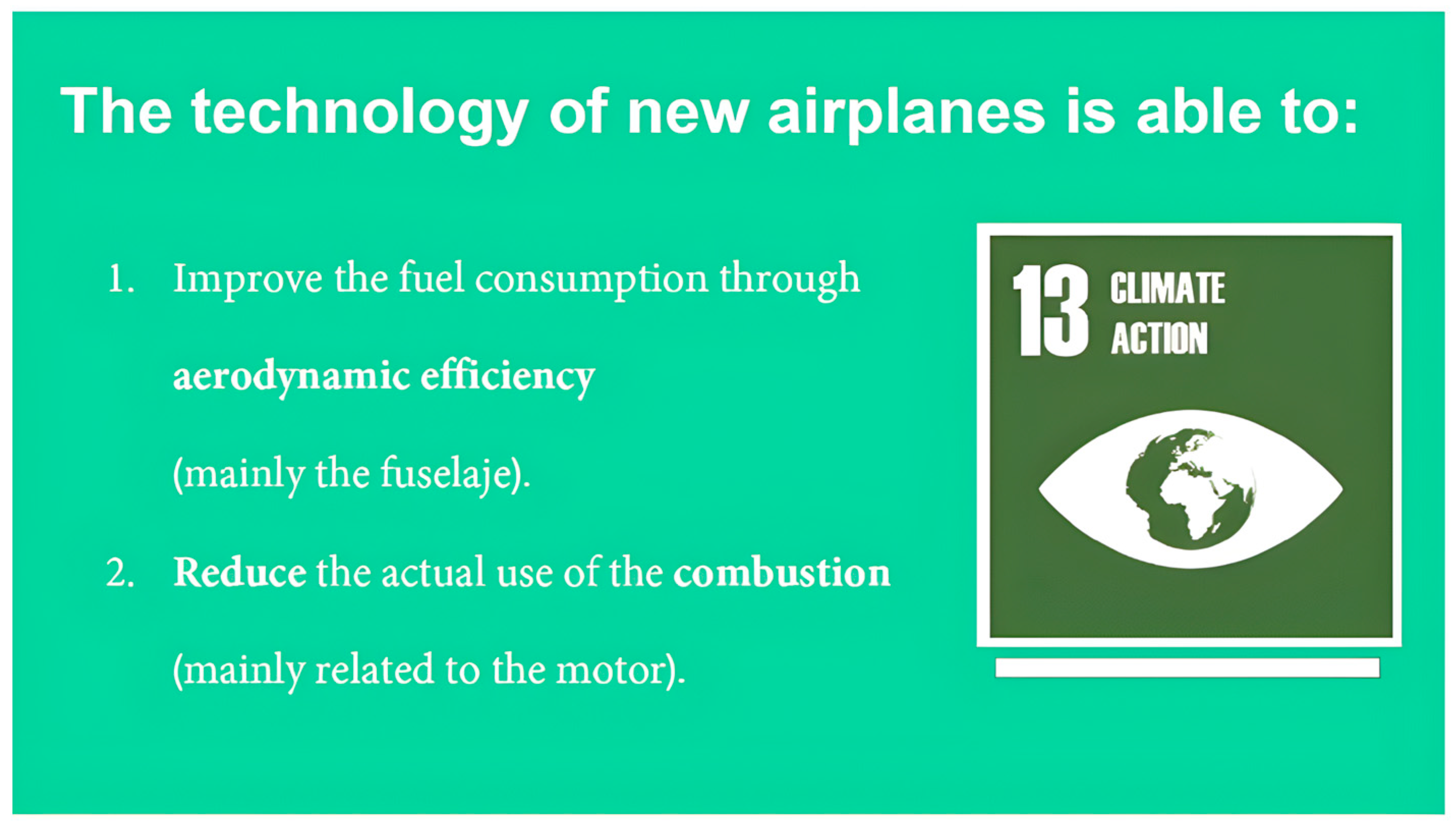
The overall evaluation of the activity was satisfactory. The reports and oral presentations made by the students were interesting in general. The technical content in the document was high, and most groups looked up other sources of information to complete their reports. The graphical quality of the presentation was satisfactory and outstanding in some cases. Oral presentations were generally fluent. Figure A3 shows examples of slides included in the students’ presentations.
Figure A3.
Slide example is included in a teacher’s presentation about sustainability in aviation.
In conclusion, this activity helped the students acquire a broader idea of how the aviation industry is comprised and which actions this industry is implementing to face its social and environmental impact.
- -
- Electronics and Control Engineering
Another example of the activities developed was the evaluable task proposed by the Electronics and Control Engineering subject. The exercise was as follows: “The fuel supply to an engine as a function of the throttle position is controlled by an electronic circuit that acts on a valve. It is decided to redesign the valve position control by closing a control loop to improve fuel consumption, being the system scheme that showed in the Figure A4.”
Figure A4.
Example of closed loop control scheme proposed by the teacher in an exercise.
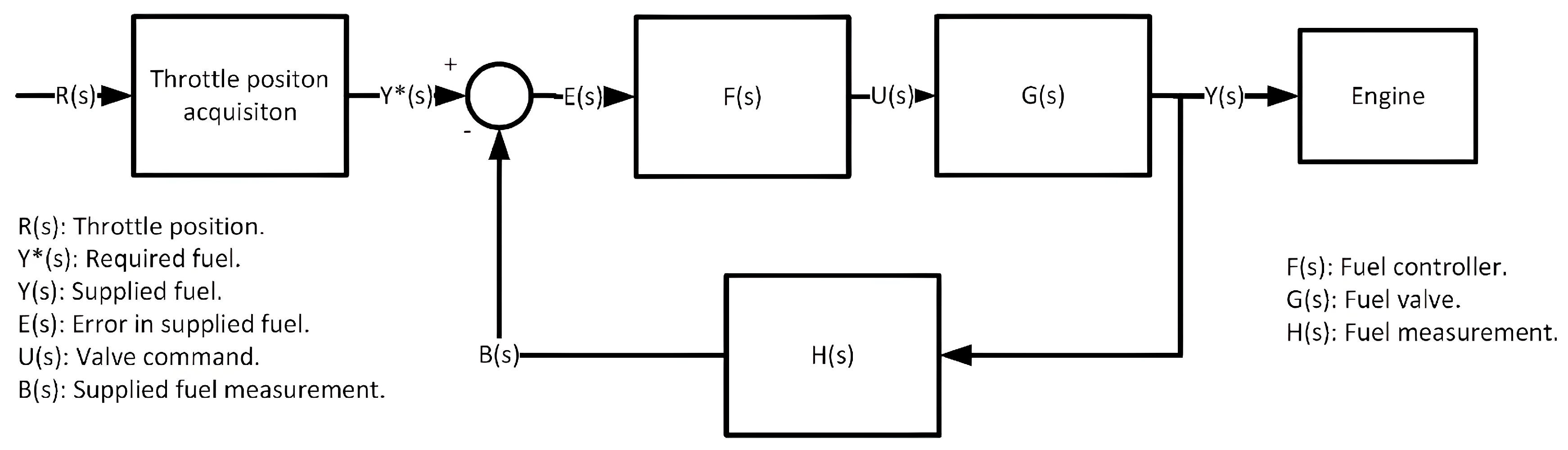
Some of the questions associated with this exercise were directly related to the technical content of the subject: (a) open-loop transfer function of the valve control system , (b) to estimate the fuel savings of introducing closed-loop control versus continuing to operate with open-loop control. An additional question about its relationship with the SDGs was as follows: Do you consider that reduction in fuel consumption is related to any of the SDGs? Which one or which of them? Why? Think about the social and environmental effects of considering these aspects in your designs.
Some of the comments provided by the students were as follows: “Fuel savings could be related to SDG number 7 (Affordable and Clean Energy) and 13 (Climate Action). Related to the first commented, it is necessary to consider that, although the energy provided by fuels is not clean, the fuels saving achieved the regulator would imply a reduction in contamination” or “I consider that the reduction in consumption is related to SDG 13—Action for the Climate, because saving fuel partly reduces pollution and, consequently, there is an improvement in air quality and global warming is reduced.” Once students understood the importance and the effects of making systems as optimized as possible, this activity was complemented with the presentation of various situations by the teacher, so that the students could propose and solve different more optimized electronic actuator circuits.
- -
- Business Management
The teacher proposed an activity in class that consisted of reading press news related to the aerospace sector and discussing various questions. Two pieces of news were selected about safety during the flight and how cancelation of the production of a particular aircraft model can affect a company from an economic point of view. Students must answer and debate different questions, such as the degree of responsibility of airplane companies when a flight is canceled, the effect of the aviation sector on pollution, and the SDGs related to these questions.
The results of this activity were very positive considering that students showed a great level of interest in the debate, emphasizing issues related to the development of society in general and the aviation sector in particular, addressing issues such as security, involvement in the development of society, and so on. They showed awareness and critical thinking, which are objectives pursued with the development of this activity.
References
- Alimehmeti, G., Fia, M., & Paletta, A. (2024). The sustainability-to-employment pipeline: The impact of SDG-related curricula on graduates’ employability. Studies in Higher Education, 49(12), 2328–2342. [Google Scholar] [CrossRef] [Scilit]
- Alm, K., Beery, T., Eiblmeier, D., & Fahmy, T. (2022). Students’ learning sustainability—Implicit, explicit or non-existent: A case study approach on students’ key competencies addressing the SDGs in HEI program. International Journal of Sustainability in Higher Education, 23(8), 60–84. [Google Scholar] [CrossRef] [Scilit]
- Angelaki, M., Bersimis, F., Karvounidis, T., & Douligeris, C. (2024). Towards more sustainable higher education institutions: Implementing the sustainable development goals and embedding sustainability into the information and computer technology curricula. Education and Information Technologies, 29(4), 5079–5113. [Google Scholar] [CrossRef] [Scilit]
- Appel, G., Dankelman, I., & Kuipers, K. (2004). Disciplinary explorations of sustainable development in higher education. In P. B. Corcoran, & A. E. J. Wals (Eds.), Higher education and the challenge of sustainability. Springer. [Google Scholar] [CrossRef] [Scilit]
- Avelar, A., Da Silva Oliveira, K., & Farina, M. (2023). The integration of the sustainable development goals into curricula, research and partnerships in higher education. International Review of Education, 69(3), 299–325. [Google Scholar] [CrossRef] [Scilit]
- Aviation: Benefits beyond borders. (2021). Available online: https://aviationbenefits.org (accessed on 12 January 2026).
- Aznar-Minguet, P., & Ull, M. A. (2009). Education in basic competences for sustainable development. The role of university. Revista de Educación, 219–237. Available online: https://www.educacionfpydeportes.gob.es/revista-de-educacion/ca/numeros-revista-educacion/numeros-anteriores/2009/re2009/re2009-10.html (accessed on 28 December 2025).
- Beagon, U., Kövesi, K., Tabas, B., Nørgaard, B., Lehtinen, R., Bowe, B., Gillet, C., & Spliid, C. M. (2023). Preparing engineering students for the challenges of the SDGs: What competences are required? European Journal of Engineering Education, 48(1), 1–23. [Google Scholar] [CrossRef] [Scilit]
- Berends, M. (2006). Survey methods in educational research. In Handbook of complementary methods in education research (pp. 623–640). Lawrence Erlbaum Associates Publishers. [Google Scholar] [CrossRef] [Scilit]
- Bianchi, G., Pisiotis, U., & Cabrera Giraldez, M. (2022). GreenComp: The European sustainability competence framework. EUR 30955 EN. Publications Office of the European Union. ISBN 978-92-76-46485-3. JRC128040. [Google Scholar] [CrossRef]
- Boarin, P., & Martinez-Molina, A. (2022). Integration of environmental sustainability considerations within architectural programs in higher education: A review of teaching and implementation approaches. Journal of Cleaner Production, 342, 130989. [Google Scholar] [CrossRef] [Scilit]
- Boarin, P., Martinez-Molina, A., & Juan-Ferruses, I. (2019). Understanding students’ perception of sustainability in architecture education: A comparison among universities in three different continents. Journal of Cleaner Production, 248, 119237. [Google Scholar] [CrossRef] [Scilit]
- Brauer, S. (2021). Towards competence-oriented higher education: A systematic literature review of the different perspectives on successful exit profiles. Education + Training, 63(9), 1376–1390. [Google Scholar] [CrossRef] [Scilit]
- Brundtland, G. H. (1987). Our common future—Call for action. Environmental Conservation, 14(4), 291–294. [Google Scholar] [CrossRef] [Scilit]
- Chankseliani, M., & McCowan, T. (2021). Higher education and the sustainable development goals. Higher Education, 81, 1–8. [Google Scholar] [CrossRef] [Scilit] [PubMed]
- Ciesielski, T. H., Aldrich, M. C., Marsit, C. J., Hiatt, R. A., & Williams, S. M. (2017). Transdisciplinary approaches enhance the production of translational knowledge. Translational Research, 182, 123–134. [Google Scholar] [CrossRef] [Scilit]
- Colby, A., & Sullivan, W. M. (2008). Ethics teaching in undergraduate engineering education. Journal of Engineering Education, 97(3), 327–338. [Google Scholar] [CrossRef] [Scilit]
- Collazo, L. M., & Granados, J. (2020). Implementation of SDGs in University Teaching: A course for professional development of teachers in education for sustainability for a transformative action. Sustainability, 12(19), 8267. [Google Scholar] [CrossRef] [Scilit]
- Costa, A., & Kallick, B. (2013). Dispositions: Reframing teaching and learning. Corwin Press. ISBN 978-1-4833-3910-8. [Google Scholar]
- De Wilde, J., Fuller, S., & Sturgess, Z. (2025). A conceptual framework to embed sustainability in the curricula of a UK university. Sustainability, 17(12), 5605. [Google Scholar] [CrossRef] [Scilit]
- EIIA-Aerospace Engineering Degree. (2025). Available online: https://n9.cl/d45zuj (accessed on 12 January 2026).
- EIIA-UCLM. (2025). Escuela de ingeniería industrial y aeroespacial. Universidad de Castilla—La Mancha. Available online: https://www.uclm.es/toledo/eiia (accessed on 12 January 2026).
- Ermer, G., & VanderLeest, S. (2002). Using design norms to teach engineering ethics. In Proceedings of the 2002 American Society for Engineering Education Annual Conference and Exposition (Session 2661, pp. 7–1253). American Society for Engineering Education. [Google Scholar] [CrossRef] [Scilit]
- Escobar, R. A., & Escobar, M. B. E. (2016). El pensamiento transdisciplinar en la enseñanza de la administración: Una pesquisa por su estado del arte entre el año 2000 y 2015. Sinapsis, 8(1), 1–20. [Google Scholar]
- Esparragoza, I. E., Lascano, S., & Núnez, J. (2013, August 14–16). Framework for an engineering design course using a project based and competency-based learning approach. 11th Latin American and Caribbean Conference for Engineering and Technology, Cancun, Mexico. [Google Scholar]
- Espino-Díaz, L., Luque-González, R., Fernández-Caminero, G., & Álvarez-Castillo, J. (2025). Exploring the impact of project-based learning on sustainable development goals awareness and university students’ growth. European Journal of Educational Research, 14(1), 283–296. [Google Scholar] [CrossRef] [Scilit]
- Evangelinos, K. I., & Jones, N. (2009). An analysis of social capital and environmental management of higher education institutions. International Journal of Sustainability in Higher Education, 10(4), 334–342. [Google Scholar] [CrossRef] [Scilit]
- Forment, M. A., Caetano, N., Garcia-Peñalvo, F., Amante, B., & Martinez, R. (2015). A focus on teaching and learning sustainability and social compromise skills. Journal of Technology and Science Education, 5(4), 229–234. [Google Scholar] [CrossRef] [Scilit]
- Fundación Vodafone España. (2025). Youth4Good project lab. Available online: https://fundacionvodafone.es (accessed on 12 January 2026).
- García-González, E., Jiménez-Fontana, R., Azcárate Goded, P., & Cardeñoso, J. M. (2017). Inclusion of sustainability in university classrooms through methodology. In Handbook of theory and practice of sustainable development in higher education (Vol. 1, pp. 3–19). Springer. [Google Scholar] [CrossRef] [Scilit]
- Gibbs, P., Cartney, P., Wilkinson, K., Parkinson, J., Cunningham, S., James-Reynolds, C., & Pitt, A. (2017). Literature review on the use of action research in higher education. Educational Action Research, 25(1), 3–22. [Google Scholar] [CrossRef] [Scilit]
- GMR. (2015). GMR 2015 report cards: Education for all 2000–2015: Achievements and challenges. Available online: https://en.unesco.org/gem-report/report/2015/education-all-2000-2015-achievements-and-challenges (accessed on 12 January 2026).
- Graf, J. (2019). Bringing concepts together: Interdisciplinarity, transdisciplinarity, and SSH integration. Fteval Journal for Research and Technology Policy Evaluation, 48, 33–36. [Google Scholar] [CrossRef] [Scilit]
- Hasna, A. M. (2008). A review of sustainability assessment methods in engineering. The International Journal of Environmental, Cultural, Economic, and Social Sustainability, 5(1), 161–176. Available online: https://research.usq.edu.au/item/9z906/a-review-of-sustainability-assessment-methods-in-engineering (accessed on 12 January 2026).
- Heleta, S., & Bagus, T. (2021). Sustainable development goals and higher education: Leaving many behind. Higher Education, 81, 163–177. [Google Scholar] [CrossRef] [Scilit]
- Holt, D. (2003). The role and impact of the business school curriculum in shaping environmental education at Middlesex University. International Journal of Sustainability in Higher Education, 4(4), 324–343. [Google Scholar] [CrossRef] [Scilit]
- Junyent, M., & Geli de Ciurana, A. M. (2008). Education for sustainability in university studies: A model for reorienting the curriculum. British Educational Research Journal, 34(6), 763–782. [Google Scholar] [CrossRef] [Scilit]
- Kolb, D. A. (2014). Experiential learning: Experience as the source of learning and development. FT Press. ISBN 978-0132952613. [Google Scholar]
- Konak, A., Clark, T. K., & Nasereddin, M. (2014). Using Kolb’s experiential learning cycle to improve student learning in virtual computer laboratories. Computers & Education, 72, 11–22. [Google Scholar] [CrossRef] [Scilit]
- Leal Filho, W., Shiel, C., Paço, A., Mifsud, M., Ávila, L., Brandli, L., Molthan-Hill, P., Pace, P., Azeiteiro, U., Vargas, V., & Caeiro, S. (2019). Sustainable development goals and sustainability teaching at universities: Falling behind or getting ahead of the pack? Journal of Cleaner Production, 232, 285–294. [Google Scholar] [CrossRef] [Scilit]
- Lizitza, N., & Sheepshanks, V. (2020). Educación por competencias: Cambio de paradigma del modelo de enseñanza-aprendizaje. RAES, 20, 89–107. [Google Scholar]
- Lunev, A., Petrova, I., & Zaripova, V. (2013). Competency-based models of learning for engineers: A comparison. European Journal of Engineering Education, 38(5), 543–555. [Google Scholar] [CrossRef] [Scilit]
- Makrakis, V., Kostoulas-Makrakis, N., Siegmund, A., Martelletti, D., Álvarez-Vanegas, A., Ceja, M., Gonzalez, M., Artavia, C., Jiménez-Elizondo, N., Muñoz, D., Jimenez-Elizondo, A., & Larios, N. (2025). Professionalization of academic teaching in Latin American universities to address SDGs applying the stages of concern theory. Sustainability, 17(13), 5850. [Google Scholar] [CrossRef] [Scilit]
- MDGs. (2015). The millennium development goals report. United Nations. Available online: https://www.un.org/millenniumgoals/2015_MDG_Report/pdf/MDG%202015%20rev%20(July%201).pdf (accessed on 12 January 2026).
- Miñano, R. (2019). Formación en competencias de sostenibilidad, responsabilidad social y ética profesional: Estudio de casos en ingeniería industrial e ingeniería informática [Ph.D. Thesis, Universidad Politécnica de Madrid]. [Google Scholar] [CrossRef] [Scilit]
- Molina, Á., Helldén, D., Alfvén, T., Niemi, M., Leander, K., Nordenstedt, H., Rehn, C., Ndejjo, R., Wanyenze, R., & Biermann, O. (2023). Integrating the United Nations sustainable development goals into higher education globally: A scoping review. Global Health Action, 16(1), 2190649. [Google Scholar] [CrossRef] [Scilit]
- Mulder, K. F. (2017). Strategic competences for concrete action towards sustainability: An oxymoron? Engineering education for a sustainable future. Renewable and Sustainable Energy Reviews, 68, 1106–1111. [Google Scholar] [CrossRef] [Scilit]
- Nomura, K., & Abe, O. (2010). Higher education for sustainable development in Japan: Policy and progress. International Journal of Sustainability in Higher Education, 11(2), 120–129. [Google Scholar] [CrossRef] [Scilit]
- ONGAWA. (2025). Engineering for human development. Available online: https://ongawa.org/en/home-2/ (accessed on 12 January 2026).
- Orozco-Messana, J., Miguel Martínez-Rubio, J., & Gonzálvez-Pons, J. M. (2020). Sustainable higher education development through technology enhanced learning. Sustainability, 12(9), 3600. [Google Scholar] [CrossRef] [Scilit]
- Osborn, A. F. (1953). Applied imagination: Principles and procedures of creative thinking. Scribner’s. [Google Scholar]
- Peng, J., Sun, M., Yuan, B., Lim, C. P., van Merriënboer, J. J. G., & Wang, M. (2024). Visible thinking to support online project-based learning: Narrowing the achievement gap between high- and low-achieving students. Education and Information Technologies, 29, 2329–2363. [Google Scholar] [CrossRef] [Scilit]
- Pérez-Foguet, A., & Lazzarini, B. (2019). Continuing professional education in engineering faculties: Transversal integration of sustainable human development in basic engineering sciences courses. Journal of Cleaner Production, 218, 772–781. [Google Scholar] [CrossRef] [Scilit]
- Project Zero, University of Harvard. (2024). Available online: https://pz.harvard.edu/ (accessed on 12 January 2026).
- Ralph, M., & Stubbs, W. (2014). Integrating environmental sustainability into universities. Higher Education, 67, 71–90. [Google Scholar] [CrossRef] [Scilit]
- Ranky, P. G. (2010, May 17–19). Problem-based teaching/learning methods and cases for millennial generation engineering students interested in sustainable green engineering. 2010 IEEE International Symposium on Sustainable Systems and Technology, Arlington, VA, USA. [Google Scholar] [CrossRef] [Scilit]
- Ritchhart, R., & Perkins, D. (2008). Making thinking visible. Educational Leadership, 65(5), 57. [Google Scholar]
- Ritchhart, R., Turner, T., & Hadar, L. (2009). Uncovering students’ thinking about thinking using concept maps. Metacognition and Learning, 4(2), 145–159. [Google Scholar] [CrossRef] [Scilit]
- Sales de Aguiar, T. R., & Paterson, A. S. (2017). Sustainability on campus: Knowledge creation through social and environmental reporting. Studies in Higher Education, 43(11), 1882–1894. [Google Scholar] [CrossRef] [Scilit]
- Salmi, J., & Bassett, R. M. (2010). Transforming higher education in developing countries: The role of the World Bank. In International encyclopedia of education (Vol. 4, pp. 590–596). Elsevier. ISBN 978-0-08-044894-7. [Google Scholar] [CrossRef] [Scilit]
- Sammalisto, K., & Lindhqvist, T. (2008). Integration of sustainability in higher education: A study with international perspectives. Innovative Higher Education, 32, 221–233. [Google Scholar] [CrossRef] [Scilit]
- Sánchez-Carracedo, F., Ruiz-Morales, J., Valderrama-Hernández, R., Muñoz-Rodríguez, J. M., & Gomera, A. (2019). Analysis of the presence of sustainability in higher education degrees of the Spanish university system. Studies in Higher Education, 46(2), 300–317. [Google Scholar] [CrossRef] [Scilit]
- Shephard, K., & Furnari, M. (2013). Exploring what university teachers think about education for sustainability. Studies in Higher Education, 38(10), 1577–1590. [Google Scholar] [CrossRef] [Scilit]
- Sterling, S. (2004). Higher education, sustainability, and the role of systematic learning. In Higher education and the challenge of sustainability: Problematics, promise, and practice. Springer. ISBN 978-0-306-48515-2. [Google Scholar]
- Tilbury, D. (2004). Environmental education for sustainability: A force for change in higher education. In Higher education and the challenge of sustainability (pp. 97–112). Springer. [Google Scholar] [CrossRef] [Scilit]
- Tilbury, D., Keogh, A., Leighton, A., & Kent, J. (2005). A national review of environmental education and its contribution to sustainability in Australia: Further and higher education. Australian Research Institute in Education for Sustainability (ARIES). ISBN 1-86408-996-2. [Google Scholar]
- Tomasella, B., Akbar, B., Lawson, A., Howarth, R., & Bedford, R. (2024). Embedding the sustainable development goals into higher education institutions’ marketing curriculum. Journal of Marketing Education, 46(2), 155–174. [Google Scholar] [CrossRef] [Scilit]
- Tuning Educational Structure in Europe. (2003). Universidad de deusto. Available online: http://tuningacademy.org/wp-content/uploads/2014/02/TuningEUI_Final-Report_SP.pdf (accessed on 12 January 2026).
- Turull, M., Albertí, E., Díaz, A., García, R. M., Giménez, A., González, M., Joshi, U., Moll de Alba, C., & Panero, P. (2020). Contents and limits of horizontal teaching coordination among teachers of 1st year of the law degree. Revista d’Innovació Docent Universitària, 12, 125–135. [Google Scholar] [CrossRef] [Scilit]
- UE4SD. (2015). Leading practice publication: Professional development of university educators on education for sustainable development in European countries (D. Kapitulčinová, J. Dlouhá, A. Ryan, J. Dlouhý, A. Barton, M. Mader, D. Tilbury, I. Mulà, J. Benayas, D. Alba, C. Mader, G. Michelsen, & K. Vintar Mally, Eds.). Charles University in Prague. ISBN 978-80-87076-22-4. [Google Scholar]
- United Nations. (2025). Sustainable development goals knowledge platform. Available online: https://sdgs.un.org (accessed on 12 January 2026).
- Wallace, E. D., & Jefferson, R. N. (2013). Developing critical thinking skills for information seeking success. New Review of Academic Librarianship, 19(3), 246–255. [Google Scholar] [CrossRef] [Scilit]
- Wiek, A., Withycombe, L., & Redman, C. L. (2011). Key competencies in sustainability: A reference framework for academic program development. Sustainability Science, 6(2), 203–218. [Google Scholar] [CrossRef] [Scilit]
- Wright, T. (2010). University presidents’ conceptualizations of sustainability in higher education. International Journal of Sustainability in Higher Education, 11(1), 61–73. [Google Scholar] [CrossRef] [Scilit]
- Yamin, M. (2019). Information technologies of the 21st century and their impact on society. International Journal of Information Technology, 11(4), 759–766. [Google Scholar] [CrossRef] [Scilit] [PubMed]
- Yorke, M. (2004). Employability in higher education: What it is, what it is not. The Higher Education Academy. ISBN 1-905788-01-0. [Google Scholar]
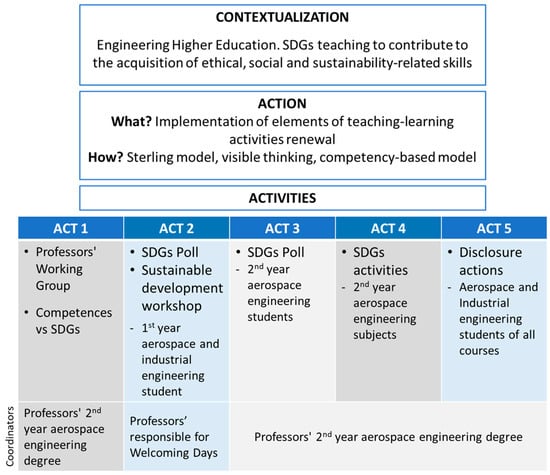
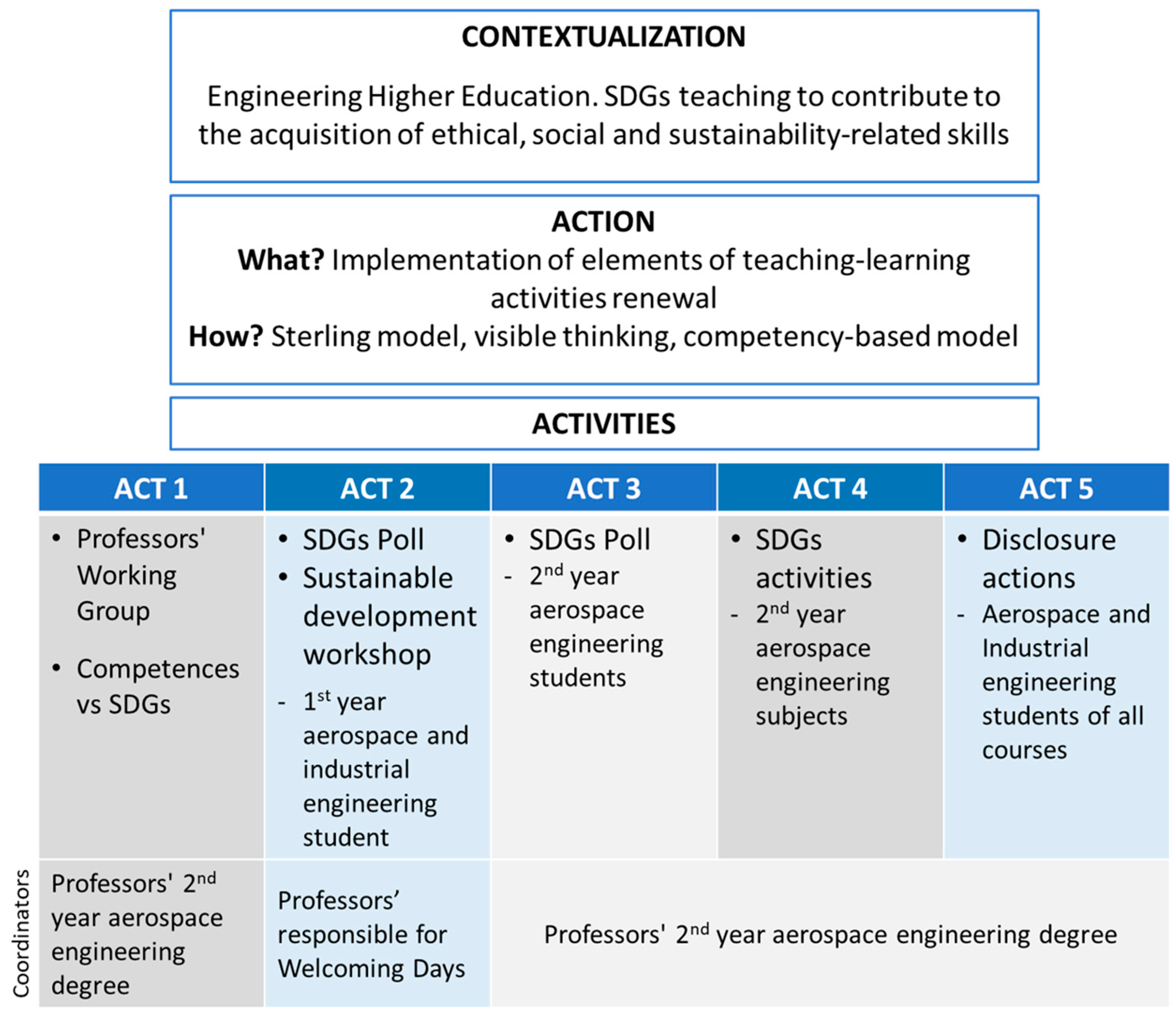
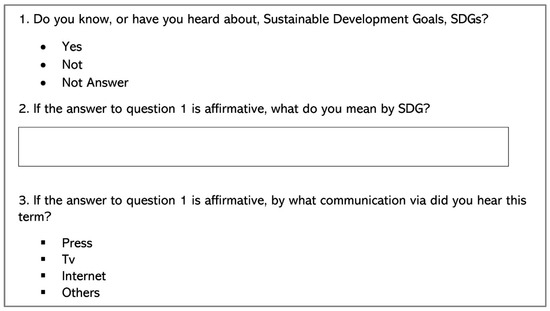
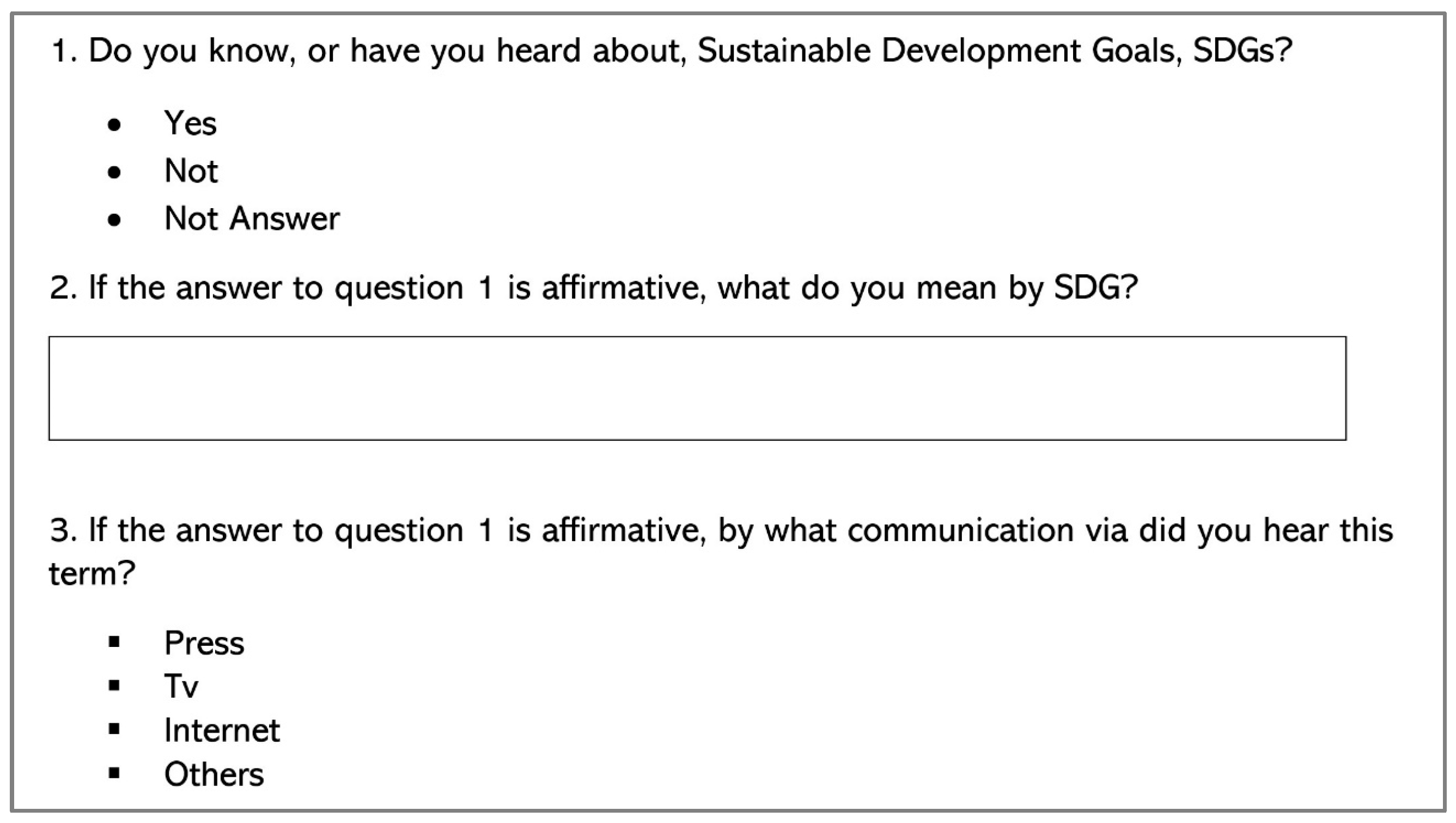
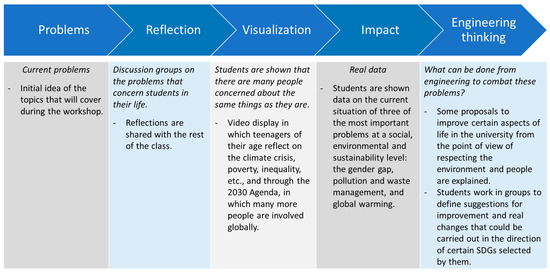
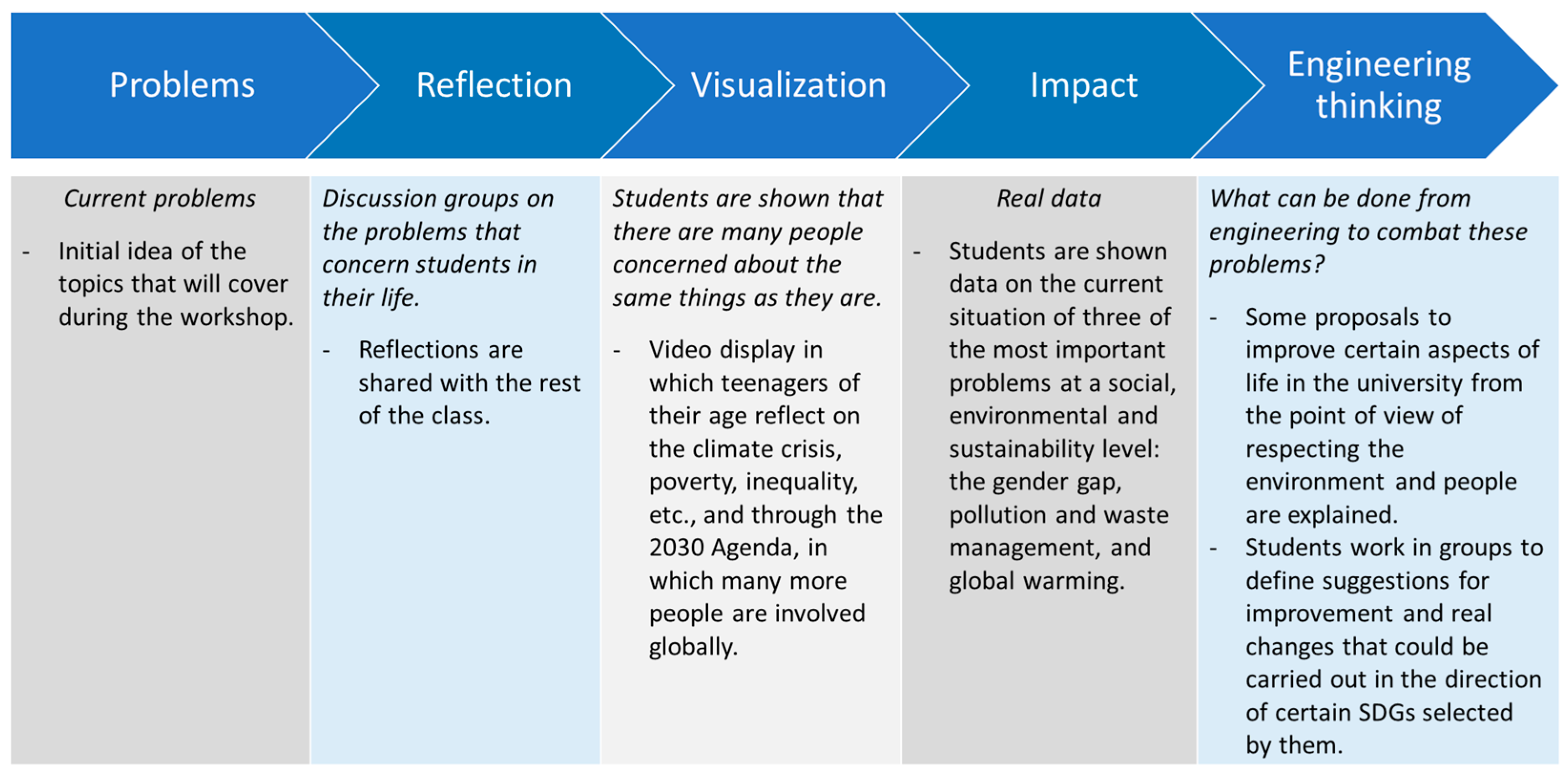
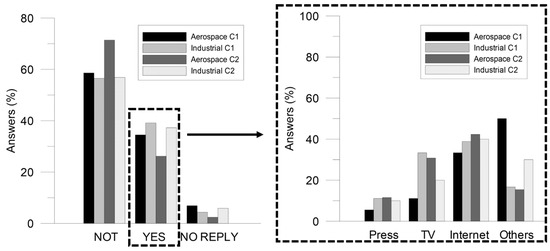
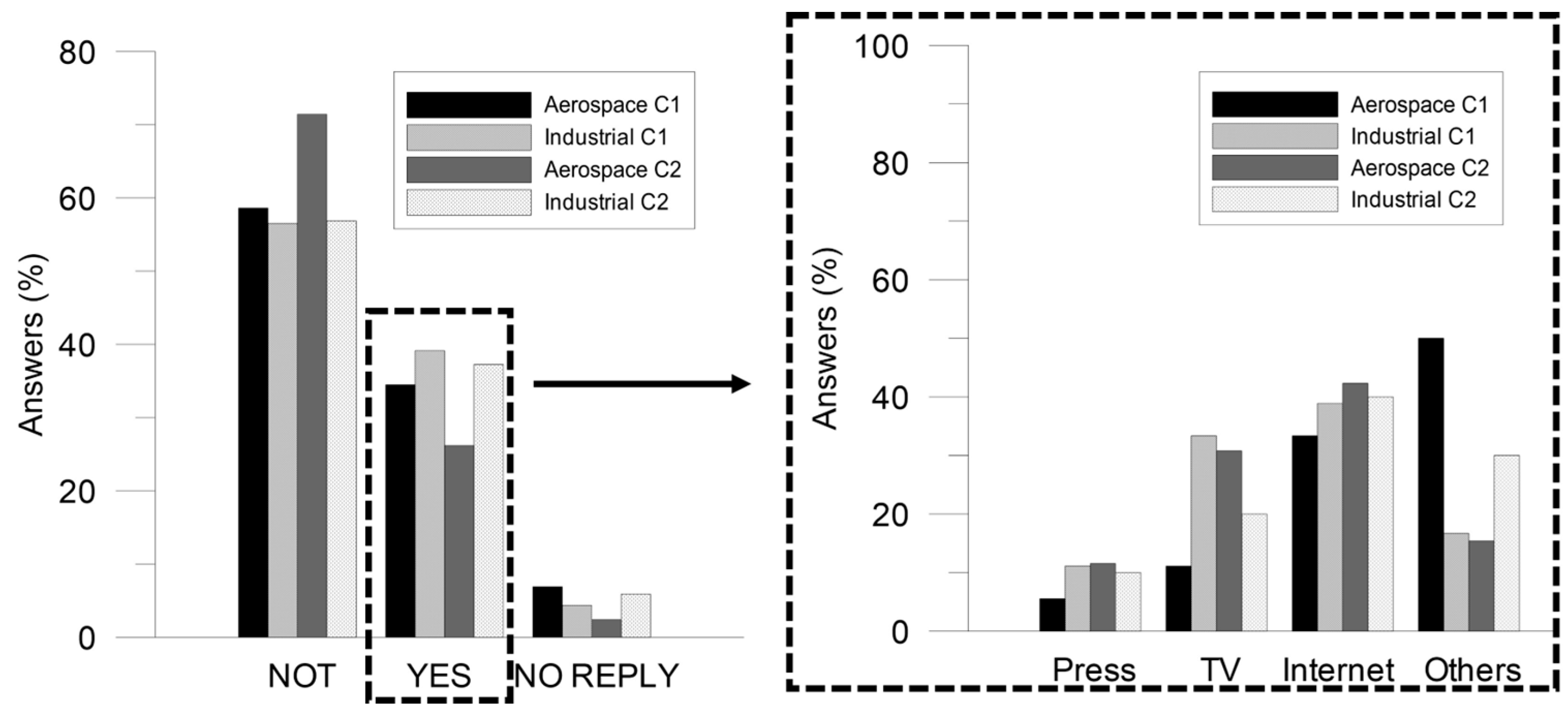

Disclaimer/Publisher’s Note: The statements, opinions and data contained in all publications are solely those of the individual author(s) and contributor(s) and not of MDPI and/or the editor(s). MDPI and/or the editor(s) disclaim responsibility for any injury to people or property resulting from any ideas, methods, instructions or products referred to in the content. |
© 2026 by the authors. Licensee MDPI, Basel, Switzerland. This article is an open access article distributed under the terms and conditions of the Creative Commons Attribution (CC BY) license.