Article

Assessing Computational Thinking in Engineering and Computer Science Students: A Multi-Method Approach


by
Farman Ali Pirzado
1,*,†,
Awais Ahmed
2,†,
Sadam Hussain
1,
Gerardo Ibarra-Vázquez
1 and
Hugo Terashima-Marin
1
1
Tecnológico de Monterrey, School of Engineering and Sciences Monterrey, Monterrey 64849, Mexico
2
School of Computer Science, China West Normal University, Nanchong 637009, China
*
Author to whom correspondence should be addressed.
These authors contributed equally to this work.
Educ. Sci. 2025, 15(3), 344; https://doi.org/10.3390/educsci15030344

Submission received: 10 December 2024 / Revised: 3 January 2025 / Accepted: 11 February 2025 / Published: 11 March 2025

Abstract

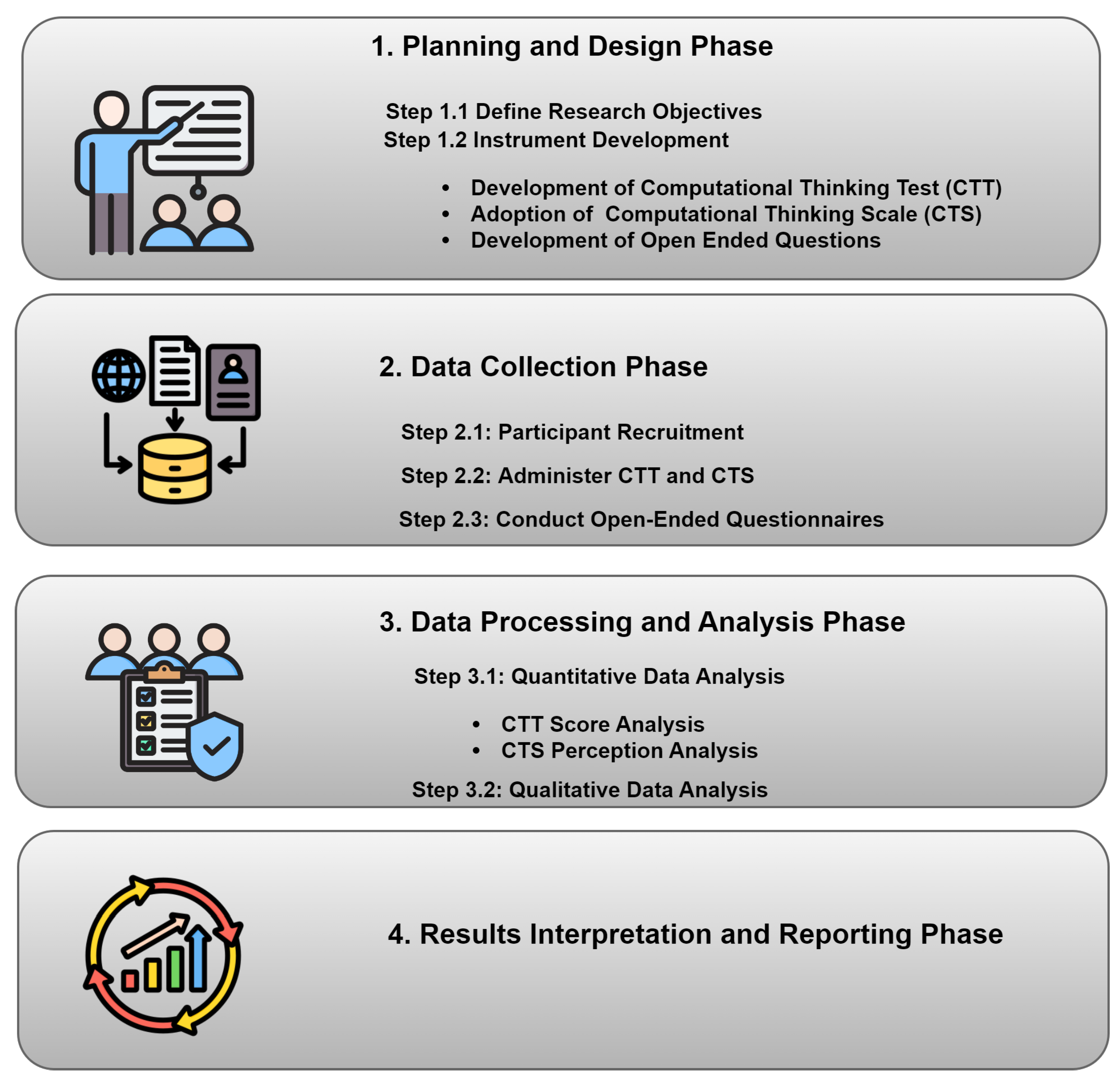
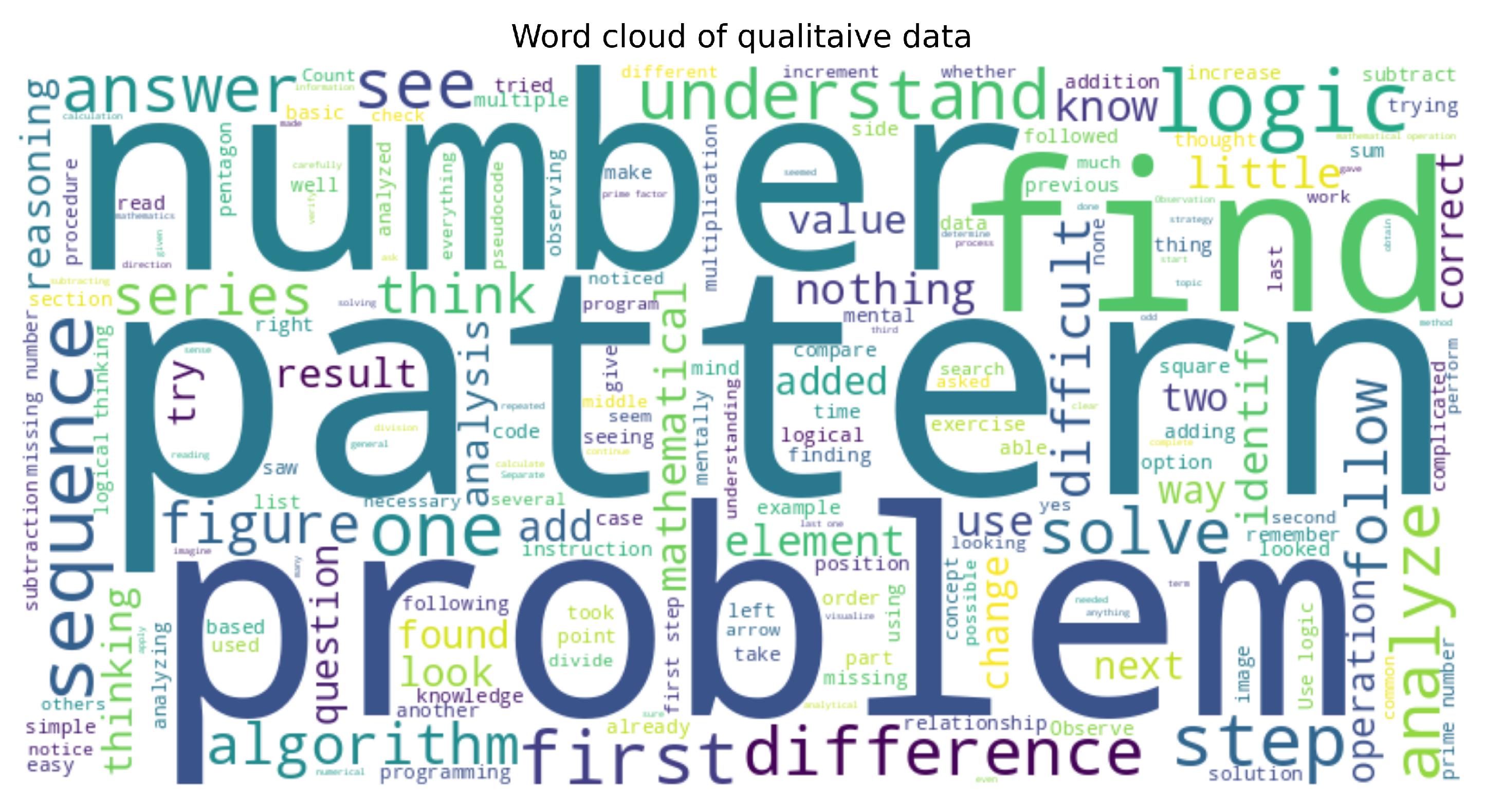
The rapid integration of computational thinking (CT) into STEM education highlights its importance as a critical skill for problem-solving in the digital age, equipping students with the cognitive tools needed to address complex challenges systematically. This study evaluates CT skills among Engineering and Computer Science students using a multi-method approach by combining quantitative methods (CTT scores and CTS responses) with qualitative methods (thematic analysis of open-ended questions), integrating objective assessments, self-perception scales, and qualitative insights. The Computational Thinking Test (CTT) measures proficiency in core CT sub-competencies, abstraction, decomposition, algorithmic thinking, and pattern recognition through objective tests. The Computational Thinking Scale (CTS) captures students’ perceived CT skills. At the same time, open-ended questions elicit perspectives on the practical applications of CT in academic and professional contexts. Data from 196 students across two Mexican universities were analyzed through quantitative and thematic methods. The results show that students excel in pattern recognition and abstraction but face decomposition and algorithmic thinking challenges. Cross-sectional analyses were conducted between CTT, CTS and the open-ended part to compare CT skills across different demographic groups (e.g., age, gender, academic disciplines), showing clear differences based on age, gender, and academic disciplines, with Computer Science students performing better than engineering students. These findings highlight the importance of CT in preparing students for modern challenges and provide a foundation for improving teaching methods and integrating these skills into university programs.
Keywords: computational thinking; computational thinking scale; engineering and computing education; decomposition; abstraction; pattern recognition; algorithmic design computational thinking; computational thinking scale; engineering and computing education; decomposition; abstraction; pattern recognition; algorithmic design