Teaching English with Oral Chunk-Based Training


Abstract
1. Introduction
2. Literature Review
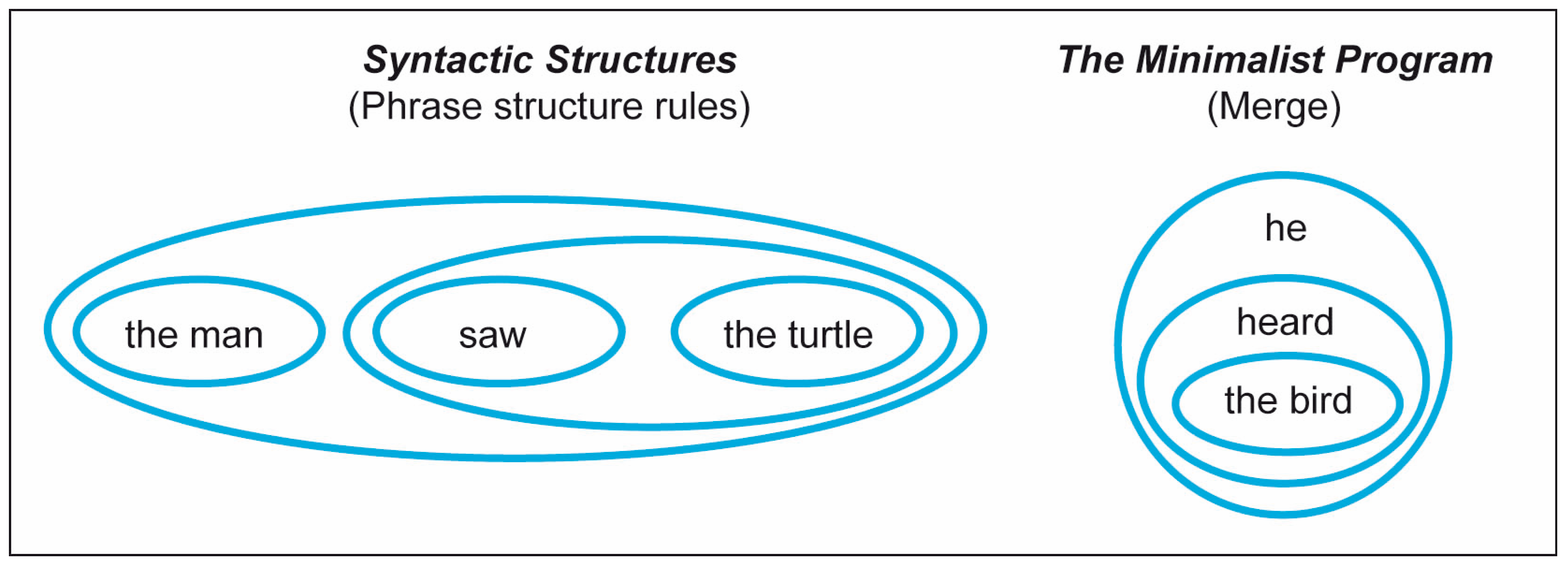
2.1. Chomsky’s Syntax and Its Phrases
2.2. Lashley’s Syntax of Action and Its Groups
2.3. Motor Programmes
2.4. Central Pattern Generators and Fixed Action Patterns
3. Materials and Methods
3.1. Sample
3.2. Instruments
3.3. Procedure
- Chunk-based sentence structuration may be more efficient than word-by-word construction, particularly in language teaching aimed at speech automatisation.
- Shorter sentences should be introduced and rehearsed before longer ones.
- The shorter the chunk-based sentence, the lower the cognitive load it imposes.
- The more reused sensory chunks a longer chunk-based sentence contains, the lower its cognitive load.
- Chunk-based structuration should emphasise the integrative properties of language, both within and between chunks.
4. Results
5. Discussion
6. Conclusions
7. Patents
Supplementary Materials
Author Contributions
Funding
Institutional Review Board Statement
Informed Consent Statement
Data Availability Statement
Conflicts of Interest
References
- Aldridge, J. W., & Berridge, K. C. (1998). Coding of serial order by neostriatal neurons: A “natural action” approach to movement sequence. The Journal of Neuroscience, 18(7), 2777–2787. [Google Scholar] [CrossRef] [Scilit]
- Arregi, K. (2000). Tense in basque. Available online: https://home.uchicago.edu/karlos/Arregi-2000-tense.pdf (accessed on 15 March 2017).
- Asano, R. (2022). The evolution of hierarchical structure building capacity for language and music: A bottom-up perspective. Primates, 63(5), 417–428. [Google Scholar] [CrossRef] [Scilit]
- Asano, R., & Boeckx, C. (2015). Syntax in language and music: What is the right level of comparison? Frontiers in Psychology, 6, 942. [Google Scholar] [CrossRef] [Scilit] [PubMed]
- Baars, B. J., & Gage, N. M. (2010). Cognition, brain, and consciousness: Introduction to cognitive neuroscience (B. J. Baars, & N. M. Gage, Eds.; 2nd ed.). Elsevier/Academic Press. [Google Scholar]
- Banich, M. T., & Compton, R. J. (2011). Cognitive neuroscience (3rd ed.). Cambridge University Press. [Google Scholar]
- Barnes, T. D., Kubota, Y., Hu, D., Jin, D. Z., & Graybiel, A. M. (2005). Activity of striatal neurons reflects dynamic encoding and recoding of procedural memories. Nature, 437(7062), 1158–1161. [Google Scholar] [CrossRef] [Scilit]
- Batsell, W. R., Perry, J. L., Hanley, E., & Hostetter, A. B. (2017). Ecological validity of the testing effect. Teaching of Psychology, 44(1), 18–23. [Google Scholar] [CrossRef] [Scilit]
- Belletti, A., & Rizzi, L. (2002). Editors’ introduction: Some concepts and issues in linguistic theory. In On nature and language. Cambridge University Press. [Google Scholar]
- Benson, M., Benson, E., & Ilson, R. F. (2010). The BBI combinatory dictionary of English: Your guide to collocations and grammar. John Benjamins Publishing Company. [Google Scholar]
- Bera, K., Shukla, A., & Bapi, R. S. (2021). Motor chunking in internally guided sequencing. Brain Sciences, 11(3), 292. [Google Scholar] [CrossRef] [Scilit]
- Bermudez, J. L. (2014). Cognitive science (2nd ed.). Cambridge University Press. [Google Scholar] [CrossRef] [Scilit]
- Berwick, R. C., Okanoya, K., Beckers, G. J. L., & Bolhuis, J. J. (2011). Songs to syntax: The linguistics of birdsong. Trends in Cognitive Sciences, 15(3), 113–121. [Google Scholar] [CrossRef] [Scilit] [PubMed]
- Bolhuis, J. J., Tattersall, I., Chomsky, N., & Berwick, R. C. (2014). How could language have evolved? PLoS Biology, 12(8), e1001934. [Google Scholar] [CrossRef] [Scilit] [PubMed]
- Boutin, A., Massen, C., & Heuer, H. (2013). Modality-specific organization in the representation of sensorimotor sequences. Frontiers in Psychology, 4, 937. [Google Scholar] [CrossRef] [Scilit] [PubMed]
- Braine, M. D. S. (1963). On learning the grammatical order of words. Psychological Review, 70(4), 323–348. [Google Scholar] [CrossRef] [Scilit] [PubMed]
- Brown, R. (1973). A first language: The early stages. Harvard University Press. [Google Scholar]
- Bybee, J. L. (2002). Sequentiality as the basis of constituent structure. In The evolution of language out of pre-language (pp. 109–134). John Benjamins Publishing Company. [Google Scholar] [CrossRef] [Scilit]
- Bybee, J. L. (2010). Language, usage and cognition (1st ed.). Cambridge University Press. [Google Scholar] [CrossRef] [Scilit]
- Calzada, A., & García Mayo, M. D. P. (2021). Child learners’ reflections about EFL grammar in a collaborative writing task: When form is not at odds with communication. Language Awareness, 30(1), 1–16. [Google Scholar] [CrossRef] [Scilit]
- Cenoz, J. (2009). Towards multilingual education (1st ed.). Multilingual Matters. [Google Scholar] [CrossRef] [Scilit]
- Chomsky, N. (1957). Syntactic structures. Mouton. [Google Scholar]
- Chomsky, N. (1965). Aspects of the theory of syntax. MIT Press. [Google Scholar]
- Chomsky, N. (1986). Knowledge of language: Its nature, origin, and use. Praeger. [Google Scholar]
- Chomsky, N. (1995). The minimalist program. MIT Press. [Google Scholar]
- Chomsky, N. (2000). New horizons in the study of language and mind (1st ed.). Cambridge University Press. [Google Scholar] [CrossRef] [Scilit]
- Chomsky, N. (2001). Beyond explanatory adequacy. MIT Occasional Papers in Linguistics. MIT Press. [Google Scholar]
- Chomsky, N. (2002). On nature and language. Cambridge University Press. [Google Scholar]
- Chomsky, N. (2006). Language and mind (3rd ed.). Cambridge University Press. [Google Scholar]
- Chomsky, N. (2007). Approaching UG from below. In Interfaces + recursion = language? (pp. 1–30). DE GRUYTER. [Google Scholar] [CrossRef] [Scilit]
- Chomsky, N. (2011). Language and other cognitive systems. What is special about language? Language Learning and Development, 7(4), 263–278. [Google Scholar] [CrossRef] [Scilit]
- Chomsky, N. (2015). The minimalist program (20th Anniversary Edition ed.). MIT Press. [Google Scholar]
- Chomsky, N., & Miller, G. A. (1963). Introduction to the formal analysis of natural languages. Handbook of Mathematical Psychology, 2, 269–321. [Google Scholar]
- Connors, B. W. (2022). Chapter 16—Circuits of the central nervous system. In Boron & boulpaep concise medical physiology (pp. 189–199). Elsevier Inc. ISBN 9780323655460. [Google Scholar]
- Coyle, D., Hood, P., & Marsh, D. (2010). CLIL. Cambridge University Press. [Google Scholar]
- Cummins, J. (2000). Language, power and pedagogy (1st ed.). Multilingual Matters. [Google Scholar] [CrossRef] [Scilit]
- De Vries, M., Christiansen, M., & Petersson, K. M. (2011). Learning recursion: Multiple nested and crossed dependencies. Biolinguistics, 5(1–2), 10–35. [Google Scholar] [CrossRef] [Scilit]
- Domínguez, L., Arche, M. J., & Myles, F. (2011). Testing the predictions of the feature-assembly hypothesis: Evidence from the L2 acquisition of Spanish aspect morphology. In N. Danis, K. Mesh, & H. Sung (Eds.), BUCLD 35: Proceedings of the 35th annual Boston University conference on language development (Vol. 35, pp. 162–174). Cascadilla Press. [Google Scholar]
- Domínguez, L., Arche, M. J., & Myles, F. (2017). Spanish Imperfect revisited: Exploring L1 influence in the reassembly of imperfective features onto new L2 forms. Second Language Research, 33(4), 431–457. [Google Scholar] [CrossRef] [Scilit]
- Doupe, A. J., & Kuhl, P. K. (1999). Birdsong and human speech: Common themes and mechanisms. Annual Review of Neuroscience, 22(1), 567–631. [Google Scholar] [CrossRef] [Scilit]
- Duysens, J., & Van de Crommert, H. (1998). Neural control of locomotion; Part 1: The central pattern generator from cats to humans. Elsevier B.V. [Google Scholar] [CrossRef] [Scilit]
- Ellis, N. C. (1996). Sequencing in SLA: Phonological memory, chunking, and points of order. Studies in Second Language Acquisition, 18(1), 91–126. [Google Scholar] [CrossRef] [Scilit]
- Ellis, N. C. (2006). Selective attention and transfer phenomena in L2 acquisition: Contingency, cue competition, salience, interference, overshadowing, blocking, and perceptual learning. Applied Linguistics, 27(2), 164–194. [Google Scholar] [CrossRef] [Scilit]
- Ellis, N. C., & Wulff, S. (2019). Cognitive approaches to second language acquisition. In J. W. Schwieter, & A. Benati (Eds.), The Cambridge handbook of second language acquisition (pp. 91–114). Cambridge University Press. [Google Scholar]
- Everaert, M. B. H., Huybregts, M. A. C., Chomsky, N., Berwick, R. C., & Bolhuis, J. J. (2015). Structures, Not Strings: Linguistics as Part of the Cognitive Sciences. Trends in Cognitive Sciences, 19(12), 729–743. [Google Scholar] [CrossRef] [Scilit]
- Ezeizabarrena, M. J. (1996). Adquisición de la morfología verbal en euskera y castellano por niños bilingües. Universidad del País Vasco. [Google Scholar]
- Firth, J. R. (1957). Papers in linguistics 1934–1951. Oxford University Press. [Google Scholar]
- Fitch, W. T., & Martins, M. D. (2014). Hierarchical processing in music, language, and action: Lashley revisited. Annals of the New York Academy of Sciences, 1316(1), 87–104. [Google Scholar] [CrossRef] [Scilit]
- Fuster, J. M. (1995). Memory in the cerebral cortex: An empirical approach to neural networks in the human and nonhuman primate. MIT Press. [Google Scholar]
- Fuster, J. M. (1997). Network memory. Trends in Neurosciences, 20(10), 451–459. [Google Scholar] [CrossRef] [Scilit]
- Fuster, J. M. (2003). Cortex and mind: Unifying cognition (1st ed.). Oxford University Press. [Google Scholar] [CrossRef] [Scilit]
- Fuster, J. M. (2009). Cortex and memory: Emergence of a new paradigm. Journal of Cognitive Neuroscience, 21(11), 2047–2072. [Google Scholar] [CrossRef] [Scilit]
- Fuster, J. M. (2013). The neuroscience of freedom and creativity: Our predictive brain: Pbk. Cambridge University Press. [Google Scholar]
- Fuster, J. M. (2015). The prefrontal cortex (5th ed.). Elsevier Science. [Google Scholar]
- García Mayo, M. D. P., & Villarreal Olaizola, I. (2011). The development of suppletive and affixal tense and agreement morphemes in the L3 English of Basque-Spanish bilinguals. Second Language Research, 27(1), 129–149. [Google Scholar] [CrossRef] [Scilit]
- Goldschneider, J. M., & DeKeyser, R. M. (2001). Explaining the “Natural Order of L2 Morpheme Acquisition” in English: A meta-analysis of multiple determinants. Language Learning, 51(1), 1–50. [Google Scholar] [CrossRef] [Scilit]
- Goodale, M. A., & Milner, D. (2006). Sight unseen (Reprint. ed.). Oxford University Press. [Google Scholar]
- Grafton, S. T., Mazziotta, J. C., Woods, R. P., & Phelps, M. E. (1992). Human functional anatomy of visually guided finger movements. Brain, 115(2), 565–587. [Google Scholar] [CrossRef] [Scilit]
- Graybiel, A. M. (1998). The basal ganglia and chunking of action repertoires. Neurobiology of Learning and Memory, 70(1), 119–136. [Google Scholar] [CrossRef] [Scilit] [PubMed]
- Graybiel, A. M. (2000). The basal ganglia. Current Biology, 10(14), R509–R511. [Google Scholar] [CrossRef] [Scilit] [PubMed]
- Graybiel, A. M. (2008). Habits, rituals, and the evaluative brain. Annual Review of Neuroscience, 31(1), 359–387. [Google Scholar] [CrossRef] [Scilit]
- Graybiel, A. M. (2016). The striatum and decision-making based on value. In Micro-, meso- and macro-dynamics of the brain. Springer International Publishing AG. [Google Scholar] [CrossRef] [Scilit]
- Graybiel, A. M., & Grafton, S. T. (2015). The striatum: Where skills and habits meet. Cold Spring Harbor Perspectives in Biology, 7(8), a021691. [Google Scholar] [CrossRef] [Scilit]
- Graybiel, A. M., & Mink, J. W. (2009). The basal ganglia and cognition. In M. S. Gazzaniga (Ed.), The cognitive neurosciences. MIT Press. [Google Scholar]
- Grillner, S. (1996). Neural networks for vertebrate locomotion. Scientific American, 274(1), 64–69. [Google Scholar] [CrossRef] [Scilit]
- Grillner, S. (2006). Biological pattern generation: The cellular and computational logic of networks in motion. Neuron, 52(5), 751–766. [Google Scholar] [CrossRef] [Scilit]
- Grillner, S. (2013). Fundamentals of motor systems. In Fundamental neuroscience (4th ed., pp. 599–611). Academic Press. [Google Scholar] [CrossRef] [Scilit]
- Grillner, S., & El Manira, A. (2020). Current principles of motor control, with special reference to vertebrate locomotion. Physiological Reviews, 100(1), 271–320. [Google Scholar] [CrossRef] [Scilit]
- Grillner, S., Hellgren, J., Ménard, A., Saitoh, K., & Wikström, M. A. (2005). Mechanisms for selection of basic motor programs—Roles for the striatum and pallidum. Trends in Neurosciences, 28(7), 364–370. [Google Scholar] [CrossRef] [Scilit] [PubMed]
- Grillner, S., Wallén, P., Saitoh, K., Kozlov, A., & Robertson, B. (2008). Neural bases of goal-directed locomotion in vertebrates—An overview. Brain Research Reviews, 57(1), 2–12. [Google Scholar] [CrossRef] [Scilit]
- Gross, R. D. (2020). Psychology: The science of mind and behaviour (8th ed.). Hodder Education. [Google Scholar]
- Guo, Y. (2022). From a simple to a complex aspectual system: Feature reassembly in L2 acquisition of Chinese imperfective markers by English speakers. Second Language Research, 38(1), 89–116. [Google Scholar] [CrossRef] [Scilit]
- Hakuta, K. (1976). A case study of a Japanese child learning English as a second language. Language Learning, 26(2), 321. Available online: http://eric.ed.gov/ERICWebPortal/detail?accno=EJ155269 (accessed on 12 January 2015). [CrossRef] [Scilit]
- Harris-Warrick, R. M. (2011). Neuromodulation and flexibility in central pattern generator networks. Current Opinion in Neurobiology, 21(5), 685–692. [Google Scholar] [CrossRef] [Scilit]
- Hauser, M. D., Chomsky, N., & Fitch, W. T. (2002). the faculty of language: What is it, who has it, and how did it evolve? Science, 298(5598), 1569–1579. [Google Scholar] [CrossRef] [Scilit] [PubMed]
- Hebb, D. O. (1949). The organization of behavior: A neuropsychological theory. Chapman & Hall. [Google Scholar]
- Hirokane, K., Nakamura, T., Kubota, Y., Hu, D., Yagi, T., Graybiel, A. M., & Kitsukawa, T. (2023). Emergence of rhythmic chunking in complex stepping of mice. iScience, 26(5), 106765. [Google Scholar] [CrossRef] [Scilit]
- Howard, D. V. (1983). Cognitive psychology: Memory, language, and thought. Macmillan. [Google Scholar]
- Hu, R. (2024). A corpus-based study on the characteristics of the use of spoken English chunks. International Journal of Computational Systems Engineering, 8(1–2), 40–47. [Google Scholar] [CrossRef] [Scilit]
- Ionin, T., & Wexler, K. (2002). Why is “is” easier than “-s”? Acquisition of tense/agreement morphology by child second language learners of English. Second Language Research, 18(2), 95–136. [Google Scholar] [CrossRef] [Scilit]
- Jenkins, I. H., Brooks, D. J., Nixon, P. D., Frackowiak, R. S., & Passingham, R. E. (1994). Motor sequence learning: A study with positron emission tomography. The Journal of Neuroscience, 14(6), 3775–3790. [Google Scholar] [CrossRef] [Scilit]
- Jin, X., & Costa, R. M. (2015). Shaping action sequences in basal ganglia circuits. Current Opinion in Neurobiology, 33, 188–196. [Google Scholar] [CrossRef] [Scilit] [PubMed]
- Jin, X., Tecuapetla, F., & Costa, R. M. (2014). Basal ganglia subcircuits distinctively encode the parsing and concatenation of action sequences. Nature Neuroscience, 17(3), 423–430. [Google Scholar] [CrossRef] [Scilit]
- Jog, M. S., Kubota, Y., Connolly, C. I., Hillegaart, V., & Graybiel, A. M. (1999). Building neural representations of habits. Science, 286(5445), 1745–1749. [Google Scholar] [CrossRef] [Scilit]
- Kachru, B. (2015). Standards, codification, and sociolinguistic realism: The English language in the outer circle (1985). In Collected works of Braj B. Kachru. Bloomsbury Publishing Plc. [Google Scholar]
- Kalueff, A. V., Stewart, A. M., Song, C., Berridge, K. C., Graybiel, A. M., & Fentress, J. C. (2016). Neurobiology of rodent self-grooming and its value for translational neuroscience. Nature Reviews Neuroscience, 17(1), 45–59. [Google Scholar] [CrossRef] [Scilit]
- Karpicke, J. D. (2012). Retrieval-based learning: Active retrieval promotes meaningful learning. Current Directions in Psychological Science: A Journal of the American Psychological Society, 21(3), 157–163. [Google Scholar] [CrossRef] [Scilit]
- Khalil, H. (2018). Using lexical chunks for developing MUST English majors’ oral communication. Journal of Research in Curriculum Instruction and Educational Technology, 4(1), 175–195. [Google Scholar] [CrossRef] [Scilit]
- Kolb, B., & Whishaw, I. Q. (2015). Fundamentals of human neuropsychology (7th ed.). Worth Publishers. [Google Scholar]
- Krashen, S. (1981). Second language acquisition. Second Language Learning, 3(7), 19–39. [Google Scholar]
- Lardiere, D. (2008). Feature assembly in second language acquisition (J. M. Liceras, H. Zobl, & H. Goodluck, Eds.). Lawrence Erlbaum Associates. [Google Scholar]
- Lardiere, D. (2009). Some thoughts on the contrastive analysis of features in second language acquisition. Second Language Research, 25, 173–227. [Google Scholar] [CrossRef] [Scilit]
- Lashley, K. S. (1951). The problem of serial order in behavior. In Cerebral mechanisms in behavior. John Wiley & Sons. [Google Scholar]
- Lerdahl, F., & Jackendoff, R. S. (1996). A generative theory of tonal music (1st ed.). The MIT Press. [Google Scholar] [CrossRef] [Scilit]
- Levinson, S. C. (2014). Pragmatics as the origin of recursion. In Language and recursion (pp. 3–13). Springer. [Google Scholar] [CrossRef] [Scilit]
- Liceras, J. M., Spradlin, K. T., & Fernández Fuertes, R. (2008). Bilingualism and syntactic theory: The null subject parameter and the pronominal system in child English–Spanish and child Spanish–English bilingualism. In D. M. P. Thomas, & J. M. Liceras (Eds.), The role of formal features in second language acquisition (pp. 109–134). Lawrence Erlbaum. [Google Scholar]
- Lorenz, K., & Tinbergen, N. (1939). Taxis und Instinkthandlung in der Eirollbewegung der Graugans. I. Zeitschrift Für Tierpsychologie, 2(1–3), 1–29. [Google Scholar] [CrossRef] [Scilit]
- Lund, J., & Olsson, K. A. (1983). The importance of reflexes and their control during jaw movement. Trends in Neurosciences, 6, 458–463. [Google Scholar] [CrossRef] [Scilit]
- Mackevicius, E. L., Happ, M. T., & Fee, M. S. (2020). An avian cortical circuit for chunking tutor song syllables into simple vocal-motor units. Nature Communications, 11(1), 5029. [Google Scholar] [CrossRef] [Scilit]
- Marler, P. (1981). Birdsong: The acquisition of a learned motor skill. Elsevier Ltd. [Google Scholar] [CrossRef] [Scilit]
- Martínez-Adrián, M., & Gutiérrez-Mangado, M. J. (2015). Is CLIL instruction beneficial in terms of general proficiency and specific areas of grammar? Journal of Immersion and Content-Based Language Education, 3(1), 51–76. [Google Scholar] [CrossRef] [Scilit]
- Martins, M. D., Martins, I. P., & Fitch, W. T. (2016). A novel approach to investigate recursion and iteration in visual hierarchical processing. Behavior Research Methods, 48(4), 1421–1442. [Google Scholar] [CrossRef] [Scilit]
- McCasland, J. S. (1987). Neuronal control of bird song production. The Journal of Neuroscience, 7(1), 23–39. [Google Scholar] [CrossRef] [Scilit]
- Mendoza-Fernández, V. (2023). Testing sensory chunks: A new pedagogy seeking effective language teaching and automatisation. In G. Buela-Casal (Ed.), International handbook of innovation and assessment of the Quality of higher education and research (Vol. 2). Thomson Reuters. [Google Scholar]
- Mentis, G. Z. (2013). The Spinal and Peripheral Motor System. In Fundamental neuroscience (4th ed., pp. 613–630). Elsevier. [Google Scholar] [CrossRef] [Scilit]
- Miller, E. K. (1999). The prefrontal cortex: Complex neural properties for complex behavior. Elsevier Inc. [Google Scholar] [CrossRef] [Scilit]
- Miller, G. A. (1956). The magical number seven, plus or minus two: Some limits on our capacity for processing information. Psychological Review, 63(2), 81–97. [Google Scholar] [CrossRef] [Scilit]
- Mohammadi, M., & Enayati, B. (2018). The effects of lexical chunks teaching on EFL intermediate learners’ speaking fluency. International Journal of Instruction, 11(3), 179–192. [Google Scholar] [CrossRef] [Scilit]
- Montrul, S. (2004). The acquisition of Spanish: Morphosyntactic development in monolingual, bilingual L1 acquisition and adult L2 acquisition. John Benjamins. [Google Scholar]
- Montrul, S. (2010). Dominant language transfer in adult second language learners and heritage speakers. Second Language Research, 26(3), 293–327. [Google Scholar] [CrossRef] [Scilit]
- Muroya, A. (2018). L1 transfer in L2 acquisition of English verbal morphology by Japanese young instructed learners. Languages, 4(1), 1. [Google Scholar] [CrossRef] [Scilit]
- Nattinger, J. R. (1980). A lexical phrase grammar for ESL. TESOL Quarterly, 14(3), 337–344. [Google Scholar] [CrossRef] [Scilit]
- Nattinger, J. R., & DeCarrico, J. (1989). Lexical phrases, speech acts and teaching conversation. Aila Review, 6, 118–139. [Google Scholar]
- Nattinger, J. R., & DeCarrico, J. S. (1992). Lexical phrases and language teaching. Oxford University Press. [Google Scholar]
- Newell, A. (1990). Unified theories of cognition (2nd print. ed.). Harvard University Press. [Google Scholar]
- Okanoya, K. (2002). Sexual display as a syntactical vehicle: The evolution of syntax in birdsong and human language through sexual selection. In The transaction to language (pp. 46–63). Oxford University Press. [Google Scholar]
- Okanoya, K. (2004). The Bengalese finch: A window on the behavioral neurobiology of birdsong syntax. Annals of the New York Academy of Sciences, 1016(1), 724–735. [Google Scholar] [CrossRef] [Scilit]
- Okanoya, K. (2013a). Birdsong for biolinguistics. In The Cambridge handbook of biolinguistics (pp. 431–459). Cambridge University Press. [Google Scholar] [CrossRef] [Scilit]
- Okanoya, K. (2013b). Finite-state song syntax in bengalese finches: Sensorimotor evidence, developmental processes, and formal procedures for syntax extraction. Birdsong, Speech, and Language, 229–242. [Google Scholar] [CrossRef] [Scilit]
- Oxford University Press. (2001). Oxford Quick Placement Test. Oxford University Press. [Google Scholar]
- Patel, A. D. (2008). Music, language, and the brain. Oxford University Press. [Google Scholar]
- Pawley, A., & Syder, F. H. (1983). Two puzzles for linguistic theory: Nativelike selection and nativelike fluency (J. C. Richards, & R. W. Schmidt, Eds.). Longman. [Google Scholar]
- Richards, J. C., & Rodgers, T. S. (2014). Approaches and methods in language teaching (3rd ed.). Cambridge University Press. [Google Scholar]
- Roediger, H. L., & Karpicke, J. D. (2006). The power of testing memory: Basic research and implications for educational practice. Perspectives on Psychological Science, 1(3), 181–210. [Google Scholar] [CrossRef] [Scilit]
- Rosenbaum, D. A., Cohen, R. G., Jax, S. A., Weiss, D. J., & van der Wel, R. (2007). The problem of serial order in behavior: Lashley’s legacy. Human Movement Science, 26(4), 525–554. [Google Scholar] [CrossRef] [Scilit] [PubMed]
- Saffran, J. R., Aslin, R. N., & Newport, E. L. (1996). Statistical learning by 8-month-old infants. Science, 274(5294), 1926–1928. [Google Scholar] [CrossRef] [Scilit]
- Santrock, W. S. (2011). Child development. McGraw-Hill. [Google Scholar]
- Schmidt, R. A., & Lee, T. D. (2014). Motor learning and performance: From principles to application (5th ed.). Human Kinetics. [Google Scholar]
- Schmidt, R. A., & Wrisberg, C. A. (2000). Motor learning and performance: A problem-based learning approach (2nd ed.). Human Kinetics. [Google Scholar]
- Simons, D. J., & Chabris, C. F. (1999). Gorillas in our midst: Sustained inattentional blindness for dynamic events. Perception, 28(9), 1059–1074. [Google Scholar] [CrossRef] [Scilit]
- Smith, K. S., & Graybiel, A. M. (2013). A dual operator view of habitual behavior reflecting cortical and striatal dynamics. Neuron, 79(2), 361–374. [Google Scholar] [CrossRef] [Scilit]
- Smith, K. S., & Graybiel, A. M. (2014). Investigating habits: Strategies, technologies and models. Frontiers in Behavioral Neuroscience, 8(39), 1–17. [Google Scholar] [CrossRef] [Scilit]
- Smith, K. S., & Graybiel, A. M. (2016). Habit formation. Dialogues in Clinical Neuroscience, 18(1), 33–43. [Google Scholar] [CrossRef] [Scilit]
- Sprenger, M. S. (1999). Learning and memory: The brain in action (1st ed.). ASCD. [Google Scholar]
- Summers, J. J., & Anson, J. G. (2009). Current status of the motor program: Revisited. Human Movement Science, 28(5), 566–577. [Google Scholar] [CrossRef] [Scilit]
- Takahasi, M., & Okanoya, K. (2010). Song learning in wild and domesticated strains of white-rumped munia, Lonchura striata, compared by cross-fostering procedures: Domestication increases song variability by decreasing strain-specific bias. Ethology, 116(5), 396–405. [Google Scholar] [CrossRef] [Scilit]
- Thibault, S., Py, R., Gervasi, A. M., Salemme, R., Koun, E., Lövden, M., Boulenger, V., Roy, A. C., & Brozzoli, C. (2021). Tool use and language share syntactic processes and neural patterns in the basal ganglia. Science, 374(6569), eabe0874. [Google Scholar] [CrossRef] [Scilit]
- Tinbergen, N. (1951). The study of instinct. Clarendon Press. [Google Scholar]
- Tomasello, M. (2003). Constructing a language: A usage-based theory of language acquisition. Harvard University Press. [Google Scholar]
- Underwood, G., Schmitt, N., & Galpin, A. (2004). The eyes have it: An eye-movement study into the processing of formulaic sequences. John Benjamins Publishing Company. [Google Scholar]
- van Atteveldt, N., Murray, M. M., Thut, G., & Schroeder, C. E. (2014). Multisensory integration: Flexible use of general operations. Neuron, 81(6), 1240–1253. [Google Scholar] [CrossRef] [Scilit] [PubMed]
- von Euler, C. (1983). On the central pattern generator for the basic breathing rhythmicity. Journal of Applied Physiology, 55(6), 1647–1659. [Google Scholar] [CrossRef] [Scilit]
- White, L. (2003). Second language acquisition and universal grammar (1st ed.). Cambridge University Press. [Google Scholar] [CrossRef] [Scilit]
- Willmer, P. G., Stone, G., & Johnston, I. A. (2005). Environmental physiology of animals (2nd ed.). Blackwell. [Google Scholar]
- Wray, A. (2002). Formulaic language and the lexicon (1st ed.). Cambridge University Press. [Google Scholar] [CrossRef] [Scilit]
- Yang, C. D. (1999). Unordered merge and its linearization. Syntax (Oxford, England), 2(1), 38–64. [Google Scholar] [CrossRef] [Scilit]
- Zafarghandi, M., Tahriri, A., & Dobabri Bandari, M. (2015). The impact of teaching chunks on speaking fluency of Iranian EFL learners. Iranian Journal of English for Academic Purposes, 4(1), 46–59. [Google Scholar]
- Zatorre, R. J., Chen, J. L., & Penhune, V. B. (2007). When the brain plays music: Auditory–motor interactions in music perception and production. Nature Reviews Neuroscience, 8(7), 547–558. [Google Scholar] [CrossRef] [Scilit]
- Zeliadt, N. (2013). QnAs with Ann M. Graybiel. Proceedings of the National Academy of Sciences USA, 110(43), 17166. [Google Scholar] [CrossRef] [Scilit]



| Group | Age at Testing | Average Age | Years of Exposure | Age of First Exposure | Percentage of Learners with Extracurricular English Lessons | Percentage of Learners Speaking Basque at Home |
|---|---|---|---|---|---|---|
| 1 (n = 25) | 8–11 | 9.52 | 6.18 | 3.34 | 56.00% | 84% |
| 2 (n = 12) | 8–11 | 9.75 | 6.83 | 2.92 | 41.67% | 75% |
| 3 (n = 27) | 8–11 | 9.78 | 6.96 | 2.81 | 44.44% | 18% |
| Group | 3 Primary (8 Years Old) | 4 Primary (9 Years Old) | 5 Primary (10 Years Old) | 6 Primary (11 Years Old) |
|---|---|---|---|---|
| 1 (n = 25) | 3/120 | 3/120 | 4/160 | 4/160 |
| 2 (n = 12) | 1/40 | 1/40 | 2/80 | 2/80 |
| 3 (n = 27) | 10/400 | 10/400 | 5/200 | 5/200 |
| Stage | Examples |
|---|---|
| Basic (1 tensed verb) | [He travels] [a lot] [He sleeps] [a lot] |
| Intermediate (1 tensed verb) | [He travels] [to France] [a lot] |
| Complex (2 or more tensed verbs) | [I think that] [he travels] [a lot] [I think that] [he sleeps] [a lot] [when] [he travels] [a lot] |
| Sensory Chunk [1] | Sensory Chunk [2] |
|---|---|
| He travels | a lot |
| She travels | a lot |
| They travel | a lot |
| Sensory Chunk [1] | Sensory Chunk [2] | Sensory Chunk [3] |
|---|---|---|
| He travels | to France | a lot |
| She travels | to Italy | a lot |
| They travel | to England | a lot |
| Normality Tests | |||||||
|---|---|---|---|---|---|---|---|
| Accuracy Rates | Group | Kolmogorov–Smirnov | Shapiro–Wilk | ||||
| Statistic | df | Sig. | Statistic | df | Sig. | ||
| Pretest | 1 | 0.539 | 25 | 0.000 | 0.203 | 25 | 0.000 |
| 2 | 0.396 | 12 | 0.000 | 0.437 | 12 | 0.000 | |
| 3 | 0.251 | 27 | 0.000 | 0.712 | 27 | 0.000 | |
| Postest | 1 | 0.489 | 25 | 0.000 | 0.437 | 25 | 0.000 |
| 2 | 0.176 | 12 | 0.200 * | 0.882 | 12 | 0.094 | |
| 3 | 0.172 | 27 | 0.040 | 0.915 | 27 | 0.030 | |
| Group | Pre-Test | Post-Test | ||||
|---|---|---|---|---|---|---|
| M 1 | SD | CI | M | SD | CI | |
| 1 (n = 25) | 0.00 | 7.000 | [−1.49/4.29] | 0.000 | 15.676 | [−0.471/12.47] |
| 2 (n = 12) | 0.00 | 10.028 | [−2.62/10.12] | 43.182 | 38.496 | [23.268/72.19] |
| 3 (n = 27) | 5.00 | 21.791 | [6.01/23.25] | 72.727 | 32.026 | [47.432/72.77] |
| Quartiles | Group 1 | Group 2 | Group 3 | |||
|---|---|---|---|---|---|---|
| Pre-Test | Post-Test | Pre-Test | Post-Test | Pre-Test | Post-Test | |
| <25% | 96.0% | 92.0% | 91.7% | 33.3% | 77.8% | 18.5% |
| 25.00–49.99% | 4.0% | 8.3% | 25.0% | 14.8% | 22.2% | |
| 50.00–74.99% | 8.0% | 8.3% | 3.7% | 18.5% | ||
| 75–100% | 33.3% | 3.7% | 40.7% | |||
| Deciles | Group 1 | Group 2 | Group 3 | |||
|---|---|---|---|---|---|---|
| Pre-Test | Post-Test | Pre-Test | Post-Test | Pre-Test | Post-Test | |
| <10.00 | 96.0% | 84.0% | 91.7% | 33.3% | 55.6% | 7.4% |
| 10–19.99 | 4.0% | 14.8% | 3.7% | |||
| 20–29.99 | 4.0% | 7.4% | 11.1% | |||
| 30–39.99 | 4.0% | 8.3% | 8.3% | 11.1% | 7.4% | |
| 40–49.99 | 16.7% | 3.7% | 11.1% | |||
| 50–59.99 | 8.0% | 3.7% | 7.4% | |||
| 60–69.99 | ||||||
| 70–79.99 | 8.3% | 18.5% | ||||
| 80–89.99 | 16.7% | 7.4% | ||||
| 90–100% | 16.7% | 3.7% | 25.9% | |||
| Deciles | Group 1 | Group 2 | Group 3 | Deciles | Group 1 | Group 2 |
|---|---|---|---|---|---|---|
| Pre-Test | Post-Test | Pre-Test | Post-Test | Pre-Test | Post-Test | |
| 0.00% | 96.0% | 84.0% | 75% | 16.7% | 40.7% | |
| 100.00% | 8.3% | 14.8% |
| Degree of Retrieval and Strength | Group 1 | Group 2 | Group 3 | |||
|---|---|---|---|---|---|---|
| Pre-Test | Post-Test | Pre-Test | Post-Test | Pre-Test | Post-Test | |
| <25% | 96.0% | 92.0% | 91.7% | 33.3% | 77.8% | 18.5% |
| 25.00–49.99% | 4.0% | 8.3% | 25.0% | 14.8% | 22.2% | |
| 50.00–74.99% | 8.0% | 8.3% | 3.7% | 18.5% | ||
| 75–100% | 33.3% | 3.7% | 40.7% | |||
Disclaimer/Publisher’s Note: The statements, opinions and data contained in all publications are solely those of the individual author(s) and contributor(s) and not of MDPI and/or the editor(s). MDPI and/or the editor(s) disclaim responsibility for any injury to people or property resulting from any ideas, methods, instructions or products referred to in the content. |
© 2025 by the authors. Licensee MDPI, Basel, Switzerland. This article is an open access article distributed under the terms and conditions of the Creative Commons Attribution (CC BY) license (https://creativecommons.org/licenses/by/4.0/).
Share and Cite
Mendoza, V.; Zulueta, E. Teaching English with Oral Chunk-Based Training. Educ. Sci. 2025, 15, 1494. https://doi.org/10.3390/educsci15111494
Mendoza V, Zulueta E. Teaching English with Oral Chunk-Based Training. Education Sciences. 2025; 15(11):1494. https://doi.org/10.3390/educsci15111494
Chicago/Turabian StyleMendoza, Veronica, and Ekaitz Zulueta. 2025. "Teaching English with Oral Chunk-Based Training" Education Sciences 15, no. 11: 1494. https://doi.org/10.3390/educsci15111494
APA StyleMendoza, V., & Zulueta, E. (2025). Teaching English with Oral Chunk-Based Training. Education Sciences, 15(11), 1494. https://doi.org/10.3390/educsci15111494