Article

Transformation from Blended to Online Learning: A Four-Year Longitudinal Cross-Sectional Interprofessional Study


by
Kari Almendingen
1,*,
Torhild Skotheim
2 and
Ellen Merethe Magnus
3
1
Department of Nursing and Health Promotion, Faculty of Health Sciences, Oslo Metropolitan University, 0130 Oslo, Norway
2
Department of Primary and Secondary Teacher Education, Faculty of Education and International Studies, Oslo Metropolitan University, 0130 Oslo, Norway
3
Department of Academic Affairs, Division for Education and Library, Oslo Metropolitan University, 0130 Oslo, Norway
*
Author to whom correspondence should be addressed.
Educ. Sci. 2023, 13(2), 116; https://doi.org/10.3390/educsci13020116

Submission received: 8 November 2022 / Revised: 13 January 2023 / Accepted: 18 January 2023 / Published: 21 January 2023
(This article belongs to the Special Issue Higher Education: Improvements for a Better System)

Abstract

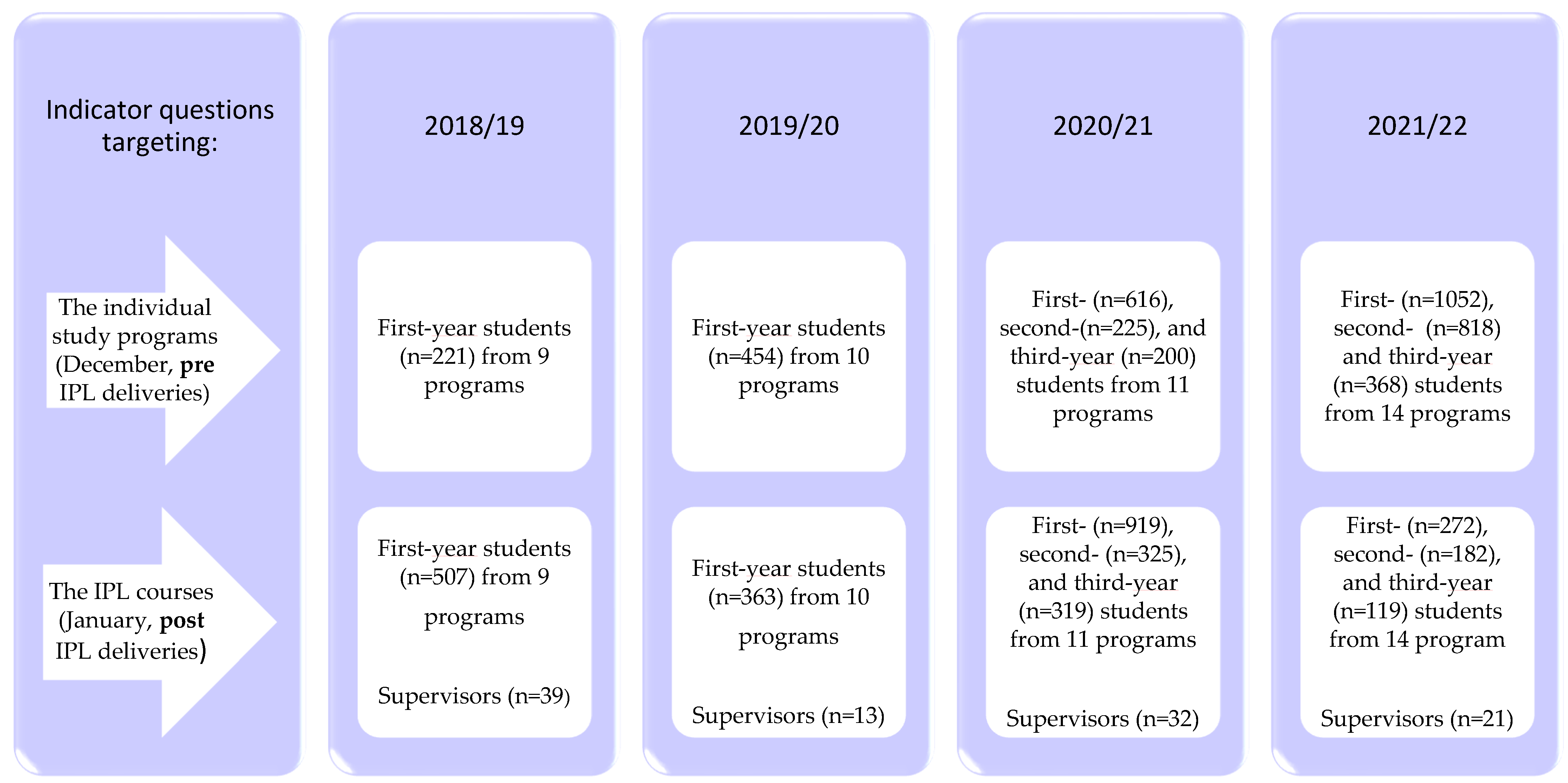
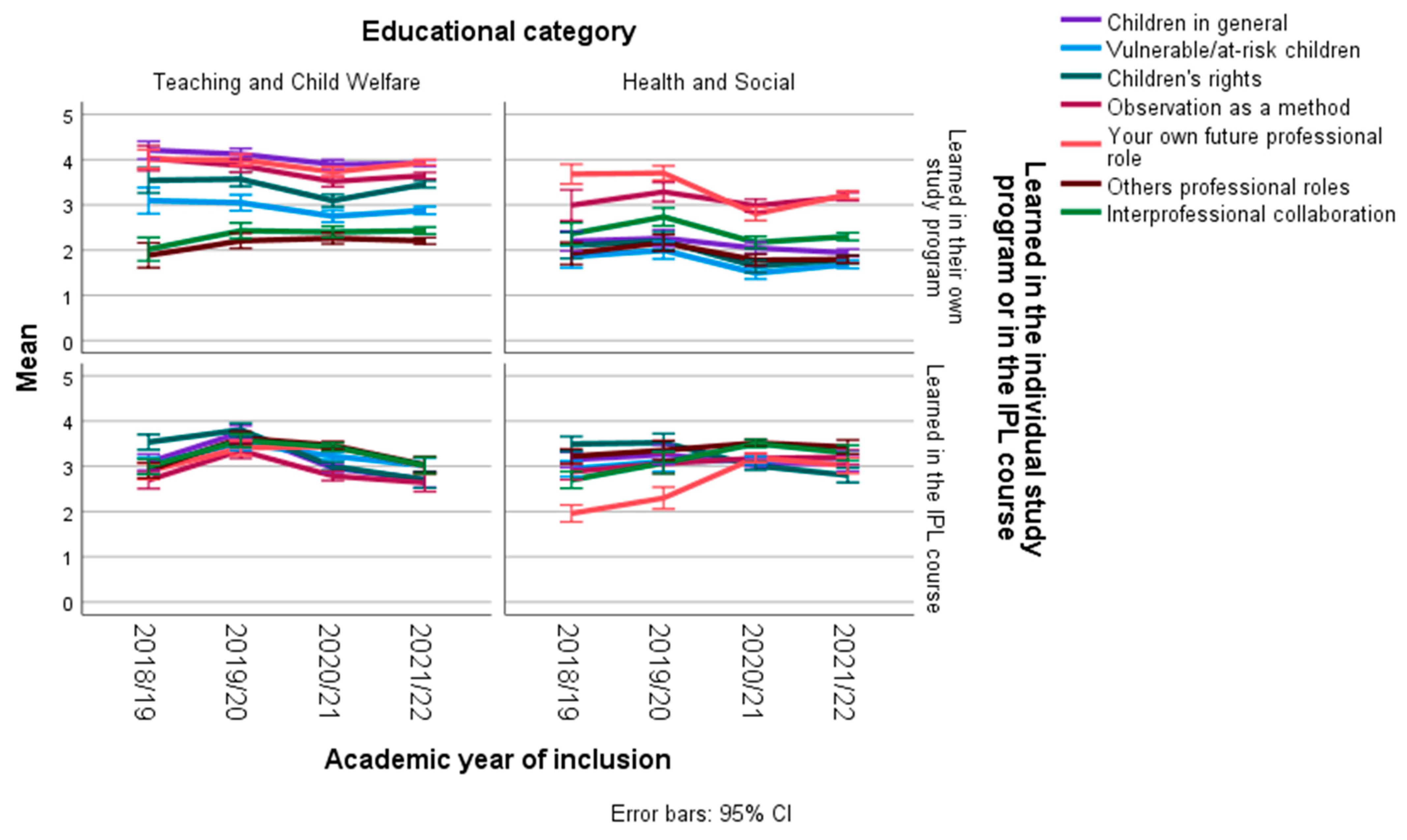
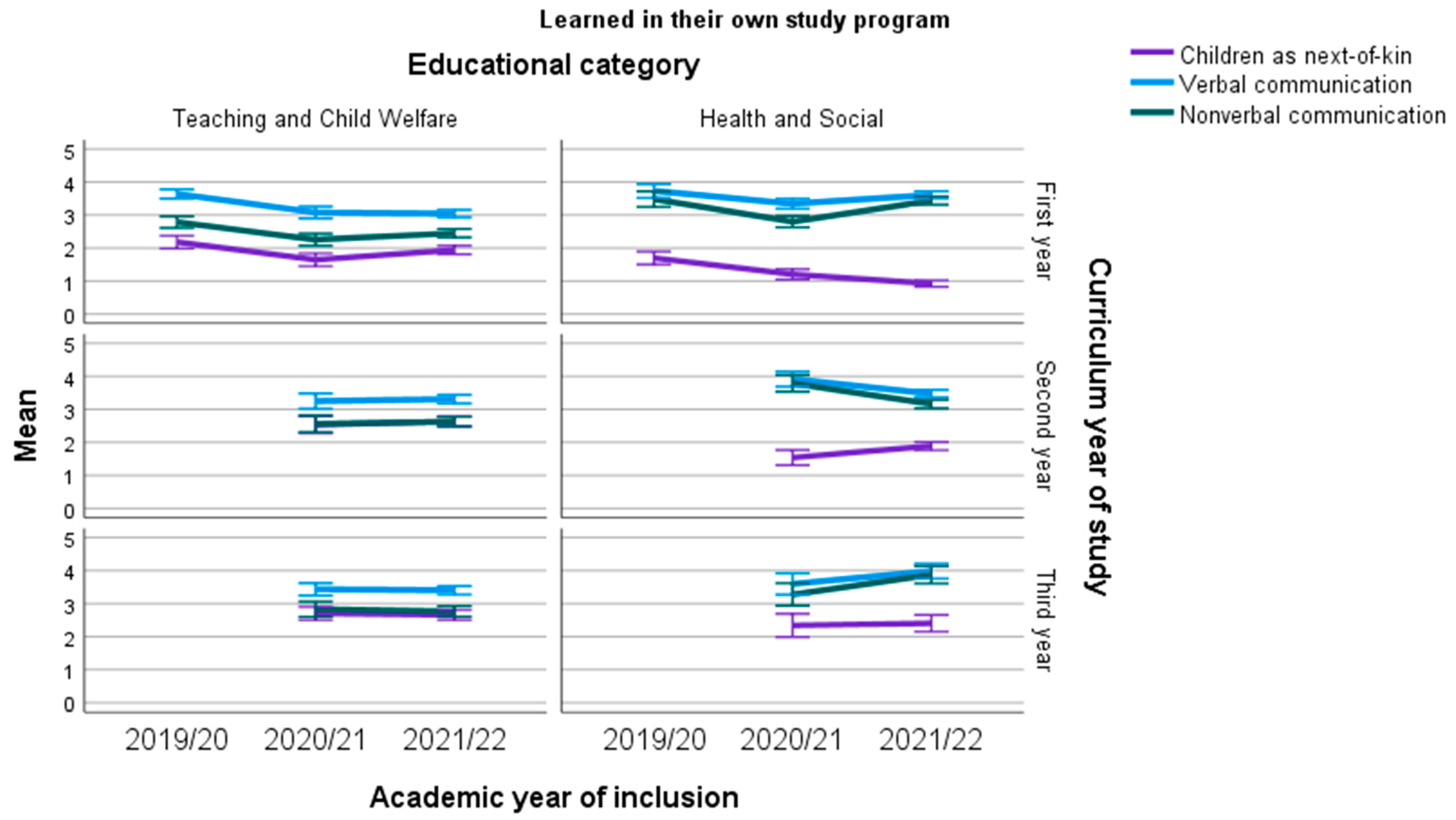
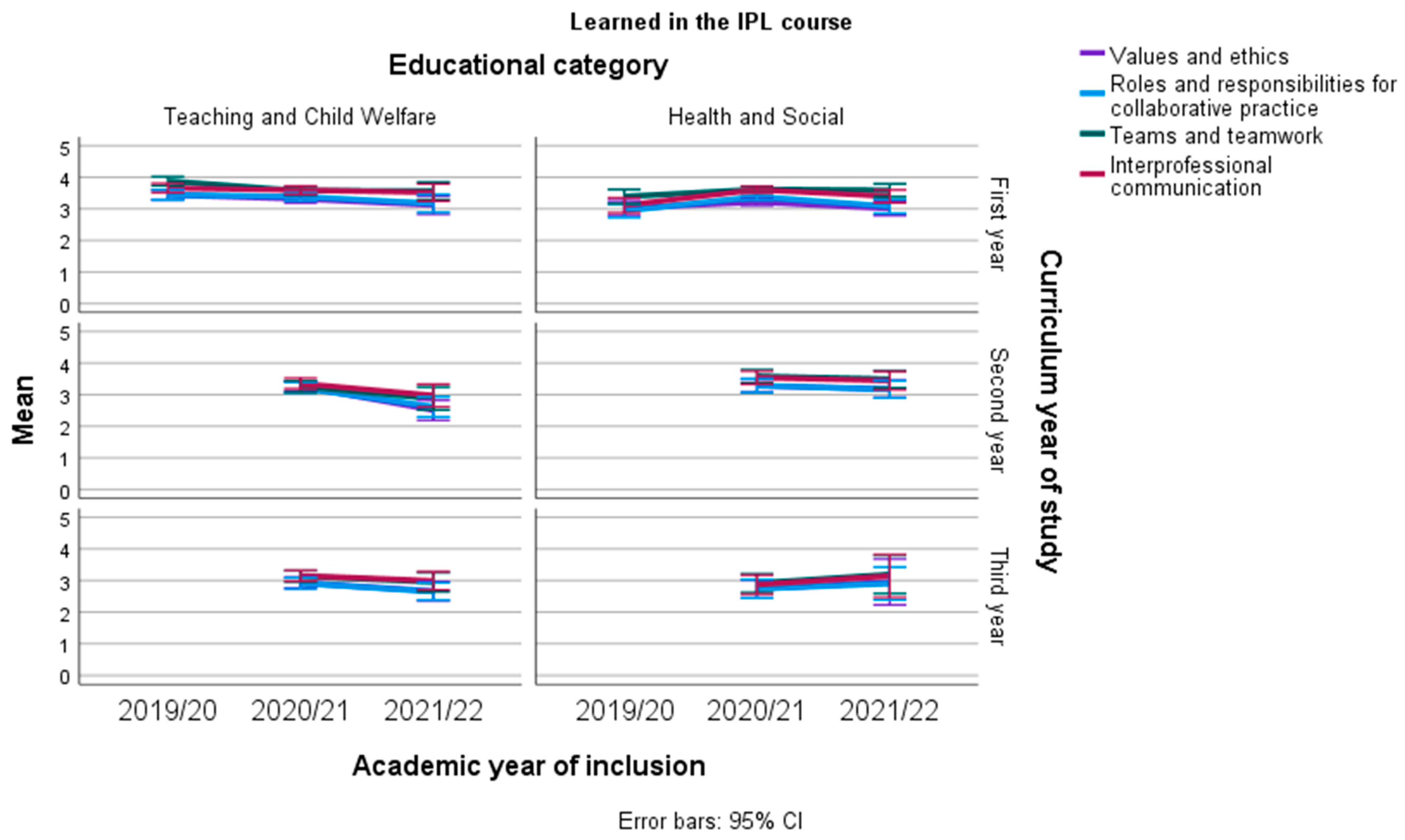
Professional students need to train in online interprofessional collaboration (IPC). During a longitudinal evaluation for 2018–2022 of an interprofessional learning (IPL) curriculum, nearly 7000 students from health, social care, and teacher education programs completed indicator questions concerning learning about child-related topics and skills required for IPC during their first, second, and third curriculum years of study. The students worked in student-led IPL groups according to a case-based learning approach. Online IPL yielded lower mean scores than in-person IPL. The decreased learning outcomes from year 2 to year 3 for the IPL initiative are not due to the online delivery mode. The lack of reported progress in the IPL courses is more likely due to students not experiencing a gain in IPL learning outcomes. Significant differences were found between teacher education and child welfare students and health and social care students, reflecting IPC challenges in working life. We conclude that online IPL is forward-looking because candidates must be prepared for online IPC and for helping users, such as children, online. Although our data support that IPL is complex, the learning experience has tremendous transfer value to welfare services because we assume that the same issues will appear in IPC.
Keywords: online learning; children; interprofessional collaboration; interprofessional learning; spiral curriculum; teacher; nurse; social work; competency-based education; pre-service learning online learning; children; interprofessional collaboration; interprofessional learning; spiral curriculum; teacher; nurse; social work; competency-based education; pre-service learning