Article

Integrating IoT Technologies into the CS Curriculum at PVAMU: A Case Study

1
Department of Computer Science, Prairie View A&M University, Prairie View, TX 77446, USA
2
Exquiri Consulting LLC, Amarillo, TX 77446, USA
*
Author to whom correspondence should be addressed.
Educ. Sci. 2022, 12(11), 840; https://doi.org/10.3390/educsci12110840

Submission received: 16 September 2022 / Revised: 13 November 2022 / Accepted: 14 November 2022 / Published: 21 November 2022
(This article belongs to the Section Curriculum and Instruction)

Abstract

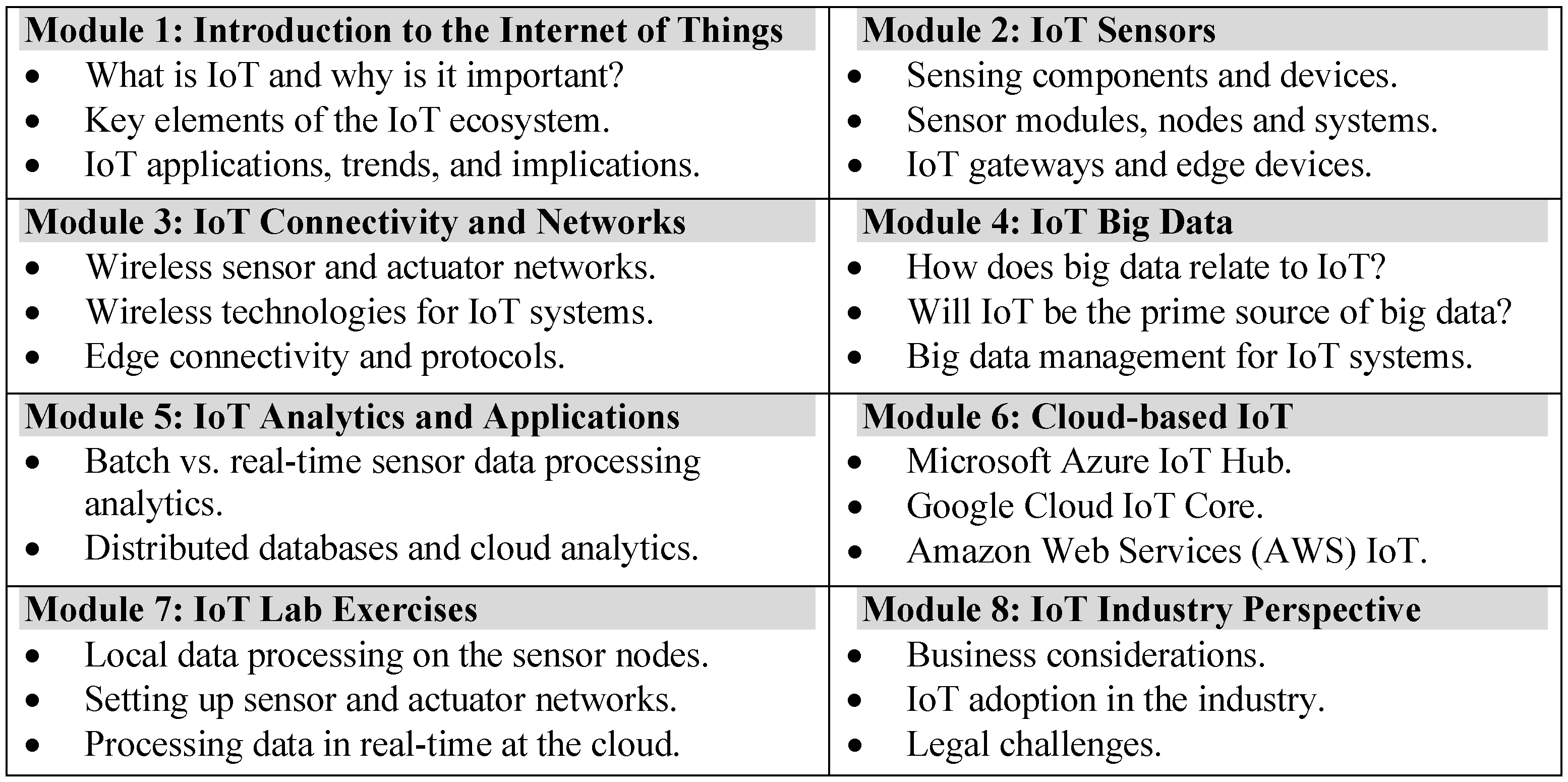
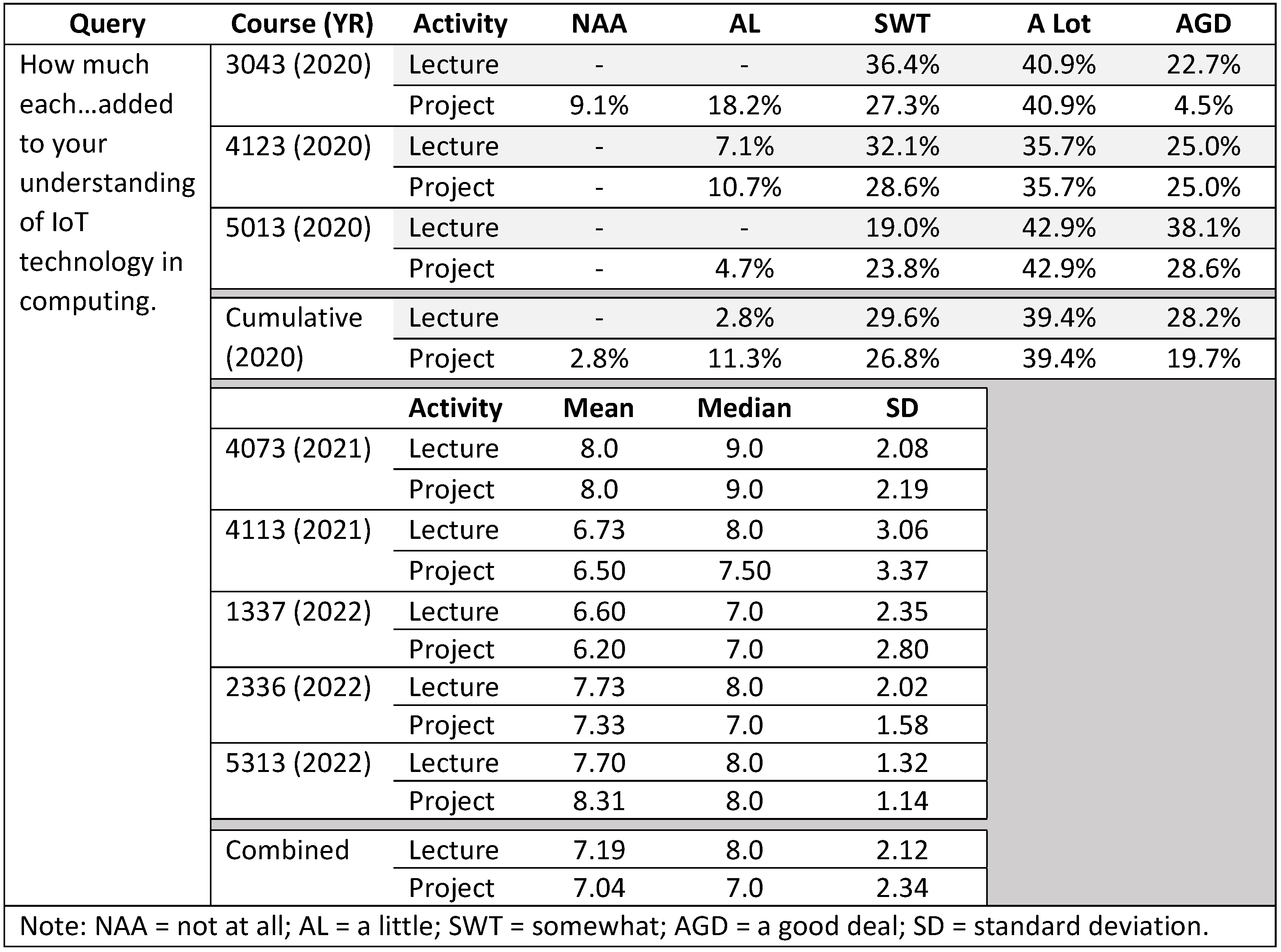
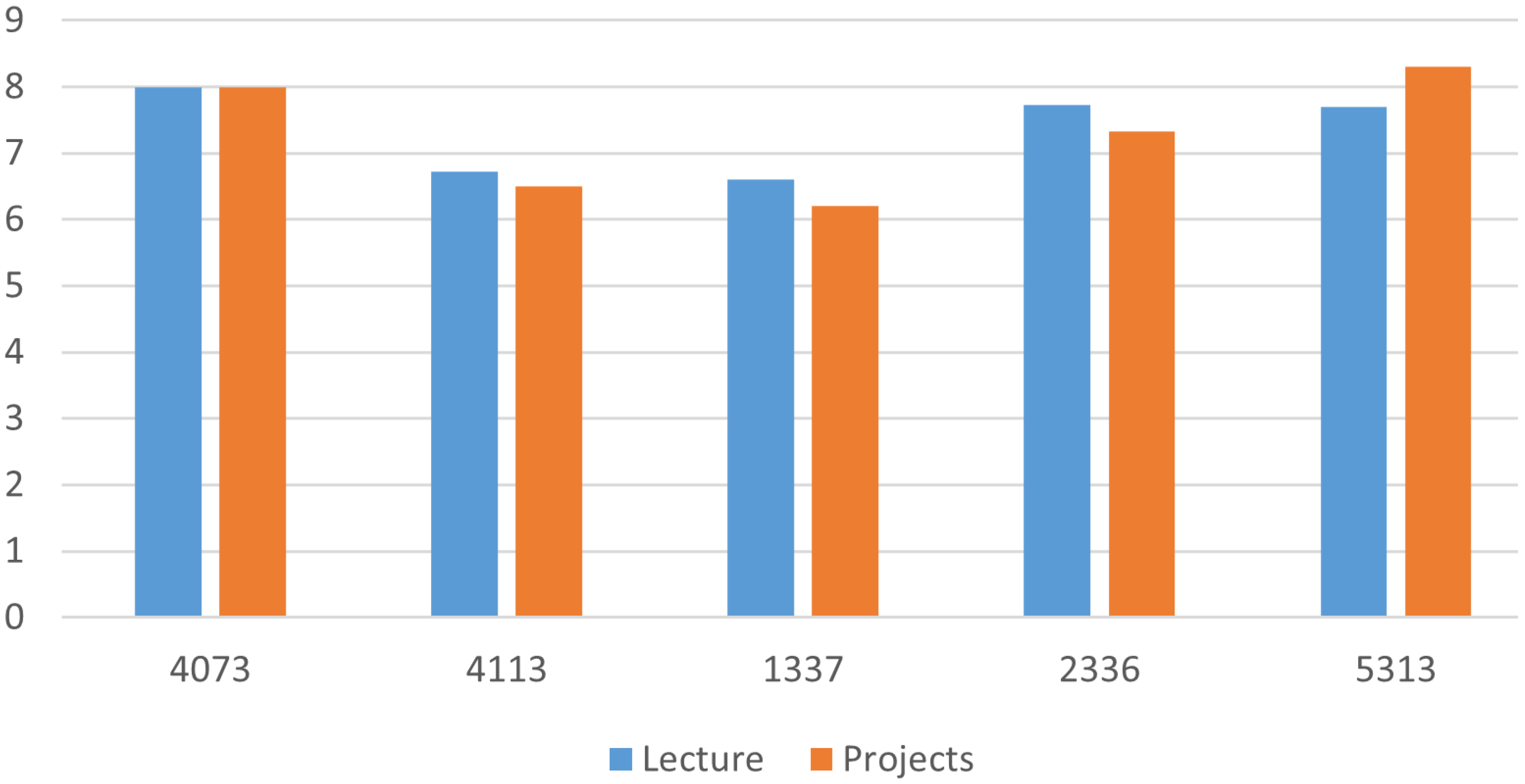
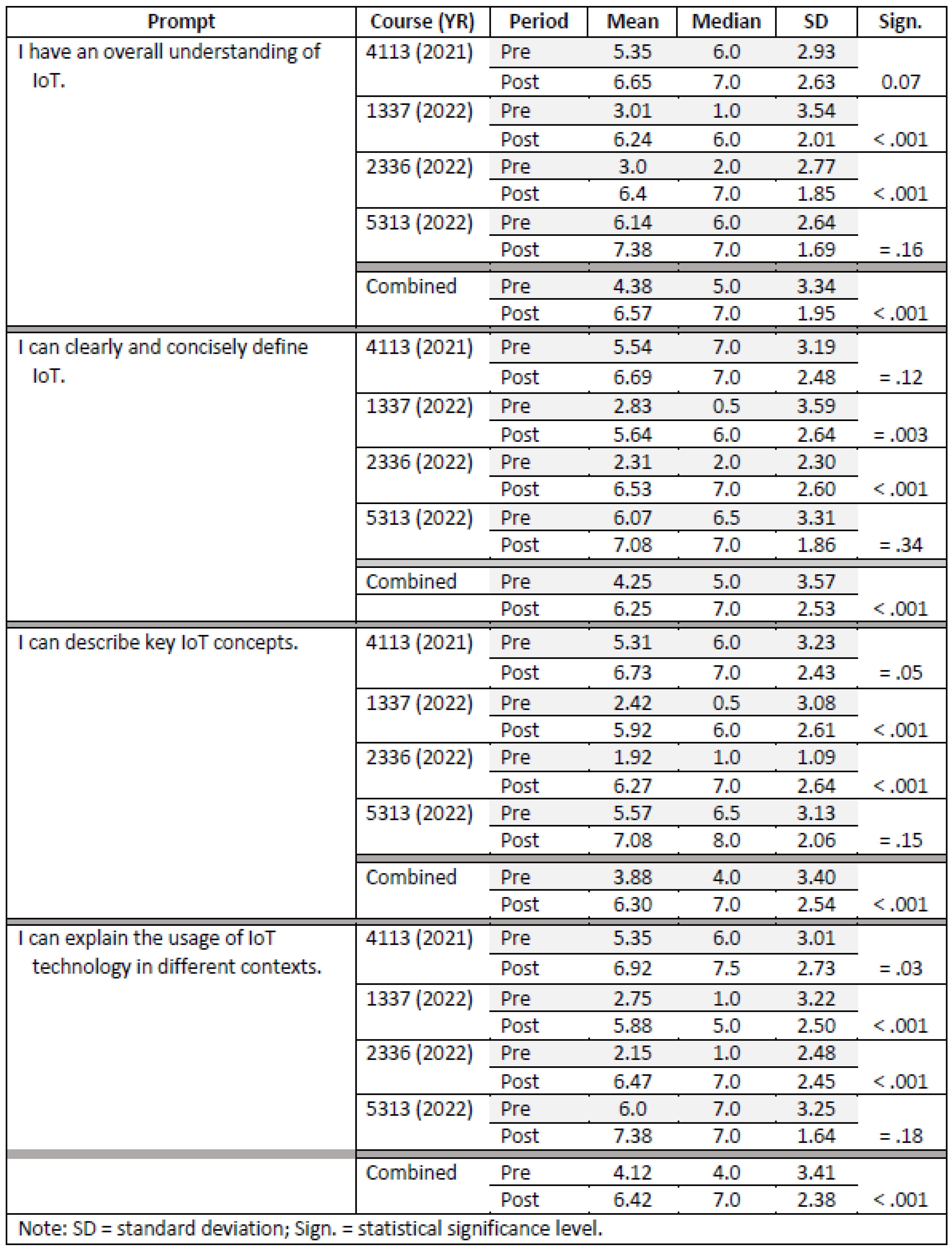
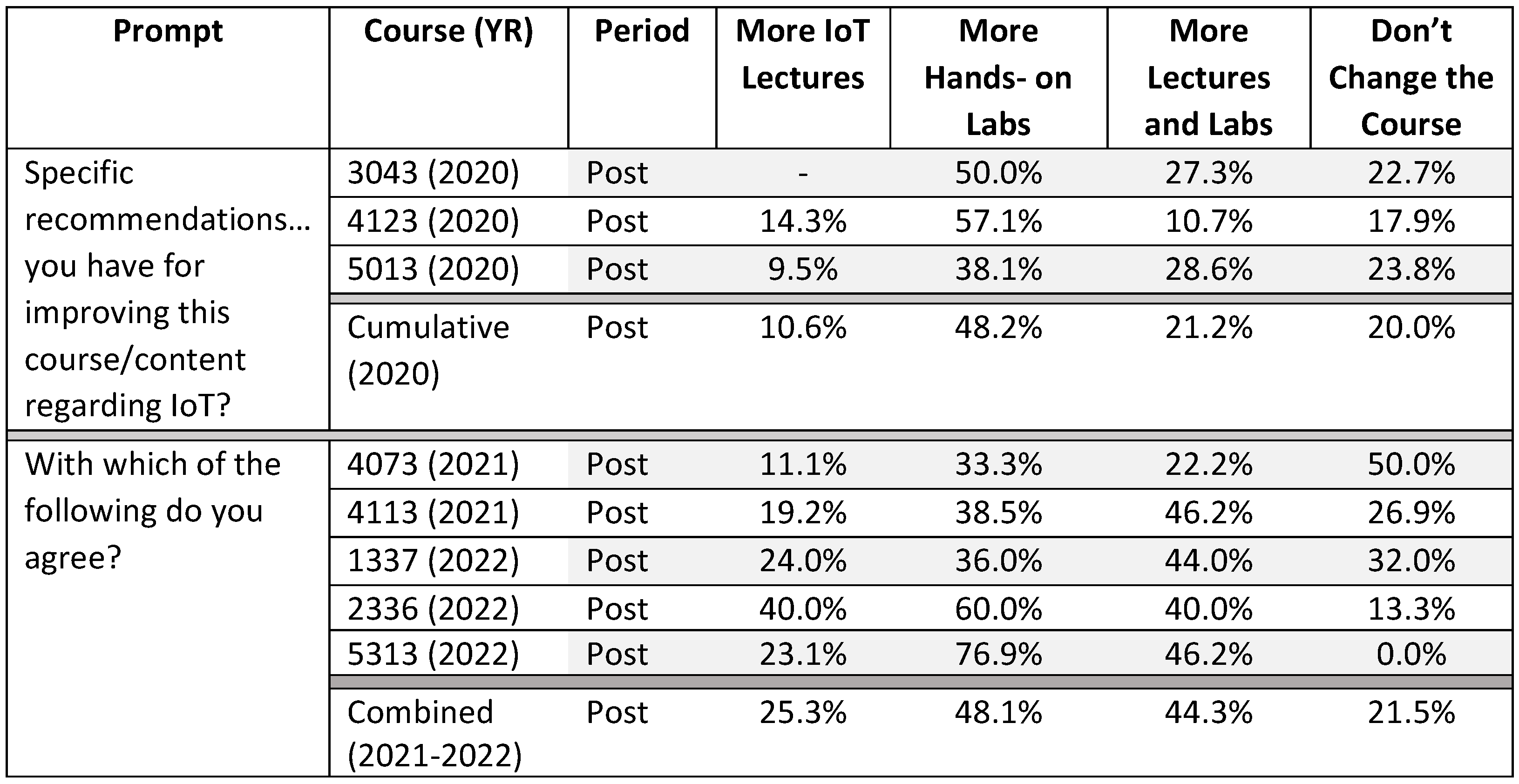
With sensors becoming increasingly ubiquitous, there is tremendous potential for innovative Internet of Things (IoT) applications across a wide variety of domains, including healthcare, agriculture, entertainment, environmental monitoring, and transportation. The rapid growth of IoT applications has increased the demand for experienced professionals with strong IoT hands-on skills. However, undergraduate students in STEM education still lack experience in how to use IoT technologies to develop such innovative applications. This is in part because the current computing curricula do not adequately cover the fundamental concepts of IoT. This paper presents a case study from integrating innovative IoT technologies into the Computer Science (CS) curriculum at Prairie View A&M University (PVAMU). This paper presents a set of IoT learning modules that can be easily integrated into existing courses of CS curriculum to engage students in smart-IoT. The modules developed have been used to introduce a new project-based course in the CS department at PVAMU that focuses on intelligent IoT technologies. Findings from external evaluation of the curricular change are also presented. These note positive impacts on student interest in and learning about IoT across multiple courses and semesters.
Keywords: IoT; curriculum; learning modules; sensors; computer science IoT; curriculum; learning modules; sensors; computer science