Article

Localization Meets Uncertainty: Uncertainty-Aware Multi-Modal Localization

by
Hye-Min Won
1,†,
Jieun Lee
2,† and
Jiyong Oh
1,*
1
Daegu-Gyeongbuk Research Division, Electronics and Telecommunications Research Institute, Daegu 42994, Republic of Korea
2
Polaris3D, Pohang 37684, Republic of Korea
*
Author to whom correspondence should be addressed.
These authors contributed equally to this work.
Technologies 2025, 13(9), 386; https://doi.org/10.3390/technologies13090386

Submission received: 25 June 2025 / Revised: 31 July 2025 / Accepted: 13 August 2025 / Published: 1 September 2025
(This article belongs to the Special Issue AI Robotics Technologies and Their Applications)

Abstract

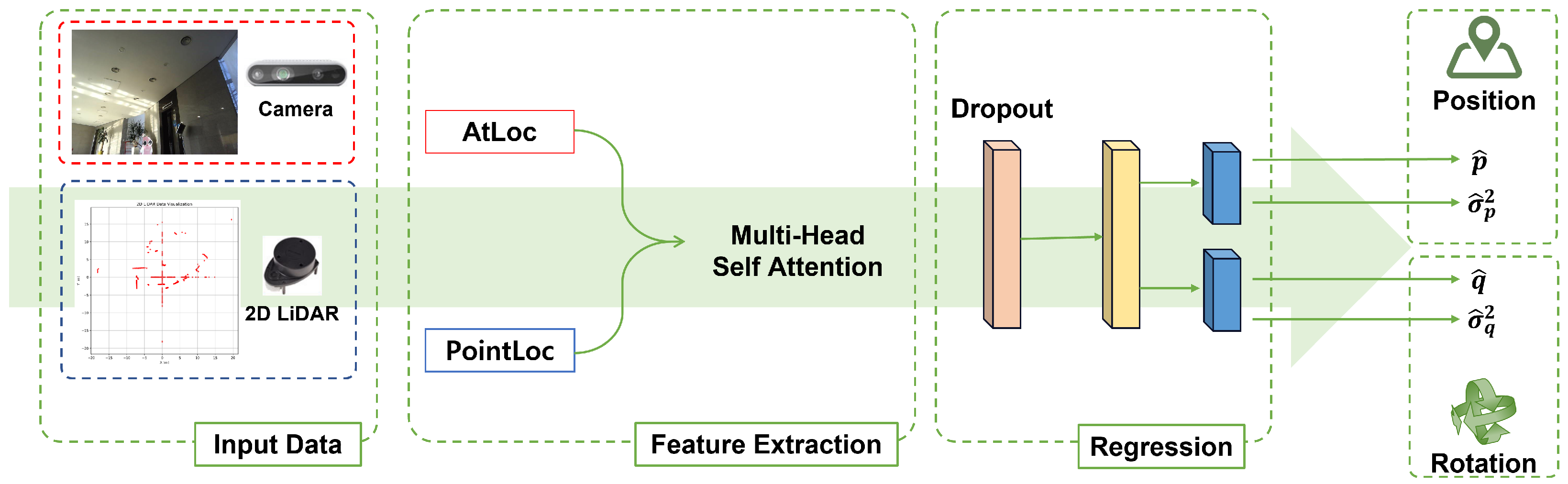
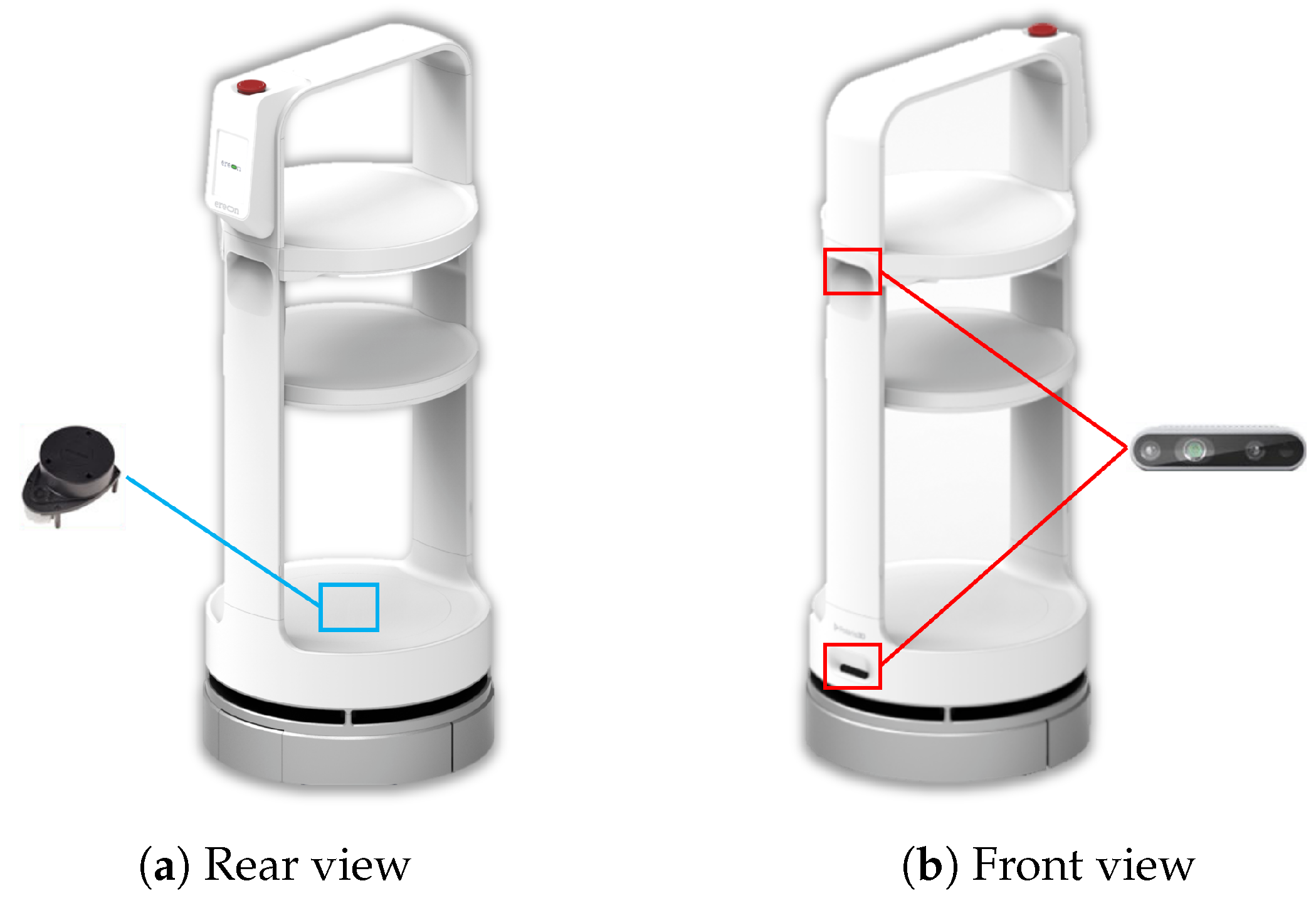
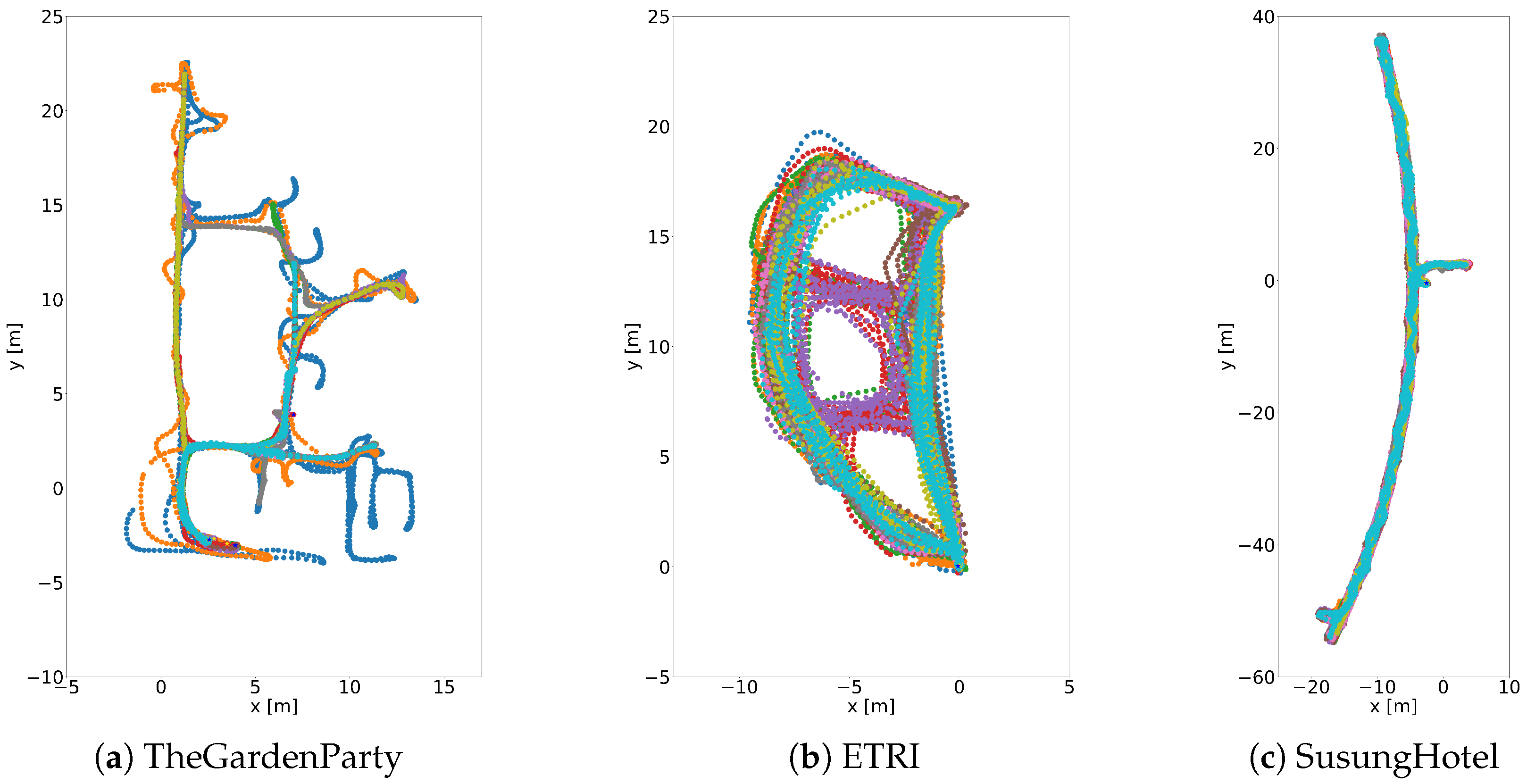
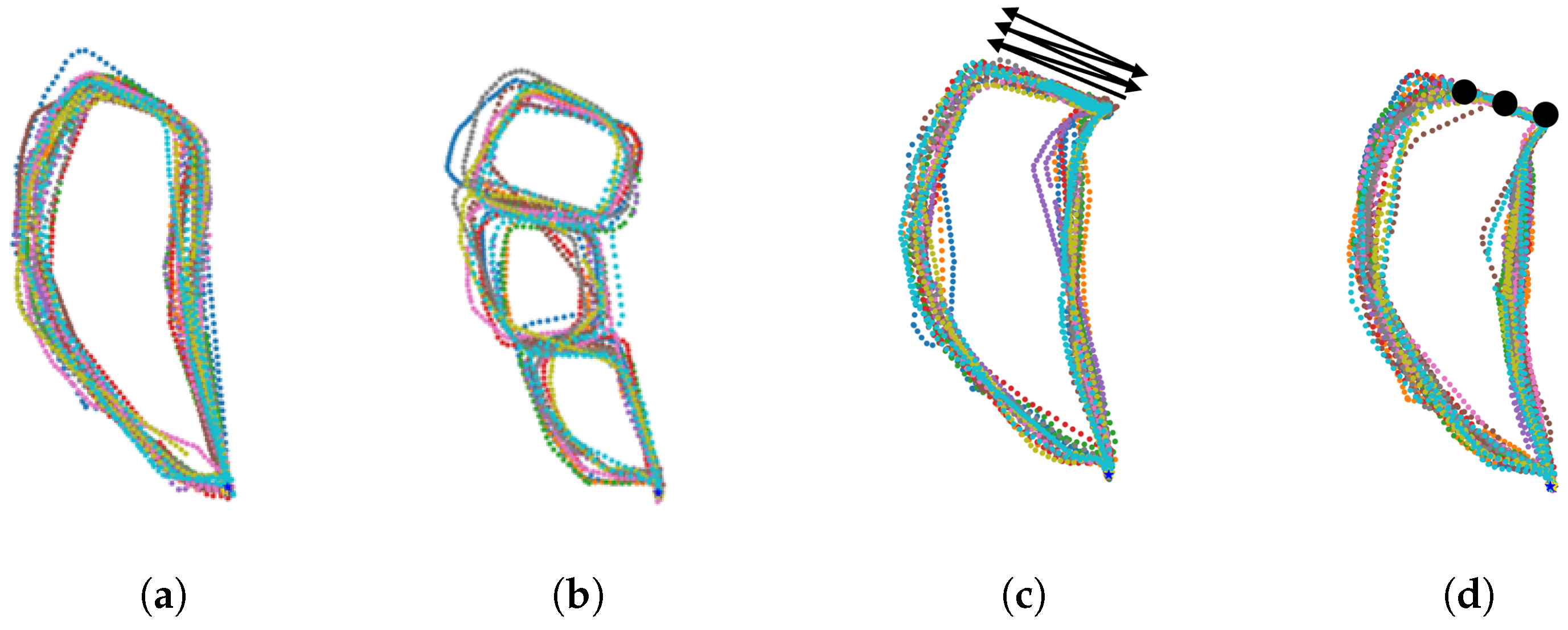
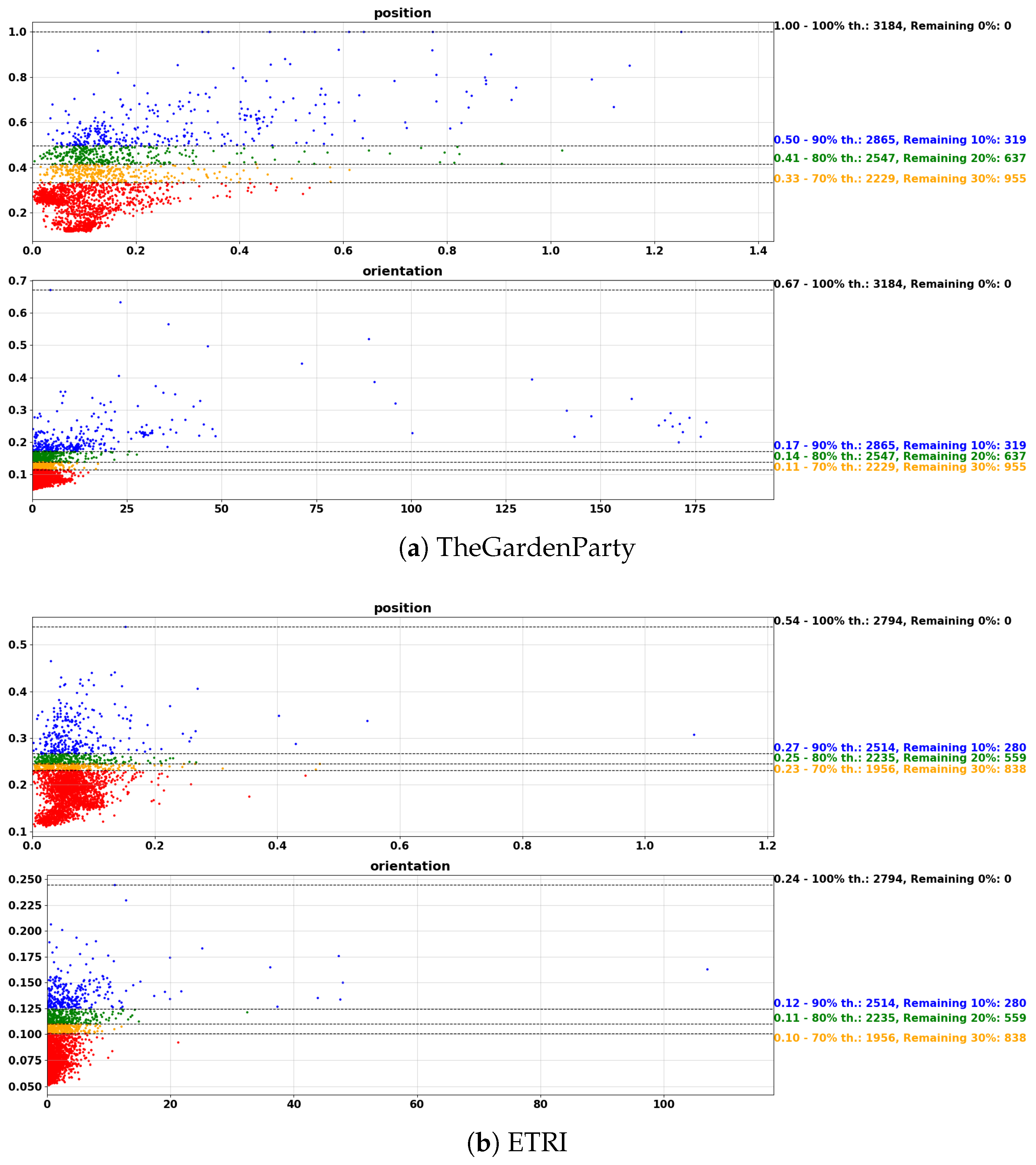
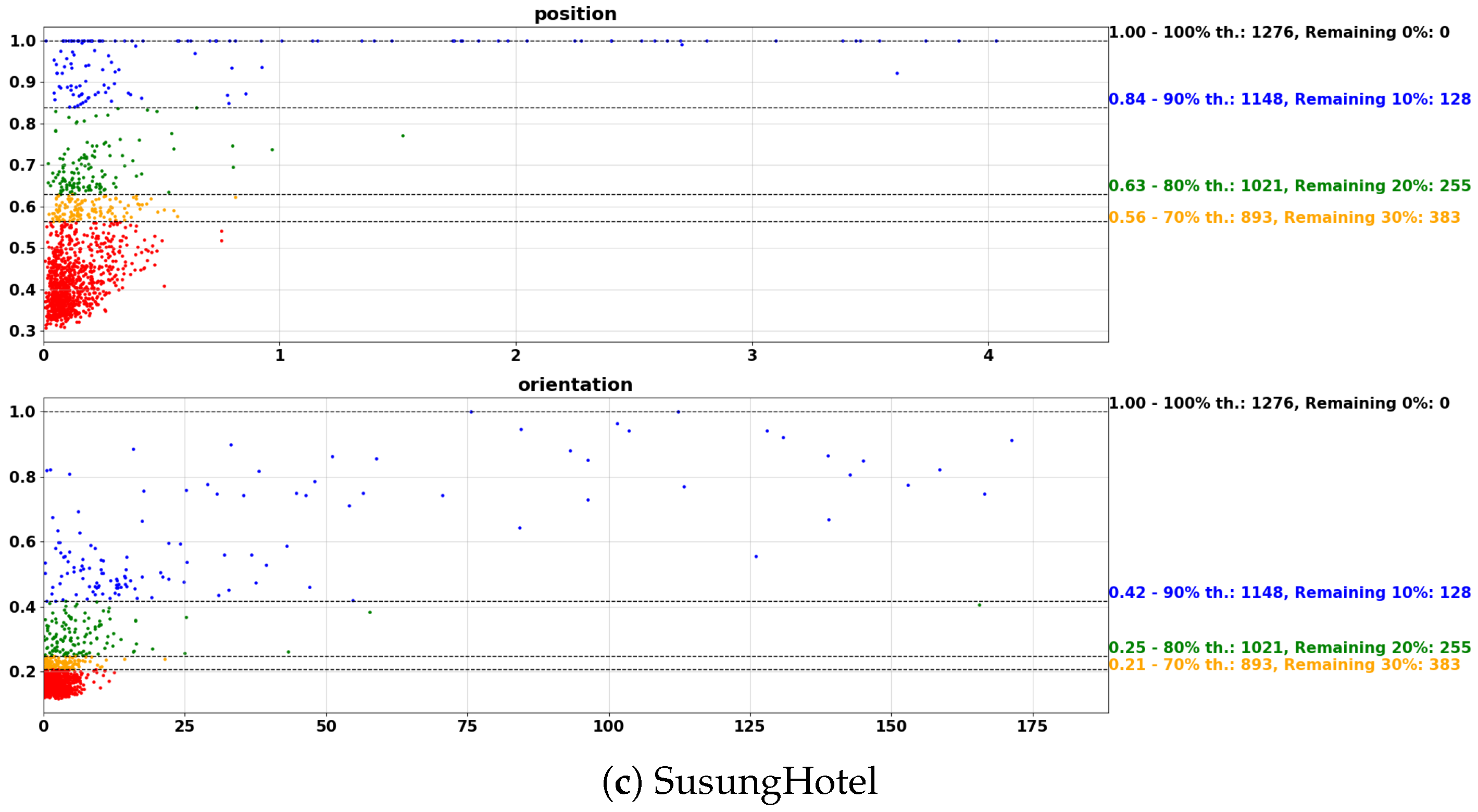
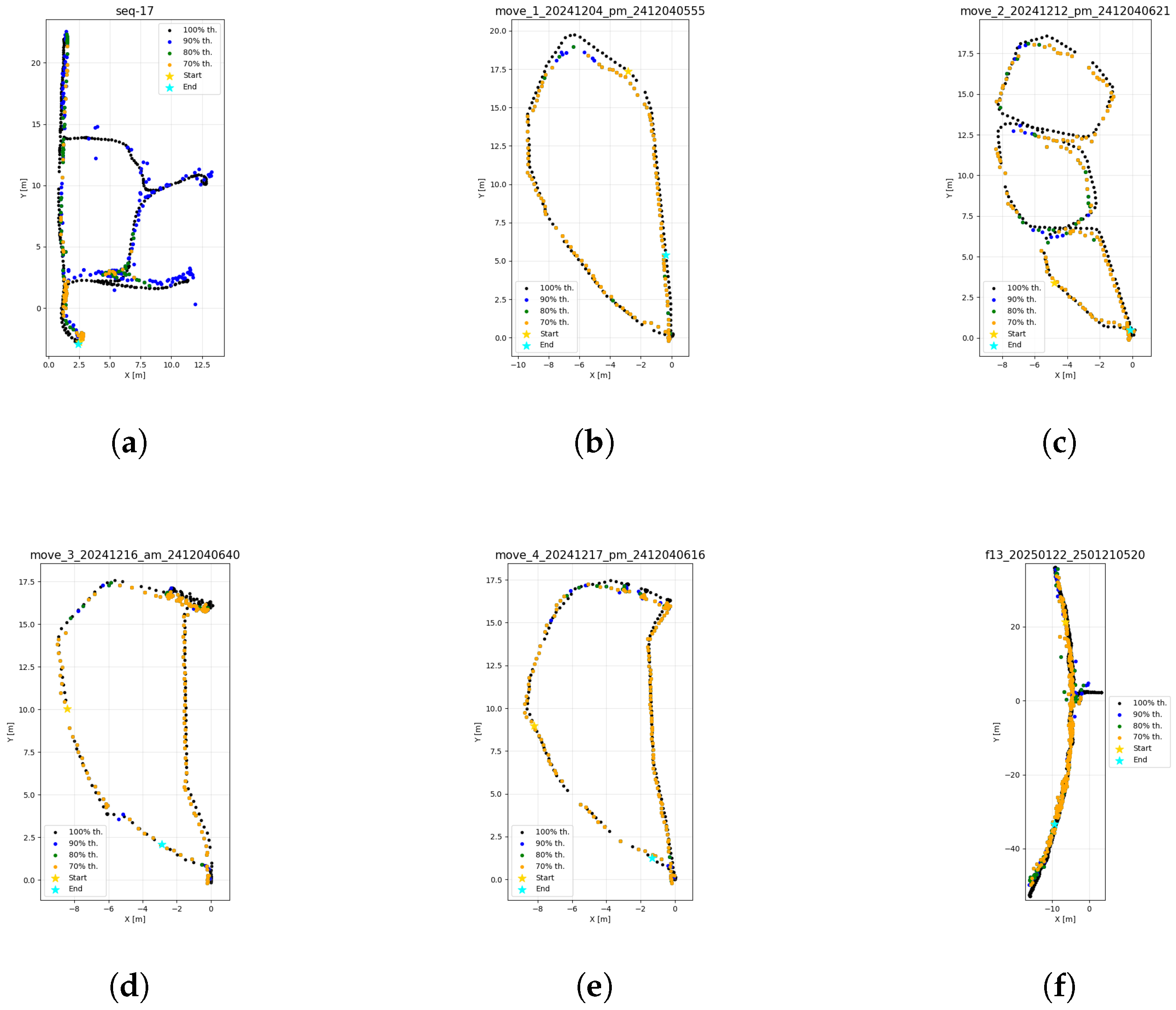
Reliable localization is critical for robot navigation in complex indoor environments. In this paper, we propose an uncertainty-aware localization method that enhances the reliability of localization outputs without modifying the prediction model itself. This study introduces a percentile-based rejection strategy that filters out unreliable 3-degree-of-freedom pose predictions based on aleatoric and epistemic uncertainties the network estimates. We apply this approach to a multi-modal end-to-end localization that fuses RGB images and 2D LiDAR data, and we evaluate it across three real-world datasets collected using a commercialized serving robot. Experimental results show that applying stricter uncertainty thresholds consistently improves pose accuracy. Specifically, the mean position error, calculated as the average Euclidean distance between the predicted and ground-truth (x, y) coordinates, is reduced by 41.0%, 56.7%, and 69.4%, and the mean orientation error, representing the average angular deviation between the predicted and ground-truth yaw angles, is reduced by 55.6%, 65.7%, and 73.3%, when percentile thresholds of 90%, 80%, and 70% are applied, respectively. Furthermore, the rejection strategy effectively removes extreme outliers, resulting in better alignment with ground truth trajectories. To the best of our knowledge, this is the first study to quantitatively demonstrate the benefits of percentile-based uncertainty rejection in multi-modal and end-to-end localization tasks. Our approach provides a practical means to enhance the reliability and accuracy of localization systems in real-world deployments.
Keywords: end-to-end localization; uncertainty; Monte Carlo dropout; percentile rejection; sensor fusion end-to-end localization; uncertainty; Monte Carlo dropout; percentile rejection; sensor fusion