
Article

A Combined Mirror–EMG Robot-Assisted Therapy System for Lower Limb Rehabilitation

by
Florin Covaciu
1,
Bogdan Gherman
1,*,
Calin Vaida
1,
Adrian Pisla
1,
Paul Tucan
1,
Andrei Caprariu
1 and
Doina Pisla
1,2,*
1
Research Center for Industrial Robots Simulation and Testing—CESTER, Faculty of Industrial Engineering, Robotics and Production Management, Technical University of Cluj-Napoca, 400114 Cluj-Napoca, Romania
2
Technical Sciences Academy of Romania, B-dul Dacia, 26, 030167 Bucharest, Romania
*
Authors to whom correspondence should be addressed.
Technologies 2025, 13(6), 227; https://doi.org/10.3390/technologies13060227

Submission received: 21 February 2025 / Revised: 20 May 2025 / Accepted: 27 May 2025 / Published: 3 June 2025

Abstract

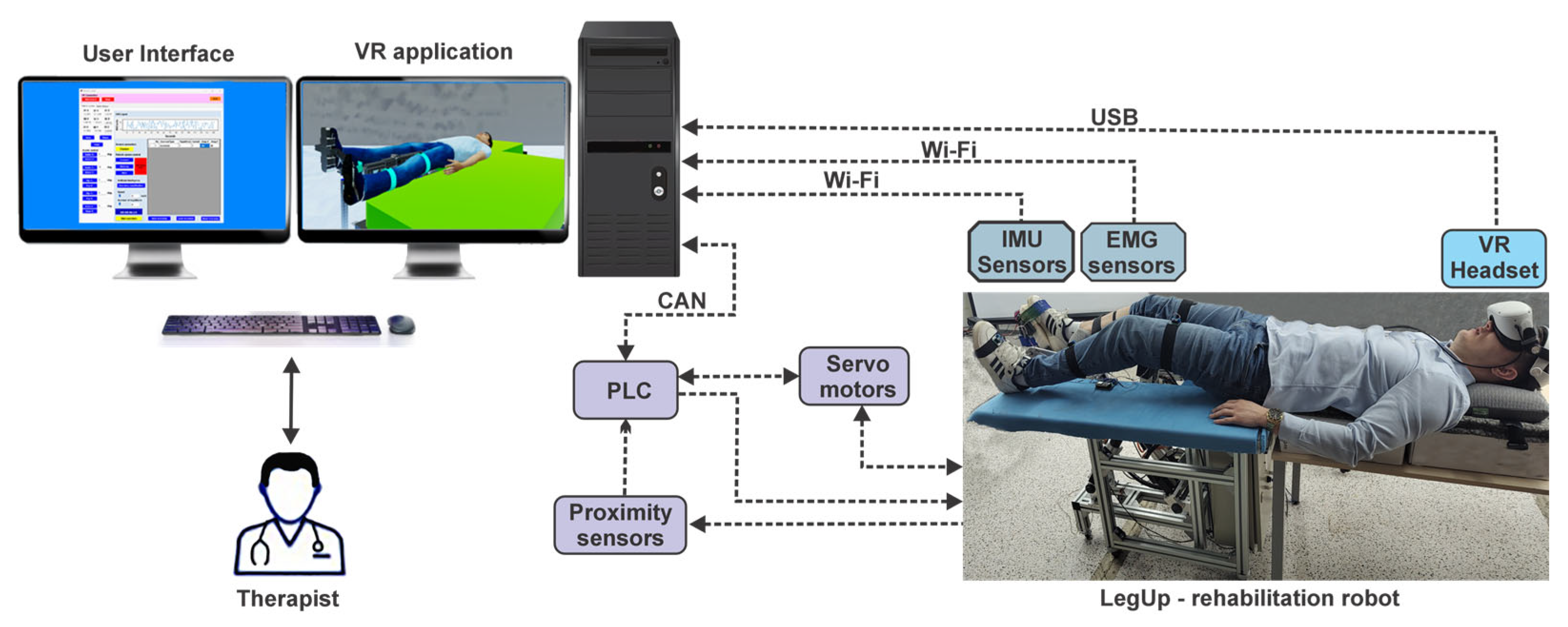
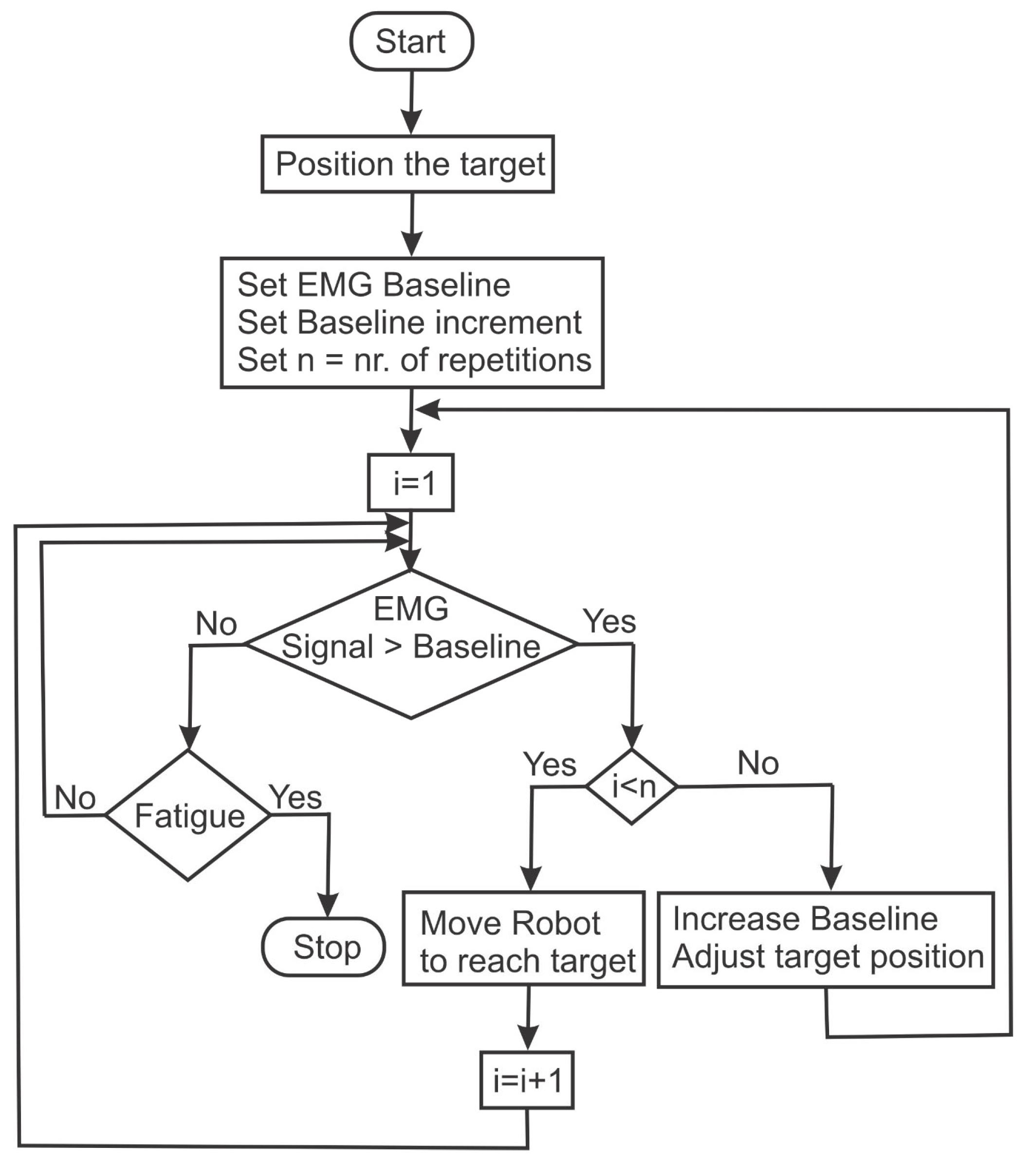
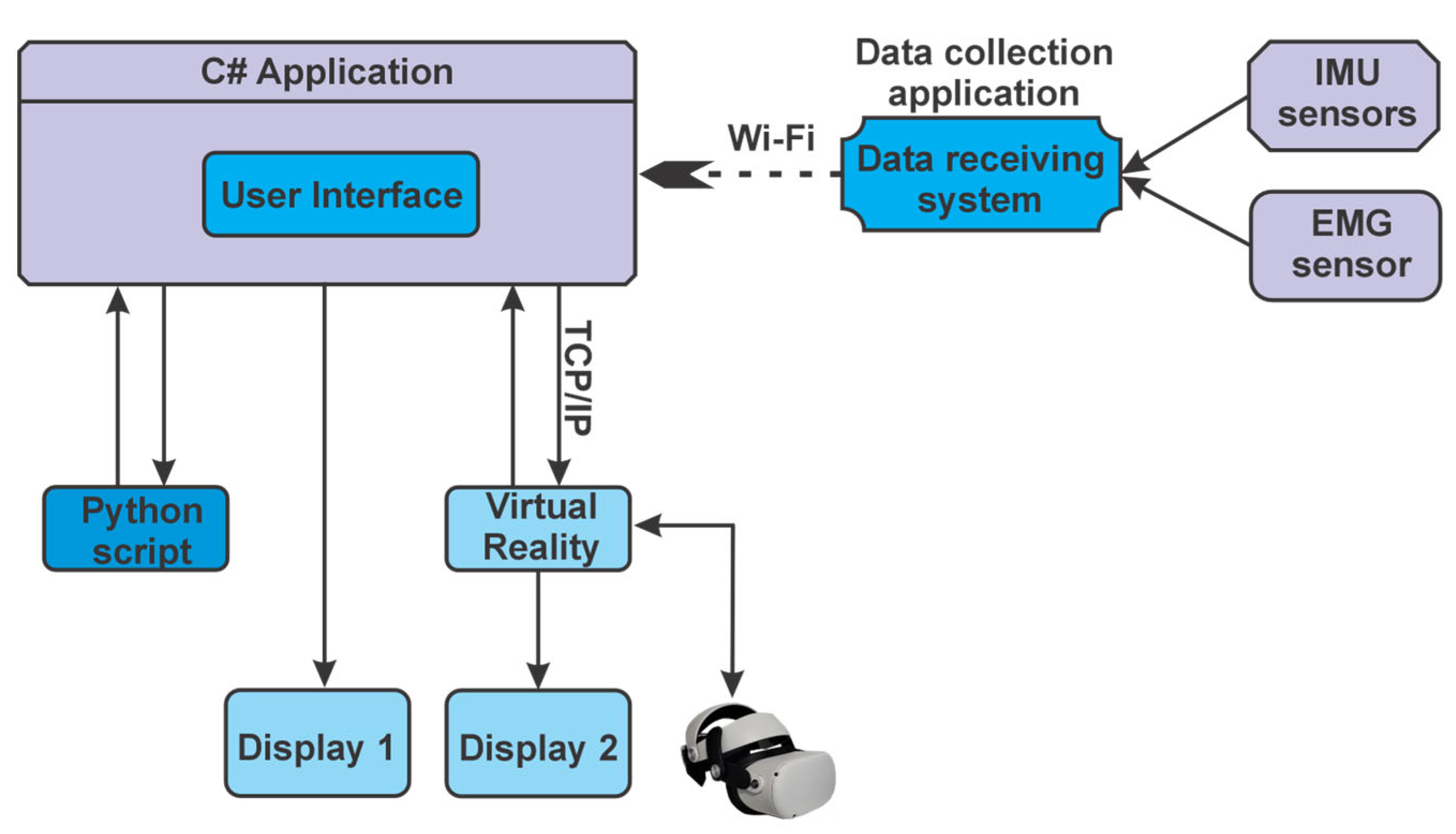
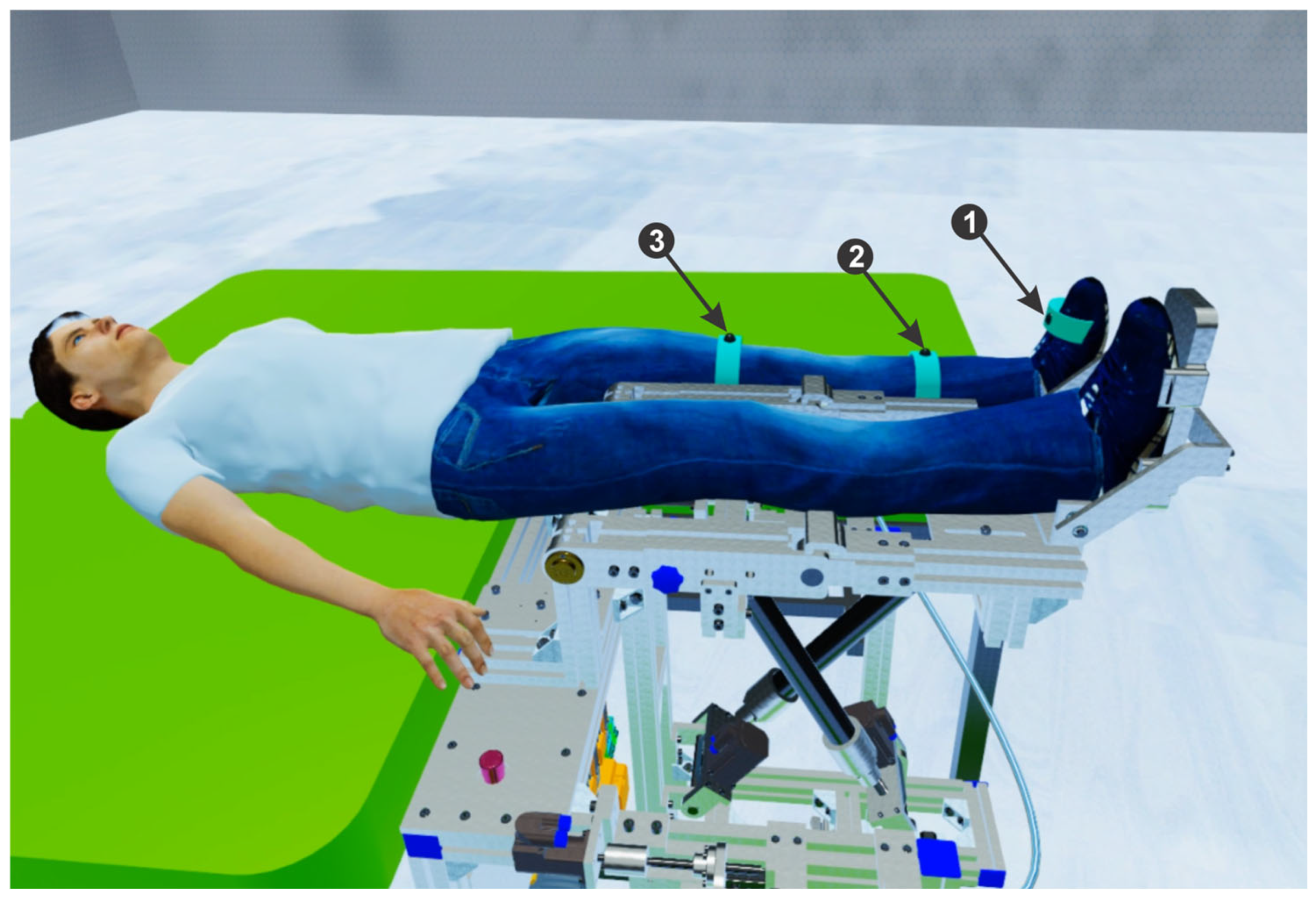
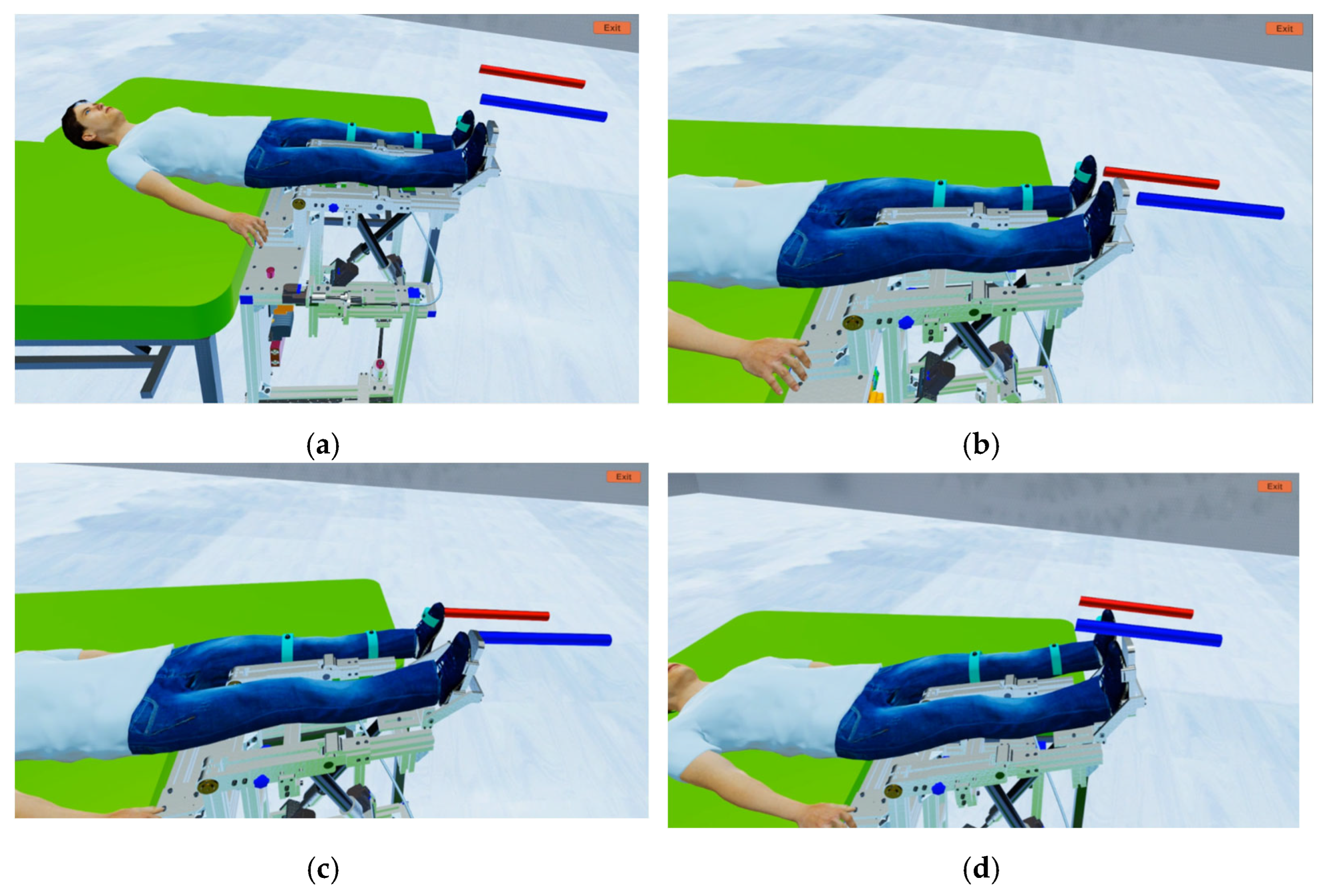
This paper presents the development and initial evaluation of a novel protocol for robot-assisted lower limb rehabilitation. It integrates dual-modal patient interaction, employing mirror therapy and an auto-adaptive EMG-driven control system, designed to enhance lower limb rehabilitation in patients with hemiparesis impairments. The system features a robotic platform specifically engineered for lower limb rehabilitation, which operates in conjunction with a virtual reality (VR) environment. This immersive environment comprises a digital twin of the robotic system alongside a human avatar representing the patient and a set of virtual targets to be reached by the patient. To implement mirror therapy, the proposed protocol utilizes a set of inertial sensors placed on the patient’s healthy limb to capture real-time motion data. The auto-adaptive protocol takes as input the EMG signals (if any) from sensors placed on the impaired limb and performs the required motions to reach the virtual targets in the VR application. By synchronizing the motions of the healthy limb with the digital twin in the VR space, the system aims to promote neuroplasticity, reduce pain perception, and encourage engagement in rehabilitation exercises. Initial laboratory trials demonstrate promising outcomes in terms of improved motor function and subject motivation. This research not only underscores the efficacy of integrating robotics and virtual reality in rehabilitation but also opens avenues for advanced personalized therapies in clinical settings. Future work will investigate the efficiency of the proposed solution using patients, thus demonstrating clinical usability, and explore the potential integration of additional feedback mechanisms to further enhance the therapeutic efficacy of the system.
Keywords: parallel robot; virtual reality; mirror therapy; artificial intelligence; user interface; sensors; microcontroller; rehabilitation exercises; VR headset parallel robot; virtual reality; mirror therapy; artificial intelligence; user interface; sensors; microcontroller; rehabilitation exercises; VR headset