Article

Correspondence of Consonant Clustering with Particular Vowels in German Dialects

Deutscher Sprachatlas, Philipps-Universität Marburg, 35037 Marburg, Germany
Languages 2024, 9(7), 255; https://doi.org/10.3390/languages9070255

Submission received: 8 March 2024 / Revised: 8 July 2024 / Accepted: 17 July 2024 / Published: 22 July 2024

Abstract

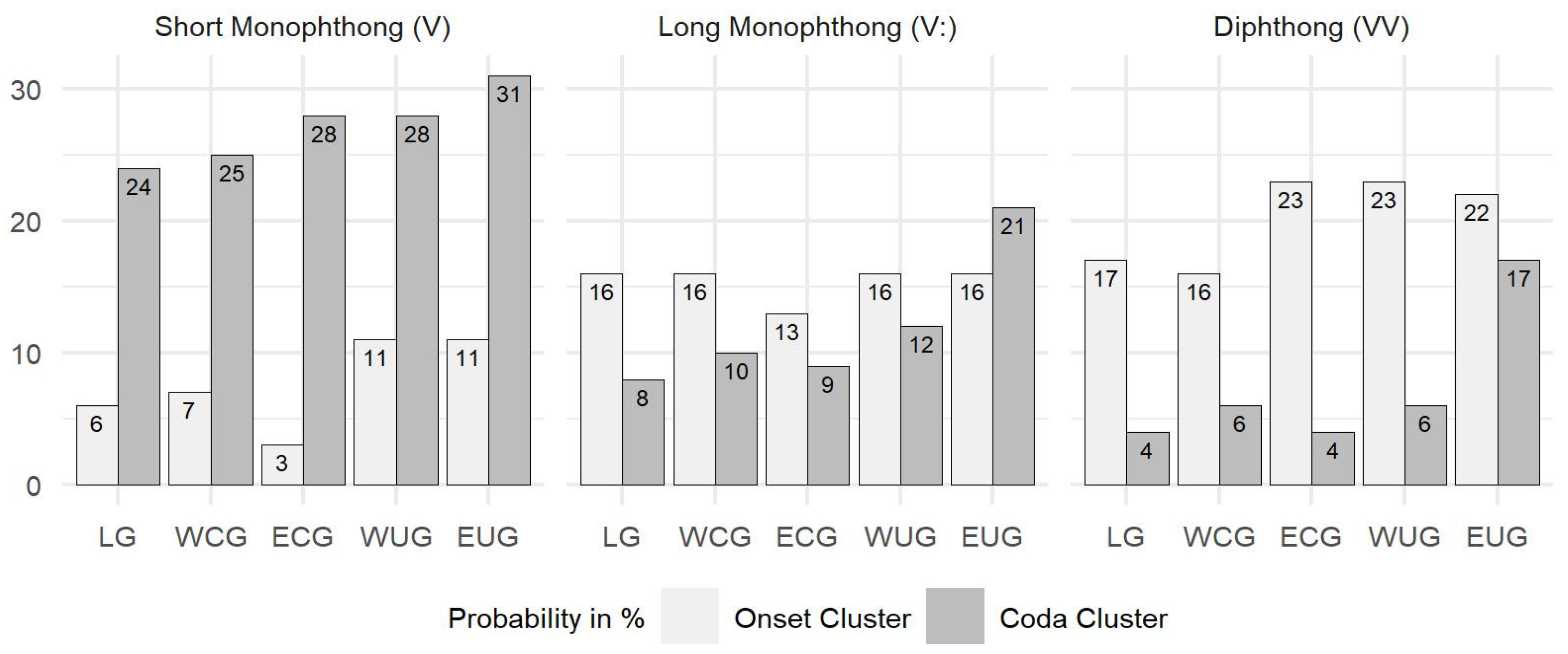
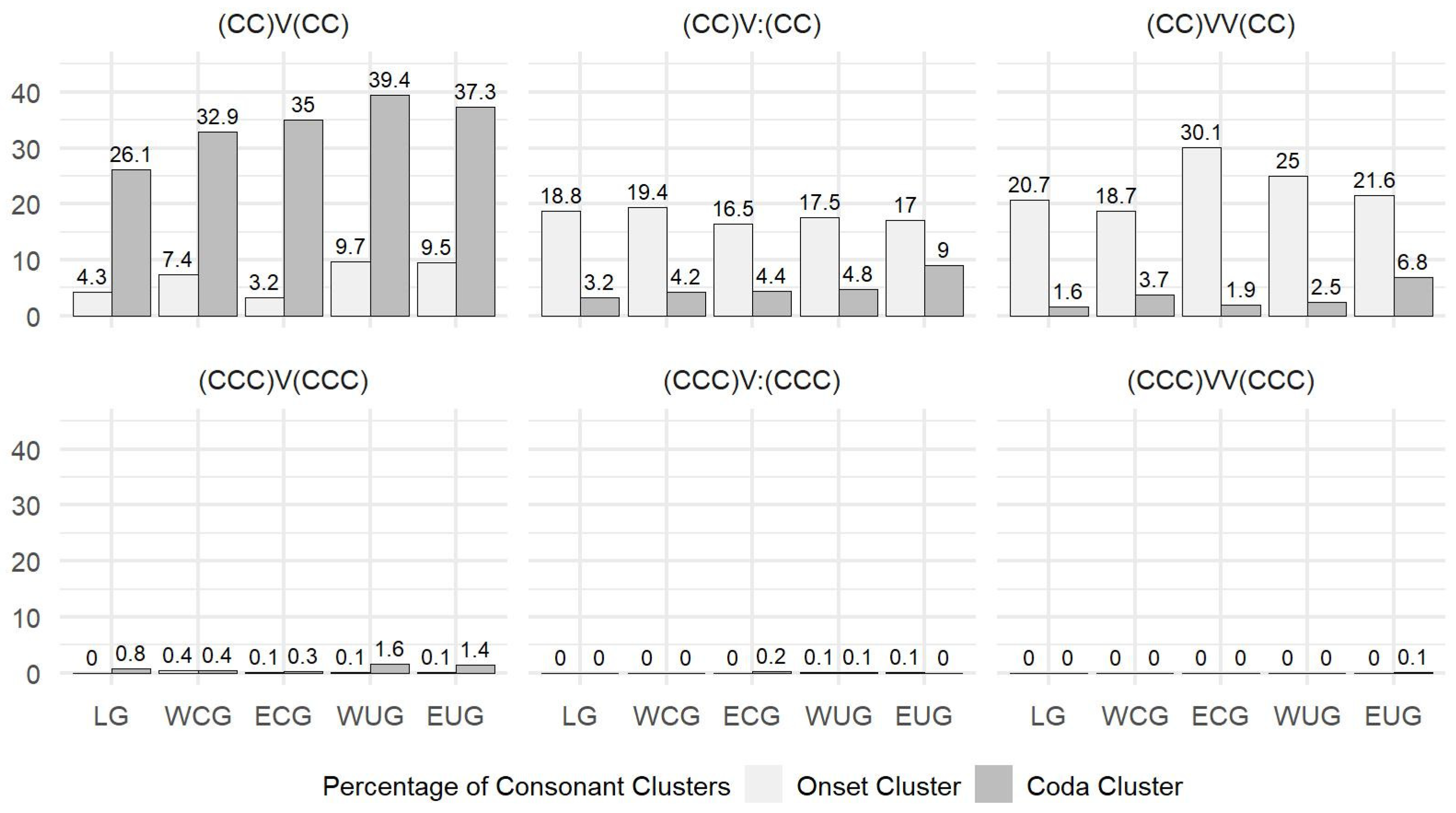
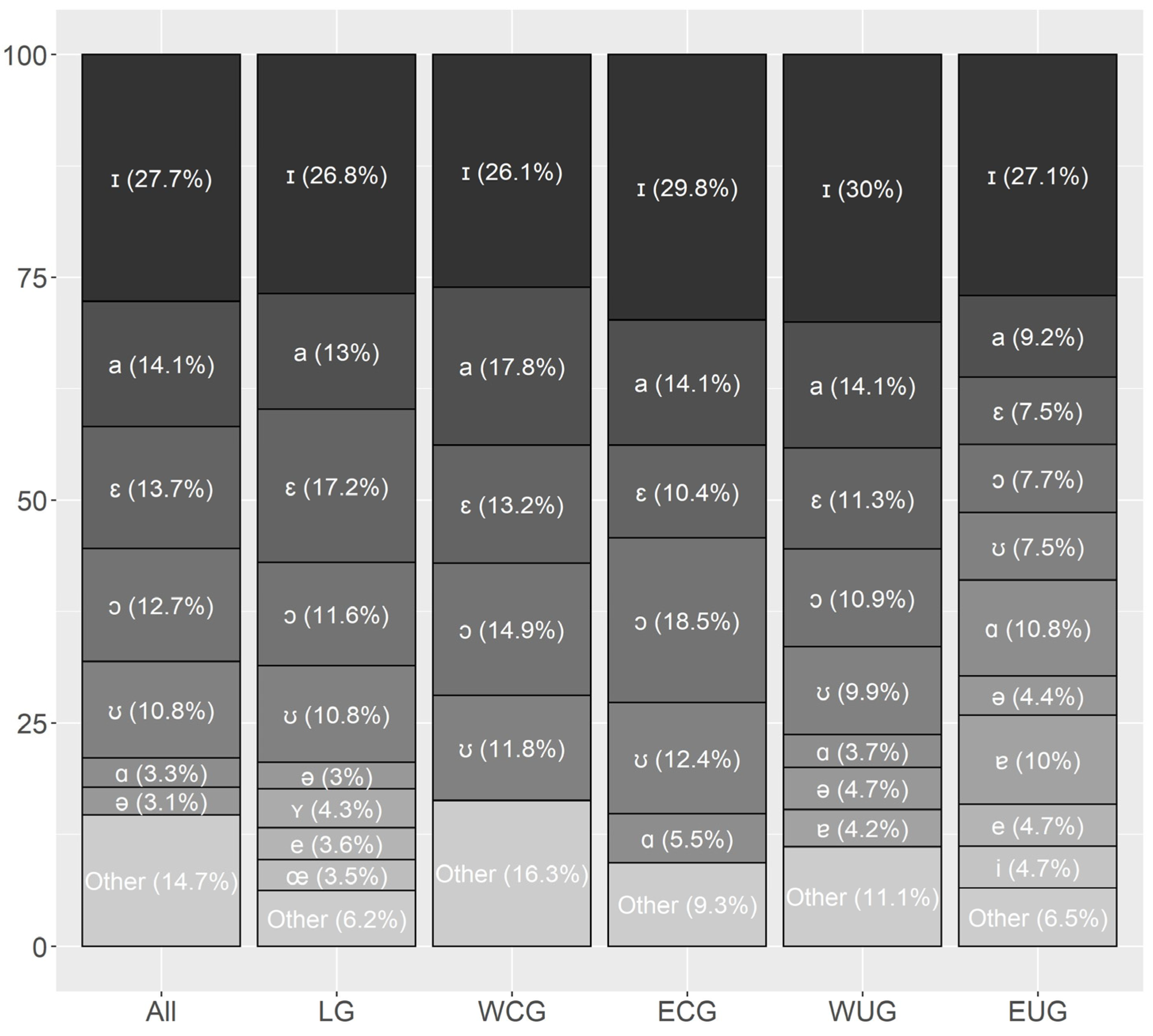
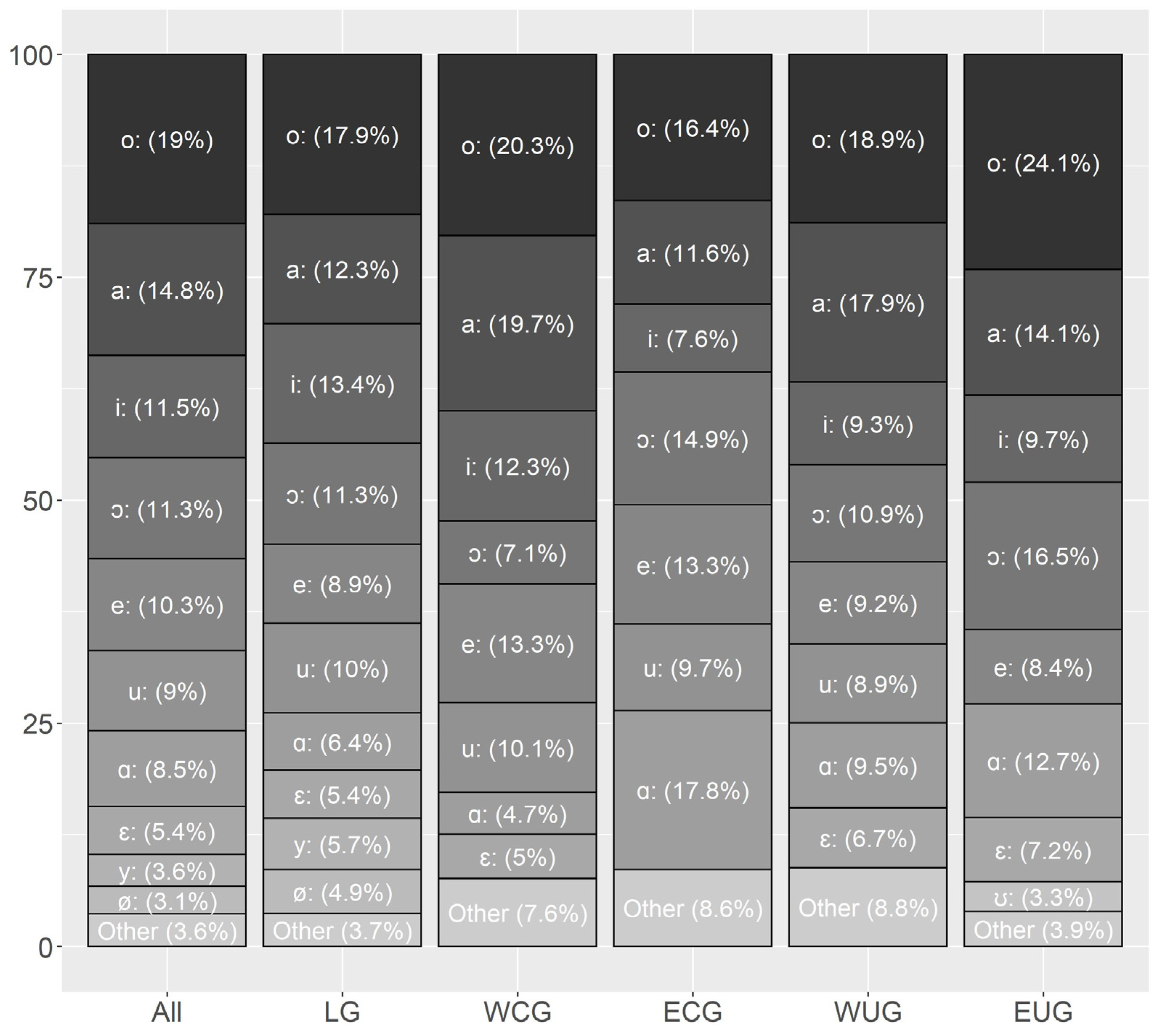
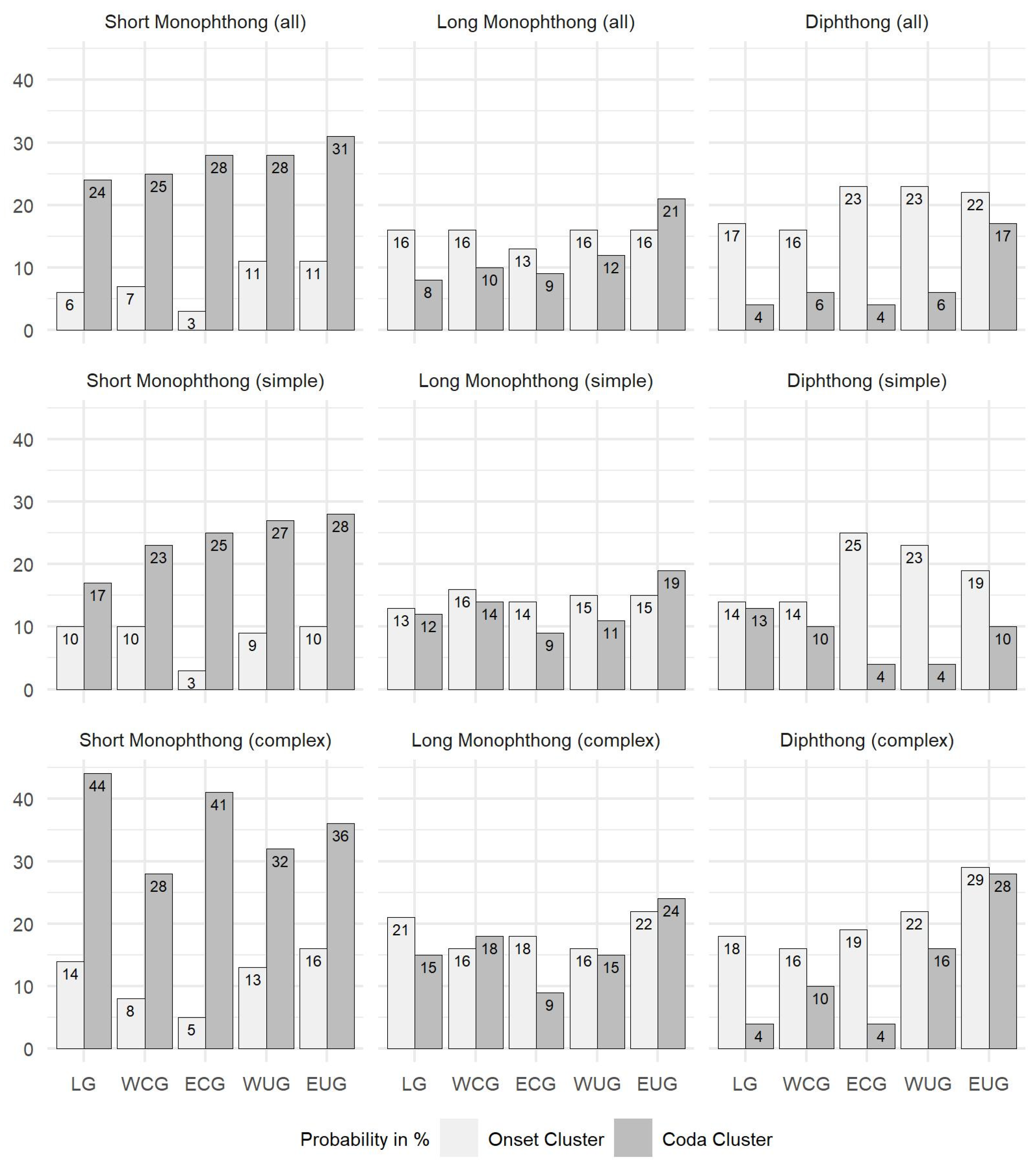
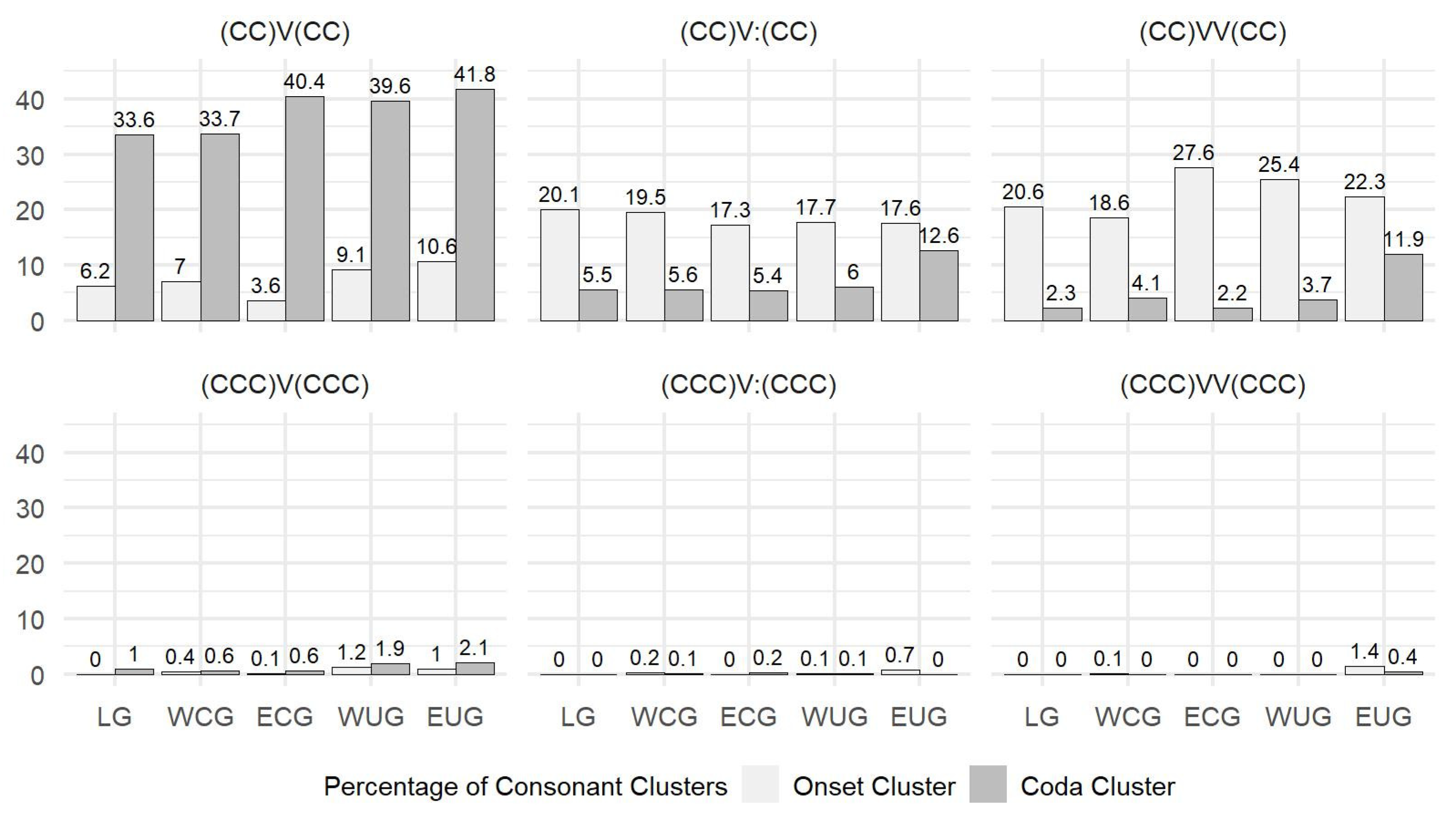
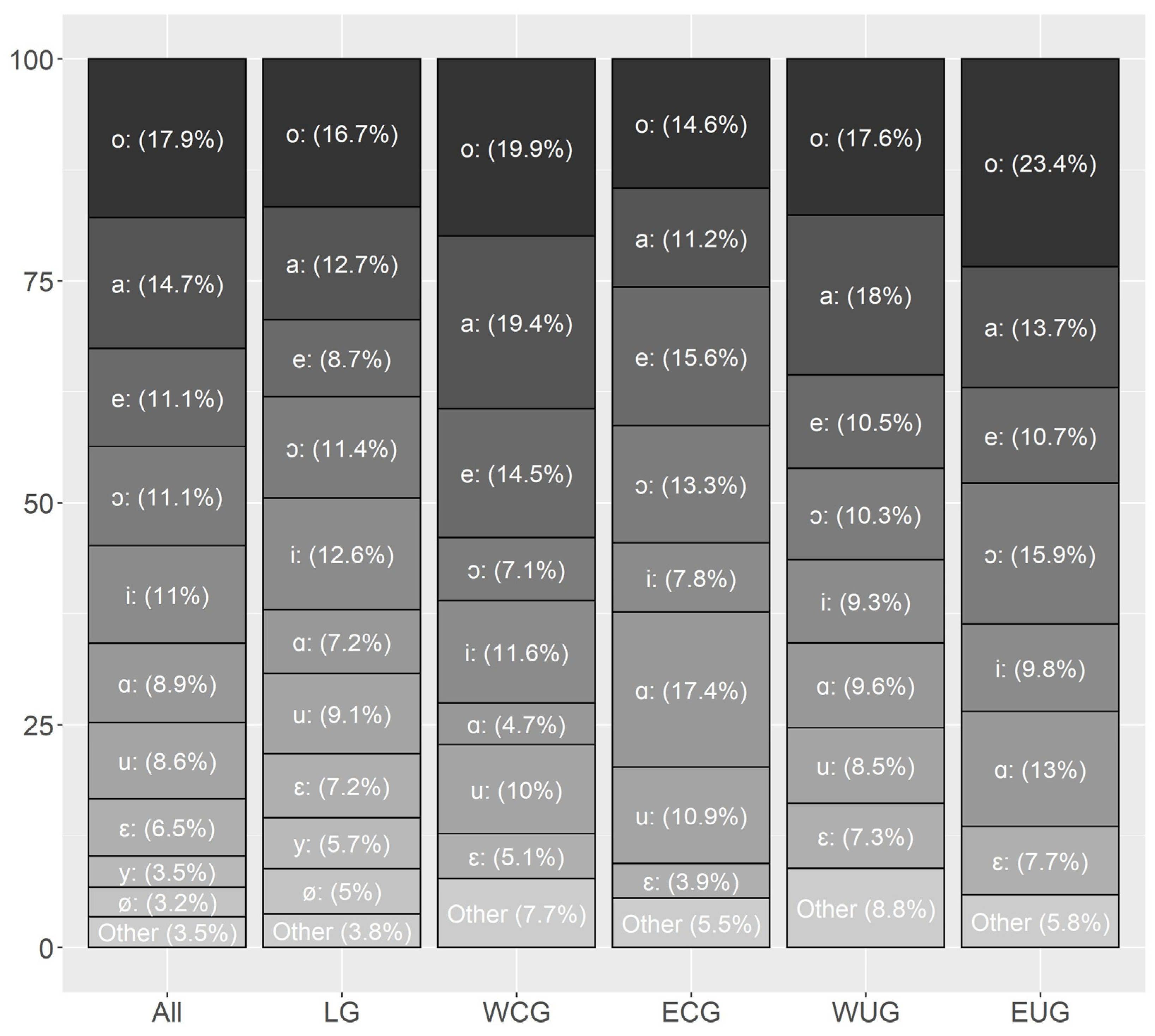
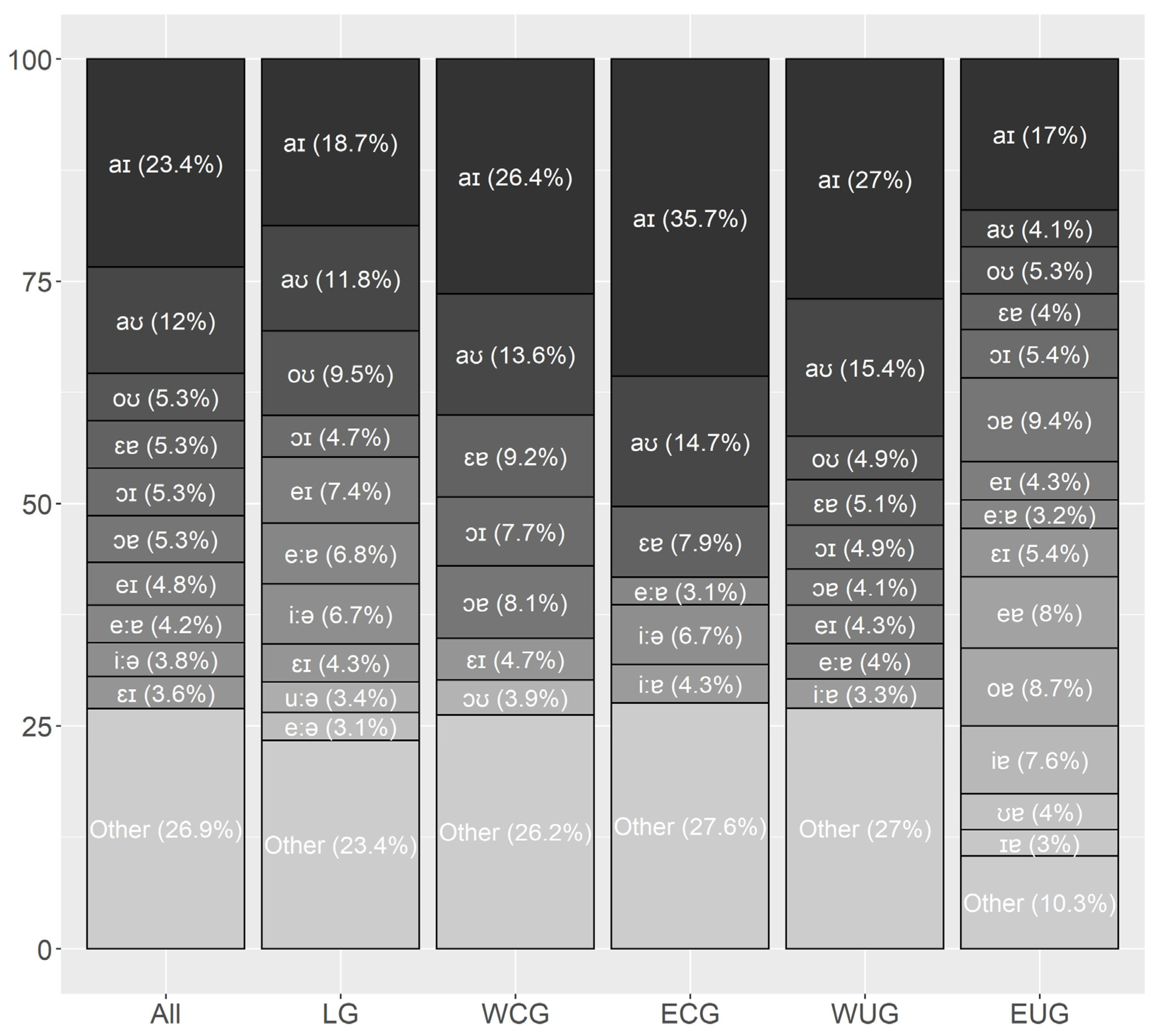
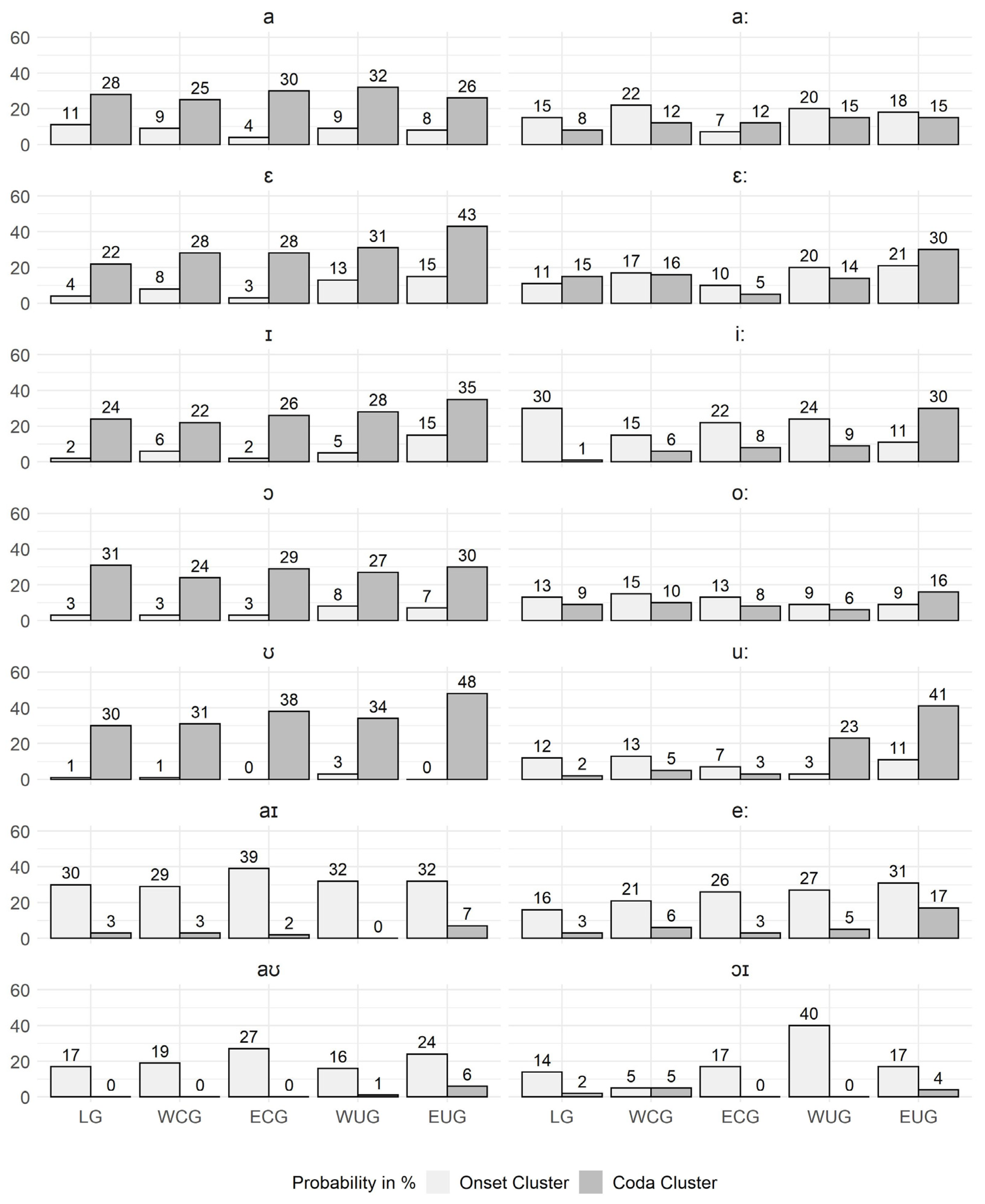
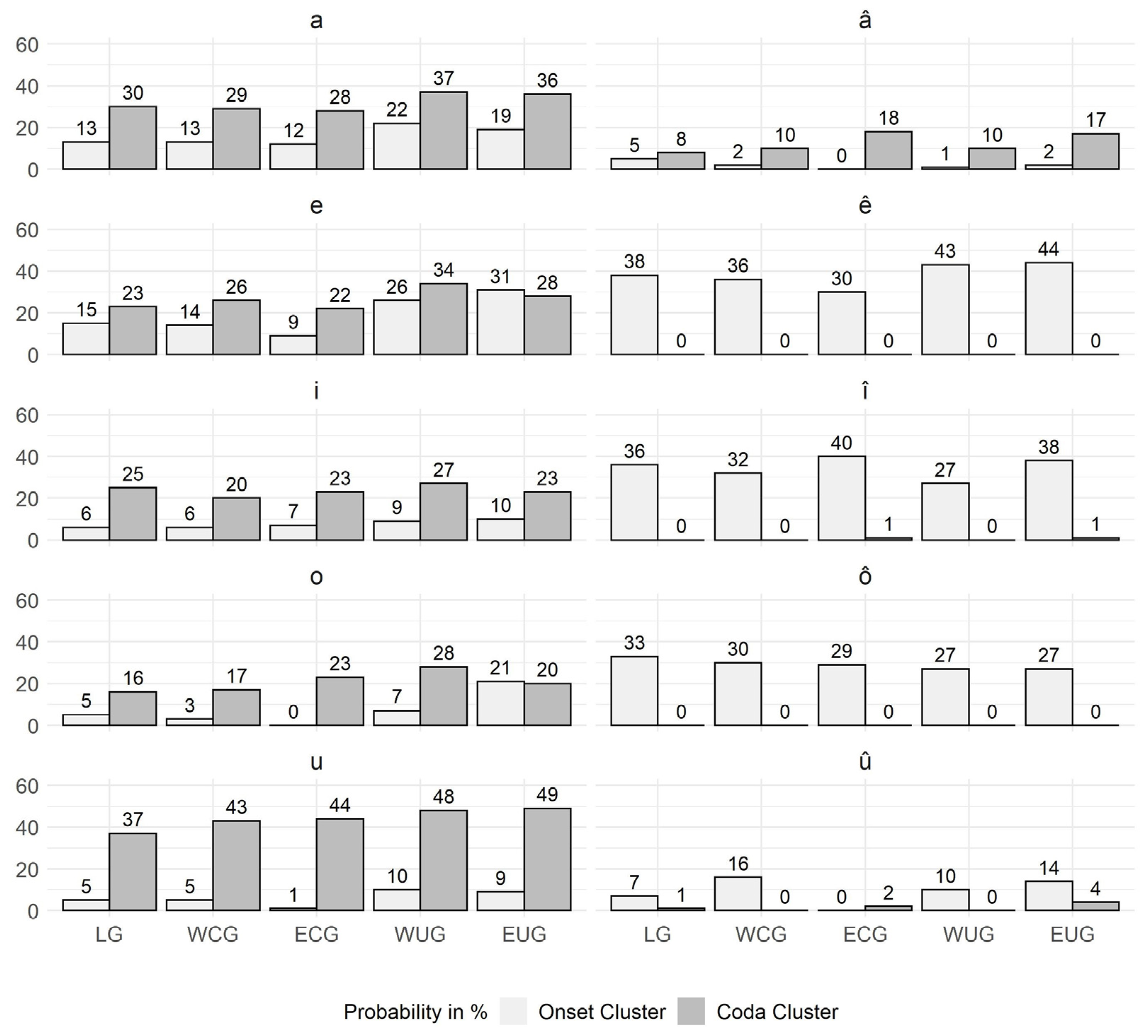
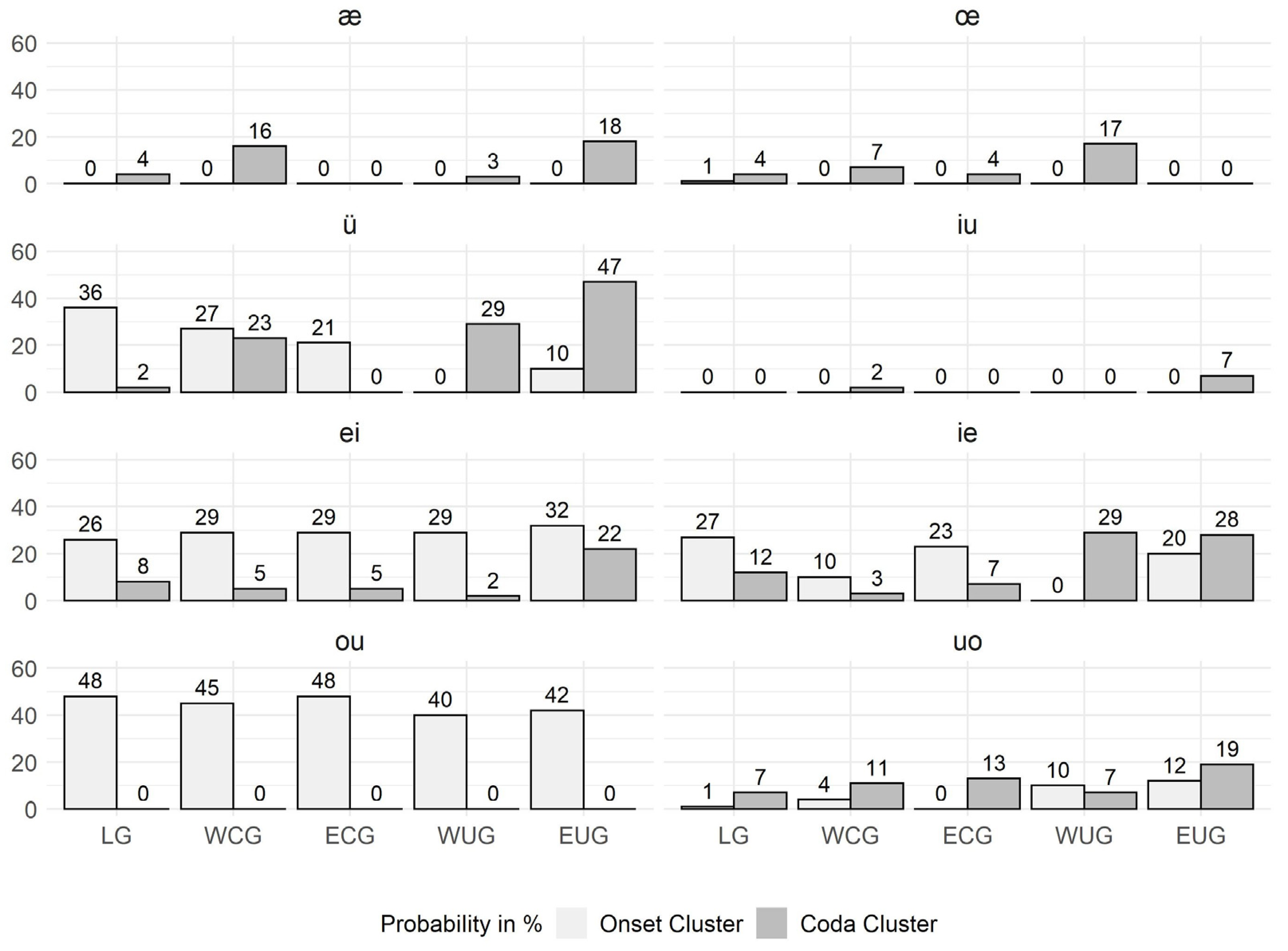
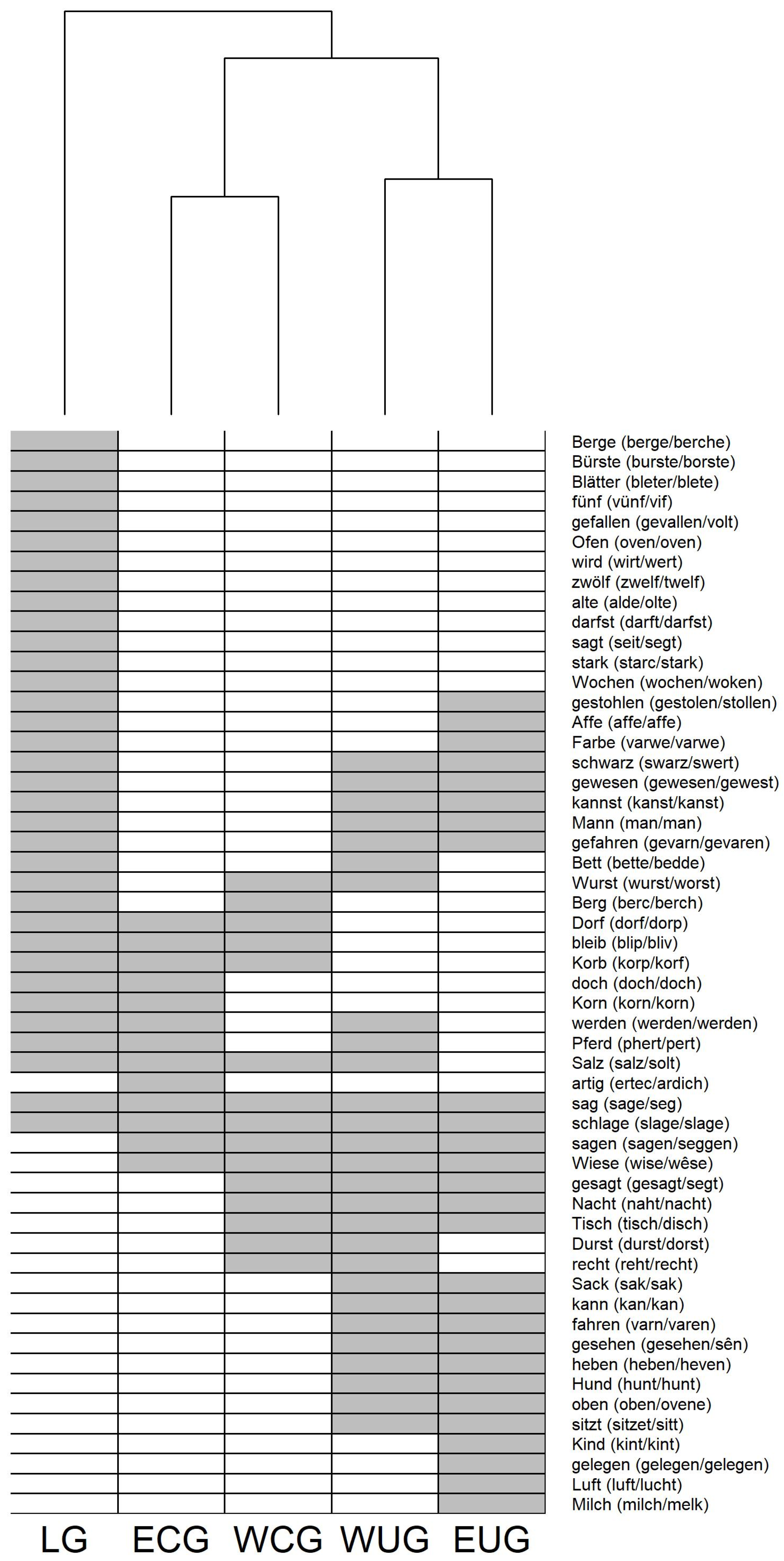
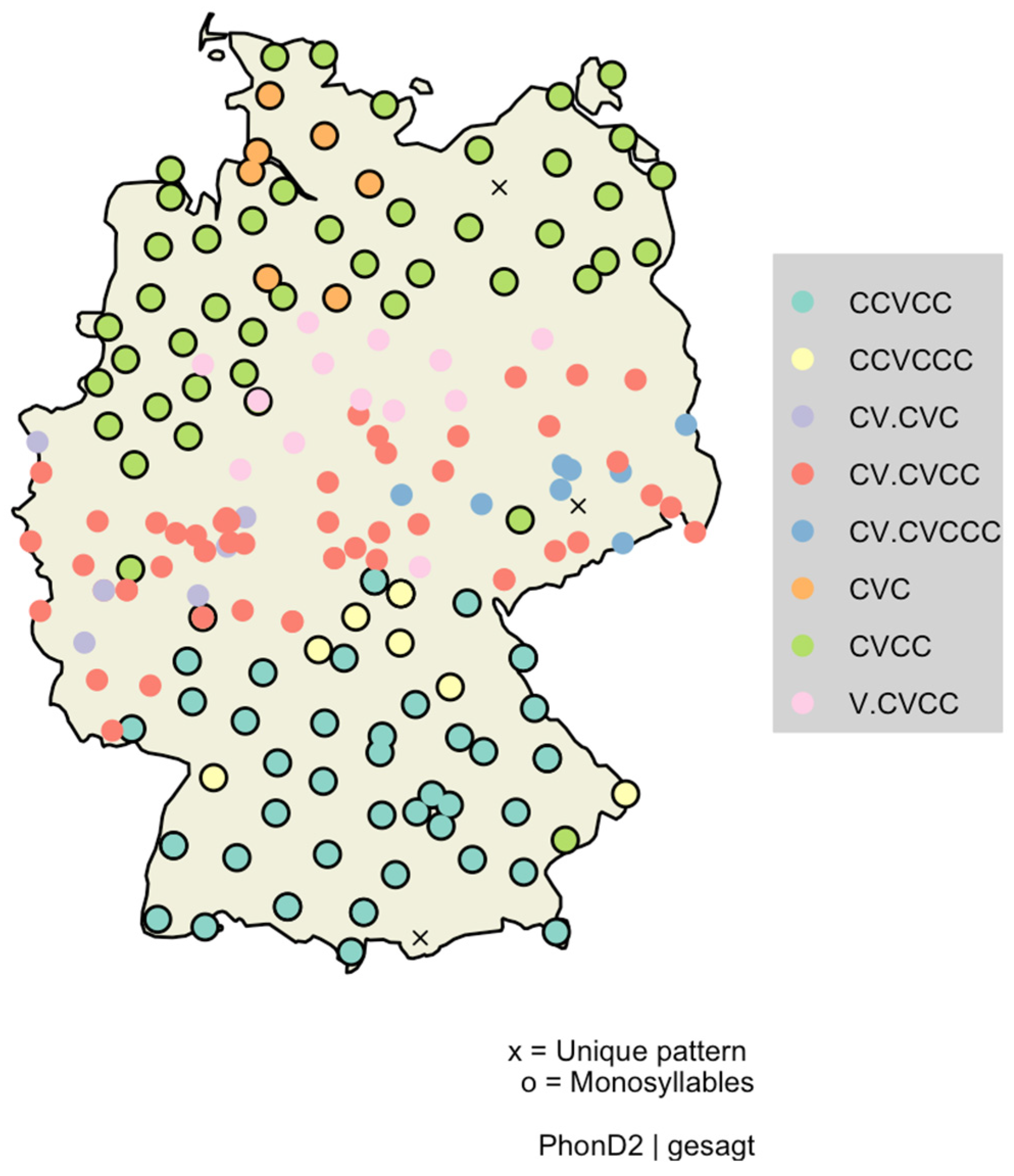
Recent work found a correspondence between consonant clustering probability in monosyllabic lexemes and the three vowel types, short and long monophthong and diphthong, in German dialects. Furthermore, that correspondence was found to be bound to a North–South divide. This paper explores the preferences in consonant clustering of particular vowels by analyzing the PhonD2-Corpus, a large database of phonotactic and morphological information. The clustering probability of the diphthongs is positively correlated with frequency while the other vowels showed particular preferences that are not positively correlated with frequency. However, all of them are determined by a threefold pattern: short monophthongs prefer coda clusters, diphthongs onset clusters and long monophthong are balanced. Furthermore, it was found that this threefold pattern seems to have evolved from an originally twofold pattern (short monophthong prefers coda clusters and long monophthong and diphthong prefer onset clusters) in Middle High and Low German. This result is then further considered under the aspect of the compensation of the syllable weight and moraicity. Furthermore, some interesting parallels with the syllable vs. word-language typology framework are noted.
Keywords: phonotactics; German dialects; Middle High German; vowels; consonant clustering phonotactics; German dialects; Middle High German; vowels; consonant clustering