
Article

Novel Structure and Thermal Design and Analysis for CubeSats in Formation Flying
Astrodynamics and Control Laboratory, Department of Astronomy, Yonsei University, Seoul 03722, Korea
*
Author to whom correspondence should be addressed.
Aerospace 2021, 8(6), 150; https://doi.org/10.3390/aerospace8060150

Submission received: 11 March 2021 / Revised: 11 May 2021 / Accepted: 14 May 2021 / Published: 26 May 2021

Abstract

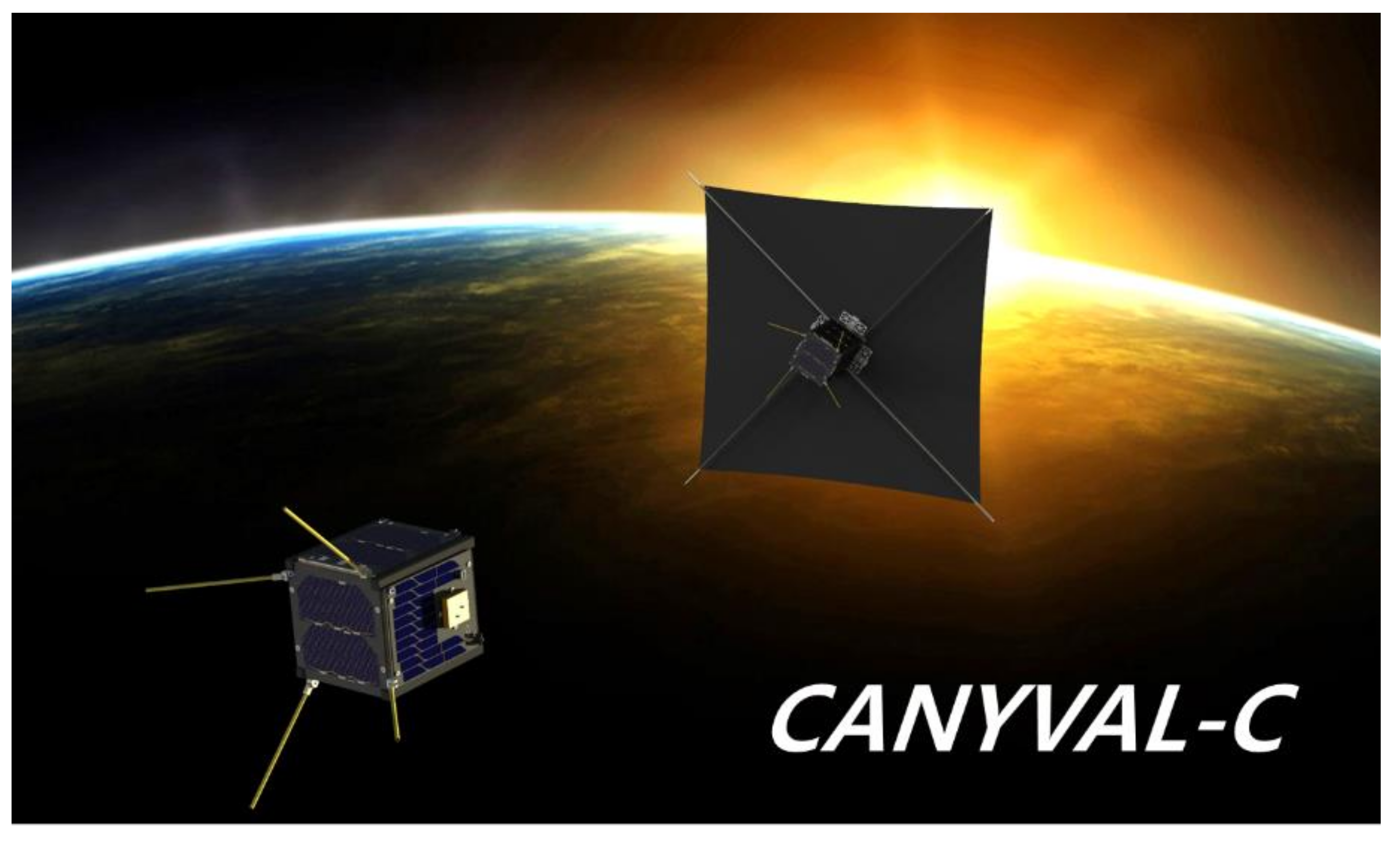
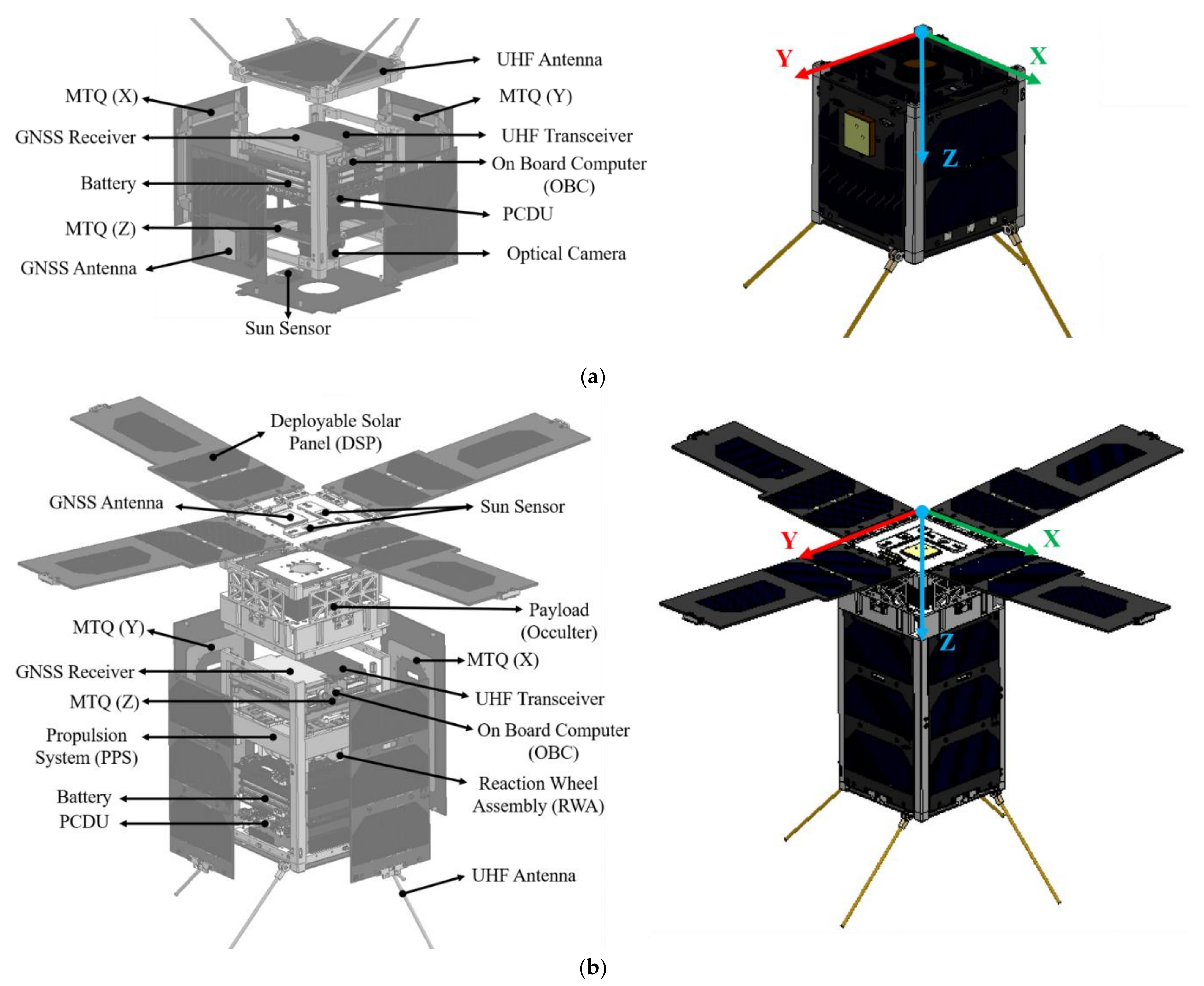
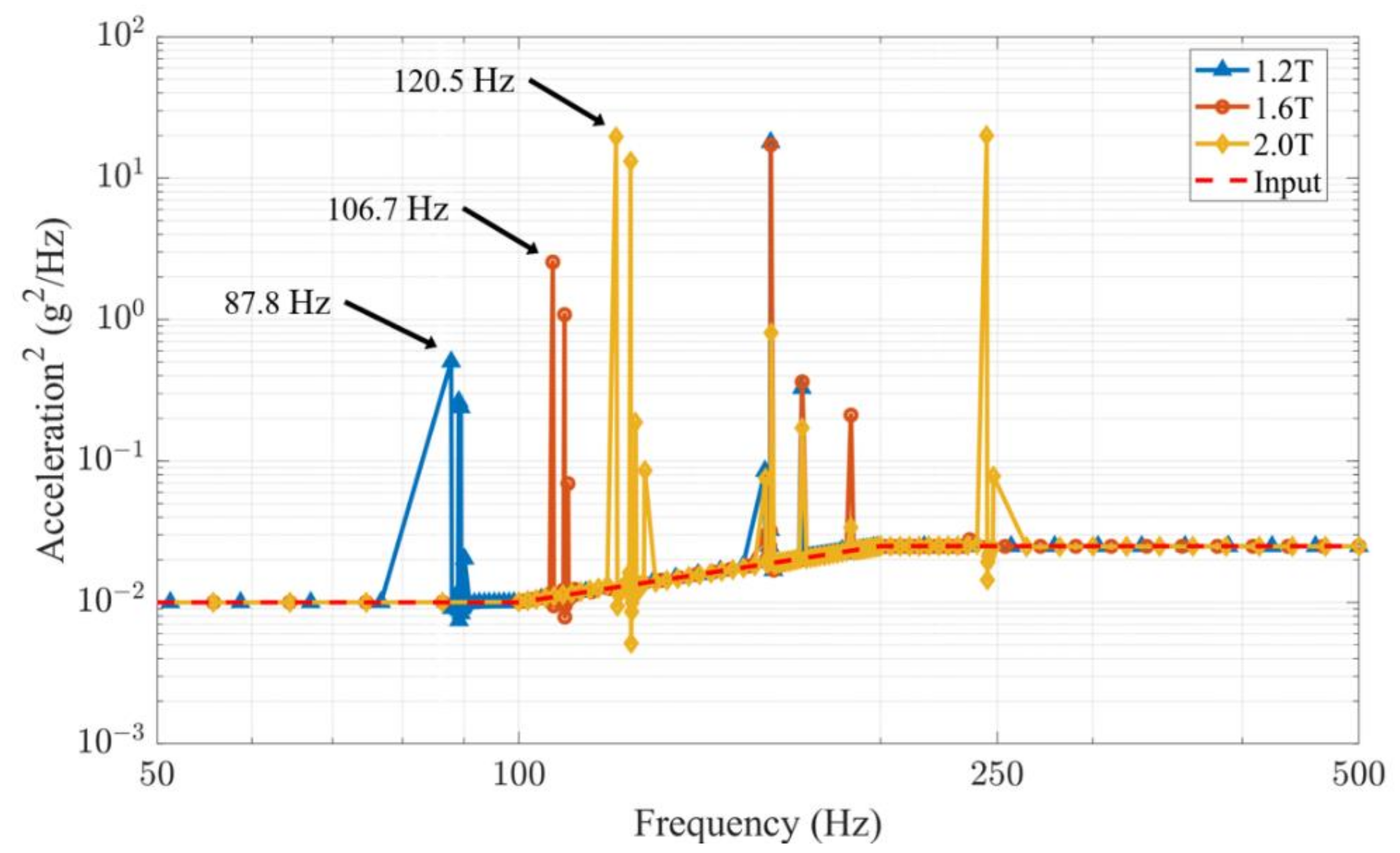
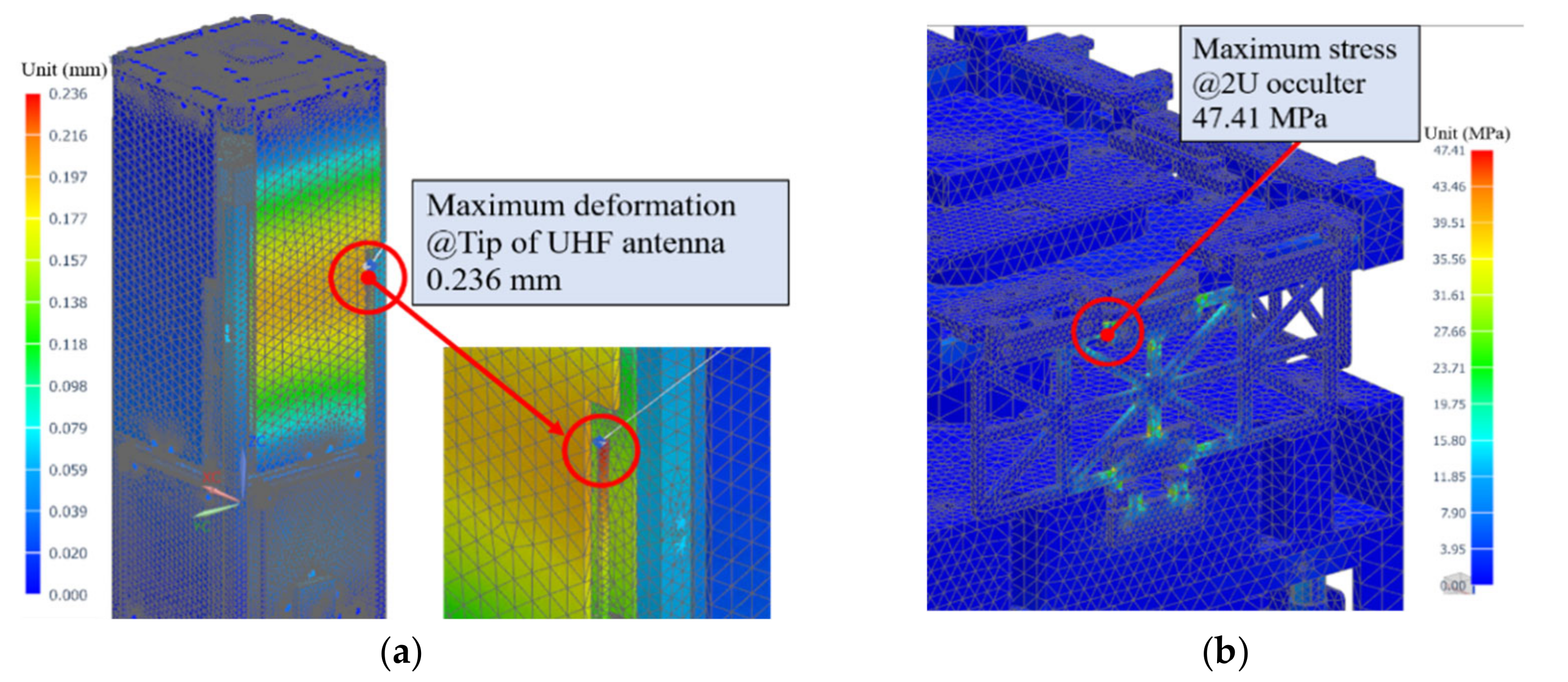
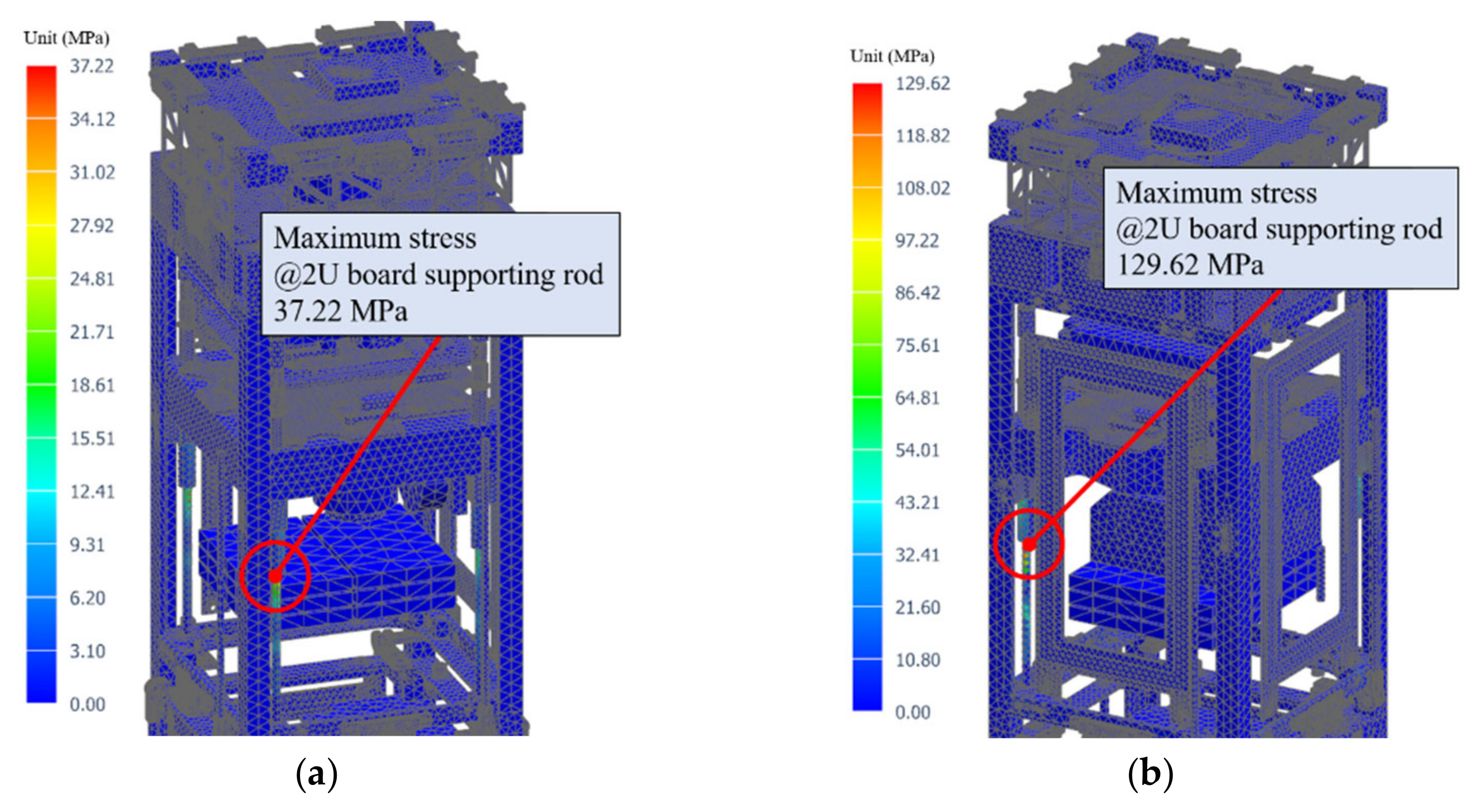
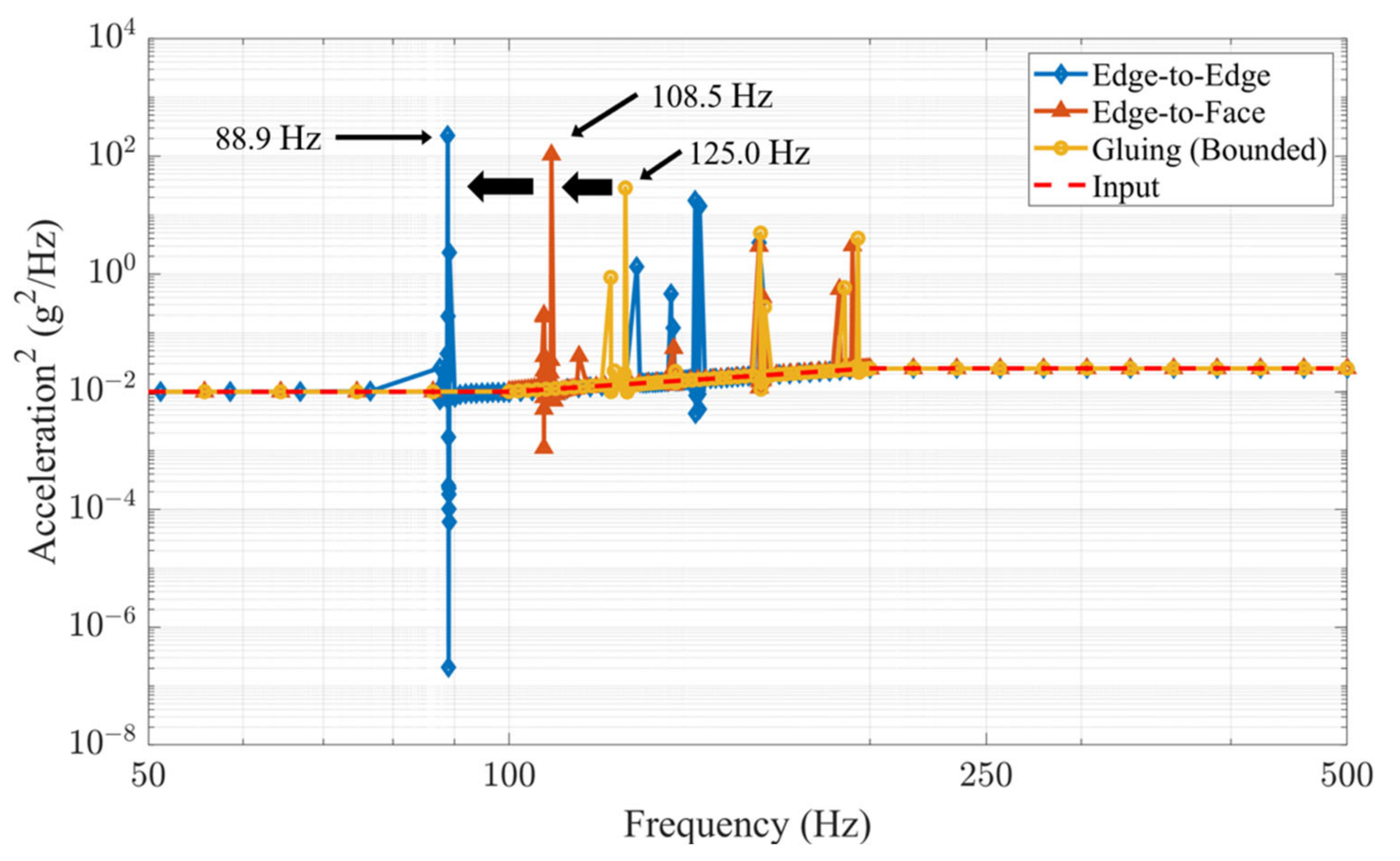
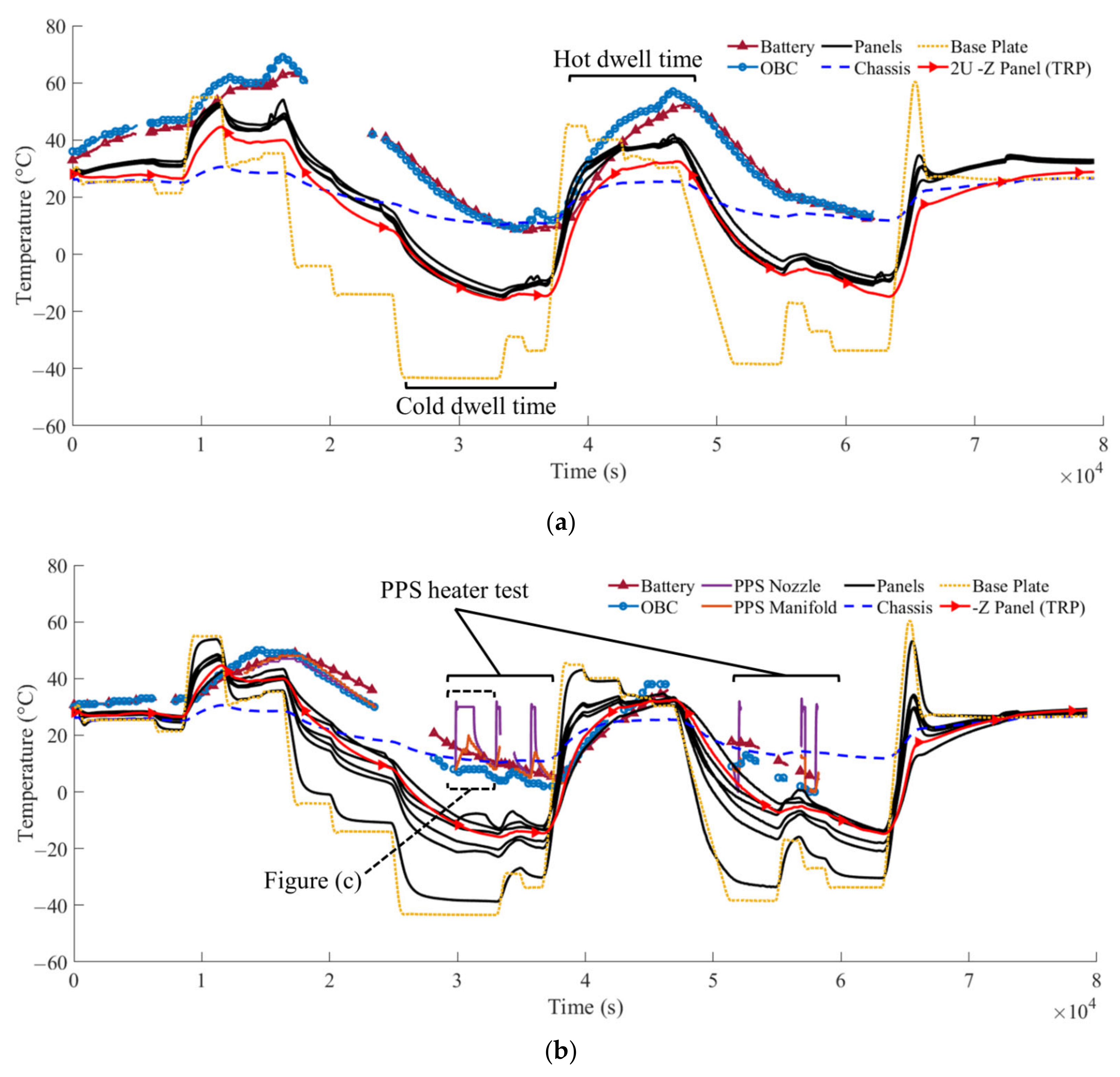
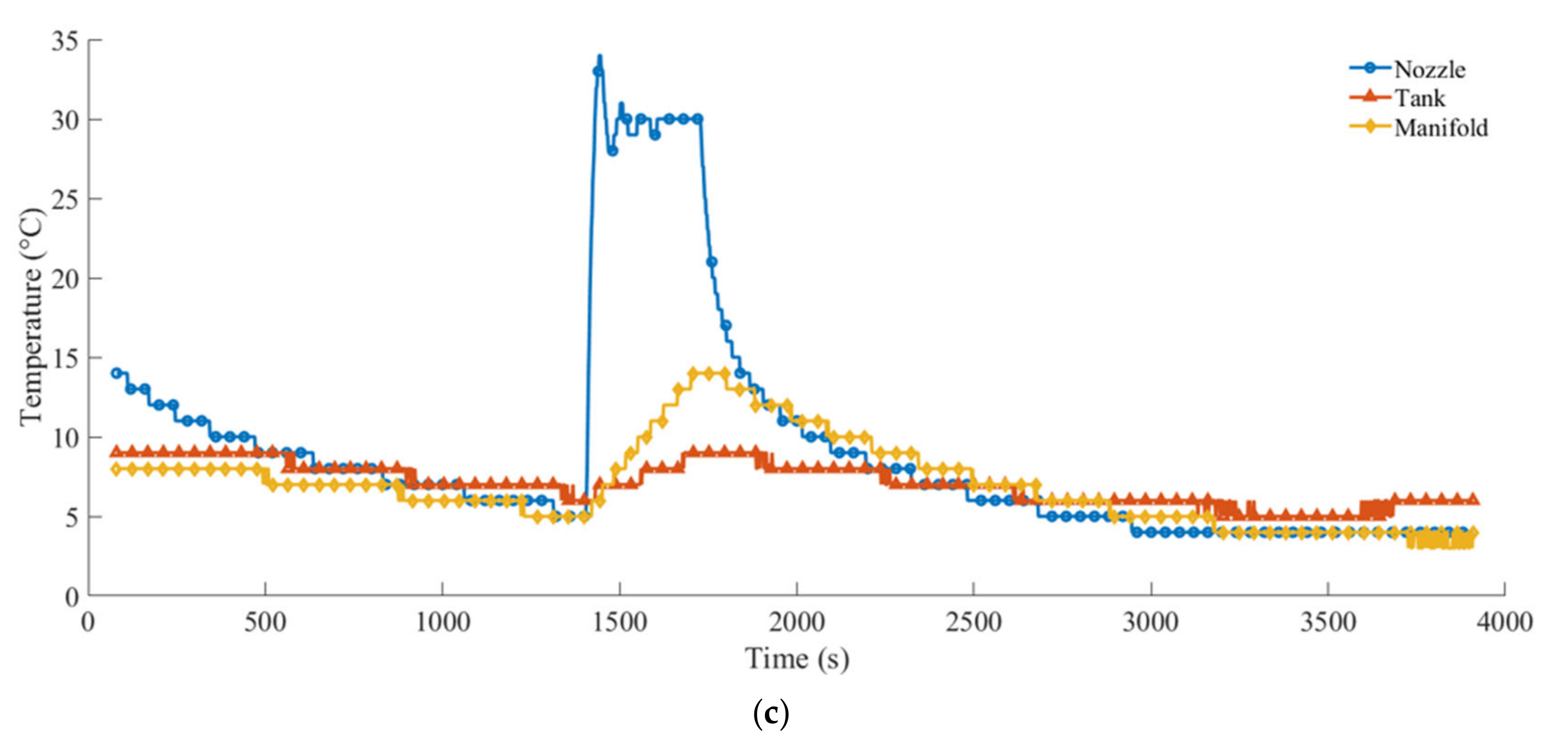
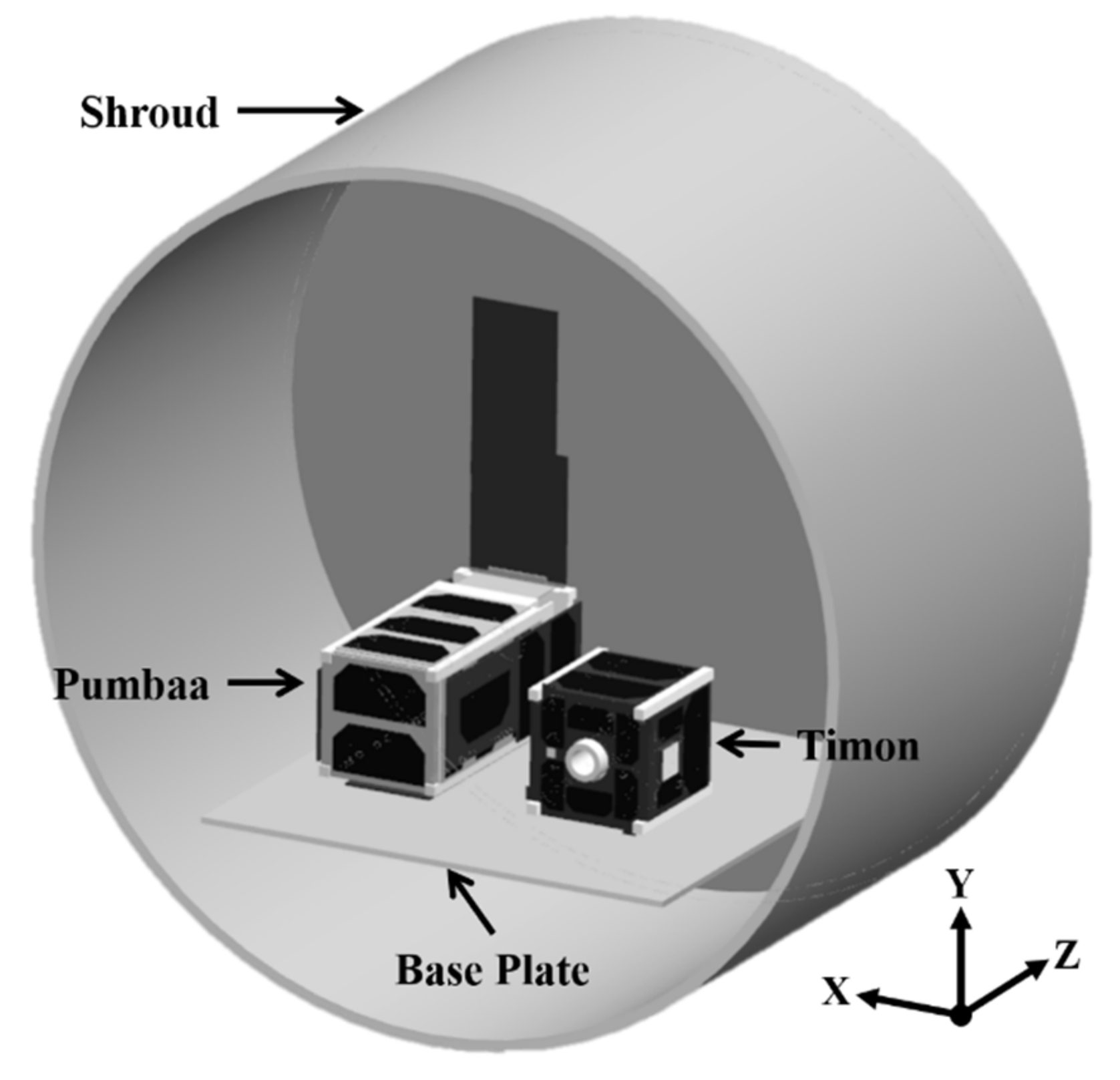
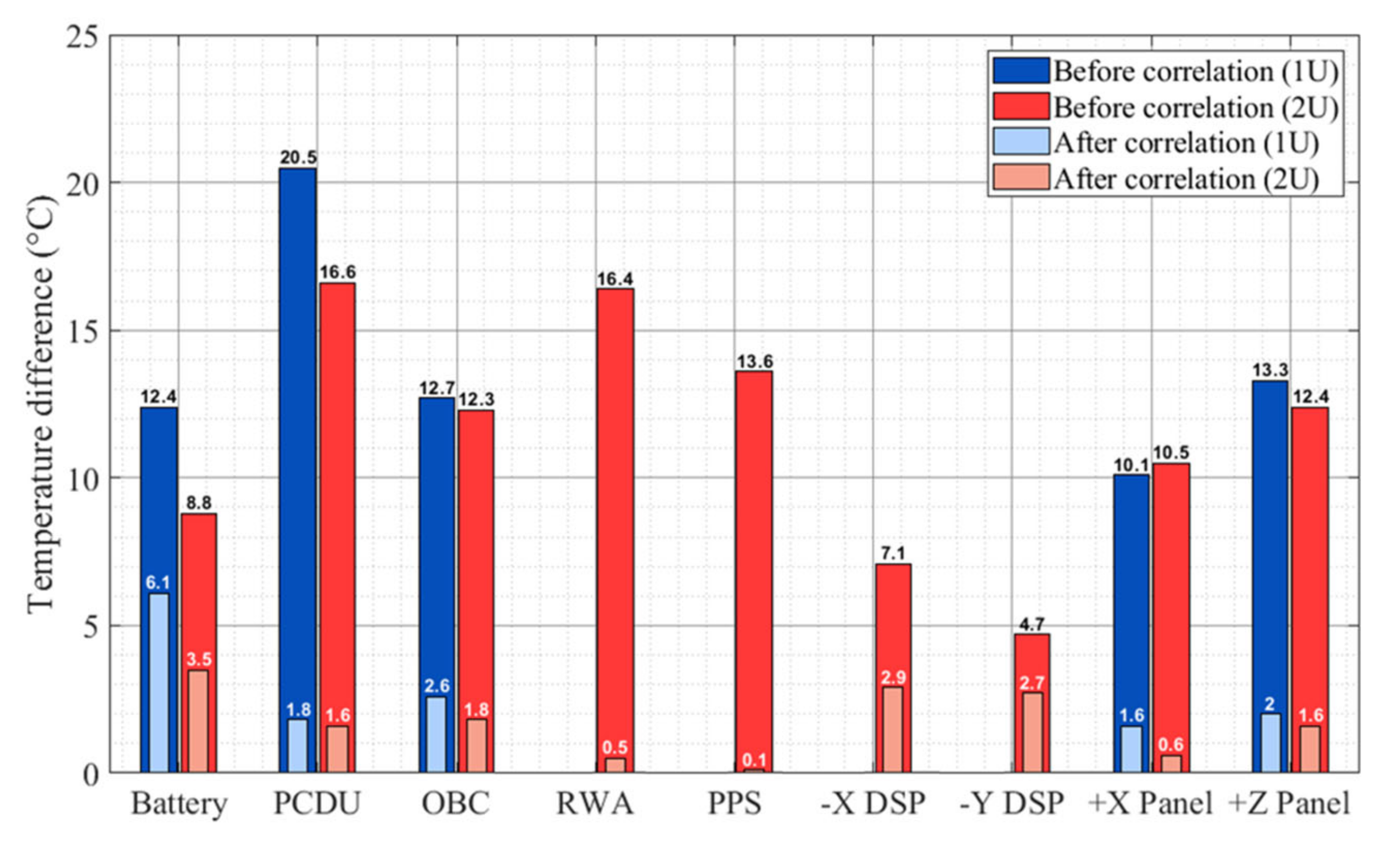
The CANYVAL-C (CubeSat Astronomy by NASA and Yonsei using a virtual telescope alignment for coronagraph) is a space science demonstration mission that involves taking several images of the solar corona with two CubeSats—1U CubeSat (Timon) and 2U CubeSat (Pumbaa)—in formation flying. In this study, we developed and evaluated structural and thermal designs of the CubeSats Timon and Pumbaa through finite element analyses, considering the nonlinearity effects of the nylon wire of the deployable solar panels installed in Pumbaa. On-orbit thermal analyses were performed with an accurate analytical model for a visible camera on Timon and a micro propulsion system on Pumbaa, which has a narrow operating temperature range. Finally, the analytical models were correlated for enhancing the reliability of the numerical analysis. The test results indicated that the CubeSats are structurally safe with respect to the launch environment and can activate each component under the space thermal environment. The natural frequency of the nylon wire for the deployable solar panels was found to increase significantly as the wire was tightened strongly. The conditions of the thermal vacuum and cycling testing were implemented in the thermal analytical model, which reduced the differences between the analysis and testing.
Keywords: CubeSat; finite element analysis; ground validation; analytical model correlation CubeSat; finite element analysis; ground validation; analytical model correlation