Article

Using Commercial Off-the-Shelf Camera Systems for Remote Sensing and Public Engagement on the Small Satellite ROMEO

Institute of Space Systems, University of Stuttgart, 70569 Stuttgart, Germany
*
Author to whom correspondence should be addressed.
Aerospace 2026, 13(5), 411; https://doi.org/10.3390/aerospace13050411
Submission received: 25 February 2026 / Revised: 20 April 2026 / Accepted: 21 April 2026 / Published: 28 April 2026

Abstract

The Research and Observation in Medium Earth Orbit (ROMEO) mission, developed at the University of Stuttgart‘s Institute of Space Systems, seeks to demonstrate a cost-effective exploitation of the medium Earth orbit (MEO) for sustainable access to space. It uses a green propulsion system with water as propellant to reach up to 2500 km altitude starting from a 450 km sun-synchronous orbit (SSO). This paper presents the design and intended use of the ROMEO satellite as well as its two in-house developed camera systems, the public relations (PR) and the near-infrared (NIR) camera system. The PR camera system features two silicon sensors with a Bayer color pattern in a compact, lightweight package and in a cold redundant setup to reduce the impact of radiation-related degradation. Their wide field of view (128 × 96°) allows imaging of the complete visible Earth in the mission‘s final orbit and supports calibration of the Earthshine telescope, which is the primary payload. The NIR camera system uses a commercial InGaAs sensor with a high quantum efficiency up to 1700 nm, coupled to a 100 mm focal length optics assembly that yields a ground sampling distance of 45 m in the initial orbit. Its scientific objectives include monitoring gas flares and wildfires, which are relevant to climate change research, and demonstrating an exoplanet transit detection—an unprecedented capability for a small satellite using a commercial off-the-shelf InGaAs sensor in the NIR spectrum. This paper demonstrates that ROMEO’s compact, low-mass camera systems meet mission constraints while enabling a broad spectrum of scientific and outreach activities.

1. Introduction

Satellites are essential for many modern technologies like weather forecasting, global navigation and broadband communication, and have become indispensable tools for scientific investigations in Earth observation, space science and astronomy. Historically, such missions have been the domain of large space agencies, whose projects are expensive, lengthy and tightly constrained by national budgets. However, in recent years, a clear shift has emerged towards small satellites that are built and operated by companies or academia. The platforms can be designed and launched in a fraction of the time and cost of traditional missions, largely thanks to the widespread adoption of commercial off-the-shelf (COTS) components that are designed for terrestrial markets like the automotive industry. While most commercial small satellite missions, in particular constellations, currently target the low Earth orbit (LEO), there is growing interest in extending their capabilities to higher orbits, such as the medium Earth orbit (MEO) [1]. The increasing number of satellites, particularly as part of satellite constellations, demands the exploitation of other orbits which are much less crowded than the LEO. Consequently, making other orbits accessible is necessary for sustainable access to space.
The University of Stuttgart is pursuing this frontier with the Research and Observation in Medium Earth Orbit (ROMEO) mission [2]. ROMEO is a small satellite platform designed to demonstrate the viability of COTS hardware in the MEO. Its primary objective is the cost-effective exploitation of the MEO, which will be reached by using an innovative green propulsion system with water as a propellant starting from a sun-synchronous orbit (SSO). The satellite hosts several payloads, including an Earthshine telescope or sensors for the characterization of the radiation and plasma environment. Furthermore, two camera systems are foreseen: two cold redundant color cameras in the visible spectrum and one camera in the near-infrared (NIR) spectrum. The color cameras are primarily for public relations (PR) as colored images can be easily used for public outreach, an important factor for publicly funded projects. Adding another camera system in the NIR spectrum enables several advantages for scientific observations: fires of different nature emit strongly in the NIR, and it is particularly favorable for the detection of exoplanet transits, as stellar noise is reduced and planetary signatures are easier to detect [3]. The former advantage is particularly important for the research of climate change, as the observation of different fires (e.g., wildfires or gas flares) is important for the estimation of greenhouse gas emissions into the atmosphere. Both camera systems use cost-effective COTS components to demonstrate their deployment on board a small satellite with a challenging mission profile that reaches into the MEO with high radiation levels. Hence, the camera systems implement sustainability in both the design and the applications. This paper intends to present the ROMEO mission with a focus on the applications and hardware setups of both camera systems in more detail.

2. The ROMEO Mission

The ROMEO mission aims to demonstrate a sustainable approach to major risk factors in space missions, implementing cost-effective and available solutions. The main objective of the ROMEO mission is to develop and qualify a cost-efficient small satellite bus to test new technologies in the harsh radiation environment of the lower MEO. Reaching an altitude of 2500 km is the main mission driver. The state of development is frequently published and available to the scientific community [4,5,6].
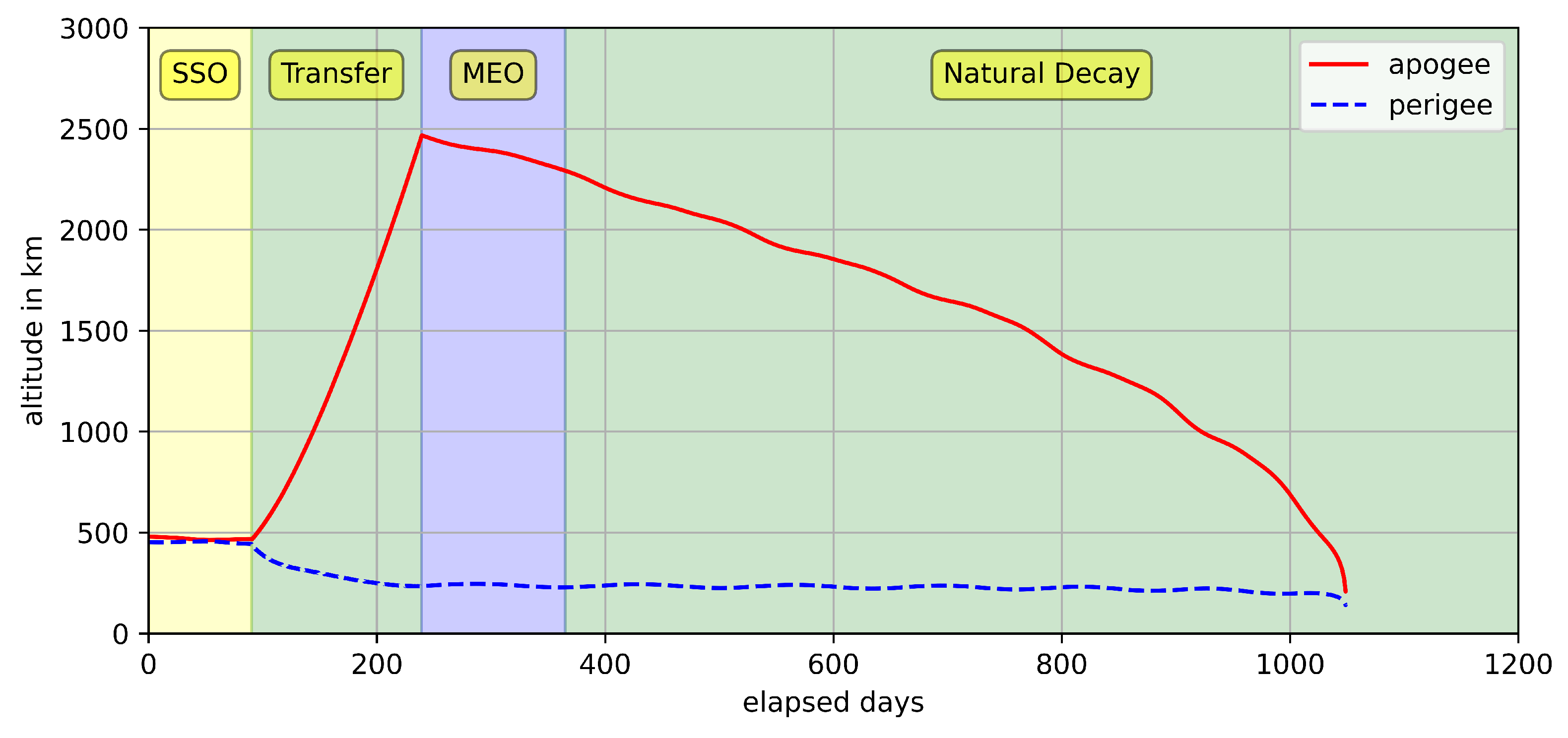
The ESA zero-debris philosophy, which has been signed by the University of Stuttgart, is followed by applying several strategies, in order to keep orbital environments sustainable [7]. One key aspect is an innovative fail-safe orbit raising strategy, showing a pioneering way of reaching the MEO for demonstration missions. The orbital lifetime is actively controlled on board the satellite, where the apogee raising and perigee lowering are optimized to keep the orbital lifetime constantly under five years [8]. Responsible for orbit maneuvers is the IRS-developed, environmentally-friendly water propulsion system (WPS), which uses water as a propellant in space. Thrust is generated via the ignition of oxygen and hydrogen after in-orbit electrolysis. The WPS aims to reduce the environmental impact of satellite operations in space, with the additional advantage of safe handling on the ground and a drastically reduced explosion risk due to low-pressure vessels [9,10]. Additionally, its high impulse thrust of 1 N can be used for collision avoidance, which further reduces the space-debris risk. Generally, the orbit strategy divides the mission into several phases, which are depicted in Figure 1 as the orbital profile. The first phase describes the initial launch orbit, an SSO in 450 km altitude. The satellite will stay there for three months, for commissioning and technology demonstration purposes, before the transfer phase begins, where the apogee is raised towards 2500 km during a six-month period. Simultaneously, the perigee is lowered towards 235 km in order to stay within five years of de-orbit time. Due to natural orbital decay, the satellite will slowly decrease the apogee altitude over the course of several years. The chosen orbital strategy enables high spatial resolution, as the argument of perigee (AOP) and right ascension of the ascending node (RAAN) will drift by 2.3° and 0.7° per day respectively. This means that after 40 days the apogee will drift from equatorial latitude to the polar region, enabling, over the course of the mission, full spatial resolution in the altitude range of 235 and 2500 km.
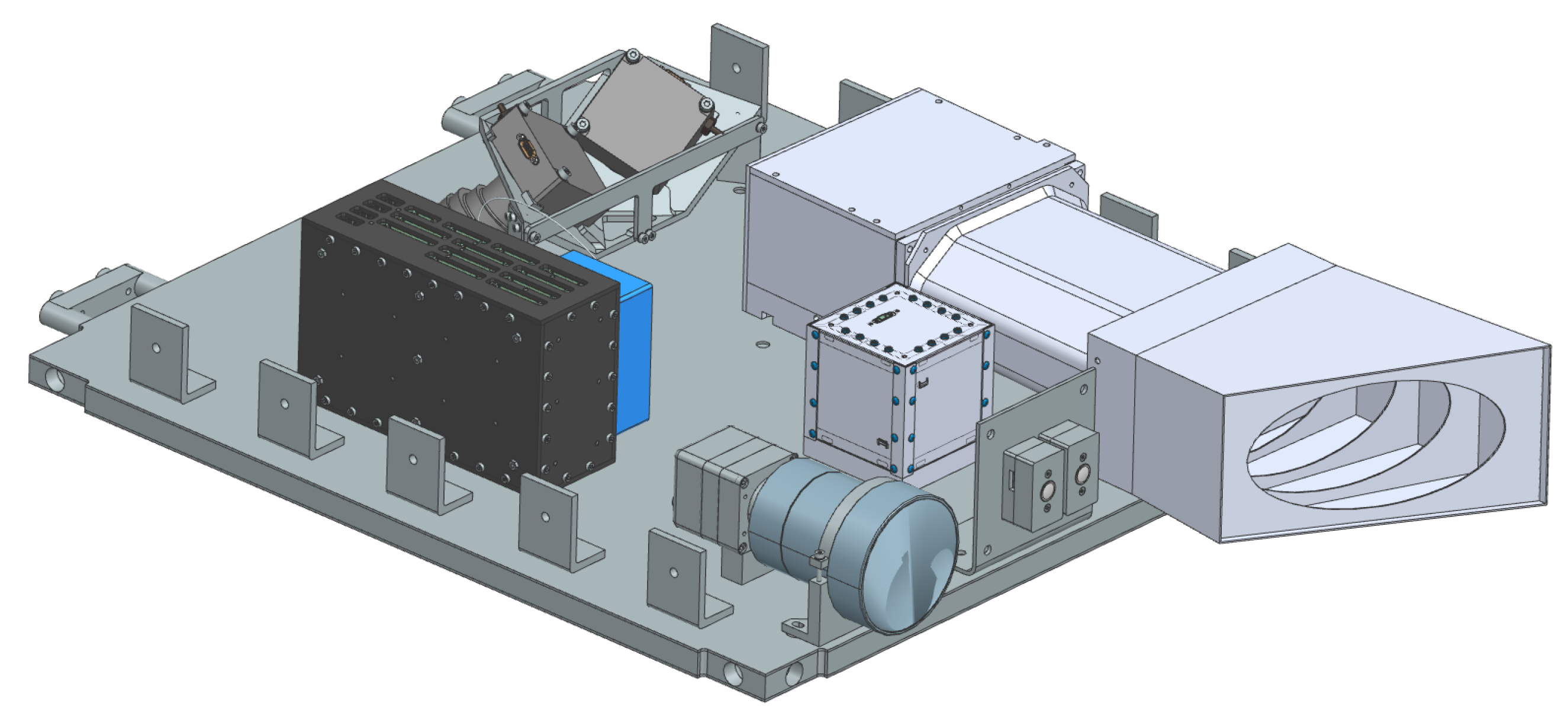
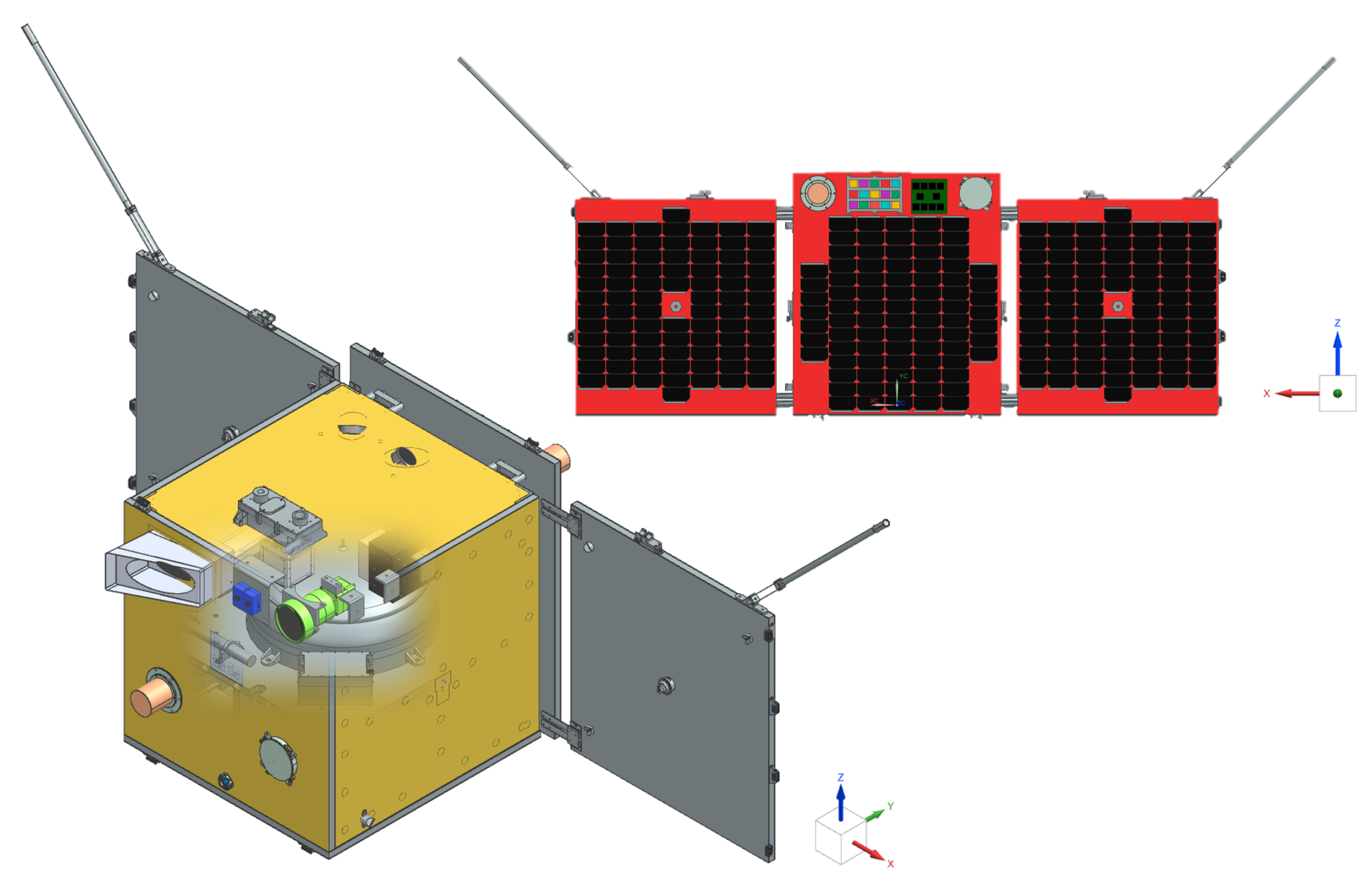
The satellite will be utilized for scientific payloads, including space weather and climate research activities. An Earthshine telescope called juLIET, developed by the Danish Meteorological Institute (DTU), will be able to precisely measure Earth’s short-wave radiation budget by comparing the bright and dark sides of the Moon [11]. This will enhance the current knowledge about the Earth‘s albedo, a significant factor in current climate models [11]. Its measurements will be supported by the PR and NIR camera systems, which are presented in more detail in the following chapters. The computer-aided design (CAD) model in Figure 2 shows the camera systems integrated in the compact ROMEO satellite. Both camera electronics are mounted to the payload panel and protected from the environment, especially radiation, by the satellite structure. The expected characteristics of the satellite system are summarized in Table 1.
Table 1. Summary of the characteristics of the ROMEO satellite.
CharacteristicValue
Total mass110 kg (incl. component margins and 5% system margin)
Payload13 kg
Propellant21 dm3 water
Structure27 kg incl. shielding
Power generation250 W (initial)
Pointing precision<0.1°
Data downlink150 Mbit/s (amateur X-band)
Propulsion system Isp350 s (target)
Volume (launch config.)807 × 721 × 666 mm3
Figure 2. Computer-aided design (CAD) model of the ROMEO satellite showing the integrated public relations (PR) camera system (blue) and near-infrared (NIR) camera system (green). The outer structure is partly hidden for visibility purposes. The top right view shows the satellite from the solar panel side for reference.
Aerospace 13 00411 g002
The performance of the attitude and orbit control system (AOCS) is crucial for optical observations, which is why it is discussed in more detail. While it is designed with the primary objective of performing orbit maneuvers, an analysis regarding its performance for inertial pointing has been performed. Currently, no dedicated precision pointing controller has been developed; therefore, the nominal tracking mode controller, a sliding-mode controller, is used [12]. During these pointings, both the attitude as well as the rotation rate are provided by the star trackers. The primary actuator is four reaction wheels. The analysis includes sensor noise as well as actuator inaccuracies, while pointing knowledge is neglected. The estimated magnitudes of the pointing errors for windowed observations with the maximum integration time of the NIR camera of one second can be found in Table 2. Here, the mean pointing error (MPE) represents the mean deviation from the actual pointing target during a single windowed observation, the relative pointing error (RPE) represents the jitter during a single windowed observation and the performance drift error (PDE) represents the drift of the mean deviation from a windowed measurement to the previous one.
Moreover, the thermo-mechanical design of the spacecraft with a focus on the accommodation of the optics is being described. Due to similar applications in the satellite operations, the spacecraft configuration orients at the Flying Laptop, which is a small satellite developed and operated by the University of Stuttgart, by dividing the satellite into three modules [13]. The primary structure is made of carbon fibre-reinforced plastic (CFRP) sandwich structures developed for the Flying Laptop mission. The thermal control system of the satellite is designed with a cold bias. The main radiator of the satellite is dimensioned to radiate the dissipated heat of the satellite in the hot cases and arranged at the launch adapter side—the bottom module of the satellite. In case of critical cold temperatures, electrical heaters are distributed at crucial components all over the satellite. As presented in Figure 3, the scientific cameras are located with a view in the nadir direction at the payload module—the top module of ROMEO.
The ROMEO spacecraft has entered design freeze at the end of the critical design phase, so no further modifications to the baseline configuration are anticipated. Current activities are focused on the procurement and qualification testing of the in-house developed innovations, such as the WPS or the dual electrical power system. Most of the commercial systems are currently in a hardware-in-the-loop (HIL) arrangement, which couples selected spacecraft subsystems with the high-fidelity digital twin spacecraft simulator, thereby virtually exposing the hardware to realistic orbital environment conditions while supporting interface verification and software adaptation. Delivery of the flight hardware of the payload is scheduled for mid 2026, at which point the satellite will be ready for system integration. The camera systems presented in this paper have been procured in Q1 2026 and will undergo testing and calibration on the component level in Q2 2026. After integration, they will undergo environmental testing with the complete satellite. ROMEO was selected under the joint European Commission/European Space Agency European Flight Ticket Initiative [14]. Although the specific launch vehicle and exact launch date have not yet been disclosed, the mission is heading for a launch window in Q2 2027.
Based on the spacecraft and mission characteristics, the overall camera system consisting of the PR and NIR camera systems has to fulfill the requirements in the following Table 3 to be compliant with the ROMEO mission.

3. The PR Camera System

3.1. Applications of the PR Camera System

3.1.1. Public Relations

As the name suggests, the main purpose of this camera system is PR. It is important to promote publicly funded space missions by publicly sharing information on the mission, which is why images taken by satellites are of great value. Color images are usually the best option for PR purposes as they can be easily used to enhance articles that are shared on digital and print media.
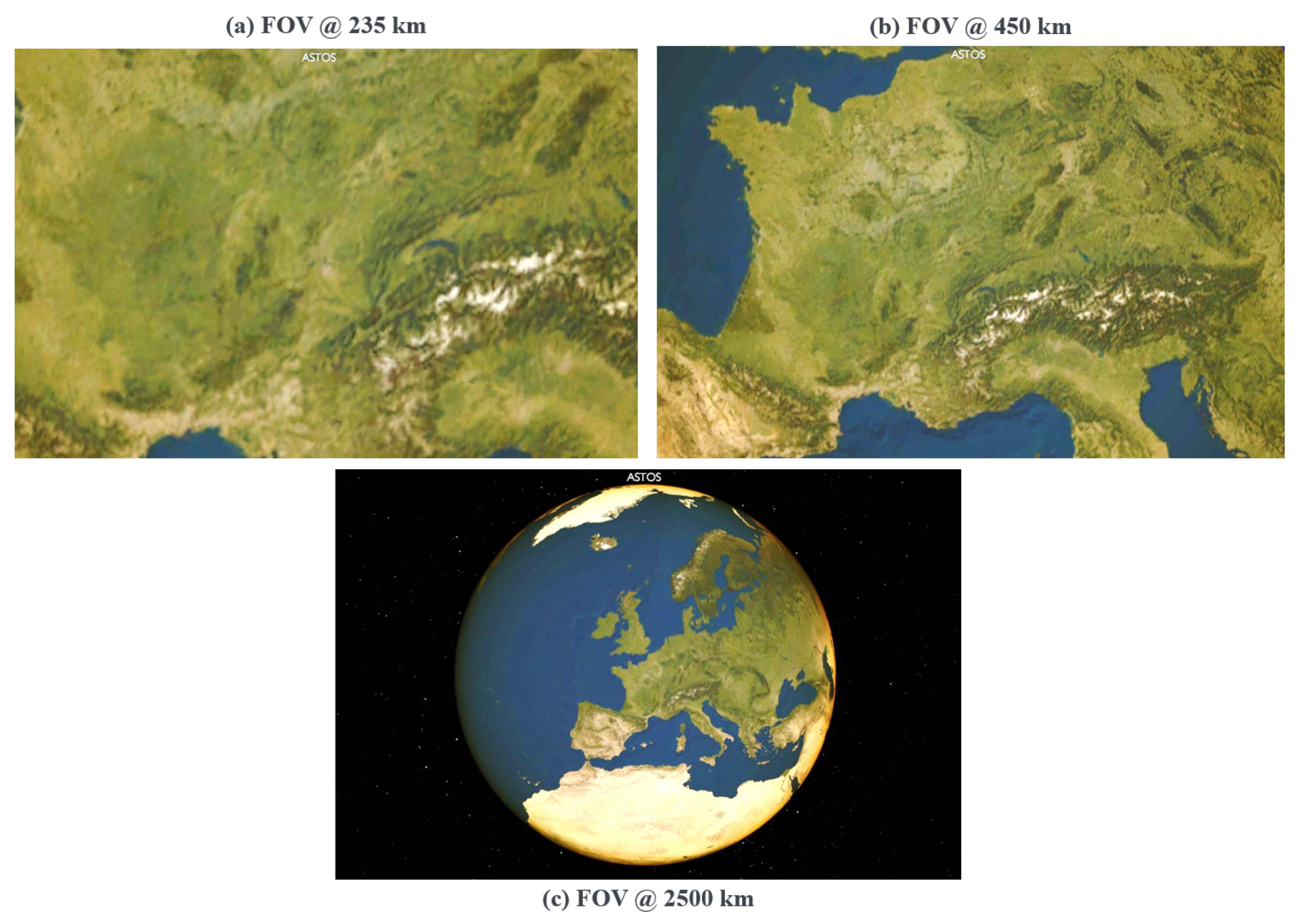
The mission profile of the ROMEO mission, with its increasing apogee into the ME, enables the image acquisition of a large area of the Earth. The primary objective is to image the complete visible Earth in the final apogee, as indicated by requirement five in Table 3. The Earth‘s field of view (FOV) from an altitude of 2500 km in the final apogee is roughly 92°. Therefore, a large FOV is chosen for the camera system. The FOVs were simulated in a dedicated design study described in [15]. The simulated FOVs over central Europe at different altitudes during the mission with the chosen camera system can be found in Figure 4. The simulated images demonstrate that it is possible to image the complete visible Earth in the final apogee. Moreover, it is possible to image nearly complete central Europe already in the initial orbit at an altitude of 450 km. Overall, the camera system will be able to take color images showing large areas of the Earth during the mission, as well as the complete visible Earth in the final apogee, which can be used for PR.

3.1.2. Cloud Coverage

Next to PR, the images of the Earth can be used to compare different data sets of the primary payload. The objective of the primary payload is to measure the Earth‘s albedo based on radiometric measurements of the Moon as it reflects the Earth‘s radiation [11]. The amount of light which is reflected by the Earth towards the Moon is dependent on the surface and atmosphere facing towards the Moon. Clouds can be highly reflective to sunlight, which is why they can greatly influence the reflected radiation towards the Moon [11]. The cloud coverage can vary significantly as opposed to the surface properties, which can be estimated using the Moon‘s orbit and the time of the measurement. Hence, detailed information on the global cloud coverage can be helpful to evaluate the albedo measurements. This can be done based on images of the PR camera due to its large FOV and, therefore, nearly global coverage. Consequently, images with the PR camera that are taken contemporarily to measurement campaigns of the primary payload can support the data evaluation of the primary payload. The images will be taken shortly before or after the albedo measurements at the point in the orbit where the spacecraft is as close as possible between the Earth and the Moon. Accurate albedo measurements are crucial for the calibration of the radiation balance of the Earth in climate models. Hence, the PR camera system can, in combination with the primary payload, contribute to climate change research.

3.2. Design of the PR Camera System

Description of the Selected Camera Sensor

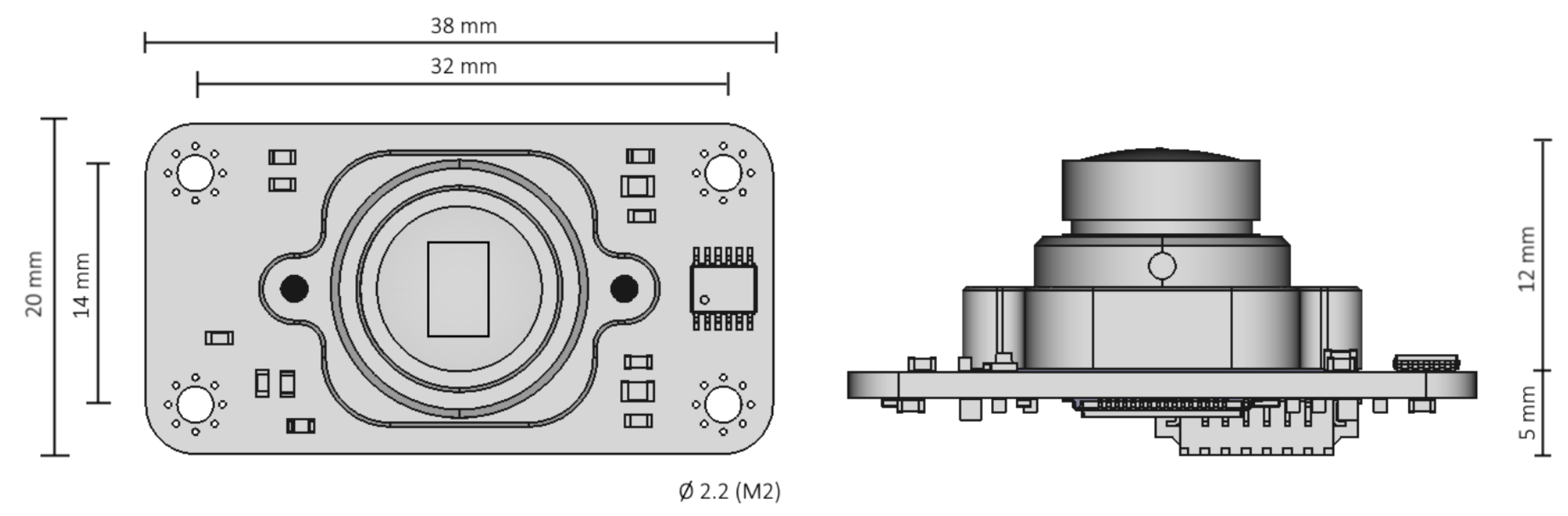
The PR camera system consists of two identical cameras to increase the reliability of the camera system. They will be operated in a cold redundant setup, which is being described in more detail in the following section. The selected camera for the PR camera system is the KissCAM V2.0 from MVP Aerospace (London, UK) [16]. It is a cost-effective COTS camera and features a very low mass and small volume. The predecessor model, the KissCAM V1.0, has proven flight heritage in the LEO [17]. It exceeds the already mentioned wide FOV, which is necessary to capture the entire visible Earth in the apogee of the final orbit. Therefore, it is perfectly suitable as the PR camera of the ROMEO satellite. A diagram of the CAD model, including its dimensions, can be seen in Figure 5.
The KissCAM V2.0 uses an Onsemi AR0130 complementary metal oxide semiconductor (CMOS) image sensor with a resolution of 1280 × 960 pixels [16]. Moreover, data exchange is enabled via an RS422 interface, which is required by the on-board computer (OBC) of the ROMEO satellite [16]. The camera offers two image modes: a standard definition (SD) mode with a resolution of 640 × 480 pixels and a high definition (HD) mode with full sensor resolution [16]. Due to the limited memory, the camera can store either four SD images or one HD image. An HD image can be downloaded within roughly 60 s, which limits the maximum frame rate. The focus of the camera can be manually adjusted by screwing the lens in or out. For use on ROMEO, the lens will be fixed to enable a fixed focus setting to infinity. The key parameters are summarized in Table 4.

3.3. Integration Concept on Board the ROMEO Satellite

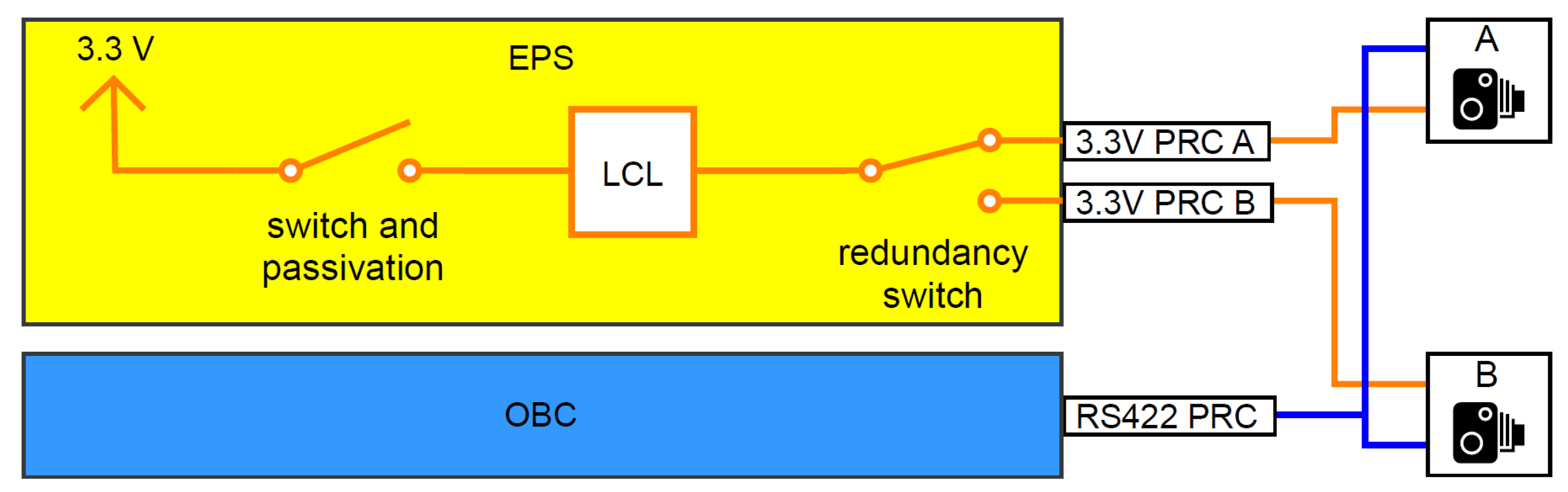
Since the camera is only qualified for the LEO environment, it was decided to add a cold redundant unit. As a payload, no redundant communication is implemented in line with the satellite design philosophy. Both units will, therefore, use the same RS422 interface to the OBC. This also requires reliable cold redundancy, so both units are never active at the same time. The power switching is done by the electric power system (EPS); however, there will only be one latch-up current limiter (LCL) protection circuit for both units and an additional switch to switch between the units. Also see Figure 6.
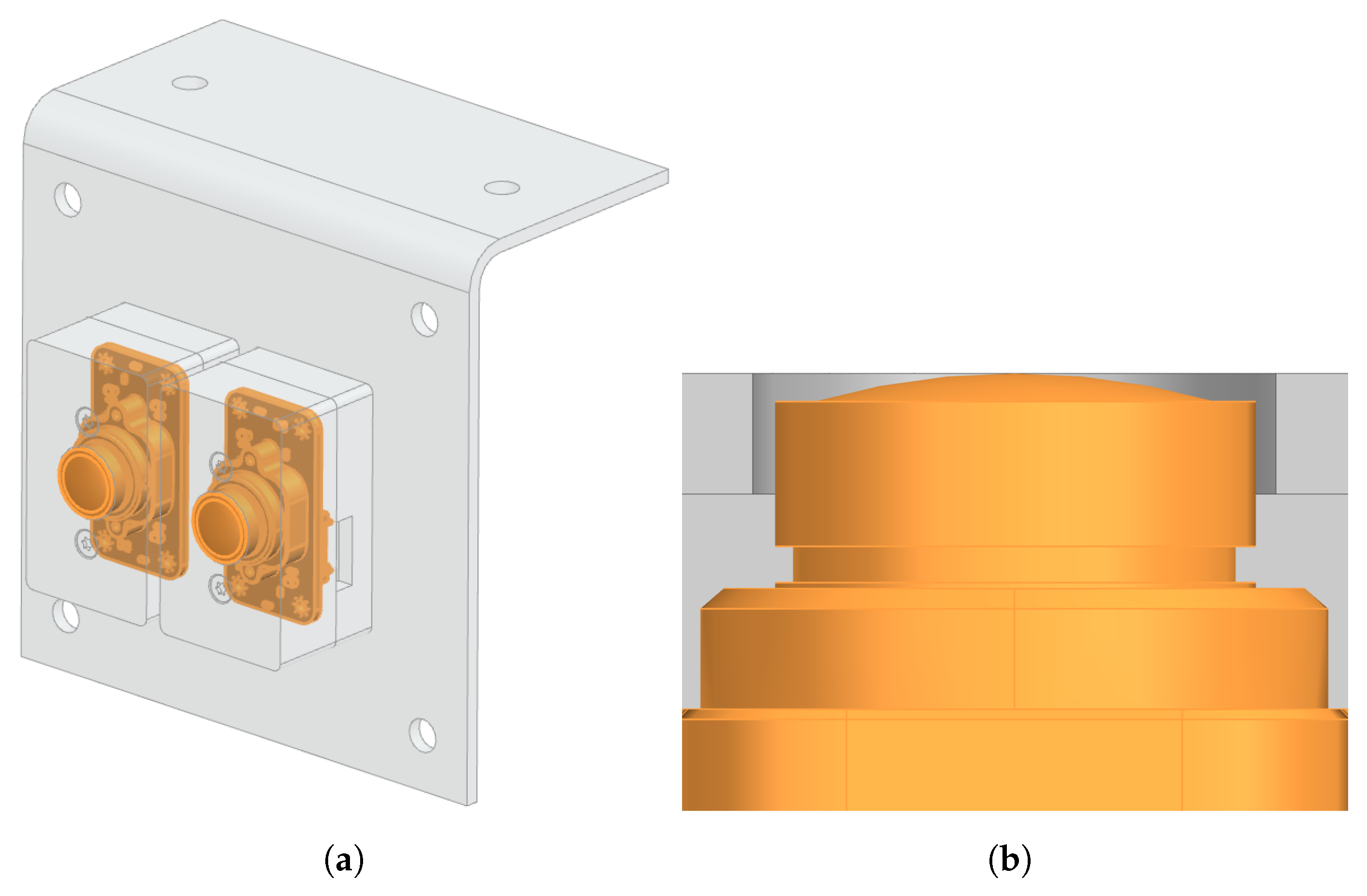
The cameras will be supplied by a 3.3 V channel. A temperature sensor will monitor the temperature of the camera unit, due to the exposed position at the outer shell of the satellite. Considering this exposed location in the structure, which usually serves as radiation shielding, additional shielding is foreseen. The cameras are mounted to the payload panel using a common bracket, which is presented in Figure 7a. Moreover, a sectional view is presented in Figure 7b to demonstrate the FOV and resulting stray light suppression of the cameras inside their housings.

3.4. Performance of the PR Camera System

The system performance is determined by the performance of a single camera due to the cold redundant setup. The camera is designed to achieve a high FOV to comply with requirement five in Table 3. Consequently, the camera achieves a low spatial resolution. The key performance parameters throughout the ROMEO mission are summarized in Table 5.

4. The NIR Camera System

4.1. Applications and Operations of the NIR Camera System

Remote sensing in the NIR spectrum offers unique advantages, e.g., fires emit strongly in the NIR, enhancing detection against bright backgrounds, methane absorption bands in this spectral range enable gas leakage monitoring and the NIR window is particularly favorable for exoplanet transit studies [3,18,19]. Some applications require measuring two or more different spectral bands, which necessitates a filter and hence increases system complexity. Moreover, there are no COTS filters available for these applications, which is why no filter is foreseen for the ROMEO mission. As a result, measurements such as the methane absorption via the band ratio method or measurements of indices are not possible with this camera system [20]. Nevertheless, taking images in the NIR spectrum without filtering enables several insightful applications. The intended applications throughout the ROMEO mission are described in the following sections.

4.1.1. Detection of Gas Flares

Gas flares are large fires that are used to burn excess natural gas during oil and gas production [21]. The excess gas arises primarily during the extraction of oil from the ground but also downstream during further processing in refineries or in terminals for liquefied natural gas (LNG) [18]. Worldwide, roughly 151 billion cubic meters of natural gas are flared annually [21]. Hence, gas flaring is highly relevant for the sustainability of the oil and gas industry and particularly for climate change. It is considered among the most common contributors to global warming [22]. On the one hand, the large volume of flared gas annually contributes significantly to the total global greenhouse gas emissions. On the other hand, it is highly relevant as gas flares usually burn methane, which is roughly 80 times more powerful greenhouse gas than carbon dioxide [23]. Therefore, burning the excess methane is better than releasing it. Nonetheless, it would be best to capture the excess gas or to avoid its unwanted production.
Although gas flaring is widespread, systematic monitoring remains scarce because flares are traditionally treated as waste disposal [18]. Space-based remote sensing offers a global and regular observation of gas flares to tackle this problem. Existing data sets are often proprietary and lack the spatial resolution required to quantify not only the number of flares but also their burn duration and volume of gas consumed [18]. A database of flare locations and estimated gas volume has already been compiled based on data from the VIIRS mission with a spatial resolution of 1 km [18]. The optimal spectral window for detecting flares lies near 1600 nm, corresponding to the black body temperature of approximately 1800 K of the combustion plume [18]. The high flame temperature results in a radiance that is sufficient for the detection of gas flares in the NIR spectrum, even during daytime without filtering. Moreover, earlier missions such as Rogue Alpha/Beta and CUMULOS have demonstrated that flares are visible across a broad spectral band from 900 to 1700 nm with a spatial resolution of 276 m and 450 m respectively [24,25]. This matches perfectly with the spectral range of the NIR camera of the ROMEO mission described in Section 4.2.1. With this camera, the observations of previous missions can be refined by delivering measurements of distinct flare sites with significantly higher spatial resolution. As for the two mentioned CubeSat missions, the temporal resolution and coverage of the NIR camera system are limited due to the low orbital altitude and limited FOV. Collectively, the capabilities suggest that ROMEO can provide comprehensive, high-resolution monitoring of gas flares worldwide. By integrating VIIRS data with ROMEO’s NIR observations, researchers will be able to track temporal trends in flare numbers and sizes, assess the effectiveness of mitigation strategies that support global efforts to decrease methane emissions from the oil and gas sector.

4.1.2. Detection of Exoplanets

Exoplanets, which are planets orbiting stars beyond the Solar System, are a central focus of modern astrophysics, offering insights into planetary system formation and the potential for life elsewhere [3,26,27]. Ground-based surveys have already detected thousands of candidates with the transit method, which relies on the decrease of a star’s brightness as a planet passes in front of it [3]. However, the achievable photometric precision on ground is limited by atmospheric scintillation, speckle noise and variable extinction, typically yielding uncertainties of 1000 to 4000 ppm, whereas space-borne platforms can reach approximately 100 ppm [3]. Consequently, many space-borne missions have already been deployed and have successfully detected thousands of exoplanets (e.g., TESS, Kepler, James Webb Space Telescope) or will be launched in the upcoming years (e.g., PLATO and ARIEL) [28,29,30,31,32]. This superior stability of space-borne platforms is particularly critical for detecting the shallow transits of Earth-size planets around late-type stars, where the transit depth can be as low as 84 ppm in the visible spectrum [3]. Hence, the detection of exoplanets on board a small satellite is very challenging, in particular with COTS hardware and limited mass, volume and cost budget. The idea to detect exoplanets with a small satellite or CubeSat is not new [27,33]. E.g., the CubeSat mission ASTERIA tried to detect an exoplanet transit in the visible spectrum but failed to achieve the required accuracy to detect an exoplanet independently [33]. Moreover, the small satellite mission Pandora was launched in January 2026, which features a dedicated telescope design for exoplanet observations in the visible and infrared spectrum [34].
The ROMEO NIR camera system intends to overcome the challenge of the limited measurement accuracy with COTS, small satellite camera systems, by going into the NIR spectrum. This yields several advantages: late-type stars like M-type and K-type stars emit strongly in the NIR, increasing their apparent brightness by factors of 50 to 100 relative to the visible spectrum [3]. Additionally, their smaller radii amplify the transit depth, while their short orbital periods yield more frequent transits, which enhances the detection probability [3]. This is particularly important for Earth-size planets as they can be detected in the habitable zone of their star at smaller radii, which is distinctly interesting for K-type stars [35]. It is important to mention that M-type stars are by far the most common type of stars and they represent together with K-type stars roughly 90% of all known stars [36]. On top of that, NIR photometry is less susceptible to stellar activity such as spots and limb darkening, further improving the reliability of transit signals [3].
Despite exploiting the benefits of an observation in the NIR spectrum described in the previous paragraph, several technical hurdles must be addressed. Achieving the required photometric precision demands a detector operated at cold temperatures to suppress dark currents and thermal noise, as well as a high temperature stability [3,33]. Consequently, the NIR camera features an active thermo-electric cooling to achieve low and stable temperatures. The achievable temperatures at the sensor are limited by the power consumption of the cooling system as well as the temperatures at the thermal interface to the satellite. The target sensor temperature with the selected COTS camera is −20 °C. Pixel-to-pixel sensitivity variations, arising from manufacturing tolerances and radial fall-off in quantum efficiency, can introduce apparent brightness changes if the stellar image drifts across the sensor. This imposes challenging requirements on the satellite’s attitude control system [27,33]. Consequently, the NIR camera system will undergo intensive calibration procedures to generate look-up tables for the non-uniformity correction, which enables the correction of these effects in the post-processing. Due to the expected drift of the sensor and optics characteristics, which are in particular caused by radiation, the detection of exoplanets is planned at the beginning of the mission, and regular calibration sequences are planned throughout the mission. As the NIR camera will be used on a biweekly cadence (see Section 4.1.4), the calibration will be done on a biweekly cadence as well. The calibration will be conducted on the basis of bias, flat and dark frames that will be taken before the start of the measurement campaigns. It is planned to take images of known locations in deserts on Earth with a very homogeneous surface for the flat frames. On the contrary, dark frames will be generated by taking images of dark areas in the sky (e.g., Hubble deep fields) as the camera has no mechanical shutter [37]. Apart from that, the Moon can be used as a radiometric reference, in particular due to the availability of the precise radiometer measurements of the primary payload.
While the search for exoplanets in the NIR spectrum is already conducted with large, high-end telescopes on the ground (e.g., SPECULOOS) or in space (e.g., JWST), there is no known exoplanet detection in the NIR spectrum by a small satellite mission with COTS hardware [28,38]. However, the NIR camera is only a secondary payload among several other payloads, and the mission will have limited payload operations in the orbital transfer phase due to the high power demand of the WPS. Consequently, the observation time is limited, which is why long-lasting surveys of star fields, necessary for the discovery of new exoplanets, are not feasible. The limited observation time, combined with the described technical challenges, results in the primary objective being the technology demonstration of the first observation of a known exoplanet with a COTS camera on board a small satellite.

4.1.3. Supplementary Applications

The previously mentioned payload juLIET uses several radiometers with a very high dynamic range. This results in a couple of highly precise radiometric measurements of the surface of the Moon. On the contrary, the NIR camera system features an array sensor, which results in near-infrared images of the Moon. NIR images of the Moon can be used to enhance the evaluation of measurements of juLIET if taken shortly before or after a measurement campaign.
Additionally, the NIR camera can be used to observe various natural phenomena like active volcanoes and wildfires. However, their black body temperatures are significantly lower than the temperature of gas flares. Their lower radiance cannot be distinguished from the reflected solar radiance during daytime. Therefore, these observations will only be conducted during nighttime. They will be scheduled on short notice when major events occur and are not part of the nominal mission schedule of the ROMEO mission.

4.1.4. Operations of the NIR Camera System

Most of the payload operations will be conducted in the LEO at the beginning of the mission, as the increased radiation with the rising apogee will lead to a higher degradation of the camera system. Moreover, the primary payload juLIET will be operated in a biweekly schedule based on the phases of the Moon. Thus, the secondary payloads are operated in a biweekly schedule as well. There will be several days every two weeks dedicated to the operations of the NIR camera. The scheduling of the different applications on these days depends on the orbit and available power. The Earth observation tasks require a flyover over the target, which results in short observation periods of several minutes over a specific location. On the contrary, the observation of exoplanets is less dependent on the orbit but requires the observation of a specific star field for several hours with as few interruptions as possible. As a consequence, the dedicated observation days for the NIR camera in the biweekly schedule will be planned a couple of days ahead, depending on the orbit and the resulting feasible flyovers and known exoplanet transits.

4.2. Design of the NIR Camera System

The NIR camera system consists of four components: baffle, optics, camera sensor and interface board. The baffle will be designed based on the available volume outside the ROMEO satellite and is dependent on the launcher, which is not yet determined. The interface board features a field programmable gate array (FPGA), which is necessary to enable the communication between the camera sensor and the OBC. It receives camera frames via a camera link interface from the camera sensor and transfers single camera frames to the OBC via RS422. Additionally, it commands the camera sensor via a serial interface. This board is currently under development in-house, which is why detailed information on the hardware is not yet available.

4.2.1. Description of the Camera Sensor

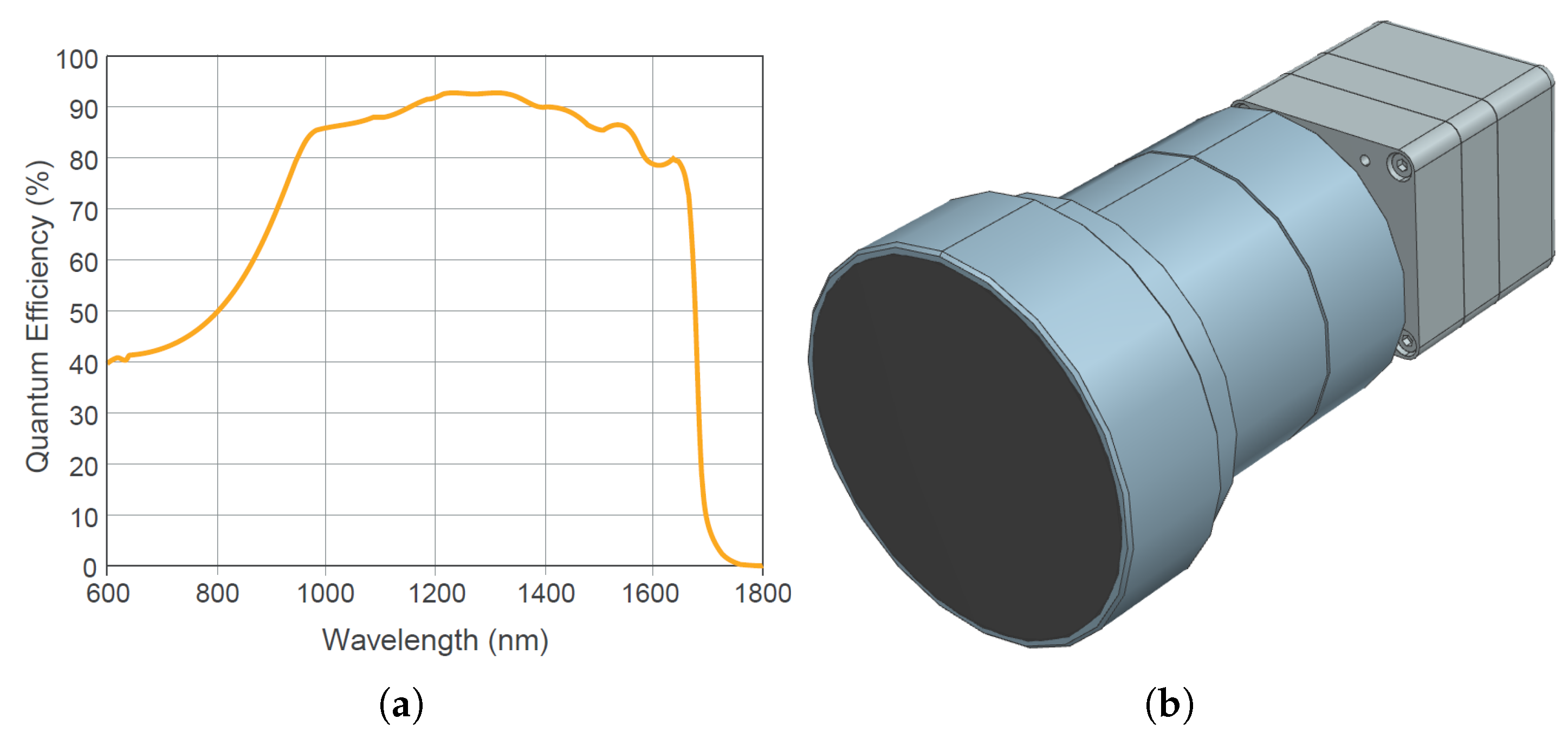
The camera sensor of the NIR camera system of ROMEO is the OWL 640 T from Raptor Photonics (Larne, Northern Ireland) [39]. The selection of this camera is based on a design study conducted during the ROMEO development [40]. It is a COTS camera with an array of InGaAs photodiodes, which are highly sensitive in the NIR. Its quantum efficiency is presented in Figure 8a. It can be seen that the sensors achieve a very high quantum efficiency of more than 90% with the highest sensitivity in the range from 1000 to 1600 nm. Its spectral response matches well with the spectral ranges required for the applications described in the previous section.
For the optics, the COTS NIR lens telescope SR4522-A01 from G&H | Stingray (Keene, NH, USA) is used [42]. Due to the deployment in space, the optics have to be vacuum suitable and all parts have to be fastened to survive the launch. The optics features a focal length of 100 mm to achieve a high spatial resolution for the monitoring of gas flares. Moreover, it has a low f-number of 1.5 to obtain a high photon flux, which is important for exoplanet observations. The main parameters of the NIR camera system are summarized in the following Table 6, and a CAD model of the NIR sensor and optics is illustrated in Figure 8b.
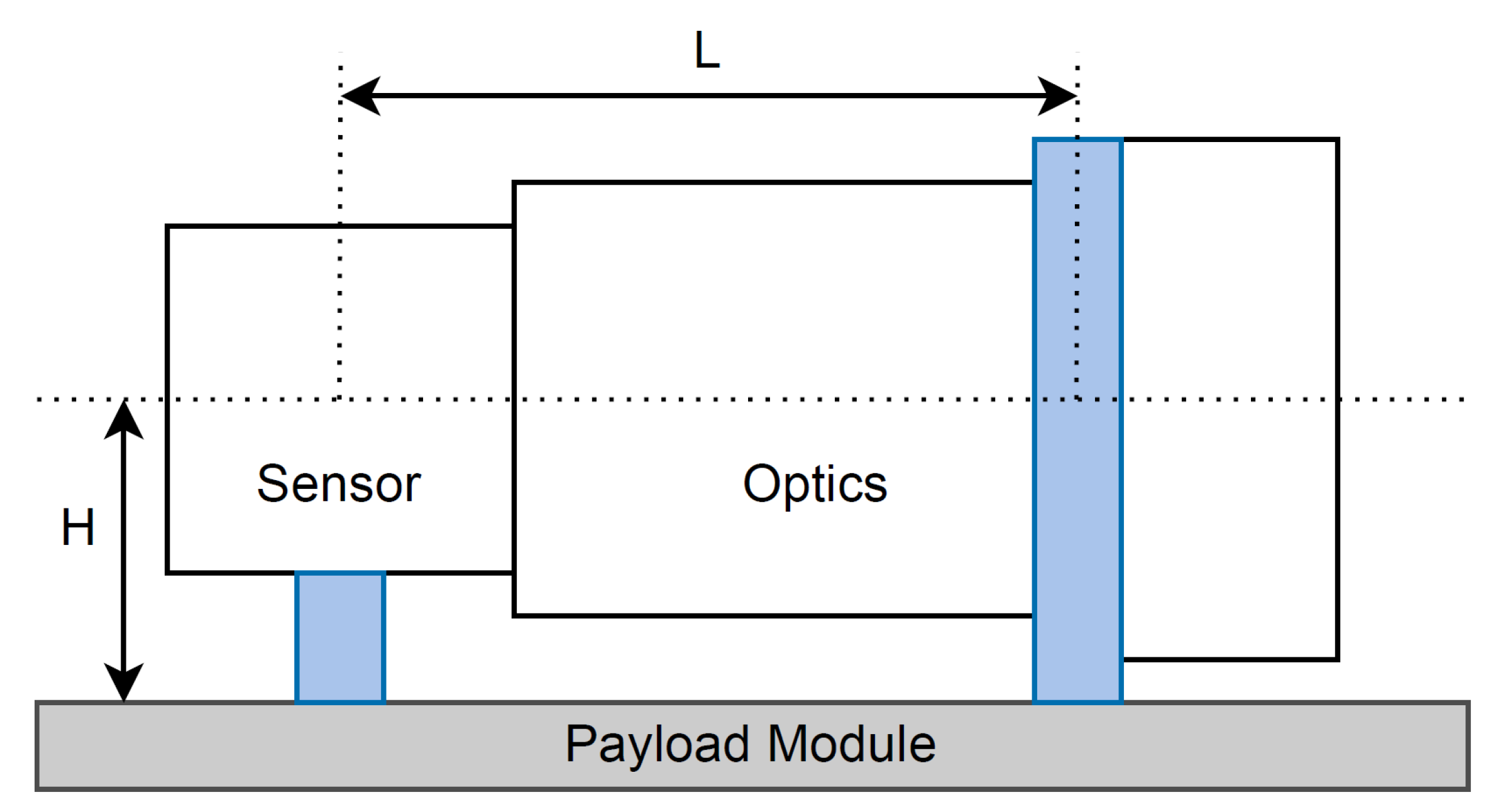
The mounting of the NIR camera system is realized analogue to the multispectral camera system (MICS) of the previously mentioned Flying Laptop [43]. The NIR camera electronics are held with a fixed screw mount, while the optics are clamped in a ring attachment. This attachment is designed with an O-ring clamping mechanism fixating the optics in the radial direction and allows a degree of freedom in the axial direction. A sketch to illustrate the mounting of the NIR camera is shown in Figure 9. Due to this configuration, deformations created by the thermal expansion of the camera system are avoided. In general, the optical alignment of all camera systems, including the star trackers, will be calibrated in orbit by known targets on the Earth or the Moon. In order to prevent changes in this relative alignment, CFRP sandwiches are used as the primary satellite structure. These sandwiches feature a coefficient of thermal expansion of about 10 6 K 1 and offer hereby a suitable thermo-mechanical stability. Tensions due to high differences in thermal expansions between sandwiches and instruments will be reduced by kinematic mountings, such as the fixation of the NIR camera system.
Moreover, the temperatures for an operation in the initial SSO have been calculated, which corresponds to the operations concept described in Section 4.1.4. The maximum temperatures are reached during operation of the NIR camera, while the coldest temperatures are reached in idle mode when all payloads are switched off. The simulations result in temperature ranges of 4 °C to 28 °C for the optics and 5 °C to 35 °C for the sensor. The simulated temperatures are within a sufficient margin of the specified temperature ranges. The interface board is placed inside an electronics box of the satellite bus and therefore has no influence on the performance from a thermo-mechanical perspective. The following formula has been used to assess the pointing difference between hot and cold cases in the radial direction:
tan ( γ ) = H · α A l u m i n u m L · ( Δ T S e n s o r Δ T O p t i c s )
Equation (1) uses the length L between the two mounting points and height H between the optical axis and payload module, as depicted in Figure 9. All relevant components for the radial displacement are made of aluminum with a thermal expansion coefficient α of 23 × 10 6 K−1. The temperature differences at the optics Δ T O p t i c s and the sensor Δ T S e n s o r result in a maximum angular error γ of 14.56”. This corresponds to an angular error of less than a pixel over the complete temperature range, see Section 4.2.2. The pointing of the NIR camera system will be calibrated at the beginning of the mission with the mean temperature of 20 °C. As the angular error caused by temperature gradients is less than a pixel, no further pointing calibration is needed.

4.2.2. Performance of the NIR Camera System

The calculated performance of the NIR camera system is summarized in Table 7. It is important to note that the camera system reaches a spatial resolution of 45 m in the initial orbit, which is a significant improvement compared to the described 276 m to 1000 m of other gas flare observations [18,24,25]. Moreover, the instantaneous field of view (IFOV) is calculated to roughly 20”. The previously stated MPE of the ROMEO satellite is roughly 20” as well, which results in a pointing error of roughly one pixel. However, the variance of the MPE, RPE and PDE for the maximum integration time is smaller than 1% of the MPE, which enables the utilization of the maximum exposure time and image stacking.
Apart from that, the achievable signal-to-noise ratio (SNR) for exoplanet transits has been evaluated. The maximum integration time of the camera sensor is limited to roughly one second. Hence, stacking of images will be used to synthetically increase the exposure time. Typically, an SNR of 7 is required for an acknowledged observation of an exoplanet [3]. Hence, a transit depth of e.g., 1% results in a required measured SNR of 700. Increasing transit depths require lower measured SNRs, which increases the chances of a successful detection. Table 8 summarizes the simulated SNRs dependent on the star’s magnitude and the number of stacked images. For the example of a 1% transit depth, the results indicate that transits of planets around stars with magnitudes of up to 7 to 8 in the NIR spectrum can be successfully detected. For reference, according to the 2Mass star catalog, the number of observable stars with a magnitude up to 7 is already 162,401 [44].
Moreover, several known exoplanets from the exoplanet catalog have been shortlisted in Table 9, which match the achievable SNRs [45]. Particularly promising are the exoplanets HD189733b and HD209458b because of their high stellar magnitude in the NIR spectrum, as well as HIP 65 A b due to its high transit depth. In order to detect their transits with the required SNR of 7, they require a measured SNR of 310, 393 and 85 respectively, which can be achieved with single images. Stacking can further increase the measured SNR to improve the detection probability and certainty. Consequently, the simulations indicate the feasibility of the detection of an exoplanet transit with the presented COTS NIR camera system. All listed exoplanets are so-called hot Jupiters, which are gas giants with very close orbits to their stars, which leads to short orbital periods and high transit depths [46]. Both are favorable for a detection with the transit method. Conversely, Earth-like planets cannot be detected with the NIR camera as they require much higher SNRs than the simulated SNRs in Table 8.

5. Conclusions

This paper presents the ROMEO mission and the two in-house developed camera systems. Firstly, the mission design is summarized with its various phases and varying spatial resolutions and FOVs between 235 and 2500 km altitude, which are advantageous for scientific camera applications. Even the constraints of small volume and limited resources on board ROMEO prove suitable for significant climate and sustainability-related research. Due to radiation mitigation solutions, modern, cost-effective camera systems could enable scalable and affordable climate monitoring from space. This is especially relevant for smaller research facilities, universities or constellations with tens or hundreds of devices.
Then, the PR camera system is presented. Its primary application is PR, but it also supports the evaluation of data generated by the Earthshine telescope by imaging the cloud coverage. It features a wide FOV to cover the complete visible Earth from the final apogee. It uses the KissCAM V2.0, a COTS camera designed for LEO applications, which is why it is deployed in a cold redundant setup with shielding to achieve a higher system reliability.
Lastly, the NIR camera system is described. It will measure gas flares to contribute to climate change research and aims to be the first small satellite mission to detect an exoplanet in the NIR spectrum. Apart from that, several other observations, e.g., active volcanoes or wildfires, are possible. Aligned with the mission philosophy, the COTS NIR camera OWL 640 T from Raptor Photonics with InGaAs photodiodes and active cooling is used. The optics with 100 mm focal length and an f-number of 1.5 enables sufficient spatial resolution for the intended Earth observation tasks while achieving a high photon flux for the exoplanet transit detection. Simulations indicate that there are several exoplanets that can be detected with this camera system, and the calculated ground sampling distances are superior to the spatial resolution of previous missions for the detection of gas flares.


Author Contributions

Conceptualization, D.S.; methodology, D.S.; software, D.S.; validation, D.S., T.L. and K.W.; formal analysis, D.S.; investigation, D.S.; resources, D.S., T.L., K.W. and M.L.; data curation, D.S.; writing—original draft preparation, D.S. and T.L.; writing—review and editing, D.S., T.L., K.W., M.L. and S.K.; visualization, D.S., T.L. and K.W.; supervision, M.L. and S.K.; project administration, T.L., M.L. and S.K.; funding acquisition, T.L., M.L. and S.K. All authors have read and agreed to the published version of the manuscript.

Funding

The ROMEO development of the core avionics, as well as the phases C and D, is supported by the Federal Ministry of Research, Technology and Space of Germany via the German Space Agency at DLR (50RU2102 and 50RU2200). The flight hardware of the satellite is supported by the German Research Society (DFG) (INST 41/1139-1 FUGG).

Data Availability Statement

The original contributions presented in this study are included in the article. Further inquiries can be directed to the corresponding author.

Acknowledgments

The copyright permissions to display the optics and camera sensors were kindly provided by Raptor Photonics, MVP Aerospace and G&H | Stingray.

Conflicts of Interest

The authors declare no conflicts of interest.

Abbreviations

The following abbreviations are used in this manuscript:
AOCSAttitude and Orbit Control System
AOPArgument of Perigee
CADComputer-Aided Design
CFRPCarbon Fibre Reinforced Plastic
CMOSComplementary Metal Oxide Semiconductor
COTSCommercial Off-The-Shelf
DTUDanish Meteorological Institute
EPSElectric Power System
FOVField of View
FPGAField Programmable Gate Array
HDHigh Definition
HILHardware-In-The-Loop
IFOVInstantaneous Field of View
LCLLatch-up Current Limiter
LEOLow Earth Orbit
LNGLiquefied Natural Gas
MEOMedium Earth Orbit
MICSMulti Spectral Camera System
MPEMean Pointing Error
NIRNear-Infrared
OBCOn-board Computer
PDEPerformance Drift Error
PRPublic Relations
RAANRight Ascension of the Ascending Node
ROMEOResearch and Observation in Medium Earth Orbit
RPERelative Pointing Error
SDStandard Definition
SNRSignal-to-Noise Ratio
SSOSun-Synchronous Orbit
WPSWater Propulsion System

References

  1. Kulu, E. NewSpace Index. Available online: https://www.newspace.im/ (accessed on 26 January 2026).
  2. University of Stuttgart. ROMEO. Available online: https://www.irs.uni-stuttgart.de/en/research/satellitetechnology-and-instruments/smallsatelliteprogram/romeo/ (accessed on 15 January 2026).
  3. Clanton, C.; Beichman, C.; Vasisht, G.; Smith, R.; Gaudi, B.S. Precision Near-Infrared Photometry for Exoplanet Transit Observations. I. Ensemble Spot Photometry for an All-Sky Survey. Publ. Astron. Soc. Pac. 2012, 124, 700–713. [Google Scholar] [CrossRef][Green Version]
  4. Loeffler, T.; Burgdorf, J.; Paetschke, S.; Hildebrandt, J.; Boetsch-Zavřel, L.; Petri, J.; Kuhm, H.; Lengowski, M.; Klinkner, S. Research and Observation in Medium Earth Orbit (ROMEO) with a Cost-Effective Microsatellite Platform. In Proceedings of the 72nd International Astronautical Congress (IAC), Dubai, United Arab Emirates, 25–29 October 2021. [Google Scholar]
  5. Loeffler, T.; Burgdorf, J.; Hildebrandt, J.; Boetsch-Zavřel, L.; Holeczek, C.; Paetschke, S.; Kanzow, M.; Largent, P.; Petri, J.; Lengowski, M.; et al. Preliminary Design of the Radiation Protection of the ROMEO Satellite in the lower Medium Earth Orbit. In Proceedings of the 73rd International Astronautical Congress (IAC), Paris, France, 18–22 September 2022. [Google Scholar]
  6. Waizenegger, K.; Loeffler, T.; Burgdorf, J.; Acker, D.; Boetsch-Zavřel, L.; Eggert, M.; Hildebrandt, J.; Holeczek, C.; Kanzow, M.; Lengowski, M.; et al. System Design of the Satellite ROMEO for the Inner Radiation Belt of the Medium Earth Orbit. In Proceedings of the 75th International Astronautical Congress (IAC), Milan, Italy, 14–18 October 2024. [Google Scholar] [CrossRef]
  7. Flohrer, T.; Ventura, S.; Villar, P.; Lemmens, S.; Soares, T.; Courson, S.; Letizia, F. ESA’s Zero Debris Approach: Publication of ESA’s space debris mitigation requirements. In Proceedings of the 45th COSPAR Scientific Assembly, Busan, Republic of Korea, 13–21 July 2024. [Google Scholar]
  8. Loeffler, T.; Burgdorf, J.; Klinkner, S. Orbit-raising strategies for cost-efficient access to lower Medium Earth Orbit without risking space debris. Acta Astronaut. 2021, 185, 37–41. [Google Scholar] [CrossRef]
  9. Vikas, A. Development and Characterization of Novel Static Water Fed Electrolyser for a Satellite Water Propulsion System. In Proceedings of the Space Propulsion Conference, Glasgow, Scotland, 20–23 May 2024. [Google Scholar]
  10. Hildebrandt, J.; Vikas, A.; Loeffler, T.; Fasoulas, S.; Herdrich, G.; Klinkner, S. Satellite Water Propulsion: 3D Printed Ceramic Thruster & Space Debris Mitigation Concept. In Proceedings of the Aerospace Europe Conference, Lausanne, Switzerland, 9–13 July 2023. [Google Scholar]
  11. Winther, K.; Thejll, P.; Fléron, R. Lunar Imaging Earthshine Telescope, juLIET, for Earth Albedo Measurements. In Proceedings of the EGU General Assembly 2024, Vienna, Austria, 14–19 April 2024. [Google Scholar] [CrossRef]
  12. Landis Markley, F.; Crassidis, J.L. Fundamentals of Spacecraft Attitude Determination and Control; Springer: New York, NY, USA, 2014. [Google Scholar]
  13. Lengowski, M. Entwicklung Mechanisch/Thermischer Architekturen und Innovativer Strukturelemente im Rahmen Zweier Satellitenmissionen des Stuttgarter Kleinsatellitenprogramms. Ph.D. Thesis, University of Stuttgart, Stuttgart, Germany, 2014. [Google Scholar]
  14. ESA. Flight Ticket Initiative. Available online: https://spacetransportation.esa.int/boost/flight-ticket-initiative/ (accessed on 10 April 2026).
  15. Seelow, S. Test and Operations Analysis of a PR Camera for the Small Satellite ROMEO. Bachelor‘s Thesis, University of Stuttgart, Stuttgart, Germany, February 2025. [Google Scholar]
  16. MVP Aerospace Ltd. KissCAM V2 Datasheet and User Manual. Available online: https://catalog.orbitaltransports.com/content/brands/MVP/SmallSat_Catalog_MVP_Camera_Datasheet_V2.pdf (accessed on 15 January 2026).
  17. MVP Aerospace Ltd. KissCAM V1.0. Available online: https://mvpaerospace.com/products/ (accessed on 15 January 2026).
  18. Elvidge, C.D.; Zhizhin, M.; Baugh, K.; Hsu, F.-C.; Ghosh, T. Methods for Global Survey of Natural Gas Flaring from Visible Infrared Imaging Radiometer Suite Data. Energies 2016, 9, 14. [Google Scholar] [CrossRef]
  19. Ayasse, A.K.; Dennison, P.E.; Foote, M.; Thorpe, A.K.; Joshi, S.; Green, R.O.; Duren, R.M.; Thompson, D.R.; Roberts, D.A. Methane Mapping with Future Satellite Imaging Spectrometers. Remote Sens. 2019, 11, 3054. [Google Scholar] [CrossRef]
  20. Sánchez-García, E.; Gorroño, J.; Irakulis-Loitxate, I.; Varon, D.J.; Guanter, L. Mapping methane plumes at very high spatial resolution with the WorldView-3 satellite. Atmos. Meas. Tech. 2022, 15, 1657–1674. [Google Scholar] [CrossRef]
  21. World Bank Group. Global Flaring and Methane Reduction Partnership (GFMR). Available online: https://www.worldbank.org/en/programs/gasflaringreduction/gas-flaring-explained (accessed on 23 January 2026).
  22. Ogwu, C.E.; Oluwaferanmi, F.M.; Johnson, A.I. Impact of Gas Flaring on Climate Change. Glob. Sci. J. 2021, 9, 1781–1790. [Google Scholar]
  23. Mar, K.A.; Unger, C.; Walderdorff, L.; Butler, T. Beyond CO2 equivalence: The impacts of methane on climate, ecosystems, and health. Environ. Sci. Policy 2022, 134, 127–136. [Google Scholar] [CrossRef]
  24. Pack, D.; Hardy, B.S.; Santiago, J.R.; Pietrowski, D.; Mauerhan, J.C.; Zittel, P.F.; Rowen, D.W.; Purcell, C.R.; Thiyanaratnam, P.; Gelinas, L.J.; et al. Flight Operations of Two Rapidly Assembled CubeSats with Commercial Infrared Cameras: The Rogue-Alpha, Beta Program. In Proceedings of the 35th Annual Small Satellite Conference, Online, 6–11 August 2021. [Google Scholar]
  25. Pack, D.; Coffman, C.M.; Santiago, J. A Year in Space for the CUbesat MULtispectral Observing System: CUMULOS. In Proceedings of the 33rd Annual AIAA/USU Conference on Small Satellites, Logan, UT, USA, 3–8 August 2019. [Google Scholar]
  26. Quanz, S.; Kammerer, J.; Defrère, D.; Absil, O.; Glauser, A.M.; Kitzmann, D. Exoplanet science with a space-based mid-infrared nulling interferometer. Opt. Infrared Interferom. Imaging VI 2018, 10701, 415–431. [Google Scholar] [CrossRef]
  27. Smith, M.; Seager, S.; Pong, C.; Villasenor, J.S.; Ricker, G.; Miller, D.; Knapp, M.; Farmer, G.; Jensen-Clem, R. ExoplanetSat: Detecting transiting exoplanets using a low-cost CubeSat platform. In Space Telescopes and Instrumentation 2010: Optical, Infrared, and Millimeter Wave; SPIE: Bellingham, WA, USA, 2010. [Google Scholar] [CrossRef]
  28. NASA. Near Infrared Camera (NIRCam). Available online: https://science.nasa.gov/mission/webb/nircam/ (accessed on 27 March 2026).
  29. NASA. TESS (Transiting Exoplanet Survey Satellite). Available online: https://science.nasa.gov/mission/tess/ (accessed on 27 March 2026).
  30. NASA. Kepler/K2. Available online: https://science.nasa.gov/mission/kepler/ (accessed on 27 March 2026).
  31. ESA. Plato. Available online: https://www.esa.int/Science_Exploration/Space_Science/Plato (accessed on 27 March 2026).
  32. ESA. Ariel. Available online: https://www.esa.int/Science_Exploration/Space_Science/Ariel (accessed on 27 March 2026).
  33. Knapp, M.; Seager, S.; Demory, B.; Krishnamurthy, A.; Smith, M.; Pong, C.; Bailey, V.; Donner, A.; Pasquale, P.; Campuzano, B.; et al. Demonstrating High-precision Photometry with a CubeSat: ASTERIA Observations of 55 Cancri e. Astron. J. 2020, 160, 23. [Google Scholar] [CrossRef]
  34. NASA. Pandora. Available online: https://science.nasa.gov/mission/pandora/ (accessed on 27 March 2026).
  35. NASA. The Habitable Zone. Available online: https://science.nasa.gov/exoplanets/habitable-zone/ (accessed on 22 January 2026).
  36. University of Rochester. Number Densities of Stars of Different Types in the Solar Vicinity. Available online: https://www.pas.rochester.edu/~emamajek/memo_star_dens.html (accessed on 22 January 2026).
  37. Ferguson, H.; Dickinson, M.; Williams, R. The Hubble Deep Fields. Annu. Rev. Astron. Astrophys. 2000, 38, 667–715. [Google Scholar] [CrossRef]
  38. ESO. SPECULOOS Southern Observatory. Available online: https://www.eso.org/public/teles-instr/paranal-observatory/speculoos/ (accessed on 23 January 2026).
  39. Raptor Photonics. Owl 640 T. Available online: https://www.raptorphotonics.com/products/owl-640-t/ (accessed on 23 January 2026).
  40. Kimmerle, P. Feasibility Study of Commercial NIR Cameras as Payload on the Small Satellite ROMEO. Bachelor‘s Thesis, University of Stuttgart, Stuttgart, Germany, 2024. [Google Scholar]
  41. Satsearch. Owl 640 T Digital VIS-SWIR Camera. Available online: https://satsearch.co/products/raptor-photonics-owl-640-t-digital-vis-swir-camera (accessed on 30 January 2026).
  42. G&H Group. G&H | Stingray. Available online: https://gandh.com/stingray (accessed on 8 April 2026).
  43. Böhringer, F. Nutzlasten des universitären Kleinsatelliten Flying Laptop—Entwicklung, Aufbau und Qualifikation. Ph.D. Thesis, University of Stuttgart, Stuttgart, Germany, 2014. [Google Scholar]
  44. Caltech. NASA/IPAC Infrared Science Archive (IRSA). Available online: https://irsa.ipac.caltech.edu/Missions/2mass.html (accessed on 23 January 2026).
  45. Variable Star and Exoplanet Section of Czech Astronomical Society. Exoplanet Catalog. Available online: https://var.astro.cz/en/Exoplanets (accessed on 23 January 2026).
  46. NASA. Hot Jupiter. Available online: https://science.nasa.gov/resource/hot-jupiter/ (accessed on 30 March 2026).
Figure 1. Orbital profile of the Research and Observation in Medium Earth Orbit (ROMEO) mission phases, including the natural decay with altitudes of perigee (blue) and apogee (red). The plotted data is for the case of the fastest transfer time, which results in a transfer duration of five months, while the phase in the medium Earth orbit (MEO) is prolonged accordingly.
Aerospace 13 00411 g001
Figure 3. Payload module of the ROMEO satellite. The NIR camera and the two PR cameras can be seen in the front corner facing to the right.
Aerospace 13 00411 g003
Figure 4. Simulated field of view (FOV) of the PR camera system over central Europe for different altitudes: (a) 235 km (lowest perigee, final orbit); (b) 450 km (initial sun-synchronous orbit); and (c) 2500 km (highest apogee, final orbit) [15].
Aerospace 13 00411 g004
Figure 5. CAD model of the KissCAM V2.0, including dimensions [16].
Aerospace 13 00411 g005
Figure 6. Power and data schematic for the PR camera system showing the electric power system (EPS) with latch-up current limiter (LCL), connectors (PRC) and the on-board computer (OBC).
Aerospace 13 00411 g006
Figure 7. (a) CAD model of the assembly of the PR camera system, including mounting bracket, housings, and both cameras. (b) Sectional view of one camera inside its housing with 130° FOV. The cameras are highlighted in orange in both images [16].
Aerospace 13 00411 g007
Figure 8. (a) Quantum efficiency of the image sensor [39]. (b) CAD model of the Owl 640 T and the SR4522-A01 optics from G&H | Stingray with 100 mm focal length [41,42].
Aerospace 13 00411 g008
Figure 9. Sketch of the mounted NIR camera system. Aluminum fixtures (blue) are used to mount the sensor and optics to the payload module (grey). The housings of the sensor and optics are made of aluminum as well, while the payload module is made of the described CFRP sandwich structures.
Aerospace 13 00411 g009
Table 2. Relevant performance parameters of the attitude and orbit control system (AOCS) for a time window of 1 s, which corresponds to the maximum integration time of the NIR camera system.
CharacteristicValue
Average mean pointing error (MPE) 19.82
Windowed MPE variance 0.12
Windowed relative pointing error (RPE) variance 0.03
Windowed performance drift error (PDE) variance 2.79 × 10 7
Table 3. Requirements of the camera systems on board the ROMEO satellite.
IDRequirement
1The camera systems shall fit into a volume of 40 × 15 × 15 cm3
2The camera systems shall have a mass of < 1.5 kg
3The camera systems shall require an avg. of 5 W for max. 15 min in operational mode
4The camera systems shall produce < 0.5 GB/day
5The PR camera system shall image the complete Earth from 2500 km altitude
Table 4. Key parameters of one PR camera including optics [16].
ParameterValue
Field of view128 × 96.4°
Spectral sensitivityBayer color pattern
Number of pixels1280 × 960
Pixel size3.75 × 3.75 μm2
Shutter modeRolling shutter
Supply voltage3.3 or 5 V DC
Power consumptionRoughly 0.26 W
Dimensions38 × 20 × 17 mm3
Mass10 g
Optical interfaceC mount
Table 5. System performance of the PR camera system for nadir pointing.
Parameter235 km Altitude450 km Altitude2500 km Altitude
Ground sampling distance420 m804 m4464 m
Field of view on Earth1054 × 539 km22270 × 1057 km2Visible Earth
Table 6. Key parameters of the NIR camera system [39].
ParameterValue
Spectral sensitivity 0.6 to 1.7 μm
Number of pixels640 × 512
Pixel size10 × 10 μm2
Active area6.4 × 5.12 mm2
Shutter modeGlobal shutter
Focal length100 mm
F-number1.5
Supply voltage12 V DC
Power consumption<4 W (nominal)
<15 W (peak)
Specified temperature ranges 20 to 55 °C (operating)
30 to 60 °C (non-operating)
Sensor dimensions67.6 × 50 × 50 mm3
Sensor mass247 g
Optical InterfaceC mount
Table 7. System performance of the NIR camera system.
Parameter235 km Altitude450 km Altitude2500 km Altitude
Ground sampling distance23.5 m45 m250 m
Field of view15.0 × 12.0 km2 28.8 × 23.0 km2 160.0 × 128.0 km2
Instantaneous field of view5.73 × 10−3∘ ≡ 20.62”
Angular field of view2.93°
Frame rate1 to 60 Hz
Spectral range600 to 1700 nm
Table 8. Simulated signal-to-noise ratios (SNR) for different magnitudes of the observed star in the NIR spectrum and for various numbers of stacked images.
Number of Stacked Images
Star Magnitude 1 5 10 20 30
56661489210529773646
6415929131318572274
725557080611401396
8151338479677829
984187265374458
Table 9. Known exoplanets from the exoplanet catalog with favorable characteristics for a detection with the NIR camera system in the NIR spectrum [45]. The stellar magnitudes have been calculated as mean magnitudes in the J (1235 nm) and H (1662 nm) bands.
ExoplanetTransit DepthTransit DurationOrbital PeriodStellar Magnitude
HD189733b2.26% 1.84 h 2.22 days 5.83
HD209458b1.78% 2.96 h 3.52 days6.48
KELT-20b1.31% 3.58 h 3.47 days 7.44
WASP-33b1.22% 2.84 h 1.22 days 7.55
HIP 65 A b8.20% 0.78 h 0.98 days 8.66
Disclaimer/Publisher’s Note: The statements, opinions and data contained in all publications are solely those of the individual author(s) and contributor(s) and not of MDPI and/or the editor(s). MDPI and/or the editor(s) disclaim responsibility for any injury to people or property resulting from any ideas, methods, instructions or products referred to in the content.