Article

BPANS: A Turbulence Model That Spans the Speed Range from Subsonic to Supersonic Flows

Department of Mechanical and Aerospace Engineering, University of Alabama in Huntsville, Huntsville, AL 35899, USA
*
Author to whom correspondence should be addressed.
Aerospace 2026, 13(2), 119; https://doi.org/10.3390/aerospace13020119
Submission received: 9 December 2025 / Revised: 19 January 2026 / Accepted: 23 January 2026 / Published: 26 January 2026
(This article belongs to the Special Issue Advancing Fluid Dynamics in Aerospace Applications)

Abstract

Unsteady turbulent flows are present in most engineering applications of practical relevance. In aeronautics, these applications span the speed range from subsonic to hypersonic flows. Thus, it is important that our mathematical models and numerical techniques can represent the various flow regimes in a seamless way. The latter is the main motivation of the current paper, which extends the PANS turbulence model to compressible and high-speed flows. The new model, called BPANS-CC, blends the (k,ε) and (k,ω) versions of PANS. In addition, a compressibility correction is added to the new model to expand its simulation range into the compressible high-speed flow regime. The new model was implemented in various CFD software, both academic and commercial. Several well-known benchmark problems were used to test the new model, and the results are in good agreement with experimental data.

1. Introduction

The growth of computational power in the last twenty-five years has triggered renewed interest in the development of inexpensive unsteady simulations of turbulent flows. This in turn has led to the development of numerous modeling methods that aim to yield accurate solutions at a reasonable computational cost. One of the first methods to be developed is Unsteady Reynolds Averaged Navier–Stokes also known as Very Large Eddy Simulation. This method, though inexpensive, is unable to resolve the random fluctuations associated with turbulence [1]. When used in free shear flows with sufficient grid resolution, it can provide useful information about large-scale structures, particularly about the shedding frequency. It is well known that the most accurate method for capturing the physics of unsteady flows is the Direct Numerical Simulation (DNS) method. In this method, the full Navier–Stokes equations are solved with no simplifying assumptions. This, however, comes at a very high computational cost. In addition, its limitation to low-Reynolds-number flows makes it less attractive. To overcome the Reynolds number limitation, the Kolmogorov hypothesis [2] can be used to take advantage of the universality of the small scales of turbulence at high enough Reynolds numbers. The scale separation proposed by Kolmogorov is the basis for a new method called Large Eddy Simulation (LES). In this method, the largest scales of motion are fully resolved, while the smallest scales are modeled [3,4,5,6,7]. This scale filtering operation reduces the computational cost and makes LES more attractive for large computations. However, even with this scale separation operation, LES computations remain expensive at high Reynolds numbers. The latter has led to the development of even cheaper methods.
In recent years, a new family of methods known as Hybrid RANS/LES has emerged. These methods, also known as bridging methods, take advantage of the vast knowledge developed in RANS to bridge the gap in the wavenumber space with LES. One of the most widely used methods is the Detached Eddy Simulation (DES) method of Squires et al. [8]. In DES, the wall region is modeled with RANS, while LES is used away from viscous walls. There are several variants of DES in the literature, such as that in [9], each claiming an improvement over the original model. Another popular bridging method is Partially Averaged Navier–Stokes (PANS) by Girimaji [10,11,12,13,14,15]. PANS can be used to smoothly transition from URANS to DNS by changing the values of some resolution control parameters and refining the grid accordingly. Two PANS models exist in the literature, one based on the Jones and Launder RANS (k-ε) model [10] and the other based on the Wilcox RANS (k-ω) model [14].
In the current study, a blended PANS model, BPANS, is used. The model was introduced in [16] for incompressible flows and extended to compressible flows through the variant BPANS-CC in [17]. The model is based on the (k-ω) and (k-ε) versions of PANS and uses the Menter blending idea introduced in RANS [18]. The goal was to take advantage of the near-wall benefits of PANS (k-ω) and the far-field benefits of PANS (k-ε) with the overarching goal of improving predictions from the resulting model. The remainder of the paper is organized as follows: the mathematical model is derived in Section 2, the results and discussion are presented in Section 3, and the concluding remarks are given in Section 4.

2. Mathematical Model and Method of Solution

The governing equations for compressible reacting flows are
t ρ ¯ y s ~ + x j ρ ¯ y s ~ u j ~ x j J s j ¯ = ω ˙ s ~
t ρ ¯ u i ~ + x j ρ ¯ u i ~ u j ~ + p ¯ δ i j x j τ i j ¯ = 0
t ρ ¯ E ~ + x j ρ ¯ E ~ + p ¯ u j ~ x j u k ~ τ k j ¯ + q j ˙ ¯ + s = 1 N s h s ~ J s j ¯ + μ ~ + σ k μ t k x j = 0
where the Favre-averaged and Reynolds-averaged variables are denoted by ( .   ) ~ and ( . ) ¯ , respectively; y s ~ denotes species s mass fraction; ρ ¯ = s = 1 N s ρ ¯ y s ~ is the density of the gas mixture; u i ~ is the velocity’s ith component; and E ~ the total energy of the gas mixture. The jth component of the diffusive flux is J s j ¯ , with ω s ˙ ~ being the chemical source term of species s, the pressure is p ¯ , τ i j ¯ the shear stress tensor, q j ˙ ¯ the jth component of the heat flux, and h s ~ the enthalpy of species s. The turbulent viscosity μ t is modeled using the Boussinesq eddy viscosity assumption [19]. A constant turbulent Prandtl number and Schmidt number of 0.9 and 1.0 are used to compute turbulent thermal conductivity κ t and turbulent diffusivity D t , respectively. The thermodynamic properties are computed using the NASA polynomials [20] on a per-species basis. Collision integrals [21] are used to compute the laminar transport properties: diffusivity D s ~ , viscosity μ ~ , and thermal conductivity κ ~ . The ideal gas law is used for the pressure, Fourier’s law, q ` ¯ j = ( κ ~ + κ t ) ( T ~ x j ) , is used to model heat transfer, and Fick’s law, J s j ¯ = ρ ¯ D s ~ + D t y s ~ / x j , is used to model species diffusion. A Newtonian model is used to model shear stress, τ i j ¯ = 2 μ ~ + μ t S i j ¯ 2 / 3 ρ ¯ k δ i j , where the strain rate tensor is computed as S i j ¯ = 1 2 u ~ i x j + u ~ j x i 1 3 u ~ k x k δ i j .
The newly developed hybrid RANS-LES turbulence model, known as BPANS-CC [17], is used in our computations.
t ρ ¯ k + x j ρ ¯ k u j ~ x j μ ~ + σ k μ t k x j = S k
t ρ ¯ ω + x j ρ ¯ ω u j ~ x j μ ~ + σ ω μ t ω x j = S ω
S k = m i n P , 20 β ρ ¯ ω k β ρ ¯ ω k + S k C C
S ω = ρ ¯ γ μ t β ρ ¯ ω 2 + 2 1 F 1 ρ ¯ σ ω 2 ω k x j ω x j + S ω C C
where
P = τ ¯ i j t u r b u i ~ x j
τ ¯ i j t u r b = 2 μ t S ¯ i j 2 3 ρ ¯ k δ i j
μ t = ρ ¯ k ω
F 1 = t a n h a r g 1 4
a r g 1 = m i n m a x k β ω d ,   500 μ ~ ρ ¯ d 2 ω , 4 ρ ¯ σ ω 2 k C D k ω d 2
C D k ω = m a x 2 ρ ¯ σ ω 2 1 ω k x j ω x j , 10 20
The model constants are a blend of the inner (1) and outer (2) constants:
= F 1 1 + 1 F 1 2
The BPANS-adjusted constants for the model include the ratios of under-resolved-to-total turbulent kinetic energy, f k , and dissipation, f ε , and are listed below:
β = 0.09 ,   κ = 0.41 ,
γ 1 = 5 9 ,   γ 2 = 0.42 ,   σ ω 1 = 2.0 f k 2 f ε ,   σ ω 2 = 1.3 f k 2 f ε
σ k 1 = 2.0 f k 2 f ε ,   σ k 2 = f k 2 f ε
β 1 = 0.05 1 f k f ε + 0.075 f k f ε
β 2 = 0.0378 + 0.045 f k f ε
The “CC” source terms utilize the Suzen and Hoffman compressibility correction [22] experimentally fit to match turbulent compressible mixing data. Two additional sources are added to the total dissipation: one dissipation term due to compressibility effects and another term to include additional dissipation due to pressure dilatation. The source terms are given as
S k C C = 1 F 1 α 1 ρ ¯ β k ω M t 2 + p d ¯
S ω C C = 1 F 1 α 1 ρ ¯ β ω 2 M t 2 ρ ¯ μ t p d ¯
with
p d ¯ = α 2 ρ ¯ P k M t 2 + α 3 ρ ¯ ε M t 2
where P k is the production of the turbulent kinetic energy, and M t = 2 k / a 2 is the turbulent Mach number, with a being the local speed of sound. The pressure dilatation coefficients are fit by Sarkar [23] based on DNS data, and the additional dissipation is fit on experimental data. The coefficients are α 1 = 1.0 , α 2 = 0.4 , and α 3 = 0.2 .
The governing equations are solved using FUN3D (FUN3D-14.1), an unstructured grid node-based finite-volume CFD solver developed at NASA’s Langley Research Center [24], and open source software S U 2 [25].

3. Results and Discussion

3.1. Subsonic Flow Past a Backward Facing Step

The backward-facing step flow presents a challenging problem for turbulence modeling, despite its simple geometry, and is used as a standard test case for validating new turbulence models. The physics include boundary layer separation from the edge of the step, shear layer reattachment downstream, a recirculation region near the step, and accompanying turbulent motion of the fluid. The experimental setup described in [26] is considered. The freestream velocity is 44.2 m/s at atmospheric total pressure and temperature. This flow condition corresponds to a freestream Mach number of approximately 0.13, and the Reynolds number based on step height is 37,500.
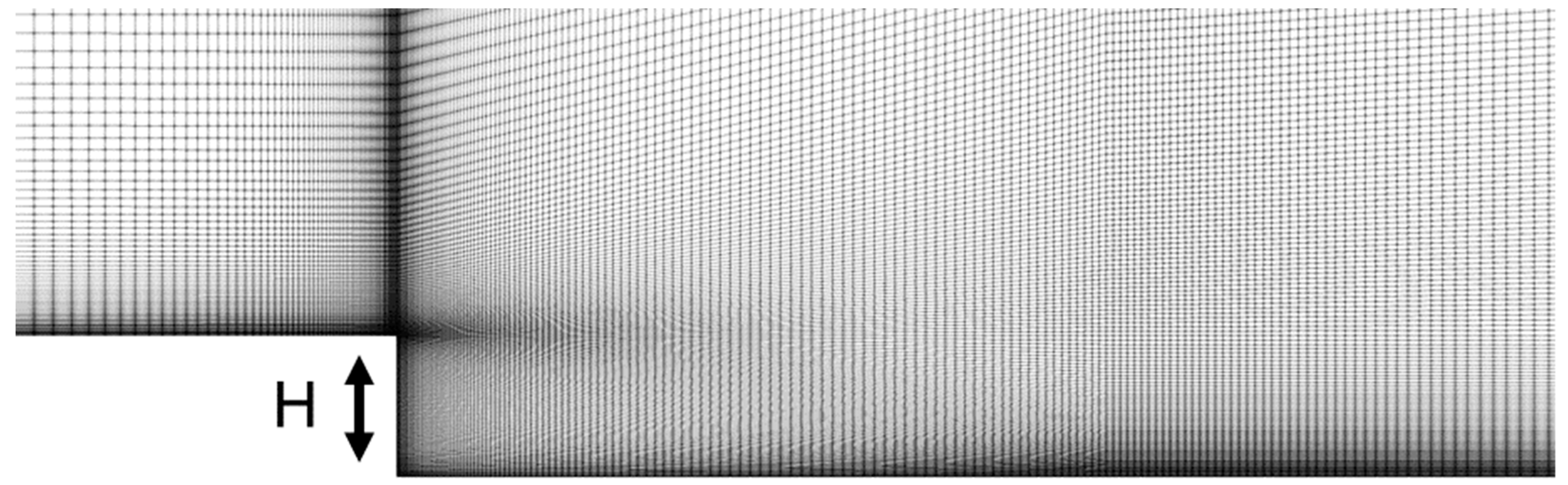
The computational domain is 10 H × 5 H × 3 H upstream of the step and 20 H × 6 H × 3 H downstream of the step. The step height is H, and the dimensions are given in the streamwise, normal, and spanwise directions, respectively. A hexahedral multi-block structured grid is generated, and a side view of it is shown in Figure 1. The grid contains 2.6 million cells, with the span consisting of 60 cells. The grid has y + < 1 and z + < 60 for the first point off the wall for the domain. The streamwise resolution varies from x + 1 to x + 140 at 5 H downstream. Following the reference and previous studies with comparable resolution, f k was set to 0.2 and f ε was set to 0.667 (from reference [10], 0 < f k f ϵ 1 ; in addition, this is a relatively-low-Reynolds-number flow so f ε has to be less than 1 with an appropriate grid resolution). A low dissipation Roe scheme is used to reduce dissipation because the solvers used in these studies are built for compressible flows. The boundary conditions were as follows: the walls were treated as adiabatic and no-slip, side walls were treated as periodic, the inlet was set to uniform freestream conditions, and the outlet was set to a back pressure at slightly below atmospheric pressure. The time step was set to 5   μ s , which is approximately 70 non-dimensional time steps per reference time base on the freestream velocity and step height. Statistics were averaged in time and across the span in space over 50 flow-through times.
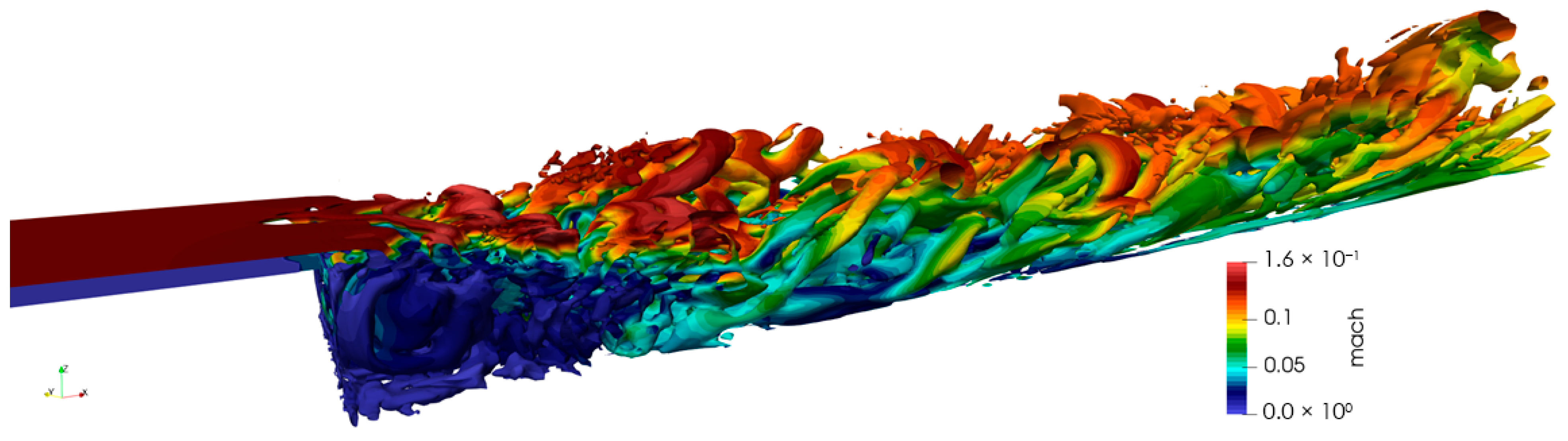
To visualize flow structures, isosurfaces of the Q-criterion are plotted in Figure 2. The backward-facing step is clearly responsible for most if not all of the downstream turbulence. The step causes flow separation with a recirculation zone (dark blue area). Downstream of the reattachment location, one can see horseshoe vortices and other structures as well.
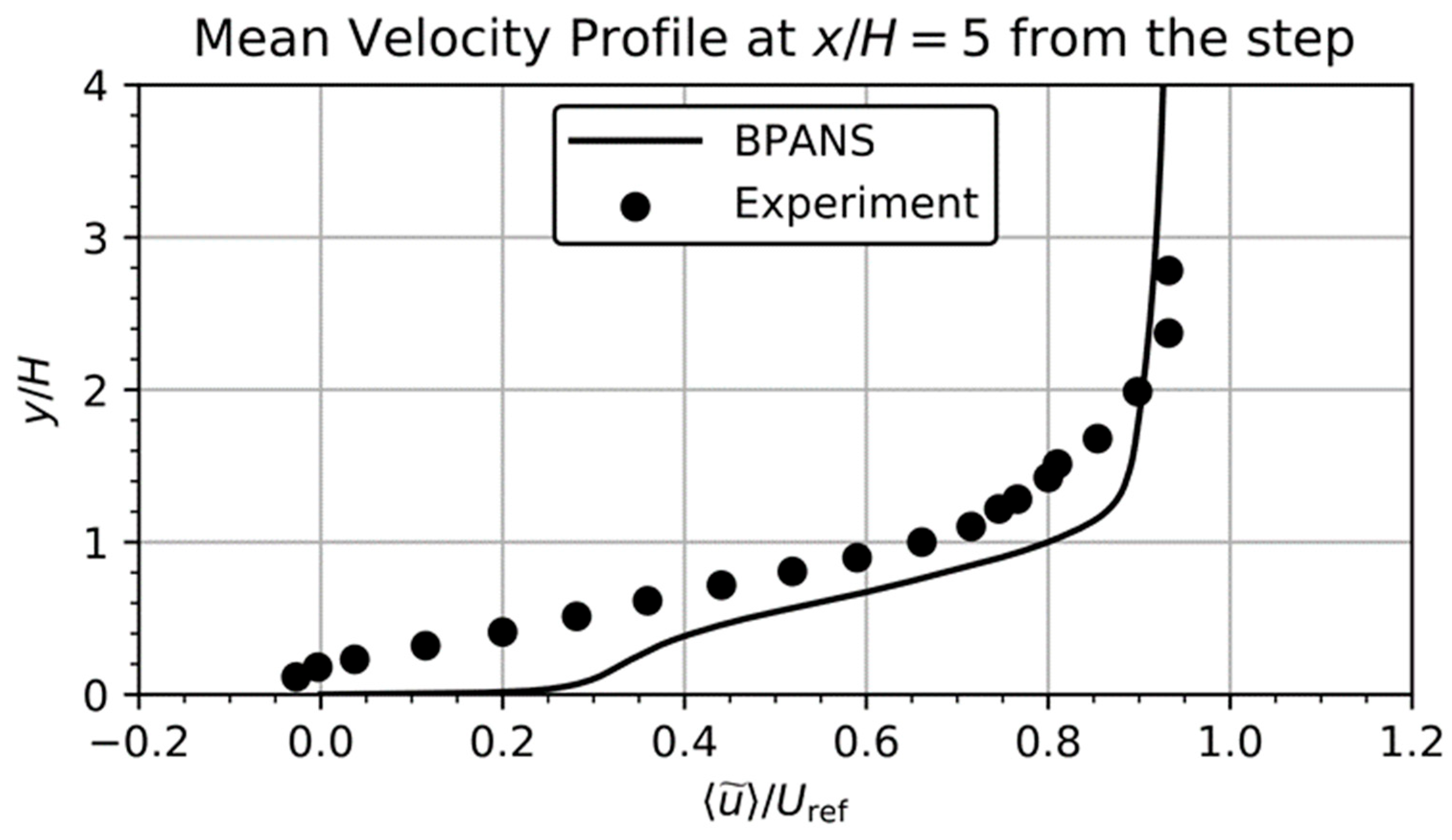
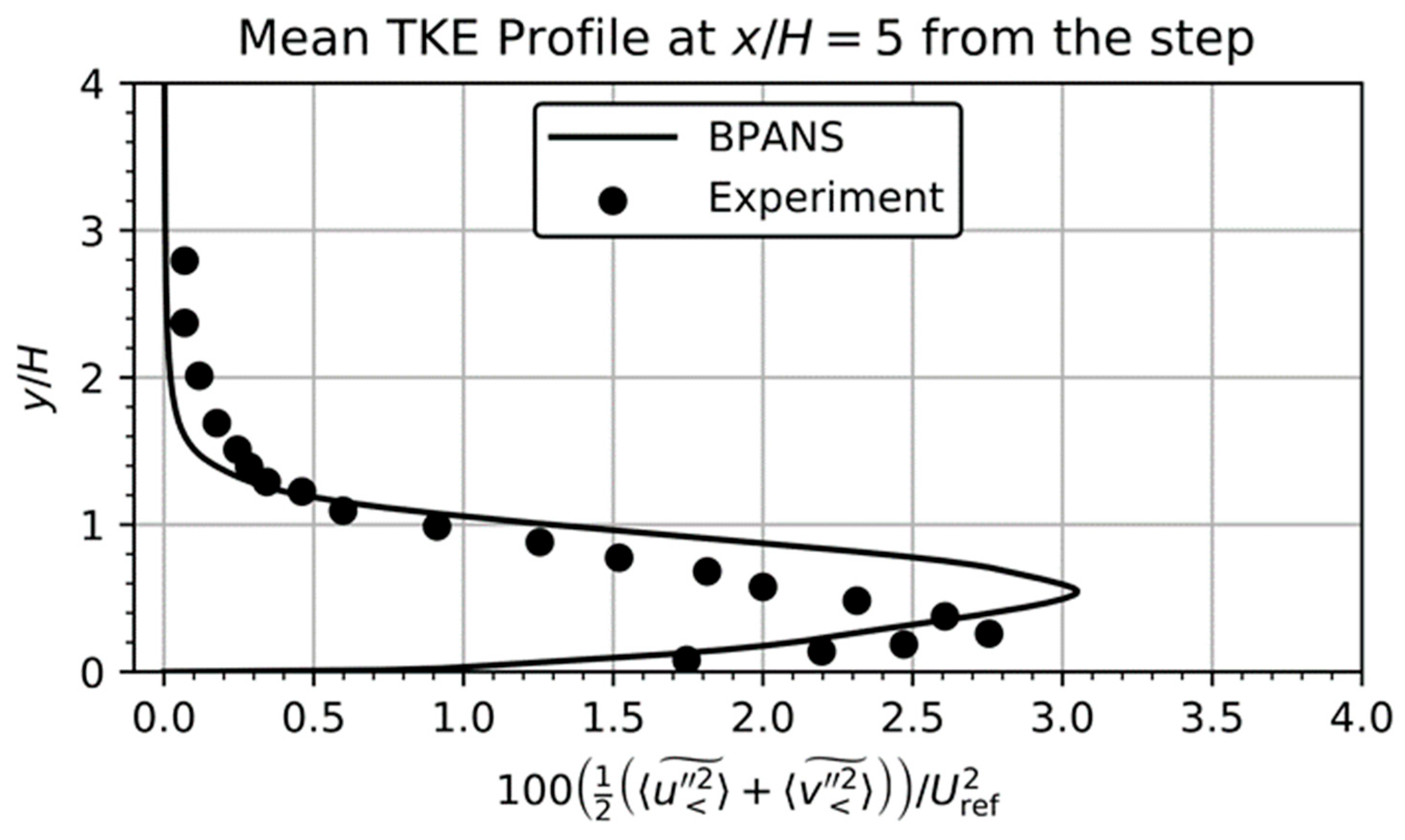
The results from the proposed model are compared to experimental data on Figure 3, which shows the mean velocity profiles at an x/H of 5 downstream of the step. The figure shows that the results from our new model are in reasonable agreement with experimental data. Similarly, the mean turbulent kinetic energy at the same location is shown on Figure 4. Good agreement with experimental results is also obtained.

3.2. Subsonic Flow over a Circular Cylinder

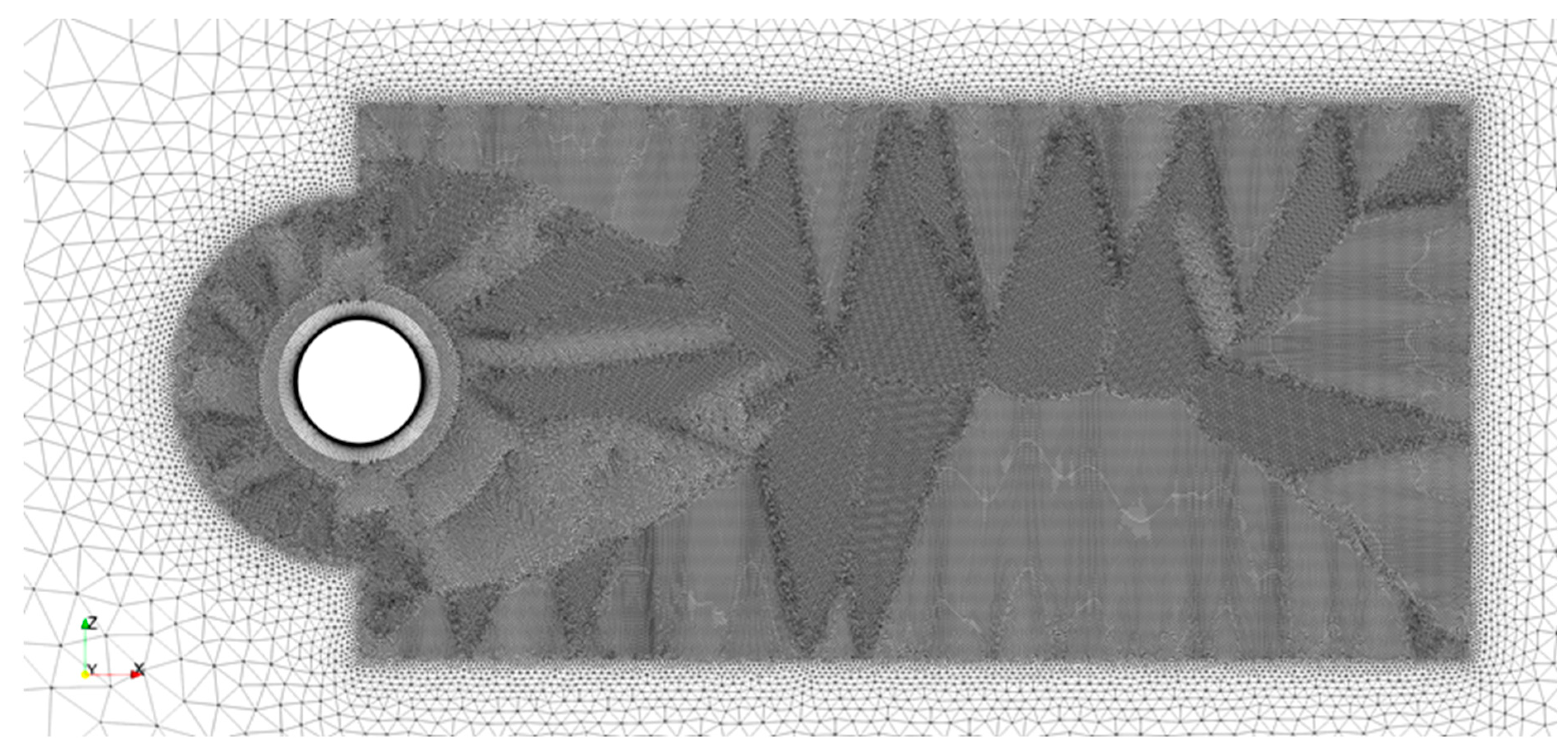
In addition to the wall-bounded flow problem above, the BPANS model was also tested using a subsonic free-shear flow case. To this end, a flow over a circular cylinder computation was used following the experimental work in [27]. The flow field around the circular cylinder was characterized by strong vortex shedding in the downstream region. The Reynolds number based on the cylinder diameter was R e D = 1.4 × 10 5 . The freestream velocity was 21 m/s, which corresponds to a freestream Mach number of 0.06. The low-dissipation, low-Mach-number Roe scheme was used. The computational grid was constructed as follows: a 2D unstructured grid was generated with a quad boundary layer near the cylinder and triangles in the wake, matching y + = 1 near the cylinder wall. The core of the wake had spacing of 0.02D on the plane. The 2D grid was extruded to reach a span of three diameters with 50 cells across the span. In total, the grid contained 6.2 million points. A slice of the grid is shown on Figure 5. Walls were treated as adiabatic and no-slip. Side walls were treated as periodic. The time step was approximately 0.7 ms, which is approximately 70 non-dimensional time steps per reference time based on the freestream velocity and cylinder diameter. Statistics were averaged in time and across the span in space over 100 flow through times denoted by a reference length of 10 diameters. An f k of 0.5 was used, while f ε was kept at unity.
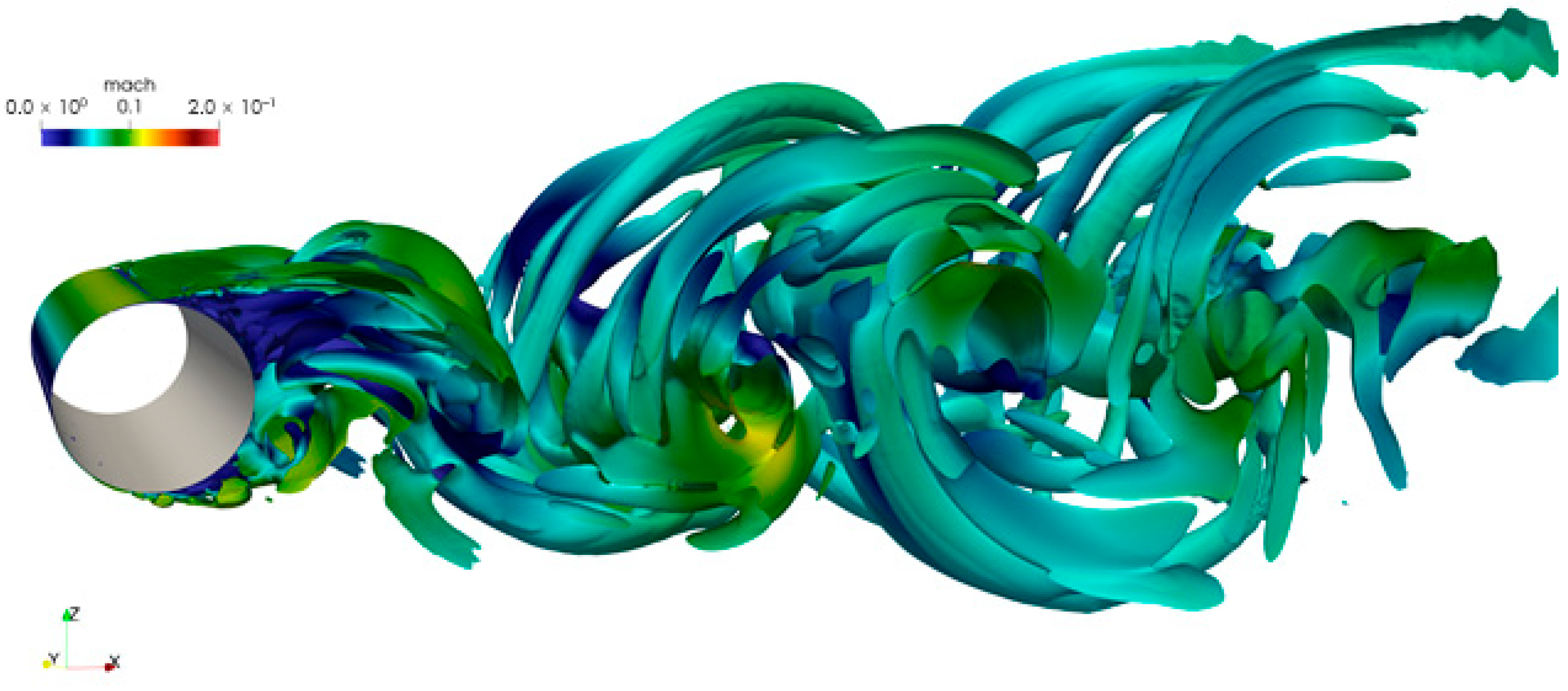
Figure 6 shows the isosurfaces of the Q-criterion colored by Mach number showing the large coherent turbulent structures in the wake.
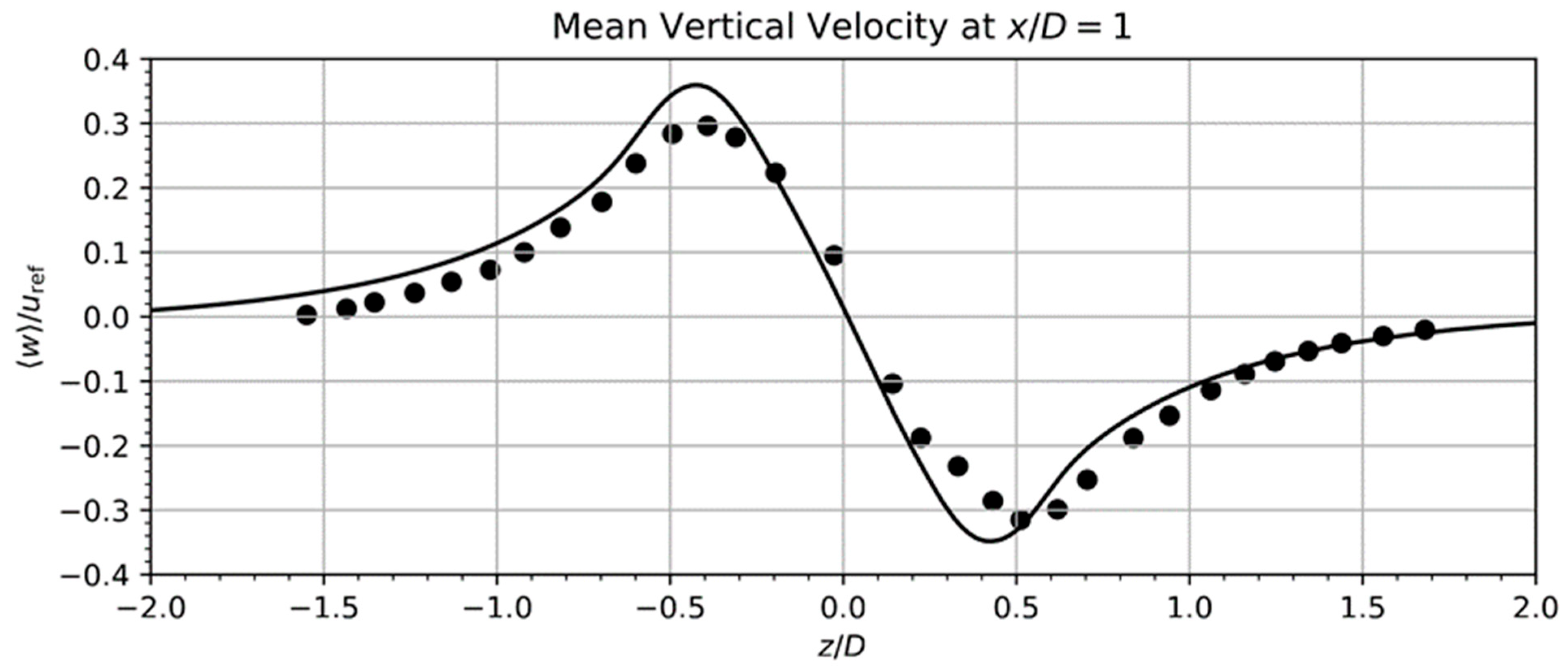
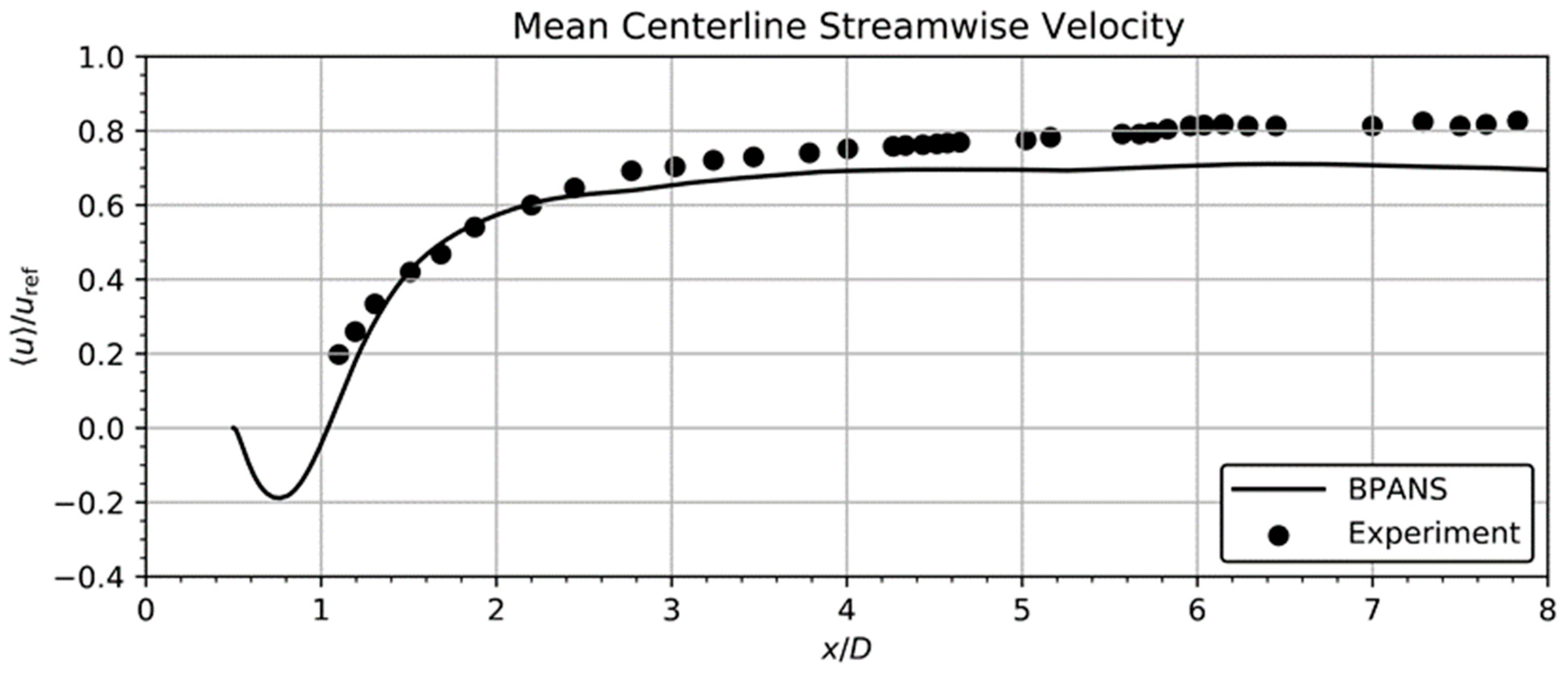
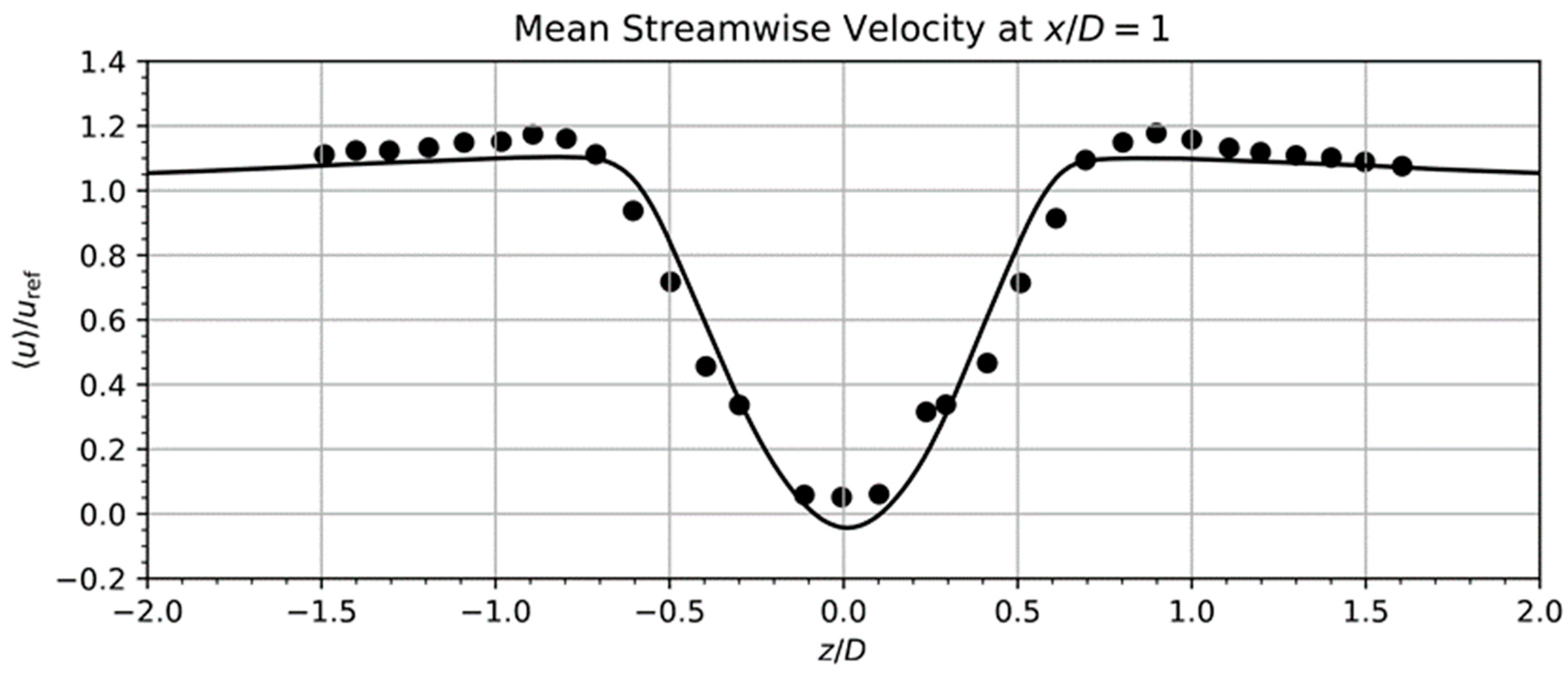
The streamwise velocity along the axial centerline is shown in Figure 7. The streamwise velocity is slightly underpredicted near x D = 8 . The streamwise and vertical velocity versus z at x D = 1 are plotted in Figure 8 and Figure 9 with very good quantitative agreement with the experimental results.

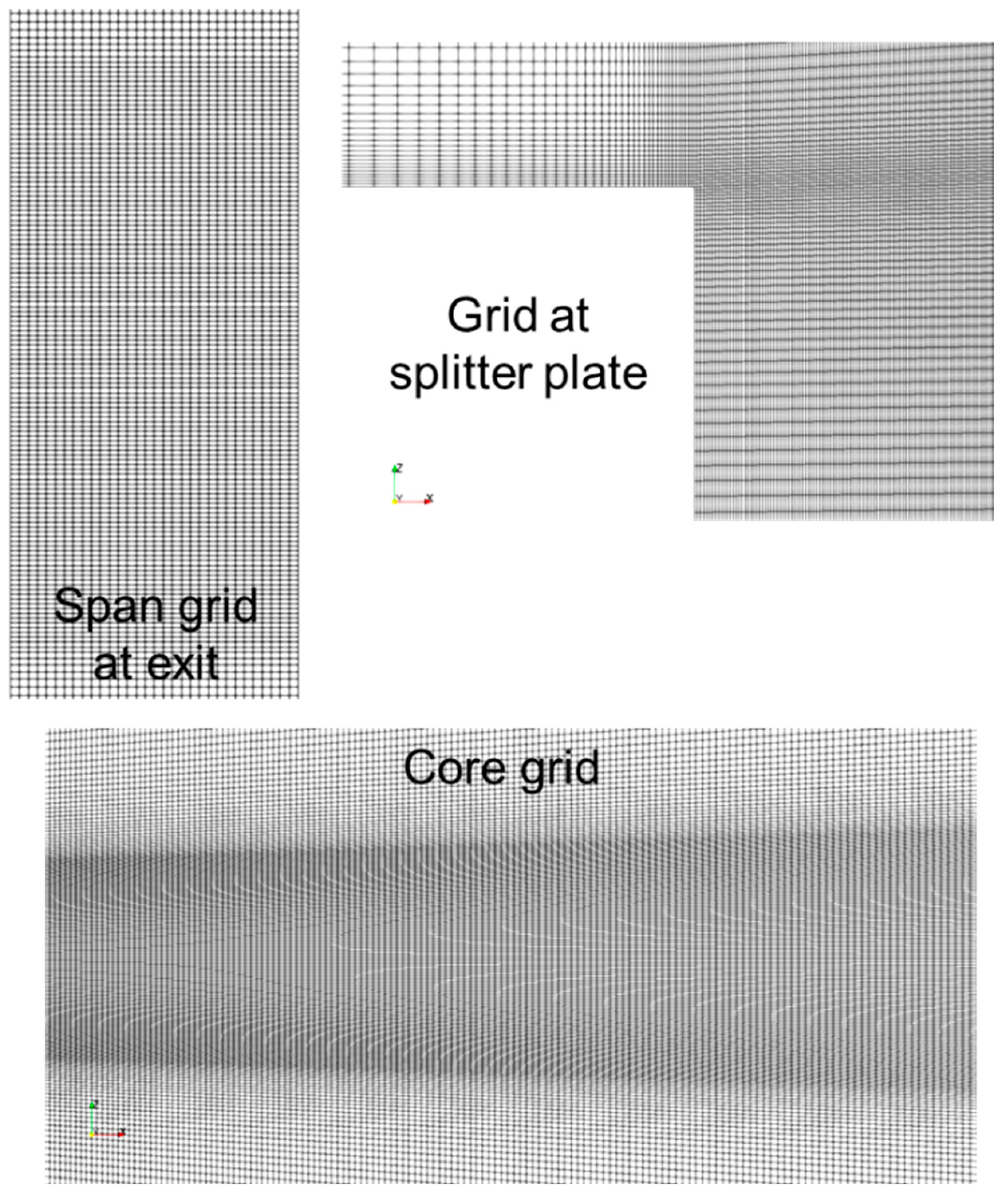
3.3. A High-Speed Mixing Layer

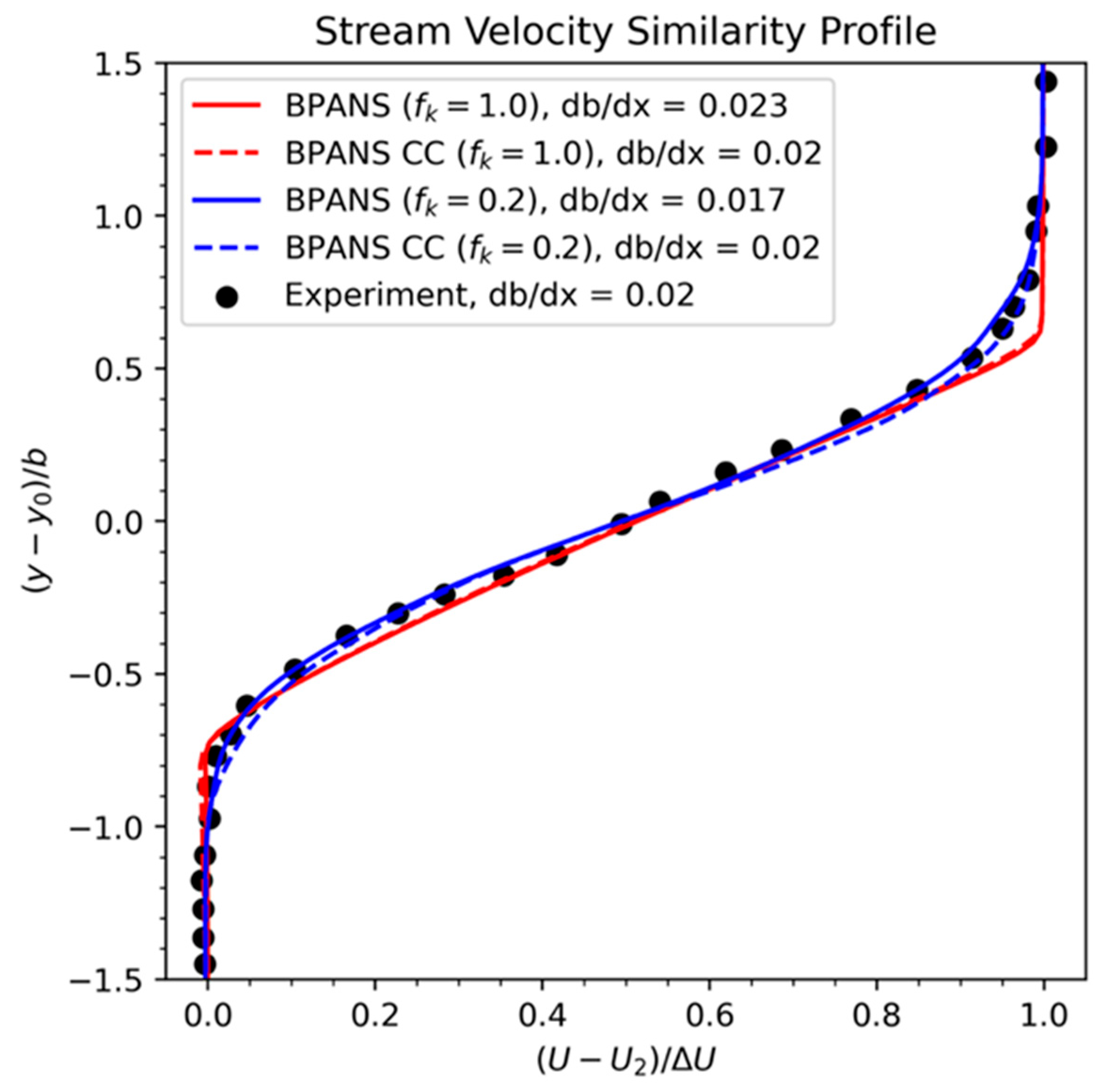
Supersonic spatially developing shear layer simulations of the Goebel and Dutton experiments [28] were carried out using BPANS and BPANS-CC. The flow condition investigated was for a freestream Reynolds number per meter based on the upper condition of about R e = 30 × 10 6 , and the two mixing stream Mach numbers were M 1 = 2.01 and M 2 = 1.38 , respectively. This case was chosen to highlight the effects of the compressibility correction terms on the computational results of a supersonic mixing layer. Figure 10 shows the structured grid topology used. A multi-block structured grid containing 45 million hexahedral cells was generated. The near-wall grid spacing was set as y + ~ 1 ≈ 1 μ m based on the freestream Reynolds number. Cells with an x y aspect ratio of 4 were generated in the bulk of the shear layer. At the plate, the x y aspect ratio was 1. A BPANS-CC f k of 0.2 was used, implying an 80% resolution of the turbulent kinetic energy. Figure 11 shows the streamwise velocity similarity profile. The mixing layer thickness, b, is defined as the transverse distance between mean streamwise velocities of U 1 0.1 U and U 2 + 0.1 U . The results were found to be self-similar and free from lip shock effects starting from x = 0.10 m. The growth rate ( d b / d x ) was obtained from x = 0.10 m and x = 0.25 m locations. In conclusion, the results indicate that BPANS-CC can be used to successfully predict a supersonic compressible flows. The f k = 0.2 results, which agree well with the experimental mixing and growth rate, demonstrate the capability to simulate unsteady flows, which are increasingly becoming important for the prediction of unsteady loads for vehicle design and analysis.

3.4. Sonic Jet in a Supersonic Crossflow

This problem has many applications in engineering, one of which is in supersonic combustion ramjets, or scramjets. The freestream conditions are given by the crossflow Mach number and the Reynolds number based on the jet diameter, i.e., R e D = ρ U D μ , where ρ is the freestream density, U the freestream velocity, μ the freestream molecular viscosity, and D the diameter of the jet exit. The target Reynolds number is R e D = 5.9 × 10 4 , and the freestream Mach number is 1.6. The ratio of densities between the nozzle chamber and the crossflow is ρ 0 j ρ = 5.5 , and the corresponding one for pressures is p 0 j p = 8.4 . This results in a jet-to-crossflow momentum flux ratio of 1.7 ( ρ j U j 2 / ρ U 2 ). The diameter of the jet exit is 4 mm, the stagnation pressure of the jet, p 0 j , is 476 kPa, and its stagnation temperature, T 0 j , is 295 K. These conditions result in a freestream viscosity of μ = 3.09086 × 10 5 kg/(m s) following Sutherland’s law. The freestream velocity, temperature, and pressure are 446 m/s, 193.1548 K, and 56.667 kPa, respectively. The other constants are ideal gas constant, R = 287.058   J / ( k g K ) , specific heat ratio γ = 1.4 , a laminar Prandtl number, P r = 0.72 , and a turbulent Prandtl number, P r t = 0.90 . In the computations, all walls were treated as no-slip walls with zero heat flux. The outlet was set as a pressure outlet with a static pressure of 1 Pa. The remaining boundaries were set as freestream, top, and periodic for the sides. A dual time stepping scheme was used for the unsteady computations with an implicit Euler scheme with five sub-iterations. At first, a steady-state RANS solution was obtained, and then the unsteady computation using BPANS was initiated. The unsteady computation was carried out until a statistically stationary result was observed. The averaged flow statistics were then obtained by averaging the results over one thousand time steps, which is sufficient for converged statistics.
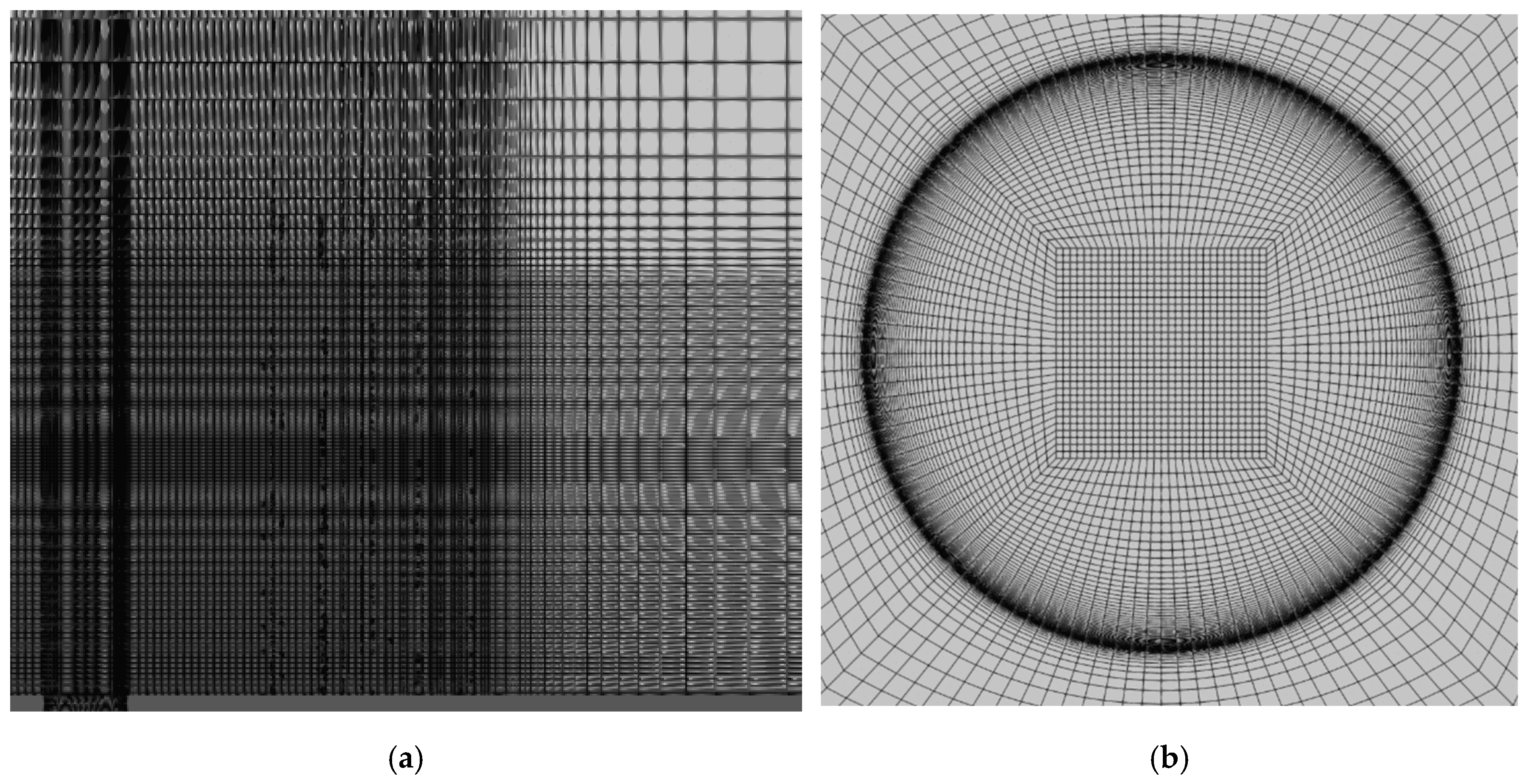
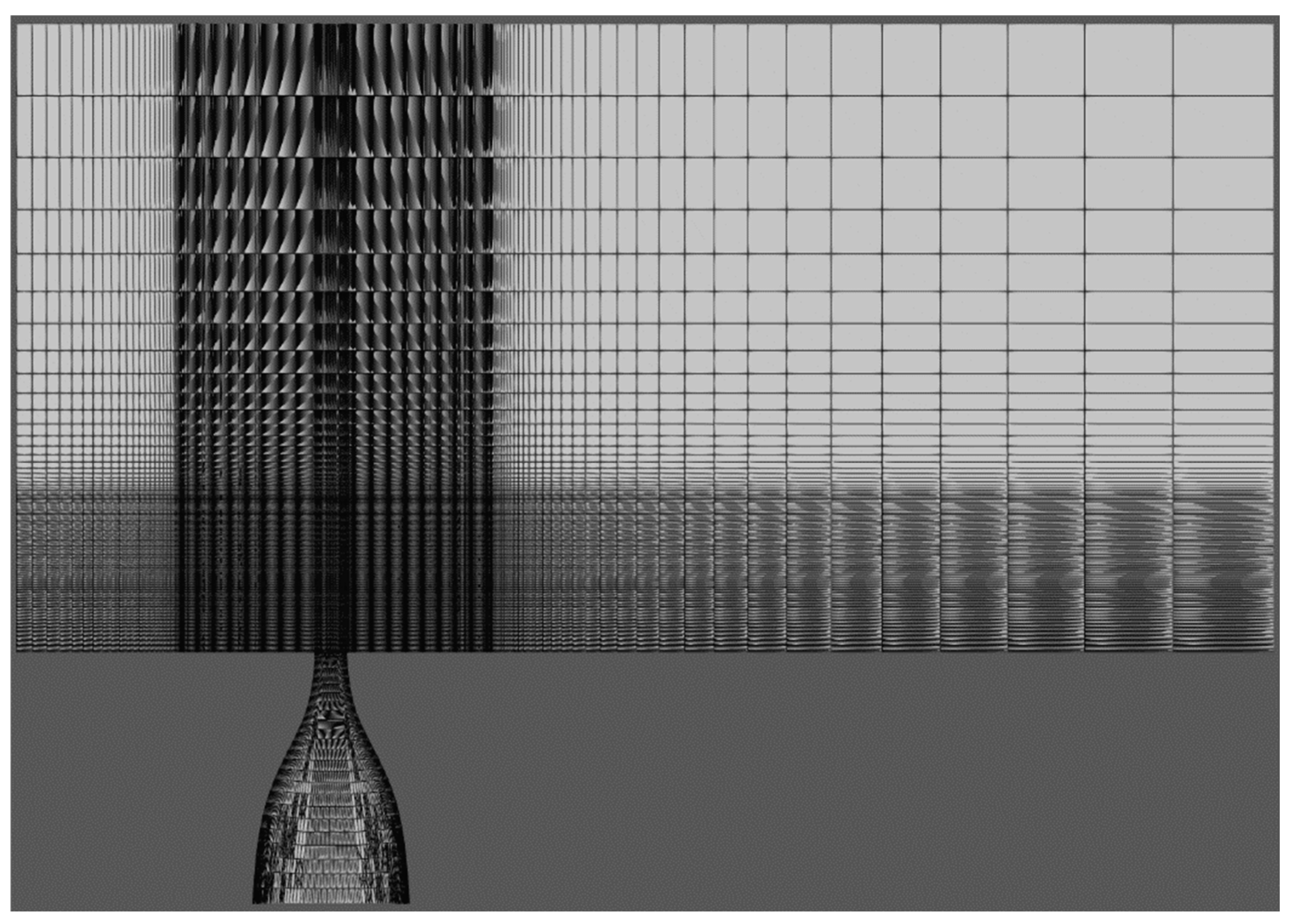
The computational grid for the numerical simulation of the high-speed jet-in-crossflow problem is shown in Figure 12. The origin of the coordinates was set at the center of the jet exit, with the domain spanning 40 jet diameters, 20 jet diameters, and 30 jet diameters in the streamwise, wall-normal, and spanwise directions, respectively. Zoomed-in views near the jet exit and inside the nozzle are shown in Figure 13a,b. Clearly, resolving the fine structures of the flow requires very fine grids everywhere, especially in the flow development regions inside the nozzle and near its exits. Near physical walls, a y + of order 1 was enforced with a few points in the viscous sublayer (at least five for y + < 1 ).
The grid filter control parameter f k was estimated a priori to ensure that the computational grid could resolve the scales dictated by f k . This was performed using the relation f k > L t 2 / 3 , where is the local grid size defined as the cube root of the cell volume, and L t the local turbulent length scale defined by L t = k u β ω u . For the simulation results presented in this paper, a value of f k = 0.2 was used.
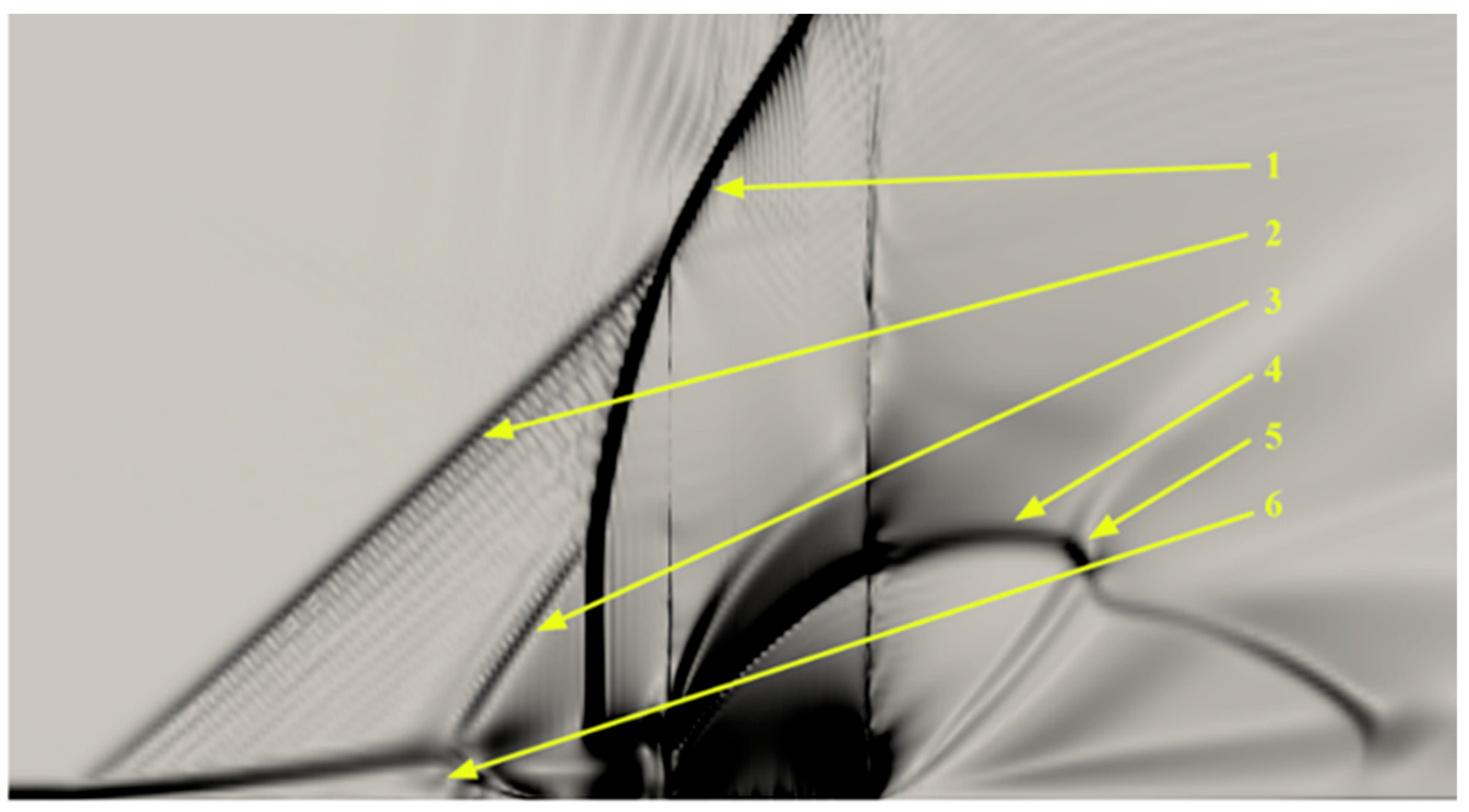
The complex flow features present in the supersonic flow filed are clearly shown by the numerical schlieren shown in Figure 14. The sonic jet flow emerging into== the supersonic freestream causes a strong bow shock (1) and a recirculation bubble (6) with two lambda shocks (2, 3). Note that some vertical dark lines are caused by grid refinement around the sonic jet.
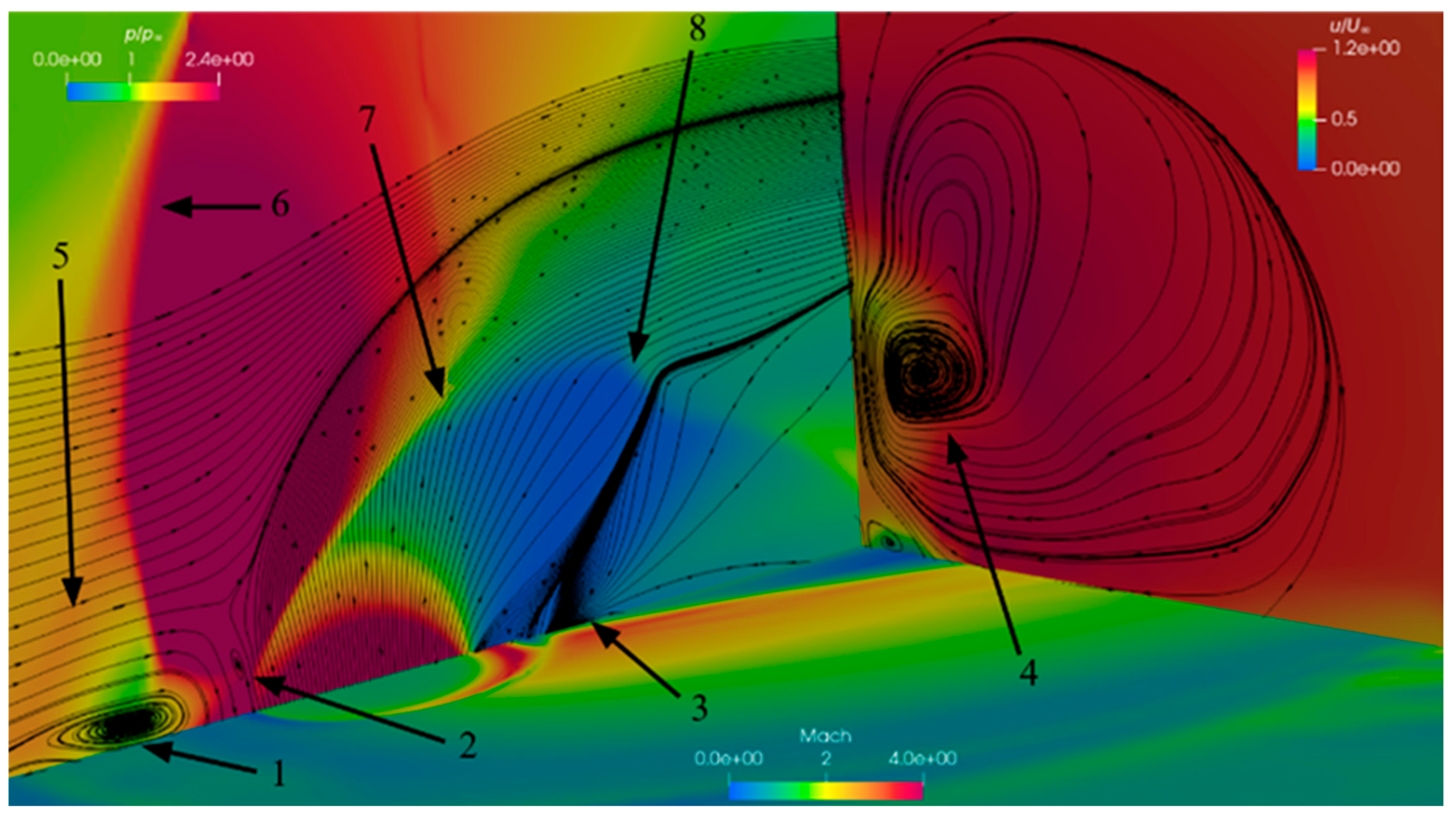
Figure 15 shows the time-averaged flow field near the jet exit. The different contour lines show an upstream separation vortex (1), a hovering vortex upstream of the jet (2), a downstream source point (3), one of the two counter-rotating vortex pairs (4), a separation shock (5), a bow shock (6), an inclined barrel shock (7), and a Mach disk (8). All these flow features point at a physics-rich flow field and hence indicate the importance of using this case to test our newly developed turbulence model, BPANS.
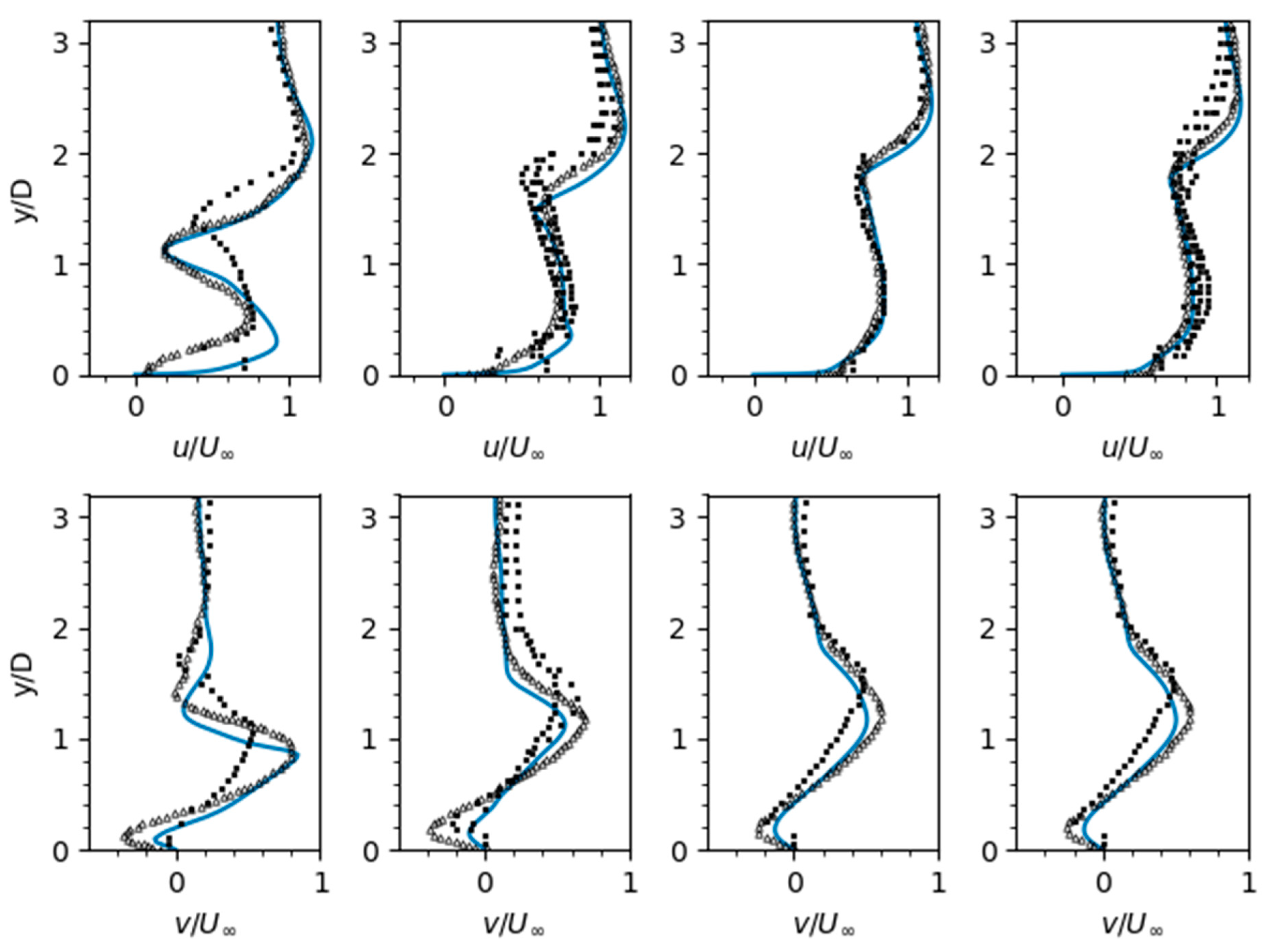
Figure 16 shows the nondimensional velocity profiles at different locations downstream of the jet. Both the downstream (u) and vertical (v) components are shown on the figure. The blue lines are our results using the new turbulence model, BPANS; the filled symbols represent the experimental data [29]; and the hollow symbols are results from a fine-grid LES [30]. The figure shows our results to be in good agreement with both the experimental data and the LES results. This is a rather promising result, as our grid resolution is much lower than that of the LES.
Figure 17 shows the time-averaged streamwise Mach number contours in the central plane and the time-averaged streamwise velocity contours. Our results are in good agreement with both the experimental results [29] and those obtained using LES [31].
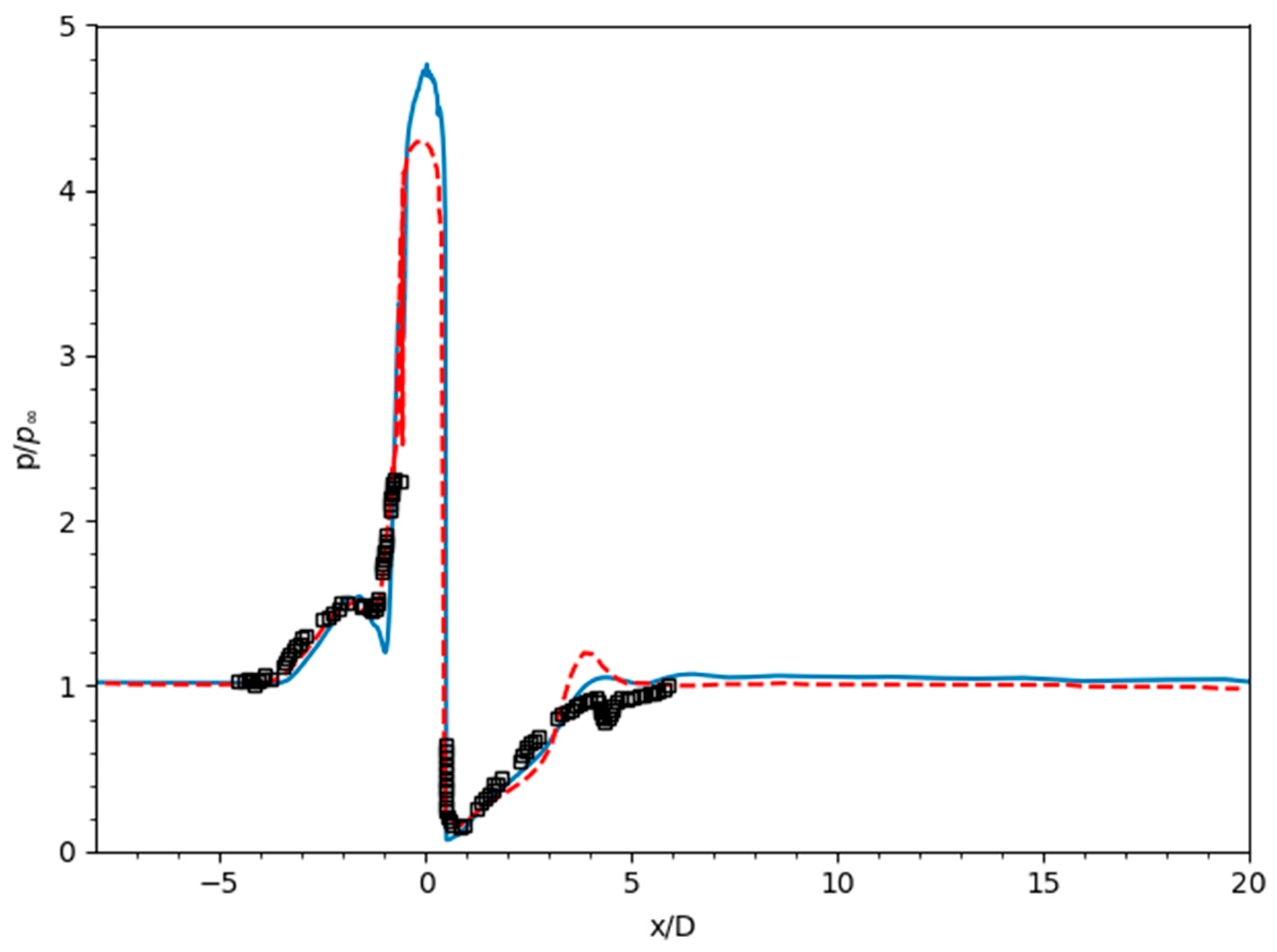
Figure 18 shows the time-averaged wall pressure distribution along the central plane. Our results in blue compare very favorably with the LES results (orange dashed line) as well as the experimental data (black symbols).

4. Conclusions

In this paper, we present results from various complex flows such as flow past a backward-facing step and flow over a circular cylinder in the subsonic flow regime, and a supersonic mixing layer and a jet in a supersonic crossflow in the supersonic flow regime. Each of these flow regimes has unique flow structures that must be adequately predicted for design and analysis; turbulence is a key driver in these flows features. DNS is not computationally viable, and thus, there is a need for efficient turbulence modeling. This is particularly true in the supersonic mixing layer, where using BPANS and BPANS-CC showed a significant difference. For all cases presented in this paper and previous papers, at nearly hypersonic speeds [33], BPANS and BPANS-CC show superior agreement with experimental data compared to well-established models such as LES.

Author Contributions

G.N.: Conceptualization, methodology, software, validation, formal analysis, investigation, paper review. N.S.: Software, validation, investigation, visualization. A.F.: Conceptualization, methodology, formal analysis, writing the paper, writing the paper and the review, supervision. All authors have read and agreed to the published version of the manuscript.

Funding

This research received no external funding.

Data Availability Statement

The data presented in this study are available on request from the corresponding author.

Conflicts of Interest

The authors declare no conflict of interest.

References

  1. Speziale, C.G. Turbulence Modeling for Time-Dependent RANS and VLES: A Review. AIAA J. 1998, 36, 173–184. [Google Scholar] [CrossRef]
  2. Kolmogorov, A.N. A Refinement of Previous Hypotheses Concerning the Local Structure of Turbulence in a Viscous Incompressible Fluid at High Reynolds Number. J. Fluid Mech. 1961, 13, 82–85. [Google Scholar] [CrossRef]
  3. Smagorinsky, J. General Circulation Experiments with the Primitive Equations. Mon. Weather Rev. 1963, 91, 99–165. [Google Scholar] [CrossRef]
  4. Scotti, A.; Meneveau, C.; Fatica, M. Dynamic Smagorinsky Model on Anisotropic Grids. Phys. Fluids 1997, 9, 1856–1858. [Google Scholar] [CrossRef]
  5. Piomelli, U.; Ferziger, J.H.; Moin, P. Models for Large-Eddy Simulations of Turbulent Channel Flows Including Transpiration; TF-32; Stanford University Technical Report: Stanford, CA, USA, 1987. [Google Scholar]
  6. Piomelli, U.; Zang, T.A.; Speziale, C.G.; Hussaini, M.Y. On the Large-Eddy Simulation of Transitional Wall-Bounded Flows. Physics Fluids A 1990, 2, 257–265. [Google Scholar] [CrossRef]
  7. Erlebacher, G.; Hussaini, M.Y.; Speziale, C.G.; Zang, T.A. Toward the Large-Eddy Simulation of Compressible Turbulent Flows; NASA Contractor Report 187460/ICASE Report 90–76; Cambridge University: Cambridge, UK, 1990. [Google Scholar]
  8. Squires, K.D.; Forsythe, J.R.; Spalart, P.R. Detached-Eddy Simulation of the Separated Flow Around a Forebody Cross-section. In Direct and Large-Eddy Simulation IV; Geurts, B.J., Friedrich, R., Metais, O., Eds.; ERCOFTAC Series 16; Kluwer Academic Press: Berlin, Germany, 2001; Volume 8, pp. 481–500. [Google Scholar]
  9. Gritskevich, M.S.; Garbaruk, A.V.; Schütze, J.; Menter, F.R. Development of DDES and IDDES Formulations for the k-ω Shear Stress Transport Model. Flow Turbul. Combust. 2012, 88, 431–449. [Google Scholar] [CrossRef]
  10. Girimaji, S. Partially Averaged Navier-Stokes Model for Turbulence: A Reynolds Averaged Navier-Stokes to Direct Numerical Simulation Bridging Method. J. Appl. Mech. 2006, 73, 413–421. [Google Scholar] [CrossRef]
  11. Girimaji, S.S.; Srinivasan, R.; Jeong, E. PANS Turbulence Model for Seamless Transition Between RANS and LES: Fixed Point Analysis and Preliminary Results. In Proceedings of the ASME FEDSM’03, 4-th ASME-JSME Joint Fluids Engineering Conferences, Honolulu, HI, USA, 6–9 July 2003, 2003; p. FEDSM2003–45336. [Google Scholar]
  12. Tosh, A.; Frendi, A. Partially Averaged Navier Stokes: A New Turbulence Model for Unsteady Flows with Application to Acoustics. In Proceedings of the 11th AIAA/CEAS Aeroacoustics Conference, Monterey, CA, USA, 23–25 May 2005; pp. 2005–2987. [Google Scholar]
  13. Frendi, A.; Tosh, A.; Girimaji, S. Flow Past a Backward Facing Step: Comparison of PANS, DES, and URANS Results with Experiments. Int. J. Comput. Methods Eng. Sci. Mech. 2006, 8, 23–38. [Google Scholar] [CrossRef]
  14. Girimaji, S.; Lakshmipathy, S. Partially Averaged Navier-Stokes Method for Turbulent Flows: K-ω Model Implementation. In Proceedings of the 44th AIAA Aerospace Sciences Meeting and Exhibit, Reno, NV, USA, 9–12 January 2006. [Google Scholar]
  15. Pereira, F.S.; Vaz, G.; Eca, L.; Girimaji, S.S. Simulation of the Flow Around a Circular Cylinder at Re = 3900 with Partially Averaged Navier-Stokes Equations. Int. J. Heat Fluid Flow 2018, 69, 234–246. [Google Scholar] [CrossRef]
  16. Frendi, A.; Harrison, C. Partially Averaged Navier-Stokes: A (k − ε)/(k − ω) Bridging Model. Fluids 2020, 5, 129. [Google Scholar] [CrossRef]
  17. Nastac, G.; Frendi, A. An Investigation of Scale-Resolving Turbulence Models for Supersonic Retropropulsion Flows. Fluids 2018, 7, 362. [Google Scholar] [CrossRef]
  18. Menter, F.R. Two-Equation Eddy-Viscosity Turbulence Models for Engineering Applications. AIAA J. 1994, 32, 269–289. [Google Scholar] [CrossRef]
  19. Boussinesq, J. Essai Sur la Theorie Des Eaux Courante; Imprimerie Nationale: Paris, France, 1877. [Google Scholar]
  20. McBride, B.J.; Gordon, S.; Reno, M.A. Coefficients for Calculating Thermodynamic and Transport Properties of Individual Species; NASA TM 4513; NASA Technical Reports Server: Washington, DC, USA, 1993.
  21. Gnoffo, P.A.; Gupta, R.N.; Shinn, J.L. Conservation Equations and Physical Models for Hypersonic Air Flows in Thermal and Chemical Nonequilibrium; NASA TP 2867; NASA Technical Reports Server: Washington, DC, USA, 1989.
  22. Suzen, Y.; Hoffmann, K. Investigation of Supersonic Jet Exhaust Flow by One-and Two-Equation Turbulence Models. In Proceedings of the 36th AIAA Aerospace Sciences Meeting and Exhibit, Reno, NV, USA, 12–15 January 1998; p. 322. [Google Scholar]
  23. Sarkar, S. The Pressure-Dilatation Correlation in Compressible Flows. Phys. Fluids 1992, 4, 2674–2682. [Google Scholar] [CrossRef]
  24. Anderson, W.K.; Biedron, R.T.; Carlson, J.R.; Derlaga, J.M.; Diskin, B.; Druyor, C.T.; Gnoffo, P.A.; Hammond, D.P.; Jacobson, K.E.; Jones, W.T.; et al. FUN3D Manual: 14.2; NASA TM-2025–2308; NASA Technical Reports Server: Washington, DC, USA, 2025.
  25. Palacios, F.; Colonno, M.; Aranake, A.; Campos, A.; Copeland, S.; Economon, T.; Lonkar, A.; Lukaczyk, T.; Taylor, T.; Alonso, J. Stanford University Unstructured (SU2); An Open Source Integrated Computational Environment for Multi-Physics Simulation and Design; AIAA: Reston, VA, USA, 2013. [Google Scholar]
  26. Driver, D.; Seegmiller, H. Features of a Reattaching Turbulent Shear Layer in Divergent Channel Flow. AIAA J. 1985, 23, 163–171. [Google Scholar] [CrossRef]
  27. Parnaudeau, P.; Carlier, J.; Heitz, D.; Lamballais, E. Experimental and Numerical Studies of the Flow Over a Circular Cylinder at Reynolds Number 3900. Phys. Fluid 2008, 20, 85101. [Google Scholar] [CrossRef]
  28. Goebel, S.; Dutton, J. An Experimental Study of Turbulent Compressible Mixing Layers. AIAA J. 1991, 29, 538–546. [Google Scholar] [CrossRef]
  29. Santiago, J.G.; Dutton, J.C. Velocity Measurements of a Jet Injected into a Supersonic Crossflow. J. Propuls. Power 1997, 13, 264–273. [Google Scholar] [CrossRef]
  30. Everett, D.D.; Woodmansee, M.A.; Dutton, J.C.; Morris, M.J. Wall Pressure Measurements for a Sonic Jet Injected Transversely into a Supersonic Crossflow. J. Propuls. Power 2020, 14, 861–868. [Google Scholar] [CrossRef]
  31. Kawai, S.; Lele, S.K. Large-Eddy Simulation of Jet Mixing in Supersonic Crossflows. AIAA J. 2010, 48, 2063–2083. [Google Scholar] [CrossRef]
  32. Chai, X.; Iyer, P.S.; Mahesh, K. Numerical Study of High Speed Jets in Crossflow. J. Fluid Mech. 2015, 785, 152–188. [Google Scholar] [CrossRef]
  33. Nastac, G.; Frendi, A. Numerical Investigation of Gas Models for Retropropulsion Flows for Future Mars Missions. J. Spacecr. Rocket. 2025, 62, 167–175. [Google Scholar] [CrossRef]
Figure 1. A 2D slice of a 3D grid around a backward-facing step.
Aerospace 13 00119 g001
Figure 2. Isosurfaces of the non-dimensional Q-criterion, 0.1, colored by Mach number.
Aerospace 13 00119 g002
Figure 3. Mean velocity profile at x/H = 5 from the step. The experimental results are from Ref. [26].
Aerospace 13 00119 g003
Figure 4. Mean turbulent kinetic energy profile at x/H = 5 from the step. The experimental results are from Ref. [26].
Aerospace 13 00119 g004
Figure 5. Cylinder grid slice.
Aerospace 13 00119 g005
Figure 6. Isosurfaces of the non-dimensional Q-criterion (0.001) colored by Mach number.
Aerospace 13 00119 g006
Figure 7. Mean centerline streamwise velocity in the wake of the cylinder.
Aerospace 13 00119 g007
Figure 8. Streamwise velocity at x D = 1  as a function of the vertical distance z .
Aerospace 13 00119 g008
Figure 9. Mean vertical velocity at x D = 1  as a function of the vertical distance.
Aerospace 13 00119 g009
Figure 10. Grid topology for the mixing layer: top left: spanwise grid, top right: at the splitter plate, and bottom grid: downstream of the splitter plate.
Aerospace 13 00119 g010
Figure 11. Stream velocity similarity profile with comparison to experimental data [28].
Aerospace 13 00119 g011
Figure 12. Central plane of the grid used in the simulation.
Aerospace 13 00119 g012
Figure 13. (a) Grid topology near the jet exit in the top domain, (b) grid topology inside the jet nozzle.
Aerospace 13 00119 g013
Figure 14. Numerical schlieren on the central plane, z/D = 0, showing the different flow features: 1. bow shock; 2. primary lambda shock; 3. secondary lambda shock; 4. inclined barrel shock; 5. Mach disk; 6. separation bubble.
Aerospace 13 00119 g014
Figure 15. A 3D view of the time-averaged flow field near the jet exit depicting some flow features; 1. upstream separation vortex; 2. hovering vortex upstream of the jet; 3. downstream source point; 4. counter-rotating vortex pair (CVP); 5. separation shock; 6. bow shock; 7. inclined barrel shock; 8. Mach disk.
Aerospace 13 00119 g015
Figure 16. Time-averaged velocity profiles at x D = 2 , 3 , 4 , 5  downstream from the jet exit along the central plane. Our results for f k = 0.2 are represented by the blue line, and the experimental results are represented by the filled symbols [29], while the hollow symbols represent results from LES [31].
Aerospace 13 00119 g016
Figure 17. Time-averaged Mach number contours (left) and time-averaged velocity contours (right) obtained using BPANS.
Aerospace 13 00119 g017
Figure 18. Time-averaged wall pressure distribution along the central plane of the jet. The solid blue line is for BPANS with f k = 0.2 , the dashed red line is the turbulent inflow refined with LES [32], and the symbols are experimental data [30].
Aerospace 13 00119 g018
Disclaimer/Publisher’s Note: The statements, opinions and data contained in all publications are solely those of the individual author(s) and contributor(s) and not of MDPI and/or the editor(s). MDPI and/or the editor(s) disclaim responsibility for any injury to people or property resulting from any ideas, methods, instructions or products referred to in the content.