Article

Sub-Scale Flight Testing of Drag Reduction Features for Amphibious Light Sport Aircraft

1
School of Engineering and Technology, University of New South Wales, Australian Defence Force Academy Campus, Northcott Drive, Canberra, ACT 2600, Australia
2
Altavia Aerospace, Spitfire Drive, Temora, NSW 2666, Australia
*
Author to whom correspondence should be addressed.
Aerospace 2026, 13(1), 59; https://doi.org/10.3390/aerospace13010059
Submission received: 30 October 2025 / Revised: 8 December 2025 / Accepted: 26 December 2025 / Published: 7 January 2026
(This article belongs to the Special Issue Recent Advances in Applied Aerodynamics (2nd Edition))

Abstract

Amphibious light sport aircraft (LSA) combine the versatility of land and water operations but suffer aerodynamic penalties from their inherent design requirements, limiting cruise performance. This study investigates two drag reduction features for a proposed high-performance amphibious LSA developed by Altavia Aerospace. The concept targets a cruise speed of 140 KTAS, using retractable wingtip pontoons and a novel retractable hull step fairing. A 1/5-scale flying model was built and flight tested to assess the aerodynamic benefits of these features and evaluate sub-scale flight testing as a tool for drag measurement. Estimated propulsive power and GPS-based speed data corrected for wind were used to compute an estimated 17% reduction in drag coefficient by retracting the pontoons. The hull step fairing showed no measurable gains, likely due to inconsistent battery voltage, despite literature indicating potential 5% drag savings. Drag measurement precision of 7–9% was achieved using the power-based method, with potential precision better than 3% achievable if the designed thrust data system were fully validated and an autopilot integrated. A performance estimation for Altavia Aerospace’s concept predicts a cruise speed of 134 KTAS at 10,000 ft. Achieving the target of 140 KTAS may require further aerodynamic refinement, with investigation of a tandem seating configuration to reduce frontal area recommended. The study provides an initial drag assessment of retractable wingtip pontoons and demonstrates the potential of sub-scale flight testing for comparative drag analysis—two novel contributions to the field.

1. Introduction

Amphibious aircraft are designed with the unique ability to take off and land from runways and water. The convenience, broader range of destinations and improved safety for over-water operations are key appealing factors. Amphibious light sport aircraft (LSA) are built primarily for recreation, personal utility and flight training.
LSA aircraft are defined independently by each regulatory authority, with broadly similar limitations among most. Australia’s Civil Aviation Safety Authority (CASA), the European Aviation Safety Authority (EASA), and America’s Federal Aviation Authority (FAA) impose a maximum takeoff weight of 600 kg for landplanes or 650 kg for seaplanes (unless otherwise exempted), seating for no more than two occupants, and a stall speed not exceeding 45 KCAS [1,2,3]. Under the FAA’s definition in 14 CFR § 1.1, additional restrictions apply, including a maximum level-flight speed of 120 KTAS and use of a fixed-pitch or ground-adjustable propeller [3]. Aircraft meeting these criteria may be factory-produced and self-certified to industry consensus LSA design standards, rather than undergoing full type certification under regulations such as 14 CFR Part 23 for general aviation aircraft. This concession greatly reduces the workload required to produce new, innovative aircraft compared with the traditional pathways.
In July 2023, the FAA published a formal Notice of Proposed Rulemaking for the Modernization of Special Airworthiness Certification (MOSAIC), proposing new definitions for LSA [4]. After a period of stakeholder consultation, the final regulatory changes were made in July 2025 [3]. The key changes to LSA definitions include the removal of the weight limits, up to 4 seat occupancy, a stall speed of 61 KCAS, a maximum sea level speed of 250 KCAS and the allowance of in-flight adjustable propellers [5]. These expanded definitions allow manufacturers to produce more capable aircraft with increased performance, additional safety features, and more sophisticated systems. The weight increase specifically makes way for greater structural safety margins, larger power plants and the easier incorporation of ballistic recovery parachutes, to name a few. While this currently only applies to the US market, other national aviation authorities are expected to re-evaluate their definitions of LSA in their own context. For example, CASA have announced that they will “review these changes for the Australian environment, develop policies and work with stakeholders to implement them”, with an expected end date of quarter four of 2028 [6].
Existing amphibious LSA designs, built to the traditional pre-MOSAIC standards, were researched to establish a baseline for performance in this class of aircraft. Table 1 summarises the key specifications of all production amphibious LSA aircraft found by the authors, as reported by the manufacturers. The current range of cruise speeds is relatively limited, with the highest being 120 KTAS for the Super Petrel XP. These data highlight the performance constraints of conventional amphibious LSA designs and indicate potential for improvement under expanded regulatory limits.
The performance of amphibious aircraft is inherently constrained by their dual-function requirements. In addition to standard aerodynamic considerations for safe and efficient flight, amphibious aircraft must also have sufficient buoyancy and both lateral and longitudinal stability on water. These factors contribute to increased drag and limit achievable cruise speeds, and hence must be carefully designed to minimise their impact on high-performance amphibious aircraft concepts. Altavia Aerospace proposes the design of a new amphibious LSA featuring a retractable hull step fairing and wing-mounted pontoons that retract to the wingtips, constructed with a carbon-fibre cantilever wing and powered by a BRP Rotax 916iS engine. Altavia Aerospace seeks a target cruise speed of 140 KTAS or greater.
In this study, the effectiveness of these drag-reduction features is assessed to determine the feasibility of the Altavia Aerospace concept. A sub-scale flying model incorporating the proposed design features was developed to enable aerodynamic testing in free flight. While sub-scale flight testing is an established method for assessing stability and control, no published studies were found directly quantifying drag characteristics using this approach. Likewise, no experimental data exists for the drag performance of retractable wingtip pontoons on amphibious aircraft. This study provides the first demonstration of both sub-scale flight testing as a drag analysis technique and the drag-saving potential of retractable wingtip pontoons.

2. Literature Review

2.1. Hull Design

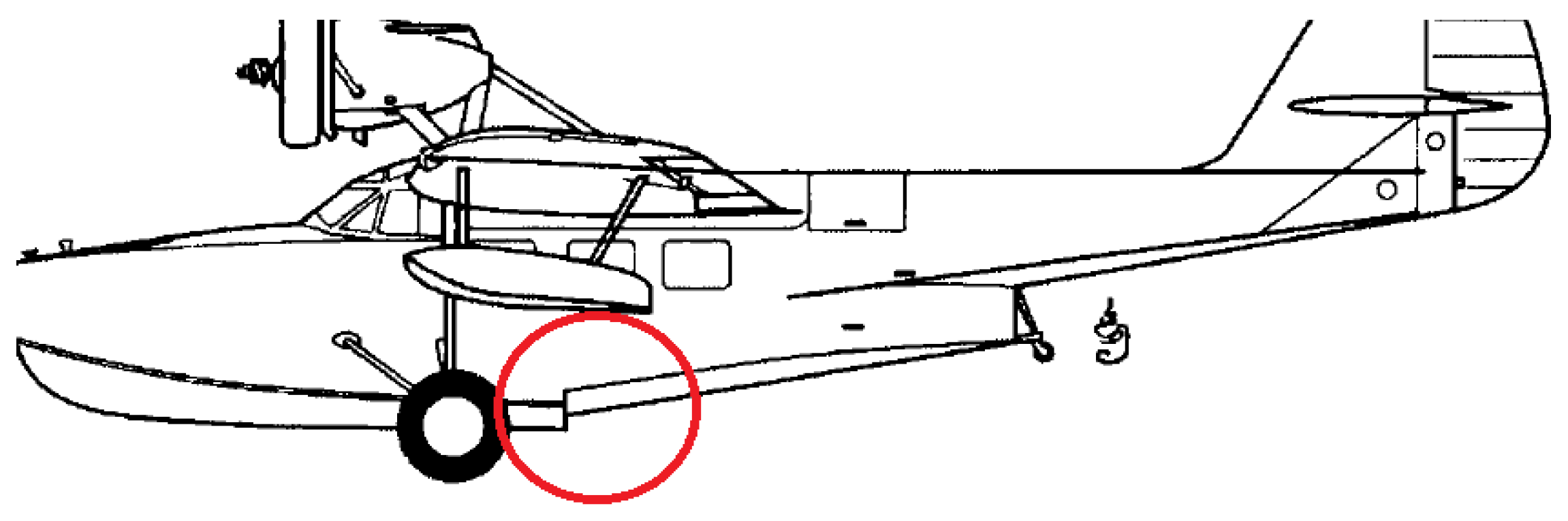
Amphibious aircraft hulls are widely studied for aerodynamic drag characterisation and refinement [15,16,17,18,19,20,21,22]. The hull must have sufficient volume to provide buoyancy, increasing both the frontal and wetted areas over conventional aircraft. A hull step is also required to minimise skin friction drag and suction, as shown in Figure 1. This allows the aircraft to hydroplane on the edge of the step and then, usually with relatively large wing set angles, to rotate slightly in water to a suitable takeoff attitude.
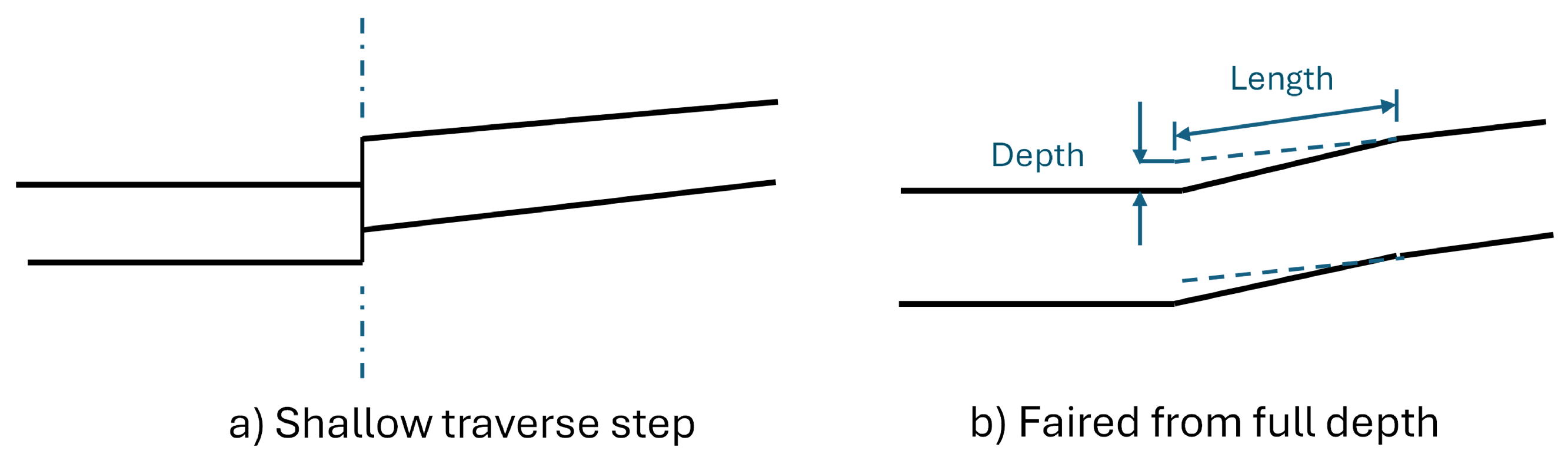
These additional requirements for water takeoff cause the hull drag to contribute more significantly to profile drag for amphibious aircraft, with a study by [24] finding hull drag accounting for up to 34% of the total profile drag. According to [15], the hull step is one of the main drivers of drag for seaplane hulls. That study focused on the drag produced by the hull step and the savings possible through variations in step depth, shape, and the addition of fairings for a nine-seat electric seaplane concept design. He found that the inclusion of fairings alone (see Figure 2) could reduce the hull drag by up to 15% through wind tunnel and CFD tests. Further, he noted that the second biggest improvement could be made through wing incidence angle optimisation, with a total of 20% reduction in hull drag possible by these two factors.
A wind tunnel report by [16] compared several modifications to flying-boat hulls and the overall drag to landplanes. For the length-to-beam (or max hull width) ratio of nine that they tested, more typical of large flying boats, they found an 11% reduction in drag by fairing the hull step by a length nine times the step depth. It was determined that further refining the step provided no additional benefit. The overall drag for the flying-boat hull was compared with a standard transport-category fuselage shape and found to have 85% higher drag with no fairings, highlighting the relatively poor performance of flying boats compared with landplanes. It was further noted that the aerodynamic lateral and longitudinal stability were generally the same between faired and standard hulls. Another wind tunnel study by [19] determined a drag coefficient of 0.21 relative to the step area (step width × depth), noting that the drag increases were proportional to step depth. They recorded these hull drag data across a range of pitch angles, highlighting the importance of optimising the wing incidence angle in agreement with [15].
While there is an abundance of literature on the hull drag of amphibious aircraft and seaplanes and significant studies on hull step fairings, these fairings have yet to be implemented on an amphibious aircraft or seaplane. A US patent was granted in September 2000 and expired in 2018 for a retractable hull step fairing hinged at the rear that extends to the edge of the step after takeoff [25]. The same basic concept is used for the design of the hull step fairing for this research, but with a different arrangement for the sides. The mechanism described in the patent includes side panels that hinge via a piano-type hinge to the sides of the extendable panel, while a simpler approach is taken for the side panels in this project. The design of the hull step fairing is described in Section 3.6 of this project.
Another significant factor in hull drag is the length-to-beam ratio, which closely corresponds to the slenderness ratio typical of landplane fuselages [20,21,22,26]. Lowry and Riebe (1948) [20] determined the effect of the length-to-beam ratio on a hull’s minimum drag, showing the minimum drag decreases as length-to-beam ratio increases. They also showed that a hull alone had a higher minimum drag than a hull with wing interference, with both configurations showing a similar reducing minimum drag profile as length-to-beam ratio increases. A major performance increase may be gained if a tandem seating layout is adopted for an amphibious LSA, reducing the required hull width. This approach may also reduce the structural weight as well by reducing the width where water impact loads act during landing, which, according to [27], significantly impacts the hull weight. While the vast majority of two-seat LSA aircraft adopt side-by-side seating for greater passenger comfort and visibility, Altavia Aerospace is open to the tandem layout if required. This study will focus on the side-by-side seating configuration, noting the tandem layout as a possibility if still required to meet the cruise speed target.

2.2. Wingtip Pontoons

In addition to the high drag caused by the hull’s large size, shape, and step, amphibious aircraft must also provide means for lateral stability when stationary or moving slowly on the water [28]. For the amphibious aircraft presented in Table 1, this is most commonly achieved using pontoons mounted from the outboard wing via struts. Some designs, such as the Icon A5, use pontoons integrated with the fuselage. Mounting the pontoons on the fuselage has the added benefit of providing a platform for recreational use on the water. On the downside, since the same lateral stability moment is required from a shorter distance from the aircraft centreline, larger buoyancy forces must be provided by the pontoon. This feature increases weight, as well as drag due to frontal area, wetted area, and interference effects.
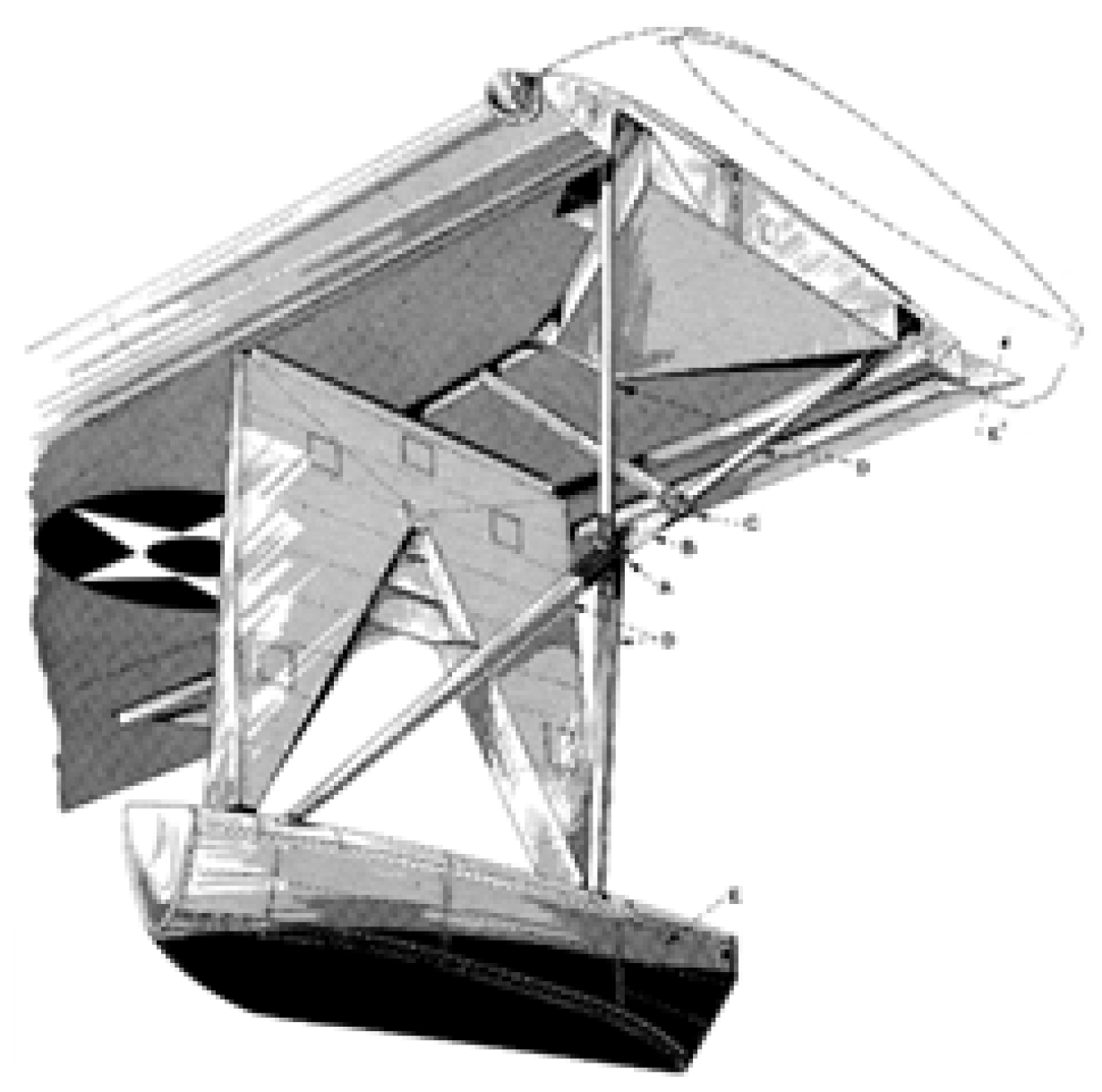
Wingtip pontoons may be smaller and lighter but still produce additional drag not incurred by landplanes. Several aircraft have been produced with retractable wingtip pontoons. Examples include the Consolidated PBY Catalina, Ellison-Mahon Gweduck, and Saro SR.A.1, while an aftermarket modification for retractable pontoons was produced by McKinnon Enterprises for the Grumman Goose [29,30,31,32]. The Catalina, Gweduck, and Goose pontoons retract to the wingtips (Figure 3), while the SR.A.1’s pontoons allegedly form a blister shape under the outboard wing [29].
An article by Key.Aero magazine states that the Grumman Goose retractable wingtip modification allowed increased payload and single-engine performance; otherwise, no other sources were found characterising the aerodynamic effects of retractable wingtip floats [31]. However, these systems are comparable in form to wingtip fuel tanks on the existing amphibious aircraft surveyed. In this configuration, the fuel tanks are noted to act as endplates, increasing the effective aspect ratio of the wing [33,34]. A wind tunnel study by [35] determined a 6–8% increase in lift slope with wingtips on a swept wing operating at Reynolds and Mach numbers typical of light general aviation aircraft, with similar results obtained by [36,37,38]. Comparative flight tests were conducted in [39] with two E33A Bonanza aircraft, one fitted with tip tanks and one without. They found that at higher speeds, the added parasite and interference drag decreased performance. However, below 157 KTAS and 62% power, the increase in the Oswald efficiency factor outweighed the parasite drag increase, and the aircraft performance was superior with tip tanks. The Grumman Goose’s claimed payload and single-engine performance improvements stated in [31] following the installation of retractable pontoons are consistent with these literature findings.
Additional benefits noted for wingtip tanks are that the addition of weight outboard of the spanwise centre-of-lift alleviates some bending stress on the wing. In the case of the Bonanza studied in [39], the aircraft is allowed to operate at a higher gross weight due to this effect. While the baseline case of fixed-wing pontoons also has this effect, shifting their mass outward further to the wingtip provides a small advantage in this manner.
Given that pontoons are essential on amphibious aircraft, this research indicates that positioning them at the wingtips in cruise could not only minimise their drag penalty but even enhance performance in some flight regimes. While the Saro SR.A1 flying boat does have retractable pontoons that have been academically studied for their drag savings, these retract into a pod beneath the wing, unlike the proposed wingtip location. The investigation of wingtip-retractable pontoons for drag reduction, as presented in this paper, represents a valuable contribution to the field.

2.3. Sub-Scale Flight Testing

Several options are available to predict drag performance for an LSA-class amphibious aircraft. Full-aircraft CFD predicts aerodynamic behaviour to the highest fidelity, solving detailed flow around the fuselage, wings, and pontoons. However, full-aircraft CFD is very computationally expensive and usually also requires experimental validation to correct uncertainties and errors, typically via a wind tunnel [40,41]. Lower-order methods, such as the inviscid panel method, capture lift performance relatively well up to moderate angles of attack and can apply viscous corrections to account for skin friction, but these do not model separated flow [42]. Significant portions of hull step and wingtip pontoon drag are expected to arise due to separated flow and interference; hence, the inviscid panel method is not suitable. Wind tunnel testing is a viable method if access to a wind tunnel of reasonable size is available. UNSW Canberra’s wind tunnel has a test section width of 450 mm and a maximum velocity of approximately 40 m/s. A NASA wind tunnel guide in [43] suggests model spans no greater than 0.8 of the test section width, which for UNSW Canberra’s tunnel corresponds to a span of 360 mm. Taking the Seamax M22’s aspect ratio of 8.44 [7], typical among amphibious LSAs, the resulting wind tunnel model chord would be 43 mm. These restrictions would result in a maximum chord-based Reynolds number ( R e ) of
R e = ρ V c μ = 1.225 kg / m 3 × 40 m / s × 0.043 m 1.789 × 10 5 Pa · s 1.2 × 10 5
For the full-scale aircraft at a cruise speed of 140 KTAS (72 m/s) at sea level, the R e would approximately be
R e = 1.225 kg / m 3 × 72 m / s × 1.41 m 1.789 × 10 5 Pa · s 7.0 × 10 6
Unconventional ground-based testing methods have occasionally been used when wind tunnel facilities were unavailable. One notable example is the early work of Burt Rutan in the 1960s–1970s, founder of Scaled Composites and designer of more than forty experimental and production aircraft. During the development of his first designs, the canard-layout VariViggen and VariEze aircraft, Rutan conducted tests using a model mounted on a ball joint at its centre of gravity, supported by an instrumented arm mounted to his car roof. This configuration enabled assessment of stability and control in the absence of a wind tunnel and well before CFD was available for such applications [44,45]. Although informal and largely qualitative, Rutan’s approach provided sufficient confidence to proceed with full-scale construction of the unconventional aircraft and highlights the potential for simple, low-cost aerodynamic testing methods when conventional facilities are inaccessible or impractical.
Sub-scale flight testing, or SFT, also allows physical testing to be conducted without the size limitations imposed by the wind tunnel. Moderate-sized flying models may be constructed within reasonable time and resource constraints and can be flown at speeds allowing much higher R e than in a small wind tunnel. The main challenges foreseen with SFT are the uncontrolled environment, difficulty in flying precisely and accuracy of on-board data measurement. These factors are addressed later in this report with controls implemented to minimise their effects. Ultimately, the results will demonstrate the feasibility of SFT for aircraft drag analysis.
SFT is a well-established method in aerospace research, particularly for evaluating aircraft stability, control, and handling qualities [42,46,47,48,49,50,51]. It is widely used when exploring unconventional configurations or complex flow environments, especially post-stall behaviour where computational predictions may fall short or full-scale testing poses unacceptable risk [46,47]. A 1/5th scale Cessna 182 is used for upset and post-stall flight modelling in [47], highlighting the utility in test conditions hazardous for manned aircraft. Another study investigated SFT dynamic response data of an 8.8% and 17.6% scale Cessna Citation Mustang II and compared it to full-scale flight test results, finding 89% and 97% degrees of similitude, respectively, for short-period motion [52]. While these papers indicate the accepted use and highlight the utility of SFT, no research was found using SFT for drag study. The lack of such research may be due to the aforementioned high costs in previous decades, difficulties in recording accurate drag measurements in flight, or the inadequate dynamic similitude, discussed further in the next section.

2.4. Scale Effects on Drag and Boundary Layer Behaviour

Full-scale aircraft operate under different Reynolds number regimes compared with sub-scale wind tunnel or free-flight models, resulting in differences in the drag they experience. These differences result in variations in the drag coefficient between scales. One of the primary causes is the dependence of skin friction drag on R e , as shown in the flat plate drag relations developed from the Blasius and 1/7th power law for laminar and turbulent boundary layers, respectively [53,54]. For a given boundary layer type, a lower R e produces a higher skin friction drag coefficient.
C d , lam = 1.328 R e 1 / 2
C d , turb = 0.0594 R e 1 / 5
Another important scale effect arises from differences in boundary layer type. A general rule of thumb, particularly for flat plates, is that laminar-turbulent transition typically occurs at a Reynolds number based on the distance from the leading edge of approximately R e x 5 × 10 5 [53]. Hence, a full-scale aircraft often operates with a predominantly turbulent boundary layer, whereas a smaller-scale model may experience a greater extent of laminar flow.
As stated in [55], the greater extent of laminar flow over an airfoil at low R e reduces its ability to overcome adverse pressure gradients, making it more prone to laminar separation. This characteristic increases drag by effectively altering the freestream path and reduces lift by lowering the pressure reduction. A turbulent boundary layer, on the other hand, has higher momentum close to the wall due to its “fuller” velocity profile, allowing it to resist a significantly stronger adverse pressure gradient without separating [56]. In comparison, if a laminar boundary layer is maintained at high R e , it also has a greater capacity to withstand an adverse pressure gradient compared with a low R e laminar boundary layer (albeit less than if it were turbulent). It is further noted in [56] that boundary layer variation with R e is significant below R e 5 × 10 5 but becomes relatively consistent at higher values.
The sub-scale flight testing conducted in this work operated at a relatively high R e of approximately 6.4 × 10 5 as calculated in Equation (4) from the environmental conditions present on test day [57,58]. This scaling places it above the 500,000 Reynolds number regime, whereby boundary-layer behaviour is expected to be largely consistent with full-scale conditions. Trip strips were also applied to the model surfaces, following the approach used in previous wind-tunnel studies referred to earlier [15,20,21]. Trip strips force the boundary layer to transition from laminar to turbulent, where the full-scale aircraft naturally would, further enhancing the aerodynamic similarity.
R e = 1.2324 kg / m 3 × 30 m / s × 0.307 m 1.7773 × 10 5 Pa · s 6.4 × 10 5
Despite the relatively high experimental Reynolds number and use of trip strips, the skin friction coefficients are still Reynolds-dependent, and thus the overall drag coefficient is not directly transferable from model to full scale. To compare drag results to full scale, this report will assume that a relative drag saving amount on the sub-scale aircraft will correspond to the same relative difference on the full scale. Given the high test R e and use of trip strips, this is a reasonable assumption and is used in the previously mentioned wind tunnel reports [15,20,21].

3. Method

3.1. Scope

This study investigated the performance potential of Altavia Aerospace’s proposed amphibious LSA concept, which incorporates retractable wingtip pontoons and a retractable hull step fairing to meet a target cruise speed of 140 KTAS. This work examined in parallel the feasibility of SFT for drag measurement. To achieve these objectives, the authors designed and constructed a representative 1/5th-scale amphibious aircraft model, incorporating the drag reduction features proposed by Altavia Aerospace. A custom data acquisition (DAQ) system was designed to record flight data to quantify drag. Flight tests were conducted, and Python-based data analysis scripts were written to extract flight test data from which drag values were estimated. The results were compared with published literature and empirical estimations to evaluate both the performance of the Altavia Aerospace concept and the validity of SFT as a new method for aircraft drag analysis.
The scope of this study did not include experimental validation against wind-tunnel or CFD data due to time and resource constraints. The analysis was further limited to flight at full power, with drag derived from estimated propulsive power rather than direct force measurement due to equipment difficulties. Broader characteristics such as stability, control, and hydrodynamic performance were beyond the intended scope of this investigation.

3.2. Method Selection and Rationale

Alternative methods such as CFD and wind-tunnel testing were considered for this investigation. However, CFD was excluded due to the complexity of modelling separated and interference flows around the hull step and pontoons with sufficient fidelity and the requirement to validate results experimentally. Wind tunnel testing was considered but not selected due to limitations in Reynolds number capability and technical issues with the facilities available at UNSW Canberra. Sub-scale, free-flight testing was selected, as it enables physical testing at higher R e and provides the most realistic flow environment. Although subject to greater environmental variability, if controlled suitably, the approach provides a practical, low-cost alternative to CFD or wind tunnels for drag analysis. Hence, assessing its feasibility became a second primary objective of this study.

3.3. Model Aircraft Design

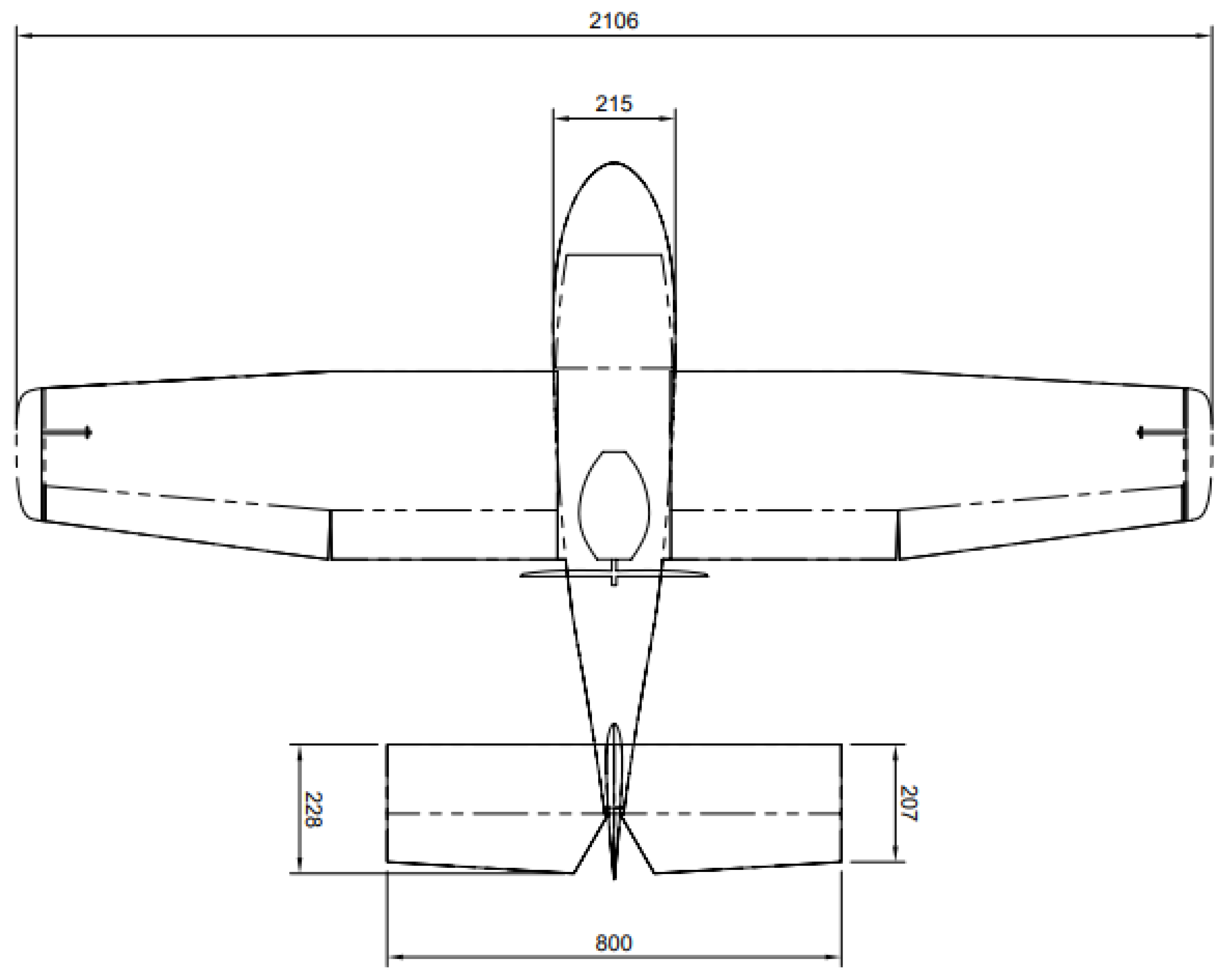
No full-scale aircraft concept design currently exists for this project. A representative model was designed loosely based on key features and dimensions of the amphibious LSA aircraft in Table 1, particularly the SeaMax M22 and Icon A5, as relevant to the Altavia Aerospace concept. For example, the hull dimensions were modelled mainly from the SeaMax M22 since the aircraft concept is to have short, wing-mounted pontoons that do not significantly contribute to the buoyancy, in contrast with the Icon A5’s fuselage-mounted pontoons. A ∼2 m wingspan was selected as a balance between maximal test Reynolds number, construction effort, and cost. Key dimensions for the sub-scale aircraft are outlined in Table 2.
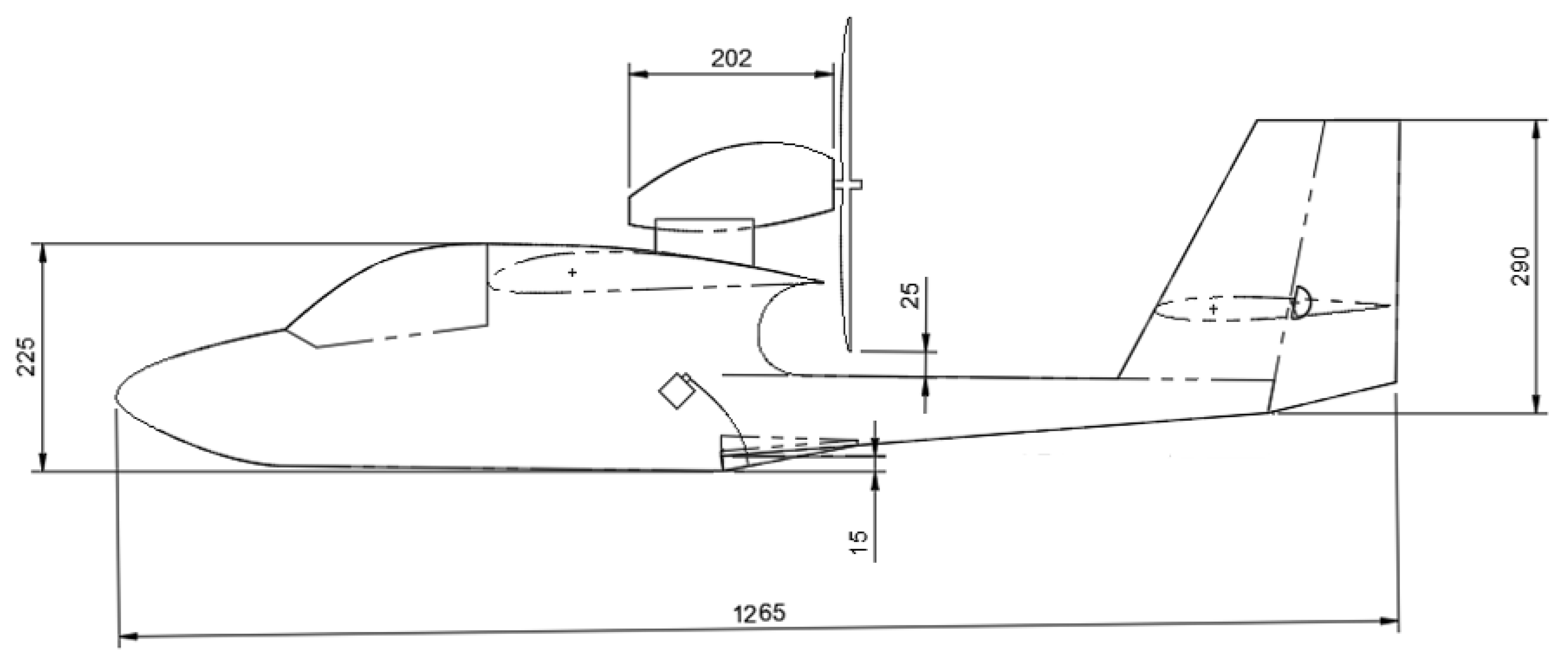
High-level design drawings are shown in Figure 4 and Figure 5 to illustrate the layout and sizing of the aircraft’s proportions.
Key stability and handling parameters were selected to ensure satisfactory flight characteristics. The horizontal tail volume coefficient was set to 0.55, within the range recommended for light aircraft [27]. A static margin of approximately 10% was achieved by estimating the neutral point and adding forward ballast until the model balanced at the required mean geometric chord position. The wing incidence for the Clark Y airfoil was set to 0° for cruise, with a 1° tail incidence to offset the pitching moment and minimise trim drag. The estimated stall speed was 9.7 m/s, used as a pilot reference for take-off and landing expectations.
Construction methods and photos are outlined in Appendix A along with a complete bill of materials for the aircraft, control and DAQ systems.

3.4. Trip Strips

Trip strips were applied to the fuselage and wings in accordance with the discussion in Section 2.4. The trip strips were located at the same relative location on the fuselage and wings as in [15]. On the fuselage, a 10 mm wide strip of 80-grit sandpaper was applied. The wings used a different boundary layer trip method used by performance-seeking R/C plane hobbyists seeking to eliminate laminar separation bubbles. A guide presented by airfoil designer Hepperle in [59] discusses the use of zig-zag, offset-wire and plain straight tape turbulators. The guide contains a graphical method to determine the required thickness for the straight tape variety based on the Reynolds number and desired chord-wise position. The wing trip strips were applied in accordance with this advice, with two layers of vinyl tape applied on top of each other on the upper and lower wing surfaces to meet the desired thickness of 0.2 mm.

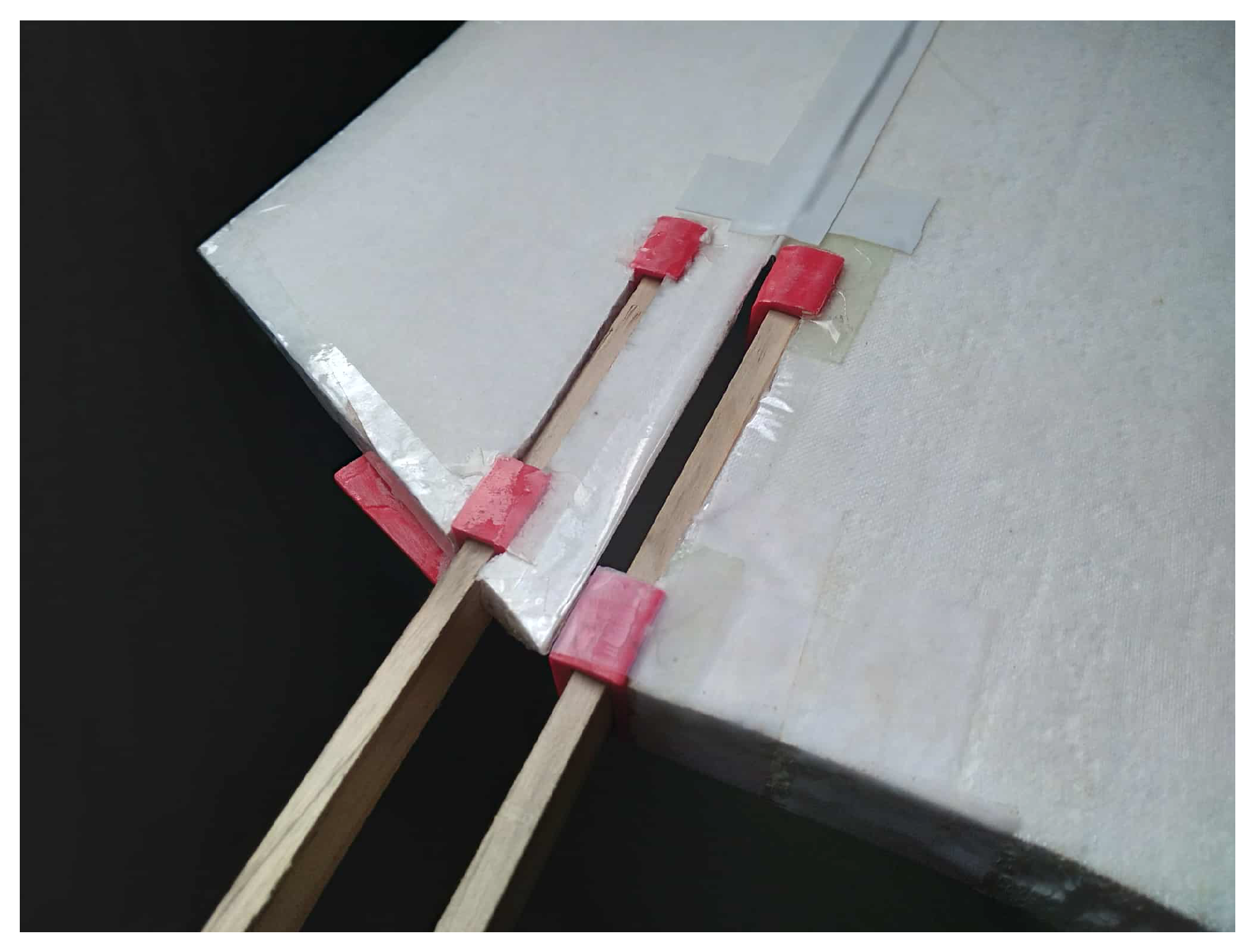
3.5. Retractable Wingtip Pontoons

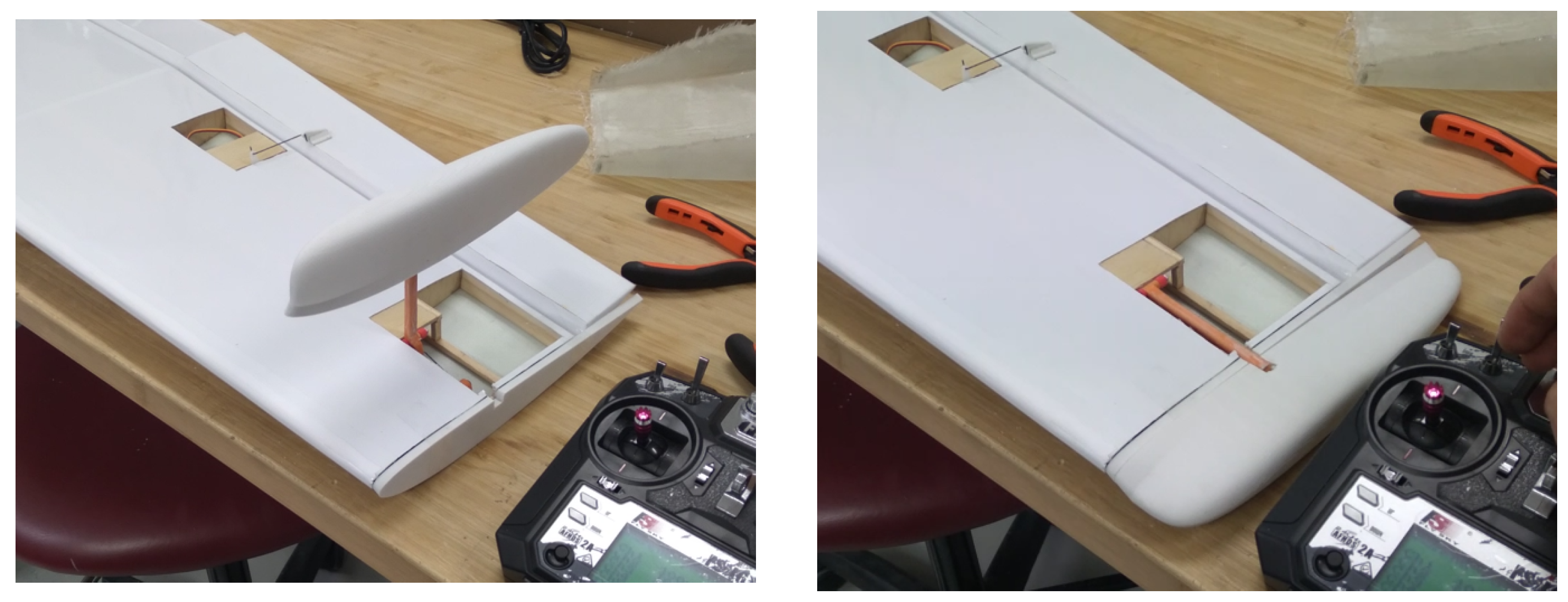
The wingtip pontoons are designed to retract inboard using a compact servo mechanism, allowing the aircraft to reduce drag in cruise while extending before landing to maintain stability on the water. The system is shown in Figure 6 in the extended and retracted configurations before the servo cover was fitted. The pontoon was designed with the inboard section transitioning between the Clark Y cambered wing profile and a NACA 0012 to ensure that the pontoons do not generate a sideward force in the water. In hindsight, to avoid a sharp transition between airfoil profiles, the transition may be designed to take place over a small portion of the outboard wing itself to avoid any abrupt changes and minimise profile drag. This reduction in tip camber may also be used as a means of reducing the spanwise lift distribution at the wingtips to ensure safe stalling characteristics. Unfortunately, the wing had already been constructed before the pontoons were designed, so this concept was not implemented. However, the pontoons as designed may still provide a significant increase in the “cleanliness” of the wing compared with a fixed pontoon mounted on a strut.

3.6. Hull Step Fairing

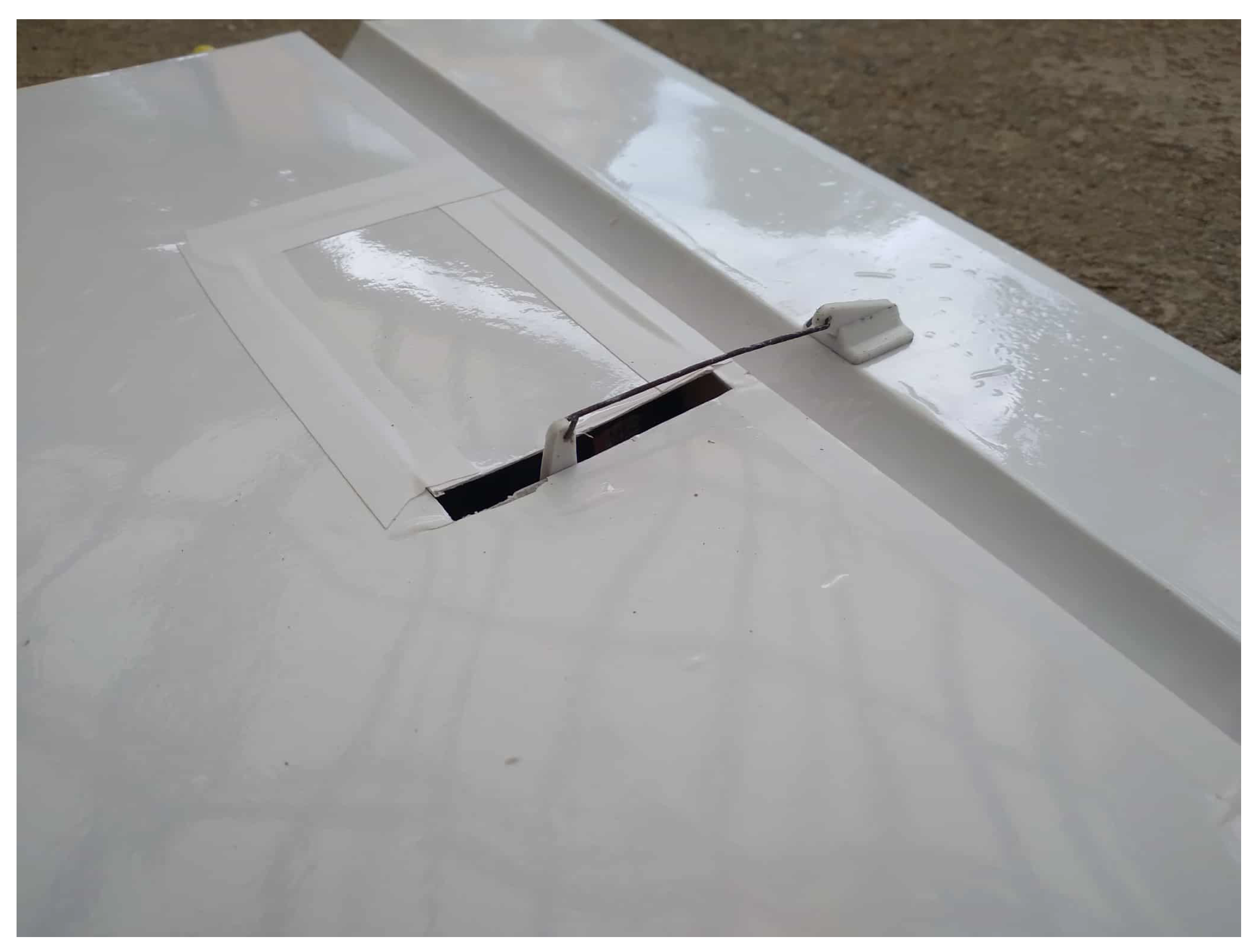
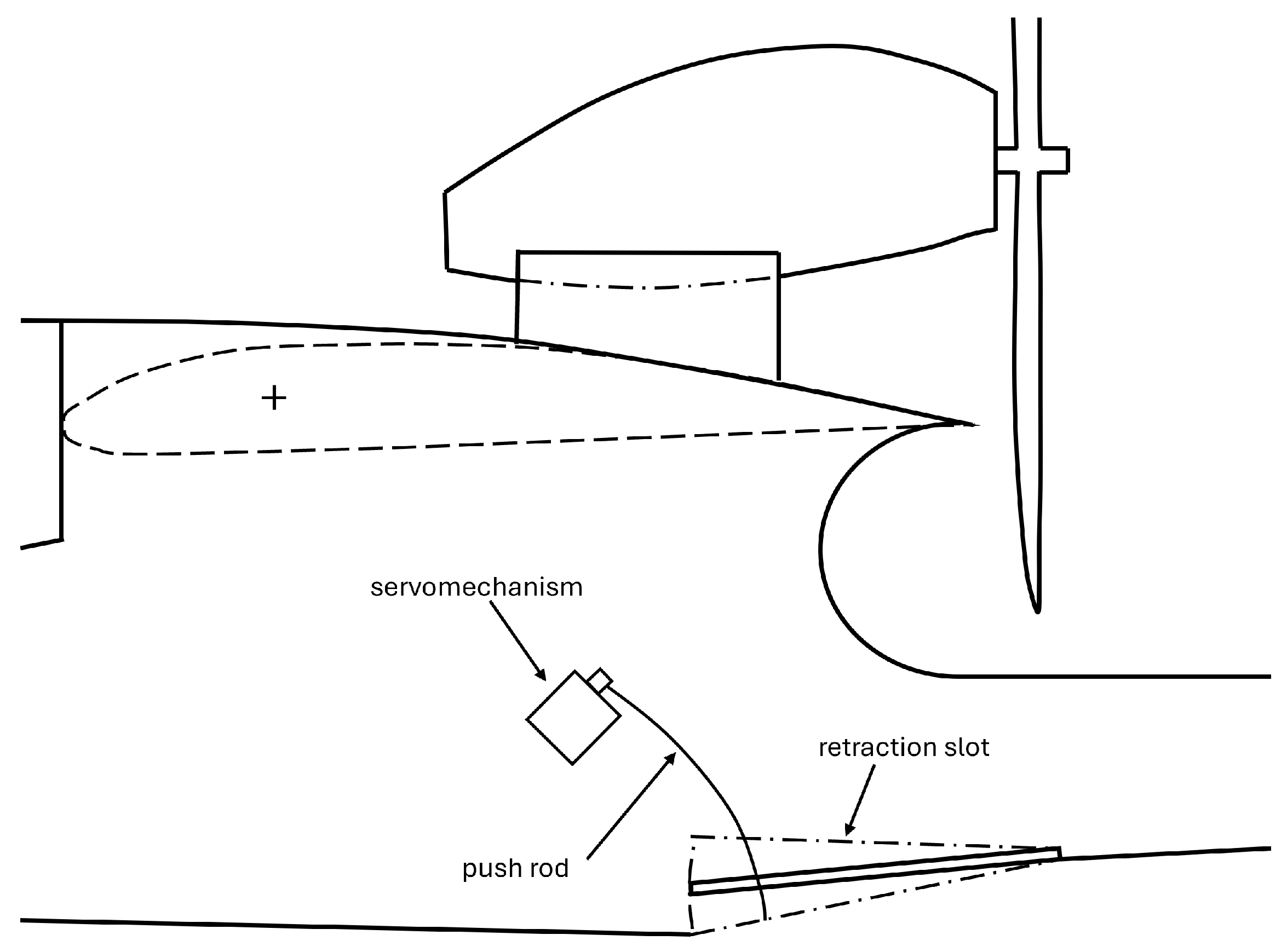
The hull step fairing was designed to extend nine times the step depth to provide the optimal benefit as recommended in the literature [16]. It is hinged at the rear and sits flush to the fuselage underside behind the step while retracted. After takeoff, it extends to the edge of the step, as shown in Figure 7. The fairing sides slide into a narrow slot along the fuselage sides a distance of 5 mm while extended and retract fully into the slot when retracted. The fairing is actuated via a servo inside the fuselage with a guide tube directing a pushrod to the underside of the fairing to extend and retract it as required. While this actuating arrangement involves a hole in the bottom of the fuselage below the waterline, as long as the top of the guide tube is positioned above the waterline, no water will exit the top of the guide tube.

3.7. Data Acquisition

3.7.1. Required Flight Data

The drag coefficient must be determined to quantify the drag differences between configurations in a comparable way. For a given angle of climb or descent, the relationship between the lift, weight, thrust, and drag forces is presented in [60]. When the aircraft is in equilibrium, forces must sum to zero in the longitudinal and vertical axes. Hence,
T D W sin θ = 0
T = D + W sin θ
If the aircraft is in level flight, this further simplifies to
T = D = 1 / 2 ρ V 2 C D S
Equation (6) may be solved for the drag coefficient C D if the thrust T and airspeed V are known, as follows:
C D = 2 T ρ V 2 S
This equation is only valid when the aircraft is in unaccelerated, level flight. In addition, the diagram assumes that the thrust force is produced in the direction of flight. While any misalignment of the thrust vector would change the thrust–drag relationship, flight in the low angle of attack range corresponding to higher speed cruise conditions will incur minimal variations in the angle between thrust and flight path. If the propulsive unit is aligned to within a small angular difference from the flight path, the thrust may be closely approximated to equal drag with minimal error.

3.7.2. Data Acquisition System Design

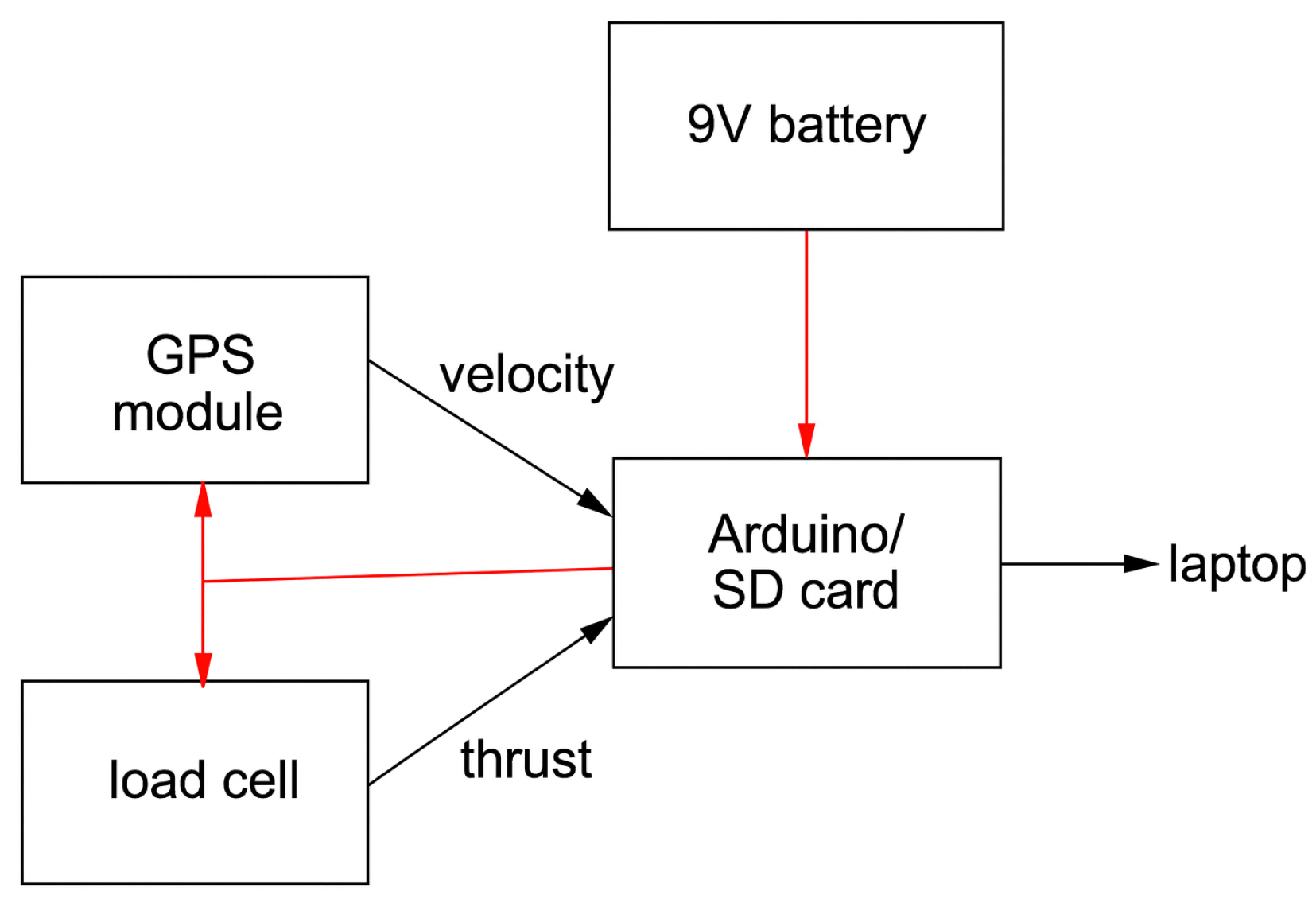
The required speed and thrust data were measured via an onboard GPS module and a load cell built into a data acquisition (DAQ) system with an onboard microcontroller/SD card. The specific DAQ components are listed in the aircraft bill of materials in Table A1 and a system diagram is shown in Figure 8. The DAQ system is powered from a household 9 V battery and initiates satellite connection immediately after power is connected. A buzzer indicates a successful GPS fix and confirms the system is recording. The general system architecture was specified by the author, and the device was manufactured externally.
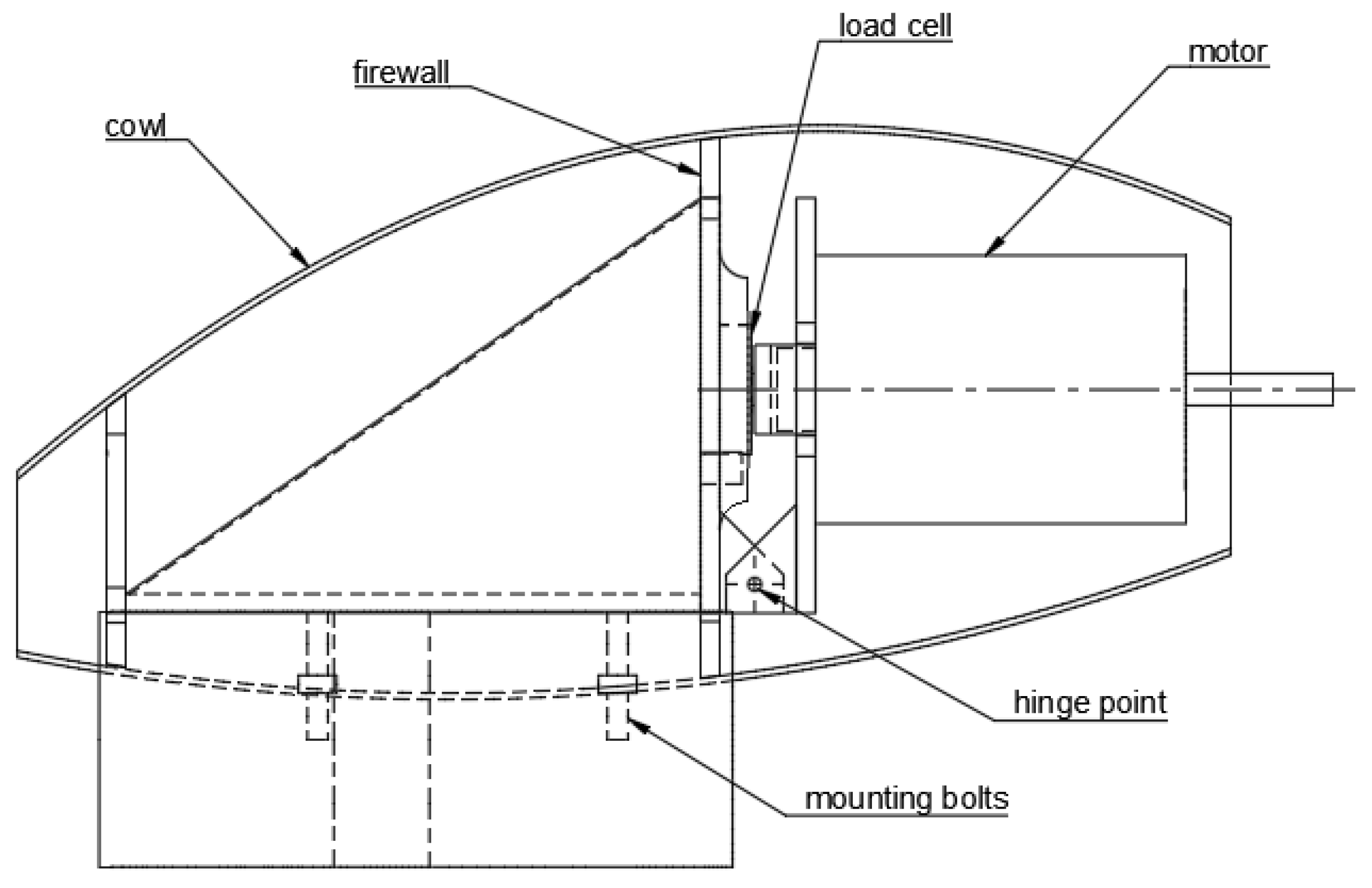
The thrust generated by the motor and propeller is read directly through the load cell and time-averaged over the test run. The load cell is built into the motor mount housed in the pod above the wing, as shown in Figure 9. The motor mount was designed such that the propeller shaft would be aligned with the aircraft’s longitudinal axis at a typical high-speed cruise angle of attack. The load cell reading with the horizontal model at zero motor RPM may be used to tare the load cell reading for each flight data set. The GPS module records position against time, from which the average velocity over a test run may be determined. Runs in opposite directions were conducted to determine airspeed and wind speed from the difference between speeds in each direction.
Drag coefficient was plotted against velocity at various throttle settings to produce a drag versus speed plot for the entire aircraft at each configuration. The radio control system is programmable, allowing the typically gradual, proportional throttle curve to be turned into a “stepped” profile, where the motor operates at several discrete throttle settings across the control stick’s range. This feature enables constant throttle settings throughout an individual test run and between flights with different configurations.

3.7.3. Load Cell Calibration

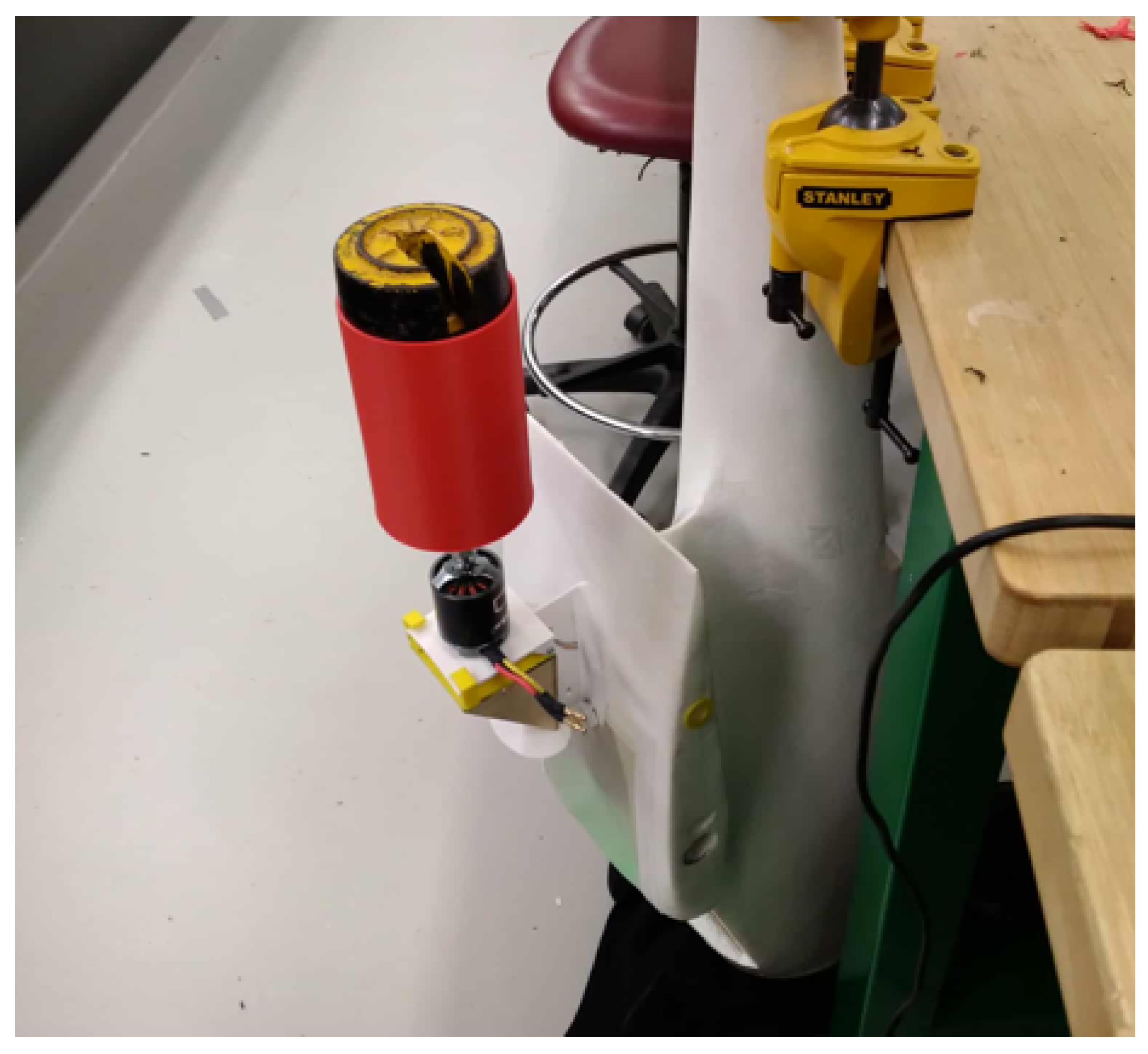
The load cell, as installed in the motor mount, was calibrated to ensure accurate propulsive force measurement and to detect any systematic errors from the motor mount integration. The fuselage was positioned on its nose on the ground, and a part was 3D-printed to slide over the propeller shaft and hold 1kg weights, as shown in Figure A9. The model was levelled with a spirit level and adjusted so that the propeller shaft was vertical, then the weights were added to the holder one at a time with a 10-second pause and then unloaded one at a time.
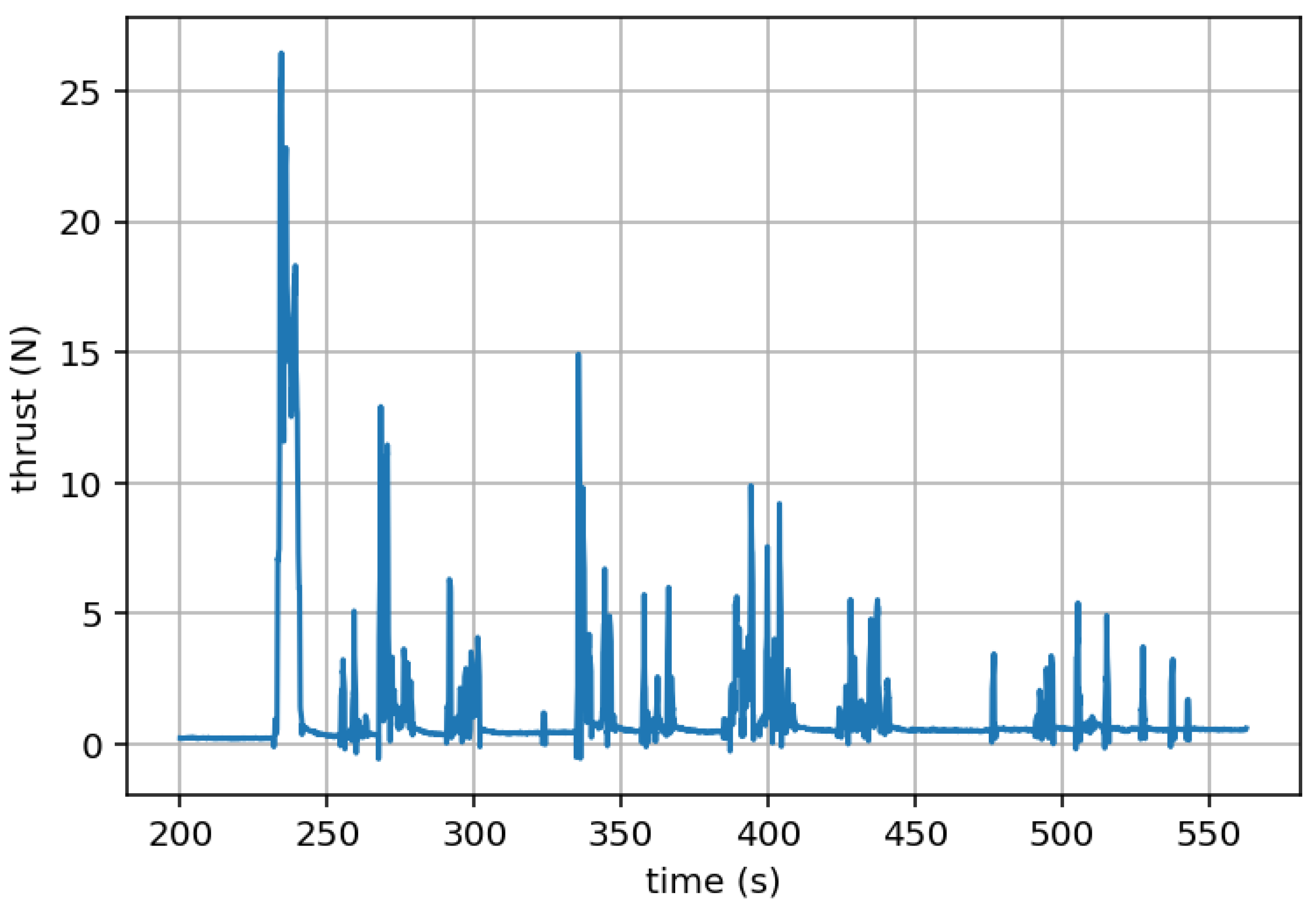
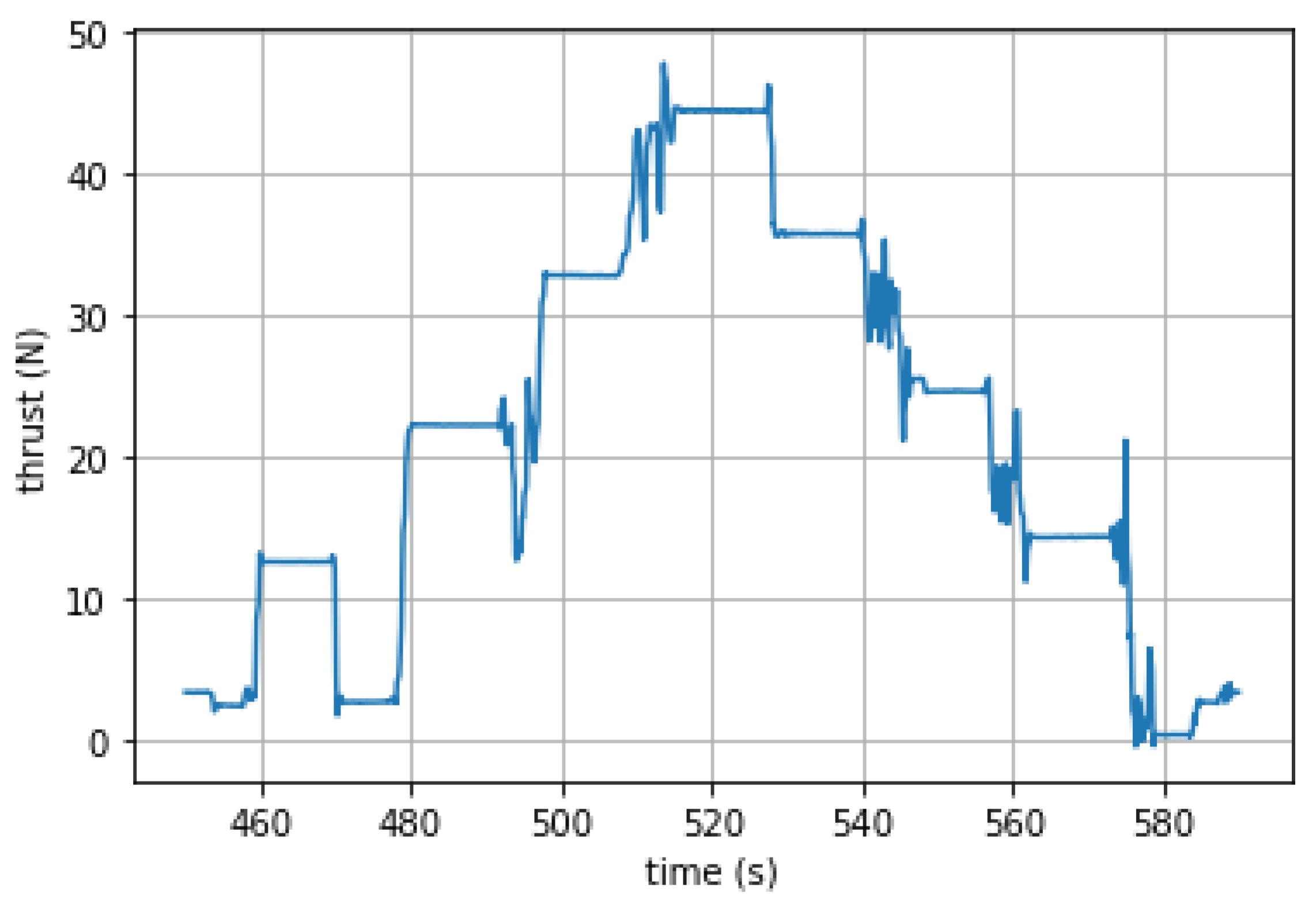
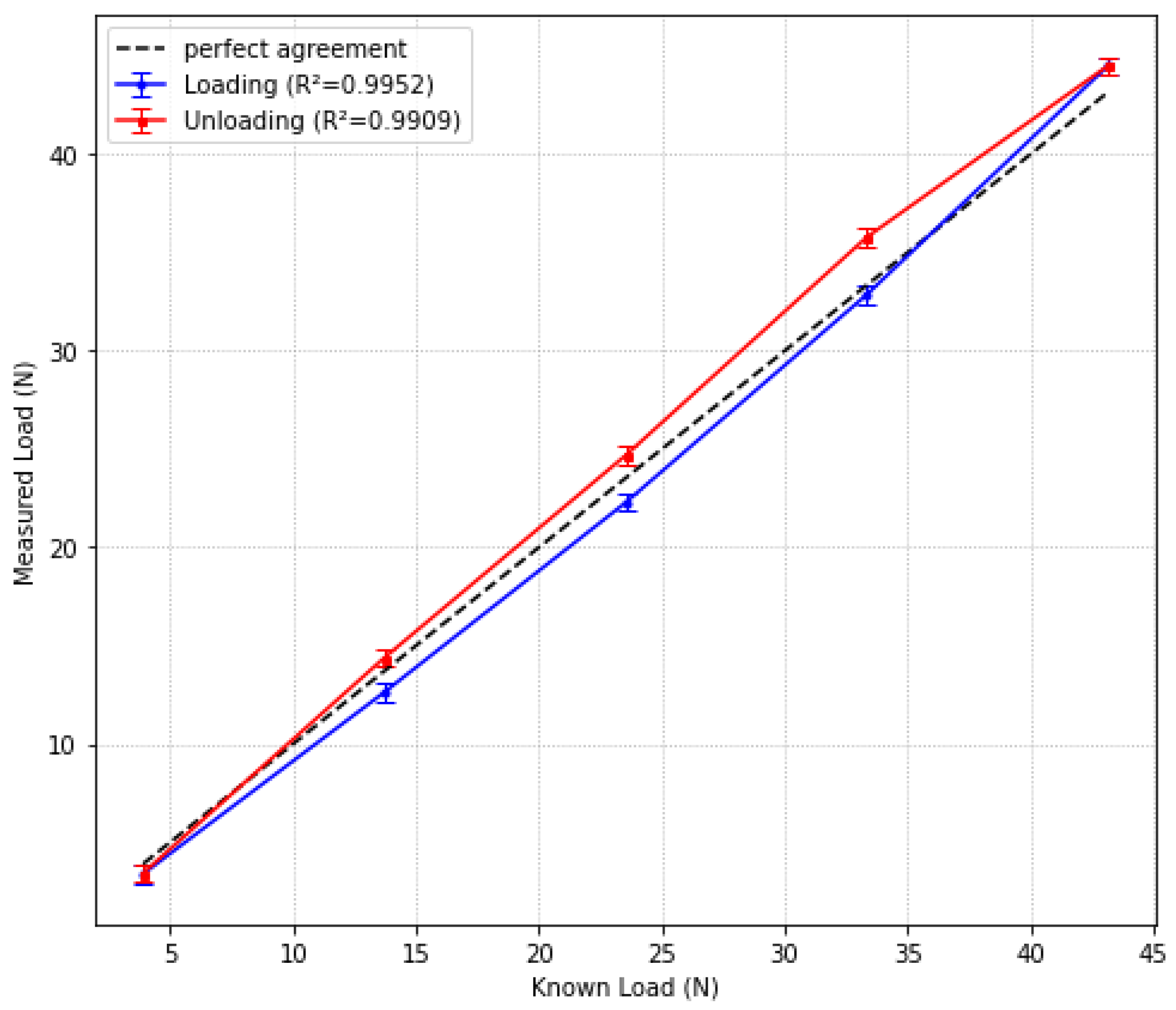
The corresponding load cell data were recorded through the DAQ system, and a thrust/time plot was generated in Python (Version 3.13). Time-averaged thrust was determined for each loading over the horizontal line segments in the plot, and these values are plotted against the known loadings. The direct load cell data is shown in Appendix C, and the calibration plot is shown in Figure 10. Overall, a very close match to the true load is observed, with r 2 values for loading and unloading of 0.9952 and 0.9909 compared with the reference line y = x. It is thought that the error in the detected load is caused by the weight holder tolerance around the prop shaft and natural flexing, causing the weights to tilt slightly and act eccentrically to the propeller shaft and load cell. For the flight tests, it is assumed that no gain factor or correction curve is required. To gain a more accurate calibration, one might be able to measure force with a scale supported horizontally and using the motor and propeller to generate actual thrust, comparing recorded values to scale readings.

3.8. Measurement Accuracy and Data Uncertainty
Uncertainty in results due to measurement accuracy is a key challenge for SFT. In this case, the key limitations are due to speed and thrust measurement and wind effects. The load cell has a rated uncertainty of 1% of its 10 lb (45.4 N) capacity [61], and the GPS has a horizontal accuracy to within 2.0 m [62]. Since the speed used to compute drag is ground speed, any headwind or tailwind effects must be minimised. Calm days and times are required for the flight testing to minimise the effect of wind. Any present wind was accounted for by completing test runs in opposing directions for each drag feature configuration and throttle setting. The wind speed was then estimated from the following equation:
V wind = V 1 V 2 2
where V 1 is the measured ground speed in one direction, and V 2 is the measured ground speed in the opposite direction. The airspeed for each run was then calculated by subtracting or adding the wind speed from the ground speed as appropriate. The uncertainty in the final drag measurement is estimated from the measurement guide in [63] for a conservative airspeed of 25 m/s over a 300 m run:
Δ x x = Δ x 1 2 + Δ x 2 2 x = ( 2.0 m ) 2 + ( 2.0 m ) 2 300 m = 2.83 300 = 0.0094
where x is the measured displacement and Δ x 1 , Δ x 2 are the position uncertainties at each end.
Figure 10. Thrust sensor calibration results.
Aerospace 13 00059 g010
Assuming time is measured accurately by the microcontroller, the relative uncertainty in ground speed is:
Δ V ground V ground = Δ x x = 0.0094
Assuming a maximum wind speed of V wind , max = 2 km / h , and that testing in both directions reduces the wind error to Δ V wind = 0.14 m / s (1/4), the relative uncertainty in airspeed is:
Δ V V = Δ V ground V ground 2 + Δ V wind V ground 2 = ( 0.0094 ) 2 + 0.14 m / s 25 m / s 2 = 0.011
The thrust uncertainty from the load cell is Δ T loadcell = 0.454 N , which is 1% of its 45.4 N range. For a maximum expected thrust of T = 35.0   N [64], the relative thrust uncertainty is:
Δ T T = Δ T loadcell T = 0.454 N 35.0 N = 0.013
The drag coefficient is computed using:
C D = 2 T ρ S V 2
where T is thrust, ρ is air density, S is reference area, and V is airspeed.
The relative uncertainty in drag coefficient is therefore:
Δ C D C D = 2 Δ V V 2 + Δ T T 2 = ( 2 × 0.011 ) 2 + ( 0.013 ) 2 = 0.026
Hence, a minimum relative uncertainty of 2.6% is expected. The uncertainty will increase if, for example, flying altitude cannot be accurately held or the wind is stronger.
This uncertainty must be compared with the potential savings from the drag reduction features to determine if the testing is feasible. In [39], comparing drag difference with and without wingtip tanks that are similar in form to wingtip-retracted pontoons, a drag saving of 3.3% at 130 KTAS and a drag penalty of 3% at 167 KTAS were found. The drag differences diverged increasingly rapidly on either side of these speeds.
In addition, this report compares the drag of pontoons retracted to the wingtip to a baseline case of fixed pontoons and struts below the wing, so the drag difference is expected to be significantly greater than that for the wingtip fuel tanks.
Studies indicate that hull step fairings may improve the hull drag by 15% [15]. In [24], the hull drag is stated to account for 34% of the Saro S.R.A1 total drag. This equates to 5.1% potential savings of the total drag by implementing a hull step fairing for this particular aircraft.
The potential drag savings from both the hull step fairing and retractable pontoons are above the drag measurement uncertainty; hence, they should be detectable through the proposed method. Individually, they are only marginally higher, but especially when combined, a clear trend in drag difference should be demonstrable.

3.9. Assumptions and Limitations

This study relies on several simplifying assumptions and practical experimental constraints that influence the accuracy and validity of the calculated drag coefficients. These limitations are summarised below with their respective control or justification measures.
  • Manual flight control. The aircraft was controlled manually, resulting in limited capacity to guarantee steady, level flight conditions for the thrust equals drag ( T = D ) assumption. Speed and tracking consistency were checked in data analysis, but altitude control was limited to visual reference during flight over a flat field. To limit this effect, flight runs were performed at low level over a flat paddock to aid altitude control, and straight sections with stable speed were selected for analysis.
  • Thrust vector alignment. The thrust vector produced by the propeller undergoes small angular changes as the angle of attack varies, causing small deviations from the T = D assumption. To justify this limitation, across small angles of attack changes, this error is low due to the small-angle approximation.
  • Constant propulsive power. Subsequent drag analysis assumes constant propulsive power at full throttle. This assumption is affected by battery voltage level, efficiency variations due to motor temperature, and changes in propeller efficiency with airspeed. To limit this effect, fresh batteries were used wherever possible to maintain consistent maximum power; however, one test required the re-use of a battery from a previous flight with slightly lower voltage.
  • GPS ground speed as airspeed proxy. GPS measures ground speed rather than true airspeed, introducing potential error in speed measurement due to wind. To limit this effect, flights were conducted in calm conditions with opposing-direction runs averaged to minimise wind effects.
  • Sensor precision. GPS position and timing resolution limited speed measurement accuracy to approximately 2 3 % . To account for this uncertainty, the effect was propagated throughout speed averaging and C D calculations.
  • Sub-scale aerodynamic similarity. Scale effects due to Reynolds number discrepancies produce drag differences between sub- and full-scale cases. To justify this limitation, the impact is reduced by operating at moderately high model Reynolds numbers, using trip strips, and comparing only relative drag differences.

4. Subscale Flight Test Results

4.1. Data Extraction

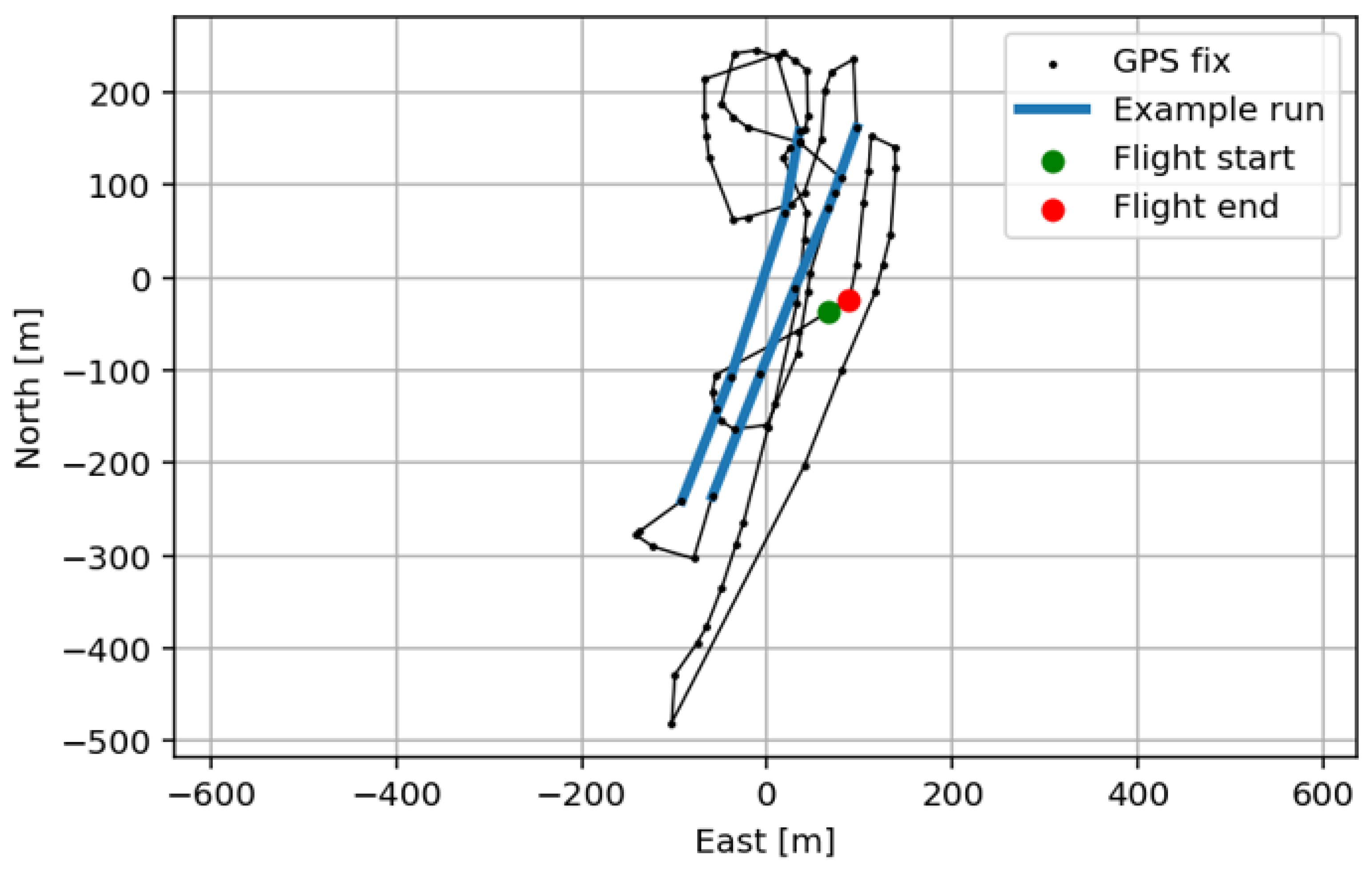
A Python script was developed to process and plot the GPS and thrust data as flight path, speed–time, and thrust–time plots. Figure 11 and Figure 12 show the plots generated for one of the test configurations, with some highlighted example straight segments extracted for data collection. Although the thrust sensor functioned correctly during the aircraft commissioning phase, the thrust data did not record properly during the test campaign. Consequently, all flight test runs were performed at full throttle to maintain an approximately constant power output between runs, enabling direct comparison of results.
Provisions were made within the code to select a time window and plot a chosen segment of data. This time window was adjusted for each flight path to isolate straight and steady segments of flight, ensuring that any transient accelerations at the start or end of each run were excluded and that the aircraft was in approximate equilibrium. This was verified by inspecting the speed–time plot for each run to confirm that the velocity remained nearly constant, and the flight path plot was confirmed to be sufficiently straight. The code determined the flight path distance for each segment, along with the average speed and the duration of the run.
Uncertainty in speed measurement for each run is caused mainly by positional and time accuracy and wind effects. The onboard GPS reports its estimated horizontal dilution of precision (HDOP) for each fix, indicating the expected positional accuracy based on satellite connections. During all tests, HDOP values remained below 0.6 m. This uncertainty defines the resolution with which the start and finish positions of a run are known, and hence the uncertainty in flight path distance. Time was originally going to be referenced against the Arduino internal clock, as recorded on the data files to the nearest millisecond. However, it was apparent from initial data analysis that the time steps recorded did not include a delay incurred while writing each line of data to the onboard memory, resulting in unrealistic speed values. The GPS recorded universal time (UTC) at each fix to the nearest second, so the data was processed using that instead. Unfortunately, this introduced an uncertainty in each time value of ± 0.5 s.
Combining these two updated sources of uncertainty with an estimate for the wind effects as discussed in Section 3.8, the approximate uncertainty for each test run is determined as follows:
x = x 2 x 1 Δ x = ( Δ x 1 ) 2 + ( Δ x 2 ) 2 = 2 ( 0.6 ) 2 = 0.85 m
t = t 2 t 1 Δ t = ( Δ t 2 ) 2 + ( Δ t 1 ) 2 = 2 ( 0.5 ) 2 = 0.71 s
and hence for a given run distance, time and average speed,
V = x t Δ V V = Δ x x 2 + Δ t t 2 + Δ V wind V ground 2 Δ V V = 0.85 x 2 + 0.71 t 2 + 0.14 V ground 2
Table A2 summarises the test run data. A t-test was conducted on the speeds between each configuration, and the results are presented in Table 3. Only the speeds between configurations 1 and 2 meet the standard 95% confidence interval (p-value < 0.05) criteria for statistical significance. Hence, only this difference may be confidently inferred to be the result of a difference in drag coefficient for the tests conducted in this study. The other configuration pairs may have meaningfully different drag coefficients but failed to be statistically significant due to the precision of the measurement methods and external factors. Further testing with more precise measurement and flight path control is required to determine this.
The mean velocities were calculated for each configuration. The uncertainty in mean velocity is estimated in Equation (18) from the individual uncertainties in velocity measurement calculated in Equation (17) and presented with the mean velocities in Table 4.
V avg = V n Δ V avg = Δ V n Δ V avg V avg = ( Δ V ) 2 n

4.2. Power Modelling

Given that thrust data were unavailable, the propulsive power at full throttle was approximated and used to estimate the drag coefficient. To solve for the drag coefficient from power, one may simply multiply both sides of the drag equation by velocity.
D = 1 2 ρ V 2 C D S D V = P = 1 2 ρ V 3 C D S
A study by Smith [65] on the powertrain efficiency of a typical UAV powered by a brushless motor was used to model the propulsion system for this aircraft. The component efficiencies vary with throttle setting, but at full throttle, the brushless motor and electronic speed controller (ESC) efficiencies were reported as η m = 0.81 and η ESC = 0.84 , respectively. The maximum propeller efficiency was taken as η p = 0.70 .
Hence, the total system propulsive efficiency was calculated as:
η sys = η motor × η ESC × η propeller = 0.81 × 0.84 × 0.70 = 0.48
The propulsive power was then estimated by multiplying the approximate electrical power consumption of the Propdrive 4258 motor with a 13 × 8” propeller [64] by the total system efficiency:
P = P e × η sys = 850 W × 0.48 = 408 W
These efficiency values for the specific components studied in Smith [65] are assumed to be similar to the efficiencies of the components in this study, though this cannot be guaranteed. However, any over- or under-estimation of propulsive power due to inaccurate component efficiencies will affect all drag coefficients equally. Since the relative drag difference is the measurement of interest, these assumed efficiencies should not affect the results significantly.

4.3. Drag Results

The total drag coefficient, C D , for each test configuration was determined from the estimated propulsive power and the measured velocity with Equation (22). The air density was estimated from [57] for an ambient temperature of 12 °C, pressure of 1012 hPa, and relative humidity of 64%, yielding a value of 1.2324 kg / m 3 .
C D = P 1 2 ρ V 3 S
The uncertainty was calculated with Equation (23).
Δ C D C D = 3 Δ V V
The calculated drag coefficients for each airframe configuration are presented in Table 5, along with their difference from the baseline configuration. The final relative uncertainties were between 7% and 9%, compared with the 3% uncertainty possible with thrust data and more accurate timing.
The profile drag coefficient, C D p , was determined by subtracting the induced drag component from the total drag coefficient. The span efficiency factor was first estimated using Brandt’s method [27].
e = 2 2 A R + 4 + A R 2 ( 1 + tan 2 Λ t , max ) = 2 2 7.02 + 4 + 7 . 02 2 = 0.877
The profile drag was then calculated in Equation (25), and the results are presented in Table 6.
C D p = C D C L 2 π e A R = C D ( 2 W / ρ V 2 S ) 2 π e A R
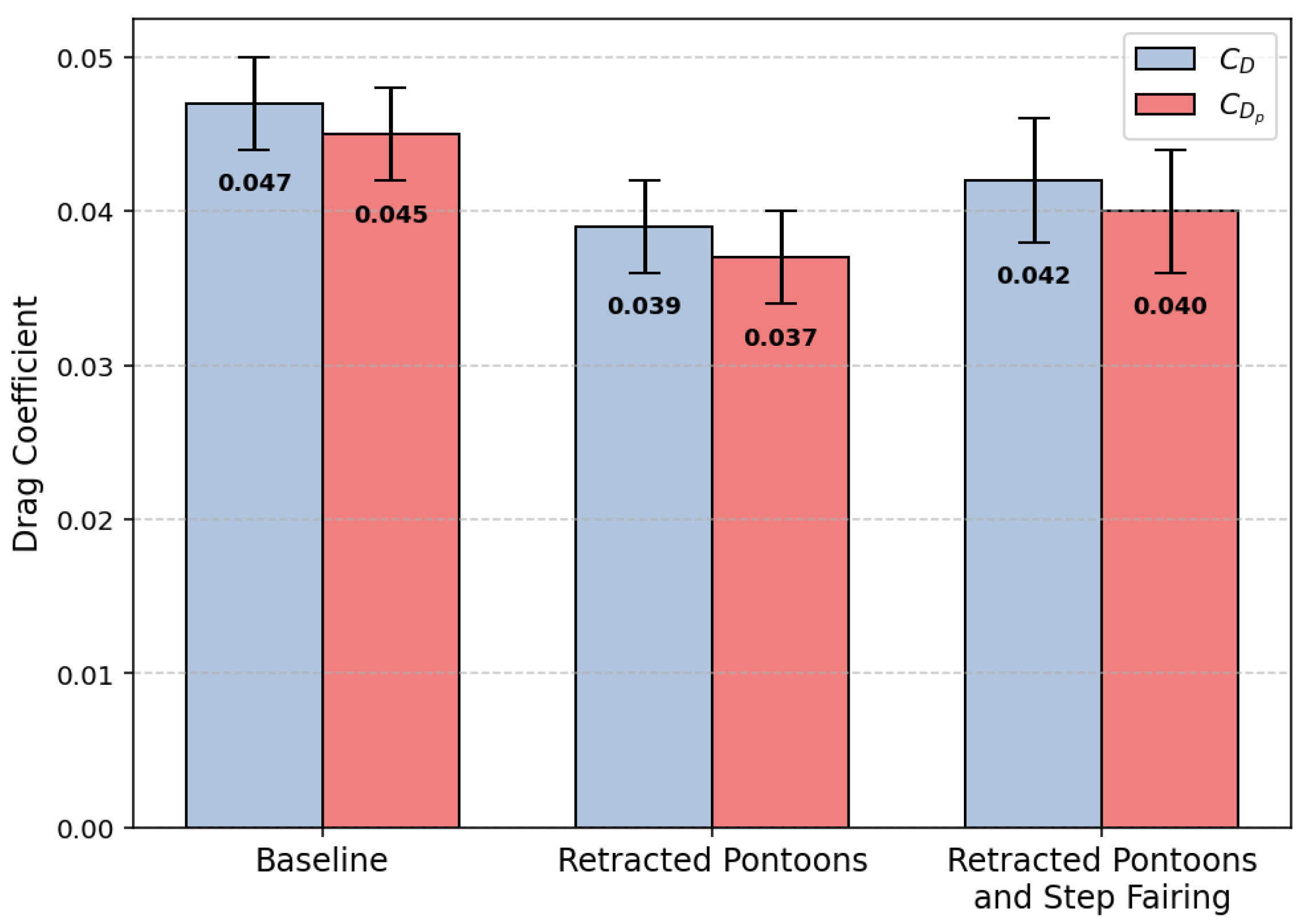
The total and profile drag coefficients are plotted in Figure 13 for visual comparison between configurations.

5. Analytical Performance Estimation Results for Seamax Amphibious LSA with Drag Reduction Features

A high-level analytical estimate was performed to assess the potential cruise performance of an existing amphibious LSA if equipped with the proposed drag reduction features and Rotax 916iS engine. The purpose of this analysis is to provide an initial estimate of the cruise speed potentially achievable by the Altavia Aerospace proposal. The Seamax was selected from the existing aircraft in Table 1 due to its relatively clean configuration compared with other designs, high cruise speed relative to its smaller engine and favourable stall speed of 39 KCAS, as this is another desirable quality of the Altavia Aerospace concept.

5.1. Baseline Drag Estimation

Cruise performance stated in the Seamax M22 Aircraft Flight Manual (AFM) [66] is assumed to be at maximum takeoff weight at sea level. A maximum stated cruise speed of 101 KTAS (51.96 m/s) at maximum continuous power corresponds to a 69 kW power output, according to the engine operators’s manual [67]. The aircraft wing area and aspect ratio are taken from the AFM [66]. Applying a typical propeller efficiency of 85%, the baseline drag coefficient is estimated in Equation (26).
C D = 2 P s η prop ρ V 3 S = 2 ( 69000 ) ( 0.85 ) ( 1.225 ) ( 51.96 ) 3 ( 12.04 ) = 0.05667
The lift coefficient is computed to calculate induced drag, with the spanwise efficiency factor estimated using Brandt’s method [27].
C L = 2 W ρ V 2 S = 2 ( 600 × 9.81 ) ( 1.225 ) ( 51.96 ) 2 ( 1 ) = 0.296
e = 2 2 A R + 4 + A R 2 ( 1 + tan 2 Λ t , max ) = 2 2 8.44 + 4 + 8 . 44 2 = 0.895
The induced drag is now calculated, and the parasite drag is found by subtracting the induced drag from the total drag coefficient.
C D i = C L 2 π e A R = ( 0.296 ) 2 π ( 0.895 ) ( 8.44 ) = 0.00369
C D P = C D C D i = 0.05667 0.00369 = 0.05298

5.2. Drag Reduction Estimation

The retractable pontoons tested in this study were not optimised for fixed deployment and featured a square-section support arm that contributed additional drag. As such, only half of the measured 17% drag reduction was applied in this analysis (8.5%) to better approximate the expected improvement of retractable pontoons compared with a refined fixed pontoon design.
For the hull step fairing, Saugen in [15] indicated hull drag reductions of approximately 15%, increasing to 20% when the wing incidence angle is also optimised. The Seamax has a high wing incidence angle of 4.9 degrees and hence would benefit significantly in high-speed cruise at low lift coefficient. Hull drag is stated to contribute 20–34% of the total parasite drag across six seaplanes studied in [19]. Assuming the Seamax hull contributes 27%, halfway between these values, the total parasite drag saving from hull step fairing and wing-set optimisation could be 5.4% for the complete aircraft. The hull step fairing and retractable wingtip pontoons would yield a combined 14.1% parasite drag reduction estimate. The resulting parasite drag coefficient of the modified aircraft is calculated in Equation (31).
C D p , mod = C D p ( 100 % Δ C D p )
C D p , mod = ( 0.05298 ) ( 100 % 14.1 % ) = 0.04551

5.3. Modified Aircraft Characteristics

Altavia Aerospace proposes the use of a modern Rotax 916iS turbocharged engine, released in 2023, for their amphibious aircraft concept. The differences between this powerplant and the Rotax 912 ULS engine used on the Seamax M-22 must be analysed to determine the potential aircraft performance. Both engines share the same 1352 cm3 displacement, but the 916iS adds a turbocharger, intercooler, and fuel injection system, enabling operation at maximum continuous power up to 19,000 ft. This comes at the expense of additional weight and fuel consumption, although the specific fuel consumption is less [67,68]. Table 7 summarises the key specifications and resulting mass and fuel differences for the 471 nautical mile absolute range capable by the Seamax in still air [66].
The total weight increase from engine and fuel weight is 35.2 kg. Without reducing the useful load-carrying capacity, this would require an increase in the maximum takeoff weight. Adding another 15 kg as a conservative estimate for the drag reduction features, the new approximated MTOW will be taken as 650 kg for performance analysis. While this does increase the stall speed if the wing size is not changed, the increase is only marginal, from 39 KCAS to an estimated 40.6 KCAS as a function of W [66].
To make the most of the turbocharged Rotax 916iS high-altitude capability, the cruise speed is estimated at 10,000 ft for reduced drag with lower air density in Equation (33). 10,000 ft represents an approximate altitude beyond which extended flight without oxygen is not recommended and thus represents a practical maximum cruising altitude for this estimation.
P = 1 2 ρ V 3 S C D p + C L 2 π e A R
P s η p r o p = 1 2 ρ S C D p V 3 + 2 W 2 π e A R ρ S 1 V
85850 = 0.24783 V 3 + 314627 V
V = 68.97 m / s = 134.1 KTAS
Equation (33) does not have a simple closed-form solution and thus requires solving numerically.
The resulting estimated cruise speed of 134 KTAS does not quite meet Altavia Aerospace’s 140 KTAS target. This outcome does, however, represent a significant improvement over the baseline Seamax cruise speed of 101 KTAS, and through further aerodynamic refinement and optimisation for the new configuration, the 140 KTAS target may be achievable.

6. Discussion

The results in Figure 13 and Table 5 and Table 6 allow direct comparison between the baseline configuration and the drag reduction features. The measured data show that the retractable wingtip pontoons produced a reduction in total drag coefficient of approximately 17%. Adding the hull step fairing did not appear to reduce drag any further but rather increased it by 6% compared with the pontoons up and fairing off configuration. During flight testing, a fresh, fully charged battery was used for the first two test configurations, but the third configuration with the step fairing was flown re-using a battery from one of the earlier test flights. The batteries used vary between 25.2 and 22.2 volts when fully charged and fully depleted, and thus, the reused battery voltage would lie somewhere between these values. While the test flights were kept short and well within the allowable flight duration, the assumption of constant power between flights is likely inaccurate for the last test configuration due to a lower voltage. It should also be noted that the speed values between the last configuration and the other two were not statistically significant, while the other two were significantly different.
Although the hull step fairing did not successfully demonstrate drag reduction in this study, the literature establishes notable hull drag reductions, with total drag savings estimated on the order of 5.1% in Section 3.8. Further investigation of retractable step fairing mechanisms is recommended to compare their structural and operational feasibility against their performance benefits.
The 17% drag reduction observed for the retractable wingtip pontoons was measured against the drag of the same pontoons in the extended position, which were not optimised for fixed deployment. Their geometry includes a flat top side to interface with the wing end face, a blended section to transform the NACA 0012 underwater contour to the wingtip Clark-Y airfoil, and a square-section retracting arm. Thus, further study is required to investigate the relative performance of a retracting pontoon with a pontoon optimised for fixed deployment. While the true drag difference between retractable and well-designed fixed pontoons is expected to be lower than 17%, it would likely still be large enough to justify the use of retractable designs.
Limited aerodynamic drag measuring capability via SFT was presented in this study, with a final drag measurement accuracy of 7–9% using a power-based method (when fully charged batteries are used). A measurement accuracy of less than 3% may be possible if thrust data is successfully recorded and validated. These preliminary findings indicate strong potential for SFT as an alternative to wind tunnels or CFD for drag studies, particularly with further refinement. Development of a thrust recording capability, or at a minimum, incorporating a power monitoring system, is required to improve the drag analysis capability of SFT. Further refinement is recommended through the use of a commercial off-the-shelf autopilot system to significantly enhance the accurate holding of altitude and heading during a test run. These may also be used to apply more standard flight testing procedures, such as the Horseshoe Method used in full-scale flight testing in [39].
Future research should also include aerodynamic simulation of the drag reduction measures, likely with a package like Flightstream, which should be suitable for the relatively low speed of LSA aircraft and the cruise angles of attack of steady level flight. Similarly, CFD could be used to examine the local flow effects for greater design insight.

7. Conclusions

This study demonstrated the aerodynamic potential of drag-reduction features for amphibious LSA through preliminary sub-scale flight testing (SFT) and analytical performance estimation. A 1/5-scale flying model with retractable wingtip pontoons and a retractable hull-step fairing was designed, constructed, and flight-tested to evaluate both the effectiveness of these devices and the practicality of SFT for comparative drag measurement.
  • Key findings and recommendations:
  • Retractable wingtip pontoons demonstrated a preliminary 17% reduction in drag coefficient over the pontoons-extended baseline case.
  • The hull step fairing produced no measurable drag benefit in this test series, likely due to limited fidelity in the compromise thrust sensing approach, although literature indicates potential total drag reduction of around 5%.
  • The power-based approach for quantifying drag coefficient achieved an estimated 7–9% measurement uncertainty, with potential improvement to below 3% with validated thrust data and improved test control via autopilot.
  • A modified Seamax M-22 LSA incorporating these features and a Rotax 916iS engine is estimated to achieve a 134 KTAS cruise speed at 10,000 ft, approaching the 140 KTAS target.
  • Sub-scale flight testing is demonstrated to be an effective and accessible tool for aerodynamic drag evaluation during early-stage aircraft design, particularly with further refinement.

Author Contributions

Conceptualization, J.T. and D.H.; methodology, J.T. and K.J.; software, J.T.; validation, J.T. and K.J.; formal analysis, J.T. and K.J.; investigation, J.T.; resources, J.T. and K.J.; data curation, J.T.; writing—original draft preparation, J.T.; writing—review and editing, K.J. and D.H.; visualization, J.T. and K.J.; supervision, K.J. and D.H.; project administration, J.T.; funding acquisition, J.T. and K.J. All authors have read and agreed to the published version of the manuscript.

Funding

This research received no external funding.

Data Availability Statement

Data are presented in this article or available on request to the corresponding author.

Acknowledgments

We acknowledge the assistance of Alan Reitsma in building the data acquisition system that made this research possible.

Conflicts of Interest

Author Dominic Hill was employed by the company Altavia Aerospace. The remaining authors declare that the research was conducted in the absence of any commercial or financial relationships that could be construed as a potential conflict of interest.

Abbreviations

The following abbreviations are used in this manuscript:
SFTSub-scale Flight Testing

Appendix A. Model Construction

Appendix A.1. Wings

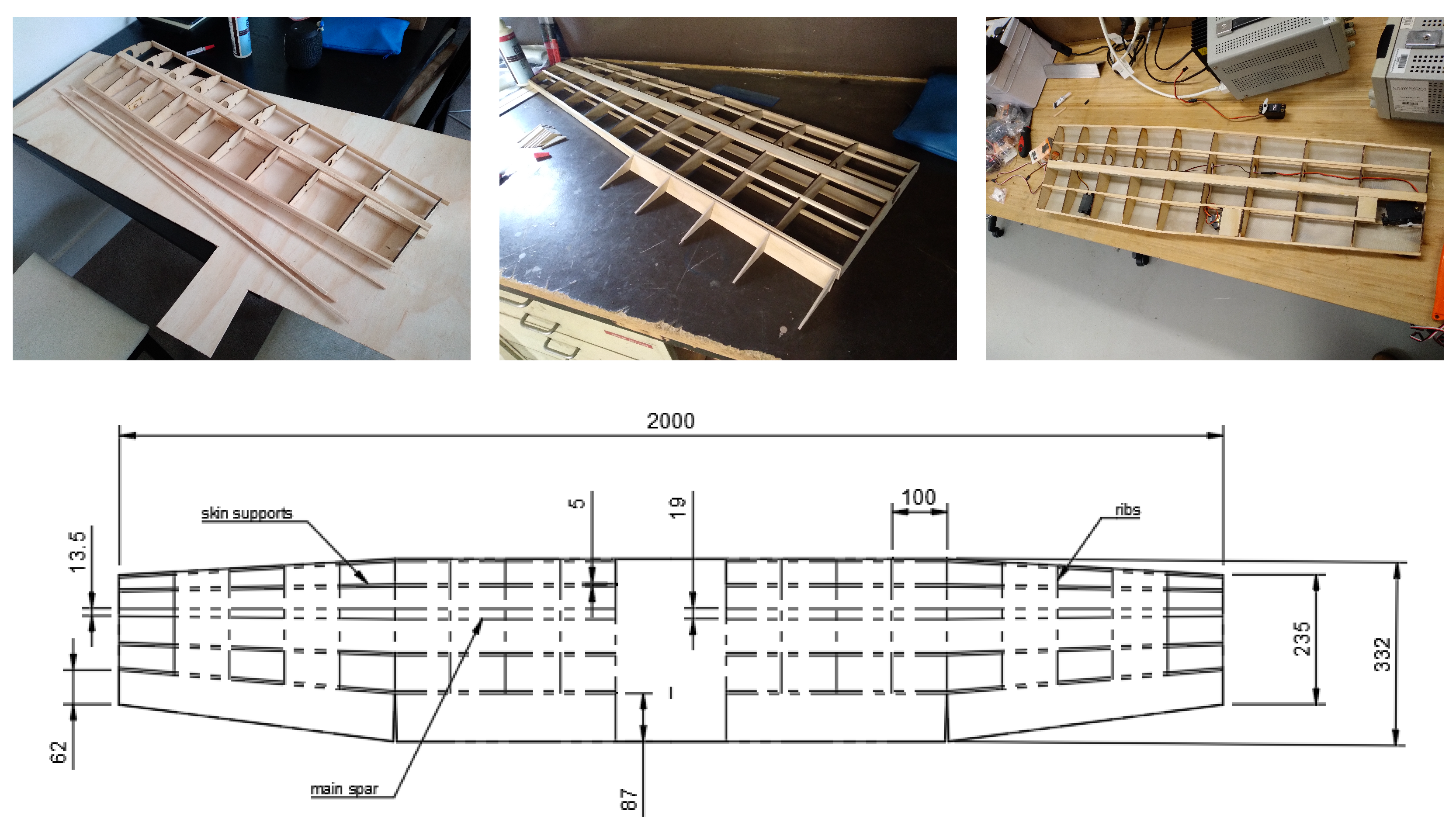
The wings were built with laser-cut 3 mm plywood ribs and 5 mm thick radiata pine strips for the leading edge, trailing edge, spar caps, and skin supports, as shown in Figure A1. A laminate of 2 × 300 gsm plain weave fibreglass layers with epoxy resin was used for the shear webs, bonded to the spar caps on the front and back. The wing was skinned with a preformed fibreglass sheet comprising a single lamina of 300 gsm plain weave fibreglass and epoxy resin. Provisions were made in the wing ribs for a 1 m × 25 mm aluminium tube to be passed through the fuselage into both wings to transfer lift loads. The wing skins were originally intended to be spray-painted. However, the resulting surface finish did not meet the desired quality. To avoid large amounts of sanding and excessive coats of paint, a self-adhesive whiteboard film was applied instead. In future work, the wing skins should be formed with more effort made to have a wrinkle-free surface to cure the sheets on, perhaps with an adhesive protective film instead of a vacuum bag plastic sheet as used for this project. The wing plans and construction photos are shown in Figure A1.
Figure A1. Wing assembly.
Aerospace 13 00059 g0a1
The ailerons and plain flaps were constructed in the same manner as the wings with a plywood frame, fibreglass skin and self-adhesive covering. These are hinged from the top surface with tape on both sides of the hinge along its length.

Appendix A.2. Fuselage

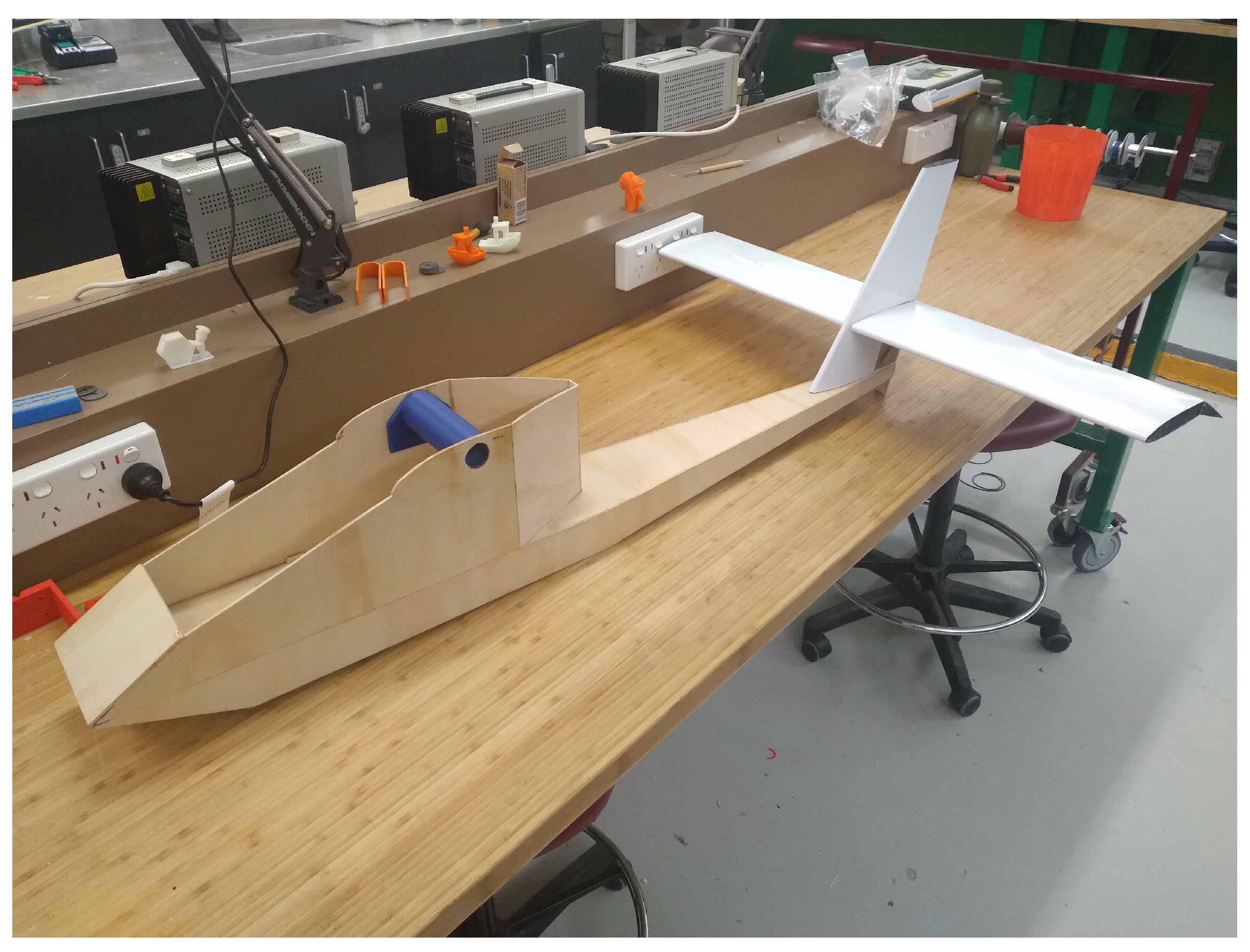
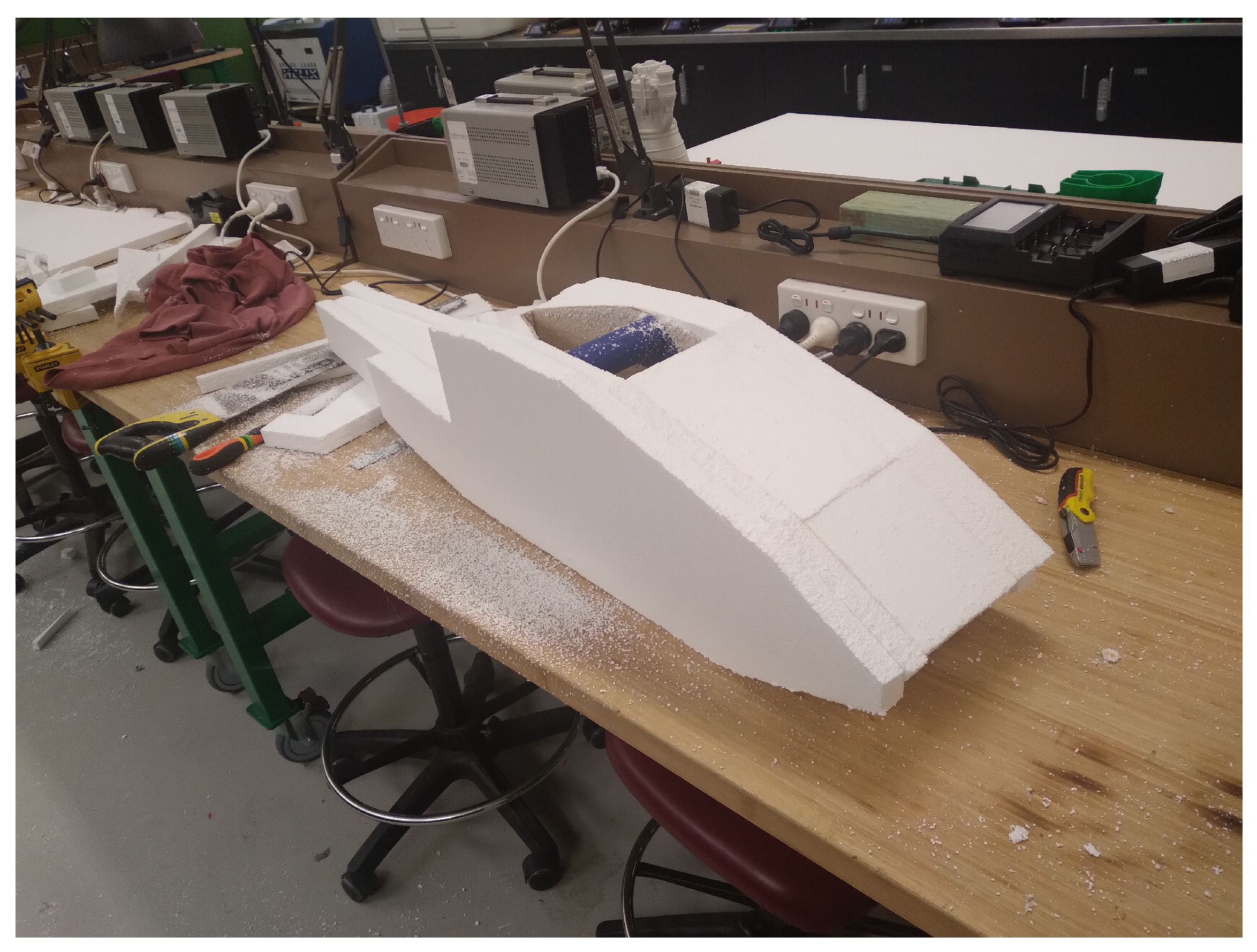
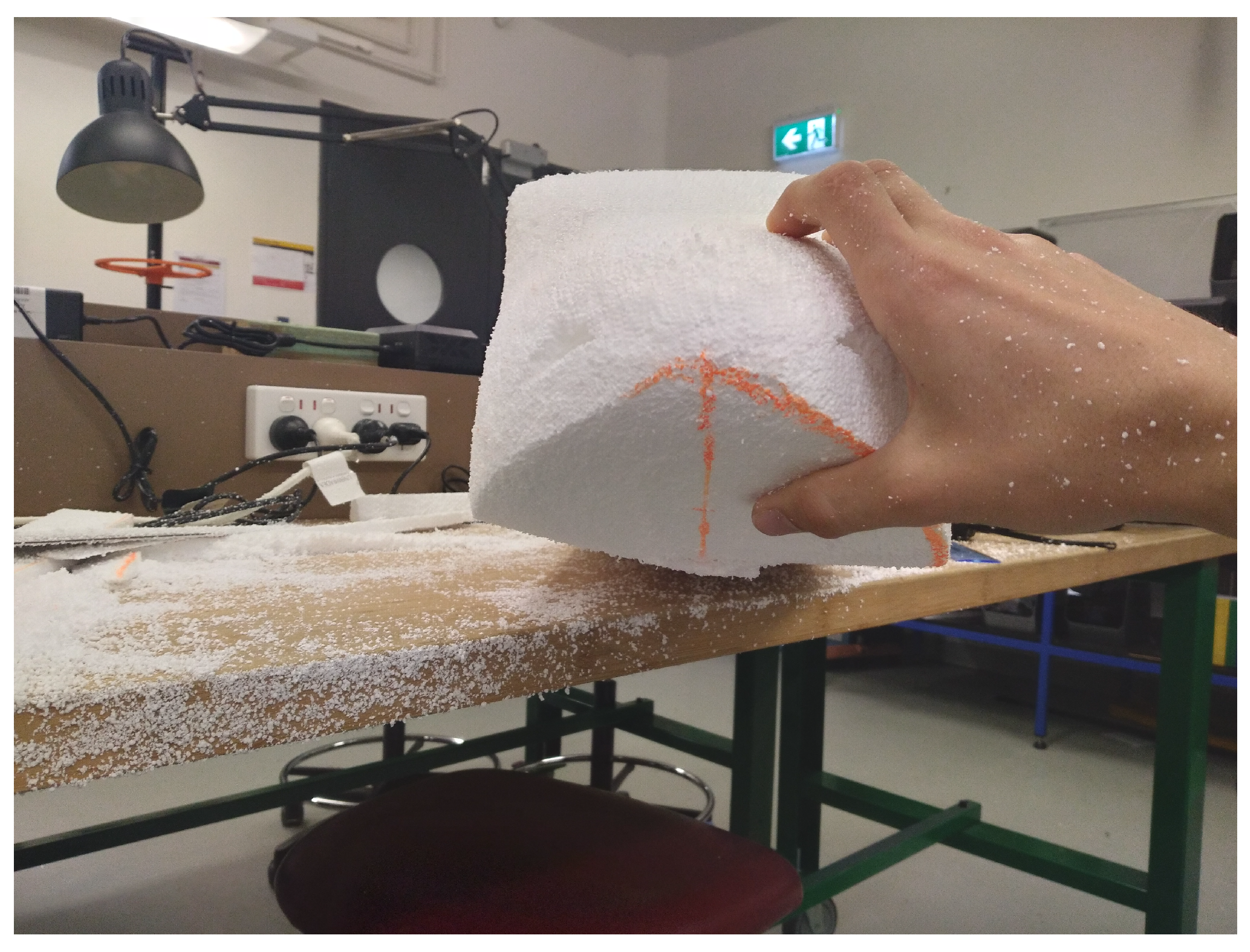
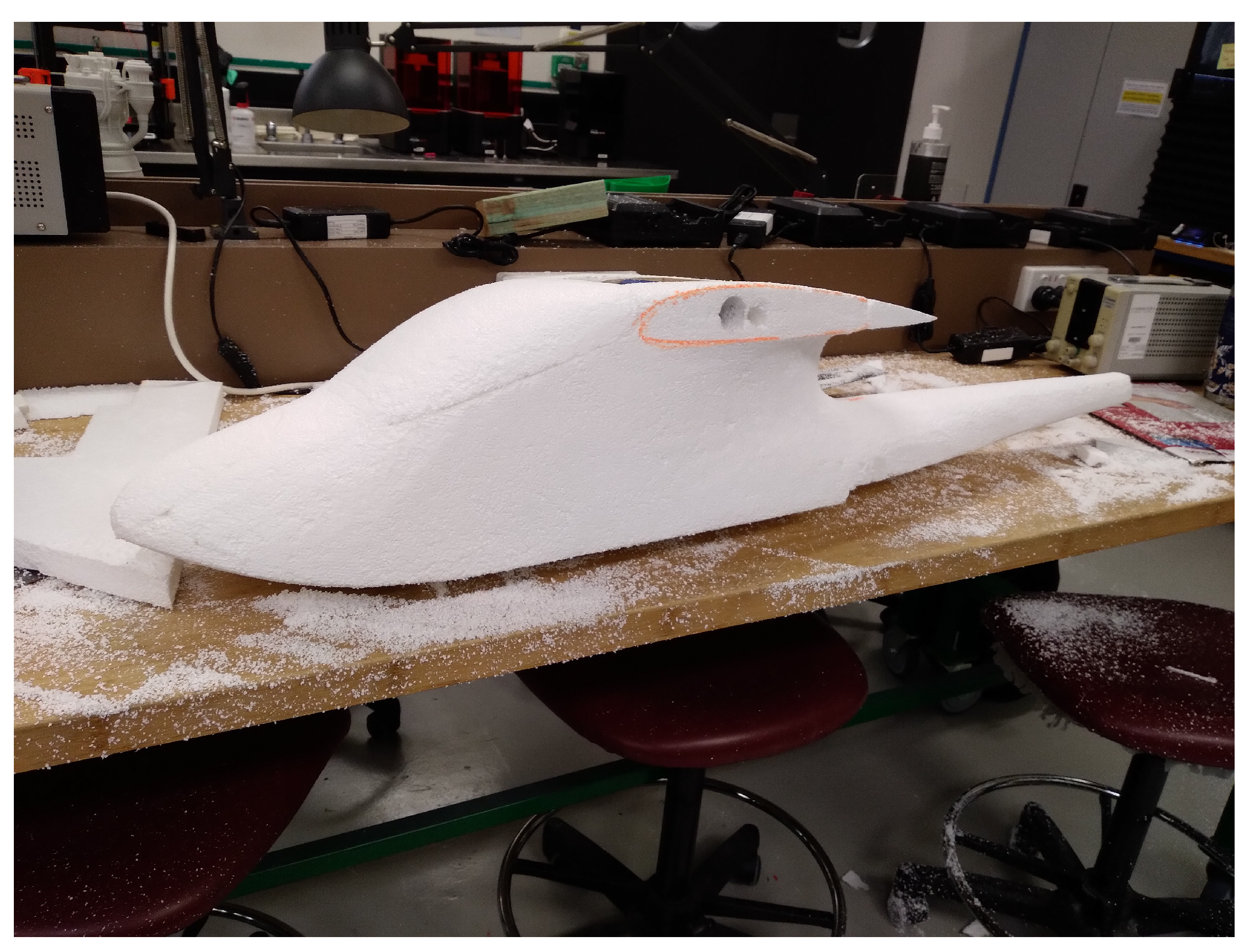
The fuselage was constructed with an internal plywood box to provide a strong frame for primary flight loads and an internal compartment for the electronics. Extruded polystyrene foam was adhered to the outer surfaces of the box, after which the side and top profiles were traced onto the foam. The final fuselage shape was then carved from the foam with a rasp and sanded smooth. The fuselage was then covered in 1 lamina of 200 gsm plain weave fibreglass cloth and epoxy for waterproofing and surface strength. The final fuselage structure was then sanded lightly and painted. Figure A2, Figure A3, Figure A4 and Figure A5 outline the fuselage structure and shaping process.
Figure A2. Fuselage internal structure.
Aerospace 13 00059 g0a2
Figure A3. Foam blocks for fuselage shaping.
Aerospace 13 00059 g0a3
Figure A4. Fuselage front shaping in progress.
Aerospace 13 00059 g0a4
Figure A5. Final fuselage shape.
Aerospace 13 00059 g0a5

Appendix A.3. Empennage

The empennage was originally constructed in the same manner as the wings, with plywood ribs, spars, fibreglass skin and self-adhesive covering. The final model as built was close to the target weight but required substantial nose weight to reach an acceptable CG location, increasing the total flying weight to over 6.5 kg. This weight increase meant the kinematic scaling laws were not met and the flight performance was negatively affected. This would particularly make takeoff more difficult, with higher stall speeds, greater volume to displace in water and more mass to accelerate. A replacement horizontal tail, elevator and rudder were built to alleviate this problem. These were constructed with an EPS foam core and a layer of 50 gsm plain weave fibreglass cloth with epoxy resin. The foam core was hot-wire cut, and imperfections were sanded smooth before the fibreglass skin was applied. Interfacing parts were 3D-printed to accept the horizontal tail spar and elevator torque transfer rod. These were bonded to the foam core with Araldite, and some leftover wing skin sheet was bonded to the surface as local skin reinforcement, as shown in Figure A6. The original horizontal tail and elevator weighed 348 g, with the replacement weighing 118 g. This enabled most of the nose weight to be removed. The new tail is not as rigid as the old and can be seen flexing in gusty flight conditions via onboard camera, but no stress wrinkles were noted on the skin post-flight. Adding another layer of 50 gsm glass cloth or using a single layer of 100 gsm glass cloth would probably increase the stiffness without adding significant weight if required in future aircraft projects.
Figure A6. Horizontal tail and elevator joining mechanisms.
Aerospace 13 00059 g0a6

Appendix A.4. Power and Control System

The power system consists of a Propdrive 4258 500 kv brushless outrunner electric motor with a 13 × 6 inch propeller in diameter and pitch, respectively. The motor is controlled by a Sunnysky 80 amp electronic speed controller (ESC) and a 5000 mAh, six-cell 40C lithium polymer battery used to power the system.
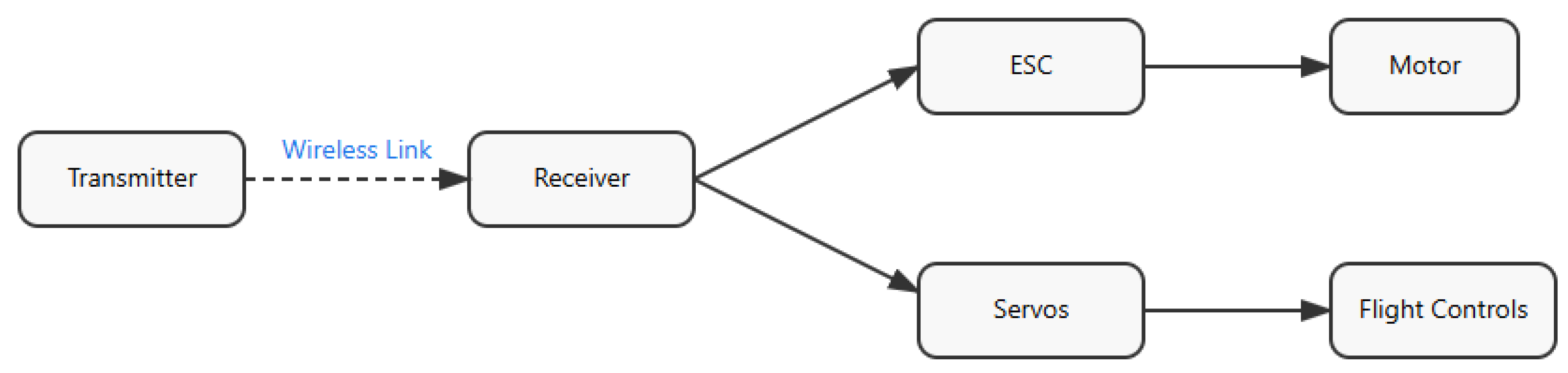
The control system used all commercial off-the-shelf components intended for hobby use and thus readily available. A Flysky FS-i6X transmitter was paired with an FS-iA10B receiver onboard the aircraft, to which the ESC and servo actuators interface, as shown in Figure A7. The flight control surfaces are actuated with pushrods connecting the servos to the control surfaces via 3D-printed control horns, shown in Figure A8.

Appendix A.5. Cost

Table A1. Bill of Materials.
ItemSupplierCostComments
Airframe
3 mm plywood–1200 × 810 mmBunningsUSD 19Fuselage, ribs, motor mount
EPS foam–1200 × 2400 × 25 mmBunningsN/AFuselage shaping
5 min epoxyBunningsUSD 5.30Adhesive
Glass fibre cloth–200 gsmTrojan FibreglassN/AFuselage waterproofing, wing skin
Epoxy resinTrojan FibreglassN/AFuselage waterproofing
Vinylester resinTrojan FibreglassN/AWing skins
PLA filamentUNSW CanberraN/ASmall hardware items
Control System
Corona CS239MG servos ×3HobbykingUSD 47Control surface actuators
Hitec HS-422 servos ×4SelfN/AControl surface/pontoon retract actuators
SG90 micro servos ×2BanggoodN/AHull step/rudder actuators
Flysky FS-i6X TransmitterBanggoodUSD 70
Flysky FS-iA10B ReceiverBanggoodUSD 15
Propulsion System
Propdrive 42–58 500 kV motorHobbykingUSD 64
APC 13 × 8 propellerModelflightUSD 22
80 A Sunnysky ESCBanggoodUSD 61
Turnigy 5000 mAh 6 s 40c LiPo battery ×2HobbykingUSD 113
DAQ System
M10C-180 GPS ModuleBanggoodUSD 11Speed measurement
FX293X-100A-0010-L Load CellRS ComponentsUSD 47Thrust measurement
Arduino NanoJaycarN/AData recording
Micro SD cardN/AOnboard hard drive
Miscellaneous
iMax B6 80 W chargerBanggoodUSD 36
4 mm banana plugsHobbykingUSD 12
XT90 connectorBanggoodUSD 6
Total cost:USD 528
Cost without battery, charger, Tx/Rx:USD 289
Figure A7. Control system diagram.
Aerospace 13 00059 g0a7
Figure A8. Pushrod flight control linkages.
Aerospace 13 00059 g0a8

Appendix B. Supplementary Flight Data

Table A2. Individual run speeds.
Config.DescriptionTest No.Duration (s)Distance (m)Average Speed (m/s)
1Pontoons extended, fairing off (Baseline)115404.026.9
218526.129.2
317499.329.4
412320.826.7
2Pontoons up, fairing off117509.029.9
217532.831.3
323692.830.1
410302.630.3
510302.330.2
615425.028.3
3Pontoons up, fairing on19262.429.2
214394.128.2
311325.529.6
414409.929.3
510295.029.5

Appendix C. Thrust Sensing Calibration Supplementary Data

Figure A9. Thrust calibration setup.
Aerospace 13 00059 g0a9
Figure A10. Thrust sensor calibration raw data.
Aerospace 13 00059 g0a10

References

  1. Civil Aviation Safety Authority. Light Sport Aircraft. Available online: https://www.casa.gov.au/aircraft/sport-aviation/light-sport-aircraft (accessed on 9 October 2025).
  2. European Union Aviation Safety Agency. Light Sport Aircraft FAQs. Available online: https://www.easa.europa.eu/en/the-agency/faqs/light-sport-aircraft (accessed on 9 October 2025).
  3. Electronic Code of Federal Regulations. Title 14, Chapter I, Part 1, Section 1.1—General Definitions. Available online: https://www.ecfr.gov/current/title-14/chapter-I/subchapter-A/part-1/section-1.1 (accessed on 9 October 2025).
  4. Kevin. FAA MOSAIC Final Rule: What Pilots, Manufacturers, and the Aviation Community Need to Know. 2025. Available online: https://www.aviatortips.com/faa-mosaic-final-rule-what-pilots-manufacturers-and-the-aviation-community-need-to-know (accessed on 9 October 2025).
  5. Federal Aviation Administration. Modernization of Special Airworthiness Certification (MOSAIC) Final Rule. 2025. Available online: https://www.faa.gov/newsroom/MOSAIC_Final_Rule_Issuance.pdf (accessed on 9 October 2025).
  6. Civil Aviation Safety Authority. Increasing Sport and Recreational Opportunities. 2025. Available online: https://www.casa.gov.au/resources-and-education/publications/corporate-publications/general-aviation-workplan/increasing-sport-and-recreational-opportunities (accessed on 9 October 2025).
  7. SeaMax Aircraft. SeaMax M-22 Specifications. Available online: https://www.seamaxaircraft.com/specifications (accessed on 25 December 2025).
  8. ICON Aircraft. A5 Amphibious Sport Aircraft. Available online: https://www.iconaircraft.com/a5 (accessed on 19 May 2025).
  9. Plane & Pilot Magazine. ICON A5 Review. Available online: https://www.planeandpilotmag.com/article/icon-a5 (accessed on 19 May 2025).
  10. AOPA. Progressive Aerodyne SeaRey. Available online: https://www.aopa.org/go-fly/aircraft-and-ownership/aircraft-guide/aircraft/progressive-aerodyne-searey (accessed on 19 May 2025).
  11. Super Petrel USA. Super Petrel LS. Available online: https://superpetrelusa.com (accessed on 19 May 2025).
  12. Aero Adventure Aircraft. Aventura II. Available online: https://www.airtech.tech/en/aero-aventura (accessed on 19 May 2025).
  13. Colyaer SL. Freedom Amphibious Aircraft. Available online: https://www.colyaer.com (accessed on 19 May 2025).
  14. Atol Aviation. ATOL Amphibious Aircraft. Available online: https://www.atolaviation.com (accessed on 19 May 2025).
  15. Saugen, J. Aerodynamic Optimization of a Flying Boat Hull. 2024. Available online: https://ntnu.no (accessed on 19 May 2025).
  16. Riebe, J.M.; Naeseth, R.L. Effect of Aerodynamic Refinement on the Aerodynamic Characteristics of a Flying-Boat Hull; Technical Report; NACA: Boston, MA, USA, 1947. [Google Scholar]
  17. Lina, L.J. The Use of a Retractable Planing Flap Instead of a Fixed Step—A Seaplane; Technical Report; Classic Technical Report on Retractable Planing Flaps for Seaplane Drag Reduction; NACA: Boston, MA, USA, 1943. [Google Scholar]
  18. Coombes, L.P.; Clark, K.W. The Air Drag of Hulls: The Effect of Alterations in the Main Dimensions and Various Detail Features. Aircr. Eng. Aerosp. Technol. 1937, 9, 315–328. [Google Scholar] [CrossRef]
  19. Hartmann, E. The Aerodynamic Drag of Flying Boat Models as Measured in the N.A.C.A 20-Foot Wind Tunnel; Technical Report; NACA: Boston, MA, USA, 1935. [Google Scholar]
  20. Lowry, J.G.; Riebe, J.M. Effect of Length-Beam Ratio on the Aerodynamic Characteristics of Flying-Boat Hulls Without Wing Interference; Technical Report; NACA: Boston, MA, USA, 1948. [Google Scholar]
  21. Yates, C.C.; Riebe, J.M. Effect of Length-Beam on the Aerodynamic Characteristics of Flying-Boat Hulls; Technical Report; UNT Digital Library, local-cont-no: 93R11227; NACA: Boston, MA, USA, 1947. [Google Scholar]
  22. Smith, A.G.; Attenborough, J.E. Water and Air Performance of Seaplane Hulls as Affected by Fairing and Fineness Ratio; Technical Report RM.2896; Aeronautical Research Council: Teddington, UK, 1950. [Google Scholar]
  23. User, R. Why the Step Circled in the Picture Found in Almost Seaplanes—Does This Step Cause Aerodynamic Deficiency After Take-Off? 2016. Available online: https://www.researchgate.net/post/Why-the-step-circled-in-the-picture-found-in-almost-seaplanes-does-this-step-cause-aerodynamic-difficiency-after-take-off (accessed on 25 December 2025).
  24. Smith, A.G. The Full-Scale Air Drag of Some Flying-Boat Seaplanes; Technical Report; Cranfield University, Aerodynamics Research Centre: Cranfield, UK, 1959. [Google Scholar]
  25. Smith, D.E. Retractable Step Fairing for Amphibian Airplane. U.S. Patent 6042052A, 28 March 2000. [Google Scholar]
  26. Morabito, M.G. 10-Early Stage Sizing; Chapter 10; US Naval Academy: Annapolis, MD, USA, 2021; Available online: https://www.usna.edu/NAOE/_files/documents/Courses/EN486/10_-_Early_Stage_Sizing.pdf (accessed on 9 October 2025).
  27. Gudmundsson, S. General Aviation Aircraft Design: Applied Methods and Procedures, 2nd ed.; Butterworth-Heinemann: Oxford, UK, 2022. [Google Scholar]
  28. Anoop, G.; Meharu, G.; Rajesh, A.K. Conceptual Design of Amphibious Aircraft; Technical Report; Aircraft Research and Design Centre, Hindustan Aeronautics Limited (HAL): Bangalore, India, 2017. [Google Scholar]
  29. Saunders Roe SR/A-1. 2020. Available online: https://www.secretprojects.co.uk/threads/saunders-roe-sr-a-1.36245/ (accessed on 19 May 2025).
  30. PBY Specifications. Available online: https://pbycatalina.com/specifications/ (accessed on 19 May 2025).
  31. Kightly, J.; Pemberton, R. An In-Depth Look at the Grumman Goose. In Key Aero; Key Publishing Ltd.: Lincolnshire, UK, 2022. [Google Scholar]
  32. Wilson, T. Nothing Small About This Amphibian-KITPLANES. 2024. Available online: https://www.kitplanes.com/nothing-small-about-it/ (accessed on 19 May 2025).
  33. Hoerner, S.F. Fluid-Dynamic Drag; Hoerner Fluid Dynamics: Bakersfield, CA, USA, 1985. [Google Scholar]
  34. Hoerner, S.F. Fluid-Dynamic Lift; Internet Archive: San Francisco, CA, USA, 2019. [Google Scholar]
  35. Haines, A.B.; Rhodes, C.W. Tests in the R. E. A. 10 ft × 7 ft High-Speed Wind Tunnel on Drop Tanks Fitted to Two Swept-Back Wings; Technical Report; Royal Aircraft Establishment (R.A.E.): Hampshire, UK, 1952. [Google Scholar]
  36. Salter, C.; Jones, R. Tests on a Sweep-Back Wing and Body with End Plates and Wing Tip Tanks in the Compressed Air Tunnel; Technical Report; Ministry of Supply: London, UK, 1954. [Google Scholar]
  37. Tinling, B.E.; Kolk, W.R. The Effects of Mach Number and Reynolds Number on the Aerodynamic Characteristics of Several 12-Percent-Thick Wings Having 35° of Sweepback and Various Amounts of Camber; Technical Report; NACA: Boston, MA, USA, 1951. [Google Scholar]
  38. Tinling, B.E.; Kolk, W.R. The Effects of Centrally Mounted Wing-Tip Tanks on the Subsonic Aerodynamic Characteristics of a Wing of Aspect Ratio 10 with 35° of Sweepback; Technical Report; NACA: Boston, MA, USA, 1951. [Google Scholar]
  39. Rogers, D.F. Comparative Flight Tests with and Without Tip Tanks; Technical Report; U.S. Naval Academy: Annapolis, MD, USA, 2007. [Google Scholar]
  40. Greenwell, D. A Review of Unsteady Aerodynamic Modelling for Flight Dynamics of Manoeuvrable Aircraft. In Proceedings of the AIAA Atmospheric Flight Mechanics Conference and Exhibit, Providence, RI, USA, 16–19 August 2004; American Institute of Aeronautics and Astronautics: Reston, VA, USA, 2004; p. 5276. [Google Scholar] [CrossRef]
  41. Ghoreyshi, M.; Badcock, K.J.; Ronch, A.D.; Marques, S.; Swift, A.; Ames, N. Framework for Establishing Limits of Tabular Aerodynamic Models for Flight Dynamics Analysis. J. Aircr. 2011, 48, 42–55. [Google Scholar] [CrossRef]
  42. Kulkarni, A.R.; Varriale, C.; Voskuijl, M.; Rocca, G.L.; Veldhuis, L.L. Assessment of Sub-scale Designs for Scaled Flight Testing. In Proceedings of the AIAA Aviation 2019 Forum, Dallas, TX, USA, 17–21 June 2019; American Institute of Aeronautics and Astronautics: Reston, VA, USA, 2019. [Google Scholar] [CrossRef]
  43. Daugherty, J.C. Ames Unitary Plan Wind Tunnel Blockage Recommendations; 1984. Available online: https://www.nasa.gov/wp-content/uploads/2023/06/upwt-blockage-recommendations.pdf (accessed on 8 October 2025).
  44. The Loop Newspaper. VariViggen—Burt Rutan’s First Homebuilt Aircraft Design; Hilltop Publishers: Tehachapi, CA, USA, 2019; Available online: https://www.theloopnewspaper.com/story/2019/03/02/community/variviggen-burt-rutans-first-homebuilt-aircraft-design/5121.html (accessed on 9 October 2025).
  45. Cox, J. Burt Rutan: An EAA Perspective. 2011. Available online: https://burtrutan.com/downloads/BurtRutanEAAPerspectiveJackCox.pdf (accessed on 16 October 2025).
  46. Kulkarni, A.R.; Voskuijl, M.; Varrialle, C.; La Rocca, G.; Veldhuis, L.L.M. Flight Testing Stability and Controllability Otto Lilienthal’s Monoplane Design from 1893. In Proceedings of the AIAA AVIATION Forum, Dallas, TX, USA, 17–21 June 2019. [Google Scholar]
  47. Ananda, G.K.; Vahora, M.; Dantsker, O.D.; Selig, M.S. Design Methodology for a Dynamically-Scaled General Aviation Aircraft. In Proceedings of the 35th AIAA Applied Aerodynamics Conference, Denver, CO, USA, 5–9 June 2017. [Google Scholar]
  48. Rocha, A.C.; Bauzer Medeiros, E.; Faustino Magalhaes, T.; Tofaneli, L.A.; Dias Oliveira, T.; Benaci Sieves, G.; Guimaraes Bucalo, T. Takeoff Parameter Estimation for a Subscale Flight Test of an Amphibious Floatplane. In AIAA SCITECH 2025 Forum; AIAA: Reston, VA, USA, 2025. [Google Scholar]
  49. Chambers, J.; Stough, H., III. Summary of NASA Stall/Spin Research for General Aviation Configurations. In Proceedings of the AIAA/Aerospace Sciences Meeting, American Institute of Aeronautics and Astronautics, Reno, NV, USA, 6–9 January 1986. Number AIAA 86-2597. [Google Scholar] [CrossRef]
  50. Cunningham, K.; Foster, J.V.; Morelli, E.A.; Murch, A.M. Practical Application of a Subscale Transport Aircraft for Flight Research in Control Upset and Failure Conditions. In Proceedings of the AIAA/Aerospace Sciences Meeting, Reno, NV, USA, 7–10 January 2008; American Institute of Aeronautics and Astronautics: Reston, VA, USA, 2008. Number AIAA Paper No. 2008-34480. [Google Scholar]
  51. Cox, D.E.; Cunningham, K.; Jordan, T.L. Subscale Flight Testing for Aircraft Loss of Control: Accomplishments and Future Directions. In Proceedings of the AIAA Guidance, Navigation, and Control Conference, Minnespolis, MN, USA, 13–16 August 2012; American Institute of Aeronautics and Astronautics: Reston, VA, USA, 2012. Number AIAA Paper 2012-5029. [Google Scholar]
  52. Kulkarni, A.R.; La Rocca, G.; Veldhuis, L.L.M. Degree of Similitude Estimation for Sub-Scale Flight Testing. In Proceedings of the AIAA Scitech 2019 Forum, San Diego, CA, USA, 7–11 January 2019. [Google Scholar]
  53. Kundu, P.K.; Cohen, I.M.; Dowling, D.R. (Eds.) Chapter 10—Boundary Layers and Related Topics. In Fluid Mechanics, 6th ed.; Academic Press: Cambridge, MA, USA, 2016; pp. 469–532. ISBN 9780124059351. [Google Scholar] [CrossRef]
  54. Wassgren, C. Boundary Layers–Laminar Boundary Layers; Lecture Notes/Technical Report ME30800; Purdue University, School of Engineering and Technology: Cambridge, MA, USA, 2010. [Google Scholar]
  55. Aero-ComLab, S.U. Airfoil Design; Lecture Notes; Stanford University, Department of Aeronautics & Astronautics: Stanford, CA, USA, 2010. [Google Scholar]
  56. Winslow, J.; Otsuka, H.; Govindarajan, B.; Chopra, I. Basic Understanding of Airfoil Characteristics at Low Reynolds Numbers (104–105). J. Aircr. 2018, 55, 1067–1080. [Google Scholar] [CrossRef]
  57. Czernia, O.C.D.; Szyk, B. Air Density Calculator. Available online: https://www.omnicalculator.com/physics/air-density (accessed on 13 October 2025).
  58. Śmietańska, J. Kinematic Viscosity of Air Calculator. Available online: https://www.omnicalculator.com/physics/kinematic-viscosity-of-air (accessed on 15 October 2025).
  59. Hepperle, M. Turbulators (Boundary-Layer Trips). 1996. Available online: https://www.mh-aerotools.de/airfoils/turbulat.htm (accessed on 25 December 2025).
  60. Jenkinson, L.R.; Simpkin, D.J.; Rhodes, D. Civil Jet Aircraft Design, 1st ed.; Arnold: London, UK, 1999. [Google Scholar]
  61. TE Connectivity Product Datasheet 20009605-12. Available online: https://www.te.com/usa-en/product-20009605-12.datasheet.pdf (accessed on 16 June 2025).
  62. UBX NEO-7 GPS Module Datasheet. 2014. Available online: https://au.mouser.com/datasheet/2/1025/NEO_7_DataSheet__UBX_13003830_-2010064.pdf (accessed on 16 June 2025).
  63. Norton, M. Uncertainty Analysis; Technical Report; Southern Illinois University Edwardsville: Edwardsville, IL, USA, 2010. [Google Scholar]
  64. PropDrive V2 4258 500 KV Reversed Shaft Brushless Outrunner Motor. Available online: https://hobbyking.com/en_us/propdrive-v2-4258-500kv-reversed-shaft-brushless-outrunner-motor.html (accessed on 16 June 2025).
  65. Gong, A.; Verstraete, D. Development of a Dynamic Propulsion Model for Electric UAVs. In Proceedings of the 7th Asia-Pacific International Symposium on Aerospace Technology (APISAT 2015), Cairns, Australia, 25–27 November 2015. [Google Scholar]
  66. SeaMax Aircraft. M-22 System Pilot Operating Handbook: With Engine ULS. Available online: https://www.seamaxaircraft.com/support (accessed on 16 June 2025).
  67. BRP-Rotax GmbH & Co. KG. Operators Manual for Rotax Engine Type 912 Series. Gunskirchen, Austria, Edition 4, Revision 2 ed., 2025. Available online: https://shop.cometaviationsupplies.co.za/wp-content/uploads/2025/07/MML_912_Ed4_Rev2.pdf (accessed on 16 June 2025).
  68. BRP-Rotax GmbH & Co. KG. Operators Manual for Rotax Engine Type 916 i A/C24 Series. Gunskirchen, Austria, Edition 0, Revision 1 ed., 2023. Available online: https://motory.teveso.cz/content/m_dokumentace/2024/MML_916_i_A_C24_Series_Ed0_Rev1.pdf (accessed on 16 June 2025).
Figure 1. A typical hull step shown by the red circle [23].
Aerospace 13 00059 g001
Figure 2. Hull step fairing diagram.
Aerospace 13 00059 g002
Figure 3. Retractable wingtip mechanism of the Catalina (reproduced with permission [30]).
Aerospace 13 00059 g003
Figure 4. Sub-scale model top view.
Aerospace 13 00059 g004
Figure 5. Sub-scale model side view.
Aerospace 13 00059 g005
Figure 6. Extended and retracted wingtip pontoons.
Aerospace 13 00059 g006
Figure 7. Illustration of the hull step fairing.
Aerospace 13 00059 g007
Figure 8. DAQ system diagram.
Aerospace 13 00059 g008
Figure 9. Motor mount with load cell.
Aerospace 13 00059 g009
Figure 11. Example flight path with highlighted test runs.
Aerospace 13 00059 g011
Figure 12. Example thrust data.
Aerospace 13 00059 g012
Figure 13. Comparison between total and profile drag coefficients between configurations. Note: Error bars represent 8–9% propagated measurement uncertainty in C D .
Aerospace 13 00059 g013
Table 1. Summary of popular two-seat LSA amphibious aircraft [7,8,9,10,11,12,13,14].
Aircraft ModelEmpty/Max Weight (kg)EngineStall Speed (KCAS)Cruise Speed (KTAS)
M22 Seamax325/599Rotax 912 ULS/iS39100
Icon A5491/686Rotax 912 iS3984
SeaRey449/649Rotax 912 iS3383
Super Petrel LS386/649Rotax 912 iS37100
Super Petrel XP422/681Rotax 916 iS41120
Aero Adventura II375/650Rotax 912 ULS/iS, Aeromomentum AM13, AM153374
Freedom S100410/650Rotax 912 ULS45100
ATOL 650380/650Rotax 912 iS4086
Note. Where manufacturer data did not explicitly specify airspeed type, stall speeds are assumed to be KCAS and cruise speeds to be KTAS for standardised performance comparison.
Table 2. Model aircraft key specifications.
ParameterValue
Scale (approx)1/5
Length (m)1.26
Wingspan (m)2.11
Wing area ( m 2 )0.634
Aspect ratio7.02
Mean geometric chord (m)0.307
Mass (kg)6.14
Wing Loading (kg/ m 2 )9.68
Table 3. t-test results on speed data.
Config. Pairtp
1 and 22.620.0305
1 and 31.540.1666
2 and 31.820.1023
Table 4. Mean velocities for each configuration.
Config.DescriptionnVelocity (m/s)
1Baseline428.1 ± 0.7
2Pontoons Up, Fairing Off630.0 ± 0.7
3Pontoons Up, Fairing On529.1 ± 0.8
Table 5. Measured speed and drag coefficient for each configuration.
ConfigurationAvg. Speed (m/s) Δ Speed vs. Baseline C D Δ C D vs. Baseline
Baseline28.1 0.047 ± 0.003 0 ± 7 %
Pontoons retracted, fairing off30.0+6.7% 0.039 ± 0.003 17 ± 7 %
Pontoons retracted, fairing on29.1+3.8% 0.042 ± 0.004 11 ± 9 %
Table 6. Profile drag coefficients for each configuration.
Configuration C D p Δ C D p vs. Baseline 
Baseline 0.045 ± 0.003 0 ± 7
Pontoons retracted, fairing off 0.037 ± 0.003 18 ± 7
Pontoons retracted, fairing on 0.040 ± 0.004 11 ± 9
Table 7. Comparison of Rotax 912 ULS and 916iS engines for Altavia Aerospace concept [67,68].
ParameterRotax 912 ULS (Seamax)Rotax 916iS (Altavia Proposal)
Rated power (max continuous) (kW)73.5101.0
Engine + mount weight (kg)67.791.2
Weight difference (kg) +23.5
Fuel consumption (kg/h)15.825.3
Fuel for 471 NM mission (kg)73.485.1
Total added fuel weight (kg) +11.7
Disclaimer/Publisher’s Note: The statements, opinions and data contained in all publications are solely those of the individual author(s) and contributor(s) and not of MDPI and/or the editor(s). MDPI and/or the editor(s) disclaim responsibility for any injury to people or property resulting from any ideas, methods, instructions or products referred to in the content.