
Article

Comparative Analysis of Temperature- and Pyrolysis-Based Numerical Models for Predicting Lightning Strike Damage in Laminated Composite
1
College of Safety Science and Engineering, Civil Aviation University of China, Tianjin 300300, China
2
Science and Technology Innovation Research Institute, Civil Aviation University of China, Tianjin 300300, China
*
Author to whom correspondence should be addressed.
Aerospace 2026, 13(1), 35; https://doi.org/10.3390/aerospace13010035

Submission received: 1 December 2025 / Revised: 22 December 2025 / Accepted: 25 December 2025 / Published: 29 December 2025
(This article belongs to the Special Issue Finite Element Analysis of Aerospace Structures)

Abstract

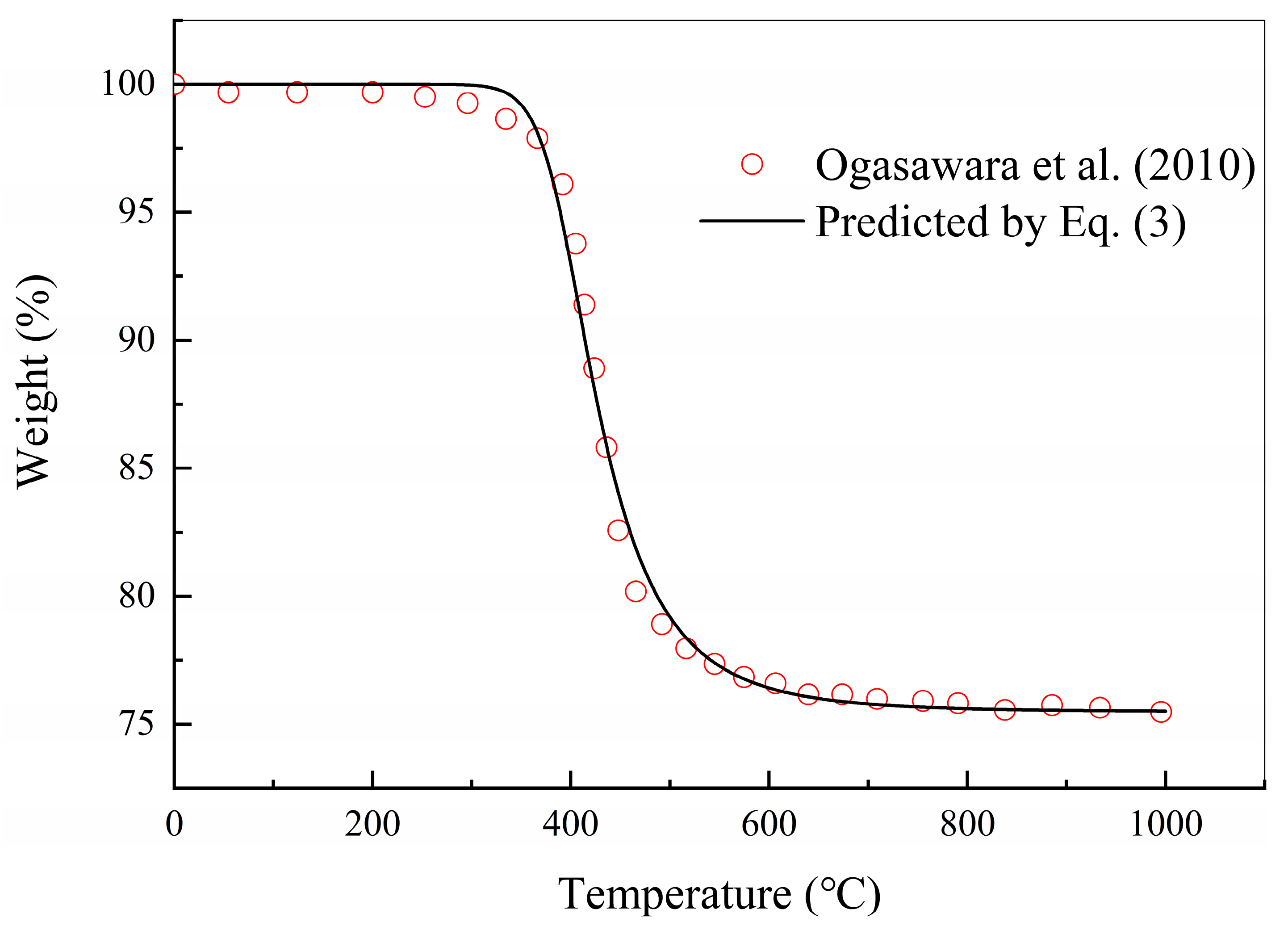
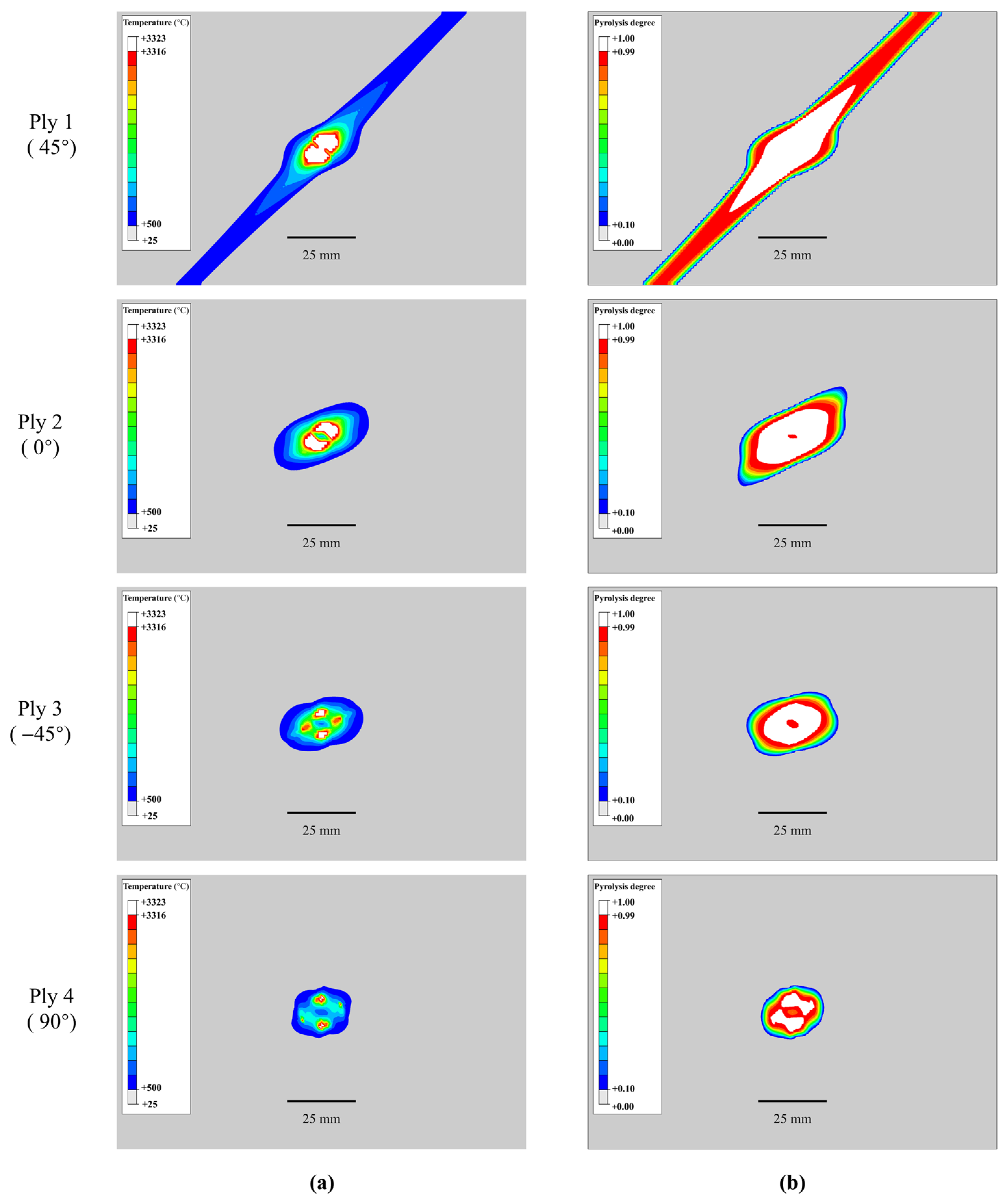
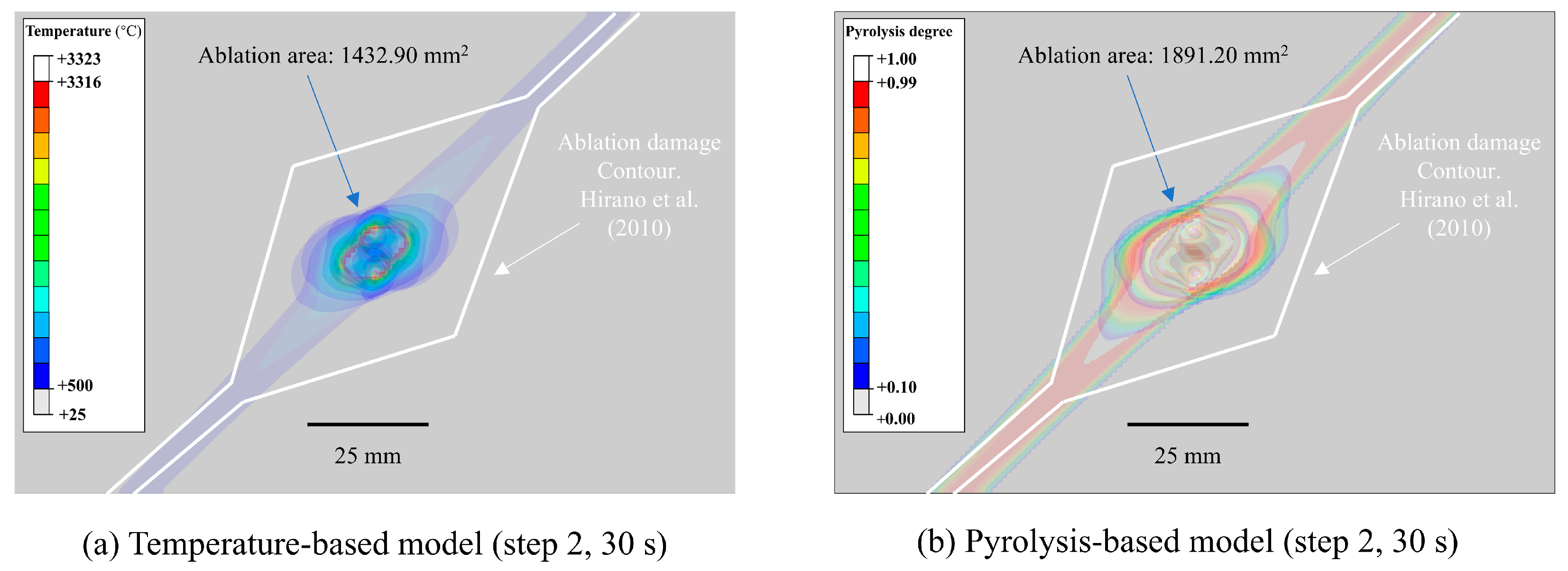
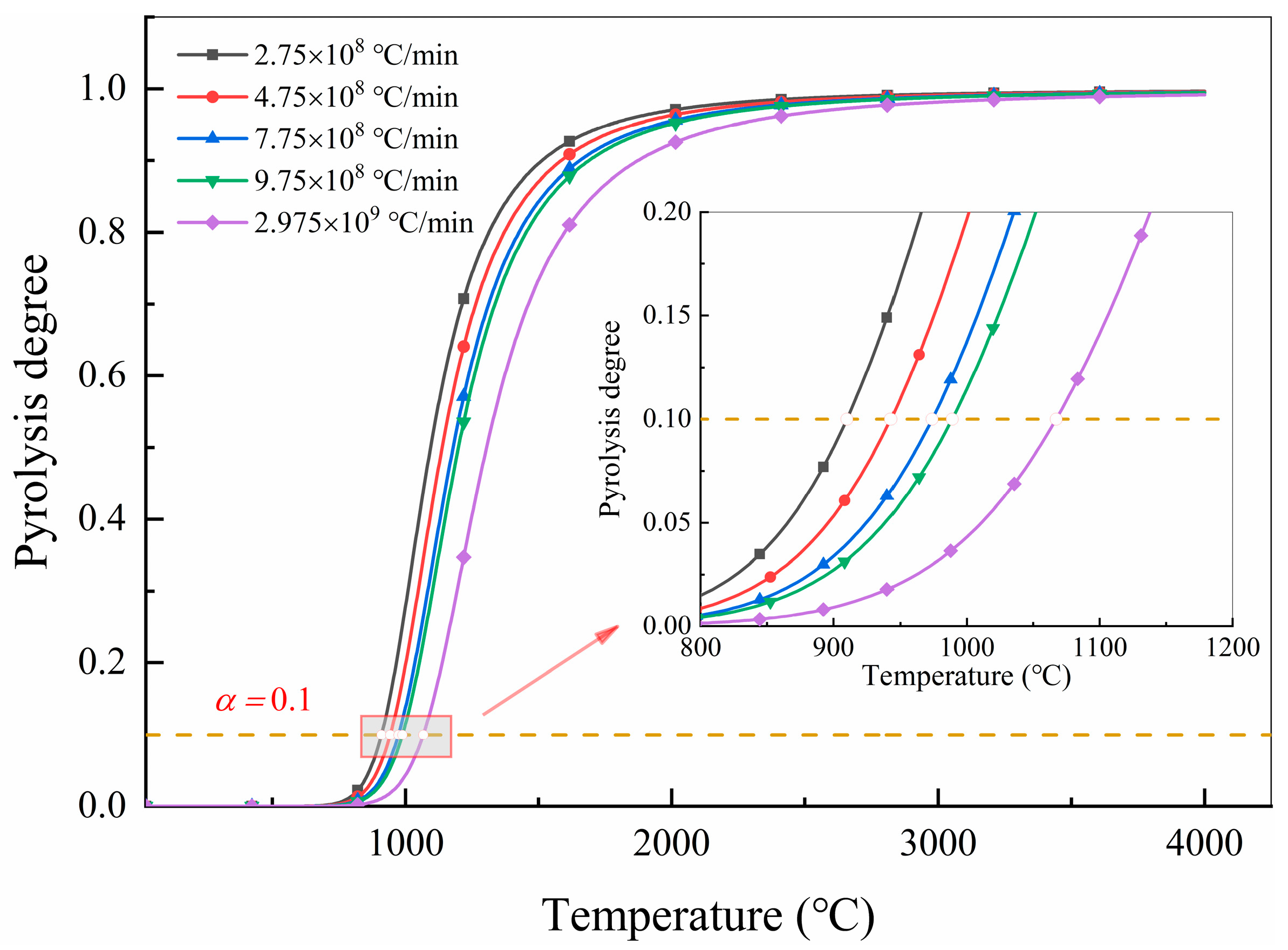
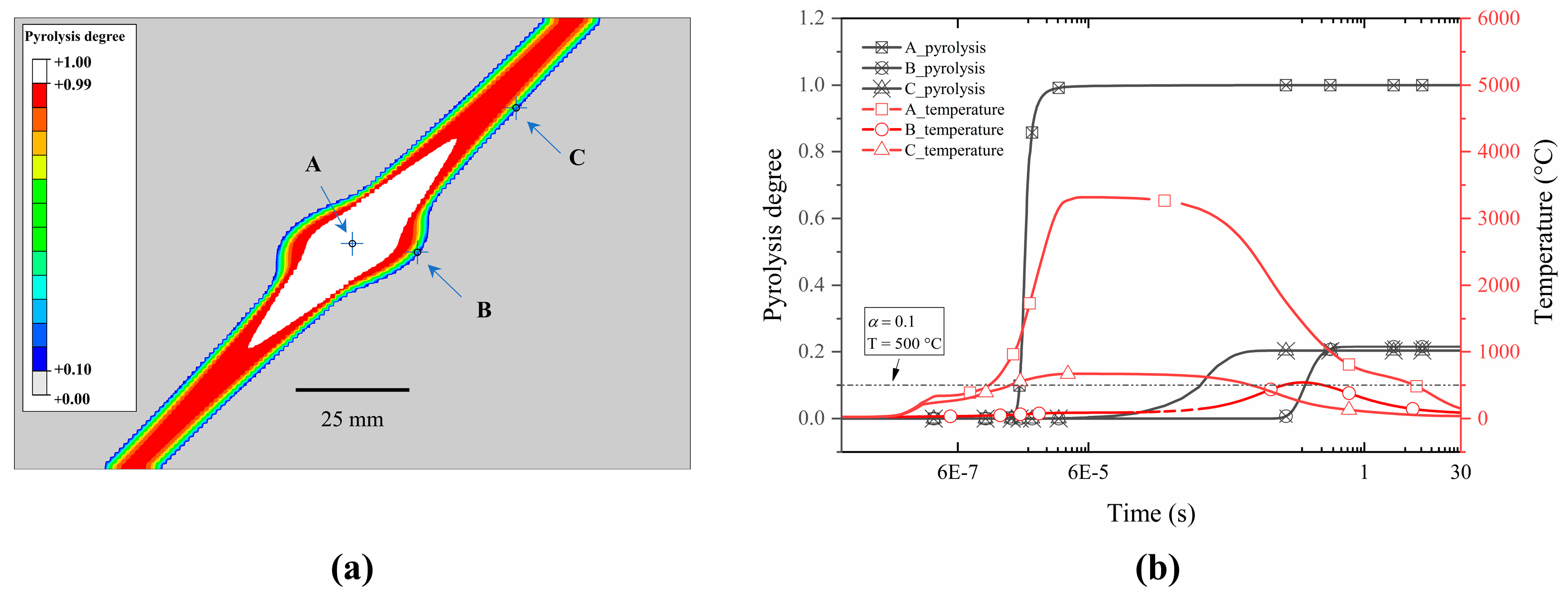
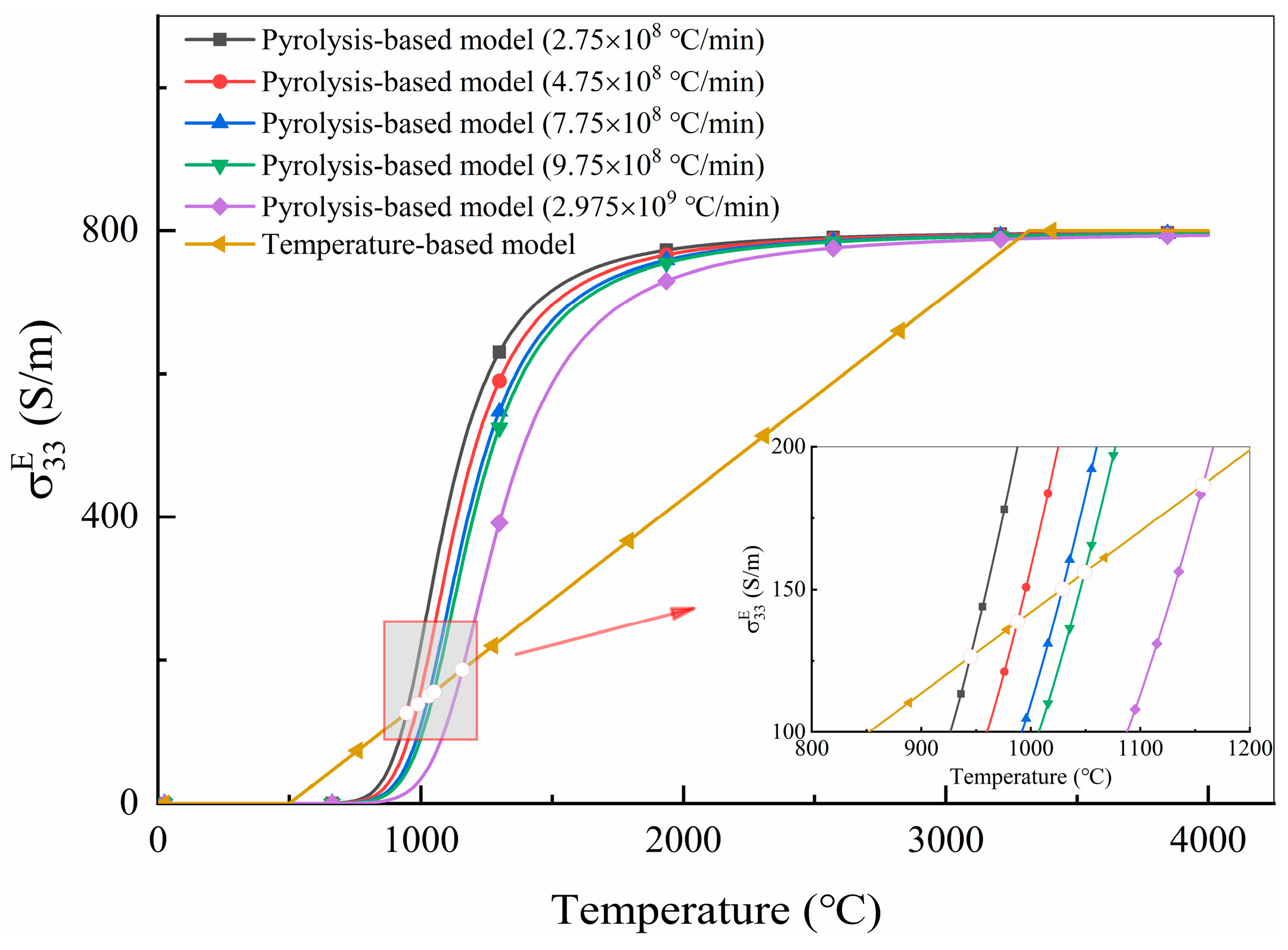
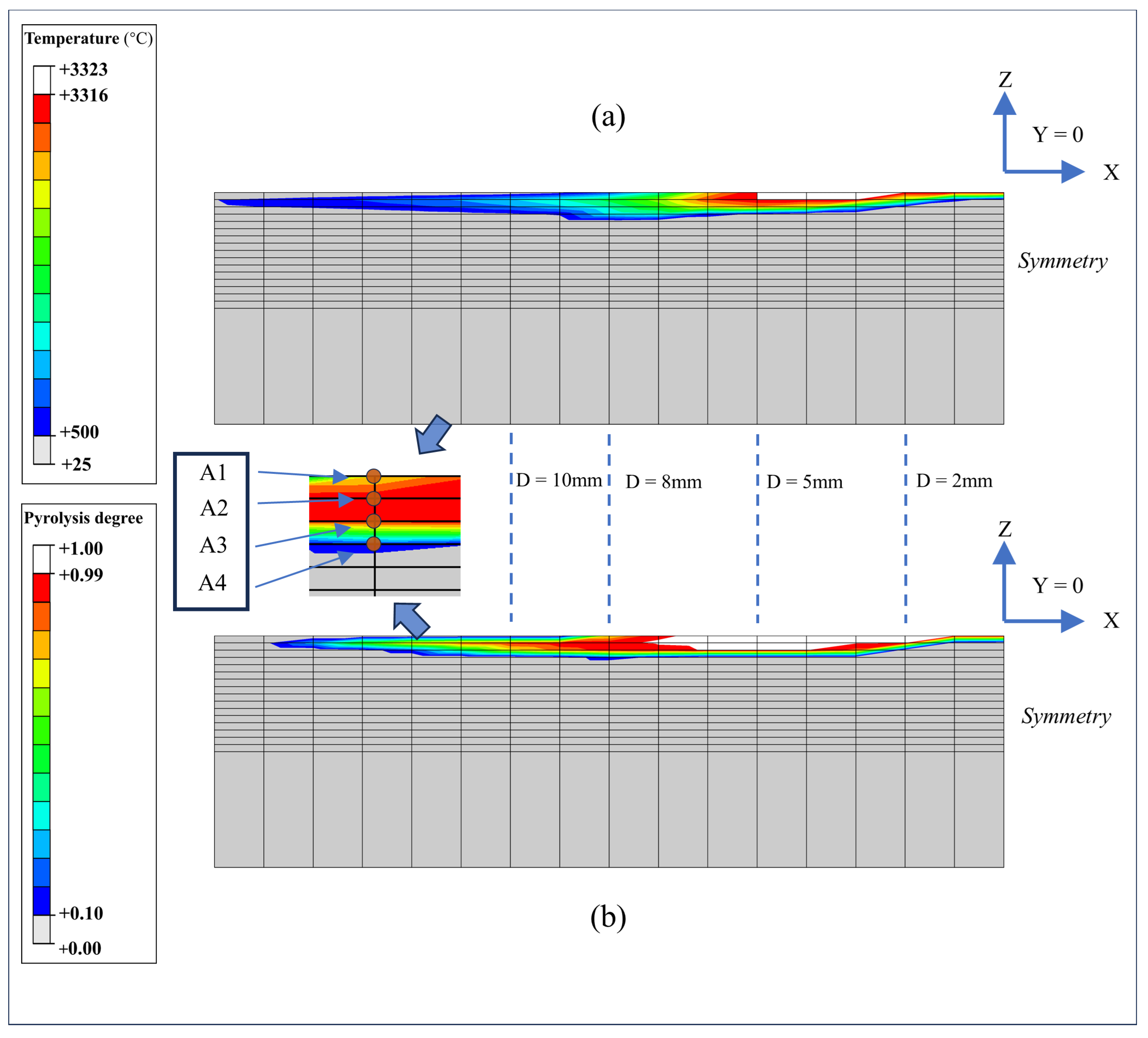
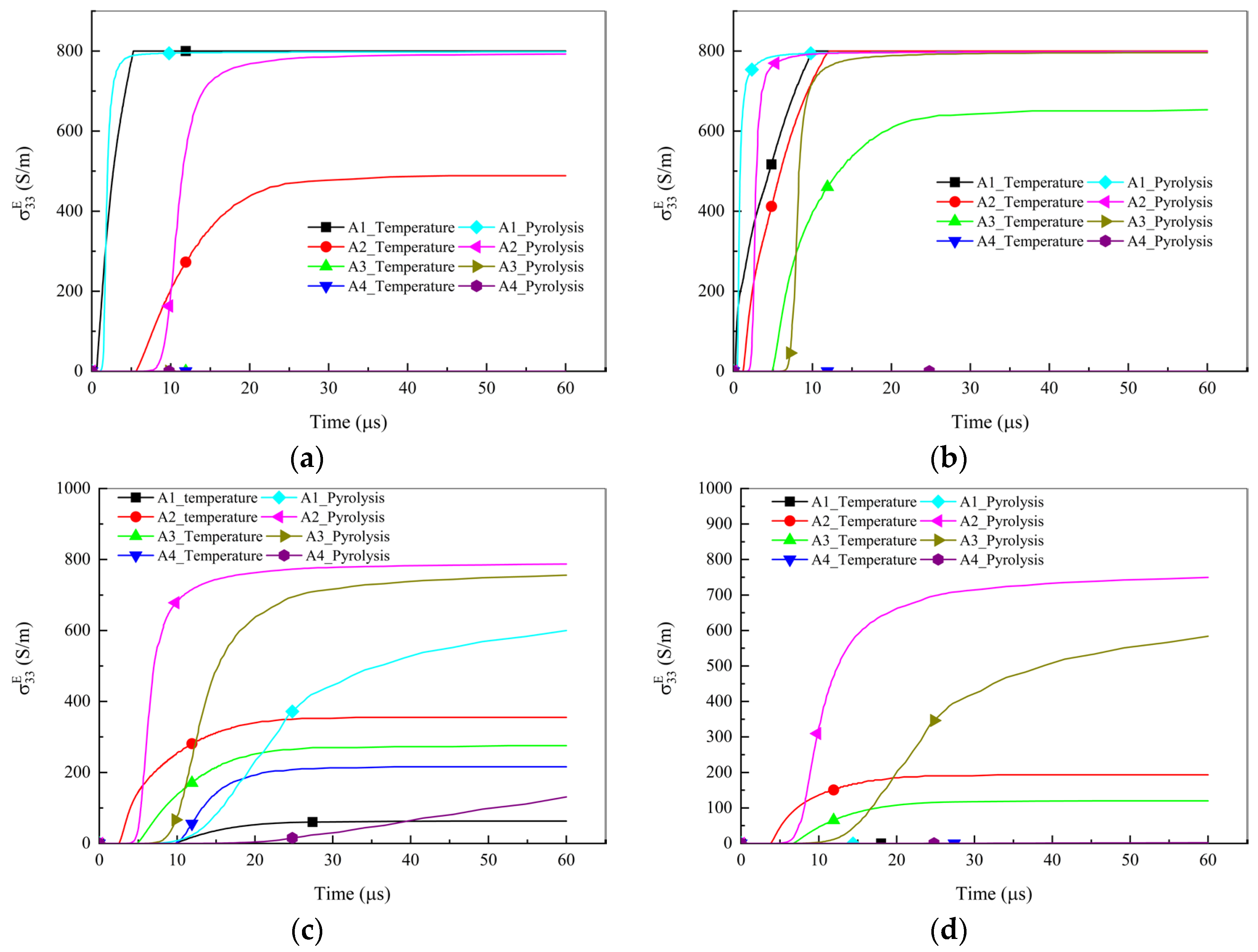
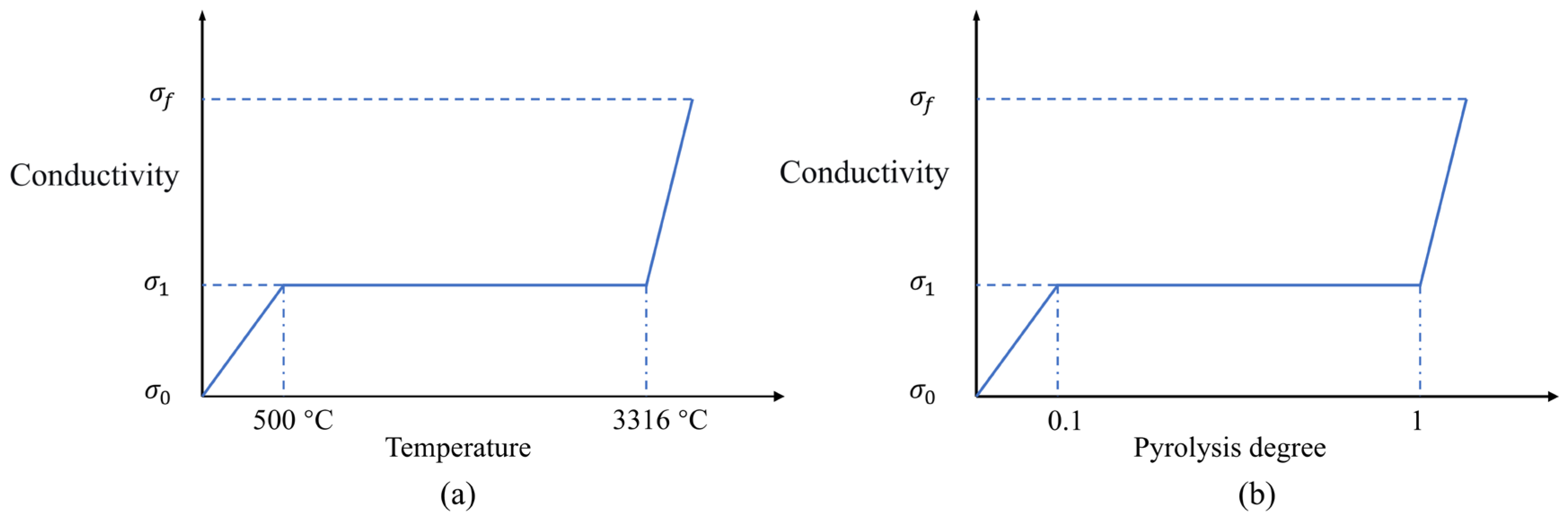
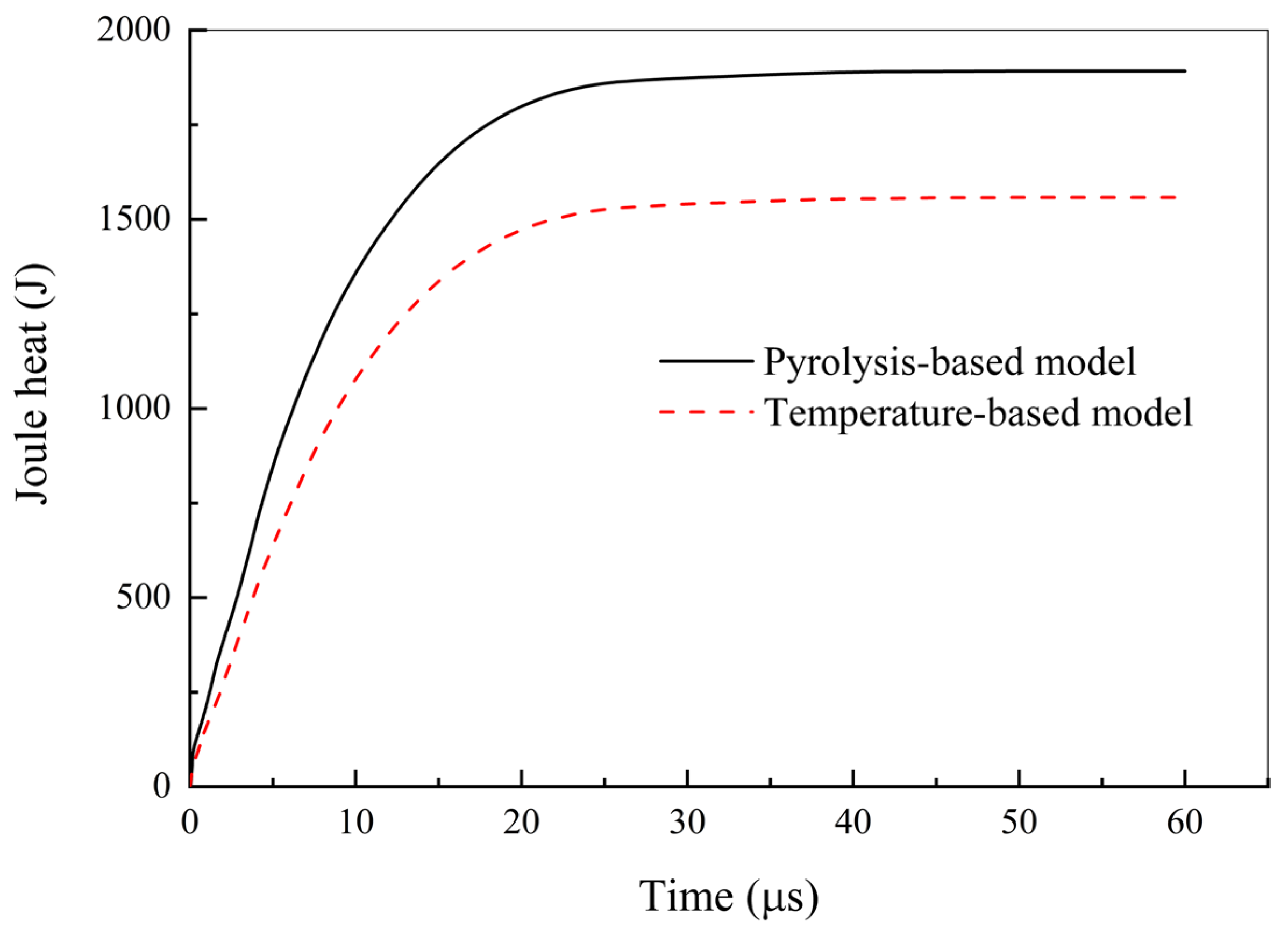
The present studies focus on the analysis of the inherent differences between temperature- and pyrolysis-based models and foster a rational and comprehensive understanding of numerical models for lightning strike damage in laminated composites. A systematic methodology combining numerical simulation and pyrolysis kinetics analysis has been developed to examine the inherent differences in damage area and depth, damage threshold, electrical conductivity characteristics, and Joule energy between temperature- and pyrolysis-based models. The results indicate that the pyrolysis-based model demonstrates closer agreement with experimental data in terms of both damage area and damage depth predictions compared to the temperature-based model. The two damage thresholds (500 °C and pyrolysis degree of 0.1) yield equivalent predictions of overall damage, but the temperature-based criterion neglects localized heating rate effects. The pyrolysis-based model exhibits significantly delayed through-thickness conductivity development during initial current conduction compared to the temperature-based model due to the influence of heating rate. This lag results in the pyrolysis-based model predicting larger damage areas and shallower penetration depths. Joule heating analysis further confirms that the pyrolysis-based model exhibits higher overall electrical resistance than the temperature-based model. Through a systematic comparison of temperature- and pyrolysis-based models, this research holds the significance of enhancing the understanding of lightning strike damage mechanisms and advancing the development of high-fidelity numerical models for predicting lightning strike damage in laminated composite.
Keywords: lightning strike; damage mechanisms; numerical modelling; pyrolysis kinetics analysis; laminated composite lightning strike; damage mechanisms; numerical modelling; pyrolysis kinetics analysis; laminated composite