Article

Efficient Methodology for Power Management Optimization of Hybrid-Electric Aircraft †

Mul2 Group, Department of Mechanical and Aerospace Engineering, Politecnico di Torino, Corso Duca degli Abruzzi 24, 10129 Torino, Italy
*
Author to whom correspondence should be addressed.
This article is a revised and expanded version of the paper entitled “Power Management Supply Optimization for Hybrid-Electric Regional Aircraft”, which was presented at 34th ICAS Conference, Florence, Italy, 9–13 September 2024.
Aerospace 2025, 12(3), 230; https://doi.org/10.3390/aerospace12030230

Submission received: 9 December 2024 / Revised: 10 March 2025 / Accepted: 11 March 2025 / Published: 12 March 2025

Abstract

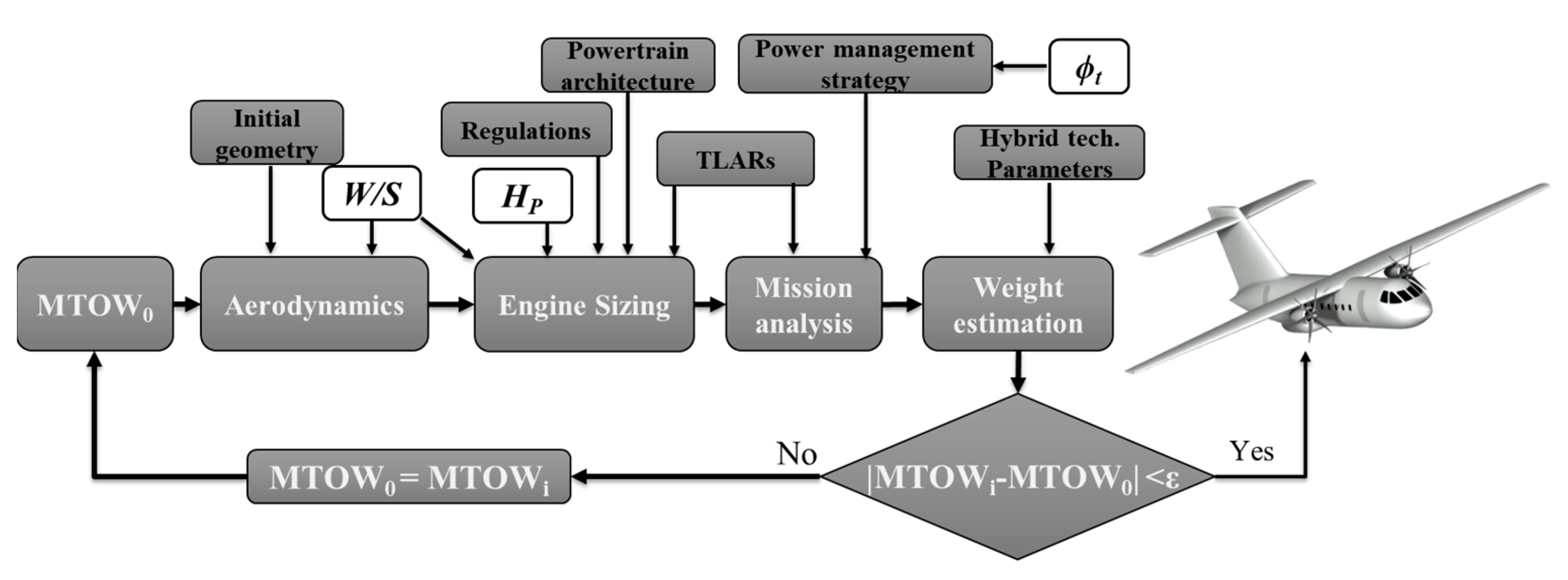
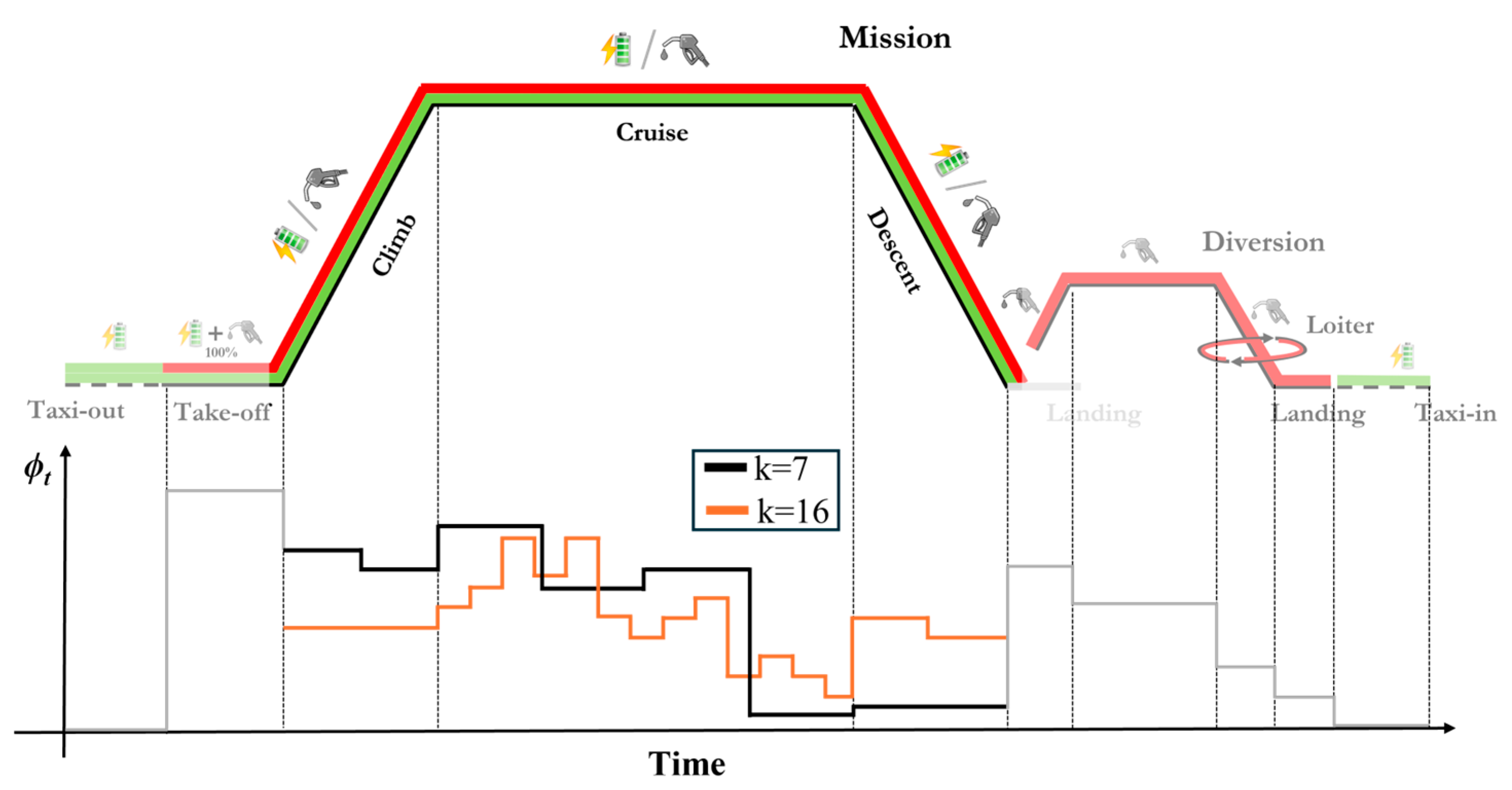
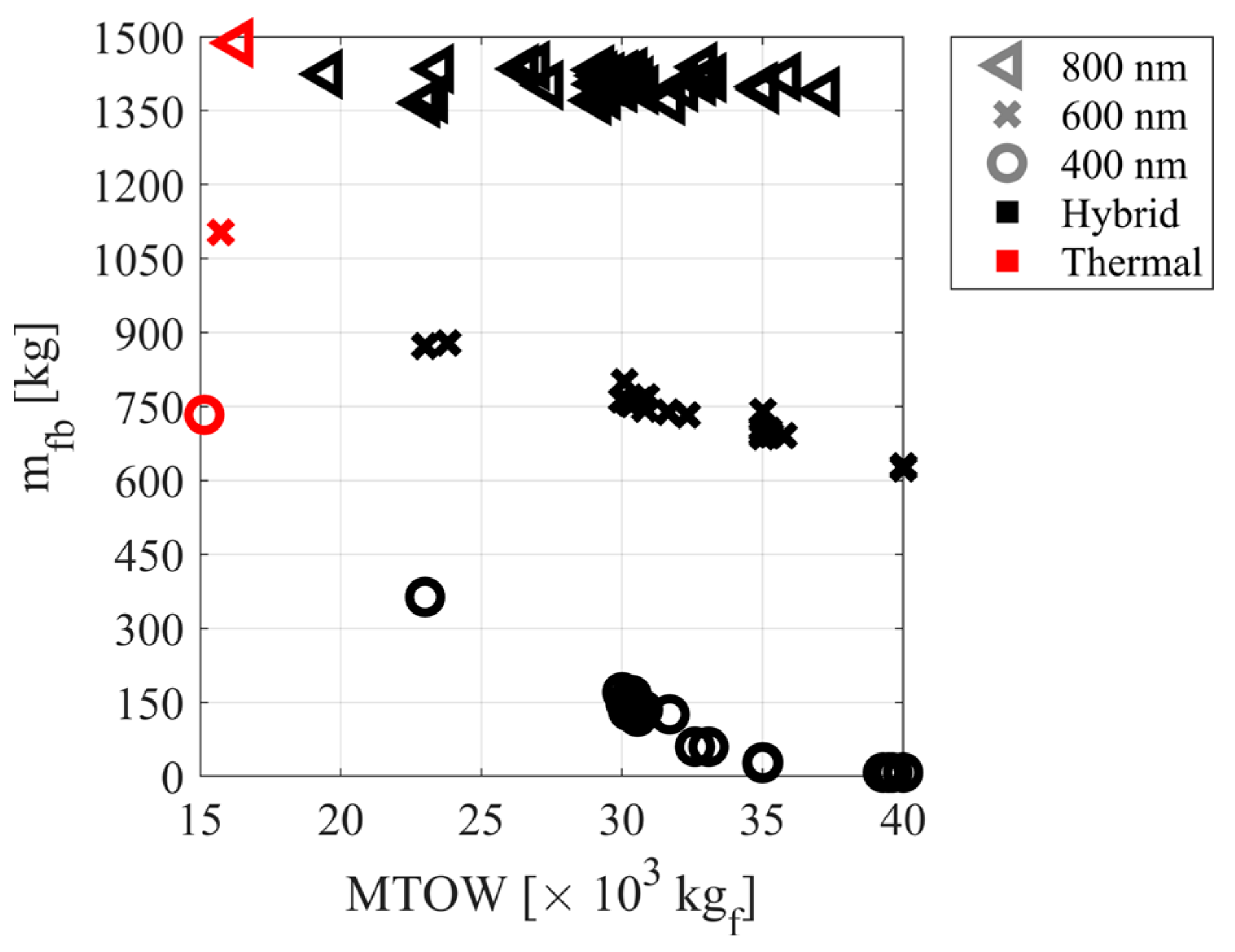
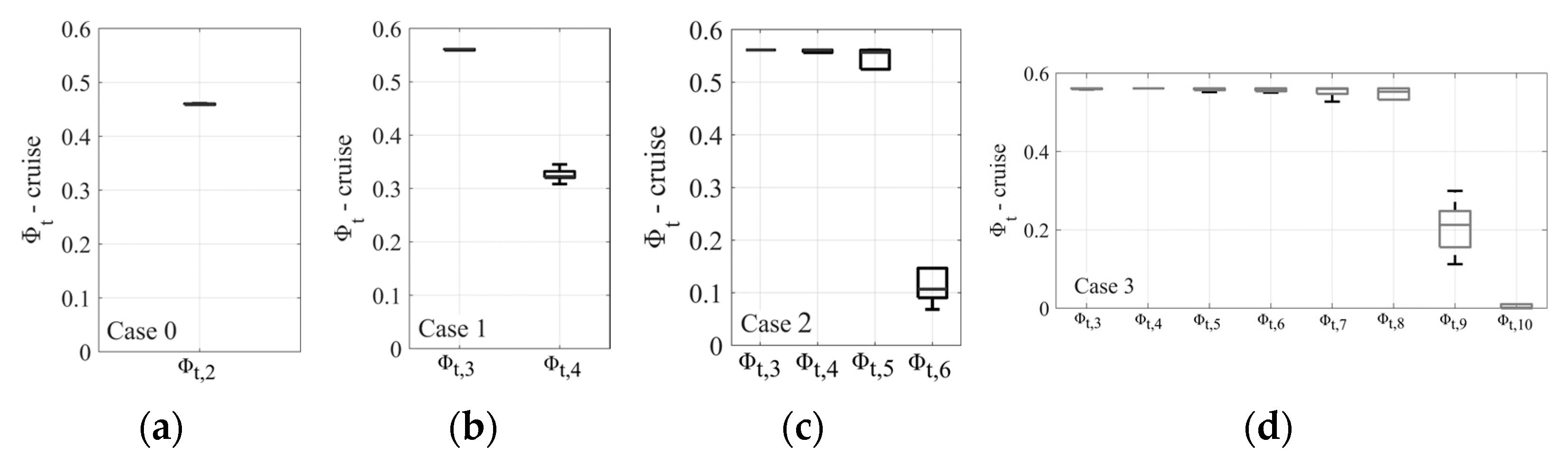
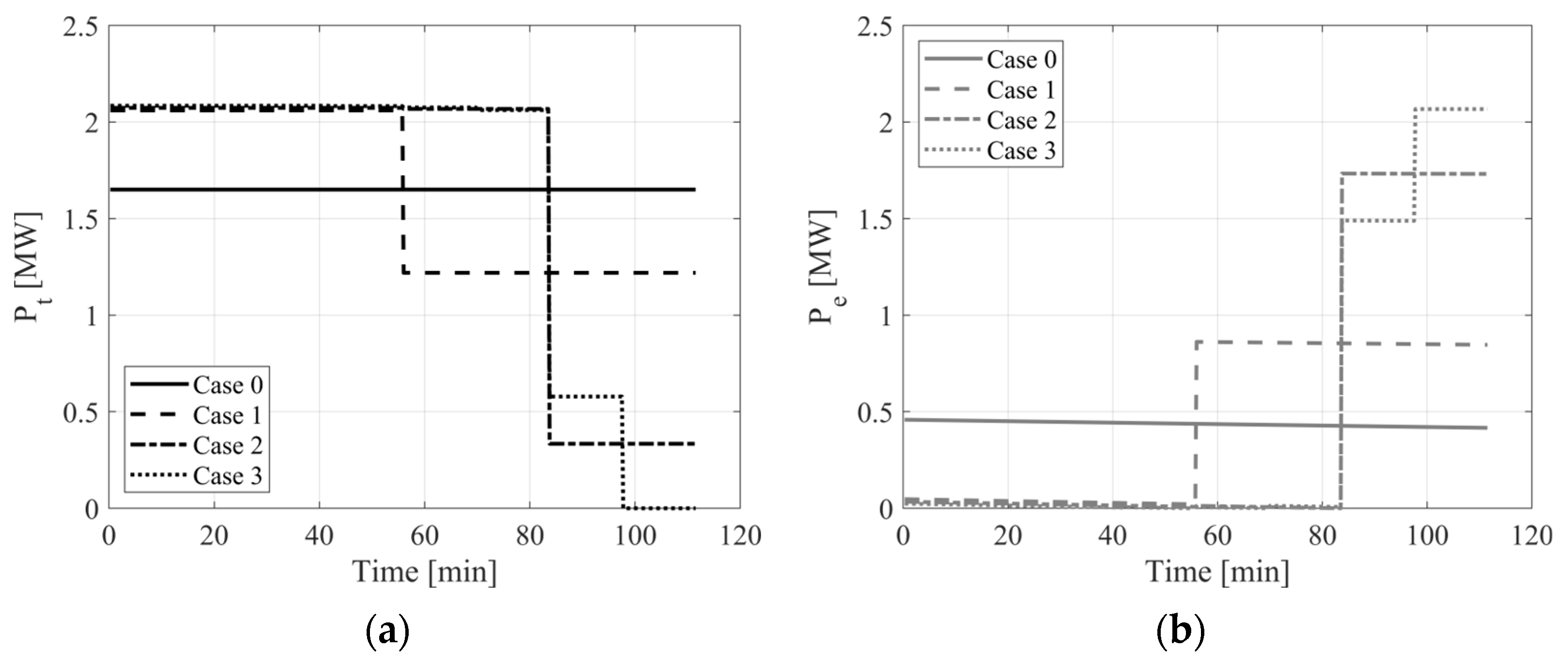
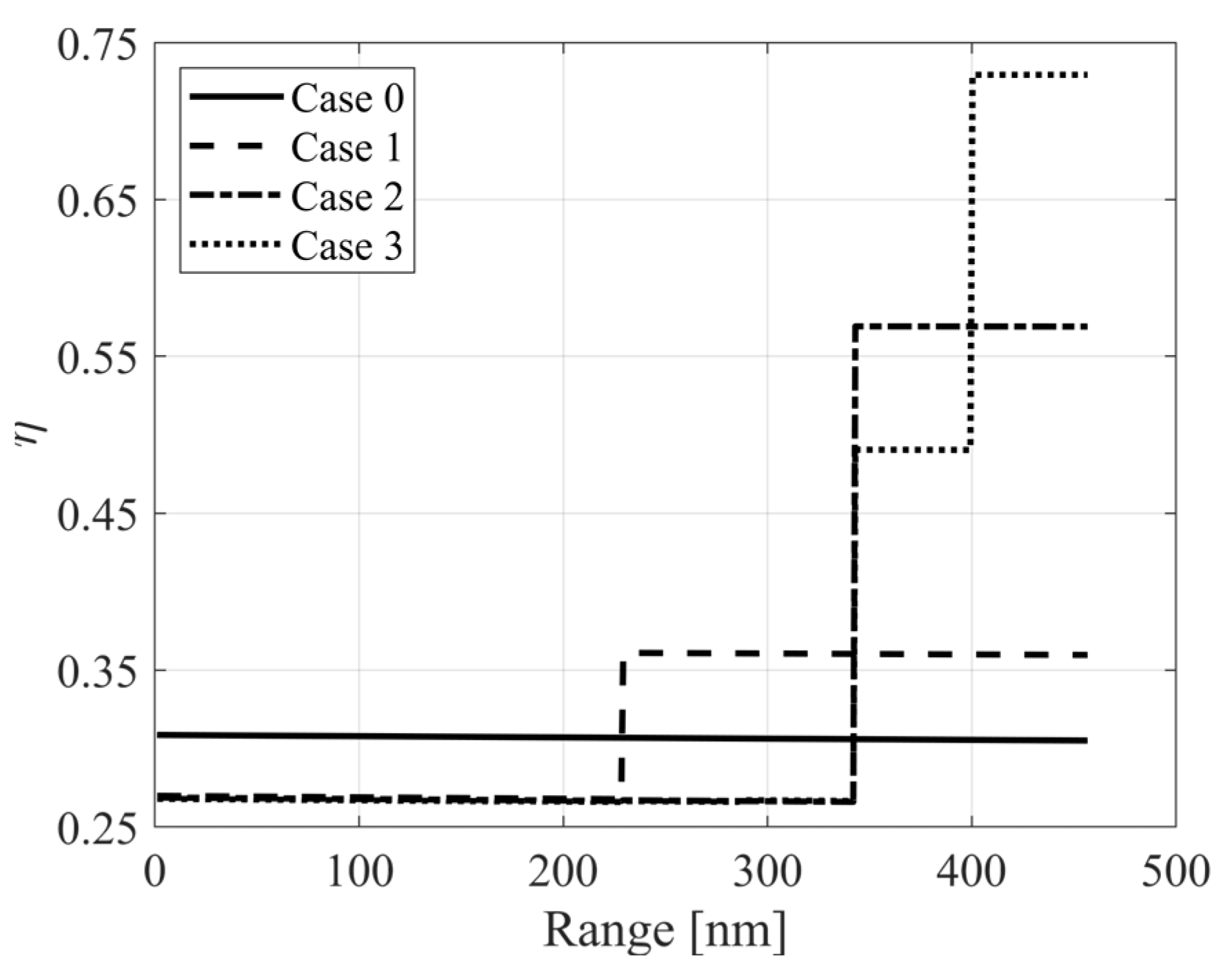
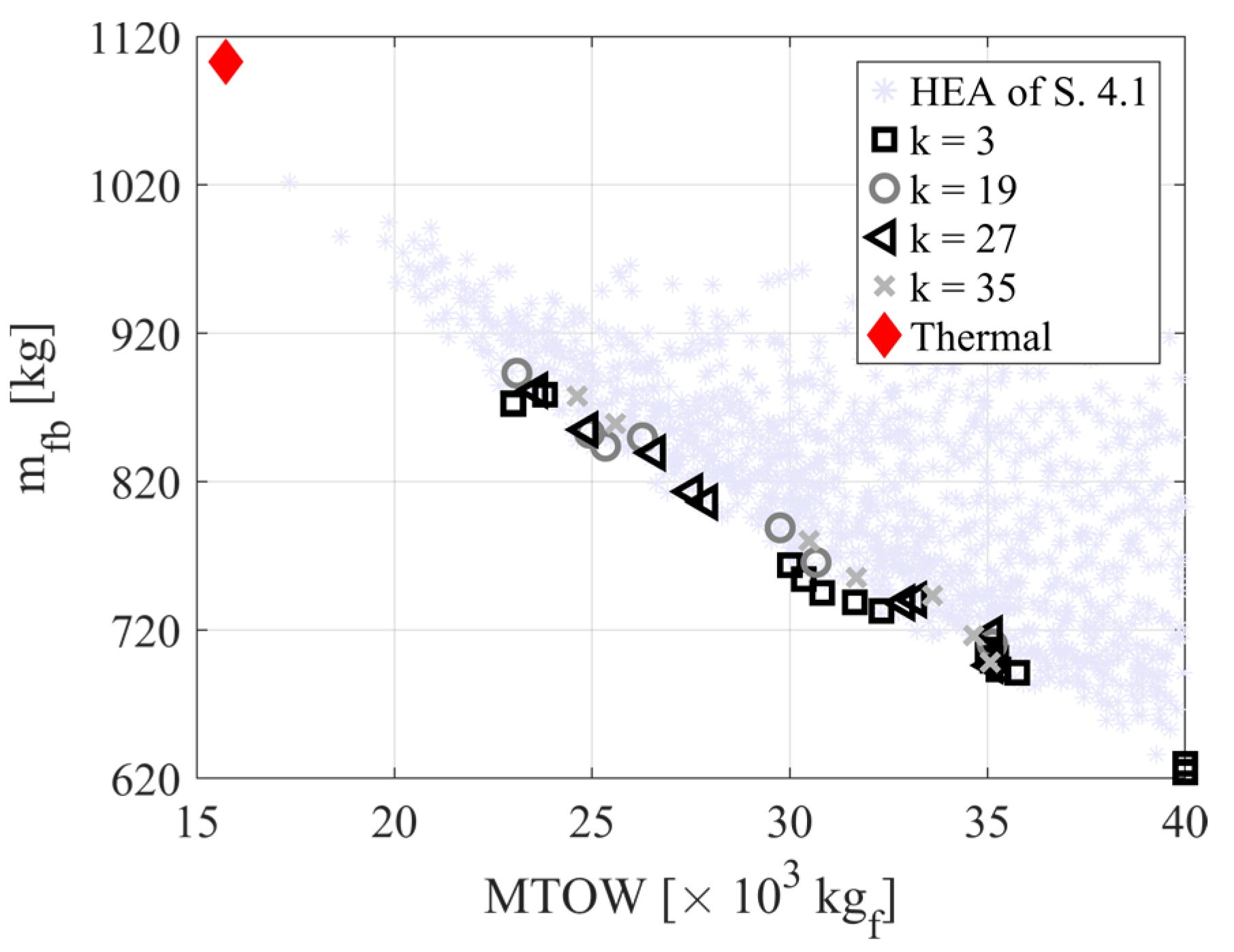
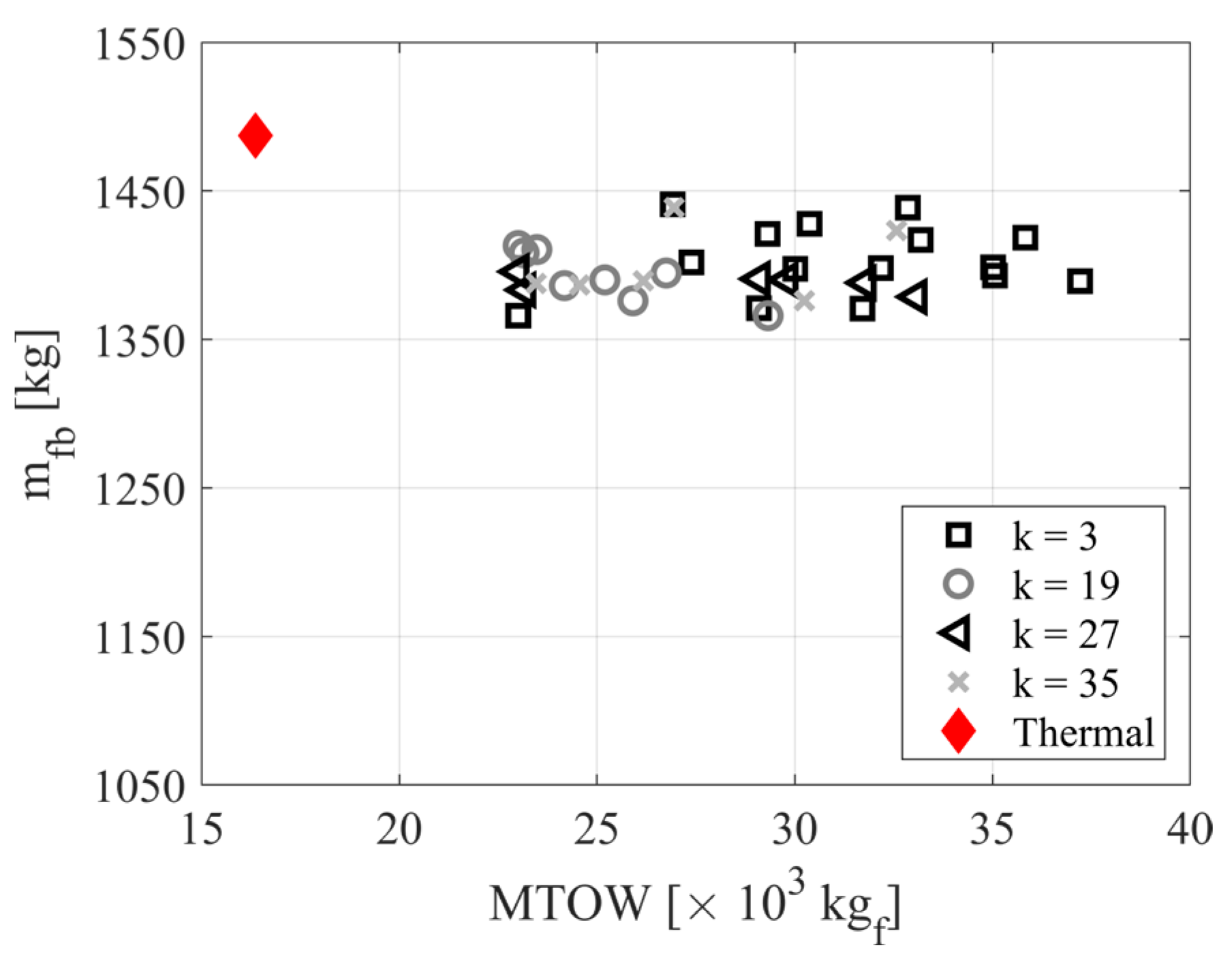
This paper presents an effective simplified model to optimize the mission power management supply for hybrid-electric aircraft in the conceptual design phase. The main aim is to show that, by using simplified representations of the aircraft dynamics, it is possible to achieve reliable results and identify trends useful for early-stage design, avoiding the use of more expensive and advanced methods. This model has been integrated into a multidisciplinary design framework, where the mission analysis, based on a simplified point mass dynamic model, focuses on splitting the power supply between electric and thermal power throughout the flight. An optimization algorithm identifies the time profiles of the supplied power, thermal and electric, to minimize fuel consumption. The power supplied by the thermal engine, modeled as a time piecewise function, is a design variable; a parametric study on the number of intervals composing this function is performed. The framework is used to propose a generalized approach for hybrid-electric power management optimization during the conceptual design iterations. This study showed that, for regional hybrid-electric aircraft, dividing the airborne mission into climb, cruise and descent is sufficient to define the optimum power split supply profiles. This allows for the avoiding of finer mission discretization, or the adoption of more complex simulative models, providing a very efficient model.
Keywords: aircraft design; hybrid-electric propulsion; power management; powertrain optimization; conceptual design aircraft design; hybrid-electric propulsion; power management; powertrain optimization; conceptual design