Article

Thrust-Based Stabilization and Guidance for Airships without Thrust-Vectoring

by
Carlo E.D. Riboldi
1,* and
Alberto Rolando
2
1
Dipartimento di Scienze e Tecnologie Aerospaziali, Politecnico di Milano, 20156 Milan, Italy
2
PACE Aerospace & IT GmbH, 14059 Berlin, Germany
*
Author to whom correspondence should be addressed.
Aerospace 2023, 10(4), 344; https://doi.org/10.3390/aerospace10040344

Submission received: 21 February 2023 / Revised: 23 March 2023 / Accepted: 29 March 2023 / Published: 2 April 2023
(This article belongs to the Special Issue Mission Analysis and Design of Lighter-than-Air Flying Vehicles)

Abstract

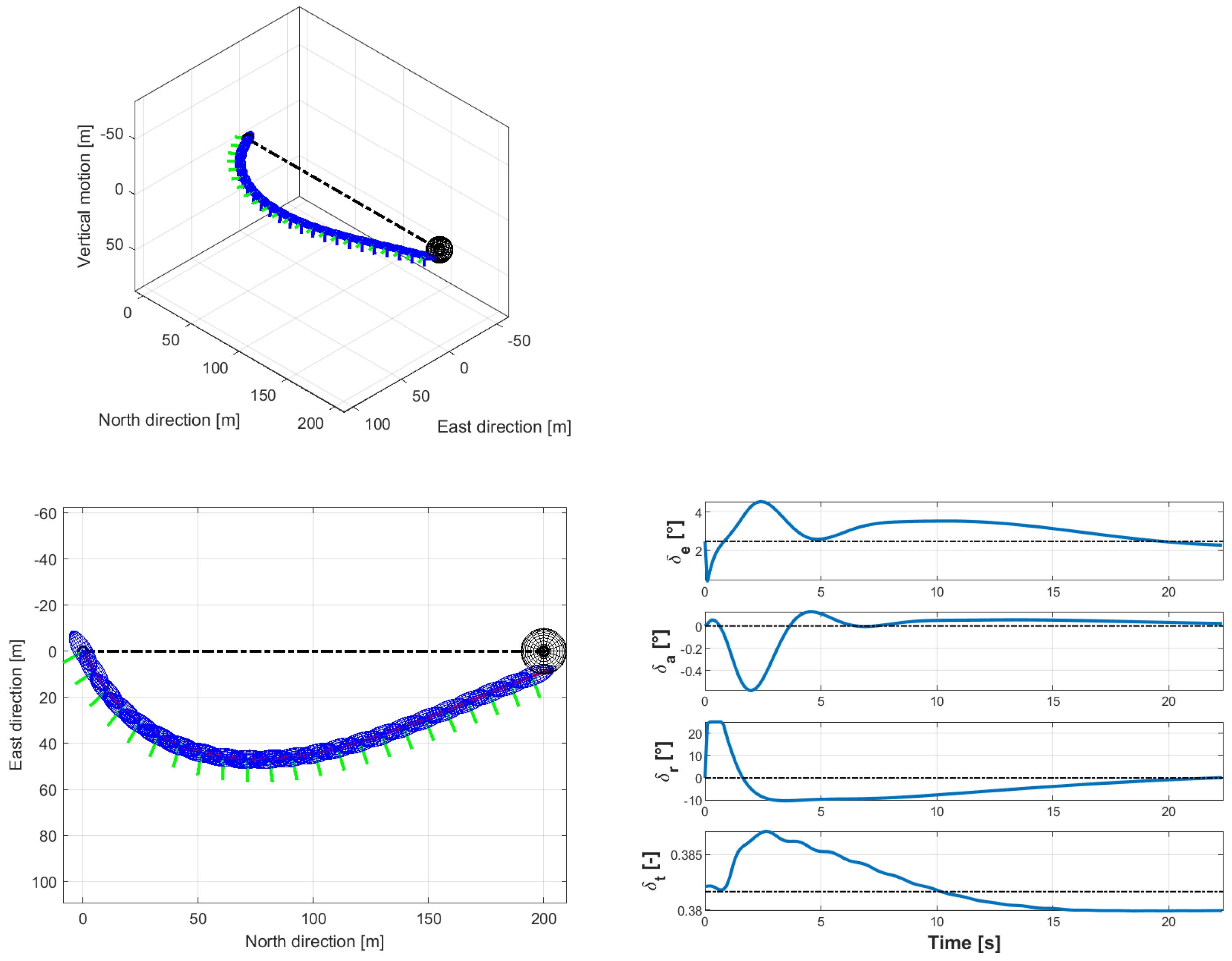
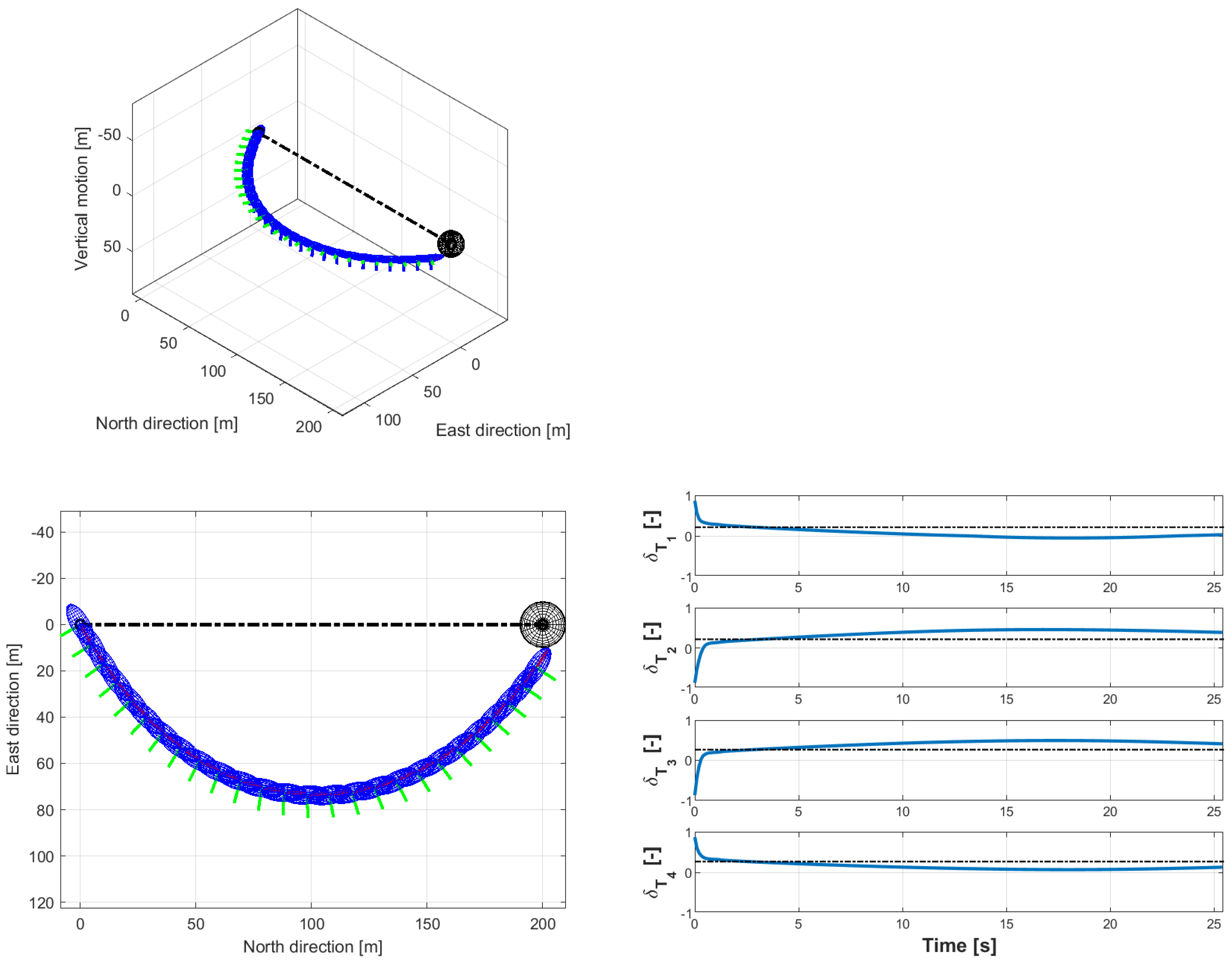
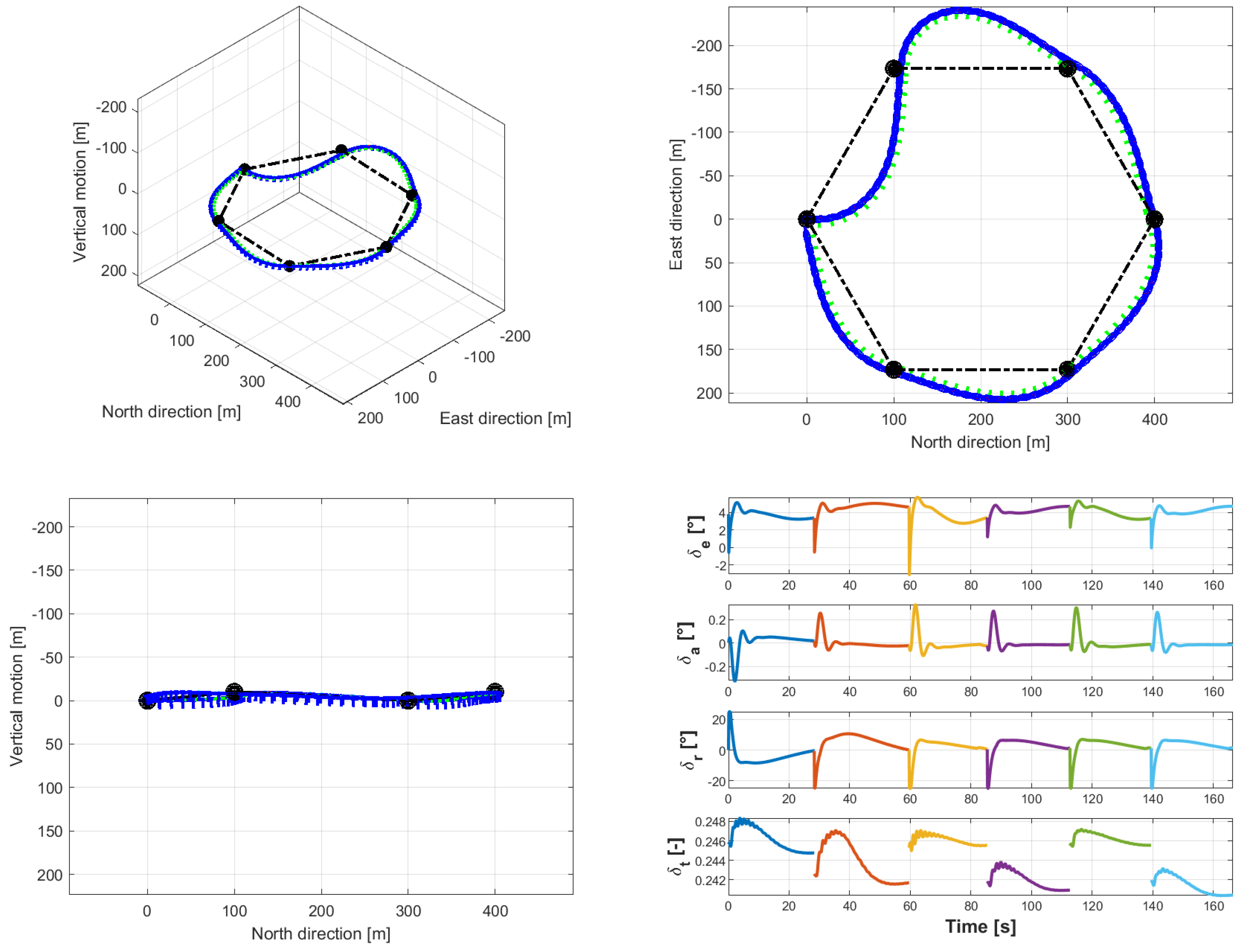
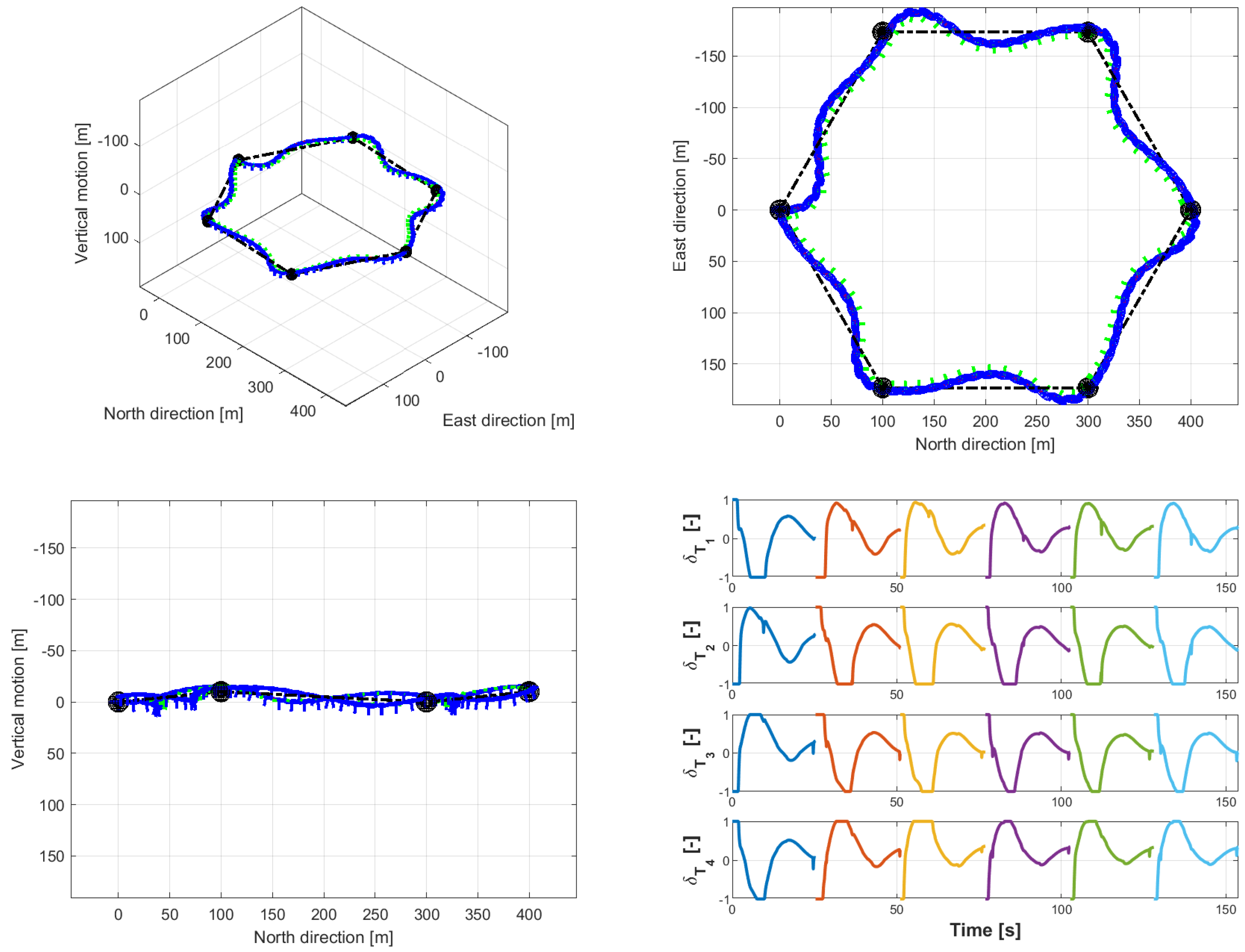
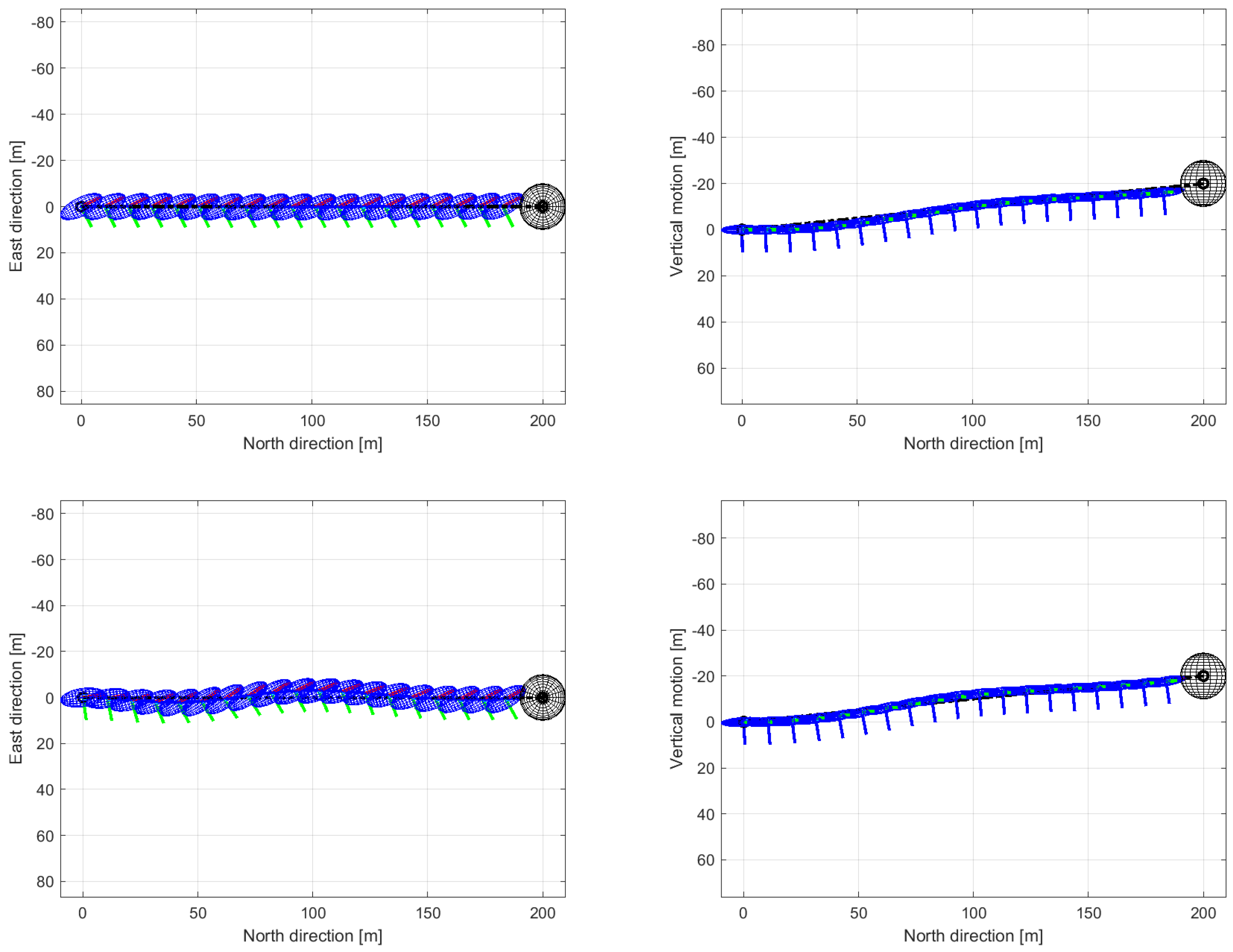
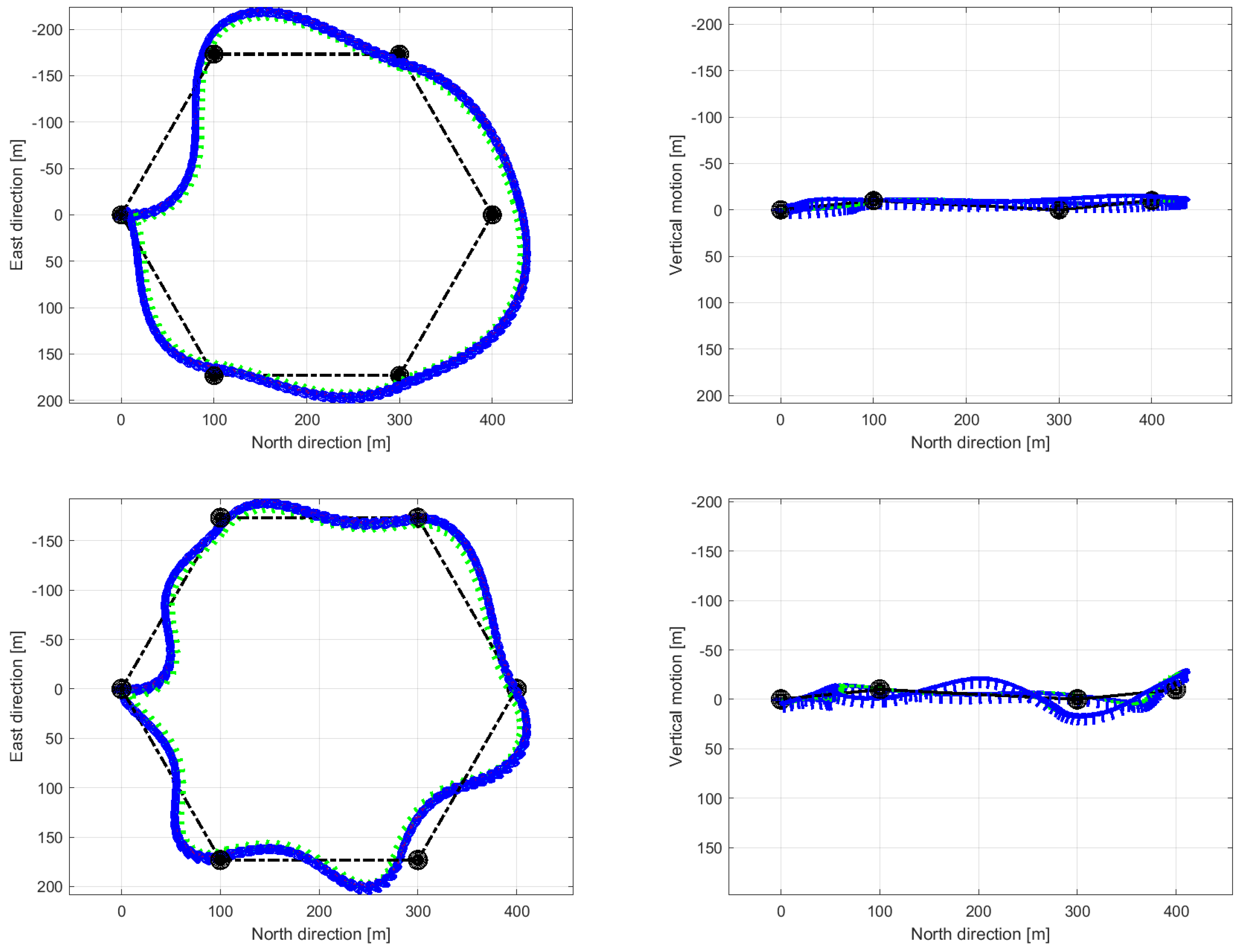
The concept of thrust-based control without the employment of thrust-vectoring (TVC), already introduced in a previous work by the authors, is further developed in conjunction with an appropriate control suite, tasked with both artificial stabilization and beam-tracking navigation functions. In the paper, the fully non-linear mathematical model employed for testing the controllers in a virtual environment is outlined. Then a comparative approach is adopted in the analysis, where a standard tail-back airship with deflectable aerodynamic surfaces is employed as a baseline, and the performance of a four-thrusters layout with a thrust-based control and no TVC is assessed with respect to it. Featured test cases in forward flight include short climbs, abrupt turns, and multi-checkpoint navigation. The research supports the feasibility and adequate performance of the proposed thrust-based airship layout and control, and presents a critical analysis of the pros and cons with respect to the considered baseline airship configuration featuring standard aerodynamic control.
Keywords: flight dynamics; airship; high-altituda airship (HAA); unmanned aerial vehicle (UAV); autonomous flight; lighter-than-air (LTA); stability augmentation system (SAS); thrust-based stabilization; guidance; navigation; thrust-based guidance; control surfaces; airship design; control design; thrust vector control (TVC) flight dynamics; airship; high-altituda airship (HAA); unmanned aerial vehicle (UAV); autonomous flight; lighter-than-air (LTA); stability augmentation system (SAS); thrust-based stabilization; guidance; navigation; thrust-based guidance; control surfaces; airship design; control design; thrust vector control (TVC)