Article

Finite Element Method-Based Optimisation of Magnetic Coupler Design for Safe Operation of Hybrid UAVs


1
Department of Electrical and Electronics Engineering, Gazi University, Graduate School of Natural and Applied Sciences, 06500 Ankara, Turkey
2
Department of Electrical Electronics Engineering, Çankaya University, 06790 Ankara, Turkey
3
Department of Electrical and Electronics Engineering, Gazi University, 06560 Ankara, Turkey
*
Author to whom correspondence should be addressed.
Aerospace 2023, 10(2), 140; https://doi.org/10.3390/aerospace10020140

Submission received: 12 December 2022 / Revised: 27 January 2023 / Accepted: 30 January 2023 / Published: 2 February 2023

Abstract

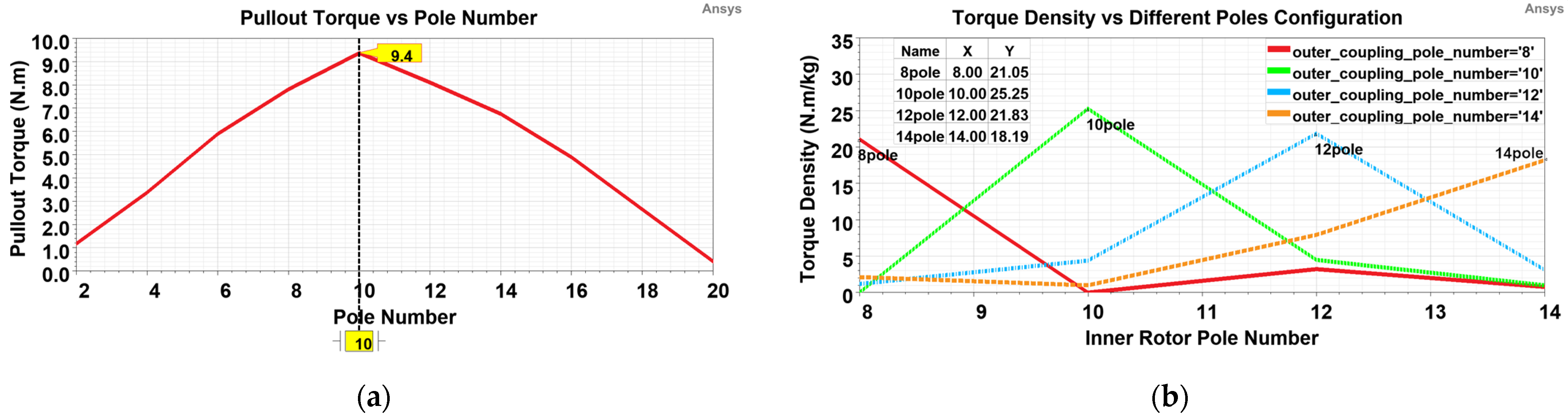
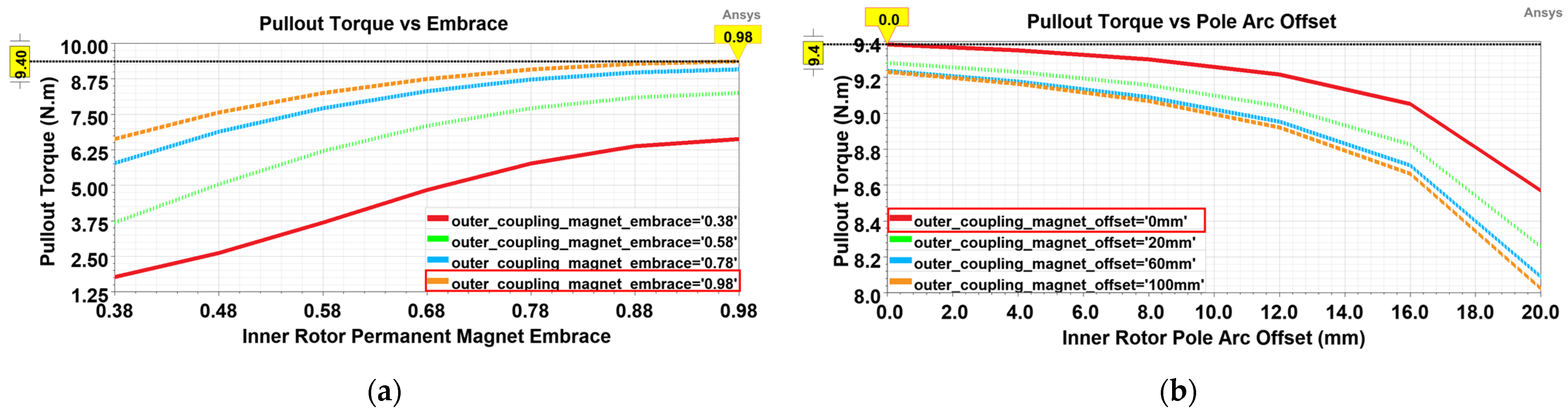
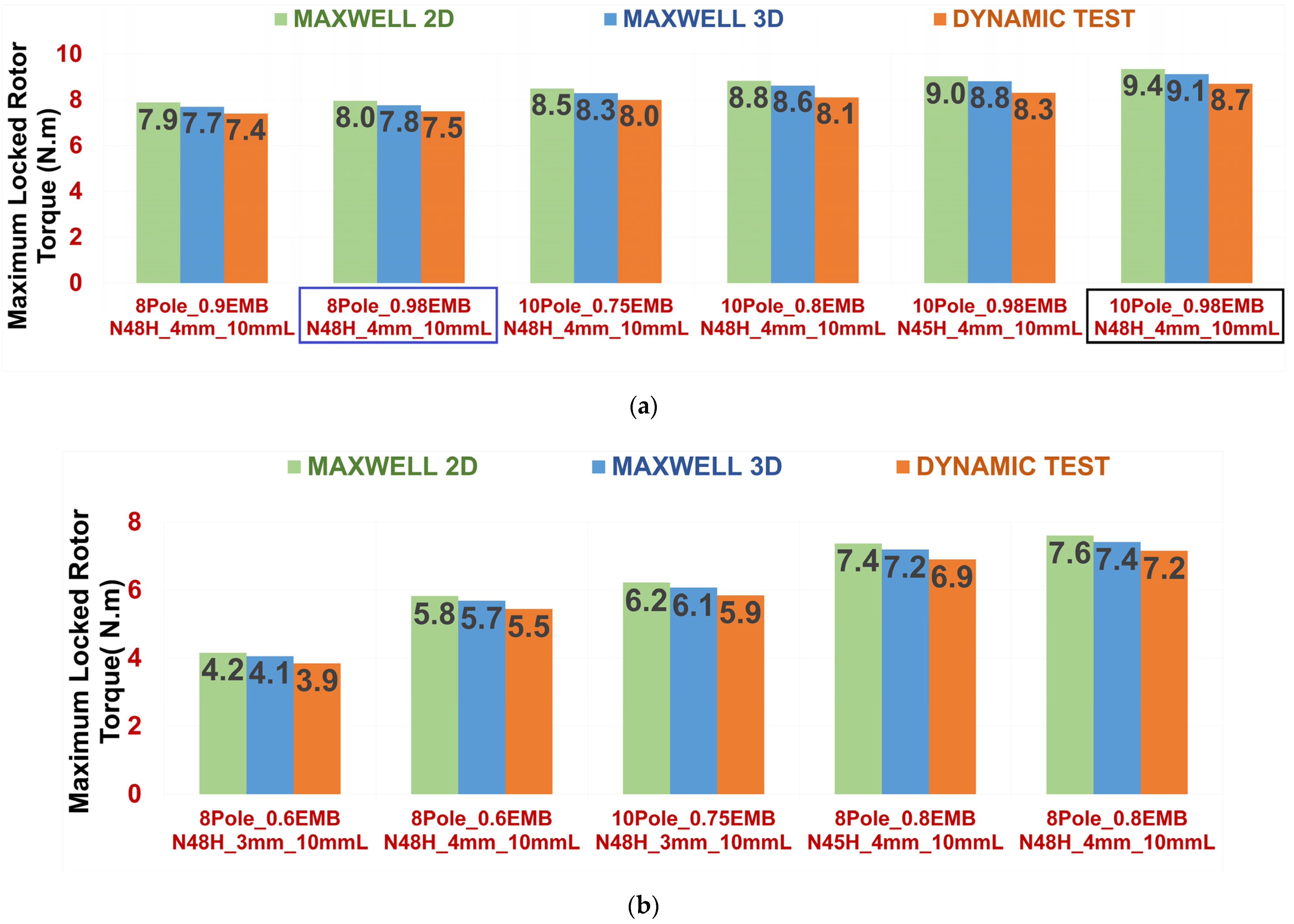
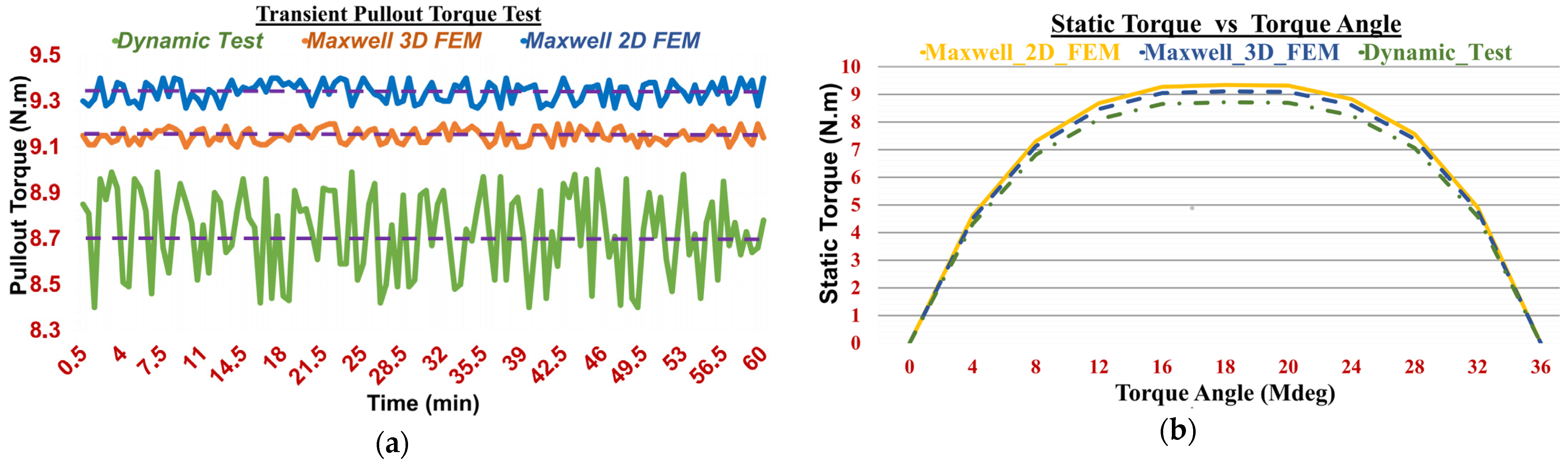
The integration of compact concepts and advances in permanent-magnet technology improve the safety, usability, endurance, and simplicity of unmanned aerial vehicles (UAVs) while also providing long-term operation without maintenance and larger air gap use. These developments have revealed the demand for the use of magnetic couplers to magnetically isolate aircraft engines and starter-generator shafts, allowing contactless torque transmission. This paper explores the design aspects of an active cylindrical-type magnetic coupler based on finite element analyses to achieve an optimum model for hybrid UAVs using a piston engine. The novel model is parameterised in Ansys Maxwell for optimetric solutions, including magnetostatics and transients. The criteria of material selection, coupler types, and topologies are discussed. The Torque-Speed bench is set up for dynamic and static tests. The highest torque density is obtained in the 10-pole configuration with an embrace of 0.98. In addition, the loss of synchronisation caused by the piston engine shaft locking and misalignment in the case of bearing problems is also examined. The magnetic coupler efficiency is above 94% at the maximum speed. The error margin of the numerical simulations is 8% for the Maxwell 2D and 4.5% for 3D. Correction coefficients of 1.2 for the Maxwell 2D and 1.1 for 3D are proposed.
Keywords: active cylindrical coupler; correction coefficient; finite element method; hybrid UAV; magnetic coupler; magnetic coupling; noncontact torque transmission active cylindrical coupler; correction coefficient; finite element method; hybrid UAV; magnetic coupler; magnetic coupling; noncontact torque transmission