Article

Probabilistic Wind Speed Forecasting Under at Site and Regional Frameworks: A Comparative Evaluation of BART, GPR, and QRF

School of Engineering, Design and Built Environment, Western Sydney University, Sydney 2751, Australia
*
Author to whom correspondence should be addressed.
Climate 2026, 14(1), 21; https://doi.org/10.3390/cli14010021
Submission received: 22 October 2025 / Revised: 9 January 2026 / Accepted: 13 January 2026 / Published: 15 January 2026

Abstract

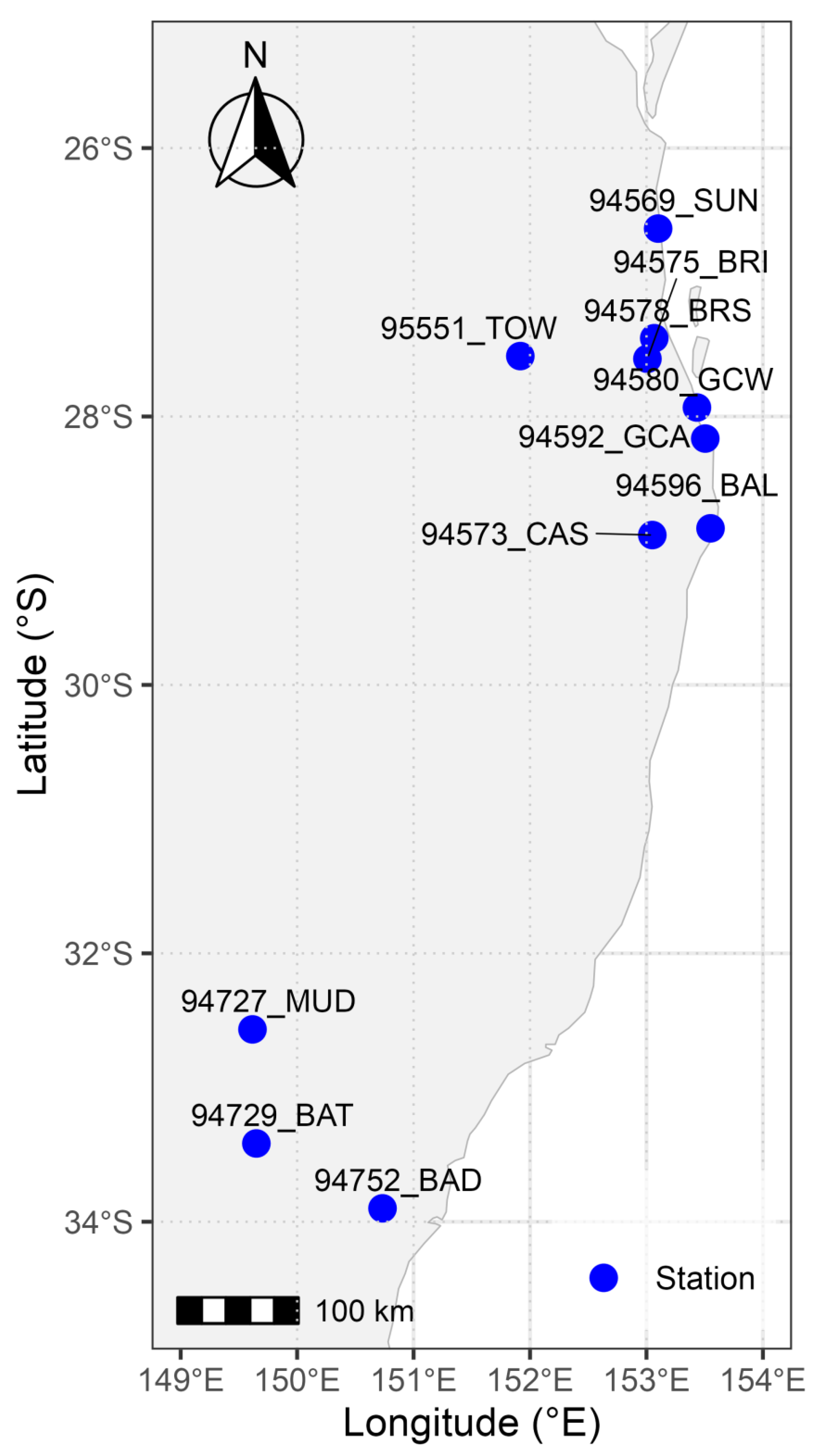
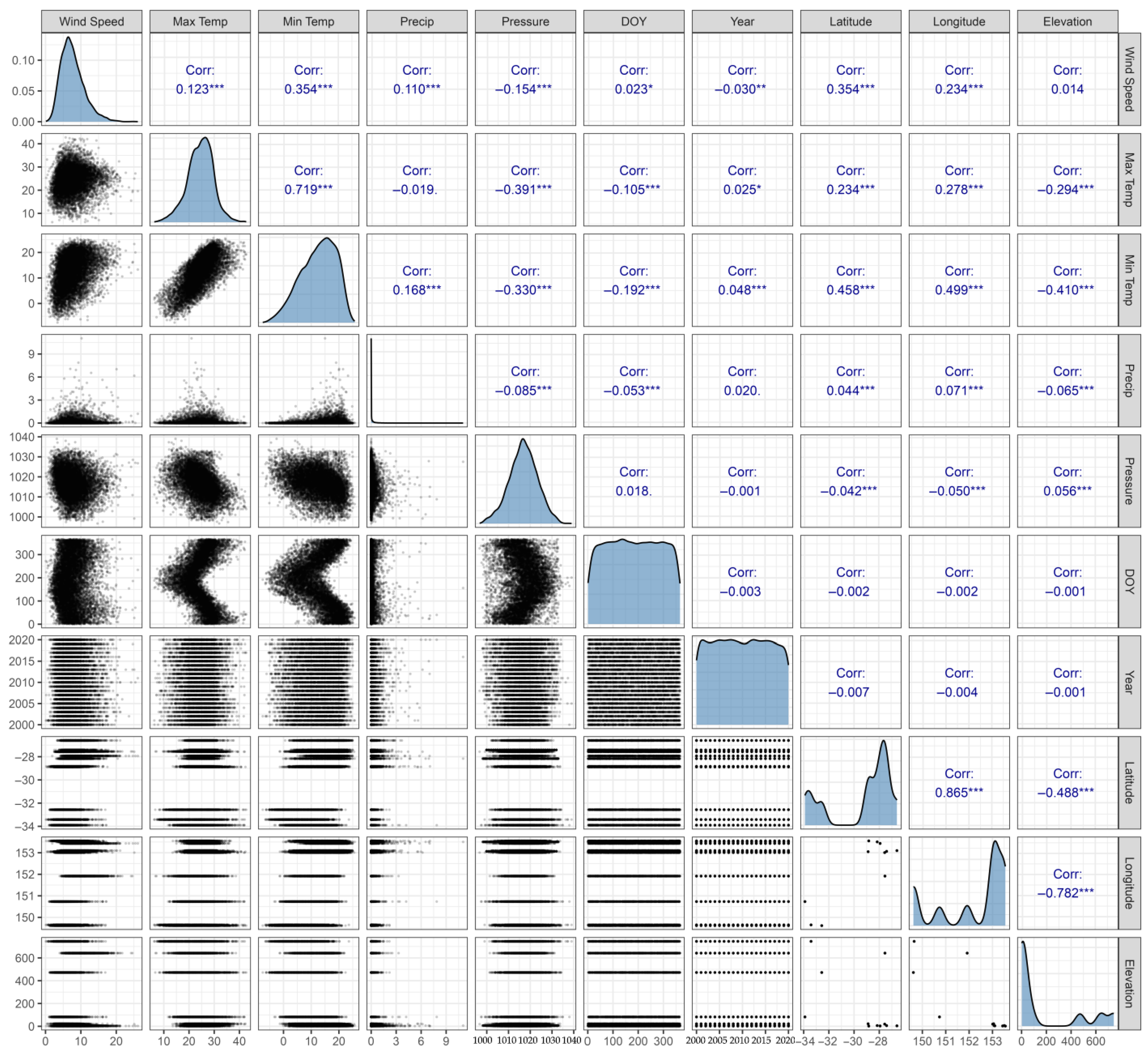
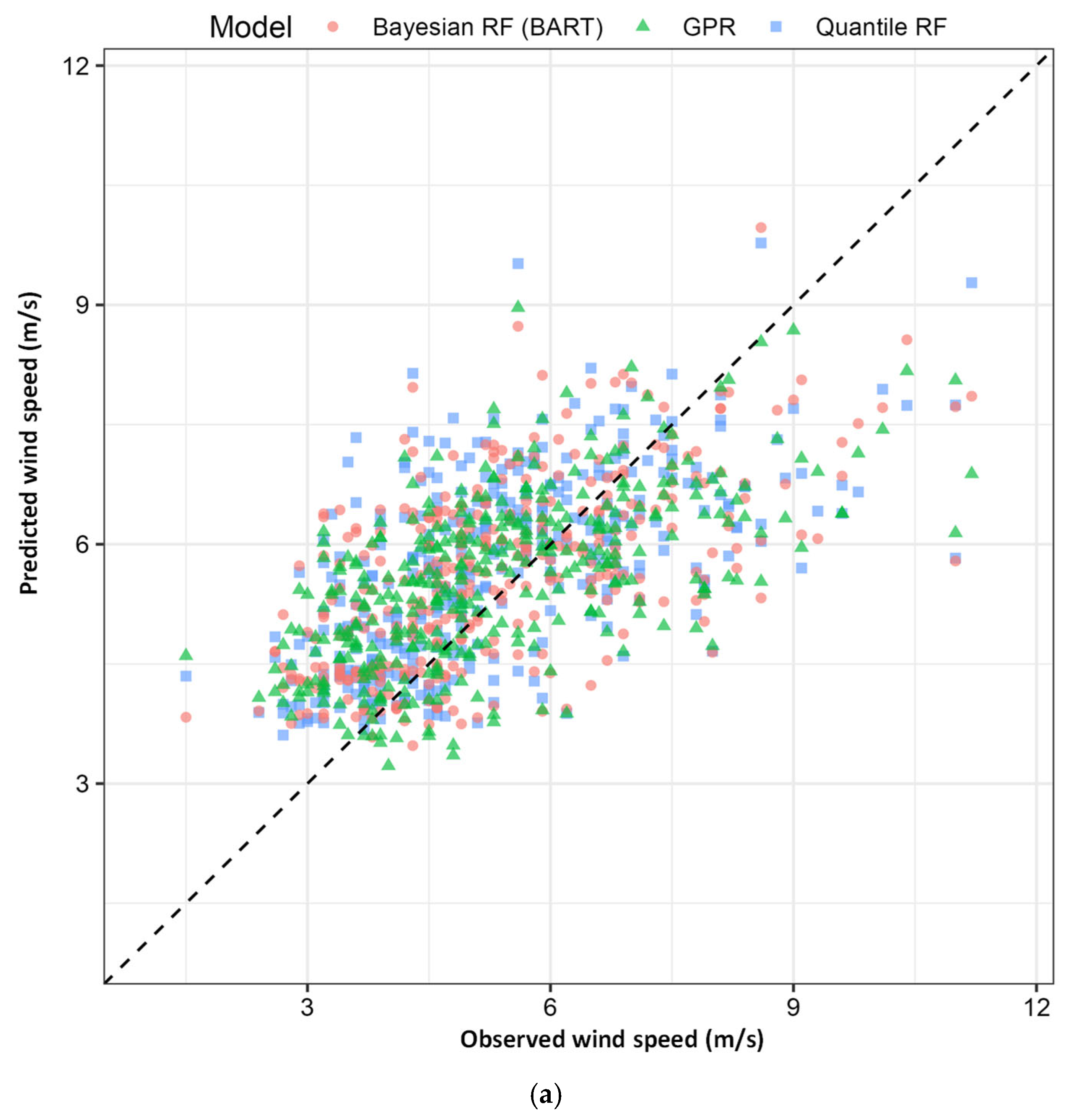
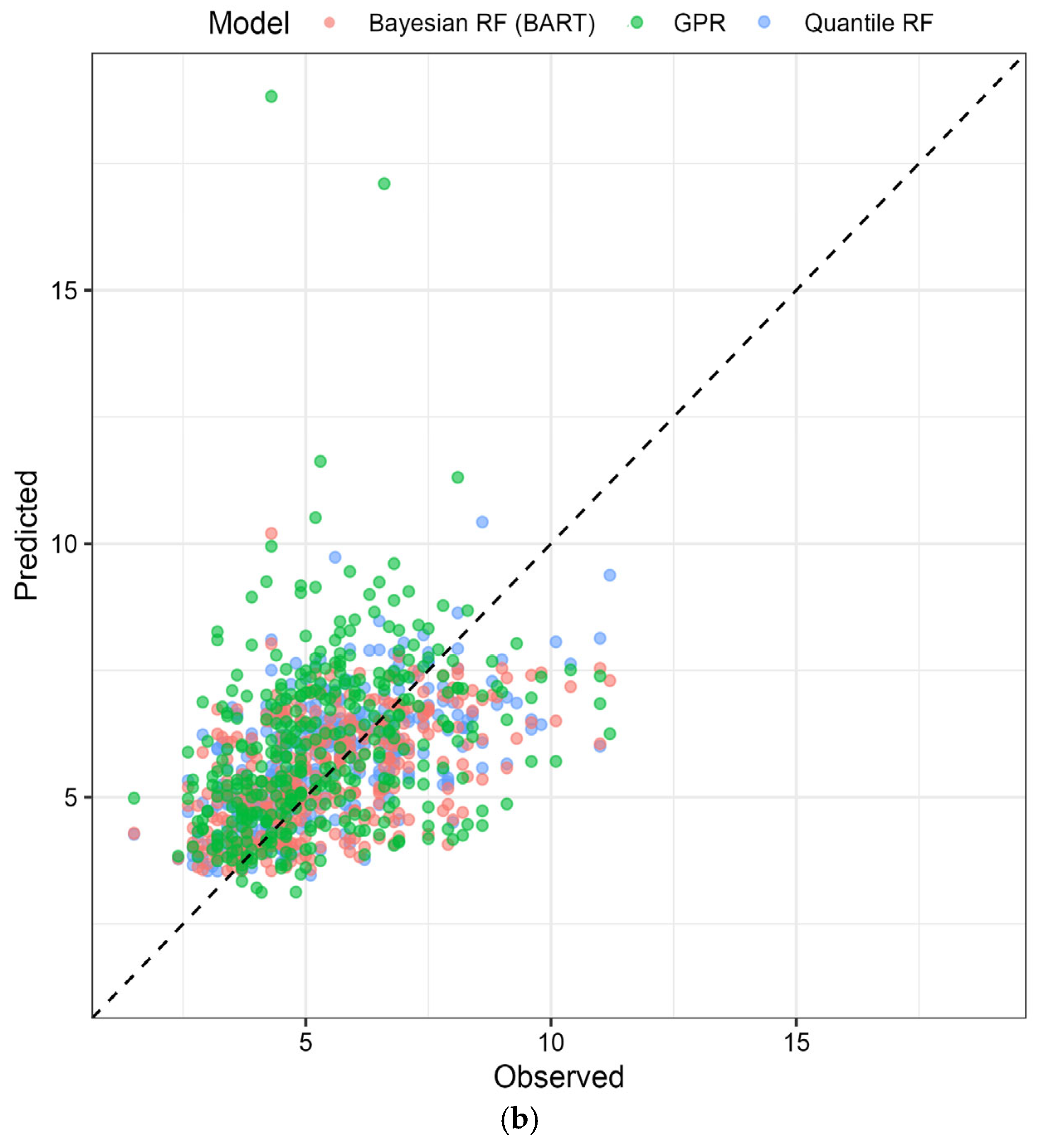
Reliable probabilistic wind speed forecasts are essential for integrating renewable energy into power grids and managing operational uncertainty. This study compares Quantile Regression Forests (QRF), Bayesian Additive Regression Trees (BART), and Gaussian Process Regression (GPR) under at-site and regional pooled frameworks using 21 years (2000–2020) of daily wind data from eleven stations in New South Wales and Queensland, Australia. Models are evaluated via strict year-based holdout validation across seven metrics: RMSE, MAE, R2, bias, correlation, coverage, and Continuous Ranked Probability Score (CRPS). Regional QRF achieves exceptional point forecast stability with minimal RMSE increase but suffers persistent under-coverage, rendering probabilistic bounds unreliable. BART attains near-nominal coverage at individual sites but experiences catastrophic calibration collapse under regional pooling, driven by fixed noise priors inadequate for spatially heterogeneous data. In contrast, GPR maintains robust probabilistic skill regionally despite larger point forecast RMSE penalties, achieving the lowest overall CRPS and near-nominal coverage through kernel-based variance inflation. Variable importance analysis identifies surface pressure and minimum temperature as dominant predictors (60–80%), with spatial covariates critical for regional differentiation. Operationally, regional QRF is prioritised for point accuracy, regional GPR for calibrated probabilistic forecasts in risk-sensitive applications, and at-site BART when local data suffice. These findings show that Bayesian machine learning methods can effectively navigate the trade-off between local specificity and regional pooling, a challenge common to wind forecasting in diverse terrain globally. The methodology and insights are transferable to other heterogeneous regions, providing guidance for probabilistic wind forecasting and renewable energy grid integration.
Keywords: probabilistic wind forecasting; at site and regional modelling; machine learning methods; renewable energy integration; operational wind uncertainty; eastern Australia probabilistic wind forecasting; at site and regional modelling; machine learning methods; renewable energy integration; operational wind uncertainty; eastern Australia