Article

How Supplementary or Night-Interrupting Low-Intensity Blue Light Affects the Flower Induction in Chrysanthemum, A Qualitative Short-Day Plant


by
Yoo Gyeong Park
1 and
Byoung Ryong Jeong
1,2,3,*
1
Institute of Agriculture and Life Science, Gyeongsang National University, Jinju 52828, Korea
2
Division of Applied Life Science (BK21 Plus Program), Graduate School, Gyeongsang National University, Jinju 52828, Korea
3
Research Institute of Life Science, Gyeongsang National University, Jinju 52828, Korea
*
Author to whom correspondence should be addressed.
Plants 2020, 9(12), 1694; https://doi.org/10.3390/plants9121694
Submission received: 19 October 2020 / Revised: 9 November 2020 / Accepted: 27 November 2020 / Published: 2 December 2020
(This article belongs to the Special Issue The Effects of LED Light Spectra and Intensities on Plant Growth)

Abstract

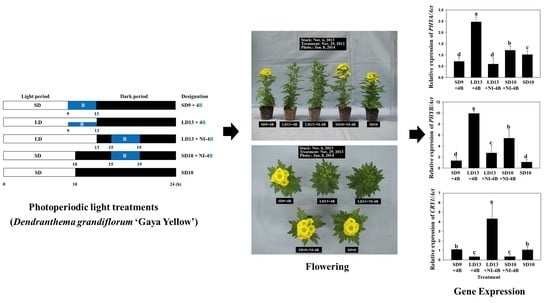
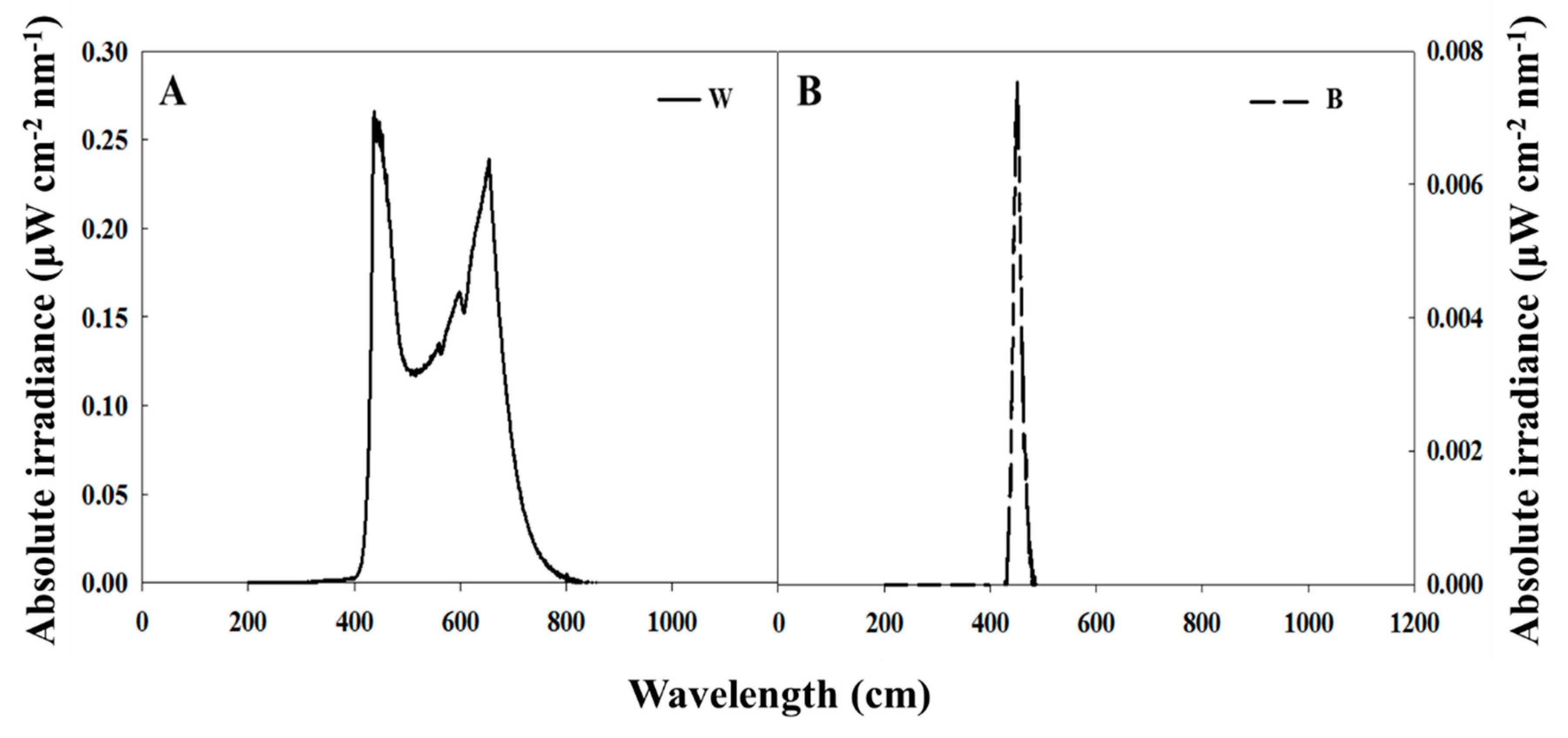
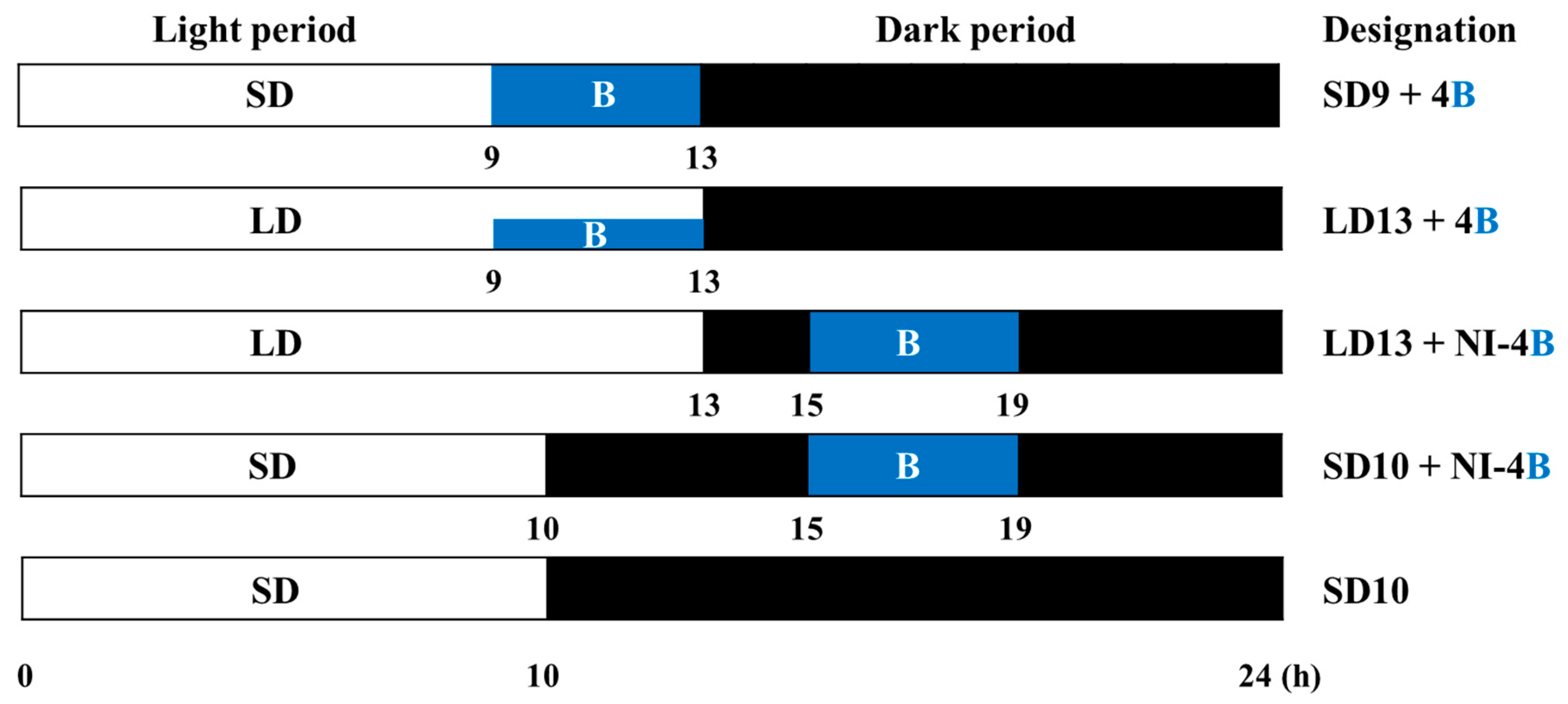
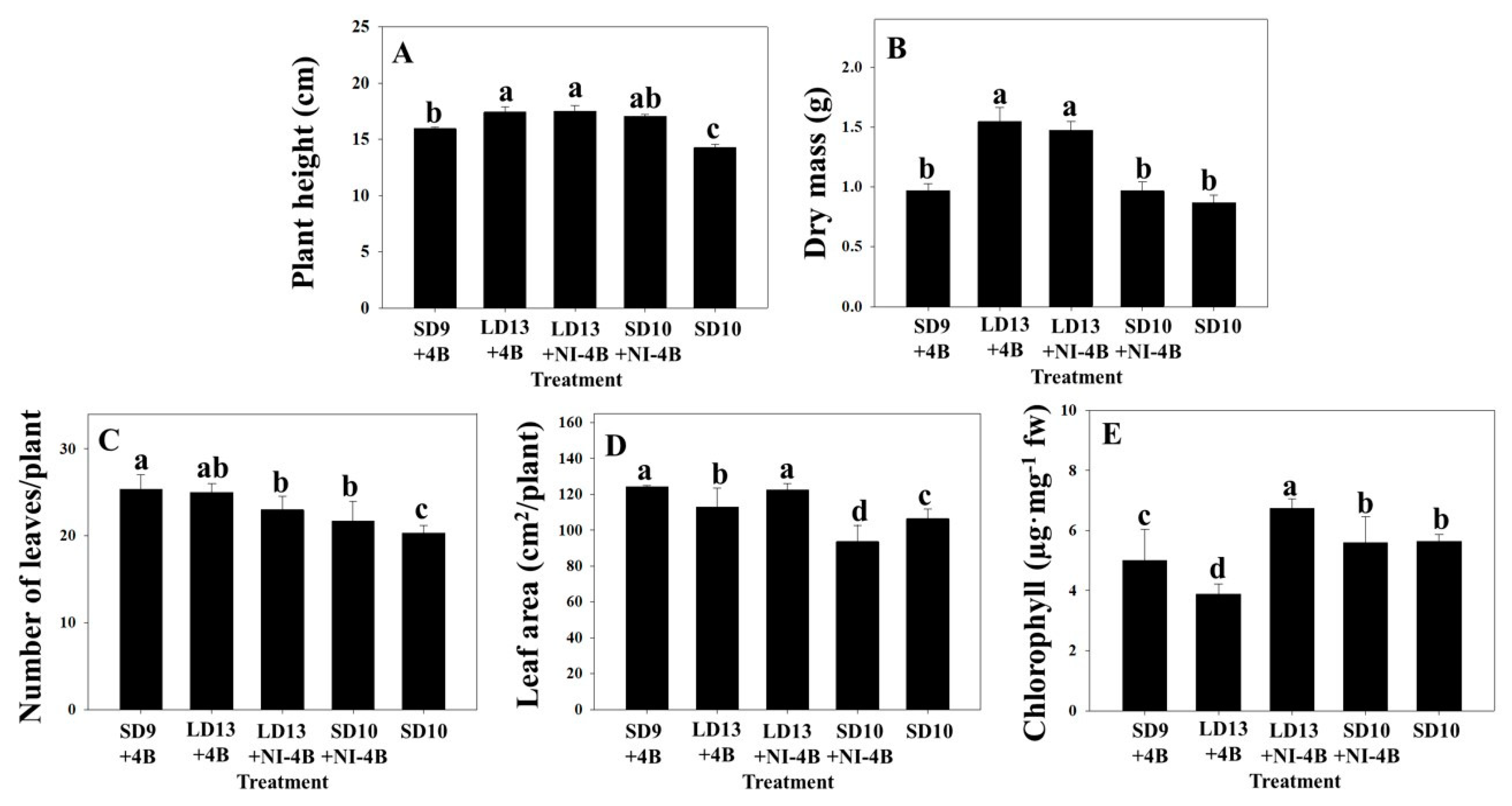
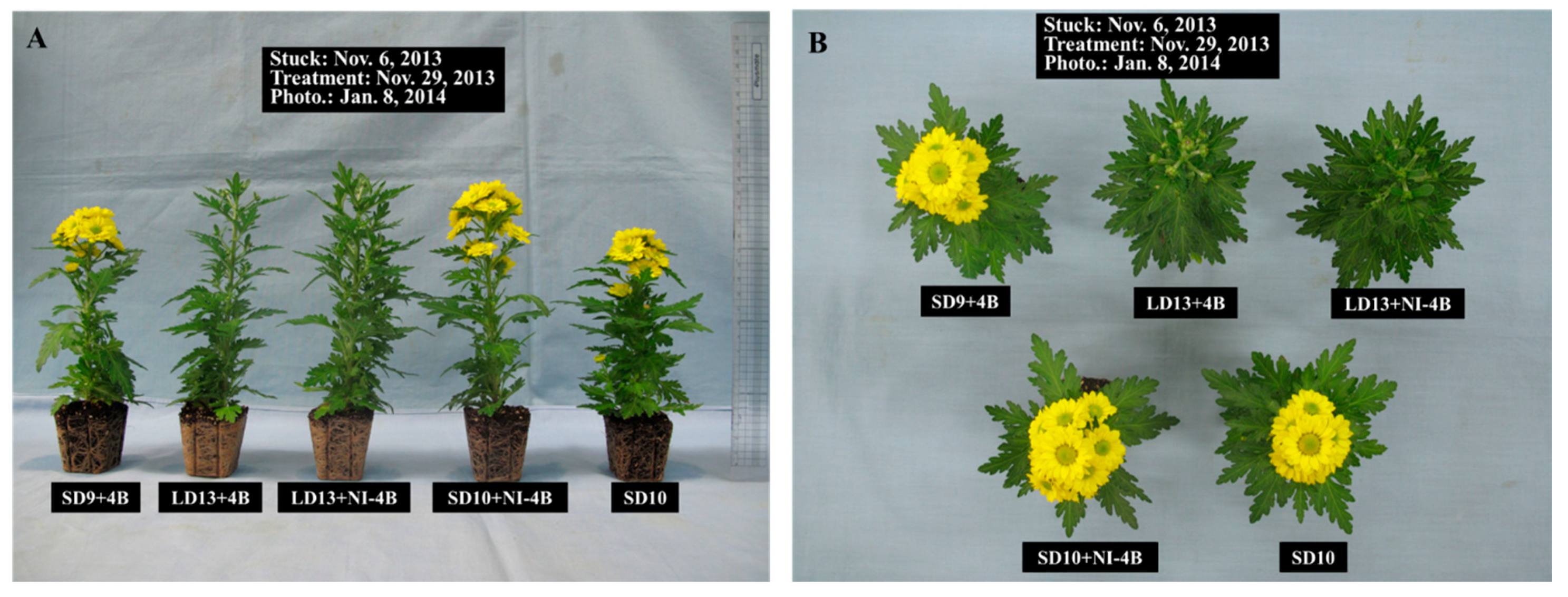
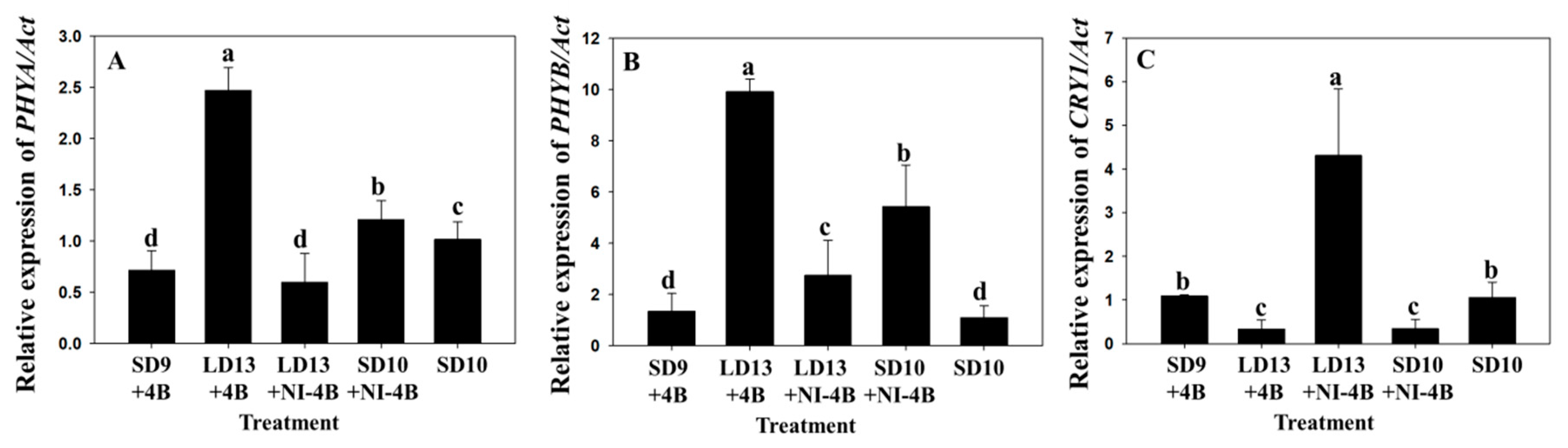
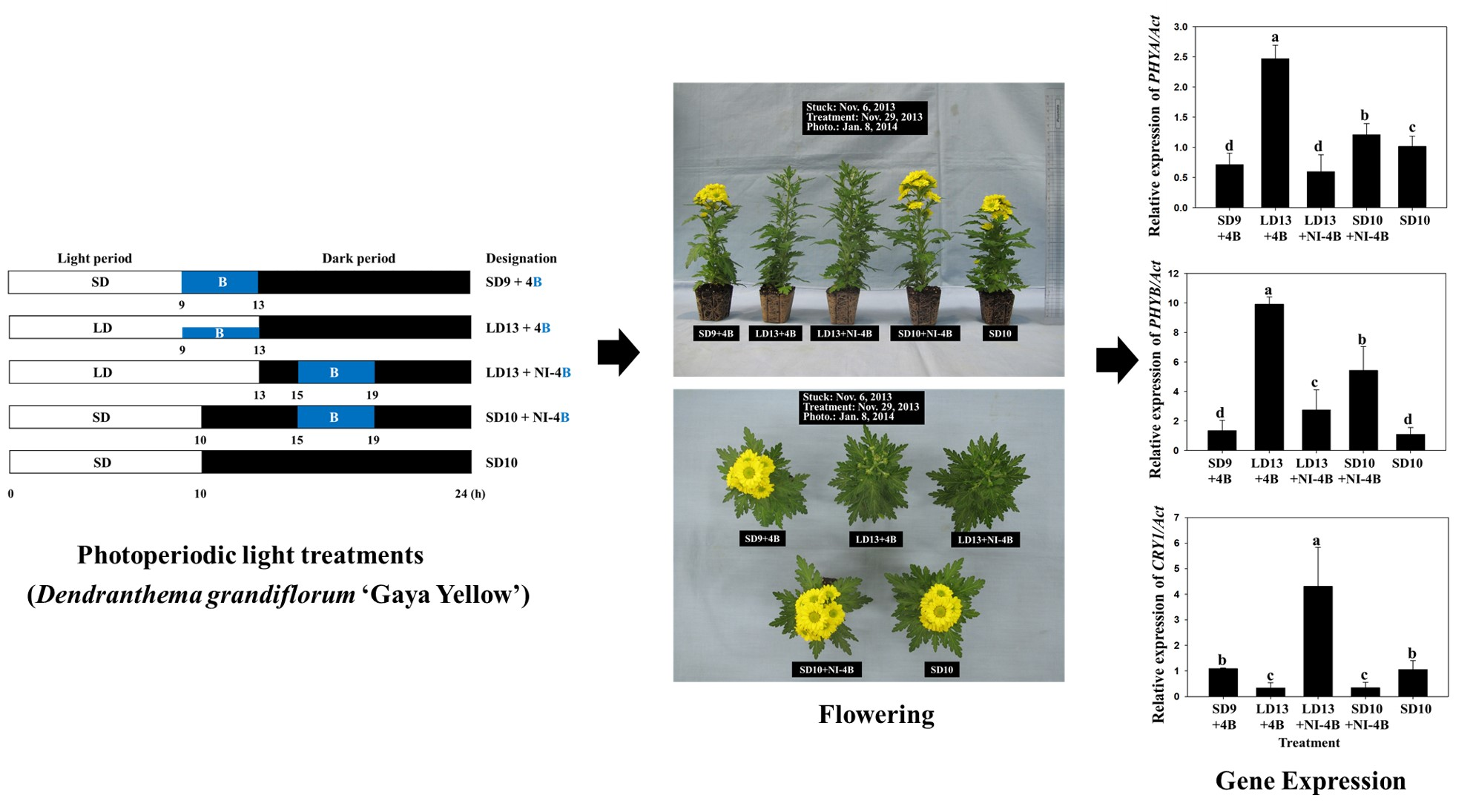
This research examined the effects of the supplementary or night-interrupting (NI) blue (B) light supplied at a low intensity on the flowering, gene expression, and morphogenesis of chrysanthemum, a qualitative short-day plant. White (W) light-emitting diodes (LEDs) were used to provide light with a photosynthetic photon flux density (PPFD) of 180 μmol·m−2·s−1 during the photoperiod to grow the plants in a plant factory. The control group was constructed with plants that were exposed to a 10-h short day (SD10) treatment without any blue light. The B light in this research was used for 4 h to either (1) extend the photoperiod for plants at the end of a 9-h short day (SD) treatment as the sole light source (SD9 + 4B), (2) provide night interruption (NI) to plants in the 13-h long-day (LD) treatment (LD13 + NI − 4B), (3) provide NI to plants in the 10-h SD treatment (SD10 + NI − 4B), or (4) supplement the W LEDs at the end of a 13-h LD treatment (LD13 + 4B). Blue LEDs were used to provide the supplementary/NI light at 10 μmol·m−2·s−1 PPFD. The LD13 + NI − 4B treatment resulted in the greatest plant height, followed by LD13 + 4B. Plants in all treatments flowered. It is noteworthy that despite the fact that chrysanthemum is a qualitative SD plant, chrysanthemum plants flowered when grown in the LD13 + 4B and LD13 + NI − 4B treatments. Plants grown in the LD13 + 4B had the greatest number of flowers. Plants grown in the LD13 + 4B treatment had the highest expression levels of the cryptochrome 1, phytochrome A, and phytochrome B genes. The results of this study indicate that a 4-h supplementation of B light during the photoperiod increases flower bud formation and promotes flowering, and presents a possibility as an alternative method to using blackout curtains in LD seasons to practically induce flowering. The B light application methods to induce flowering in SD plants requires further research.
Keywords: blue LED; flower bud formation; number of flowers; photoperiod blue LED; flower bud formation; number of flowers; photoperiod
Graphical Abstract