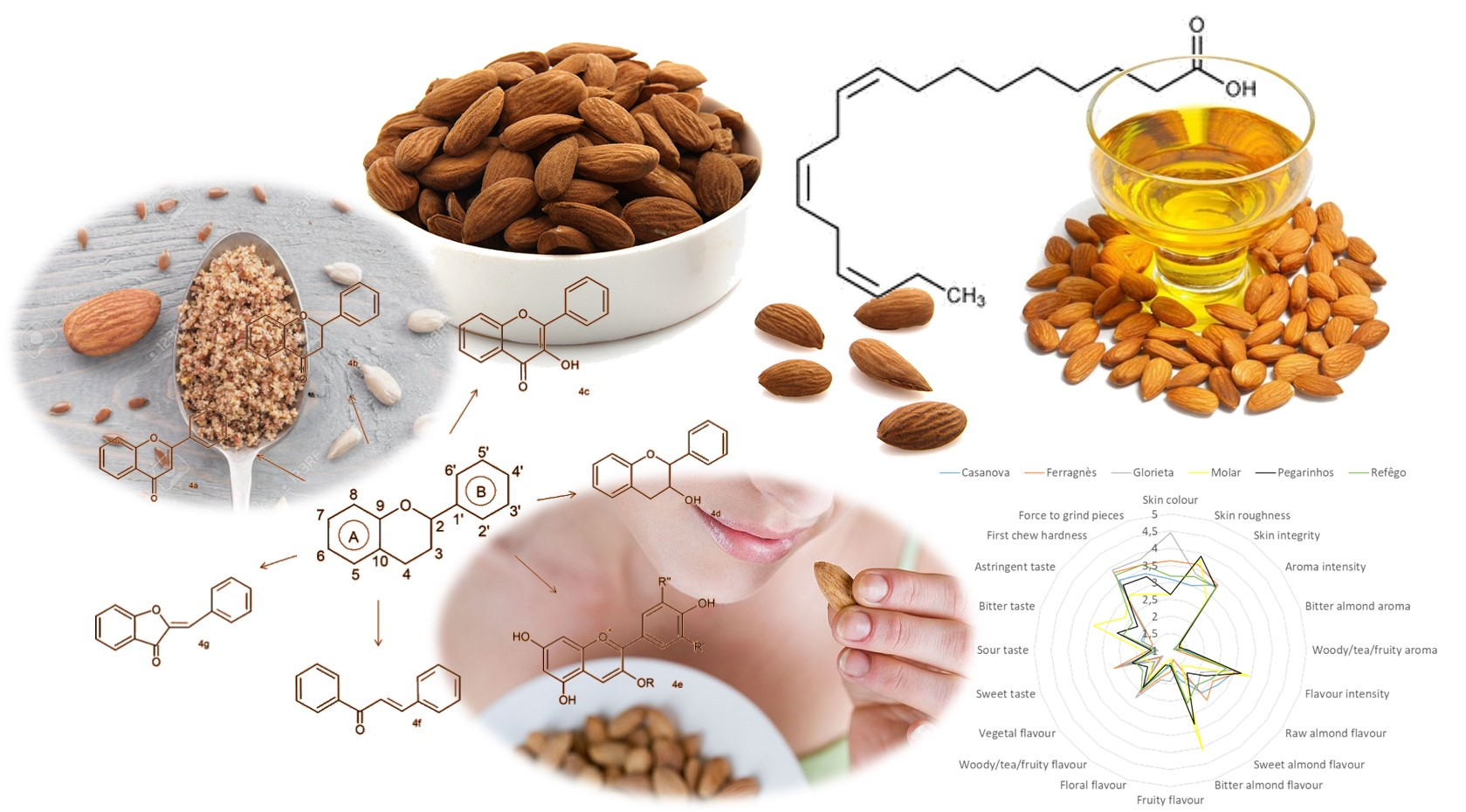
Effects of Different Processing Treatments on Almond (Prunus dulcis) Bioactive Compounds, Antioxidant Activities, Fatty Acids, and Sensorial Characteristics



 ,
,  ,
, 

Abstract
Share and Cite
Oliveira, I.; Meyer, A.S.; Afonso, S.; Sequeira, A.; Vilela, A.; Goufo, P.; Trindade, H.; Gonçalves, B. Effects of Different Processing Treatments on Almond (Prunus dulcis) Bioactive Compounds, Antioxidant Activities, Fatty Acids, and Sensorial Characteristics. Plants 2020, 9, 1627. https://doi.org/10.3390/plants9111627
Oliveira I, Meyer AS, Afonso S, Sequeira A, Vilela A, Goufo P, Trindade H, Gonçalves B. Effects of Different Processing Treatments on Almond (Prunus dulcis) Bioactive Compounds, Antioxidant Activities, Fatty Acids, and Sensorial Characteristics. Plants. 2020; 9(11):1627. https://doi.org/10.3390/plants9111627
Chicago/Turabian StyleOliveira, Ivo, Anne S. Meyer, Sílvia Afonso, Alex Sequeira, Alice Vilela, Piebiep Goufo, Henrique Trindade, and Berta Gonçalves. 2020. "Effects of Different Processing Treatments on Almond (Prunus dulcis) Bioactive Compounds, Antioxidant Activities, Fatty Acids, and Sensorial Characteristics" Plants 9, no. 11: 1627. https://doi.org/10.3390/plants9111627
APA StyleOliveira, I., Meyer, A. S., Afonso, S., Sequeira, A., Vilela, A., Goufo, P., Trindade, H., & Gonçalves, B. (2020). Effects of Different Processing Treatments on Almond (Prunus dulcis) Bioactive Compounds, Antioxidant Activities, Fatty Acids, and Sensorial Characteristics. Plants, 9(11), 1627. https://doi.org/10.3390/plants9111627