Review

Microbiome-Mediated Cd Stabilization in Chilli Pepper: Roles of Capsaicinoids and Cultivar Genetics Under Environmental Stress


1
School of Agricultural Technology and Food Industry, Walailak University, Nakhon Si Thammarat 80160, Thailand
2
School of Agriculture and Natural Resources, Vinh University, Vinh City 43108, Vietnam
3
Herbology Research Center, Walailak University, Nakhon Si Thammarat 80160, Thailand
*
Author to whom correspondence should be addressed.
Plants 2026, 15(4), 630; https://doi.org/10.3390/plants15040630

Submission received: 16 January 2026 / Revised: 9 February 2026 / Accepted: 14 February 2026 / Published: 16 February 2026
(This article belongs to the Section Plant Physiology and Metabolism)

Abstract

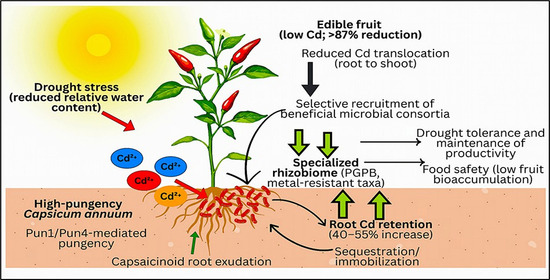
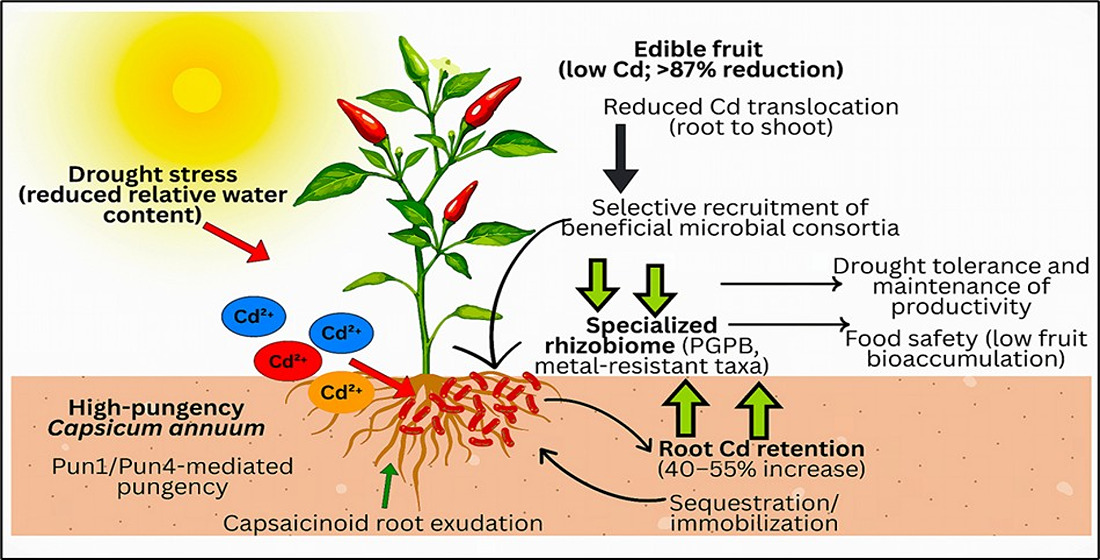
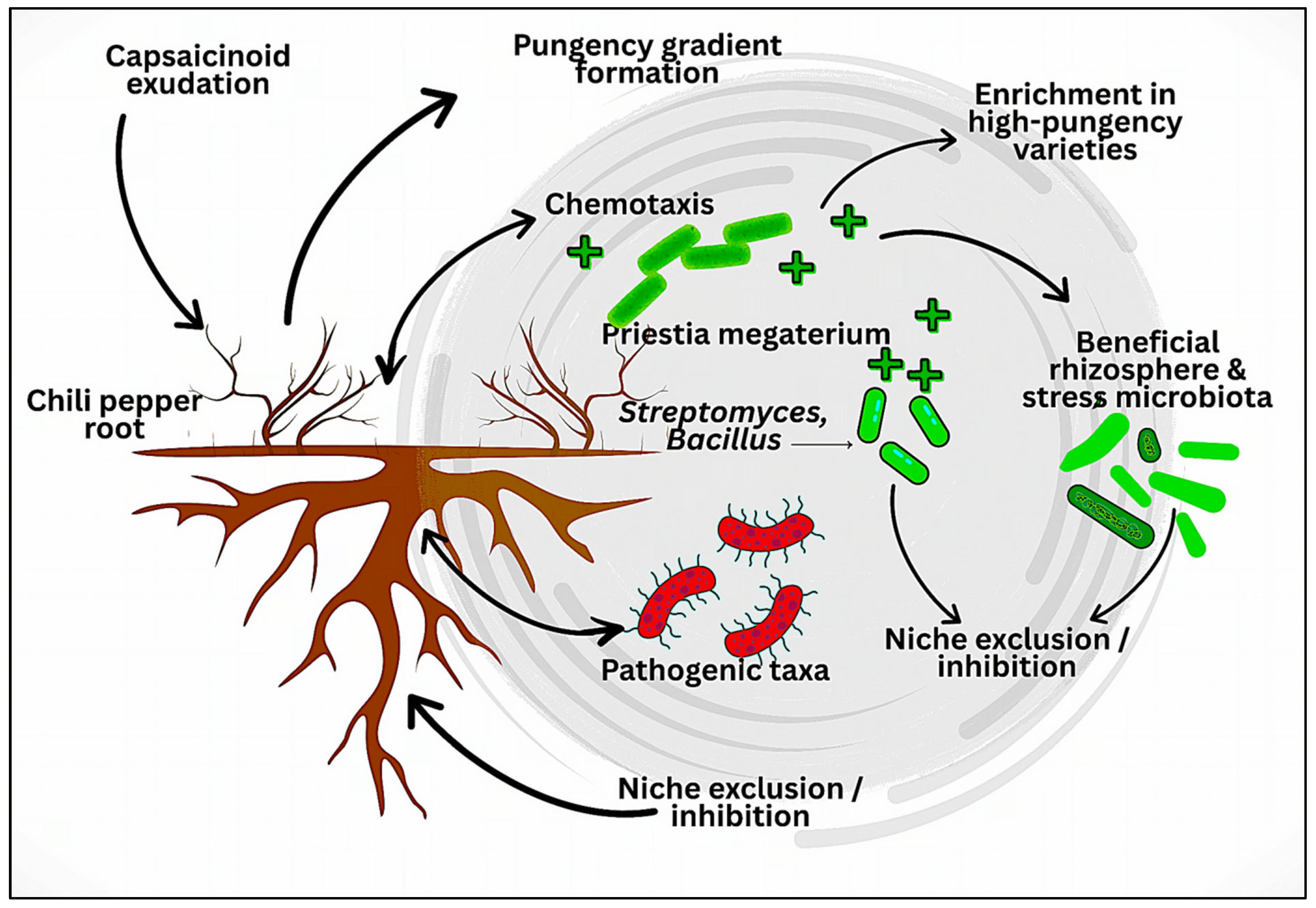
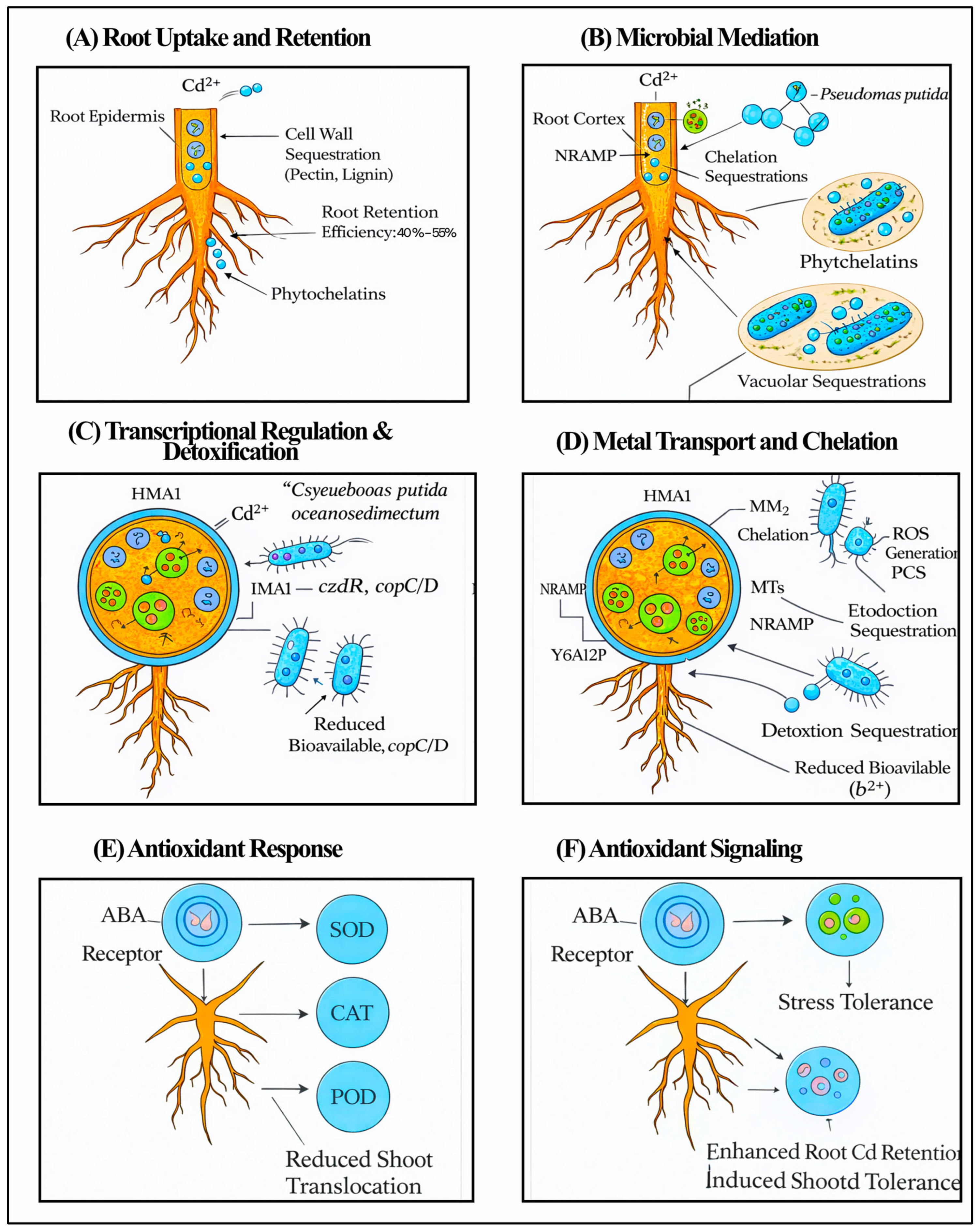
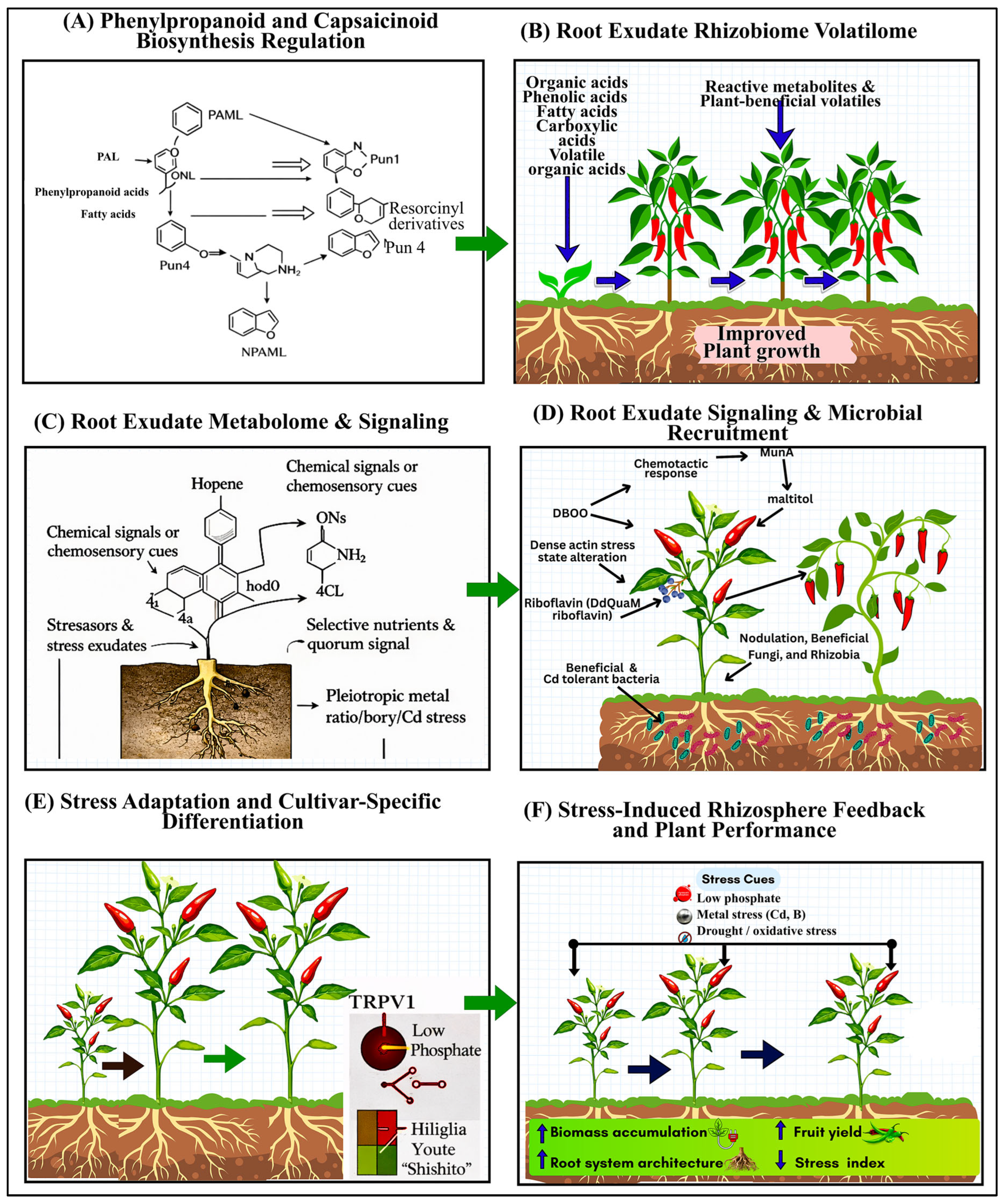
Chilli pepper agroecosystems (Capsicum annuum L.) are increasingly threatened by cadmium (Cd) contamination, with emerging climatic stressors such as drought further exacerbating risks to food safety and crop productivity. This review synthesizes current evidence on microbiome-mediated Cd phytostabilisation in chilli pepper, with a particular focus on the roles of capsaicinoids and cultivar-specific genetic regulation in shaping rhizosphere microbial communities. Existing studies demonstrate that capsaicinoid-rich cultivars selectively recruit specialized rhizosphere microbes, enhancing root-level Cd sequestration and achieving Cd retention efficiencies of approximately 40–55%, thereby substantially restricting Cd translocation to edible fruit tissues. Multi-strain plant growth-promoting rhizobacteria (PGPR) consortia, especially when combined with structured organic amendments, have been reported to reduce fruit Cd and nickel (Ni) accumulation by more than 87% in contaminated soils. These responses are regulated by pungency-associated genetic loci, including Pun1 (pungency locus 1) and Pun4 (pungency locus 4) genes, which influence secondary metabolism and microbial assembly under metal stress conditions. The review highlights key knowledge gaps regarding the long-term stability of engineered rhizobiomes, the in situ dynamics of the Capsicum volatilome as a microbial recruitment signal, and the interactive effects of Cd contamination and drought in field environments. Overall, this synthesis provides a mechanistic framework for deploying high-pungency cultivars and microbiome-based strategies to improve Cd phytostabilisation, with important implications for sustainable chilli production in drought-prone, metal-contaminated agroecosystems.
Keywords: Capsicum annuum; cadmium; capsaicinoids; phytostabilisation; rhizobiome; Pun1 locus; volatilome; rhizosphere engineering Capsicum annuum; cadmium; capsaicinoids; phytostabilisation; rhizobiome; Pun1 locus; volatilome; rhizosphere engineering
Graphical Abstract