Transcriptomic Analysis Reveals Candidate Genes in Response to Sorghum Mosaic Virus and Salicylic Acid in Sugarcane

 ,
,
Abstract
1. Introduction
2. Results
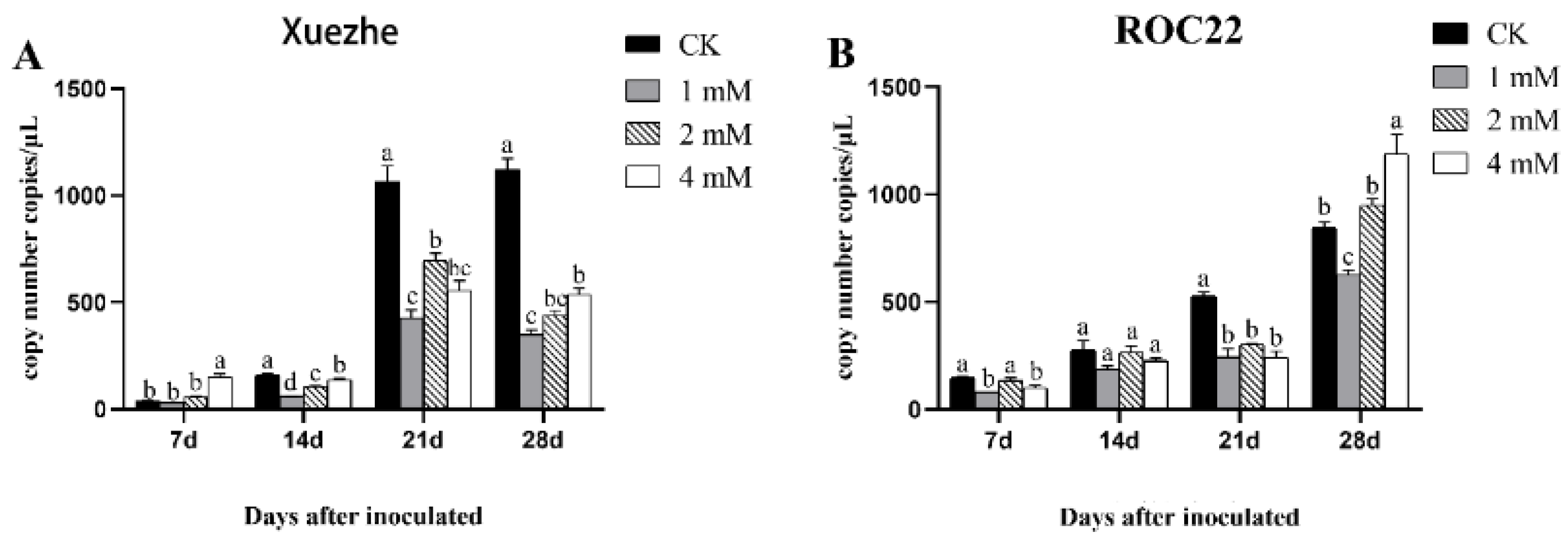
2.1. SA Application Inhibited SrMV from Infecting Sugarcane Plants
2.2. Transcriptome Sequencing and Assembly
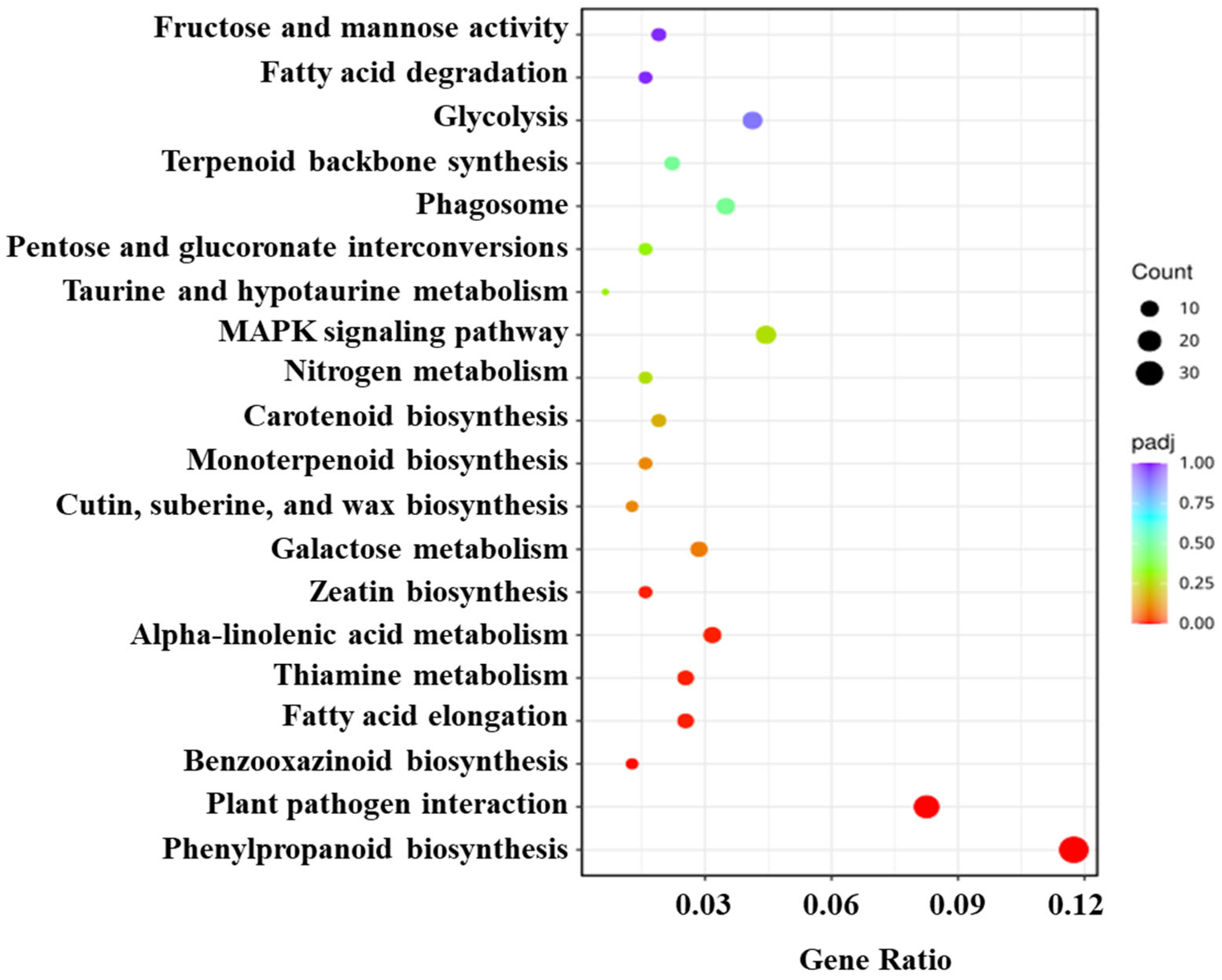
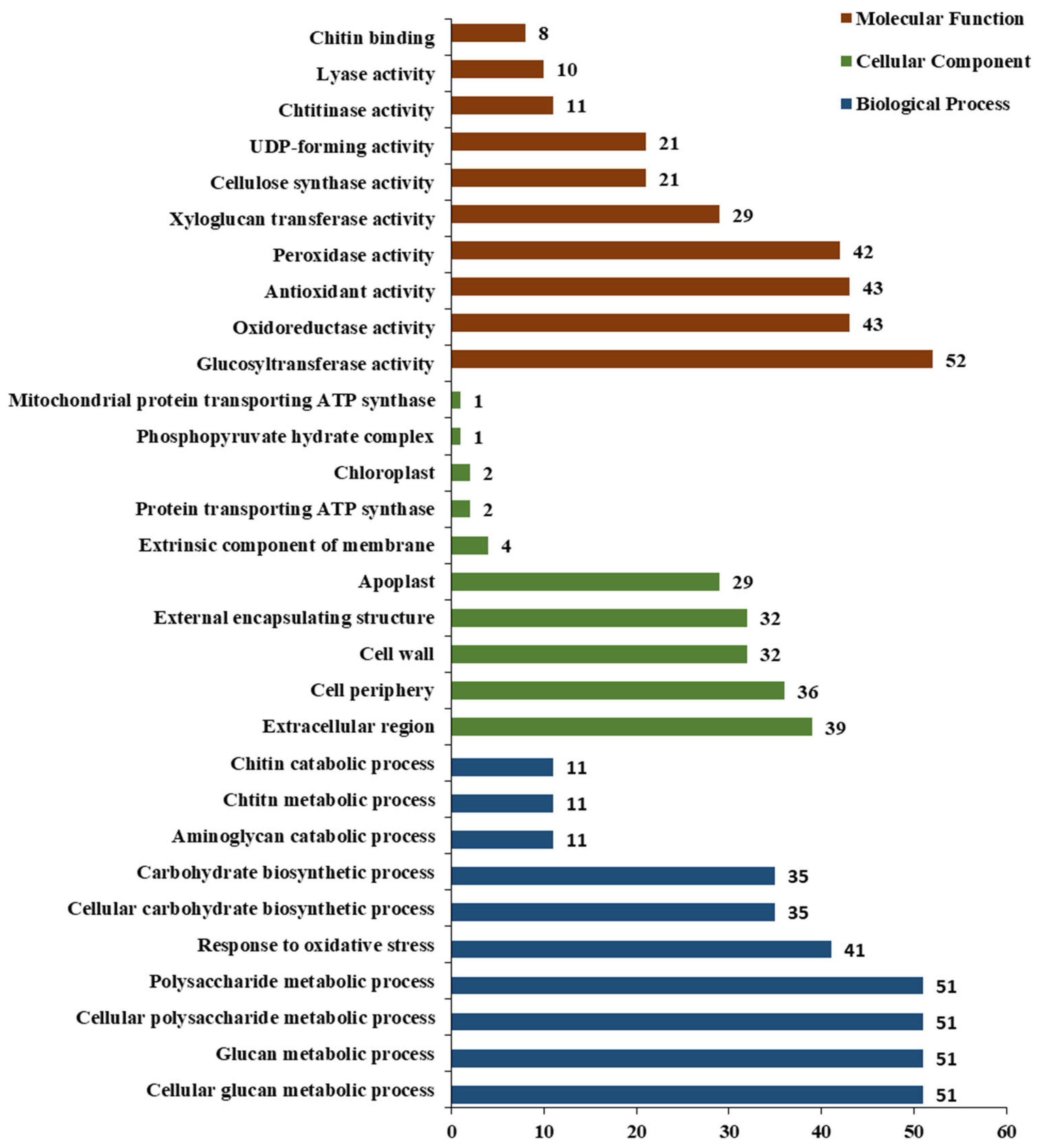
2.3. Identification, Functional Annotation of DEGs, Gene Ontology (GO), and Kyoto Encyclopedia of Genes and Genomes (KEGG) Analysis
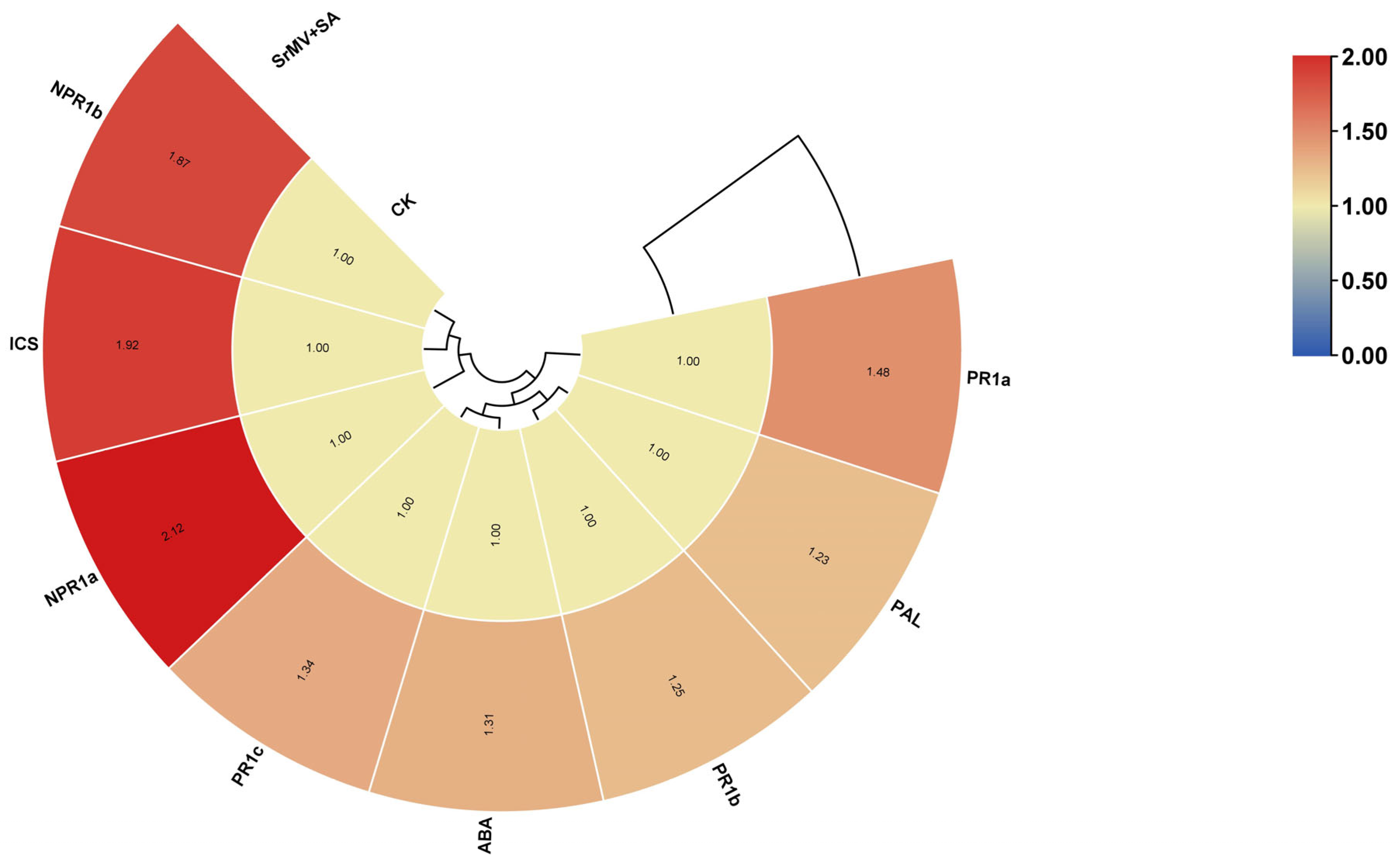
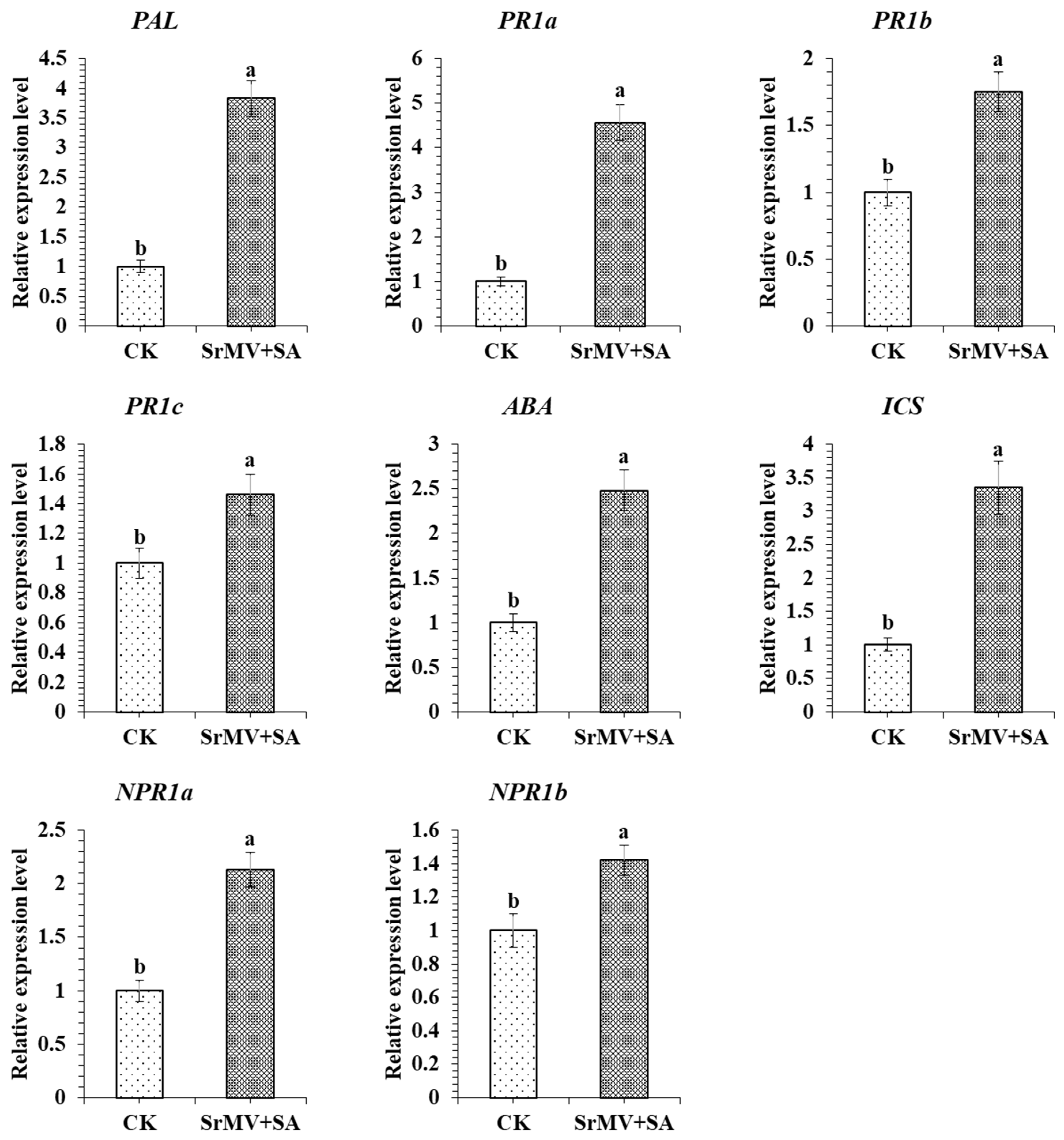
2.4. Transcript Profiling of Candidate Genes
3. Discussion
3.1. SA Pathway and Regulatory Genes
3.2. Metabolic Adjustments
4. Conclusions and Prospects
5. Materials and Methods
5.1. Plant Materials and Virus Detection
5.2. RNA Extraction and cDNA Library Construction
5.3. Quality Control and Alignment of Sequencing Data
5.4. Screening and Functional Enrichment Analysis of Differentially Expressed Genes
5.5. Quantitative Real-Time PCR Analysis
5.6. Statistical Analysis
Supplementary Materials
Author Contributions
Funding
Data Availability Statement
Conflicts of Interest
References
- Kummu, M.; Heino, M.; Taka, M.; Varis, O.; Viviroli, D. Climate change risks pushing one-third of global food production outside the safe climatic space. One Earth 2021, 4, 720–729. [Google Scholar] [CrossRef] [Scilit] [PubMed]
- Javed, T.; Gao, S. WRKY transcription factors in plant defense. Trends Genet. 2023, 39, 787–801. [Google Scholar] [CrossRef] [Scilit] [PubMed]
- Yuan, M.; Ngou, B.P.M.; Ding, P.; Xin, X.F. PTI-ETI crosstalk: An integrative view of plant immunity. Curr. Opin. Plant Biol. 2021, 62, 102030. [Google Scholar] [CrossRef] [Scilit] [PubMed]
- Javed, T.; Shabbir, R.; Ali, A.; Afzal, I.; Zaheer, U.; Gao, S.J. Transcription factors in plant stress responses: Challenges and potential for sugarcane improvement. Plants 2020, 9, 491. [Google Scholar] [CrossRef] [Scilit] [PubMed]
- Shabbir, R.; Zhaoli, L.; Yueyu, X.; Zihao, S.; Pinghua, C. Transcriptome Analysis of Sugarcane Response to Sugarcane Yellow Leaf Virus Infection Transmitted by the Vector Melanaphis sacchari. Front. Plant Sci. 2022, 13, 921674. [Google Scholar] [CrossRef] [Scilit]
- Dong, M.; Cheng, G.; Peng, L.; Xu, Q.; Yang, Y.; Xu, J. Transcriptome analysis of sugarcane response to the infection by Sugarcane steak mosaic virus (SCSMV). Trop. Plant Biol. 2017, 10, 45–55. [Google Scholar] [CrossRef] [Scilit]
- McNeil, M.D.; Bhuiyan, S.A.; Berkman, P.J.; Croft, B.J.; Aitken, K.S. Analysis of the resistance mechanisms in sugarcane during Sporisorium scitamineum infection using RNA-seq and microscopy. PLoS ONE 2018, 13, e0197840. [Google Scholar] [CrossRef] [Scilit]
- Chu, N.; Zhou, J.-R.; Fu, H.-Y.; Huang, M.-T.; Zhang, H.-L.; Gao, S.-J. Global Gene Responses of Resistant and Susceptible Sugarcane Cultivars to Acidovorax avenae subsp. avenae Identified Using Comparative Transcriptome Analysis. Microorganisms 2020, 8, 10. [Google Scholar] [CrossRef] [Scilit]
- Ntambo, M.S.; Meng, J.-Y.; Rott, P.C.; Henry, R.J.; Zhang, H.-L.; Gao, S.-J. Comparative Transcriptome Profiling of Resistant and Susceptible Sugarcane Cultivars in Response to Infection by Xanthomonas albilineans. Int. J. Mol. Sci. 2019, 20, 6138. [Google Scholar] [CrossRef] [Scilit]
- Ma, Y.; Yu, H.; Lu, Y.; Gao, S.; Fatima, M.; Ming, R.; Yue, J. Transcriptome analysis of sugarcane reveals rapid defense response of SES208 to Xanthomonas albilineans in early infection. BMC Plant Biol. 2023, 23, 52. [Google Scholar] [CrossRef] [Scilit]
- Wang, L.; Li, S. Salicylic acid-induced heat or cold tolerance in relation to Ca2+ homeostasis and antioxidant systems in young grape plants. Plant Sci. 2006, 170, 685–694. [Google Scholar] [CrossRef] [Scilit]
- Mahesh, H.M.; Murali, M.; Pal, M.A.C.; Melvin, P.; Sharada, M.S. Salicylic acid seed priming instigates defense mechanism by inducing PR-Proteins in Solanum melongena L. upon infection with Verticillium dahliae Kleb. Plant Physiol. Biochem. 2017, 117, 12–23. [Google Scholar] [CrossRef] [Scilit] [PubMed]
- Deenamo, N.; Kuyyogsuy, A.; Khompatara, K.; Chanwun, T.; Ekchaweng, K.; Churngchow, N. Salicylic acid induces resistance in rubber tree against Phytophthora palmivora. Int. J. Mol. Sci. 2018, 19, 1883. [Google Scholar] [CrossRef] [Scilit] [PubMed]
- Li, T.; Huang, Y.; Xu, Z.S.; Wang, F.; Xiong, A.S. Salicylic acid-induced differential resistance to the Tomato yellow leaf curl virus among resistant and susceptible tomato cultivars. BMC Plant Biol. 2019, 19, 173. [Google Scholar] [CrossRef] [Scilit] [PubMed]
- Liu, Y.; Luo, C.; Liang, R.; Lan, M.; Yu, H.; Guo, Y.; Chen, S.; Lu, T.; Mo, X.; He, X. Genome-wide identification of the mango CONSTANS (CO) family and functional analysis of two MiCOL9 genes in transgenic Arabidopsis. Front. Plant Sci. 2022, 13, 1028987. [Google Scholar] [CrossRef] [Scilit] [PubMed]
- Liu, R.; Lu, J.; Xing, J.; Xue, L.; Wu, Y.; Zhang, L. Characterization and functional analyses of wheat TaPR1 genes in response to stripe rust fungal infection. Sci. Rep. 2023, 13, 3362. [Google Scholar] [CrossRef] [Scilit]
- Chen, N.; Shao, Q.; Xiong, Z. Isolation and characterization of a pathogenesis-related protein 1 (SlPR1) gene with induced expression in tomato (Solanum lycopersicum) during Ralstonia solanacearum infection. Gene 2023, 855, 147105. [Google Scholar] [CrossRef] [Scilit]
- Yuan, W.; Jiang, T.; Du, K.; Chen, H.; Cao, Y.; Xie, J.; Li, M.; Carr, J.P.; Wu, B.; Fan, Z.; et al. Maize phenylalanine ammonia-lyases contribute to resistance to Sugarcane mosaic virus infection, most likely through positive regulation of salicylic acid accumulation. Mol. Plant Pathol. 2019, 20, 1365–1378. [Google Scholar] [CrossRef] [Scilit]
- Ling, H.; Huang, N.; Wu, Q.; Su, Y.; Peng, Q.; Ahmed, W.; Gao, S.; Su, W.; Que, Y.; Xu, L. Transcriptional insights into the sugarcane-sorghum mosaic virus interaction. Trop. Plant Boil. 2018, 11, 163–176. [Google Scholar] [CrossRef] [Scilit]
- Xu, H.M.; He, E.Q.; Yang, Z.L.; Bi, Z.W.; Bao, W.Q.; Sun, S.R.; Lu, J.J.; Gao, S.J. Phylogeny and genetic divergence among sorghum mosaic virus isolates infecting sugarcane. Plants 2023, 12, 3759. [Google Scholar] [CrossRef] [Scilit]
- Jini, D.; Joseph, B. Physiological mechanism of salicylic acid for alleviation of salt stress in rice. Rice Sci. 2017, 24, 97–108. [Google Scholar] [CrossRef] [Scilit]
- Gunes, A.; Inal, A.; Alpaslan, M.; Eraslan, F.; Bagci, E.G.; Cicek, N. Salicylic acid induced changes on some physiological parameters symptomatic for oxidative stress and mineral nutrition in maize (Zea mays L.) grown under salinity. J. Plant Physiol 2007, 164, 728–736. [Google Scholar] [CrossRef] [Scilit] [PubMed]
- Zagier, S.; Fadhal, F.A.; Alisawi, O. Control Fig Mosaic Virus By plant extracts with salicylic acid. IOP Conf. Ser. Earth Environ. Sci. 2021, 790, 012058. [Google Scholar] [CrossRef] [Scilit]
- Suharti, W.S.; Leana, N.W.A. Induce resistance of rice plants against bacterial leaf blight by using salicylic acid application. IOP Conf. Ser. Earth Environ. Sci. 2021, 746, 012003. [Google Scholar]
- Zhang, X.; Dong, J.; Liu, H.; Wang, J.; Qi, Y.; Liang, Z. Transcriptome sequencing in response to salicylic acid in Salvia miltiorrhiza. PLoS ONE 2016, 11, e0147849. [Google Scholar] [CrossRef] [Scilit]
- Canet, J.V.; Dobón, A.; Roig, A.; Tornero, P. Structure-function analysis of npr1 alleles in Arabidopsis reveals a role for its paralogs in the perception of salicylic acid. Plant Cell Environ. 2010, 33, 1911–1922. [Google Scholar] [CrossRef] [Scilit]
- Ülker, B.; Shahid, M.; Somssich, I.E. The WRKY70 transcription factor of Arabidopsis influences both the plant senescence and defense signaling pathways. Planta 2007, 226, 125–137. [Google Scholar] [CrossRef] [Scilit]
- Dong, J.; Chen, C.; Chen, Z. Expression profiles of the Arabidopsis WRKY gene superfamily during plant defense response. Plant Mol. Boil. 2003, 51, 21–37. [Google Scholar] [CrossRef] [Scilit]
- Chu, N.; Zhou, J.R.; Rott, P.C.; Li, J.; Fu, H.Y.; Huang, M.T.; Zhang, H.L.; Gao, S.J. ScPR1 plays a positive role in the regulation of resistance to diverse stresses in sugarcane (Saccharum spp.) and Arabidopsis thaliana. Ind. Crops. Prod. 2022, 180, 114736. [Google Scholar] [CrossRef] [Scilit]
- Shi, Z.; Maximova, S.; Liu, Y.; Verica, J.; Guiltinan, M.J. The salicylic acid receptor NPR3 is a negative regulator of the transcriptional defense response during early flower development in Arabidopsis. Mol. Plant 2013, 6, 802–816. [Google Scholar] [CrossRef] [Scilit]
- Zhao, J.Y.; Chen, J.; Shi, Y.; Fu, H.Y.; Huang, M.T.; Rott, P.C.; Gao, S.J. Sugarcane responses to two strains of Xanthomonas albilineans differing in pathogenicity through a differential modulation of salicylic acid and reactive oxygen species. Front. Plant Sci. 2022, 13, 1087525. [Google Scholar] [CrossRef] [Scilit] [PubMed]
- Chen, C.; Chen, Z. Potentiation of developmentally regulated plant defense response by AtWRKY18, a pathogen-induced Arabidopsis transcription factor. Plant Physiol. 2002, 129, 706–716. [Google Scholar] [CrossRef] [Scilit] [PubMed]
- Wang, H.; Cheng, X.; Yin, D.; Chen, D.; Luo, C.; Liu, H.; Huang, C. Advances in the Research on Plant WRKY Transcription Factors Responsive to External Stresses. Curr. Issues Mol. Biol. 2023, 45, 2861–2880. [Google Scholar] [CrossRef] [Scilit] [PubMed]
- Phukan, U.J.; Jeena, G.S.; Shukla, R.K. WRKY transcription factors: Molecular regulation and stress responses in plants. Front. Plant Sci. 2016, 7, 760. [Google Scholar] [CrossRef] [Scilit]
- Yang, L.; Miao, L.; Gong, Q.; Guo, J. Advances in studies on transcription factors in regulation of secondary metabolites in Chinese medicinal plants. Plant Cell Tissue Organ Cult. (PCTOC) 2022, 151, 1–9. [Google Scholar] [CrossRef] [Scilit]
- Bolger, A.M.; Lohse, M.; Usadel, B. Trimmomatic: A flexible trimmer for Illumina sequence data. Bioinformatics 2014, 30, 2114–2120. [Google Scholar] [CrossRef] [Scilit]
- Kim, D.; Paggi, J.M.; Park, C.; Bennett, C.; Salzberg, S.L. Graph-based genome alignment and genotyping with HISAT2 and HISAT-genotype. Nat. Biotech. 2019, 37, 907–915. [Google Scholar] [CrossRef] [Scilit]
- Pertea, M.; Pertea, G.M.; Antonescu, C.M.; Chang, T.C.; Mendell, J.T.; Salzberg, S.L. StringTie enables improved reconstruction of a transcriptome from RNA-seq reads. Nat. Biotech. 2015, 33, 290–295. [Google Scholar] [CrossRef] [Scilit]
- Love, M.I.; Huber, W.; Anders, S. Moderated estimation of fold change and dispersion for RNA-seq data with DESeq2. Genome Boil. 2014, 15, 550. [Google Scholar] [CrossRef] [Scilit]
- Wu, T.; Hu, E.; Xu, S.; Chen, M.; Guo, P.; Dai, Z.; Feng, T.; Zhou, L.; Tang, W.; Zhan, L.I.; et al. ClusterProfiler 4.0: A universal enrichment tool for interpreting omics data. Innovation 2021, 2, 100141. [Google Scholar] [CrossRef] [Scilit]



| Sample | Raw Reads | Clean Reads | Q20 (%) | Q30 (%) | GC (%) | Mapping Rate (%) |
|---|---|---|---|---|---|---|
| CK-1 | 44,914,726 | 43,314,264 | 97.5 | 93.34 | 51.76 | 85.01 |
| CK-2 | 40,068,588 | 37,546,314 | 97.5 | 93.28 | 49.83 | 87.59 |
| CK-3 | 41,815,628 | 40,116,578 | 97.36 | 93.24 | 56.06 | 86.90 |
| CK-4 | 46,929,116 | 45,112,170 | 97.48 | 93.22 | 50.38 | 81.90 |
| CK-5 | 43,052,022 | 41,398,032 | 97.6 | 93.42 | 48.49 | 87.37 |
| CK-6 | 44,478,236 | 42,657,658 | 97.47 | 93.26 | 51 | 85.09 |
| SA-1 | 41,941,044 | 40,182,148 | 97.43 | 93.31 | 53.92 | 81.29 |
| SA-2 | 44,570,072 | 42,837,078 | 97.36 | 93.14 | 54.66 | 83.18 |
| SA-3 | 45,719,490 | 44,294,824 | 97.39 | 93.19 | 53.73 | 78.52 |
| SA-4 | 44,841,752 | 43,183,362 | 97.28 | 93.01 | 55.88 | 89.37 |
| SA-5 | 40,056,842 | 38,165,778 | 97.38 | 93.25 | 55.25 | 84.26 |
| SA-6 | 47,349,582 | 45,324,754 | 97.41 | 93.34 | 56.06 | 87.88 |
Disclaimer/Publisher’s Note: The statements, opinions and data contained in all publications are solely those of the individual author(s) and contributor(s) and not of MDPI and/or the editor(s). MDPI and/or the editor(s) disclaim responsibility for any injury to people or property resulting from any ideas, methods, instructions or products referred to in the content. |
© 2024 by the authors. Licensee MDPI, Basel, Switzerland. This article is an open access article distributed under the terms and conditions of the Creative Commons Attribution (CC BY) license (https://creativecommons.org/licenses/by/4.0/).
Share and Cite
Zhou, G.; Shabbir, R.; Sun, Z.; Chang, Y.; Liu, X.; Chen, P. Transcriptomic Analysis Reveals Candidate Genes in Response to Sorghum Mosaic Virus and Salicylic Acid in Sugarcane. Plants 2024, 13, 234. https://doi.org/10.3390/plants13020234
Zhou G, Shabbir R, Sun Z, Chang Y, Liu X, Chen P. Transcriptomic Analysis Reveals Candidate Genes in Response to Sorghum Mosaic Virus and Salicylic Acid in Sugarcane. Plants. 2024; 13(2):234. https://doi.org/10.3390/plants13020234
Chicago/Turabian StyleZhou, Genhua, Rubab Shabbir, Zihao Sun, Yating Chang, Xinli Liu, and Pinghua Chen. 2024. "Transcriptomic Analysis Reveals Candidate Genes in Response to Sorghum Mosaic Virus and Salicylic Acid in Sugarcane" Plants 13, no. 2: 234. https://doi.org/10.3390/plants13020234
APA StyleZhou, G., Shabbir, R., Sun, Z., Chang, Y., Liu, X., & Chen, P. (2024). Transcriptomic Analysis Reveals Candidate Genes in Response to Sorghum Mosaic Virus and Salicylic Acid in Sugarcane. Plants, 13(2), 234. https://doi.org/10.3390/plants13020234