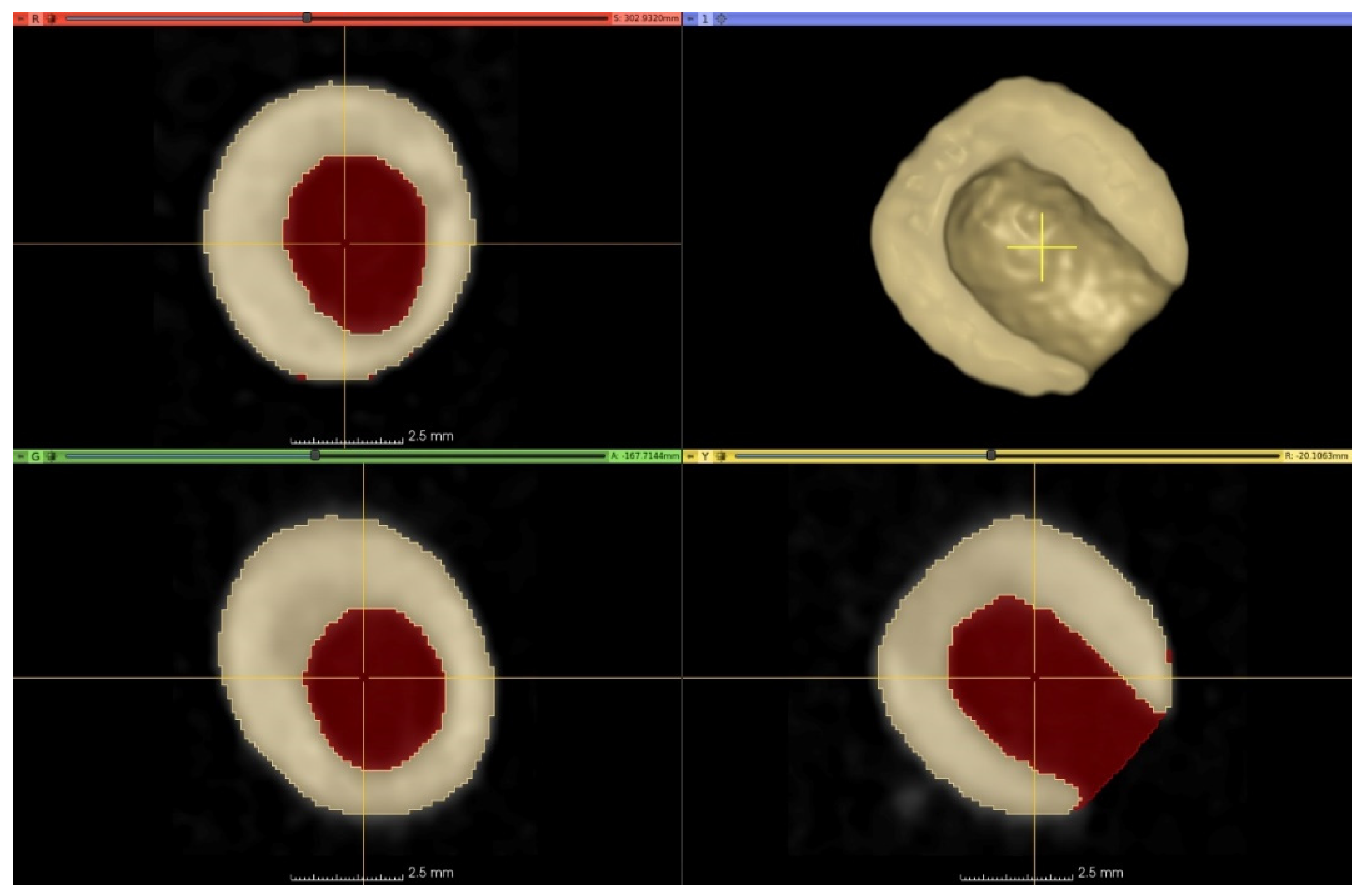
A Non-Invasive Approach in the Assessment of Stress Phenomena and Impairment Values in Pea Seeds Caused by Pea Weevil



Abstract
Share and Cite
Keszthelyi, S.; Fajtai, D.; Pónya, Z.; Somfalvi-Tóth, K.; Donkó, T. A Non-Invasive Approach in the Assessment of Stress Phenomena and Impairment Values in Pea Seeds Caused by Pea Weevil. Plants 2021, 10, 1470. https://doi.org/10.3390/plants10071470
Keszthelyi S, Fajtai D, Pónya Z, Somfalvi-Tóth K, Donkó T. A Non-Invasive Approach in the Assessment of Stress Phenomena and Impairment Values in Pea Seeds Caused by Pea Weevil. Plants. 2021; 10(7):1470. https://doi.org/10.3390/plants10071470
Chicago/Turabian StyleKeszthelyi, Sándor, Dániel Fajtai, Zsolt Pónya, Katalin Somfalvi-Tóth, and Tamás Donkó. 2021. "A Non-Invasive Approach in the Assessment of Stress Phenomena and Impairment Values in Pea Seeds Caused by Pea Weevil" Plants 10, no. 7: 1470. https://doi.org/10.3390/plants10071470
APA StyleKeszthelyi, S., Fajtai, D., Pónya, Z., Somfalvi-Tóth, K., & Donkó, T. (2021). A Non-Invasive Approach in the Assessment of Stress Phenomena and Impairment Values in Pea Seeds Caused by Pea Weevil. Plants, 10(7), 1470. https://doi.org/10.3390/plants10071470