
Article

Evidence Admission in Spatial Decision Models: Gating Layers Before Fusion in Municipal Seismic Screening

GIS Center, Faculty of Engineering, University of Balamand, Koura 1352, Lebanon
*
Author to whom correspondence should be addressed.
ISPRS Int. J. Geo-Inf. 2026, 15(9), 425; https://doi.org/10.3390/ijgi15090425
Submission received: 29 July 2026 / Revised: 13 September 2026 / Accepted: 15 September 2026 / Published: 17 September 2026

Abstract

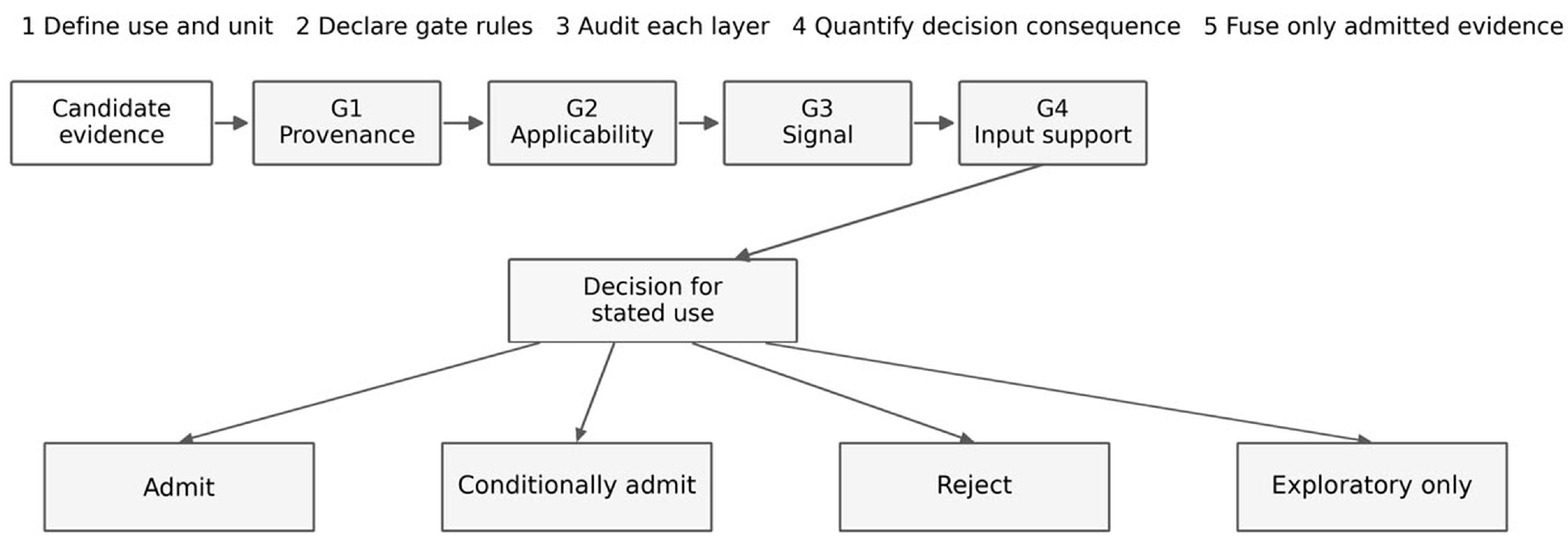
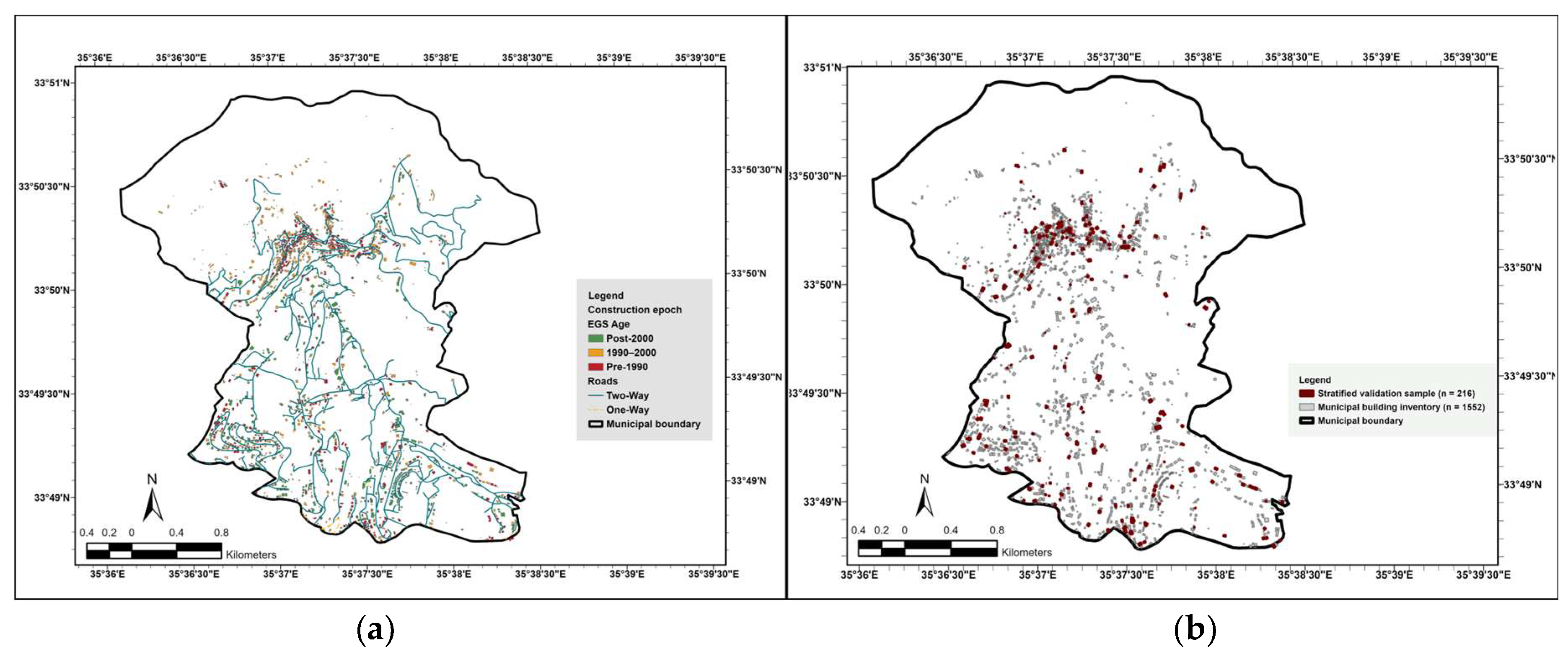
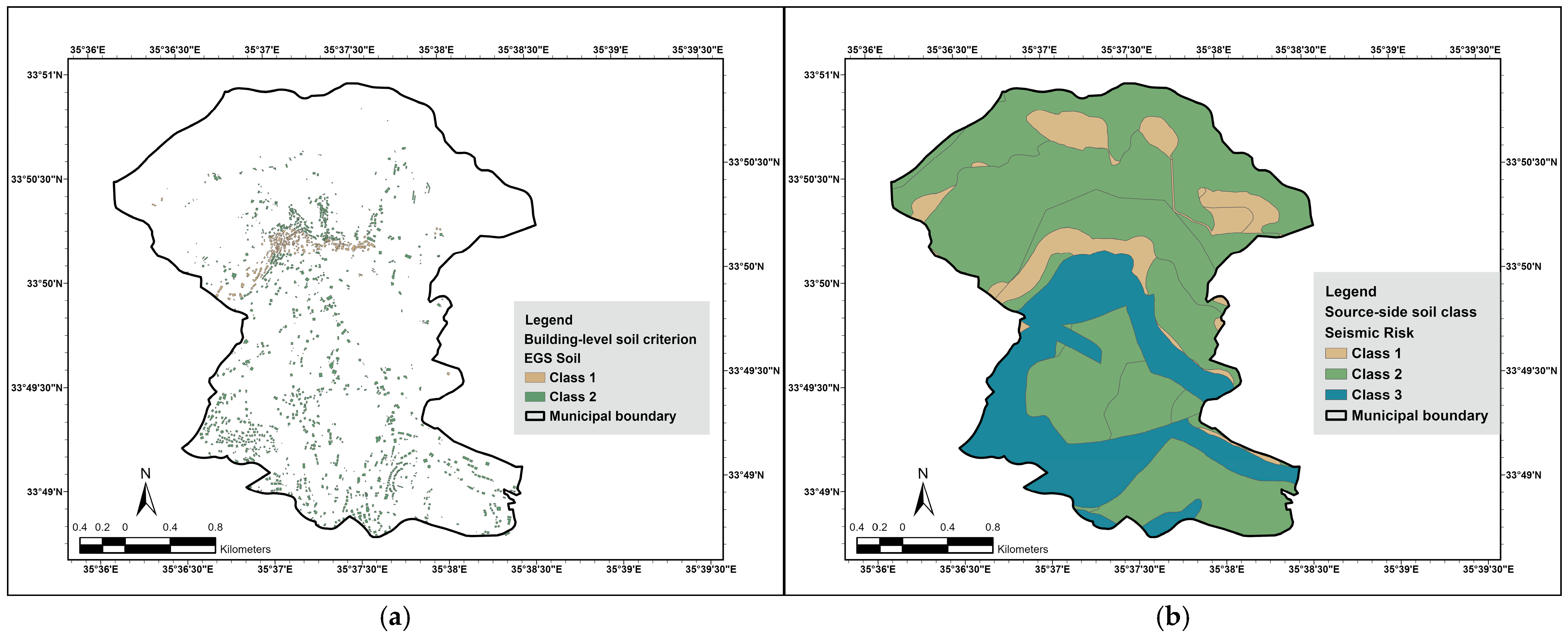
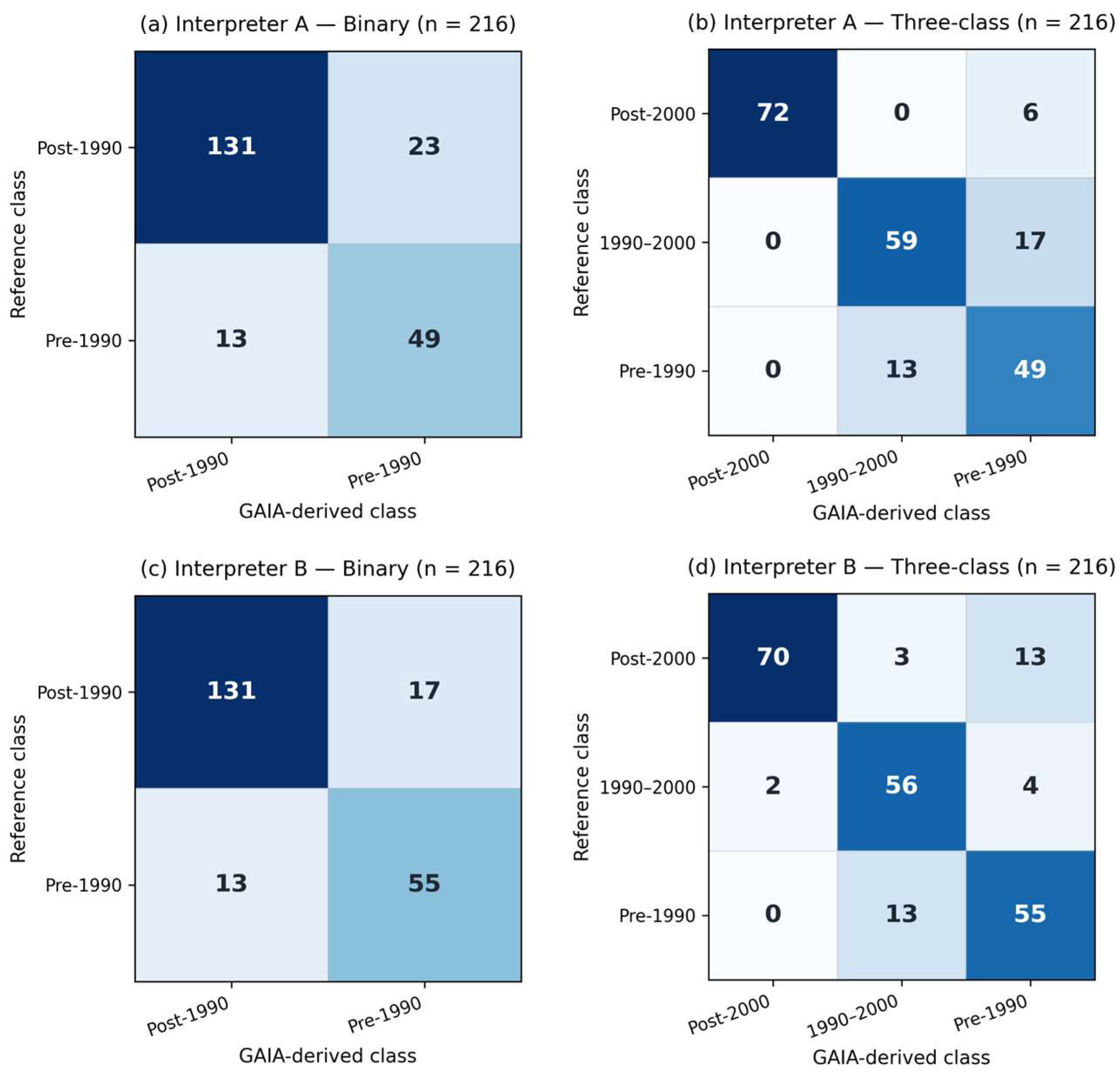
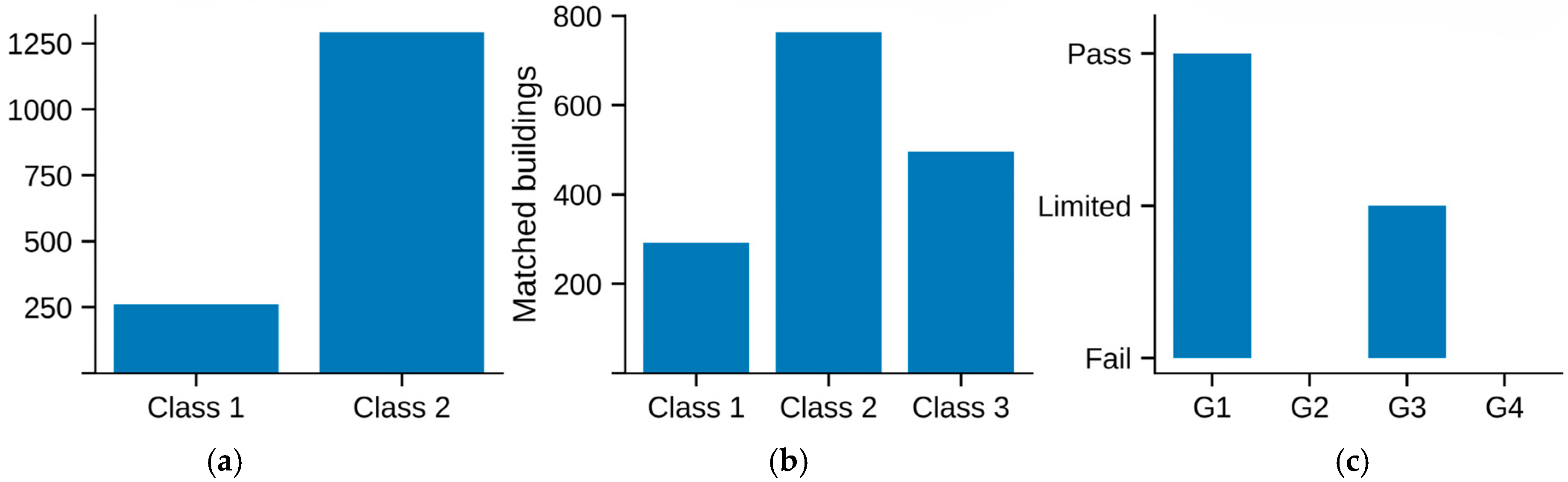
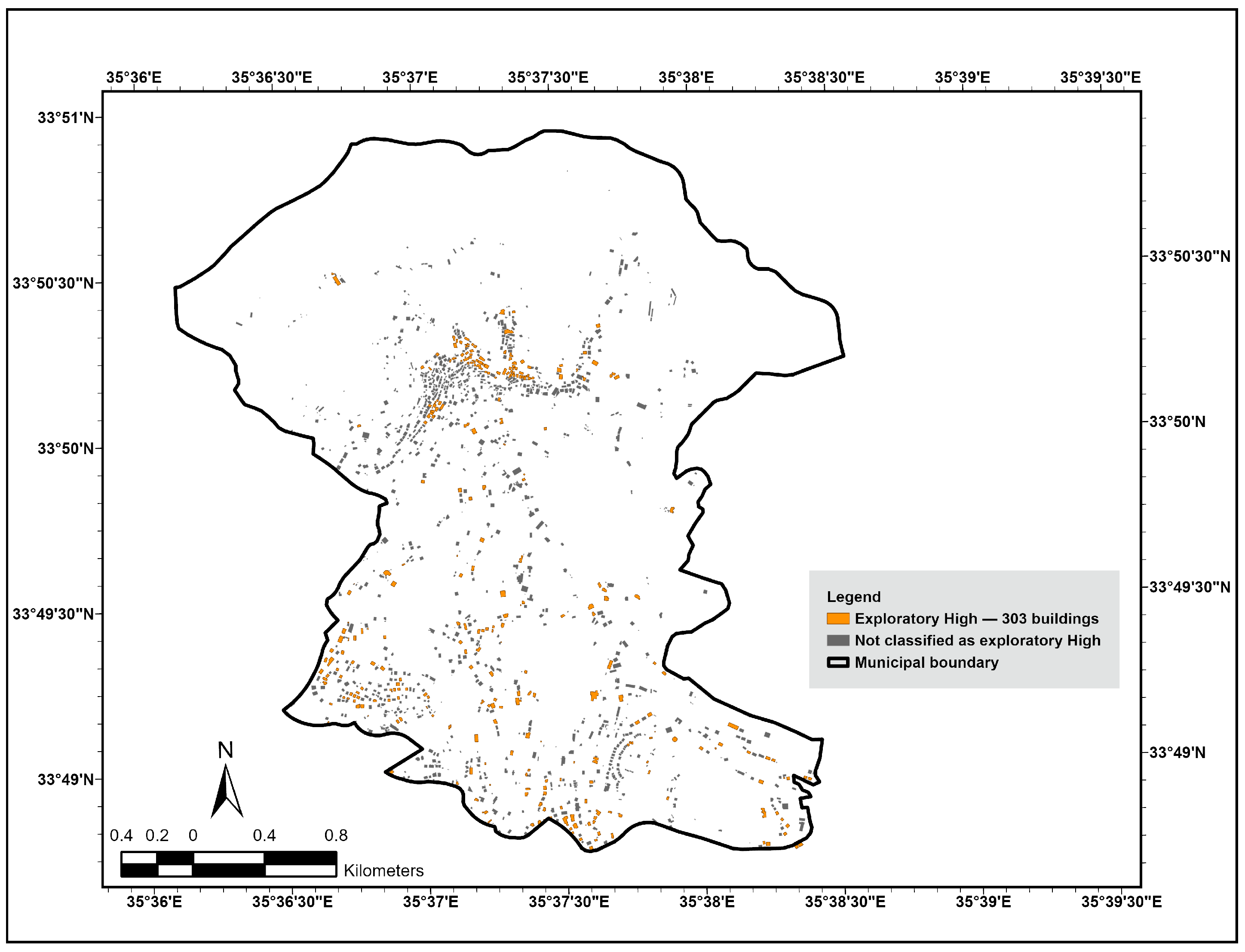
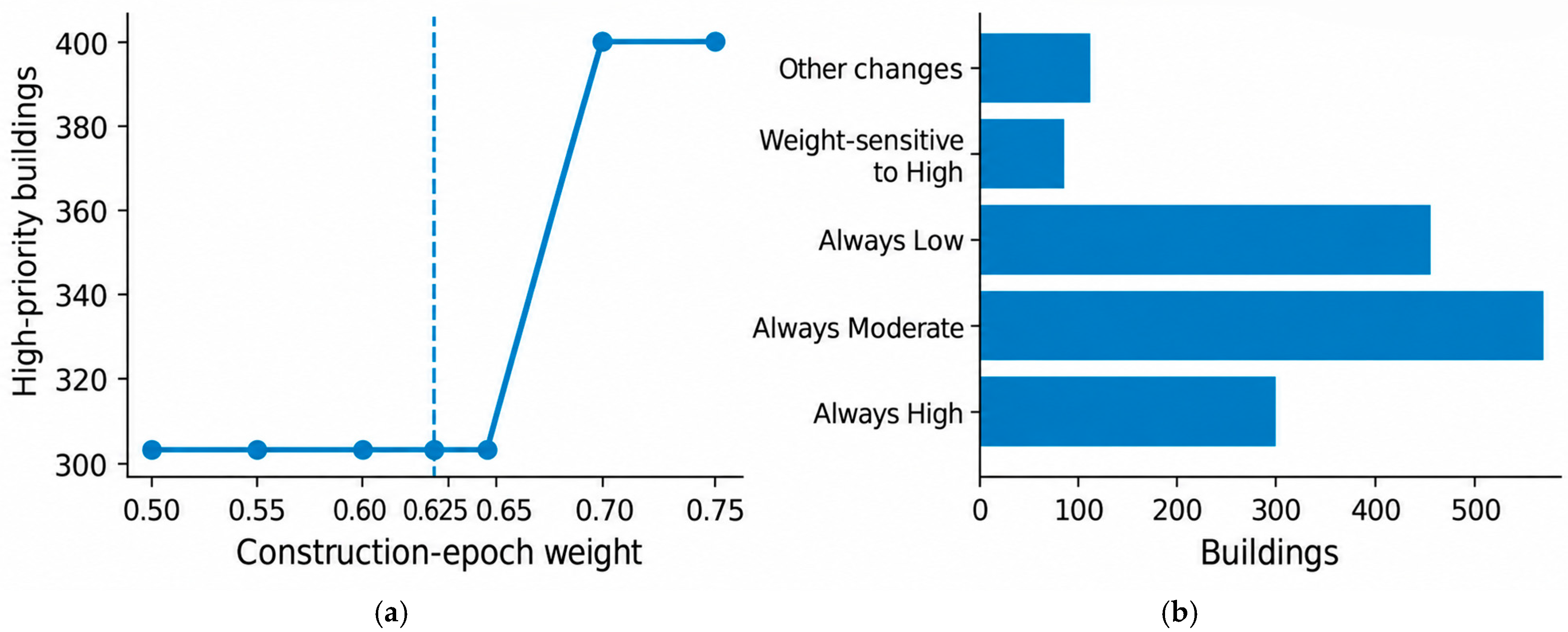
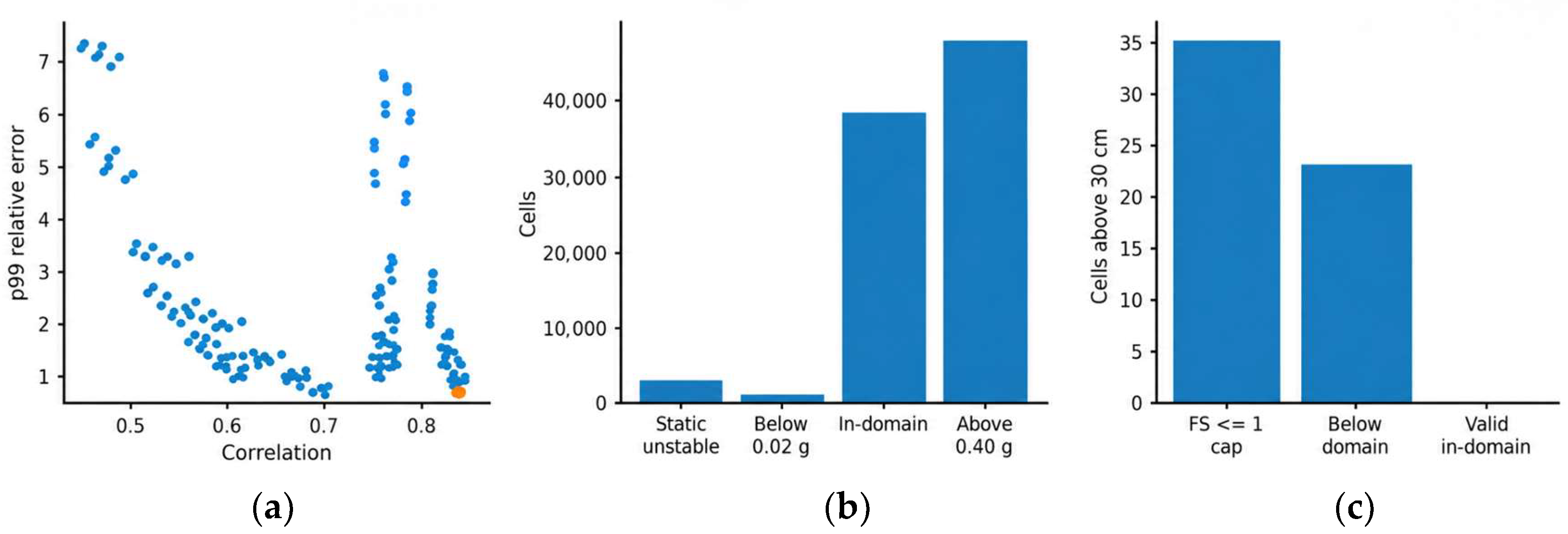
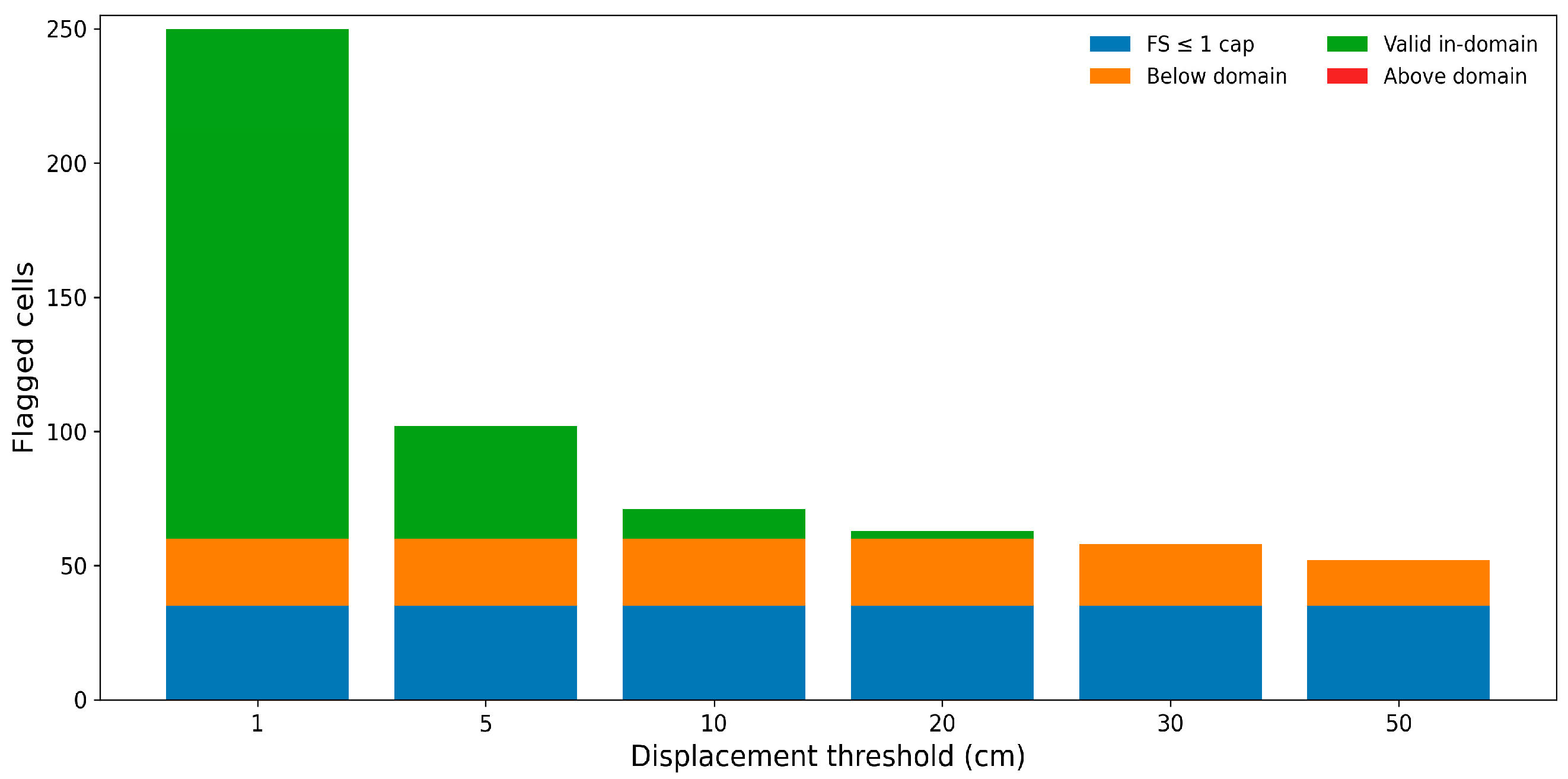
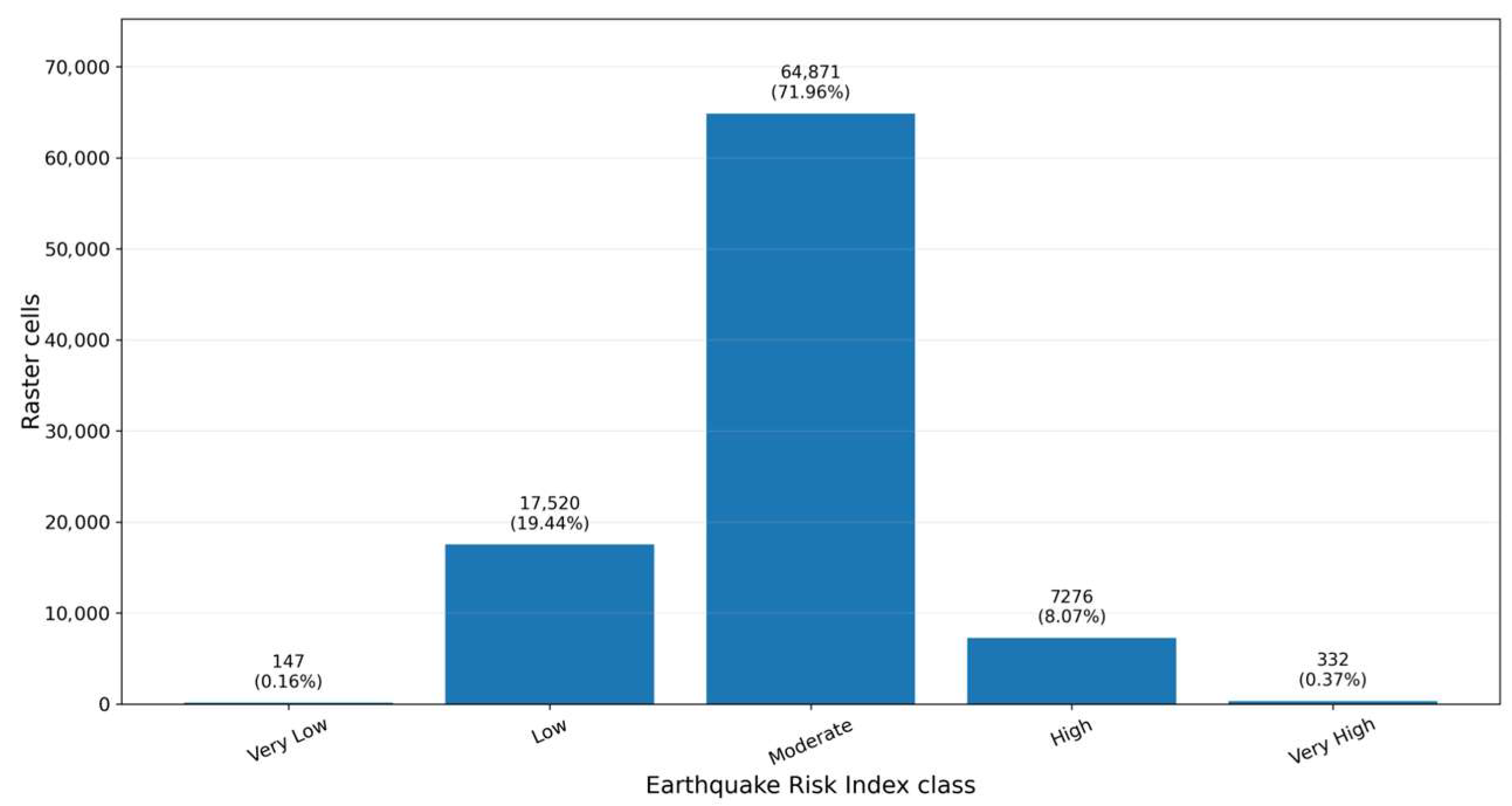
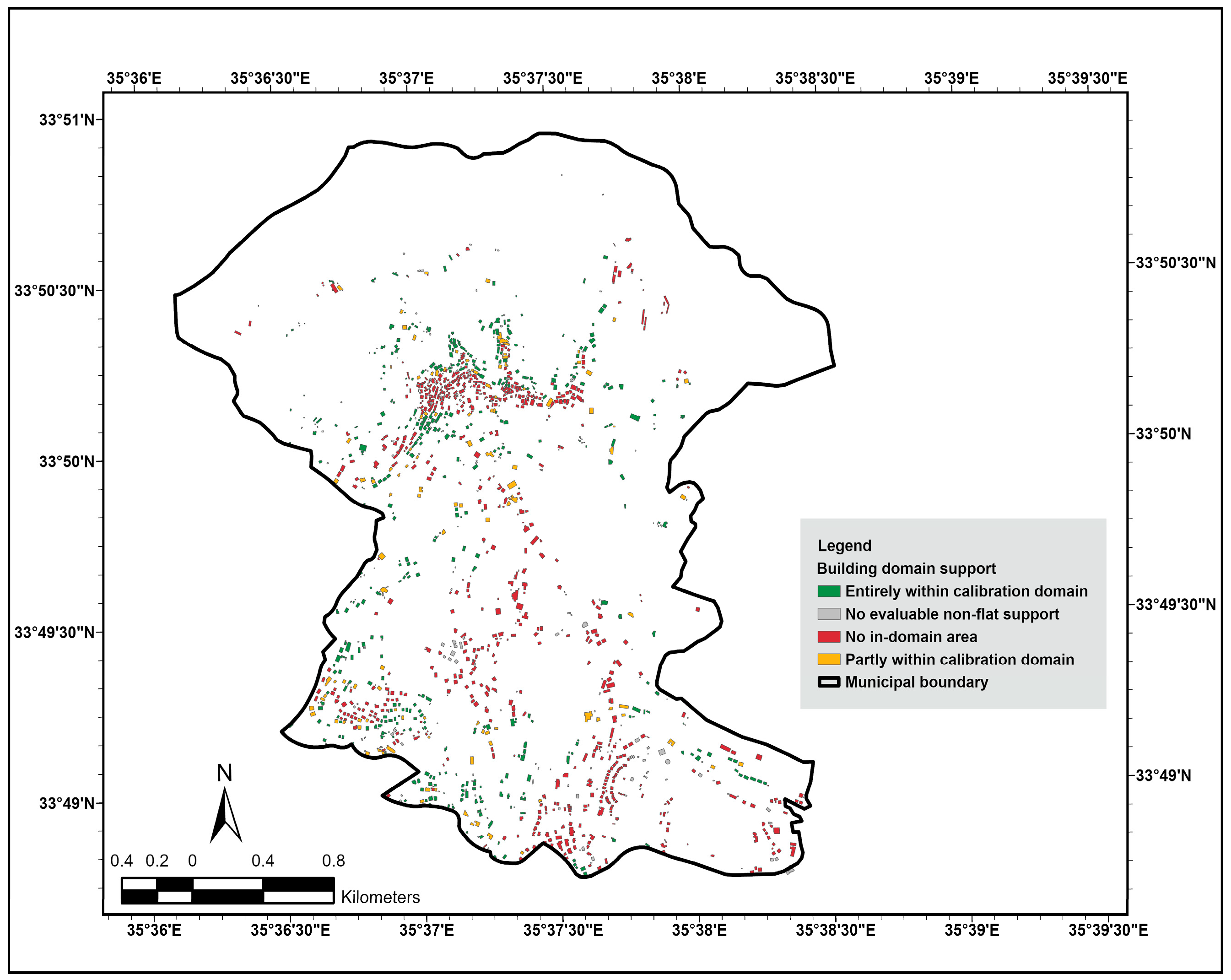
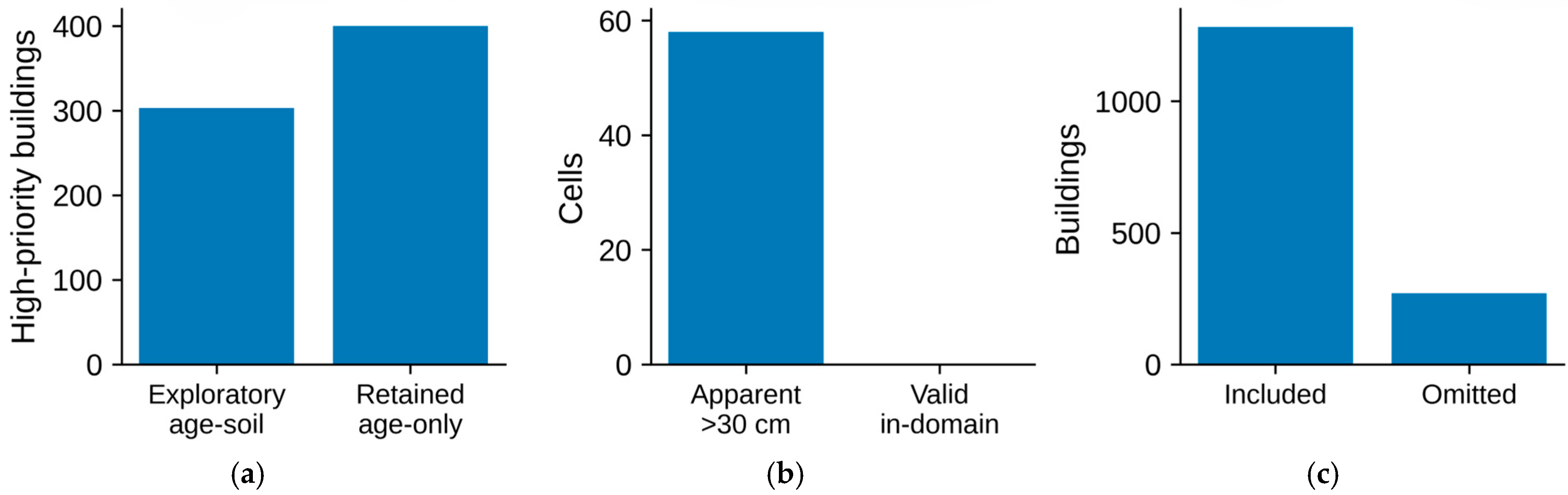
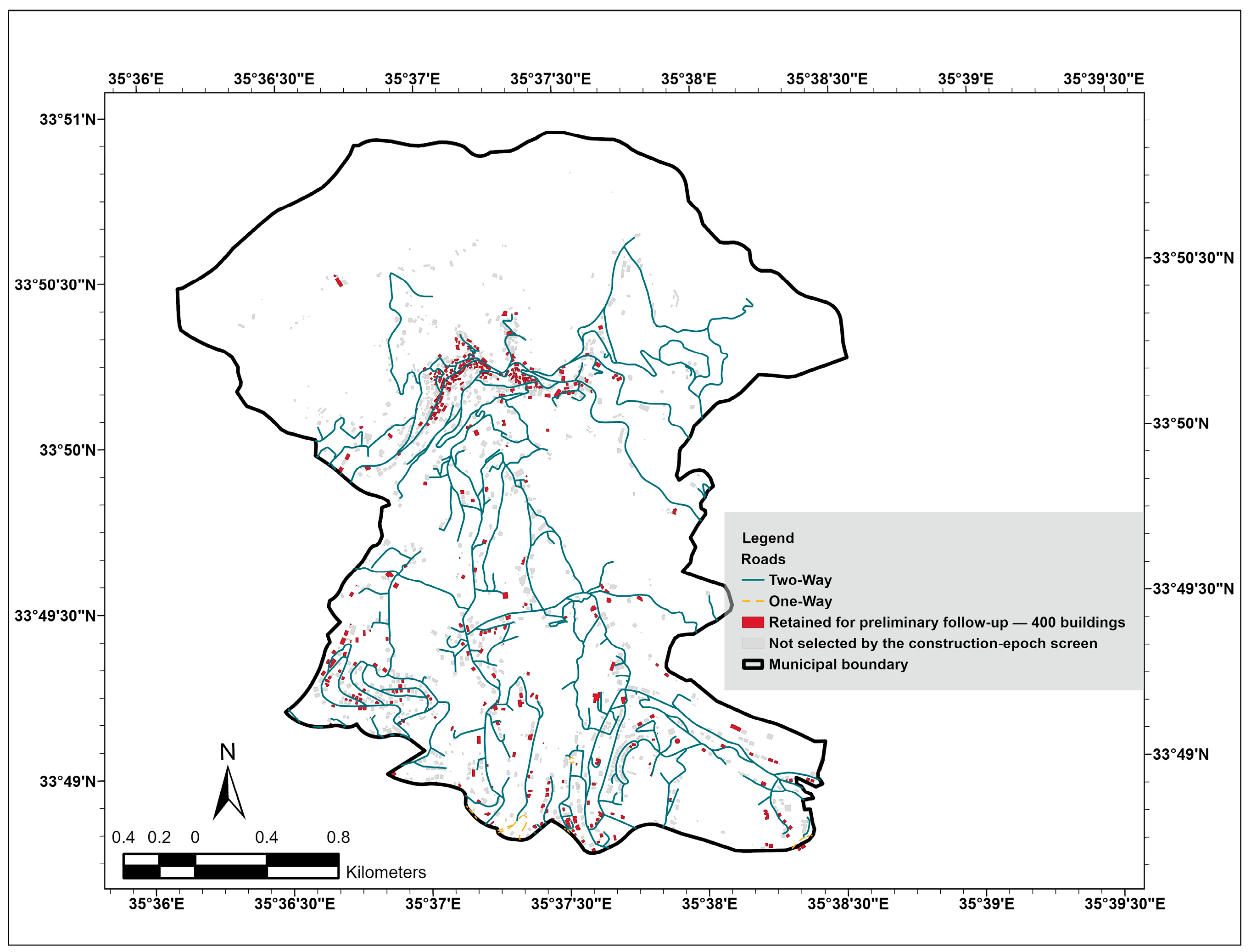
Seismic geospatial decision models can produce misleading outputs without rigorous input validation. Fusion conceals the defect: weight-sensitivity testing on an inadmissible layer reports stability rather than validity. This paper presents Evidence-Gated Screening (EGS), a four-gate framework. It tests computational provenance, applicability, decision-relevant signal, and input support before fusion. EGS audited six candidates for 1552 building footprints in Aabadiyeh, Lebanon: a construction-epoch proxy, two soil products, an exploratory Age-Soil Index, a Newmark displacement raster, and an Earthquake Risk Index. Only the proxy was conditionally admitted. Two interpreters validated it on a stratified probability sample of 216 buildings, giving binary accuracies of 0.833 (0.782–0.880) and 0.861 (0.815–0.907), with κ = 0.832 on the image evidence. The remaining candidates were rejected, including the risk index. Of 87,492 evaluable cells, 56.30% fell outside the stated critical-acceleration domain; raster-to-building transfer omitted 270 footprints. Gating returned a queue of 400 buildings and not the composite’s 303. Four products were assessed by two independent assessors, who agreed on 13 of 16 gates and on all four dispositions: two were conditionally admitted, two rejected. This indicates that EGS can screen out inadmissible inputs before fusion and support building inspection prioritization, but not vulnerability prediction without building-level validation.
Keywords: geospatial evidence admission; spatial data fitness for use; computational provenance; reproducible GIS; multi-criteria decision analysis; spatial decision support; change of support; seismic screening geospatial evidence admission; spatial data fitness for use; computational provenance; reproducible GIS; multi-criteria decision analysis; spatial decision support; change of support; seismic screening