1. Introduction
Natural hazard management relies heavily on hazard assessment, which aims to determine both the spatial and temporal probability of catastrophic events [
1]. This predictive capability is essential for evaluating potential socio-economic impacts and enabling the design of resilient infrastructure and the implementation of proactive mitigation measures [
2].
Among the most frequent and devastating natural hazards globally, landslides pose significant risks to the environment, economic development, and human safety, often resulting in substantial damage to residential property and critical infrastructure [
3,
4,
5]. Driven by complex geological settings and increasing urban development and infrastructure expansion, landslides are becoming more hazardous due to growing exposure and vulnerability [
6]. In addition, the increasing occurrence of extreme climatic events associated with climate change is expected to further intensify landslide frequency and magnitude [
7,
8], presenting an escalating threat to human activities and economic assets.
Landslides are widely spatially distributed across Europe, with their occurrence influenced by various topographic and geo-environmental factors, often dictated by each country’s unique geological, geomorphological, and environmental conditions. In Greece, landslides are predominantly associated with mountainous and hilly areas, road networks, coastal regions, and riverbanks. Specific site conditions, such as lithology, slope, rainfall accumulation, hydrology, and active tectonics, are among the most significant factors in determining landslide susceptibility, hazard and risk status [
9].
While the aforementioned conditions predispose areas to landslides, external triggers serve as the immediate causes of landslide activation. In Greece, the most frequent triggers are related to increasingly extreme weather events, such as intense or prolonged rainfalls, often associated with floods [
10,
11]. Other natural triggers include earthquakes, as well as natural erosion along coastlines and riverbanks [
12,
13]. Human activities also significantly contribute to landslide initiation, as any interference with a slope influences its equilibrium. Since it is anticipated that landslides triggered by extreme rainfall events will increase in the future due to climate change, there is an urgent need for landslide recording, enhanced early warning and monitoring, risk assessment, and predictive capabilities in affected areas to protect communities, infrastructures, and preserve human activities [
14,
15,
16]. However, although these factors describe the general context of landslide initiation across Greece, a country characterized by significant geomorphological variability from east to west, the present study focuses specifically on the regional-scale susceptibility of Epirus. As the region of Epirus is predominantly a mountainous inland area, episodic triggers such as earthquakes and highly localized processes such as coastal erosion were not considered continuous spatial predisposing factors. Therefore, only the most significant and spatially continuous geo-environmental conditioning factors (lithology, slope, elevation, land use, and precipitation) were included in the regional susceptibility model in accordance with the established national-scale susceptibility approaches of Greece [
9].
To address this, landslide inventories and susceptibility maps have been developed in many countries worldwide, including at small-scale European and global levels [
17,
18]. A European Landslide Susceptibility Map is available through the European Soil Data Centre (ESDAC) [
19,
20,
21]. Furthermore, the Global Landslide Catalog (GLC), published in 2019 and incorporating NASA’s landslide datasets along with additional scientific reports, is publicly available online [
22,
23]; however, it requires continuous updating and integration with newly available landslide datasets.
A landslide inventory is defined as a systematic record of the location, classification, volume, activity status, and date of occurrence of landslides [
17,
24]. In Greece, a national landslide inventory has been compiled and published by the Hellenic Survey of Geology and Mineral Exploration (HSGME) [
25]. In addition, a regional Landslide Inventory Platform, named He.L.P. (Hellenic Landslide Platform), is currently under development by the Laboratory of Engineering Geology at the University of Patras, Greece [
26], which provides detailed information on landslide phenomena recorded in the administrative regions of Western Greece, Epirus, and the Ionian Islands.
Recent advancements in computational tools and Geographic Information Systems (GIS) have significantly improved the development of susceptibility models that analyze the interaction between environmental predisposing factors and triggering mechanisms [
18,
27]. These models provide a spatial understanding of where landslides are more likely to occur, which forms the basis for landslide hazard assessment. However, hazard alone does not fully capture the potential consequences of landslides [
28]. Therefore, it is important to distinguish between landslide hazard and risk.
Landslide hazard refers to the probability of occurrence within a specific area and a predetermined period of time [
24,
27,
29], whereas landslide risk quantifies the potential impacts on exposed elements [
24,
29]. Despite the proliferation of susceptibility studies, a significant gap remains in the literature regarding the operational transition from theoretical susceptibility models to actionable risk assessments for specific critical infrastructure in data-scarce regions [
30,
31,
32]. The methodological transition from susceptibility to risk requires a defined intermediate step: the evaluation of landslide hazard. In scenarios where comprehensive multi-temporal landslide data are unavailable to calculate precise return periods, standard methodologies advocate for equating susceptibility to an ‘event-based’ potential hazard by applying a conservative temporal probability of unity (
p = 1). This hazard indicator is subsequently intersected with the weighted vulnerability of exposed assets to compute the final spatial risk.
Any susceptibility or risk analysis requires a comprehensive understanding of both the physical process and the resulting socioeconomic impacts [
33,
34]. To evaluate these components, researchers utilize two primary modeling categories: qualitative and quantitative [
27,
33,
34]. Qualitative models are primarily heuristic, relying on expert judgment, while quantitative models provide a numerical estimate of occurrence.
The current study employs the bivariate Frequency Ratio (FR) [
35,
36], a well-established approach for regional landslide susceptibility mapping [
27,
28,
33]. Although machine learning (ML) and multivariate techniques are widely applied in susceptibility assessments, the FR method was selected due to its robustness, simplicity, and interpretability. Considering the relatively low spatial density of the landslide inventory, the application of more complex algorithms could increase the risk of model overfitting. In addition, the FR approach minimizes the influence of multicollinearity, a common issue in mountainous environments, by evaluating each conditioning factor independently.
Initially, the susceptibility analysis used landslide data from the He.L.P. inventory [
26] and incorporated five conditioning factors: lithology and slope as fundamental intrinsic factors [
37,
38], alongside elevation, land use, and cumulative annual precipitation [
29,
39,
40]. Special emphasis was given to cumulative annual precipitation, which acts as a primary conditioning agent in mountainous environments [
10,
11,
15,
29]. Rainfall data were derived from the ERA5-Land reanalysis dataset [
40,
41], which provides high-resolution meteorological variables by evolving the Copernicus Climate Change Service (C3S) models. The use of reanalysis data is particularly valuable in rugged terrains where ground-based monitoring networks may be sparse or irregularly spaced [
41,
42], ensuring the physical validity of the spatial rainfall distribution.
To address these gaps, the explicit objectives of the present study are:
To develop and statistically validate a comprehensive landslide susceptibility model (LSI) tailored for a vast, data-scarce regional environment, using the operational transparency of the bivariate Frequency Ratio (FR) method.
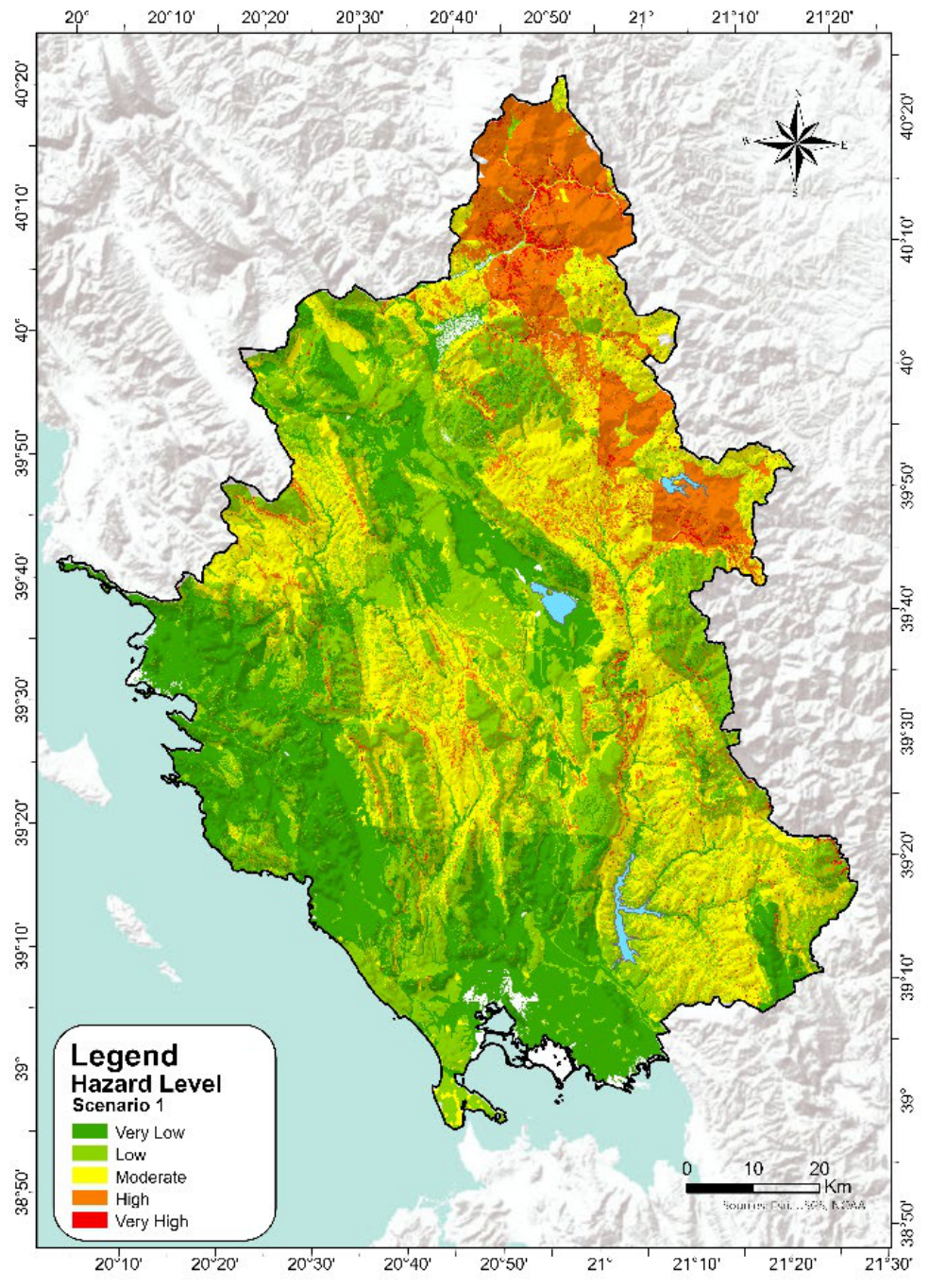
To scientifically transition from the LSI to an event-based Landslide Hazard Index (LHI) by adopting a conservative temporal probability scenario.
To quantify the specific landslide risk imposed on the 4523 km road network of the Epirus Region by integrating the hazard metrics with a functional vulnerability index based on socio-economic importance and traffic load.
Ultimately, this framework aims to provide an integrated spatial decision-support tool to assist regional authorities in prioritizing monitoring and mitigation measures.
In recent years, landslide susceptibility and hazard assessment have evolved significantly with the adoption of advanced data-driven and hybrid modeling approaches. Machine learning techniques such as Random Forest (RF), Support Vector Machines (SVMs), Gradient Boosting, and Artificial Neural Networks (ANNs) have been widely applied to improve predictive accuracy and handle complex, non-linear relationships between conditioning factors and landslide occurrence in several aspects as well as road networks [
43,
44,
45]. These studies highlight the importance of moving beyond static susceptibility mapping toward dynamic, infrastructure-oriented risk assessment frameworks that can support resilient transport planning and maintenance strategies. Comparative studies have demonstrated that while these models often outperform traditional statistical methods in terms of predictive performance, they frequently suffer from reduced interpretability and higher data requirements, which can limit their applicability in operational contexts and data-scarce regions [
18,
33], like the Region of Epirus in Greece. Consequently, there remains a strong interest in transparent and reproducible approaches, such as Frequency Ratio (FR) and other bivariate statistical methods, particularly when the objective is to support decision-making processes in public authorities [
27,
38].
There is still a clear need for methodologies that bridge the gap between regional susceptibility mapping and simplified operational infrastructure management. For this purpose, the current study proposes a comprehensive geospatial framework for landslide risk assessment specifically tailored for regional road networks with limited data. The novelty of the current research lies in the integration of high-resolution Terrain Computational Units (TCUs), defined as the 5 × 5 m grid cells where susceptibility is calculated, with functional road segments acting as Terrain Zoning Units (TZUs). This dual-scale integration allows for detailed prioritization of intervention zones in data-scarce environments. By adopting a conservative, event-based hazard scenario in situations where data on landslide occurrence and repeatability are lacking, this approach provides a robust decision-support tool for regional authorities to enhance road infrastructure resilience. Nonetheless, challenges remain in harmonizing data resolution, capturing temporal landslide occurrence and traffic volume, and translating scientific outputs into actionable tools for regional-scale road infrastructure management.
2. Study Area
The Region of Epirus is located in the northwestern part of Greece, covering an area of approximately 9203 km2, which corresponds to 6.97% of the total area of Greece. Geomorphologically, it is characterized by a highly mountainous relief and an abundance of surface water. The Pindus Mountain range dominates the region, representing the largest mountain range in Greece, with its highest peak reaching 2637 m. Its lowland areas are limited to the regional units of Arta and Preveza, as well as the valleys of the Acheron and Kalamas rivers. Mountainous areas account for 74.2% of the total surface, featuring steep slopes and deep gorges. Regarding the distribution of area across elevation zones, the most mountainous regional unit is Ioannina, followed by Thesprotia. In terms of slope morphology, the highest values are directly associated with the region’s tectonics, erosion processes affecting geological formations, and observed landslide occurrences, and are found in areas dominated by rocky formations (mainly limestones and flysch).
The average annual temperature in the Region of Epirus ranges between 17 and 18 °C. The average annual precipitation ranges from 1000 to 1200 mm in the coastal areas and reaches up to 2000 mm in the mountainous regions. The number of rainy days per year varies between 70 and 120 and is higher in the coastal areas than in the interior of the region. Climatically, Epirus is the most humid region in Greece, influenced by its geographical position and orographic effects and it experiences the highest annual precipitation levels in the country, with rainfall events that are often intense and prolonged.
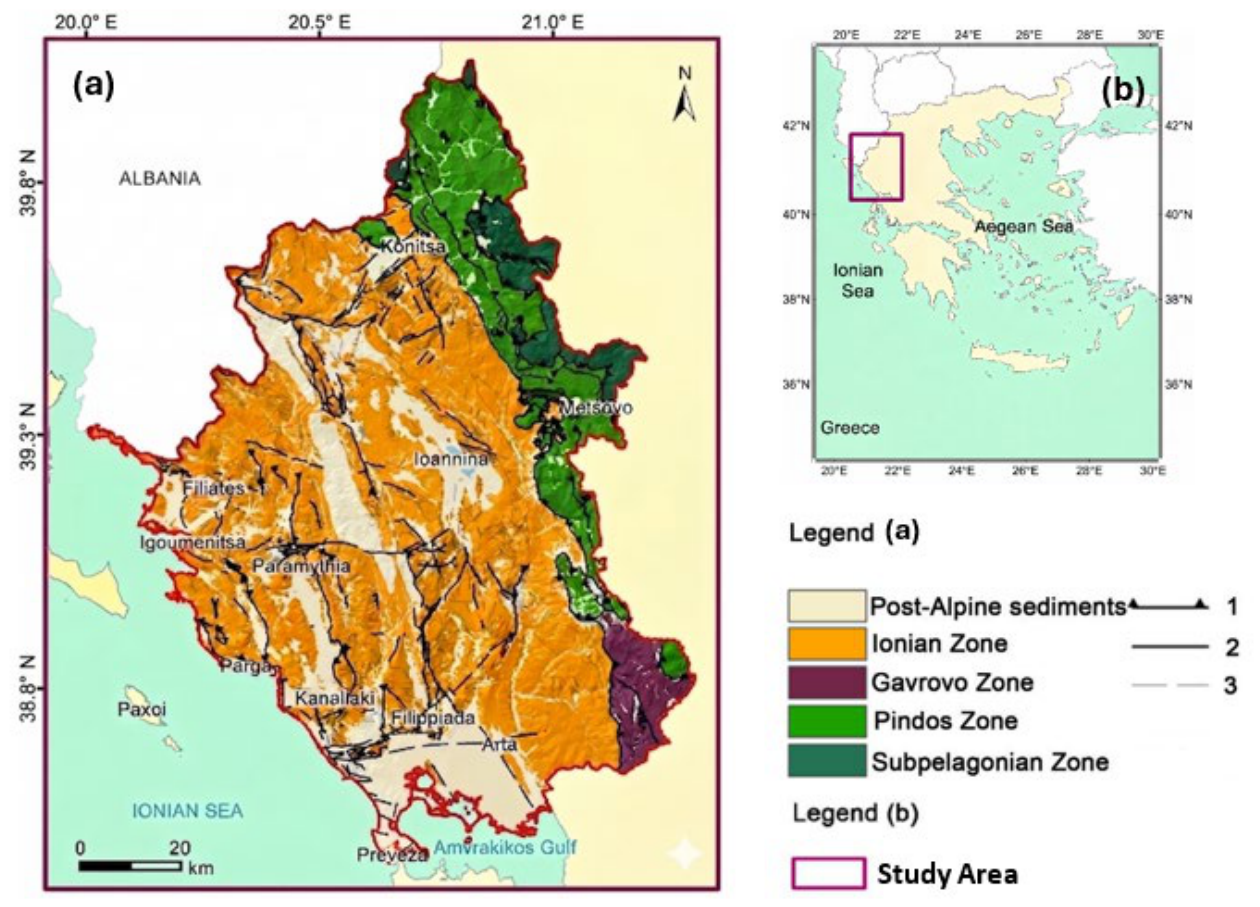
Geologically, the region features a complex structure resulting from Alpine orogenic tectonics and is made up of geological formations belonging to the Subpelagonian, Pindos, Gavrovo, and Ionian Geotectonic Zones as well as post-alpine formations (
Figure 1). The Ionian Zone dominates (percentage by 78%), whereas the geotectonic Zones of Pindos, Gavrovo, and Subpelagonian occupy 12%, 5.6%, and 4.4% of the total area respectively [
46]. The prevailing geological formations consist of Alpine bedrock (extensive flysch formations and limestones), as well as post-Alpine Neogene and Quaternary formations [
47]. These formations are strongly tectonized and are often covered by a weathered zone of varying thickness; consequently, most landslides occur within these formations.
Intense landslide phenomena are mainly observed in the Region of Epirus as a result of its geomorphology, the lithological composition of geological formations (presence of flysch and fractured limestones), the karstification of carbonate rocks, as well as exogenous processes such as climate and human intervention. The intense atmospheric precipitation events, combined with the region’s unstable geological formations and steep topography, act as the primary conditioning factors for landslide phenomena across the regional road network, which spans 4523 km.
3. Data and Methodology
3.1. Landslide Inventory
The landslide inventory used for the purposes of this study as mentioned before is named He.L.P. [
26]. The associated landslide platform draws all its data from this geographic database, and in this way, the end user has access to satellite imagery of the area along with information such as the inventory code, geographical location, coordinates projected at the Hellenic Geodetic Reference System 1987 (GGRS87), type of landslide, and a Landslide Inventory Form (LIF) available as a PDF sheet.
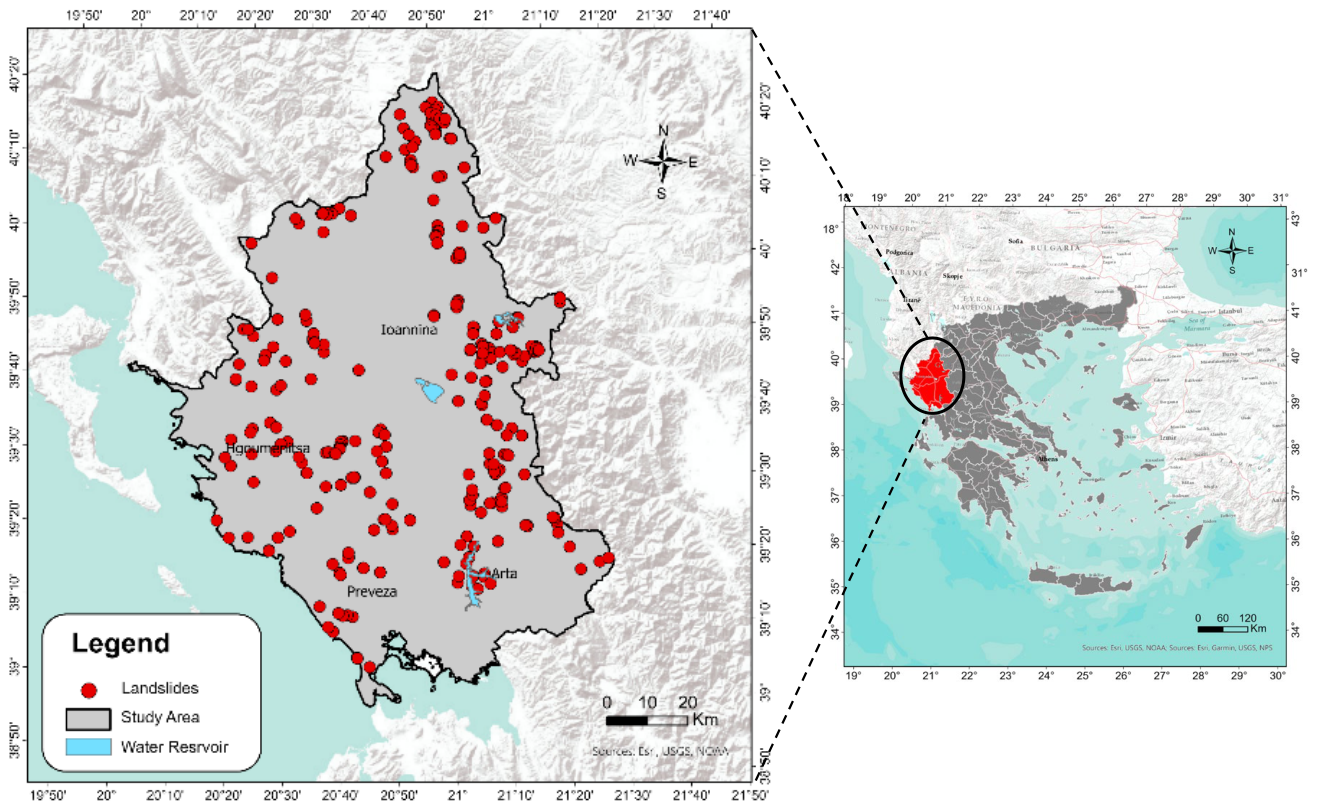
A total of 295 landslides (
Figure 2) were identified in the Region of Epirus and integrated into the database and the He.L.P. platform. It should be noted that the actual number of landslides in the area is higher; however, for the purposes of this analysis, only those landslides that were verified in the field by the research team were considered. The entire dataset of 295 recorded events was utilized to calculate statistical weights and establish the spatial relationship between landslide occurrences and conditioning factors, ensuring that the model captures the full spectrum of geo-environmental conditions. Furthermore, each landslide location was precisely mapped and converted into high-resolution TCUs to match the spatial resolution of the factor layers.
According to most well-known landslide classification systems [
37,
38], the recorded events display a wide range of movement types. Earth and rock flows constitute the most frequent category, accounting for 39% of the total inventory, followed by complex landslides (21%) and rotational slides (15%). It should be emphasized that this classification is presented exclusively to provide a comprehensive descriptive overview of the physical characteristics of the recorded events. These kinematic typologies do not constitute spatial conditioning factors for statistical susceptibility modeling. Instead, the inventory is analyzed holistically to assess the overall spatial propensity of the terrain to mass movements, ensuring statistical robustness while providing a unified decision-support tool for regional civil protection.
In addition to the primary inventory of 295 landslides used for model training, an independent dataset of 126 landslide events was integrated into the study to mitigate potential sampling bias and ensure the quantitative reliability of the spatial analysis. This secondary inventory was obtained from the official database of the Hellenic Survey of Geology and Mineral Exploration (H.S.G.M.E.) and was strictly reserved for the external validation of the predictive models.
3.2. Landslide Conditioning Factors
The susceptibility analysis incorporated five conditioning factors: lithology and slope as fundamental intrinsic factors, alongside elevation, land use, and cumulative annual precipitation.
3.2.1. Lithology
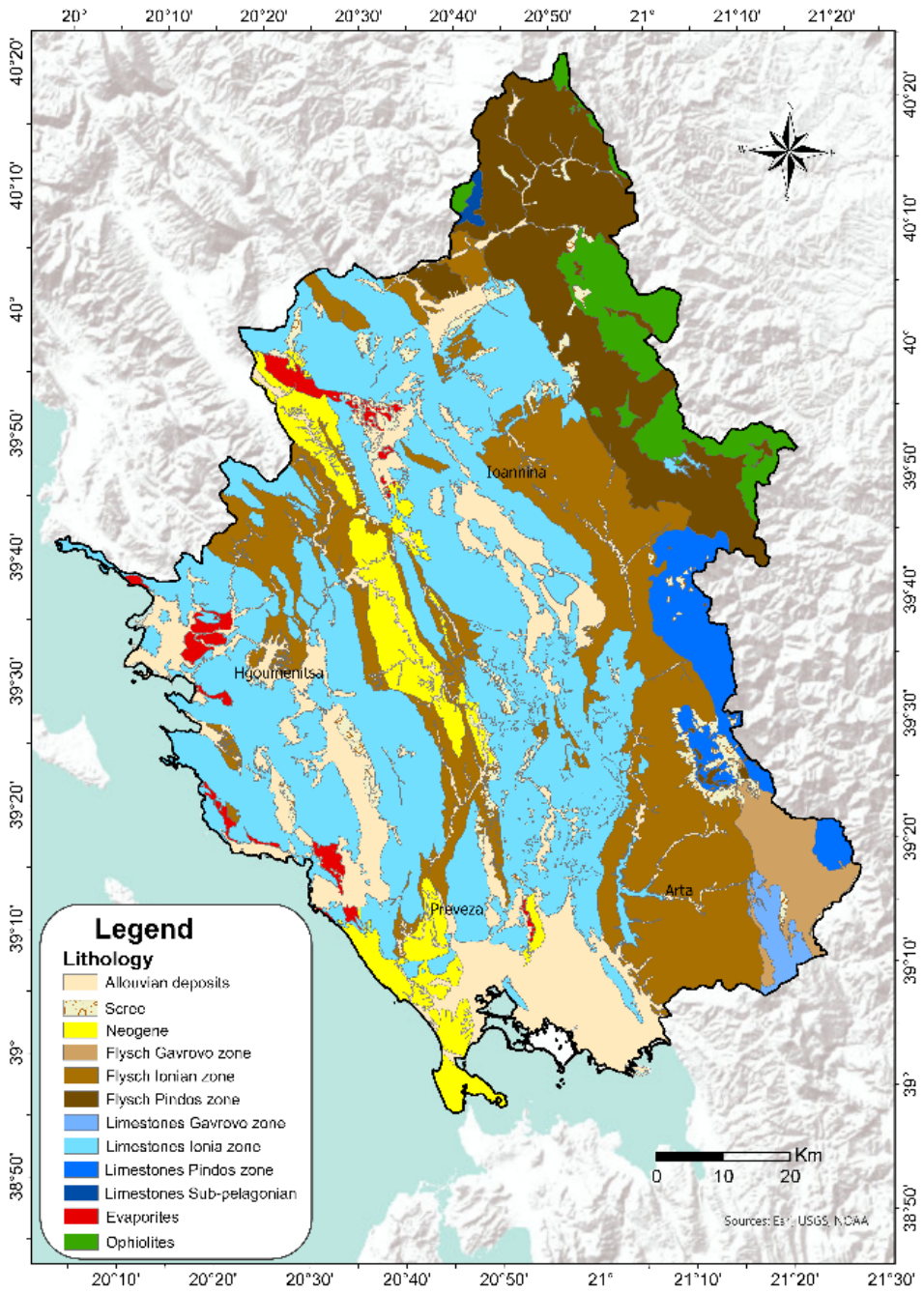
For susceptibility assessment, the geological background constitutes a fundamental factor, depending on the scale of analysis. In the present study, a geological/lithological map of the study area at a scale of 1:50,000 was used as the primary baseline dataset (
Figure 3). This map was compiled by the Laboratory of Engineering Geology at the University of Patras using Geographic Information Systems (GIS) techniques [
26], based on the digitization of geological maps provided by the Hellenic Survey of Geology and Mineral Exploration (HSGME) [
25].
Twelve (12) generalized geological formations are illustrated in
Figure 3, corresponding to the lithological classes adopted for the purposes of the present study (
Table 1).
3.2.2. Slope
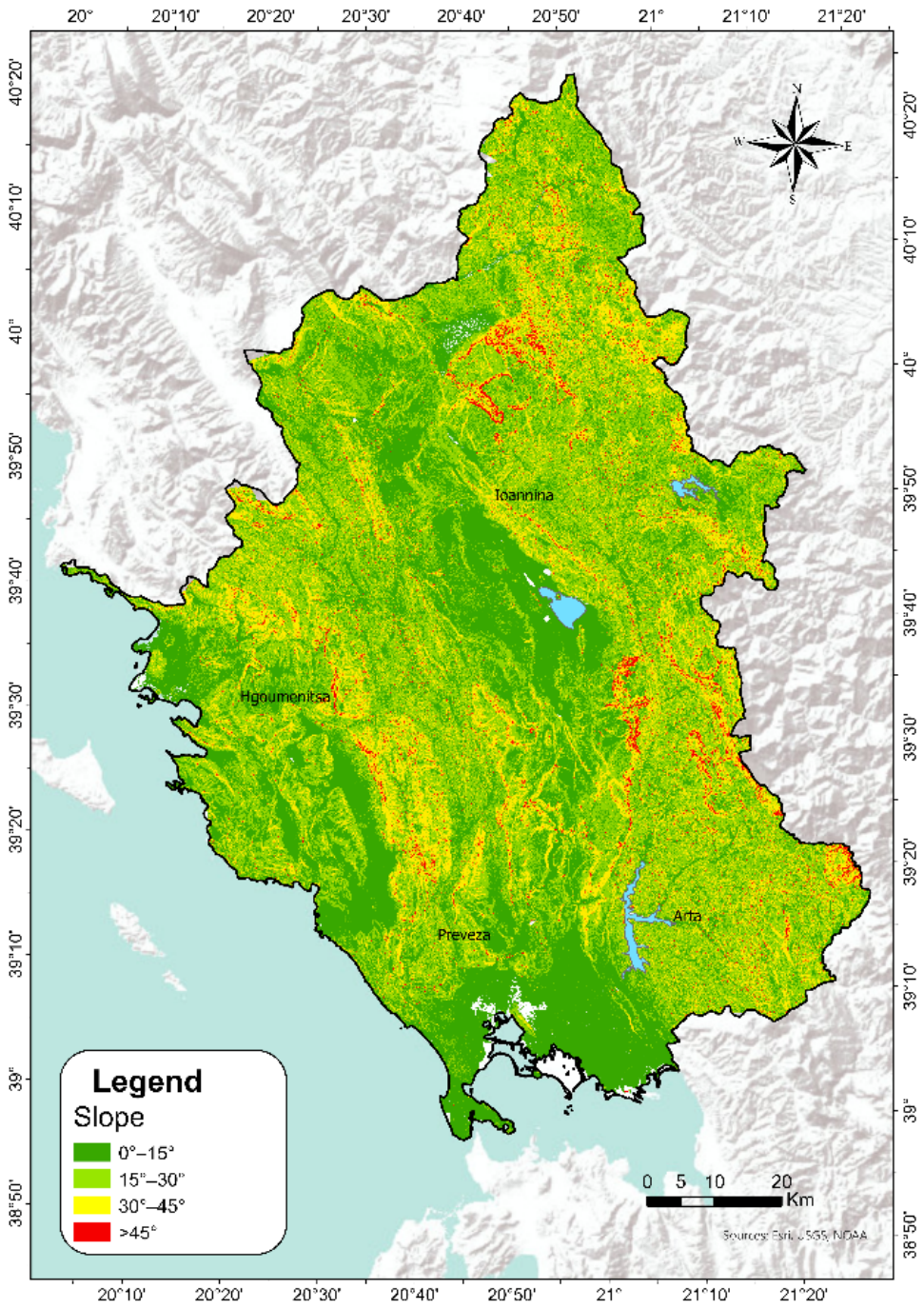
The slope factor refers directly to surface inclination and was calculated using a high-resolution (5 × 5 m) Digital Surface Model (DSM) provided by the Greek Cadastral for the study area (
Figure 4). The slope classes selected for the construction of the map presented in
Figure 3 were defined using a constant interval of 15°, specifically: 0–15°, 15–30°, 30–45°, and >45°. The selection of these intervals was based on: (a) the calculated standard deviation and the maximum slope value, (b) the slope limits proposed by the Hellenic Technical Specification ELOT TP 1501-02-02-01, and (c) the fact that slope values follow an approximately normal distribution across the four resulting classes [
48]. This classification approach is consistent with established cartographic methods for landform analysis and landslide susceptibility modeling [
18,
48].
3.2.3. Elevation
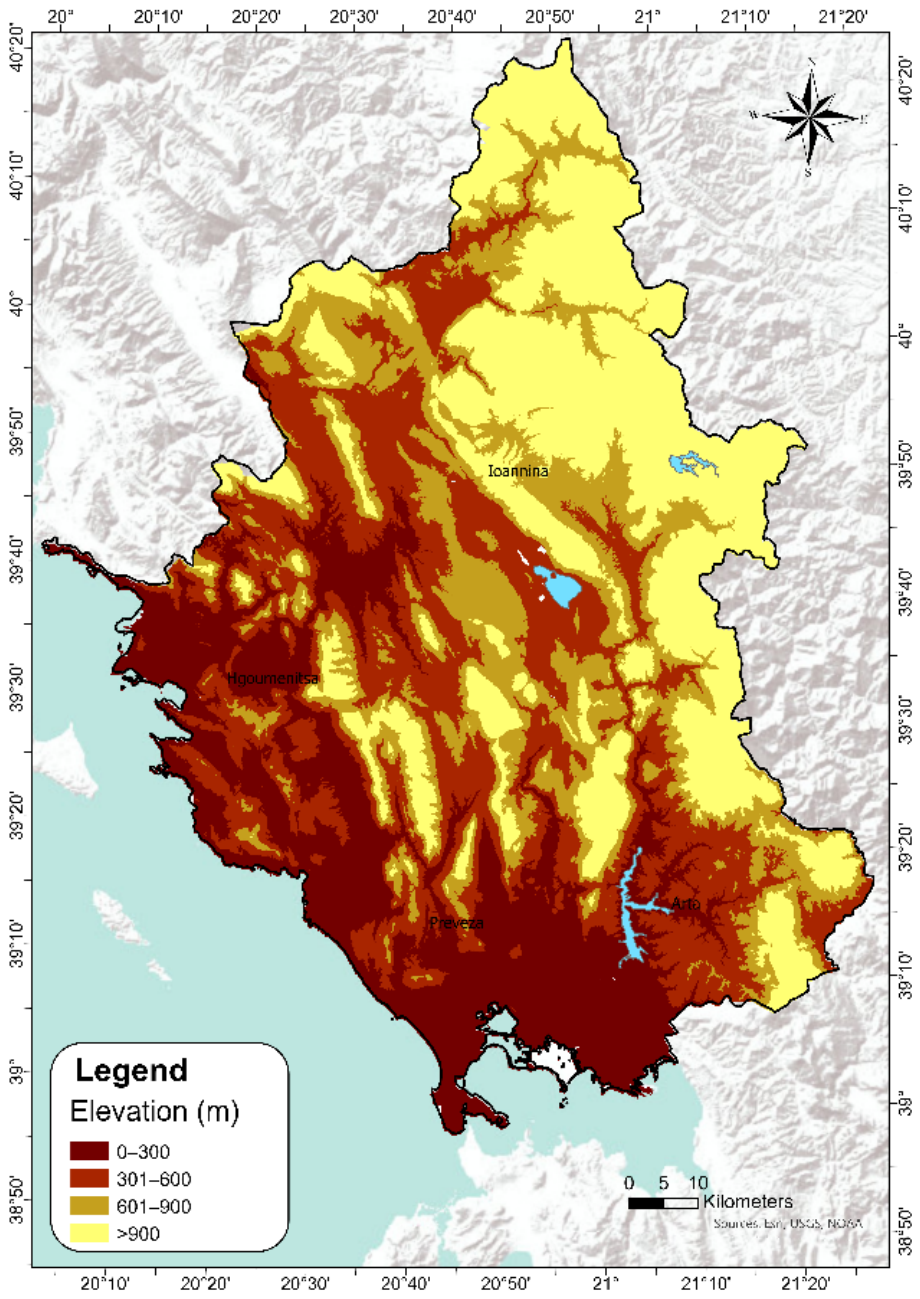
Elevation data were derived from the high-resolution (5 × 5 m) Digital Surface Model (DSM) provided by the Greek Cadastral. Within the study area, the maximum observed elevation reaches 2629 m, while the mean elevation is 692.15 m.
For the purposes of susceptibility analysis, it was necessary to establish elevation classes covering the entire study area. According to the Hellenic Statistical Authority, Greece is divided into the following altitudinal zones: Lowland (0–400 m), Semi-mountainous (400–600 m), and Mountainous (>600 m). However, this classification was considered too coarse for the objectives of the present study. Consequently, the categorization adopted by the Civil Protection Directorate and the Hellenic National Meteorological Service (HNMS) for issuing Severe Weather Warnings was applied (
Table 2), in accordance with the HNMS altitudinal zone definition [
49].
In the Digital Elevation Map (DEM) of the Region of Epirus, the distinction between high- and low-altitude areas is clearly illustrated through color gradation. The highest elevations are observed along the Pindos mountain range, whereas the lowest altitudes are primarily located in the western and southern parts of the study area (
Figure 5).
3.2.4. Land Use
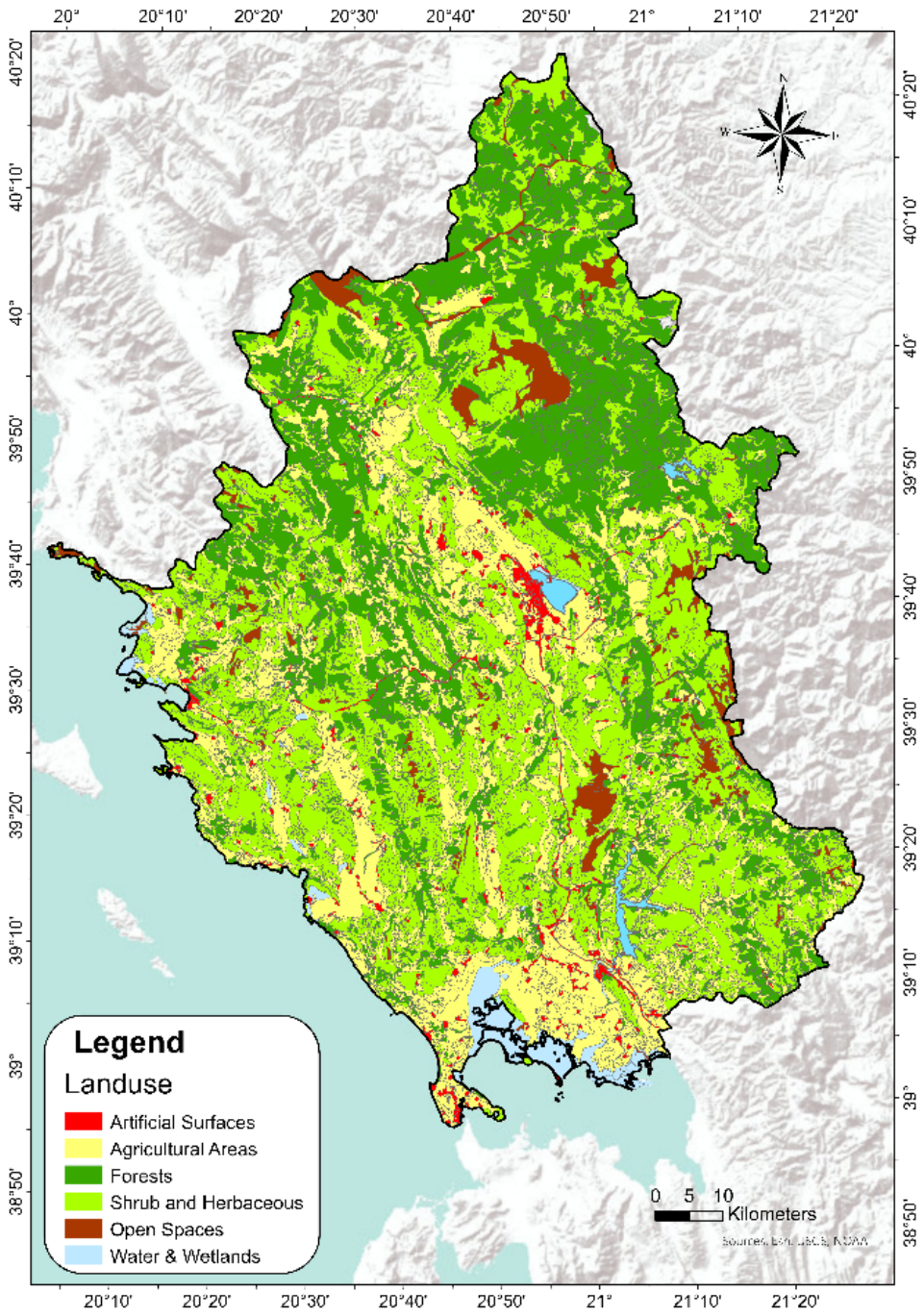
Land use classification was performed based on the CORINE Land Cover 2018 inventory, which forms part of the pan-European land cover database [
39]. This program provides standardized land use and land cover mapping for several European countries, including Greece, at a spatial scale of 1:100,000.
Within the study area, a total of six (6) aggregated land cover categories were identified as presented in
Table 3 and
Figure 6. The integration of these categories into the susceptibility model allows for the assessment of how different vegetation types and human activities affect the spatial distribution of landslide events [
18,
29].
3.2.5. Cumulative Annual Precipitation
Hourly reanalysis data for the period from 1 January 1980 to 1 June 2024 were retrieved from the ERA5-Land dataset [
40,
41]. The extraction was performed automatically using the Copernicus Climate Data Store (CDS) API [
40] through an official Python 3.14 script. The data were downloaded in NetCDF format for a spatial domain covering latitudes 38.6–40.7° N and longitudes 19.5–21.9° E, encompassing the study area in Western Greece.
To ensure consistent temporal aggregation and precise location-specific outputs, the Inverse Distance Weighting (IDW) interpolation method was applied [
42] to provide a continuous rainfall surface. The hourly dataset was resampled into daily, monthly, and annual intervals. Precipitation totals were accumulated and averaged to represent mean climatological conditions. Each resampling operation generated a new NetCDF file, ensuring that all vital metadata were preserved throughout the process.
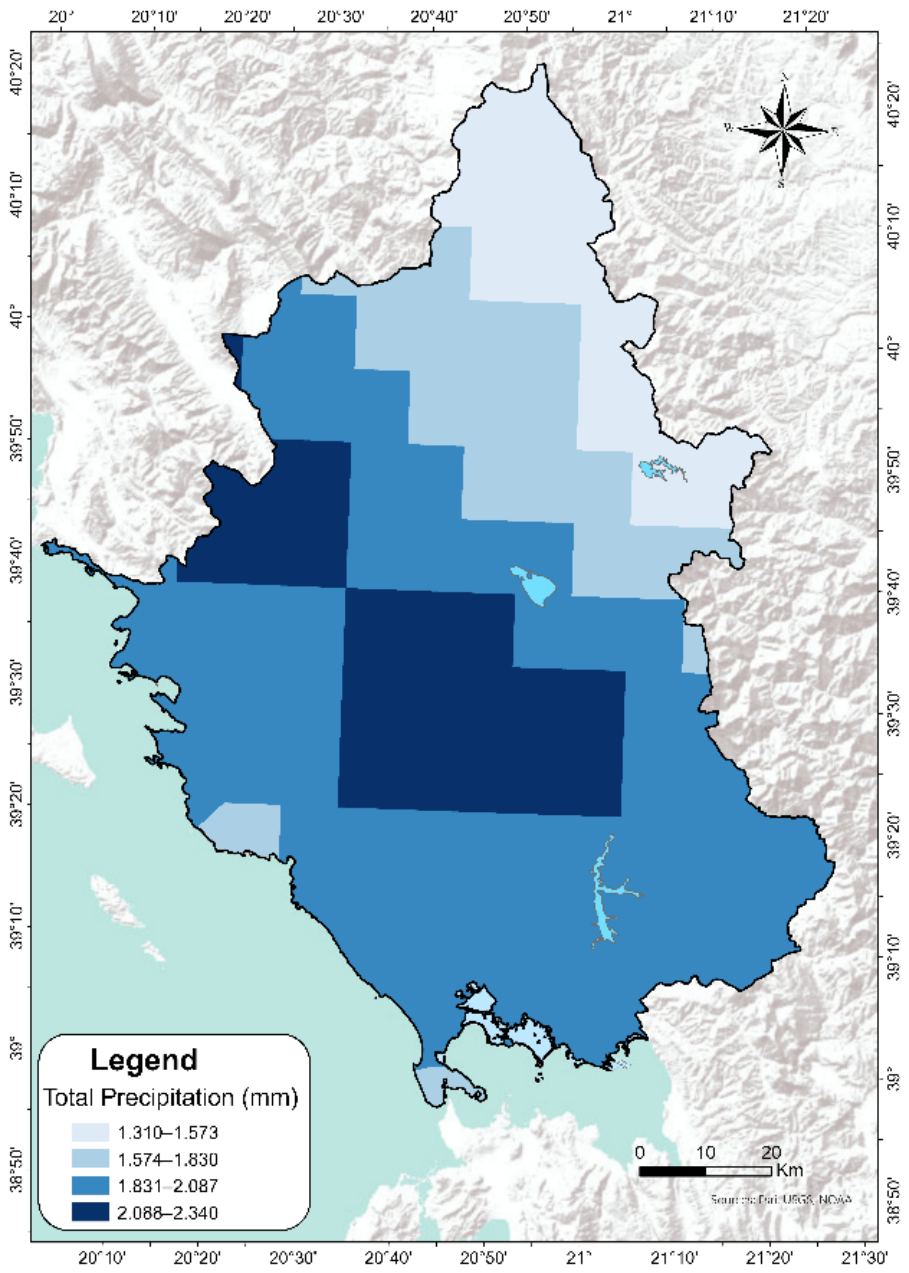
The final geospatial analysis was conducted within a GIS environment, leading to the generation of the cumulative annual precipitation map (
Figure 7). The spatial data were classified into four (4) distinct categories using the Equal Interval classification method [
48]. This approach divides the range of attribute values into equal-sized sub-ranges, providing a clear and objective representation of rainfall precipitation magnitude and its spatial distribution across the Epirus region.
While high-intensity rainfall events are recognized as immediate triggers for slope failure in Greece, this study utilizes cumulative annual precipitation to characterize the long-term environmental conditioning of the slopes. At a regional study and medium mapping scale (e.g., 1:50,000), annual totals serve as a more stable proxy for the hydrologic regime and groundwater recharge patterns. This is particularly relevant for the flysch-dominated terrains of Epirus, where landslide activity is often driven by the progressive increase in pore-water pressure and the deep-seated saturation of the weathered mantle. By utilizing annual averages, the framework identifies areas where the climatic regime consistently ‘primes’ the landscape for instability, ensuring a more representative susceptibility model than would be possible with spatially discontinuous, event-based data.
3.3. Methodological Framework
The methodology implemented in this research initially involves the integration of all landslide predisposing factors (lithology, slope, elevation, land use, and cumulative precipitation), in the form of raster maps as previously described, with the use of Geographic Information System (GIS).
The implementation of the geospatial framework follows the concept of scale-dependent terrain units for regional zoning [
50,
51]. The study area was discretized into Terrain Computational Units (TCUs), defined as 5 × 5 m regular grid cells, to ensure a high-resolution analysis of the environmental factors. To achieve spatial homogeneity, input layers with different original resolutions, such as the 9 km ERA5-Land precipitation data, were resampled to the 5 m TCU resolution using GIS-based interpolation algorithms [
51,
52]. These computational results were subsequently aggregated into Terrain Zoning Units (TZUs) corresponding to functional road sectors for the final risk assessment.
To quantify the relationship between these factors and the spatial distribution of landslides within the TCUs, a bivariate statistical approach, namely, the Frequency Ratio (FR) method, is adopted. The spatial distribution of recorded landslides is used as the dependent variable in the FR model. This enabled the correlation of historical landslide occurrences with the five predisposing factors, thereby facilitating the quantification of landslide susceptibility across the territory.
The final degree of landslide susceptibility is determined using the Landslide Susceptibility Index (LSI), a dimensionless quantitative indicator that expresses the relative likelihood of landslide occurrence in a given area based on predisposing environmental factors. The LSI represents the relative spatial probability of landslide occurrence, derived from the weighted combination of conditioning factors and historical landslide data, without considering temporal probability or potential consequences (damage or losses) [
18,
21].
In the absence of a comprehensive multi-temporal inventory required to calculate precise return periods or exceedance probabilities, this study adopts a conservative approach by assuming a temporal probability of unity (
p = 1). The assumption that the temporal probability (P) equals one is a standard methodological simplification in regional landslide risk assessments when historical frequency data is insufficient to calculate return periods [
27,
53]. In this framework, the Landslide Susceptibility Index (LSI) is treated as a proxy for the Landslide Hazard Index (LHI), representing a “potential hazard” or “event-based” hazard scenario [
24] and is considered equivalent to the Landslide Hazard Index (LHI). This consideration shifts the analytical focus from the temporal ‘when’ to the spatial ‘where,’ effectively modeling a ‘worst-case’ scenario based on the inherent susceptibility of the terrain.
In this context, the Element at Risk is specifically defined as the road network of Epirus, which constitutes the most critical infrastructure exposed to potential slope failures [
9,
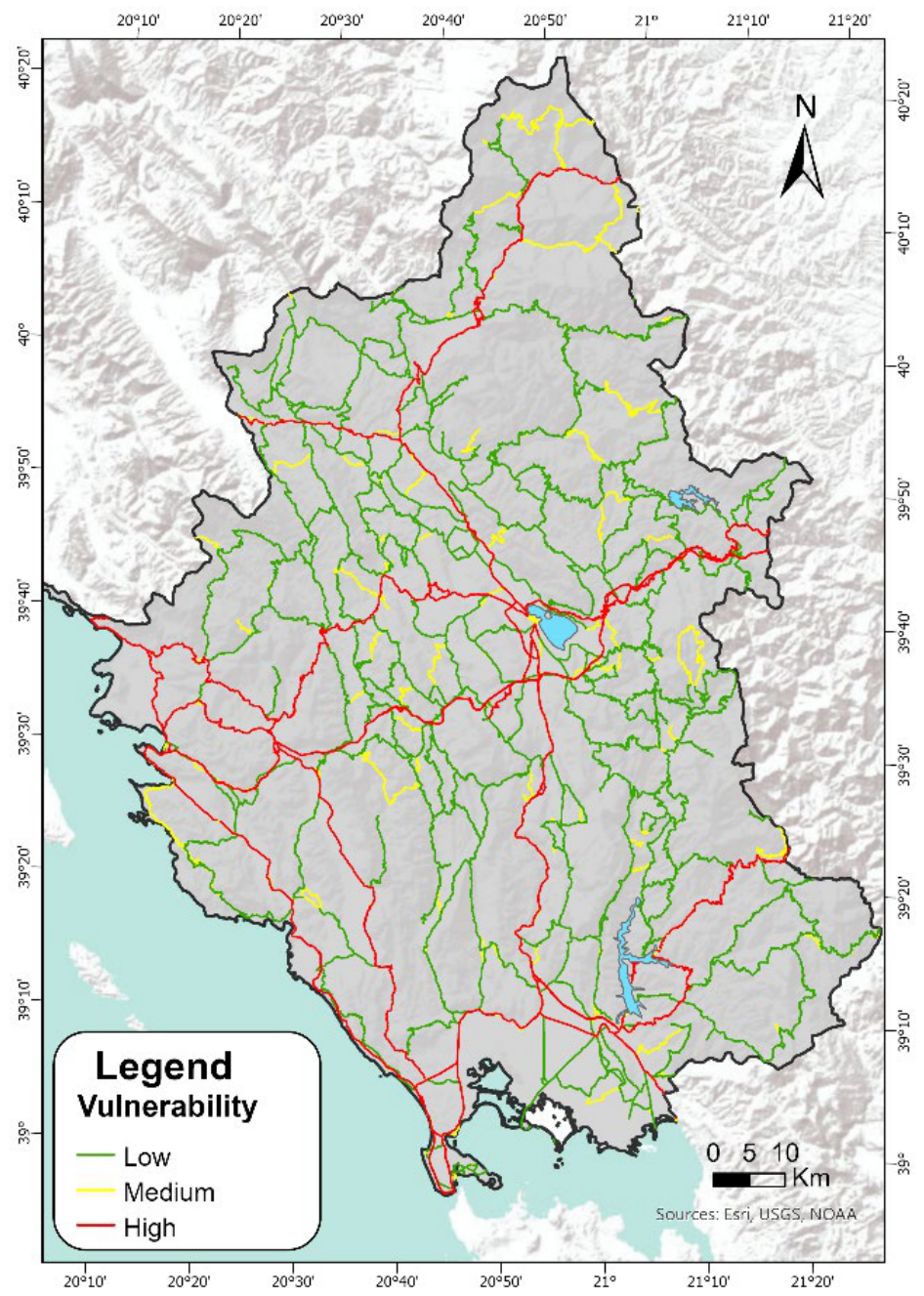
14]. To assess the impact, the Vulnerability of the network is quantified based on its traffic load, reflecting the socio-economic importance and the volume of daily commuters exposed. This vulnerability is assigned a discrete three-weight ranking system (1–3), where the weights reflect a semi-quantitative hierarchy based on the functional importance and average daily traffic (ADT) of the Greek road network. Weights 3, 2, and 1 correspond to National (strategic/high volume), Provincial (regional connectivity), and Local (low volume) roads, respectively, aligning with the prioritization standards used by the Greek Ministry of Infrastructure and Transport.
The final stage of the methodology involves the quantification of landslide risk by integrating the three primary components: Hazard, Exposure, and Vulnerability [
24,
33,
34]. In this research, the landslide risk assessment is executed through a geospatial multiplication process in a GIS environment, following the comprehensive risk equation (Equation (1)):
To address the spatial variability of the exposed assets, the ‘Element at Risk’ is not treated as a static regional constant. Instead, the 4523 km2 road network is discretized into high-resolution functional segments, functioning as Terrain Zoning Units (TZUs). By intersecting these segments with the high-resolution Terrain Computational Units (TCUs), the risk equation (Equation (1)) effectively quantifies a spatial risk gradient. This allows the framework to capture how risk fluctuates along the infrastructure based on the local hazard intensity and the functional importance of each specific road sector.
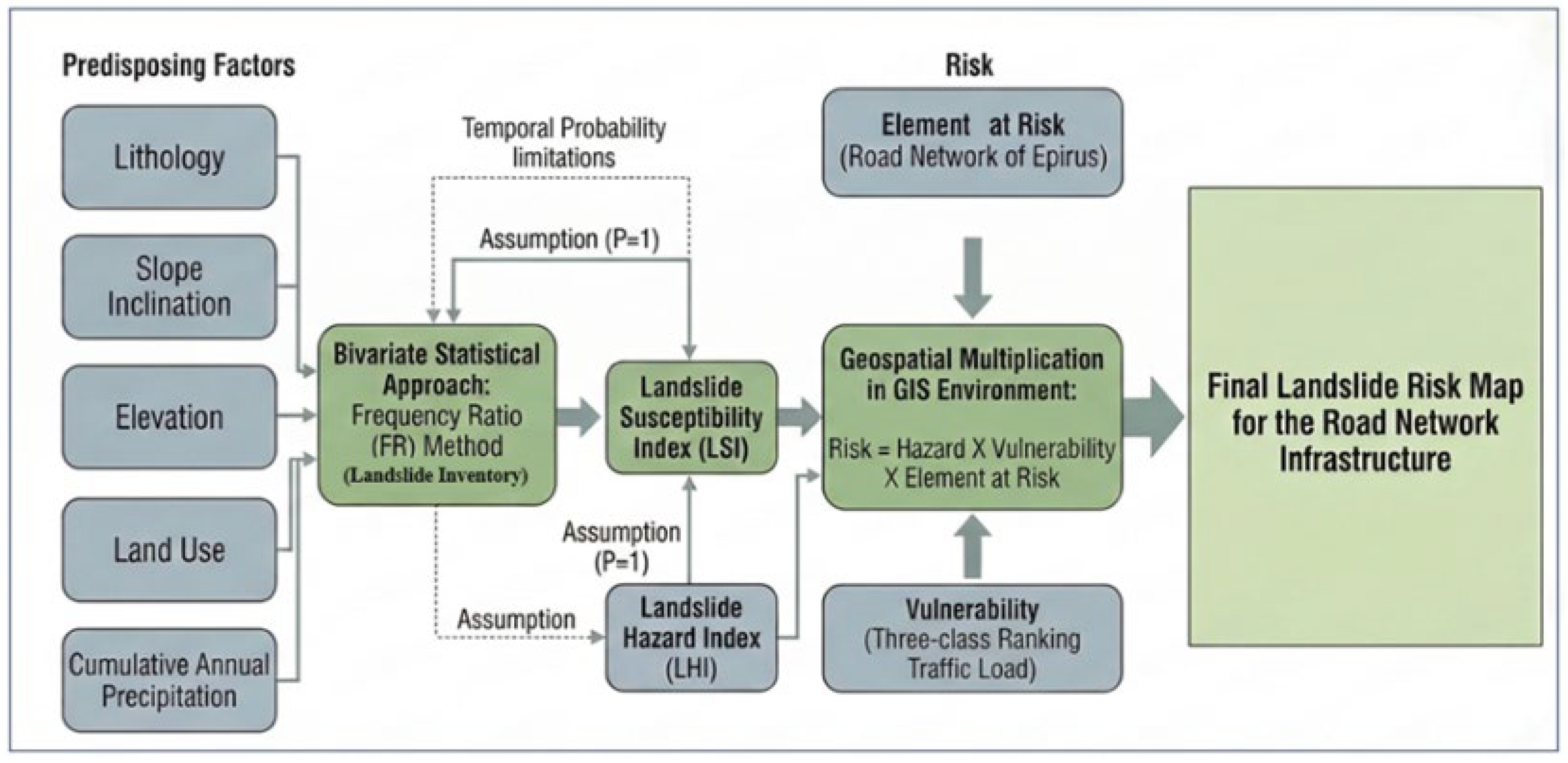
Τhis process results in the development of a Landslide Risk Map for regional road infrastructure, with the methodological framework presented in
Figure 8.
3.4. Frequency Ratio and Landslide Susceptibility Index
The Frequency Ratio (FR) method is used to analyze the relationship between the spatial distribution of landslides and their predisposing factors within a specific area and calculate the number of landslides occurring within each class of every factor. The Frequency Ratio for each class is obtained by dividing the landslide occurrence ratio by the corresponding area ratio of that class [
35,
36], using Equation (2):
where LF is the relative frequency of landslides (%) in a class of a factor, and CA is the percentage of the total area (%) covered by the same class.
When applying the above equation in a GIS framework, for each class i of a conditioning factor j, the FR value is calculated using the following equation:
where
Npix(Sij) is the number of landslide pixels in class i of factor j.
Npix(St) is the total number of landslide pixels in the entire study area.
Npix(Aij) is the number of pixels in class i of factor j.
Npix(At) is the total number of pixels in the study area.
FR > 1 indicates a strong spatial correlation between the class factor and landslide occurrence, while FR < 1 suggests a lower susceptibility and susceptibility mapping in this study was implemented through a four-stage geospatial workflow:
(i) Factor Standardisation: All five conditioning factors were converted into a raster format with a consistent grid cell size of 5 m × 5 m, representing the TCUs. To ensure spatial homogeneity, input layers with different original resolutions were resampled or interpolated to the 5 m TCU resolution using Inverse Distance Weighting (IDW) and nearest-neighbor algorithms within the GIS environment [
52].
(ii) Weight Assignment: The continuous variables (slope, elevation, and precipitation) were reclassified into discrete thematic classes using the Natural Breaks and Equal Interval methods to maximize internal homogeneity. The statistical weights for each factor class were then calculated using the bivariate Frequency Ratio (FR) method. This process involved correlating the landslide pixel density within each class to the overall pixel density of that class across the entire study area, using the Terrain Computational Units (TCUs) as the base unit of analysis. Following Equations (2) and (3), FR weights were assigned to each one of the resulting classes across the five predisposing factors.
(iii) Index Integration: The final Landslide Susceptibility Index (LSI) was generated by summing the individual FR weights for each pixel using the Raster Calculator in ArcGIS Pro 3.5.0 (Map Algebra), following the additive model:
where n is the total number of conditioning factors (n = 5).
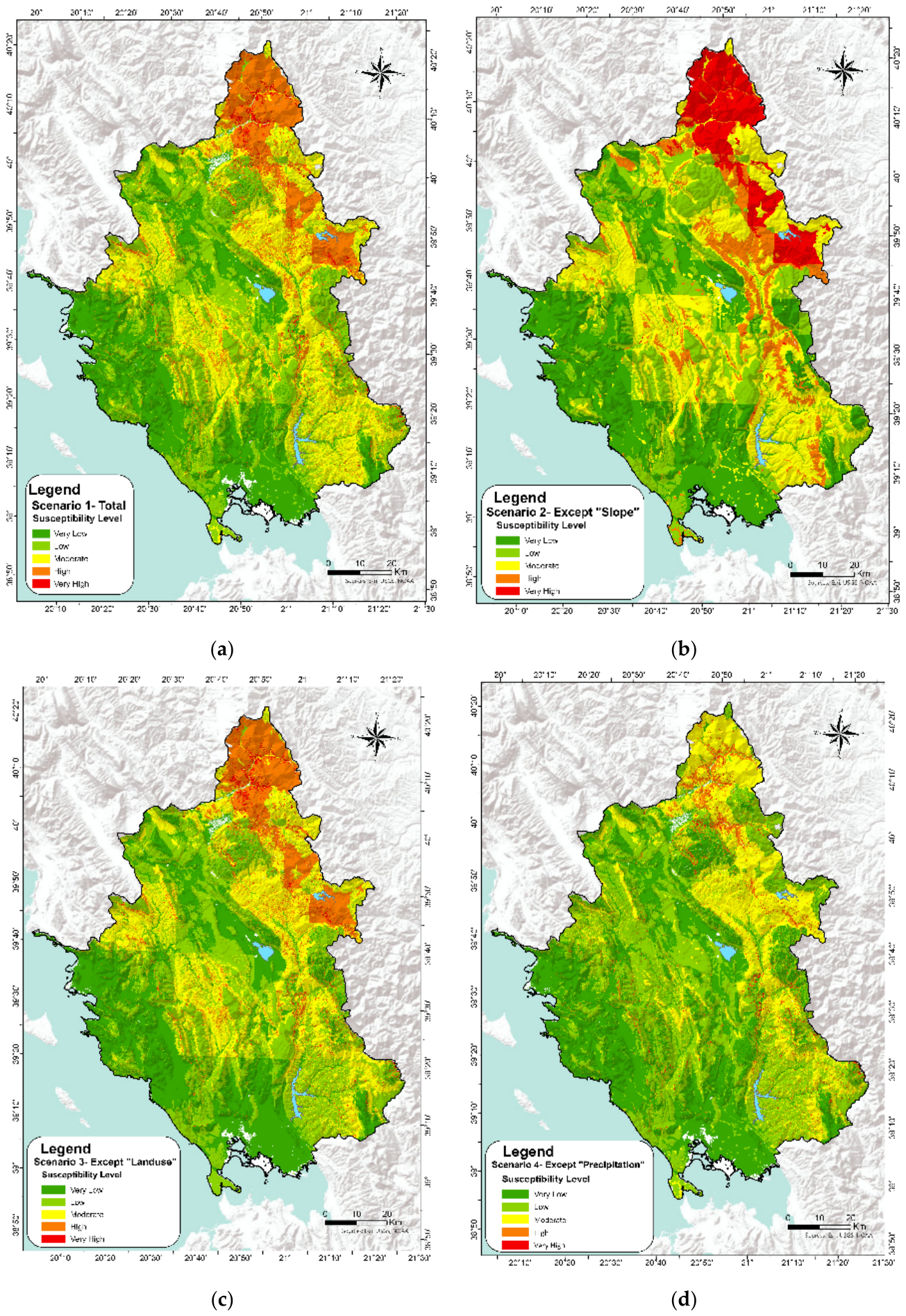
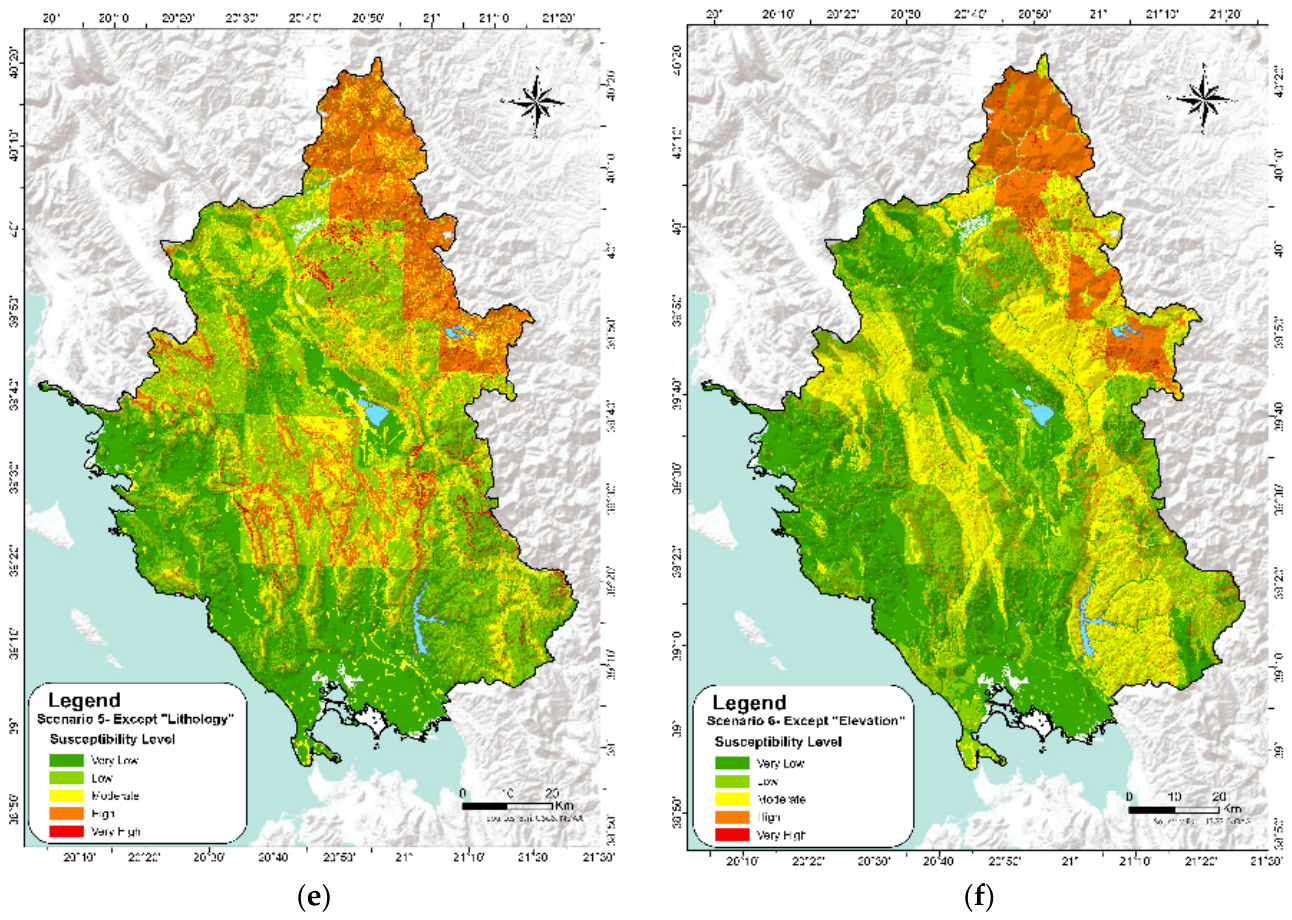
This stage facilitated the generation of multiple susceptibility maps under various factor-combination scenarios [
27,
54], in which higher LSI values indicate a greater degree of landslide susceptibility.
(iv) Zonation: To facilitate risk assessment, the continuous LSI values were categorized into five susceptibility levels (Very Low, Low, Moderate, High, and Very High) using the success rate curve and cumulative frequency distribution.
3.5. Landslide Hazard Assessment
Landslide hazard (LH) assessment constitutes a critical intermediate step in transitioning from statistical analysis to the risk evaluation of infrastructure [
24,
27]. Hazard is defined as the probability of a landslide occurring within a specific area over a given timeframe, resulting from the combination of spatial probability (LSI) and temporal probability (P) [
1,
27].
The transition from susceptibility to hazard requires the integration of temporal probability. However, in the Region of Epirus, as in many expansive regional settings, a comprehensive multi-temporal landslide inventory remains unavailable. Due to this data scarcity, which precludes the calculation of precise return periods, this study adopts the p = 1 assumption. This is a recognized methodological simplification in regional risk assessments that shifts the analytical focus from the temporal ‘when’ to the spatial ‘where’. In this context, the Landslide Susceptibility Index (LSI) is utilized as a proxy for an event-based Landslide Hazard Index (LHI), representing a conservative ‘potential hazard’ scenario.
3.6. Element at Risk and Vulnerability
The exposure analysis represents the phase of the risk assessment where the identified natural hazard intersects with human-made infrastructure [
2,
29]. In the context of this study, the Element at Risk is defined exclusively as the road infrastructure of the Region of Epirus. The road network is considered a critical asset, as any disruption caused by landslide activity entails significant socio-economic consequences, affecting regional connectivity and emergency response capabilities.
In this context, the road network segments are treated as the Terrain Zoning Units (TZUs) of the study area. The quantitative basis of this analysis is the total road network, which spans a cumulative length of 4523 km. This extensive dataset was integrated into a GIS environment to facilitate spatial overlaying of the hazard results derived at the TCU level onto these functional zoning units.
Recognizing that vulnerability is multi-dimensional, this study utilizes a weighted hierarchy based on functional importance and traffic volume as a robust proxy for socio-economic exposure. At a regional scale of 4523 km, where structural-level data for every slope-road interaction is absent, a strategic three-tier ranking system was implemented to prioritize the network. Specifically, the National Road Network received the highest weighting value of 3, as these corridors accommodate the primary traffic load and serve as the region’s main transportation arteries. The Provincial Road Network was assigned a value of 2, reflecting its essential role in maintaining inter-municipal connectivity, while all other roads were given a value of 1, representing sectors with lower traffic volumes and localized impact. This categorization ensures that the resulting risk map serves as an operational decision-support metric, prioritizing segments where landslide-induced disruptions would result in the maximum impact on regional connectivity and public safety.
5. Discussion
The quantitative framework implemented in this research highlights the critical importance of integrating multi-parametric environmental data to assess landslide risk of road infrastructure on a regional scale. By utilizing a detailed inventory of 295 field-verified active landslides, this study successfully identified the primary geo-environmental drivers of landslide occurrence in the Region of Epirus. The bivariate Frequency Ratio (FR) model served as a transparent and effective statistical tool, revealing that lithology and slope are the most influential intrinsic factors. Specifically, flysch formations—which dominate the geological landscape of the Pindus mountain range—showed the highest susceptibility, with FR values reaching 2.39. This is scientifically consistent with the highly tectonized and sheared nature of flysch formations, which behave as weak, soil-like masses when weathered. Furthermore, the analysis of slope confirmed an extreme correlation with instability on gradients exceeding 45°, where the FR value spiked to 4.43, indicating that topographical steepness is a fundamental precursor to failure in this rugged terrain.
A significant finding of this discussion is the role of cumulative annual precipitation as a landslide predisposing factor. The research utilized high-resolution ERA5-Land reanalysis data to overcome the limitations of sparse ground-based monitoring in mountainous areas. The statistical results identified that when areas receive between 1310 mm and 1573 mm of annual rainfall, FR exhibits the value of 2.03, suggesting that moderate-to-high precipitation levels initiate the occurrence of landslides. This underscores the necessity of including climatic variables in susceptibility modeling to capture the temporal–spatial reality of Mediterranean environments.
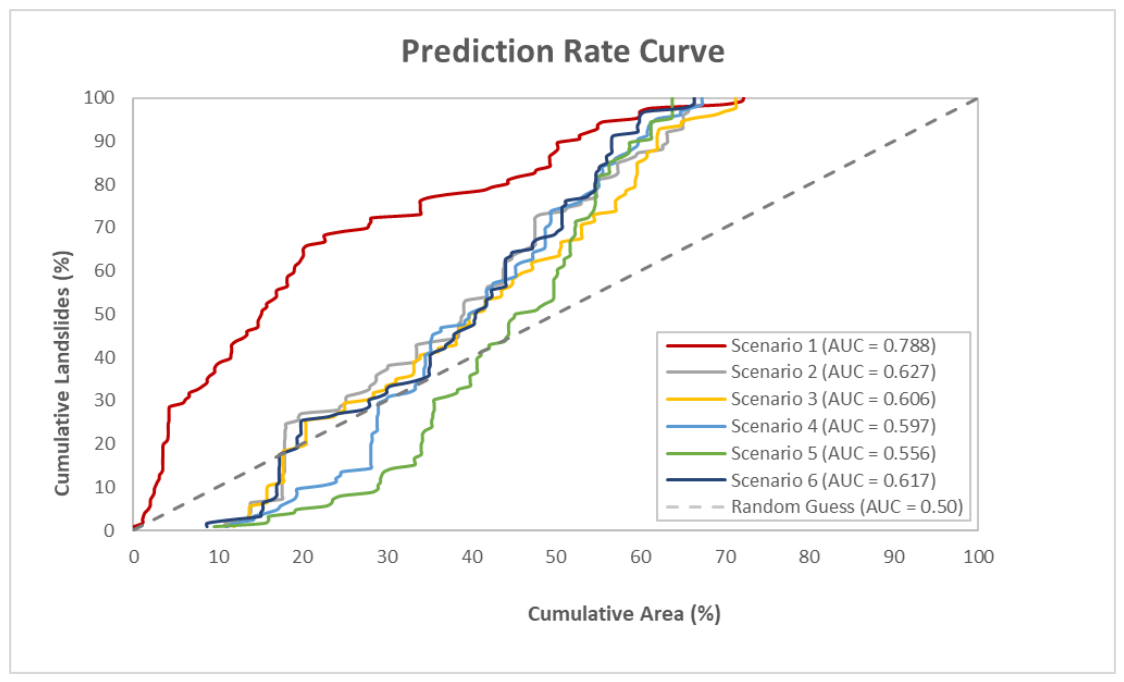
By evaluating six different scenarios, Scenario n.1 was determined to be the optimal predictive model, mathematically validated by demonstrating the highest prediction rate (AUC = 0.788). This comprehensive configuration, which includes all five predisposing factors, successfully concentrated nearly 80% of the study area within the Moderate to Very High susceptibility zones. This statistically robust spatial distribution provides a more precise risk identification compared to models that excluded key variables like rainfall or lithology.
Following the susceptibility assessment, the functional transformation of the Landslide Susceptibility Index (LSI) into a Landslide Hazard Index (LHI) was performed by adopting the methodological assumption of p = 1. This transition was a strategic choice necessitated by the lack of multi-temporal historical frequency data. This approach ensures that the analysis remains proactive, focusing on areas with high geological predisposition as immediate sources of hazard. Consequently, it allowed the spatial distribution of susceptibility to serve as an operational tool for identifying segments of the road network directly exposed to landslide threats and enabled the integration with the road vulnerability.
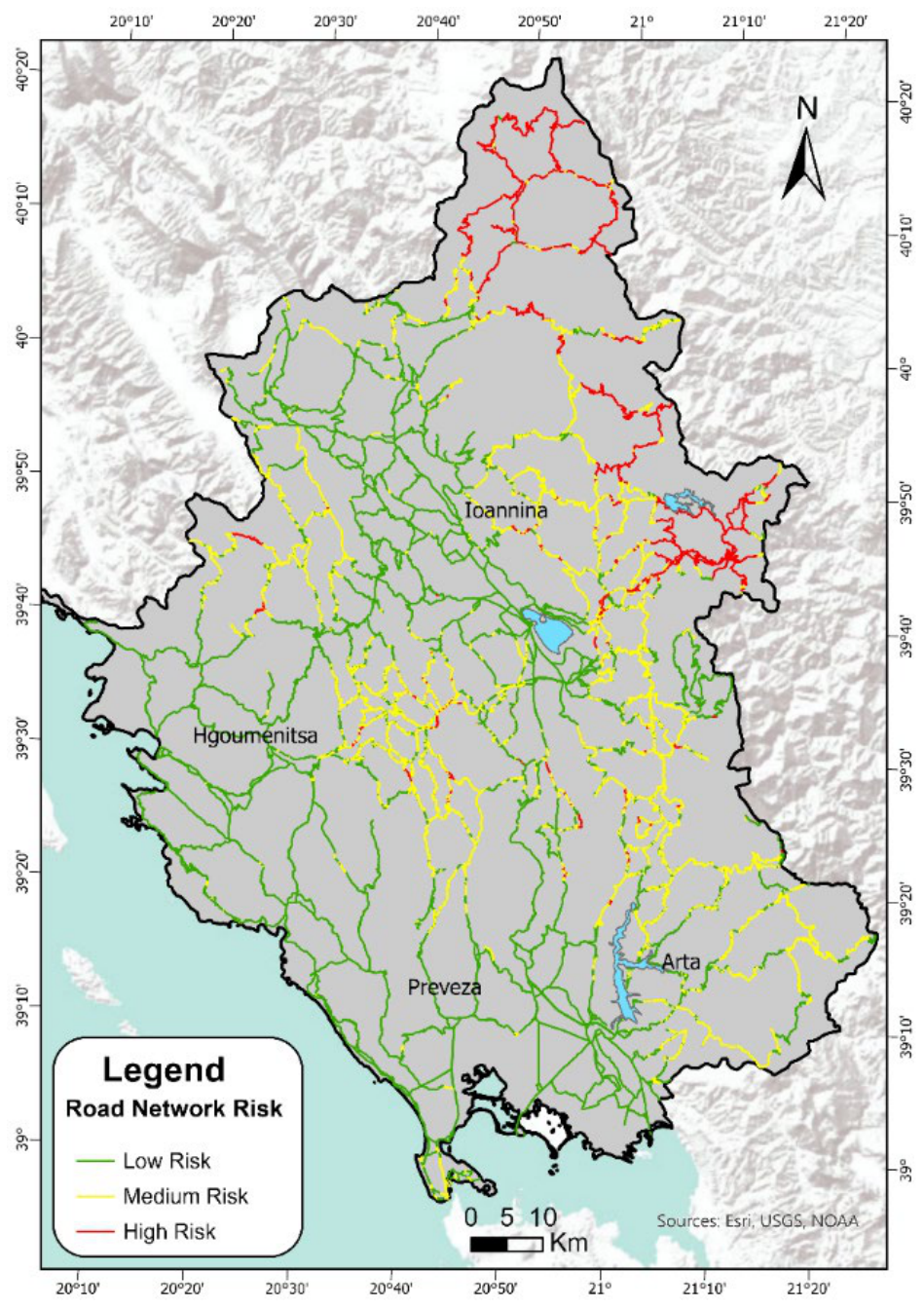
The integration of the Landslide Hazard Index (LHI) with the weighted vulnerability of the road network provides a practical application of the statistical results for regional infrastructure management. The decision of this study to assign vulnerability weights based on traffic volume and functional importance (National, Provincial, and Local roads) ensures that the risk map reflects potential socio-economic disruption rather than just physical hazard. The final quantification of landslide risk was achieved by integrating hazard, road exposure and vulnerability components, by spatially multiplying these variables into a GIS environment, and classifying the road network into three distinct landslide risk levels: low, moderate and high.
While the proposed geospatial framework demonstrates high predictive accuracy for identifying active landslide risks, certain limitations inherent to the data sources and modeling assumptions must be acknowledged.
The reliance on a field-verified inventory of 295 active landslides ensures the high reliability of the current risk assessment; however, it introduces a potential spatial bias. By excluding older, dormant, or less accessible failures, the model primarily characterizes the geoenvironmental conditions associated with active geological processes. Consequently, the framework may underestimate the long-term susceptibility of “relic” or dormant landslide complexes that could be reactivated under extreme seismic or climatic conditions not captured in the current active-only dataset.
Furthermore, a recognized limitation of this regional-scale framework is the evaluation of landslides as a unified group without separate, type-specific classification modeling. As detailed in the inventory analysis, the recorded events display diverse kinematic typologies, including flows, complex landslides, and rotational slides, which are inherently driven by distinct physical and triggering mechanisms. While analyzing the inventory holistically ensures statistical robustness for a unified regional decision-support tool, blending these disparate typologies into a single model may introduce spatial uncertainties. Therefore, conducting separate, type-specific susceptibility modeling represents a critical priority for future high-resolution, localized engineering geological investigations to further optimize predictive accuracy [
56,
57].
A further limitation arises from the disparity in spatial resolution between the topographical data (5 m DSM) and the climatic forcing data (9 km ERA5-Land). Although Inverse Distance Weighting (IDW) was employed to interpolate a continuous precipitation surface, the 9 km resolution of the original reanalysis data inevitably smooths out localized orographic effects and microclimates common in the rugged mountainous terrain of Epirus. However, ERA5-Land remains the most reliable continuous source for regions with sparse rain-gauge networks. Future iterations of this framework could benefit from high-density local rain-gauge networks or downscaled regional climate models to better capture these high-frequency spatial variations.
Regarding hazard characterization, the assumption of a temporal probability of unity (p = 1) constitutes a significant methodological simplification. In the absence of a comprehensive multi-temporal inventory required to estimate reliable return periods, this assumption was considered necessary, shifting the analytical focus from the temporal “when” to the spatial “where.” In this way, the approach effectively models a worst-case scenario based on the inherent susceptibility of the terrain. While this “potential hazard” framework is well suited for regional-scale prioritization, it inherently lacks a temporal dimension and may therefore lead to an overestimation of risk in areas with low triggering frequency. Future research should aim to incorporate rainfall return periods or displacement-based activity indicators (e.g., derived from DInSAR) to better constrain the temporal component of the hazard index.
An additional limitation of this regional framework is the assumption that the vulnerability of road segments is empirically correlated with their functional class (National, Provincial, Others) and estimated traffic volume. While this approach effectively captures the socio-economic exposure and prioritizes main transportation arteries, it does not assess the true topological criticality of the road network. As highlighted by recent studies, a rigorous assessment of transport infrastructure should involve advanced criticality analysis to identify non-redundant road sections. For instance, complex network theory can be utilized to evaluate topological connectivity and reductions in global network efficiency [
58], while traffic assignment models can quantify travel time delays under specific disruption scenarios [
43]. Integrating these advanced network-based vulnerability metrics with landslide susceptibility provides a more comprehensive risk assessment [
59]. Due to the lack of dynamic Origin–Destination traffic data for the entirety of the 4523 km road network in the region of Epirus, this advanced topological analysis was beyond the current scope, but it is clearly identified as a primary objective for future research to further refine the reliability of the Landslide Risk Map.
6. Conclusions
This study has successfully established a geospatial framework for regional landslide risk assessment, specifically focused on protecting the 4523 km road network of the Region of Epirus. Through the application of the Frequency Ratio model and the subsequent development of the Landslide Susceptibility Index (LSI), the research demonstrated that a holistic approach incorporating lithology, slope, elevation, land use, and precipitation is essential for accurate risk mapping. The selection of Scenario n.1, with all the predisposing factors, proved to be the most reliable model, confirming that landslide phenomena in the Region of Epirus are driven by a complex synergy of geological weaknesses and steep terrain. The high predictive capability of this model, successfully validated through Prediction Rate Curves (AUC = 0.788), confirms the reliability of bivariate statistical methods for large-scale regional planning.
The results indicate that the most critical risk zones are clustered along major transportation corridors that traverse flysch-dominated and steep mountainous sectors. While the lack of temporal frequency data necessitated the conservative assumption of a temporal probability equal to unity, the resulting Landslide Risk Map remains a vital operational tool. It allows regional authorities to move beyond reactive disaster management toward a proactive strategy of targeted geotechnical monitoring and prioritized infrastructure reinforcement. Moreover, as climate change is expected to increase the frequency of extreme rainfall events, the predictive capabilities established here will become increasingly vital for enhancing the resilience of critical infrastructure.
In conclusion, the methodology presented in this study offers a replicable and transparent workflow for other landslide-prone Mediterranean regions. Future research should focus on integrating real-time meteorological monitoring and historical frequency data to refine the temporal aspect of the hazard index. Nevertheless, the current findings provide a scientifically rigorous foundation for mitigating the socio-economic impacts of landslides and ensuring the safety and connectivity of a regional transportation network in the face of evolving natural threats in Greece.





 ,
,