


Abstract
South Korea has been advancing the National Digital Twin Land initiative; however, many existing urban digital twin projects have relied on non-standard, visualization-oriented datasets, thereby encountering persistent difficulties in securing interoperability and reusability. In particular, the lack of a standardized methodology capable of systematically fusing fragmented public administrative data with 3D geospatial information remains a major barrier to the practical use of digital twins in administrative operations. To address this gap, this study proposes a standardized urban digital twin data construction methodology that complies with the international standard while effectively accommodating Korea’s building-related public datasets. Specifically, the OGC CityGML Building module is adopted as the reference model, and an extension is implemented to design a data model that extends and integrates heterogeneous sources—such as building height records, building register attributes, and road-name address data—within a unified standard schema. Furthermore, using Busanjin-gu, Busan Metropolitan City, as a case area, we develop high-precision LoD 1~4 building objects from aerial surveying outputs and empirically validate an end-to-end workflow by loading and visualizing the resulting dataset on a national public platform. By constructing operational digital twin data that tightly couples physical geometry with administrative semantics and verifying its feasibility in an actual platform environment, this study establishes a practical, standards-based foundation for deploying and operating geospatial digital twins in smart city and related urban governance applications.
1. Introduction
Digital revolution and the global spread of the internet have given rise to concepts such as data-driven cities and smart cities [1]. A smart city can be defined as a strategic approach to integrating data and digital technologies to ensure the sustainability, welfare, and economic development of the urban environment [1]. The smart city concept defines a space in which the key components of the urban infrastructure (environment, emergency management, traffic management, and power) are integrated in such a manner that their functions and capabilities can easily be combined with each other as well as with new systems [2]. A digital twin is an integrated multi-physical, multiscale probabilistic simulation of a complex object that uses physical, mathematical, simulative, and other models to obtain the most accurate representation of the corresponding real object on the basis of analysis of data from sensor networks and other sources [3]. Furthermore, digital twins support the forecasting of changes in the state of urban infrastructure and offer optimal solutions by analyzing information on the dynamics of people and transport, and their fluctuations in time and space [1].
As digital transformation accelerates and the complexity of urban operations increases, the need for urban digital twins that can connect urban space with the physical world to enable monitoring, analysis, simulation, and prediction is rapidly growing. As demand rises for data-driven decision-making across core domains of urban administration—such as disaster and emergency response, urban planning and permitting, energy and environmental analysis, and traffic and safety management—establishing “operational” digital twin data and a corresponding platform framework has emerged as a critical task beyond mere 3D visualization. Accordingly, the success of a digital twin project depends largely on how effectively its data can be utilized [4].
South Korea has been building a national digital twin foundation through the Digital Twin National Land policy and operates a national digital twin platform ecosystem centered on the organic linkage among public-facing services, administrative support services, and data collection and provision systems [5]. Given that this national initiative is intended for wide-area, large-scale operation, a standards-based data construction framework is essential to ensure interoperability, reusability, and long-term operability and updatability as data accumulate over time. In other words, the performance of an urban digital twin cannot be guaranteed solely by “how realistic it looks”; rather, success critically depends on whether the constructed data exhibit a consistent semantic structure under international standards and can be exchanged and integrated across heterogeneous systems. Nevertheless, in Korea, structural issues persist as project-based 3D deliverables continue to accumulate—such as inconsistencies in data structures, missing attributes, limitations in quality assurance, and difficulties in updating and reusing data—which may ultimately undermine the sustainability and scalability of digital twins [6].
Against this backdrop, this study proposes a standards-based methodology for constructing urban digital twin data by adopting the Open Geospatial Consortium (OGC) City Geography Markup Language (CityGML) 2.0 Building module as a reference model and extending and integrating Korea’s building-related public datasets—namely the building height database, Geographic Information System (GIS)-integrated building information, and the road-name address database—through the Application Domain Extension (ADE) approach. In addition, focusing on Busanjin-gu in Busan Metropolitan City, we develop high-resolution true orthophotos, a Digital Elevation Model (DEM), and Level of Detail (LoD) 1~4 building objects compliant with CityGML 2.0 using aerial imagery and airborne LiDAR surveys. To achieve both efficiency and quality at scale, automatic production is applied for low-rise, dense areas, while manual production is employed for high-rise, low-density areas. Furthermore, by loading the resulting dataset into Korea’s public cloud and platform environments and validating 3D visualization and operational feasibility, this study presents its outcomes not merely as a construction result but as a reproducible data construction procedure designed for platform-based operation.
The novelty and generalisability of this study are as follows:
- Beyond Visual Representation to Semantic Modeling: Unlike previous studies focused on simple 3D visualization, this research establishes an international standards-based semantic data model by extending the OGC CityGML 2.0 Building module. It shifts the paradigm from a “visual twin” to a “data twin” that serves as foundational infrastructure for spatial analysis.
- Standardized Integration of Heterogeneous Public Datasets: The study proposes a systematic methodology to integrate South Korea’s fragmented administrative datasets—including building height databases, GIS-integrated building information, and road-name address databases—using the Application Domain Extension (ADE) approach, ensuring data consistency and international interoperability.
- Operational Validation and Reproducibility: Moving beyond theoretical frameworks, this research demonstrates a reproducible data construction procedure by implementing and validating the entire workflow within a national public cloud and platform environment. It provides a practical, Korea-tailored standard framework directly applicable to real-world urban digital twin operations.
2. Related Work
2.1. South Korea’s National Digital Twin Policy
Geoinformation science has its roots in paper maps, but its modern version is focused on vector data and how to organize them [7]. One of the first requirements for organized data management is storing the collected and used datasets in a relational database management system with a spatial extension, such as PostGIS or Oracle Spatial [7]. Moreover, they can be stored in 3DcityDB [8] and DB4Geo [9]. The most widely supported data formats for 3D city digital twins are CityGML [10] and City JavaScript Object Notation (CityJSON) [11]. CityGML is an OGC standard for multi-hierarchical geographical, topological, and semantic representations [12] and is supported by widely used geospatial software such as ArcGIS and QGIS [6]. CityJSON was proposed in 2021 for OGC as another standard and is expected to be accepted [7].
Building Information Modeling (BIM) models are detailed models of our built-up environment that incorporate the geometries of buildings, their spatial and topological relationships, and detailed information on their physical infrastructure [7]. Consequently, as BIM includes a large amount of data combining physical and functional building information, it requires high-level technical data storage and maintenance [13]. Here, difficulties have been observed in data transfer because the BIM domain still uses proprietary data formats, workflows, and software [14], although open data formats, so-called OpenBIM, are gaining momentum [13]. One of the most used data schemes for building representation, modeling, and storage and supported by most BIM software is the Industry Foundation Class (IFC) [15]. The IFC standard supports data transferability and reproducibility, and considering city DTs, we see that open data formats are of paramount importance to ensure wide adaptation of intercommunicating technical solutions [7].
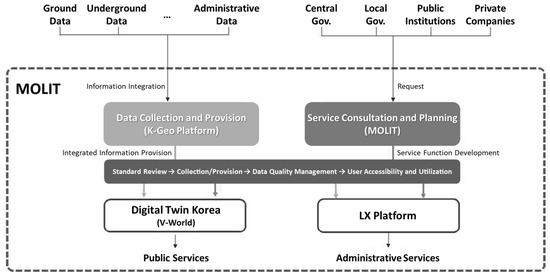
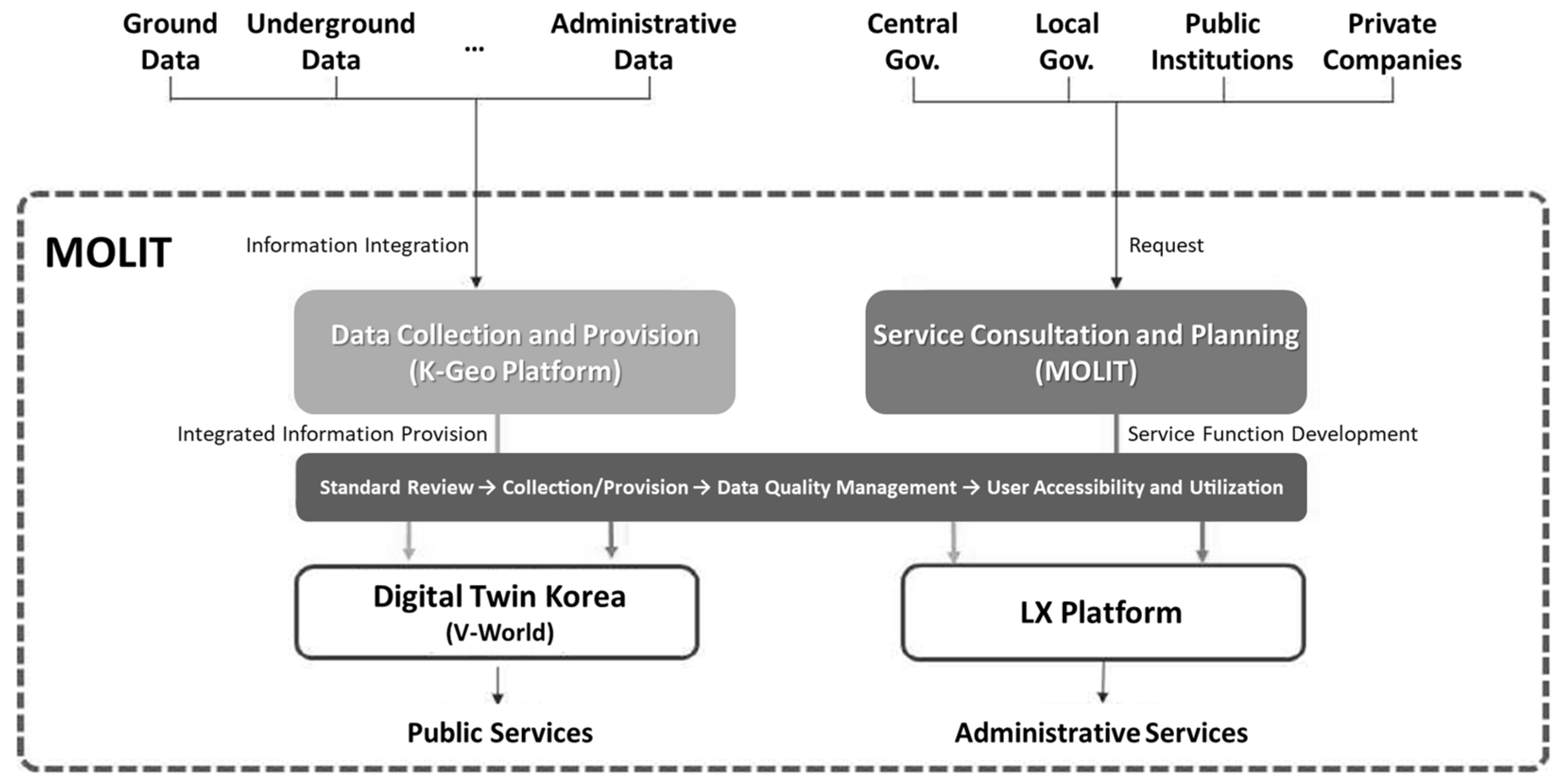
On the basis of the concept of digital twins and the definition of digital twin land, the digital twin land of South Korea can include the following components: (1) the country’s land and terrain features (objects) in digital space; (2) core functions such as monitoring, analysis, simulation, or predictions based on these in physical space using the land and terrain features in digital space; and (3) the connection between the country’s land and terrain features in physical space and those in digital space [5]. The Digital Twin National Land platform is operated based on an organic linkage and utilization system among the three platforms [6], as shown in Figure 1. With respect to the roles of each platform, V-World provides digital twin services over the internet, while the digital land and geospatial platform (DLGP or LX Platform) offer digital twin services for the administrative network. Finally, the national spatial information integrated platform (K-Geo Platform) serves as a data collection and provision system for digital twin services [16].
Figure 1.
Framework of South Korea’s National Digital Twin (NDT) platform [16].
2.2. Prior Research
Dani, A.A.H. et al. [17] conducted a study on the development of a smart city platform utilizing digital twin technology, with the objective of enabling real-time monitoring and supporting efficient decision-making in urban environments. In this study, they proposed a four-stage development model for constructing the smart city platform, consisting of a basic Layer, 3D layer, digital twin layer, and augmented layer. In particular, the Augmented Layer, serving as the top level, introduced Augmented Reality (AR) elements to enhance the clarity of data visualization and presented the potential for expansion into the Metaverse.
Hämäläinen, M. [18] explored the applicability of dynamic digital twins for enhancing urban planning and governance through the case of Helsinki, Finland. By analyzing the Helsinki Digital Twin Project and smart city experiments in the Kalasatama district, the study demonstrated that digital twins function as an integrated platform for data-driven decision-making and stakeholder collaboration, transcending mere 3D visualization. In particular, the research emphasized the importance of robust data infrastructure and open standards such as CityGML.
Lee, A. et al. [19] pointed out the limitations of existing urban digital twin research, which has primarily focused on the 3D reconstruction of static physical assets such as terrain and buildings. To address this, they proposed a geospatial platform capable of managing and visualizing large-scale individual mobility data, a critical component of urban environments. This study designed architecture that integrates the processing of static spatial information and dynamic mobility data by utilizing Unity3D, a general-purpose game engine, and a Quadtree-based tile system. Core technologies applied in this system include ‘objectification’, which analyzes urban Closed-Circuit Television (CCTV) footage to convert vehicles and pedestrians into individual objects, and a curve-fitting-based compression algorithm designed to enhance data storage efficiency.
Zhu et al. [20] identified the limitations of existing virtual geographical scenes, which rely on static data and fail to reflect the real-time dynamics of the physical world, and proposed a hybrid twin modeling methodology combining data-driven and knowledge-driven approaches. This study constructed a Geographical Scene Knowledge Graph composed of three domains—‘Object,’ ‘Event,’ and ‘Operation’—to guide the learning and inference processes of deep learning networks. Specifically, by utilizing an improved YOLOv5s network and Graph Convolutional Networks (GCN), the researchers implemented a process to precisely detect dynamic change objects, such as bridge construction, and to transform and fuse them into 3D geometric models based on spatiotemporal semantic constraints.
Literature regarding Project PLATEAU [21] underscores Japan’s strategic initiatives to develop 3D city models utilizing CityGML, with a particular focus on LoD 3 for urban planning and simulation purposes. This research presents a methodology for generating LoD 3 models that entail precise representations of buildings, infrastructure, and terrain. Such models facilitate a broad spectrum of applications, including disaster management, urban redevelopment, and environmental analysis. Notably, the study emphasizes the utilization of tools such as Feature Manipulation Engine (FME) Desktop to produce CityGML LoD 3 models, thereby securing data accuracy and ensuring adherence to international standards [6].
Mazzetto, S. [22] reviewed urban digital twins for sustainable smart cities, emphasizing continuous data flows that mirror physical urban systems. The study organized urban digital twins data into a six-layer architecture and stressed integrating heterogeneous sources to enable urban simulations. Key services include real-time monitoring, predictive analytics for traffic/energy demand, and scenario-based simulations for disaster response and planning.
Supianto, A.A. et al. [23] proposed a generalized urban digital twins framework to overcome domain-specific implementations. The framework comprises six components and specifies ten features grouped into four service classes: twinning, exploring, interacting, and realizing. It highlights integrating high-fidelity spatial (2D/3D/4D) and aspatial datasets and demonstrates applicability through cases in lighting intervention and mobility design, including functions such as luminance analysis, traffic simulation, and walkability assessment.
Ferré-Bigorra, J. et al. [24] analyzed urban digital twins for infrastructure management and derived a standardized structure by mapping existing initiatives. The study distinguishes key inputs between real-time sensor feeds (e.g., water level, temperature, operational parameters) and static databases (e.g., cadastre, geodata hubs), which are fused into a core 3D city model. Service functions rely primarily on numerical simulation (e.g., flooding/pollution), complemented by rule-based logic for maintenance workflows and selective machine learning for pattern analysis. The authors propose a four-layer architecture (data acquisition, modeling, simulation, service/actuation) with domain modules (mobility, water, energy, atmosphere) delivering both dashboard/3D map-based decision support and, where available, infrastructure actuation.
Barresi, A. [25] presented urban digital twin as a predictive model for sustainable urban planning, focusing on Zurich’s integration of BIM and GIS data. The study utilized 3D spatial inventories, including utility registers and facade models, to support comparative analyses between current zoning capacities and future development scenarios. Key functionalities included solar potential analysis, shade calculation, and climate simulations for heat reduction, allowing planners to verify the impact of new buildings on urban ventilation and temperature.
Dembski, F. et al. [26] developed an urban digital twin prototype for Herrenberg, Germany, to facilitate collaborative planning and democratic citizen participation. The model integrates 3D built environment data with street network analysis (Space Syntax), mobility simulations (SUMO), and wind flow simulations (OpenFOAM) to address urban complexity. Notably, it incorporates volunteered geographic information (VGI) to capture qualitative social perceptions and movement patterns of residents. Using a VR-based visualization platform (CAVE), the system provides a “translational aid” that allows stakeholders to simulate traffic and pollution scenarios, enabling transparent decision-making and consensus-building before physical implementation.
Prior studies have yielded significant achievements in functional and service implementation, such as platform architecture design, visualization of dynamic objects and AI-driven change detection, and participation- or simulation-centric decision support. However, Korean administrative data is characterized by heterogeneous schemas and attribute systems across various agencies and tasks. To integrate these fragmented datasets with physical 3D city models while maintaining consistent semantic structures, data model extension and alignment rules grounded in international standards are imperative. This study proposes a “constructible and validatable” urban digital twin data construction procedure by semantically integrating fragmented public administrative data into 3D city models via an extension mechanism for OGC CityGML 2.0. By modeling geometric and topological representations within the LoD 2–4 range to strictly comply with standard rules, this research ensures high-fidelity data construction.
Furthermore, rather than simply implementing data that adheres to OGC CityGML 2.0 or 3.0 standards (as seen in Project PLATEAU), this study applies and extends international standards to Korea’s national public platform and administrative data from Busan Metropolitan City. In this regard, the study achieves scholarly originality by demonstrating the feasibility of an implementable, Korea-tailored standard framework for urban digital twins, moving beyond mere case-based implementation.
3. Methodology
3.1. Overall Research Framework
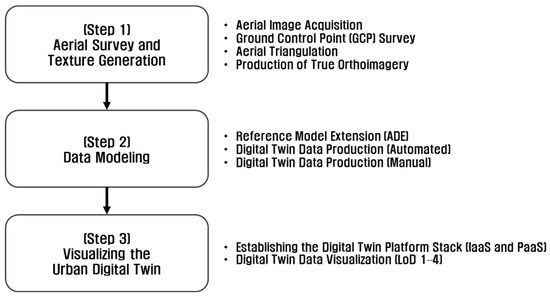
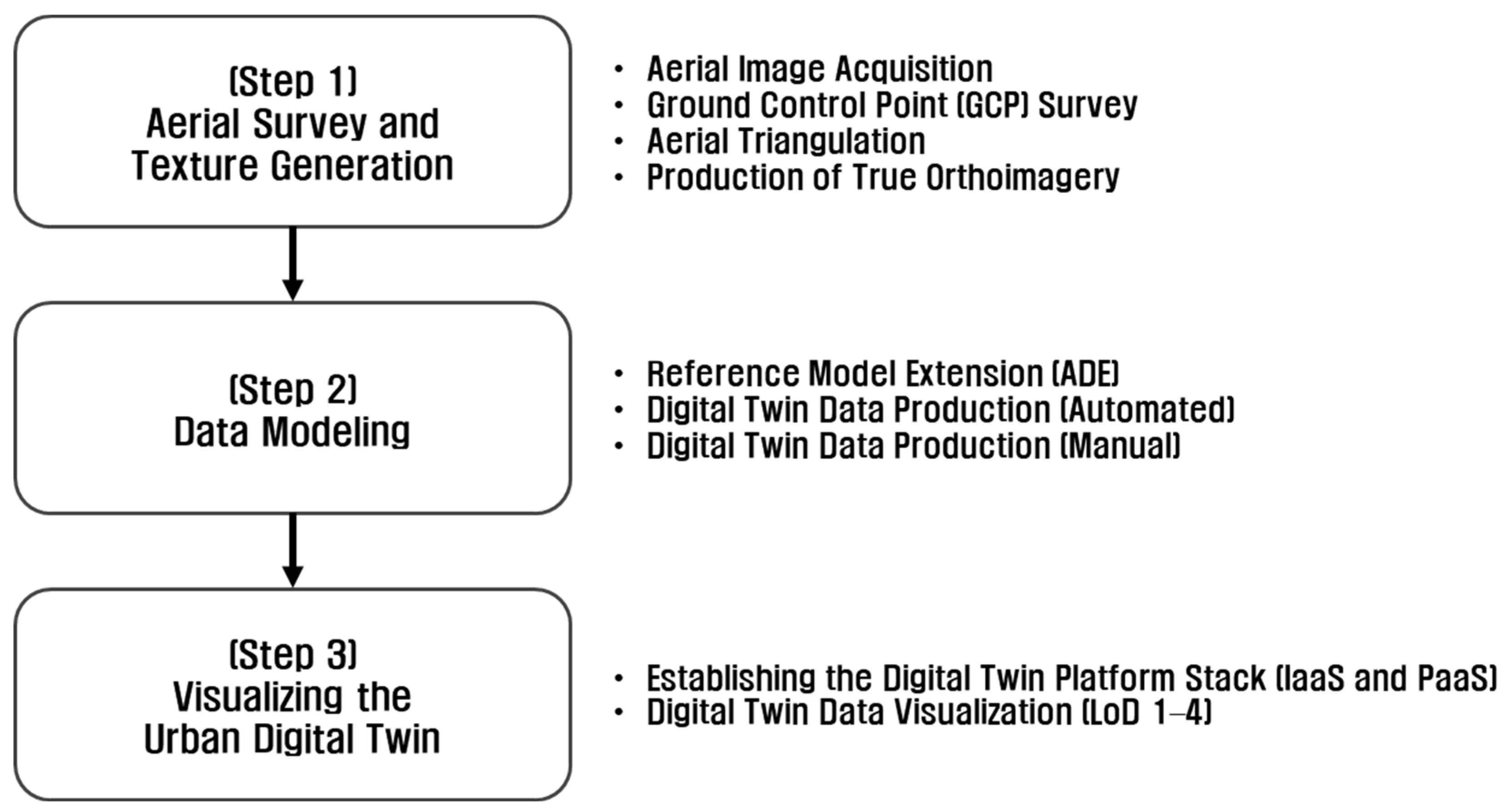
This study adopts a three-stage research workflow to construct, model, and visualize urban digital twin data (Figure 2).
Figure 2.
Research procedure of this study.
First, in the data construction stage, aerial imagery and airborne LiDAR surveys were conducted for Busanjin-gu, Busan Metropolitan City. Prior to acquisition, the required flight permits and airspace coordination were completed, and the target area was analyzed to develop an acquisition plan. Positional accuracy was then ensured through Network Real-Time Kinematic (RTK) Virtual Reference Station (VRS)-based ground control point (GCP) surveying and aerial triangulation. Subsequently, true orthophotos were produced through orthorectification, radiometric correction, SeamLine editing, error inspection, and image mosaicking.
Second, in the data modeling stage, the OGC CityGML 2.0 Building module was adopted as the reference model, and a data model was designed by extending attribute information from the building height database, GIS-integrated building information, and the road-name address database using the ADE approach. Based on the resulting model, 3D building objects were generated using a hybrid production strategy: automatic reconstruction for low-rise, high-density buildings and manual modeling for high-rise, low-density buildings.
Lastly, in the visualization stage, the constructed dataset was deployed and visualized in 3D within the national public cloud (LX Cloud) and the public digital twin platform (DLGP) environments. During this process, textures were automatically mapped using modeling outputs and geometric image information, and the resulting objects were stored at the individual OBJ file. The final quality was secured through systematic inspection and correction addressing missing objects, texture defects, structuring errors, and object segmentation errors.
Rather than limiting urban digital twin data construction to the presentation of 3D visualization outputs, this study is differentiated by fixing the OGC CityGML 2.0 Building module as the reference model and designing and applying a standards-based data model through ADE-driven extensions of Korea’s building-related public datasets. Moreover, the study provides an academically meaningful contribution by presenting a reproducible data construction procedure explicitly intended for platform-based operation.
3.2. Scope of Data Construction
Digital twin data serve as the core foundational resources that constitute a digital twin space reproducing the real world; accordingly, this study constructs 3D visualization information to enable diverse digital twin services and functions. In addition, to support a broad range of future digital twin services, the study aims to develop digital twin data not as one-off, image-like products, but in a form compliant with international standards so that the data can be reused and repurposed.
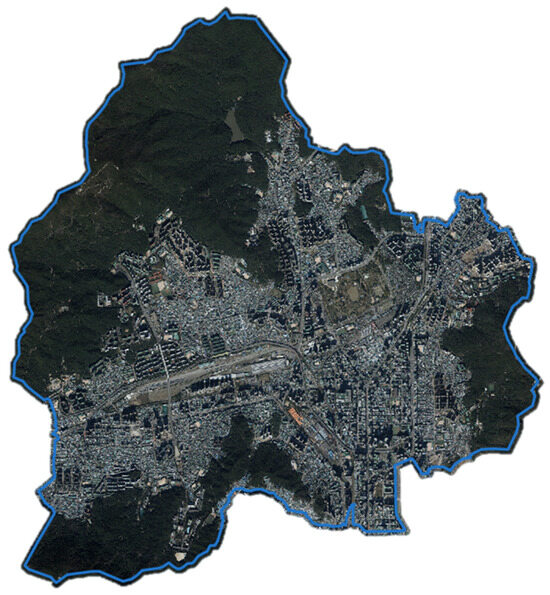
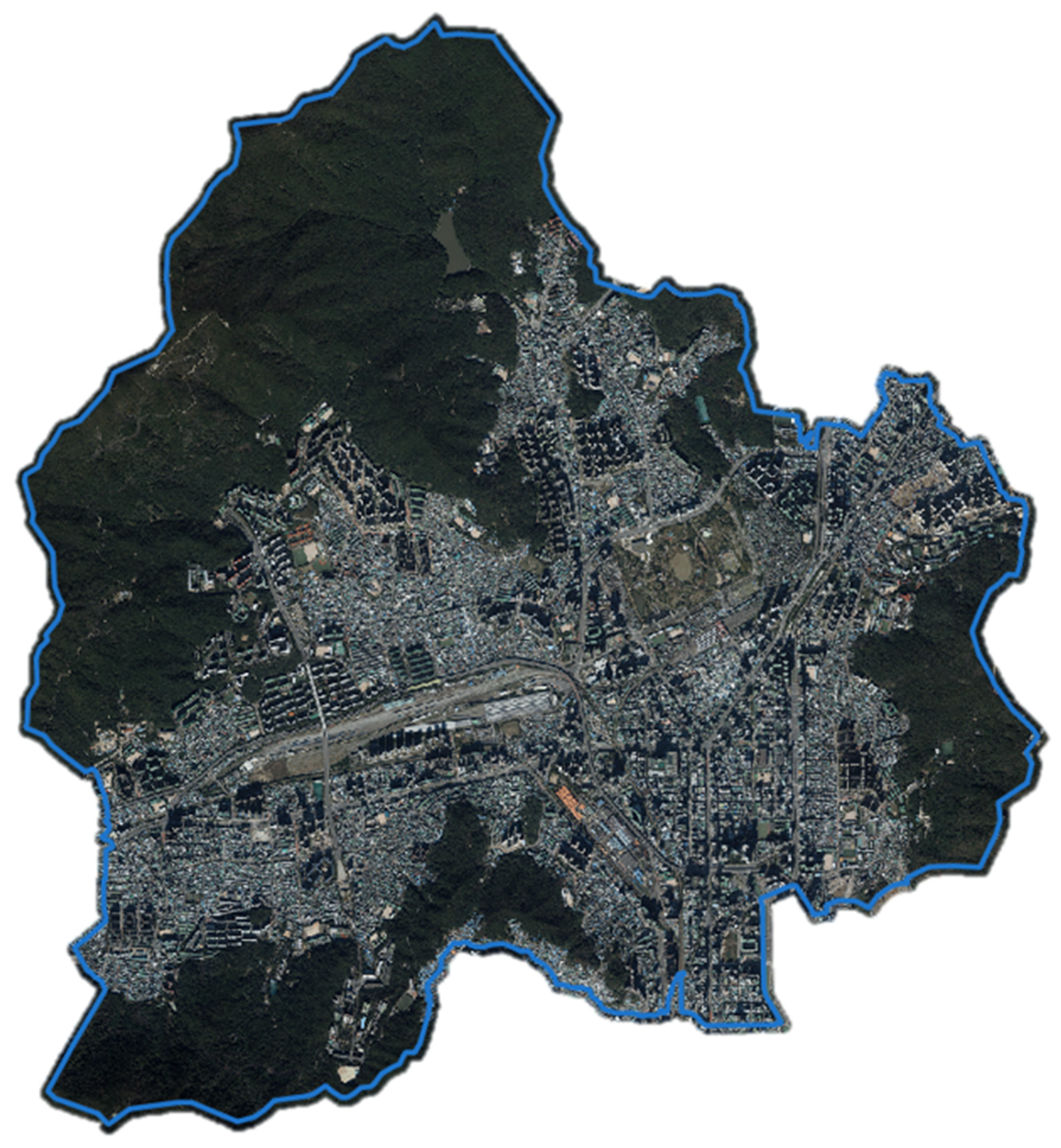
To this end, digital twin datasets (2D and 3D) were constructed for Busanjin-gu in Busan Metropolitan City, Republic of Korea, using aerial imagery and airborne laser scanning (airborne LiDAR) survey techniques, thereby modeling and implementing a digital twin space that closely resembles the physical environment (Figure 3).
Figure 3.
Study area (Busanjin-gu, Busan Metropolitan City).
As described above, the scope of data construction was defined as Busanjin-gu, Busan Metropolitan City, covering approximately 29.7 km2. Busanjin-gu is both the central area and an old downtown district of Busan, characterized by a high density of buildings with diverse heights. In addition, it exhibits a basin-shaped topographic setting surrounded by Baegyangsan to the north, Palgeumsan to the southwest, and Hwangnyeongsan to the southeast. Most notably, Busan was selected as the target area for this research because it has been designated as a National Pilot Smart City in South Korea. As the digital twin data constructed in this study is an essential prerequisite for the future implementation of digital twin-driven smart city initiatives, the prioritization of this region as a study site was deemed imperative.
The digital twin data were generated using newly acquired aerial imagery and airborne LiDAR survey outputs collected in 2025. The dataset for Busanjin-gu comprises high-resolution true orthophotos with a ground sample distance (GSD) of 0.1 m, a digital elevation model (DEM) with a GSD of 0.5 m, and 3D building models ranging from Level of Detail (LoD) 1 to 4, strictly compliant with the OGC CityGML 2.0 thematic building module. Among various urban entities such as vegetation and road infrastructure, this study primarily prioritizes the high-fidelity implementation of building objects.
4. Urban Digital Twin Based on Geospatial Data
4.1. Aerial Survey and Texture Production
In this section, a Leica Geosystems CityMapper2 digital camera was employed for aerial surveying and texture production. Unlike conventional aerial photogrammetric cameras, this system is a 3D camera capable of simultaneously acquiring five images over the same area. Specifically, it captures imagery using one nadir-facing camera and four oblique cameras mounted at 45° in the forward, backward, left, and right directions, thereby minimizing occluded areas. By collecting both nadir and oblique images concurrently, the system enables the production of data suitable for high-quality visualization as well as for constructing a 3D database through aerial surveying and thus serves as a state-of-the-art aerial imaging platform.
To ensure stable acquisition outcomes, this study conducted a pre-flight procedure to analyze expected outputs and assess potential risk factors in advance. Based on these assessments, optimal aerial imaging operations were carried out to obtain high-quality datasets, and the following detailed workflow was implemented in a stepwise manner (Table 1).
Table 1.
Procedure for aerial surveying and aerial imagery production.
To ensure the smooth execution of the study, the design specifications outlined in the aerial survey plan and the “Korean Regulations for Aerial Photogrammetric Operations” were thoroughly reviewed, and potential issues that could arise during project implementation were examined in advance. Based on this review, an execution plan was established for each work component.
The flight and imaging plan was developed by comprehensively considering the capture scale (image resolution), baseline length, flight-line spacing, flight altitude, flight route, acquisition schedule, flight plan map, intended use, no-fly areas, required time, accuracy requirements, and meteorological conditions. In particular, the flight altitude was determined in consideration of ground elevation across the study area, and the acquisition direction for 3D geospatial data production was designed along an east–west orientation to avoid interference with flight operations and terrain or surface features. In addition, to minimize occlusions during aerial image acquisition, the forward overlap and side overlap were set to 70–80% and 60–80%, respectively, thereby improving the quality of 3D visualization products.
Aerial image acquisition was conducted on days with favorable weather conditions to secure high-quality visual imagery and was performed in accordance with the planned specifications (Table 2).
Table 2.
Aerial photography acquisition details.
Next, to ensure positional accuracy of the aerial data, GCP surveying was conducted using a Network RTK (VRS) method. The coordinate reference system adopted for the GCP survey was Korea East Belt 2010 (GRS80, Eastern Origin), and the KNGeo18 geoid model was applied.
The GCP surveying workflow comprised three main stages: GCP pre-selection, GCP surveying, and result compilation. The detailed procedures for each stage are summarized as follows (Table 3).
Table 3.
GCP survey workflow.
During the GCP pre-selection stage, locations with unobstructed visibility and clear identifiability were prioritized. GCPs were placed primarily on relatively flat terrain and features where elevation variation was minimal. In addition, distinctive ground features—such as pavement markings—were considered to ensure that the GCP positions could be unambiguously recognized. The GCP survey was conducted using Network RTK (VRS). Observation settings included an antenna height of 1.8 m, a satellite elevation mask of 15°, and PDOP ≤ 3.0; observations were performed with a 10 s session duration and a 1 s data logging interval. The GCP results were compiled in the form of result tables, point description sheets, a control network diagram, and survey records. This enabled systematic management of the control information for subsequent processes, including aerial triangulation and orthorectification.
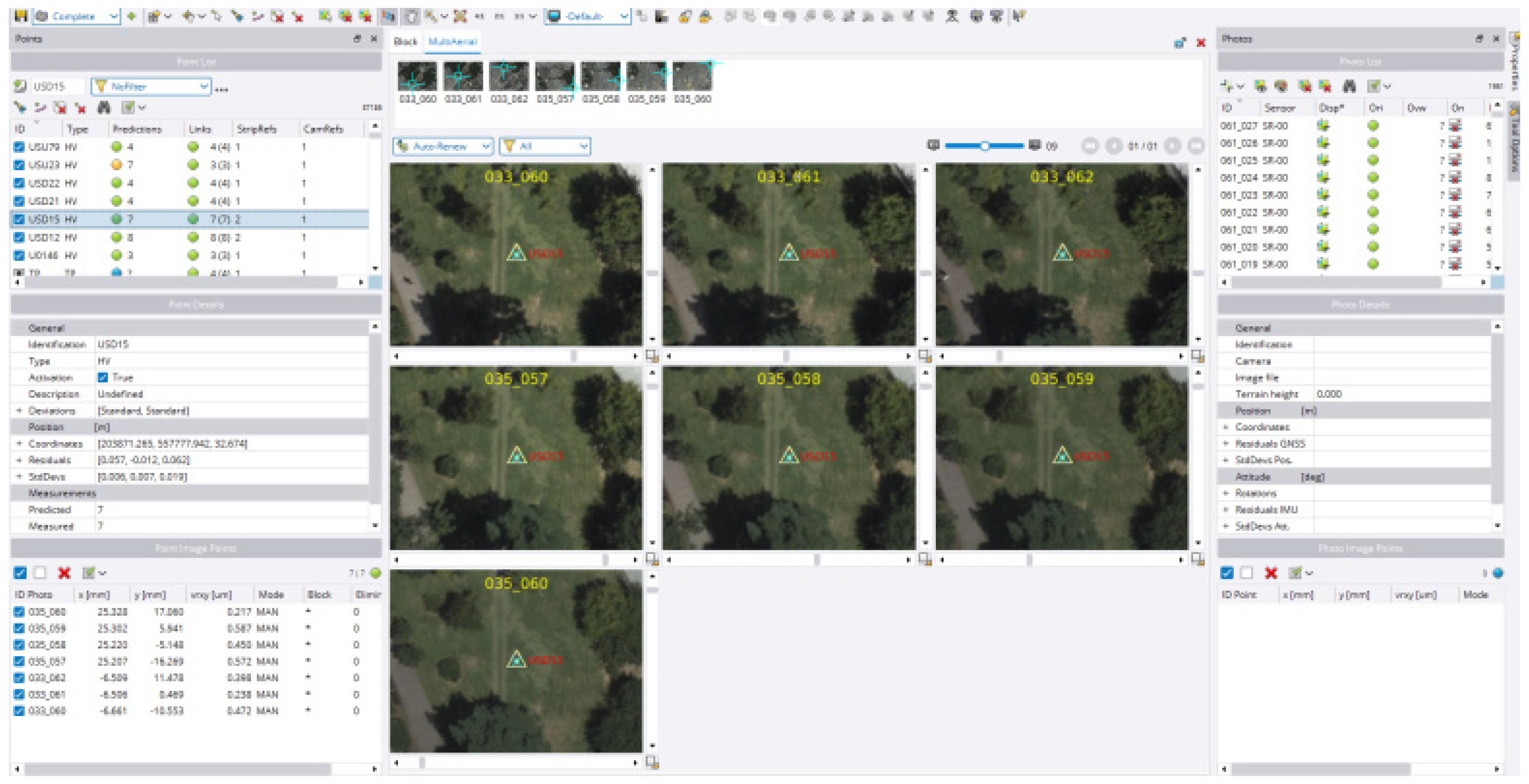
Next, aerial triangulation was carried out to secure the positional accuracy of the aerial images acquired through aerial surveying, using the established GCPs. This procedure improved the geometric accuracy of the imagery and provided fundamental inputs for constructing 3D geospatial information. To this end, the raw imagery and camera-related data were first organized. The images used in the triangulation were generated through GPS/INS processing, and the corresponding camera metadata collected during the flight were prepared in parallel. The GCP survey outputs were then arranged for use in aerial triangulation, including 32 control points and 9 check points (Figure 4).
Figure 4.
Example of APM module operation.
Image control point measurement refers to the task of observing the same ground control point in each image, based on the GCPs derived from the ground survey. This step was performed as a prerequisite for converting the image coordinates of automatically generated tie points in the subsequent Automatic Point Matching (APM) process into ground coordinates. Using the APM module, pass points and tie points were generated through an automatic matching procedure.
However, in cases involving incomplete models, densely built residential areas, or terrain with extensive mountainous features, automated matching alone sometimes failed to generate sufficient pass points or tie points, or produced points of degraded quality. In such situations, additional pass points and tie points were manually inserted at selected locations. These manually added points were placed in areas with broad and relatively flat terrain, where on-the-ground access was feasible and free from obstructions. The selected points were arranged to ensure robust connections among the aerial flight lines.
After the extraction of automatic tie points was completed, observations were conducted for all GCPs at their surveyed locations. This enabled the transformation of image coordinates into ground coordinates and facilitated a faster and more efficient aerial triangulation workflow. Block adjustment for aerial triangulation was performed using the bundle adjustment method. During this process, residuals were appropriately distributed, and all points within the block were converted into adjusted planimetric coordinates and elevations in the ground reference system. Finally, the aerial triangulation results were compiled by preparing the photo control point report. In addition, an aerial triangulation index map was produced to depict the block configuration of the survey area and the locations of the GCPs, thereby enabling an at-a-glance understanding of the block structure and control-point distribution.
The accuracy of the aerial triangulation outcomes was managed in accordance with the criteria specified in the National Geographic Information Institute (NGII) regulations, Regulations on Aerial Photogrammetry Work and Deliverables. As the digital aerial imagery used in this project had a GSD of 10 cm or finer, the root mean square errors (RMSEs) of both horizontal and vertical residuals were controlled to within 0.1 m, and the maximum errors were maintained within 0.2 m (Table 4).
Table 4.
Accuracy results of aerial triangulation outputs.
Finally, the production of the true orthophoto was carried out in accordance with the NGII notice, Regulations on Orthophoto Production and Deliverables. As aerial imagery is acquired, geometric distortion and relief displacement increase with distance from the lens center. Therefore, a true orthorectification process was applied to correct these geometric distortions and relief displacements, thereby generating the true orthophoto. A true orthophoto is an orthographic projection image that removes terrain- and building-induced relief displacement arising from central projection, as well as image displacements caused by variations in the aircraft attitude and corrects the geometric distortions of the imagery to achieve a map-like orthographic representation. This ensures a uniform scale across all points in the image. The true orthophoto was generated by correcting relief displacement for terrain and objects using a Digital Surface Model (DSM) produced from image matching or airborne LiDAR survey outputs. After removing relief effects based on the DSM, the aerial imagery was orthorectified to produce the final true orthophoto.
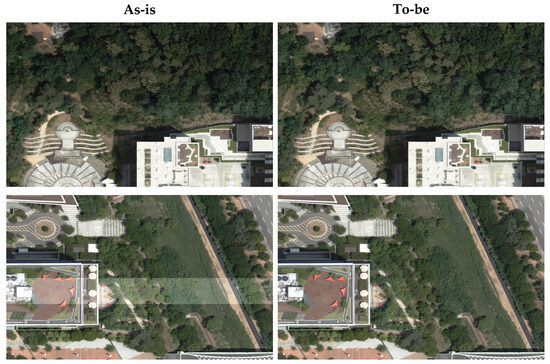
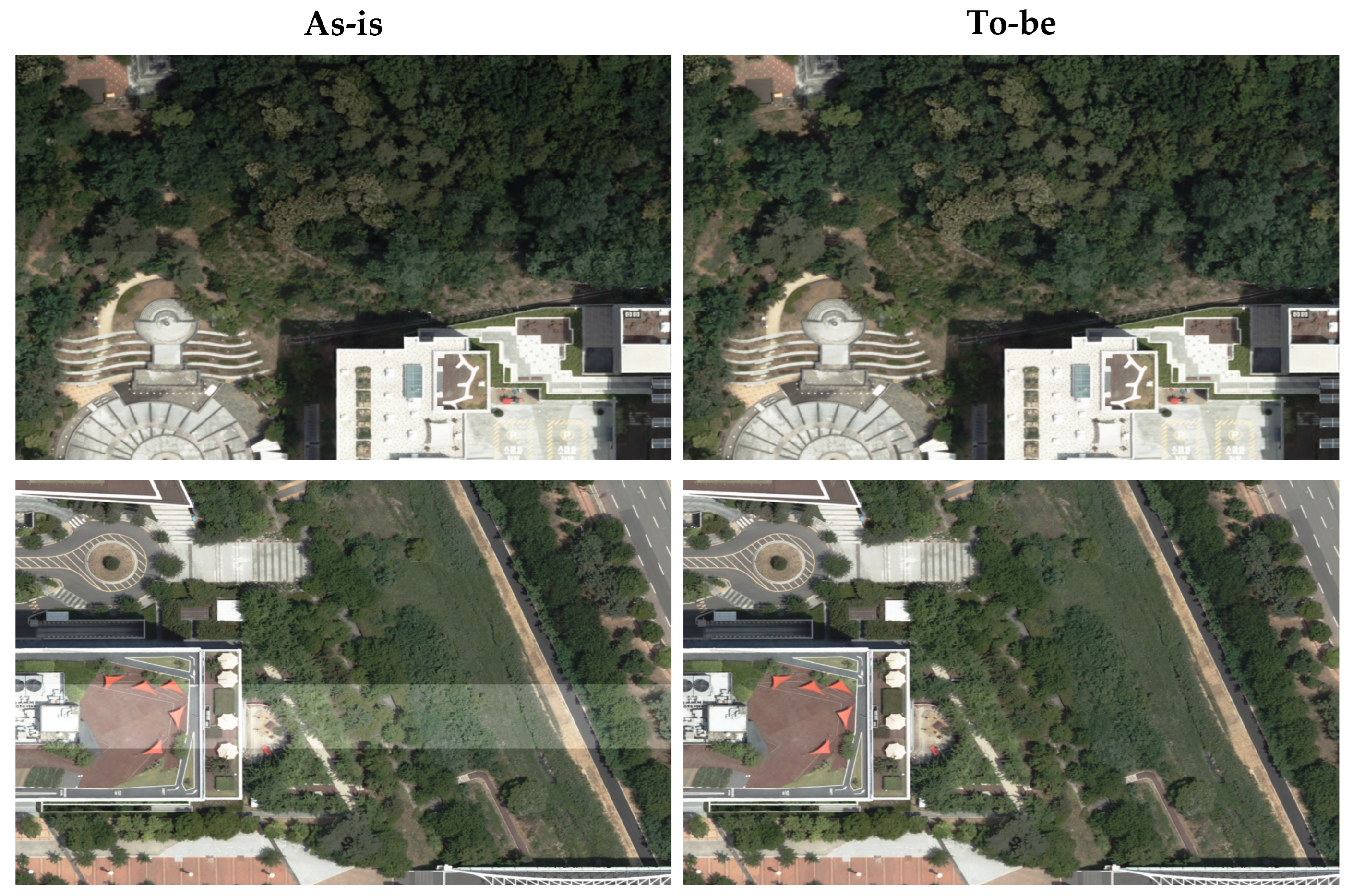
Aerial photographs may exhibit strip-to-strip inconsistencies in color tone and brightness, resulting from the combined effects of solar elevation at the time of acquisition, atmospheric conditions, and terrain-related factors. Radiometric correction was performed to compensate for these color-related errors (Figure 5).
Figure 5.
Results of radiometric correction.
In addition, when inter-strip color differences were observed, image balancing was applied to minimize tonal and brightness discrepancies between adjacent images, thereby ensuring a consistent overall radiometric appearance across the full mosaic.
Seamline editing is the step in which adjacent processing is performed for the overlapping areas of individual images used to generate the true orthophoto. During this process, road warping caused by DEM errors, as well as inter-strip discontinuities that may occur during orthorectification, were corrected simultaneously. This helped minimize positional errors in the final true orthophoto. Also, in areas with dense buildings or where buildings are adjacent to vegetation, errors may occur in which building boundaries appear irregular or jagged. Because such errors lead to inaccurate delineation of building outlines, the boundary artifacts were manually corrected using the original aerial imagery or an orthophoto in which only terrain relief displacement had been removed.
The initial true orthophotos were first produced as tile-based working units and subsequently underwent radiometric correction, geometric correction and error inspection and manual editing. These corrected working-unit images were then mosaicked into a single image file covering the entire study area. In the mosaicking stage, the fully corrected tiles were integrated to produce a seamless mosaic for the target area.
4.2. Data Modeling
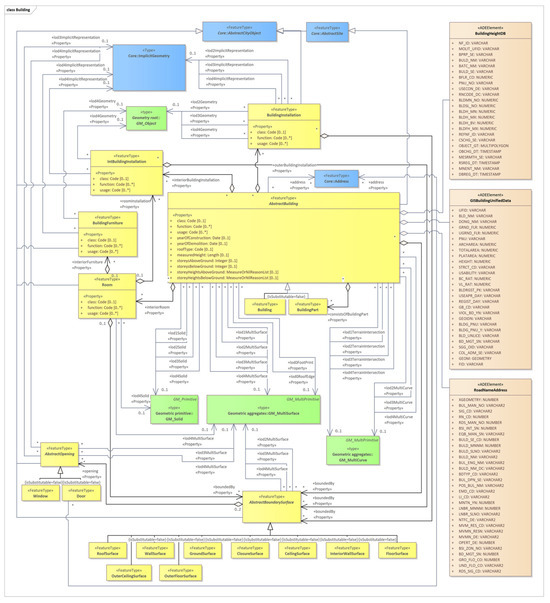
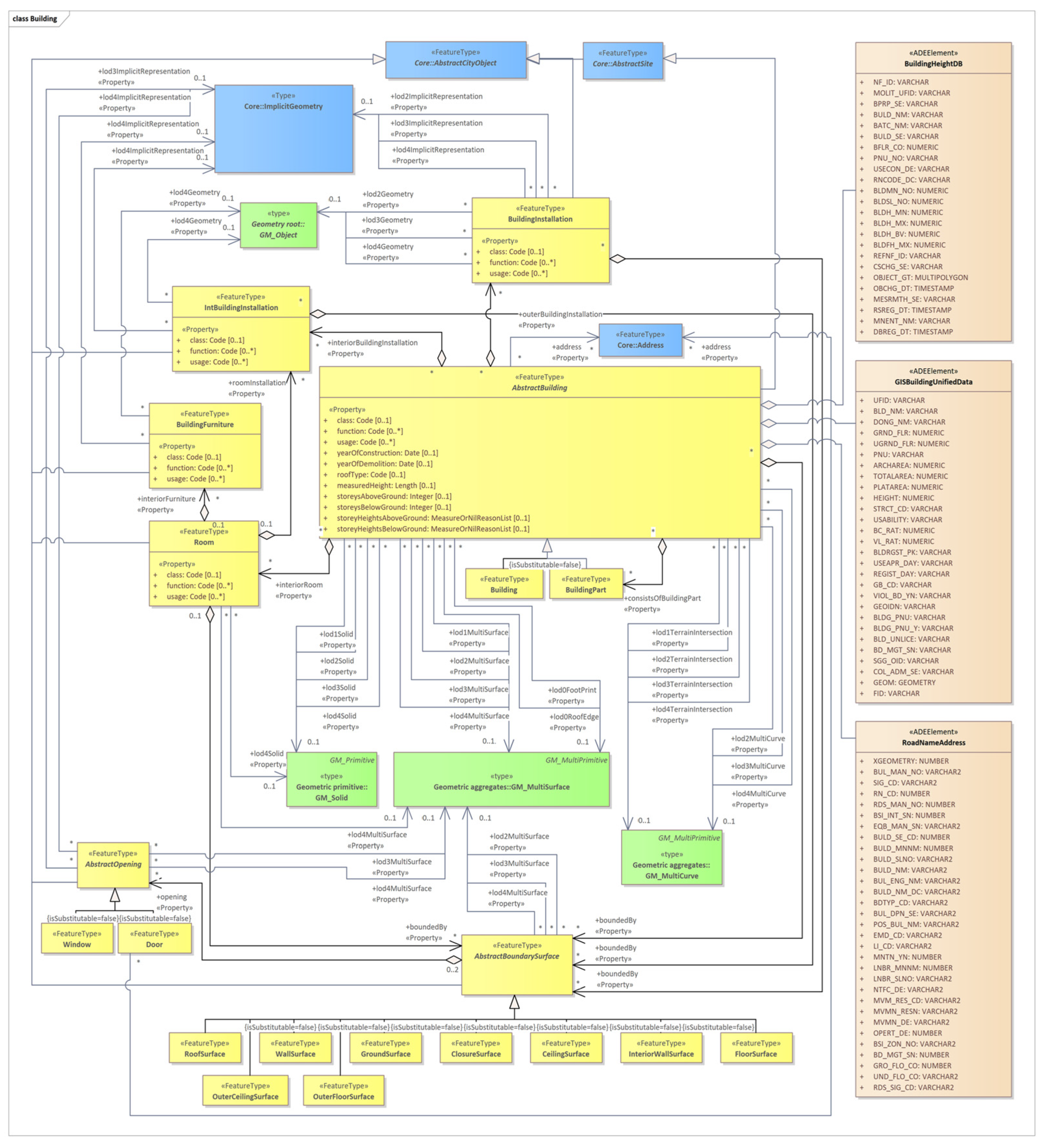
In this section, the Building module of OGC CityGML 2.0 is established as the reference model and extended using the ADE technique to incorporate various factors, such as attribute information, tailored to the building conditions of South Korea (Figure 6). Based on this data model, digital twin building objects are constructed using both automatic and manual methods.
Figure 6.
ADE results for the CityGML 2.0 building module.
CityGML serves as an open data model and an XML-based international standard format designed to facilitate the storage and exchange of 3D city and landscape models. Following the release of version 1.0 in 2008, version 2.0 was adopted as an international standard by the OGC in 2012. It has since been extensively employed globally as a reference model for the construction and utilization of 3D geospatial information. A distinguishing feature of CityGML 2.0 is its capability to comprehensively define not only geometric information but also topological, semantic, and appearance attributes. Specifically, it categorizes diverse urban objects into 13 thematic extension modules—such as Building, Transportation, and WaterBody—thereby providing the flexibility required to systematically model urban spaces. Furthermore, by establishing five LoD ranging from LoD 0 to LoD 4 for a single object, the standard offers a structure that facilitates the representation and management of objects at multiple resolutions, in accordance with specific data construction objectives and application services. Moreover, the ADE mechanism allows for the extension of the existing model by incorporating new attributes or object types as needed, making it an optimal standard for addressing country-specific or domain-specific requirements.
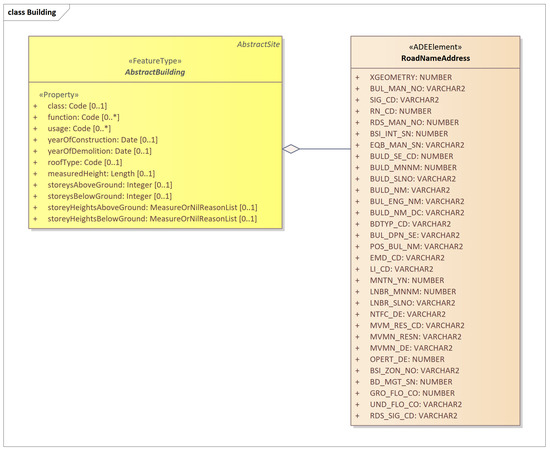
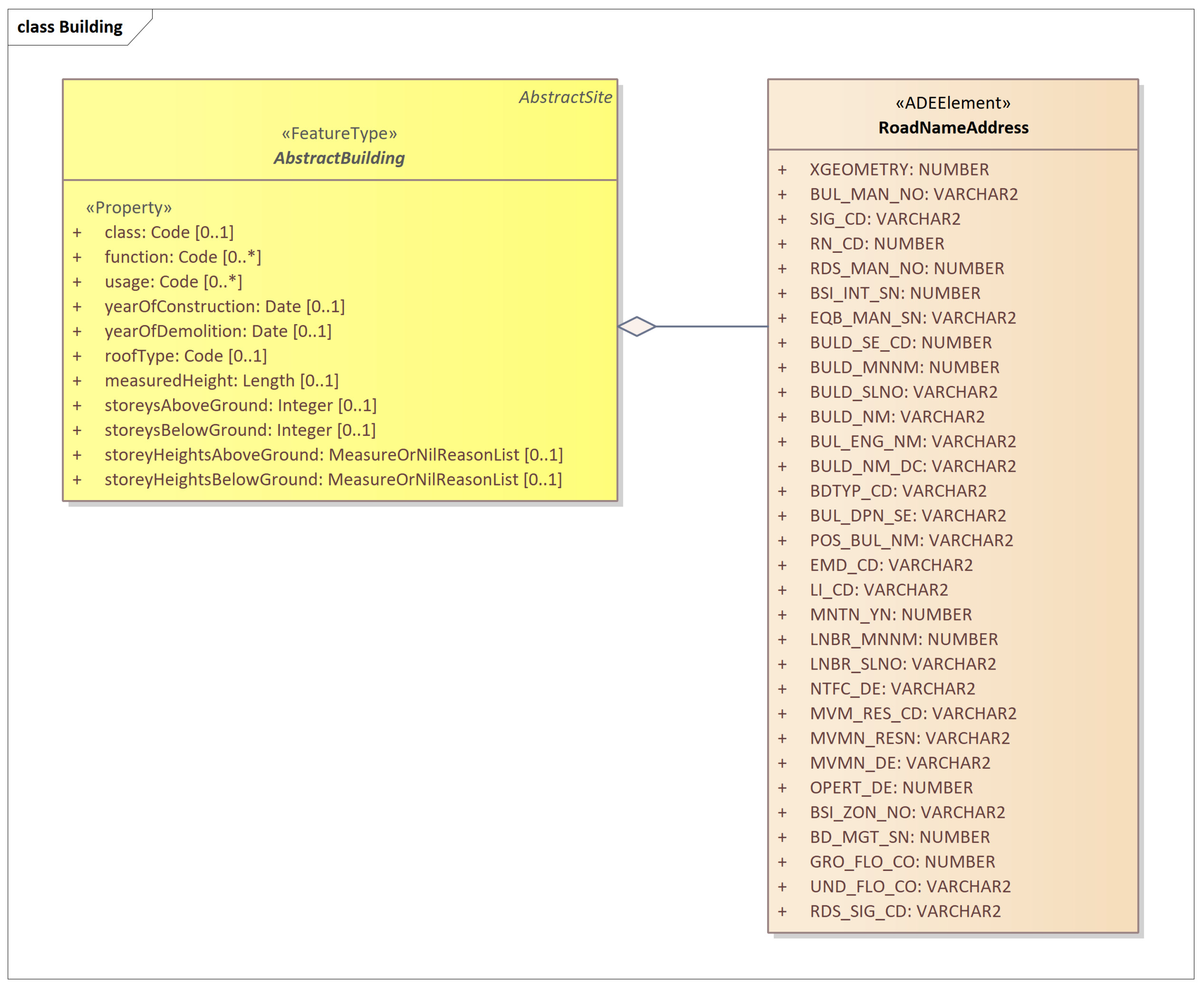
As described above, this study differs from conventional approaches in that it does not merely construct and utilize CityGML data in its generic form; rather, it develops digital twin data by extending CityGML to incorporate a range of national geospatial information (public datasets) related to buildings in South Korea. More specifically, the proposed extension of the CityGML 2.0 Building module targets three datasets provided by the NGII of Korea: The Building Height DB, GIS-Integrated Building Information, and the Road Name Address dataset. The attribute information contained in these three building-related datasets was designed to be inherited under the AbstractBuilding class within the CityGML 2.0 Building module.
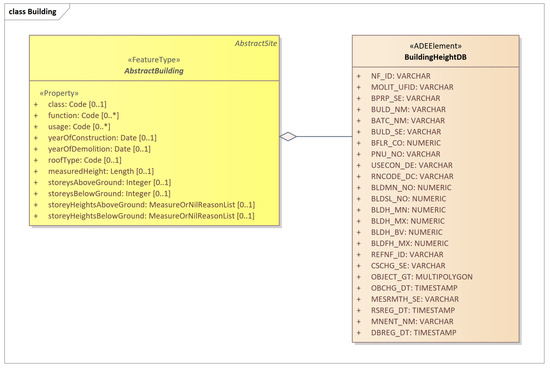
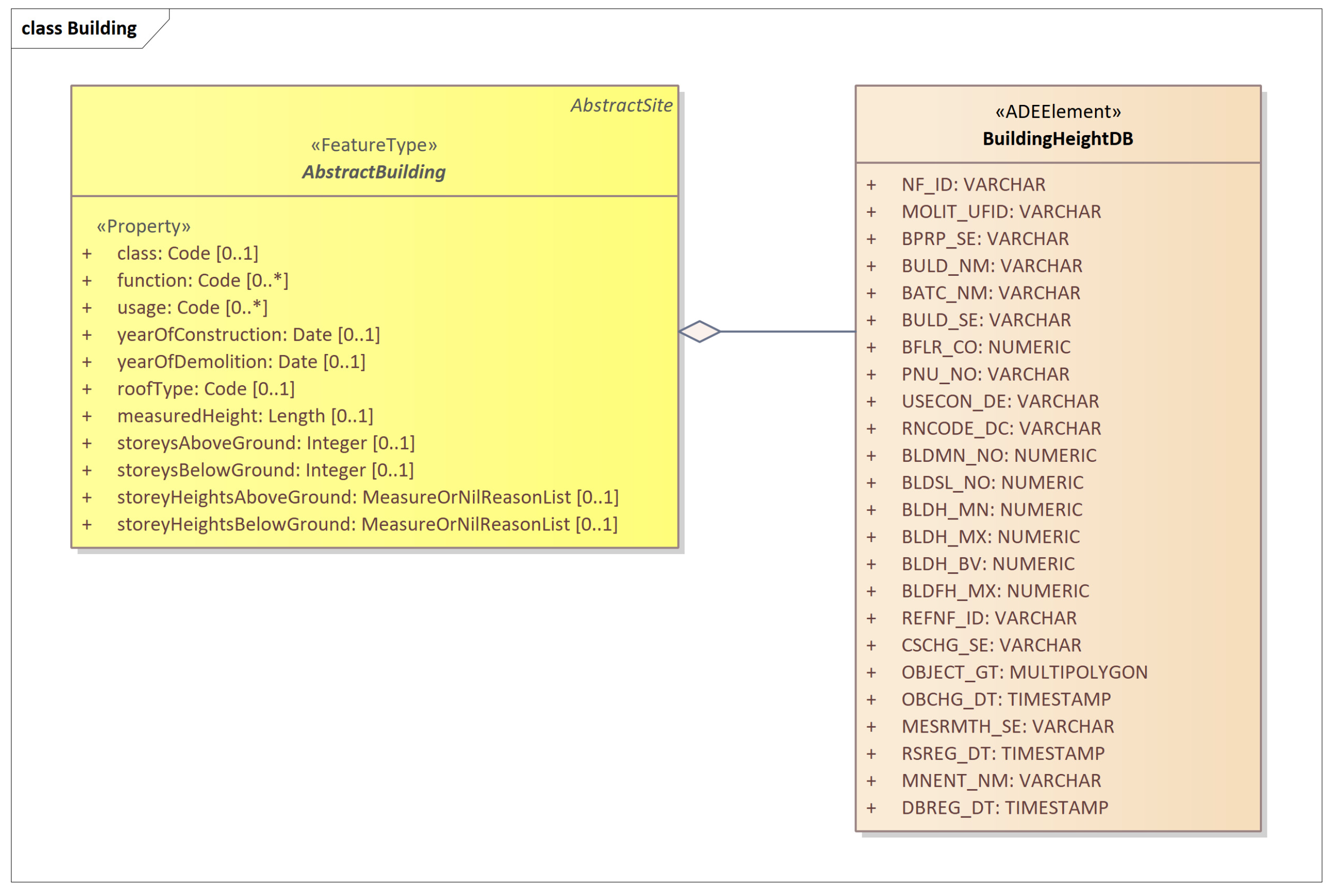
The Building Height DB provided by NGII is a foundational geospatial dataset established to support the government-led implementation of digital twins in South Korea. It was produced by converging the National Base Map DB with height information derived from aerial surveys, thereby delivering building-level height attributes. By integrating building height information with 2D building footprint-based spatial data, the dataset is designed to serve as a fundamental input for city-scale 3D visualization and analysis. In terms of its structure, the NGII Building Height DB comprises building footprint vector geometries, height values, and building metadata (e.g., building purpose/use-type codes, building name, number of floors), providing essential attributes required for generating 3D (or pseudo-3D) building models (Figure 7). Prior studies report that the dataset was developed by combining building height information acquired from aerial surveying with the national general map (National Base Map) DB, and that it includes an attribute schema covering building location, footprint geometry (polygon), height (e.g., BLDH_BV), ground-referenced height (e.g., BLDH_MN), update date (OBJECT_DT), and registration date (DBREG_DT) [27].
Figure 7.
ADE results—BuildingHeightDB.
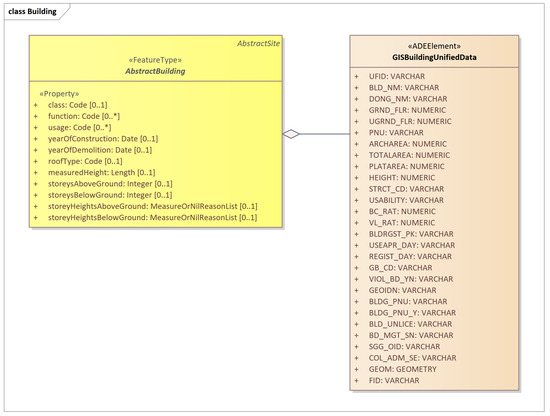
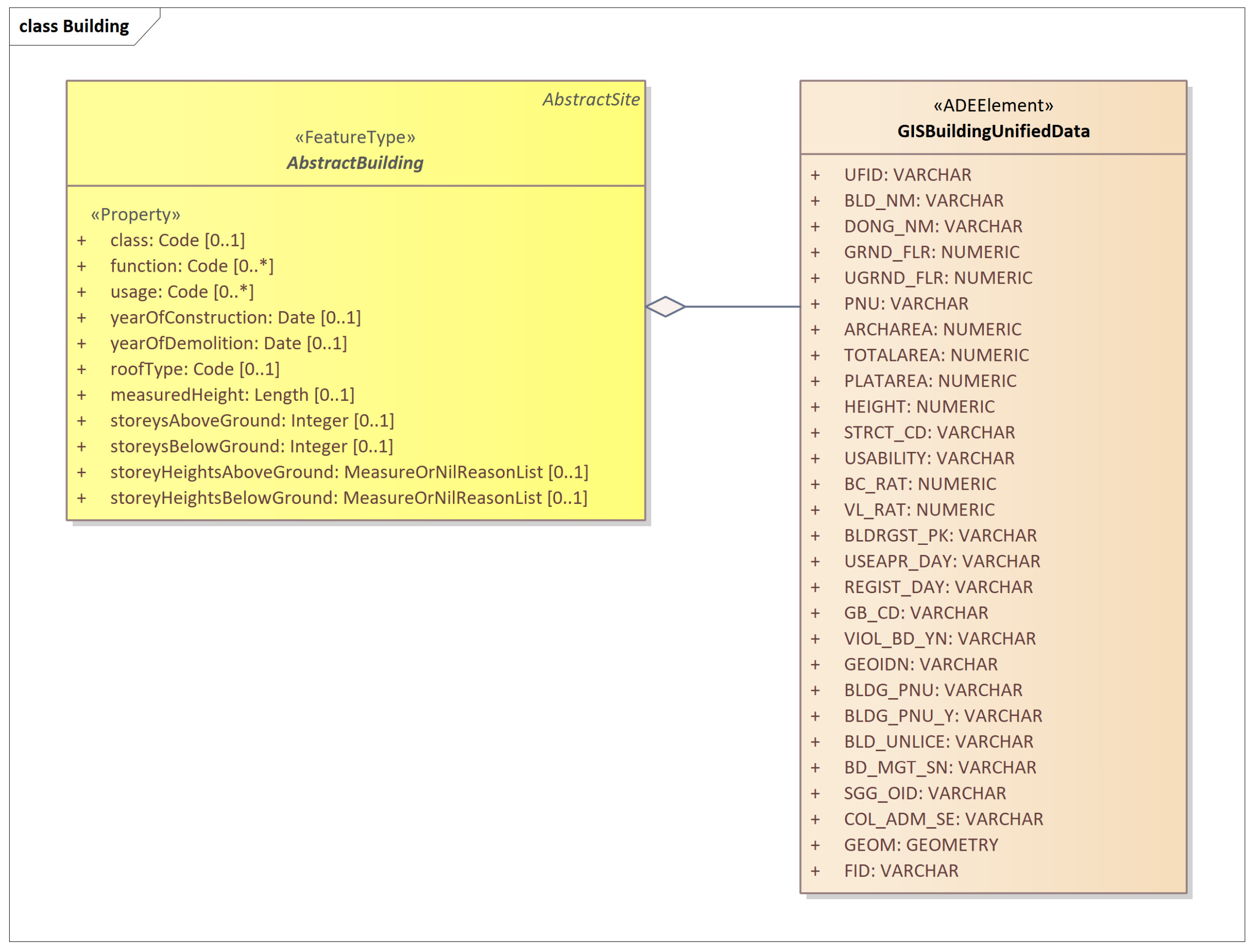
Next, GIS-Integrated Building Information is an integrated, building-level spatial dataset managed and provided by the Ministry of Land, Infrastructure and Transport (MOLIT). It is a land-based integrated building information product constructed by linking and integrating building spatial information (geometry), derived from continuous cadastral polygon data, with building register attributes from the national building administration system (Seumteo) at the individual building level [28]. GIS-Integrated Building Information integrates building spatial data based on continuous cadastral polygon information and this dataset includes the following information: Original drawing ID, GIS building integration identifier, Unique number, Legal district code, Legal district name, Lot number, Special land code, Special land category, Building use code, Building use name, Building structure code, Building structure name, Building area, Date of use approval, Floor area, Land area, Height, Building coverage ratio, Floor area ratio, Building ID, Violation building status, Reference system link key, and Data reference date (Figure 8) [4].
Figure 8.
ADE results—GISBuildingUnifiedData.
South Korea’s Road Name Address DB is a national address information system managed and distributed by the Ministry of the Interior and Safety (MOIS). It is established and operated to consistently provide a standardized road-name-based address scheme. The database serves as a core reference source for address search and matching, administrative-district-based analyses, and the implementation of location-based services. In terms of distribution, it is provided through file-based releases—such as the Address DB, Building DB, and Detailed Address DB—and OpenAPI-based integration that supports real-time search and coordinate queries. In particular, within the file-based releases, the Address DB (Korean Road Name Address DB) is structured to provide a single address record per address unit when multiple buildings share the same road-name address, as is common for multi-unit residential complexes (e.g., apartments), and it is distributed at a scale of approximately six million records. In addition, the Building DB includes building information—the fundamental unit constituting the road-name address system—along with the corresponding lot-based (jibeon) information for each building; for multi-unit complexes, it is also well-suited to providing more granular details, such as building-by-building (dong-level) information (Figure 9) [28].
Figure 9.
ADE results—RoadNameAddress.
Next, digital twin data were produced and implemented based on the CityGML 2.0 Building ADE data model (18,120 buildings). The production workflow employed two complementary approaches—automatic (14,148 buildings at LoD 1~2) and manual (3972 buildings at LoD 3~4).
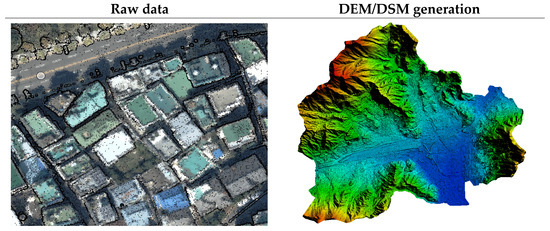
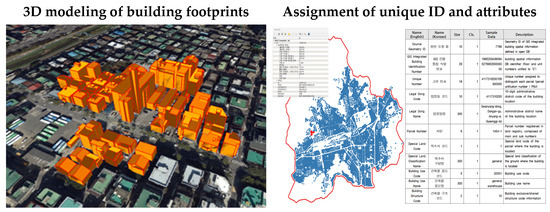
Automatic production of digital twin data was carried out for low-rise, high-density buildings (LoD 1~2) in Busanjin-gu. The automated workflow proceeded in the following order (Table 5): DEM generation, classification of building point-cloud data, building vectorization, outline refinement and building ID assignment, and texture mapping.
Table 5.
Digital twin data construction procedure (automated).
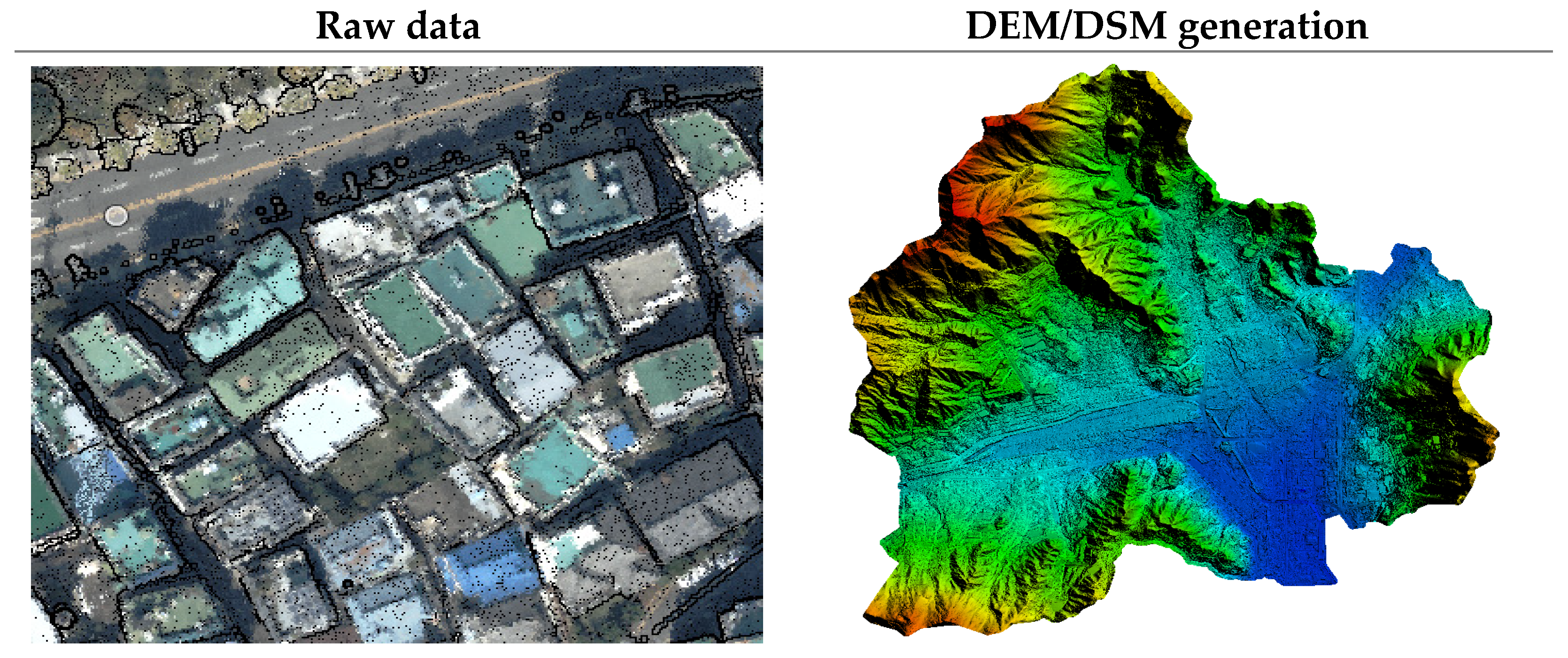
For the extraction of building objects, classifying the underlying terrain is a prerequisite. During DEM generation, the raw data were initially classified automatically, followed by manual editing to rectify automated misclassifications. This procedure enabled the production of a terrain surface that could serve as the base for building objects. The DEM workflow proceeded in the following order: (1) raw data, (2) automated ground classification, (3) manual ground classification, (4) DSM generation, (5) DEM generation, and (6) DSM/DEM compilation for the project area.
To extract building points from the non-ground point cloud, information such as intensity, return number, echo values, and the degree of height clustering was required. Because the parameters to be adjusted vary depending on local site characteristics, an additional step was necessary to appropriately calibrate the baseline parameter settings. Since building-point classification requires only points above a certain height threshold, ground-classified points were first removed, and only points with elevations higher than the ground surface were retained. These points were then further classified as building points. This process included both vegetation classification and building-point classification.
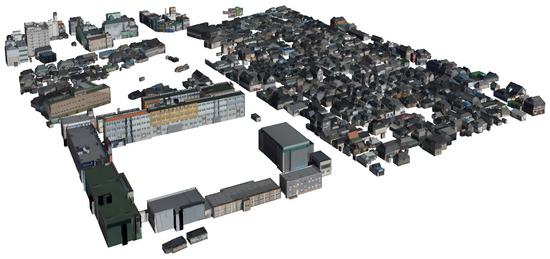
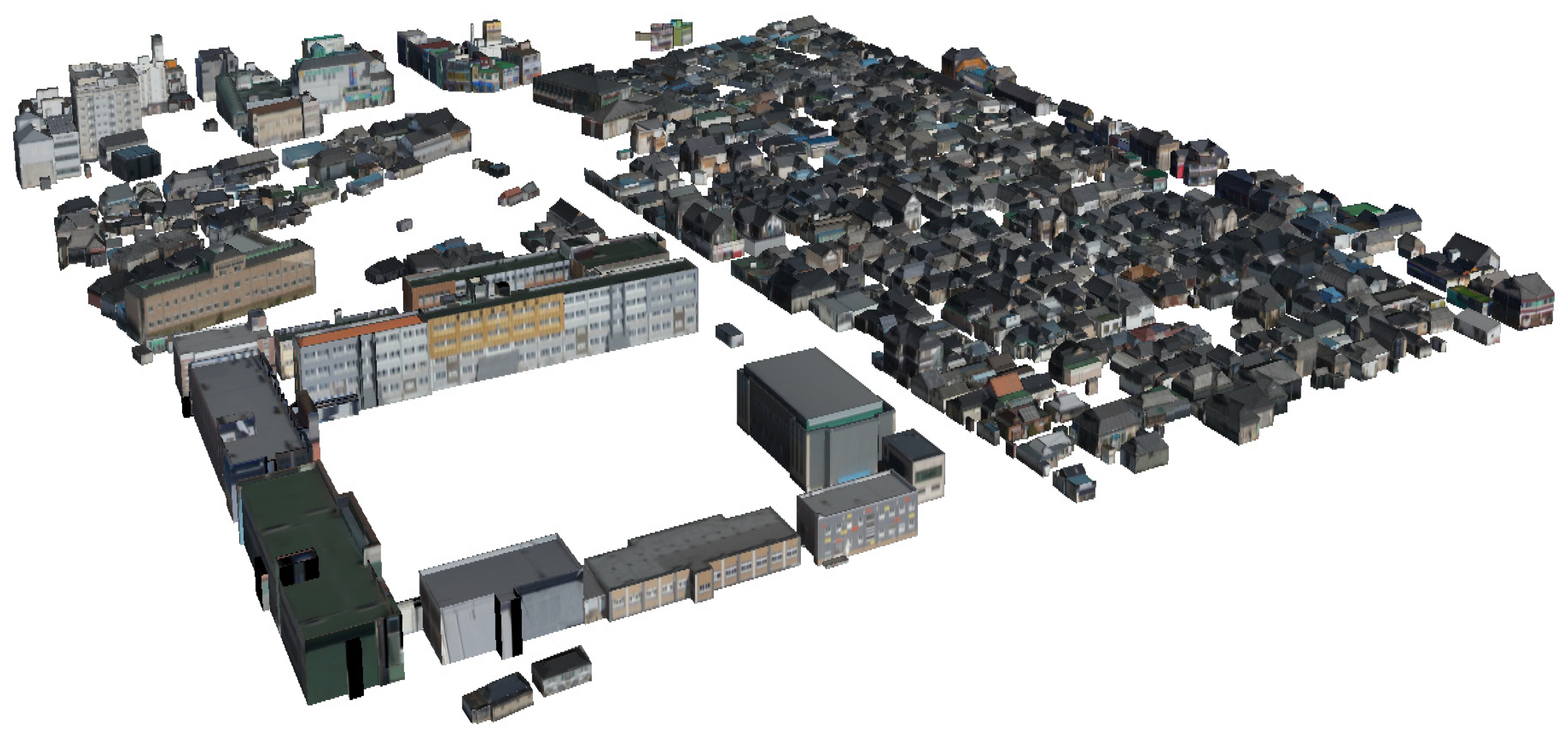
Building footprints were extracted using the point cloud classified as buildings. The extraction leveraged the spatial extent of the classified points, their angular relationship to the ground surface, roof slope characteristics, and corner cues identifiable in the reference orthorectified imagery. Based on these factors, optimal parameter values were determined and automatic vectorization was performed. In this step, footprint vectorization and 3D modeling of the building outlines were conducted concurrently (Figure 10).
Figure 10.
Results of digital twin data construction (automated).
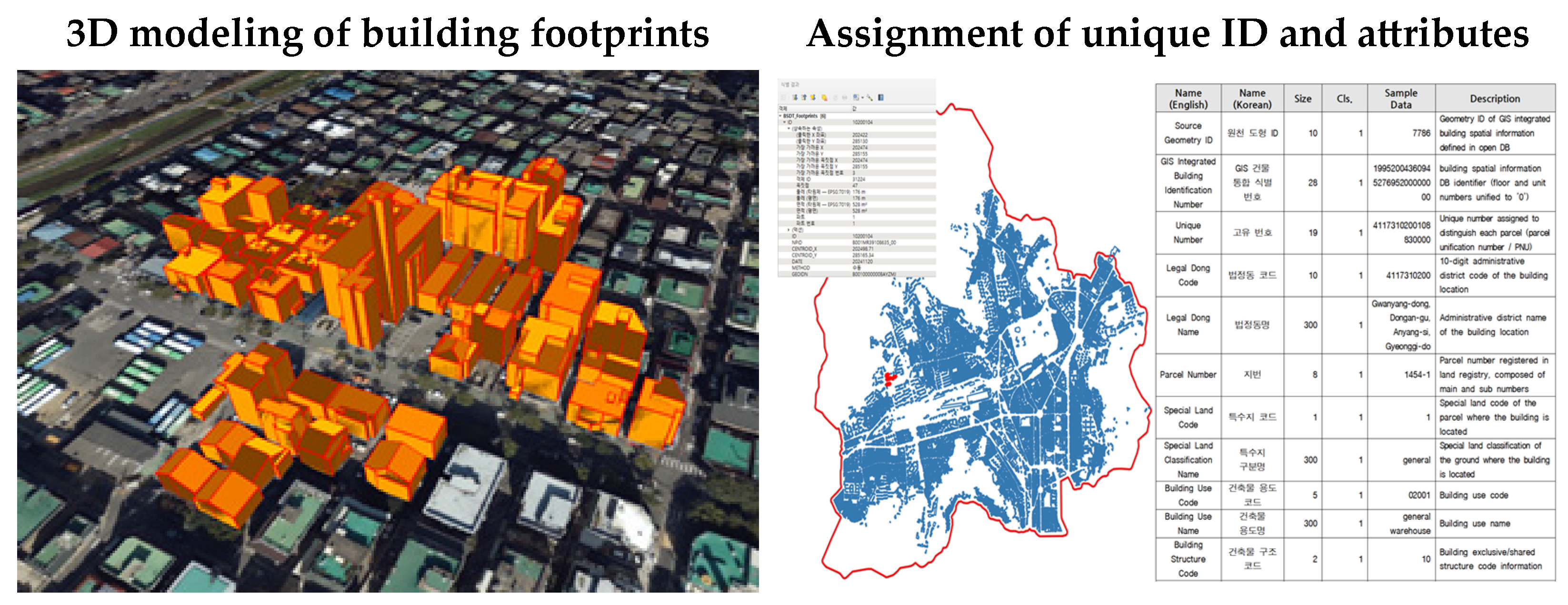
The extracted building outlines were compared with the orthorectified imagery; for buildings requiring correction, the point cloud was adjusted and the outlines were re-extracted. In addition, buildings within the target area were distinguished from those outside the target boundary to retain only the outlines corresponding to the automated production area. During this process, irrelevant objects such as vegetation, bridges, and gate structures were removed. For building-object management and attributes, each building object was assigned an object ID, attributes, and a unique object identifier (NPID). The overall procedure consisted of: (1) verification of building outlines, (2) removal of errors and non-target objects, (3) inspection for omissions and outline refinement, (4) assignment of building object IDs, (5) ID verification, and (6) assignment of NPIDs and attributes.
Finally, manual production of the digital twin data was conducted for high-rise and low-density buildings (LoD 3~4) in Busanjin-gu. The manual workflow comprised five stages: (1) delineation of work blocks, (2) manual 3D object generation, (3) data storage, (4) data conversion and texture mapping, and (5) inspection and correction. In the work-block delineation stage, processing units were defined by considering the overall workload, available personnel, and building density; work blocks were then partitioned based on factors such as the road network and the number of buildings. During the manual production stage, true-orthophoto vertical aerial imagery, for which aerial triangulation had been completed, was used to manually generate 3D building objects through detailed stereoscopic restitution based on parallax differences in the vertical photographs. After modeling, each building object was assigned a unique identifier, ensuring that IDs were non-duplicative and mapped one-to-one to individual building objects (Figure 11).
Figure 11.
Manual workflow for digital twin data production.
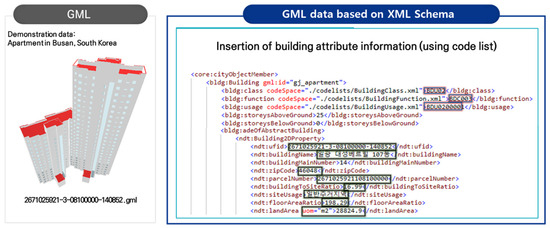
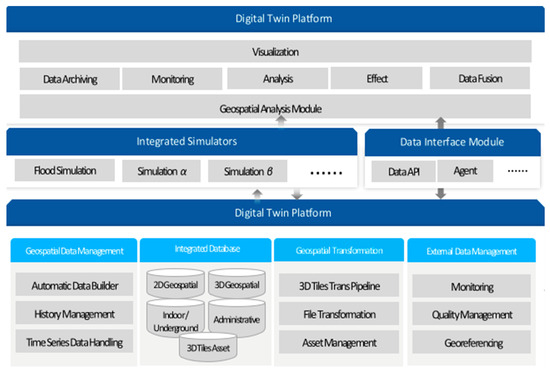
This shows the attribute information extended in the ADE format in the building GML, as shown in Figure 12, and the result of inserting the code values by referencing the predefined code list XML [6].
Figure 12.
Example of GML data with added code list attribute values [6].
In the data storage stage, the completed 3D restitution outputs were saved in file formats suitable for texture mapping. Moreover, to improve efficiency in subsequent model revisions, the output was organized and managed at the project level. In the data conversion and texture mapping stage, the finalized 3D model geometry was exported, and textures were generated by applying both vertically and obliquely acquired aerial imagery to the extracted 3D models. Finally, in the inspection and correction stage, both the texture-mapped models and the textures themselves were systematically reviewed, and any errors identified in the textured 3D models were manually corrected.
The detailed procedure is as follows. The quality of the digital twin data (LoD 1–4) for 18,120 buildings, generated through both automated and manual methods, was evaluated using the open-source software tools CityDoctorValidation and CityDoctorGUI (Table 6).
Table 6.
Results of quality assessment for urban digital twin data.
CityDoctor is designed to detect errors pertaining to geometric, attribute, and semantic information, as well as XML schemas. The validation parameters included self-intersecting linear rings (GE_R_SELF_INTERSECTION), unclosed solids (GE_S_NOT_ CLOSED), consecutive identical coordinates (GE_R_CONSECUTIVE_POIN TS_SAME), disconnected polygon interiors (GE_P_INTERIOR_DISCONNECTED), and non-manifold vertices (GE_S_NON_MANIFOLD_VERTEX). While the LoD 1–3 datasets exhibited no significant anomalies, the LoD 4 data presented numerous unclosed solid issues, which were subsequently addressed through corrective measures and refinement.
4.3. Visualizing the Urban Digital Twin
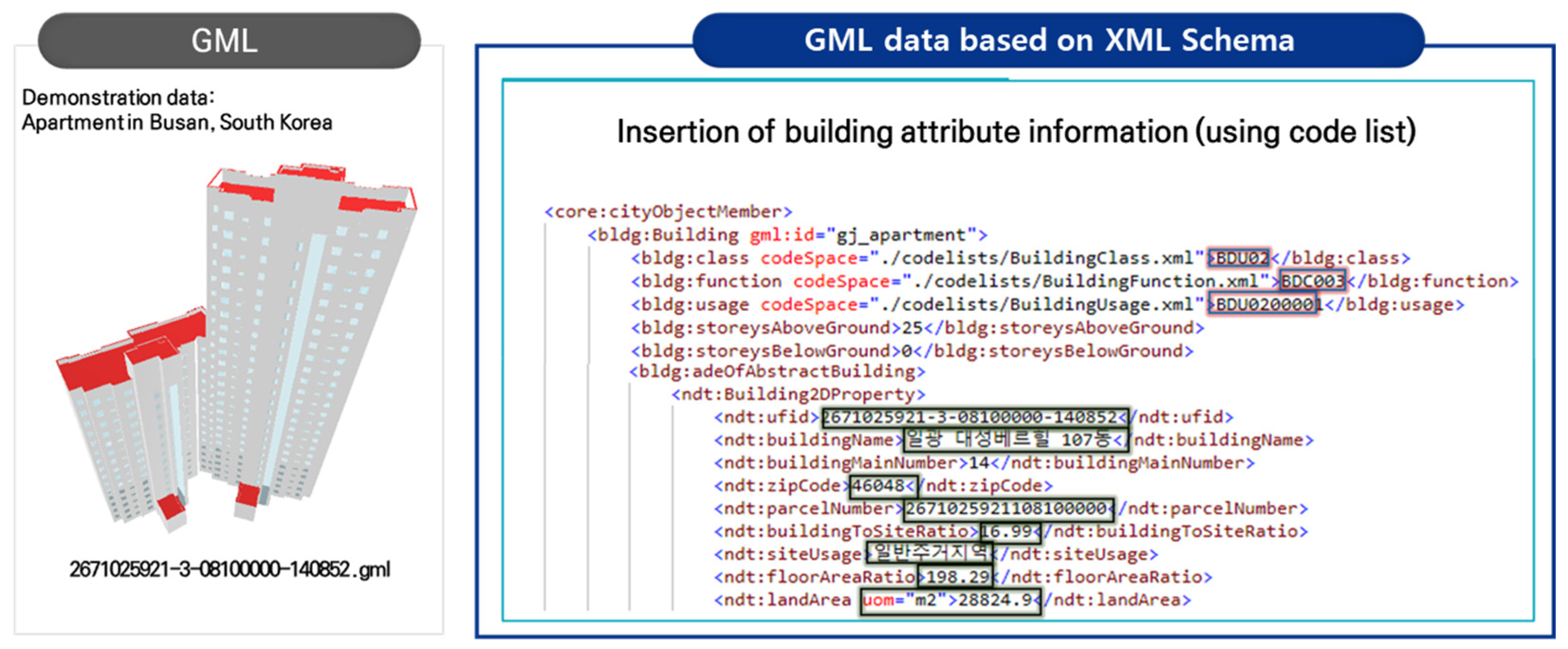
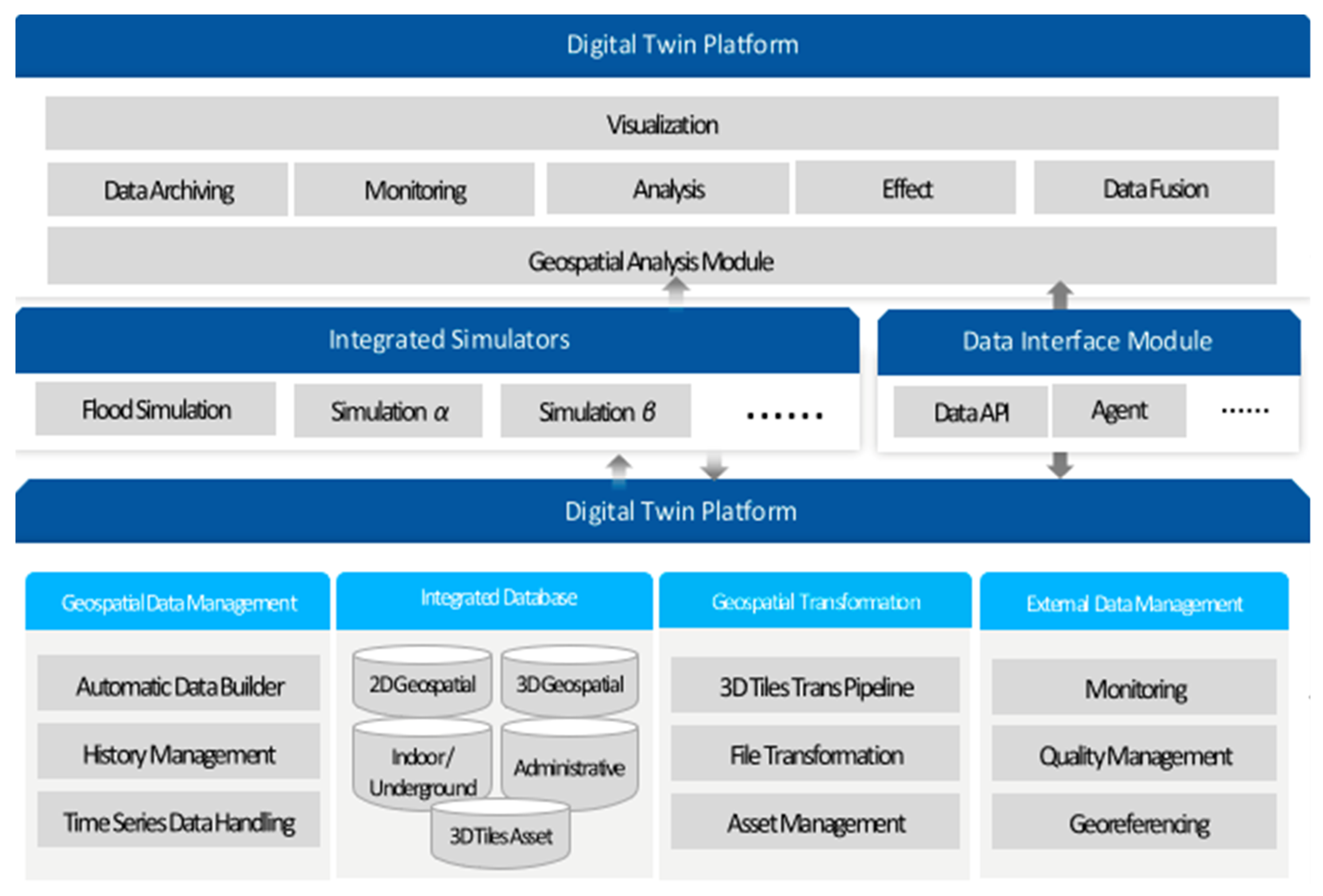
To operationalize the digital twin data through actual ingestion, visualization, and use, we adopted the public-sector (administrative network) components of South Korea’s National Digital Twin framework—namely, the LX Cloud (IaaS) and the Digital Land and Geospatial Platform (DLGP; PaaS)—as the foundational environment for digital twin data deployment. The LX Cloud functions as the cloud infrastructure layer for implementing and operating administrative support services based on digital twins. In other words, it provides the underlying platform backbone that enables data storage and management as well as service operation, thereby facilitating the effective use of geospatial and administrative information. Built on this infrastructure, the DLGP was designed to ensure the stable execution of core digital twin capabilities, including data linkage and convergence, 3D visualization, and simulation. In this architecture, DLGP can be characterized as a platform layer that delivers both data services and digital twin services on top of the LX Cloud infrastructure. The data service component establishes mechanisms for interconnecting datasets across multiple institutions and, through standards-based data construction, provides GIS-driven administrative support functions while ensuring interoperability and a secure operational environment (Figure 13).
Figure 13.
Architecture of the LX cloud and the DLGP.
Next, based on the LX Cloud and DLGP, we ingested and visualized the digital twin datasets developed in this study. As described above, the LX Cloud enables the storage, management, and operation required for digital-twin-based administrative services, while the DLGP supports reliable execution of data integration and fusion, 3D visualization, and simulation functions. Accordingly, this section details the texture mapping and data conversion processes conducted to enable platform-based visualization of the urban digital twin (Figure 14).
Figure 14.
Visualization of the digital twin data.
First, texture mapping for the 3D building objects was performed such that photorealistic image textures were automatically mapped using the modeling outputs and geometric image information. The resulting textured 3D objects were then exported and stored as individual OBJ files at the object level. When certain objects were not successfully exported during OBJ generation, we attributed this to errors introduced during the modeling process; the corresponding objects were subsequently corrected and re-exported. Through this workflow, potential object omission during visualization was minimized, and the data deliverables were organized to support object-level management within the platform environment.
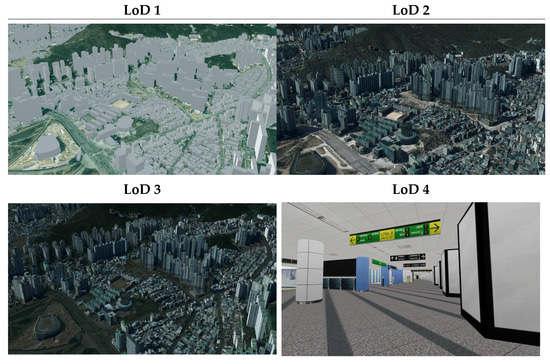
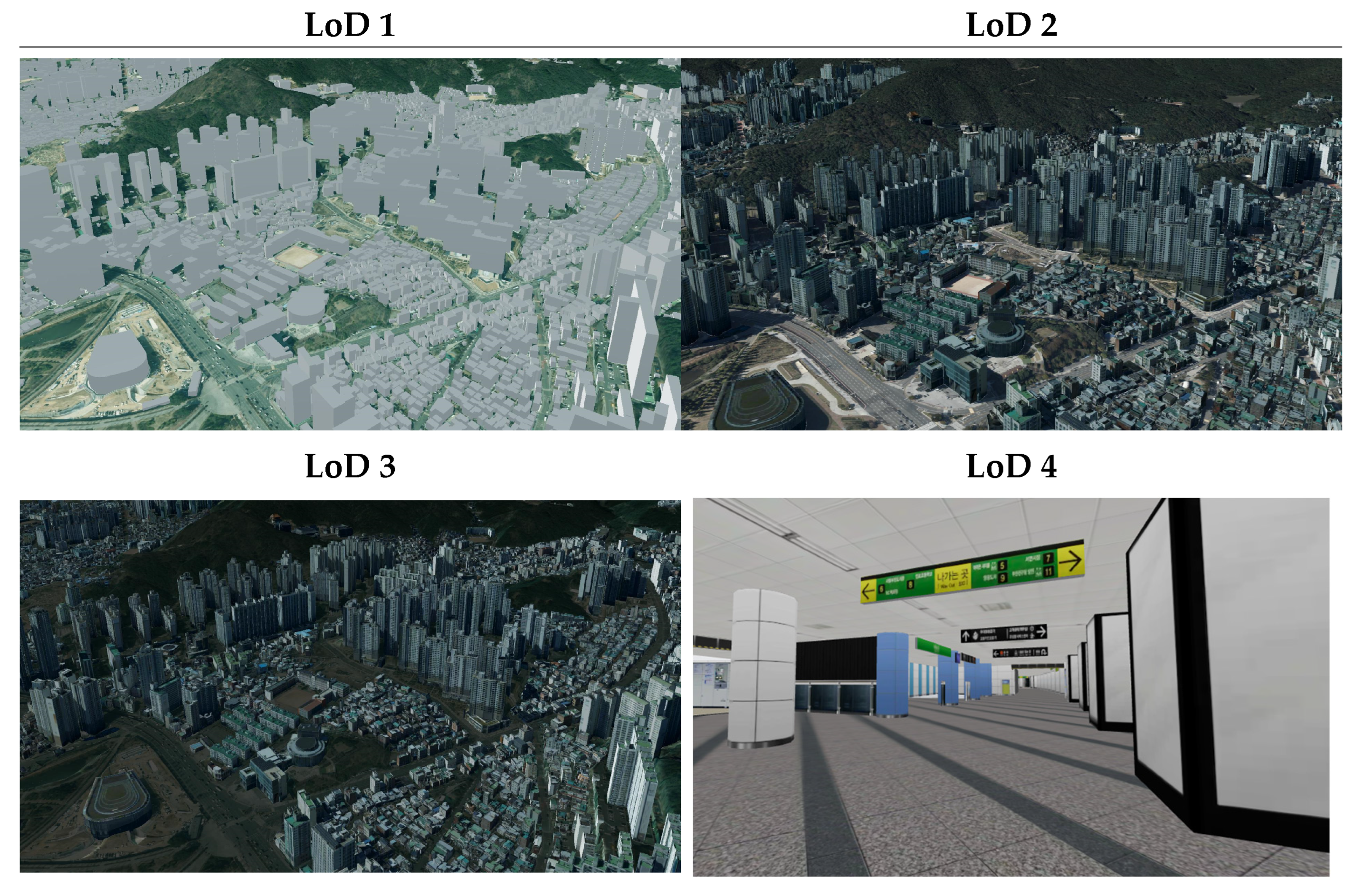
Subsequently, all textured objects underwent inspection and correction. Specifically, texture application results were reviewed, and any texture artifacts were rectified. In addition, when the correction process revealed structural issues in the model itself—such as improper structuring or object segmentation errors, the affected models were rebuilt. Finally, the texture quality across LoD 1–4 was systematically verified and refined to meet the representation requirements for urban digital twin visualization (Figure 15).
Figure 15.
Implementation of the digital twin data across LoD 1–4.
Overall, the digital twin datasets constructed in compliance with international standards (e.g., OGC) enable GIS-based administrative support services as well as a range of 3D simulation functions, including landscape, solar access, and viewshed analyses. Moreover, the Busanjin-gu digital twin dataset developed in this study not only achieves a level of visual fidelity comparable to the physical environment but also serves as a practical analytical instrument to support urban management and policy decision-making.
5. Discussion
In the digital age, urban digital twins have positioned themselves as a critical metaphor within sustainable smart cities, likened to concepts such as ‘city brain’ and ‘platform urbanism’ [29]. It highlights urban digital twins advanced modeling and simulation capabilities in developing innovative solutions for environmental sustainability [30]. Moreover, the collaboration between urban digital twins and emerging technologies like BIM, ML, IoT, and drones is forging new paths for urban sustainability [30]. This partnership enhances the granularity and responsiveness of urban digital twin models, allowing for the simulation of urban dynamics with unparalleled accuracy and detail [31].
However, the success of an urban digital twin is determined less by “how realistic it looks” than by whether the underlying data are structured and semantically consistent under a recognized standard, interoperable across heterogeneous systems, and reusable in an operational and updatable form. In South Korea, where the National Digital Twin framework is intended for large-scale and wide-area deployment, project-specific visualization deliverables (primarily mesh- and texture-based outputs) have accumulated over time, repeatedly exacerbating structural issues such as the coexistence of incompatible datasets, missing attributes, limited quality assurance, and difficulties in updating and reusing data.
Against this backdrop, this study establishes a standard-oriented methodology for constructing urban digital twin data that reflects the administrative and geospatial data environment of South Korea, grounded in the international standard OGC CityGML 2.0. The proposed approach is empirically validated through a real-world implementation in Busanjin-gu, Busan Metropolitan City, where the resulting dataset was deployed and visualized on an operational platform. Notably, moving beyond purely geometry-centric 3D modeling, the study enhances the semantic value of the city model by extending the CityGML schema through the ADE mechanism to incorporate heterogeneous public datasets.
The key implications and contributions of this work are summarized as follows.
- Enhanced interoperability through alignment between international standards and the domestic data environment. Many existing digital twin projects have prioritized visual realism and relied on non-standard formats (e.g., OBJ, FBX), which constrains data reuse and cross-system exchange. In contrast, this study adopts the CityGML 2.0 Building module as a reference model and systematically accommodates Korea-specific building attributes via ADE. This design enables not only the exchange of physical building geometry but also the consistent sharing of administrative and management attributes across systems with different data schemas. Consequently, the proposed data model can be regarded as a technical realization of the data integration and sharing principles promoted under South Korea’s “Digital Platform Government” policy.
- Demonstration of practical feasibility by integrating high-precision aerial surveying with a cloud-based platform. Using a modern hybrid sensor such as CityMapper2, this study produced high-resolution true orthophotos (GSD 0.1 m) and LoD 1~4 level 3D building objects. Furthermore, instead of confining the results to a local computing environment, the large-scale dataset was deployed and served through the LX Cloud infrastructure and the DLGP, thereby confirming scalability toward web-based public services and administrative decision-support use cases. This extends prior work that often remains at the “construction” stage by validating a full-lifecycle process that connects construction to platform “operation” and “service” delivery.
- Improved production efficiency and an explicit quality management workflow. To balance efficiency and quality in large-area production, the study employed a dual-track strategy: automated generation for low-rise, high-density areas and manual production for high-rise or structurally complex areas. In addition, stepwise inspection and correction procedures were specified to address common issues during texture mapping, including model structuring errors and object omissions. This workflow can serve as a practical guideline for reducing trial-and-error and achieving more consistent data quality in future nationwide digital twin initiatives.
Despite these contributions, several limitations remain and should be addressed in future research.
- Future research should adapt the proposed model to the revised ADE schema mechanism of CityGML 3.0. This transition necessitates redefining the LoD for the digital twin data to align with the new CityGML 3.0 specifications, which now incorporate indoor environments across LoD 1~3. Additionally, an integration framework bridging IoT sensor data and digital twin objects must be developed, leveraging the newly introduced Dynamizer module in CityGML 3.0.
- Currently, fully integrating the semantic elements defined in CityGML 2.0/3.0 into digital twin object data requires meticulous manual processing. However, this conventional approach presents significant inefficiencies regarding construction time, human resources, and quality consistency. Therefore, future research must prioritize the development of automated mechanisms. Specifically, emphasis should be placed on semantic-based automated tiling methodologies and the automatic classification of semantic objects directly from raw source data (e.g., point clouds).
- Future research must extend the standardization framework to additional digital twin domains beyond buildings, such as vegetation and roads. While this study primarily focused on building objects, enhancing the completeness of the urban digital twin requires expanding the data model to encompass other infrastructure elements, including roads, bridges, and underground utilities. Furthermore, robust topological relationships among these diverse features must be established strictly based on recognized standards.
In conclusion, by proposing and empirically validating a high-precision urban digital twin data model that integrates South Korea’s public datasets with international standards, this study provides foundational, operational-grade data that can support the intelligent evolution of smart city applications and urban administrative services.
6. Conclusions
This study was motivated by the premise that the success of an urban digital twin depends less on visual realism per se than on whether the underlying data are accumulated in a form that is structurally consistent and semantically coherent under a standard, and thus interoperable, reusable, operable, and updatable. In particular, because South Korea’s National Digital Twin Land framework is designed for wide-area and large-scale operation, the continued accumulation of project-level 3D deliverables (primarily mesh- and texture-based outputs) is likely to reproduce persistent problems, including inconsistencies in data structure, missing attributes, limited quality assurance, and difficulties in updating. Accordingly, this study fixed the OGC CityGML 2.0 Building module as the reference model and established a standards-based methodology that extends and integrates Korea’s building-related public datasets through the ADE mechanism. The proposed approach was empirically validated through an end-to-end workflow—construction, modeling, and visualization—using aerial imagery and airborne LiDAR survey products for Busanjin-gu, Busan Metropolitan City.
In the data acquisition and production phase, the entire true-orthophoto production workflow was systematized—covering flight permissions and airspace coordination, flight planning, Network RTK (VRS)-based ground control point (GCP) surveying, aerial triangulation, orthorectification, radiometric correction, seamline editing, and mosaicking—thereby securing foundational datasets, namely a high-resolution true orthophoto (GSD 0.1 m) and a DEM (GSD 0.5 m). In the data modeling phase, an ADE model was designed and implemented based on the class structure of the CityGML 2.0 Building module, such that attribute information from the Building Height DB, GIS-integrated building information, and the Road-Name Address DB could be accommodated within the AbstractBuilding hierarchy. Through this process, the study achieved a semantic integration of physical 3D geometry with administrative and management attributes. In addition, to balance efficiency and quality on a scale, a dual-track production strategy was adopted: automated generation for low-rise, high-density buildings and manual production for high-rise, low-density buildings.
In the visualization phase, the constructed datasets were deployed to the LX Cloud and DLGP environments. Platform-level feasibility—under an operational deployment assumption—was verified through automated texture mapping, object-level storage, and stepwise inspection and correction procedures addressing omissions, texture defects, structuring errors, and object partitioning errors. Importantly, this demonstrates practical value beyond presenting a standalone 3D output, by offering a reproducible framework for data construction and management in the context of a national public platform and municipal operations.
The contributions of this study can be summarized as follows. First, by fixing an international standard-based reference model (CityGML 2.0) and applying ADE, the study proposes a standards-oriented data model that semantically integrates fragmented building-related public datasets in South Korea with a 3D city model. Second, the study formalizes a full-lifecycle production workflow—from high-precision aerial survey-based data acquisition to LoD 1~4 object generation, texturing, inspection and correction, and platform deployment and visualization—thereby establishing a foundation for practical guidelines that can be leveraged in future nationwide rollouts. Third, by emphasizing interoperability, reusability, and operational readiness, the study presents an implementable example of “operational” urban digital twin data construction that strengthens the potential linkage to urban administrative services (e.g., permitting, disaster management, environmental analysis, landscape assessment, solar access, and viewshed analysis).
Nevertheless, the study was conducted on the basis of CityGML 2.0; therefore, further research is required to support migration and schema alignment toward CityGML 3.0, which strengthens capabilities for dynamic data handling and integrated indoor–outdoor modeling. Moreover, to reduce the costs associated with manual production and quality control in large-scale projects, automation technologies should be advanced, including automated object recognition, automated texturing, and anomaly-detection-driven quality inspection. Finally, since the current scope is centered on Building objects, subsequent studies should expand the model to broader urban infrastructure assets (e.g., roads, bridges, and underground facilities), establish topological and semantic relationships among objects, and incorporate linkages to sensor and administrative event data, including temporal and state-change modeling.
In conclusion, by jointly proposing and empirically validating a CityGML–ADE-based data model that aligns international standards with South Korea’s public data environment, together with a reproducible construction procedure designed for platform operation, this study concretizes a standardized framework for Korea-tailored urban digital twin data production. The results provide a technical basis that can simultaneously support the sustainable operation of the National Digital Twin Land initiative and the practical administrative utilization at the municipal level, and they further reinforce—through empirical evidence—the importance of standards-based data governance in ensuring interoperability and reusability as urban digital twins scale and proliferate.
Author Contributions
Conceptualization, Taeyun Jeong and Dawoon Jeong; formal analysis, Taeyun Jeong, Dawoon Jeong and Meejeong Kim; methodology, Taeyun Jeong, Dawoon Jeong and Meejeong Kim; software, Taeyun Jeong, Dawoon Jeong and Meejeong Kim; visualization, Taeyun Jeong; validation, Meejeong Kim; writing—original draft, Taeyun Jeong and Dawoon Jeong; writing—review & editing, Meejeong Kim. All authors have read and agreed to the published version of the manuscript.
Funding
This work was supported by the Ministry of Science and ICT, and the National Information society Agency (2026 Digital Twin Pilot Zone Development (Urban Area)).
Data Availability Statement
The data presented in this study are available on request from the corresponding author.
Conflicts of Interest
Authors Taeyun Jeong, Dawoon Jeong and Meejeong Kim were employed by the company Korea Land and Geospatial Informatix Corporation (LX). The remaining authors declare that the research was conducted in the absence of any commercial or financial relationships that could be construed as a potential conflict of interest.
References
- Ivanov, S.; Nikolskaya, K.; Radchenko, G.; Sokolinsky, L.; Zymbler, M. Digital twin of city: Concept overview. In Proceedings of the Global Smart Industry Conference (GloSIC), Chelyabinsk, Russia, 17–19 November 2020. [Google Scholar]
- Nam, T.; Pardo, T.A. Conceptualizing smart city with dimensions of technology, people, and institutions. In Proceedings of the 12th Annual International Digital Government Research Conference: Digital Government Innovation in Challenging Times, College Park, MD, USA, 12–15 June 2011. [Google Scholar]
- Glaessgen, E.; Stargel, D. The digital twin paradigm for future NASA and U.S. Air Force Vehicles. In Proceedings of the 53rd AIAA/ASME/ASCE/AHS/ASC Structures, Structural Dynamics and Materials Conference, Honolulu, HI, USA, 23–26 April 2012. [Google Scholar]
- Jeong, D.; Lee, C.; Choi, Y.; Jeong, T. Building digital twin data model based on public data. Buildings 2024, 14, 2911. [Google Scholar] [CrossRef] [Scilit]
- MOLIT. National Spatial Information Standardization Research; Research Report; Ministry of Land, Infrastructure and Transport: Sejong, Republic of Korea, 2021.
- Jeong, D.; Jeong, T.; Lee, C.; Choi, Y.; Lee, D. A study on guidelines for constructing building digital twin data. Buildings 2025, 15, 434. [Google Scholar] [CrossRef] [Scilit]
- Lehtola, V.V.; Koeva, M.; Elberink, S.O.; Raposo, P.; Virtanen, J.-P.; Vahdatikhaki, F.; Borsci, S. Digital twin of a city: Review of technology serving city needs. J. Appl. Earth Obs. Geoinf. 2022, 114, 102915. [Google Scholar] [CrossRef] [Scilit]
- Rossknecht, M.; Airaksinen, E. Concept and evaluation of heating demand prediction based on 3D city models and the CityGML energy ADE—Case study helsinki. ISPRS Int. J. Geo.-Inf. 2020, 9, 602. [Google Scholar] [CrossRef] [Scilit]
- Breunig, M.; Schilberg, B.; Thomsen, A.; Kuper, P.V.; Jahn, M.; Butwilowski, E. Db4geo, a 3D/4D geodatabase and its application for the analysis of landslides. In Lecture Notes in Geoinformation and Cartography; Springer: Berlin/Heidelberg, Germany, 2010; pp. 83–101. [Google Scholar]
- Chen, S.; Zhang, W.; Wong, N.H.; Ignatius, M. Combining CityGML files and data-driven models for microclimate simulations in a tropical city. Build. Environ. 2020, 185, 107314. [Google Scholar] [CrossRef] [Scilit]
- Nys, G.A.; Poux, F.; Billen, R. CityJSON building generation from airborne LiDAR 3D point clouds. ISPRS Int. J. Geo.-Inf. 2020, 9, 521. [Google Scholar] [CrossRef] [Scilit]
- Brasebin, M.; Perret, J.; Mustière, S.; Weber, C. 3D urban data to assess local urban regulation influence. Comput. Environ. Urban Syst. 2018, 68, 37–52. [Google Scholar] [CrossRef] [Scilit]
- Chen, K.; Lu, W.; Xue, F.; Tang, P.; Li, L.H. Automatic building information model reconstruction in high-density urban areas: Augmenting multi-source data with architectural knowledge. Autom. Constr. 2018, 93, 22–34. [Google Scholar] [CrossRef] [Scilit]
- Olfat, H.; Atazadeh, B.; Shojaei, D.; Rajabifard, A. The feasibility of a BIM-driven approach to support building subdivision workflows—Case study of victoria, Australia. ISPRS Int. J. Geo.-Inf. 2019, 8, 499. [Google Scholar] [CrossRef] [Scilit]
- Sun, J.; Mi, S.; Olsson, P.-O.; Paulsson, J.; Harrie, L. Utilizing BIM and GIS for representation and visualization of 3D cadastre. ISPRS Int. J. Geo.-Inf. 2019, 8, 503. [Google Scholar] [CrossRef] [Scilit]
- MOLIT. Revised Plan for the Operation of the National Digital Twin Platform; Research Report; Ministry of Land, Infrastructure and Transport: Sejong, Republic of Korea, 2023.
- Dani, A.A.H.; Supangkat, S.H.; Lubis, F.F.; Nugraha, I.G.B.B.; Kinanda, R.; Rizkia, I. Development of a smart city platform based on digital twin technology for monitoring and supporting decision-making. Sustainability 2023, 15, 14002. [Google Scholar] [CrossRef] [Scilit]
- Hämäläinen, M. Urban development with dynamic digital twins in Helsinki city. IET Smart Cities 2021, 3, 201–210. [Google Scholar] [CrossRef] [Scilit]
- Lee, A.; Lee, K.; Kim, K.; Shin, S. A geospatial platform to manage large-scale individual mobility for an urban digital twin platform. Remote Sens. 2022, 14, 723. [Google Scholar] [CrossRef] [Scilit]
- Zhu, J.; Zhang, J.; Zhu, Q.; Zuo, L.; Liang, C.; Chen, X.; Xie, Y. Virtual geographical scene twin modeling: A combined data-driven and knowledge- driven method with bridge construction as a case study. Int. J. Digit. Earth 2024, 17, 1–23. [Google Scholar] [CrossRef] [Scilit]
- MLIT. Technical Report for Development of 3D City Models in LoD 3; PLATEAU Technical Report; Ministry of Land, Infrastructure, Transport and Tourism: Tokyo, Japan, 2021.
- Mazzetto, S. A Review of Urban Digital Twins Integration, Challenges, and Future Directions in Smart City Development. Sustainability 2024, 16, 8337. [Google Scholar] [CrossRef] [Scilit]
- Supianto, A.A.; Nasar, W.; Margrethe, D.A.; Hasan, A.; Karlsen, A.S.T.; Torres, R.D.S. An Urban Digital Twin Framework for Reference and Planning. IEEE Access 2024, 12, 152444–152465. [Google Scholar] [CrossRef] [Scilit]
- Ferré-Bigorra, J.; Casals, M.; Gangolells, M. The adoption of urban digital twins. Cities 2022, 131, 103905. [Google Scholar] [CrossRef] [Scilit]
- Barresi, A. Urban Digital Twin and Urban Planning for Sustainable Cities. Techne 2023, 25, 78–83. [Google Scholar] [CrossRef] [Scilit]
- Dembski, F.; Wössner, U.; Letzgus, M.; Ruddat, M.; Yamu, C. Urban Digital Twins for Smart Cities and Citizens: The Case Study of Herrenberg, Germany. Sustainability 2020, 12, 2307. [Google Scholar] [CrossRef] [Scilit]
- Wi, H.J.; Jang, I.S.; Lee, A. Driving altitude generation method with pseudo-3D building model for unmanned aerial vehicles. ETRI J. 2022, 45, 240–253. [Google Scholar] [CrossRef] [Scilit]
- Public Data Portal in South Korea. Available online: https://www.data.go.kr/ (accessed on 13 December 2025).
- Almusaed, A.; Almssad, A.; Almusaed, A.; Almssad, A. Blending Human Ware with Software and Hardware in the Design of Smart Cities. In Sustainable Smart Cities—A Vision for Tomorrow; IntechOpen: London, UK, 2022. [Google Scholar]
- Weil, C.; Bibri, S.E.; Longchamp, R.; Golay, F.; Alahi, A. Urban Digital Twin Challenges: A Systematic Review and Perspectives for Sustainable Smart Cities. Sustain. Cities Soc. 2023, 99, 104862. [Google Scholar] [CrossRef] [Scilit]
- SSabri, S.; Alexandridis, K.; Koohikamali, M.; Zhang, S.; Ozkaya, H.E. Designing a Spatially-explicit Urban Digital Twin Framework for Smart Water Infrastructure and Flood Management. In Proceedings of the 2023 IEEE 3rd International Conference on Digital Twins and Parallel Intelligence (DTPI), Orlando, FL, USA, 16 October–9 November 2023; pp. 1–9. [Google Scholar]

Disclaimer/Publisher’s Note: The statements, opinions and data contained in all publications are solely those of the individual author(s) and contributor(s) and not of MDPI and/or the editor(s). MDPI and/or the editor(s) disclaim responsibility for any injury to people or property resulting from any ideas, methods, instructions or products referred to in the content. |
© 2026 by the authors. Published by MDPI on behalf of the International Society for Photogrammetry and Remote Sensing. Licensee MDPI, Basel, Switzerland. This article is an open access article distributed under the terms and conditions of the Creative Commons Attribution (CC BY) license.