


Abstract
There has been substantial debate regarding the consequences of overtourism in cities. Scholars have also examined variables that are directly and indirectly related to tourism, including demography, urban rehabilitation and requalification, gentrification, speculation in the real estate market, the influence of digital booking platforms, and the expansion of short-term rental (STR) accommodation. This research seeks to develop a clearer spatial understanding of this last one. By analyzing their distribution, density (maximum occupancy), and clustering and by employing Geographic Information Systems (GIS), this article will propose methodologies to better visualize spatial patterns, providing different perspectives of the city of Lisbon and its most tourism-intensive parishes. The article finds that STRs in Lisbon have expanded rapidly, concentrating overwhelmingly in six historic parishes where STR supply and maximum occupancy now exceed resident populations and housing availability. GIS analysis reveals intense clustering in central neighborhoods—especially Alfama—indicating significant tourism pressure and signs of overtourism. These spatial patterns correlate with depopulation and rising housing costs. The study concludes that STR are now a decisive factor in urban imbalance and that detailed spatial analysis is essential for regulating tourism, defining carrying-capacity thresholds, and developing more sustainable, socially just urban planning policies.
1. Introduction
1.1. Tourism and Development in Europe
According to the World Travel and Tourism Council, the tourism industry contributes about 10.4% to global GDP and supports over 319 million jobs worldwide [1]. Portugal is no exception, and tourism has been a constantly evolving industry over the past two decades.
Over the last decade, tourism in Europe has undergone significant transformations, marked by strong pre-pandemic growth and an unprecedented crisis during the COVID-19 pandemic. Since then, the “old continent” has had a rapid recovery and travel patterns and priorities were reshaped. During this period, Europe remained the world’s leading tourism region, accounting for approximately 40% of global international tourist arrivals [2].
Between 2015 and 2019, European tourism experienced steady growth. International arrivals rose each year, reaching 743.9 million visitors in 2019. Growth was supported by the expansion of low-cost airlines, high-speed rail networks like the RENFE in Spain or TGV in France and increasing demand from long-haul markets such as the United States and Asia [3]. Major destinations, including France, Spain, Italy, Germany, Greece and the United Kingdom dominated arrivals, while city tourism became a central pillar of Europe’s tourism economy [4].
Paris, London, Barcelona, Rome and Venice are just a few examples in a group of European countries with fast tourism growth rate. Paris consistently ranked as one of the most visited cities worldwide, attracting almost 40 million visitors annually (before the pandemic). London similarly benefited from its global city status, with strong demand for cultural, educational, recreational and shopping tourism, as well as international events [5]. Southern European cities such as Barcelona, Rome, Athens and Venice experienced rapid growth linked to cruise tourism, short city breaks, and the popularity of Mediterranean travel [6].
The contribution of tourism to the European economy was significant, accounting for around 10% of European Union GDP [3]. However, by the late 2010s, the success of city tourism also raised strong concerns about overtourism, mainly on infrastructures like transportation (traffic and public transport), sanitation and water resources (garbage, water scarcity), housing (increasing prices on rentals and gentrification), basic services (health and security), and waste management systems, in addition to putting pressure on historical sites and natural ecosystems (trail degradation, coastal areas, beaches and pollution). Overtourism occurs when the number of visitors exceeds a destination’s carrying capacity.
Among the European cities with more tourists, others like Lisbon, Amsterdam, and Prague started to show symptoms of touristification. As an extreme example, Venice became a global example of overtourism, with daily visitor numbers often exceeding the local population, while Barcelona saw growing resident protests against mass tourism and short-term rentals [7,8].
This growing trend was interrupted in 2020 by the COVID-19 pandemic. Travel restrictions, border closures, and lockdowns caused international tourist arrivals in Europe to fall by more than 70% compared with the previous year. Major cities like Venice, Paris, London, Madrid, and the most eastern areas of Dubrovnik city, were particularly affected [9]. Although domestic tourism provided limited relief, overall activity remained well below normal levels throughout 2020 and much of 2021.
The recovery began in 2022 when Europe recorded approximately 594 million international arrivals, about 80% of pre-pandemic numbers [2]. Urban tourism recovered alongside leisure travel, supported by the return of events, conferences, and cultural tourism. By 2023, tourism had largely normalized, with tourists spending nearly 2.9 billion nights in EU accommodation, slightly exceeding 2019 figures in some countries more than others. Lisbon was one of the cities with faster recoveries than the previous COVID numbers. In 2024, recovery continued, with total nights spent in EU tourist accommodation surpassing 3 billion, a new record. Spain welcomed over 90 million international tourists, reinforcing the importance of Mediterranean destinations [5].
Several European city authorities increasingly focused on managing growth rather than simply attracting visitors. Venice introduced visitor access fees and restrictions. Barcelona tightened regulations on short-term rentals. Paris expanded sustainable mobility and crowd-management strategies around major attractions to reduce peak influx. Over this last decade, structural changes have reshaped European tourism. Digital platforms and low-cost airlines dominate tourism planning, but sustainability has become a central policy concern. Tourists increasingly seek cultural depth, authentic neighborhoods, and experiences beyond traditional landmarks, prompting cities to promote lesser-known areas, avoiding tourism massification and seasonality [6].
Tourism in Europe over the last ten years reflects a clear trajectory of expansion, disruption, but also adaptation. While European tourism has proven resilient and economically vital, its future increasingly depends on balancing urban tourism demand and touristification with sustainability and quality of life for their residents [3,5].
1.2. Tourism in Portugal: A Positive Balance with Consequences
Portugal has been one of the most sought-after countries by foreign tourists due to its rich history, pleasant climate, stunning landscapes, cuisine, and hospitality. Over the last 20 years, tourism in Portugal has been growing consistently, especially after the 2008 financial crisis, which had a significant impact on the Portuguese economy [10].
Since the early 2000s, Portugal has been a popular destination for low-cost airlines, expanding their operations there. The low cost of flights and the possibility of buying cheap last-minute flights were attractions for European tourists. According to INE [2], the number of tourists arriving in Portugal through low-cost airlines increased from around 1.5 million in 2004 to more than 10 million in 2019 [11]. The emergence of low-cost airlines in Europe has enabled more people to access flights, making travel cheaper and expanding the number of destinations [12] (pp. 29–43).
The Portuguese national statistics institute, INE [13] shows that the number of tourists visiting Portugal in 2021 was around 9.6 million, corresponding to a growth of 48.4% compared to the previous year, but a 61% drop from the previous year due to the COVID-19 pandemic. However, even with this drop and the COVID-19 pandemic, the number of tourists who visited Portugal in 2021 is still higher than the 9.1 million who visited in 2010. In addition, tourism revenue in Portugal has increased significantly in recent years, rising from 11.8 billion euros in 2010 to 17.9 billion euros in 2019. According to ‘Tourism in Numbers 2022’ [10], Lisbon was visited by more than 7.5 million tourists, with more or less 18 million overnight stays, 30% of all the 26.5 million tourists that visited Portugal and 31% from national revenue, including all the islands (Azores and Madeira). In total, 78% were foreign, and only 22% were Portuguese. A total of 161 million euros of revenue from a total of 1.530 billion euros came from STRs. Portugal and Lisbon are now recovering from the COVID-19 pandemic.
Online booking platforms have also contributed significantly to the increase in tourism in Portugal. The ease of use, the wide range of accommodation, and the transparency of information were factors that attracted many tourists. In 2019, Airbnb announced that Portugal was its second-most-important market in Europe, with more than 6 million guests staying in the country since 2008. In 2019, 53.9% of overnight stays in Portugal were booked online. Additionally, using these platforms can negatively impact the local economy, as they often operate outside of traditional regulations and may not pay the same taxes as conventional hotels [14] (pp. 814–844).
The power of social media has also significantly boosted Portugal’s status as a tourist destination. Social media allows tourists to share their travel experiences and promote their favorite destinations, reaching a global audience.
Despite its benefits, tourism can also negatively impact society, such as overtourism, environmental degradation, and social and cultural changes. Overtourism is a term used to describe the situation in which many tourists visit a particular attraction, resulting in negative consequences for the destination. It can also be defined as a situation in which the number of visitors to a destination exceeds the destination’s carrying capacity, negatively impacting the local environment, economy, and residents’ quality of life. Several authors have provided definitions of overtourism, each emphasizing different aspects of the phenomenon.
Overtourism occurs when the scale of visitor numbers starts to have a detrimental effect on the quality of life of residents and/or the quality of the experience in the destination and the environment [15]. Destinations experience congestion and overcrowding due to unmanaged influxes of visitors, leading to negative impacts on the host community and tourists [16]. The UNWTO [17] applies the term ‘overtourism’ to situations when there are too many visitors to a particular destination. It manifests itself through congestion, overcrowding, and pressure on local resources, amenities, and infrastructure. So, overtourism is a state of excessive tourism in which the host community and/or the integrity of the natural and cultural environment are negatively affected by the presence and/or activities of tourists. In the end, all of them, in different ways, characterize the term by overcrowding, strain on infrastructure, increased prices, degradation of cultural heritage, environmental damage, cultural commodification, and a decline in the overall visitor experience.
Historic cities, particularly their centers, are vulnerable to overtourism because of their cultural and historical significance and the effects can be seen in many historic cities. For instance, Venice, Italy, has been grappling with overtourism for years, with an estimated 30 million tourists visiting the city annually despite its population of just 50,000 [18]. Similarly, Barcelona, Spain, has been struggling with overtourism, with an estimated 32 million tourists visiting each year, leading to rising rental prices and the displacement of locals.
To mitigate the negative impacts of overtourism, historic cities are increasingly investing in rehabilitation and requalification projects. These projects aim to restore and preserve historic sites while also enhancing the quality of life for locals. For instance, in Venice, the city has embarked on a rehabilitation project that involves renovating historic buildings and repurposing them as affordable housing for locals. Rehabilitation and requalification projects can also lead to gentrification, a process in which urban renewal displaces low-income residents. Gentrification can be a concern in historic cities, as the renovation of old buildings can raise property values and rents, making it unaffordable for low-income residents to live there. Gentrification can also lead to a loss of cultural diversity, as the renewal of historic buildings often attracts affluent residents who may not share the same cultural background as the original residents. Foreign investment from individuals and real estate funds can also contribute to overtourism and its negative impacts, such as overpriced and speculative real estate market prices. In some historic cities, foreign investors have been buying properties for STR, such as Airbnb, leading to a shortage of long-term rental properties and driving up rental prices for locals. This has led to an increase in vacant properties in some areas, which can hurt the local economy and community [19] (pp. 125–137).
2. Research Methodology and Framework
2.1. Methodology
The main focus of this research is to analyze the spatial distribution and intensity of STR accommodation in Lisbon and to assess its relationship with urban tourism pressure (parish and street scale). The study aims to (i) identify spatial clustering patterns of STR units; (ii) measure the concentration of accommodation capacity in relation to resident population and urban space, and; (iii) provide urban spatial analysis for tourism planning policies.
The information sources used in this work cover the themes of demography, tourism and, in particular, short-term rental. International and national sources were used (alphanumeric form and, in some cases, georeferenced). For international data, the World Travel & Tourism Council (WTTC), the World Tourism Organization (UNWTO), and the Organization for Economic Co-operation and Development (OECD). For national data, the National Institute of Statistics (INE)—demographic data, including resident population at parish level. From Turismo de Portugal (National Register of Local Accommodation Establishments—RNAL)—the geographic location of STR units and their maximum legal occupancy capacity (number of beds). Cartographic databases were extracted from (Direção Geral do Território—DGT)—the Portuguese boundaries, districts, parishes, street networks from the Carta Administrativa Oficial de Portugal. And finally, from ESRI (Tomtom, Garmin, NASA, USGS and other companies and consortiums)—the basemaps for spatial context beyond the immediate study area.
All datasets were harmonized, georeferenced, and processed in a GIS environment to ensure spatial consistency and cartographic accuracy.
Scale is a central methodological consideration in this research. Analysis is conducted at multiple spatial levels (parish and street-based buffers) reflecting the theoretical understanding that tourism pressure and overtourism manifest differently across scales. While parish-level analysis allows for comparison across administrative units and alignment with policy frameworks, micro-scale analyses at street level are essential for identifying localized hotspots of tourism pressure that may remain invisible in aggregated statistics.
The choice of this street is also based on empirical knowledge of the area near the Tagus River, which is very accessible and close to other Lisbon city historical sites. Another reason for choosing this street is based on the importance given to it by one of the most important touristic guides (Michelin), which mentions it as one of the most iconic streets in the Alfama district, and the presence of two Manueline portals in two churches, one on the street itself and the other on a perpendicular street. This presence makes it one of the most popular and sought-after streets in the city, in terms of visitor numbers.
This multi-scalar approach responds to calls in the literature for more fine-grained spatial analyses capable of informing targeted urban planning and regulatory interventions. The scale used for the maps was chosen to reveal the necessary detail, but with the concern of limiting the number of variables represented, given the size of the maps. The cartography is presented in the metric system (kilometers and meters).
A descriptive–exploratory approach is used to examine the geographic distribution of STR units, followed by spatial analysis techniques to identify clustering, density patterns, and intensity gradients across the city.
The interpretation of results follows a comparative urban tourism framework, situating Lisbon’s spatial patterns within broader European trends identified in previous GIS-based studies. Spatial concentration and high STR-to-resident ratios are interpreted as indicators of tourism pressure and potential touristification processes, particularly in historic urban areas. The analysis emphasizes the role of GIS as a decision-support tool, linking empirical spatial indicators with debates on overtourism, housing affordability, and sustainable urban tourism governance.
Beyond its technical application, this research is based in a spatial–relational understanding of urban tourism, in which tourism pressure is not treated as a purely volumetric phenomenon but as a territorial process produced through the interaction between accommodation infrastructure, resident population, and urban form. From this perspective, GIS is not only an analytical tool, but also a theoretical framework that allows tourism dynamics to be examined as spatially embedded socio-economic processes.
The methodological approach adopted aligns with urban geography and tourism studies that conceptualize overtourism as spatially uneven phenomena, characterized by clustering, concentration, and threshold effects rather than uniform citywide impacts. In this sense, the use of spatial indicators such as density, proximity, and accommodation capacity ratios reflect a theoretical assumption that tourism impacts emerge when critical spatial intensities are reached, particularly in historically dense and functionally mixed urban environments.
The selection of indicators is informed by previous urban tourism and housing research, which highlights the importance of relating tourism accommodation supply to local demographic and housing structures, rather than analyzing tourism volumes in isolation. By combining absolute measures (number of units, number of beds) with relational indicators (per km2, per resident), the methodology captures both the magnitude and the relative pressure of STR activity within each spatial unit.
Finally, the research adopts a comparative and exploratory methodological stance, positioning Lisbon within broader European urban tourism dynamics. Rather than testing causal relationships, the study aims to identify spatial patterns, intensities, and imbalances that are theoretically associated with overtourism, touristification, and housing stress. In doing so, GIS-based spatial analysis is employed as a diagnostic and decision-support methodology, capable of bridging empirical spatial evidence with debates on sustainable urban tourism governance and social justice in historic cities.
As for methodological limitations, the study uses the National Register of Local Accommodation (RNAL), which is a cumulative registry. This means: (i) it may include inactive, closed, or non-operational STR units; (ii) some registered units may no longer be used as short-term rentals and may have reverted to long-term housing; and (iii) some properties may be registered but have never actually operated as an STR. As a result, the actual number of active units and occupancy levels may be unprecise. STR capacity is measured using maximum legal occupancy (number of beds) rather than real occupancy rates. This does not reflect seasonal variation.
This research uses data from a single time period (primarily 2023 for STRs and 2021 for census data) and this limits the ability to analyze temporal trends and growth dynamics. It also infers social impacts (e.g., displacement, gentrification, housing stress) primarily from spatial correlations between STR concentration and demographic change but it does not incorporate household surveys or resident perceptions, which may be considered in future work by qualitative interviews. Although this work discusses overtourism and carrying capacity, it does not apply a formal or standardized carrying capacity indicator. This is currently under study and will be analyzed and discussed in future publications.
The GIS software used for this research was ArcGIS PRO® 3.1.3. The maps presented here are in ETRS89–PT-TM06, using Transverse Mercator projection. This global reference system was adopted in all Portuguese cartography approved by official institutions and it is recommended by the EUREF (European Reference Frame, Subcommittee of IAG—International Association of Geodesy).
2.2. Geographical Information Systems Framework for Tourism
A broad set of spatial analysis and Geographical Information Systems (GIS) methods has been adopted in tourism geography and short-term rental (STR) studies worldwide and across European cities, ranging from statistics visualization to spatial clustering techniques, heat maps/density estimation to point pattern analysis and others.
Spatial clustering methods are widely used to detect aggregation patterns in tourism data. Techniques such as heat maps, local indicators of spatial association (LISA), and others, enable researchers to identify statistically significant clusters or “hot spots” of tourism activity by comparing local densities against random spatial distributions. Hot spot analysis, underpinned by these clustering statistics, identifies areas with unusually high or low concentrations of points (e.g., accommodations, attractions), providing insight into the geographic concentration of tourism infrastructure and demand [20]. These methods are especially useful for detecting clusters in dense urban environments, where tourism dynamics vary at fine spatial scales.
Closely related are heat maps and density estimation techniques, including Kernel Density Estimation (KDE), which create continuous surface representations of point data intensity. KDE helps visualize where features such as point-of-interest locations or tourist flows are most densely concentrated, revealing patterns that may not be evident through point plots alone. Recent GIS applications in tourism planning utilize heat maps to highlight zones of high tourism potential or infrastructure pressure, aiding decisions about resource allocation and sustainable development [21].
In the context of European urban tourism and STR studies, GIS has been instrumental in mapping and measuring the spatial dynamics of accommodation typologies that influence city tourism patterns. For example, spatial analyses of short-term rentals in Lisbon reveal intense clustering in historic central neighborhoods, where STR supply and occupancy levels exceed local residential capacity, illustrating how tourism pressure can be concentrated geographically and linked to housing market effects. Earlier work on STR spatial patterns in Portugal also used GIS spatial statistics to map STR distributions at regional and municipal scales, showing strong centrality and uneven spatial dispersion across urban and coastal zones [22] (pp. 581–603).
Beyond Lisbon, comparative GIS studies of Airbnb supply across European cities (e.g., Paris, London, Rome) indicate that metropolitan locations often exhibit high densities of STR listings near tourist attractions, although geographic coverage and clustering intensity vary by city and regulatory context [23] (pp. 67–81). Additional research has documented spatial patterns of Airbnb, hotel, and attraction sites in other European urban settings, finding that professional hosts’ listings tend to cluster in central, high-demand areas close to attractions, while other listings disperse more broadly across cities (recent spatial studies on Airbnb patterns). These GIS-driven insights are vital for understanding the spatial footprint of tourism accommodation platforms and their implications for urban planning, overtourism management, and housing markets. The analysis was conducted at multiple spatial scales, including parish level and localized street-based buffers, to capture both aggregated and fine-grained patterns. Several indicators were developed and applied throughout the study:
- STR Density: calculated as the number of STR units per unit of area, used to identify areas of spatial concentration.
- Kernel Density Estimation (KDE): applied to STR point data to generate continuous surfaces representing intensity hotspots.
- STR Capacity: measured through the maximum legal occupancy of STR units, allowing assessment of potential tourism pressure beyond unit counts.
- STR-to-Resident Ratio: calculated by comparing STR accommodation capacity with resident population, serving as an indicator of relative tourism pressure and potential overtourism.
- Proximity Indicators: buffer analyses around selected streets and neighborhoods were used to assess micro-scale concentration and localized impacts.
These indicators were selected to capture both the spatial footprint and functional intensity of STR activity, reflecting not only where accommodation is located, but also its potential impact on urban life. Overall, they constitute a robust GIS toolkit for characterizing and interpreting tourism phenomena across scales. In particular, GIS studies on STRs in European cities demonstrate how spatial analysis can illuminate the localized impacts of tourism growth and inform policy responses aimed at balancing tourism development with sustainable urban living.
This research may also contribute to the discussion on tools capable of assisting urban policies and decision-making processes, based on the ability to analyze the evolution of STRs in cities, through visualization and spatial statistical tools.
3. Lisbon City and Its Metropolitan Area: Contextualizing Tourism and Demographic Changes
3.1. Demography and Tourism
Lisbon, Portugal’s capital city, has experienced significant demographic changes since the 1960s. In the past few decades, Lisbon has transformed from a declining industrial town into a modern and vibrant metropolis [24]. These changes had a significant impact on the city’s population, its composition, and its distribution. One of the most visible changes was an enormous decrease in residents. Between the 1960s and 2021, the city of Lisbon’s resident population decreased from 802,230 in 1960 to 545,796 (−46.98%). In general, this negative variation shows the departure of a considerable part of the population from Lisbon. Between the 1970s and 1990s, this was mainly due to demand for higher housing quality, reflecting an aging housing stock and low levels of urban rehabilitation, in part because of a rent freeze that lasted for decades [25].
From the mid-1990s onwards, this decline in the city’s population began to reflect the enormous price rise in the city’s housing market. The middle class “flees” to the outskirts [26], leaving the municipality of Lisbon for peripheral municipalities in the Metropolitan Area, where prices are lower, and housing areas and quality are more attractive. Another reason for this change (or decline) in Lisbon’s demography, accentuated at the end of the 90s, is its growing appeal to tourists. The city has become a popular tourist destination, with its historical sites, rich culture, and mild climate. This influx of tourists has driven up demand for accommodation and services, pushing up house prices. Figure 1 shows the regional territorial contextualization of the study area, the municipality of Lisbon and its 24 parishes, within the Metropolitan Area of Lisbon and Portugal.
Figure 1.
Territorial contextualization of the study area, the municipality of Lisbon and its 24 parishes.
Another significant factor influencing Lisbon’s population and demographic structure is the increase in immigration. Lisbon’s foreign population grew from 38,000 in 1998 to 148,000 in 2019. The arrival of immigrants was concentrated in some parishes near the center, but, traditionally, they were less well regarded from the real estate market perspective.
Looking at the evolution of numbers between 2001 and 2021 (Figure 2), it is possible to observe two parishes (‘Misericórdia’ and ‘Santa Maria Maior’) whose numbers decreased much more than the average for the 24 parishes of the city (red rectangles). A little further ahead, it will be possible to analyze the evolution of short-term rentals in the city of Lisbon and, in particular, the numbers in those two parishes.
Figure 2.
Resident population in the 24 parishes of the city of Lisbon. (Population Census 2001, 2011, and 2021).
A detailed demographic analysis of Lisbon from 1981 to 2021 showed a 48% decrease in its population, from 807,937 to 545,796 residents. The most significant decrease was between 1981 and 1991 with a −17.9%. The decrease in the population between 2011 and 2021 occurred in 12 of the 24 parishes of Lisbon (Table 1). Four of them belong to the six most pressured by the number of registered STRs. Misericórdia, Santa Maria Maior, São Vicente, and Santo António with decreases in population higher than 6.5% with two of them coincident with decreases over 20%.
Table 1.
Change in the resident population between 2011 and 2021 in the 24 parishes of the city of Lisbon. (Census, 2001, 2011, 2021, Instituto Nacional de Estatística—INE).
Several authors have written about demography and its relations with tourism in Lisbon. The book, Tourism and Development in the Developing World [27] explores the impact of tourism on the economic and social development of cities such as Lisbon. In The Routledge Handbook of Tourism Cities [28], several chapters focus on tourism in Lisbon, exploring urban regeneration, cultural heritage, and sustainability. The Global City: New York, London, Tokyo [29] discusses how cities like Lisbon have transformed from industrial towns to global cities, attracting worldwide capital and new social groups. In the book, Lisbon: From Industrial City to Global City [30] (pp. 1793–1813), the author explores Lisbon’s transformation from a declining industrial city to a global city. Lisbon has indeed experienced significant demographic changes over the past few decades [31] (pp. 199–216). In their study “International migration and the changing face of Lisbon” [32] (pp. 33–50) and its impact on Lisbon’s population, authors highlight the growing presence of immigrant communities in the city.
Examining the effects of an aging population in Aging population in Lisbon: Challenges and opportunities [33] (pp. 137–155), stresses concerns about additional demands on healthcare and social welfare systems, requiring adequate provisions to ensure the well-being of elderly residents. The impact of these variables on Lisbon’s demographics suggests that while urban renewal can bring positive changes to neighborhoods, such as improved infrastructure and increased economic activity, it may also result in gentrification and displacement of specific population groups [34] (pp. 123–140).
With regard to tourism, in March 2023 and according to the INE [2], the tourist accommodation sector registered 2.1 million guests (+30.8%) and 5.1 million overnight stays (+26.7%), corresponding to 338 million euros in total income (+45.1%) and 250.9 million euros in income from accommodation (+49.0%). Compared with March 2019, total revenue increased by 36.2% and revenue from accommodation by 40.1%. The average yield per available room (RevPAR) stood at 43.5 euros, and the average yield per occupied room (ADR) reached 87.7 euros (+39.7% and +18.6% compared to March 2022, respectively). Considering most types of accommodation (tourist accommodation establishments, camping and holiday camps, and youth hostels), in the 1st quarter of 2023, there were 5.4 million guests and 13.5 million overnight stays, corresponding to a growth of 40.1% and 39.6%, respectively.
Although tourism has become one of the most significant economic drivers worldwide [35], a very rapid growth can also have negative consequences, including environmental degradation, cultural erosion, and social conflicts, leading to overtourism in some destinations.
3.2. Lisbon: An Average Growth Rate or a Case of Overtourism?
Tourism is a complex industry that involves multiple stakeholders, including governments, local communities, tourism businesses, and tourists themselves. One of the critical debates in tourism policy is how to boost tourism and prevent overtourism. The idea should be based on sustainable tourism policies to balance economic development, social well-being, and environmental protection [36].
Europe has lately experienced mass tourism. Amsterdam, Rome, Venice, Prague, Dubrovnik, Barcelona, and Lisbon are just some of the destinations that have recently been dealing with overtourism, and whose authorities have also taken measures to mitigate the issue. Eurostat [37] estimates that Spain, Italy, and France accounted for approximately half of all international tourists’ overnight stays in the EU in 2019. Furthermore, 65% of EU residents made at least one personal tourism trip in 2019.
Lisbon has experienced a surge in tourism over the past decade, making it an increasingly popular destination that attracts millions of visitors annually. However, this rapid growth in tourism has also raised concerns about overtourism in Lisbon.
In their work, Seraphin et al. [38] (pp. 295–296) discussed the negative consequences of overtourism. He emphasizes that it not only affects the local community but can also harm the destination’s natural and cultural assets, erode the authenticity of the experience, and reduce visitor satisfaction. When Goodwin [39] defines overtourism and reflects about a destination’s carrying capacity being exceeded (by the number of visitors), he thinks also about the negative consequences and its effects. These resonate with concerns raised by locals and experts about the impacts of tourism in Lisbon. In several articles, The Guardian journal [40] reports that historic areas like Alfama and Mouraria have experienced these effects due to the concentration of tourism.
It is important to note that efforts have been made to address the challenges of overtourism in Lisbon. The city government has implemented measures to manage visitor flows, promote sustainable tourism practices, and protect residents’ interests. For instance, restrictions have been placed on STRs in certain areas to alleviate the housing crisis. On December of 2025, the second amendment to the Lisbon Municipal Local Accommodation Regulation (RMAL) came into effect. These changes follow the monitoring of the evolution of STR accommodations in the city of Lisbon, which has been carried out by the City Council since the approval of the first version of the RMAL in November 2019.
The aim is, therefore, to improve the RMAL, adopting measures that promote a greater balance between tourist supply and housing. The RMAL now regulates, monitors and supervises STRs at three different levels: municipality, parish and district.
This segmentation allows for a more rigorous reading of the distribution of STRs, promoting the application of measures proportional to the reality of each area, based on data provided by the National Institute of Statistics (INE). Based on this segmentation, monthly monitoring of the ratios between the number of AL establishments and the number of permanent housing units is carried out. Based on this ratio, areas are classified as: (i) areas of absolute containment—municipalities, parishes, or neighborhoods with a ratio equal to or greater than 10%; and (ii) areas of relative containment—areas with a proportion equal to or greater than 5% and less than 10%, applicable only to parishes or neighborhoods (in the case of neighborhoods, only when the parish in which they are located is no longer under absolute or relative containment).
The particular relevance of these indices is understood in parishes such as Santa Maria Maior (66.9%) and Misericórdia (43.8%), where the concentration of local households far exceeds the stipulated thresholds. In addition to these parishes, the parishes of Santo António (25.1%), São Vicente (16.1%), Arroios (13.5%) and Estrela (10.8%) have already been classified as forming areas of absolute containment, and the parish of Avenidas Novas as an area of relative containment.
However, these measures arrived too late once hundreds, and in some neighborhoods thousands, of STRs had already been established, leading to a different and extensive rental housing model.
Although Lisbon is experiencing some of the challenges associated with overtourism, it is not yet as severe as in other cities in Europe, such as Venice, Barcelona, or Dubrovnik. However, it is essential to work together to find solutions that balance the needs of tourists with those of the local community and the environment. Infrastructure strain is another issue associated with overtourism. Increased tourism puts pressure on public transportation, roadways, and other amenities. Lisbon’s mayor, Fernando Medina, recognizes the need to reduce tensions between tourism development and residents [41] and to strike a balance between catering to tourists and meeting residents’ needs, suggesting that managing the challenges of tourism growth is a priority for the city.
Some experts suggest that managing tourism more effectively, through measures such as promoting sustainable tourism, regulating accommodation platforms like Airbnb, Booking, and HomeAway, and investing more effectively in social housing, could help mitigate the negative impacts of overtourism [42].
As Liu and Pratt [43] (pp. 404–417) suggest, sustainable tourism policies can create a win–win situation for all stakeholders, including local communities, tourists, and the environment. The UNWTO [17] signals that tourism policies should be based on a participatory approach involving all stakeholders in the tourism development process, including local communities, tourism businesses, and tourists themselves. Tourism policies should aim to achieve a balance among the pillars of a sustainable city: demography, economy, society, environment, and history, heritage, and culture.
Over the next chapter, STR will be addressed in its several city dimensions. As discussed before, STR is just one of many variables in tourism, with both positive and negative consequences. Now, it is not just a question of “pressure,” but also of justice and sustainability.
4. Short-Term Rental in the City of Lisbon
4.1. Positive and Negative Aspects That Drive Tourism Sustainability
In recent years, the tourism industry has witnessed a significant shift in travelers’ accommodation preferences. STRs, facilitated by online platforms such as Airbnb, have emerged as a popular alternative to traditional hotels. One of the key reasons tourists choose short-term rentals over traditional hotels is the desire for a more authentic, immersive travel experience. Travelers today seek to connect with local culture and communities, and staying in a residential neighborhood allows them to do so. By renting a room or an entire apartment, tourists can experience daily life as a local, shop at neighborhood markets, and interact with residents.
Moreover, STRs often offer greater flexibility and cost savings than hotels. The availability of larger living spaces is also appealing to families or groups travelling together, as it allows them to stay together and enjoy communal areas. The evolution of numbers over the past few years has been remarkable. The rise of platforms has democratized the rental market, enabling individuals to monetize their properties and provide accommodation options to tourists. This has led to a significant increase in the availability of short-term rentals, expanding the accommodation choices for travelers worldwide. As a result, STR has grown considerably in the historical city centers of Portugal’s main cities. This scenario creates new urban challenges and several economic and social externalities [44,45,46,47,48,49,50]. Lisbon, like other world cities, has experienced significant growth in STRs, but traditional hotels have also been growing rapidly in number.
Some cities have experienced positive consequences, for example, urban rehabilitation. These processes could only be achieved with income from STRs. But scientific studies have also undiminished several negative impacts of STRs in Portuguese urban areas, mainly in the Lisbon municipality. These studies emphasize major concerns about subjects like touristification, financialization of housing, and urban gentrification on historical city center [22,51,52,53,54,55].
On the positive side, STRs contribute to the diversification of accommodation options, allowing tourists to experience different environments and locations [15]. Short-term rentals provide homeowners with opportunities to generate additional income and contribute to local economies [56] (pp. 80–92). It is also positive because it relies on a sharing-economy model that allows for greater consumer choice and promotes community engagement [57] (pp. 297–313). Also, because they enhance the tourism experience, such accommodations enable tourists to have more personal and intimate experiences and to interact with local hosts [58].
On the negative side, authors also extensively discussed several aspects, such as how the rapid growth of short-term rentals can contribute to overcrowding, strain infrastructure, and degrade residents’ quality of life [59] (pp. 317–320). The impact of short-term rentals on housing affordability and gentrification can drive up housing prices and reduce the availability of affordable housing for residents [60]. The increasing prevalence of short-term rentals can contribute to rising housing costs, making it challenging for locals to afford housing in desirable areas [61] (pp. 2312–2330). Or that the commercialization of residential properties through short-term rentals can contribute to the displacement of long-term residents and the transformation of neighborhoods into tourist hubs [62] (pp. 1191–1216).
In the end, it is important to stress that the issue of excessive concentration on STRs does not necessarily arise from the increase in the number of tourists, but rather from a new and profitable business model on the Portuguese residential market [22].
4.2. A Geographical Approach to Short-Term Rental Patterns
By December 2022, Portugal had officially registered 100.751 STR accommodations on the National Registry of Local Accommodation (RNAL—Registo Nacional de Alojamento Local). This official database of STR contains all the registers and it is the most complete and accurate. On the same date, Lisbon had 20,069 registered STR accommodations (20% of all Portuguese territory) and a maximum occupation (guests) of 115,756 (17% of total STR occupancy). These are the numbers that will be used for all research and analysis. These numbers also indicate that, in this small and fragile area, the intensification of short-term rentals is a new urban challenge with multidimensional impacts [22].
The boom in this type of accommodation in Lisbon is thus one more case of a major European city that is having to cope with the excessive concentration of this activity [23]. It should be noted that, until recently, the city of Lisbon had no tradition of tourist accommodation beyond hotels [47]. The number of 20,069 short-term rental units in 24 parishes of the municipality of Lisbon (Figure 3) thus testifies to a violent social, economic, cultural and urban transformation that has occurred in a short space of time, mainly in the period 2014–2019 [39]. This data, when analyzed alongside population data, could yield a much more detailed understanding of some of the causes of STR and its patterns.
Figure 3.
Distribution of registered STR accommodations in the city of Lisbon. (RNAL, 2023).
The analysis shows a very big concentration of STRs on the six more historical and central parishes of Lisbon, all of them with more than 1000 accommodations: Santa Maria Maior (4682), Misericórdia (3542), Arroios (2326), Santo António (1682), São Vicente (1609), and Estrela (1328). The distribution is far from being homogeneous, and it is very different between the river Tagus front, mainly in the center, and the rest of the city in peripheral parishes. To better understand the difference, six parishes (Figure 4) host 15,169 accommodations and account for 75.5% of the city’s STR infrastructure. The parishes are Santa Maria Maior, Misericórdia, Arroios, Santo António, São Vicente, and Estrela.
Figure 4.
Number of STRs in the 24 parishes of the city of Lisbon. (RNAL, 2023).
The difference is obvious between the total of the 24 parishes and these six in particular, as well as in the maximum occupation rate, as they concentrate 86,139, approximately 74.5% of all STR occupation in the city (Figure 5).
Figure 5.
Number of STR beds in the 24 parishes of the city of Lisbon—maximum occupation rate. (RNAL, 2023).
Using a clustering analysis tool (binning) makes it even more obvious and easy to visualize the density and the historical city center contiguous to the River Tagus (Figure 6). Feature binning is an ArcGis Pro® tool that aggregates large amounts of features into dynamic polygons called bins. A single bin represents all features within its boundaries and appears wherever at least one feature lies within it. The label value on top of each bin most commonly represents the total number of features within each bin, but can represent other statistics or calculated results. As a method of feature reduction, feature binning vastly improves drawing performance when layers contain thousands (or millions) of features. The compact street network, mixed-use buildings, and proximity to major attractions create optimal conditions for STR profitability. Once a critical mass of STR is established in a neighborhood, adjacent cells rapidly intensify, producing contiguous clusters rather than isolated hotspots.
Figure 6.
STR density clustering (binning) in the 24 parishes of the city of Lisbon. (RNAL, 2023).
The parishes of Alcântara, Belém, and Parque das Nações also show a certain degree of density. The only areas that continue to show a resistance to this evolution on STR numbers are Beato and Marvila parishes, on the Oriental side of the city, and also along the riverside. The main reason is that they remain as remnants of the abandoned industrial area. There are still a lot of properties that belong to APL (Administration of the Port of Lisbon) and it continues to be used as a maritime container unloading zone; it is also occupied by two factories linked to the food industry. Nevertheless, this stretch of terrain is being renovated with residential rehabilitation projects, new residential areas (Braço de Prata), and the new creative hub (Hub Creativo) of Beato, an innovation center for creative and technological companies in a complex of decommissioned factories. This former industrial area of the Portuguese Army, known as the Manutenção Militar (Military Maintenance), is preparing to host over 3,000 workers involved in startup projects and new companies.
When used at a more detailed scale, this clustering analysis is very accurate in identifying where the highest STR densities are concentrated. This type of analysis is also simpler than queries by attribute or by location, allowing an overall visualization of certain city areas and is extremely important for urban planning in terms of traffic, mobility, transportation or housing policies (Figure 7). This map details an area of the city that can also be seen on the previous map, but in a more precise way.
Figure 7.
Density of STR establishments (clustering per cell) in the city of Lisbon historical center clustering analysis—binning. (RNAL, 2023).
The map shows part of Santa Maria Maior parish and details the density near the big square Praça do Comércio (on the left side), the streets of downtown center in the surrounding area, and also the extreme density of Alfama neighborhood and its main street Rua dos Remédios (on the right side of the map in red), a street that will be analyzed a little further ahead in even greater detail.
The spatial pattern reflects the interaction between pedestrian accessibility, heritage value, and tourist itineraries. Streets with direct connections to riverfront areas, cruise terminals, and iconic viewpoints act as magnets for STR concentration. From a spatial-analysis perspective, this demonstrates how tourism accommodation follows linear and nodal patterns rather than administrative boundaries, producing localized saturation zones that are invisible at coarser scales. This figure also highlights the analytical importance of fine-scale GIS methods. While parish-level statistics already indicate high STR presence, the clustering map shows that overtourism-related pressure is concentrated in very small urban fragments.
It is also possible to see the heat map of STR locations. This kind of representation draws point features as a dynamic and representative surface of relative density throughout a raster visualization. It should be used when a large quantity of points are close together and cannot be easily distinguished.
The patterns drawn in the city show the large areas where this type of accommodation has been increasing (Figure 8). Once more, the historical center appears quite prominent when compared to all other parishes. The figure also shows the cut in the aforementioned continuity in the eastern part of the city, before Parque das Nações parish (Beato and Marvila parishes), and another, less dense, parish on the west side, more peripheral and far from the city center, Belém. At the local level, the heat map emphasizes spatial continuity across adjacent historical parishes, forming a large, uninterrupted zone of high STR density. This continuity indicates spillover effects, where saturation in one neighborhood encourages expansion into immediately adjacent areas rather than leapfrogging to distant locations. GIS-based density estimation is particularly effective here in illustrating how STR expansion operates through spatial diffusion processes.
Figure 8.
Heat map based on the number of STR accommodations in the 24 parishes of the city of Lisbon. (RNAL, 2023).
Notably, the eastern and western interruptions in the heat surface correspond to areas with distinct urban functions and morphologies, confirming that STR growth is constrained by structural urban factors. The figure supports the interpretation that Lisbon’s historical center is not merely one of several STR hotspots, but the dominant spatial system within which short-term rentals have consolidated and intensified.
Looking at the number of STRs is not the same as looking at its maximum capacity, since the number of beds and their occupancy may vary. As it is easy to interpret, there may be STRs with more or fewer beds, which means that the density of this type of accommodation is very variable and can be even more evident in certain areas of the city. Sometimes the number of STRs may not be indicative of overtourism. On the contrary, a smaller number of STRs, but with more beds and higher occupancy, could be problematic. Density is even higher when the heat map shows the maximum occupation of STRs (Figure 9). In the historical center of Lisbon, STR numbers show a strong correlation with their maximum occupancy. Alfama is once again the example. Although the occupation ratio is low because houses in this old part of town have small areas, there are many STRs, so the situation is correlated.
Figure 9.
Heat map based on the maximum occupation rate—number of STR beds in the 24 parishes of the city of Lisbon. (RNAL, 2023).
Indeed, the patterns of STR maximum occupation show an even greater concentration in the parishes of Misericórdia, Santa Maria Maior, Arroios, Santo António, and São Vicente. This can also be confirmed by looking at some of the numbers for these six parishes, such as resident population, number of existing buildings, number of houses, and the area of the parish. From a GIS perspective, this reveals a critical threshold effect: high unit density compensates for limited individual capacity, resulting in extreme overall tourism pressure.
By visualizing beds rather than units, the map directly links spatial concentration to carrying-capacity stress in historically fragile neighborhoods. The historical center emerges as the area where STR intensity most clearly exceeds residential and urban equilibrium, illustrating why this part of Lisbon experiences the most acute tourism-related pressures. Potential STR occupancy rivals or exceeds resident population density, signaling a functional inversion of residential space.
Together, Figure 6, Figure 7, Figure 8 and Figure 9 show that the exceptional STR density in Lisbon’s historical center results from spatial reinforcement processes: centrality, heritage value, fine-grained urban form and symbolic visibility attract investment, which in turn intensifies clustering and capacity concentration.
By performing some calculations (Table 2), it is possible to observe (marked in gray) that some numbers are very impressive, or, to say the least, demonstrate the pressure that the STR phenomenon exerts on certain areas of the city, causing overtourism.
Table 2.
Census and RNAL data by parish. (Census, INE, 2021; RNAL, 2023).
In Misericórdia, the number of available STR accommodations doubles the residents, but in Santa Maria Maior, the number is higher. The maximum number of accommodations is 12 times the number of buildings in Santa Maria Maior, which means, on average, there are 12.7 accommodation places per building. By house, the average number of STRs is 3.25. In the same parish, there are approximately 17,000 places to sleep per square kilometer. Looking at the other parishes, the situation is more prevalent in three of the six parishes, but some variables vary. Estrela is the parish with the lowest STR pressure, but it is the largest in area, which makes the feeling of overtourism less perceptible in terms of accommodation infrastructure density in STR.
Besides residents, the number of houses and buildings in each of the six analyzed parishes can also be addressed (Figure 10). Once again, Santa Maria Maior and Misericórdia show that the resident population is almost residual, having reached very low numbers in the 2021 census. In those two parishes, the resident population is half the maximum occupation rate, and in Santa Maria Maior the number of available houses is more or less one third. This means that in Misericórdia parish, there are 2.49 accommodation places per resident and an average of 3.25 accommodations per house.
Figure 10.
Combined data analysis by parish. (Census 2021, INE; RNAL, 2023).
There are no studies on carrying capacity for STRs, but Lisbon, like other European capitals, shows considerable differentiation across its parishes. Measuring carrying capacity is complex and depends on the context of each territory [63,64]. Not very common in research on STRs (or at least in the form of a quantified index), but crucial to carrying capacity studies aimed at overtourism, is the detailed analysis within each parish. It is important to note that patterns also differ within each parish and can vary substantially depending on the number of buildings, available houses, volumetry, and the neighborhood’s centrality. In the downtown and historical center, its main streets and avenues, mainly along the river, the concentration is evident (Santa Maria Maior, Misericórdia and Santo António). Adding Arroios, São Vicente, and Estrela, these six more central parishes represent 75.6% of all Lisbon STRs and 74.4% of their total maximum capacity.
An even more detailed analysis was conducted around certain streets in Lisbon, well known for their location in traditional and historical areas, some of them related to Fado, our traditional music, which is a UNESCO-recognized intangible cultural heritage. One of the most interesting and also STR-saturated streets of Lisbon is Rua dos Remédios in the Alfama neighborhood (Figure 11).
Figure 11.
Concentration of STRs around Remédios Street located on Alfama historical neighborhood—distance buffers. (RNAL, 2023).
The choice could have fallen on other streets, however the number of references on social media is very significant, since the Lisbon cruise terminal is less than 150 m away, and it is one of the most visited streets by this type of tourist, who, although not staying overnight, make it one of their favorite photographic targets. This street has changed dramatically over the last 10 to 15 years. From a traditional street teeming with inhabitants and traditional commerce, it is now a street of restaurants, gift shops, and small businesses, totally turned to tourist activity. Having lost almost all its traditional social fabric, today it concentrates a huge number of STRs and rehabilitated houses, owned by foreigners.
At the 50 m buffer, STR density is extremely high, reflecting a near-complete functional conversion of the street frontage and immediate side streets. This zone corresponds to the most historically valued and visually recognizable segment of Alfama, where narrow streets, traditional façades and symbolic heritage elements generate strong demand for authentic tourist accommodation. From a spatial perspective, the compact urban morphology and small plot sizes favor a high number of individual STR units per block, amplifying density even where individual dwelling sizes are small.
Within the 100 m buffer, density reveals a process of spatial spillover. Over the past few years, saturation along Rua dos Remédios appears to have pushed STR expansion into adjacent streets with similar building typologies and accessibility conditions. GIS analysis shows that this growth is not random but follows pedestrian permeability and short walking distances to key attractors, reinforcing a contiguous cluster rather than isolated pockets. This pattern reflects a typical threshold effect: once profitability and visibility are established at the street core, neighboring spaces rapidly absorb additional STR investment.
The 150 m buffer captures a critical scale at which local tourism pressure becomes structurally significant. According to the mapped data, this radius alone concentrates more than 1100 STR units, representing a disproportionate share of the city’s total supply. Spatially, this area benefits from exceptional locational advantages: immediate proximity to the Tagus riverfront, walkable access to major viewpoints, and closeness to the Lisbon cruise terminal. Over the last 3–5 years, the recovery and intensification of cruise tourism has reinforced short-stay demand, favoring STRs over long-term residential uses and accelerating functional change in this buffer zone. In terms of occupancy, this 5% corresponds to a maximum occupancy capacity of 4331 or around 3.7% of the total capacity.
At the 500 m buffer, the analysis reveals how Rua dos Remédios functions as a powerful anchor within a wider tourism system. Located in this buffer are 2338 STRs, which means that 11.6% of Lisbon’s STRs are located in the surrounding area of this street with the maximum bed occupancy capacity of 10.635 or around 9.2% of Lisbon’s total (maximum) capacity. These numbers confirm that the parish of Santa Maria Maior is now subject to considerable overtourism pressure, sustained only by recent constraints on new STR licenses in the so-called contained areas, created by new municipal legislation.
More than one tenth of Lisbon’s STR supply lies within this radius, indicating that what appears as a street-level phenomenon is in fact embedded in a broader spatial structure of the historic center. The buffer encompasses major tourist corridors linking Alfama to downtown Lisbon, enabling STR density to remain high through cumulative accessibility and symbolic centrality.
Overall, Figure 11 demonstrates that the high STR density around Rua dos Remédios is the result of spatial reinforcement processes rather than isolated market decisions. Centrality, heritage value, pedestrian connectivity and tourism infrastructure interact across very short distances, producing intense clustering at the micro-scale. The buffer analysis highlights how, over recent years, STR activity has shifted from simple concentration to spatial saturation, transforming the surrounding urban fabric and positioning this area at the forefront of overtourism pressure in Lisbon’s historical center.
5. Results and Discussion
The results of the GIS-based spatial analysis clearly demonstrate that STR accommodation in Lisbon is not evenly distributed across the city, but instead shows a strong spatial concentration in a limited number of historical and central parishes. The six parishes of Santa Maria Maior, Misericórdia, Arroios, Santo António, São Vicente, and Estrela account for more than three quarters of all registered STR units and maximum occupancy capacity in the municipality. This intense spatial clustering, particularly along the historic core contiguous to the River Tagus, confirms that STR has become a structurally significant component of Lisbon’s urban tourism system, with clear implications for housing availability, demographic dynamics, and urban livability.
The application of density and clustering techniques reveals that STR concentration is especially acute at finer spatial scales. Buffer analyses around key streets and neighborhoods, such as Remédios Street in Alfama, show that relatively small urban areas can concentrate a disproportionate share of the city’s STR supply and potential occupancy. In these micro-territories, the estimated maximum STR occupancy approaches or even exceeds the resident population, indicating a situation of sustained tourism pressure that aligns with commonly used definitions of overtourism in historic urban contexts [42,59]. These findings reinforce the relevance of GIS as a tool for identifying not only citywide patterns but also highly localized hotspots where planning intervention with focused policies becomes urgent.
From a demographic and housing perspective, the results support previous studies that associate the spatial expansion of STR with population decline, rising housing prices, and processes of touristification and gentrification in Lisbon’s historic center [53,54,55].
While STR is not the sole driver of these transformations, the spatial overlap between areas of high STR density and areas experiencing long-term resident displacement suggests a reinforcing relationship between tourism accommodation dynamics and broader urban restructuring processes. The concentration of STRs in central parishes contrasts sharply with peripheral and formerly industrial areas such as Beato and Marvila, where STR presence remains limited, highlighting the role of urban morphology, land use history, and real estate dynamics in shaping tourism accommodation patterns.
When compared with other European cities, Lisbon exhibits spatial dynamics that are consistent with broader continental trends, while also presenting some distinctive features. Studies of STR distribution in cities such as Paris, Barcelona, and Venice reveal similar patterns of strong central clustering, particularly in historic districts and areas with high tourist attractiveness [23,51]. In Paris, Airbnb listings are heavily concentrated in central arrondissements, where tourism demand intersects with high housing pressure, leading to regulatory responses aimed at limiting the conversion of residential housing into tourist accommodation [23] (pp. 67–81). Barcelona shows a comparable pattern, with intense STR concentration in Ciutat Vella and Eixample, where resident protests and policy interventions have been driven by rising rents and neighborhood displacement [8,44].
Venice represents an extreme case within the European context, where the combination of a fragile historic urban fabric, a very small resident population, and massive tourist flows has resulted in a situation where tourism accommodation capacity vastly exceeds local residential capacity [38]. While Lisbon has not yet reached this level of imbalance, the spatial indicators identified in this study—particularly the ratio between STR capacity and resident population in central parishes—suggest a trajectory that parallels the early stages observed in these more saturated destinations. In this sense, Lisbon can be understood as a city at a critical threshold, where proactive spatially informed regulation already implemented could prevent the consolidation of more severe overtourism dynamics.
The comparative analysis also highlights the importance of regulatory context. Cities such as Paris and Barcelona have introduced stricter licensing systems, caps, and spatial containment measures for STRs, often informed by detailed spatial data [23,56]. Lisbon’s recent creation of containment areas and restrictions on new STR licenses appears as a partial response in this direction. However, the results of this research suggest that regulation based solely on administrative boundaries may be insufficient, as tourism pressure often concentrates at sub-parish or even street level. GIS-based indicators, such as density thresholds, clustering intensity, and STR-to-resident ratios, could therefore support more nuanced and adaptive planning instruments.
Overall, the results confirm that STR has become a decisive factor in shaping Lisbon’s contemporary urban tourism geography. The spatial patterns identified are not unique to Lisbon but align with those observed in other major European tourist cities, reinforcing the relevance of comparative approaches in understanding tourism-driven urban change. At the same time, Lisbon’s specific demographic trajectory, housing market structure, and historic urban form underline the need for locally tailored policy responses. By integrating detailed spatial analysis into urban planning and tourism governance, municipalities can better balance economic benefits with social equity, housing affordability, and long-term urban sustainability [63,64].
6. Conclusions and Future Perspectives
Short-term rentals are now an unavoidable factor in the planning and management of territories, particularly in urban areas. Their rapid proliferation, sometimes accompanied by insufficient regulation, creates an imbalance in the housing supply available to regular residents. This imbalance, aggravated by other economic factors, whether linked to household income or to the economic structure of the urban fabric itself (which evolves over time, based on urban development models that are not always difficult to predict in the short term), makes urban management complex.
The city, with its social, cultural, environmental, professional, touristic and mobility dynamics, among others, often struggles between the splendor of booming tourism and the history, culture, and experiences of the people who want to live in their city but are unable to do so due to the speculation created around the real estate phenomenon. Obviously, the STR is not the only cause of gentrification and the abandonment of cities by the people who will come to develop them and live in them, but it does play a major role.
The research objectives outlined at the beginning of this study have been successfully achieved through the systematic application of GIS-based spatial analysis to the study of short-term rental (STR) accommodation in Lisbon. By integrating georeferenced accommodation data with demographic and urban spatial layers, the research has effectively identified patterns of spatial concentration, intensity, and imbalance between tourism accommodation capacity and resident population. The results demonstrate that STR activity is highly unevenly distributed across the city, with strong clustering in historic central areas, thereby fulfilling the objective of revealing spatial dynamics that are not visible through aggregated or non-spatial analyses.
The development and application of spatial indicators have proven particularly effective in capturing both the magnitude and the territorial specificity of tourism pressure. These indicators enabled multi-scalar analysis, from parish-level patterns to micro-scale street-based concentrations, addressing the research goal of producing spatially explicit evidence that can inform urban planning and tourism governance. Moreover, the comparative interpretation with other European cities demonstrates the broader relevance of the methodological framework and situates Lisbon within continental tourism and housing dynamics.
From a methodological perspective, the study confirms the suitability of GIS as a robust analytical framework for examining the spatial impacts of STR in complex urban environments. The integration of spatial statistics and visualization techniques contributes to a more nuanced understanding of touristification and overtourism processes, bridging empirical analysis with policy-oriented interpretation. In this sense, the research meets its objective of advancing applied, decision-support-oriented spatial analysis in urban tourism studies.
Looking forward, the evolution of STR studies in European cities is likely to become increasingly data-intensive, dynamic, and interdisciplinary. Future GIS-based research is expected to incorporate temporal dimensions more systematically, enabling the analysis of short-term rental dynamics over time and in response to regulatory changes. The integration of real-time data sources, the use of sensors and dashboards to display and integrate different urban information, may further enhance the capacity to monitor tourism pressure and urban transformation. Additionally, advances in spatial modelling, machine learning, artificial intelligence and participatory GIS offer promising avenues for assessing cumulative impacts and supporting scenario-based planning.
As European cities continue to grapple with the challenges of balancing tourism growth, housing affordability, and quality of life, GIS based frameworks will play an increasingly central role in evidence-based policymaking. By enabling detailed spatial diagnosis and comparative analysis between cities, detailing areas, showing trends and growth patterns in specific streets, neighborhoods, or even city areas where planning intervention is essential, future research could support more adaptive and context-sensitive regulation of short-term rental activity, contributing to more sustainable and socially resilient urban tourism systems.
These assessments could suggest the creation of ratios to address tourism carrying capacity for urban planning. The analysis could also open new research opportunities to redefine parameters for regulating tourism activities, such as STR, tertiary and service supply, or others, which could bring even more pressure to the property market, both in terms of renting and buying, mainly in city centers.
Author Contributions
Conceptualization, Jorge Ricardo da Costa Ferreira and Gonçalo Manuel Ferreira dos Santos Antunes; methodology, Jorge Ricardo da Costa Ferreira and Gonçalo Manuel Ferreira dos Santos Antunes; software, Jorge Ricardo da Costa Ferreira and Gonçalo Manuel Ferreira dos Santos Antunes; validation, Jorge Ricardo da Costa Ferreira and Gonçalo Manuel Ferreira dos Santos Antunes; formal analysis, Jorge Ricardo da Costa Ferreira and Gonçalo Manuel Ferreira dos Santos Antunes; investigation, Jorge Ricardo Ferreira and Gonçalo Manuel Ferreira dos Santos Antunes; resources, Jorge Ricardo Ferreira and Gonçalo Manuel Ferreira dos Santos Antunes; data curation, Jorge Ricardo Ferreira and Gonçalo Manuel Ferreira dos Santos Antunes; writing—original draft preparation, Jorge Ricardo da Costa Ferreira and Gonçalo Manuel Ferreira dos Santos Antunes; writing—review and editing, Jorge Ricardo Ferreira and Gonçalo Manuel Ferreira dos Santos Antunes; visualization, Jorge Ricardo Ferreira and Gonçalo Manuel Ferreira dos Santos Antunes; supervision, Jorge Ricardo Ferreira and Gonçalo Manuel Ferreira dos Santos Antunes; project administration, Jorge Ricardo Ferreira and Gonçalo Manuel Ferreira dos Santos Antunes. All authors have read and agreed to the published version of the manuscript.
Funding
This research received no external funding.
Data Availability Statement
The original data presented in the study are openly available in: Instituto Nacional de Estatística [www.ine.pt] and Registo Nacional de Estabelecimentos de Alojamento Local [https://rnt.turismodeportugal.pt/RNT/Pesquisa_AL.aspx, accessed on 10 May 2023].
Acknowledgments
No GENAI tools were used to carry out this investigation, either for the research or for writing this article. The authors have reviewed and edited the output and take full responsibility for the content of this publication.
Conflicts of Interest
The authors declare no conflicts of interest of any kind related to this research work.
References
- WTTC. Travel & Tourism. In Global Economic Impact & Trends; WTTC Publications: Madrid, Spain, 2020. [Google Scholar]
- UNWTO. International Tourism Highlights; United Nations World Tourism Organization: Madrid, Spain, 2024. [Google Scholar]
- OECD. Tourism Policy Responses to the COVID-19 Pandemic; OECD Publishing: Paris, France, 2020. [Google Scholar]
- UNWTO. World Tourism Barometer. UNWTO. 2024. Available online: https://en.unwto-ap.org/news/worldtourismbarometer-sept2024 (accessed on 24 November 2023).
- European Travel Commission. European Tourism Trends & Prospects; European Travel Commission: Brussels, Belgium, 2023. [Google Scholar]
- Gutiérrez, J.; García-Palomares, J.C.; Romanillos, G.; Salas-Olmedo, M.H. The eruption of Airbnb in tourist cities: Comparing spatial patterns of hotels and peer-to-peer accommodation in Barcelona. Tour. Manag. 2017, 62, 278–291. [Google Scholar] [CrossRef] [Scilit]
- Seraphin, H.; Sheeran, P.; Pilato, M. Over-tourism and the fall of Venice as a destination. J. Destin. Mark. Manag. 2018, 9, 374–376. [Google Scholar] [CrossRef] [Scilit]
- Milano, C.; Cheer, J.M.; Novelli, M. Overtourism: Excesses, Discontents and Measures in Travel and Tourism; CABI: Wallingford, UK, 2019. [Google Scholar]
- UNWTO & European Commission. Tourism and COVID-19: Recovery Strategies for Europe; UNWTO & European Commission: Madrid, Spain, 2022. [Google Scholar]
- INE. Atividade Turística. Estatísticas Rápidas. 2023. Available online: https://www.ine.pt/ngt_server/attachfileu.jsp?look_parentBoui=644479036&att_display=n&att_download=y (accessed on 10 May 2023).
- Publituris. Transportes. 2023. Available online: https://www.publituris.pt/ (accessed on 3 September 2023).
- Almeida, A.M.; Ribeiro, J.F.; Silva, S.G. Turismo, sustentabilidade e qualidade de vida: O caso de Portugal. In Turismo e Desenvolvimento; Silva, C.M., Monteiro, J.M.S., Mota, P.R., Eds.; Escolar Editora: Lisbon, Portugal, 2017; pp. 29–43. [Google Scholar]
- INE. Estatísticas do Turismo. 2021. Available online: https://www.gee.gov.pt/pt/indicadores-diarios/ultimos-indicadores/32171-estatisticas-do-turismo-ine (accessed on 15 May 2023).
- Guttentag, D. Progress on Airbnb: A Literature Review. J. Hosp. Tour. Technol. 2019, 10, 814–844. [Google Scholar] [CrossRef] [Scilit]
- Gössling, S.; Scott, D.; Hall, C.M. Tourism and Water; Channel View Publications: Bristol, UK, 2020. [Google Scholar]
- Joppe, M.; Dodds, R. Urban Green Tourism—Applying Ecotourism Principles to the City. In Exploring New Territories in the New Millennium: Making Research Count; Joppe, M., Ed.; TTRA-Canada: Whitehorse, YT, Canada, 2000. [Google Scholar]
- UNWTO. International Tourism Highlights, 2019th ed.; UNWTO Publications: Madrid, Spain, 2019. [Google Scholar]
- Coccia, E. La Vita delle Piante. Metafisica della Mescolanza; Riccardo Venturi, Intervista con Emanuele Coccia. 2019. Available online: www.doppiozero.com/materiali/la-vita-delle-piante-metafisica-della-mescolanza (accessed on 6 October 2023).
- Wang, J.; Li, Y.; Wu, B.; Wang, Y. Tourism destination image based on tourism user-generated content on the internet. Tour. Rev. 2020, 76, 125–137. [Google Scholar] [CrossRef] [Scilit]
- Columbia Public Health (n.d). Hot Spot Spatial Analysis 2025–2026; Columbia University Mailman School of Public Health: New York, NY, USA; Available online: https://www.publichealth.columbia.edu/research/population-health-methods/hot-spot-spatial-analysis (accessed on 3 September 2023).
- Iannaccone, B.; Štrba, Ľ.; Sidor, C. Application of GIS technologies in tourism planning and sustainable development: A case study of Gelnica. ISPRS Int. J. Geo Inf. 2025, 14, 120. [Google Scholar]
- Antunes, G.; Ferreira, J. Short term rentals: How much is too much–spatial patterns in Portugal and Lisbon. Tour. Hosp. Manag. 2021, 27, 581–603. [Google Scholar] [CrossRef] [Scilit]
- Adamiak, C. Mapping Airbnb supply in European cities. Ann. Tour. Res. 2018, 71, 67–81. [Google Scholar] [CrossRef] [Scilit]
- Seixas, J. Lisboa em Metamorfose [Lisbon in Metamorphosis]; Fundação Francisco Manuel dos Santos: Lisbon, Portugal, 2021. [Google Scholar]
- APL (Associação Lisbonense de proprietários). Retrato da Habitação em Portugal: Características e Recomendações. 2011. Available online: https://observatorio-lisboa.eapn.pt/ficheiro/habitacaoportugal.pdf (accessed on 10 September 2023).
- Santos, B.S. (Ed.) O Estado, as relações salariais e o bem-estar social na periferia: O caso português. In Portugal, um Retrato Singular (Portugal, a Unique Portrait); Afrontamento: Porto, Portugal, 1993. [Google Scholar]
- Telfer, D.J.; Sharpley, R. Tourism and Development in the Developing World, 2nd ed.; Routledge: London, UK, 2016. [Google Scholar]
- Morrison, A.M.; Coca-Stefaniak, J.A. (Eds.) Routledge Handbook of Tourism Cities; Routledge, Taylor & Francis: London, UK, 2021. [Google Scholar]
- Sassen, S. The Global City: New York, London, Tokyo; Princeton University Press: Princeton, NJ, USA, 1991. [Google Scholar]
- Nunes da Silva, F. Lisbon: From Industrial City to Global City. Urban Stud. 2003, 40, 1793–1813. [Google Scholar]
- Santos, A.M.; Cardoso, J.L. Demographic dynamics and urban development: Lisbon metropolitan area (1981–2011). In Cities of the Future: Towards Integrated Sustainable Urban Development; Bolay, D., Rabinovich, G., Eds.; Springer: Berlin/Heidelberg, Germany, 2018; pp. 199–216. [Google Scholar]
- Ferreira, P.; Marques, J. International migration and the changing face of Lisbon: A demographic perspective. Eur. Urban Reg. Stud. 2016, 23, 33–50. [Google Scholar]
- Silva, J.M.; Ramos, R.A. Aging population in Lisbon: Challenges and opportunities. In Aging in European Cities: Social Exclusion and the Generation Gap; Maas, M., Lacovides, E., Eds.; Palgrave Macmillan: London, UK, 2020; pp. 137–155. [Google Scholar]
- Alves, S.; Silva, J.A. Urban regeneration and demographic changes in Lisbon. In Urban Regeneration: A Handbook; Coelho, R., Valera, S., Eds.; Routledge: London, UK, 2019; pp. 123–140. [Google Scholar]
- OECD. Tourism Trends and Policies; OECD publications: Paris, France, 2020. [Google Scholar]
- Weaver, D.; Lawton, L. Tourism Management: Fifth Edition (e-Book); John Wiley & Sons Australia, Ltd.: Milton, Australia, 2014. [Google Scholar]
- Eurostat. Tourism Halved in 2020. Available online: https://ec.europa.eu/eurostat/web/products-eurostat-news/-/ddn-20210315-2 (accessed on 10 May 2023).
- Séraphin, H.; Zaman, M.; Olver, S.; Bourliataux-Lajoinie, S.; Dosquet, F. Destination branding and overtourism. J. Hosp. Tour. Manag. 2019, 295–296. [Google Scholar] [CrossRef] [Scilit]
- Goodwin, H. Overtourism: Issues, Realities and Solutions. Responsible Tourism Partnership Working Paper 4. 2017. Available online: https://haroldgoodwin.info/wp-content/uploads/2020/08/rtpwp4overtourism012017.pdf (accessed on 1 June 2023).
- The Guardian. Lisbon’s Back-Alley Fado Legends. 2022. Available online: https://www.theguardian.com/artanddesign/2020/jul/17/lisbon-back-alley-fado-legends-photo-essay (accessed on 6 October 2023).
- Expresso. Turismo em Lisboa Vale 6 Autoeuropas. 2020. Available online: https://expresso.pt/economia/2020-02-10-Turismo-em-Lisboa-vale-6-Autoeuropas.-Medina-diz-que-e-urgente-dar-o-salto-para-a-Caparica-e-outras-zonas-da-margem-sul-2 (accessed on 10 November 2023).
- Koens, K.P.A.; Papp, B. Is Overtourism Overused? Understanding the Impact of Tourism in a City Context. Sustainability 2018, 10, 4384. [Google Scholar] [CrossRef] [Scilit]
- Liu, A.; Pratt, S. Tourism’s vulnerability and resilience to terrorism. Tour. Manag. 2017, 60, 404–417. [Google Scholar] [CrossRef] [Scilit]
- Barata-Salgueiro, T.; Mendes, L.; Guimarães, P. Tourism and urban changes: Lessons from Lisbon. In Tourism and Gentrification in Contemporary Metropolises: International Perspectives; Gravary-Barbas, M., Guinand, S., Eds.; Routledge: London, UK, 2017; pp. 255–275. [Google Scholar] [CrossRef] [Scilit]
- Carvalho, L.; Chamusca, P.; Rio Fernandes, J.; Pinto, J. Gentrification in Porto: Floating city users and internationally-driven urban change. Urban Geogr. 2019, 40, 565–572. [Google Scholar] [CrossRef] [Scilit]
- Rio Fernandes, J.; Carvalho, L.; Chamusca, P.; Mendes, T. O Porto e a Airbnb [Porto and Airbnb]; Book Cover: Porto, Portugal, 2018. [Google Scholar]
- Rio Fernandes, J.; Carvalho, L.; Chamusca, P.; Mendes, T. A Airbnb em Portugal [Airbnb in Portugal]; Book Cover: Porto, Portugal, 2019. [Google Scholar]
- Seixas, J. Área Metropolitana de Lisboa [Lisbon Metropolitan Area]. In A Airbnb in Portugal [Airbnb in Portugal]; Fernandes, J.R., Carvalho, L., Chamusca, P., Mendes, T., Eds.; Book Cover: Porto, Portugal, 2019. [Google Scholar]
- Seixas, J. Habitação e Alojamento Local em Lisboa [Housing and Local Accommodation in Lisbon]. In Lisboa e a Airbnb [Lisbon and Airbnb]; Fernandes, J.R., Carvalho, L., Chamusca, P., Gago, A., Mendes, T., Eds.; Book Cover: Porto, Portugal, 2019. [Google Scholar]
- Seixas, J.; Antunes, G. Tendências recentes de segregação habitacional na Área Metropolitana de Lisboa [Recent trends in housing segregation in the Lisbon Metropolitan Area]. Cid. Comunidades Territ. 2019, 39, 55–82. [Google Scholar] [CrossRef] [Scilit]
- Cocola-Gant, A. Tourism gentrification. In Handbook of Gentrification Studies; Lees, L., Phillips, M., Eds.; Edward Elgar Publishing: Northampton, MA, USA, 2018. [Google Scholar] [CrossRef] [Scilit]
- Mendes, L. Tourism Gentrification in Lisbon: The Panacea Of Touristification As A Scenario Of A Post-Capitalist Crisis. In Crisis, Austerity and Transformation: How Disciplinary Neoliberalism Is Changing Portugal, Lexington, London; David, I., Ed.; Lexington Books: Lanham, MD, USA, 2018. [Google Scholar]
- Mendes, L. Airbnb, gentrificação turística e injustiça espacial. In Lisboa e a Airbnb; Rio Fernandes, J., Carvalho, L., Chamusca, P., Mendes, T., Gago, A., Eds.; Book Cover: Porto, Portugal, 2019. [Google Scholar]
- Sequera, J.; Nofre, J. Touristification, Transnational Gentrification and Urban Change in Lisbon: The Neighbourhood of Alfama. Urban Stud. 2020, 57, 3169–3189. [Google Scholar] [CrossRef] [Scilit]
- Tulumello, S.; Allegretti, G. Articulating urban change in Southern Europe: Gentrification, Touristification and Financialisation in Mouraria, Lisbon. Eur. Urban Reg. Stud. 2021, 28, 111–132. [Google Scholar] [CrossRef] [Scilit]
- Gurran, N.; Phibbs, P. When tourists move in: How should urban planners respond to Airbnb? J. Am. Plan. Assoc. 2017, 83, 80–92. [Google Scholar] [CrossRef] [Scilit]
- Law, R.; Qi, S.; Buhalis, D. Progress in Tourism Management: A Review of Website Evaluation in Tourism Research. Tour. Manag. 2010, 31, 297–313. [Google Scholar] [CrossRef] [Scilit]
- Sigala, M. Information and Communication Technologies in Tourism 2020; Springer: Berlin/Heidelberg, Germany, 2020. [Google Scholar]
- Oskam, J. The Overtourism Debate. NIMBY, Nuisance, Commodification; Emerald Publishing: Bradford, UK, 2020. [Google Scholar]
- Giovanni, Q.; Natalia, K.; Licia, C. Global-scale analysis of the sharing economy model—An AirBnB case study. EPJ Data Sci. 2022, 11, 36. [Google Scholar] [CrossRef] [Scilit]
- Zhang, W.; Hong, J.I.; Suh, B. The Impact of Airbnb on Housing Rents: Evidence from Major U.S. Cities. Int. J. Contemp. Hosp. Manag. 2017, 29, 2312–2330. [Google Scholar]
- Novy, J.; Colomb, C.; Neumayer, E. Is Airbnb a driver of local economic development? The case of London. J. Econ. Geogr. 2018, 18, 1191–1216. [Google Scholar]
- McCool, S.F.; Lime, D.W. Tourism Carrying Capacity: Tempting Fantasy or Useful Reality? J. Sustain. Tour. 2001, 9, 372–388. [Google Scholar] [CrossRef] [Scilit]
- Kennell, J. Carrying Capacity, Tourism. In Encyclopedia of Tourism; Jafari, J., Xiao, H., Eds.; Springer: Berlin/Heidelberg, Germany, 2014. [Google Scholar] [CrossRef] [Scilit]
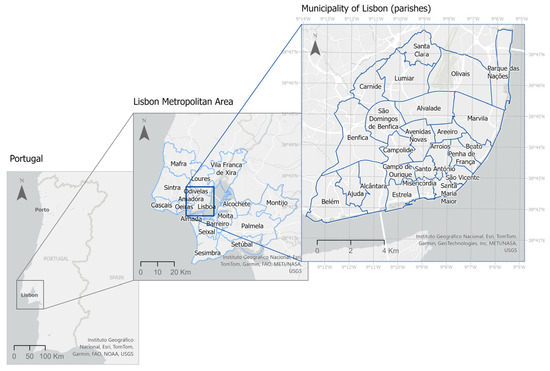
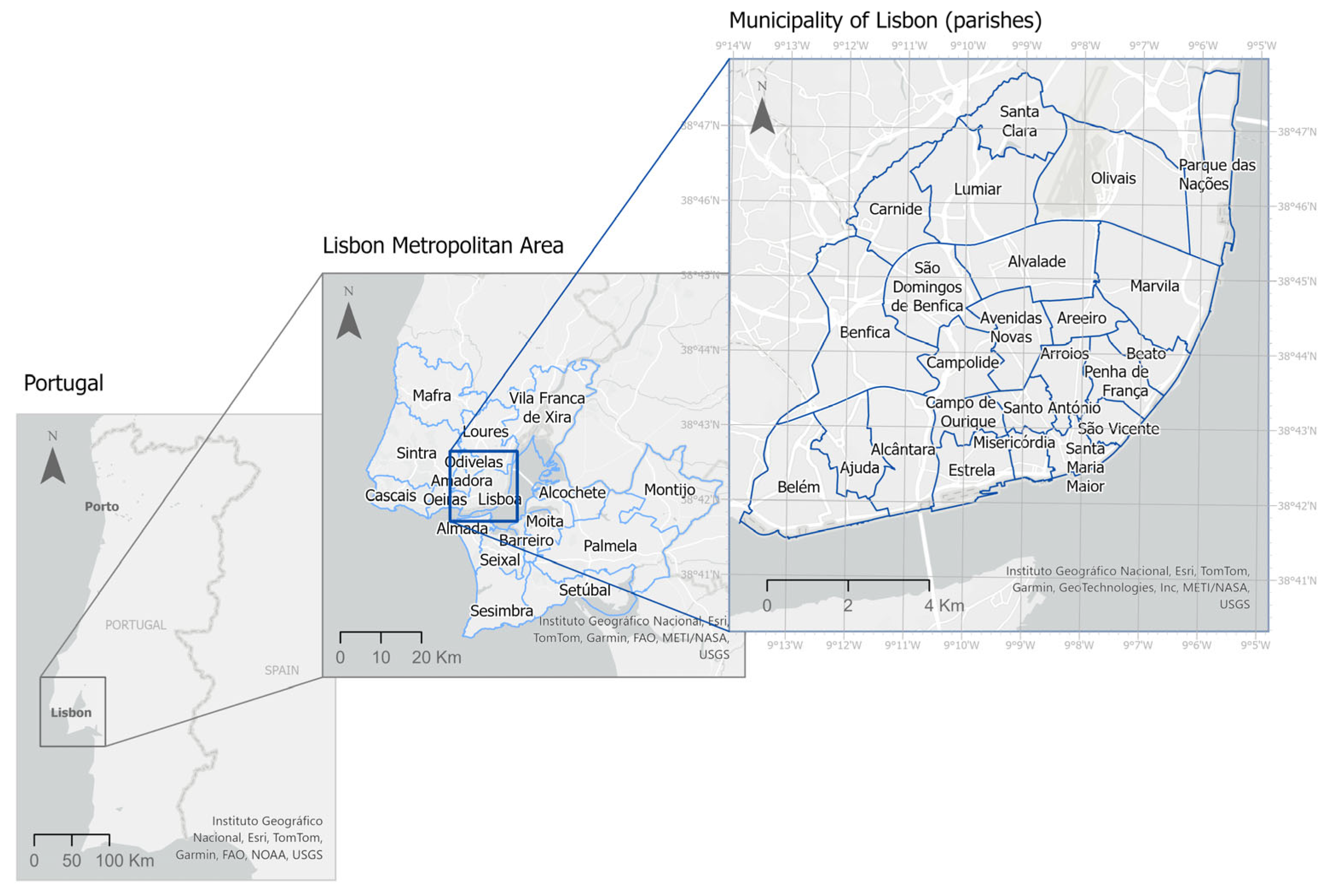
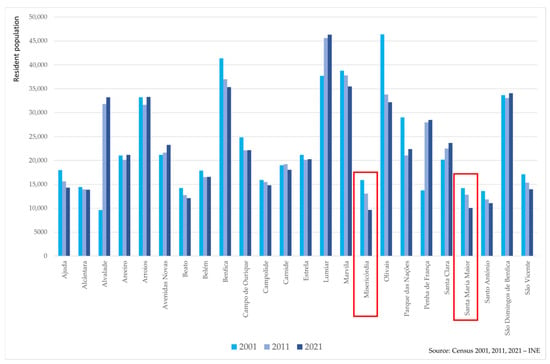
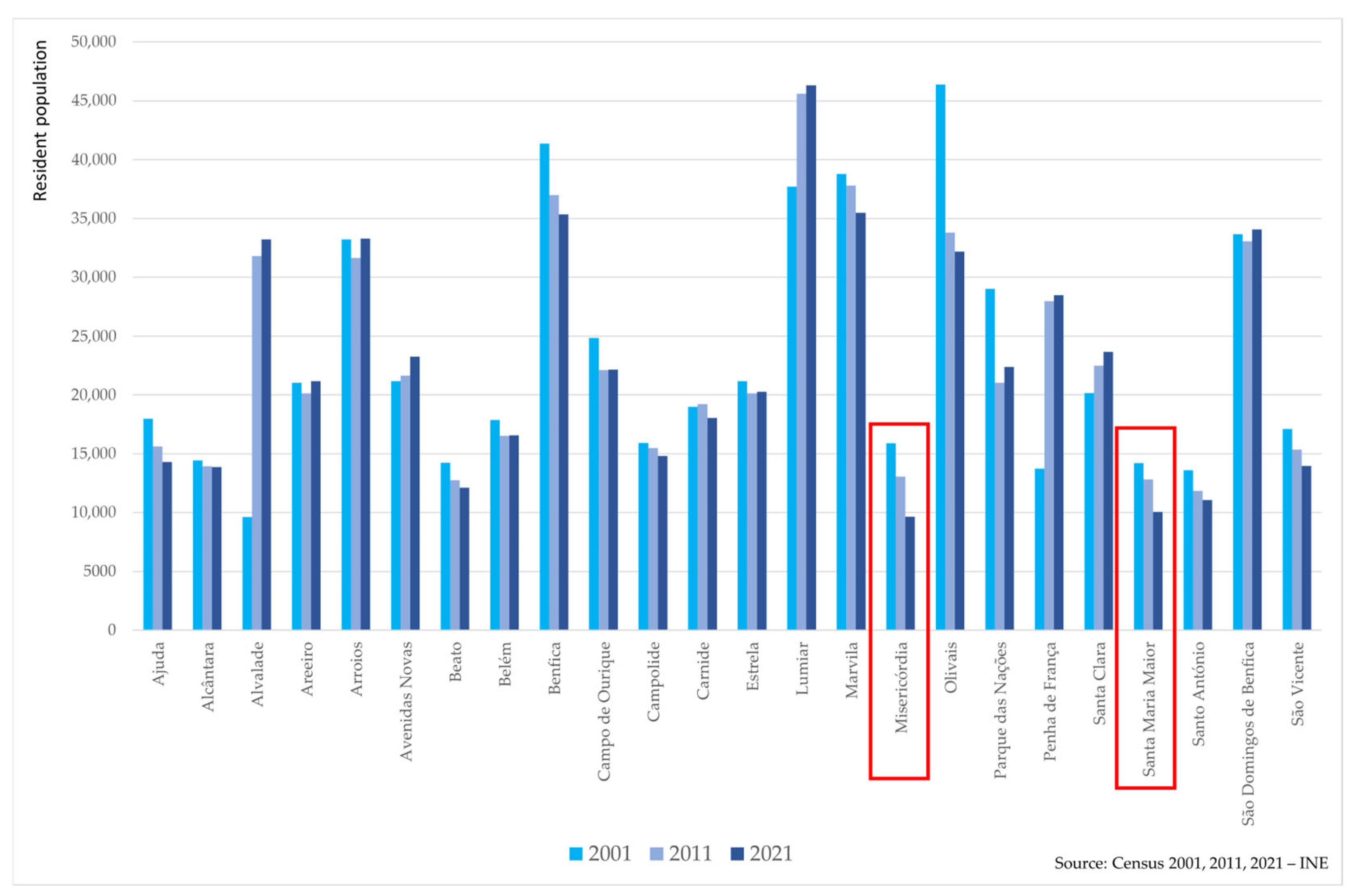
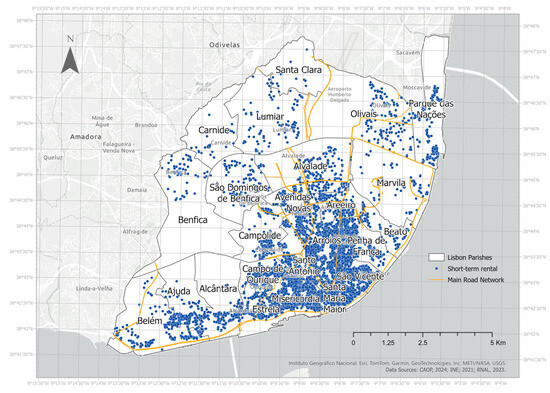
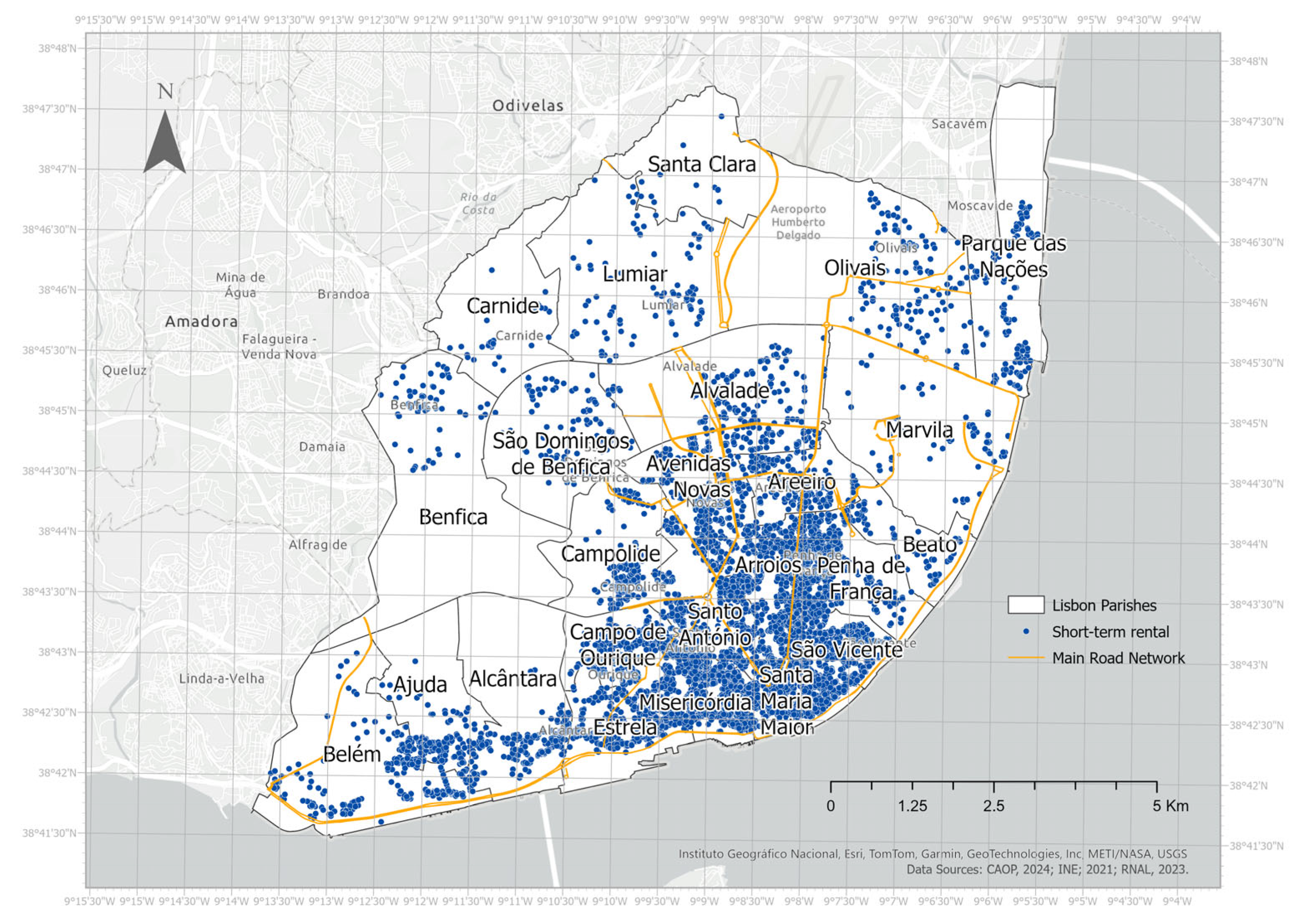
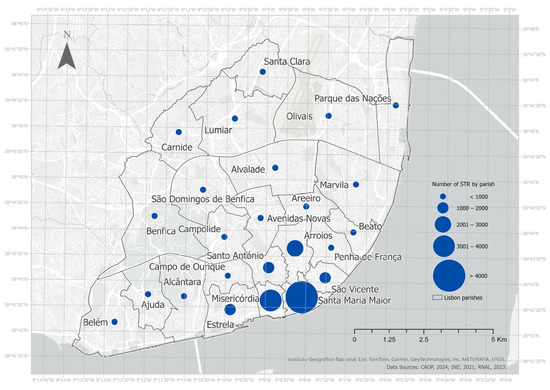
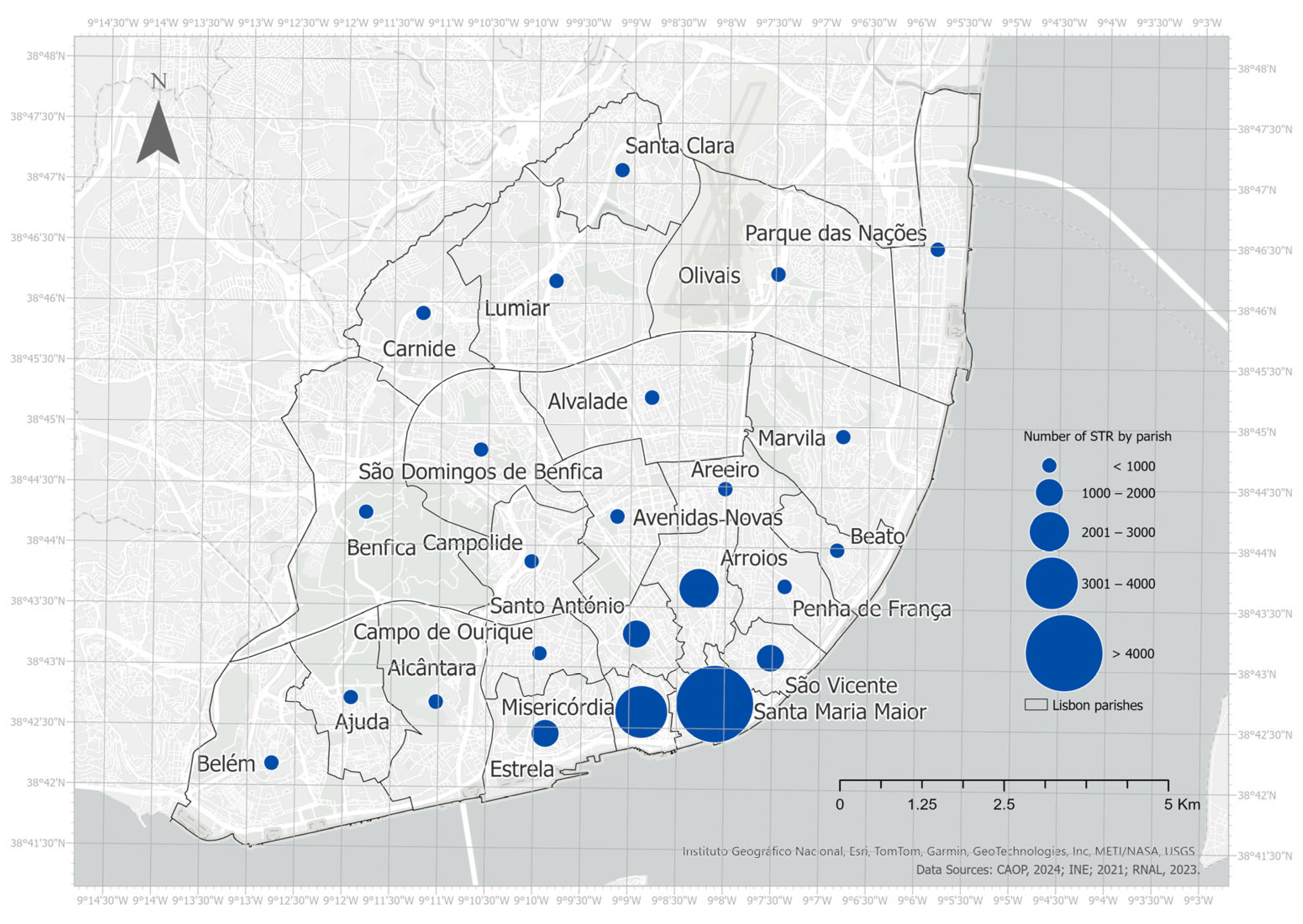
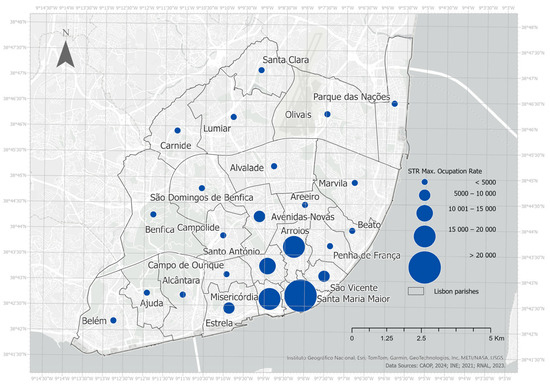
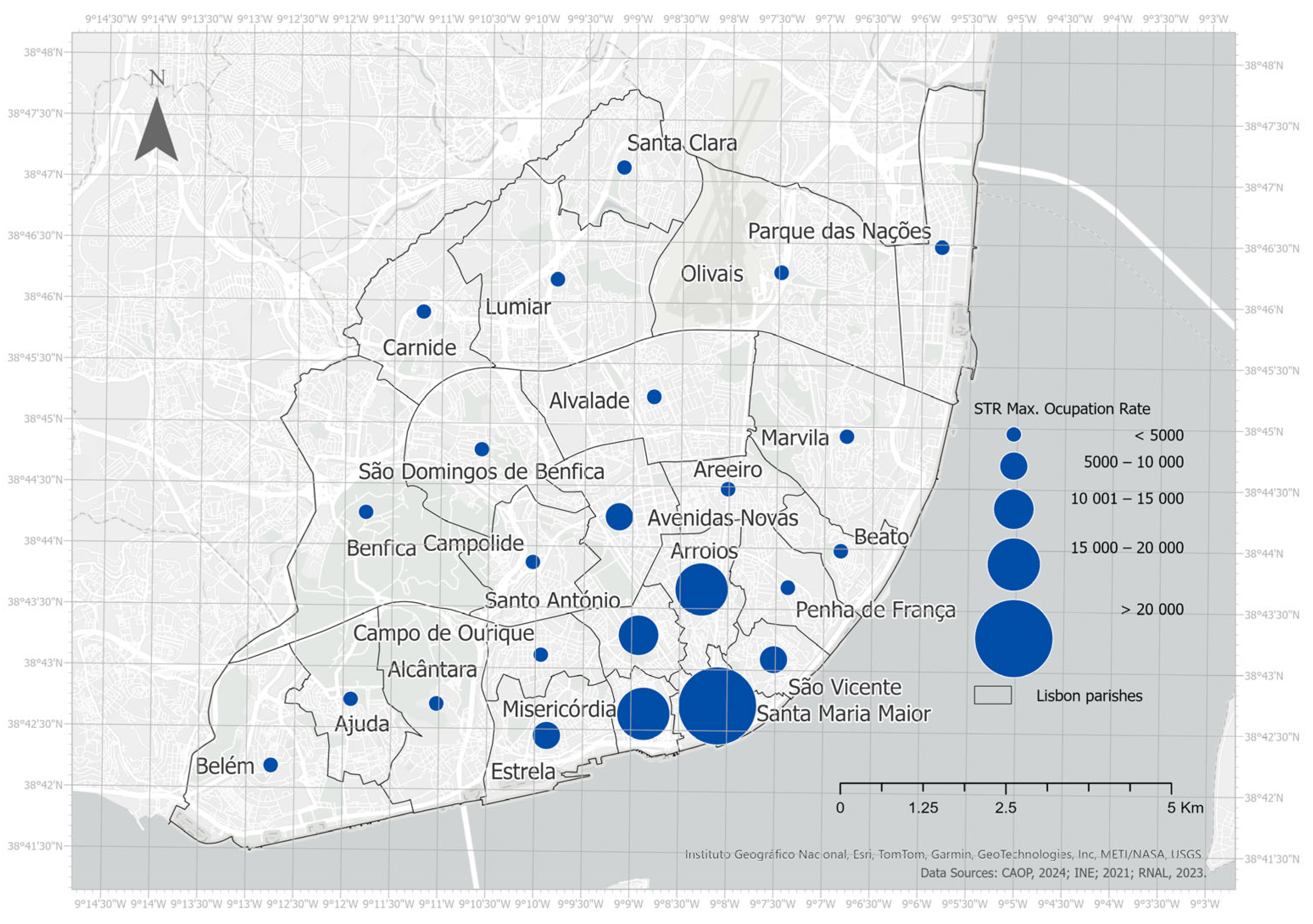
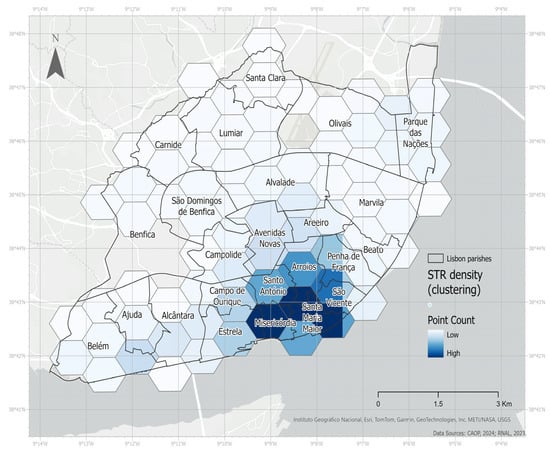
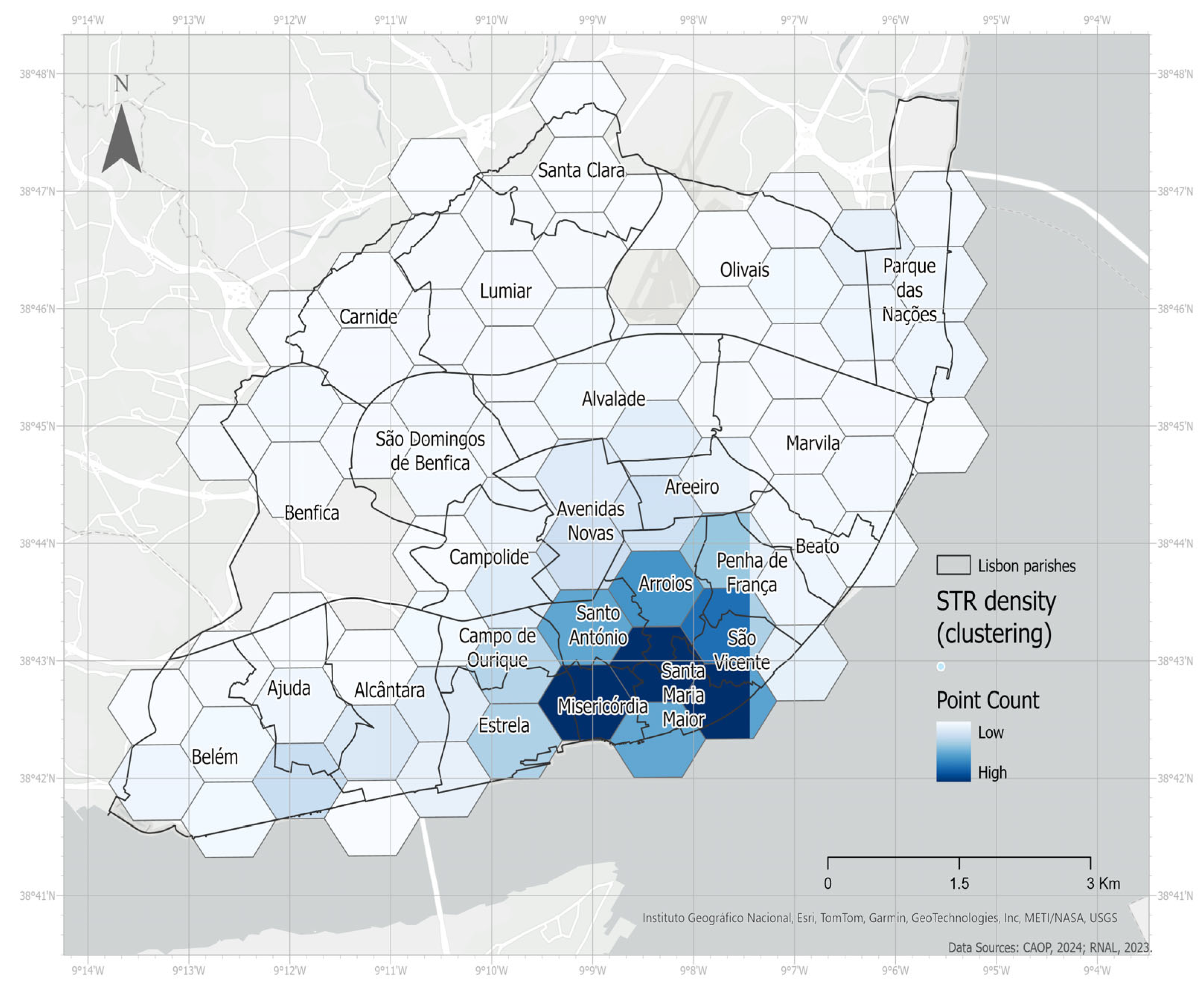
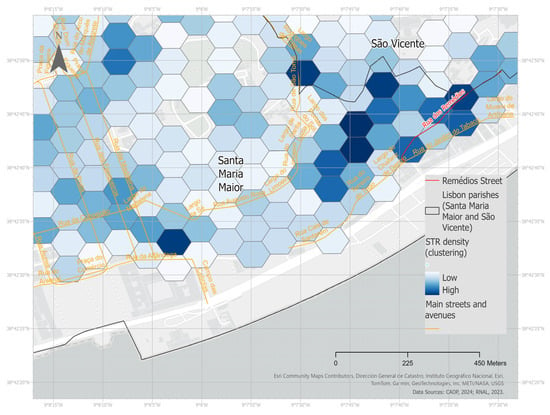
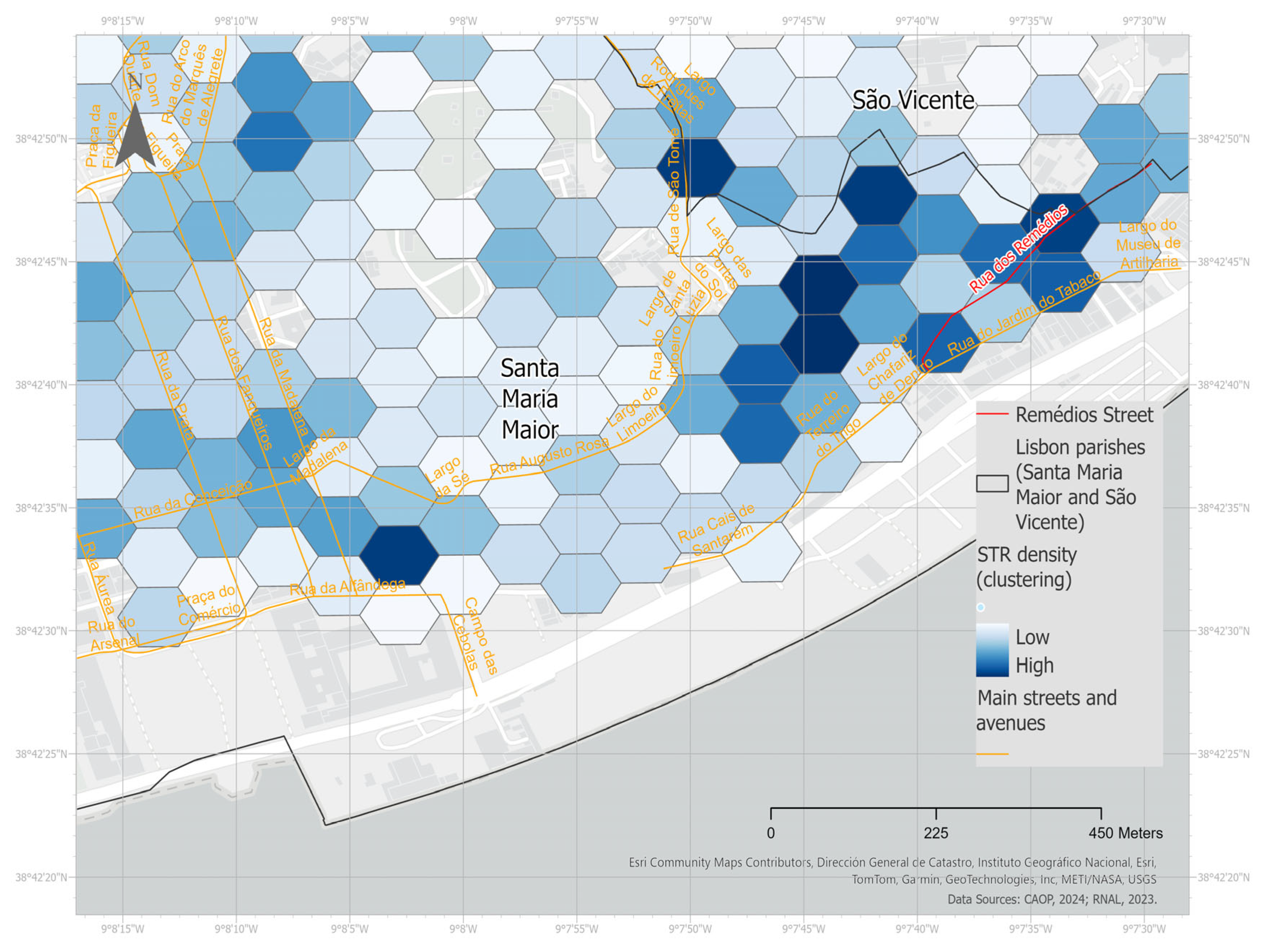
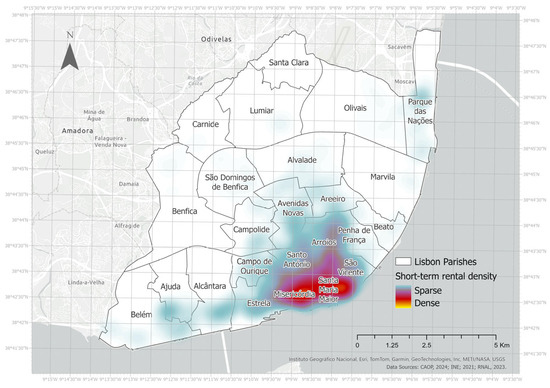
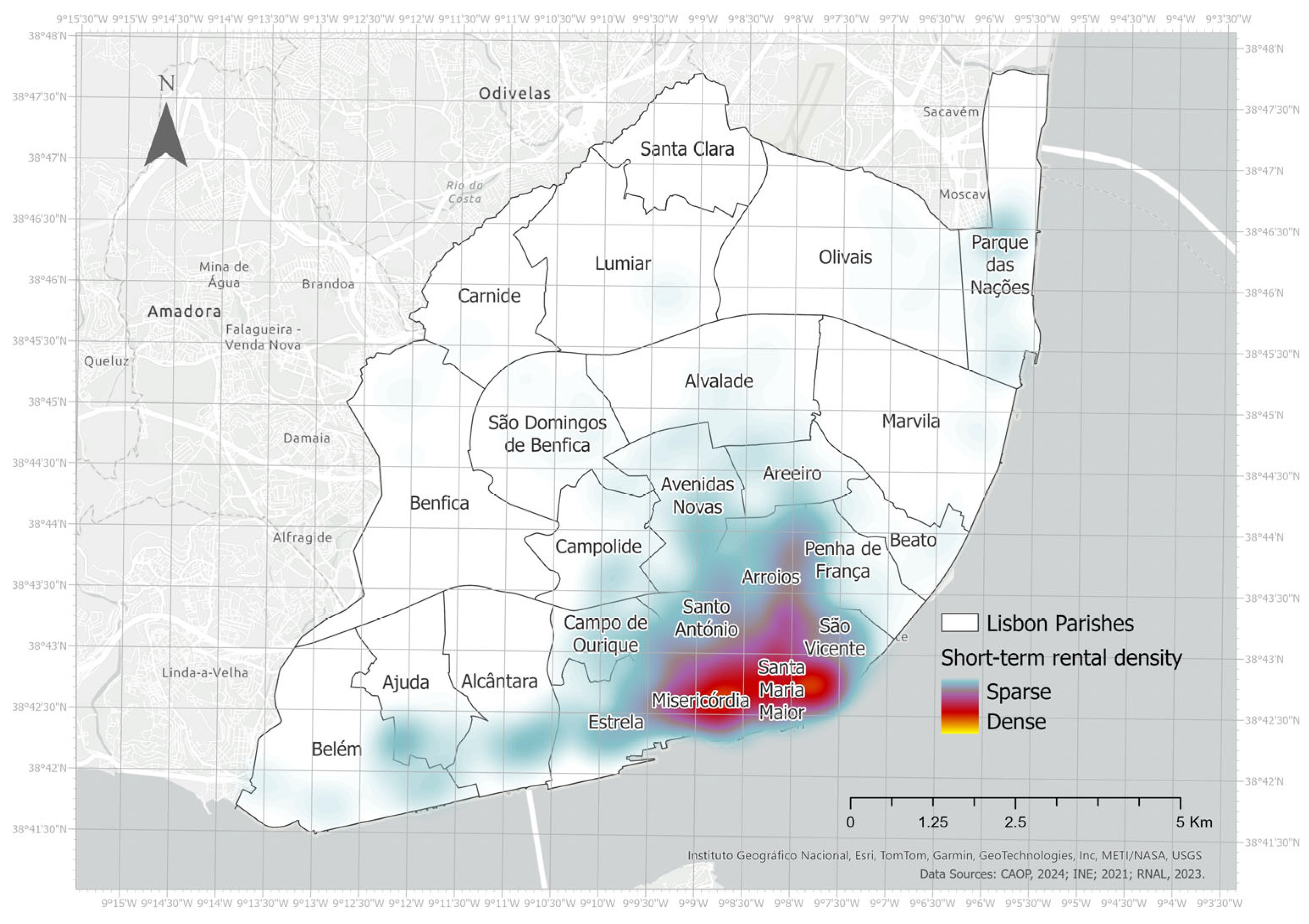
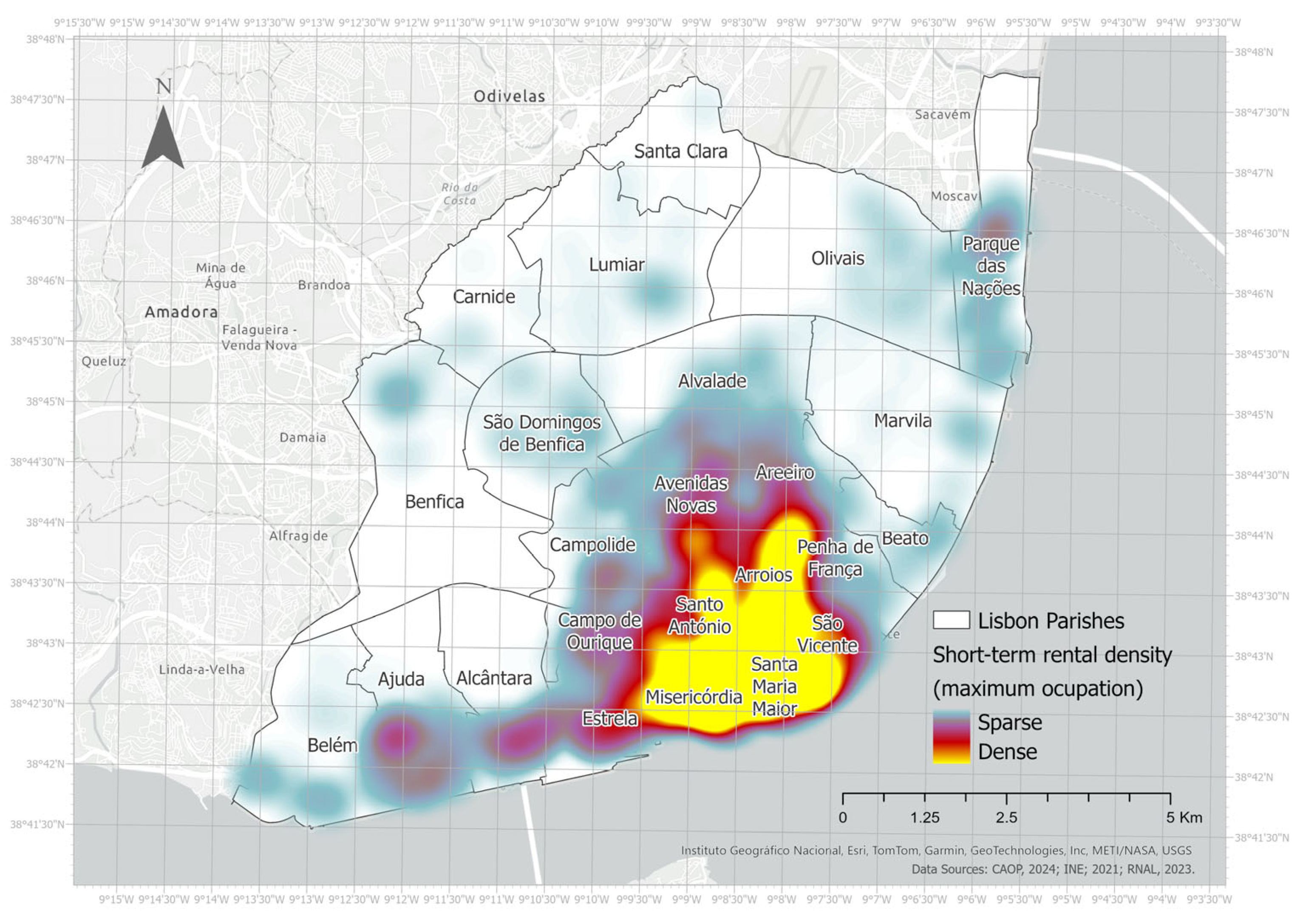
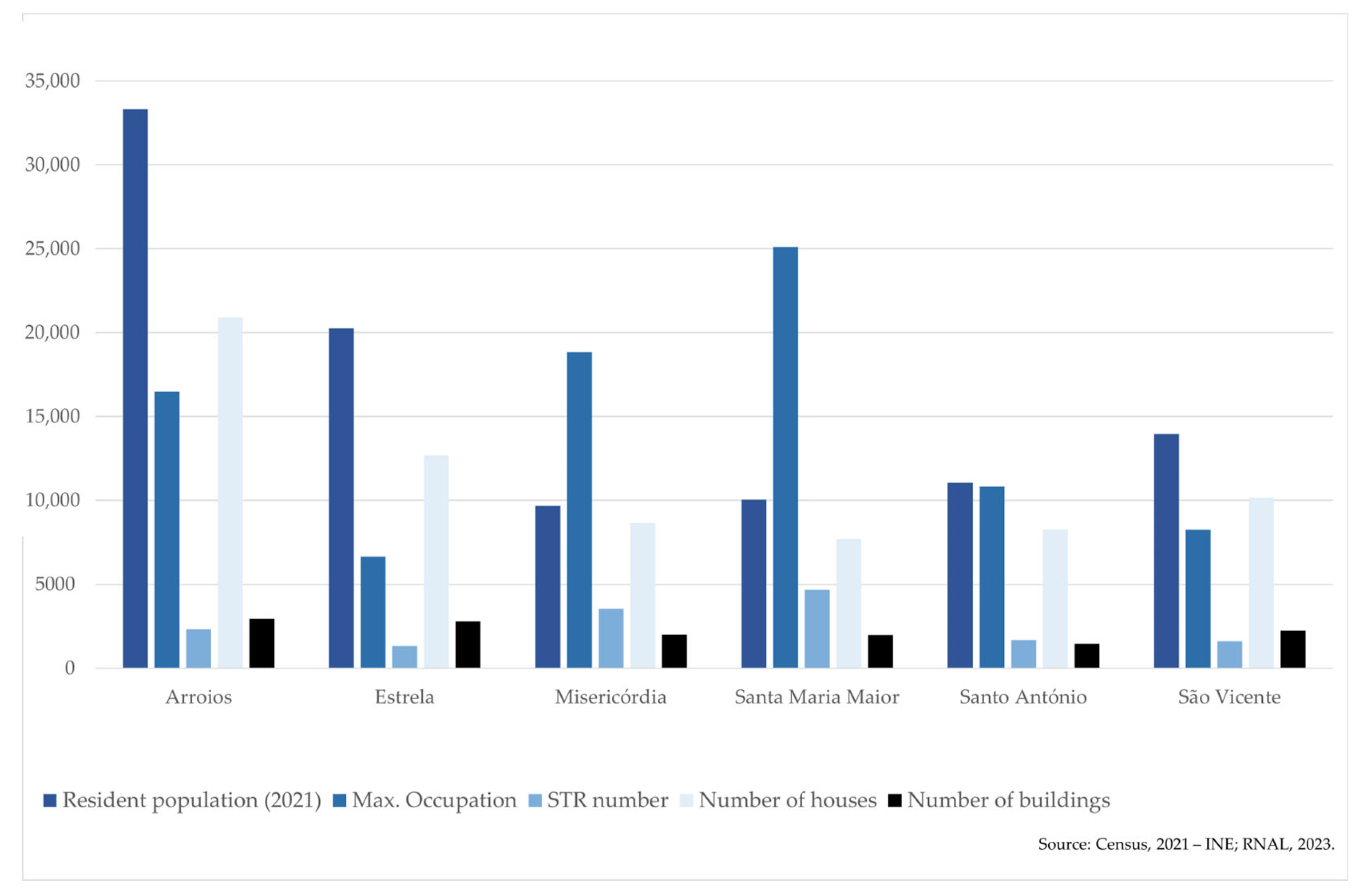
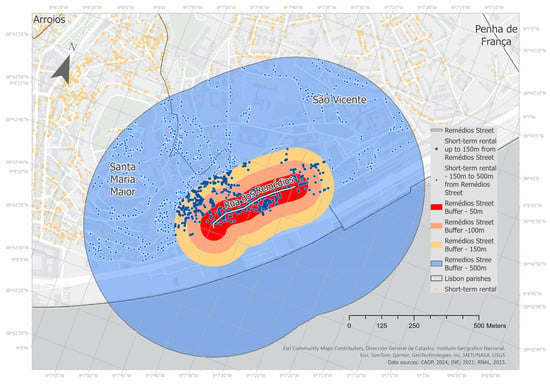
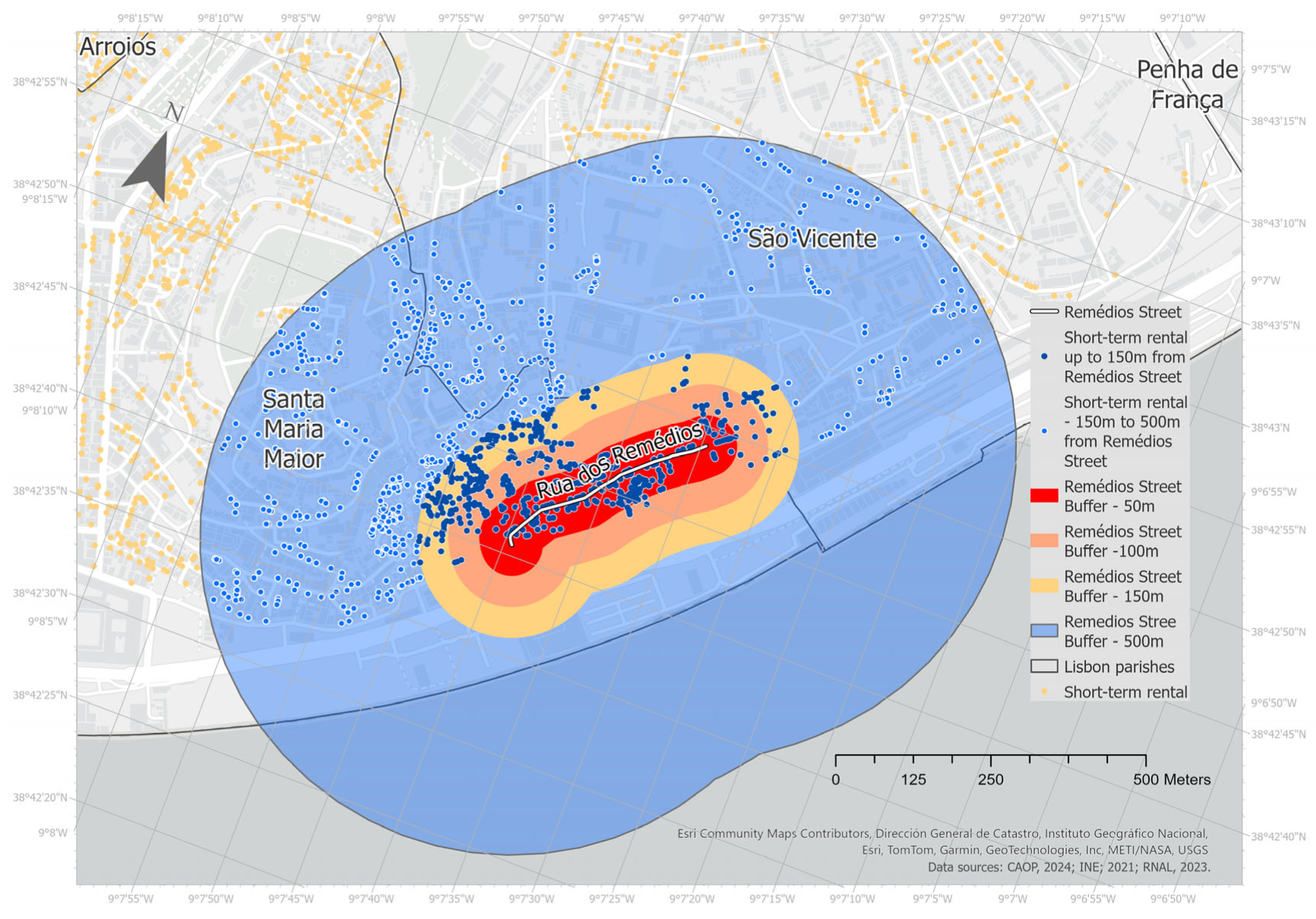

Disclaimer/Publisher’s Note: The statements, opinions and data contained in all publications are solely those of the individual author(s) and contributor(s) and not of MDPI and/or the editor(s). MDPI and/or the editor(s) disclaim responsibility for any injury to people or property resulting from any ideas, methods, instructions or products referred to in the content. |
© 2026 by the authors. Published by MDPI on behalf of the International Society for Photogrammetry and Remote Sensing. Licensee MDPI, Basel, Switzerland. This article is an open access article distributed under the terms and conditions of the Creative Commons Attribution (CC BY) license.