Integrative Multimodal Profiling of TAp73 and DNp73 Reveals Isoform-Specific Transcriptomic Coregulator Landscapes in Cancer Programs



Abstract
1. Introduction
2. Materials and Methods
2.1. Cell Culture, Viral Vectors and Treatments
2.2. Immunoblotting
2.3. Co-Immunoprecipitation (Co-IP) and Mass Spectrometry (MS)
2.4. Cleavage Under Targets and Release Using Nuclease (CUT&RUN)
2.5. Microarrays and Gene Set Enrichment Analysis (GSEA)
2.6. Determination of Isoform-Specific Coregulators of p73 Binding
2.7. Downstream Analyses and Visualizations
2.8. Expression, Survival, and Principal Component Analysis in Patient Data
3. Results
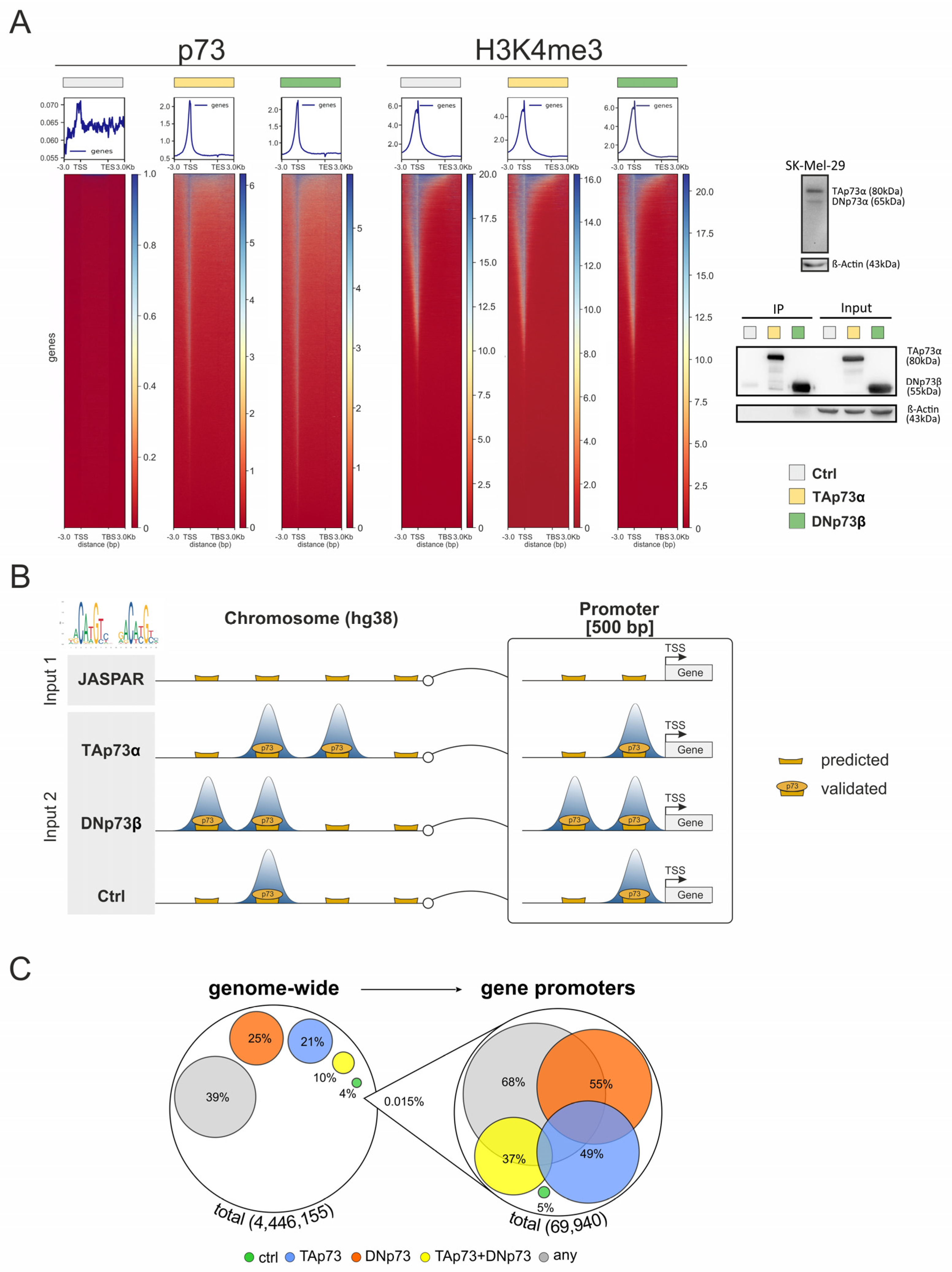
3.1. Genome-Wide Detection of DNA Binding Profiles of TAp73 and DNp73 via Integrative CUT&RUN-JASPAR-Based Approach
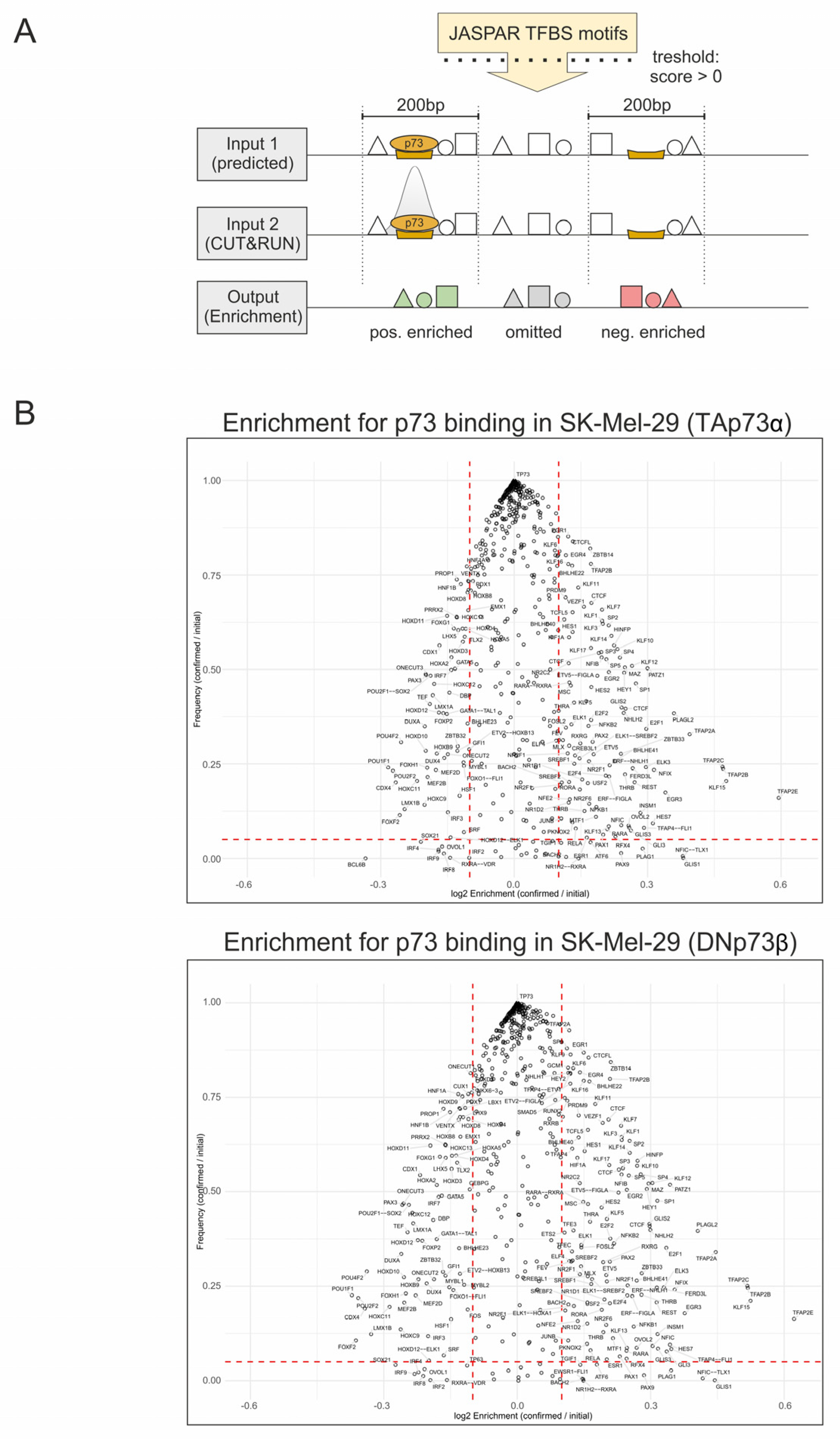
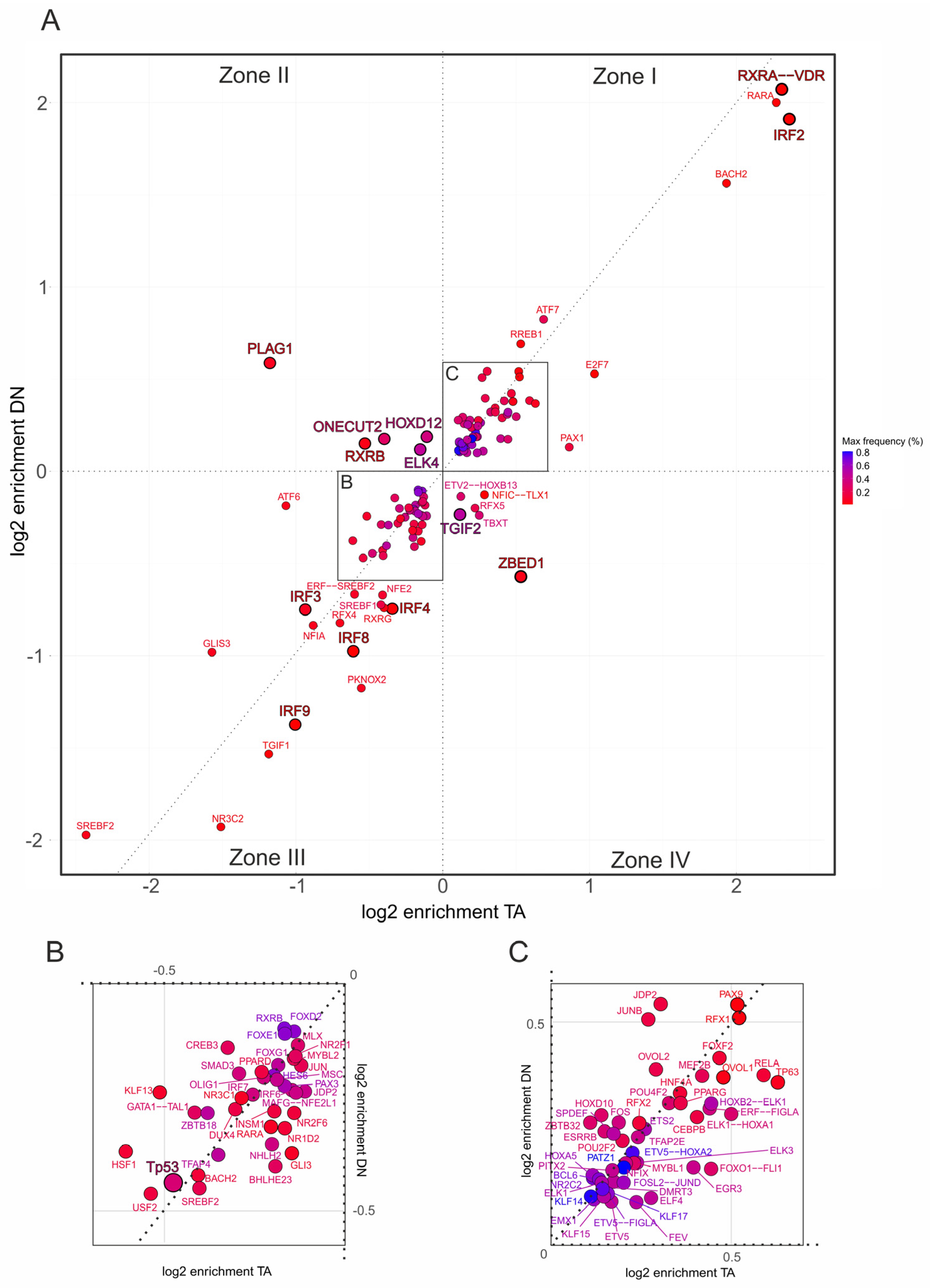
3.2. Positive and Negative TF Motif Enrichment Defines Potential p73 Regulatory Factors
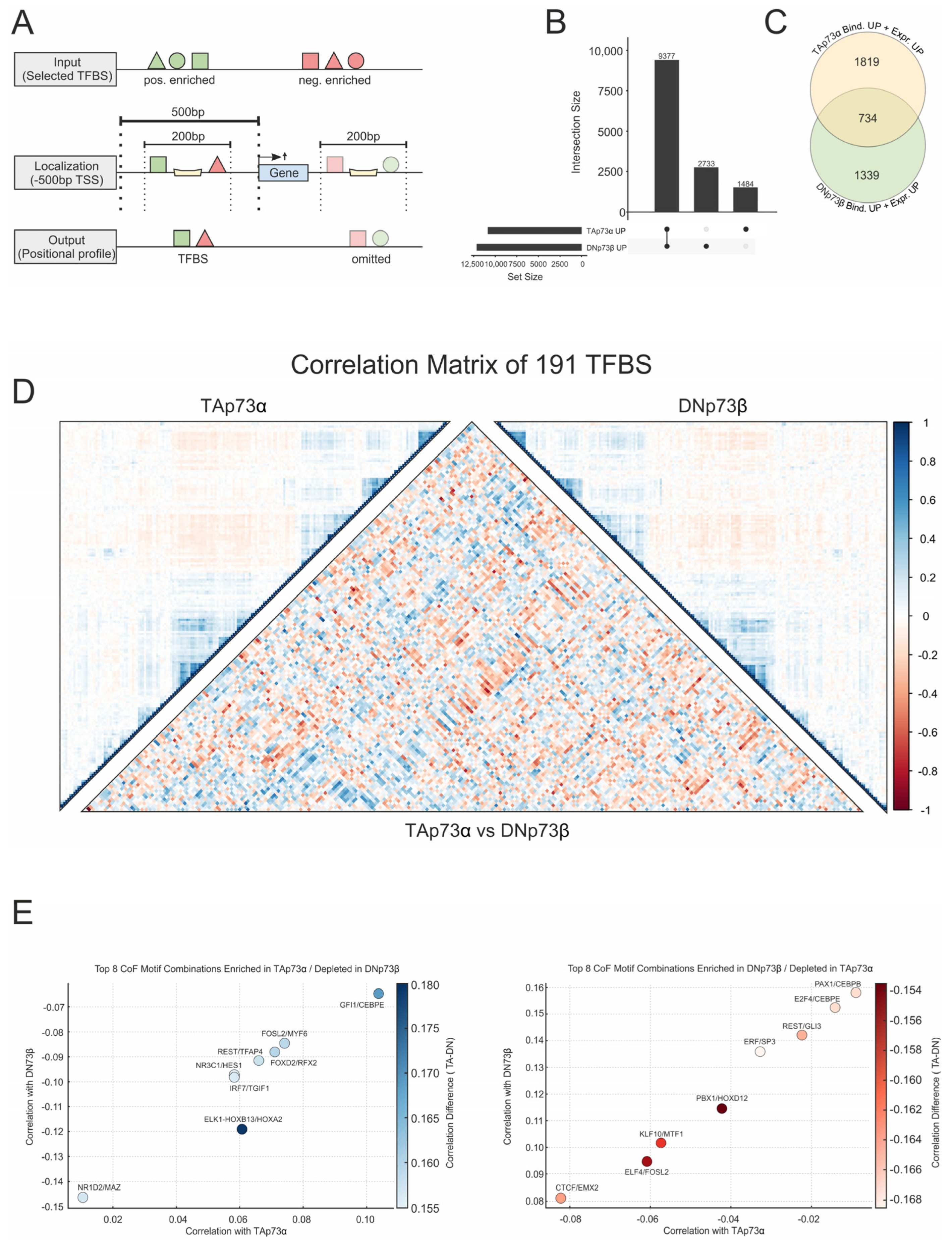
3.3. Integration of Binding and Expression Data Identifies Isoform-Specific CoTF Networks
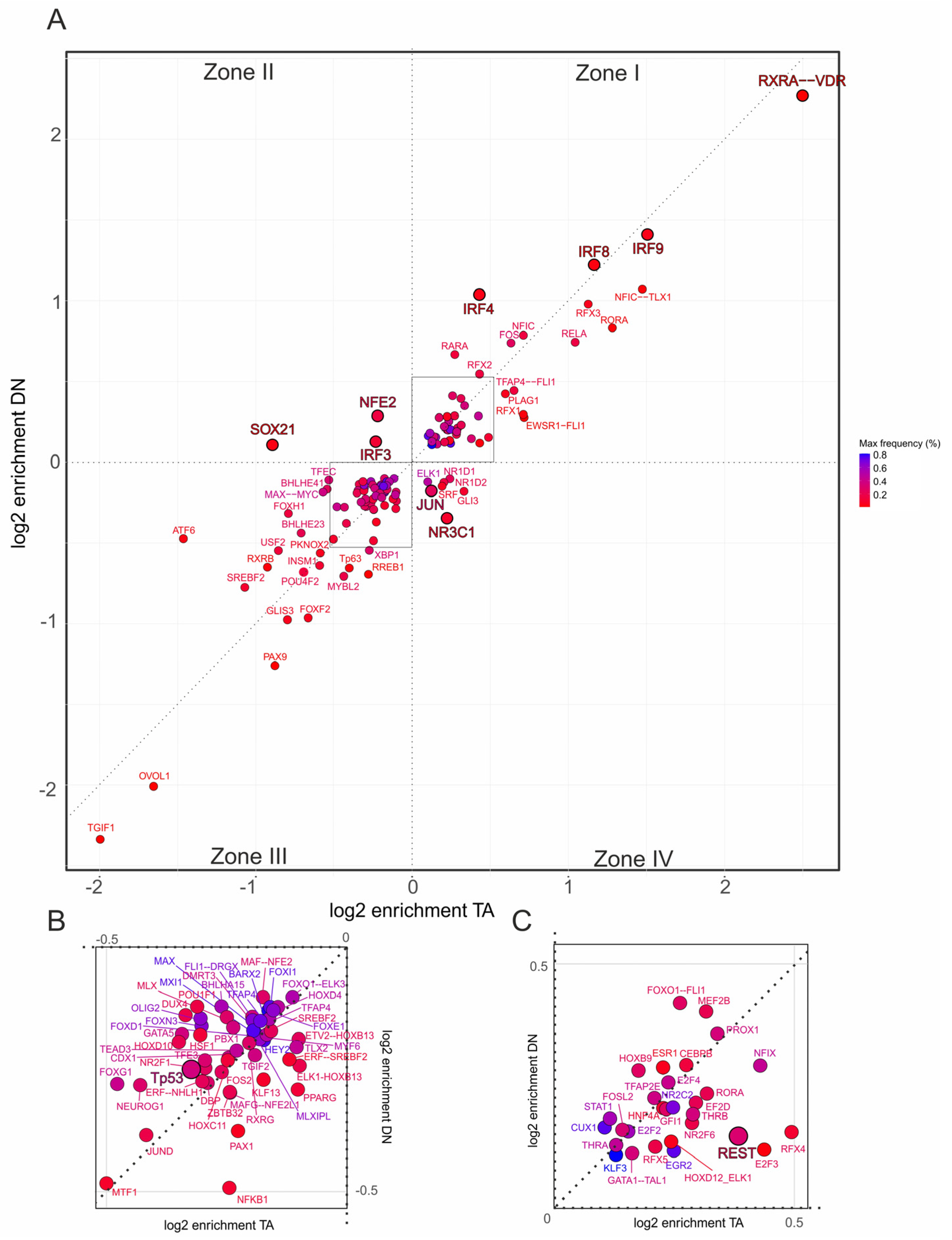
3.4. Functional Dissection of TA/DN-Specific Coregulator Recruitment in Cancer-Hallmark Pathways
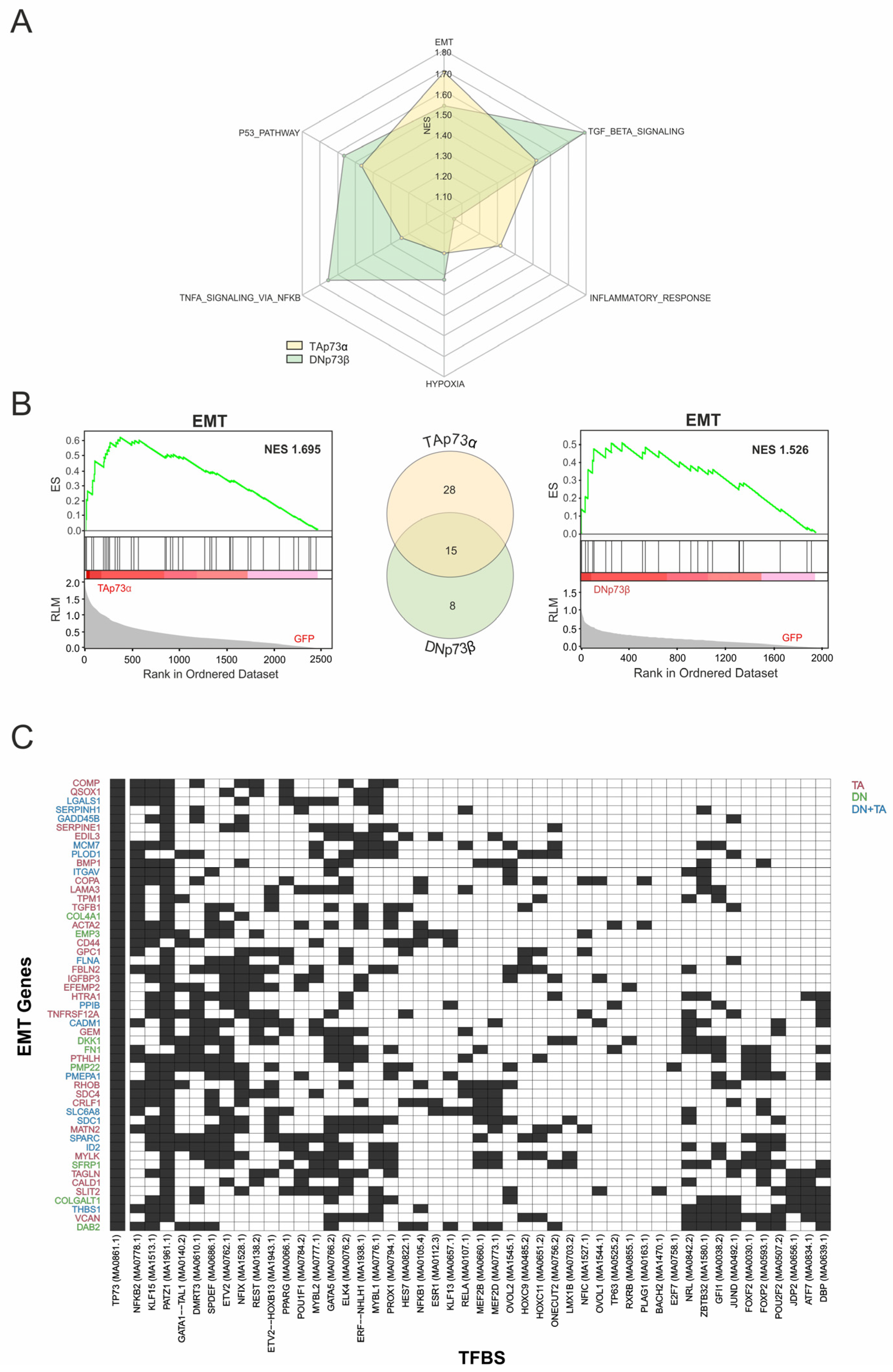
3.5. Coregulator Architecture Governs TA and DN EMT Programs
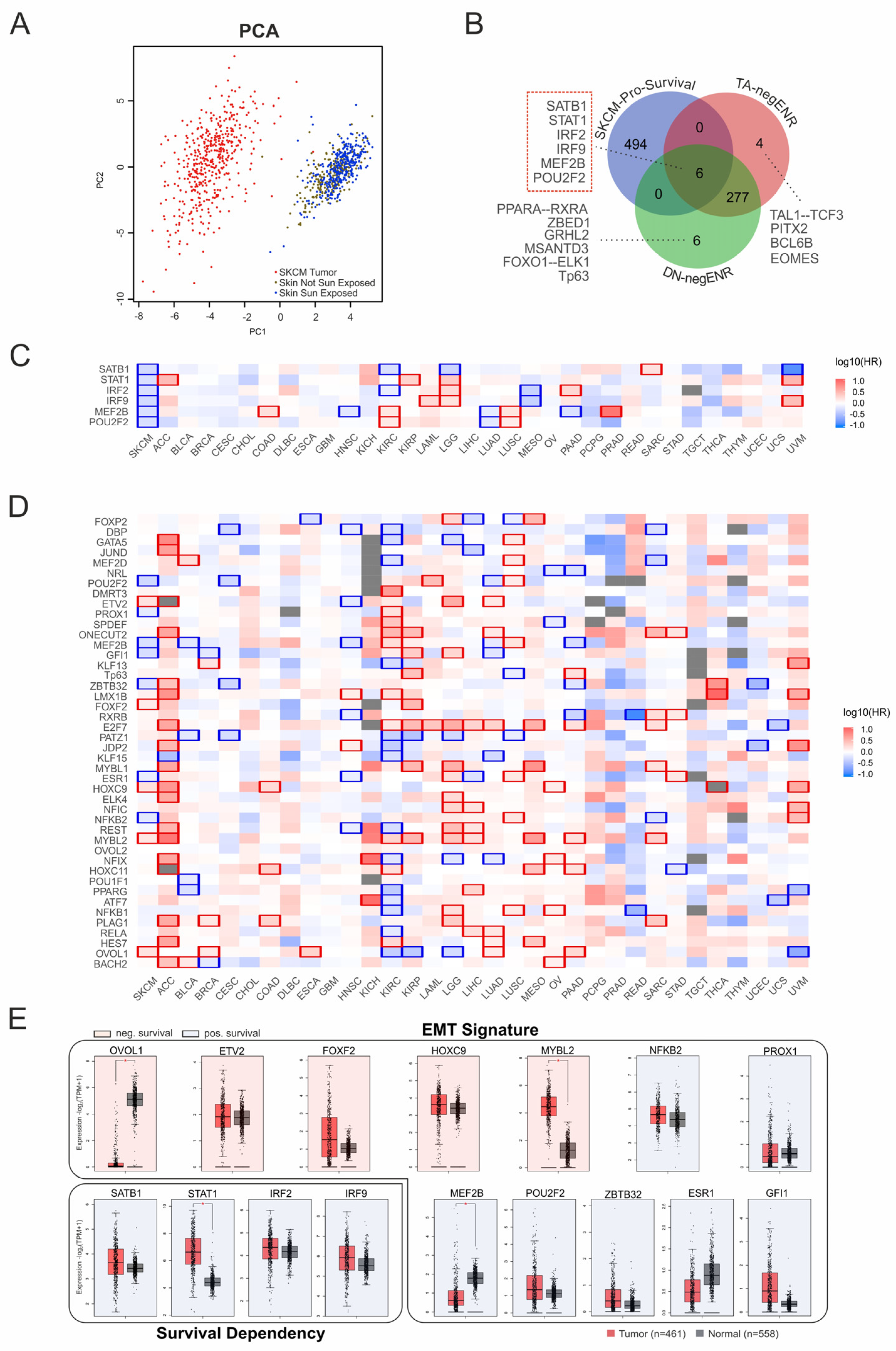
3.6. EMT Coregulator Signatures Predict Patient Survival in Skin Cancer
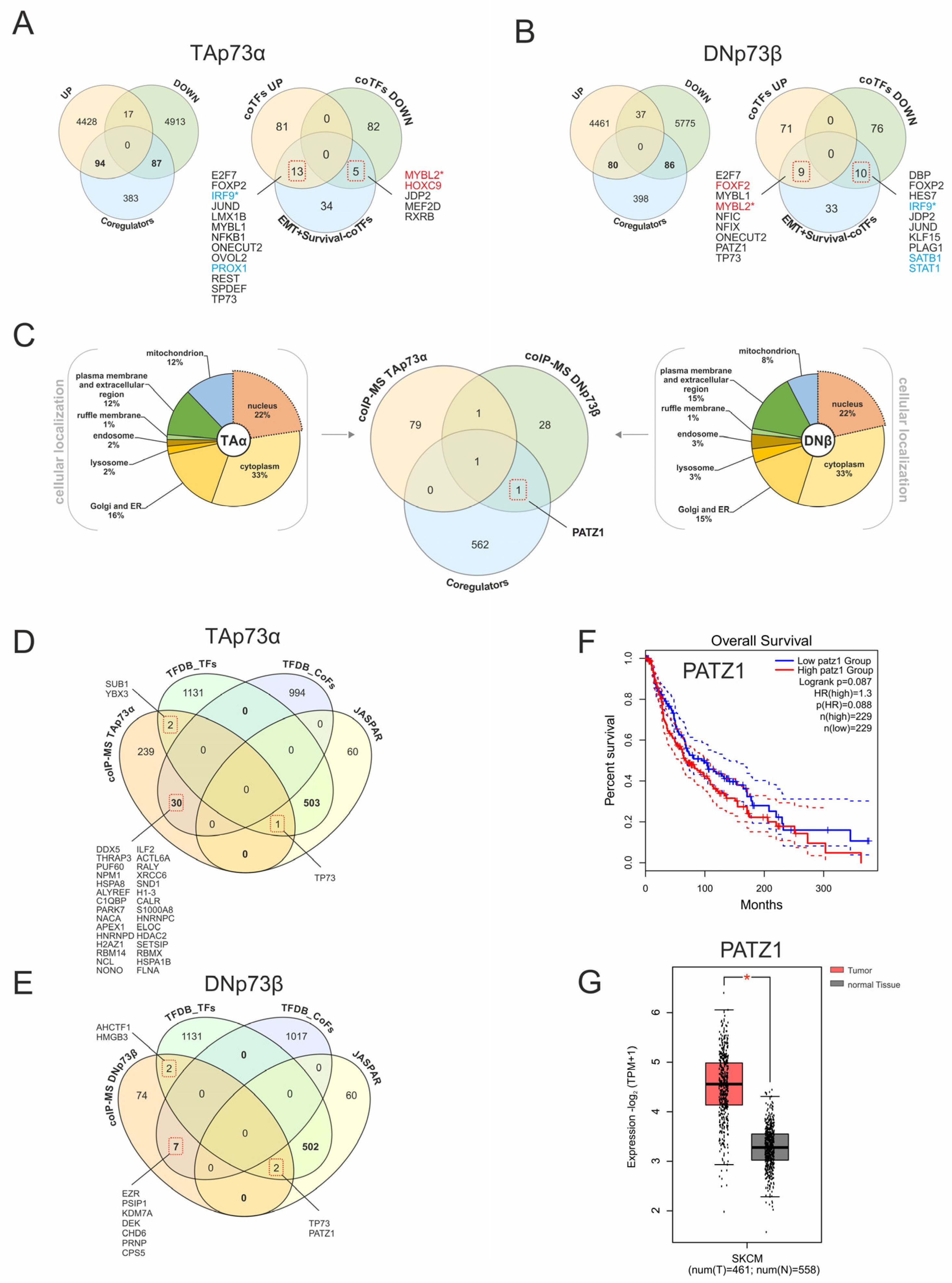
3.7. Integrative Analysis of p73 Cofactors Identifies PATZ1 as DNp73 Interactor
4. Discussion
5. Conclusions
Supplementary Materials
Author Contributions
Funding
Institutional Review Board Statement
Informed Consent Statement
Data Availability Statement
Acknowledgments
Conflicts of Interest
References
- Vikhreva, P.; Melino, G.; Amelio, I. p73 Alternative Splicing: Exploring a Biological Role for the C-Terminal Isoforms. J. Mol. Biol. 2018, 430, 1829–1838. [Google Scholar] [CrossRef]
- Logotheti, S.; Richter, C.; Murr, N.; Spitschak, A.; Marquardt, S.; Pützer, B.M. Mechanisms of Functional Pleiotropy of p73 in Cancer and Beyond. Front. Cell Dev. Biol. 2021, 9, 737735. [Google Scholar] [CrossRef]
- Engelmann, D.; Meier, C.; Alla, V.; Pützer, B.M. A balancing act: Orchestrating amino-truncated and full-length p73 variants as decisive factors in cancer progression. Oncogene 2015, 34, 4287–4299. [Google Scholar] [CrossRef] [PubMed]
- Stiewe, T.; Theseling, C.C.; Pützer, B.M. Transactivation-deficient Delta TA-p73 inhibits p53 by direct competition for DNA binding: Implications for tumorigenesis. J. Biol. Chem. 2002, 277, 14177–14185. [Google Scholar] [CrossRef] [PubMed]
- Murr, N.; Richter, C.; Gupta, S.K.; Hammer, E.; Trakooljul, N.; Stoll, A.; Möller, S.; Neumann, L.E.; Pützer, B.M.; Spitschak, A. TAp73α drives cancer metastasis via PPI-mediated derepression of the neuronal HDAC2/REST-GABBR2 axis. Cancer Lett. 2025, 628, 217867. [Google Scholar] [CrossRef]
- Rosenbluth, J.M.; Mays, D.J.; Pino, M.F.; Tang, L.J.; Pietenpol, J.A. A gene signature-based approach identifies mTOR as a regulator of p73. Mol. Cell. Biol. 2008, 28, 5951–5964. [Google Scholar] [CrossRef]
- Koeppel, M.; van Heeringen, S.J.; Kramer, D.; Smeenk, L.; Janssen-Megens, E.; Hartmann, M.; Stunnenberg, H.G.; Lohrum, M. Crosstalk between c-Jun and TAp73alpha/beta contributes to the apoptosis-survival balance. Nucleic Acids Res. 2011, 39, 6069–6085. [Google Scholar] [CrossRef]
- Steder, M.; Alla, V.; Meier, C.; Spitschak, A.; Pahnke, J.; Fürst, K.; Kowtharapu, B.S.; Engelmann, D.; Petigk, J.; Egberts, F.; et al. DNp73 exerts function in metastasis initiation by disconnecting the inhibitory role of EPLIN on IGF1R-AKT/STAT3 signaling. Cancer Cell 2013, 24, 512–527. [Google Scholar] [CrossRef]
- Rauluseviciute, I.; Riudavets-Puig, R.; Blanc-Mathieu, R.; Castro-Mondragon, J.A.; Ferenc, K.; Kumar, V.; Lemma, R.B.; Lucas, J.; Chèneby, J.; Baranasic, D.; et al. JASPAR 2024: 20th anniversary of the open-access database of transcription factor binding profiles. Nucleic Acids Res. 2024, 52, D174–D182. [Google Scholar] [CrossRef] [PubMed]
- Jolma, A.; Yan, J.; Whitington, T.; Toivonen, J.; Nitta, K.R.; Rastas, P.; Morgunova, E.; Enge, M.; Taipale, M.; Wei, G.; et al. DNA-binding specificities of human transcription factors. Cell 2013, 152, 327–339. [Google Scholar] [CrossRef]
- Quinlan, A.R.; Hall, I.M. BEDTools: A flexible suite of utilities for comparing genomic features. Bioinformatics 2010, 26, 841–842. [Google Scholar] [CrossRef]
- Kolde, R. pheatmap: Pretty Heatmaps [dataset]. In CRAN: Contributed Packages; The R Foundation: Vienna, Austria, 2010. [Google Scholar] [CrossRef]
- Wickham, H.; Chang, W.; Henry, L.; Pedersen, T.L.; Takahashi, K.; Wilke, C.; Woo, K.; Yutani, H.; Dunnington, D.; van den Brand, T. ggplot2: Create Elegant Data Visualisations Using the Grammar of Graphics. In CRAN: Contributed Packages; The R Foundation: Vienna, Austria, 2007. [Google Scholar]
- Wei, T.; Simko, V. R package ‘corrplot’: Visualization of a Correlation Matrix. In CRAN: Contributed Packages; The R Foundation: Vienna, Austria, 2010. [Google Scholar]
- Lex, A.; Gehlenborg, N.; Strobelt, H.; Vuillemot, R.; Pfister, H. UpSet: Visualization of Intersecting Sets. IEEE Trans. Vis. Comput. Graph. 2014, 20, 1983–1992. [Google Scholar] [CrossRef]
- Tang, Z.; Kang, B.; Li, C.; Chen, T.; Zhang, Z. GEPIA2: An enhanced web server for large-scale expression profiling and interactive analysis. Nucleic Acids Res. 2019, 47, W556–W560. [Google Scholar] [CrossRef]
- Beitzinger, M.; Oswald, C.; Beinoraviciute-Kellner, R.; Stiewe, T. Regulation of telomerase activity by the p53 family member p73. Oncogene 2006, 25, 813–826. [Google Scholar] [CrossRef]
- He, W.; Kang, Y.; Zhu, W.; Zhou, B.; Jiang, X.; Ren, C.; Guo, W. FOXF2 acts as a crucial molecule in tumours and embryonic development. Cell Death Dis. 2020, 11, 424. [Google Scholar] [CrossRef]
- van de Ven, C.; Bialecka, M.; Neijts, R.; Young, T.; Rowland, J.E.; Stringer, E.J.; van Rooijen, C.; Meijlink, F.; Nóvoa, A.; Freund, J.-N.; et al. Concerted involvement of Cdx/Hox genes and Wnt signaling in morphogenesis of the caudal neural tube and cloacal derivatives from the posterior growth zone. Development 2011, 138, 3451–3462. [Google Scholar] [CrossRef]
- Veenstra, G.J.; van der Vliet, P.C.; Destrée, O.H. POU domain transcription factors in embryonic development. Mol. Biol. Rep. 1997, 24, 139–155. [Google Scholar] [CrossRef] [PubMed]
- Shen, W.-K.; Chen, S.-Y.; Gan, Z.-Q.; Zhang, Y.-Z.; Yue, T.; Chen, M.-M.; Xue, Y.; Hu, H.; Guo, A.-Y. AnimalTFDB 4.0: A comprehensive animal transcription factor database updated with variation and expression annotations. Nucleic Acids Res. 2023, 51, D39–D45. [Google Scholar] [CrossRef] [PubMed]
- Rubin, J.D.; Stanley, J.T.; Sigauke, R.F.; Levandowski, C.B.; Maas, Z.L.; Westfall, J.; Taatjes, D.J.; Dowell, R.D. Transcription factor enrichment analysis (TFEA) quantifies the activity of multiple transcription factors from a single experiment. Commun. Biol. 2021, 4, 661. [Google Scholar] [CrossRef] [PubMed]
- Ming, L.; Sakaida, T.; Yue, W.; Jha, A.; Zhang, L.; Yu, J. Sp1 and p73 activate PUMA following serum starvation. Carcinogenesis 2008, 29, 1878–1884. [Google Scholar] [CrossRef]
- Innocente, S.A.; Lee, J.M. p73 is a p53-independent, Sp1-dependent repressor of cyclin B1 transcription. Biochem. Biophys. Res. Commun. 2005, 329, 713–718. [Google Scholar] [CrossRef]
- Pérez-Benavente, B.; Fathinajafabadi, A.; de la Fuente, L.; Gandía, C.; Martínez-Férriz, A.; Pardo-Sánchez, J.M.; Milián, L.; Conesa, A.; Romero, O.A.; Carretero, J.; et al. New roles for AP-1/JUNB in cell cycle control and tumorigenic cell invasion via regulation of cyclin E1 and TGF-β2. Genome Biol. 2022, 23, 252. [Google Scholar] [CrossRef]
- Huang, S.; Ji, P.; Xu, P.; Liu, K.; Ge, H.; Yan, Z.; Cheng, Q.; Lv, J.; Zhang, D. PLAGL2-STAU1-NCOA4 axis enhances gastric cancer peritoneal metastasis by resisting ferroptosis via ferritinophagy. Apoptosis 2025, 30, 1058–1075. [Google Scholar] [CrossRef] [PubMed]
- Kuckenberg, P.; Kubaczka, C.; Schorle, H. The role of transcription factor Tcfap2c/TFAP2C in trophectoderm development. Reprod. Biomed. Online 2012, 25, 12–20. [Google Scholar] [CrossRef] [PubMed]
- Chen, M.; Liu, Y.; Yang, Y.; Qiu, Y.; Wang, Z.; Li, X.; Zhang, W. Emerging roles of activating transcription factor (ATF) family members in tumourigenesis and immunity: Implications in cancer immunotherapy. Genes Dis. 2022, 9, 981–999. [Google Scholar] [CrossRef] [PubMed]
- Spitschak, A.; Dhar, P.; Singh, K.P.; Casalegno Garduño, R.; Gupta, S.K.; Vera, J.; Musella, L.; Murr, N.; Stoll, A.; Pützer, B.M. E2F1-induced autocrine IL-6 inflammatory loop mediates cancer-immune crosstalk that predicts T cell phenotype switching and therapeutic responsiveness. Front. Immunol. 2024, 15, 1470368. [Google Scholar] [CrossRef]
- Cermakova, K.; Hodges, H.C. Interaction modules that impart specificity to disordered protein. Trends Biochem. Sci. 2023, 48, 477–490. [Google Scholar] [CrossRef]
- Mészáros, B.; Hatos, A.; Palopoli, N.; Quaglia, F.; Salladini, E.; van Roey, K.; Arthanari, H.; Dosztányi, Z.; Felli, I.C.; Fischer, P.D.; et al. Minimum information guidelines for experiments structurally characterizing intrinsically disordered protein regions. Nat. Methods 2023, 20, 1291–1303. [Google Scholar] [CrossRef]
- Sasso, J.M.; Tenchov, R.; Wang, D.; Johnson, L.S.; Wang, X.; Zhou, Q.A. Molecular Glues: The Adhesive Connecting Targeted Protein Degradation to the Clinic. Biochemistry 2023, 62, 601–623. [Google Scholar] [CrossRef]
- Qin, C.; Wang, Y.-L.; Zheng, J.; Wan, X.-B.; Fan, X.-J. Current perspectives in drug targeting intrinsically disordered proteins and biomolecular condensates. BMC Biol. 2025, 23, 118. [Google Scholar] [CrossRef]
- Valentino, T.; Palmieri, D.; Vitiello, M.; Pierantoni, G.M.; Fusco, A.; Fedele, M. PATZ1 interacts with p53 and regulates expression of p53-target genes enhancing apoptosis or cell survival based on the cellular context. Cell Death Dis. 2013, 4, e963. [Google Scholar] [CrossRef]
- Bareja, C.; Dwivedi, K.; Uboveja, A.; Mathur, A.; Kumar, N.; Saluja, D. Identification and clinicopathological analysis of potential p73-regulated biomarkers in colorectal cancer via integrative bioinformatics. Sci. Rep. 2024, 14, 9894. [Google Scholar] [CrossRef]
- Le, J.; Dian, Y.; Zhao, D.; Guo, Z.; Luo, Z.; Chen, X.; Zeng, F.; Deng, G. Single-cell multi-omics in cancer immunotherapy: From tumor heterogeneity to personalized precision treatment. Mol. Cancer 2025, 24, 221. [Google Scholar] [CrossRef] [PubMed]
- Wang, S.; Hu, D.; Wang, R.; Huang, J.; Wang, B. Integrative multi-omics and machine learning reveal critical functions of proliferating cells in prognosis and personalized treatment of lung adenocarcinoma. NPJ Precis. Oncol. 2025, 9, 243. [Google Scholar] [CrossRef] [PubMed]
- Gao, Q.; Wu, H.; Duan, L.; Lv, G.; Quan, D. Multi-omics analysis of the tumor microenvironment after metastasis: Advancing toward personalized immunotherapy and molecular targeted strategies. Front. Immunol. 2025, 16, 1648987. [Google Scholar] [CrossRef]
- Duttke, S.H.; Guzman, C.; Chang, M.; Delos Santos, N.P.; McDonald, B.R.; Xie, J.; Carlin, A.F.; Heinz, S.; Benner, C. Position-dependent function of human sequence-specific transcription factors. Nature 2024, 631, 891–898. [Google Scholar] [CrossRef] [PubMed]
- Zhang, G.; Song, C.; Yin, M.; Liu, L.; Zhang, Y.; Li, Y.; Zhang, J.; Guo, M.; Li, C. TRAPT: A multi-stage fused deep learning framework for predicting transcriptional regulators based on large-scale epigenomic data. Nat. Commun. 2025, 16, 3611. [Google Scholar] [CrossRef]
- Belyi, V.A.; Levine, A.J. One billion years of p53/p63/p73 evolution. Proc. Natl. Acad. Sci. USA 2009, 106, 17609–17610. [Google Scholar] [CrossRef]
- Schultheis, H.; Bentsen, M.; Heger, V.; Looso, M. Uncovering uncharacterized binding of transcription factors from ATAC-seq footprinting data. Sci. Rep. 2024, 14, 9275. [Google Scholar] [CrossRef]




Disclaimer/Publisher’s Note: The statements, opinions and data contained in all publications are solely those of the individual author(s) and contributor(s) and not of MDPI and/or the editor(s). MDPI and/or the editor(s) disclaim responsibility for any injury to people or property resulting from any ideas, methods, instructions or products referred to in the content. |
© 2025 by the authors. Licensee MDPI, Basel, Switzerland. This article is an open access article distributed under the terms and conditions of the Creative Commons Attribution (CC BY) license.
Share and Cite
Möller, S.; Spitschak, A.; Murr, N.; Pützer, B.M. Integrative Multimodal Profiling of TAp73 and DNp73 Reveals Isoform-Specific Transcriptomic Coregulator Landscapes in Cancer Programs. Biomolecules 2026, 16, 63. https://doi.org/10.3390/biom16010063
Möller S, Spitschak A, Murr N, Pützer BM. Integrative Multimodal Profiling of TAp73 and DNp73 Reveals Isoform-Specific Transcriptomic Coregulator Landscapes in Cancer Programs. Biomolecules. 2026; 16(1):63. https://doi.org/10.3390/biom16010063
Chicago/Turabian StyleMöller, Steffen, Alf Spitschak, Nico Murr, and Brigitte M. Pützer. 2026. "Integrative Multimodal Profiling of TAp73 and DNp73 Reveals Isoform-Specific Transcriptomic Coregulator Landscapes in Cancer Programs" Biomolecules 16, no. 1: 63. https://doi.org/10.3390/biom16010063
APA StyleMöller, S., Spitschak, A., Murr, N., & Pützer, B. M. (2026). Integrative Multimodal Profiling of TAp73 and DNp73 Reveals Isoform-Specific Transcriptomic Coregulator Landscapes in Cancer Programs. Biomolecules, 16(1), 63. https://doi.org/10.3390/biom16010063