A Review of Fluoroquinolones with a Focus on Veterinary-Approved Agents


Abstract
1. Introduction
2. Fluoroquinolone Classification and Chemistry
3. Mechanism of Action/Mechanism of Resistance
3.1. Fluoroquinolone Targets
- Group 1 (ciprofloxacin, levofloxacin, norfloxacin, pefloxacin and trovafloxacin (withdrawn from market in 2002))—compounds preferentially enriching mutants with alterations in the quinolone-resistance-determining region of parC. Such compounds are thought to act preferentially through topoisomerase IV [30,31,32,33,34,35,36,37]. Enrofloxacin, marbofloxacin and orbifloxacin most likely fit in this group.
- Group 2 (gatifloxacin-withdrawn from market in 2006 for systemic use [27], moxifloxacin [38] and gemifloxacin [28])—compounds preferentially enriching gyrA mutants. Such compounds are thought to have DNA gyrase as the primary target, but they are also equally active against topoisomerase IV. Pradofloxacin would most likely fit in this group.
- Group 3 (clinafloxacin)—an agent enriching both gyrA and parC mutants [39]. Apparently the damage caused by this compound is similar for the two enzymes. This drug is not in clinical use.
- Gemifloxacin and moxifloxacin exhibit dual activity based on the minimal effects that either a parC or gyrA mutation have on resistance. Strains with mutations in both target genes exhibit higher-level resistance. This is also true of pradofloxacin.
- Enzymatic studies measure different parameters than do genetic data and need not agree.
- Genetic data are the most reliable indicator of quinolone targets inside living bacteria.
- Gemifloxacin and moxifloxacin act substantially through DNA gyrase and topoisomerase IV; therefore, clinically available, safe and dual-activity fluoroquinolones exist. This is also true of pradofloxacin.
3.2. Fluoroquinolone Resistance
4. Pharmacokinetics/Pharmacodynamics
5. Fluoroquinolones/Drug Interactions
6. In Vitro Susceptibility Measurements
6.1. Fluoroquinolones and Mannheimia haemolytica and Pasteurella multocida
- As the bacterial density increases, higher drug concentrations are required to inhibit 100% growth of the bacterial cells.
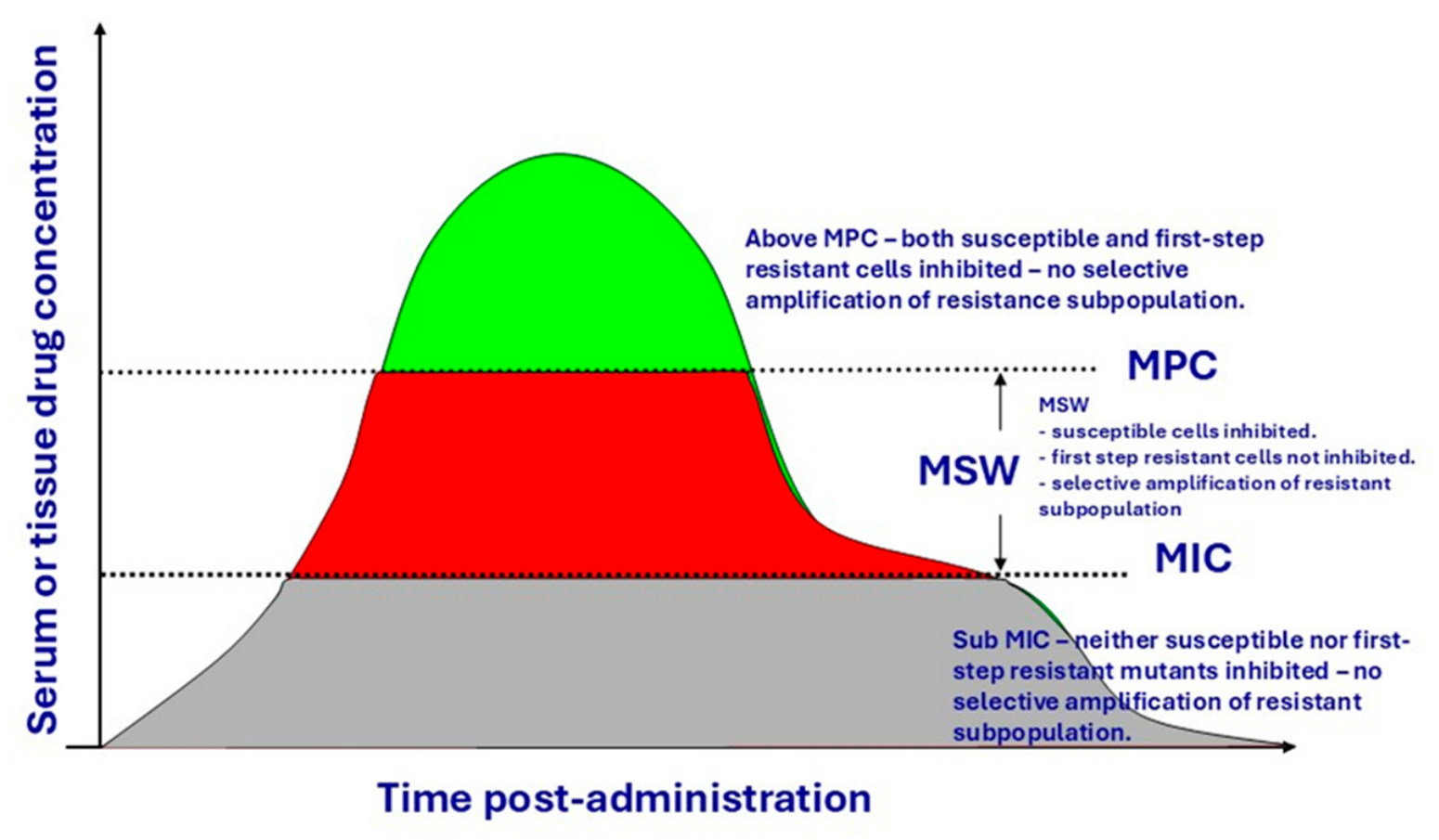
- Two or more compounds within the same drug class with similar MIC values against a particular pathogen may have very different MPC values.
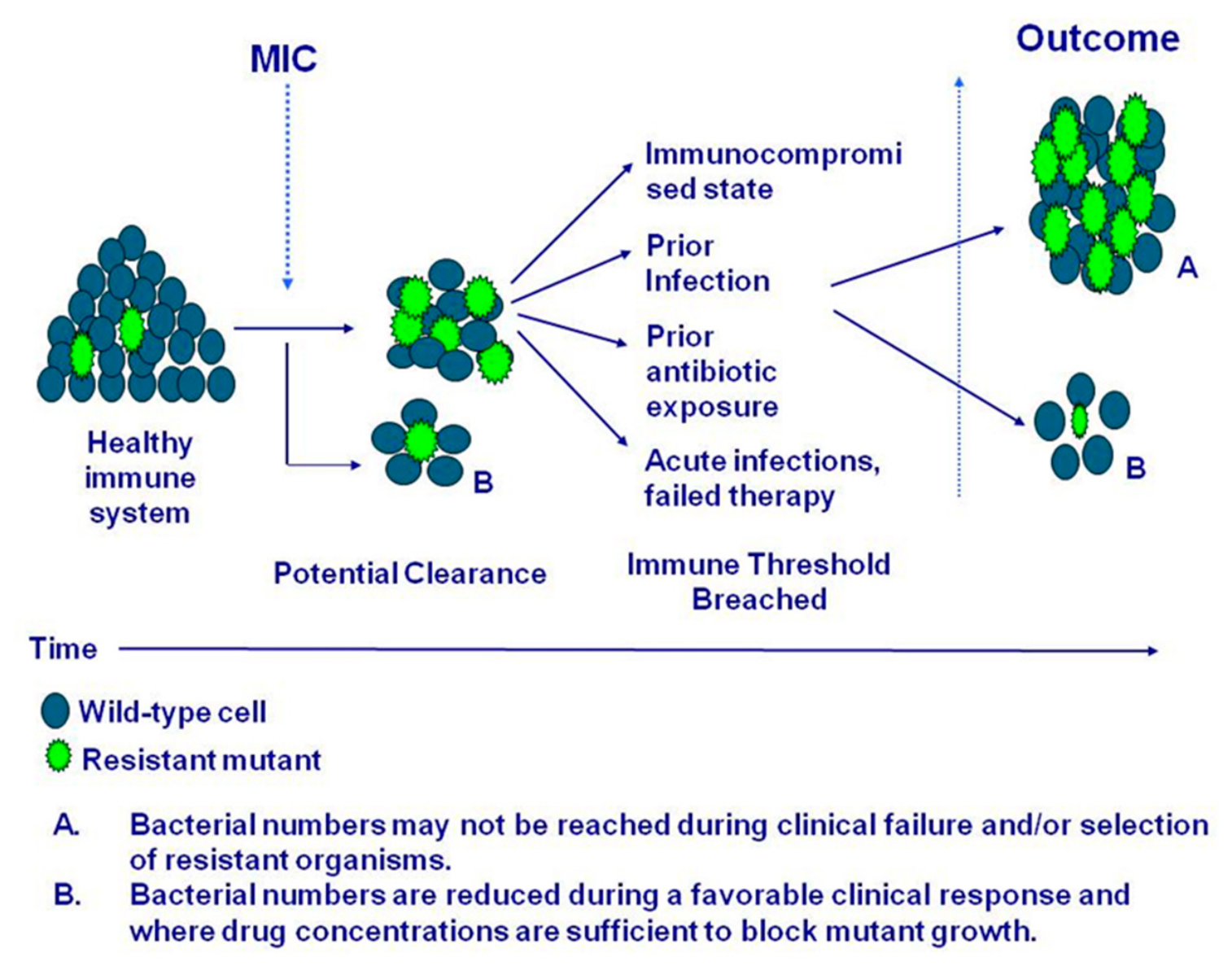
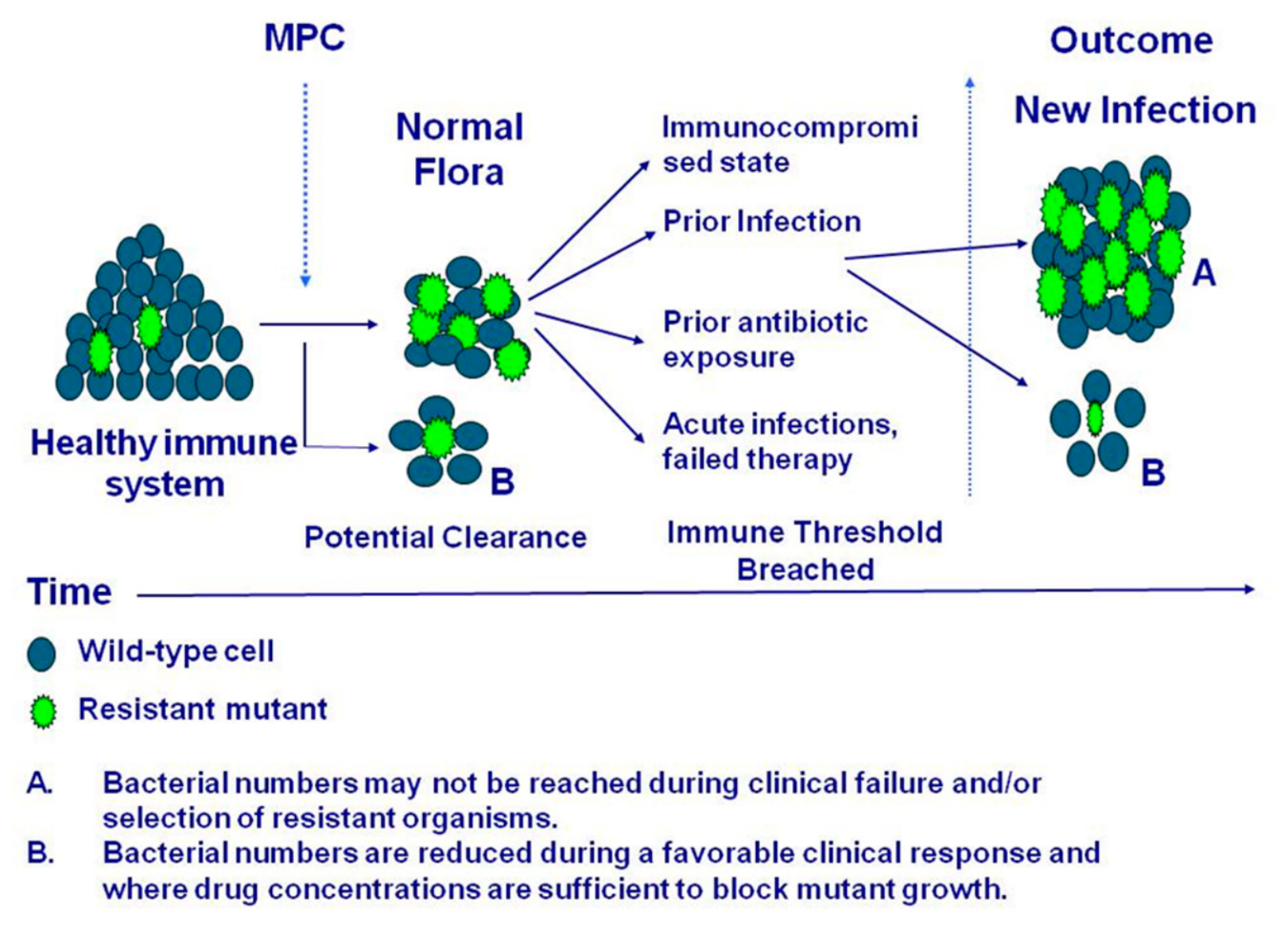
- Higher MPC values exceeding maximum serum or tissue drug concentrations cannot be achieved with conventional dosing and as such use of the drug likely facilitates the selection and amplification of bacterial sub-populations that are resistant to the treatment antibiotic.
6.2. Bactericidal Versus Bacteriostatic
6.3. Mutant Prevention Concentration (MPC)/Mutant Selection Windows (MSWs)
7. In Vitro Kill Studies
- (1)
- Killing bacteria using the MIC drug concentrations is slow and incomplete for all drugs and drug classes when higher densities of organisms are tested.
- (2)
- Killing of bacteria using the MPC drug concentration is generally faster and with more extensive killing; however, differences emerge between killing bacteria by different drugs within the same class or between drugs in different classes. In recent publications/abstract presentations, we have applied statistical analysis to killing of bacteria by one drug versus drugs from other classes and have shown highly statistically significant differences in the speed and completeness of kill at various drug concentrations (i.e., MPC, MSDC, MTDC).
- (3)
- Killing using the MSDC and MTDC may be faster and more complete providing these values exceed the MPC drug concentration.
- (4)
- The standard definition of bactericidal and bacteriostatic does not apply when higher densities of bacteria are used in kill assays.
Antimicrobial Data and Clinical Outcome
- They were powered to show equivalency or non-inferiority; there was no regulatory requirement to design trials to demonstrate superiority.
- Most—if not all—trials excluded patients with an organism (pathogen) that had reduced susceptibility or resistance to either study drug.
- Endpoint measurements were often conducted at a time when there was unlikely to be a measurable difference between the compounds—i.e., at a predetermined time after the end of antimicrobial therapy.
- Depending on the type of trial, microbiological evaluations was lacking or inadequate or restricted to subsets of the study populations.
- Many trials investigate one dose without dosage adjustments based on patient characteristics (i.e., weight).
- Patients enrolled in clinical trials were often well defined (i.e., meet inclusion criteria or more importantly, do not have any exclusion-related characteristics); they may not have been designed to accurately reflect the patient population in which resistance was most likely to arise (i.e., the “real world” population).
- Antimicrobial failure due to resistance may not have been measured.
8. Anti-Inflammatory Properties of Fluoroquinolones
9. Endotoxin and Fluoroquinolones
10. Drug Classes and Impact on Pro-Inflammatory Bacterial Compounds
10.1. Beta-Lactam Drugs
10.2. Aminoglycosides
10.3. Fluroquinolones
11. Fluoroquinolones
11.1. Ciprofloxacin
11.2. Danofloxacin
11.3. Enrofloxacin
11.4. Marbofloxacin
11.5. Pradofloxacin
11.6. Orbifloxacin
12. Antimicrobial Stewardship
13. Fluoroquinolone Toxicity
14. Conclusions
Funding
Institutional Review Board Statement
Informed Consent Statement
Data Availability Statement
Acknowledgments
Conflicts of Interest
References
- Trouchon, T.; Lefebvre, S. A Review of Enrofloxacin for Veterinary Use. Open J. Vet. Med. 2016, 6, 40–58. [Google Scholar] [CrossRef]
- Woods, S.J.; Hughes-Medlicott, N.J.; McDowell, A. Pharmacokinetics in Penguins Compared to Other Avian Species: A Review of Enrofloxacin and Voriconazole. Mol. Pharm. 2023, 20, 4430–4442. [Google Scholar] [CrossRef] [PubMed]
- Sitovs, A.; Sartini, I.; Giorgi, M. Levofloxacin in veterinary medicine: A literature review. Res. Vet. Sci. 2021, 137, 111–126. [Google Scholar] [CrossRef] [PubMed]
- Papich, M.G. Ciprofloxacin Pharmacokinetics in Clinical Canine Patients. J. Vet. Intern. Med. 2017, 31, 1508–1513. [Google Scholar] [CrossRef] [PubMed]
- Zoetis Pharmaceuticals. Available online: https://www.zoetis.com/ (accessed on 12 May 2026).
- Elanco Animal Health. Available online: https://www.elanco.com (accessed on 1 June 2026).
- Merck Animal Health. Available online: https://www.merck-animal-health.com/ (accessed on 12 May 2026).
- Gleckman, R.; Alvarez, S.; Joubert, D.W.; Matthews, S.J. Drug therapy reviews: Nalidixic acid. Am. J. Hosp. Pharm. 1979, 36, 1071–1076. [Google Scholar] [CrossRef]
- Sisca, T.S.; Heel, R.C.; Romankiewicz, J.A. Cinoxacin: A review of its pharmacological properties and therapeutic efficacy in the treatment of urinary tract infections. Drugs 1983, 25, 544–569. [Google Scholar] [CrossRef] [PubMed]
- Silley, P.; Stephan, B.; Greife, H.A.; Pridmore, A. Bactericidal properties of pradofloxacin against veterinary pathogens. Vet. Microbiol. 2012, 157, 106–111. [Google Scholar] [CrossRef] [PubMed]
- Ishak, A.; Mazonakis, N.; Spernovasilis, N.; Akinosoglou, K.; Tsioutis, C. Bactericidal versus bacteriostatic antibacterials: Clinical significance, differences and synergistic potential in clinical practice. J. Antimicrob. Chemother. 2025, 80, 1–17. [Google Scholar] [CrossRef] [PubMed]
- Bush, K.; Bradford, P.A. β-Lactams and β-Lactamase Inhibitors: An Overview. Cold Spring Harb. Perspect. Med. 2016, 6, a025247. [Google Scholar] [CrossRef] [PubMed]
- Fàbrega, A.; Madurga, S.; Giralt, E.; Vila, J. Mechanism of action of and resistance to quinolones. Microb. Biotechnol. 2009, 2, 40–61. [Google Scholar] [CrossRef] [PubMed]
- Geremia, N.; Giovagnorio, F.; Colpani, A.; De Vito, A.; Botan, A.; Stroffolini, G.; Toc, D.A.; Zerbato, V.; Principe, L.; Madeddu, G.; et al. Fluoroquinolones and Biofilm: A Narrative Review. Pharmaceuticals 2024, 17, 1673. [Google Scholar] [CrossRef] [PubMed]
- Drlica, K.; Malik, M. Fluoroquinolones: Action and resistance. Curr. Top. Med. Chem. 2003, 3, 1349–1364. [Google Scholar] [CrossRef]
- Aubry, A.; Pan, X.S.; Fisher, L.M.; Jarlier, V.; Cambau, E. Mycobacterium tuberculosis DNA gyrase: Interaction with quinolones and correlation with antimycobacterial drug activity. Antimicrob. Agents Chemother. 2004, 48, 1281–1288. [Google Scholar] [CrossRef] [PubMed]
- Hirsch, J.; Klostermeier, D. What makes a type IIA topoisomerase a gyrase or a Topo IV? Nucleic Acids Res. 2021, 49, 6027–6042. [Google Scholar] [CrossRef] [PubMed]
- Reece, R.J.; Maxwell, A. DNA gyrase: Structure and function. Crit. Rev. Biochem. Mol. Biol. 1991, 26, 335–375. [Google Scholar] [CrossRef] [PubMed]
- Nagaraja, V.; Godbole, A.A.; Henderson, S.R.; Maxwell, A. DNA topoisomerase I and DNA gyrase as targets for TB therapy. Drug Discov. Today 2017, 22, 510–518. [Google Scholar] [CrossRef] [PubMed]
- Drlica, K.; Zhao, X. Bacterial death from treatment with fluoroquinolones and other lethal stressors. Exp. Rev. Anti Infect. Ther. 2021, 19, 601–618. [Google Scholar] [CrossRef] [PubMed]
- Redgrave, L.S.; Sutton, S.B.; Webber, M.A.; Piddock, L.J. Fluoroquinolone resistance: Mechanisms, impact on bacteria, and role in evolutionary success. Trends Microbiol. 2014, 22, 438–445. [Google Scholar] [CrossRef] [PubMed]
- Chen, C.R.; Malik, M.; Snyder, M.; Drlica, K. DNA gyrase and topoisomerase IV on the bacterial chromosome: Quinolone-induced DNA cleavage. J. Mol. Biol. 1996, 258, 627–637. [Google Scholar] [CrossRef] [PubMed]
- Gellert, M.; Muzuuchi, K.; O’Dea, M.H.; Itoh, T.; Tomizawa, J. Nalidixic acid resistance: A second genetic character involved in DNA gyrase activity. Proc. Natl. Acad. Sci. USA 1977, 74, 4772–4776. [Google Scholar] [CrossRef] [PubMed]
- Sugino, A.; Peebles, C.L.; Kruezer, K.N.; Cozzarelli, N.R. Mechanism of action of nalidixic acid: Purification of Escherichia coli nalA gene product and its relationship to DNA gyrase and a novel nicking-closing enzyme. Proc. Natl. Acad. Sci. USA 1977, 74, 4767–4771. [Google Scholar] [PubMed]
- Wetzstein, H.G. Comparative mutant prevention concentrations of pradofloxacin and other veterinary fluoroquinolones indicate differing potentials in preventing selection of resistance. Antimicrob. Agents Chemother. 2005, 49, 4166–4173. [Google Scholar] [CrossRef] [PubMed]
- Patel, S.N.; McGeer, A.; Melano, R.; Tyrrell, G.J.; Green, K.; Pillai, D.R.; Low, D.E. Susceptibility of Streptococcus pneumoniae to fluoroquinolones in Canada. Antimicrob. Agents Chemother. 2011, 55, 3703–3708. [Google Scholar] [CrossRef] [PubMed]
- Kishii, R.; Takei, M.; Fukuda, H.; Hayashi, K.; Hosaka, M. Contribution of the 8-methoxy group to the activity of gatifloxacin against Type II topoisomerase of Streptococcus pneumoniae. Antimicrob. Agents Chemother. 2003, 47, 77–81. [Google Scholar] [CrossRef] [PubMed]
- Heaton, V.J.; Ambler, J.; Fisher, L.M. Potent antipneumococcal activity of gemifloxacin is associated with dual targeting of gyrase and topoisomerase IV, an in vivo target preference for gyrase, and enhanced stabilization of cleavable complexes in vitro. Antimicrob. Agents Chemother. 2000, 44, 3112–3117. [Google Scholar] [CrossRef] [PubMed]
- Zhao, X.; Xu, C.; Domagala, J.; Drlica, K. DNA topoisomerase targets of the fluoroquinolones: A strategy for avoiding bacterial resistance. Proc. Natl. Acad. Sci. USA 1997, 94, 13991–13996. [Google Scholar] [CrossRef] [PubMed]
- Fukuda, H.; Hiramatsu, K. Primary targets of fluoroquinolones in Streptococcus pneumoniae. Antimicrob. Agents Chemother. 1999, 43, 410–412. [Google Scholar] [CrossRef] [PubMed][Green Version]
- Gootz, T.D.; Zaniewski, L.; Haskell, S.; Schmieder, B.; Tankovic, J.; Girard, D.; Courvalin, P.; Polzer, R. Activity of the new fluoroquinolone trovafloxacin (CP-99,219) against DNA gyrase and topopisomerase IV mutants of Streptococcus pneumoniae. Antimicrob. Agents Chemother. 1996, 40, 2691–2697. [Google Scholar] [PubMed]
- Janoir, C.; Keller, V.; Kitzis, M.D.; Moreau, N.J.; Gutmann, L. High level fluoroquinolone resistance in Streptococcus pneumoniae require mutations in parC and gyrA. Antimicrob. Agents Chemother. 1996, 40, 2760–2764. [Google Scholar] [CrossRef] [PubMed]
- Munoz, R.; de la Campa, A.G. ParC subunit of DNA topoisomerase IV of Streptococcus pneumoniae is a primary target of fluoroquinolones and cooperates with DNA gyraseA subunit in forming resistant phenotype. Antimicrob. Agents Chemother. 1997, 40, 2252–2257. [Google Scholar]
- Pan, X.; Ambler, J.; Mehtar, S.; Fisher, L.M. Involvement of topoisomerase IV and DNA gyrase as ciprofloxacin targets in Streptococcus pneumoniae. Antimicrob. Agents Chemother. 1996, 40, 2321–2326. [Google Scholar] [CrossRef] [PubMed]
- Pan, X.S.; Fisher, L.M. Cloning and characterization of the parC and parE genes of Streptococcus pneumoniae encoding DNA topoisomerase IV: Role in fluoroquinolone resistance. J. Bacteriol. 1996, 178, 4060–4069. [Google Scholar] [PubMed]
- Perichon, B.; Tankovic, J.; Courvalin, P. Characterization of a mutation in the parE gene that confers fluoroquinolone resistance in Streptococcus pneumoniae. Antimicrob. Agents Chemother. 1997, 41, 1166–1167. [Google Scholar] [CrossRef] [PubMed]
- Tankovic, J.; Perichon, B.; Duval, J.; Courvalin, P. Contribution of mutations in the gyrA and parC genes to fluoroquinolone resistance of mutants of Streptococcus pneumoniae obtained in vivo and in vitro. Antimicrob. Agents Chemother. 1996, 40, 2502–2510. [Google Scholar] [CrossRef]
- Pestova, E.; Millichap, J.J.; Noskin, G.A.; Peterson, L.R. Intracellular targets of moxifloxacin: A comparison with other fluoroquinolones. J. Antimicrob. Chemother. 2000, 45, 583–590. [Google Scholar] [CrossRef] [PubMed]
- Pan, X.; Fisher, L.M. DNA gyrase and topoisomerase IV are dual targets of clinafloxacin action in Streptococcus pneumoniae. Antimicrob. Agents Chemother. 1998, 42, 2810–2816. [Google Scholar] [CrossRef] [PubMed]
- Smith, H.J.; Nichol, K.A.; Hoban, D.J.; Zhanel, G.G. Dual activity of fluoroquinolones against Streptococcus pneumoniae: The facts behind the claims. J. Antimicrob. Chemother. 2002, 49, 893–895. [Google Scholar] [CrossRef] [PubMed]
- Fisher, L.M.; Heaton, V.J. Dual activity of fluoroquinolones against Streptococcus pneumoniae. J. Antimicrob. Chemother. 2003, 51, 463–464. [Google Scholar] [CrossRef] [PubMed][Green Version]
- Fisher, L.M.; Gould, K.A.; Pan, X.-S.; Patel, S.; Heaton, V.J. Analysis of dual active fluoroquinolones in Streptococcus pneumoniae. J. Antimicrob. Chemother. 2003, 52, 312–316. [Google Scholar] [CrossRef] [PubMed]
- Pan, X.; Fisher, M.L. Targeting of DNA gyrase in Streptococcus pneumoniae by sparfloxacin: Selective targeting of gyrase or topoisomerase IV by quinolones. Antimicrob. Agents Chemother. 1997, 41, 471–474. [Google Scholar] [CrossRef] [PubMed]
- Smith, H.; Nichol, K.A.; Hoban, D.J.; Zhanel, G.G. Dual activity of fluoroquinolones against Streptococcus pneumoniae: Reply. J. Antimicrob. Chemother. 2003, 51, 464–465. [Google Scholar]
- Brueggemann, A.B.; Coffman, S.L.; Rhomberg, P.R.; Huynh, H.K.; Almer, L.; Nilius, A.; Flamm, R.; Doern, G.V. Fluoroquinolone resistance in Streptococcus pneumoniae in United States since 1994–1995. Antimicrob. Agents Chemother. 2002, 46, 680–688. [Google Scholar] [PubMed][Green Version]
- Zhanel, G.G.; Walkty, A.; Nichol, K.A.; Smith, H.; Noreddin, A.; Hoban, D.J. Molecular characterization of fluoroquinolone resistant Streptococcus pneumoniae clinical isolates obtained from across Canada. Diagn. Microbiol. Infect. Dis. 2003, 45, 63–67. [Google Scholar] [CrossRef] [PubMed]
- Blondeau, J.M.; Zhao, X.; Hansen, G.T.; Drlica, K. Mutant prevention concentrations (MPC) of fluoroquinolones for clinical isolates of Streptococcus pneumoniae. Antimicrob. Agents Chemother. 2001, 45, 433–438. [Google Scholar] [PubMed]
- Lim, S.; Bast, D.; McGeer, A.; de Azavedo, J.; Low, D.E. Antimicrobial susceptibility breakpoints and first-step parC mutations in Streptococcus pneumoniae: Redefining fluoroquinolone resistance. Emerg. Infect. Dis. 2003, 9, 833–837. [Google Scholar] [PubMed]
- Strahilevitz, J.; Hooper, D.C. Dual targeting of topoisomerase IV and gyrase to reduce mutant selection: Direct testing of the paradigm by using WCK-1734, a new fluoroquinolone, and ciprofloxacin. Antimicrob. Agents Chemother. 2005, 49, 1949–1956. [Google Scholar] [CrossRef] [PubMed]
- Martinez, M.; McDermott, P.; Walker, R. Pharmacology of the fluoroquinolones: A perspective for the use in domestic animals. Vet. J. 2006, 172, 10–28. [Google Scholar] [CrossRef] [PubMed]
- Martínez-Martínez, L.; Pascual, A.; Jacoby, G.A. Quinolone resistance from a transferable plasmid. Lancet 1998, 351, 797–799. [Google Scholar] [CrossRef] [PubMed]
- Xiong, X.; Bromley, E.H.; Oelschlaeger, P.; Woolfson, D.N.; Spencer, J. Structural insights into quinolone antibiotic resistance mediated by pentapeptide repeat proteins: Conserved surface loops direct the activity of a Qnr protein from a gram-negative bacterium. Nucleic Acids Res. 2011, 39, 3917–3927. [Google Scholar] [CrossRef] [PubMed]
- Jacoby, G.; Cattoir, V.; Hooper, D.; Martínez-Martínez, L.; Nordmann, P.; Pascual, A.; Poirel, L.; Wang, M. qnr Gene nomenclature. Antimicrob. Agents Chemother. 2008, 52, 2297–2299. [Google Scholar] [CrossRef] [PubMed]
- Robicsek, A.; Jacoby, G.A.; Hooper, D.C. The worldwide emergence of plasmid-mediated quinolone resistance. Lancet Infect. Dis. 2006, 6, 629–640. [Google Scholar] [CrossRef] [PubMed]
- Yu, J.L.; Grinius, L.; Hooper, D.C. NorA functions as a multidrug efflux protein in both cytoplasmic membrane vesicles and reconstituted proteoliposomes. J. Bacteriol. 2002, 184, 1370–1377. [Google Scholar] [CrossRef] [PubMed]
- Truong-Bolduc, Q.C.; Dunman, P.M.; Strahilevitz, J.; Projan, S.J.; Hooper, D.C. MgrA is a multiple regulator of two new efflux pumps in Staphylococcus aureus. J. Bacteriol. 2005, 187, 2395–2405. [Google Scholar] [CrossRef] [PubMed]
- Truong-Bolduc, Q.C.; Strahilevitz, J.; Hooper, D.C. NorC, a new efflux pump regulated by MgrA of Staphylococcus aureus. Antimicrob. Agents Chemother. 2006, 50, 1104–1107. [Google Scholar] [CrossRef] [PubMed]
- Hooper, D.C.; Jacoby, G.A. Mechanisms of drug resistance: Quinolone resistance. Ann. N. Y. Acad. Sci. 2015, 1354, 12–31. [Google Scholar] [CrossRef] [PubMed]
- Li, X.Z.; Plésiat, P.; Nikaido, H. The challenge of efflux-mediated antibiotic resistance in Gram-negative bacteria. Clin. Microbiol. Rev. 2015, 28, 337–418. [Google Scholar] [CrossRef] [PubMed]
- Credille, B.; Berghaus, R.D.; Jane Miller, E.; Credille, A.; Schrag, N.F.D.; Naikare, H. Antimicrobial Metaphylaxis and its Impact on Health, Performance, Antimicrobial Resistance, and Contextual Antimicrobial Use in High-Risk Beef Stocker Calves. J. Anim. Sci. 2024, 102, skad417. [Google Scholar] [CrossRef] [PubMed]
- Grkovic, S.; Brown, M.H.; Skurray, R.A. Regulation of bacterial drug export systems. Microbiol. Mol. Biol. Rev. 2002, 66, 671–701. [Google Scholar] [CrossRef] [PubMed]
- Blondeau, J.M. STAT: Steps to Antimicrobial Therapy: A Guide to Management of Infectious Diseases, 3rd ed.; North American Compendium Inc.: Hensell, ON, Canada; Port Huron, MI, USA, 2011; p. 396. [Google Scholar]
- Weese, J.S.; Blondeau, J.M.; Boothe, D.M.; Breitschwerdt, E.B.; Guardabassi, L.; Hillier, A.; Lloyd, D.H.; Papich, M.; Rankin, S.C.; Turnidge, J.D.; et al. Antimicrobial use guidelines for treatment of urinary tract disease in dogs and cats: Antimicrobial guidelines working group of the international society for companion animal infectious diseases. Vet. Med. Int. 2011, 2011, 263768. [Google Scholar] [CrossRef] [PubMed]
- Weese, J.S.; Blondeau, J.M.; Boothe, D.; Guardabassi, L.G.; Gumley, N.; Papich, M.; Jessen, L.R.; Lappin, M.; Rankin, S.; Westropp, J.L.; et al. International Society for Companion Animal Infectious Diseases (ISCAID) guidelines for the diagnosis and management of bacterial urinary tract infections in dogs and cats. Vet. J. 2019, 247, 8–25. [Google Scholar] [CrossRef] [PubMed]
- Lappin, M.R.; Blondeau, J.M.; Booth, D.; Breitschwerdt, E.B.; Guardabassi, L.; Lloyd, D.H.; Papich, M.G.; Rankin, S.C.; Sykes, J.E.; Turnidge, J.; et al. Antimicrobial use Guidelines for Treatment of Respiratory Tract Disease in Dogs and Cats: Antimicrobial Guidelines Working Group of the International Society for Companion Animal Infectious Diseases. J. Vet. Intern. Med. 2017, 31, 279–294. [Google Scholar] [CrossRef] [PubMed]
- Hillier, A.; Lloyd, D.H.; Weese, J.S.; Blondeau, J.M.; Boothe, D.; Breitschwerdt, E.; Guardabassi, L.; Papich, M.G.; Rankin, S.; Turnidge, J.D.; et al. Guidelines for the diagnosis and antimicrobial therapy of canine superficial bacterial folliculitis (Antimicrobial Guidelines Working Group of the International Society for Companion Animal Infectious Diseases). Vet. Dermatol. 2014, 25, 163–175jC. [Google Scholar] [CrossRef] [PubMed]
- Loeffler, A.; Cain, C.L.; Ferrer, L.; Nishifuji, K.; Varjonen, K.; Papich, M.G.; Guardabassi, L.; Frosini, S.M.; Barker, E.N.; Weese, J.S. Antimicrobial use guidelines for canine pyoderma by the International Society for Companion Animal Infectious Diseases (ISCAID). Vet. Dermatol. 2025, 36, 234–282. [Google Scholar] [CrossRef] [PubMed]
- Blondeau, J.M. Community-acquired respiratory tract pathogens and increasing antimicrobial resistance. J. Infect. Dis. Pharmacother. 2001, 4, 1–28. [Google Scholar]
- Blaskovich, M.A.T.; Cooper, M.A. Antibiotics re-booted-time to kick back against drug resistance. npj Antimicrob. Resist. 2025, 3, 47. [Google Scholar] [CrossRef] [PubMed]
- Benet, L.Z.; Sheiner, L.B. General Principals (Introduction). In The Pharmacological Basis of Therapeutics, 7th ed.; Gillman, A.G., Goodman, L., Rall, T.W., Murad, F., Eds.; MacMillan Publishing Company: New York, NY, 1985; pp. 1–2. [Google Scholar]
- Halleran, J.L.; Callahan, B.J.; Jacob, M.E.; Sylvester, H.J.; Prange, T.; Papich, M.G.; Foster, D.M. Effects of danofloxacin dosing regimen on gastrointestinal pharmacokinetics and fecal microbiome in steers. Sci. Rep. 2021, 11, 11249. [Google Scholar] [CrossRef] [PubMed]
- Haritova, A.M.; Rusenova, N.V.; Parvanov, P.R.; Lashev, L.D.; Fink-Gremmels, J. Pharmacokinetic-pharmacodynamic modelling of danofloxacin in turkeys. Vet. Res. Commun. 2006, 30, 775–789. [Google Scholar] [CrossRef] [PubMed]
- Frazier, D.L.; Thompson, L.; Trettien, A.; Evans, E.I. Comparison of fluoroquinolone pharmacokinetic parameters after treatment with marbofloxacin, enrofloxacin, and difloxacin in dogs. J. Vet. Pharmacol. Ther. 2000, 23, 293–302. [Google Scholar] [CrossRef] [PubMed]
- Daube, G. Pharmacokinetics—What you need to know. In Proceedings of the 4th International Baytril Symposium, Florence, Italy, 18–19 June 2009. [Google Scholar]
- Davis, J.L.; Foster, D.M.; Papich, M. Pharmacokinetics and tissue distribution of enrofloxacin and its active metabolite ciprofloxacin in calves. J. Vet. Pharmacol. Ther. 2007, 30, 564–571. [Google Scholar] [CrossRef] [PubMed]
- Yang, B.; Liu, S.; Cheng, J.; Qu, H.; Guo, Y.; Ji, C.; Wang, Y.; Zhao, S.; Huang, S.; Zhao, L.; et al. Pharmacokinetics of Enrofloxacin in Plasma, Urine, and Feces of Donkey (Equus asinus) after a Single Intragastric Administration. Antibiotics 2024, 13, 355. [Google Scholar] [CrossRef] [PubMed]
- Yang, F.; Liu, Y.; Li, Z.; Wang, Y.; Liu, B.; Zhao, Z.; Zhou, B.; Wang, G. Tissue distribution of marbofloxacin in pigs after a single intramuscular injection. J. Vet. Sci. 2017, 18, 169–173. [Google Scholar] [CrossRef] [PubMed]
- Vetoquinol. Forcyl (Canada). Available online: https://www.drugs.com/vet/forcyl-can.html (accessed on 10 February 2025).
- Gebru, E.; Lee, J.S.; Chang, Z.Q.; Hwang, M.H.; Cheng, H.; Park, S.C. Integration of pharmacokinetic and pharmacodynamic indices of orbifloxacin in beagle dogs after a single intravenous and intramuscular administration. Antimicrob. Agents Chemother. 2009, 53, 3024–3029. [Google Scholar] [CrossRef] [PubMed][Green Version]
- Marín, P.; Escudero, E.; Fernández-Varón, E.; Cárceles, C.M. Pharmacokinetics and milk penetration of orbifloxacin after intravenous, subcutaneous, and intramuscular administration to lactating goats. J. Dairy Sci. 2007, 90, 4219–4225. [Google Scholar] [CrossRef] [PubMed]
- Ghanshyam, D.; Avinash; Divyesh, K.; Madhavi, A.; Bhavesh, C.; Hitesh, P.; Shailesh, M. Pharmacokinetics of orbifloxacin in Mehsana goats after intravenous and intramuscular administration. J. Vet. Sci. Technol. 2015, 6. [Google Scholar]
- Davis, J.L.; Papich, M.G.; Weingarten, A. The pharmacokinetics of orbifloxacin in the horse following oral and intravenous administration. J. Vet. Pharmacol. Ther. 2006, 29, 191–197. [Google Scholar] [CrossRef] [PubMed]
- European Medicines Agency (EMA). Veraflox. Available online: https://www.ema.europa.eu/en/medicines/veterinary/EPAR/veraflox (accessed on 12 May 2026).
- Fraatz, K.; Krebber, R.; Edingloh, M.; Heinen, E. Oral bioavailability of pradofloxacin tablets and renal drug excretion in dogs. J. Vet. Pharmacol. Ther. 2003, 26, 88–89. [Google Scholar]
- Foster, D.M.; Halleran, J.L.; Jacob, M.E.; Hempstead, S.; Borst, L.B.; Negrao Watanabe, T.T.; Enomoto, H.; Papich, M.G. Pharmacokinetics of pradofloxacin, florfenicol, and tulathromycin and response to treatment of steers experimentally infected with Mannheimia hemolytica. J. Vet. Intern. Med. 2025, 39, e17270. [Google Scholar] [CrossRef] [PubMed]
- Elanco Animal Health. Freedom of Information Summary: Original New Animal Drug Application: Pradalex. Available online: https://animaldrugsatfda.fda.gov/adafda/app/search/public/document/downloadFoi/15250 (accessed on 12 May 2026).
- Schentag, J.J.; Gilliland, K.K.; Paladino, J.A. What have we learned from pharmacokinetic and pharmacodynamic theories? Clin. Infect. Dis. 2001, 32, S39–S46. [Google Scholar] [CrossRef] [PubMed]
- Forrest, A.; Nix, D.l.; Ballow, C.H.; Goss, T.F.; Birmingham, M.C.; Schentag, J.J. Pharmacodynamics of intravenous ciprofloxacin in seriously ill patients. Antimicrob. Agents Chemother. 1993, 37, 1073–1081. [Google Scholar] [CrossRef] [PubMed]
- Lacy, M.K.; Lu, W.; Xu, X.; Tessier, P.R.; Nicolau, D.P.; Quintiliani, R.; Nightingale, C.H. Pharmacodynamic comparisons of levofloxacin, ciprofloxacin and ampicillin against Streptococcus pneumoniae in an in vitro model of infection. Antimicrob. Agents Chemother. 1999, 43, 672–677. [Google Scholar] [CrossRef] [PubMed]
- Drusano, G.L.; Preston, S.L.; Owens, R.C., Jr.; Ambrose, P.G. Fluoroquinolone pharmacodynamics (Correspondence). Clin. Infect. Dis. 2001, 33, 2091–2092. [Google Scholar] [PubMed][Green Version]
- Schentag, J.J.; Gilliland, K.K.; Paladino, J.A. Fluoroquinolone Pharmacodynamics (Reply). Clin. Infect. Dis. 2001, 33, 2092–2096. [Google Scholar]
- File, T.M., Jr.; Monte, S.V.; Schentag, J.J.; Paladino, J.A.; Klugman, K.P.; Lavin, B.; Yu, V.L.; Singer, M.E.; Adelman, M.H. A disease model discriptive of progression between chronic obstructive pulmonary disease exacerbations and community-acquired pneumonia: Roles for underlying lung disease and the pharmacokinetics/pharmacodynamics of the antibiotic. Int. J. Antimicrob. Agents 2009, 33, 58–64. [Google Scholar] [PubMed]
- Zhang, L.; Xie, H.; Wang, Y.; Wang, H.; Hu, J.; Zhang, G. Pharmacodynamic Parameters of Pharmacokinetic/Pharmacodynamic (PK/PD) Integration Models. Front. Vet. Sci. 2022, 9, 860472. [Google Scholar] [CrossRef] [PubMed]
- Balaje, R.M.; Sidhu, P.K.; Kaur, G.; Rampal, S. Mutant prevention concentration and PK-PD relationships of enrofloxacin for Pasteurella multocida in buffalo calves. Res. Vet. Sci. 2013, 95, 1114–1124. [Google Scholar] [CrossRef] [PubMed]
- Jaganath, D.; Schaaf, H.S.; Donald, P.R. Revisiting the mutant prevention concentration to guide dosing in childhood tuberculosis. J. Antimicrob. Chemother. 2017, 72, 1848–1857. [Google Scholar] [CrossRef] [PubMed]
- Pankey, G.A.; Sabath, L.D. Clinical relevance of bacteriostatic versus bactericidal mechanisms of action in the treatment of Gram-positive bacterial infections. Clin. Infect. Dis. 2004, 38, 864–870. [Google Scholar] [CrossRef] [PubMed]
- Bergogne-Berezin, E. Clinical role of protein binding of quinolones. Clin. Pharmacokinet. 2002, 41, 741–750. [Google Scholar] [CrossRef] [PubMed]
- Wong, G.; Briscoe, S.; Adnan, S.; McWhinney, B.; Ungerer, J.; Lipman, J.; Roberts, J.A. Protein binding of β-lactam antibiotics in critically ill patients: Can we successfully predict unbound concentrations? Antimicrob. Agents Chemother. 2013, 57, 6165–6170. [Google Scholar] [CrossRef] [PubMed]
- Zinner, S.H.; Lubenko, I.Y.; Gilbert, D.N.; Simmons, K.; Zhao, X.; Drlica, K. Emergence of resistant Streptococcus pneumoniae in an in vitro dynamic model that simulates moxifloxacin concentrations inside and outside the mutant selection window: Related changes in susceptibility, resistance frequency and bacterial killing. J. Antimicrob. Chemother. 2003, 52, 616–622. [Google Scholar] [CrossRef] [PubMed]
- Metzler, K.L.; Hansen, G.T.; Hedlin, P.; Harding, E.; Drlica, K.; Blondeau, J.M. Comparison of minimal inhibitory and mutant prevention concentrations of 4 fluoroquinolones against clinical isolates of methicillin-susceptible and resistant Staphylococcus aureus. Int. J. Antimicrob. Agents 2004, 24, 161–167. [Google Scholar] [PubMed]
- Blondeau, J.M.; Hansen, G.T.; Metzler, K.L.; Hedlin, P. The role of PK/PD parameters to avoid selection and increase of resistance: Mutant prevention concentration. J. Chemother. 2004, 16, 1–19. [Google Scholar] [CrossRef] [PubMed]
- Homma, T.; Hori, T.; Sugimori, G.; Yamano, Y. Pharmacodynamic assessment based on mutant prevention concentrations of fluoroquinolones to prevent the emergence of resistant mutants of Streptococcus pneumoniae. Antimicrob. Agents Chemother. 2007, 51, 3810–3815. [Google Scholar] [CrossRef] [PubMed]
- Liang, B.; Bai, N.; Cai, Y.; Wang, R.; Drlica, K.; Zhao, X. Mutant prevention concentration-based pharmacokinetic/pharmacodynamic indices as dosing targets for suppressing the enrichment of levofloxacin-resistant subpopulations of Staphylococcus aureus. Antimicrob. Agents Chemother. 2011, 55, 2409–2412. [Google Scholar] [CrossRef] [PubMed]
- Olofsson, S.K.; Marcusson, L.L.; Komp Lindgren, P.; Hughes, D.; Cars, O. Selection of ciprofloxacin resistance in Escherichia coli in an in vitro kinetic model: Relation between drug exposure and mutant prevention concentration. J. Antimicrob. Chemother. 2006, 57, 1116–1121. [Google Scholar] [CrossRef] [PubMed]
- Blondeau, J.M.; Fitch, S.D. Comparison of the Minimum Inhibitory and Mutant Prevention Drug Concentrations for Pradofloxacin and 7 Other Antimicrobial Agents Tested Against Swine Isolates of Actinobacillus pleuropneumoniae and Pasteurella multocida. Molecules 2024, 29, 5448. [Google Scholar] [CrossRef] [PubMed]
- Gebru, E.; Choi, M.J.; Lee, S.J.; Damte, D.; Park, S.C. Mutant-prevention concentration and mechanism of resistance in clinical isolates and enrofloxacin/marbofloxacin-selected mutants of Escherichia coli of canine origin. J. Med. Microbiol. 2011, 60, 1512–1522. [Google Scholar] [CrossRef] [PubMed]
- Ehrlich, P. Chemotherapeutics: Scientific principles, methods and results. Lancet 1913, 182, 445–451. [Google Scholar]
- Eke-Usim, A.C.; Rogers, M.A.; Gibson, K.E.; Crnich, C.; Mody, L. Constitutional Symptoms Trigger Diagnostic Testing Before Antibiotic Prescribing in High-Risk Nursing Home Residents. J. Am. Geriatr. Soc. 2016, 64, 1975–1980. [Google Scholar] [CrossRef] [PubMed]
- Blondeau, J.M.; Borsos, S. Comparative minimum inhibitory and resistance prevention concentrations (RPC) of azithromycin (AZ), clarithromycin (C) and erythromycin (E) against 191 susceptible strains of Streptococcus pneumoniae (SP). In Proceedings of the 45th Interscience Conference on Antimicrobial Agents and Chemotherapy (ICAAC), Washington, DC, USA, 16–19 December 2005. [Google Scholar]
- Johnson, C.C. In vitro testing: Correlations of bacterial susceptibility, body fluid levels and effectiveness of antibacterial therapy. In Antibiotics in Laboratory Medicine, 4th ed.; Lorian, V., Ed.; Williams & Wilkins: Baltimore, MD, 1996; pp. 813–834. [Google Scholar]
- Blondeau, J.M.; Farshad, S. Quinolones and where they fit in today’s environment of multidrug-resistant bugs. Exp. Rev. Clin. Pharmacol. 2012, 5, 609–611. [Google Scholar] [CrossRef] [PubMed]
- Ubeda, C.; Pamer, E.G. Antibiotics, microbiota, and immune defense. Trends Immunol. 2012, 33, 459–466. [Google Scholar] [CrossRef] [PubMed]
- Greko, C.; Finn, M.; Franklin, A.; Bengtsson, B. Pharmacokinetic/pharmacodynamic relationship of danofloxacin against Mannheimia haemolytica in a tissue-cage model in calves. J. Antimicrob. Chemother. 2003, 52, 253–257. [Google Scholar] [PubMed]
- Grobbel, M.; Lubke-Becker, A.; Wieler, L.H.; Froyman, R.; Friederichs, S.; Filios, S. Comparative quantification of the in vitro activity of veterinary fluoroquinolones. Vet. Microbiol. 2007, 124, 73–81. [Google Scholar] [CrossRef] [PubMed]
- McKellar, Q.; Gibson, I.; Monteiro, A.; Bregante, M. Pharmacokinetics of enrofloxacin and danofloxacin in plasma, inflammatory exudate, and bronchial secretions of calves following subcutaneous administration. Antimicrob. Agents Chemother. 1999, 43, 1988–1992. [Google Scholar] [CrossRef] [PubMed][Green Version]
- Pirro, F.; Scheer, M.; de Jong, A. Additive in vitro activity of enrofloxacin and its main metabolite ciprofloxacin. In Proceedings of the 14th Annual Congress of the European Society of Veterinary Dermatology and the European College of Veterinary Dermatology, Pisa, Italy, 5–7 September 1997; p. 199. [Google Scholar]
- Blondeau, J.M.; Borsos, S.; Blondeau, L.D.; Blondeau, B.J.; Hesje, C. The killing of clinical isolates of Mannheimia hemolytica (MH) by enrofloxacin (ENR) using minimum inhibitory and mutant prevention drug concentrations and over a range of bacterial inocula. In Proceedings of the ASM Conference on Pasteurellaceae, Kohala Coast, Big Island, HI, USA, 23–26 October 2005. [Google Scholar]
- Hansen, G.T.; Blondeau, J.M. Comparison of the minimum inhibitory, mutant prevention and minimum bactericidal concentrations of ciprofloxacin, levofloxacin and garenoxacin against enteric gram-negative urinary tract infection pathogens. J. Chemother. 2005, 17, 484–492. [Google Scholar] [CrossRef] [PubMed]
- Blondeau, J.M.; Borsos, S.; Blondeau, L.D.; Blondeau, B.J.; Hesje, C. Comparative minimum inhibitory and mutant prevention drug concentrations of enrofloxacin, ceftiofur, florfenicol, tilmicosin and tulathromycin against bovine isolates of Mannheimia haemolytica. Vet. Microbiol. 2012, 160, 85–90. [Google Scholar] [CrossRef] [PubMed]
- Blondeau, J.M.; Borsos, S.; Blondeau, L.D.; Blondeau, B.J.; Hesje, C. Comparative minimum inhibitory concentration of enrofloxacin against clinical isolates of Pasteurella multocida (MH) and Mannheimia hemolytica (MH). In Proceedings of the ASM Conference on Pasteurellaece, Kohala Coast, Big Island, HI, USA, 23–26 October 2005. [Google Scholar]
- Blondeau, J.M.; Borsos, S.; Hesje, C.; Blondeau, L.D.; Blondeau, B.J. Comparative minimum inhibitory concentration (MIC) and mutant prevention concentration (MPC) values of enrofloxacin, florfenicol, tilmicosin and tulathromycin against Mannheimia haemolytica (MH) isolates collected from cattle with bovine respiratory disease. In Proceedings of the International Meeting of Emerging Diseases and Surveillance (IMED), Vienna, Austria, 23–25 February 2007. [Google Scholar]
- Blondeau, J.M.; Fitch, S.D. Mutant prevention and minimum inhibitory concentration drug values for enrofloxacin, ceftiofur, florfenicol, tilmicosin and tulathromycin tested against swine pathogens Actinobacillus pleuropneumoniae, Pasteurella multocida and Streptococcus suis. PLoS ONE 2019, 14, e0210154. [Google Scholar] [CrossRef] [PubMed]
- Stephan, B.; Greife, H.A.; Pridmore, A.; Silley, P. Activity of pradofloxacin against Porphyromonas and Prevotella spp. implicated in periodontal disease in dogs: Susceptibility test data from a European Multicenter study. Antimicrob. Agents Chemother. 2008, 52, 2149–2155. [Google Scholar] [CrossRef] [PubMed]
- Davidson, R.J.; Cavalcanti, R.; Brunton, J.L.; Bast, D.J.; De Azavedo, J.; Kibsey, P.; Fleming, C. Resistance to levofloxacin and failure of treatment of pneumococcal pneumonia. N. Engl. J. Med. 2002, 346, 747–750. [Google Scholar] [CrossRef] [PubMed]
- Andersson, D.I.; Hughes, D. Selection and Transmission of Antibiotic-Resistant Bacteria. Microbiol. Spectr. 2017, 5. [Google Scholar] [CrossRef] [PubMed]
- Metzler, K.L.; Drlica, K.; Blondeau, J.M. Minimal inhibitory and mutant prevention concentrations for azithromycin, clarithromycin and erythromycin with clinical isolates of Streptococcus pneumoniae. J. Antimicrob. Chemother. 2013, 68, 631–635. [Google Scholar] [PubMed]
- Karalliu, E.; Ngan, S.Y.L.; Bęczkowski, P.M.; Barrs, V.R.; Hobi, S.; MacKinnon, B.; Wong, H.; Swan, O.; Baranger-Ete, M.; Gray, J.; et al. Antimicrobial use practices among companion animal veterinarians in Hong Kong. Vet. J. 2025, 314, 106433. [Google Scholar] [CrossRef] [PubMed]
- Feldman, W. Concentrations of bacteria in cerebrospinal fluid of patients with bacterial meningitis. J. Pediatr. 1976, 88, 549–552. [Google Scholar] [CrossRef] [PubMed]
- Frisch, A.W.; Tripp, J.T.; Barrett, C.D., Jr.; Pidgeon, B.E. The specific polysaccharide content of pneumonic lungs. J. Exp. Med. 1942, 76, 505–510. [Google Scholar] [CrossRef] [PubMed]
- McVey, D.S.; Kuszak, J. Bacterial isolates from the lungs of beef calves with bronchopneumonia associated with acute bovine respiratory disease. In Proceedings of the Conference on Research Workers in Animal Diseases (CRWAD), Chicago, IL, USA, 4–5 December 2010. [Google Scholar]
- Kass, E.H. Asymptomatic infections of the urinary tract. Trans. Assoc. Am. Physicians 1956, 69, 56–64. [Google Scholar] [PubMed]
- Kass, E.H.; Finland, M. Asymptomatic infections of the urinary tract. J. Urol. 2002, 168, 420–424. [Google Scholar] [CrossRef] [PubMed]
- Coulthard, M.G.; Kalra, M.; Lambert, H.J.; Nelson, A.; Smith, T.; Perry, J.D. Redefining urinary tract infections by bacterial colony counts. Pediatrics 2010, 125, 335–341. [Google Scholar] [CrossRef] [PubMed]
- Zhao, X.; Drlica, K. Restricting the selection of antibiotic-resistant mutant bacteria: Measurement and potential use of the mutant selection window. J. Infect. Dis. 2002, 185, 561–565. [Google Scholar] [PubMed]
- Coulthard, M.G. Defining urinary tract infection by bacterial colony counts: A case for 100,000 colonies/ml as the best threshold. Pediatr. Nephrol. 2019, 34, 1639–1649. [Google Scholar] [CrossRef] [PubMed]
- Sen, R.K.; Murthy, N.; Gill, S.S.; Nagi, O.N. Bacterial load in tissues and its predictive value for infection in open fractures. J. Orthop. Surg. 2000, 8, 1–5. [Google Scholar] [CrossRef] [PubMed]
- Lebastard, M.; Beurlet-Lafarge, S.; Gomes, E.; Le Boedec, K. Association between quantitative bacterial culture of bronchoalveolar lavage fluid and antibiotic requirement in dogs with lower respiratory tract signs. J. Vet. Intern. Med. 2022, 36, 1444–1453. [Google Scholar] [CrossRef] [PubMed]
- Sorensen, T.M.; Bjornvad, C.R.; Cordoba, G.; Damborg, P.; Guardabassi, L.; Siersma, V.; Bjerrum, L.; Jessen, L.R. Effects of Diagnostic Work-Up on Medical Decision-Making for Canine Urinary Tract Infection: An Observational Study in Danish Small Animal Practices. J. Vet. Intern. Med. 2018, 32, 743–751. [Google Scholar] [CrossRef] [PubMed]
- Blondeau, J.M.; Shebelski, S.D.; Hesje, C.K. Killing of Streptococcus pneumoniae by azithromycin, clarithromycin, erythromycin, telithromycin and gemifloxacin using drug minimum inhibitory concentrations and mutant prevention concentrations. Int. J. Antimicrob. Agents 2015, 45, 594–599. [Google Scholar] [CrossRef] [PubMed]
- Blondeau, J.M.; Fitch, S.D. Effects of Comparative Killing by Pradofloxacin and Seven Other Antimicrobials Against Varying Bacterial Densities of Swine Isolates of Pasteurella multocida. Microorganisms 2025, 13, 221. [Google Scholar] [CrossRef] [PubMed]
- Fagon, J.; Chastre, J.; Trouillet, J.L.; Domart, Y.; Dombret, M.C.; Bornet, M.; Gibert, C. Characterization of distal bronchial microflora during acute exacerbation of chronic bronchitis. Use of the protected specimen brush technique in 54 mechanically ventilated patients. Am. Rev. Respir. Dis. 1990, 142, 1004–1008. [Google Scholar] [CrossRef] [PubMed]
- Bingen, E.; Lambert-Zechovsky, N.; Mariani-Kurkdjian, P.; Doit, C.; Aujard, Y.; Fournerie, F.; Mathieu, H. Bacterial counts in cerebrospinal fluid of children with meningitis. Eur. J. Clin. Microbiol. Infect. Dis. 1990, 9, 278–281. [Google Scholar] [CrossRef] [PubMed]
- Chevallereau, A.; Meaden, S.; van Houte, S.; Westra, E.R.; Rollie, C. The effect of bacterial mutation rate on the evolution of CRISPR-Cas adaptive immunity. Philos. Trans. R. Soc. Lond. B. Biol. Sci. 2019, 374, 20180094. [Google Scholar] [CrossRef] [PubMed]
- Blondeau, J.M. New concepts in antimicrobial susceptibility testing: The mutant prevention concentration and mutant selection window approach. Vet. Dermatol. 2009, 20, 383–396. [Google Scholar] [CrossRef] [PubMed]
- Huang, Z.; Mao, C.; Wei, Y.; Gu, X.; Cai, Q.; Shen, X.; Ding, H. Analysis of the mutant selection window and killing of Mycoplasma hyopneumoniae for doxycycline, tylosin, danofloxacin, tiamulin, and valnemulin. PLoS ONE 2020, 15, e0220350. [Google Scholar] [CrossRef] [PubMed]
- Zhao, X.; Drlica, K. Restricting the selection of antibiotic-resistant mutants: A general strategy derived from fluoroquinolone studies. Clin. Infect. Dis. 2001, 33, S147–S156. [Google Scholar] [PubMed]
- Baquero, F.; Negri, M. Strategies to minimize the development of antibiotic resistance. J. Chemother. 1997, 9, 29–37. [Google Scholar] [PubMed]
- Baquero, F.; Negri, M.; Morosini, M.I.; Blazquez, J. The antibiotic selective process: Concentration-specific amplification of low-level resistant populations. Ciba Found. Study Group 1997, 207, 93–105. [Google Scholar]
- Firsov, A.A.; Vostrov, S.N.; Lubenko, I.Y.; Drlica, K.; Portnoy, Y.A.; Zinner, S.H. In vitro pharmacodynamic evaluation of the mutant selection window hypothesis: Four fluoroquinolones against Staphylococcus aureus. Antimicrob. Agents Chemother. 2003, 47, 1604–1613. [Google Scholar] [CrossRef] [PubMed]
- Zhang, L.; Wang, H.; Bai, Y.; Wang, L.; Bai, Y.; Hu, J. Evaluation of the mutant selection window of danofloxacin against Actinobacillus pleuropneumoniae in an in vitro dynamic model. Front. Vet. Sci. 2023, 10, 1107608. [Google Scholar] [CrossRef] [PubMed]
- Hansen, G.T.; Metzler, K.L.; Drlica, K.; Blondeau, J.M. Mutant prevention concentration of gemifloxacin for clinical isolates of Streptococcus pneumoniae. Antimicrob. Agents Chemother. 2003, 47, 440–441. [Google Scholar] [CrossRef] [PubMed][Green Version]
- Hansen, G.T.; Zhao, X.; Drlica, K.; Blondeau, J.M. Mutant prevention concentration for ciprofloxacin and levofloxacin with Pseudomonas Aeruginosa. Int. J. Antimicrob. Agents 2006, 27, 120–124. [Google Scholar] [CrossRef] [PubMed]
- Metzler, K.L.; Borsos, S.; Hansen, G.; Blondeau, J.M. Determination of the mutant prevention concentration (MPC) for several antimicrobial agents (AA) against clinical isolates of Staphylococcus aureus (SA). In Proceedings of the Canadian Microb iology Association, Saskatoon, SK, Canada, 16–19 June 2002. [Google Scholar]
- Blondeau, J.M.; Shebelski, S.D. Comparative in vitro killing of canine strains of Staphylococcus pseudintermedius and Escherichia coli by cefovecin, cefazolin, doxycycline and pradofloxacin. Vet. Dermatol. 2016, 27, 267-e63. [Google Scholar] [CrossRef] [PubMed]
- Vanderkooi, O.G.; Low, D.E.; Green, K.; Powis, J.E.; McGeer, A. Predicting antimicrobial resistance in invasive pneumococcal infections. Clin. Infect. Dis. 2005, 40, 1288–1297. [Google Scholar] [CrossRef] [PubMed]
- Smith, H.; Nichol, K.A.; Hoban, D.J.; Zhanel, G.G. Stretching the mutant prevention concentration (MPC) beyond its limits. J. Antimicrob. Chemother. 2003, 51, 1323–1325. [Google Scholar] [CrossRef] [PubMed]
- Courter, J.D.; Baker, W.L.; Nowak, K.S.; Smogowicz, L.A.; Desjardins, L.L.; Coleman, C.I.; Girotto, J.E. Increased clinical failures when treating acute otitis media with macrolides: A meta-analysis. Ann. Pharmacother. 2010, 44, 471–478. [Google Scholar] [CrossRef] [PubMed]
- Le Saux, N.; Robinson, J.L.; Canadian Paediatric, S.; Infectious, D.; Immunization, C. Management of acute otitis media in children six months of age and older. Paediatr. Child Health 2016, 21, 39–44. [Google Scholar] [CrossRef] [PubMed]
- Grob, P.R.; Manners, B.T.; Dulake, C. A survey of urinary-tract infection in a general practice. Practitioner 1970, 204, 567–574. [Google Scholar] [PubMed]
- Nicolle, L.E. Short-term therapy for urinary tract infection: Success and failure. Int. J. Antimicrob. Agents 2008, 31, S40–S45. [Google Scholar] [CrossRef] [PubMed]
- Ferry, S.A.; Holm, S.E.; Stenlund, H.; Lundholm, R.; Monsen, T.J. Clinical and bacteriological outcome of different doses and duration of pivmecillinam compared with placebo therapy of uncomplicated lower urinary tract infection in women: The LUTIW project. Scand. J. Prim. Health Care 2007, 25, 49–57. [Google Scholar] [CrossRef] [PubMed]
- Dagan, R.; Klugman, K.P.; Craig, W.A.; Baquero, F. Evidence to support the rationale that bacterial eradication in respiratory tract infection is an important aim of antimicrobial therapy. J. Antimicrob. Chemother. 2001, 47, 129–140. [Google Scholar] [CrossRef] [PubMed]
- Pulikeyil, A.; McDonald, E.G.; McCreary, E.K.; Tamma, P.D.; Narayanan, N. Are bactericidal antibiotics necessary to effectively treat bloodstream infections? CMI Commun. 2025, 2, 105077. [Google Scholar] [CrossRef]
- Blondeau, J.M.; Shebelski, S.D.; Hesje, C.K. Bactericidal effects of various concentrations of enrofloxacin, florfenicol, tilmicosin phosphate, and tulathromycin on clinical isolates of Mannheimia haemolytica. Am. J. Vet. Res. 2015, 76, 860–868. [Google Scholar] [CrossRef] [PubMed]
- Blondeau, J.M.; Fitch, S.D. In Vitro Killing of Canine Urinary Tract Infection Pathogens by Ampicillin, Cephalexin, Marbofloxacin, Pradofloxacin, and Trimethoprim/Sulfamethoxazole. Microorganisms 2021, 9, 2279. [Google Scholar] [CrossRef] [PubMed]
- Silley, P.; Stephan, B.; Greife, H.A.; Pridmore, A. Comparative activity of pradofloxacin against anaerobic bacteria isolated from dogs and cats. J. Antimicrob. Chemother. 2007, 60, 999–1003. [Google Scholar] [CrossRef] [PubMed]
- Azzariti, S.; Mead, A.; Toutain, P.L.; Bond, R.; Pelligand, L. Time-Kill Analysis of Canine Skin Pathogens: A Comparison of Pradofloxacin and Marbofloxacin. Antibiotics 2023, 12, 1548. [Google Scholar] [CrossRef] [PubMed]
- Blondeau, J.M.; Fitch, S.D. Bactericidal Activity of Pradofloxacin and Other Antimicrobials Against Swine Respiratory Bacterial Pathogens. Pathogens 2025, 14, 1171. [Google Scholar] [CrossRef] [PubMed]
- Blondeau, J.M.; Fitch, S.D. Comparative In Vitro Killing of Key Bovine Respiratory Bacterial Pathogens by Pradofloxacin and Eight Other Veterinary Antimicrobial Agents. Microorganisms 2025, 13, 2681. [Google Scholar] [CrossRef] [PubMed]
- Paul, M.; Dishon-Benattar, Y.; Dickstein, Y.; Yahav, D. Optimizing patient recruitment into clinical trials of antimicrobial-resistant pathogens. JAC-Antimicrob. Resist. 2023, 5, dlad005. [Google Scholar] [CrossRef] [PubMed]
- Dalhoff, A.; Shalit, I. Immunomodulatory effects of quinolones. Lancet Infect. Dis. 2003, 3, 359–371. [Google Scholar] [CrossRef] [PubMed]
- Sachse, F.; von Eiff, C.; Becker, K.; Rudack, C. Anti-inflammatory effects of ciprofloxacin in S. aureus Newman induced nasal inflammation in vitro. J. Inflamm. 2008, 5, 11. [Google Scholar] [CrossRef] [PubMed]
- Zusso, M.; Lunardi, V.; Franceschini, D.; Pagetta, A.; Lo, R.; Stifani, S.; Frigo, A.C.; Giusti, P.; Moro, S. Ciprofloxacin and levofloxacin attenuate microglia inflammatory response via TLR4/NF-kB pathway. J. Neuroinflammation 2019, 16, 148. [Google Scholar] [CrossRef] [PubMed]
- Liu, L.M.; Song, J.T.; Gao, F.; Zhang, H. Therapeutic Effect of the Quinolone Levofloxacin on Inflammatory Fibroblast-like Synoviocytes. Ann. Clin. Lab. Sci. 2019, 49, 9–15. [Google Scholar] [PubMed]
- Assar, S.; Nosratabadi, R.; Khorramdel Azad, H.; Masoumi, J.; Mohamadi, M.; Hassanshahi, G. A Review of Immunomodulatory Effects of Fluoroquinolones. Immunol. Investig. 2021, 50, 1007–1026. [Google Scholar] [CrossRef] [PubMed]
- Singh, V.P.; Kumar Nirala, R.; Gond, V.K.; Gangwar, S.K.; Anjana, K.; Jayachandran, C.; Singh, M.K.; Singh, R.P.; Singh, V.P. Immunological effect of sparfloxacin in goats. Indian J. Anim. Sci. 2021, 92, 555–559. [Google Scholar] [CrossRef]
- Tsivkovskii, R.; Sabet, M.; Tarazi, Z.; Griffith, D.C.; Lomovskaya, O.; Dudley, M.N. Levofloxacin reduces inflammatory cytokine levels in human bronchial epithelia cells: Implications for aerosol MP-376 (levofloxacin solution for inhalation) treatment of chronic pulmonary infections. FEMS Immunol. Med. Microbiol. 2011, 61, 141–146. [Google Scholar] [CrossRef] [PubMed]
- Pomorska-Mól, M.; Pejsak, Z. Effect of therapeutic doses of enrofloxacin on circulating lymphocyte subpopulations in pigs. Bull.-Vet. Inst. Pulawy 2015, 59, 287–293. [Google Scholar] [CrossRef]
- Mukherjee, R.; Dash, P.K. Immunomodulatory and Therapeutic Potential of Enrofloxacin in Bovine Sub Clinical Mastitis. Asian-Australas. J. Anim. Sci. 2003, 16, 889–893. [Google Scholar] [CrossRef]
- Araujo, F.G.; Slifer, T.L.; Remington, J.S. Effect of moxifloxacin on secretion of cytokines by human monocytes stimulated with lipopolysaccharide. Clin. Microbiol. Infect. 2002, 8, 26–30. [Google Scholar] [CrossRef] [PubMed]
- Velho, T.R.; Raquel, H.; Figueiredo, N.; Neves-Costa, A.; Pedroso, D.; Santos, I.; Willmann, K.; Moita, L.F. Immunomodulatory Effects and Protection in Sepsis by the Antibiotic Moxifloxacin. Antibiotics 2024, 13, 742. [Google Scholar] [CrossRef] [PubMed]
- Yao, M.; Gao, W.; Tao, H.; Yang, J.; Huang, T. The regulation effects of danofloxacin on pig immune stress induced by LPS. Res. Vet. Sci. 2017, 110, 65–71. [Google Scholar] [CrossRef] [PubMed]
- Fajt, V.R.; Apley, M.D.; Roth, J.A.; Frank, D.E.; Brogden, K.A.; Skogerboe, T.L.; Shostrom, V.K.; Chin, Y.L. The effects of danofloxacin and tilmicosin on neutrophil function and lung consolidation in beef heifer calves with induced Pasteurella (Mannheimia) haemolytica pneumonia. J. Vet. Pharmacol. Ther. 2003, 26, 173–179. [Google Scholar] [CrossRef] [PubMed]
- Endo, Y.; Tsuchiya, T.; Omura, T.; Nakai, K.; Korosue, K.; Ishimaru, M.; Ishikawa, Y.; Hobo, S. Effects of pre-shipping marbofloxacin administration on fever and blood properties in healthy Thoroughbreds transported a long distance. J. Vet. Med. Sci. 2015, 77, 75–79. [Google Scholar] [CrossRef] [PubMed]
- Yudhawati, R.; Wicaksono, N.F. Immunomodulatory Effects of Fluoroquinolones in Community-Acquired Pneumonia-Associated Acute Respiratory Distress Syndrome. Biomedicines 2024, 12, 761. [Google Scholar] [CrossRef] [PubMed]
- Galanos, C.; Freudenberg, M.A. Bacterial endotoxins: Biological properties and mechanisms of action. Mediat. Inflamm. 1993, 2, S11–S16. [Google Scholar] [CrossRef] [PubMed]
- Sheehan, J.R.; Sadlier, C.; O’Brien, B. Bacterial endotoxins and exotoxins in intensive care medicine. BJA Educ. 2022, 22, 224–230. [Google Scholar] [CrossRef] [PubMed]
- Alexander, C.; Rietschel, E.T. Bacterial lipopolysaccharides and innate immunity. J. Endotoxin Res. 2001, 7, 167–202. [Google Scholar] [CrossRef] [PubMed]
- Brown, M.A.; Jones, W.K. NF-kappaB action in sepsis: The innate immune system and the heart. Front. Biosci. 2004, 9, 1201–1217. [Google Scholar] [CrossRef] [PubMed]
- Jarczak, D.; Nierhaus, A. Cytokine Storm-Definition, Causes, and Implications. Int. J. Mol. Sci. 2022, 23, 11740. [Google Scholar] [CrossRef] [PubMed]
- Holzheimer, R.G. Antibiotic induced endotoxin release and clinical sepsis: A review. J. Chemother. 2001, 13, 159–172. [Google Scholar] [CrossRef] [PubMed]
- Skorup, P.; Maudsdotter, L.; Lipcsey, M.; Larsson, A.; Sjölin, J. Mode of bacterial killing affects the inflammatory response and associated organ dysfunctions in a porcine E. coli intensive care sepsis model. Crit. Care 2020, 24, 646. [Google Scholar] [CrossRef] [PubMed]
- Sjölin, J.; Goscinski, G.; Lundholm, M.; Bring, J.; Odenholt, I. Endotoxin release from Escherichia coli after exposure to tobramycin: Dose-dependency and reduction in cefuroxime-induced endotoxin release. Clin. Microbiol. Infect. 2000, 6, 74–81. [Google Scholar] [CrossRef] [PubMed]
- Shalit, I.; Kletter, Y.; Halperin, D.; Waldman, D.; Vasserman, E.; Nagler, A.; Fabian, I. Immunomodulatory effects of moxifloxacin in comparison to ciprofloxacin and G-CSF in a murine model of cyclophosphamide-induced leukopenia. Eur. J. Haematol. 2001, 66, 287–296. [Google Scholar] [CrossRef] [PubMed]
- Nau, R.; Eiffert, H. Minimizing the release of proinflammatory and toxic bacterial products within the host: A promising approach to improve outcome in life-threatening infections. FEMS Immunol. Med. Microbiol. 2005, 44, 1–16. [Google Scholar] [CrossRef] [PubMed]
- Mellado, M.C.; Rodríguez-Contreras, R.; Mariscal, A.; Luna, J.D.; Delgado Rodríguez, M.; Galvez-Vargas, R. Effect of penicillin and chloramphenicol on the growth and endotoxin release by N. Meningitidis. Epidemiol. Infect. 1991, 106, 283–288. [Google Scholar] [CrossRef] [PubMed]
- Dofferhoff, A.S.; Nijland, J.H.; de Vries-Hospers, H.G.; Mulder, P.O.; Weits, J.; Bom, V.J. Effects of different types and combinations of antimicrobial agents on endotoxin release from gram-negative bacteria: An in-vitro and in-vivo study. Scand. J. Infect. Dis. 1991, 23, 745–754. [Google Scholar] [CrossRef] [PubMed]
- Jackson, J.J.; Kropp, H. beta-Lactam antibiotic-induced release of free endotoxin: In vitro comparison of penicillin-binding protein (PBP) 2-specific imipenem and PBP 3-specific ceftazidime. J. Infect. Dis. 1992, 165, 1033–1041. [Google Scholar] [CrossRef] [PubMed]
- Shenep, J.L.; Barton, R.P.; Mogan, K.A. Role of antibiotic class in the rate of liberation of endotoxin during therapy for experimental gram-negative bacterial sepsis. J. Infect. Dis. 1985, 151, 1012–1018. [Google Scholar] [CrossRef] [PubMed]
- Kadurugamuwa, J.L.; Beveridge, T.J. Natural release of virulence factors in membrane vesicles by Pseudomonas aeruginosa and the effect of aminoglycoside antibiotics on their release. J. Antimicrob. Chemother. 1997, 40, 615–621. [Google Scholar] [CrossRef] [PubMed]
- Mason, D.J.; Power, E.G.; Talsania, H.; Phillips, I.; Gant, V.A. Antibacterial action of ciprofloxacin. Antimicrob. Agents Chemother. 1995, 39, 2752–2758. [Google Scholar] [CrossRef] [PubMed]
- Gogos, C.A.; Skoutelis, A.; Lekkou, A.; Drosou, E.; Starakis, I.; Marangos, M.N.; Bassaris, H.P. Comparative effects of ciprofloxacin and ceftazidime on cytokine production in patients with severe sepsis caused by gram-negative bacteria. Antimicrob. Agents Chemother. 2004, 48, 2793–2798. [Google Scholar] [CrossRef] [PubMed][Green Version]
- Purswani, M.U.; Eckert, S.J.; Arora, H.K.; Noel, G.J. Effect of ciprofloxacin on lethal and sublethal challenge with endotoxin and on early cytokine responses in a murine in vivo model. J. Antimicrob. Chemother. 2002, 50, 51–58. [Google Scholar] [CrossRef] [PubMed]
- Prins, J.M.; van Deventer, S.J.; Kuijper, E.J.; Speelman, P. Clinical relevance of antibiotic-induced endotoxin release. Antimicrob. Agents Chemother. 1994, 38, 1211–1218. [Google Scholar] [CrossRef] [PubMed]
- Kreger, B.E.; Craven, D.E.; McCabe, W.R. Gram-negative bacteremia. IV. Re-evaluation of clinical features and treatment in 612 patients. Am. J. Med. 1980, 68, 344–355. [Google Scholar] [CrossRef] [PubMed]
- Trautmann, M.; Zick, R.; Rukavina, T.; Cross, A.S.; Marre, R. Antibiotic-induced release of endotoxin: In-vitro comparison of meropenem and other antibiotics. J. Antimicrob. Chemother. 1998, 41, 163–169. [Google Scholar] [CrossRef] [PubMed]
- Khan, A.A.; Slifer, T.R.; Araujo, F.G.; Suzuki, Y.; Remington, J.S. Protection against lipopolysaccharide-induced death by fluoroquinolones. Antimicrob. Agents Chemother. 2000, 44, 3169–3173. [Google Scholar] [CrossRef] [PubMed]
- Elmas, M.; Yazar, E.; Uney, K.; Er, A. Influence of Escherichia coli Endotoxin-Induced Endotoxaemia on the Pharmacokinetics of Enrofloxacin after Intravenous Administration in Rabbits. J. Vet. Med. Ser. A 2006, 53, 410–414. [Google Scholar] [CrossRef] [PubMed]
- Dosogne, H.; Meyer, E.; Sturk, A.; van Loon, J.; Massart-Leën, A.M.; Burvenich, C. Effect of enrofloxacin treatment on plasma endotoxin during bovine Escherichia coli mastitis. Inflamm. Res. 2002, 51, 201–205. [Google Scholar] [CrossRef] [PubMed]
- Post, L.O.; Farrell, D.E.; Cope, C.V.; Baker, J.D.; Myers, M.J. The effect of endotoxin and dexamethasone on enrofloxacin pharmacokinetic parameters in swine. J. Pharmacol. Exp. Ther. 2003, 304, 889–895. [Google Scholar] [CrossRef] [PubMed]
- Peek, S.F. Respiratory emergencies in cattle. Vet. Clin. North Am. Food Anim. Pract. 2005, 21, 697–710. [Google Scholar] [CrossRef] [PubMed]
- Apley, M. Bovine respiratory disease: Pathogenesis, clinical signs, and treatment in lightweight calves. Vet. Clin. North Am. Food Anim. Pract. 2006, 22, 399–411. [Google Scholar] [CrossRef] [PubMed]
- Werid, G.M.; Miller, D.; Hemmatzadeh, F.; Messele, Y.E.; Petrovski, K. An overview of the detection of bovine respiratory disease complex pathogens using immunohistochemistry: Emerging trends and opportunities. J. Vet. Diagn. Investig. 2024, 36, 12–23. [Google Scholar] [CrossRef] [PubMed]
- Valeris-Chacin, R.; Powledge, S.; McAtee, T.; Morley, P.S.; Richeson, J. Mycoplasma bovis is associated with Mannheimia haemolytica during acute bovine respiratory disease in feedlot cattle. Front. Microbiol. 2022, 13, 946792. [Google Scholar] [CrossRef] [PubMed]
- Wheelhouse, N.; Longbottom, D.; Willoughby, K. Chlamydia in cases of cattle pneumonia in Scotland. Vet. Rec. 2013, 172, 110. [Google Scholar] [CrossRef] [PubMed]
- Parker-Graham, C.A.; Siniard, W.C.; Byrne, B.A.; Knych, H.K.; Soto, E. Pharmacokinetics of danofloxacin following intramuscular administration of a single dose in koi (Cyprinus carpio). Am. J. Vet. Res. 2020, 81, 708–713. [Google Scholar] [CrossRef] [PubMed]
- Sarasola, P.; Lees, P.; AliAbadi, F.S.; McKellar, Q.A.; Donachie, W.; Marr, K.A.; Sunderland, S.J.; Rowan, T.G. Pharmacokinetic and pharmacodynamic profiles of danofloxacin administered by two dosing regimens in calves infected with Mannheimia (Pasteurella) haemolytica. Antimicrob. Agents Chemother. 2002, 46, 3013–3019. [Google Scholar] [CrossRef] [PubMed]
- Rowan, T.G.; Sarasola, P.; Sunderland, S.J.; Giles, C.J.; Smith, D.G. Efficacy of danofloxacin in the treatment of respiratory disease in European cattle. Vet. Rec. 2004, 154, 585–589. [Google Scholar] [CrossRef] [PubMed]
- Caproni, L., Jr.; Umehara, O.; Costa, E.; Benites, N.; Melville, P.; Raemdonck, D. Clinical efficacy of danofloxacin 18% in the treatment of naturally occurring infectious diseases in cattle. Arq. Inst. Biol. 2002, 69, 7–13. [Google Scholar] [CrossRef]
- Sunderland, S.J.; Sarasola, P.; Rowan, T.G.; Giles, C.J.; Smith, D.G. Efficacy of danofloxacin 18% injectable solution in the treatment of Escherichia coli diarrhoea in young calves in Europe. Res. Vet. Sci. 2003, 74, 171–178. [Google Scholar] [CrossRef] [PubMed]
- Westropp, J.L.; Sykes, J.E.; Irom, S.; Daniels, J.B.; Smith, A.; Keil, D.; Settje, T.; Wang, Y.; Chew, D.J. Evaluation of the efficacy and safety of high dose short duration enrofloxacin treatment regimen for uncomplicated urinary tract infections in dogs. J. Vet. Intern. Med. 2012, 26, 506–512. [Google Scholar] [CrossRef] [PubMed]
- Paradis, M.; Lemay, S.; Scott, D.W.; Miller, W.H.; Wellington, J.; Panich, R. Efficacy of enrofloxacin in the treatment of canine pyoderma. Vet. Dermatol. 1990, 1, 123–127. [Google Scholar] [CrossRef] [PubMed]
- Gutierrez, L.; Tapia, G.; Ocampo, L.; Monroy-Barreto, M.; Sumano, H. Oral Plus Topical Administration of Enrofloxacin-Hydrochloride-Dihydrate for the Treatment of Unresponsive Canine Pyoderma. A clinical trial. Animals 2020, 10, 943. [Google Scholar] [CrossRef] [PubMed]
- Reddy, B.S.; Kumari, K.N.; Rao, V.V.; Rayulu, V.; Sivajothi, S. Efficacy of enrofloxacin in the treatment of recurrent pyoderma in dogs. J. Adv. Vet. Res. 2014, 4, 108–112. [Google Scholar]
- Gutierrez, L.; Mendoza, J.; Rangel, A.B.; Tapia, G.; Bernad, M.J.; Sumano, H. Outpatient Clinical Trial in Dogs With Leptospirosis Treated With Enrofloxacin Hydrochloride-Dihydrate (ENRO-C). Front. Vet. Sci. 2019, 6, 360. [Google Scholar] [CrossRef] [PubMed]
- Horspool, L.J.; van Laar, P.; van den Bos, R.; Mawhinney, I. Treatment of canine pyoderma with ibafloxacin and marbofloxacin—Fluoroquinolones with different pharmacokinetic profiles. J. Vet. Pharmacol. Ther. 2004, 27, 147–153. [Google Scholar] [CrossRef] [PubMed]
- Paradis, M.; Abbey, L.; Baker, B.; Coyne, M.; Hannigan, M.; Joffe, D.; Pukay, B.; Trettien, A.; Waisglass, S.; Wellington, J. Evaluation of the clinical efficacy of marbofloxacin (Zeniquin) tablets for the treatment of canine pyoderma: An open clinical trial. Vet. Dermatol. 2001, 12, 163–169. [Google Scholar] [CrossRef] [PubMed]
- Dokuzeylül, B.; Celik, B.; Diren Sigirci, B.; Başaran Kahraman, B.; Saka, S.; Kayar, A.; Ak, S.; Or, M. E Clinical efficacy of marbofloxacin in dogs and cats diagnosed with lower urinary tract disorders. Med. Weter. 2019, 75, 549–552. [Google Scholar] [CrossRef]
- Scott, D.W.; Peters, J.; Miller, W.H., Jr. Efficacy of orbifloxacin tablets for the treatment of superficial and deep pyoderma due to Staphylococcus intermedius infection in dogs. Can. Vet. J. 2006, 47, 999–1002. [Google Scholar] [PubMed]
- Mueller, R.S.; Stephan, B. Pradofloxacin in the treatment of canine deep pyoderma: A multicentred, blinded, randomized parallel trial. Vet. Dermatol. 2007, 18, 144–151. [Google Scholar] [CrossRef] [PubMed]
- Restrepo, C.; Ihrke, P.J.; White, S.D.; Spiegel, I.B.; Affolter, V.K. Evaluation of the clinical efficacy of pradofloxacin tablets for the treatment of canine pyoderma. J. Am. Anim. Hosp. Assoc. 2010, 46, 301–311. [Google Scholar] [CrossRef] [PubMed]
- Litster, A.; Moss, S.; Honnery, M.; Rees, B.; Edingloh, M.; Trott, D. Clinical efficacy and palatability of pradofloxacin 2.5% oral suspension for the treatment of bacterial lower urinary tract infections in cats. J. Vet. Intern. Med. 2007, 21, 990–995. [Google Scholar] [CrossRef] [PubMed]
- Spindel, M.E.; Veir, J.K.; Radecki, S.V.; Lappin, M.R. Evaluation of pradofloxacin for the treatment of feline rhinitis. J. Feline Med. Surg. 2008, 10, 472–479. [Google Scholar] [CrossRef] [PubMed]
- Blondeau, J.M.; Borsos, S.; Blondeau, L.D.; Blondeau, B.J. In vitro killing of Escherichia coli, Staphylococcus pseudintermedius and Pseudomonas aeruginosa by enrofloxacin in combination with its active metabolite ciprofloxacin using clinically relevant drug concentrations in the dog and cat. Vet. Microbiol. 2012, 155, 284–290. [Google Scholar] [CrossRef] [PubMed]
- Richez, P.; Dellac, B.; Froyman, R.; De Jong, A. Pharmacokinetics of enrofloxacin in calves and adult cattle after single and repeated subcutaneous injections. In Proceedings of the 6th International Congress of European Association for Veterinary Pharmacology and Therapeutics, Edinburgh, UK, 7–11 August 1994. [Google Scholar]
- Stegemann, M.; Wollen, T.S.; Ewert, K.M.; Terhune, T.N.; Copeland, D.D. Plasma pharmacokinetics of enrofloxacin administered to cattle at a dose of 7.5 mg/kg. J. Vet. Pharmacol. Ther. 1997, 20, 22. [Google Scholar]
- Wanke, M.M.; Delpino, M.V.; Baldi, P.C. Use of enrofloxacin in the treatment of canine brucellosis in a dog kennel (clinical trial). Theriogenology 2006, 66, 1573–1578. [Google Scholar] [CrossRef] [PubMed]
- Shinozuka, Y.; Kawai, K.; Takeda, A.; Yamada, M.; Kayasaki, F.; Kondo, N.; Sasaki, Y.; Kanai, N.; Mukai, T.; Sawaguchi, N.; et al. Randomized clinical trial to evaluate the effectiveness of enrofloxacin as a second-line antibiotic for treatment of acute Escherichia coli mastitis. Anim. Sci. J. 2018, 89, 1033–1039. [Google Scholar] [CrossRef] [PubMed]
- Biswas, J.C.; Somvanshi, R.; Rao, G.S.C.R. Problems of livestock development in the Himalayan region. Environmentalist 1994, 14, 201–205. [Google Scholar] [CrossRef]
- Kaler, J.; Wani, S.A.; Hussain, I.; Beg, S.A.; Makhdoomi, M.; Kabli, Z.A.; Green, L.E. A clinical trial comparing parenteral oxytetracyline and enrofloxacin on time to recovery in sheep lame with acute or chronic footrot in Kashmir, India. BMC Vet. Res. 2012, 8, 12. [Google Scholar] [CrossRef] [PubMed]
- Grandemange, E.; Perrin, P.A.; Cvejic, D.; Haas, M.; Rowan, T.; Hellmann, K. Randomised controlled field study to evaluate the efficacy and clinical safety of a single 8 mg/kg injectable dose of marbofloxacin compared with one or two doses of 7.5 mg/kg injectable enrofloxacin for the treatment of Actinobacillus pleuropneumoniae infections in growing-fattening pigs in Europe. Porc. Health Manag. 2017, 3, 10. [Google Scholar] [CrossRef] [PubMed]
- Colakoglu, E.C.; Haydardedeoglu, A.E.; Alihosseini, H.; Hayirli, A. Efficacy of single-dose ceftriaxone versus multiple-dose enrofloxacin in dogs with uncomplicated lower urinary tract infection: A randomised clinical trial. Vet. Med. 2017, 62, 125–130. [Google Scholar]
- Meier, K.K.; Stock, A.; Merle, R.; Arndt, H.; Dachrodt, L.; Hoedemaker, M.; Kellermann, L.; Knubben-Schweizer, G.; Volkmann, M.; Müller, K.E. Risk factors for omphalitis in neonatal dairy calves. Front. Vet. Sci. 2024, 11, 1480851. [Google Scholar] [CrossRef] [PubMed]
- Gutiérrez, O.L.; Rodríguez, M.; Rodríguez, N.; Tapia, G.; Amigon, M.; Sumano López, H.; Posadas Manzano, E. The use of enrofloxacin-alginate gel to prevent newborn calves’ navels infection. Vet. México OA 2022, 9, 19. [Google Scholar] [CrossRef]
- Schneider, M.; Valle, M.; Woehrle, F.; Boisrame, B. Pharmacokinetics of marbofloxacin in lactating cows after repeated intramuscular administrations and pharmacodynamics against mastitis isolated strains. J. Dairy Sci. 2004, 87, 202–211. [Google Scholar] [CrossRef] [PubMed]
- Ismail, M.; El-Kattan, Y.A. Comparative pharmacokinetics of marbofloxacin in healthy and Mannheimia haemolytica infected calves. Res. Vet. Sci. 2007, 82, 398–404. [Google Scholar] [CrossRef] [PubMed]
- Lapczak, J.; Rossi, P.; Thomaz, G.; Garbossa, G.; Neumann, M.; Bertagnon, H. Therapeutic efficacy of marbofloxacin and ceftiofur in feedlot steers with bovine respiratory disease complex. Acta Vet. Bras. 2022, 16, 371–377. [Google Scholar] [CrossRef]
- Lhermie, G.; Toutain, P.L.; El Garch, F.; Bousquet-Mélou, A.; Assié, S. Implementing Precision Antimicrobial Therapy for the Treatment of Bovine Respiratory Disease: Current Limitations and Perspectives. Front. Vet. Sci. 2017, 4, 143. [Google Scholar] [CrossRef] [PubMed]
- Thomas, E.; Caldow, G.L.; Borell, D.; Davot, J.L. A field comparison of the efficacy and tolerance of marbofloxacin in the treatment of bovine respiratory disease. J. Vet. Pharmacol. Ther. 2001, 24, 353–358. [Google Scholar] [CrossRef] [PubMed]
- Blondeau, J.M.; Fitch, S.D. In vitro killing of canine strains of Staphylococcus pseudintermedius and Escherichia coli by cefazolin, cefovecin, doxycycline and pradofloxacin over a range of bacterial densities. Vet. Dermatol. 2020, 31, 187-e39. [Google Scholar] [CrossRef] [PubMed]
- Bartges, J.W.; Barsanti, J.A. Bacterial urinary tract infection in cats. In Kirk’s Current Veterinary Therapy XIII: Small Animal Practice; Bonagura, J.D., Ed.; W. B. Saunders: Philadelphia, PA, USA, 2000; pp. 880–882. [Google Scholar]
- Dowers, K.L.; Tasker, S.; Radecki, S.V.; Lappin, M.R. Use of pradofloxacin to treat experimentally induced Mycoplasma hemofelis infection in cats. Am. J. Vet. Res. 2009, 70, 105–111. [Google Scholar] [CrossRef] [PubMed]
- Hartmann, A.D.; Helps, C.R.; Lappin, M.R.; Werckenthin, C.; Hartmann, K. Efficacy of Pradofloxacin in Cats with Feline Upper Respiratory Tract Disease due to Chlamydophila felis or Mycoplasma Infections. J. Vet. Intern. Med. 2008, 22, 44–52. [Google Scholar] [CrossRef] [PubMed]
- Stephan, B.; Hellman, K.; Liege, P.; Granier, S.A.; Knoppe, T.N.; Heinen, E.; Greife, H.A. Clinical efficacy and safety of pradofloxacin in the treatment of canine pyoderma and wound infections under field conditions. J. Vet. Pharmacol. Ther. 2003, 26, 217–218. [Google Scholar]
- Wallis, C.; Holcombe, L.J. A review of the frequency and impact of periodontal disease in dogs. J. Small Anim. Pract. 2020, 61, 529–540. [Google Scholar] [CrossRef] [PubMed]
- O’Neill, D.G.; Mitchell, C.E.; Humphrey, J.; Church, D.B.; Brodbelt, D.C.; Pegram, C. Epidemiology of periodontal disease in dogs in the UK primary-care veterinary setting. J. Small Anim. Pract. 2021, 62, 1051–1061. [Google Scholar] [CrossRef] [PubMed]
- Nieves, M.A.; Hartwig, P.; Kinyon, J.M.; Riedesel, D.H. Bacterial Isolates From Plaque and From Blood During and After Routine Dental Procedures in Dogs. Vet. Surg. 1997, 26, 26–32. [Google Scholar] [CrossRef] [PubMed]
- Black, A.P. Bacteremia during ultrasonic teeth cleaning and extraction in the dog. J. Am. Anim. Hosp. Assoc. 1980, 16, 611–616. [Google Scholar]
- Colmery, B., 3rd; Frost, P. Periodontal disease. Etiology and pathogenesis. Vet. Clin. N. Am. Small Anim. Pract. 1986, 16, 817–833. [Google Scholar] [CrossRef] [PubMed]
- Weese, J.S.; Battersby, I.; Morrison, J.; Spofford, N.; Soltero-Rivera, M. Antimicrobial use practices in canine and feline dental procedures performed in primary care veterinary practices in the United States. PLoS ONE 2023, 18, e0295070. [Google Scholar] [CrossRef] [PubMed]
- Stephan, B.; Liege, P.; Pridmore, A.; Edingloh, M.; Greife, H.A. Results of the use of pradofloxacin in the treatment of canine periodontal disease. In Proceedings of the 3rd International Conference on Antimicrobial Agents in Veterinary Medicine (AAVM), Orland, FL, USA, 16–20 May 2006; pp. 16–20. [Google Scholar]
- Stephan, B.; Hellman, K.; Adler, K.; Greife, H.A. Clinical efficacy of pradofloxacin in the treatment of feline upper respiratory tract infections. In Proceedings of the 45th International Conference of Antimicrobial Agents and Chemotherapy (ICAAC), Washington, DC, USA, 16–19 December 2005. Poster F-508. [Google Scholar]
- Shimizu, T.; Harada, K.; Manabe, S.; Tsukamoto, T.; Ito, N.; Hikasa, Y. Assessment of urinary pharmacokinetics and pharmacodynamics of orbifloxacin in healthy dogs with ex vivo modelling. J. Med. Microbiol. 2017, 66, 616–621. [Google Scholar] [CrossRef] [PubMed]
- Harada, K.; Shimizu, T.; Kataoka, Y.; Takahashi, T. Post-antibiotic effect of orbifloxacin against Escherichia coli and Pseudomonas aeruginosa isolates from dogs. Acta Vet. Scand. 2012, 54, 16. [Google Scholar] [CrossRef] [PubMed]
- Shimizu, T.; Harada, K. Determination of minimum biofilm eradication concentrations of orbifloxacin for canine bacterial uropathogens over different treatment periods. Microbiol. Immunol. 2017, 61, 17–22. [Google Scholar] [CrossRef] [PubMed]
- Ibrahem, M.D.; Atta, A.H.; Shalaby, M.A. Bioavailability of orbifloxacin in African sharptooth catfish, Clarias pariepinus and it efficacy in control of induced Edwardsiellosis. J. Am. Sci. 2010, 6, 236–244. [Google Scholar]
- Dellit, T.H.; Owens, R.C.; McGowan, J.E.; Gerding, D.N.; Weinstein, R.A.; Burke, J.P.; Huskins, W.C.; Paterson, D.L.; Fishman, N.O.; Carpenter, C.F.; et al. Infectious Diseases Society of America and the Society for Healthcare Epidemiology of America guidelines for developing an institutional program to enhance antimicrobial stewardship. Clin. Infect. Dis. 2007, 44, 159–177. [Google Scholar] [CrossRef] [PubMed]
- Lloyd, D.H.; Page, S.W. Antimicrobial Stewardship in Veterinary Medicine. Microbiol. Spectr. 2018, 6, 675–697. [Google Scholar] [CrossRef] [PubMed]



| Drug | Country | Organisms on Label | Clinical Indications |
|---|---|---|---|
| Danofloxacin [5] | USA Canada | Mannheimia haemolytica Pasteurella multocida | Treatment/control respiratory disease in cattle. |
| Enrofloxacin [6] | USA Canada | Mannheimia haemolytica Pasteurella multocida Histophilus somni Mycoplasma bovis | Treatment/control respiratory disease in cattle. |
| USA Canada | Actinobacillus pleuropneumoniae Pasteurella multocida Haemophilus parasuis Streptococcus suis Bordetella bronchiseptica Mycoplasma hyopneumoniae Escherichia coli Colibacillosis—Swine | Treatment/control respiratory disease in swine. | |
| Marbofloxacin [5] | Canada | Mannheimia haemolytica Pasteurella multocida | Treatment of respiratory disease in cattle. |
| Pradofloxacin [6] | USA (bovine) | Mannheimia haemolytica Pasteurella multocida Histophilus somni Mycoplasma bovis | Bovine respiratory disease. |
| USA (swine) | Bordetella bronchiseptica Glasserella (Haemophilus) parasuis Pasteurella multocida Streptococcus suis Mycoplasma hyopneumoniae | Swine respiratory disease. |
| Drug | Country | Organisms on Label | Clinical Indications |
|---|---|---|---|
| Marbofloxacin [5] | USA | Skin and soft tissue infections. Urinary tract infections. | |
| Europe | Dogs
| ||
| Orbifloxacin [7] | USA | Staphylococcus pseudintermedius Proteus mirabilis Escherichia coli Enterococcus faecalis | Urinary tract infections—dogs. |
| Staphylococcus pseudintermedius Staphylococcus aureus Coagulase-positive Staphylococcus Pasteurella multocida Proteus mirabilis Pseudomonas spp. Streptococcus equisimilis Klebsiella pneumoniae Escherichia coli Enterobacter spp. Citrobacter spp. Enterococcus faecalis Beta-haemolytica Streptococcus | Skin and soft tissue skin infections—dogs. | ||
| Europe | Escherichia coli Proteus mirabilis | Urinary tract infections—dogs. Skin and soft tissue infections. | |
| Pradofloxacin [6] | USA | Pasteurella multocida Streptococcus canis Staphylococcus aureus Staphylococcus felis Staphylococcus pseudintermedius | Skin infections in cats. |
| Europe | Staphylococcus pseudintermedius Escherichia coli Porphyromonas spp. Prevotella spp. | Dogs
| |
| Pasteurella multocida Escherichia coli Staphylococcus pseudintermedius | Cats
| ||
| Staphylococcus aureus Escherichia coli Pasteurella multocida |
| Drug | Dose | Cmax (µg/mL) | Tmax (h) | T½ (h) | AUC0–24 (h) (µg/mL) | AUC0-inf (µg/h/mL) | % Protein Binding | Bioavailability % |
|---|---|---|---|---|---|---|---|---|
| Danofloxacin | ||||||||
| Cattle [71] | 6 mg/kg | 1.25 | 3.2 | 4.8 | 9.4 | 36.4 | 92 | |
| Turkey [72] | 7 mg/kg oral | 1.17 | 2.13 | 9.74 | 7.70 | 8.95 | 78.37 | |
| Difloxacin | ||||||||
| Dog [73] | 5 mg/kg | 1.8 | 2.8 | 9.3 | 14.5 | 50.0 | >95 | |
| Enrofloxacin | ||||||||
| Cats [74] | 5 mg/kg | 2.4 | 0.83 | 8.9 | 29.4 | --- | 100 | |
| Dogs [74] | 5 mg/kg | 1.7 | 1 | 3.2 | 62.9 | <30 | 95 | |
| Cattle [75] | 2.5 mg/kg SC | 0.2 | 1.7 | --- | 1.4 | 46 | ||
| 8 mg/kg SC | 0.8 | 2 | 7.3 | 7.5 | 46 | |||
| 12.5 mg/kg SC | 0.96 | 4.8 | 6.8 | 8.7 | 14.9 | 46 | ||
| Donkeys [76] | 7.5 mg/kg Intragastric | 2.56 | 0.55 | 11.4 | 10.3 | |||
| Marbofloxacin | ||||||||
| Cats [5] | 2.5 mg/lb | 4.8 | 1.2 | 12.7 | 70 | 7.3 | 94 | |
| Dogs [5] | 1.25 mg/lb | 2.0 | 1.5 | 10.7 | 31.2 | 9.1 | 94 | |
| Dogs [5] | 2.5 mg/lb | 4.2 | 1.8 | 10.9 | 64 | 9.1 | 94 | |
| Pigs [77] | 2.5 mg/kg | 1.6 | 2 | 21.5 | 31.2 | |||
| Cattle [78] | 10 mg/kg | 7.9 | 1.3 | 17.5 | 52.7 | 30 | >90 | |
| Orbifloxacin | ||||||||
| Cats [7] | Oral 7.5 mg/kg | 3.01 | 7.57 | 33.98 | 18 | |||
| Dogs [79] | Oral 2.5 mg/kg | 2.3 | 46 min | 5.6 | ||||
| 7.5 mg/kg | 6.3 | 2 | 6.1 | 14.3 | 20 | ~100 | ||
| Goats (plasma) [80] | 2.5 mg/kg BW IV | 4.12 | 6.15 | ~100 | ||||
| 2.5 mg/kg BW SC | 1.85 | 1.25 | 4.99 | 6.47 | ||||
| 2.5 mg/kg BW IM | 1.66 | 0.87 | 3.34 | 5.98 | ||||
| Goats (milk) [80] | 2.5 mg/kg BW IV | 1.56 | 1.83 | 1.84 | 6.36 | |||
| 2.5 mg/kg BW SC | 1.73 | 2.00 | 1.93 | 9.04 | 7.58 | |||
| 2.5 mg/kg BW IM | 1.77 | 2.00 | 1.94 | 6.16 | 7.43 | |||
| Goats [81] | 2.5 mg/kg IV | 8.63 | 12.65 | |||||
| 2.5 mg/kg IM | 1.76 | 1 | 17.77 | 19.66 | 155.5 | |||
| Horse [82] | 2.5 mg/kg IV | 5.08 | 9.04 | 20.64 | ||||
| 2.5 mg/kg oral | 1.25 | 1.21 | 3.42 | 6.16 | 68.35 | |||
| Pradofloxacin | 60.8 | 20 | ~100 | |||||
| Cats [83,84] | 3 mg/kg | 1.2 | 0.5 | 9.8 | 4.9 | 5.9 | 30 | >70 |
| Cats [74] | 5 mg/kg | 2.1 | 0.5 | 9.3 | 8.3 | 9.3 | 30 | >70 |
| Dogs [83,84] | 3 mg/kg | 1.26 | 2.1 | 6.6 | 11.1 | 12.8 | 36 | >95 |
| Cattle | 10 mg/kg BW SC | 1.9 | 1 | 2.8 | 10.5 | |||
| Cattle [85] | 10 mg/kg BW IM | 3.4 | 0.74 | 4.79 | 13.19 | 45 | ||
| Pigs [86] | 7.5 mg/kg BW IM | 2.5 | 0.75 | 8.2 | 25.9 |
| Drug | Treatment Route/Dose | Species | Condition | No. | Duration of Therapy | Clinical Outcome | Adverse Events | Ref. |
|---|---|---|---|---|---|---|---|---|
| Danofloxacin | 6 mg/kg injectable | Cattle | BRD | 128 | One or two injections on successive days. One injection or a second injection on day 2 in animals with temperature ≥ 39.6 °C, moderate/severe signs of abnormal respiration or depression. |
| [218] | |
| 6 mg/kg | Cattle | Respiratory disease Enteritis Metritis Omphalitis | 1019 | One or tw0 injections on successive days. | Overall—94.8% response to therapy—84.1% cured.
| [219] | ||
| 6 mg/kg | Cattle | Diarrhea | 267 | Single SC injection or second injection on day 2 if required. | 93.2–93.9% clinical improvement.
| [220] | ||
| Enrofloxacin | 18–20 mg/kg Oral Once daily | Dog | UTI | 35 | 3 days. | Clinical cure 88.6%. Microbiological cure 77.1%. | [221] | |
| 2.5 mg/kg Oral | Dog | Canine pyoderma | 30 | BID or 2–14 weeks. | 28/30 (93.3%) excellent response at end of antibiotic therapy. | [222] | ||
| 10 mg/kg + 0.5% topical in an alginate gel TID | Dog | - Severe or very severe in dogs - Unsuccessfully treated with another antibiotic | 55 | - 8.03 ± 2.1 days severe. - 12.0 ± 2.4 for very severe. | 32 severe cases—complete recovery. 23 very severe—complete recovery. | Inconsequential. | [223] | |
| 5 mg/kg oral once daily | Dog | - Recurrent pyoderma | 12 | - 1–2 weeks beyond clinical recovery for recurrent vs. deep pyoderma respectively. |
| [224] | ||
| 5% aqueous enro-C IM. Enrofloxacin—HCL-2 H20 | Dog | Leptospirosis | 45 | 10 days followed by 6 days oral in gelatin capsules. | 34 high risk. 11 medium risk. 82.2% negative after 3–5 days of therapy. 100% negative after 30 days. | Inconsequential. | [225] | |
| Ibafloxacin | Oral 15 mg/kg | Dog | Superficial or deep pyoderma | 41 ± 26 days. |
| [226] | ||
| Marbofloxacin | Oral 2.75 mg/kg | Dog | Superficial pyoderma (n = 62) Deep pyoderma (n = 10) | 72 | 21 or 28 days. |
| AE in 4/72, listlessness, anorexia, vomiting, soft stool, flatulence, polydipsia. | [227] |
| Oral 2.12 mg/kg | Dog | Severe and/or recurrent pyoderma lesions | 39 | 10–21 days. |
| None reported. | ||
| Oral 2 mg/kg | Dog | Superficial or deep pyoderma | 38 ± 21 days. |
| [226] | |||
| Oral 2 mg/kg | Dog/Cats | Urinary tract infection | 118/123 | 10 days UTI. ≤28 days prostatitis. |
| None reported. | [228] | |
| Orbifloxacin | Oral 2/5 mg/kg | Dog | Superficial and/or deep staphylococcal * pyoderma | 23 | - 21–40 days for superficial infection. - 25–150 days for deep infections. |
| One case of presumed cutaneous drug reaction. | [229] |
| Pradofloxacin | Oral 3 mg/kg | Dogs (not approved for use in the US) | Deep pyoderma. | 56 | ≤weeks. |
| [230] | |
| Oral 3 mg/kg | Dogs (not approved for use in the US) | Superficial/deep pyoderma | 20 | [231] | ||||
| Oral suspension 2.5% | Cats | Urinary tract infection. | 27 | [232] | ||||
| 10 mg/kg BW. One dose SC in neck region. | Beef Cattle | BRD | 90 | One dose. | 45:45—pradofloxacin vs. sterile saline.
| ** | ||
| 10 mg/kg BW. One dose SC | Cattle (bull, steer, heifer) | BRD | 630 | One dose. | 315 pradofloxacin vs. 315 sterile saline.
| None reported for any treatment. | *** | |
| 5 mg/kg q24 | Cats | Feline rhinitis | 13 | Seven doses. Amoxicillin 22 mg/kg q12. |
| Amoxicillin 22 mg/k q 12 for seven doses 10/15 (67%) clinical resolution. | [233] | |
| 10 mg/kg q24 | Cat | Feline rhinitis | 12 | Seven doses. |
|
Disclaimer/Publisher’s Note: The statements, opinions and data contained in all publications are solely those of the individual author(s) and contributor(s) and not of MDPI and/or the editor(s). MDPI and/or the editor(s) disclaim responsibility for any injury to people or property resulting from any ideas, methods, instructions or products referred to in the content. |
© 2026 by the author. Licensee MDPI, Basel, Switzerland. This article is an open access article distributed under the terms and conditions of the Creative Commons Attribution (CC BY) license.
Share and Cite
Blondeau, J.M. A Review of Fluoroquinolones with a Focus on Veterinary-Approved Agents. Biomolecules 2026, 16, 984. https://doi.org/10.3390/biom16070984
Blondeau JM. A Review of Fluoroquinolones with a Focus on Veterinary-Approved Agents. Biomolecules. 2026; 16(7):984. https://doi.org/10.3390/biom16070984
Chicago/Turabian StyleBlondeau, Joseph M. 2026. "A Review of Fluoroquinolones with a Focus on Veterinary-Approved Agents" Biomolecules 16, no. 7: 984. https://doi.org/10.3390/biom16070984
APA StyleBlondeau, J. M. (2026). A Review of Fluoroquinolones with a Focus on Veterinary-Approved Agents. Biomolecules, 16(7), 984. https://doi.org/10.3390/biom16070984