Review

Orphan Enzymes in the Mammalian L-Fucose Degradation Pathway

by
Apolonia Witecka
1,†,
Julia Zuzanna Kamińska
1,†,
Klaudia Ślusarczyk
1,2,
Jan Jakub Piętka
1,
Mikołaj Witczak
1,
Sebastian Kwiatkowski
1,* and
Jakub Drożak
1,*
1
Department of Metabolic Regulation, Faculty of Biology, University of Warsaw, 1 Miecznikowa Street, 02-096 Warsaw, Poland
2
Doctoral School of Translational Medicine, Centre of Postgraduate Medical Education, 99/103 Marymoncka Street, 01-813 Warsaw, Poland
*
Authors to whom correspondence should be addressed.
These authors contributed equally to this work.
Biomolecules 2026, 16(7), 985; https://doi.org/10.3390/biom16070985 (registering DOI)
Submission received: 26 May 2026 / Revised: 26 June 2026 / Accepted: 1 July 2026 / Published: 4 July 2026
(This article belongs to the Section Enzymology)

Abstract

Orphan enzymes are recognized and classified enzymatic activities that lack associated amino acid sequences. Since the term was coined in the mid-2000s, the proportion of orphan enzymes has substantially decreased; however, it is estimated that at least ≈900 enzymatic activities remain devoid of molecular identity to date. The putative mammalian metabolic pathway for L-fucose degradation represents a system that long consisted exclusively of orphan enzymes, with only a few recently “deorphaned” and biochemically characterized. L-Fucose is a unique monosaccharide frequently found in various glycolipids and glycoproteins synthesized by mammalian cells, such as the ABO blood group antigens in humans. While the importance of the biosynthetic pathways for its active form (GDP-L-fucose) is well established in diverse biological processes, the enzymology and physiological role of L-fucose catabolism remain largely enigmatic. In this review, we summarize the current knowledge regarding the enzymological and physiological aspects of L-fucose catabolism in mammals.

1. Introduction

1.1. Orphan Enzymes

With the deluge of complete genome sequences submitted to public databases over the past twenty years—reaching 6000 unique genomes for eukaryotic species alone as of 2026—it has quickly become evident that a surprisingly high number of well-known and classified enzymes lack any associated amino acid sequences [1,2]. In the mid-2000s, the term “orphan enzymes” was coined to distinguish this group, prompting public calls for community-wide mobilization to identify at least one protein sequence for every biochemically characterized enzyme [2,3]. Since then, the proportion of orphans has indeed decreased from 36% (in 2006) to 16% (in 2025) of all Enzyme Commission numbers (EC numbers) listed in the dedicated database ORENZA https://bioi2.i2bc.paris-saclay.fr/orenza/ (accessed on 11 May 2026) [4]. Nevertheless, it is estimated that at least ≈900 activities remain to be deorphaned. Furthermore, given that not all reported enzyme activities have been assigned EC numbers, the true number of orphans is likely even higher.
Elucidating the molecular identity of orphan enzymes is a significant challenge; however, when successful, it provides a vital bridge between protein function and sequence. This connection is crucial for comparative genomics and frequently offers a profound understanding of enzymatic biochemistry and its (patho)physiological significance. Importantly, the implications of such findings can revitalize long-forgotten research problems or open entirely new areas of study.
For example, research into the molecular identification of an orphan ATP-dependent dehydratase acting on the endogenous damaged form of NAD(P)H (NAD(P)HX) (EC 4.2.1.93), first described in the 1950s [5], led to the discovery of a highly evolutionarily conserved enzymatic system that repairs NAD(P)HX [6]. This serves as a prominent example of so-called metabolite repair enzymes (for review, see [7]). This identification also provided a mechanistic explanation for severe and lethal encephalopathy in children suffering from deficiencies in NAD(P)HX repair enzymes [8].
Similarly, the molecular identification of an orphan actin-specific histidine methyltransferase (EC 2.1.1.85) [9,10] as the SETD3 protein in Metazoa sparked renewed interest in the biochemistry and physiological importance of histidine-specific protein methyltransferases [11,12,13,14,15]. This topic had been largely neglected since pioneering work in the 1960s–1980s (for review, see [16,17]). These and other discoveries [18,19,20] in the field of orphan enzymes underscore the importance of systematic studies in this area to better understand cellular biochemistry.

1.2. Orphan Enzymes in L-Fucose Catabolism

Many orphan enzymes catalyze reactions integral to metabolic pathways [21,22]. Early surveys of the KEGG Pathway database revealed that the majority of pathways (≈90%) contain at least one orphan activity [21]. Furthermore, our studies suggest that certain biochemical pathways consist largely of enzyme activities whose molecular identities remain unknown. A primary example is the breakdown of L-fucose in mammals—a putative catabolic pathway observed in the mammalian liver and kidneys that involves a few orphan enzymes.
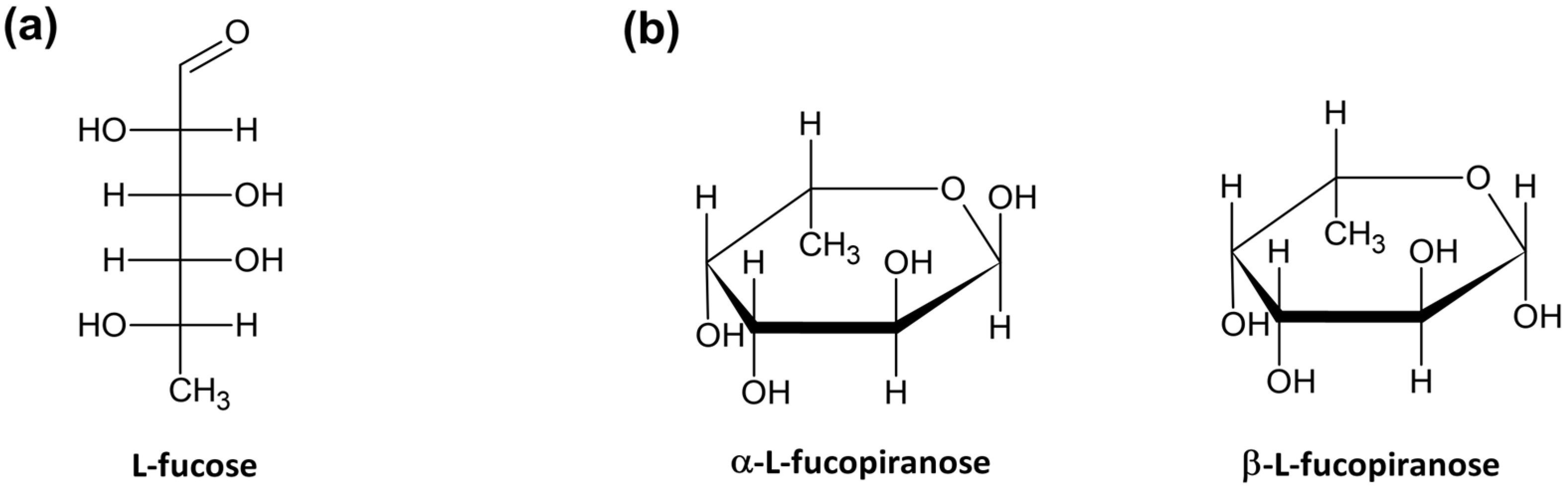
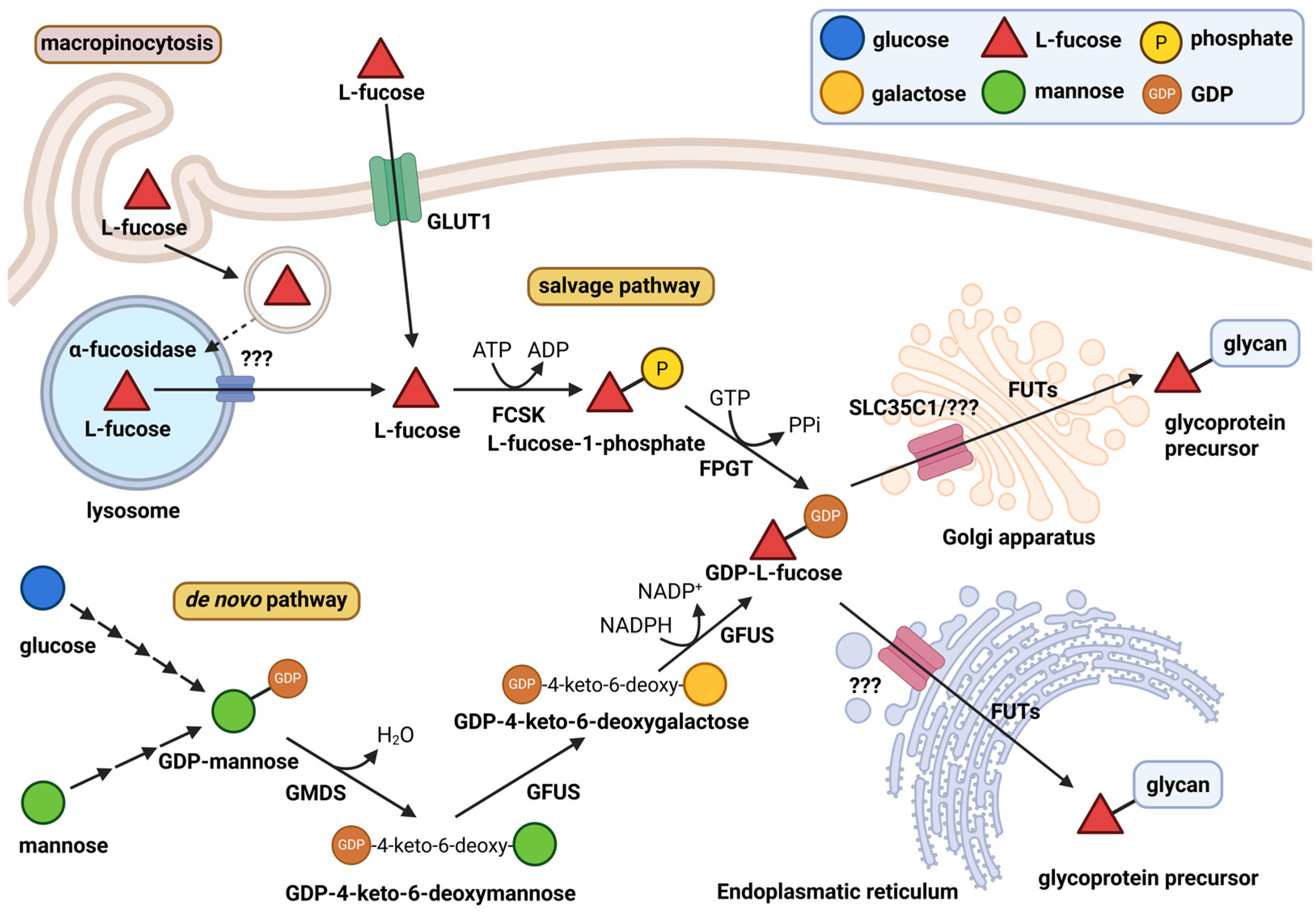
L-Fucose (6-deoxy-L-galactose) is a unique monosaccharide that occurs frequently in a variety of glycolipids and glycoproteins synthesized by mammalian cells (Figure 1) (for review, see [23]). It is distinguished by its L-configuration and the absence of a hydroxyl group at the C6 position. L-Fucose is present in approximately 7% of mammalian oligosaccharides, occurring either as a terminal modification or within the core structure of glycans. Additionally, this monosaccharide can be directly linked to the serine or threonine residues of proteins [23]. Such protein fucosylation occurs in the Golgi apparatus and endoplasmic reticulum (specifically O-fucosylation) and is catalyzed by fucosyltransferases. These enzymes utilize GDP-fucose as a donor of the L-fucosyl moiety, which is then transferred onto target proteins (Figure 2).
L-Fucose is perhaps most widely recognized for its presence in the glycans of ABO blood group antigens (see [24] for a review). It is also an essential component of carbohydrate ligands presented by endothelial cells lining the venules, where it facilitates leukocyte rolling on the endothelium. Furthermore, fucosylated antigens are exploited by cancer cells to enhance migration and metastasis (see [29] for a review).
While the importance of GDP-L-fucose biosynthesis in various biological processes is well established [23], the enzymology and biological role of L-fucose degradation remain largely enigmatic. In this review, we summarize current knowledge regarding the enzymological and physiological aspects of L-fucose catabolism in mammals.

2. L-Fucose Catabolism in Bacteria

Certain bacterial species, such as Lactobacillus rhamnosus and Escherichia coli, can utilize L-fucose as a primary carbon and energy source. This capability is mediated by a dedicated L-fucose-inducible operon [30], a system that, among other functions, enables pathogenic bacteria to colonize the mammalian intestine [31].
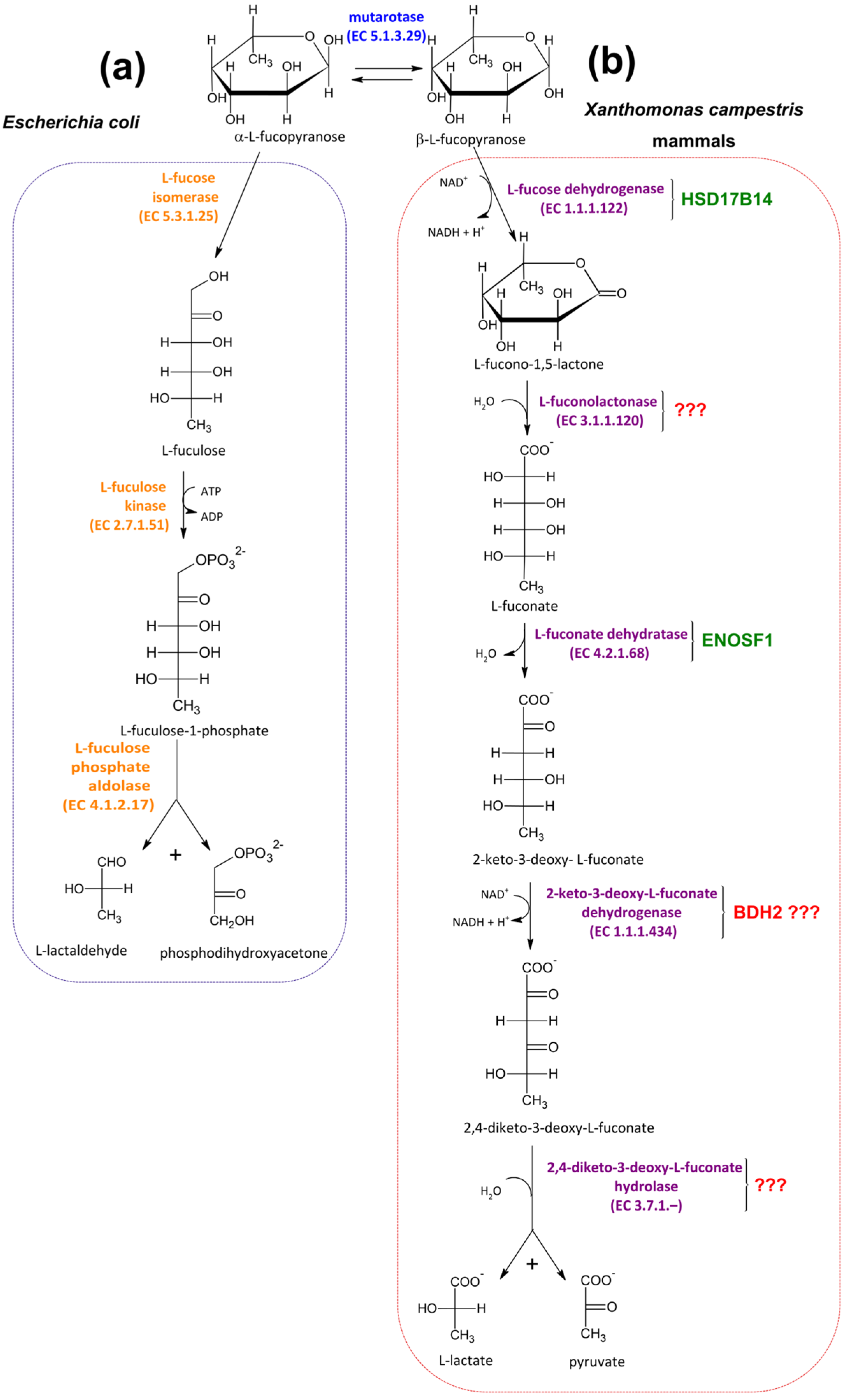
Bacterial L-fucose catabolism varies significantly across species. To date, two distinct L-fucose degradation pathways have been characterized: the phosphorylative (isomerization) pathway, which occurs predominantly in E. coli, and the non-phosphorylative (oxidation) pathway, found in Xanthomonas campestris [32,33] (Figure 3). Notably, L-fucose does not merely serve as a substrate for energy metabolism; it also functions as a critical signaling molecule in host-microbe interactions [30].

2.1. Phosphorylative Pathway

Research has demonstrated that E. coli can utilize L-fucose as its sole source of carbon and energy [34]. L-fucose is transported into the cytoplasm via the FucP transporter, a process mediated by proton symport. While FucP is not exclusive to L-fucose, as it can also transport L-galactose and D-arabinose, it does so with significantly lower efficiency [35].
The initial step of the L-fucose phosphorylation pathway in E. coli is catalyzed by the mutarotase (FucU, EC 5.1.3.29), which shares 44% sequence identity with its human homolog (FUOM). This enzyme catalyzes the interconversion between the α- and β-anomers of L-fucose, which differ in the orientation of the hydroxyl group at the C1 position [36]. The subsequent step involves the isomerization of α-L-fucopyranose into L-fuculose by L-fucose isomerase (FucI, EC 5.3.1.25). Evidence suggests that the α-anomer is the preferred substrate for this isomerase [37]. The resulting L-fuculose is then phosphorylated to L-fuculose-1-phosphate in a reaction mediated by L-fuculokinase (FucK, EC 2.7.1.51). In the final step of this pathway, L-fuculose-1-phosphate aldolase (FucA, EC 4.1.2.17) catalyzes the cleavage of L-fuculose-1-phosphate into dihydroxyacetone phosphate (DHAP) and L-lactaldehyde [34,38,39]. DHAP can enter glycolysis, whereas the metabolic fates of L-lactaldehyde depend on the aerobic status of the environment in which the bacteria live. Under aerobic conditions, L-lactaldehyde is oxidized to L-lactate in the reaction catalyzed by lactaldehyde dehydrogenase (AldA, EC 1.2.1.22). In the absence of oxygen, L-lactaldehyde is reduced to L-1,2-propanediol by lactaldehyde reductase (FucO, EC 1.1.1.77) [40].

2.2. Non-Phosphorylative Pathway

The non-phosphorylative pathway of L-fucose degradation has been identified in several bacterial species, including Xanthomonas campestris [32], Campylobacter jejuni [41], and Burkholderia multivorans [33]. While several enzymes of this pathway have been purified and characterized preliminarily in mammals [32,42,43,44,45,46], the complete molecular framework is most clearly defined in prokaryotes. Furthermore, gene clusters containing homologs of the X. campestris fucose degradation genes have been identified in other bacterial species, supporting the widespread occurrence of this pathway in the prokaryotic domain [47].
The pathway is initiated by the oxidation of the β-anomer of L-fucose to L-fucono-1,5-lactone, a reaction catalyzed by an NAD+-dependent L-fucose dehydrogenase (EC 1.1.1.122) [32,46,48] (see Figure 3). Interestingly, an alternative bacterial enzyme, D-arabinose (L-fucose) dehydrogenase (EC 1.1.1.116), has been described in Pseudomonas sp.; this enzyme catalyzes the oxidation of L-fucose in the presence of NADP+ [49], suggesting variability in cofactor preference among bacterial homologs.
Following its formation, L-fucono-1,5-lactone may undergo spontaneous conversion to L-fucono-1,4-lactone [33]. The subsequent step involves the hydrolysis of the lactone to yield L-fuconate. An L-fucono-1,5-lactonase (EC 3.1.1.120) has been identified in B. multivorans that displays activity toward both L-fucono-1,5- and L-fucono-1,4-lactone [33]. This enzyme shares 36% protein sequence identity with XCC4066, a putative lactonase from X. campestris [33].
In the following step, L-fuconate is dehydrated to 2-keto-3-deoxy-L-fuconate by L-fuconate dehydratase (EC 4.2.1.68) [32,50]. This enzyme was identified at the molecular level and characterized biochemically in X. campestris [32]. The resulting 2-keto-3-deoxy-L-fuconate is further metabolized by 2-keto-3-deoxy-L-fuconate dehydrogenase (EC 1.1.1.434). As with other enzymes in this pathway, its activity was initially inferred from studies of L-fucose metabolism in mammalian systems [43,44,51,52], but detailed biochemical characterization has only been performed for the recombinant enzyme from X. campestris (XCC4067) [32].
In the final step of the pathway, 2,4-diketo-3-deoxy-L-fuconate—the product of the dehydrogenase reaction—is cleaved into pyruvate and L-lactate by 2,4-diketo-3-deoxy-L-fuconate hydrolase (EC 3.7.1.26) [32].

3. L-Fucose Catabolism in Mammals

Early human studies demonstrated that approximately 40% of intravenously injected, labeled L-fucose is readily oxidized to 14CO2 [53], with a relatively short serum half-life of 100 min [54]. Similar results were observed in cats, guinea pigs, and rabbits, whereas rats appeared unable to effectively catabolize the monosaccharide [55]. These in vivo observations are corroborated by in vitro findings showing that L-fucose is efficiently degraded into pyruvate and L-lactate in pig liver and kidney homogenates; notably, this mammalian metabolic pathway resembles the non-phosphorylative pathway present in certain bacterial species [52].
In mammals, L-fucose is sequestered from the extracellular milieu by a specific membrane transporter, which was recently and unexpectedly identified as glucose transporter 1 (GLUT1) [25]. Furthermore, macropinocytosis contributes to this uptake, distinguishing it from other endocytic pathways [25]. The chemical equilibrium between the α and β anomers of L-fucopyranose (30:70) is rapidly established by the activity of a specific L-fucose mutarotase (FUOM) [56]. Monosaccharide degradation is initiated by L-fucose dehydrogenase, which catalyzes the oxidation of β-L-fucopyranose to L-fucono-1,5-lactone. While this lactone was initially reported to undergo spontaneous hydrolysis to L-fuconate [46,57], recent evidence suggests that this process is likely facilitated by a specific lactonase [48]. Subsequently, L-fuconate dehydratase converts L-fuconate to 2-keto-3-deoxy-L-fuconate [58], which is then oxidized to 2,4-diketo-3-deoxy-L-fuconate by an NAD+-dependent dehydrogenase [44]. Finally, 2,4-diketo-3-deoxy-L-fuconate hydrolase completes the pathway, yielding pyruvate and L-lactate, both of which can be further oxidized to CO2 through central energy metabolism [52]. Despite the characterization of these steps, the biological relevance of this pathway remains largely unexplored.

3.1. L-Fucose Dehydrogenase

L-Fucose dehydrogenase initiates the degradation of β-L-fucopyranose by catalyzing the NAD+-dependent oxidation of the sugar to L-fucono-1,5-lactone [57]. This enzyme was partially purified from pig liver and characterized biochemically for the first time by Schachter et al. [46]. In subsequent years, the enzyme was also studied following its isolation from rabbit [42] and sheep liver [59]. These early studies revealed that while the dehydrogenase accepted D-arabinose and L-galactose as substrates, it exhibited a clear preference for L-fucose. Despite these biochemical insights, L-fucose dehydrogenase remained an orphan enzyme until our recent identification of the hydroxysteroid 17-β-dehydrogenase 14 (HSD17B14) protein as the specific mammalian L-fucose dehydrogenase [48].
Human HSD17B14 consists of 270 amino acids and contains a characteristic NAD(H)-binding Rossmann-fold domain [60]. It belongs to the short-chain dehydrogenase/reductase (SDR) superfamily, a group of enzymes that metabolizes a diverse range of compounds in mammals, including steroid hormones, lipids, and xenobiotics [61]. The monomeric molecular mass is approximately 28 kDa; upon cofactor binding, the enzyme assumes its holo form as a homotetramer [62]. Transcriptomic studies indicate that HSD17B14 mRNA is primarily expressed in the choroid plexus, liver, kidneys, and ovaries, with the protein localizing exclusively to the cytoplasm (Human Protein Atlas; https://www.proteinatlas.org, accessed on 11 May 2026).
HSD17B14 was originally identified as a novel 17-β-hydroxysteroid dehydrogenase that catalyzes the oxidation of the C17-hydroxyl group of estradiol and testosterone to form estrone and androstenedione, respectively [60]. However, the poor kinetic parameters observed in the presence of these steroid substrates suggested they were not the physiological targets of the enzyme. Furthermore, experimental testing of approximately 50 different compounds—including various androgens, estrogens, bile acids, and coenzyme A derivatives—failed to confirm significant enzymatic activity against these metabolites [60]. Notably, recombinant HSD17B14 was unexpectedly found to accept glycerol (used as a cryoprotectant) as a substrate [62]. This finding implied that polyhydroxylated metabolites, such as monosaccharides, might represent the enzyme’s true physiological substrates, though this observation was not initially pursued.
Recent studies in our laboratory [48] led to the definitive molecular identification of HSD17B14 as the mammalian L-fucose dehydrogenase. This was achieved through the extensive purification of the rabbit enzyme using various chromatographic methods followed by tandem mass spectrometric analysis. Throughout the purification process, HSD17B14 emerged as the only viable candidate for the enzyme. This identification was subsequently confirmed by producing recombinant, homogenous rabbit and human HSD17B14 and assessing their activity toward L-fucose and structurally related compounds. The recombinant enzymes preferentially oxidized L-fucose, followed by D-arabinose and L-galactose, whereas D-threose and the 2-, 3-, and 4-epimers of D-arabinose were poor substrates. This substrate specificity indicates that HSD17B14 acts primarily on the pyranose form of the sugar and that the configuration of the hydroxyl groups at C-2 through C-4 is critical for enzymatic activity.
Additionally, β-estradiol proved to be an exceptionally poor substrate. Recombinant rabbit and human enzymes were approximately 1000- to 2300-times more effective toward 5 µM L-fucose than 5 µM β-estradiol, effectively excluding the latter as a physiological substrate for HSD17B14. Importantly, recombinant HSD17B14 was found to oxidize L-fucose to L-fucono-1,5-lactone, which is unstable and rapidly non-enzymatically transforms into L-fucono-1,4-lactone. The latter is a slow-hydrolyzing compound that eventually forms L-fuconate. Because we observed the accumulation of L-fucono-1,4-lactone rather than L-fuconate during the enzymatic reaction—contrary to the original suggestions by Schachter et al. [46]—we concluded that a specific lactonase must be present in mammalian cells to convert L-fucono-1,4-lactone to L-fuconate. L-Fuconate then serves as the substrate for L-fuconate dehydratase.

3.2. L-Fuconolactonase

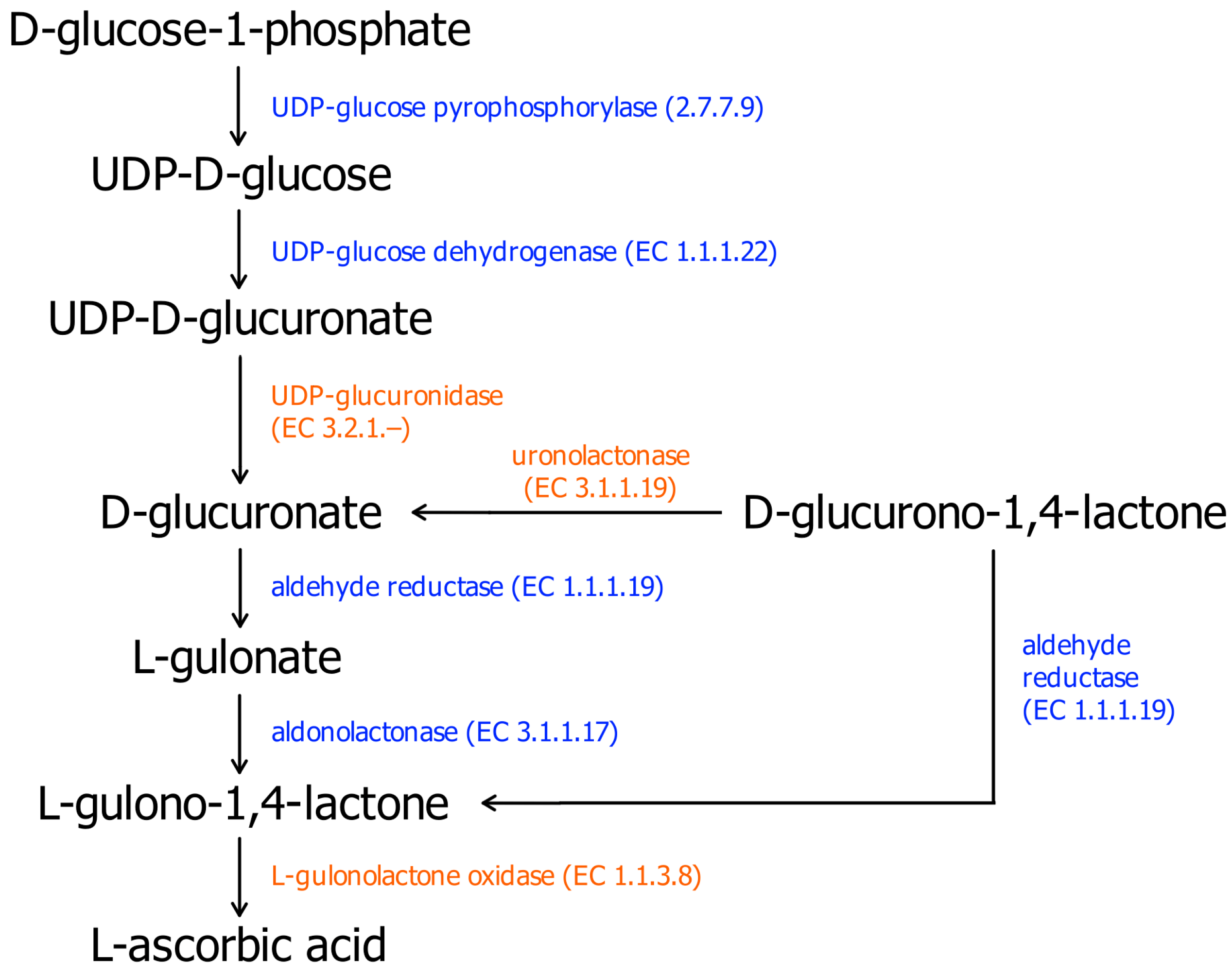
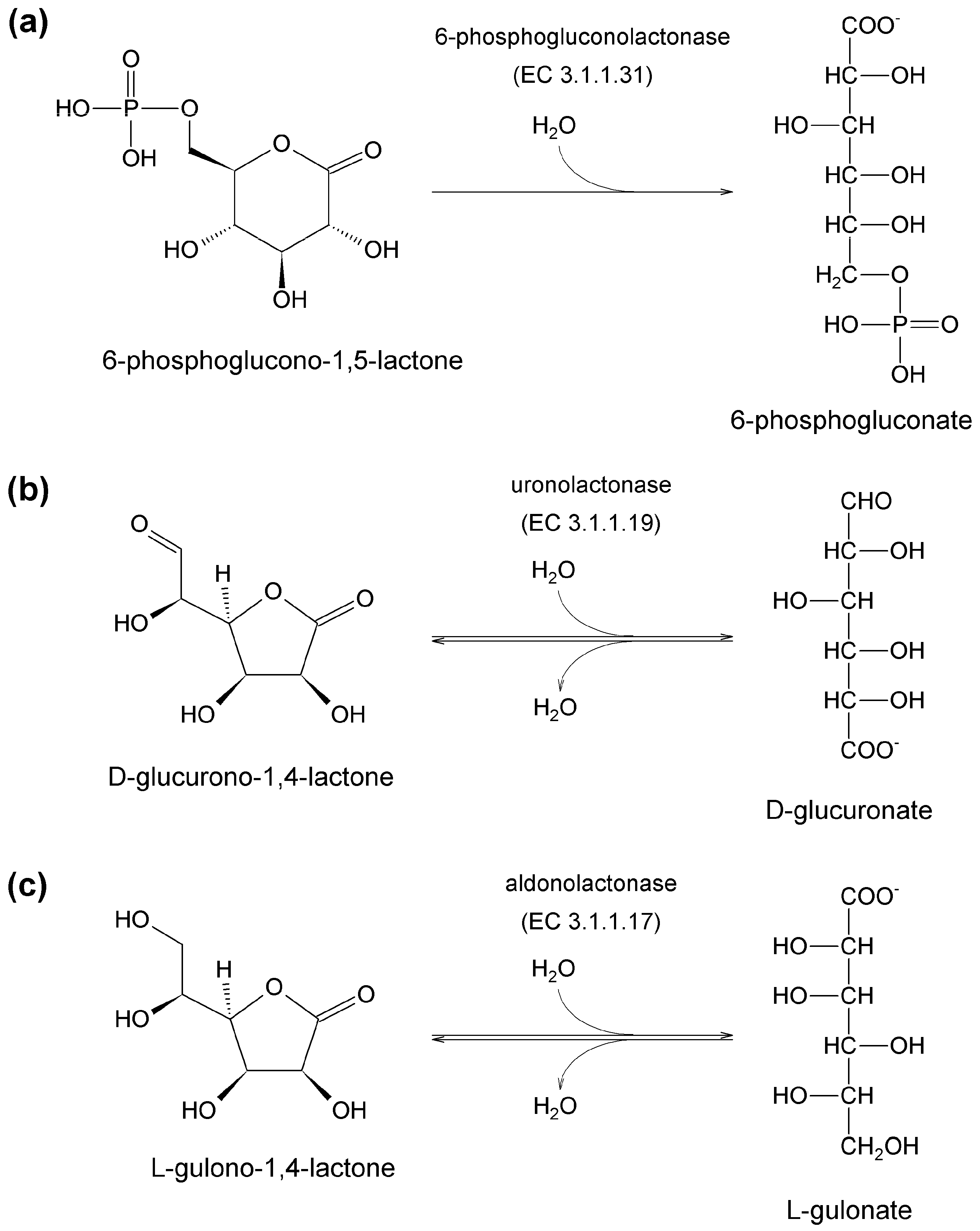
L-Fuconolactonase has never been detected in mammalian tissues. To date, three lactonases are known to be active against sugar acid lactones in mammals: 6-phosphogluconolactonase, uronolactonase, and aldonolactonase (Figure 4).
6-Phosphogluconolactonase (6-PGL; EC 3.1.1.31) is the second enzyme of the oxidative branch of the pentose phosphate pathway (PPP) (see Figure 4). It is located in the cytoplasm and is prevalent in various tissues—particularly those involved in fatty acid synthesis—and in erythrocytes [63], where the PPP serves as a primary source of reducing power (NADPH). The pathway also provides essential precursors for the synthesis of nucleotides and amino acids [64].
The product of glucose-6-phosphate dehydrogenase (G6PDH) activity—6-phosphoglucono-1,5-lactone (6-phosphoglucono-δ-lactone) can undergo spontaneous hydrolysis into 6-phosphogluconate or rapidly rearrange into 6-phosphoglucono-1,4-lactone (6-phosphoglucono-γ-lactone). The latter is a more stable form that either resists spontaneous hydrolysis or hydrolyzes significantly slower than the 1,5-lactone. 6-PGL acts specifically on the 1,5-lactone and is thought to prevent the accumulation of the stable 1,4-form [65]. Furthermore, the enzyme may prevent potentially deleterious reactions between electrophilic 6-phosphoglucono-1,5-lactone and intracellular nucleophiles [65,66]. 6-PGL appears highly specific for 6-phosphogluconolactone [63]. Additionally, 6-PGL activity is independent of metal ions [67].
There are no disorders known to be caused by 6-PGL deficiency except for a case described by Beutler et al. [68], in which a partial 6-PGL deficiency combined with partial deficiency of G6PDH was suggested to be the underlying cause of hemolytic anemia present in a patient. Conversely, increased levels of 6-PGL have been reported in various cancers where it is associated with reduced oxidative stress and accelerated cell proliferation [69,70].
Uronolactonase (EC 3.1.1.19) has not been extensively studied. It is localized in the microsomal fraction of the mammalian liver and is also present in small quantities in the adrenal glands of guinea pigs. Uronolactonase requires a divalent metal ion for its catalytic activity. To date, D-glucurono-1,4-lactone (D-glucurono-γ-lactone) is the only known sugar acid lactone hydrolyzed by this enzyme, yielding D-glucuronate as the reaction product (see Figure 4) [71,72].
The enzyme can facilitate the synthesis of L-ascorbic acid from D-glucurono-1,4-lactone by producing D-glucuronate, which is subsequently converted to L-gulonate by aldehyde reductase. L-gulonate then undergoes lactonization by aldonolactonase to form L-gulono-1,4-lactone (L-gulono-γ-lactone), the substrate for the terminal enzyme of L-ascorbic acid biosynthesis: L-gulonolactone oxidase (Figure 5) [73,74].
While aldehyde reductase can reduce glucuronolactone directly into gulonolactone [75], the in vivo metabolic flux through this alternative pathway is relatively small [76]. It is generally accepted that the pathway utilizing D-glucuronate and L-gulonate as intermediates is more prevalent [73]. Currently, uronolactonase has not yet been molecularly identified, consequently, the full physiological role of this enzyme remains uncertain.
Aldonolactonase (EC 3.1.1.17), also known as gluconolactonase, gulonolactonase, regucalcin, or senescence marker protein 30 (SMP30), is a lactonase characterized by broad substrate specificity (see Figure 4). It is highly conserved throughout vertebrate evolution [77] and is localized within both the cytoplasm and the nuclei of cells [78]. While the protein is primarily expressed in the mammalian liver and kidneys, it is also present to a lesser extent in various other tissues [72,79]. Aldonolactonase hydrolyzes a wide array of D- and L-aldonic acid lactones as well as organophosphates, its activity is dependent on divalent metal ions [72,80,81].
Aldonolactonase is a multifunctional protein. In the L-ascorbic acid biosynthetic pathway of vertebrates, it catalyzes the lactonization of L-gulonic acid [74,80]. Additionally, aldonolactonase could play a potential protective role against protein glycation by aldonic acid lactones, as Lindsay et al. [82] demonstrated that D-glucono-1,5-lactone (D-glucono-δ-lactone) causes hemoglobin glycation in vitro and in vivo more potently than D-glucose.
Furthermore, aldonolactonase exhibits functions that extend far beyond its enzymatic activity. These include the regulation of intracellular Ca2+ levels, anti-apoptotic and anti-proliferative effects, protection against oxidative stress, and others (reviewed in [79,83,84,85]). Reduced expression of aldonolactonase has been reported in multiple types of human cancers; the protein appears to function as a tumor suppressor, with low levels promoting carcinogenesis (reviewed in [86]). Decreased aldonolactonase levels have also been observed in the livers of patients with nonalcoholic fatty liver disease (NAFLD) [87] and in the kidney tissue of patients with diabetic nephropathy [88]. While no human genetic disorders have been linked to mutations in the aldonolactonase gene, the effects of aldonolactonase knockout have been extensively investigated in murine models (reviewed in [79,81,85]).
L-fuconolactonase appears to be essential for efficient L-fucose degradation ([48] see Section 3.1). Although this activity has been confirmed in the L-fucose catabolic pathway of B. multivorans ([33]; see Section 2), neither the specific activity nor the enzyme responsible has been characterized in mammals to date. While the molecular identity of this lactonase remains unknown, our preliminary studies confirm the presence of such hydrolase activity in rabbit liver. It might be performed by an uncharacterized “orphan” enzyme, potentially a misassigned hydrolase. Alternatively, one of the known lactonases discussed above may exhibit secondary fuconolactonase activity. Thus, the most direct approach to identifying L-fuconolactonase is to express recombinant forms of each known mammalian lactonase in E. coli or HEK293T cells and evaluate their activity toward L-fucono-1,4-lactone using a spectrophotometric assay [33]. Should this approach fail, a more classical strategy could be employed to purify the enzyme from porcine liver [52], identify all hydrolases in the purified preparation via mass spectrometry, and select the most promising candidates. Subsequently, the recombinant form of the selected candidate can be produced and its activity toward L-fucono-1,4-lactone verified.

3.3. L-Fuconate Dehydratase

L-Fuconate dehydratase (EC 4.2.1.68) catalyzes the dehydration of L-fuconate to 2-keto-3-deoxy-L-fuconate within the non-phosphorylative pathway of L-fucose degradation [32,50]. Early studies in mammals allowed for the partial purification and preliminary characterization of this enzymatic activity, demonstrating its presence as part of a putative catabolic pathway for L-fucose in pork liver [52,58]. The native enzyme, purified through a multistep procedure, exhibited a pH optimum of approximately 7.0 and required Mg2+ for catalytic activity. Substrate specificity analyses indicated that L-fuconate is the preferred substrate, although activity toward structurally related sugar acids, such as D-fuconate and D-arabonate, was also observed. The reaction product was identified as 2-keto-3-deoxy-L-fuconate via spectrophotometric assays and further confirmed by NMR analysis [58].
While the mammalian enzyme has long been considered an orphan enzyme, the bacterial L-fuconate dehydratase was subsequently identified as a product of the fucD gene and biochemically characterized in X. campestris (XCC4069) [32], providing detailed insights into its catalytic properties. Using the recombinant enzyme, 1NMR studies confirmed that L-fuconate is dehydrated to form 2-keto-3-deoxy-L-fuconate. While L-fuconate was identified as the most relevant substrate, residual activity was also detected for five structurally related sugar acids: L-galactonate, D-arabinonate, L-talonate, D-ribonate, and D-altronate. Furthermore, the molecular structure of the FucD enzyme was resolved, providing critical mechanistic insights into its catalytic cycle and substrate specificity [32]. Although the homologous reverse thymidylate synthase protein (rTSβ) from Homo sapiens was not isolated or assayed in that specific study, its 52% sequence identity with the protein encoded by XCC4069 and the conservation of key substrate-binding residues led to the hypothesis that rTSβ also catalyzes the dehydration of L-fuconate [32].
In contrast to this earlier hypothesis [32], further comparative sequence analysis of bacterial homologs and functional studies identified reverse thymidylate synthase rTSγ, rather than rTSβ, as the human L-fuconate dehydratase. rTSγ, a 50 kDa protein, corresponds to Enolase Superfamily Member 1 (ENOSF1) and is one of three splice variants identified in H. sapiens, alongside rTSα and rTSβ. The gene encoding the rTSγ protein was originally identified as a source of antisense RNAs for the adjacent thymidylate synthase (TYMS) gene [89], which potentially promote the degradation of TYMS mRNA [90]. While it was initially postulated to be a mitochondrial protein [91], subsequent research has questioned this localization [50]. Transcriptomic data indicate that human ENOSF1 mRNA is primarily expressed in the thyroid, kidney, choroid plexus, liver, adrenal gland, and pituitary gland (Human Protein Atlas; https://www.proteinatlas.org, accessed on 11 May 2026).
While the physiological roles of these isoforms remain largely uncharacterized, biochemical analysis of the recombinant rTSγ protein confirmed its dehydratase activity toward L-fuconate. Kinetic analyses revealed that rTSγ exhibits activity toward several structurally related sugar acids, including L-galactonate, L-arabinarate, and D-arabinonate. However, the highest catalytic efficiency was observed for L-fuconate, suggesting that this sugar acid serves as the physiological substrate [50]. These findings, combined with sequence conservation (52% identity, 71% similarity), structural features typical of the enolase superfamily, and kinetic properties, established ENOSF1 as the human counterpart of the bacterial L-fuconate dehydratases initially characterized in X. campestris [32,50] and later in Paraburkholderia mimosarum [92]. Although ENOSF1 has been molecularly identified as an L-fuconate dehydratase, its precise physiological role in human L-fucose metabolism has yet to be fully elucidated.

3.4. 2-Keto-3-deoxy-L-fuconate Dehydrogenase

2-Keto-3-deoxy-L-fuconate dehydrogenase (EC 1.1.1.434) catalyzes the NAD+-dependent oxidation of 2-keto-3-deoxy-L-fuconate in a subsequent step of the non-phosphorylative pathway of L-fucose degradation [32,52]. Early mammalian studies identified this enzymatic activity in the soluble fraction of pork liver, supporting the existence of a catabolic route for L-fucose [52]. The enzyme was purified to near-homogeneity through a multistep procedure including affinity chromatography on NAD+-agarose, achieving an approximately 3000-fold purification while retaining catalytic activity [44]. Subsequent biochemical characterization, including kinetic and substrate specificity studies, revealed that the enzyme is NAD+-dependent and exhibits the highest activity toward 2-keto-3-deoxy-L-fuconate. However, it also accepts structurally related sugar acid derivatives, such as 2-keto-3-deoxy-D-arabonate, 2-keto-3-deoxy-D-gluconate, and 2-keto-3-deoxy-D-galactonate, indicating a relatively broad substrate specificity [51].
Similarly to L-fuconate dehydratase, this enzyme was molecularly identified and biochemically characterized in X. campestris, where the corresponding gene (XCC4067) was assigned based on its genomic context [32]. Functional characterization of the recombinant XCC4067 enzyme confirmed its NAD+-dependent dehydrogenase activity toward 2-keto-3-deoxy-L-fuconate, consistent with its role in the non-phosphorylative pathway. Paralleling the earlier mammalian studies, the bacterial enzyme also demonstrated activity toward structurally related 2-keto-3-deoxy sugar acids, such as 2-keto-3-deoxy-L-galactonate and 2-keto-3-deoxy-D-arabinonate. Nevertheless, kinetic properties indicated that 2-keto-3-deoxy-L-fuconate is likely the physiological substrate [32]. These findings, alongside the mammalian data, provide evidence for the enzymatic conversion of 2-keto-3-deoxy-L-fuconate across both bacteria and mammals [32,44,51,52]. However, the molecular identity of the mammalian 2-keto-3-deoxy-L-fuconate dehydrogenase remained unknown, leaving it classified as an “orphan enzyme”. Intriguingly, results from recent studies suggest that mammalian 4-oxo-L-proline reductase (BDH2) may indeed be the sought-after dehydrogenase.
The molecular identity of mammalian 4-oxo-L-proline reductase (EC 1.1.1.104) was elucidated through a multistep purification process combined with proteomic analysis. Following the purification of the native enzyme from rat kidney, tandem mass spectrometry identified type 2 (R)-β-hydroxybutyrate dehydrogenase (BDH2) as the only feasible candidate co-eluting with the enzymatic activity [93]. To validate this identification, both rat and human recombinant BDH2 were produced, purified to homogeneity, and tested in specific enzymatic assays. Both BDH2 homologs exhibited NADH-dependent reduction of 4-oxo-L-proline to cis-4-hydroxy-L-proline, which was subsequently confirmed by mass spectrometry analysis of the reaction products [93].
BDH2 is a 245-amino acid, 27 kDa cytosolic protein that assembles into a homotetramer in its native form [94]. Transcriptomic data indicate that human BDH2 mRNA is primarily expressed in the kidneys, with levels approximately five-fold lower in the midbrain, choroid plexus, liver, and duodenum; however, transcripts are also detectable across various other tissues (Human Protein Atlas; https://www.proteinatlas.org, accessed on 11 May 2026).
Biochemical characterization of the recombinant enzyme revealed a strong preference for cyclic substrates, with high catalytic efficiency toward 4-oxo-L-proline. Notably, only minimal activity was detected with (R)-β-hydroxybutyrate—the previously postulated endogenous substrate—implying that it is unlikely to be the physiologically relevant substrate for this enzyme [93]. Cellular studies demonstrated that wild-type HEK293T cells could produce cis-4-hydroxy-L-proline from 4-oxo-L-proline, whereas BDH2-deficient HEK293T cells were unable to metabolize it. Additionally, BDH2 was shown to catalyze the reversible oxidation of cis-4-hydroxy-L-proline to 4-oxo-L-proline [93].
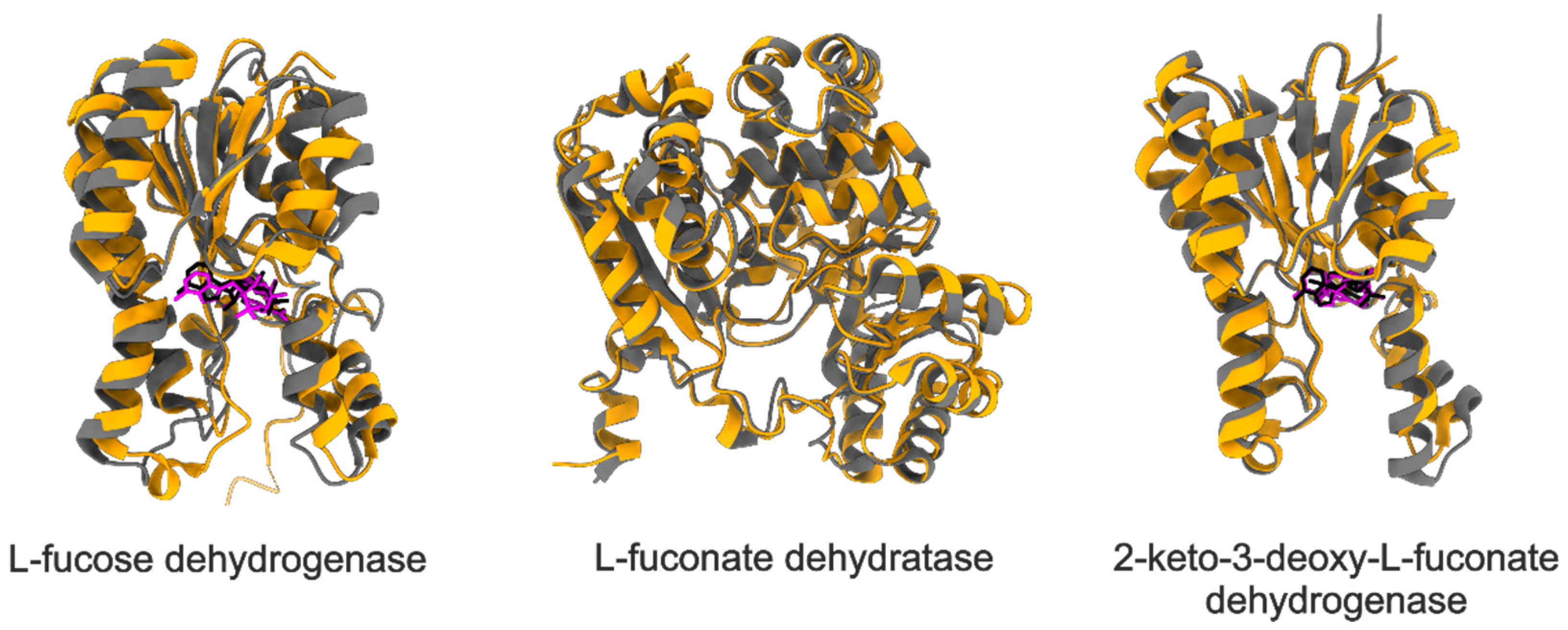
Comparative sequence analysis of the human BDH2 protein against bacterial databases revealed significant similarity to bacterial 2-keto-3-deoxy-L-fuconate dehydrogenases. A detailed comparison of the amino acid sequences of human BDH2 and the XCC4067 enzyme from X. campestris demonstrated a high degree of similarity (68%) and identity (55%), suggesting that BDH2 may function as the 2-keto-3-deoxy-L-fuconate dehydrogenase in the mammalian L-fucose degradation pathway. This finding was further strengthened by a striking structural similarity between the human BDH2 enzyme and bacterial 2-keto-3-deoxy-L-fuconate dehydrogenase, mirroring the conservation observed between other human and bacterial enzymes of this pathway (Figure 6).
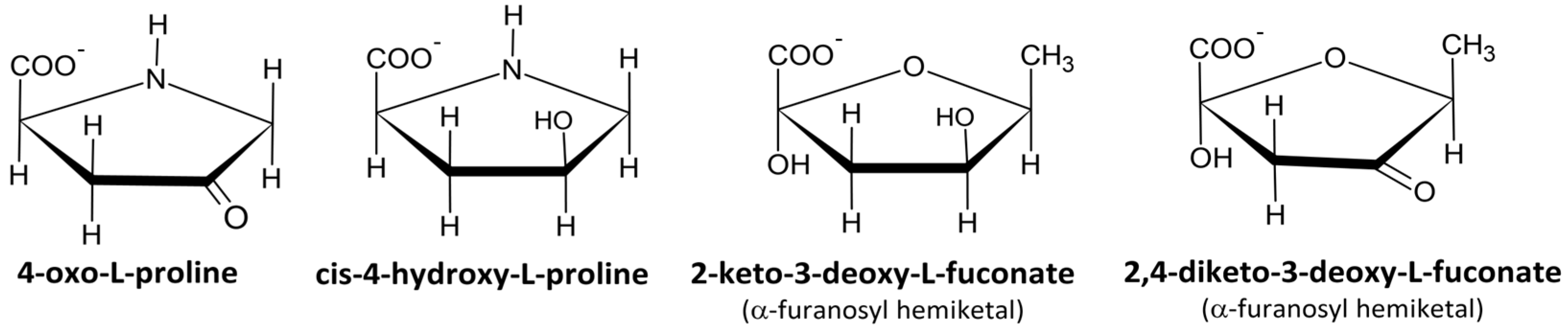
Structural comparisons of 4-oxo-L-proline, cis-4-hydroxy-L-proline, and the hemiketal form of 2-keto-3-deoxy-L-fuconate revealed notable similarities (Figure 7). Both cyclic compounds resemble the hemiketal intermediates, suggesting this structural feature is critical for substrate recognition. Importantly, 2-keto-3-deoxy-L-fuconate and related sugar acids can form intramolecular hemiketal structures, potentially serving as alternative substrates for BDH2, much like the bacterial counterpart [32]. Recent structural and comparative studies further support this link [47]. Like bacterial 2-keto-3-deoxy-L-fuconate dehydrogenases, BDH2 belongs to the SDR superfamily and shares conserved sequence features. Structural modeling indicates that both the bacterial enzymes and BDH2 can accommodate substrates in cyclic conformations, with evidence of overlapping substrate tolerance [47]. Consequently, BDH2 emerges as a strong candidate for the orphan 2-keto-3-deoxy-L-fuconate dehydrogenase. However, current evidence indicates that BDH2 exhibits broad substrate promiscuity, catalyzing the metabolism of a wide spectrum of metabolites, including 3-hydroxybutyrate [94], 4-oxo-L-proline [93], 2,5-dihydroxybenzoate (2,5-DHBA) [96], and 2-keto-3-deoxy-L-fuconate [47]. This points to its involvement in a diverse range of metabolic processes, such as ketone body metabolism [94], the detoxification of 4-oxo-L-proline [93], the synthesis of the mammalian siderophore (2,5-DHBA) [96], and L-fucose catabolism [47]. Which of these functions is physiologically paramount remains an open question. Ongoing studies focus on the biochemical characterization of BDH2 to address this issue, though definitively resolving its precise physiological contribution to human metabolism will ultimately require metabolic studies utilizing BDH2-knockout cell lines or animal models.

3.5. 2,4-Diketo-3-deoxy-L-fuconate Hydrolase

2,4-Diketo-3-deoxy-L-fuconate hydrolase (EC 3.7.1.-) is thought to catalyze the terminal step of the non-phosphorylative L-fucose degradation pathway in the mammalian liver and kidneys. This reaction converts 2,4-diketo-3-deoxy-L-fuconate into pyruvate and L-lactate. The existence of this enzymatic activity was first proposed by Schachter and colleagues, who reconstructed the pathway in mammalian liver extracts through a series of biochemical analyses; however, they were unable to isolate the specific hydrolase responsible for this final catabolic step [44,51,68]. Crucially, the authors noted that 2,4-diketo-3-deoxy-L-fuconate is a highly unstable metabolite, a factor that has significantly hampered more in-depth studies of the enzyme.
Nevertheless, this missing step was further investigated in a subsequent study by Chan et al., who demonstrated that L-fucose can be metabolized to L-lactate in mammalian liver preparations [52]. By using radioisotopically labeled intermediates, the authors showed that carbon atoms derived from 2-keto-3-deoxy-L-fuconate are quantitatively recovered in L-lactate, providing strong evidence for a complete metabolic pathway. Based on these findings, they proposed that the diketo intermediate undergoes cleavage—most likely between the C3 and C4 positions—yielding smaller metabolites that are subsequently converted to L-lactate. However, despite clear functional evidence for this reaction, the enzyme responsible for catalyzing the cleavage of 2,4-diketo-3-deoxy-L-fuconate was neither isolated nor biochemically characterized.
Conversely, studies on bacterial catabolic pathways for pentose and deoxyhexose sugars have postulated that 2,4-diketo-3-deoxy-L-fuconate is broken down into L-lactate and pyruvate via a reaction catalyzed by a specific hydrolase [40,97,98]. The enzyme responsible for this activity in H. huttiense was identified as the C785_RS20550 protein [97], while the Sphingomonas sp. LRA6 protein was found to be a 2,4-diketo-3-deoxy-L-rhamnonate hydrolase, which was subsequently crystallized and biochemically characterized in detail [99]. Notably, both bacterial proteins belong to the fumarylacetoacetate hydrolase (FAH) family.
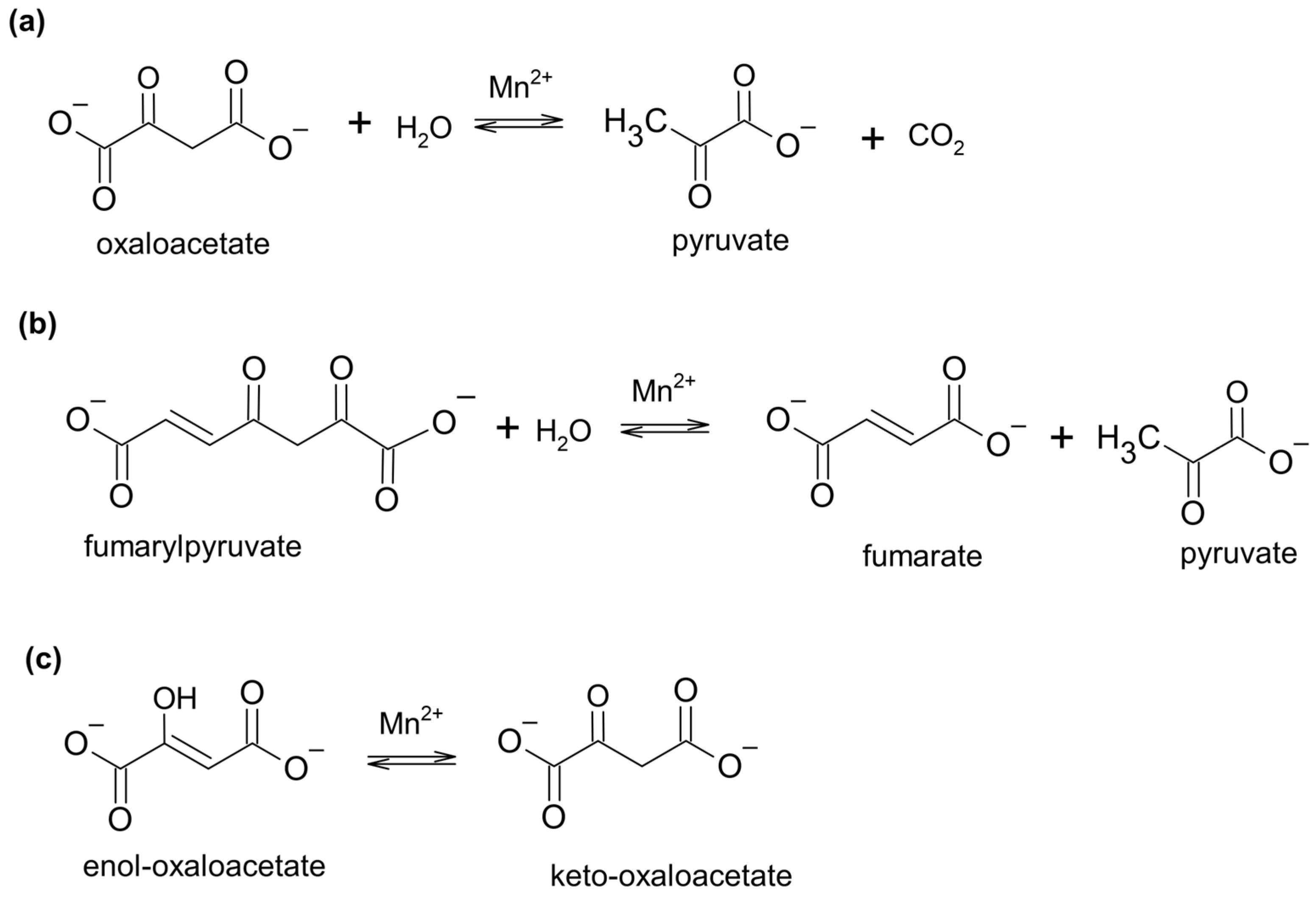
Based on amino acid sequence similarity between these bacterial proteins and human orthologs, it was hypothesized that the human fumarylacetoacetate hydrolase domain-containing protein 1 (FAHD1) might account for the 2,4-diketo-3-deoxy-L-fuconate hydrolase activity [47,99]. Mammalian FAHD1 was initially identified as an oxaloacetate decarboxylase (EC 4.1.1.112), catalyzing the decarboxylation of oxaloacetate to pyruvate and CO2 [100], and as an acylpyruvate hydrolase (EC 3.7.1.5) capable of cleaving both fumarylpyruvate and acetylpyruvate to yield pyruvate and either fumarate or acetate, respectively (Figure 8) [101]. More recently, FAHD1 and the closely related proteins FAHD2A and FAHD2B were shown to function as tautomerases that convert enol-oxaloacetate—a potent inhibitor of succinate dehydrogenase—to the physiological keto form of oxaloacetate within the mitochondria [101,102]. Consequently, FAHD1 does not appear to be a plausible 2,4-diketo-3-deoxy-L-fuconate hydrolase, as L-fucose degradation is thought to occur in the cytosolic compartment, whereas FAHD1 is localized to the mitochondria. Furthermore, there is currently no direct experimental evidence demonstrating that FAHD1 exhibits activity toward 2,4-diketo-3-deoxy-L-fuconate. Thus, the molecular identity of the mammalian 2,4-diketo-3-deoxy-L-fuconate hydrolase remains unknown. Resolving the identity of this enzyme is essential for completing the description of the L-fucose catabolic pathway. The most direct approach to achieve this goal is the sequential purification of the enzyme from a suitable source, such as porcine tissue [52], followed by the identification of the proteins present in the purified preparation. From the resulting protein list, the most promising hydrolase candidates can be selected. Subsequently, a recombinant form of the candidate can be expressed in E. coli or HEK293T cells, purified, and its activity toward 2,4-diketo-3-deoxy-L-fuconate verified using a simple spectrophotometric assay coupled with L-lactate dehydrogenase. In our laboratory, this approach has proven highly successful for identifying various orphan enzymes over more than a decade of research [11,18,58,93]. However, a potential challenge lies in obtaining the necessary quantities of 2,4-diketo-3-deoxy-L-fuconate to serve as the substrate for activity assays during the purification process.

4. Outlook

Over five decades have elapsed since Schachter and colleagues demonstrated that L-fucose is catabolized into L-lactate and pyruvate through a specific metabolic pathway present in the liver and kidneys of several mammals [52]. Although most enzymes contributing to this pathway have been isolated and biochemically characterized to some extent from mammalian tissues, L-fucose dehydrogenase (HSD17B14) and L-fuconate dehydratase (ENOSF1) remain the only molecularly characterized (deorphaned) mammalian enzymes to date. Concurrently, BDH2 represents a highly promising candidate for mammalian 2-keto-3-deoxy-L-fuconate dehydrogenase (Table 1).
Importantly, the apparent absence of direct structural or sequence homologs of bacterial L-fuconolactonases and 2,4-diketo-3-deoxy-L-fuconate hydrolases in mammalian proteomes does not necessarily imply that these enzymatic activities are missing in mammals. Instead, this may indicate that, over evolutionary time, specific bacterial enzymes were replaced by functional mammalian equivalents. These mammalian enzymes likely catalyze analogous reactions despite lacking a direct evolutionary relationship to their bacterial counterparts.
While the designation of HSD17B14 and ENOSF1 as L-fucose dehydrogenase and L-fuconate dehydratase, respectively, was based on rigorous biochemical analyses—including the determination of substrate specificity, catalytic properties, and product verification [48,50]—these findings could be further strengthened by generating knockout mammalian cell lines. Such cell lines would serve as valuable tools for investigating the functional and metabolic consequences of disrupting the L-fucose degradation pathway. For instance, utilizing 13C-labeled L-fucose in wild-type and knockout cell cultures would enable researchers to track the flux of pathway intermediates, trace their final metabolic fates, and assess the broader impacts of a metabolic block within the pathway.
However, such metabolic studies may prove highly challenging due to the lack of human cell lines that preserve the complete pathway along with all its constituent enzymes. Indeed, numerous human cell lines are derived from malignancies; these lines are frequently genetically and metabolically dysregulated and fail to maintain intact biochemical pathways. The scarcity of human gluconeogenic cell lines capable of producing and releasing glucose serves as an illustrative example of this limitation [103]. Consequently, the molecular identification of all enzymes contributing to the L-fucose degradation pathway is a critical milestone that must be achieved prior to undertaking more complex metabolic and genetic studies to elucidate the physiological role of this pathway.
The physiological role of this catabolic route remains enigmatic. In human and other mammalian cells, L-fucose is a valuable metabolite primarily utilized for the synthesis of GDP-L-fucose via the salvage pathway (see Figure 2), which is essential for glycoprotein synthesis. However, cells are not solely dependent on an exogenous supply of this monosaccharide, as GDP-L-fucose can also be synthesized from mannose through the de novo pathway. Notably, the metabolic flux of both pathways is regulated by feedback inhibition; the accumulation of GDP-L-fucose strongly inhibits both GDP-mannose 4,6-dehydratase in the de novo pathway [104] and L-fucokinase in the salvage pathway [105]. Thus, it can be hypothesized that an intracellular excess of L-fucose is diverted toward energy production, with L-fucokinase acting as a metabolic switch that directs the monosaccharide either toward GDP-L-fucose formation or oxidation to CO2. This notion is supported by the presence of the pathway in energy-demanding tissues such as the liver and kidney. Conversely, this hypothesis is challenged by the fact that L-fucose has limited bioavailability in the standard human diet and its concentration in human serum is low (≈1.7 µM) [25], suggesting it is unlikely to serve as a significant fuel source.
The expression levels of L-fucose dehydrogenase (HSD17B14), L-fuconate dehydratase (ENOSF1), and the putative mammalian 2-keto-3-deoxy-L-fuconate dehydrogenase (BDH2) are notably high in human hepatocytes, renal proximal tubules, and the choroid plexus epithelium (Human Protein Atlas; https://www.proteinatlas.org, accessed on 16 June 2026), suggesting that the L-fucose degradation pathway is primarily localized within these tissues. This expression profile is further supported by histochemical analyses confirming the abundant presence of these enzymes in human hepatocytes and renal proximal tubules, although corresponding protein-level data for the choroid plexus epithelium are currently unavailable. Additionally, this enzyme profile can be detected at varying levels in other tissues, including colon glandular cells and Leydig cells (Human Protein Atlas, accessed on 16 June 2026).
Importantly, hepatocytes, renal proximal tubules, and the choroid plexus epithelium are also characterized by a rapid turnover of fucosylated glycans [106,107,108]. Thus, it is plausible that the L-fucose degradation pathway can serve to prevent the intracellular accumulation of free L-fucose in cells involved in dynamic glycan remodeling. By maintaining a low intracellular concentration of this monosaccharide, the pathway may facilitate its transport out of lysosomes, prevent the feedback inhibition of lysosomal α-L-fucosidases by L-fucose [109,110], and ultimately ensure efficient lysosomal defucosylation (see Figure 2). Indeed, histological examinations have revealed increased vacuolization in the hepatocytes of HSD17B14 knockout animals compared with wild-type littermates [111]. It is tempting to speculate that these vacuoles represent enlarged, overloaded lysosomes.
Alternatively, the pathway may function to prevent the extracellular accumulation of free L-fucose. For example, efficient absorption of L-fucose from the intestine and its subsequent degradation in the liver may be crucial for maintaining the optimal composition of the intestinal microbiome. In the mammalian gut, L-fucose is a major component of mucin glycoproteins and is highly abundant in the intestinal epithelium [112]. Intestinal commensal microbiota (e.g., Bacteroides and Bifidobacterium) produce α-L-fucosidases that allow them to harvest L-fucose from the mucosa and utilize this monosaccharide as a source of carbon and energy (for review, [113]). Other intestinal commensal species, such as Escherichia coli or Lactobacillus rhamnosus, do not secrete extracellular α-L-fucosidases but are nevertheless capable of fermenting the L-fucose released by neighboring microbes [114]. Metabolites generated by microbial L-fucose fermentation—including acetic acid, lactic acid, and 1,2-propanediol—are subsequently converted by other intestinal bacteria into butyric and propionic acids. These short-chain fatty acids are largely absorbed by host epithelial cells, serving as both an energy source and vital signaling molecules [113]. Thus, the human intestine continuously supplies L-fucose via fucosylated glycans to sustain microbial growth and shape the microbiome. However, free L-fucose can also be exploited by opportunistic pathogens. For instance, Campylobacter jejuni utilizes free L-fucose to gain a competitive advantage during infection [41]. Furthermore, gastrointestinal pathogens such as enterohemorrhagic E. coli (EHEC) possess a specialized free L-fucose-sensing system that regulates virulence gene expression and is required for robust colonization of the mammalian intestine [31]. Consequently, tight control of free L-fucose levels in the intestine appears to be of importance, not only for stabilizing the commensal microbiome but also for defending against pathogen invasion.
By extension, the pathway may facilitate the clearance of L-fucose from body fluids, which is consistent with its presence in the mammalian liver and kidneys [52]. The physiological rationale underlying this clearance may be to limit the progression and severity of bacterial infections. For example, maintaining low serum L-fucose concentrations prevents its excessive excretion into urine, which may limit bacterial growth in the urinary tract and reduce the incidence of infections. Furthermore, more complex pathogenic mechanisms might be involved. For instance, Streptococcus pneumoniae is a major human pathogen and the primary etiological agent of severe diseases such as pneumonia, bacteremia, and meningitis [114]. This bacterium produces and secretes two complementary α-L-fucosidases that defucosylate histo-blood group antigens to “uncap” fucosylated host glycans, enabling their complete degradation by secondary enzymes [115]. Intriguingly, although S. pneumoniae possesses a complete set of intracellular enzymes that convert L-fucose to dihydroxyacetone, the bacterium is unable to grow on L-fucose and apparently cannot utilize this monosaccharide as a carbon and energy source [116]. Thus, it has been hypothesized that this fucose-processing pathway functions as a sensing mechanism for fucose-containing glycans by harvesting fucose and metabolizing it into intermediates that act as intracellular signaling molecules [116]. More importantly, it cannot be entirely excluded that similar signaling pathways, involving L-fucose catabolites as signaling molecules, operate in human cells. In this scenario, the putative mammalian L-fucose degradation pathway would serve sensing and metabolic regulatory purposes rather than merely functioning in the clearance or consumption of this monosaccharide. In fact, it was shown that the presence of free L-fucose in the cell culture medium stimulates enterocyte-like Caco-2 cells to secrete a panel of cytokines, including TNF-α, IL-5, and IL-12 [117]. Consequently, the accumulation of free fucose may serve as a physiological signal indicating the invasion of mucin-hydrolyzing microbial cells and the subsequent disruption of the mucosal barrier. In light of these observations, it is certainly worth verifying whether these effects are triggered by L-fucose itself or by its breakdown products released into the extracellular milieu.
Finally, the clearance of L-fucose from body fluids may also limit its non-enzymatic adduction to proteins. Similarly to other monosaccharides, L-fucose can cause spontaneous, non-enzymatic glycation of proteins [118], forming ketoamine adducts. These adducts likely adopt a closed-ring furanose structure, as previously demonstrated for glucose-glycated albumin [119]. One may speculate that these non-enzymatically formed fucofuranosyl proteins could interact with receptors specific for L-fucosyl-glycans, thereby disrupting physiological signaling.

5. Conclusions

In conclusion, L-fucose dehydrogenase (HSD17B14) and L-fuconate dehydratase (ENOSF1) currently remain the only molecularly characterized enzymes of the putative mammalian L-fucose degradation pathway, whereas BDH2 represents a highly promising candidate for mammalian 2-keto-3-deoxy-L-fuconate dehydrogenase. Comprehensively identifying the remaining constituent enzymes is critical to mapping the specific cells and tissues in which this pathway operates, thereby elucidating its physiological significance. Furthermore, uncovering these molecular identities will facilitate the discovery of human pathologies or phenotypic traits associated with specific enzymatic variants. Although our laboratory is actively pursuing the identification of these missing components, fully decoding the physiological relevance of this metabolic route remains a significant and compelling frontier for the field.

Author Contributions

Conceptualization, A.W., J.Z.K., K.Ś., S.K. and J.D.; writing—original draft preparation, A.W., J.Z.K., K.Ś., J.J.P., M.W., S.K. and J.D.; writing—review and editing, A.W., J.Z.K., K.Ś., J.J.P., M.W., S.K. and J.D.; visualization, A.W., J.Z.K., J.J.P. and J.D.; supervision, A.W. and J.D.; project administration, J.D.; funding acquisition, J.D. All authors have read and agreed to the published version of the manuscript.

Funding

This work was funded by National Science Center, Poland, grant number 2023/51/B/NZ1/02020.

Institutional Review Board Statement

Not applicable.

Informed Consent Statement

Not applicable.

Data Availability Statement

No new data were created or analyzed in this study. Data sharing is not applicable to this article.

Conflicts of Interest

The authors declare no conflicts of interest. The funder had no role in the design of the study; in the collection, analyses, or interpretation of data; in the writing of the manuscript; or in the decision to publish the results.

Abbreviations

The following abbreviations are used in this manuscript:
ORENZAOrphan Enzyme Activities database
NAD(P)HXendogenous damaged form of NAD(P)H
SETD3actin-specific histidine methyltransferase
KEGGKyoto Encyclopedia of Genes and Genomes
GLUT1glucose transporter type 1
SLC35C1solute carrier family 35 member C1
EC numberEnzyme Commission number
ERendoplasmic reticulum
FUTsfucosyltransferases
GMDSGDP-mannose 4,6-dehydratase
GFUSGDP-L-fucose synthase
FCSKL-fucose kinase
FPGTfucose-1-phosphate guanylyltransferase
FucPL-fucose:H+ symporter permease
FucUFucose mutarotase
FUOMfucose mutarotase
FucKL-fuculokinase
FucAL-fuculose-1-phosphate aldolase
DHAPdihydroxyacetone phosphate
FucOlactaldehyde reductase
HSD17B14hydroxysteroid 17-β-dehydrogenase 14
SDRshort-chain dehydrogenase/reductase superfamily
6-PGL6-Phosphogluconolactonase
PPPpentose phosphate pathway
G6PDHglucose-6-phosphate dehydrogenase
SMP30senescence marker protein 30
NAFLDnonalcoholic fatty liver disease
NMRNuclear magnetic resonance
fucDbacterial L-fucose dehydratase gene
FucDbacterial L-fucose dehydratase
rTSβreverse thymidylate synthase
rTSγreverse thymidylate synthase
ENOSF1Enolase Superfamily Member 1
rTSαreverse thymidylate synthase
TYMSthymidylate synthase
BDH24-oxo-L-proline reductase // type 2 (R)-β-hydroxybutyrate dehydrogenase
HEK293THuman embryonic kidney 293
C785_RS205502,4-diketo-3-deoxy-L-fuconate hydrolase
LRA6
HEK293T
2,4-diketo-3-deoxy-L-rhamnonate hydrolase
Human embryonic kidney 293
FAHfumarylacetoacetate hydrolase family
FAHD1fumarylacetoacetate hydrolase domain-containing protein 1
FAHD2Afumarylacetoacetate hydrolase domain-containing protein 2A
FAHD2Bfumarylacetoacetate hydrolase domain-containing protein 2B
GWASGenome-Wide Association Studies
NHGRI-EBINational Human Genome Research Institute-European Bioinformatics Institute

References

  1. Lespinet, O.; Labedan, B. Orphan enzymes? Science 2005, 307, 42. [Google Scholar] [CrossRef] [PubMed]
  2. Karp, P.D. Call for an enzyme genomics initiative. Genome Biol. 2004, 5, 401. [Google Scholar] [CrossRef] [PubMed]
  3. Lespinet, O.; Labedan, B. Puzzling over orphan enzymes. Cell Mol. Life Sci. 2006, 63, 517–523. [Google Scholar] [CrossRef] [PubMed]
  4. Lespinet, O.; Labedan, B. ORENZA: A web resource for studying ORphan ENZyme activities. BMC Bioinform. 2006, 7, 436. [Google Scholar] [CrossRef] [PubMed]
  5. Meinhart, J.O.; Chaykin, S.; Krebs, E.G. Enzymatic conversion of a reduced diphosphopyridine nucleotide derivative to reduced diphosphopyridine nucleotide. J. Biol. Chem. 1956, 220, 821–829. [Google Scholar] [CrossRef]
  6. Marbaix, A.Y.; Noël, G.; Detroux, A.M.; Vertommen, D.; Van Schaftingen, E.; Linster, C.L. Extremely conserved ATP- or ADP-dependent enzymatic system for nicotinamide nucleotide repair. J. Biol. Chem. 2011, 286, 41246–41252. [Google Scholar] [CrossRef] [PubMed]
  7. Bommer, G.T.; Van Schaftingen, E.; Veiga-da-Cunha, M. Metabolite Repair Enzymes Control Metabolic Damage in Glycolysis. Trends Biochem. Sci. 2020, 45, 228–243. [Google Scholar] [CrossRef] [PubMed]
  8. Van Bergen, N.J.; Walvekar, A.S.; Patraskaki, M.; Sikora, T.; Linster, C.L.; Christodoulou, J. Clinical and biochemical distinctions for a metabolite repair disorder caused by NAXD or NAXE deficiency. J. Inherit. Metab. Dis. 2022, 45, 1028–1038. [Google Scholar] [CrossRef] [PubMed]
  9. Vijayasarathy, C.; Rao, B.S. Partial purification and characterisation of S-adenosylmethionine:protein-histidine N-methyltransferase from rabbit skeletal muscle. Biochim. Biophys. Acta 1987, 923, 156–165. [Google Scholar] [CrossRef] [PubMed]
  10. Raghavan, M.; Lindberg, U.; Schutt, C. The use of alternative substrates in the characterization of actin-methylating and carnosine-methylating enzymes. Eur. J. Biochem. 1992, 210, 311–318. [Google Scholar] [CrossRef] [PubMed]
  11. Kwiatkowski, S.; Seliga, A.K.; Vertommen, D.; Terreri, M.; Ishikawa, T.; Grabowska, I.; Tiebe, M.; Teleman, A.A.; Jagielski, A.K.; Veiga-da-Cunha, M.; et al. SETD3 protein is the actin-specific histidine N-methyltransferase. Elife 2018, 7, e37921. [Google Scholar] [CrossRef] [PubMed]
  12. Wilkinson, A.W.; Diep, J.; Dai, S.; Liu, S.; Ooi, Y.S.; Song, D.; Li, T.M.; Horton, J.R.; Zhang, X.; Liu, C.; et al. SETD3 is an actin histidine methyltransferase that prevents primary dystocia. Nature 2019, 565, 372–376. [Google Scholar] [CrossRef] [PubMed]
  13. Davydova, E.; Shimazu, T.; Schuhmacher, M.K.; Jakobsson, M.E.; Willemen, H.L.D.M.; Liu, T.; Moen, A.; Ho, A.Y.Y.; Małecki, J.; Schroer, L.; et al. The methyltransferase METTL9 mediates pervasive 1-methylhistidine modification in mammalian proteomes. Nat. Commun. 2021, 12, 891. [Google Scholar] [CrossRef] [PubMed]
  14. Małecki, J.M.; Odonohue, M.F.; Kim, Y.; Jakobsson, M.E.; Gessa, L.; Pinto, R.; Wu, J.; Davydova, E.; Moen, A.; Olsen, J.V.; et al. Human METTL18 is a histidine-specific methyltransferase that targets RPL3 and affects ribosome biogenesis and function. Nucleic Acids Res. 2021, 49, 3185–3203. [Google Scholar] [CrossRef] [PubMed]
  15. Shimazu, T.; Yoshimoto, R.; Kotoshiba, K.; Suzuki, T.; Matoba, S.; Hirose, M.; Akakabe, M.; Sohtome, Y.; Sodeoka, M.; Ogura, A.; et al. Histidine N1-position-specific methyltransferase CARNMT1 targets C3H zinc finger proteins and modulates RNA metabolism. Genes Dev. 2023, 37, 724–742. [Google Scholar] [CrossRef] [PubMed]
  16. Kwiatkowski, S.; Drozak, J. Protein Histidine Methylation. Curr. Protein Pept. Sci. 2020, 21, 675–689. [Google Scholar] [CrossRef] [PubMed]
  17. Falnes, P.Ø.; Davydova, E. The Protein Histidine Methyltransferase METTL9-From Mechanism to Biological Function. Life 2026, 16, 445. [Google Scholar] [CrossRef] [PubMed]
  18. Drozak, J.; Veiga-da-Cunha, M.; Vertommen, D.; Stroobant, V.; Van Schaftingen, E. Molecular identification of carnosine synthase as ATP-grasp domain-containing protein 1 (ATPGD1). J. Biol. Chem. 2010, 285, 9346–9356. [Google Scholar] [CrossRef] [PubMed]
  19. Collard, F.; Stroobant, V.; Lamosa, P.; Kapanda, C.N.; Lambert, D.M.; Muccioli, G.G.; Poupaert, J.H.; Opperdoes, F.; Van Schaftingen, E. Molecular identification of N-acetylaspartylglutamate synthase and beta-citrylglutamate synthase. J. Biol. Chem. 2010, 285, 29826–29833. [Google Scholar] [CrossRef] [PubMed]
  20. Veiga-da-Cunha, M.; Hadi, F.; Balligand, T.; Stroobant, V.; Van Schaftingen, E. Molecular identification of hydroxylysine kinase and of ammoniophospholyases acting on 5-phosphohydroxy-L-lysine and phosphoethanolamine. J. Biol. Chem. 2012, 287, 7246–7255. [Google Scholar] [CrossRef] [PubMed]
  21. Sorokina, M.; Stam, M.; Médigue, C.; Lespinet, O.; Vallenet, D. Profiling the orphan enzymes. Biol. Direct 2014, 9, 10. [Google Scholar] [CrossRef] [PubMed]
  22. Ellens, K.W.; Christian, N.; Singh, C.; Satagopam, V.P.; May, P.; Linster, C.L. Confronting the catalytic dark matter encoded by sequenced genomes. Nucleic Acids Res. 2017, 45, 11495–11514. [Google Scholar] [CrossRef] [PubMed]
  23. Schneider, M.; Al-Shareffi, E.; Haltiwanger, R.S. Biological functions of fucose in mammals. Glycobiology 2017, 27, 601–618. [Google Scholar] [CrossRef] [PubMed]
  24. Becker, D.J.; Lowe, J.B. Fucose: Biosynthesis and biological function in mammals. Glycobiology 2003, 13, 41R–53R. [Google Scholar] [CrossRef] [PubMed]
  25. Ng, B.G.; Sosicka, P.; Xia, Z.; Freeze, H.H. GLUT1 is a highly efficient L-fucose transporter. J. Biol. Chem. 2023, 299, 102738. [Google Scholar] [CrossRef] [PubMed]
  26. Lu, L.; Varshney, S.; Yuan, Y.; Wei, H.X.; Tanwar, A.; Sundaram, S.; Nauman, M.; Haltiwanger, R.S.; Stanley, P. In vivo evidence for GDP-fucose transport in the absence of transporter SLC35C1 and putative transporter SLC35C2. J. Biol. Chem. 2023, 299, 105406. [Google Scholar] [CrossRef] [PubMed]
  27. Hao, H.; Eberand, B.M.; Larance, M.; Haltiwanger, R.S. Protein O-Fucosyltransferases: Biological Functions and Molecular Mechanisms in Mammals. Molecules 2025, 30, 1470. [Google Scholar] [CrossRef] [PubMed]
  28. Skurska, E.; Szulc, B.; Maszczak-Seneczko, D.; Wiktor, M.; Wiertelak, W.; Makowiecka, A.; Olczak, M. Incorporation of fucose into glycans independent of the GDP-fucose transporter SLC35C1 preferentially utilizes salvaged over de novo GDP-fucose. J. Biol. Chem. 2022, 298, 102206. [Google Scholar] [CrossRef] [PubMed]
  29. Shan, M.; Yang, D.; Dou, H.; Zhang, L. Fucosylation in cancer biology and its clinical applications. Prog. Mol. Biol. Transl. Sci. 2019, 162, 93–119. [Google Scholar] [CrossRef] [PubMed]
  30. Becerra, J.E.; Yebra, M.J.; Monedero, V. An L-Fucose Operon in the Probiotic Lactobacillus rhamnosus GG Is Involved in Adaptation to Gastrointestinal Conditions. Appl. Environ. Microbiol. 2015, 81, 3880–3888. [Google Scholar] [CrossRef] [PubMed]
  31. Pacheco, A.R.; Curtis, M.M.; Ritchie, J.M.; Munera, D.; Waldor, M.K.; Moreira, C.G.; Sperandio, V. Fucose sensing regulates bacterial intestinal colonization. Nature 2012, 492, 113–117. [Google Scholar] [CrossRef] [PubMed]
  32. Yew, W.S.; Fedorov, A.A.; Fedorov, E.V.; Rakus, J.F.; Pierce, R.W.; Almo, S.C.; Gerlt, J.A. Evolution of enzymatic activities in the enolase superfamily: L-fuconate dehydratase from Xanthomonas campestris. Biochemistry 2006, 45, 14582–14597. [Google Scholar] [CrossRef] [PubMed]
  33. Hobbs, M.E.; Vetting, M.; Williams, H.J.; Narindoshvili, T.; Kebodeaux, D.M.; Hillerich, B.; Seidel, R.D.; Almo, S.C.; Raushel, F.M. Discovery of an L-fucono-1,5-lactonase from cog3618 of the amidohydrolase superfamily. Biochemistry 2013, 52, 239–253. [Google Scholar] [CrossRef] [PubMed][Green Version]
  34. Zhu, Y.; Lin, E.C. A mutant crp allele that differentially activates the operons of the fuc regulon in Escherichia coli. J. Bacteriol. 1988, 170, 2352–2358. [Google Scholar] [CrossRef] [PubMed]
  35. Bradley, S.A.; Tinsley, C.R.; Muiry, J.A.; Henderson, P.J. Proton-linked L-fucose transport in Escherichia coli. Biochem. J. 1987, 248, 495–500. [Google Scholar] [CrossRef] [PubMed]
  36. Lee, K.H.; Ryu, K.S.; Kim, M.S.; Suh, H.Y.; Ku, B.; Song, Y.L.; Ko, S.; Lee, W.; Oh, B.H. Crystal structures and enzyme mechanisms of a dual fucose m521utarotase/ribose pyranase. J. Mol. Biol. 2009, 391, 178–191. [Google Scholar] [CrossRef] [PubMed]
  37. Seemann, J.E.; Schulz, G.E. Structure and mechanism of L-fucose isomerase from Escherichia coli. J. Mol. Biol. 1997, 273, 256–268. [Google Scholar] [CrossRef] [PubMed]
  38. Chen, Y.M.; Zhu, Y.; Lin, E.C. The organization of the fuc regulon specifying L-fucose dissimilation in Escherichia coli K12 as determined by gene cloning. Mol. Gen. Genet. 1987, 210, 331–337. [Google Scholar] [CrossRef] [PubMed]
  39. Hooper, L.V.; Xu, J.; Falk, P.G.; Midtvedt, T.; Gordon, J.I. A molecular sensor that allows a gut commensal to control its nutrient foundation in a competitive ecosystem. Proc. Natl. Acad. Sci. USA 1999, 96, 9833–9838. [Google Scholar] [CrossRef] [PubMed]
  40. Wolf, J.; Stark, H.; Fafenrot, K.; Albersmeier, A.; Pham, T.K.; Müller, K.B.; Meyer, B.H.; Hoffmann, L.; Shen, L.; Albaum, S.P.; et al. A systems biology approach reveals major metabolic changes in the thermoacidophilic archaeon Sulfolobus solfataricus in response to the carbon source L-fucose versus D-glucose. Mol. Microbiol. 2016, 102, 882–908. [Google Scholar] [CrossRef] [PubMed]
  41. Stahl, M.; Friis, L.M.; Nothaft, H.; Liu, X.; Li, J.; Szymanski, C.M.; Stintzi, A. L-fucose utilization provides Campylobacter jejuni with a competitive advantage. Proc. Natl. Acad. Sci. USA 2011, 108, 7194–7199. [Google Scholar] [CrossRef] [PubMed]
  42. Endo, M.; Hiyama, N. Isolation and characterization of L-fucose dehydrogenase from rabbit liver. J. Biochem. 1979, 86, 1559–1565. [Google Scholar] [CrossRef] [PubMed]
  43. Schachter, H.; Chan, J.Y.; Nwokoro, N.A. 2-Keto-3-deoxy-L-fuconate dehydrogenase from pork liver. Methods Enzymol. 1982, 89, 219–225. [Google Scholar] [CrossRef] [PubMed]
  44. Nwokoro, N.A.; Schachter, H. L-fucose metabolism in mammals. Purification of pork liver 2-keto-3-deoxy-L-fuconate:NAD+ oxidoreductase by NAD+-Agarose affinity chromatography. J. Biol. Chem. 1975, 250, 6185–6190. [Google Scholar] [CrossRef]
  45. Mobley, P.W.; Metzger, R.P.; Wick, A.N. NAD-dependent L-fucose dehydrogenase from sheep liver. Arch. Biochem. Biophys. 1970, 139, 83–86. [Google Scholar] [CrossRef] [PubMed]
  46. Schachter, H.; Sarney, J.; McGuire, E.J.; Roseman, S. Isolation of diphosphopyridine nucleotide-dependent L-fucose dehydrogenase from pork liver. J. Biol. Chem. 1969, 244, 4785–4792. [Google Scholar] [CrossRef]
  47. Akagashi, M.; Watanabe, S.; Kwiatkowski, S.; Drozak, J.; Terawaki, S.I.; Watanabe, Y. Crystal structure of L-2-keto-3-deoxyfuconate 4-dehydrogenase reveals a unique binding mode as a α-furanosyl hemiketal of substrates. Sci. Rep. 2024, 14, 14602. [Google Scholar] [CrossRef] [PubMed]
  48. Witecka, A.; Kazak, V.; Kwiatkowski, S.; Kiersztan, A.; Jagielski, A.K.; Kozminski, W.; Augustyniak, R.; Drozak, J. Hydroxysteroid 17-β dehydrogenase 14 (HSD17B14) is an L-fucose dehydrogenase, the initial enzyme of the L-fucose degradation pathway. J. Biol. Chem. 2024, 300, 107501. [Google Scholar] [CrossRef] [PubMed]
  49. Yamanaka, K. Specific Microassay of d-Arabinose and l-Fucose with d-Arabinose (l-Fucose) Dehydrogenase. Agric. Biol. Chem. 1975, 39, 2227–2234. [Google Scholar] [CrossRef][Green Version]
  50. Wichelecki, D.J.; Froese, D.S.; Kopec, J.; Muniz, J.R.; Yue, W.W.; Gerlt, J.A. Enzymatic and structural characterization of rTSγ provides insights into the function of rTSβ. Biochemistry 2014, 53, 2732–2738. [Google Scholar] [CrossRef] [PubMed]
  51. Nwokoro, N.A.; Schachter, H. L-fucose metabolism in mammals. Kinetic studies on pork liver 2-keto-3-deoxy-L-fuconate:NAD+ oxidoreductase. J. Biol. Chem. 1975, 250, 6191–6196. [Google Scholar] [CrossRef]
  52. Chan, J.Y.; Nwokoro, N.A.; Schachter, H. L-Fucose metabolism in mammals. The conversion of L-fucose to two moles of L-lactate, of L-galactose to L-lactate and glycerate, and of D-arabinose to L-lactate and glycollate. J. Biol. Chem. 1979, 254, 7060–7068. [Google Scholar] [CrossRef]
  53. Segal, S.; Topper, Y.J. On the biosynthesis of L-fucose and L-fucose metabolism in man. Biochim. Biophys. Acta 1960, 42, 147–151. [Google Scholar] [CrossRef] [PubMed]
  54. Marquardt, T.; Lühn, K.; Srikrishna, G.; Freeze, H.H.; Harms, E.; Vestweber, D. Correction of leukocyte adhesion deficiency type II with oral fucose. Blood 1999, 94, 3976–3985. [Google Scholar] [CrossRef]
  55. Metzger, R.P.; Edwards, K.D.; Nixon, C.C.; Mobley, P.W. Respiration of 14CO2 by intact animals of various species given L-[1-14C]fucose or D-[1-14C]arabinose. Biochim. Biophys. Acta 1980, 629, 482–489. [Google Scholar] [CrossRef] [PubMed]
  56. Park, D.; Ryu, K.S.; Choi, D.; Kwak, J.; Park, C. Characterization and role of fucose mutarotase in mammalian cells. Glycobiology 2007, 17, 955–962. [Google Scholar] [CrossRef] [PubMed][Green Version]
  57. Berkowitz, D.B.; Benner, S.A. Anomeric specificity of L-fucose dehydrogenase: A stereochemical imperative in aldopyranose dehydrogenases? Biochemistry 1987, 26, 2606–2611. [Google Scholar] [CrossRef] [PubMed]
  58. Yuen, R.; Schachter, H. L-Fucose metabolism in mammals. I. Port liver L-fuconate hydro-lyase. Can. J. Biochem. 1972, 50, 798–806. [Google Scholar] [CrossRef] [PubMed]
  59. Mobley, P.W.; Metzger, R.P. The physical properties NAD-dependent L-fucose dehydrogenase from sheep liver. Arch. Biochem. Biophys. 1978, 186, 184–188. [Google Scholar] [CrossRef] [PubMed]
  60. Lukacik, P.; Kellerm, B.; Bunkoczim, G.; Kavanaghm, K.L.; Lee, W.H.; Adamski, J.; Oppermann, U. Structural and biochemical characterization of human orphan DHRS10 reveals a novel cytosolic enzyme with steroid dehydrogenase activity. Biochem. J. 2007, 402, 419–427. [Google Scholar] [CrossRef] [PubMed]
  61. Persson, B.; Kallberg, Y.; Bray, J.E.; Bruford, E.; Dellaporta, S.L.; Favia, A.D.; Duarte, R.G.; Jörnvall, H.; Kavanagh, K.L.; Kedishvili, N.; et al. The SDR (short-chain dehydrogenase/reductase and related enzymes) nomenclature initiative. Chem. Biol. Interact. 2009, 178, 94–98. [Google Scholar] [CrossRef] [PubMed]
  62. Bertoletti, N.; Braun, F.; Lepage, M.; Möller, G.; Adamski, J.; Heine, A.; Klebe, G.; Marchais-Oberwinkler, S. New Insights into Human 17β-Hydroxysteroid Dehydrogenase Type 14: First Crystal Structures in Complex with a Steroidal Ligand and with a Potent Nonsteroidal Inhibitor. J. Med. Chem. 2016, 59, 6961–6967. [Google Scholar] [CrossRef] [PubMed]
  63. Bauer, H.P.; Srihari, T.; Jochims, J.C.; Hofer, H.W. 6-phosphogluconolactonase. Purification, properties and activities in various tissues. Eur. J. Biochem. 1983, 133, 163–168. [Google Scholar] [CrossRef] [PubMed]
  64. Stincone, A.; Prigione, A.; Cramer, T.; Wamelink, M.M.; Campbell, K.; Cheung, E.; Olin-Sandoval, V.; Grüning, N.M.; Krüger, A.; Tauqeer Alam, M.; et al. The return of metabolism: Biochemistry and physiology of the pentose phosphate pathway. Biol. Rev. Camb. Philos. Soc. 2015, 90, 927–963. [Google Scholar] [CrossRef] [PubMed]
  65. Miclet, E.; Stoven, V.; Michels, P.A.; Opperdoes, F.R.; Lallemand, J.Y.; Duffieux, F. NMR spectroscopic analysis of the first two steps of the pentose-phosphate pathway elucidates the role of 6-phosphogluconolactonase. J. Biol. Chem. 2001, 276, 34840–34846. [Google Scholar] [CrossRef] [PubMed]
  66. Rakitzis, E.T.; Papandreou, P. Reactivity of 6-phosphogluconolactone with hydroxylamine: The possible involvement of glucose-6-phosphate dehydrogenase in endogenous glycation reactions. Chem.-Biol. Interact. 1998, 113, 205–216. [Google Scholar] [CrossRef] [PubMed]
  67. Kawada, M.; Kagawa, Y.; Takiguchi, H.; Shimazono, M. Purification of 6-phosphogluconolactonase from rat liver and yeast; its separation from gluconolactonase. Biochim. Biophys. Acta 1962, 57, 404–407. [Google Scholar] [CrossRef] [PubMed]
  68. Beutler, E.; Kuhl, W.; Gelbart, T. 6-Phosphogluconolactonase deficiency, a hereditary erythrocyte enzyme deficiency: Possible interaction with glucose-6-phosphate dehydrogenase deficiency. Proc. Natl. Acad. Sci. USA 1985, 82, 3876–3878. [Google Scholar] [CrossRef] [PubMed]
  69. Batsios, G.; Taglang, C.; Cao, P.; Gillespie, A.M.; Najac, C.; Subramani, E.; Wilson, D.M.; Flavell, R.R.; Larson, P.E.Z.; Ronen, S.M.; et al. Imaging 6-Phosphogluconolactonase Activity in Brain Tumors In Vivo Using Hyperpolarized δ-[1-13C]gluconolactone. Front. Oncol. 2021, 11, 589570. [Google Scholar] [CrossRef] [PubMed]
  70. Li, C.; Chen, J.; Li, Y.; Wu, B.; Ye, Z.; Tian, X.; Wei, Y.; Hao, Z.; Pan, Y.; Zhou, H.; et al. 6-Phosphogluconolactonase Promotes Hepatocellular Carcinogenesis by Activating Pentose Phosphate Pathway. Front. Cell Dev. Biol. 2021, 9, 753196. [Google Scholar] [CrossRef] [PubMed]
  71. Eisenberg, F., Jr.; Field, J.B. The enzymatic hydrolysis of glucuronolactone. J. Biol. Chem. 1956, 222, 293–300. [Google Scholar] [CrossRef]
  72. Winkelman, J.; Lehninger, A.L. Aldono- and Uronolactonases of Animal Tissues. J. Biol. Chem. 1958, 223, 794–799. [Google Scholar] [CrossRef]
  73. Stirpe, F.; Comporti, M. Regulation of ascorbic acid and of xylulose synthesis in rat-liver extracts. The effect of alloxan-diabetes on the glucuronic acid pathway. Biochem. J. 1965, 97, 561–564. [Google Scholar] [CrossRef] [PubMed]
  74. Linster, C.L.; Van Schaftingen, E. Vitamin C: Biosynthesis, recycling and degradation in mammals. FEBS J. 2007, 274, 1–22. [Google Scholar] [CrossRef] [PubMed]
  75. Mano, Y.; Suzuki, K.; Yamada, K.; Shimazono, N. Enzymic Studies on TPN L-Hexonate Dehydrogenase from Rat Liver. J. Biochem. 1961, 49, 618–634. [Google Scholar] [CrossRef] [PubMed]
  76. Kondo, Y.; Inai, Y.; Sato, Y.; Handa, S.; Kubo, S.; Shimokado, K.; Goto, S.; Nishikimi, M.; Maruyama, N.; Ishigami, A. Senescence marker protein 30 functions as gluconolactonase in L-ascorbic acid biosynthesis, and its knockout mice are prone to scurvy. Proc. Natl. Acad. Sci. USA 2006, 103, 5723–5728. [Google Scholar] [CrossRef] [PubMed]
  77. Misawa, H.; Yamaguchi, M. The gene of Ca2+-binding protein regucalcin is highly conserved in vertebrate species. Int. J. Mol. Med. 2000, 6, 191–197. [Google Scholar] [CrossRef] [PubMed]
  78. Ishigami, A.; Masutomi, H.; Handa, S.; Maruyama, N. Age-associated decrease of senescence marker protein-30/gluconolactonase in individual mouse liver cells: Immunohistochemistry and immunofluorescence. Geriatr. Gerontol. Int. 2015, 15, 804–810. [Google Scholar] [CrossRef] [PubMed]
  79. Scott, S.H.; Bahnson, B.J. Senescence Marker Protein 30: Functional and Structural Insights to its Unknown Physiological Function. Biomol. Concepts 2011, 2, 469–480. [Google Scholar] [CrossRef] [PubMed]
  80. Bublitz, C.; Lehninger, A.L. The role of aldonolactonase in the conversion of L-gulonate to L-ascorbate. Biochim. Biophys. Acta 1961, 47, 288–297. [Google Scholar] [CrossRef]
  81. Kondo, Y.; Ishigami, A.; Kubo, S.; Handa, S.; Gomi, K.; Hirokawa, K.; Kajiyama, N.; Chiba, T.; Shimokado, K.; Maruyama, N. Senescence marker protein-30 is a unique enzyme that hydrolyzes diisopropyl phosphorofluoridate in the liver. FEBS Lett. 2004, 570, 57–62. [Google Scholar] [CrossRef] [PubMed]
  82. Lindsay, R.M.; Smith, W.; Lee, W.K.; Dominiczak, M.H.; Baird, J.D. The effect of δ-gluconolactone, an oxidised analogue of glucose, on the nonenzymatic glycation of human and rat haemoglobin. Clin. Chim. Acta 1997, 263, 239–247. [Google Scholar] [CrossRef] [PubMed]
  83. Yamaguchi, M. Role of regucalcin in maintaining cell homeostasis and function (review). Int. J. Mol. Med. 2005, 15, 371–389. [Google Scholar] [CrossRef] [PubMed]
  84. Yamaguchi, M. The anti-apoptotic effect of regucalcin is mediated through multisignaling pathways. Apoptosis 2013, 18, 1145–1153. [Google Scholar] [CrossRef] [PubMed]
  85. Yamaguchi, M.; Murata, T. Involvement of regucalcin in lipid metabolism and diabetes. Metab. Clin. Exp. 2013, 62, 1045–1051. [Google Scholar] [CrossRef] [PubMed]
  86. Ghanem, N.Z.; Yamaguchi, M. Regucalcin downregulation in human cancer. Life Sci. 2024, 340, 122448. [Google Scholar] [CrossRef] [PubMed]
  87. Park, H.; Ishigami, A.; Shima, T.; Mizuno, M.; Maruyama, N.; Yamaguchi, K.; Mitsuyoshi, H.; Minami, M.; Yasui, K.; Itoh, Y.; et al. Hepatic senescence marker protein-30 is involved in the progression of nonalcoholic fatty liver disease. J. Gastroenterol. 2010, 45, 426–434. [Google Scholar] [CrossRef] [PubMed]
  88. Zubiri, I.; Posada-Ayala, M.; Benito-Martin, A.; Maroto, A.S.; Martin-Lorenzo, M.; Cannata-Ortiz, P.; de la Cuesta, F.; Gonzalez-Calero, L.; Barderas, M.G.; Fernandez-Fernandez, B.; et al. Kidney tissue proteomics reveals regucalcin downregulation in response to diabetic nephropathy with reflection in urinary exosomes. Transl. Res. 2015, 166, 474–484. [Google Scholar] [CrossRef] [PubMed]
  89. Dolnick, B.J. Cloning and characterization of a naturally occurring antisense RNA to human thymidylate synthase mRNA. Nucleic Acids Res. 1993, 21, 1747–1752. [Google Scholar] [CrossRef] [PubMed]
  90. Chu, J.; Dolnick, B.J. Natural antisense (rTSalpha) RNA induces site-specific cleavage of thymidylate synthase mRNA. Biochim. Biophys. Acta 2002, 1587, 183–193. [Google Scholar] [CrossRef] [PubMed]
  91. Liang, P.; Nair, J.R.; Song, L.; McGuire, J.J.; Dolnick, B.J. Comparative genomic analysis reveals a novel mitochondrial isoform of human rTS protein and unusual phylogenetic distribution of the rTS gene. BMC Genom. 2005, 6, 125. [Google Scholar] [CrossRef] [PubMed]
  92. Watanabe, S. Characterization of a novel L-fuconate dehydratase involved in the non-phosphorylated pathway of L-fucose metabolism from bacteria. Biosci. Biotechnol. Biochem. 2024, 88, 177–180. [Google Scholar] [CrossRef] [PubMed]
  93. Kwiatkowski, S.; Bozko, M.; Zarod, M.; Witecka, A.; Kocdemir, K.; Jagielski, A.K.; Drozak, J. Recharacterization of the mammalian cytosolic type 2 (R)-β-hydroxybutyrate dehydrogenase as 4-oxo-l-proline reductase (EC 1.1.1.104). J. Biol. Chem. 2022, 298, 101708. [Google Scholar] [CrossRef] [PubMed]
  94. Guo, K.; Lukacik, P.; Papagrigoriou, E.; Meier, M.; Lee, W.H.; Adamski, J.; Oppermann, U. Characterization of human DHRS6, an orphan short chain dehydrogenase/reductase enzyme: A novel, cytosolic type 2 R-beta-hydroxybutyrate dehydrogenase. J. Biol. Chem. 2006, 281, 10291–10297. [Google Scholar] [CrossRef] [PubMed]
  95. Meng, E.C.; Goddard, T.D.; Pettersen, E.F.; Couch, G.S.; Pearson, Z.J.; Morris, J.H.; Ferrin, T.E. UCSF ChimeraX: Tools for structure building and analysis. Protein Sci. 2023, 32, e4792. [Google Scholar] [CrossRef] [PubMed]
  96. Devireddy, L.R.; Hart, D.O.; Goetz, D.H.; Green, M.R. A mammalian siderophore synthesized by an enzyme with a bacterial homolog involved in enterobactin production. Cell 2010, 141, 1006–1017. [Google Scholar] [CrossRef] [PubMed]
  97. Watanabe, S.; Fukumori, F.; Nishiwaki, H.; Sakurai, Y.; Tajima, K.; Watanabe, Y. Novel non-phosphorylative pathway of pentose metabolism from bacteria. Sci. Rep. 2019, 9, 155. [Google Scholar] [CrossRef] [PubMed]
  98. Watanabe, S.; Fukumori, F.; Watanabe, Y. Substrate and metabolic promiscuities of d-altronate dehydratase family proteins involved in non-phosphorylative d-arabinose, sugar acid, l-galactose and l-fucose pathways from bacteria. Mol. Microbiol. 2019, 112, 147–165. [Google Scholar] [CrossRef] [PubMed]
  99. Fukuhara, S.; Watanabe, S.; Watanabe, Y.; Nishiwaki, H. Crystal Structure of l-2,4-Diketo-3-deoxyrhamnonate Hydrolase Involved in the Nonphosphorylated l-Rhamnose Pathway from Bacteria. Biochemistry 2023, 62, 524–534. [Google Scholar] [CrossRef] [PubMed]
  100. Pircher, H.; von Grafenstein, S.; Diener, T.; Metzger, C.; Albertini, E.; Taferner, A.; Unterluggauer, H.; Kramer, C.; Liedl, K.R.; Jansen-Dürr, P. Identification of FAH domain-containing protein 1 (FAHD1) as oxaloacetate decarboxylase. J. Biol. Chem. 2015, 290, 6755–6762. [Google Scholar] [CrossRef] [PubMed]
  101. Pircher, H.; Straganz, G.D.; Ehehalt, D.; Morrow, G.; Tanguay, R.M.; Jansen-Dürr, P. Identification of human fumarylacetoacetate hydrolase domain-containing protein 1 (FAHD1) as a novel mitochondrial acylpyruvase. J. Biol. Chem. 2011, 286, 36500–36508. [Google Scholar] [CrossRef] [PubMed]
  102. Zmuda, A.J.; Kang, X.; Wissbroecker, K.B.; Freund Saxhaug, K.; Costa, K.C.; Hegeman, A.D.; Niehaus, T.D. A universal metabolite repair enzyme removes a strong inhibitor of the TCA cycle. Nat. Commun. 2024, 15, 846. [Google Scholar] [CrossRef] [PubMed]
  103. Samanez, C.H.; Caron, S.; Briand, O.; Dehondt, H.; Duplan, I.; Kuipers, F.; Hennuyer, N.; Clavey, V.; Staels, B. The human hepatocyte cell lines IHH and HepaRG: Models to study glucose, lipid and lipoprotein metabolism. Arch. Physiol. Biochem. 2012, 118, 102–111. [Google Scholar] [CrossRef] [PubMed]
  104. Sullivan, F.X.; Kumar, R.; Kriz, R.; Stahl, M.; Xu, G.Y.; Rouse, J.; Chang, X.J.; Boodhoo, A.; Potvin, B.; Cumming, D.A. Molecular cloning of human GDP-mannose 4,6-dehydratase and reconstitution of GDP-fucose biosynthesis in vitro. J. Biol. Chem. 1998, 273, 8193–8202. [Google Scholar] [CrossRef] [PubMed]
  105. Park, S.H.; Pastuszak, I.; Drake, R.; Elbein, A.D. Purification to apparent homogeneity and properties of pig kidney L-fucose kinase. J. Biol. Chem. 1998, 273, 5685–5691. [Google Scholar] [CrossRef] [PubMed]
  106. Mares, V.; Müller, L.; Brückner, G.; Biesold, D. The synthesis and transport of fucosylated glycans in the immature mouse cerebellum. An autoradiographic and microchemical study of differentiating cell and tissue compartments. Acta Histochem. 1982, 70, 183–192. [Google Scholar] [CrossRef] [PubMed]
  107. Haddad, A.; Bennett, G.; Leblond, C.P. Formation and turnover of plasma membrane glycoproteins in kidney tubules of young rats and adult mice, as shown by radioautography after an injection of 3H-fucose. Am. J. Anat. 1977, 148, 241–273. [Google Scholar] [CrossRef] [PubMed]
  108. Bennett, G.; Leblond, C.P. Passage of fucose- 3 H label from the Golgi apparatus into dense and multivesicular bodies in the duodenal columnar cells and hepatocytes of the rat. J. Cell Biol. 1971, 51, 875–881. [Google Scholar] [CrossRef] [PubMed]
  109. Alhadeff, J.A.; Miller, A.L.; Wenaas, H.; Vedvick, T.; O'Brien, J.S. Human liver alpha-L-fucosidase. Purification, characterization, and immunochemical studies. J. Biol. Chem. 1975, 250, 7106–7113. [Google Scholar] [CrossRef]
  110. Opheim, D.J.; Touster, O. The purification and characterization of rat liver lysosomal alpha-L-fucosidase. J. Biol. Chem. 1977, 252, 739–743. [Google Scholar] [CrossRef]
  111. Sivik, T. Elucidating the Role of 17β Hydroxysteroid Dehydrogenase Type 14 in Normal Physiology and in Breast Cancer. Ph.D. Thesis, Linköping University Electronic Press, Linköping, Sweden, 2012. Available online: https://liu.diva-portal.org/smash/get/diva2:561164/FULLTEXT01.pdf (accessed on 26 June 2026).
  112. Chung, M.H.; Park, C.; Chul Chun, B.; Chung, Y.C. Polymerized ion pair amphiphile vesicles with pH-sensitive transformation and controlled release property. Colloids Surf. B Biointerfaces 2004, 34, 179–184. [Google Scholar] [CrossRef] [PubMed]
  113. Kim, J.; Jin, Y.S.; Kim, K.H. L-Fucose is involved in human-gut microbiome interactions. Appl. Microbiol. Biotechnol. 2023, 107, 3869–3875. [Google Scholar] [CrossRef] [PubMed]
  114. Weiser, J.N.; Ferreira, D.M.; Paton, J.C. Streptococcus pneumoniae: Transmission, colonization and invasion. Nat. Rev. Microbiol. 2018, 16, 355–367. [Google Scholar] [CrossRef] [PubMed]
  115. Hobbs, J.K.; Pluvinage, B.; Robb, M.; Smith, S.P.; Boraston, A.B. Two complementary α-fucosidases from Streptococcus pneumoniae promote complete degradation of host-derived carbohydrate antigens. J. Biol. Chem. 2019, 294, 12670–12682. [Google Scholar] [CrossRef] [PubMed]
  116. Higgins, M.A.; Suits, M.D.; Marsters, C.; Boraston, A.B. Structural and functional analysis of fucose-processing enzymes from Streptococcus pneumoniae. J. Mol. Biol. 2014, 426, 1469–1482. [Google Scholar] [CrossRef] [PubMed]
  117. Chow, W.L.; Lee, Y.K. Free fucose is a danger signal to human intestinal epithelial cells. Br. J. Nutr. 2008, 99, 449–454. [Google Scholar] [CrossRef] [PubMed]
  118. Davis, L.J.; Hakim, G.; Rossi, C.A. Kinetics of the glycation of bovine serum albumin by mannose and fucose in vitro. Biochem. Biophys. Res. Commun. 1989, 160, 362–366. [Google Scholar] [CrossRef] [PubMed]
  119. Rohovec, J.; Maschmeyer, T.; Aime, S.; Peters, J.A. The structure of the sugar residue in glycated human serum albumin and its molecular recognition by phenylboronate. Chemistry 2003, 9, 2193–2199. [Google Scholar] [CrossRef] [PubMed]
Figure 1. The structure of L-fucose. The monosaccharide is shown in (a) the Fisher and (b) Haworth projections.
Biomolecules 16 00985 g001
Figure 2. Metabolic pathways of GDP-fucose biosynthesis in mammalian cells. GDP-L-fucose, the activated form of the monosaccharide, is synthesized via two distinct routes: the de novo biosynthesis pathway and the salvage pathway. The de novo pathway initiates with the conversion of glucose or mannose into GDP-mannose. Subsequently, GDP-mannose is dehydrated to GDP-4-keto-6-deoxymannose, which is then epimerized to GDP-4-keto-6-deoxygalactose. This intermediate is reduced to GDP-fucose in an NADPH-dependent reaction (for review, see [23,24]). The salvage pathway involves the uptake of extracellular L-fucose via the GLUT1 transporter and through macropinocytosis. Additionally, L-fucose can be liberated from fucosylated glycans by α-fucosidases during lysosomal degradation [25]. While the lysosomal transporter responsible for releasing free L-fucose into the cytosol remains unidentified, cytosolic L-fucose is phosphorylated to L-fucose-1-phosphate, which serves as a substrate for a guanylyltransferase that replaces the phosphate group with a GDP moiety. The GDP-fucose produced by both pathways is transported into the lumen of the Golgi apparatus by the transporter SLC35C1 and into the endoplasmic reticulum (ER) by an as-yet-unidentified protein [26]. Within these organelles, fucosyltransferases (FUTs) catalyze the incorporation of L-fucose into glycans to form mature glycoproteins (for review, see [23,27]). Additionally, an alternative, currently uncharacterized mechanism has been reported to transport salvage-derived GDP-fucose to the Golgi apparatus independently of SLC35C1 [28]. Abbreviations: GMDS, GDP-mannose 4,6-dehydratase; GFUS, GDP-L-fucose synthase; GLUT1, glucose transporter type 1; FCSK, L-fucose kinase; FPGT, fucose-1-phosphate guanylyltransferase; FUTs, fucosyltransferases; ???, unknown mechanism. Created in BioRender. Drozak, J. (2026) https://BioRender.com/cyg6hvw (accessed on: 18 June 2026).
Biomolecules 16 00985 g002
Figure 3. L-Fucose degradation pathways. (a) L-fucose can be catabolized by bacteria via either the phosphorylative or (b) the non-phosphorylative pathway. The non-phosphorylative pathway is also likely present in certain mammalian species. Bacterial enzymes involved in the phosphorylative and non-phosphorylative routes are highlighted in orange and purple, respectively. Known mammalian enzymes are shown in green, whereas those whose molecular identities remain unknown are indicated by red question marks. BDH2 is the most likely candidate for 2-keto-3-deoxy-L-fuconate dehydrogenase, although this identification requires further experimental validation. Adapted in part with permission from [33]. Copyright 2012 American Chemical Society.
Biomolecules 16 00985 g003
Figure 4. Prototypic reactions catalyzed by mammalian lactonases identified to date. Shown are the reactions performed by (a) 6-phosphogluconolactonase, (b) uronolactonase, and (c) aldonolactonase. Uronolactonase is a microsomal enzyme, whereas 6-phosphogluconolactonase and aldonolactonase are cytosolic.
Biomolecules 16 00985 g004
Figure 5. Biosynthesis of vitamin C in mammals. Enzymes located in the cytoplasm are colored blue; microsomal enzymes are colored orange.
Biomolecules 16 00985 g005
Figure 6. Comparison of the three-dimensional structures of human L-fucose dehydrogenase, L-fuconate dehydratase, and the putative 2-keto-3-deoxy-L-fuconate dehydrogenase with those of their bacterial homologues. The superpositions of ribbon representations of the human (orange) and bacterial (gray) enzymes clearly indicate highly similar fold architectures. Human L-fucose dehydrogenase (HSD17B14, PDB: 5HS6), L-fuconate dehydratase (ENOSF1, PDB: 4A35), and the putative 2-keto-3-deoxy-L-fuconate dehydrogenase (BDH2, PDB: 2AG5) were aligned to their bacterial homologues: B. multivorans L-fucose dehydrogenase (LFUCD_BURM1, PDB: 4GVX), X. campestris L-fuconate dehydratase (XCC4069, PDB: 2HXU), and 2-keto-3-deoxy-L-fuconate dehydrogenase from Herbaspirillum huttiense (PDB: 8Y11). Human dehydrogenases are shown in complex with NAD (black sticks), whereas the bacterial dehydrogenases are illustrated with bound NAD(P) (magenta sticks). All models were prepared using UCSF ChimeraX version: 1.11.1 [95].
Biomolecules 16 00985 g006
Figure 7. Structural comparison of 4-oxo-L-proline, cis-4-hydroxy-L-proline, and hemiketal forms of 2-keto-3-deoxy-L-fuconate and 2,4-diketo-3-deoxy-L-fuconate.
Biomolecules 16 00985 g007
Figure 8. Diverse enzymatic activities of the human FAHD1 protein. FAHD1 has been shown to catalyze: (a) the decarboxylation of oxaloacetate; (b) the hydrolysis of acylpyruvates, such as fumarylpyruvate and acetylpyruvate; and (c) the tautomerization of enol-oxaloacetate to its physiological keto form.
Biomolecules 16 00985 g008
Table 1. Summary of enzymes from the mammalian L-fucose degradation pathway.
EnzymeMolecular IdentityProof of Molecular IdentitySource
Publications
Experiments for Definitive Validation
L-fucose dehydrogenaseHSD17B14Structural similarity between human and bacterial enzymes; Co-purification with enzymatic activity from rabbit liver; Biochemical properties of recombinant rat, rabbit, and human enzymes (substrate specificity, kinetic parameters)[48]In vivo experiments: metabolic analysis of knockout mammalian cell lines and/or animal models
L-fuconolactonaseunknown---
L-fuconate dehydrataseENOSF1Sequence and structural similarity between human and bacterial enzymes; Biochemical properties of the recombinant human enzyme (substrate specificity and kinetic parameters)[50]In vivo experiments: metabolic analysis of knockout mammalian cell lines and/or animal models
2-keto-3-deoxy-L-fuconate dehydrogenaseBDH2
(putative)
Sequence and structural similarity between human and bacterial enzymes; 2-Keto-3-deoxy-L-fuconate serves as an efficient substrate for the recombinant human enzyme[47]Biochemical studies (substrate specificity for structurally similar 2-keto-3-deoxy sugar acids); In vivo experiments: metabolic analysis of knockout mammalian cell lines and/or animal models
2,4-diketo-3-deoxy-L-fuconate hydrolaseunknown---
Disclaimer/Publisher’s Note: The statements, opinions and data contained in all publications are solely those of the individual author(s) and contributor(s) and not of MDPI and/or the editor(s). MDPI and/or the editor(s) disclaim responsibility for any injury to people or property resulting from any ideas, methods, instructions or products referred to in the content.