Self-Assembly of Antibacterial Polymer Nanotubes with Chlorine Regenerability



Abstract
1. Introduction
2. Materials and Methods
2.1. Materials
2.2. Methods
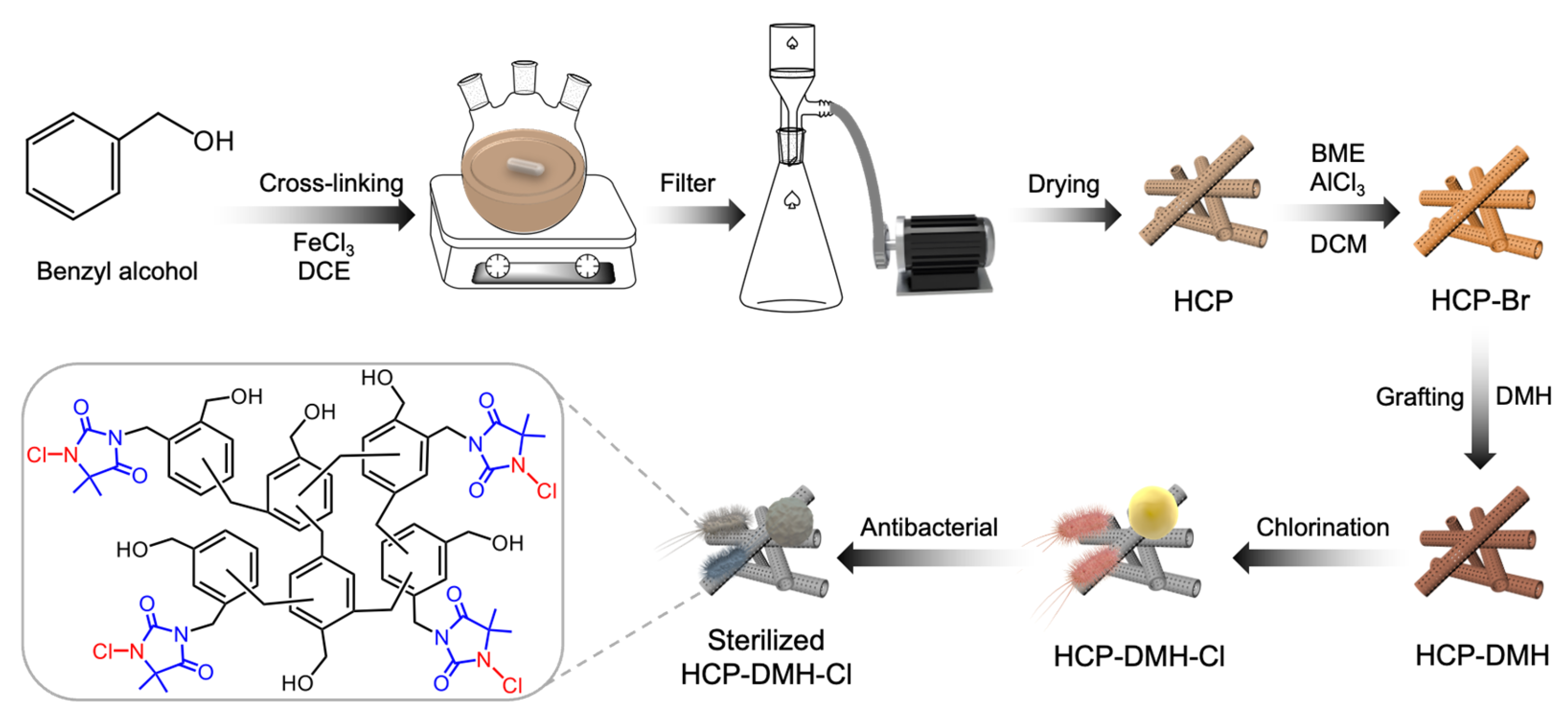
2.3. Synthesis of HCP
2.4. Synthesis of HCP-Br
2.5. Synthesis of HCP-DMH
2.6. Synthesis of HCP-DMH-Cl
2.7. Antibacterial Activity Assay
3. Results and Discussion
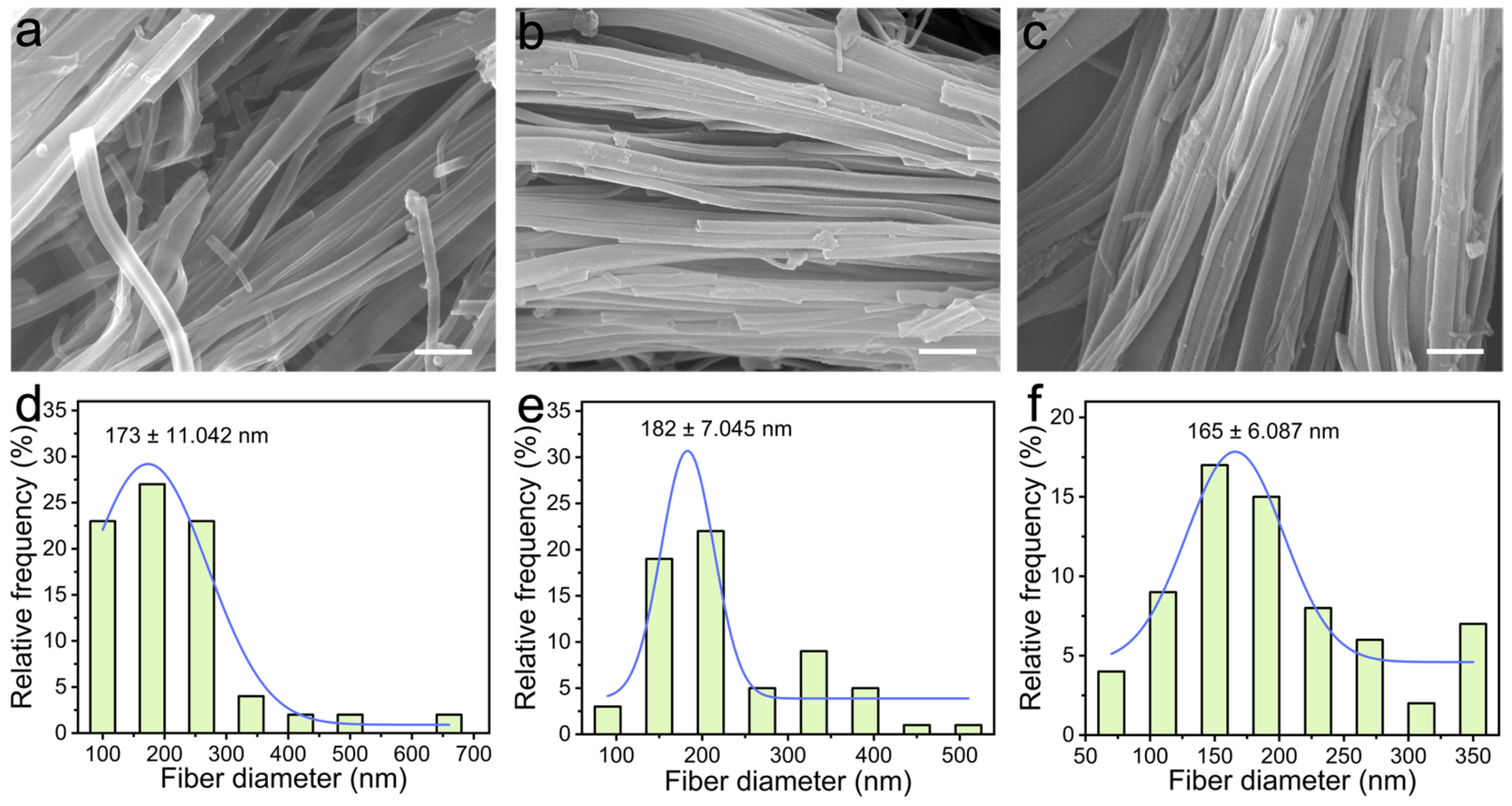
3.1. Structural Evolution and Morphological Characteristics
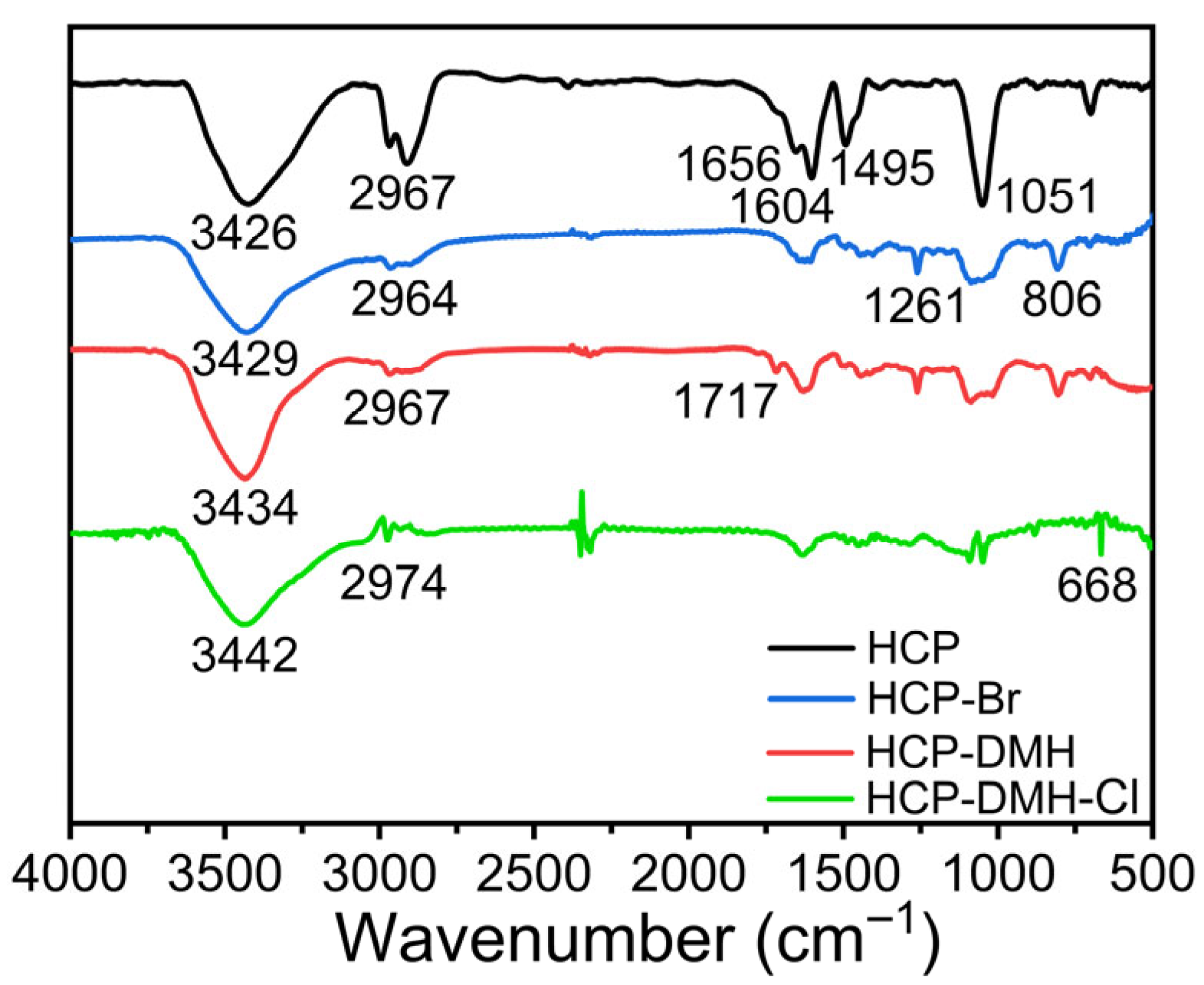
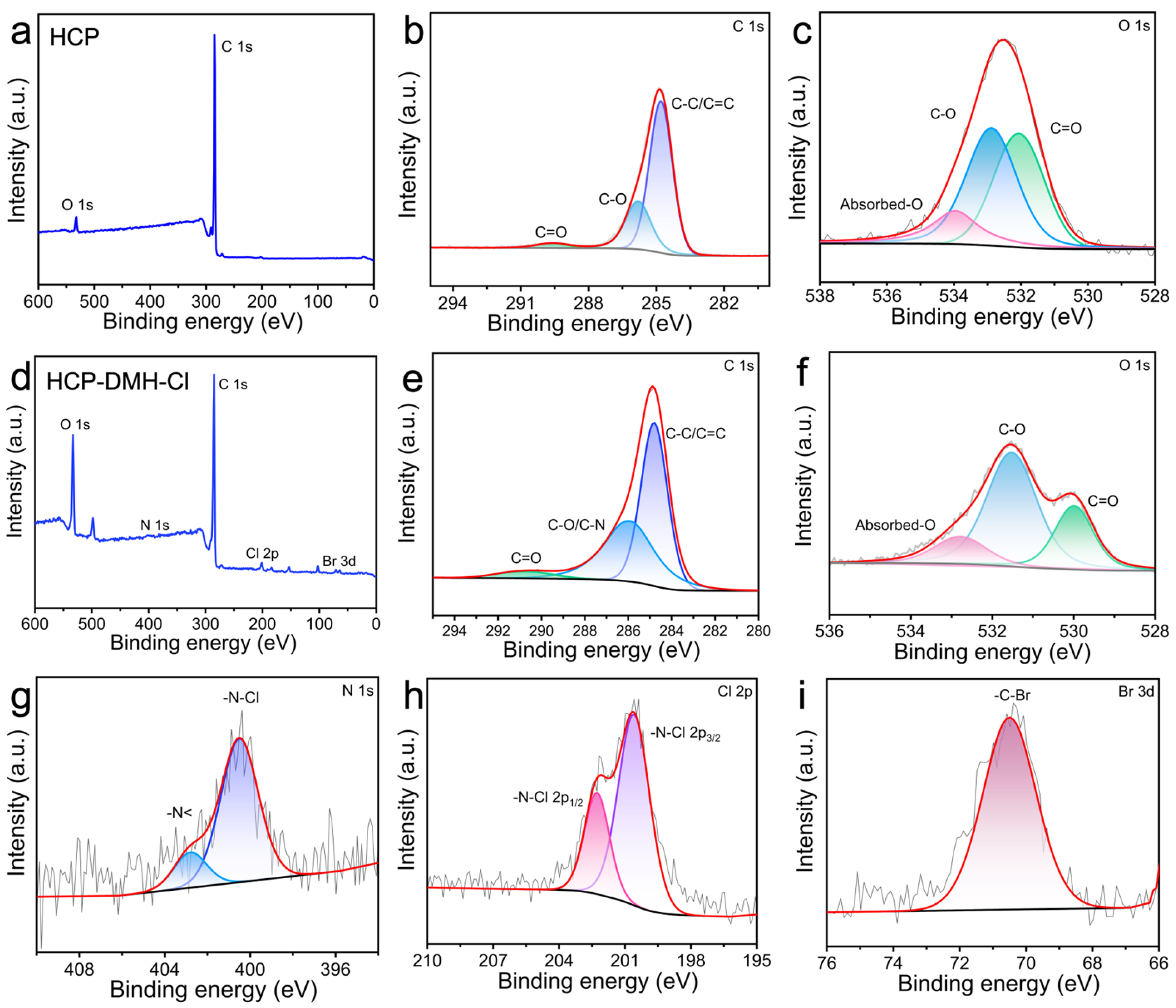
3.2. Characterization of Chemical Functional Groups
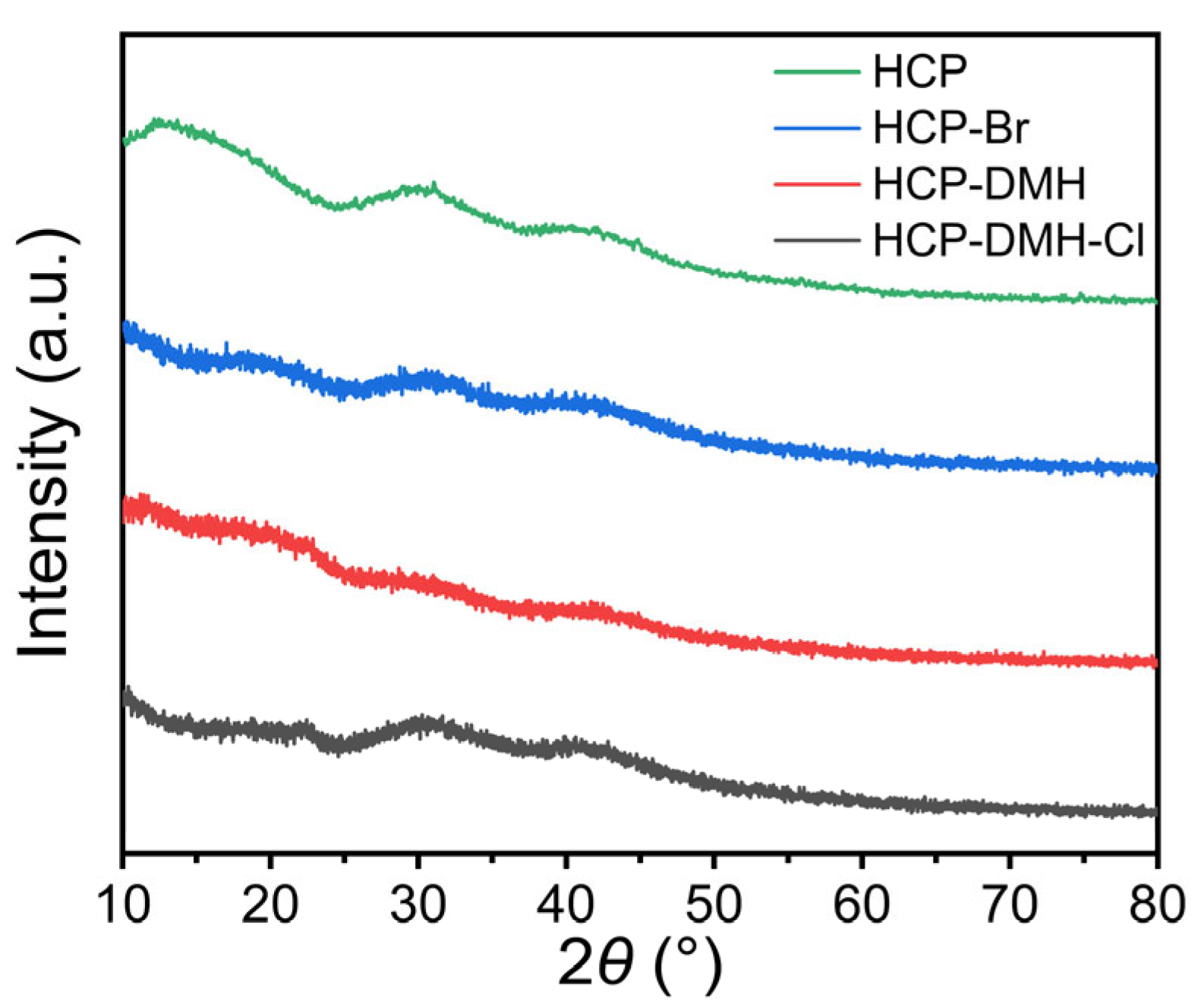
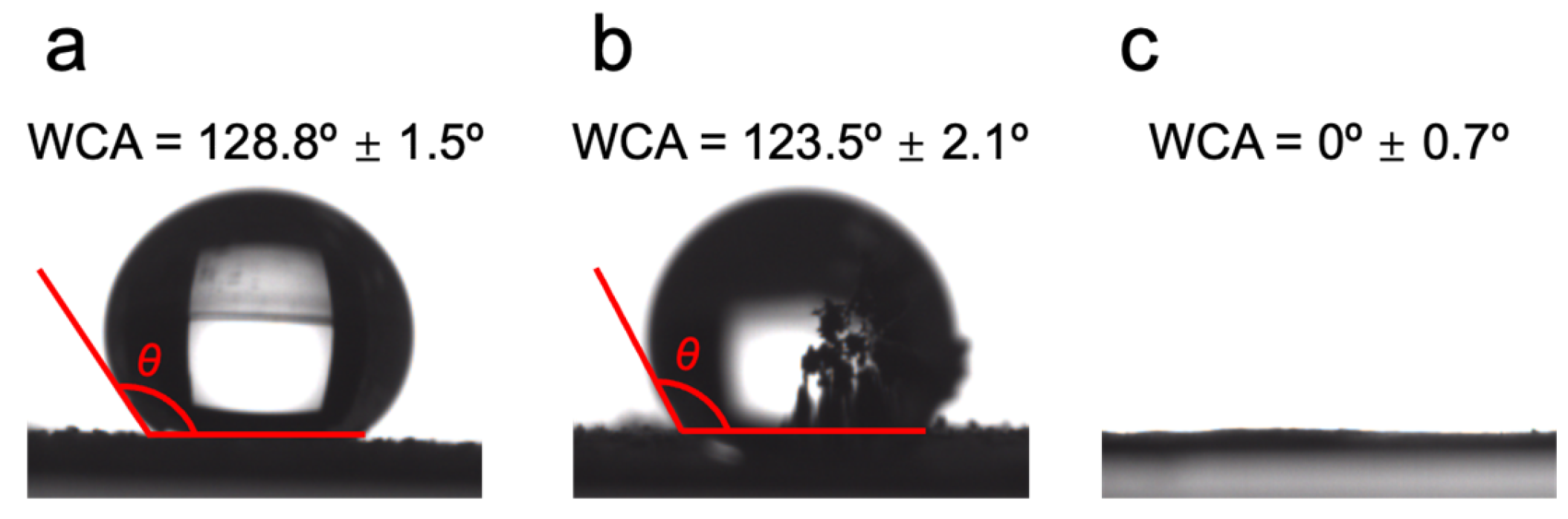
3.3. Crystallinity and Hydrophilicity
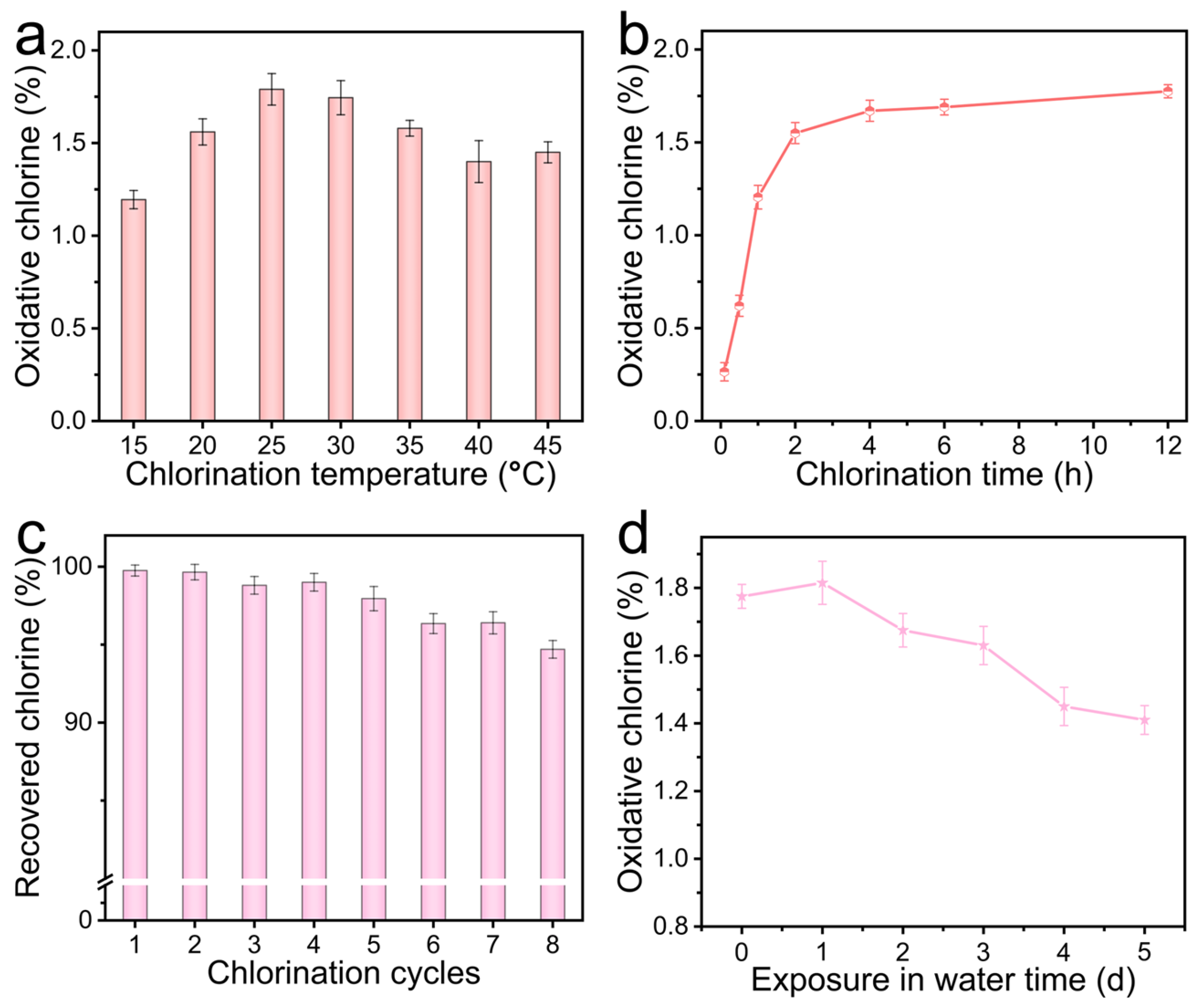
3.4. Oxidative Chlorine Content and Regenerability
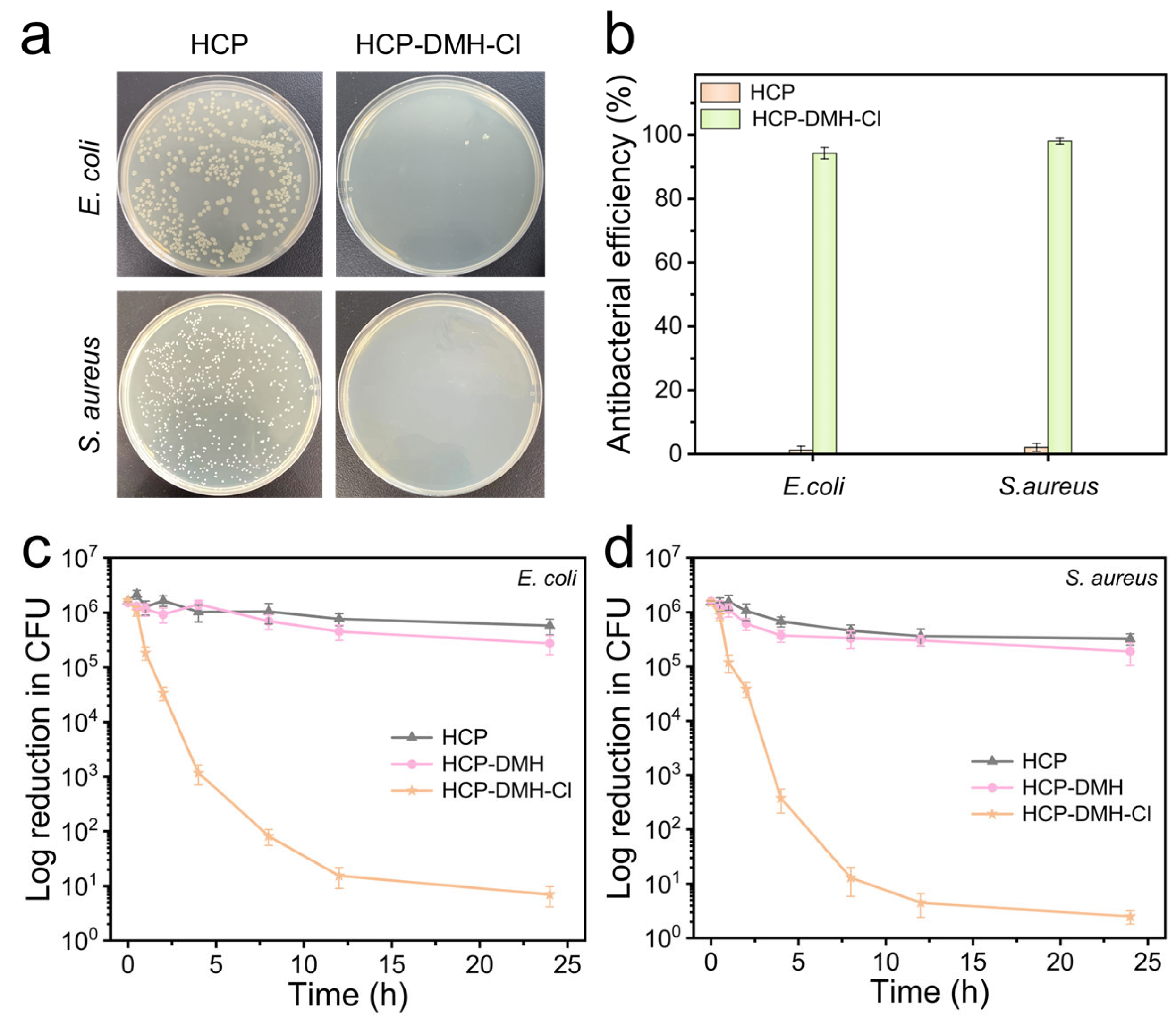
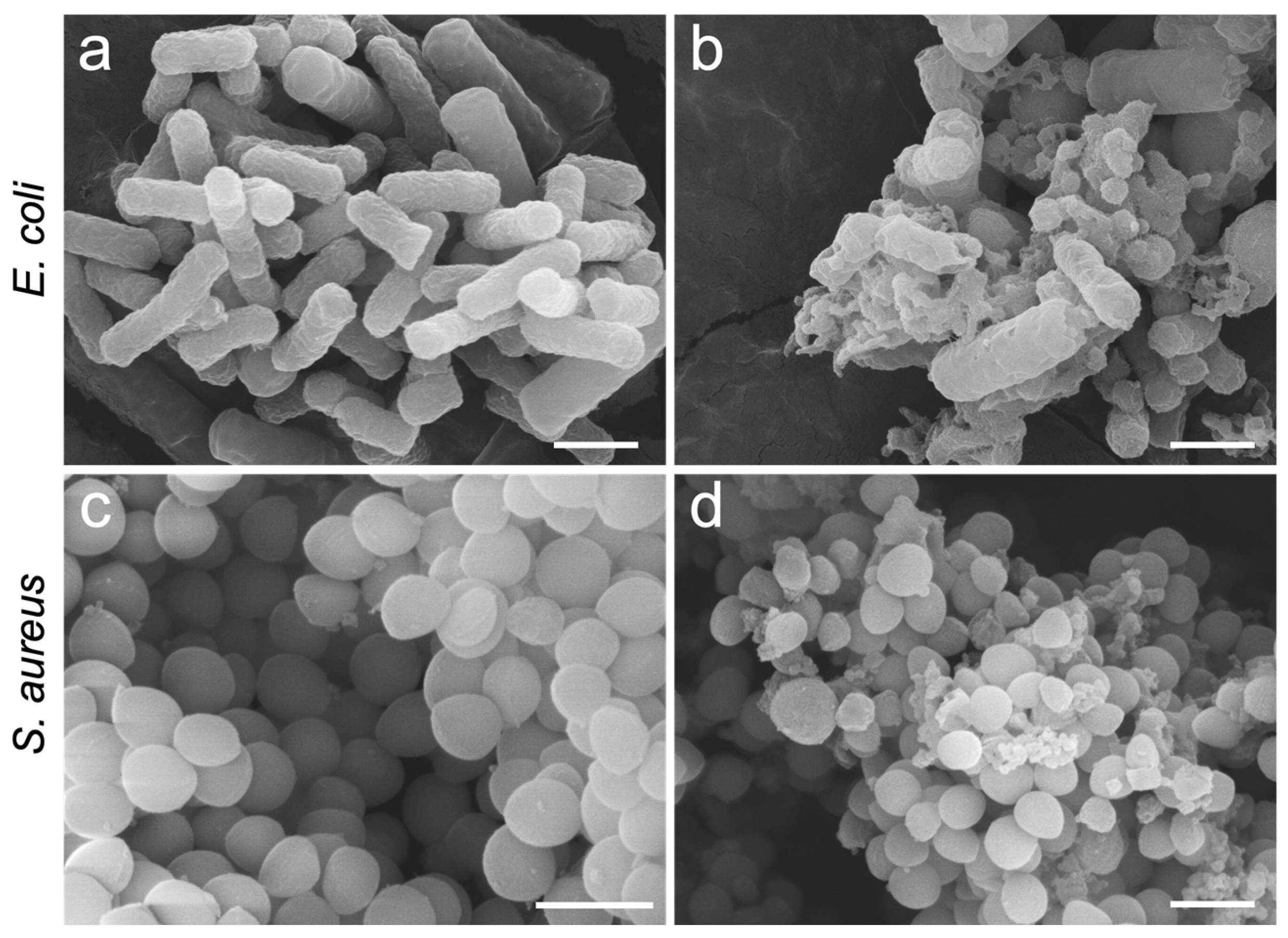
3.5. Antibacterial Activity
4. Conclusions
Author Contributions
Funding
Institutional Review Board Statement
Informed Consent Statement
Data Availability Statement
Acknowledgments
Conflicts of Interest
Abbreviations
| E. coli | Escherichia coli |
| S. aureus | Staphylococcus aureus |
| POPs | Porous organic polymers |
| HCPs | Hyper-cross-linked nanoporous polymers |
| BME | Bromomethyl methyl ether |
| DMH | 5,5-Dimethylhydantoin |
| WCA | Water contact angle |
| HOCl | Hypochlorous acid |
| DCE | 1,2-Dichloroethane |
| DCM | Dichloromethane |
| SEM | Scanning electron microscope |
| FT-IR | Fourier transform infrared |
| XPS | X-ray photoelectron spectroscopy |
| XRD | X-ray diffraction |
References
- Deusenbery, C.; Wang, Y.; Shukla, A. Recent innovations in bacterial infection detection and treatment. ACS Infect. Dis. 2021, 7, 695–720. [Google Scholar] [CrossRef]
- Kalelkar, P.P.; Riddick, M.; García, A.J. Biomaterial-based antimicrobial therapies for the treatment of bacterial infections. Nat. Rev. Mater. 2022, 7, 39–54. [Google Scholar] [CrossRef] [PubMed]
- Li, G.; Lai, Z.; Shan, A. Advances of antimicrobial peptide-based biomaterials for the treatment of bacterial infections. Adv. Sci. 2023, 10, 2206602. [Google Scholar] [CrossRef] [PubMed]
- Stracy, M.; Snitser, O.; Yelin, I.; Amer, Y.; Parizade, M.; Katz, R.; Rimler, G.; Wolf, T.; Herzel, E.; Koren, G.; et al. Minimizing treatment-induced emergence of antibiotic resistance in bacterial infections. Science 2022, 375, 889–894. [Google Scholar] [CrossRef]
- Wallis, R.S.; O’Garra, A.; Sher, A.; Wack, A. Host-directed immunotherapy of viral and bacterial infections: Past, present and future. Nat. Rev. Immunol. 2023, 23, 121–133. [Google Scholar] [CrossRef]
- Barathe, P.; Kaur, K.; Reddy, S.; Shriram, V.; Kumar, V. Antibiotic pollution and associated antimicrobial resistance in the environment. J. Hazard. Mater. Lett. 2024, 5, 100105. [Google Scholar] [CrossRef]
- Baaloudj, O.; Assadi, I.; Nasrallah, N.; Jery, A.E.; Khezami, L.; Assadi, A.A. Simultaneous removal of antibiotics and inactivation of antibiotic-resistant bacteria by photocatalysis: A review. J. Water Process Eng. 2021, 42, 102089. [Google Scholar] [CrossRef]
- Joseph, T.M.; Al-Hazmi, H.E.; Śniatała, B.; Esmaeili, A.; Habibzadeh, S. Nanoparticles and nanofiltration for wastewater treatment: From polluted to fresh water. Environ. Res. 2023, 238, 117114. [Google Scholar] [CrossRef]
- Jin, X.; Liu, S.; Zhang, Z.; Liu, T.; Li, N.; Liang, Y.; Zheng, J.; Peng, N. Enrofloxacin-induced transfer of multiple-antibiotic resistance genes and emergence of novel resistant bacteria in red swamp crayfish guts and pond sediments. J. Hazard. Mater. 2023, 443, 130261. [Google Scholar] [CrossRef]
- Wang, J.; Huang, J.J.; Lynch, I. Seasonal and short-term variations of bacteria and pathogenic bacteria on road deposited sediments. Environ. Res. 2022, 204, 111903. [Google Scholar] [CrossRef] [PubMed]
- Wang, L.; Wei, C.; Chang, Y.; Chang, Y.; Ding, J. Response of bacterial community in sea cucumber apostichopus japonicus intestine, surrounding water and sediment subjected to high-temperature stress. Aquaculture 2021, 535, 736353. [Google Scholar] [CrossRef]
- Ferreira, V.; Magalhães, R.; Teixeira, P.; Castro, P.M.L.; Calheiros, C.S.C. Occurrence of fecal bacteria and zoonotic pathogens in different water bodies: Supporting water quality management. Water 2022, 14, 780. [Google Scholar] [CrossRef]
- Arbab, S.; Ullah, H.; Wang, W.; Li, K.; Akbar, A.; Zhang, J. Isolation and identification of infection-causing bacteria in dairy animals and determination of their antibiogram. J. Food Qual. 2021, 2021, 2958304. [Google Scholar] [CrossRef]
- Wei, X.; Xie, B.; Wan, C.; Song, R.; Zhong, W.; Xin, S.; Song, K. Enhancing soil health and plant growth through microbial fertilizers: Mechanisms, benefits, and sustainable agricultural practices. Agronomy 2024, 14, 609. [Google Scholar] [CrossRef]
- Thangavelu, R.M.; da Silva, W.L.; Zuverza-Mena, N.; Dimkpa, C.O.; White, J.C. Nano-sized metal oxide fertilizers for sustainable agriculture: Balancing benefits, risks, and risk management strategies. Nanoscale 2024, 16, 19998–20026. [Google Scholar] [CrossRef]
- Maryam, A.; Anwar, R.; Malik, A.U.; Raheem, M.I.U.; Khan, A.S.; Hasan, M.U.; Hussain, Z.; Siddique, Z. Combined aqueous ozone and ultrasound application inhibits microbial spoilage, reduces pesticide residues and maintains storage quality of strawberry fruits. J. Food Meas. Charact. 2021, 15, 1437–1451. [Google Scholar] [CrossRef]
- Li, C.; Zhang, W.; Xu, X.; Zhou, L. Applications and challenges of fluorescent probes for the detection of pesticide residues in food. J. Agric. Food Chem. 2025, 73, 4982–4997. [Google Scholar] [CrossRef]
- Li, R.; Chen, T.; Pan, X. Metal–organic-framework-based materials for antimicrobial applications. ACS Nano 2021, 15, 3808–3848. [Google Scholar] [CrossRef] [PubMed]
- Oliveira Júnior, N.G.; Souza, C.M.; Buccini, D.F.; Cardoso, M.H.; Franco, O.L. Antimicrobial peptides: Structure, functions and translational applications. Nat. Rev. Microbiol. 2025, 23, 687–700. [Google Scholar] [CrossRef]
- Li, W.; Thian, E.S.; Wang, M.; Wang, Z.; Ren, L. Surface design for antibacterial materials: From fundamentals to advanced strategies. Adv. Sci. 2021, 8, 2100368. [Google Scholar] [CrossRef] [PubMed]
- Yang, D.H.; Tao, Y.; Ding, X.; Han, B.H. Porous organic polymers for electrocatalysis. Chem. Soc. Rev. 2022, 51, 761–791. [Google Scholar] [CrossRef]
- Song, K.S.; Fritz, P.W.; Coskun, A. Porous organic polymers for CO2 capture, separation and conversion. Chem. Soc. Rev. 2022, 51, 9831–9852. [Google Scholar] [CrossRef]
- Zheng, X.; Wang, L.; Pei, Q.; He, S.; Liu, S.; Xie, Z. Metal–organic framework@porous organic polymer nanocomposite for photodynamic therapy. Chem. Mater. 2017, 29, 2374–2381. [Google Scholar] [CrossRef]
- Nie, X.; Qiu, X.; Zhang, R.; Ke, Q.; Liu, H.; Zhang, X.; Lu, H.; Cui, G.; Zhang, S. Tunable and functional ionic liquids embedded hyper-crosslinked polymers as robust H2O-tolerant adsorbents for highly efficient gaseous toluene capture. Chem. Eng. J. 2025, 505, 159467. [Google Scholar] [CrossRef]
- Liu, H.; Xiao, B.; Zhao, Y.; Wang, W.; Jia, Q. Adsorption of heavy metals with hyper crosslinked polymers: Progress, challenges and perspectives. Chin. Chem. Lett. 2024, 36, 110619. [Google Scholar] [CrossRef]
- Mohamed, M.G.; Ahmed, M.M.M.; Du, W.T.; Kuo, S.W. Meso/microporous carbons from conjugated hyper-crosslinked polymers based on tetraphenylethene for high-performance CO2 capture and supercapacitor. Molecules 2021, 26, 738. [Google Scholar] [CrossRef] [PubMed]
- He, Y.; Bao, W.; Du, Q.; Wu, X.; Fu, X.; Yuan, D.; Na, B.; Yu, F.; Zhang, S.; Peng, C.; et al. A novel phosphorylated hyper-crosslinked porous polymer for efficient uranium adsorption in water. Sep. Purif. Technol. 2024, 330, 125448. [Google Scholar] [CrossRef]
- Todee, B.; Chutimasakul, T.; Junthod, K.; Docker, A.; Saetear, P.; Kongkaew, M.; Ratvijitvech, T.; Tantirungrotechai, J.; Bunchuay, T. Synthesis and post-polymerization functionalization of a tosylated hyper-crosslinked polymer for fast and efficient removal of organic pollutants in water. Mater. Chem. Front. 2022, 6, 3023–3032. [Google Scholar] [CrossRef]
- Liu, Y.; Gong, Z.; Ke, Y.; Yang, X.; Wang, D.; Liao, G. Construction of HCP@CNFs with high specific surface area via in-situ growth for highly efficient dye pollutants removal. J. Water Process Eng. 2025, 69, 106902. [Google Scholar] [CrossRef]
- Wolska, J.; Muńko, M.; Siblani, H.E.L.; Telegeiev, I.; Frankowski, M.; Szwajca, A.; Walkowiak-Kulikowska, J.; El-Roz, M.; Wolski, L. The influence of cross-linking density on the efficiency of post-synthetic sulfonation of hyper-cross-linked polymers and their adsorption capacity for antibiotic pollutants. J. Environ. Chem. Eng. 2023, 11, 110429. [Google Scholar] [CrossRef]
- Pandey, P.K.; Kass, P.H.; Soupir, M.L.; Sagor, B.; Vijay, P.S. Contamination of water resources by pathogenic bacteria. AMB Express 2014, 4, 51. [Google Scholar] [CrossRef]
- Gao, B.; Ye, Q.; Ding, Y.; Wu, Y.; Zhao, X.; Deng, M.; Zhang, J.; Chen, M.; Zhang, Y.; Wei, X.; et al. Metal-based nanomaterials with enzyme-like characteristics for bacterial rapid detection and control. Coord. Chem. Rev. 2024, 510, 215799. [Google Scholar] [CrossRef]
- Gao, M.; Zhang, Q.; Wu, S.; Wu, L.; Cao, P.; Zhang, Y.; Rong, L.; Fang, B.; Yuan, C.; Yao, Y.; et al. Contamination status of novel organophosphate esters derived from organophosphite antioxidants in soil and the effects on soil bacterial communities. Environ. Sci. Technol. 2024, 58, 10740–10751. [Google Scholar] [CrossRef] [PubMed]
- Li, X.; Zhang, J.; Shen, Y.; Wang, Y. Constructing imidazole-based ionic hyper-cross-linked polymers with tunable nanostructures and their application in radioactive iodine removal. J. Environ. Chem. Eng. 2025, 13, 117177. [Google Scholar] [CrossRef]
- Lan, N.; Li, J.; Zeng, L.; Luo, D.; Du, D.; Li, X.; He, H.; Zhang, C. Hyper-crosslinking to customize ultrathin-wall closed pores in pitch-derived carbon for sodium-ion batteries. Adv. Mater. 2025, 37, 2419528. [Google Scholar] [CrossRef] [PubMed]
- Song, W.; Zhang, Y.; Varyambath, A.; Kim, I. Guided assembly of well-defined hierarchical nanoporous polymers by Lewis acid–base interactions. ACS Nano 2019, 13, 11753–11769. [Google Scholar] [CrossRef]
- Song, W.; Zhang, Y.; Yu, D.G.; Tran, C.H.; Wang, M.; Varyambath, A.; Kim, J.; Kim, I. Efficient synthesis of folate-conjugated hollow polymeric capsules for accurate drug delivery to cancer cells. Biomacromolecules 2020, 22, 732–742. [Google Scholar] [CrossRef]
- Zhang, Y.; Li, S.; Xu, Y.; Shi, X.; Zhang, M.; Huang, Y.; Liang, Y.; Chen, Y.; Kim, J.R.; Song, W.; et al. Engineering of hollow polymeric nanosphere-supported imidazolium-based ionic liquids with enhanced antimicrobial activities. Nano Res. 2022, 15, 5556–5568. [Google Scholar] [CrossRef]
- Zhang, Y.; Tang, Y.; Liao, Q.; Qian, Y.; Zhu, L.; Yu, D.G.; Xu, Y.; Lu, X.; Kim, I.; Song, W. Silver oxide decorated urchin-like microporous organic polymer composites as versatile antibacterial organic coating materials. J. Mater. Chem. B 2024, 12, 2054–2069. [Google Scholar] [CrossRef]
- Zhang, Y.; Qian, Y.; Wen, Y.; Gui, Q.; Xu, Y.; Lu, X.; Zhang, L.; Song, W. In situ preparation of chlorine-regenerable antimicrobial polymer molecular sieve membranes. Molecules 2024, 29, 2980. [Google Scholar] [CrossRef]
- Lai, H.; Chen, S.; Su, X.; Huang, X.; Zheng, Q.; Yang, M.; Shen, B.; Yue, P. Sponge-liked silica nanoporous particles for sustaining release and long-term antibacterial activity of natural essential oil. Molecules 2023, 28, 594. [Google Scholar] [CrossRef] [PubMed]
- Wang, W.; Li, X.; Lai, L.; Zhang, X.; Li, G.; Xie, H. Zinc-silver co-implantation on nanoporous micropillar structured polyetheretherketone surfaces for enhanced osteogenic and antibacterial properties. Appl. Surf. Sci. 2024, 661, 160056. [Google Scholar] [CrossRef]
- Ahmed, A.E.-S.I.; Hay, J.N.; Bushell, M.E.; Wardell, J.N.; Cavalli, G. Macroscopic N-halamine biocidal polymeric beads. J. Appl. Polym. Sci. 2010, 116, 2396–2408. [Google Scholar] [CrossRef]
- Hui, F.; Debiemme-Chouvy, C. Antimicrobial N-halamine polymers and coatings: A review of their synthesis, characterization, and applications. Biomacromolecules 2013, 14, 585–601. [Google Scholar] [CrossRef] [PubMed]
- Zhou, Z.; Liu, X.; Mei, L.; Guo, X.; Gao, Y.; Hao, Y. Fabrication of N-halamine coatings with long-lasting bacterial inhibition and bacterial biofilm disruption functions for invisible aligner applications. Mater. Today Bio 2025, 33, 102112. [Google Scholar] [CrossRef]
- Wan, J.; Li, H.; Cai, X.; Yan, J.; Liao, Y. Developing the functional cotton fabric with N-halamine antibacterial structure based on DA/PEI. Cellulose 2022, 29, 9953–9967. [Google Scholar] [CrossRef]
- Jie, Z.; Yan, X.; Zhao, L.; Worley, S.D.; Liang, J. Eco-friendly synthesis of regenerable antimicrobial polymeric resin with N-halamine and quaternary ammonium salt groups. RSC Adv. 2014, 4, 6048–6054. [Google Scholar] [CrossRef]
- Tian, C.; Wu, F.; Jiao, W.; Liu, X.; Yin, X.; Si, Y.; Yu, J.; Ding, B. Antibacterial and antiviral N-halamine nanofibrous membranes with nanonet structure for bioprotective applications. Compos. Commun. 2021, 24, 100668. [Google Scholar] [CrossRef]
- Li, J.; Huang, P.; Sun, X.; Bai, X.; He, Y.; Wang, R. N-halamine terpolymer antibacterial nanohemisphere with amphiphilic and rigid-flexible groups. Eur. Polym. J. 2023, 200, 112535. [Google Scholar] [CrossRef]
- Ma, Y.; Wisuthiphaet, N.; Nitin, N.; Song, G. A novel N-halamine biocidal nanofibrous membrane for chlorine rechargeable rapid water disinfection applications. ACS Appl. Mater. Interfaces 2021, 13, 41056–41065. [Google Scholar] [CrossRef]
- Wang, Z.; Tang, Y.; Wang, P.; Cheng, Z.; Chen, F.; Lu, Y.; Wu, Y.; Xie, Z.; Wu, D.; Cai, Z.; et al. Dynamical integration of antimicrobial, anti-inflammatory, and pro-osteogenic activities on polyetheretherketone via a porous N-halamine polymeric coating. Adv. Funct. Mater. 2023, 33, 2307286. [Google Scholar] [CrossRef]




Disclaimer/Publisher’s Note: The statements, opinions and data contained in all publications are solely those of the individual author(s) and contributor(s) and not of MDPI and/or the editor(s). MDPI and/or the editor(s) disclaim responsibility for any injury to people or property resulting from any ideas, methods, instructions or products referred to in the content. |
© 2026 by the authors. Licensee MDPI, Basel, Switzerland. This article is an open access article distributed under the terms and conditions of the Creative Commons Attribution (CC BY) license.
Share and Cite
Mao, S.; Ji, Z.; Yang, X.; Li, J.; Gao, H.; Kim, I.; Zhang, Y. Self-Assembly of Antibacterial Polymer Nanotubes with Chlorine Regenerability. Biomolecules 2026, 16, 725. https://doi.org/10.3390/biom16050725
Mao S, Ji Z, Yang X, Li J, Gao H, Kim I, Zhang Y. Self-Assembly of Antibacterial Polymer Nanotubes with Chlorine Regenerability. Biomolecules. 2026; 16(5):725. https://doi.org/10.3390/biom16050725
Chicago/Turabian StyleMao, Shina, Zhizhan Ji, Xu Yang, Jiayu Li, Haoran Gao, Il Kim, and Yu Zhang. 2026. "Self-Assembly of Antibacterial Polymer Nanotubes with Chlorine Regenerability" Biomolecules 16, no. 5: 725. https://doi.org/10.3390/biom16050725
APA StyleMao, S., Ji, Z., Yang, X., Li, J., Gao, H., Kim, I., & Zhang, Y. (2026). Self-Assembly of Antibacterial Polymer Nanotubes with Chlorine Regenerability. Biomolecules, 16(5), 725. https://doi.org/10.3390/biom16050725