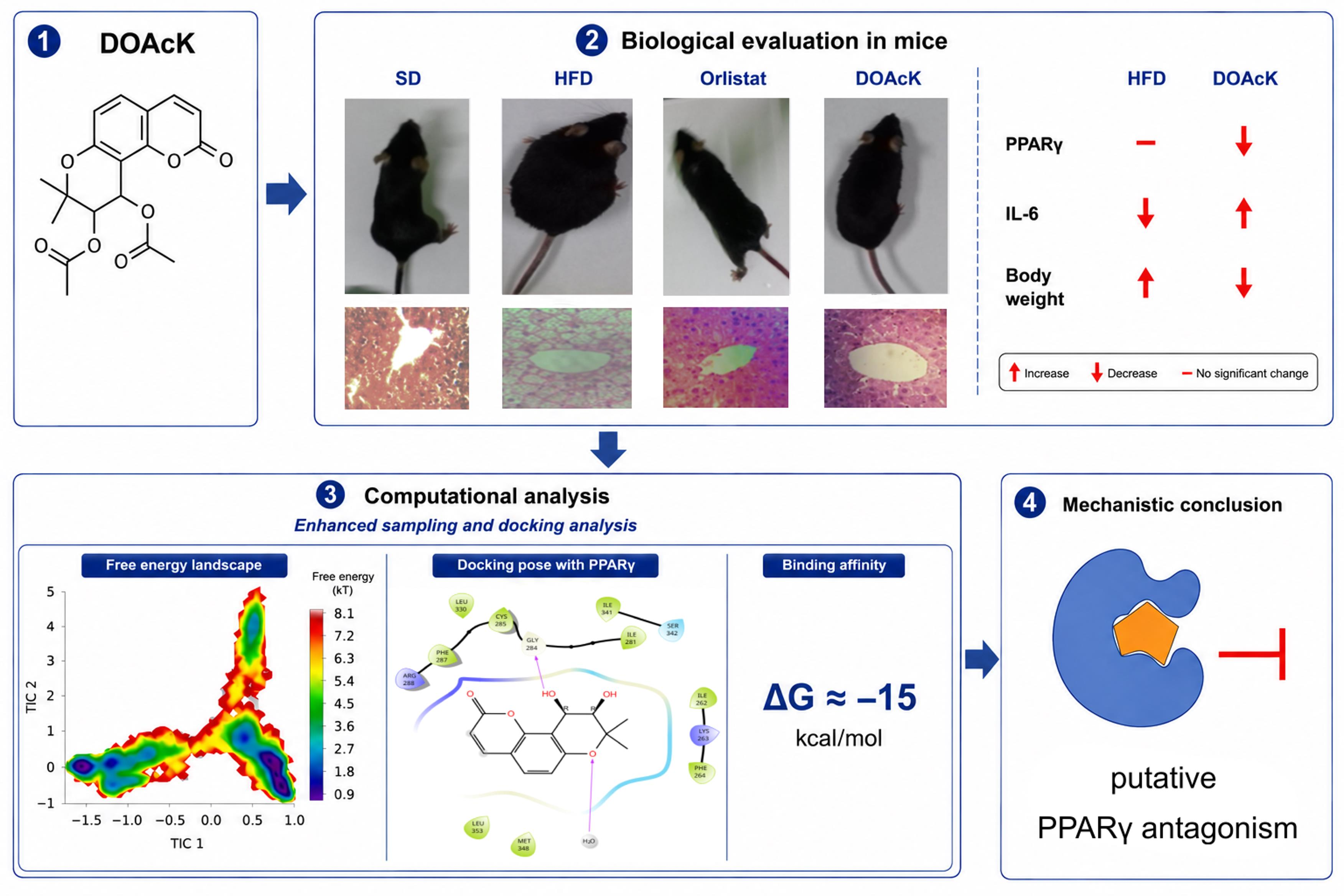
Evaluation of 3′,4′-Di-O-acetyl-cis-khellactone as a Putative Antagonist of PPARγ Using Experimental and Computational Modeling
 , , , and
Abstract
1. Introduction
2. Materials and Methods
2.1. Animals
2.2. Obesity Induced by the High-Fat Diet Model
- Group 1 Control mice were fed a standard diet containing 13.1% fat, 59.8% carbohydrates, and 27% protein.
- Group 2 HFD Control mice were fed a high-fat diet containing 60.3% fat, 21.3% carbohydrates, and 18.4% protein.
- Group 3 HFD + Orlistat mice were fed a high-fat diet + Orlistat (Orlistat was orally administered at 5.14 mg/kg body weight).
- Group 4 HFD + DOAcK mice were fed a high-fat diet + DOAcK (DOAcK was orally administered at 15 mg/kg body weight).
2.3. Body Weight and Biochemical Parameters
2.4. Histological Analysis
2.5. RNA Extraction and Polymerase Chain Reaction
2.6. Molecular Modeling
2.7. Molecular Docking
2.8. Binding Mode Assessment
2.9. Statistical Analysis
3. Results
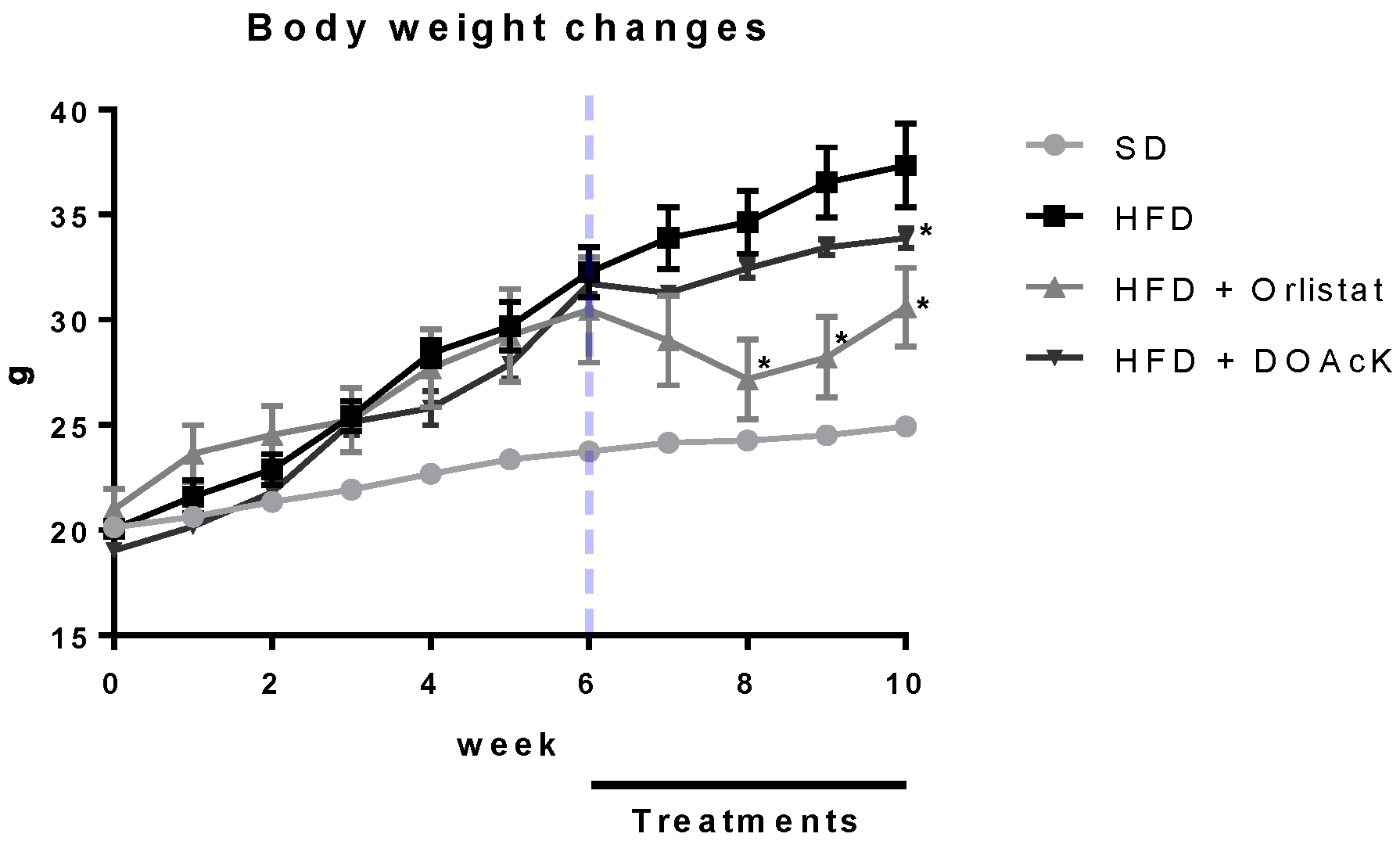
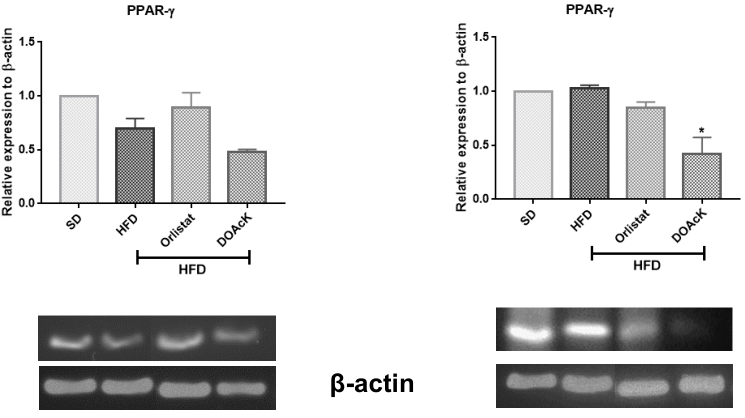
3.1. In Vivo Activity

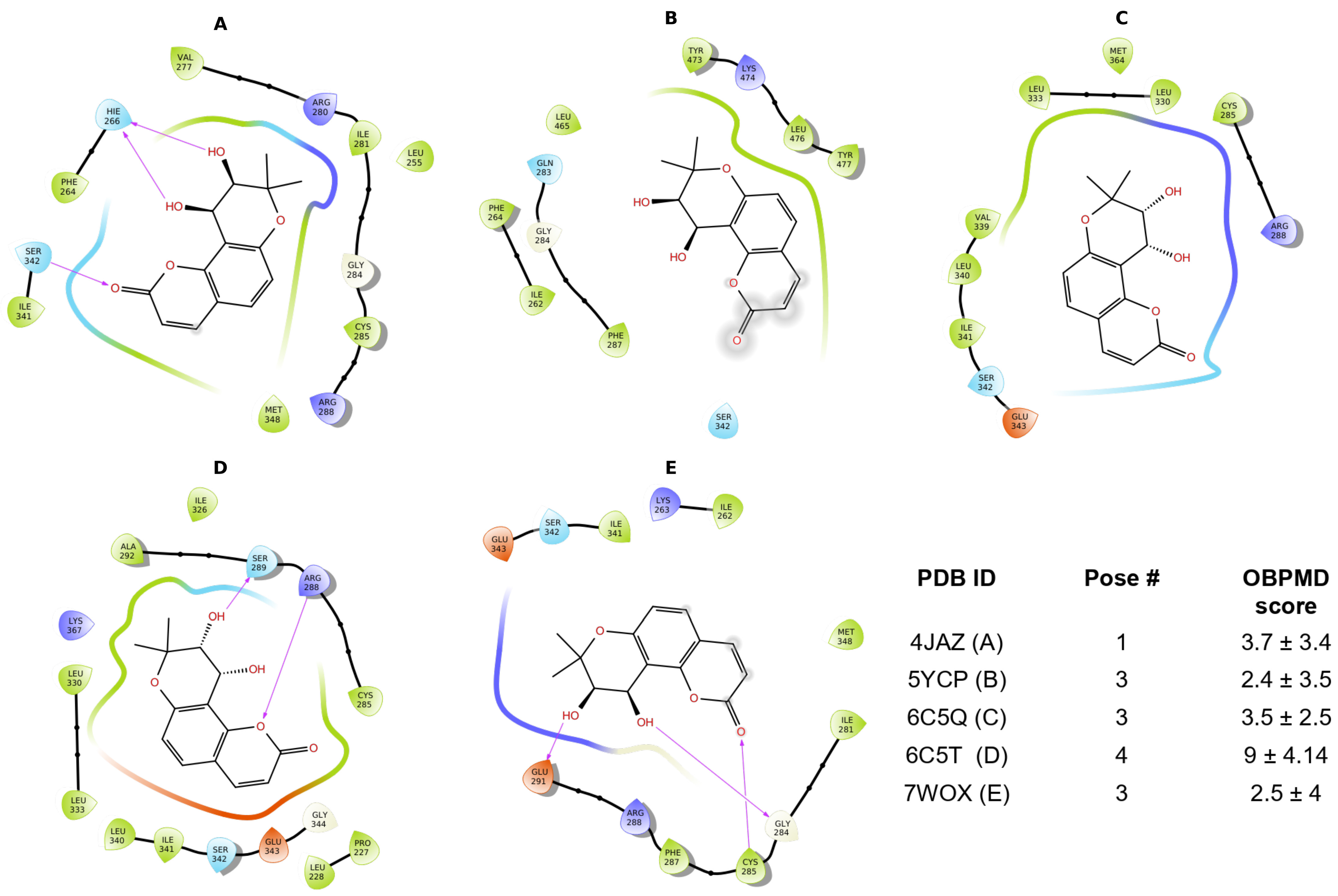
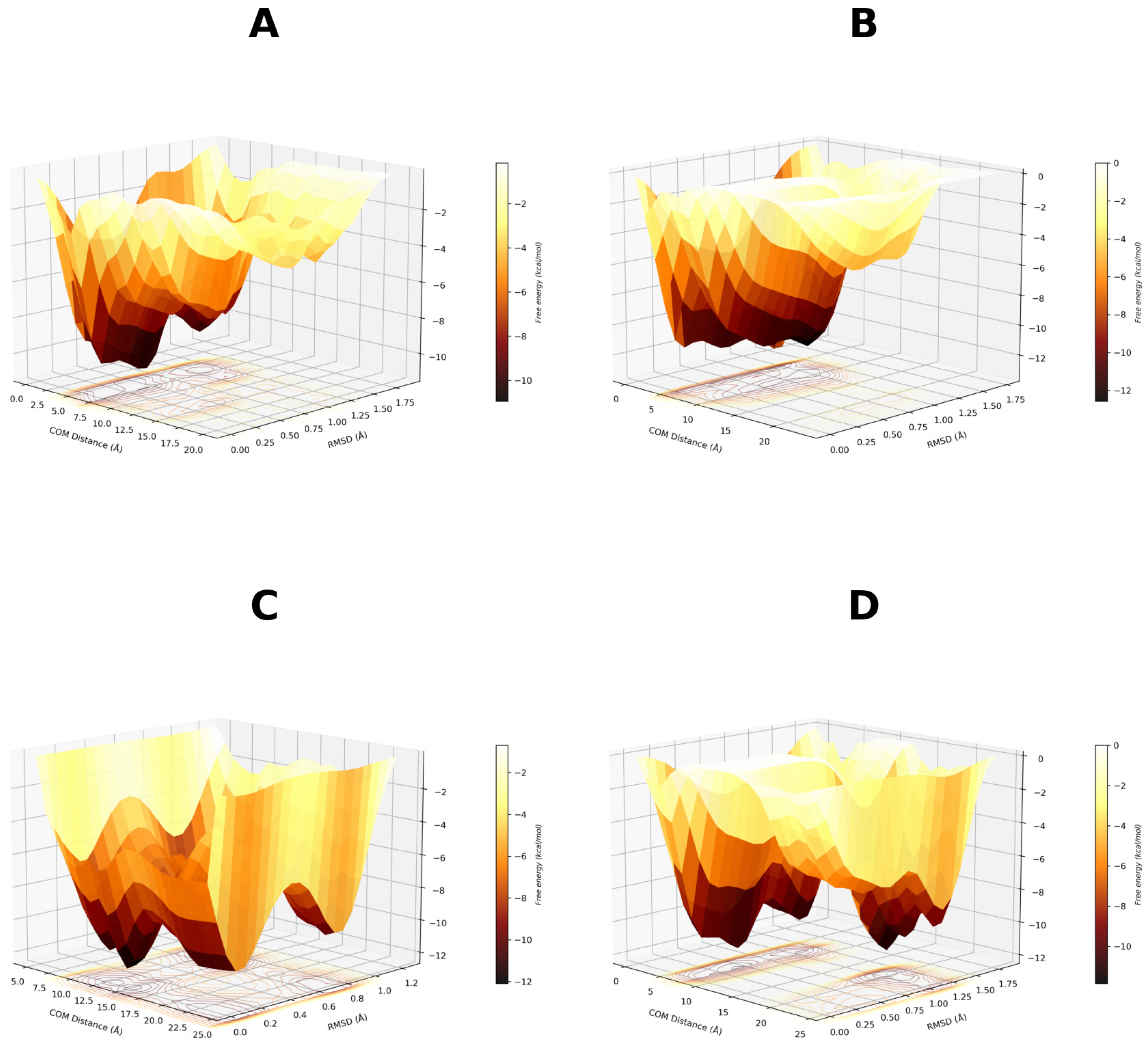
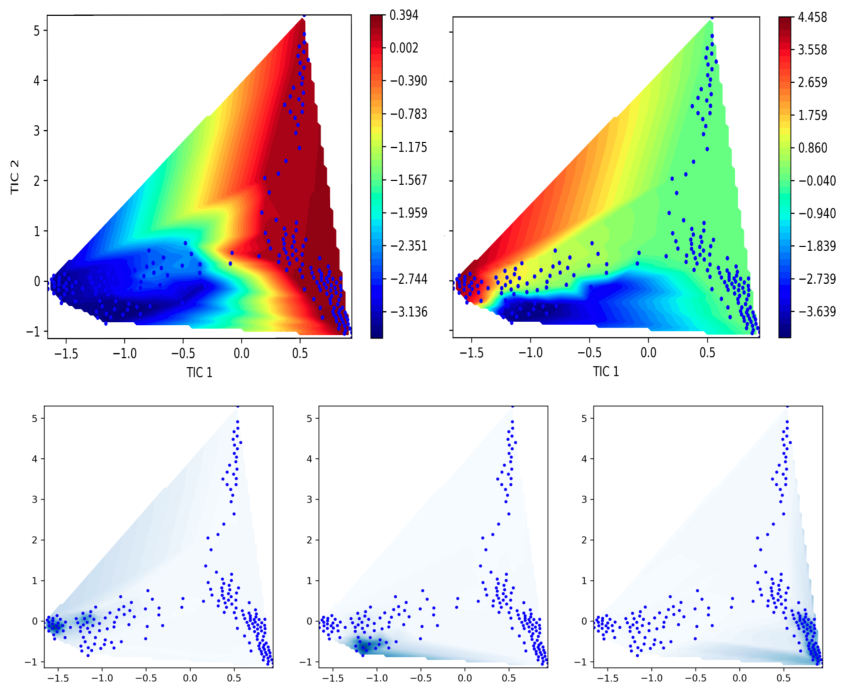
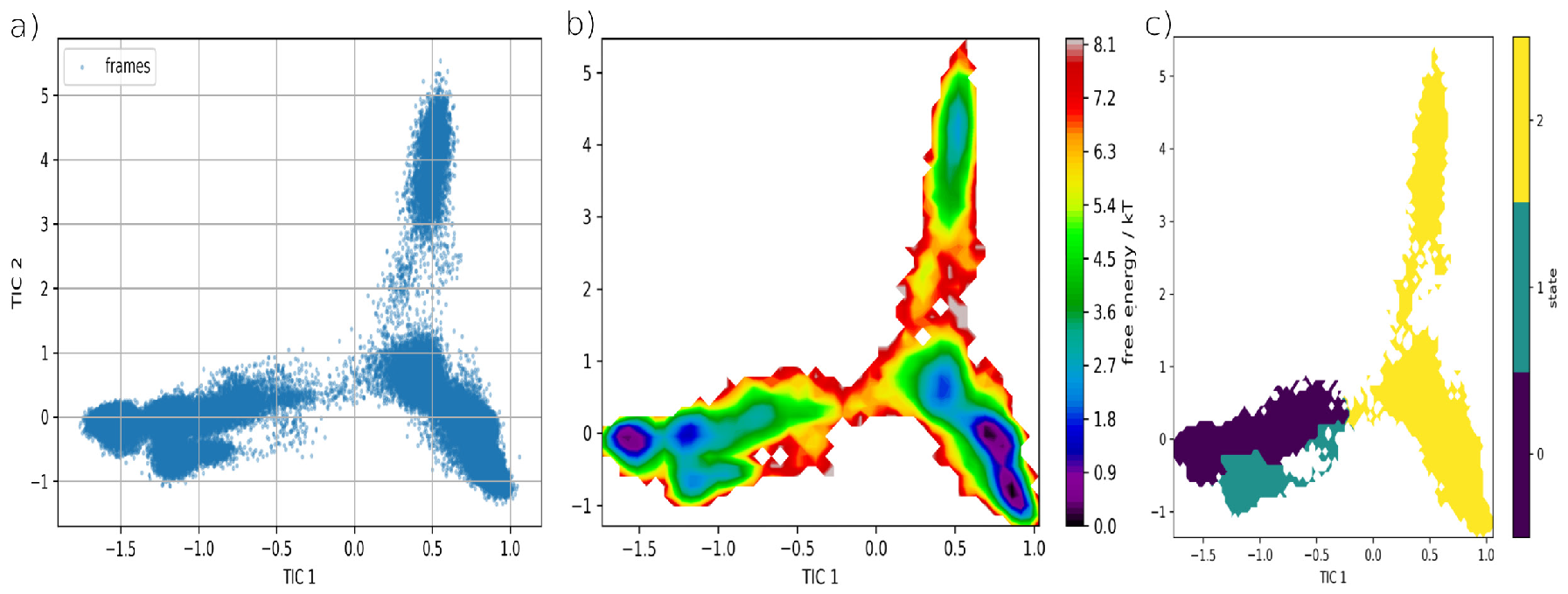
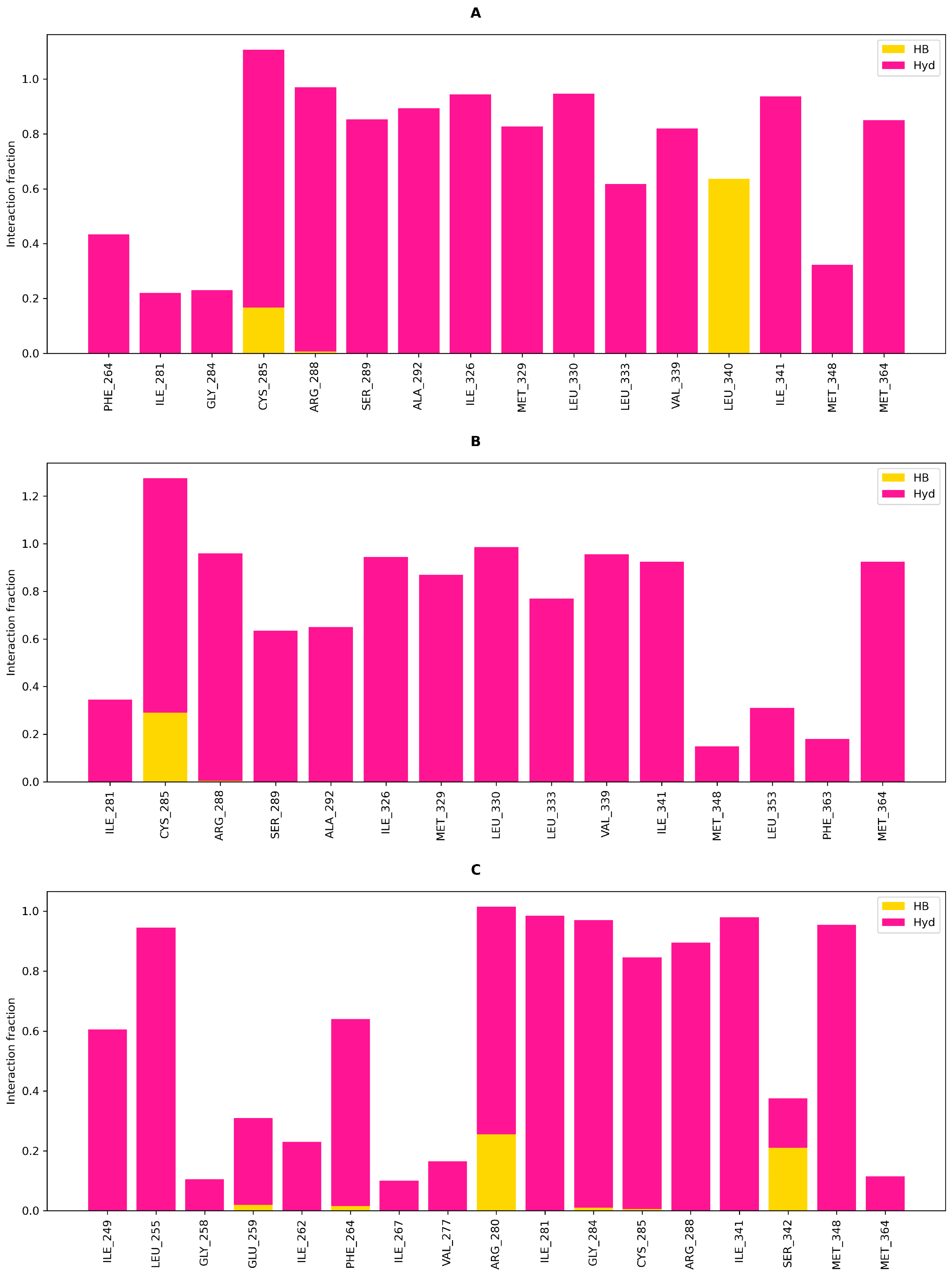
3.2. In Silico Assays
4. Discussion
5. Conclusions
Supplementary Materials
Author Contributions
Funding
Institutional Review Board Statement
Informed Consent Statement
Data Availability Statement
Acknowledgments
Conflicts of Interest
Abbreviations
| DOAcK | 3′,4′-Di-O-acetyl-cis-khellactone |
| ee | Enantiomeric excess |
| FBG | Fasting blood glucose |
| FFA | Free fatty acids |
| GCMC | Grand canonical Monte Carlo |
| NAFLD | Non-alcoholic fatty liver disease |
| HFD | High-fat diet |
| LBD | Ligand-binding domain |
| SD | Standard diet |
References
- Vaduseva, N.; Yadav, N.; Sharma, S.K. Natural products: A safest approach for obesity. Chin. J. Integr. Med. 2012, 18, 473–480. [Google Scholar] [CrossRef]
- OECD. Health at a Glance. The Organisation for Economic Co-Operation and Development Indicators. 2025. Available online: https://www.oecd.org/en/publications/health-at-a-glance-2025_8f9e3f98-en.html (accessed on 11 May 2026).
- Khanmohammadi, S.; Masrour, M.; Fallahtafti, P.; Habibzadeh, A.; Scuermans, A.; Kuchay, M.S. The relationship between nonalcoholic fatty liver disease and frailty: A systematic review and meta-analysis. Diabetes Metab. Syndr. 2025, 19, 103187. [Google Scholar] [CrossRef]
- Adams, L.A.; Angulo, P.; Lindor, K.D. Nonalcoholic fatty liver disease. CMAJ 2005, 172, 899–905. [Google Scholar] [CrossRef] [PubMed]
- Alemán-González-Duhart, D.; Tamay-Cach, F.; Álvarez-Almazán, S.; Mendieta-Wejebe, J.E. Current advances in the biochemical and the physiological aspects of the treatment of type 2 diabetes mellitus with thiazolidinediones. PPAR Res. 2016, 2016, 7614270. [Google Scholar] [CrossRef] [PubMed]
- Dixit, V.A.; Rathi, P.C.; Bhagat, S.; Gohlke, H.; Petersen, R.K.; Kristiansen, K.; Chakraborti, A.K.; Bharatam, P.V. Design and synthesis of novel Y-shaped barbituric acid derivatives as PPARγ activators. Eur. J. Med. Chem. 2016, 108, 423–435. [Google Scholar] [CrossRef] [PubMed]
- Colin-Lozano, B.; Estrada-Soto, S.; Chávez-Silva, F.; Gutiérrez-Hernández, A.; Cerón-Romero, L.; Giacoman-Martínez, A.; Almanza-Pérez, J.C.; Hernández-Núñez, E.; Wang, Z.; Xie, X.; et al. Design, synthesis and in combo antidiabetic bioevaluation of multitarget phenylpropanoic acids. Molecules 2018, 23, 340. [Google Scholar] [CrossRef]
- Kim, Y.; Kim, U.; Choi, J.; Lee, M.; Nam, T. The anti-obesity effects of a tuna peptide in 3T3-L1 adipocytes are mediated by the inhibition of expression of lipogenic and adipogenic genes and by the activation of the Wnt/β-catenin signaling pathway. Int. J. Mol. Med. 2015, 36, 327–334. [Google Scholar] [CrossRef]
- Pouwels, D.; Sakran, N.; Graham, Y.; Leal, A.; Pintar, T.; Yang, W.; Kassir, R.; Singhal, R.; Mahawar, K.; Ramnarain, D. Non-alcoholic fatty liver disease (NAFLD): A review of pathophysiology, clinical management and effects of weight loss. BMC Endocr. Disord. 2022, 22, 63. [Google Scholar] [CrossRef]
- Domínguez-Mendoza, E.A.; Cornejo-Garrido, J.; Burgueño-Tapia, E.; Ordaz-Pichardo, C. Antidiabetic effect, antioxidant activity, and toxicity of 3’,4’-Di-O-acetyl-cis-khellactone in Streptozotocin-induced diabetic rats. Bioorg. Med. Chem. Lett. 2016, 26, 4086–4091. [Google Scholar] [CrossRef]
- Prieto-Martínez, F.D.; Arciniega, M.; Medina-Franco, J.L. Molecular docking: Current advances and challenges. TIP Rev. Espec. En Cienc. Quim.-Biol. 2018, 21, 65–87. [Google Scholar] [CrossRef]
- Korb, O.; Stützle, T.; Exner, T.E. Empirical Scoring Functions for Advanced Protein-Ligand Docking with PLANTS. J. Chem. Inf. Model. 2009, 9, 84–96. [Google Scholar] [CrossRef]
- Brink, T.; Exner, T.E. Influence of Protonation, Tautomeric, and Stereoisomeric States on Protein-Ligand Docking Results. J. Chem. Inf. Model. 2009, 9, 1535–1546. [Google Scholar] [CrossRef]
- O’Boyle, N.M.; Banck, M.; James, C.A.; Morley, C.; Vandermeersch, T.; Hutchison, G.R. Open Babel: An open chemical toolbox. J. Cheminform. 2011, 3, 33. [Google Scholar] [CrossRef]
- Lukauskis, D.; Samways, M.L.; Aureli, S.; Cossins, B.P.; Taylor, R.D.; Gervasio, F.L. Open Binding Pose Metadynamics: An Effective Approach for the Ranking of Protein-Ligand Binding Poses. J. Chem. Inf. Model. 2022, 62, 6209–6216. [Google Scholar] [CrossRef]
- Samways, M.L.; Macdonald, H.E.B.; Essex, J.W. grand: A Python Module for Grand Canonical Water Sampling in OpenMM. J. Chem. Inf. Model. 2020, 60, 4436–4441. [Google Scholar] [CrossRef] [PubMed]
- Bowers, K.J.; Chow, D.E.; Xu, H.; Dror, R.O.; Eastwood, M.P.; Gregersen, B.A.; Klepeis, J.L.; Kolossvary, I.; Moraes, M.A.; Sacerdoti, F.D.; et al. Scalable Algorithms for Molecular Dynamics Simulations on Commodity Clusters. In Proceedings of the 2006 ACM/IEEE Conference on Supercomputing; IEEE: Piscataway, NJ, USA, 2006. [Google Scholar] [CrossRef]
- Mast, T.; Lupyan, S. How to Assign AMBER Parameters to Desmond-Generated System with Viparr4 v1; protocols.io/Springer Nature: Berlin/Heidelberg, Germany, 2021. [Google Scholar] [CrossRef]
- Gao, K.; Yin, J.; Henriksen, N.M.; Fenley, A.T.; Gilson, M.K. Binding Enthalpy Calculations for a Neutral Host-Guest Pair Yield Widely Divergent Salt Effects across Water Models. J. Chem. Theory Comput. 2015, 11, 4555–4564. [Google Scholar] [CrossRef] [PubMed]
- Raich, L.; Meier, K.; Günther, J.; Christ, C.D.; Noé, F.; Olsson, S. Discovery of a hidden transient state in all bromodomain families. Proc. Natl. Acad. Sci. USA 2021, 118, e2017427118. [Google Scholar] [CrossRef]
- Talele, T.T. Natural-Products-Inspired Use of the gem-Dimethyl Group in Medicinal Chemistry. J. Med. Chem. 2018, 61, 2166–2210. [Google Scholar] [CrossRef]
- Calleri, E.; Pochetti, G.; Dossoy, K.S.S.; Laghezza, A.; Montanari, R.; Capelli, D.; Prada, E.; Loiodice, F.; Massolini, G.; Bernier, M.; et al. Resveratrol and Its Metabolites Bind to PPARs. ChemBioChem 2014, 15, 1154–1160. [Google Scholar] [CrossRef]
- Yang, Z.; Zhao, Y.; Hao, D.; Wang, H.; Li, S.; Jia, L.; Yuan, X.; Zhang, L.; Meng, L.; Zhang, S. Computational identification of potential chemoprophylactic agents according to dynamic behavior of peroxisome proliferator-activated receptor gamma. RSC Adv. 2021, 11, 147–159. [Google Scholar] [CrossRef]
- Prieto-Martínez, F.D.; Mendoza-Cañas, J.; Martínez-Mayorga, K. To Bind or Not to Bind? A Comprehensive Characterization of TIR1 and Auxins Using Consensus In Silico Approaches. Computation 2024, 12, 94. [Google Scholar] [CrossRef]
- García-Galicia, M.C.; Burgueño-Tapia, E.; Romero-Rojas, A.; García-Zebaduá, J.C.; Cornejo-Garrido, J.; Ordaz-Pichardo, C. Anti-hyperglycemic effect, inhibition of inflammatory cytokines expression, and histopathology profile in streptozotocin-induced diabetic rats treated with Arracacia tolucensis aerial-parts extracts. J. Ethnopharmacol. 2014, 152, 91–98. [Google Scholar] [CrossRef] [PubMed]
- Williamson, D.A.; Bay, G.A.; Ryan, D.H. Is 5% weight loss a satisfactory criterion to define clinically significant weight loss? Obesity 2015, 23, 2319–2320. [Google Scholar] [CrossRef] [PubMed]
- Cheung, B.M.Y.; Cheung, T.T.; Samaranayake, N.R. Safety of antiobesity drugs. Ther. Adv. Drug. Saf. 2013, 4, 171–181. [Google Scholar] [CrossRef]
- Collins, S.; Martin, T.L.; Surwit, R.S.; Robidoux, J. Genetic vulnerability to diet-induced obesity in the C57BL/6J mouse: Physiological and molecular characteristics. Physiol. Behav. 2004, 81, 243–248. [Google Scholar] [CrossRef]
- Han, L.; Zheng, Y.; Yoshikawa, M.; Okuda, H.; Kimura, Y. Anti-obesity effect of chikusetsusaponins isolated from Panax japonicus rhizomes. BMC Complement. Altern. Med. 2005, 5, 9. [Google Scholar] [CrossRef]
- Sánchez-Tapia, M.; Aguilar-López, M.; Pérez-Cruz, C.; Pichardo-Ontiveros, E.; Wang, M.; Donovan, S.M.; Tovar, A.R.; Torres, N. Nopal (Opuntia ficus indica) protects from metabolic endotoxemia by modifying gut microbiota in obese rats fed high fat/sucrose diet. Sci. Rep. 2017, 7, 4716. [Google Scholar] [CrossRef]
- Kim, S.O.; Yun, S.; Jung, B.; Lee, E.H.; Hahm, D.; Shim, I.; Lee, H. Hypolipidemic effects of crude extract of adlay seed (Coix lachrymajobi var. mayuen) in obesity rat fed high fat diet: Relations of TNF-a and leptin mRNA expressions and serum lipid levels. Life Sci. 2004, 75, 1391–1404. [Google Scholar] [CrossRef]
- Wang, J.; Ma, L.; Chen, S.; Xu, L.; Miao, M.; Yu, C.; Li, Y.; Xu, C. Risk for the development of non-alcoholic fatty liver disease: A prospective study. J. Gastroenterol. Hepatol. 2018, 33, 1518–1523. [Google Scholar] [CrossRef] [PubMed]
- Wahli, W.; Michalik, L. PPARs at the crossroads of lipid signaling and inflammation. Trends Endocrinol. Metab. 2012, 23, 351–363. [Google Scholar] [CrossRef]
- Tsujita, T.; Takaichi, H.; Takaku, T.; Aoyama, S.; Hiraki, J. Antiobesity action of epsilon-polylysine, a potent inhibitor of pancreatic lipase. J. Lipid. Res. 2006, 47, 1852–1858. [Google Scholar] [CrossRef]
- McPherson, S.; Hardy, T.; Henderson, E.; Burt, A.D.; Day, C.P.; Anstee, Q.M. Evidence of NAFLD progression from steatosis to fibrosing-steatohepatitis using paired biopsies: Implications for prognosis and clinical management. J. Hepatol. 2015, 62, 1148–1155. [Google Scholar] [CrossRef] [PubMed]
- Sumiyoshi, M.; Kimura, Y. Low molecular weight chitosan inhibits obesity induced by feeding a high-fat diet long-term in mice. J. Pharm. Pharmacol. 2006, 58, 201–207. [Google Scholar] [CrossRef] [PubMed]
- Grygiel-Górniak, B. Peroxisome proliferator-activated receptors and their ligands: Nutritional and clinical implications—A review. Nutr. J. 2014, 13, 17. [Google Scholar] [CrossRef]
- Choi, W.H.; Um, M.Y.; Ahn, J.; Jung, C.H.; Park, M.K.; Ha, T.Y. Ethanolic Extract of Taheebo Attenuates Increase in Body Weight and Fatty Liver in Mice Fed a High-Fat Diet. Molecules 2014, 19, 16013–16023. [Google Scholar] [CrossRef]
- Eder, K.; Baffy, N.; Falus, A.; Fulop, A.K. The major inflammatory mediator interleukin-6 and obesity. Inflamm. Res. 2009, 58, 727–736. [Google Scholar] [CrossRef]
- Fäldt, J.; Wernstedt, I.; Fitzgerald, S.M.; Wallenius, K.; Bergström, G.; Jansson, J. Reduced Exercise Endurance in Interleukin-6-Deficient Mice. Endocrinology 2004, 145, 2680–2686. [Google Scholar] [CrossRef] [PubMed]
- Wallenius, V.; Wallenius, K.; Ahrén, B.; Rudling, M.; Carlsten, H.; Dickson, S.L.; Ohlsson, C.; Jansson, J. Interleukin-6-deficient mice develop mature-onset obesity. Nat. Med. 2002, 8, 75–79. [Google Scholar] [CrossRef] [PubMed]
- Wernstedt, I.; Edgley, A.; Berndtsson, A.; Fäldt, J.; Bergström, G.; Wallenius, V.; Jansson, J. Reduced stress- and cold-induced increase in energy expenditure in interleukin-6-deficient mice. Am. J. Physiol. Regul. Integr. Comp. Physiol. 2006, 291, R551–R557. [Google Scholar] [CrossRef]
- Cheng, X.; Shao, J.; Brandenburger, I.; Qian, W.; Hahnefeld, L.; Bonnabion, R.; Cho, H.; Wang, S.; Hidalgo, J.; Wettschureck, N.; et al. FFAR4-mediated IL-6 release from islet macrophages promotes insulin secretion and is compromised in type-2 diabetes. Nat. Commun. 2025, 16, 3422. [Google Scholar] [CrossRef]
- Trinh, B.; Peletier, M.; Simonsen, C.; Plomgaard, P.; Karstoft, K.; Klarlund-Pedersen, B.; van Hall, G.; Ellingsgaard, H. Blocking endogenous IL-6 impairs mobilization of free fatty acids during rest and exercised in lean and obese men. Cell Rep. Med. 2021, 2, 100396. [Google Scholar] [CrossRef]
- Peppler, W.T.; Townsend, L.K.; Meers, G.M.; Panasevich, M.R.; MacPherson, R.E.K.; Rector, R.S.; Wright, D.C. Acuted administration of IL-6 improves indices of hepatic glucose and insulin homeostasis in lean and obese mice. Am. J. Physiol. Gastrointest. Liver Physiol. 2019, 316, G166–G178. [Google Scholar] [CrossRef] [PubMed]
- Gim, H.J.; Cho, Y.; Li, H.; Kim, Y.; Ryu, J.; Jeon, R. Identification of a Novel PPARγ Agonist through a Scaffold Tuning Approach. Int. J. Mol. Sci. 2018, 19, 3032. [Google Scholar] [CrossRef] [PubMed]
- Brusotti, G.; Montanari, R.; Capelli, D.; Cattaneo, G.; Laghezza, A.; Tortorella, P.; Loiodice, F.; Peiretti, F.; Bonardo, B.; Paiardini, A.; et al. Betulinic acid is a PPARγ antagonist that improves glucose uptake, promotes osteogenesis and inhibits adipogenesis. Sci. Rep. 2017, 7, 5777. [Google Scholar] [CrossRef]
- Hugues, T.S.; Giri, P.K.; de Vera, I.M.S.; Marciano, D.P.; Kuruvilla, D.S.; Shin, Y.; Blayp, A.; Kamenecka, T.M.; Burris, T.P.; Griffin, P.R.; et al. An alternate binding site for PPARγ ligands. Nat. Comm. 2014, 5, 3571. [Google Scholar] [CrossRef]
- Maggiora, G.; Vogt, M.; Stumpfe, D.; Bajorath, J. Molecular similarity in medicinal chemistry. J. Med. Chem. 2014, 57, 3186–3204. [Google Scholar] [CrossRef]
- Anighoro, A.; Bajorath, J. Three-Dimensional Similarity in Molecular Docking: Prioritizing Ligand Poses on the Basis of Experimental Binding Modes. J. Chem. Inf. Model. 2016, 56, 580–587. [Google Scholar] [CrossRef]
- Mobley, D.L.; Dill, K.A. Binding of small-molecule ligands to proteins: “what you see” is not always “what you get”. Structure 2009, 17, 489–498. [Google Scholar] [CrossRef]
- Heidari, Z.; Chrisman, I.M.; Nemetchek, M.D.; Novick, S.J.; Blayo, A.; Patton, T.; Mendes, D.E.; Diaz, P.; Kamenecka, T.M.; Griffin, P.R.; et al. Definition of functionally and structurally distinct repressive states in the nuclear receptor PPARγ. Nat. Comm. 2019, 10, 5825. [Google Scholar] [CrossRef] [PubMed]
- Brust, R.; Shang, J.; Fuhrmann, J.; Mosure, S.A.; Bass, J.; Cano, A.; Zahra, H.; Chrisman, I.M.; Nemetchek, M.D.; Blayo, A.; et al. A structural mechanism for directing corepressor-selective inverse agonism of PPARγ. Nat. Comm. 2018, 9, 4687. [Google Scholar] [CrossRef]
- Feng, X.; Jia, W.; Liu, X.; Jing, Z.; Liu, Y.; Xu, W.; Cheng, X. Identification of novel PPARα/γ dual agonists by pharmacophore screening, docking analysis, ADMET prediction and molecular dynamics simulations. Comput. Biol. Chem. 2019, 78, 178–189. [Google Scholar] [CrossRef]
- Liu, J.; Wang, R. Classification of Current Scoring Functions. J. Chem. Inf. Model. 2015, 55, 475–482. [Google Scholar] [CrossRef]
- Ramirez, D.; Caballero, J. Is It Reliable to Use Common Molecular Docking Methods for Comparing the Binding Affinities of Enantiomer Pairs for Their Protein Target? Int. J. Mol. Sci. 2016, 17, 525. [Google Scholar] [CrossRef]
- Kroker, A.J.; Bruning, J.B. Review of the Structural and Dynamic Mechanisms of PPARγ Partial Agonism. PPAR Res. 2015, 2015, 816856. [Google Scholar] [CrossRef]
- Misal, S.; Patil, V.M.; Ramaa, C.S.; Lavecchia, A. Peroxisome proliferator-activated receptor antagonists as emerging therapeutics in cancer treatment. Bioorg. Chem. 2025, 163, 108693. [Google Scholar] [CrossRef] [PubMed]
- Lu, W.; Che, P.; Zhang, Y.; Li, H.; Zou, S.; Zhu, J.; Deng, J.; Shen, X.; Jiang, H.; Li, J.; et al. HL005-A new selective PPARγ antagonist specifically inhibits the proliferation of MCF-7. J. Steroid Biochem. Mol. Biol. 2011, 124, 112–120. [Google Scholar] [CrossRef] [PubMed]
- Procacci, P. Solvation free energies via alchemical simulations: Let’s get honest about sampling, once more. Phys. Chem. Chem. Phys. 2019, 21, 13826–13834. [Google Scholar] [CrossRef] [PubMed]
- Clark, A.J.; Tiwary, P.; Borrelli, K.; Miller, E.B.; Abel, R.; Friesner, R.A.; Berne, B.J. Prediction of Protein-Ligand Binding Poses via a Combination of Induced Fit Docking and Metadynamics Simulations. J. Chem. Theory Comput. 2016, 12, 2990–2998. [Google Scholar] [CrossRef]

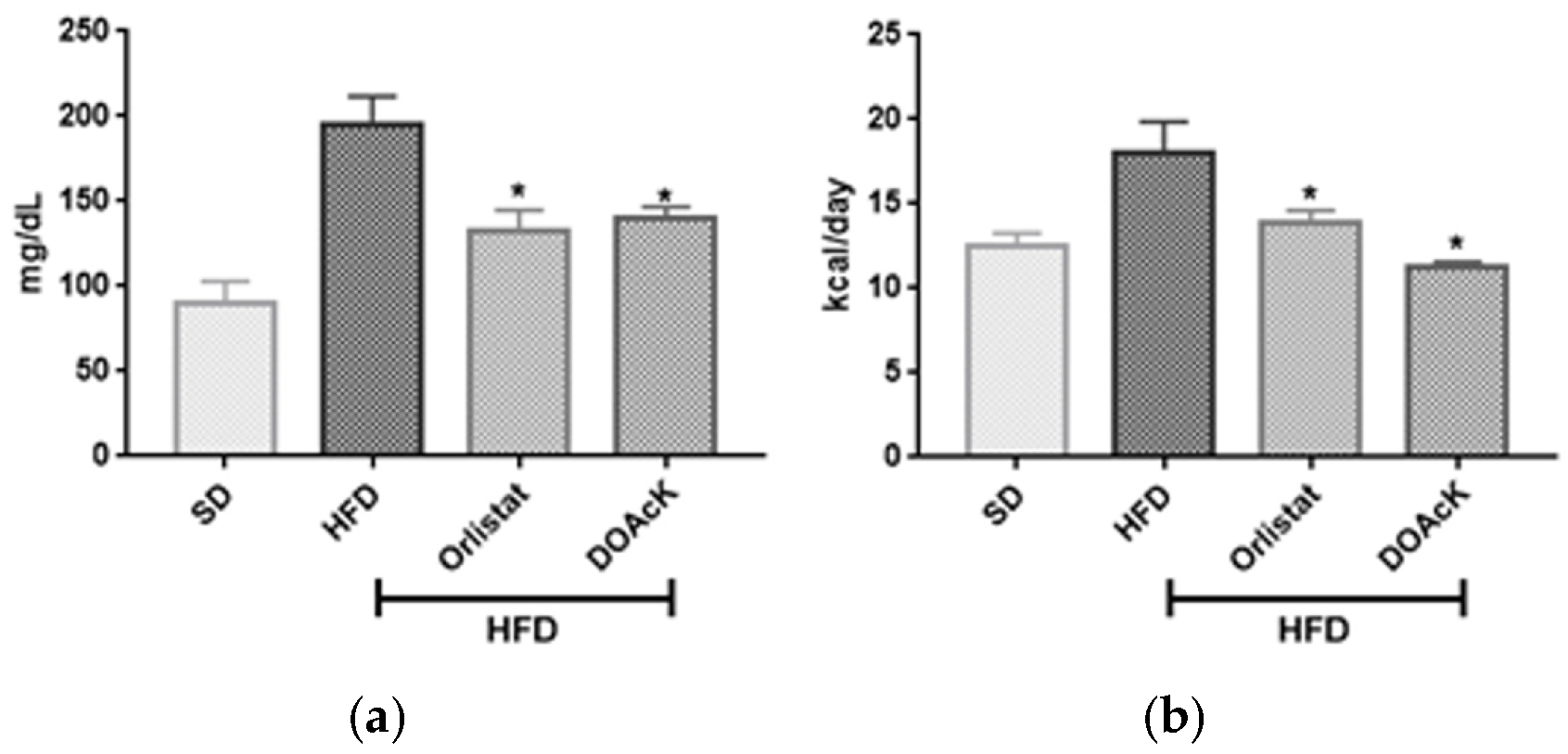



| Organ | SD | HFD | HFD + Orlistat | HFD + DOAcK |
|---|---|---|---|---|
| Liver (g) g/bw | 1.06 ± 0.0437 * 0.02 ± 0.0017 | 1.634 ± 0.1757 0.049 ± 0.0064 | 0.947 ± 0.0985 * 0.063 ± 0.0079 | 1.089 ± 0.0417 * 0.032 ± 0.0014 * |
| Kidney (g) g/bw | 0.329 ± 0.0100 * 0.013 ± 0.0004 * | 0.594 ± 0.0125 0.018 ± 0.0017 | 0.350 ± 0.0169 * 0.012 ± 0.0005 * | 0.441 ± 0.0097 * 0.013 ± 0.0002 * |
| Spleen (g) g/bw | 0.060 ± 0.0029 * 0.002 ± 0.0001 * | 0.123 ± 0.0153 0.004 ± 0.0003 | 0.074 ± 0.0083 * 0.003 ± 0.0002 * | 0.051 ± 0.0514 * 0.002 ± 0.0001 * |
| Fat pad (g) g/bw | 0.350 ± 0.0317 * 0.014 ± 0.0012 * | 1.983 ± 0.2204 0.057 ± 0.0059 | 1.745 ± 0.3453 0.054 ± 0.0089 | 1.407 ± 0.1322 0.042 ± 0.0039 |
| Pancreas (g) g/bw | 0.125 ± 0.0132 0.005 ± 0.0006 | 0.146 ± 0.0128 0.004 ± 0.0003 | 0.150 ± 0.0145 0.004 ± 0.0002 | 0.101 ± 0.0054 * 0.003 ± 0.0002 * |
Disclaimer/Publisher’s Note: The statements, opinions and data contained in all publications are solely those of the individual author(s) and contributor(s) and not of MDPI and/or the editor(s). MDPI and/or the editor(s) disclaim responsibility for any injury to people or property resulting from any ideas, methods, instructions or products referred to in the content. |
© 2026 by the authors. Licensee MDPI, Basel, Switzerland. This article is an open access article distributed under the terms and conditions of the Creative Commons Attribution (CC BY) license.
Share and Cite
Domínguez-Mendoza, E.A.; Prieto-Martínez, F.D.; Galván-Ciprés, Y.; Burgueño-Tapia, E.; Ordaz-Pichardo, C. Evaluation of 3′,4′-Di-O-acetyl-cis-khellactone as a Putative Antagonist of PPARγ Using Experimental and Computational Modeling. Biomolecules 2026, 16, 724. https://doi.org/10.3390/biom16050724
Domínguez-Mendoza EA, Prieto-Martínez FD, Galván-Ciprés Y, Burgueño-Tapia E, Ordaz-Pichardo C. Evaluation of 3′,4′-Di-O-acetyl-cis-khellactone as a Putative Antagonist of PPARγ Using Experimental and Computational Modeling. Biomolecules. 2026; 16(5):724. https://doi.org/10.3390/biom16050724
Chicago/Turabian StyleDomínguez-Mendoza, Elix Alberto, Fernando Daniel Prieto-Martínez, Yelzyn Galván-Ciprés, Eleuterio Burgueño-Tapia, and Cynthia Ordaz-Pichardo. 2026. "Evaluation of 3′,4′-Di-O-acetyl-cis-khellactone as a Putative Antagonist of PPARγ Using Experimental and Computational Modeling" Biomolecules 16, no. 5: 724. https://doi.org/10.3390/biom16050724
APA StyleDomínguez-Mendoza, E. A., Prieto-Martínez, F. D., Galván-Ciprés, Y., Burgueño-Tapia, E., & Ordaz-Pichardo, C. (2026). Evaluation of 3′,4′-Di-O-acetyl-cis-khellactone as a Putative Antagonist of PPARγ Using Experimental and Computational Modeling. Biomolecules, 16(5), 724. https://doi.org/10.3390/biom16050724