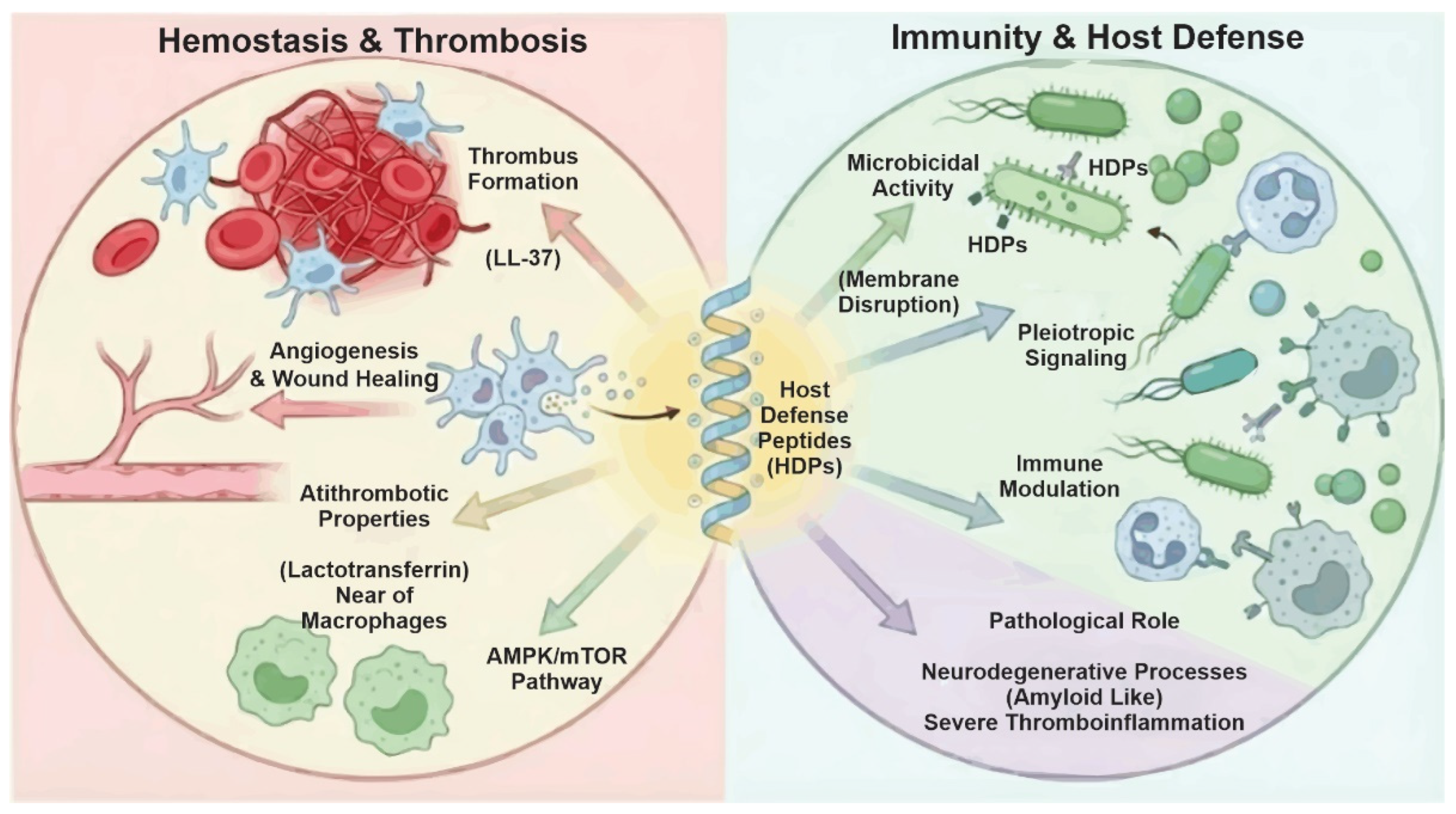
Host Defense Antimicrobial Peptides (HDPs) as Regulators of Hemostasis and Vascular Biology

 , and
, and
Abstract
1. Introduction
2. Modulation of Platelet Function by Antimicrobial Peptides and Associated Functional Consequences
3. Structure–Activity Relationship for Canonical and Non-Canonical Functions
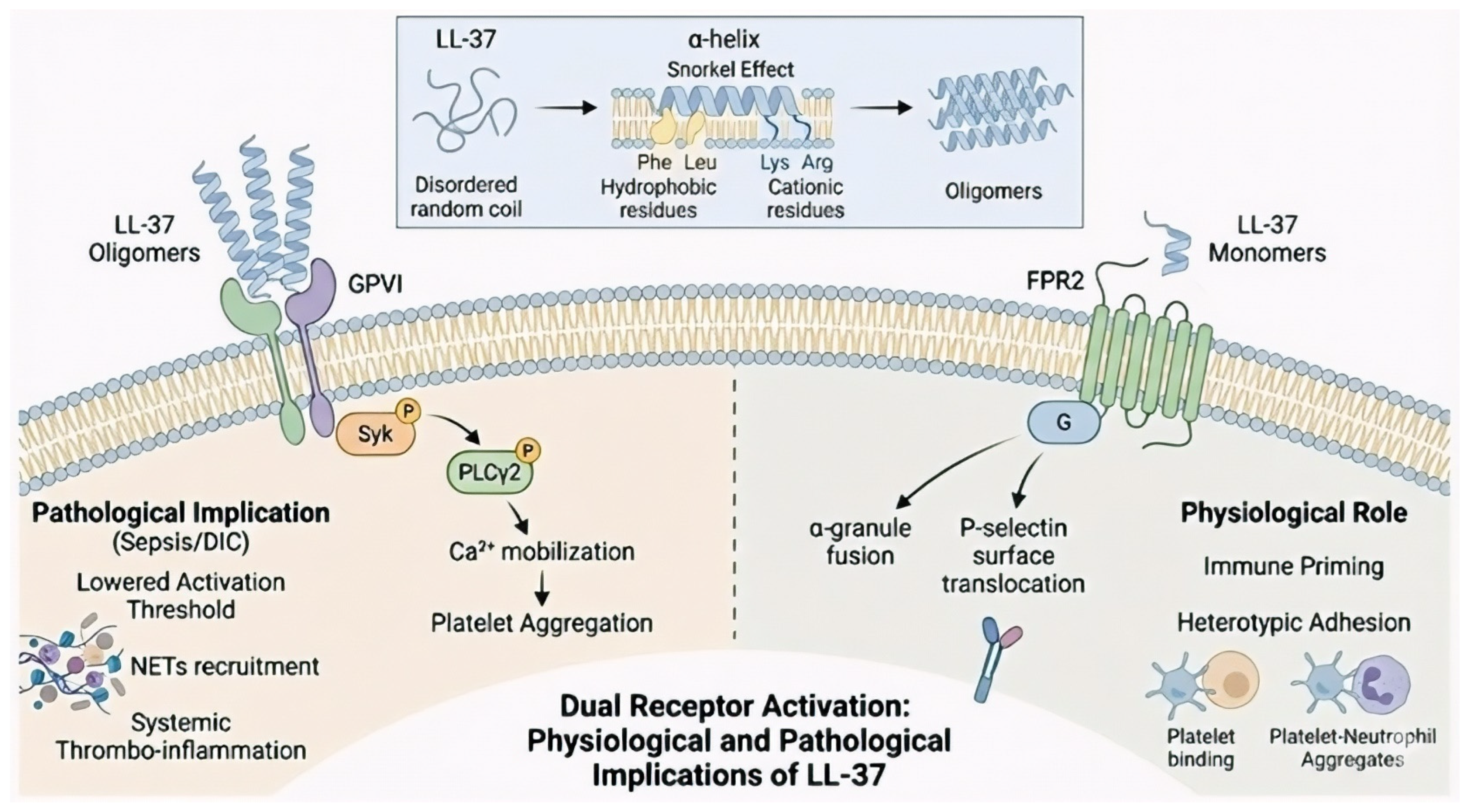
3.1. LL-37 Structural Plasticity and Its Functional Implications in Immune and Hemostatic Regulation
3.2. Structural Motifs Dictate the Hemostatic Activity of Host Defense Peptides
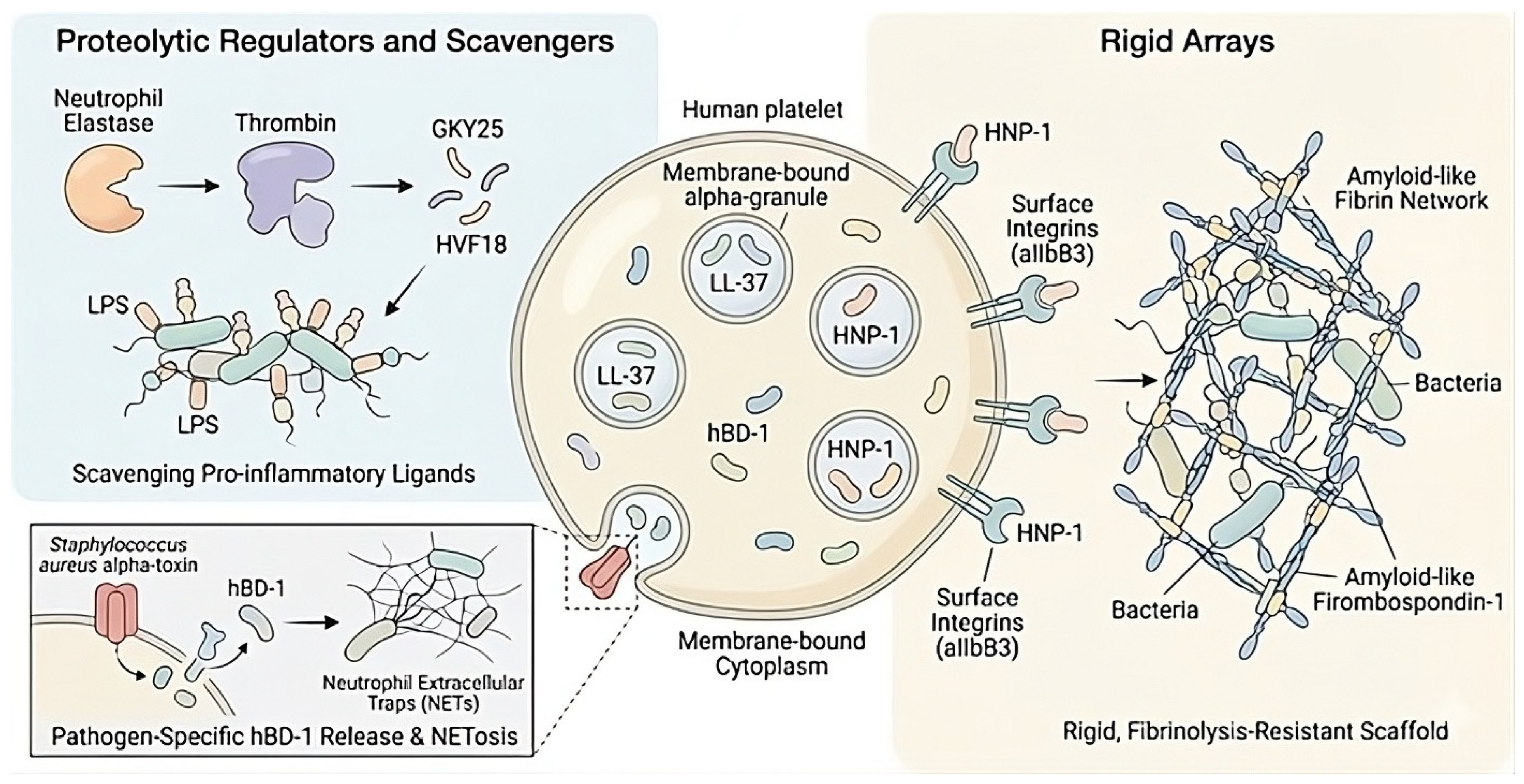
3.3. Conformational Control of Immunothrombosis: Rigid Arrays vs. Proteolytic Regulators
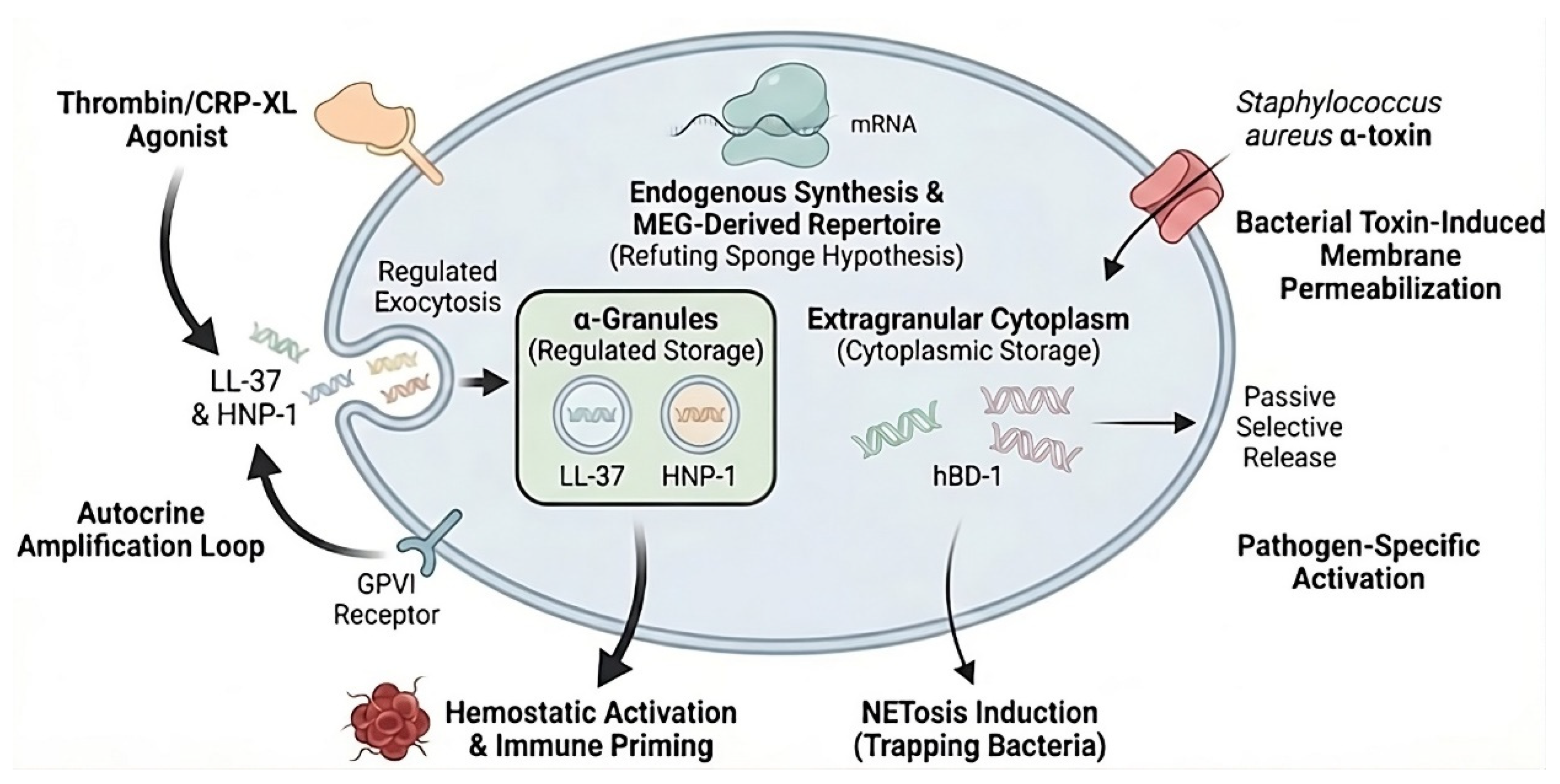
4. Platelets as Reservoirs and Responsive Effectors of Host Defense Peptides
5. Exogenous Modulation and Negative Regulation: Lessons from Leukocytes and Evolutionary Biology
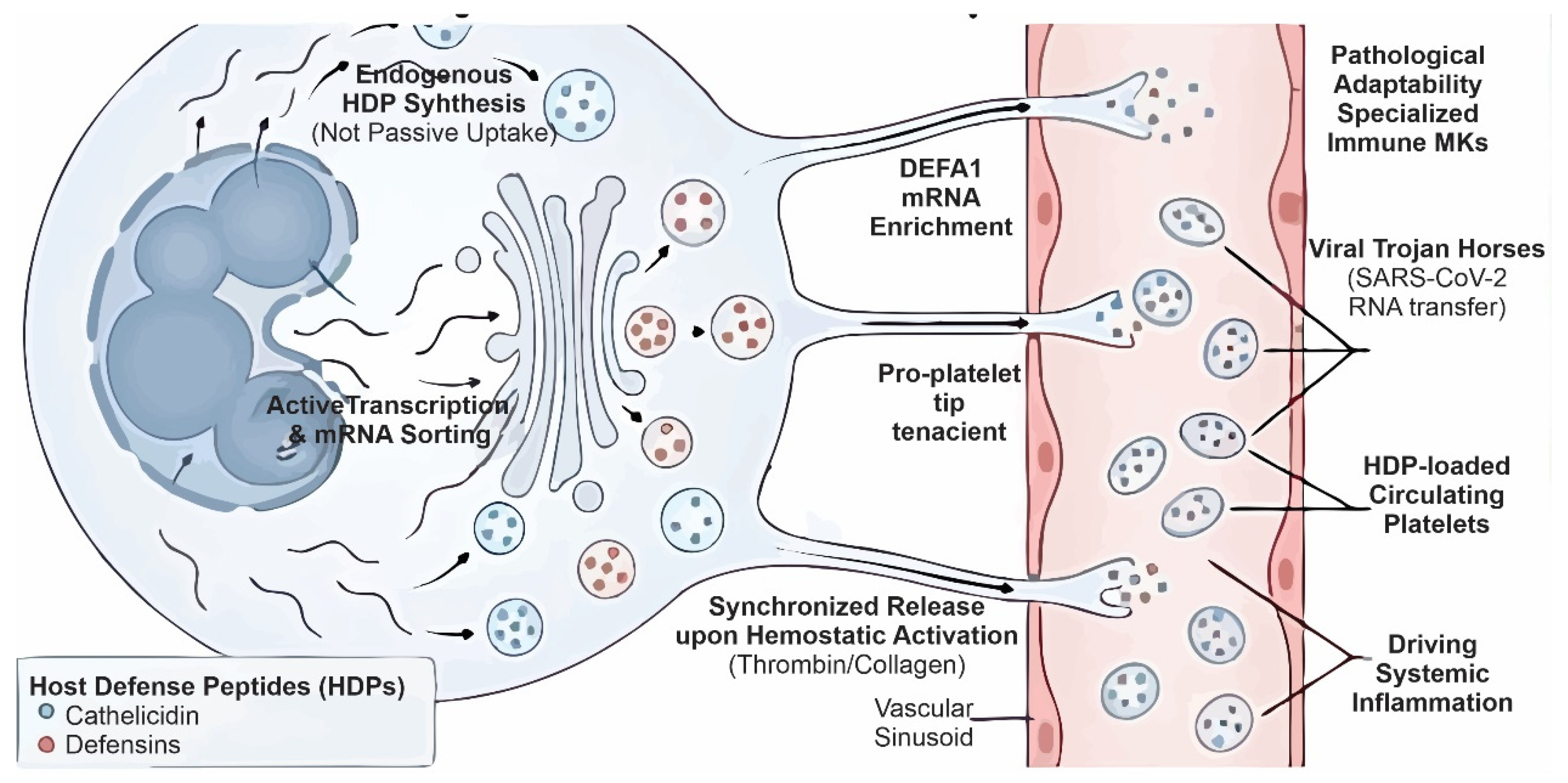
6. Megakaryocytes as Autonomous Immune Sentinels: Transcriptional Regulation and Pathological Adaptability
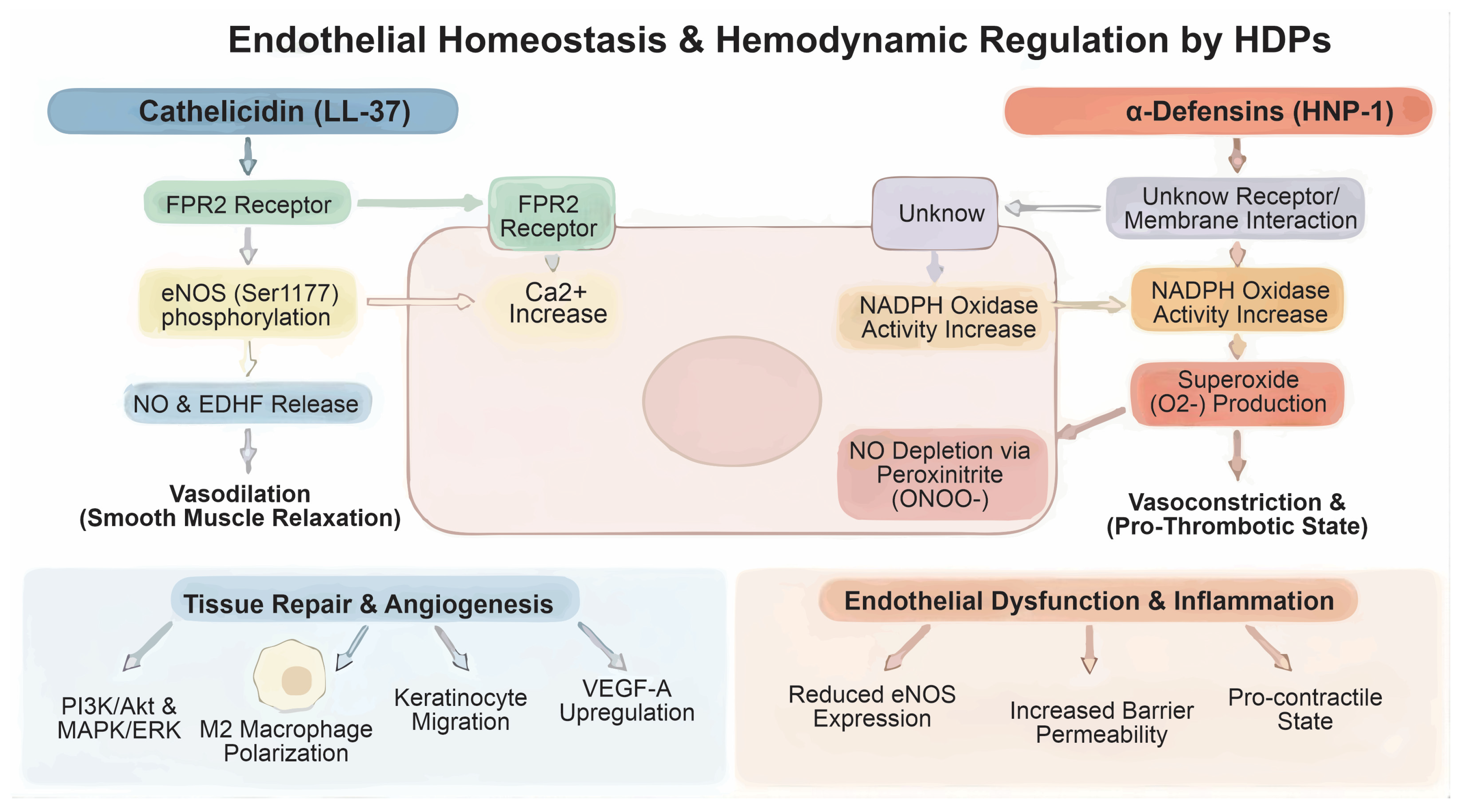
7. Modulation of Vascular Tone and Endothelial Function by Antimicrobial Peptides and Functional Consequences
8. Emerging Therapeutic Strategies and Prospective Research Directions

| HDP/Primary Source (Subcellular Localization) | Structure/Main Receptors/Targets | Hemostatic and Vascular Effects | Pathological/Therapeutic Implications |
|---|---|---|---|
| LL-37—neutrophils, epithelium; synthesized by megakaryocytes; platelet α-granules [11,63]. | α-helical, oligomerizes; FPR2/ALX, GPVI, Src/Akt, Syk → PLCγ2, EGFR [35,36,37,38,72,82]. | Platelet activation (sensitizes), Ca2+ mobilization; ↑ eNOS/EDHF; pro-angiogenic; NET stabilization [11,16,24,72]. | Drives immunothrombosis in sepsis; wound-healing candidates (ropocamptide/KR-12) with safety trade-offs [11,83]. |
| α-Defensins (HNP-1–3)—neutrophil azurophilic granules; platelet α-granules [63,84] | Cysteine-stabilized β-sheets; bind αIIbβ3, fibrinogen, thrombospondin [29,48]. | Forms rigid, amyloid-like fibrin networks; resistant to fibrinolysis; promotes endothelial oxidative stress (↓ NO) [48,71]. | Stabilize pathological thrombi; implicated in plaque instability; modulation reduces amyloid-clot effects [48,85]. |
| β-Defensin-1 (hBD-1)—epithelium; platelet extragranular cytoplasm (released by toxins) [54]. | Cationic, membrane-active [54]. | Triggered release → NETosis; local antimicrobial trap that scaffolds prothrombotic NETs [54]. | Rapid pathogen containment but potentially localized thrombo-inflammation [54]. |
| β-Defensin-3 (hBD-3)—epithelium; platelet extracellular vesicles (p-EVs) [55]. | Cationic; EV-packaging for distal delivery [55]. | EV-mediated ↓ eNOS and ↑ vWF in endothelium → distal pro-coagulant signaling [55]. | Propagates endothelial dysfunction at a distance; target to block EV effects [55]. |
| Lactoferrin/Lactoferricin—neutrophil secondary granules; secretions/plasma [12,58]. | Iron-binding glycoprotein; lactoferricin = cationic fragment; interacts with LRP1 and integrin pathways; affects AMPK/mTOR [12,13,58]. | Inhibits platelet aggregation (competitor); promotes macrophage autophagy; preserves endothelial integrity [12,13]. | Antithrombotic/vasoprotective; fragment templates for anticoagulant therapeutics [12,13]. |
| PF4 (platelet factor 4)—platelet α-granule release; thrombi/NETs enriched [49]. | Cationic chemokine that tetramerizes and binds polyanions (DNA/heparin) [49]. | Stabilizes NET/thrombus scaffold; protects from nuclease degradation [49,50,51]. | Central in HIT/VITT; immune-mediated thrombosis risk; clinically relevant target [49,50,51]. |
| Dermcidin (DCN-2)—sweat glands; systemic under stress [56]. | Secreted sweat peptide [56]. | Potent platelet aggregator; synergizes with ADP; inhibits endothelial NO → prothrombotic [56]. | Links stress to thrombosis (MI contexts) [56]. |
| Thrombin-C peptides (HVF18, GKY25)—thrombin proteolysis (neutrophil elastase) [19,57]. | Short cationic C-terminal fragments; high LPS affinity [57]. | Sequester LPS → dampen TLR4 signaling; LPS scavenging without procoagulant activity [19,57]. | Endogenous brakes in sepsis; templates for LPS-scavenging therapeutics [19,57]. |
| Histatin-1—saliva (salivary glands) [61]. | Histidine-rich, adhesive [61]. | Promotes endothelial adhesion, migration, and angiogenesis → repair phase [61]. | Candidate for biomaterials to assist vascular repair [61]. |
| KR-12/engineered HDP analogs (ropocamptide, Brilacidin, SAAP-148)—LL-37 fragments/mimetics in devices and trials [86,87,88,89,90]. | Short amphipathic fragments or stabilized mimetics (protease-resistant) [86,87,88,89,90]. | Local hemostasis + antimicrobial action; promote re-epithelialization; aim to reduce systemic toxicity [86,87,88,89,90]. | Promising for wounds and local hemostasis; systemic stability/toxicity remain barriers [86,87,88,89,90]. |
8.1. Clinical Translation and Therapeutic Potential of HDPs and Engineered Mimetics
8.2. Bioactive Interfaces
8.3. Diagnostic and Prognostic Utility
8.4. Pharmacological Modulation: Repurposing Established Drugs
9. Conclusions
Author Contributions
Funding
Institutional Review Board Statement
Informed Consent Statement
Data Availability Statement
Conflicts of Interest
References
- Mookherjee, N.; Anderson, M.A.; Haagsman, H.P.; Davidson, D.J. Antimicrobial host defence peptides: Functions and clinical potential. Nat. Rev. Drug Discov. 2020, 19, 311–332. [Google Scholar] [CrossRef]
- Gani, Z.; Kumar, A.; Raje, M.; Raje, C.I. Antimicrobial peptides: An alternative strategy to combat antimicrobial resistance. Drug Discov. Today 2025, 30, 104305. [Google Scholar] [CrossRef]
- Rodríguez-Rojas, A.; Rolff, J. Antimicrobial activity of cationic antimicrobial peptides against stationary phase bacteria. Front. Microbiol. 2022, 13, 1029084. [Google Scholar] [CrossRef]
- Amorim-Carmo, B.; Parente, A.M.S.; Souza, E.S.; Silva-Junior, A.A.; Araújo, R.M.; Fernandes-Pedrosa, M.F. Antimicrobial Peptide Analogs From Scorpions: Modifications and Structure-Activity. Front. Mol. Biosci. 2022, 9, 887763. [Google Scholar] [CrossRef]
- Chen, E.H.L.; Wang, C.H.; Liao, Y.T.; Chan, F.Y.; Kanaoka, Y.; Uchihashi, T.; Kato, K.; Lai, L.; Chang, Y.W.; Ho, M.C.; et al. Visualizing the membrane disruption action of antimicrobial peptides by cryo-electron tomography. Nat. Commun. 2023, 14, 5464. [Google Scholar] [CrossRef] [PubMed]
- Luong, H.X.; Thanh, T.T.; Tran, T.H. Antimicrobial peptides—Advances in development of therapeutic applications. Life Sci. 2020, 260, 118407. [Google Scholar] [CrossRef] [PubMed]
- Zhang, Q. Antimicrobial peptides: From discovery to developmental applications. Appl. Environ. Microbiol. 2025, 91, e02115-24. [Google Scholar] [CrossRef]
- Sánchez-Peña, F.J.; Romero-Tlalolini, M.L.Á.; Torres-Aguilar, H.; Cruz-Hernández, D.S.; Baltiérrez-Hoyos, R.; Sánchez-Aparicio, S.R.; Aquino-Domínguez, A.S.; Aguilar-Ruiz, S.R. LL-37 Triggers Antimicrobial Activity in Human Platelets. Int. J. Mol. Sci. 2023, 24, 2816. [Google Scholar] [CrossRef] [PubMed]
- Aquino-Domínguez, A.S.; Acevedo-Sánchez, V.; Cruz-Hernández, D.S.; Sánchez-Aparicio, S.R.; Romero-Tlalolini, M.L.Á.; Baltiérrez-Hoyos, R.; Sánchez-Navarro, L.M.; Torres-Aguilar, H.; Bustos-Arriaga, J.; Aguilar-Ruiz, S.R. Human Platelets Contain, Translate, and Secrete Azurocidin; A Novel Effect on Hemostasis. Int. J. Mol. Sci. 2022, 23, 5667. [Google Scholar] [CrossRef]
- Tang, Y.; Zhang, Y.; Zhang, D.; Liu, Y.; Nussinov, R.; Zheng, J. Exploring pathological link between antimicrobial and amyloid peptides. Chem. Soc. Rev. 2024, 53, 8713–8763. [Google Scholar] [CrossRef]
- Salamah, M.F.; Ravishankar, D.; Kodji, X.; Moraes, L.A.; Williams, H.F.; Vallance, T.M.; Albadawi, D.A.; Vaiyapuri, R.; Watson, K.; Gibbins, J.M.; et al. The endogenous antimicrobial cathelicidin LL37 induces platelet activation and augments thrombus formation. Blood Adv. 2018, 2, 2973–2985. [Google Scholar] [CrossRef]
- Xu, S.; Fan, F.; Liu, H.; Cheng, S.; Tu, M.; Du, M. Novel Anticoagulant Peptide from Lactoferrin Binding Thrombin at the Active Site and Exosite-I. J. Agric. Food Chem. 2020, 68, 3132–3139. [Google Scholar] [CrossRef]
- Xia, B.; Liang, J.; Lu, Y.; Ding, J.; Peng, J.; Li, F.; Dai, J.; Liu, Y.; Wang, J.; Wan, C.; et al. Lactoferrin influences atherosclerotic progression by modulating macrophagic AMPK/mTOR signaling-dependent autophagy. Sci. Rep. 2025, 15, 10585. [Google Scholar] [CrossRef]
- Lai, Y.; Gallo, R.L. AMPed up immunity: How antimicrobial peptides have multiple roles in immune defense. Trends Immunol. 2009, 30, 131–141. [Google Scholar] [CrossRef] [PubMed]
- Mahlapuu, M.; Håkansson, J.; Ringstad, L.; Björn, C. Antimicrobial Peptides: An Emerging Category of Therapeutic Agents. Front. Cell Infect. Microbiol. 2016, 6, 194. [Google Scholar] [CrossRef]
- Zhang, Q.; Ul Ain, Q.; Schulz, C.; Pircher, J. Role of antimicrobial peptide cathelicidin in thrombosis and thromboinflammation. Front. Immunol. 2023, 14, 1151926. [Google Scholar] [CrossRef] [PubMed]
- Engelmann, B.; Massberg, S. Thrombosis as an intravascular effector of innate immunity. Nat. Rev. Immunol. 2013, 13, 34–45. [Google Scholar] [CrossRef]
- Yeaman, M.R. Platelets: At the nexus of antimicrobial defence. Nat. Rev. Microbiol. 2014, 12, 426–437. [Google Scholar] [CrossRef]
- Papareddy, P.; Rydengård, V.; Pasupuleti, M.; Walse, B.; Mörgelin, M.; Chalupka, A.; Malmsten, M.; Schmidtchen, A. Proteolysis of Human Thrombin Generates Novel Host Defense Peptides. PLoS Pathog. 2010, 6, e1000857. [Google Scholar] [CrossRef]
- Ajanel, A.; Middleton, E.A. Alterations in the megakaryocyte transcriptome impacts platelet function in sepsis and COVID-19 infection. Thromb. Res. 2023, 231, 247–254. [Google Scholar] [CrossRef] [PubMed]
- Hemshekhar, M.; Anaparti, V.; Mookherjee, N. Functions of Cationic Host Defense Peptides in Immunity. Pharmaceuticals 2016, 9, 40. [Google Scholar] [CrossRef] [PubMed]
- Aquino-Domínguez, A.S.; Romero-Tlalolini, M.A.; Torres-Aguilar, H.; Aguilar-Ruiz, S.R. Recent Advances in the Discovery and Function of Antimicrobial Molecules in Platelets. Int. J. Mol. Sci. 2021, 22, 10230. [Google Scholar] [CrossRef]
- Czapiga, M.; Gao, J.-L.; Kirk, A.; Lekstrom-Himes, J. Human platelets exhibit chemotaxis using functional N-formyl peptide receptors. Exp. Hematol. 2005, 33, 73–84. [Google Scholar] [CrossRef] [PubMed]
- Iba, T.; Levy, J.H. Sepsis-induced Coagulopathy and Disseminated Intravascular Coagulation. Anesthesiology 2020, 132, 1238–1245. [Google Scholar] [CrossRef]
- Gagat, P.; Ostrówka, M.; Duda-Madej, A.; Mackiewicz, P. Enhancing Antimicrobial Peptide Activity through Modifications of Charge, Hydrophobicity, and Structure. Int. J. Mol. Sci. 2024, 25, 10821. [Google Scholar] [CrossRef]
- Yang, R.; Ma, X.; Peng, F.; Wen, J.; Allahou, L.W.; Williams, G.R.; Knowles, J.C.; Poma, A. Advances in antimicrobial peptides: From mechanistic insights to chemical modifications. Biotechnol. Adv. 2025, 81, 108570. [Google Scholar] [CrossRef]
- Koziel, J.; Bryzek, D.; Sroka, A.; Maresz, K.; Glowczyk, I.; Bielecka, E.; Kantyka, T.; Pyrć, K.; Svoboda, P.; Pohl, J.; et al. Citrullination Alters Immunomodulatory Function of LL-37 Essential for Prevention of Endotoxin-Induced Sepsis. J. Immunol. 2014, 192, 5363–5372. [Google Scholar] [CrossRef]
- Zielke, C.; Nielsen, J.E.; Lin, J.S.; Barron, A.E. Between good and evil: Complexation of the human cathelicidin LL-37 with nucleic acids. Biophys. J. 2024, 123, 1316–1328. [Google Scholar] [CrossRef]
- Abu-Fanne, R.; Stepanova, V.; Litvinov, R.I.; Abdeen, S.; Bdeir, K.; Higazi, M.; Maraga, E.; Nagaswami, C.; Mukhitov, A.R.; Weisel, J.W.; et al. Neutrophil α-defensins promote thrombosis in vivo by altering fibrin formation, structure, and stability. Blood 2019, 133, 481–493. [Google Scholar] [CrossRef]
- Pircher, J.; Czermak, T.; Ehrlich, A.; Eberle, C.; Gaitzsch, E.; Margraf, A.; Grommes, J.; Saha, P.; Titova, A.; Ishikawa-Ankerhold, H.; et al. Cathelicidins prime platelets to mediate arterial thrombosis and tissue inflammation. Nat. Commun. 2018, 9, 1523. [Google Scholar] [CrossRef]
- Zeth, K.; Sancho-Vaello, E. Structural Plasticity of LL-37 Indicates Elaborate Functional Adaptation Mechanisms to Bacterial Target Structures. Int. J. Mol. Sci. 2021, 22, 5200. [Google Scholar] [CrossRef]
- Xhindoli, D.; Pacor, S.; Benincasa, M.; Scocchi, M.; Gennaro, R.; Tossi, A. The human cathelicidin LL-37—A pore-forming antibacterial peptide and host-cell modulator. Biochim. Biophys. Acta Biomembr. 2016, 1858, 546–566. [Google Scholar] [CrossRef]
- Sørensen, O.E.; Follin, P.; Johnsen, A.H.; Calafat, J.; Tjabringa, G.S.; Hiemstra, P.S.; Borregaard, N. Human cathelicidin, hCAP-18, is processed to the antimicrobial peptide LL-37 by extracellular cleavage with proteinase 3. Blood 2001, 97, 3951–3959. [Google Scholar] [CrossRef] [PubMed]
- Nauroy, P.; Nyström, A. Kallikreins: Essential epidermal messengers for regulation of the skin microenvironment during homeostasis, repair and disease. Matrix Biol. Plus 2020, 6, 100019. [Google Scholar] [CrossRef] [PubMed]
- Radic, M.; Muller, S. LL-37, a Multi-Faceted Amphipathic Peptide Involved in NETosis. Cells 2022, 11, 2463. [Google Scholar] [CrossRef] [PubMed]
- Porcelli, F.; Verardi, R.; Shi, L.; Henzler-Wildman, K.A.; Ramamoorthy, A.; Veglia, G. NMR Structure of the Cathelicidin-Derived Human Antimicrobial Peptide LL-37 in Dodecylphosphocholine Micelles. Biochemistry 2008, 47, 5565–5572. [Google Scholar] [CrossRef]
- Johansson, J.; Gudmundsson, G.H.; Rottenberg, M.E.; Berndt, K.D.; Agerberth, B. Conformation-dependent Antibacterial Activity of the Naturally Occurring Human Peptide LL-37. J. Biol. Chem. 1998, 273, 3718–3724. [Google Scholar] [CrossRef]
- Oren, Z.; Lerman, J.C.; Gudmundsson, G.H.; Agerberth, B.; Shai, Y. Structure and organization of the human antimicrobial peptide LL-37 in phospholipid membranes: Relevance to the molecular basis for its non-cell-selective activity. Biochem. J. 1999, 341, 501–513. [Google Scholar] [CrossRef]
- Wang, G. Structures of Human Host Defense Cathelicidin LL-37 and Its Smallest Antimicrobial Peptide KR-12 in Lipid Micelles. J. Biol. Chem. 2008, 283, 32637–32643. [Google Scholar] [CrossRef]
- Pasupuleti, M.; Schmidtchen, A.; Malmsten, M. Antimicrobial peptides: Key components of the innate immune system. Crit. Rev. Biotechnol. 2012, 32, 143–171. [Google Scholar] [CrossRef]
- Zelezetsky, I.; Pacor, S.; Pag, U.; Papo, N.; Shai, Y.; Sahl, H.G.; Tossi, A. Controlled alteration of the shape and conformational stability of α-helical cell-lytic peptides: Effect on mode of action and cell specificity. Biochem. J. 2005, 390, 177–188. [Google Scholar] [CrossRef] [PubMed]
- Wang, X.; Junior, J.C.B.; Mishra, B.; Lushnikova, T.; Epand, R.M.; Wang, G. Arginine-lysine positional swap of the LL-37 peptides reveals evolutional advantages of the native sequence and leads to bacterial probes. Biochim. Biophys. Acta Biomembr. 2017, 1859, 1350–1361. [Google Scholar] [CrossRef]
- Sancho-Vaello, E.; Gil-Carton, D.; François, P.; Bonetti, E.J.; Kreir, M.; Pothula, K.R.; Kleinekathöfer, U.; Zeth, K. The structure of the antimicrobial human cathelicidin LL-37 shows oligomerization and channel formation in the presence of membrane mimics. Sci. Rep. 2020, 10, 17356. [Google Scholar] [CrossRef]
- Engelberg, Y.; Landau, M. The Human LL-37(17-29) antimicrobial peptide reveals a functional supramolecular structure. Nat. Commun. 2020, 11, 3894. [Google Scholar] [CrossRef]
- Assumpcao, T.C.F.; Ribeiro, J.M.C.; Francischetti, I.M.B. Disintegrins from Hematophagous Sources. Toxins 2012, 4, 296–322. [Google Scholar] [CrossRef]
- Kuo, Y.-J.; Chung, C.-H.; Huang, T.-F. From Discovery of Snake Venom Disintegrins to A Safer Therapeutic Antithrombotic Agent. Toxins 2019, 11, 372. [Google Scholar] [CrossRef]
- Healy, L.D.; McCarty, O.J.T. Contact system sends defensins to the rescue. Blood 2019, 133, 385–386. [Google Scholar] [CrossRef] [PubMed]
- Horn, M.; Bertling, A.; Brodde, M.F.; Müller, A.; Roth, J.; Van Aken, H.; Jurk, K.; Heilmann, C.; Peters, G.; Kehrel, B.E. Human neutrophil alpha-defensins induce formation of fibrinogen and thrombospondin-1 amyloid-like structures and activate platelets via glycoprotein IIb/IIIa. J. Thromb. Haemost. 2012, 10, 647–661. [Google Scholar] [CrossRef]
- Ngo, A.T.P.; Bochenek, V.; Gollomp, K. The immunology of PF4 polyanion interactions. Curr. Opin. Hematol. 2023, 30, 219–229. [Google Scholar] [CrossRef]
- Greinacher, A.; Warkentin, T.E. Thrombotic anti-PF4 immune disorders: HIT, VITT, and beyond. Hematology 2023, 2023, 1–10. [Google Scholar] [CrossRef] [PubMed]
- Gollomp, K.; Kim, M.; Johnston, I.; Hayes, V.; Welsh, J.; Arepally, G.M.; Kahn, M.; Lambert, M.P.; Cuker, A.; Cines, D.B.; et al. Neutrophil accumulation and NET release contribute to thrombosis in HIT. JCI Insight 2018, 3, e99445. [Google Scholar] [CrossRef]
- Massberg, S.; Grahl, L.; von Bruehl, M.L.; Manukyan, D.; Pfeiler, S.; Goosmann, C.; Brinkmann, V.; Lorenz, M.; Bidzhekov, K.; Khandagale, A.B.; et al. Reciprocal coupling of coagulation and innate immunity via neutrophil serine proteases. Nat. Med. 2010, 16, 887–896. [Google Scholar] [CrossRef]
- Martinod, K.; Wagner, D.D. Thrombosis: Tangled up in NETs. Blood 2014, 123, 2768–2776. [Google Scholar] [CrossRef]
- Kraemer, B.F.; Campbell, R.A.; Schwertz, H.; Cody, M.J.; Franks, Z.; Tolley, N.D.; Kahr, W.H.; Lindemann, S.; Seizer, P.; Yost, C.C.; et al. Novel Anti-bacterial Activities of β-defensin 1 in Human Platelets: Suppression of Pathogen Growth and Signaling of Neutrophil Extracellular Trap Formation. PLoS Pathog. 2011, 7, e1002355. [Google Scholar] [CrossRef]
- Panigrahi, S.; Ghosh, S.K.; Ferrari, B.; Wyrick, J.M.; Podrez, E.A.; Weinberg, A.; Sieg, S.F. Human β-Defensin-3 is Associated with Platelet-Derived Extracellular Vesicles and is a Potential Contributor to Endothelial Dysfunction. Front. Mol. Biosci. 2022, 9, 824954. [Google Scholar] [CrossRef] [PubMed]
- Bank, S.; Jana, P.; Maiti, S.; Guha, S.; Sinha, A.K. Dermcidin isoform-2 induced nullification of the effect of acetyl salicylic acid in platelet aggregation in acute myocardial infarction. Sci. Rep. 2014, 4, 5804. [Google Scholar] [CrossRef]
- Petrlova, J.; Petruk, G.; Huber, R.G.; McBurnie, E.W.; van der Plas, M.J.; Bond, P.J.; Puthia, M.; Schmidtchen, A. Thrombin-derived C-terminal fragments aggregate scavenge bacteria their proinflammatory products. J. Biol. Chem. 2020, 295, 3417–3430. [Google Scholar] [CrossRef]
- Leveugle, B.; Mazurier, J.; Legrand, D.; Mazurier, C.; Montreuil, J.; Spik, G. Lactotransferrin binding to its platelet receptor inhibits platelet aggregation. Eur. J. Biochem. 1993, 213, 1205–1211. [Google Scholar] [CrossRef]
- Kell, D.B.; Heyden, E.L.; Pretorius, E. The Biology of Lactoferrin, an Iron-Binding Protein That Can Help Defend Against Viruses and Bacteria. Front. Immunol. 2020, 11, 1221. [Google Scholar] [CrossRef] [PubMed]
- Li, H.; Liu, B.; Wu, J.; Yu, H.; Huang, H.; Chen, X.; Chen, B.; Wu, S.; Ma, J.; Liu, W.; et al. The inhibitory effect of tachyplesin I on thrombosis and its mechanisms. Chem. Biol. Drug Des. 2019, 94, 1672–1679. [Google Scholar] [CrossRef]
- Torres, P.; Díaz, J.; Arce, M.; Silva, P.; Mendoza, P.; Lois, P.; Molina-Berríos, A.; Owen, G.I.; Palma, V.; Torres, V.A. The salivary peptide histatin-1 promotes endothelial cell adhesion, migration, and angiogenesis. FASEB J. 2017, 31, 4946–4958. [Google Scholar] [CrossRef]
- Ali, R.A.; Wuescher, L.M.; Worth, R.G. Platelets: Essential components of the immune system. Curr. Trends Immunol. 2015, 16, 65–78. [Google Scholar]
- Human platelets and megakaryocytes express defensin alpha 1. Platelets 2020, 31, 344–354. [CrossRef]
- Hamzeh-Cognasse, H.; Damien, P.; Chabert, A.; Pozzetto, B.; Cognasse, F.; Garraud, O. Platelets and Infections—Complex Interactions with Bacteria. Front. Immunol. 2015, 6, 82. [Google Scholar] [CrossRef]
- Herster, F.; Bittner, Z.; Archer, N.K.; Dickhöfer, S.; Eisel, D.; Eigenbrod, T.; Knorpp, T.; Schneiderhan-Marra, N.; Löffler, M.W.; Kalbacher, H.; et al. Neutrophil extracellular trap-associated RNA and LL37 enable self-amplifying inflammation in psoriasis. Nat. Commun. 2020, 11, 105. [Google Scholar] [CrossRef]
- Drouet, L.; Bal dit Sollier, C.; Cisse, M.; Pignaud, G.; Mazoyer, E.; Fiat, A.M.; Jolles, P.; Caen, J.P. The antithrombotic effect of KRDS, a lactotransferrin peptide, compared with RGDS. Nouv. Rev. Fr. Hematol. 1990, 32, 59–62. [Google Scholar] [PubMed]
- Vanhoutte, P.M.; Shimokawa, H.; Feletou, M.; Tang, E.H.C. Endothelial dysfunction and vascular disease—A 30th anniversary update. Acta Physiol. 2017, 219, 22–96. [Google Scholar] [CrossRef] [PubMed]
- Yang, J.; Zhang, J.; Feng, Z.; Ma, Y. The Role and Mechanisms of Antimicrobial Peptides in Overcoming Multidrug-Resistant Bacteria. Molecules 2024, 30, 128. [Google Scholar] [CrossRef] [PubMed]
- Berkestedt, I.; Nelson, A.; Bodelsson, M. Endogenous antimicrobial peptide LL-37 induces human vasodilatation. Br. J. Anaesth. 2008, 100, 803–809. [Google Scholar] [CrossRef]
- Byfield, F.J.; Wen, Q.; Leszczynska, K.; Kulakowska, A.; Namiot, Z.; Janmey, P.A.; Bucki, R. Cathelicidin LL-37 peptide regulates endothelial cell stiffness and endothelial barrier permeability. Am. J. Physiol. Cell Physiol. 2011, 300, C105–C112. [Google Scholar] [CrossRef]
- Kougias, P.; Chai, H.; Lin, P.H.; Yao, Q.; Lumsden, A.B.; Chen, C. Neutrophil antimicrobial peptide α-defensin causes endothelial dysfunction in porcine coronary arteries. J. Vasc. Surg. 2006, 43, 357–363. [Google Scholar] [CrossRef]
- Koczulla, R.; von Degenfeld, G.; Kupatt, C.; Krötz, F.; Zahler, S.; Gloe, T.; Issbrücker, K.; Unterberger, P.; Zaiou, M.; Lebherz, C.; et al. An angiogenic role for the human peptide antibiotic LL-37/hCAP-18. J. Clin. Investig. 2003, 111, 1665–1672. [Google Scholar] [CrossRef]
- De Yang Chen, Q.; Schmidt, A.P.; Anderson, G.M.; Wang, J.M.; Wooters, J.; Oppenheim, J.J.; Chertov, O. Ll-37, the Neutrophil Granule–And Epithelial Cell–Derived Cathelicidin, Utilizes Formyl Peptide Receptor–Like 1 (Fprl1) as a Receptor to Chemoattract Human Peripheral Blood Neutrophils, Monocytes, and T Cells. J. Exp. Med. 2000, 192, 1069–1074. [Google Scholar] [CrossRef]
- Tokumaru, S.; Sayama, K.; Shirakata, Y.; Komatsuzawa, H.; Ouhara, K.; Hanakawa, Y.; Yahata, Y.; Dai, X.; Tohyama, M.; Nagai, H.; et al. Induction of Keratinocyte Migration via Transactivation of the Epidermal Growth Factor Receptor by the Antimicrobial Peptide LL-37. J. Immunol. 2005, 175, 4662–4668. [Google Scholar] [CrossRef] [PubMed]
- van Zoggel, H.; Carpentier, G.; Dos Santos, C.; Hamma-Kourbali, Y.; Courty, J.; Amiche, M.; Delbé, J. Antitumor and Angiostatic Activities of the Antimicrobial Peptide Dermaseptin B2. PLoS ONE 2012, 7, e44351. [Google Scholar] [CrossRef] [PubMed]
- Carretero, M.; Escámez, M.J.; García, M.; Duarte, B.; Holguín, A.; Retamosa, L.; Jorcano, J.L.; Río, M.D.; Larcher, F. In vitro and In vivo Wound Healing-Promoting Activities of Human Cathelicidin LL-37. J. Investig. Dermatol. 2008, 128, 223–236. [Google Scholar] [CrossRef]
- Hancock, R.E.W.; Haney, E.F.; Gill, E.E. The immunology of host defence peptides: Beyond antimicrobial activity. Nat. Rev. Immunol. 2016, 16, 321–334. [Google Scholar] [CrossRef] [PubMed]
- Lazzaro, B.P.; Zasloff, M.; Rolff, J. Antimicrobial peptides: Application informed by evolution. Science 2020, 368, eaau5480. [Google Scholar] [CrossRef]
- Drayton, M.; Deisinger, J.P.; Ludwig, K.C.; Raheem, N.; Müller, A.; Schneider, T.; Straus, S.K. Host Defense Peptides: Dual Antimicrobial and Immunomodulatory Action. Int. J. Mol. Sci. 2021, 22, 11172. [Google Scholar] [CrossRef]
- Keshri, A.K.; Rawat, S.S.; Chaudhary, A.; Sharma, S.; Kapoor, A.; Mehra, P.; Kaur, R.; Mishra, A.; Prasad, A. LL-37, the master antimicrobial peptide, its multifaceted role from combating infections to cancer immunity. Int. J. Antimicrob. Agents 2025, 65, 107398. [Google Scholar] [CrossRef]
- Schwitter, A.M.; Sugihara, K. The synergy of LL-37 with human defensins protects POPC bilayers from lysis. Biophys. J. 2024, 123, 511a. [Google Scholar] [CrossRef]
- Lüthje, P.; Walker, S.; Kamolvit, W.; Mohanty, S.; Pütsep, K.; Brauner, A. Statins influence epithelial expression of the anti-microbial peptide LL-37/hCAP-18 independently of the mevalonate pathway. Clin. Exp. Immunol. 2019, 195, 265–276. [Google Scholar] [CrossRef]
- Tiseo, G.; Falcone, M. The future approach for the management of acute bacterial skin and skin structure infections. Curr. Opin. Infect. Dis. 2025, 38, 128–135. [Google Scholar] [CrossRef]
- Barnathan, E.S.; Raghunath, P.N.; Tomaszewski, J.E.; Ganz, T.; Cines, D.B.; Higazi, A.A.-R. Immunohistochemical localization of defensin in human coronary vessels. Am. J. Pathol. 1997, 150, 1009–1020. [Google Scholar] [PubMed]
- Park, H.J. Anti-inflammatory effects of colchicine on coronary artery disease. Cardiovasc. Prev. Pharmacother. 2022, 4, 7–12. [Google Scholar] [CrossRef]
- Piller, P.; Wolinski, H.; Cordfunke, R.A.; Drijfhout, J.W.; Keller, S.; Lohner, K.; Malanovic, N. Membrane Activity of LL-37 Derived Antimicrobial Peptides against Enterococcus hirae: Superiority of SAAP-148 over OP-145. Biomolecules 2022, 12, 523. [Google Scholar] [CrossRef]
- Lakshmaiah Narayana, J.; Mechesso, A.F.; Rather, I.I.G.; Zarena, D.; Luo, J.; Xie, J.; Wang, G. Origami of KR-12 Designed Antimicrobial Peptides and Their Potential Applications. Antibiotics 2024, 13, 816. [Google Scholar] [CrossRef] [PubMed]
- Yang, X.; Liu, W.; Xi, G.; Wang, M.; Liang, B.; Shi, Y.; Feng, Y.; Ren, X.; Shi, C. Fabricating antimicrobial peptide-immobilized starch sponges for hemorrhage control and antibacterial treatment. Carbohydr. Polym. 2019, 222, 115012. [Google Scholar] [CrossRef]
- Blasi-Romero, A.; Ångström, M.; Franconetti, A.; Muhammad, T.; Jiménez-Barbero, J.; Göransson, U.; Palo-Nieto, C.; Ferraz, N. KR-12 Derivatives Endow Nanocellulose with Antibacterial and Anti-Inflammatory Properties: Role of Conjugation Chemistry. ACS Appl. Mater. Interfaces 2023, 15, 24186–24196. [Google Scholar] [CrossRef]
- Liu, M.; Liu, T.; Zhang, X.; Jian, Z.; Xia, H.; Yang, J.; Hu, X.; Xing, M.; Luo, G.; Wu, J. Fabrication of KR-12 peptide-containing hyaluronic acid immobilized fibrous eggshell membrane effectively kills multi-drug-resistant bacteria, promotes angiogenesis and accelerates re-epithelialization. Int. J. Nanomed. 2019, 14, 3345–3360. [Google Scholar] [CrossRef]
- Mahlapuu, M.; Sidorowicz, A.; Mikosinski, J.; Krzyżanowski, M.; Orleanski, J.; Twardowska-Saucha, K.; Nykaza, A.; Dyaczynski, M.; Belz-Lagoda, B.; Dziwiszek, G.; et al. Evaluation of LL-37 in healing of hard-to-heal venous leg ulcers: A multicentric prospective randomized placebo-controlled clinical trial. Wound Repair Regen. 2021, 29, 938–950. [Google Scholar] [CrossRef] [PubMed]
- Hu, Y.; Jo, H.; DeGrado, W.F.; Wang, J. Brilacidin, a COVID-19 drug candidate, demonstrates broad-spectrum antiviral activity against human coronaviruses OC43, 229E, and NL63 through targeting both the virus and the host cell. J. Med. Virol. 2022, 94, 2188–2200. [Google Scholar] [CrossRef] [PubMed]
- Bassetti, M.; Del Puente, F.; Magnasco, L.; Giacobbe, D.R. Innovative therapies for acute bacterial skin and skin-structure infections (ABSSSI) caused by methicillin-resistant Staphylococcus aureus: Advances in phase I and II trials. Expert Opin. Investig. Drugs 2020, 29, 495–506. [Google Scholar] [CrossRef] [PubMed]
- Wei, Y.; Wu, J.; Chen, Y.; Fan, K.; Yu, X.; Li, X.; Zhao, Y.; Li, Y.; Lv, G.; Song, G.; et al. Efficacy and Safety of PL-5 (Peceleganan) Spray for Wound Infections: A Phase IIb Randomized Clinical Trial. Ann. Surg. 2023, 277, 43–49. [Google Scholar] [CrossRef]
- Wei, Y.; Li, Y.; Li, X.; Zhao, Y.; Xu, J.; Wang, H.; Rong, X.; Xiong, J.; Chen, X.; Luo, G.; et al. Peceleganan Spray for the Treatment of Skin Wound Infections: A Randomized Clinical Trial. JAMA Netw. Open 2024, 7, e2415310. [Google Scholar] [CrossRef]
- Peek, N.F.A.W.; Nell, M.J.; Brand, R.; Jansen-Werkhoven, T.; van Hoogdalem, E.J.; Verrijk, R.; Vonk, M.J.; Wafelman, A.R.; Valentijn, A.R.P.M.; Frijns, J.H.M.; et al. Ototopical drops containing a novel antibacterial synthetic peptide: Safety and efficacy in adults with chronic suppurative otitis media. PLoS ONE 2020, 15, e0231573. [Google Scholar] [CrossRef]
- Shapira, M.; Roguin, A.; Fayad, I.; Medlij, L.; Khateeb, A.; Egbaria, D.; Amsalem, N.; Abu Fanne, R. Predictive value of baseline alpha defensin level in patients with stable coronary artery disease: A retrospective single center study. IJC Heart Vasc. 2024, 53, 101465. [Google Scholar] [CrossRef]
- Mazidi, M.; Rezaie, P.; Vatanparast, H.; Kengne, A.P. Effect of statins on serum vitamin D concentrations: A systematic review and meta-analysis. Eur. J. Clin. Investig. 2017, 47, 93–101. [Google Scholar] [CrossRef]
- Rekha, R.S.; Rao Muvva, S.S.; Wan, M.; Raqib, R.; Bergman, P.; Brighenti, S.; Gudmundsson, G.H.; Agerberth, B. Phenylbutyrate induces LL-37-dependent autophagy and intracellular killing of Mycobacterium tuberculosis in human macrophages. Autophagy 2015, 11, 1688–1699. [Google Scholar] [CrossRef]




Disclaimer/Publisher’s Note: The statements, opinions and data contained in all publications are solely those of the individual author(s) and contributor(s) and not of MDPI and/or the editor(s). MDPI and/or the editor(s) disclaim responsibility for any injury to people or property resulting from any ideas, methods, instructions or products referred to in the content. |
© 2026 by the authors. Licensee MDPI, Basel, Switzerland. This article is an open access article distributed under the terms and conditions of the Creative Commons Attribution (CC BY) license.
Share and Cite
Aguilar-Ruiz, S.R.; Sánchez-Peña, F.J.; Rodríguez-Magadán, H.M.; Domínguez-Martínez, M.A.; Bernardino-Hernández, H.U.; Aquino-Domínguez, A.S. Host Defense Antimicrobial Peptides (HDPs) as Regulators of Hemostasis and Vascular Biology. Biomolecules 2026, 16, 220. https://doi.org/10.3390/biom16020220
Aguilar-Ruiz SR, Sánchez-Peña FJ, Rodríguez-Magadán HM, Domínguez-Martínez MA, Bernardino-Hernández HU, Aquino-Domínguez AS. Host Defense Antimicrobial Peptides (HDPs) as Regulators of Hemostasis and Vascular Biology. Biomolecules. 2026; 16(2):220. https://doi.org/10.3390/biom16020220
Chicago/Turabian StyleAguilar-Ruiz, Sergio Roberto, Francisco Javier Sánchez-Peña, Héctor Maximino Rodríguez-Magadán, Miguel Angel Domínguez-Martínez, Héctor Ulises Bernardino-Hernández, and Alba Soledad Aquino-Domínguez. 2026. "Host Defense Antimicrobial Peptides (HDPs) as Regulators of Hemostasis and Vascular Biology" Biomolecules 16, no. 2: 220. https://doi.org/10.3390/biom16020220
APA StyleAguilar-Ruiz, S. R., Sánchez-Peña, F. J., Rodríguez-Magadán, H. M., Domínguez-Martínez, M. A., Bernardino-Hernández, H. U., & Aquino-Domínguez, A. S. (2026). Host Defense Antimicrobial Peptides (HDPs) as Regulators of Hemostasis and Vascular Biology. Biomolecules, 16(2), 220. https://doi.org/10.3390/biom16020220