EruA, a Regulator of Adherent-Invasive E. coli, Enhances Bacterial Pathogenicity by Promoting Adhesion to Epithelial Cells and Survival Within Macrophages

 and
and
Abstract
1. Introduction
2. Materials and Methods
2.1. Strains, Cells, and Growth Conditions
2.2. Bioinformatic Analysis of EruA Structure
2.3. 5′RACE Analysis of the eruA Gene Chromosomal Region
2.4. Cloning the eruA Gene
2.5. Expression and Purification of an EruA Protein in E. coli
2.6. Constructing an eruA Mutant (∆eruA), Complementary Strain, and LF 82-flu Strain
2.7. RNA Extraction and Transcriptome Sequencing
2.8. Analysis of Differentially Expressed Genes (DEGs)
2.9. Binding of the Consensus Sequences (PfimA or PtnaB) in the Promoter Region of fimA or tnaB Genes by EruA Detected by EMSA
2.10. Counting Colony-Forming Units (CFUs) of Colonies on Plates and Observing Under a Super-Resolution Confocal Microscope (SCM) for Adhesion to Cells
2.11. Determination of Indole Concentrations in Bacterial Cultures Using a p-Dimethylaminobenzaldehyde (p-DMAB)
2.12. Biofilm Assays with Crystal Violet Staining
2.13. Bacterial Survival Rate in H2O2 or Acidic LB Medium
2.14. Bacterial Growth Curve
2.15. Intracellular Bacterial Replication Observed Under an SCM
2.16. Counting CFUs/mL of Colonies on Plates for Intracellular Bacterial Replication
2.17. RNA Extraction and qRT-PCR
2.18. Bacterial Loads from Infected Mouse Tissues
2.19. DSS-Induced and Non-Induced Mice Colitis Model
2.20. Hematoxylin and Eosin (H&E) Staining for Histological Analysis
2.21. Statistical Analysis
3. Results
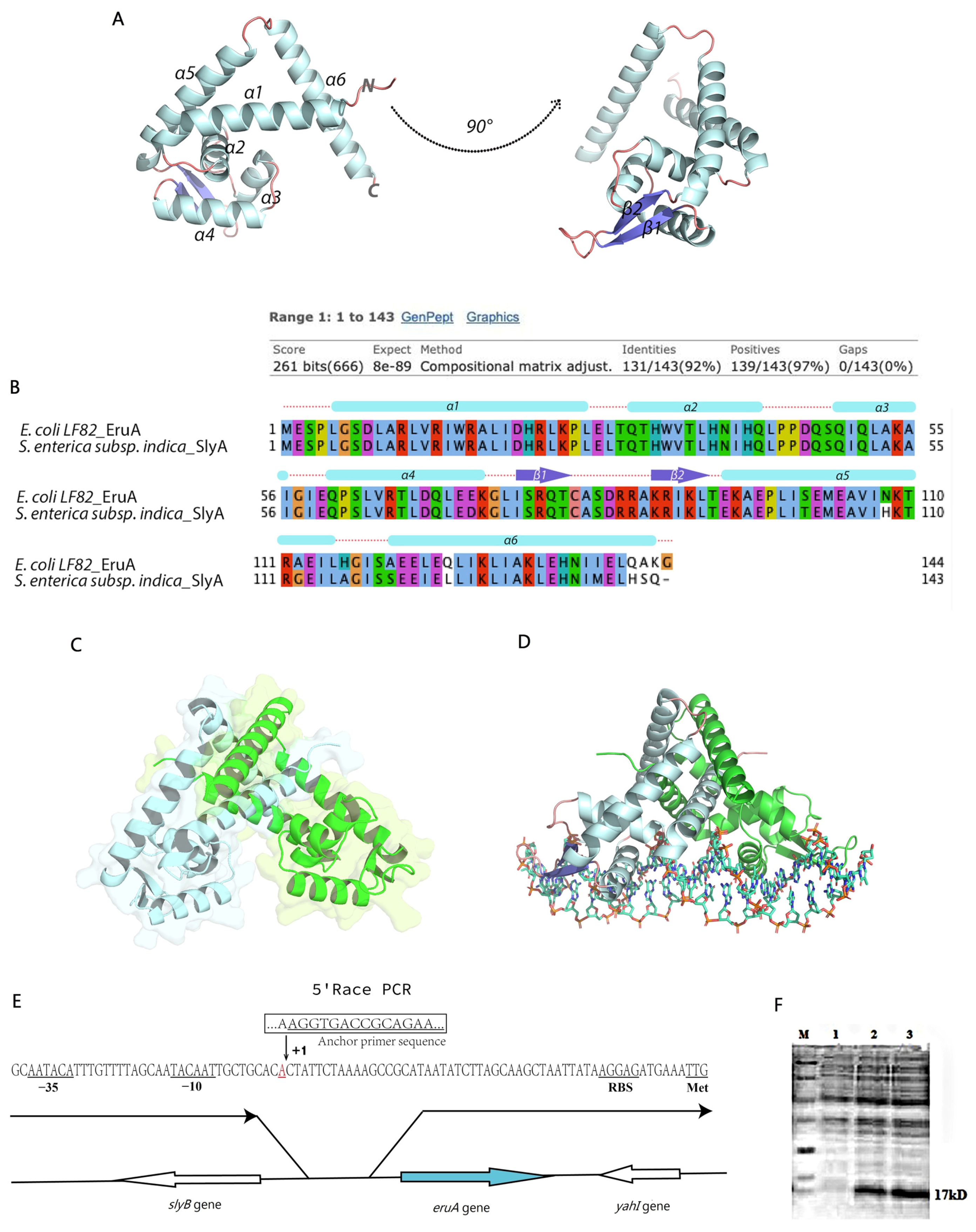
3.1. EruA Resembling SlyA in S. enterica Found in AIEC LF82 Strain
3.2. The eruA Gene Encodes a Regulator in the AIEC LF82 Strain
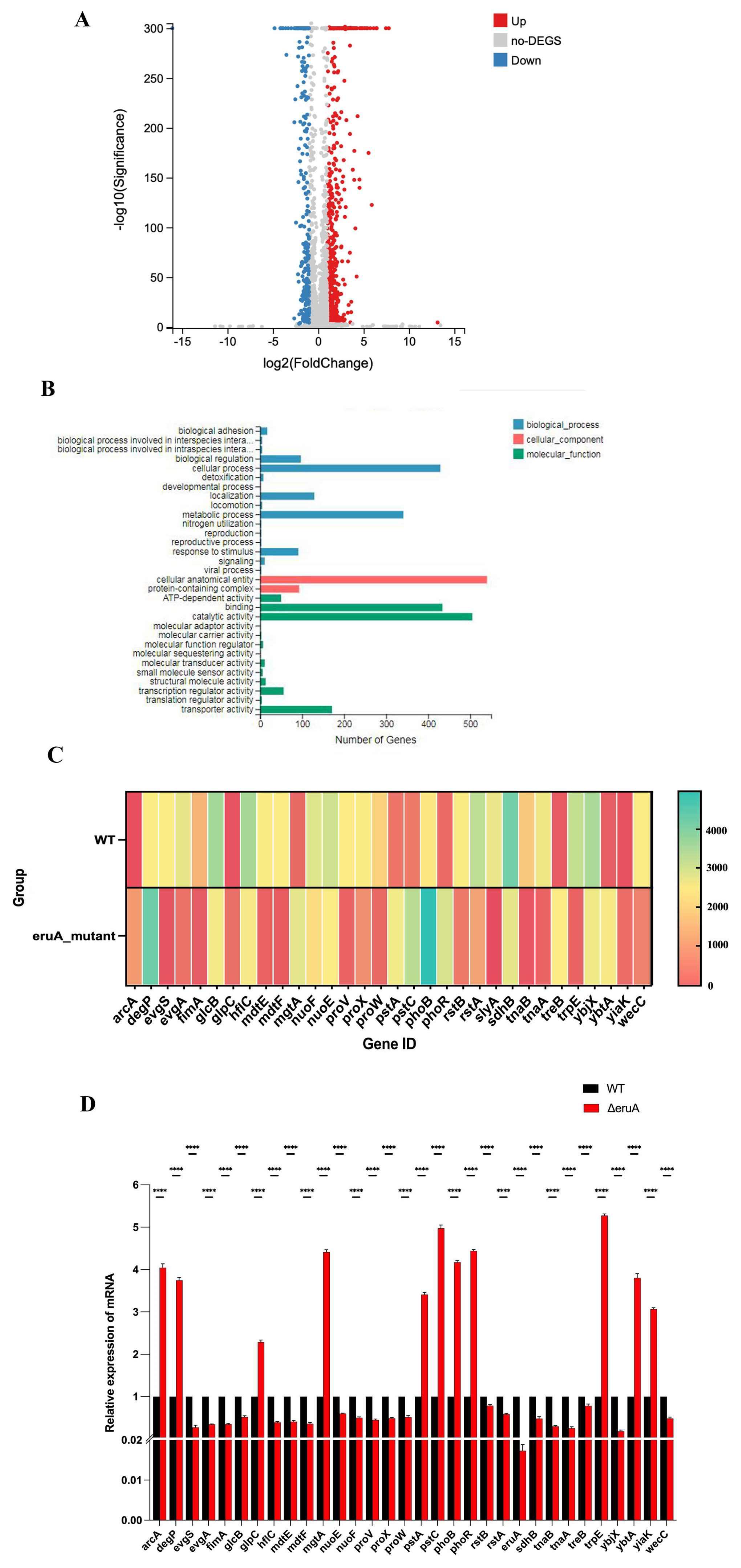
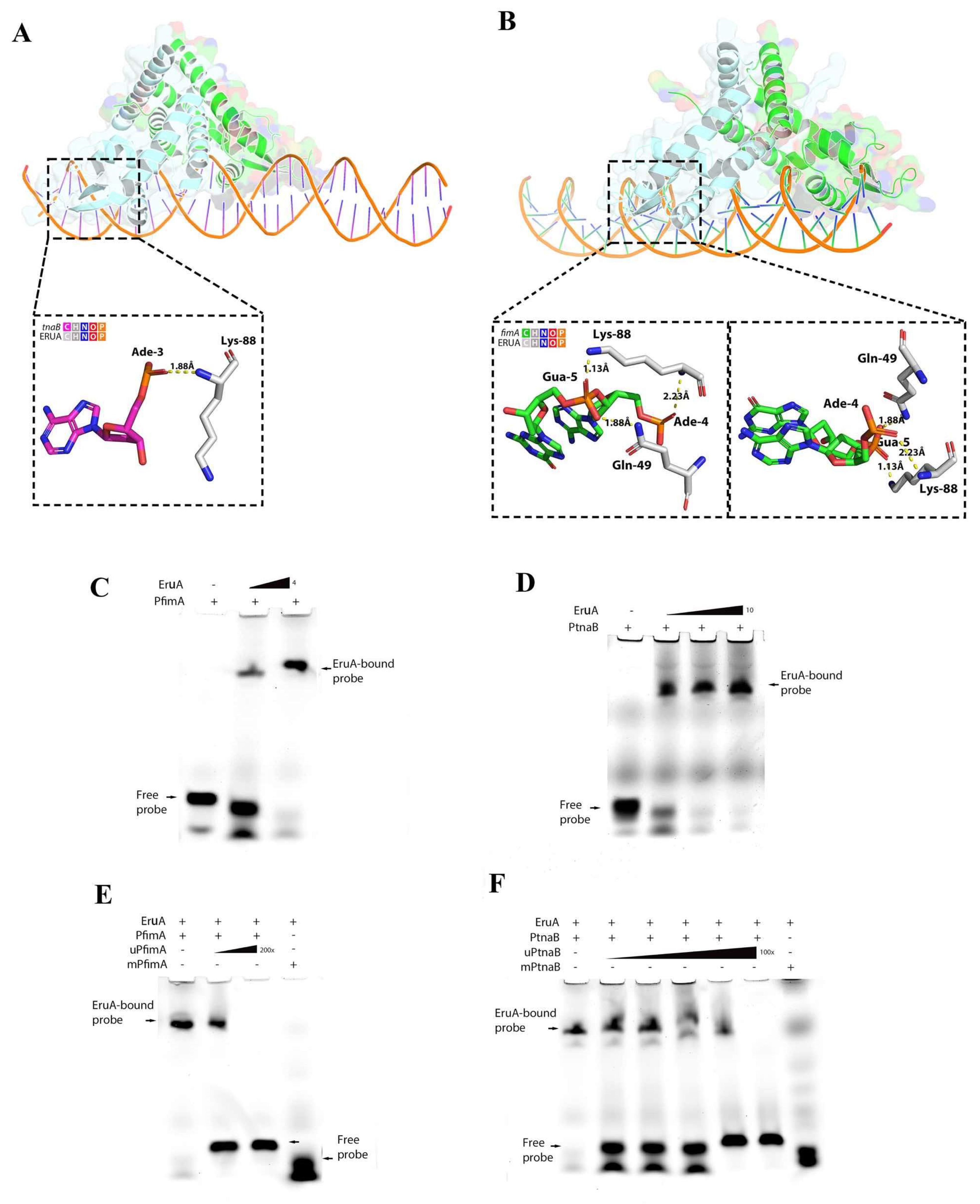
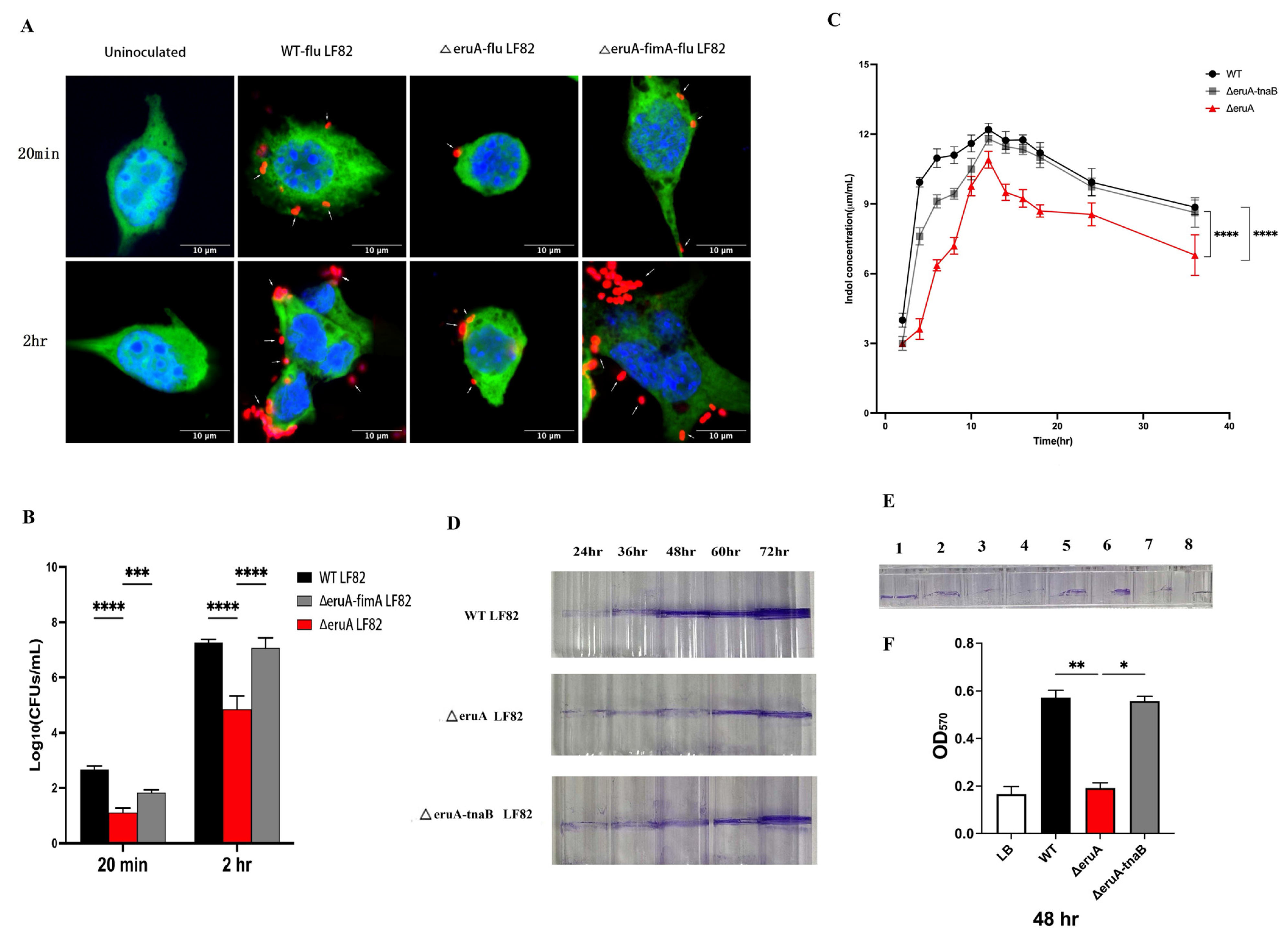
3.3. EruA Activates fimA to Promote Bacterial Adhesion to Intestinal Epithelial Cells and tnaB to Increase Production of Indole and Formation of Biofilm
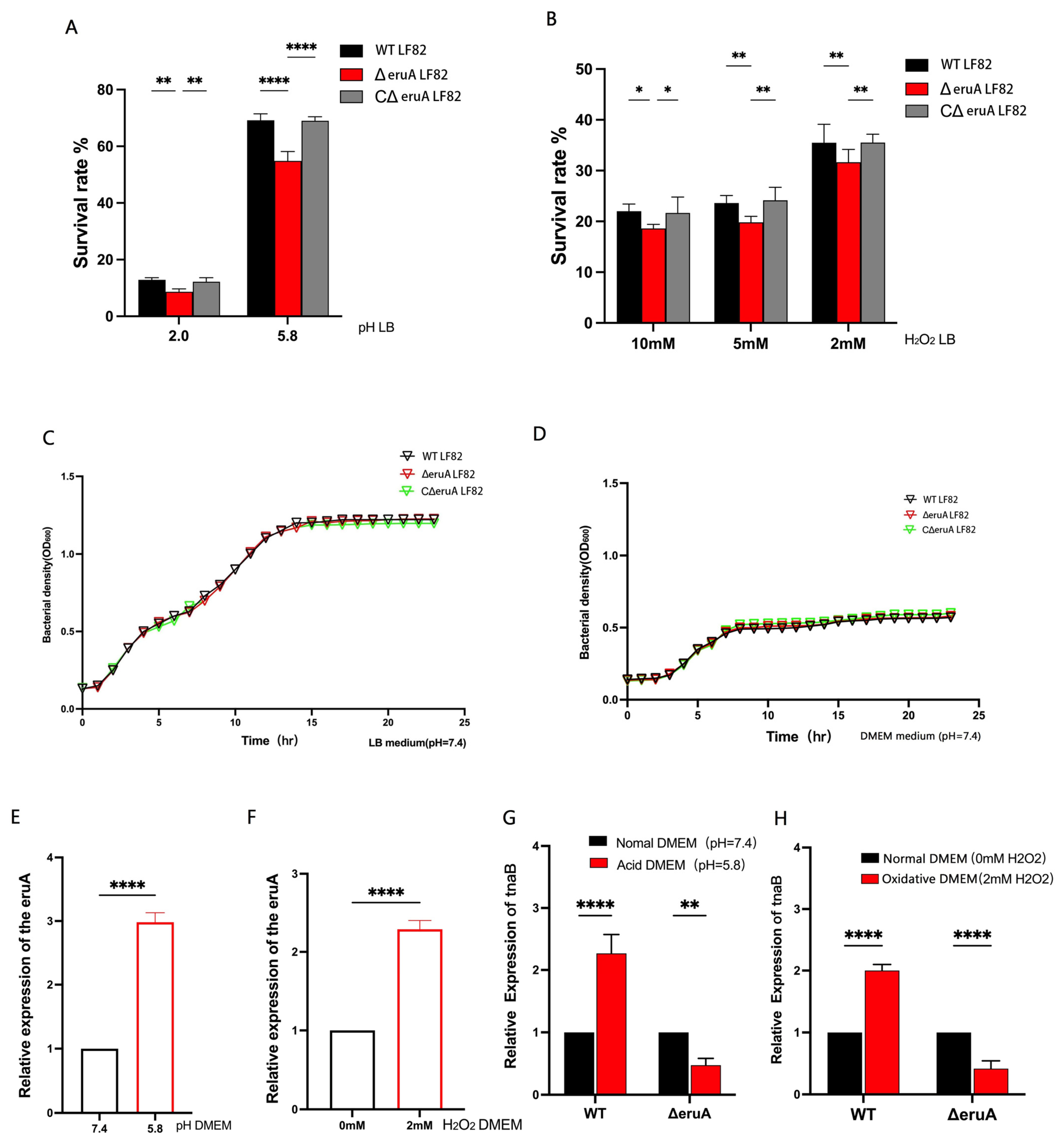
3.4. EruA Helps AIEC Respond to Acidic and Oxidative Signals and Tolerate Environmental Stresses
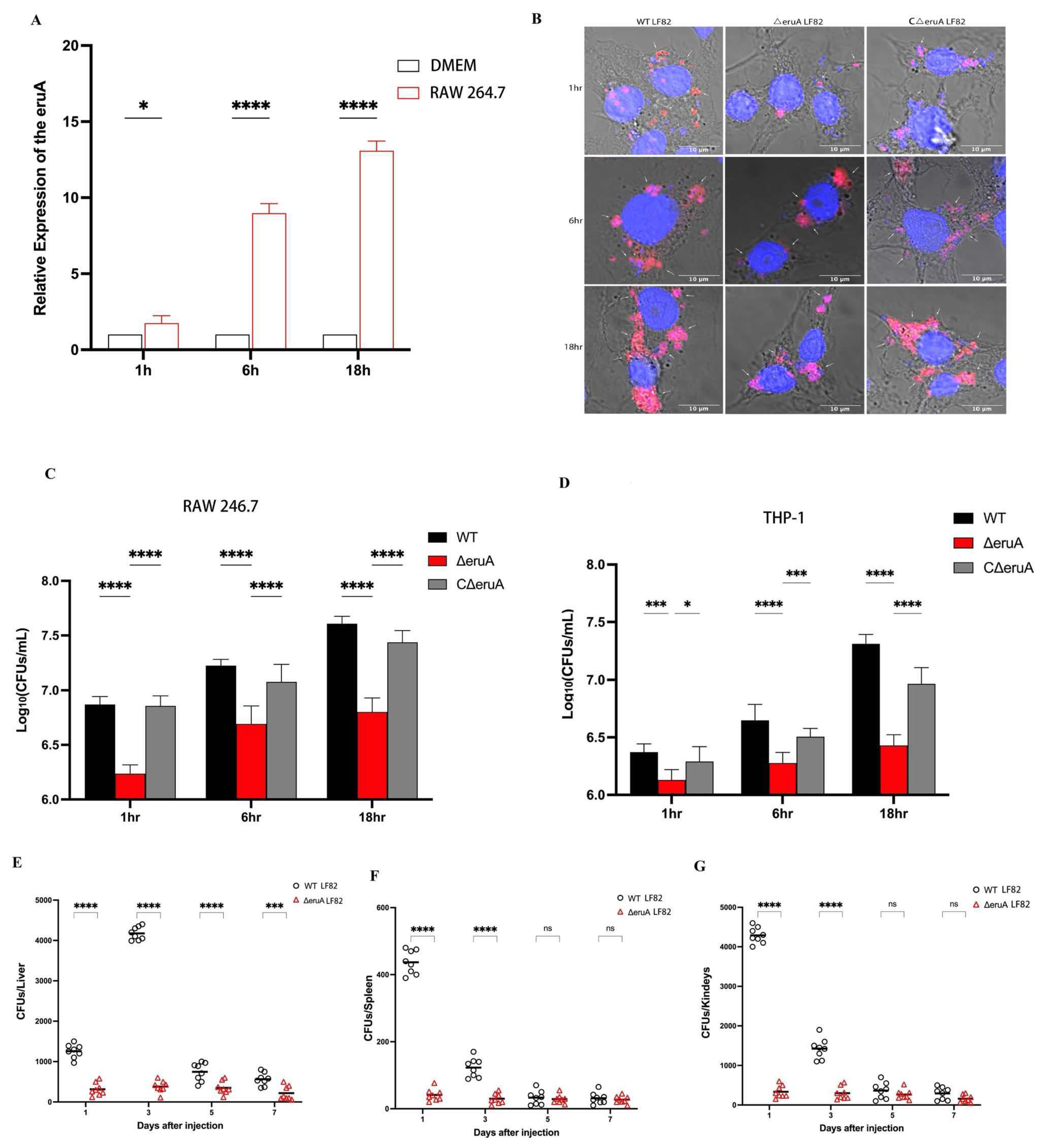
3.5. EruA Promotes the Survival of AIEC Within Macrophages and Bacterial Virulence

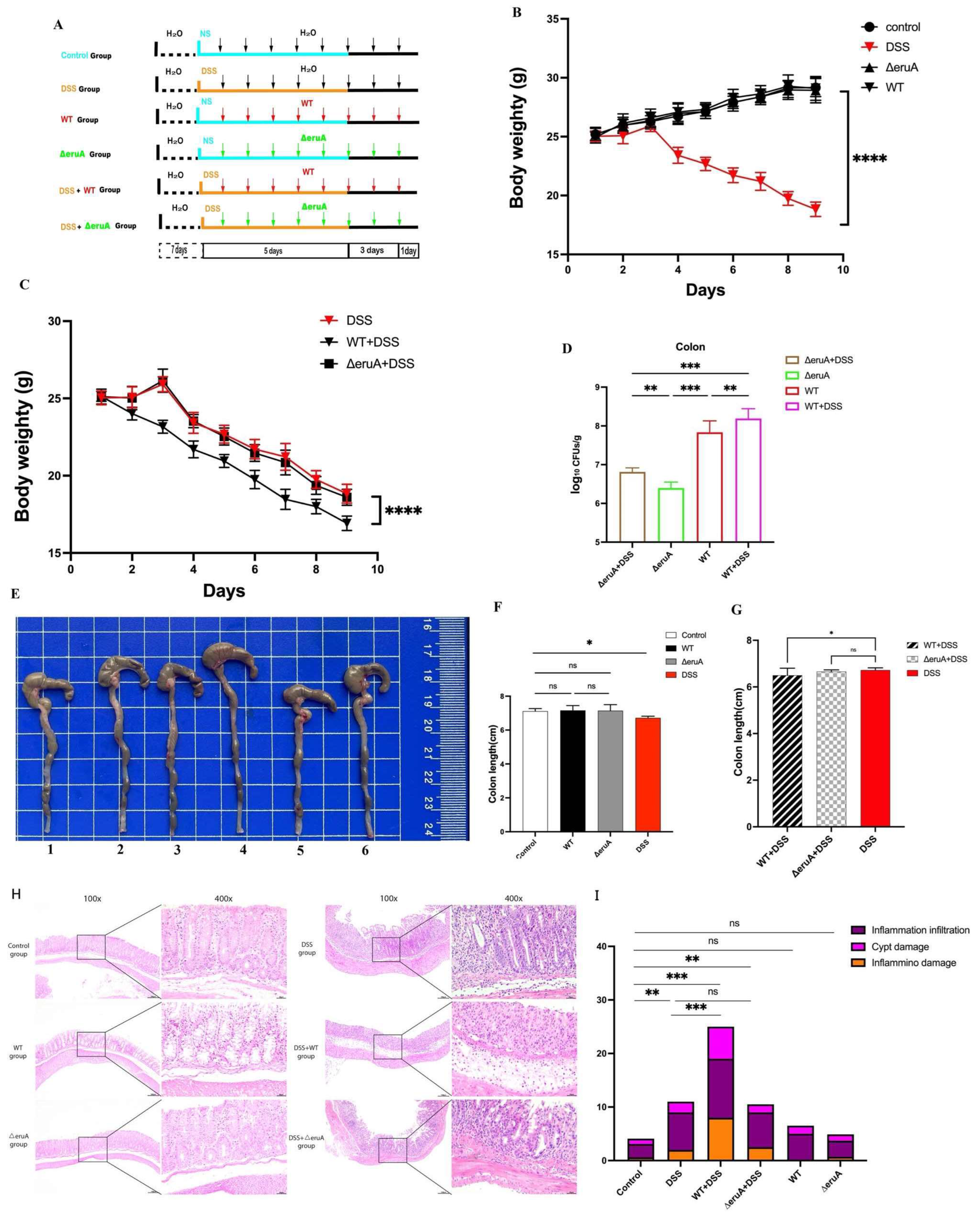
3.6. EruA Contributes to AIEC Colonization and Exacerbates Intestinal Inflammation in Mice with DSS-Induced Colitis and Those That Are DSS-Free

4. Discussion
5. Conclusions
Supplementary Materials
Author Contributions
Funding
Institutional Review Board Statement
Informed Consent Statement
Data Availability Statement
Acknowledgments
Conflicts of Interest
References
- Kaplan, G.G. The global burden of IBD: From 2015 to 2025. Nat. Rev. Gastroenterol. Hepatol. 2015, 12, 720–727. [Google Scholar] [CrossRef] [PubMed]
- Bruner, L.P.; White, A.M.; Proksell, S. Inflammatory Bowel Disease. Prim. Care 2023, 50, 411–427. [Google Scholar] [CrossRef] [PubMed]
- Palmela, C.; Chevarin, C.; Zhilu, X.; Torres, J.; Sevrin, G.; Hirten, R.; Barnich, N.; Ng, S.C.; Colombel, J.F. Adherent-invasive Escherichia coli in inflammatory bowel disease. Gut 2018, 67, 574–587. [Google Scholar] [CrossRef] [PubMed]
- Darfeuille-Michaud, A.; Boudeau, J.; Bulois, P.; Neut, C.; Glasser, A.L.; Barnich, N.; Bringer, M.A.; Swidsinski, A.; Beaugerie, L.; Colombel, J.F. High prevalence of adherent-invasive Escherichia coli associated with ileal mucosa in Crohn’s disease. Gastroenterology 2004, 127, 412–421. [Google Scholar] [CrossRef]
- O’brien, C.L.; Bringer, M.A.; Holt, K.E.; Gordon, D.M.; Dubois, A.L.; Barnich, N.; Darfeuille-Michaud, A.; Pavli, P. Comparative genomics of Crohn’s disease-associated adherent-invasive Escherichia coli. Gut 2017, 66, 1382–1389. [Google Scholar] [CrossRef]
- Smith, E.J.; Thompson, A.P.; O’driscoll, A.; Clarke, D.J. Pathogenesis of adherent-invasive Escherichia coli. Future Microbiol. 2013, 8, 1289–1300. [Google Scholar] [CrossRef]
- Keita, Å.V.; Alkaissi, L.Y.; Holm, E.B.; Heil, S.D.S.; Chassaing, B.; Darfeuille-Michaud, A.; Mckay, D.M.; Söderholm, J.D. Enhanced E. coli LF82 Translocation through the Follicle-associated Epithelium in Crohn’s Disease is Dependent on Long Polar Fimbriae and CEACAM6 expression, and Increases Paracellular Permeability. J. Crohns Colitis. 2020, 14, 216–229. [Google Scholar] [CrossRef]
- Hung, D.L.; Hultgren, S.J. Pilus biogenesis via the chaperone/usher pathway: An integration of structure and function. J. Struct. Biol. X 1998, 124, 201–220. [Google Scholar] [CrossRef]
- Lucchini, V.; Sivignon, A.; Pieren, M.; Gitzinger, M.; Lociuro, S.; Barnich, N.; Kemmer, C.; Trebosc, V. The Role of OmpR in Bile Tolerance and Pathogenesis of Adherent-Invasive Escherichia coli. Front. Microbiol. 2021, 12, 684473–684482. [Google Scholar] [CrossRef]
- Bringer, M.A.; Glasser, A.L.; Tung, C.H.; Méresse, S.; Darfeuille-Michaud, A. The Crohn’s disease-associated adherent-invasive Escherichia coli strain LF82 replicates in mature phagolysosomes within J774 macrophages. Cell Microbiol. 2006, 8, 471–484. [Google Scholar] [CrossRef]
- Prudent, V.; Demarre, G.; Vazeille, E.; Wery, M.; Quenech’du, N.; Ravet, A.; Dauverd-Girault, J.; Van Dijk, E.; Bringer, M.A.; Descrimes, M.; et al. The crohn’s disease-related bacterial strain LF82 assembles biofilm-like communities to protect itself from phagolysosomal attack. Commun. Biol. 2021, 4, 627–634. [Google Scholar] [CrossRef] [PubMed]
- Cieza, R.J.; Hu, J.; Ross, B.N.; Sbrana, E.; Torres, A.G. The IbeA invasin of adherent-invasive Escherichia coli mediates interaction with intestinal epithelia and macrophages. Infect. Immun. 2015, 83, 1904–1918. [Google Scholar] [CrossRef] [PubMed]
- Yao, T.; Liu, X.; Li, D.; Huang, Y.; Yang, W.; Liu, R.; Wang, Q.; Li, X.; Zhou, J.; Jin, C.; et al. Two-component system RstAB promotes the pathogenicity of adherent-invasive Escherichia coli in response to acidic conditions within macrophages. Gut Microbes. 2024, 16, 2356642. [Google Scholar] [CrossRef] [PubMed]
- Li, G.; Young, K.D. Indole production by the tryptophanase TnaA in Escherichia coli is determined by the amount of exogenous tryptophan. Microbiology 2013, 159, 402–410. [Google Scholar] [CrossRef]
- Lee, J.H.; Lee, J. Indole as an intercellular signal in microbial communities. FEMS Microbiol. Rev. 2010, 34, 426–444. [Google Scholar] [CrossRef]
- Buchmeier, N.; Bossie, S.; Chen, C.Y.; Fang, F.C.; Guiney, D.G.; Libby, S.J. SlyA, a transcriptional regulator of Salmonella typhimurium, is required for resistance to oxidative stress and is expressed in the intracellular environment of macrophages. Infect. Immun. 1997, 65, 3725–3730. [Google Scholar] [CrossRef]
- Tian, S.; Wang, C.; Li, Y.; Bao, X.; Zhang, Y.; Tang, T. The Impact of SlyA on Cell Metabolism of Salmonella typhimurium: A Joint Study of Transcriptomics and Metabolomics. J. Proteome Res. 2021, 20, 184–190. [Google Scholar] [CrossRef]
- Michaux, C.; Sanguinetti, M.; Reffuveille, F.; Auffray, Y.; Posteraro, B.; Gilmore, M.S.; Hartke, A.; Giard, J.C. SlyA is a transcriptional regulator involved in the virulence of Enterococcus faecalis. Infect. Immun. 2011, 79, 2638–2645. [Google Scholar] [CrossRef]
- Thomson, N.R.; Cox, A.; Bycroft, B.W.; Stewart, G.S.; Williams, P.; Salmond, G.P. The rap and hor proteins of Erwinia, Serratia and Yersinia: A novel subgroup in a growing superfamily of proteins regulating diverse physiological processes in bacterial pathogens. Mol. Microbiol. 1997, 26, 531–544. [Google Scholar] [CrossRef]
- Curran, T.D.; Abacha, F.; Hibberd, S.P.; Rolfe, M.D.; Lacey, M.M.; Green, J. Identification of new members of the Escherichia coli K-12 MG1655 SlyA regulon. Microbiology 2017, 163, 400–409. [Google Scholar] [CrossRef]
- Dolan, K.T.; Duguid, E.M.; He, C. Crystal structures of SlyA protein, a master virulence regulator of Salmonella, in free and DNA-bound states. J. Biol. Chem. 2011, 286, 22178–22185. [Google Scholar] [CrossRef] [PubMed]
- Stapleton, M.R.; Norte, V.A.; Read, R.C.; Green, J. Interaction of the Salmonella typhimurium transcription and virulence factor SlyA with target DNA and identification of members of the SlyA regulon. J. Biol. Chem. 2002, 277, 17630–17637. [Google Scholar] [CrossRef] [PubMed]
- Simonsen, K.T.; Nielsen, G.; Bjerrum, J.V.; Kruse, T.; Kallipolitis, B.H.; Møller-Jensen, J. A role for the RNA chaperone Hfq in controlling adherent-invasive Escherichia coli colonization and virulence. PLoS ONE 2011, 6, e16387. [Google Scholar] [CrossRef] [PubMed]
- Fan, F.; Li, X.; Pang, B.; Zhang, C.; Li, Z.; Zhang, L.; Yan, M.; Liang, W.; Kan, B. The outer-membrane protein TolC of Vibrio cholerae serves as a second cell-surface receptor for the VP3 phage. J. Biol. Chem. 2018, 293, 4000–4013. [Google Scholar] [CrossRef]
- Spriestersbach, A.; Kubicek, J.; Schäfer, F.; Block, H.; Maertens, B. Purification of His-Tagged Proteins. Methods Enzymol. 2015, 559, 1–15. [Google Scholar] [CrossRef]
- Gao, D.; Zhang, Y.; Liu, R.; Fang, Z.; Lu, C. EsR240, a non-coding sRNA, is required for the resistance of Edwardsiella tarda to stresses in macrophages and for virulence. Vet. Microbiol. 2019, 231, 254–263. [Google Scholar] [CrossRef]
- Liu, R.; Ga, D.; Fang, Z.; Zhao, L.; Xu, Z.; Qin, C.; Zhang, R.; Xu, J.; Lu, C. AroC, a chorismate synthase, is required for the formation of Edwardsiella tarda biofilms. Microbes Infect. 2022, 24, 104955. [Google Scholar] [CrossRef]
- Livak, K.J.; Schmittgen, T.D. Analysis of relative gene expression data using real-time quantitative PCR and the 2(-Delta Delta C(T)) Method. Methods 2001, 25, 402–408. [Google Scholar] [CrossRef]
- Percie Du Sert, N.; Hurst, V.; Ahluwalia, A.; Alam, S.; Avey, M.T.; Baker, M.; Browne, W.J.; Clark, A.; Cuthill, I.C.; Dirnagl, U.; et al. The ARRIVE guidelines 2.0: Updated guidelines for reporting animal research. PLoS Biol. 2020, 18, e3000410. [Google Scholar] [CrossRef]
- Peng, Y.; Yan, Y.; Wan, P.; Chen, D.; Ding, Y.; Ran, L.; Mi, J.; Lu, L.; Zhang, Z.; Li, X.; et al. Gut microbiota modulation and anti-infammatory properties of anthocyanins from the fruits of Lycium ruthenicum Murray in dextran sodium sulfate-induced colitis in mice. Free Radic. Biol. Med. 2019, 136, 96–108. [Google Scholar] [CrossRef]
- Cabezas, C.E.; Briones, A.C.; Aguirre, C.; Pardo-Esté, C.; Castro-Severyn, J.; Salinas, C.R.; Baquedano, M.S.; Hidalgo, A.A.; Fuentes, J.A.; Morales, E.H.; et al. The transcription factor SlyA from Salmonella Typhimurium regulates genes in response to hydrogen peroxide and sodium hypochlorite. Res. Microbiol. 2018, 169, 263–278. [Google Scholar] [CrossRef] [PubMed]
- Zhang, R.; Wang, Y. EvgS/EvgA, the unorthodox two-component system regulating bacterial multiple resistance. Appl. Environ. Microbiol. 2023, 89, e0157723. [Google Scholar] [CrossRef] [PubMed]
- Schaffner, S.H.; Lee, A.V.; Pham, M.T.N.; Kassaye, B.B.; Li, H.; Tallada, S.; Lis, C.; Lang, M.; Liu, Y.; Ahmed, N.; et al. Extreme Acid Modulates Fitness Trade-Offs of Multidrug Efflux Pumps MdtEF-TolC and AcrAB-TolC in Escherichia coli K-12. Appl. Environ. Microbiol. 2021, 87, e0072421. [Google Scholar] [CrossRef] [PubMed]
- Gao, D.; Liu, N.; Tian, C.; Liu, R.; Zhao, L.; Zhang, Y.; Zheng, E.; Lu, C. Target genes directly regulated by Eha are required for Edwardsiella tarda survival within macrophages. Vet. Microbiol. 2020, 247, 108739. [Google Scholar] [CrossRef]
- Oscarsson, J.; Mizunoe, Y.; Uhlin, B.E.; Haydon, D.J. Induction of haemolytic activity in Escherichia coli by the slyA gene product. Mol. Microbiol. 1996, 20, 191–199. [Google Scholar] [CrossRef]
- Norte, V.A.; Stapleton, M.R.; Green, J. PhoP-responsive expression of the Salmonella enterica serovar typhimurium slyA gene. J. Bacteriol. 2003, 185, 3508–3514. [Google Scholar] [CrossRef]
- Bruna, R.E.; Kendra, C.G.; Pontes, M.H. Phosphorus starvation response and PhoB-independent utilization of organic phosphate sources by Salmonella enterica. Microbiol. Spectr. 2023, 11, e0226023. [Google Scholar] [CrossRef]
- Marzan, L.W.; Shimizu, K. Metabolic regulation of Escherichia coli and its phoB and phoR genes knockout mutants under phosphate and nitrogen limitations as well as at acidic condition. Microb. Cell Fact. 2011, 10, 39–51. [Google Scholar] [CrossRef]
- Wu, J.; Mcauliffe, O.; O’byrne, C.P. Trehalose transport occurs via TreB in Listeria monocytogenes and it influences biofilm development and acid resistance. Int. J. Food Microbiol. 2023, 394, 110165. [Google Scholar] [CrossRef]
- Brown, A.N.; Anderson, M.T.; Smith, S.N.; Bachman, M.A.; Mobley, H.L.T. Conserved metabolic regulator ArcA responds to oxygen availability, iron limitation, and cell envelope perturbations during bacteremia. mBio 2023, 14, e0144823. [Google Scholar] [CrossRef]
- Cesselin, B.; Ali, D.; Gratadoux, J.J.; Gaudu, P.; Duwat, P.; Gruss, A.; El Karoui, M. Inactivation of the Lactococcus lactis high-affinity phosphate transporter confers oxygen and thiol resistance and alters metal homeostasis. Microbiology 2009, 155, 2274–2281. [Google Scholar] [CrossRef]
- Zhou, Q.; Li, L.; Liu, F.; Hu, J.; Cao, Y.; Qiao, S.; Zhou, Y.; Wang, B.; Jia, Y.; Chen, Y.; et al. Mining and characterization of oxidative stress-related binding proteins of parthenolide in Xanthomonas oryzae pv. oryzae. Pest. Manag. Scim 2022, 78, 3345–3355. [Google Scholar] [CrossRef] [PubMed]
- Jones, C.H.; Bolken, T.C.; Jones, K.F.; Zeller, G.O.; Hruby, D.E. Conserved DegP protease in gram-positive bacteria is essential for thermal and oxidative tolerance and full virulence in Streptococcus pyogenes. Infect. Immun. 2001, 69, 5538–5545. [Google Scholar] [CrossRef] [PubMed]
- Mraheil, M.A.; Billion, A.; Mohamed, W.; Rawool, D.; Hain, T.; Chakraborty, T. Adaptation of Listeria monocytogenes to oxidative and nitrosative stress in IFN-activated macrophages. Int. J. Med. Microbiol. 2011, 301, 547–555. [Google Scholar] [CrossRef] [PubMed]
- Ahn, S.; Jung, J.; Jang, I.A.; Madsen, E.L.; Park, W. Role of Glyoxylate Shunt in Oxidative Stress Response. J. Biol. Chem. 2016, 291, 11928–11938. [Google Scholar] [CrossRef]
- Wessel, A.K.; Yoshii, Y.; Reder, A.; Boudjemaa, R.; Szczesna, M.; Betton, J.M.; Bernal-Bayard, J.; Beloin, C.; Lopez, D.; Völker, U.; et al. Escherichia coli SPFH Membrane Microdomain Proteins HflKC Contribute to Aminoglycoside and Oxidative Stress Tolerance. Microbiol. Spectr. 2023, 11, e0176723. [Google Scholar] [CrossRef]
- Campos, E.; Montella, C.; Garces, F.; Baldoma, L.; Aguilar, J.; Badia, J. Aerobic L-ascorbate metabolism and associated oxidative stress in Escherichia coli. Microbiology 2007, 153, 3399–3408. [Google Scholar] [CrossRef]
- Mahmoud, R.Y.; Li, W.; Eldomany, R.A.; Emara, M.; Yu, J. The Shigella ProU system is required for osmotic tolerance and virulence. Virulence 2017, 8, 362–374. [Google Scholar] [CrossRef]
- Anisimov, R.; Brem, D.; Heesemann, J.; Rakin, A. Transcriptional regulation of high pathogenicity island iron uptake genes by YbtA. Int. J. Med. Microbiol. 2005, 295, 19–28. [Google Scholar] [CrossRef]
- Song, X.; Qiu, M.; Jiang, H.; Xue, M.; Hu, J.; Liu, H.; Zhou, X.; Tu, J.; Qi, K. ybjX mutation regulated avian pathogenic Escherichia coli pathogenicity though stress-resistance pathway. Avian Pathol. 2020, 49, 144–152. [Google Scholar] [CrossRef]
- Klein, K.A.; Fukuto, H.S.; Pelletier, M.; Romanov, G.; Grabenstein, J.P.; Palmer, L.E.; Ernst, R.; Bliska, J.B. A transposon site hybridization screen identifies galU and wecBC as important for survival of Yersinia pestis in murine macrophages. J. Bacteriol. 2012, 194, 653–662. [Google Scholar] [CrossRef]
- Song, H.; Kong, W.; Weatherspoon, N.; Qin, G.; Tyler, W.; Turk, J.; Curtiss, R., 3rd; Shi, Y. Modulation of the regulatory activity of bacterial two-component systems by SlyA. J. Biol. Chem. 2008, 283, 28158–28168. [Google Scholar] [CrossRef]
- Yang, D.; Kong, Y.; Sun, W.; Kong, W.; Shi, Y. Dopamine-Responsive Signal Transduction Controls Transcription of Salmonella enterica Serovar Typhimurium Virulence Genes. mBio 2019, 10, e02772-18. [Google Scholar] [CrossRef]
- Yuan, X.; Yu, M.; Yang, C.H. Innovation and Application of the Type III Secretion System Inhibitors in Plant Pathogenic Bacteria. Microorganisms 2020, 8, 1956. [Google Scholar] [CrossRef]
- Drouet, M.; Vignal, C.; Singer, E.; Djouina, M.; Dubreuil, L.; Cortot, A.; Desreumaux, P.; Neut, C. AIEC colonization and pathogenicity: Influence of previous antibiotic treatment and preexisting inflammation. Inflamm. Bowel Dis. 2012, 18, 1923–1931. [Google Scholar] [CrossRef]



| Strain or Plasmid | Relevant Characteristics | Source |
|---|---|---|
| Strains | ||
| SM10λpir | E. coli; RP4-2 (Km::Tn7,Tc::Mu-1), pro-82, LAMpir, recA1, endA1, thiE1, hsdR17, creC510 | Prof. Liang [24] |
| BL21(DE3) | E. coil; F-, lon-11, Δ(ompT-nfrA)885, Δ(galM-ybhJ) 884 | Stratagene |
| WT LF82 | AIEC; wild type; Ampr; isolated from human | Prof. Zhu [23] |
| ∆eruA LF82 | AIEC; eruA Deletion mutant of LF82; Ampr | This study |
| C∆eruA LF82 | AIEC; ∆eruA containing expression plasmid pACYC184-eruA; Cmr, Ampr | This study |
| ∆eruA-fimA LF82 | AIEC; ∆eruA containing expression plasmid pACYC184-fimA; Cmr, Ampr | This study |
| ∆eruA-tnaB LF82 | AIEC; ∆eruA containing expression plasmid pACYC184-tnaB; Cmr, Ampr | This study |
| WT LF82-flu | AIEC; containing pBBbr1mcs2-Tac-mcherry plasmid; Kanr, Ampr | This study |
| ∆eruA LF82-flu | AIEC; ∆eruA containing pBBbr1mcs2-Tac- mcherry plasmid; Kanr, Ampr | This study |
| C∆eruA LF82-flu | AIEC; C∆eruA containing pBBbr1mcs2-Tac- mcherry plasmid; Cmr; Kanr, Ampr | This study |
| plasmids | ||
| pDS132 | Suicide plasmid, mob RP4 oriR6K, SacB, Cmr | Prof. Liang [24] |
| pACYC184 | origin, p15A vector; Tetr, Cmr | Stratagene |
| pET28a+ | origin, F1 vector, promoter T7, expression plasmid; Kanr | Novagen |
| pET28a-eruA | 435 bp DNA fragment encompassing the eruA cloned into pET28a+; Kanr | This study |
| pDS132-F1F2 | DNA fragment encompassing upstream and downstream of eruA cloned in pDS132, Cmr | This study |
| pACYC184-eruA | DNA fragment encompassing eruA ORF cloned in pACYC184; Cmr | This study |
| pACYC184-fimA | DNA fragment encompassing fimA ORF cloned in pACYC184; Cmr | |
| pACYC184-tnaB | DNA fragment encompassing tnaB ORF cloned in pACYC184; Cmr | |
| pBBbr1mcs2-Tac-mcherry | origin, Rep pBBR1, oriV, promoter Tac, red fluorescence plasmid; Kanr | Morzanbio |
| Gene Name | Primer Sequence (5′-3′) | Product Size | Methods |
|---|---|---|---|
| RC1145-RT3 | AAGTTTTGCGATGAGCTTAATCAG | - | 5′RACE-RT |
| RC1145-RT4 | CGGGTTTTGTTAATAACGGCTT | ||
| RC1145-R3 | GATCGCTGGCACAAGTTTGAC | 240 bp | 5′RACE-PCR (First round) |
| 5′ adaptor | GCTGTCAACGATACGCTACGTAACGGCATGACAGTGGGIIGGGIIGGGIIG | ||
| RC1145-RT4 | CGGGTTTTGTTAATAACGGCTT | 257 bp | 5′RACE-PCR (Second round) |
| 5.3′ outer | GCTGTCAACGATACGCTACGTAAC | ||
| RC1145-MZ-Y-F | TTGCGATGAGCTTAATCAGTTGTT | 380 bp | 5′RACE-PCR |
| RC1145-MZ-Y-R | AGGTTCTGATCTGGCACGGTT | ||
| F1-F | CATGCATGCATGATGCCATATACTTTGACCATGAG | 515 bp | PCR |
| F1-R | GCTCTAGAGCCACCTGACTGCCATTGCTG | ||
| F2-F | GCTCTAGAGCAAGATATTATGCGGCTTTTAGAA | 582 bp | PCR |
| F2-R | CGAGCTCGCAATAATACGTCCCGACACCT | ||
| X-F | GGAATTCCCCTTCATTTCACCCTTTG | 435 bp | PCR |
| X-R | CAAGCTTCGCATAATATCTTAGCAAGCTAATT | ||
| eruA-F | CGGAATTCCGCCCTTCATTTCACCCTTTG | 435 bp | PCR |
| eruA-R | CCCAAGCTTGGGCGCATAATATCTTAGCAAGCTAATT | ||
| eruA-F | CGACTGGTCTGGAGGTAA | 140 bp | qRT-PCR |
| eruA-R | AATCGCCACTAGGTTCTG | ||
| fimA-F | CGGAATTCCGACGACGGTAAATGGTGGGAC | 422 bp | PCR |
| fim-R | CCCAAGCTTGGCAGCACCGGTTGCAAAATA | ||
| tnaB-F | CGGAATTCCGAAAGCGTGGTTTTCGGTTCG | 229 bp | PCR |
| tnaB-R | CCCAAGCTTGTTCTTGCGGGCTTTGATTGC | ||
| evgA-F | GCAGAGTTGACTGAAGGCGGA | 197 bp | qRT-PCR |
| evgA-R | GCATCAGCACAATGTTTCCCG | ||
| tnaB-F | GCTTTACCTGTTGACCTTGC | 198 bp | qRT-PCR |
| tnaB-R | GGCAACGGTAATACCGCTGA | ||
| glpC-F | CACCAGCTTCGAAAACTGCATT | 167 bp | qRT-PCR |
| glpC-R | AGTTGATGCAATATTTCAGCGCC | ||
| yiaK-F | AGCAGCCTTTAATCGGGTCT | 123 bp | qRT-PCR |
| yiaK-R | GGGAAACGATTAACGCCGTGAG | ||
| tnaA-F | TTTGACCTTGAGGGATTAG | 130 bp | qRT-PCR |
| tnaA-R | ACATCGCTTTTAAGTTTGC | ||
| arcA-F | ATTCGGTAACGGCTTCATA | 109 bp | qRT-PCR |
| arcA-R | TCGTCATTTAAGTGGTGGG | ||
| fimA-F | GCAATCGGCTACAAACAAC | 89 bp | qRT-PCR |
| fimA-R | TGGTAAATGCCGCTTGTGC | ||
| phoR-F | TTGATGTGCCGATGATGCT | 113 bp | qRT-PCR |
| phoR-R | TTCGTTGCCTGACACCTTG | ||
| degP-F | AACGGCGGCTGAGACTTCTT | 127 bp | qRT-PCR |
| degP-R | CGGCGTATTAACGGTTGTGC | ||
| evgS-F | GCAAGGAACAACGGGTGGAG | 183 bp | qRT-PCR |
| evgS-R | CAGCAATCGCAGCGAAAGAG | ||
| glcB-F | TTTGCCCATCCACAACAACC | 203 bp | qRT-PCR |
| glcB-R | TCATCTGCTGGCGTTAAGTCG | ||
| hflC-F | ATCGTGCTGGTAGTGCTTT | 184 bp | qRT-PCR |
| hflC-R | TGGTCTGAATACGTGCGTC | ||
| mdtE-F | ACACCGCACGCACCCAGTT | 135 bp | qRT-PCR |
| mdtE-R | CCGACGATTTCCCGCTGAC | ||
| mdtF-F | GATAGGGTTACTGGTGGAT | 259 bp | qRT-PCR |
| mdtF-R | GCTCATTGCTACAAATACTG | ||
| mgtA-F | TTTGCCGCAGGTGTTATCG | 156 bp | qRT-PCR |
| mgtA-R | GCCATTTTCGCCTTTGTCG | ||
| nuoF-F | TGCGTGGGCACAGAAAGTT | 265 bp | qRT-PCR |
| nuoF-R | CATCGGTAAAGCGGGAAGC | ||
| nuoE-F | AACCGTTGATGTGACAGAC | 185 bp | qRT-PCR |
| nuoE-R | GAAAATCGTTCAGAAGCAG | ||
| proV-F | GGATGCGTCAACGAGTGGG | 145 bp | qRT-PCR |
| proV-R | CGCTGATGTTTCGCCTGTA | ||
| proX-F | TCAATAAACCCAGCGAAGT | 182 bp | qRT-PCR |
| proX-R | GATCAGGTAACCCTGTGCC | ||
| proW-F | TATTCGTCCACTGCTTGAT | 240 bp | qRT-PCR |
| ProW-R | AGCGGTAACTGAACTTTGA | ||
| pstA-F | AGCAGCAGTACGCACAGGG | 273 bp | qRT-PCR |
| pstA-R | TACGCCGAAGTGGAAGATG | ||
| pstC-F | CCAGATAACTTCCCAGGTG | 235 bp | qRT-PCR |
| stC-R | GTTCGCCGTTTACTTCCAG | ||
| phoB-F | AAGAACCGCTGGAGATGGG | 163 bp | qRT-PCR |
| PhoB-R | TTACGCAGGCGACGAATGT | ||
| rstB-F | CTGGGGTAAGACGCTGAAA | 263 bp | qRT-PCR |
| rstB-R | GGGAAATGGCAATAAAAGC | ||
| rstA-F | CGGACCGATTGTTCTTCTA | 159 bp | qRT-PCR |
| rstA-R | GTCACTGTGGCTTGCTCAT | ||
| slyA-F | TTGCGACTGGTCTGGAGGT | 132 bp | qRT-PCR |
| slyA-R | GGTTCTGATCTGGCACGGT | ||
| sdhB-F | ACACCCTGGAAGCGGAAGA | 186 bp | qRT-PCR |
| sdhB-R | GCTGGTTGAGTGCCGAAAT | ||
| treB-F | TGCTTGCGGCTGGAAATGAT | 314 bp | qRT-PCR |
| treB-R | GTGCCCGTCTGTTCGCTGAT | ||
| trpE-F | CTTCATCGCTCTGGTTACAT | 119 bp | qRT-PCR |
| trpE-R | AAAACAACGTCTCACTGCTC | ||
| ybjX-F | TAATGGCGTTCAGCATCACA | 281 bp | qRT-PCR |
| ybjX-R | ACGATGTTTATTGGCGGACT | ||
| ybtA-F | GCAAACGCAATCTGAAATCT | 235 bp | qRT-PCR |
| ybtA-R | GAGTCCCTGAATCGCAAAGC | ||
| wecC-F | CTGCCGTAGAAGGCGGTTTT | 187 bp | qRT-PCR |
| wecC-R | GGCGAGGTGGATTCAAGGAT | ||
| 16S rRNA-F | GTAGTCCACGCTGTAAACGA | 173 bp | qRT-PCR |
| 16S rRNA-R | GAATTAAACCACATGCTCCA | ||
| PfimA-F | 5′-CY3-TCCATGTGTTAAGAGGATAAGCGGGGAAACCG | 32 bp probe | EMSA |
| PfimA-R | 5′-CY3-CGGTTTCCCCGCTTATCCTCTTAACACATGGA | ||
| mPfimA-F | 5′-CY3-TCCATGTG∆AGCGGGGAAACCG | 21 bp probe | EMSA |
| mPfimA-R | 5′-CY3-CGGTTTCCCCGCT∆CACATGGA | ||
| uPfimA-F | 5′-TCCATGTGTTAAGAGGATAAGCGGGGAAACCG | 32 bp probe | EMSA |
| uPfimA-R | 5′-CGGTTTCCCCGCTTATCCTCTTAACACATGGA | ||
| PtnaB-F | 5′-CY3-GCGGCGAATATTAAAGGGTTAACCTTTACCTA | 32 bp probe | EMSA |
| PtnaB-R | 5′-CY3-TAGGTAAAGGTTAACCCTTTAATATTCGCCGC | ||
| mPtnaB-F | 5′-CY3-GCGGCGAATAAA∆AACCTTTACCTA | 24 bp probe | EMSA |
| mPtnaB-R | 5′-CY3-TAGGTAAAGGT∆TTTTATTCGCCGC | ||
| uPtnaB-F | 5′-GCGGCGAATATTAAAGGGTTAACCTTTACCTA | 32 bp probe | EMSA |
| uPtnaB-R | 5′-TAGGTAAAGGTTAACCCTTTAATATTCGCCGC |
Disclaimer/Publisher’s Note: The statements, opinions and data contained in all publications are solely those of the individual author(s) and contributor(s) and not of MDPI and/or the editor(s). MDPI and/or the editor(s) disclaim responsibility for any injury to people or property resulting from any ideas, methods, instructions or products referred to in the content. |
© 2026 by the authors. Licensee MDPI, Basel, Switzerland. This article is an open access article distributed under the terms and conditions of the Creative Commons Attribution (CC BY) license.
Share and Cite
Xu, Z.; Qin, C.; Zhang, R.; Wu, M.; Cui, A.; Chen, W.; Chen, L.; Gao, D.; Shi, R. EruA, a Regulator of Adherent-Invasive E. coli, Enhances Bacterial Pathogenicity by Promoting Adhesion to Epithelial Cells and Survival Within Macrophages. Biomolecules 2026, 16, 152. https://doi.org/10.3390/biom16010152
Xu Z, Qin C, Zhang R, Wu M, Cui A, Chen W, Chen L, Gao D, Shi R. EruA, a Regulator of Adherent-Invasive E. coli, Enhances Bacterial Pathogenicity by Promoting Adhesion to Epithelial Cells and Survival Within Macrophages. Biomolecules. 2026; 16(1):152. https://doi.org/10.3390/biom16010152
Chicago/Turabian StyleXu, Zeyan, Chuyu Qin, Ruohan Zhang, Mengting Wu, Anqi Cui, Wei Chen, Lu Chen, Daqing Gao, and Ruihua Shi. 2026. "EruA, a Regulator of Adherent-Invasive E. coli, Enhances Bacterial Pathogenicity by Promoting Adhesion to Epithelial Cells and Survival Within Macrophages" Biomolecules 16, no. 1: 152. https://doi.org/10.3390/biom16010152
APA StyleXu, Z., Qin, C., Zhang, R., Wu, M., Cui, A., Chen, W., Chen, L., Gao, D., & Shi, R. (2026). EruA, a Regulator of Adherent-Invasive E. coli, Enhances Bacterial Pathogenicity by Promoting Adhesion to Epithelial Cells and Survival Within Macrophages. Biomolecules, 16(1), 152. https://doi.org/10.3390/biom16010152