Inorganic Polyphosphate in Mammals: Mechanisms, Maladies, and Moving Forward


Abstract
1. Introduction
2. Polyphosphate Biology in Mammals
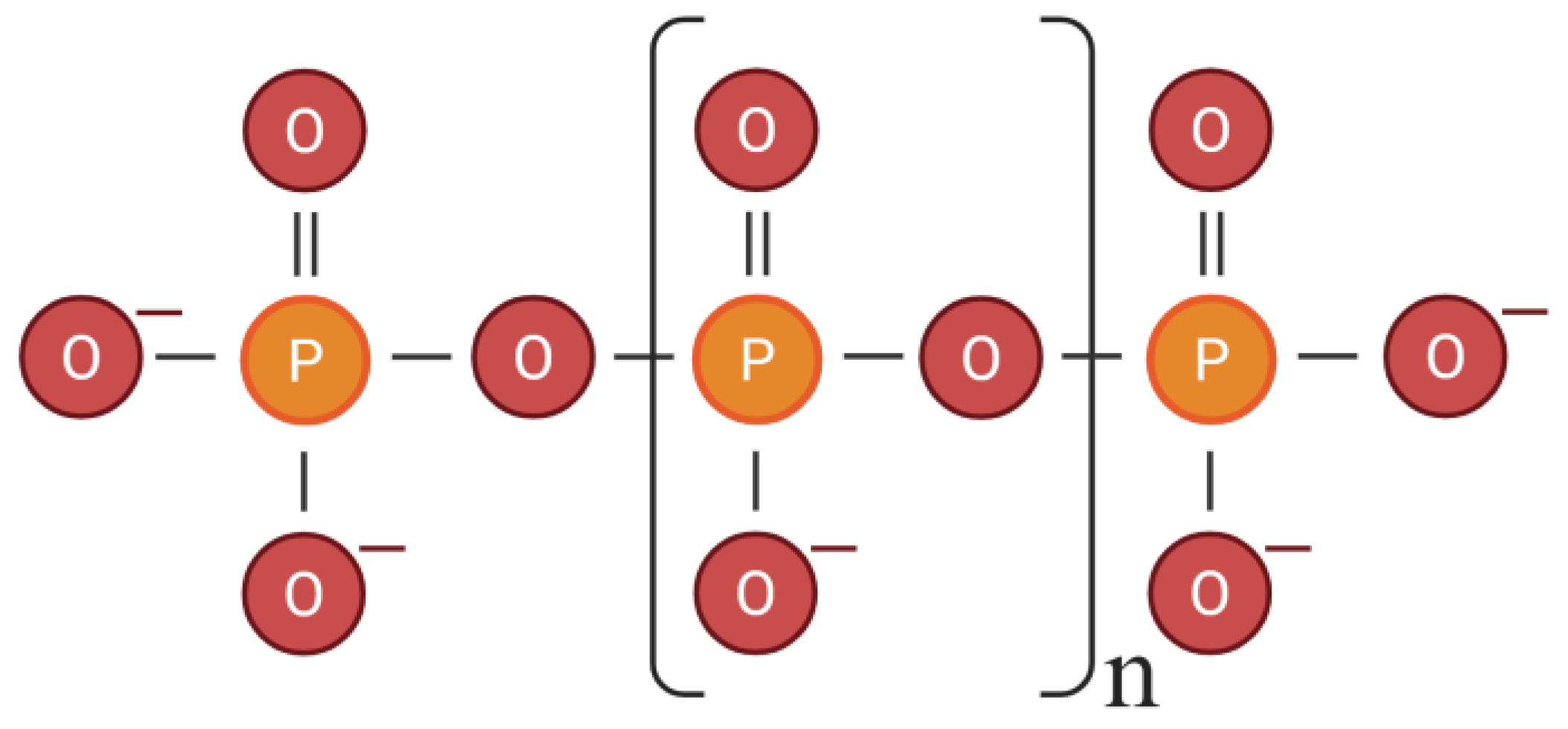
2.1. Polyphosphate Synthesis and Degradation
2.2. Localization and Compartment-Specific Functions of Polyphosphate
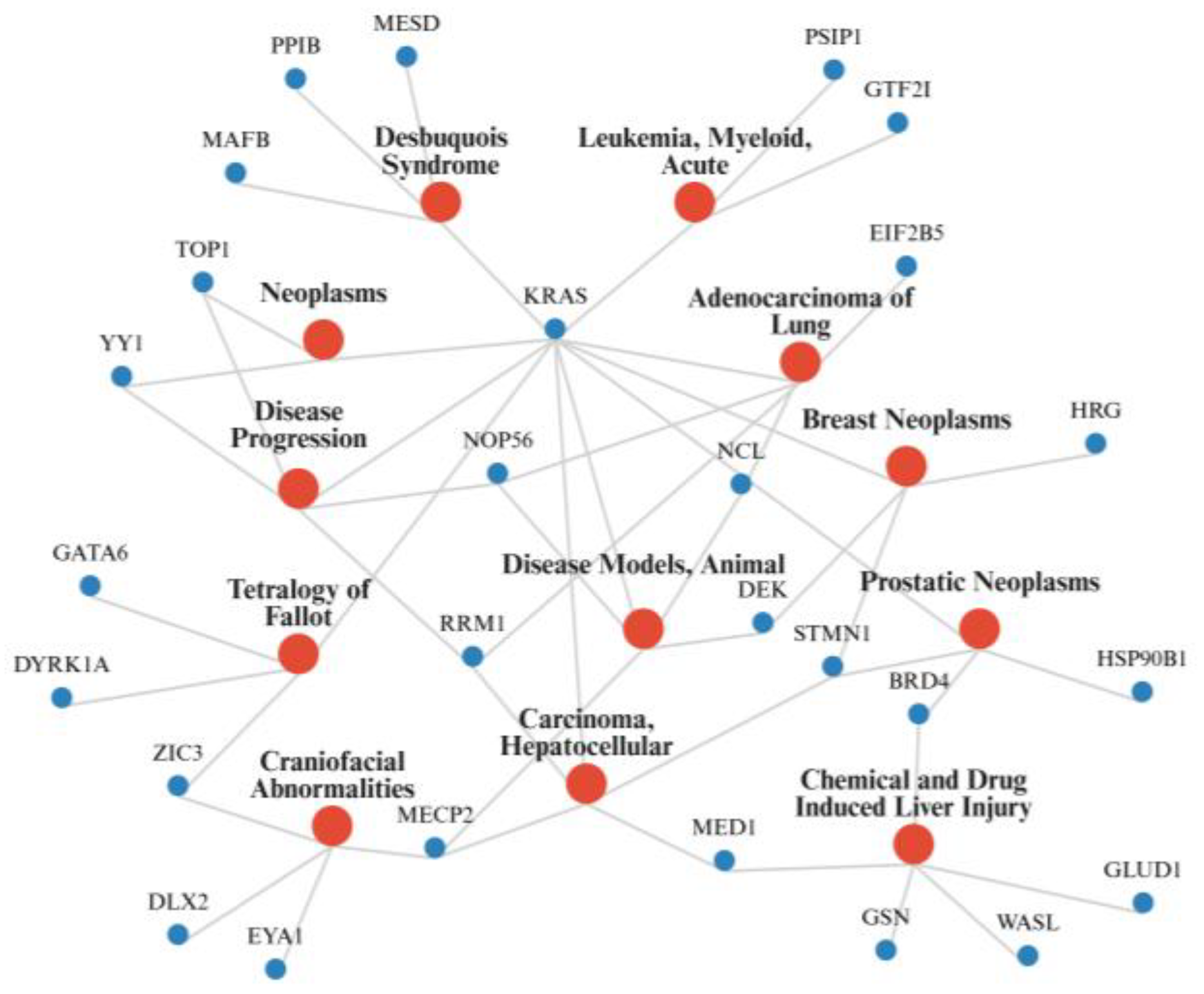
2.3. Polyphosphate-Protein Interactions: Biochemical and Structural Mechanisms

| Gene Name | UniProt ID | Type of Interaction | Activity | Citation |
|---|---|---|---|---|
| GTF2I | P78347 | PASK | Transcription Factor | [46] |
| EYA1 | Q99502 | PASK | Protein phosphatase and transcriptional coactivator | [46] |
| MAFA | Q8NHW3 | His-rich | Transcription Factor | [9] |
| MAFB | Q9Y5Q3 | His-rich | Transcription Factor | [9] |
| YY1 | P25490 | His-rich | Transcription Factor | [9] |
| DLX2 | Q07687 | His-rich | Transcriptional Activator | [9] |
| ZIC3 | O60481 | His-rich | Transcriptional Activator | [9] |
| GATA6 | Q92908 | His-rich | Transcriptional Activator | [9] |
| NR4A3 | Q92570 | His-rich | Transcriptional Activator | [9] |
| POU4F2 | Q12837 | His-rich | Transcription Factor | [9] |
| OTX1 | P32242 | His-rich | Transcription Factor | [9] |
| MECP2 | P51608 | His-rich | Binds methylated DNA | [9] |
| BRD3 | Q15059 | Lys-rich | Remodels chromatin structure, regulates transcription | [41] |
| NKAP | Q8N5F7 | Lys-rich | Transcriptional repressor | [41] |
| CIR1 | Q86X95 | Lys-rich | Transcriptional regulator, corepressor with RBPJ | [41] |
| TAF3 | Q5VWG9 | Lys-rich | Initiates transcription via RNA polymerase II | [41] |
| NFRKB | Q6P4R8-1 | Lys-rich | Nuclear factor related to kappa-B-binding protein | [41] |
| BBX | Q8WY36 | Lys-rich | Transcription factor | [41] |
| ILF3 | Q12906 | Lys-rich | RNA-binding protein, role in transcriptional and post-transcriptional processes | [41] |
| NCL | P19338 | Lys-rich | Major nuclear protein of growing eukaryotic cells, known role in chromatin decondensation | [41] |
| PSIP1 | O75475 | Lys-rich | Transcriptional coactivator | [41] |
| BRD4 | O60885 | Lys-rich | Chromatin reader protein, transmits epigenetic memory | [41] |
| MED1 | Q15648 | Lys-rich | Component of the coactivator of most RNA polymerase II-dependent genes | [41] |
| GTF2F1 | P35269 | Lys-rich | Transcription factor | [41] |
| UPF3B | Q9BZI7 | PASK | Non-sense mediated mRNA Decay | [47] |
| NUFIP2 | Q7Z417 | His-rich | RNA Binding | [9] |
| MEPCE | Q7L2J0 | His-rich | RNA Methyltransferase | [9] |
| SRRM1 | Q8IYB3 | Lys-rich | Involved in splicing and binds DNA | [41] |
| RBM25 | P49756 | Lys-rich | RNA-binding protein | [41] |
| HTATSF1 | O43719 | Lys-rich | Small nuclear ribonucleoprotein (SnRNP) complex component, role in splicing | [41] |
| REXO4 | Q9GZR2 | Lys-rich | RNA exonuclease | [41] |
| ZRANB2 | O95218 | Lys-rich | Splice factor | [41] |
| ARGLU1 | Q9NWB6 | Lys-rich | Regulates transcription and modulates alternative splicing | [41] |
| ZCCHC17 | Q9NP64 | Lys-rich | Pnn-interacting nucleolar protein | [41] |
| SRPK2 | P78362 | Lys-rich | Protein kinase, regulation of splicing | [41] |
| ELL2 | O00472 | Lys-rich | RNA polymerase II elongation factor | [41] |
| DDX55 | Q8NHQ9 | Lys-rich | ATP-dependent RNA helicase | [41] |
| NOP56 | O00567 | PASK | Ribosomal Activator | [47] |
| VGLL3 | A8MV65 | His-rich | Regulates RNA Polymerase II | [9] |
| EIF5B | O60841 | Lys-rich | Translation initiation | [41] |
| EIF2B5 | Q13144 | PASK | Translational regulation | [46] |
| RPL22 | P35268 | Not identified | Component of the large ribosomal subunit | [48] |
| SDA1 | Q9NVU7 | Lys-rich | Role in 60S pre-ribosomal subunit export | [41] |
| DEK | P35659 | PASK | Chromatin Organizing | [47] |
| TOP1 | P11387 | Lys-rich | DNA topoisomerase | [41] |
| RRM1 | P23921 | Lys-rich | Catalyzes biosynthesis of deoxyribonucleotides necessary for DNA synthesis | [41] |
| H1-10 | Q92522 | Not identified | Condensation of nucleosome chains into higher order structures | [48] |
| CCNT1 | O60563 | His-rich | Regulates CDK9 Kinase | [9] |
| NKD2 | Q969F2 | His-rich | Antagonist of Wnt signaling | [9] |
| DYRK1A | Q13627 | His-rich | Protein Kinase | [9] |
| RHOBTB2 | Q9BYZ6 | His-rich | Guanosine triphosphatase (GTPase) | [9] |
| HMGXB4 | Q9UGU5 | Lys-rich | Negatively regulates Wnt/β-catenin signaling | [41] |
| CSNK1G3 | Q9Y6M4 | Lys-rich | Protein kinase, participates in Wnt signaling | [41] |
| KRAS | P01116-2 | Lys-rich | GTPase | [41] |
| PRICKLE3 | O43900 | His-rich | Planar cell polarity pathway | [9] |
| RBBP5 | Q15291 | Lys-rich | Differentiation of embryonic stem cells | [41] |
| GSN | P06396 | PASK | Actin modulation | [46] |
| ADD2 | P35612 | Lys-rich | Associated with membrane-cytoskeleton | [41] |
| CYLC1 | P35663 | Lys-rich | Structural role in spermatogenesis | [41] |
| ADD3 | Q9UEY8-2 | Lys-rich | Associated with membrane-cytoskeleton, role in actin filament capping | [41] |
| WASL | O00401 | Lys-rich | Regulates actin polymerization | [41] |
| STMN1 | P16949 | Not identified | Destabilizing microtubules | [48] |
| MESD | Q14696 | PASK | Chaperone, supports Wnt Signaling Pathway | [47] |
| HSP90B1 | P14625 | PASK | Chaperone, supports Wnt Signaling pathway | [46] |
| PPIB | P23284 | Not identified | Protein chaperone -catalyzes peptidyl prolyl cis trans isomerization | [48] |
| HRC | P23327 | His-rich | Calcium Binding | [9] |
| MICU2 | Q8IYU8 | Not identified | Calcium update protein 2 | [25] |
| ARSJ | Q5FYB0 | Lys-rich | Hydrolase with calcium cofactor | [41] |
| HRG | P04196 | His-rich | Regulator in tumor function, immune system, angiogenesis pathways, vascular endothelial growth factor (VEGF) signaling pathway | [49] |
| F12 | P00748 | Not Indicated | Initiation of blood coagulation | [49] |
| NKTR | P30414 | Lys-rich | NK-tumor recognition | [41] |
| GLUD1 | P00367 | Not identified | Glutamate dehydrogenase 1 | [25] |
| ATP5F1A | P25705 | Not identified | Alpha subunit of F1 complex of F0F1 ATP synthase | [25] |
| NMT2 | O60551 | Lys-rich | Myristoylation of certain proteins | [41] |
| AP2S1 | P53680 | Not identified | Component of the adaptor protein complex 2—function in protein transport | [48] |
| PSMD7 | P51665 | Lys-rich | Component of 26S proteasome, degradation of ubiquitinated proteins | [41] |
| CBLL2 | Q8N7E2 | Lys-rich | E3 Ubiquitin-protein ligase | [41] |
| ASPH | Q12797 | Lys-rich | Aspartyl/asparaginyl beta-hydroxylase | [41] |
| KIAAO753 | Q2KHM9 | Lys-rich | Protein moonraker | [41] |
| TTC27 | Q6P3X3 | PASK | Unknown | [46] |
3. Functional Roles of Polyphosphate in Cellular Physiology
3.1. Transcriptional and Chromatin Regulation
3.2. Bioenergetics and Metabolism
3.3. Mitochondrial Ion Homeostasis and Stress Responses
4. Polyphosphate in Mammalian Disease
4.1. Hemostasis and Thrombosis
4.2. Inflammation and Endothelial Dysfunction
4.3. PolyP Connection to Neurodegeneration
4.4. PolyP Role in Cancer
4.5. PolyP Role in Viral Defense
4.6. Therapeutic Relevance
5. Methodological Limitations of Polyphosphate Research
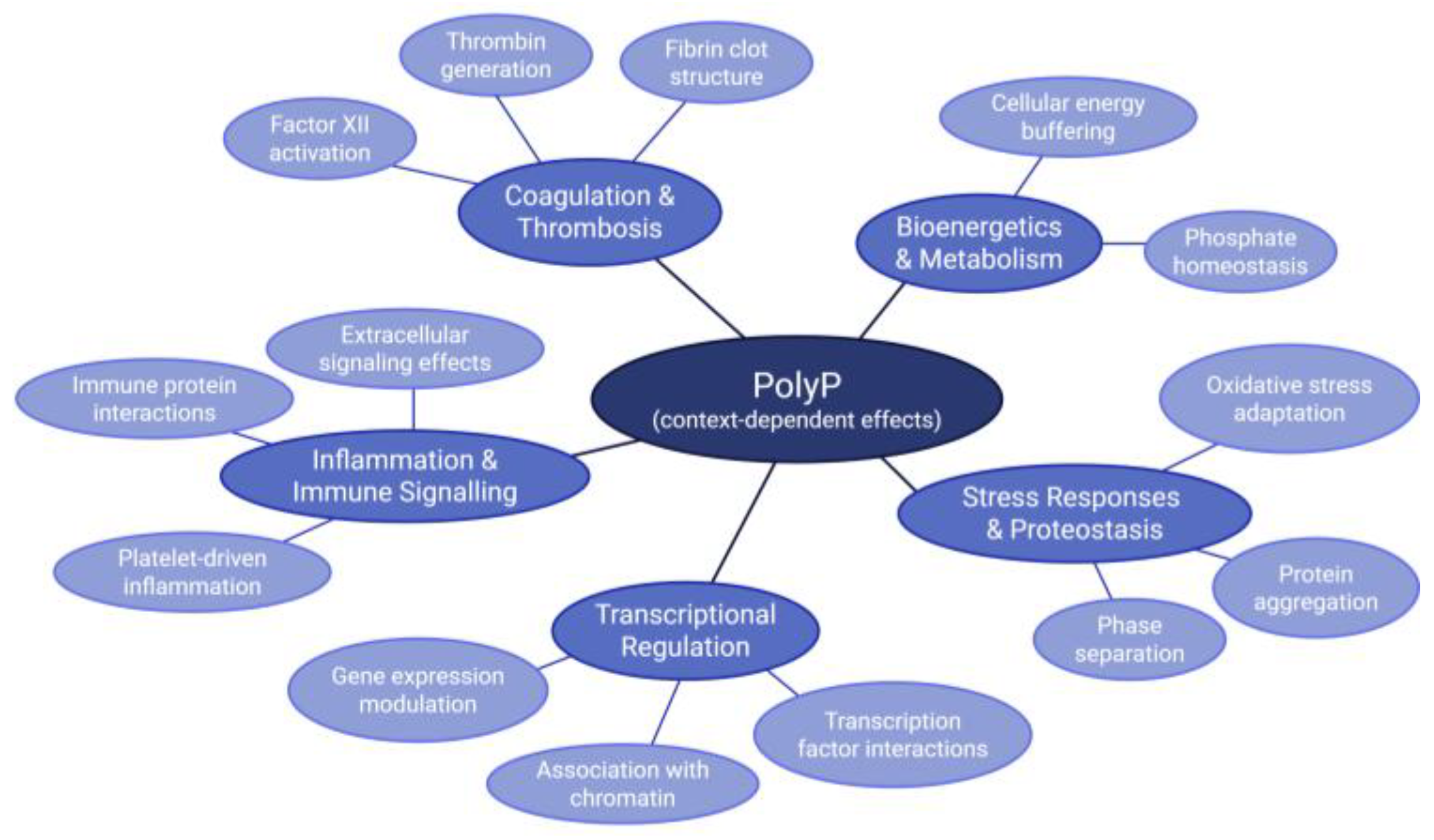
6. Discussion and Future Directions
7. Conclusions
Author Contributions
Funding
Institutional Review Board Statement
Informed Consent Statement
Data Availability Statement
Acknowledgments
Conflicts of Interest
Abbreviations
| ACE2 | Angiotensin-converting enzyme 2 |
| AD | Alzheimer’s disease |
| ALS | Amyotrophic lateral sclerosis |
| AMPA | α-amino-3-hydroxy-5-methyl-4-isoxazolepropionic acid receptor |
| CHAD | Conserved histidine α-helical domain |
| DAPI | 4′,6-diamino-2-phenylindole |
| DIPP | Diphosphoinositol polyphosphate phosphohydrolase |
| FXI | Factor XI |
| FXIa | Activated Factor XI |
| FXII | Factor XII |
| FXIIa | Activated Factor XII |
| FRET | Förster resonance energy transfer |
| HIV-1 | Human immunodeficiency virus type 1 |
| HPLC | High-performance liquid chromatography |
| mPTP | Mitochondrial permeability transition pore |
| mTOR | Mammalian target of rapamycin |
| NMDA | N-methyl-D-aspartate receptor |
| P2Y | P2Y purinergic receptor |
| PASK | Polyacidic serine- and lysine-rich motif |
| Pi | Orthophosphate |
| PMCA | Plasma membrane calcium ATPase |
| polyP | Inorganic polyphosphate |
| PPX | Exopolyphosphatase |
| RdRp | RNA-dependent RNA polymerase |
| ROS | Reactive oxygen species |
| SARS-CoV-2 | Severe acute respiratory syndrome coronavirus 2 |
| TFPI | Tissue factor pathway inhibitor |
| VE GF | Vascular endothelial growth factor |
References
- Brown, M.R.; Kornberg, A. Inorganic polyphosphate in the origin and survival of species. Proc. Natl. Acad. Sci. USA 2004, 101, 16085–16087. [Google Scholar] [CrossRef] [PubMed]
- Kornberg, A.; Rao, N.N.; Ault-Riché, D. Inorganic Polyphosphate: A Molecule of Many Functions. Annu. Rev. Biochem. 1999, 68, 89–125. [Google Scholar] [CrossRef] [PubMed]
- Kulaev, I.S.; Vagabov, V.M. Polyphosphate metabolism in micro-organisms. Adv. Microb. Physiol. 1983, 24, 83–171. [Google Scholar]
- Ruiz, F.A.; Lea, C.R.; Oldfield, E.; Docampo, R. Human Platelet Dense Granules Contain Polyphosphate and Are Similar to Acidocalcisomes of Bacteria and Unicellular Eukaryotes. J. Biol. Chem. 2004, 279, 44250–44257. [Google Scholar] [CrossRef] [PubMed]
- Smith, S.A.; Mutch, N.J.; Baskar, D.; Rohloff, P.; Docampo, R.; Morrissey, J.H. Polyphosphate modulates blood coagulation and fibrinolysis. Proc. Natl. Acad. Sci. USA 2006, 103, 903–908. [Google Scholar] [CrossRef]
- Kumble, K.D.; Kornberg, A. Inorganic Polyphosphate in Mammalian Cells and Tissues. J. Biol. Chem. 1995, 270, 5818–5822. [Google Scholar] [CrossRef]
- Muhl, L.; Galuska, S.P.; Öörni, K.; Hernández-Ruiz, L.; Andrei-Selmer, L.-C.; Geyer, R.; Preissner, K.T.; Ruiz, F.A.; Kovanen, P.T.; Kanse, S.M. High negative charge-to-size ratio in polyphosphates and heparin regulates factor VII-activating protease. FEBS J. 2009, 276, 4828–4839. [Google Scholar] [CrossRef]
- Barolo, L.; Mautone, L.; Gigante, Y.; Ghirga, S.; Mura, F.; Farina, M.V.; Tacconi, S.; Dini, L.; Ruocco, G.; Boffi, A.; et al. Short-chain polyphosphates induce tau fibrillation and neurotoxicity in human iPSC-derived retinal neurons. Cell Death Dis. 2025, 16, 369. [Google Scholar] [CrossRef]
- Neville, N.; Lehotsky, K.; Yang, Z.; Klupt, K.A.; Denoncourt, A.; Downey, M.; Jia, Z. Modification of histidine repeat proteins by inorganic polyphosphate. Cell Rep. 2023, 42, 113082. [Google Scholar] [CrossRef]
- Holmström, K.M.; Marina, N.; Baev, A.Y.; Wood, N.W.; Gourine, A.V.; Abramov, A.Y. Signalling properties of inorganic polyphosphate in the mammalian brain. Nat. Commun. 2013, 4, 1362. [Google Scholar] [CrossRef]
- Gray, M.J.; Wholey, W.-Y.; Wagner, N.O.; Cremers, C.M.; Mueller-Schickert, A.; Hock, N.T.; Krieger, A.G.; Smith, E.M.; Bender, R.A.; Bardwell, J.C.A.; et al. Polyphosphate Is a Primordial Chaperone. Mol. Cell 2014, 53, 689–699. [Google Scholar] [CrossRef]
- Pavlov, E.; Aschar-Sobbi, R.; Campanella, M.; Turner, R.J.; Gómez-García, M.R.; Abramov, A.Y. Inorganic Polyphosphate and Energy Metabolism in Mammalian Cells. J. Biol. Chem. 2010, 285, 9420–9428. [Google Scholar] [CrossRef]
- Abramov, A.Y.; Fraley, C.; Diao, C.T.; Winkfein, R.; Colicos, M.A.; Duchen, M.R.; French, R.J.; Pavlov, E. Targeted polyphosphatase expression alters mitochondrial metabolism and inhibits calcium-dependent cell death. Proc. Natl. Acad. Sci. USA 2007, 104, 18091–18096. [Google Scholar] [CrossRef]
- Samper-Martín, B.; Sarrias, A.; Lázaro, B.; Pérez-Montero, M.; Rodríguez-Rodríguez, R.; Ribeiro, M.P.C.; Bañón, A.; Wolfgeher, D.; Jessen, H.J.; Alsina, B.; et al. Polyphosphate degradation by Nudt3-Zn2+ mediates oxidative stress response. Cell Rep. 2021, 37, 110004. [Google Scholar] [CrossRef] [PubMed]
- Hassanian, S.M.; Avan, A.; Ardeshirylajimi, A. Inorganic polyphosphate: A key modulator of inflammation. J. Thromb. Haemost. 2017, 15, 213–218. [Google Scholar] [CrossRef] [PubMed]
- Kawazoe, Y.; Shiba, T.; Nakamura, R.; Mizuno, A.; Tsutsumi, K.; Uematsu, T.; Yamaoka, M.; Shindoh, M.; Kohgo, T. Induction of Calcification in MC3T3-E1 Cells by Inorganic Polyphosphate. J. Dent. Res. 2004, 83, 613–618. [Google Scholar] [CrossRef] [PubMed]
- Kawazoe, Y.; Katoh, S.; Onodera, Y.; Kohgo, T.; Shindoh, M.; Shiba, T. Activation of the FGF signaling pathway and subsequent induction of mesenchymal stem cell differentiation by inorganic polyphosphate. Int. J. Biol. Sci. 2008, 4, 37–47. [Google Scholar] [CrossRef]
- Lempart, J.; Tse, E.; Lauer, J.A.; Ivanova, M.I.; Sutter, A.; Yoo, N.; Huettemann, P.; Southworth, D.; Jakob, U. Mechanistic insights into the protective roles of polyphosphate against amyloid cytotoxicity. Life Sci. Alliance 2019, 2, e201900486. [Google Scholar] [CrossRef]
- Boyineni, J.; Sredni, S.T.; Margaryan, N.V.; Demirkhanyan, L.; Tye, M.; Johnson, R.; Gonzalez-Nilo, F.; Hendrix, M.J.C.; Pavlov, E.; Soares, M.B.; et al. Inorganic polyphosphate as an energy source in tumorigenesis. Oncotarget 2020, 11, 4613–4624. [Google Scholar] [CrossRef]
- Kulaev, I.S.; Kulakovskaya, T.V.; Andreeva, N.A.; Lichko, L.P. Metabolism and Function of Polyphosphates in Bacteria and Yeast. In Inorganic Polyphosphates: Biochemistry, Biology, Biotechnology; Schröder, H.C., Müller, W.E.G., Eds.; Springer: Berlin/Heidelberg, Germany, 1999; pp. 27–43. [Google Scholar]
- Hooley, P.; Whitehead, M.P.; Brown, M.R.W. Eukaryote polyphosphate kinases: Is the ‘Kornberg’ complex ubiquitous? Trends Biochem. Sci. 2008, 33, 577–582. [Google Scholar] [CrossRef]
- Hothorn, M.; Neumann, H.; Lenherr, E.D.; Wehner, M.; Rybin, V.; Hassa, P.O.; Uttenweiler, A.; Reinhardt, M.; Schmidt, A.; Seiler, J.; et al. Catalytic Core of a Membrane-Associated Eukaryotic Polyphosphate Polymerase. Science 2009, 324, 513–516. [Google Scholar] [CrossRef]
- Lynn, W.S.; Brown, R.H. Synthesis of polyphosphate by rat liver mitochondria. Biochem. Biophys. Res. Commun. 1963, 11, 367–371. [Google Scholar] [CrossRef] [PubMed]
- Baev, A.Y.; Angelova, P.R.; Abramov, A.Y. Inorganic polyphosphate is produced and hydrolyzed in F0F1-ATP synthase of mammalian mitochondria. Biochem. J. 2020, 477, 1515–1524. [Google Scholar] [CrossRef]
- Ladke, J.S.; Khan, A.; Singh, A.; Singh, J.; Steck, N.; Jessen, H.J.; Kolthur-Seetharam, U.; Jaiswal, M.; Bhandari, R. Mammalian mitochondrial polyphosphate is regulated by the 5-InsP7 synthase IP6K1. bioRxiv 2025. bioRxiv:2025.2006.2017.659843. [Google Scholar] [CrossRef]
- Reusch, R.N.; Huang, R.; Kosk-Kosicka, D. Novel components and enzymatic activities of the human erythrocyte plasma membrane calcium pump. FEBS Lett. 1997, 412, 592–596. [Google Scholar] [CrossRef] [PubMed]
- Lonetti, A.; Szijgyarto, Z.; Bosch, D.; Loss, O.; Azevedo, C.; Saiardi, A. Identification of an Evolutionarily Conserved Family of Inorganic Polyphosphate Endopolyphosphatases. J. Biol. Chem. 2011, 286, 31966–31974. [Google Scholar] [CrossRef]
- Lorenz, B.; Schröder, H.C. Mammalian intestinal alkaline phosphatase acts as highly active exopolyphosphatase. Biochim. Biophys. Acta (BBA)—Protein Struct. Mol. Enzymol. 2001, 1547, 254–261. [Google Scholar] [CrossRef]
- Scoma, E.R.; Da Costa, R.T.; Leung, H.H.; Urquiza, P.; Guitart-Mampel, M.; Hambardikar, V.; Riggs, L.M.; Wong, C.-O.; Solesio, M.E. Human Prune Regulates the Metabolism of Mammalian Inorganic Polyphosphate and Bioenergetics. Int. J. Mol. Sci. 2023, 24, 13859. [Google Scholar] [CrossRef]
- Harada, K.; Itoh, H.; Kawazoe, Y.; Miyazaki, S.; Doi, K.; Kubo, T.; Akagawa, Y.; Shiba, T. Polyphosphate-Mediated Inhibition of Tartrate-Resistant Acid Phosphatase and Suppression of Bone Resorption of Osteoclasts. PLoS ONE 2013, 8, e78612. [Google Scholar] [CrossRef]
- Solesio, M.E.; Demirkhanyan, L.; Zakharian, E.; Pavlov, E.V. Contribution of inorganic polyphosphate towards regulation of mitochondrial free calcium. Biochim. Biophys. Acta (BBA)—Gen. Subj. 2016, 1860, 1317–1325. [Google Scholar] [CrossRef]
- Solesio, M.E.; Garcia del Molino, L.C.; Elustondo, P.A.; Diao, C.; Chang, J.C.; Pavlov, E.V. Inorganic polyphosphate is required for sustained free mitochondrial calcium elevation, following calcium uptake. Cell Calcium 2020, 86, 102127. [Google Scholar] [CrossRef]
- Weinstein, B.I.; Li, H.-C. Stimulation of chromatin template activity by the physiological macromolecule polyphosphate: A possible mechanism for eukaryotic gene derepression. Arch. Biochem. Biophys. 1976, 175, 114–120. [Google Scholar] [CrossRef] [PubMed]
- Jimenez-Nuñez, M.D.; Moreno-Sanchez, D.; Hernandez-Ruiz, L.; Benítez-Rondán, A.; Ramos-Amaya, A.; Rodríguez-Bayona, B.; Medina, F.; Brieva, J.A.; Ruiz, F.A. Myeloma cells contain high levels of inorganic polyphosphate which is associated with nucleolar transcription. Haematologica 2012, 97, 1264–1271. [Google Scholar] [CrossRef] [PubMed]
- Bru, S.; Samper-Martín, B.; Quandt, E.; Hernández-Ortega, S.; Martínez-Laínez, J.M.; Garí, E.; Rafel, M.; Torres-Torronteras, J.; Martí, R.; Ribeiro, M.P.C.; et al. Polyphosphate is a key factor for cell survival after DNA damage in eukaryotic cells. DNA Repair 2017, 57, 171–178. [Google Scholar] [CrossRef] [PubMed]
- Moreno-Sanchez, D.; Hernandez-Ruiz, L.; Ruiz, F.A.; Docampo, R. Polyphosphate Is a Novel Pro-inflammatory Regulator of Mast Cells and Is Located in Acidocalcisomes. J. Biol. Chem. 2012, 287, 28435–28444. [Google Scholar] [CrossRef]
- Müller, F.; Mutch, N.J.; Schenk, W.A.; Smith, S.A.; Esterl, L.; Spronk, H.M.; Schmidbauer, S.; Gahl, W.A.; Morrissey, J.H.; Renné, T. Platelet Polyphosphates Are Proinflammatory and Procoagulant Mediators In Vivo. Cell 2009, 139, 1143–1156. [Google Scholar] [CrossRef]
- Seidlmayer, L.K.; Gomez-Garcia, M.R.; Blatter, L.A.; Pavlov, E.; Dedkova, E.N. Inorganic polyphosphate is a potent activator of the mitochondrial permeability transition pore in cardiac myocytes. J. Gen. Physiol. 2012, 139, 321–331. [Google Scholar] [CrossRef]
- Borghi, F.; Azevedo, C.; Johnson, E.; Burden, J.J.; Saiardi, A. A mammalian model reveals inorganic polyphosphate channeling into the nucleolus and induction of a hyper-condensate state. Cell Rep. Methods 2024, 4, 100814. [Google Scholar] [CrossRef]
- Offenbacher, S.; Kline, E.S. Evidence for polyphosphate in phosphorylated nonhistone nuclear proteins. Arch. Biochem. Biophys. 1984, 231, 114–123. [Google Scholar] [CrossRef]
- Yang, Z.; Jin, J.; Lehotsky, K.; Martins, I.; Belrose, E.; Neville, N.; Jia, Z. Discovery of polyphosphate-interacting human lysine-rich proteins and their functional implications. Int. J. Biol. Macromol. 2026, 336, 149335. [Google Scholar] [CrossRef]
- Da Costa, R.T.; Urquiza, P.; Perez, M.M.; Du, Y.; Khong, M.L.; Zheng, H.; Guitart-Mampel, M.; Elustondo, P.A.; Scoma, E.R.; Hambardikar, V.; et al. Mitochondrial inorganic polyphosphate is required to maintain proteostasis within the organelle. Front. Cell Dev. Biol. 2024, 12, 1423208. [Google Scholar] [CrossRef]
- Azevedo, C.; Livermore, T.; Saiardi, A. Protein Polyphosphorylation of Lysine Residues by Inorganic Polyphosphate. Mol. Cell 2015, 58, 71–82. [Google Scholar] [CrossRef]
- Neville, N.; Lehotsky, K.; Klupt, K.A.; Downey, M.; Jia, Z. Polyphosphate attachment to lysine repeats is a non-covalent protein modification. Mol. Cell 2024, 84, 1802–1810.e1804. [Google Scholar] [CrossRef]
- Lorenzo-Orts, L.; Hohmann, U.; Zhu, J.; Hothorn, M. Molecular characterization of CHAD domains as inorganic polyphosphate-binding modules. Life Sci. Alliance 2019, 2, e201900385. [Google Scholar] [CrossRef] [PubMed]
- Azevedo, C.; Singh, J.; Steck, N.; Hofer, A.; Ruiz, F.A.; Singh, T.; Jessen, H.J.; Saiardi, A. Screening a Protein Array with Synthetic Biotinylated Inorganic Polyphosphate to Define the Human PolyP-ome. ACS Chem. Biol. 2018, 13, 1958–1963. [Google Scholar] [CrossRef] [PubMed]
- Bentley-DeSousa, A.; Holinier, C.; Moteshareie, H.; Tseng, Y.-C.; Kajjo, S.; Nwosu, C.; Amodeo, G.F.; Bondy-Chorney, E.; Sai, Y.; Rudner, A.; et al. A Screen for Candidate Targets of Lysine Polyphosphorylation Uncovers a Conserved Network Implicated in Ribosome Biogenesis. Cell Rep. 2018, 22, 3427–3439. [Google Scholar] [CrossRef] [PubMed]
- Khong, M.L.; Li, L.; Solesio, M.E.; Pavlov, E.V.; Tanner, J.A. Inorganic polyphosphate controls cyclophilin B-mediated collagen folding in osteoblast-like cells. FEBS J. 2020, 287, 4500–4524. [Google Scholar] [CrossRef]
- Malik, R.A.; Zhou, J.; Fredenburgh, J.C.; Truong, T.K.; Crosby, J.R.; Revenko, A.S.; Weitz, J.I. Polyphosphate-induced thrombosis in mice is factor XII dependent and is attenuated by histidine-rich glycoprotein. Blood Adv. 2021, 5, 3540–3551. [Google Scholar] [CrossRef]
- Sasahara, K.; Yamaguchi, K.; So, M.; Goto, Y. Polyphosphates diminish solubility of a globular protein and thereby promote amyloid aggregation. J. Biol. Chem. 2019, 294, 15318–15329. [Google Scholar] [CrossRef]
- Wang, X.; Shi, C.; Mo, J.; Xu, Y.; Wei, W.; Zhao, J. An Inorganic Biopolymer Polyphosphate Controls Positively Charged Protein Phase Transitions. Angew. Chem. Int. Ed. 2020, 59, 2679–2683. [Google Scholar] [CrossRef]
- Yang, Z.; Jia, Z. Polyphosphate as a Novel Regulator of Super-Enhancer Complexes: Disruption of Phase Separation and Gene Expression bioRxiv:2024.2012.2012.628164. bioRxiv 2024. bioRxiv:2024.2012.2012.628164. [Google Scholar] [CrossRef]
- Xie, L.; Rajpurkar, A.; Quarles, E.; Taube, N.; Rai, A.S.; Erba, J.; Sliwinski, B.; Markowitz, M.; Jakob, U.; Knoefler, D. Accumulation of Nucleolar Inorganic Polyphosphate Is a Cellular Response to Cisplatin-Induced Apoptosis. Front. Oncol. 2019, 9, 1410. [Google Scholar] [CrossRef] [PubMed]
- Lin, Q.; Shen, S.; Qian, Z.; Rasam, S.S.; Serratore, A.; Jusko, W.J.; Kandel, E.S.; Qu, J.; Straubinger, R.M. Comparative Proteomic Analysis Identifies Key Metabolic Regulators of Gemcitabine Resistance in Pancreatic Cancer. Mol. Cell. Proteom. 2022, 21, 100409. [Google Scholar] [CrossRef] [PubMed]
- Müller, W.E.G.; Wang, S.; Neufurth, M.; Kokkinopoulou, M.; Feng, Q.; Schröder, H.C.; Wang, X. Polyphosphate as a donor of high-energy phosphate for the synthesis of ADP and ATP. J. Cell Sci. 2017, 130, 2747–2756. [Google Scholar] [CrossRef]
- Schröder, H.C.; Wang, X.; Müller, W.E.G. Amorphous polyphosphate nanoparticles: Application of the morphogenetically active inorganic polymer for personalized tissue regeneration. J. Phys. D Appl. Phys. 2019, 52, 363001. [Google Scholar] [CrossRef]
- Baev, A.Y.; Negoda, A.; Abramov, A.Y. Modulation of mitochondrial ion transport by inorganic polyphosphate—Essential role in mitochondrial permeability transition pore. J. Bioenerg. Biomembr. 2017, 49, 49–55. [Google Scholar] [CrossRef]
- Seidlmayer, L.K.; Juettner, V.V.; Kettlewell, S.; Pavlov, E.V.; Blatter, L.A.; Dedkova, E.N. Distinct mPTP activation mechanisms in ischaemia–reperfusion: Contributions of Ca2+, ROS, pH, and inorganic polyphosphate. Cardiovasc. Res. 2015, 106, 237–248. [Google Scholar] [CrossRef]
- Smithen, M.; Elustondo, P.A.; Winkfein, R.; Zakharian, E.; Abramov, A.Y.; Pavlov, E. Role of polyhydroxybutyrate in mitochondrial calcium uptake. Cell Calcium 2013, 54, 86–94. [Google Scholar] [CrossRef]
- Smith, S.A.; Morrissey, J.H. Polyphosphate as a general procoagulant agent. J. Thromb. Haemost. 2008, 6, 1750–1756. [Google Scholar] [CrossRef]
- Colman, R.W. Contact activation (kallikrein-kinin) pathway: Multiple physiologic and pathophysiologic activities. Hemost. Thromb. Basic Princ. Clin. Pract. 2006, 5, 107–130. [Google Scholar]
- Gailani, D.; Renné, T. Intrinsic Pathway of Coagulation and Arterial Thrombosis. Arterioscler. Thromb. Vasc. Biol. 2007, 27, 2507–2513. [Google Scholar] [CrossRef]
- Choi, S.H.; Smith, S.A.; Morrissey, J.H. Polyphosphate is a cofactor for the activation of factor XI by thrombin. Blood 2011, 118, 6963–6970. [Google Scholar] [CrossRef]
- Seligsohn, U. Factor XI deficiency in humans. J. Thromb. Haemost. 2009, 7, 84–87. [Google Scholar] [CrossRef] [PubMed]
- Choi, S.H.; Smith, S.A.; Morrissey, J.H. Polyphosphate accelerates factor V activation by factor XIa. Thromb. Haemost. 2015, 113, 599–604. [Google Scholar] [CrossRef] [PubMed]
- Smith, S.A.; Choi, S.H.; Davis-Harrison, R.; Huyck, J.; Boettcher, J.; Rienstra, C.M.; Morrissey, J.H. Polyphosphate exerts differential effects on blood clotting, depending on polymer size. Blood 2010, 116, 4353–4359. [Google Scholar] [CrossRef] [PubMed]
- Ivanov, I.; Shakhawat, R.; Sun, M.-F.; Dickeson, S.K.; Puy, C.; McCarty, O.J.T.; Gruber, A.; Matafonov, A.; Gailani, D. Nucleic acids as cofactors for factor XI and prekallikrein activation: Different roles for high-molecular-weight kininogen. Thromb. Haemost. 2017, 117, 671–681. [Google Scholar] [CrossRef]
- Smith, S.A.; Morrissey, J.H. Polyphosphate enhances fibrin clot structure. Blood 2008, 112, 2810–2816. [Google Scholar] [CrossRef]
- Hernandez-Ruiz, L.; González-García, I.; Castro, C.; Brieva, J.A.; Ruiz, F.A. Inorganic polyphosphate and specific induction of apoptosis in human plasma cells. Haematologica 2006, 91, 1180–1186. [Google Scholar]
- Bae, J.S.; Lee, W.; Rezaie, A.R. Polyphosphate elicits pro-inflammatory responses that are counteracted by activated protein C in both cellular and animal models. J. Thromb. Haemost. 2012, 10, 1145–1151. [Google Scholar] [CrossRef]
- Rasola, A.; Bernardi, P. The mitochondrial permeability transition pore and its involvement in cell death and in disease pathogenesis. Apoptosis 2007, 12, 815–833. [Google Scholar] [CrossRef]
- Arredondo, C.; Cefaliello, C.; Dyrda, A.; Jury, N.; Martinez, P.; Díaz, I.; Amaro, A.; Tran, H.; Morales, D.; Pertusa, M.; et al. Excessive release of inorganic polyphosphate by ALS/FTD astrocytes causes non-cell-autonomous toxicity to motoneurons. Neuron 2022, 110, 1656–1670.e1612. [Google Scholar] [CrossRef]
- Cremers, C.M.; Knoefler, D.; Gates, S.; Martin, N.; Dahl, J.-U.; Lempart, J.; Xie, L.; Chapman, M.R.; Galvan, V.; Southworth, D.R.; et al. Polyphosphate: A Conserved Modifier of Amyloidogenic Processes. Mol. Cell 2016, 63, 768–780. [Google Scholar] [CrossRef]
- Müller, W.E.G.; Wang, S.; Ackermann, M.; Neufurth, M.; Steffen, R.; Mecja, E.; Muñoz-Espí, R.; Feng, Q.; Schröder, H.C.; Wang, X. Rebalancing β-Amyloid-Induced Decrease of ATP Level by Amorphous Nano/Micro Polyphosphate: Suppression of the Neurotoxic Effect of Amyloid β-Protein Fragment 25–35. Int. J. Mol. Sci. 2017, 18, 2154. [Google Scholar] [CrossRef] [PubMed]
- Maiolino, M.; O’Neill, N.; Lariccia, V.; Amoroso, S.; Sylantyev, S.; Angelova, P.R.; Abramov, A.Y. Inorganic Polyphosphate Regulates AMPA and NMDA Receptors and Protects Against Glutamate Excitotoxicity via Activation of P2Y Receptors. J. Neurosci. 2019, 39, 6038–6048. [Google Scholar] [CrossRef] [PubMed]
- Arrè, V.; Balestra, F.; Scialpi, R.; Dituri, F.; Donghia, R.; Coletta, S.; Stabile, D.; Bianco, A.; Vincenti, L.; Fedele, S.; et al. Inorganic Polyphosphate Promotes Colorectal Cancer Growth via TRPM8 Receptor Signaling Pathway. Cancers 2024, 16, 3326. [Google Scholar] [CrossRef]
- Wang, L.; Fraley, C.D.; Faridi, J.; Kornberg, A.; Roth, R.A. Inorganic polyphosphate stimulates mammalian TOR, a kinase involved in the proliferation of mammary cancer cells. Proc. Natl. Acad. Sci. USA 2003, 100, 11249–11254. [Google Scholar] [CrossRef] [PubMed]
- Han, K.Y.; Hong, B.S.; Yoon, Y.J.; Yoon, C.M.; Kim, Y.-K.; Kwon, Y.-G.; Gho, Y.S. Polyphosphate blocks tumour metastasis via anti-angiogenic activity. Biochem. J. 2007, 406, 49–55. [Google Scholar] [CrossRef]
- Davis, A.P.; Wiegers, T.C.; Sciaky, D.; Barkalow, F.; Strong, M.; Wyatt, B.; Wiegers, J.; McMorran, R.; Abrar, S.; Mattingly, C.J. Comparative Toxicogenomics Database’s 20th anniversary: Update 2025. Nucleic Acids Res. 2025, 53, D1328–D1334. [Google Scholar] [CrossRef]
- Lorenz, B.; Leuck, J.; Köhl, D.; Müller, W.E.G.; Schröder, H.C. Anti-HIV-1 Activity of Inorganic Polyphosphates. JAIDS J. Acquir. Immune Defic. Syndr. 1997, 14, 110–118. [Google Scholar] [CrossRef]
- Ferrucci, V.; Kong, D.-Y.; Asadzadeh, F.; Marrone, L.; Boccia, A.; Siciliano, R.; Criscuolo, G.; Anastasio, C.; Quarantelli, F.; Comegna, M.; et al. Long-chain polyphosphates impair SARS-CoV-2 infection and replication. Sci. Signal. 2021, 14, eabe5040. [Google Scholar] [CrossRef]
- Smith, S.A.; Choi, S.H.; Collins, J.N.R.; Travers, R.J.; Cooley, B.C.; Morrissey, J.H. Inhibition of polyphosphate as a novel strategy for preventing thrombosis and inflammation. Blood 2012, 120, 5103–5110. [Google Scholar] [CrossRef]
- Carney, B.C.; Simbulan-Rosenthal, C.M.; Gaur, A.; Browne, B.J.; Moghe, M.; Crooke, E.; Moffatt, L.T.; Shupp, J.W.; Rosenthal, D.S. Inorganic polyphosphate in platelet rich plasma accelerates re-epithelialization in vitro and in vivo. Regen. Ther. 2020, 15, 138–148. [Google Scholar] [CrossRef] [PubMed]
- Müller, W.E.G.; Tolba, E.; Ackermann, M.; Neufurth, M.; Wang, S.; Feng, Q.; Schröder, H.C.; Wang, X. Fabrication of amorphous strontium polyphosphate microparticles that induce mineralization of bone cells in vitro and in vivo. Acta Biomater. 2017, 50, 89–101. [Google Scholar] [CrossRef] [PubMed]
- Müller, W.E.G.; Tolba, E.; Feng, Q.; Schröder, H.C.; Markl, J.S.; Kokkinopoulou, M.; Wang, X. Amorphous Ca2+ polyphosphate nanoparticles regulate the ATP level in bone-like SaOS-2 cells. J. Cell Sci. 2015, 128, 2202–2207. [Google Scholar] [CrossRef]
- Wang, X.; Ackermann, M.; Tolba, E.; Neufurth, M.; Wurm, F.; Feng, Q.; Wang, S.; Schröder, H.C.; Müller, W.E.G. Artificial cartilage bio-matrix formed of hyaluronic acid and MG2+-polyphosphate. Eur. Cells Mater. 2016, 32, 271–283. [Google Scholar] [CrossRef] [PubMed]
- Müller, W.E.G.; Neufurth, M.; Wang, S.; Schröder, H.C.; Wang, X. Polyphosphate Reverses the Toxicity of the Quasi-Enzyme Bleomycin on Alveolar Endothelial Lung Cells In Vitro. Cancers 2021, 13, 750. [Google Scholar] [CrossRef]
- Chan, W.-H.; Wu, H.-J. Methylglyoxal and high glucose co-treatment induces apoptosis or necrosis in human umbilical vein endothelial cells. J. Cell. Biochem. 2008, 103, 1144–1157. [Google Scholar] [CrossRef]
- Wang, X.; Ackermann, M.; Neufurth, M.; Wang, S.; Li, Q.; Feng, Q.; Schröder, H.C.; Müller, W.E.G. Restoration of Impaired Metabolic Energy Balance (ATP Pool) and Tube Formation Potential of Endothelial Cells under “high glucose”, Diabetic Conditions by the Bioinorganic Polymer Polyphosphate. Polymers 2017, 9, 575. [Google Scholar] [CrossRef]
- Aschar-Sobbi, R.; Abramov, A.Y.; Diao, C.; Kargacin, M.E.; Kargacin, G.J.; French, R.J.; Pavlov, E. High Sensitivity, Quantitative Measurements of Polyphosphate Using a New DAPI-Based Approach. J. Fluoresc. 2008, 18, 859–866. [Google Scholar] [CrossRef]
- Christ, J.J.; Blank, L.M. Enzymatic quantification and length determination of polyphosphate down to a chain length of two. Anal. Biochem. 2018, 548, 82–90. [Google Scholar] [CrossRef]
- Lorenz, B.; Münkner, J.; Oliveira, M.P.; Kuusksalu, A.; Leitão, J.M.; Müller, W.E.G.; Schröder, H.C. Changes in metabolism of inorganic polyphosphate in rat tissues and human cells during development and apoptosis. Biochim. Biophys. Acta (BBA)—Gen. Subj. 1997, 1335, 51–60. [Google Scholar] [CrossRef]
- Martin, P.; Mooy, B.A.S.V. Fluorometric Quantification of Polyphosphate in Environmental Plankton Samples: Extraction Protocols, Matrix Effects, and Nucleic Acid Interference. Appl. Environ. Microbiol. 2013, 79, 273–281. [Google Scholar] [CrossRef] [PubMed]
- Angelova, P.R.; Agrawalla, B.K.; Elustondo, P.A.; Gordon, J.; Shiba, T.; Abramov, A.Y.; Chang, Y.-T.; Pavlov, E.V. In Situ Investigation of Mammalian Inorganic Polyphosphate Localization Using Novel Selective Fluorescent Probes JC-D7 and JC-D8. ACS Chem. Biol. 2014, 9, 2101–2110. [Google Scholar] [CrossRef] [PubMed]
- Rangel-Aldao, R.; Allende, O.; Triana, F.; Piras, R.; Henriquez, D.; Piras, M. Possible role of cAMP in the differentiation of Trypanosoma cruzi. Mol. Biochem. Parasitol. 1987, 22, 39–43. [Google Scholar] [CrossRef] [PubMed]
- Banerjee, S.; Versaw, W.K.; Garcia, L.R. Imaging Cellular Inorganic Phosphate in Caenorhabditis elegans Using a Genetically Encoded FRET-Based Biosensor. PLoS ONE 2015, 10, e0141128. [Google Scholar] [CrossRef][Green Version]
- Jiménez, J.; Lázaro, B.; Sarrias, A.; Tadeo, F.J.; Pérez-Montero, M.; Clotet, J.; Bru, S. Protocol to quantify polyphosphate in human cell lines using a tagged PPBD peptide. STAR Protoc. 2022, 3, 101363. [Google Scholar] [CrossRef]
- Saito, K.; Ohtomo, R.; Kuga-Uetake, Y.; Aono, T.; Saito, M. Direct Labeling of Polyphosphate at the Ultrastructural Level in Saccharomyces cerevisiae by Using the Affinity of the Polyphosphate Binding Domain of Escherichia coli Exopolyphosphatase. Appl. Environ. Microbiol. 2005, 71, 5692–5701. [Google Scholar] [CrossRef]
- Zakrzewska, J.; Zizic, M.; Zivic, M. The effect of anoxia on PolyP content of Phycomyces blakesleeanus mycelium studied by 31P NMR spectroscopy. Ann. N. Y. Acad. Sci. 2005, 1048, 482–486. [Google Scholar] [CrossRef]
- Živić, M.; Zakrzewska, J.; Žižić, M.; Bačić, G. 31P NMR study of polyphosphate levels during different growth phases of Phycomyces blakesleeanus. Antonie Van Leeuwenhoek 2007, 91, 169–177. [Google Scholar] [CrossRef]
- Gonzalez, B.; de Graaf, A.; Renaud, M.; Sahm, H. Dynamic in vivo 31P nuclear magnetic resonance study of Saccharomyces cerevisiae in glucose-limited chemostat culture during the aerobic–anaerobic shift. Yeast 2000, 16, 483–497. [Google Scholar] [CrossRef]
- Baluyot, E.S.; Hartford, C.G. Comparison of polyphosphate analysis by ion chromatography and by modified end-group titration. J. Chromatogr. A 1996, 739, 217–222. [Google Scholar] [CrossRef]
- Baba, Y.; Yoza, N.; Ohashi, S. Simultaneous determination of phosphate and phosphonate by flow injection analysis and high-performance liquid chromatography with a series detection system. J. Chromatogr. A 1985, 318, 319–324. [Google Scholar] [CrossRef]
- Souslova, E.A.; Belousov, V.V.; Lock, J.G.; Strömblad, S.; Kasparov, S.; Bolshakov, A.P.; Pinelis, V.G.; Labas, Y.A.; Lukyanov, S.; Mayr, L.M.; et al. Single fluorescent protein-based Ca2+ sensors with increased dynamic range. BMC Biotechnol. 2007, 7, 37. [Google Scholar] [CrossRef]
- Wang, Q.; Huang, Z.; Ma, S.; Ma, M.; Ye, S.; Liu, S. Engineering a cpGFP-based biosensor for enhanced quantification of glycolate production in Escherichia coli. Talanta 2025, 286, 127529. [Google Scholar] [CrossRef]
- Berg, J.; Hung, Y.P.; Yellen, G. A genetically encoded fluorescent reporter of ATP:ADP ratio. Nat. Methods 2009, 6, 161–166. [Google Scholar] [CrossRef]
- Santra, A.; Mishra, S.; Panda, S.K.; Singh, A.K. ESIPT and PET-based easy-to-synthesize unsymmetrical ligand in the reversible fluorimetric sensing of Al3+ and relay sensing of inorganic and biological phosphates. Inorganica Chim. Acta 2022, 537, 120933. [Google Scholar] [CrossRef]
- Roy, S.K.; Moser, S.; Dürr-Mayer, T.; Hinkelmann, R.; Jessen, H.J. ESIPT fluorescence turn-on sensors for detection of short chain inorganic polyphosphate in water. Org. Biomol. Chem. 2025, 23, 1373–1379. [Google Scholar] [CrossRef]
- Li, H.; Quan, S.; He, W. A genetically encoded fluorescent biosensor for sensitive detection of cellular c-di-GMP levels in Escherichia coli. Front. Chem. 2024, 12, 1528626. [Google Scholar] [CrossRef]


| Method | Description | Sample Requirement | Specificity | In Vivo Compatible | Major Limitations | Citation |
|---|---|---|---|---|---|---|
| DAPI Fluorescence | Detect polyP by DAPI emission shift | Live or fixed cells | Low | Yes | Cross-reacts with nucleic acids and chain length bias | [90,93] |
| JC-D7/JC-D8 Fluorescent Probes | Fluorescent probes with higher selectivity for polyP | Live or fixed cells | Moderate | Potentially | Low affinity for polyP, chain-length dependent | [94] |
| Enzymatic Hydrolysis | Recombinant microbial polyphosphatases degrade polyP into Pi for quantification | Cell lysates | High | No | Destructive and depends on microbial enzymes | [6,91] |
| PPX-Malachite Green Assay | Yeast PPX1 degrades polyP and released Pi is measured by malachite green colorimetry | Cell lysates | High | No | No compartment resolution | [39] |
| Genetically Encoded PPBD Sensors | PPBD expressed in cells binds endogenous polyP for detection | Live cells (nucleus only) | High | Yes | Restricted to nuclear polyP and compartment bias | [14,97] |
| NMR Spectroscopy (31P-NMR) | Direct non-destructive polyP detection | Live microbial cells | Very high | Potentially | Not yet applied to mammalian polyP and sensitivity limitations | [99,100] |
| PAGE/HPLC | Separates polyP by size/chain length | Purified cell lysates | High | No | Requires extraction so cannot measure in living cells | [91,103] |
Disclaimer/Publisher’s Note: The statements, opinions and data contained in all publications are solely those of the individual author(s) and contributor(s) and not of MDPI and/or the editor(s). MDPI and/or the editor(s) disclaim responsibility for any injury to people or property resulting from any ideas, methods, instructions or products referred to in the content. |
© 2026 by the authors. Licensee MDPI, Basel, Switzerland. This article is an open access article distributed under the terms and conditions of the Creative Commons Attribution (CC BY) license.
Share and Cite
Mendelsohn Aviv, H.; Yang, Z.; Jia, Z. Inorganic Polyphosphate in Mammals: Mechanisms, Maladies, and Moving Forward. Biomolecules 2026, 16, 127. https://doi.org/10.3390/biom16010127
Mendelsohn Aviv H, Yang Z, Jia Z. Inorganic Polyphosphate in Mammals: Mechanisms, Maladies, and Moving Forward. Biomolecules. 2026; 16(1):127. https://doi.org/10.3390/biom16010127
Chicago/Turabian StyleMendelsohn Aviv, Heala, Zhiyun Yang, and Zongchao Jia. 2026. "Inorganic Polyphosphate in Mammals: Mechanisms, Maladies, and Moving Forward" Biomolecules 16, no. 1: 127. https://doi.org/10.3390/biom16010127
APA StyleMendelsohn Aviv, H., Yang, Z., & Jia, Z. (2026). Inorganic Polyphosphate in Mammals: Mechanisms, Maladies, and Moving Forward. Biomolecules, 16(1), 127. https://doi.org/10.3390/biom16010127