Resveratrol for Cancer Treatment: Effects on Metabolism and Immune Cells


Abstract
1. Introduction
2. Chemical Properties and Biological Activities of Resveratrol
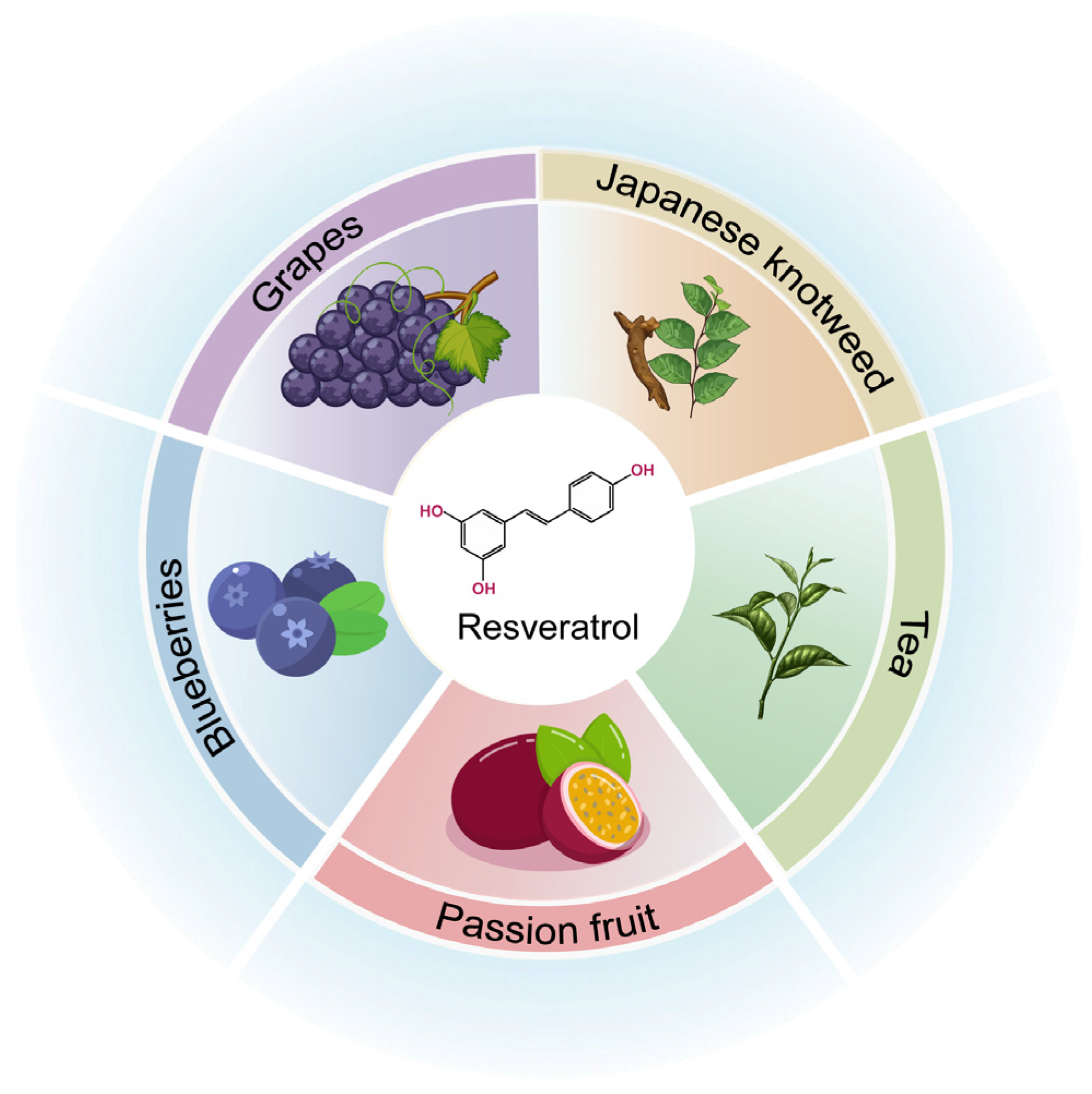
2.1. Chemical Structure and Sources
2.2. Bioavailability and Pharmacokinetics
2.3. Biological Activities
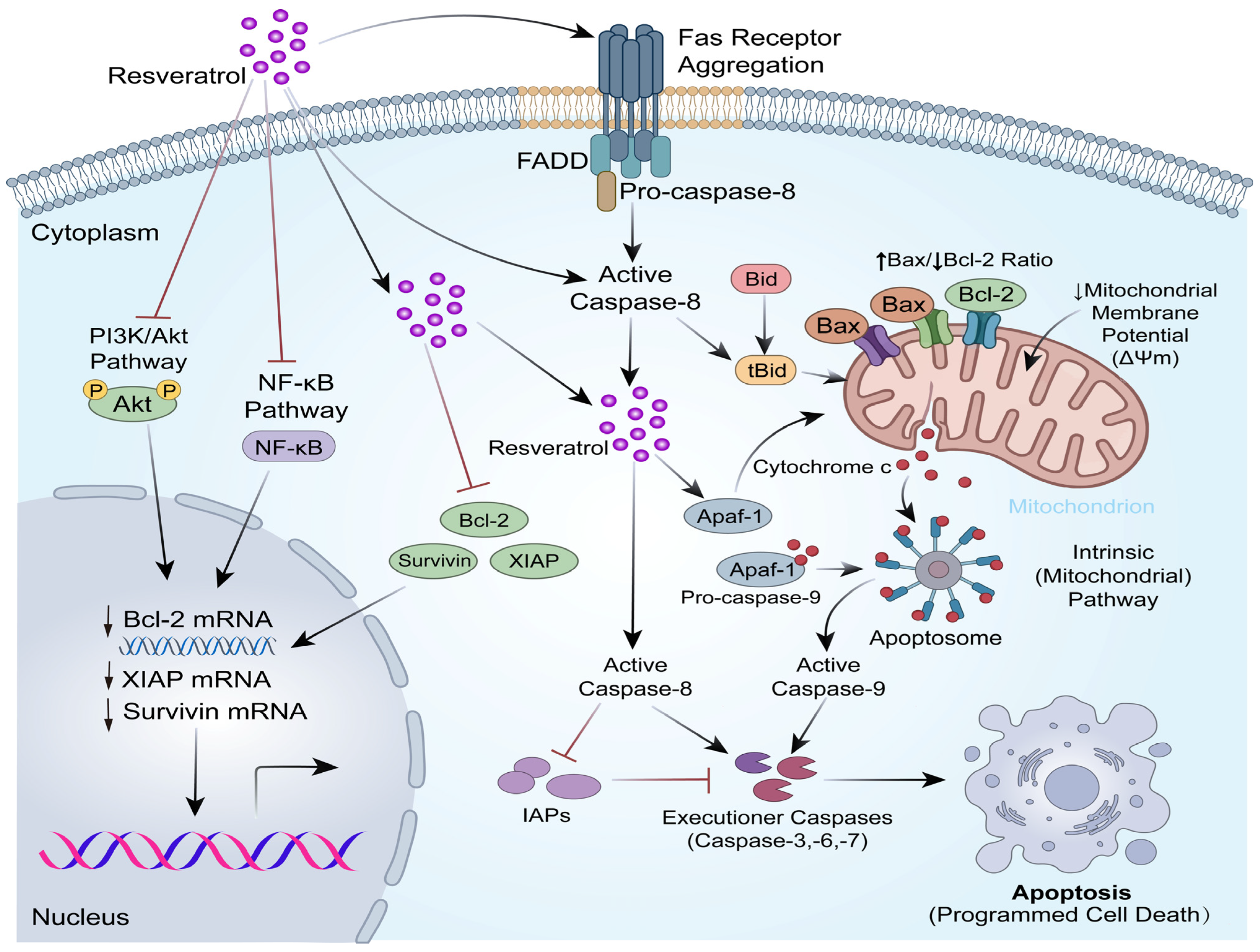
2.4. Pro-Apoptotic Activity in Cancer
2.4.1. Overview
2.4.2. Suppression of Anti-Apoptotic Mechanisms
2.4.3. Activation of Pro-Apoptotic Pathways
3. Effects of Resveratrol on Tumor Cell Metabolism
3.1. Regulation of the Glycolytic Pathway
3.2. Mitochondrial Function and Oxidative Phosphorylation
3.3. Reprogramming of Lipid Metabolism
4. Regulatory Effects of Resveratrol on Immune Cells
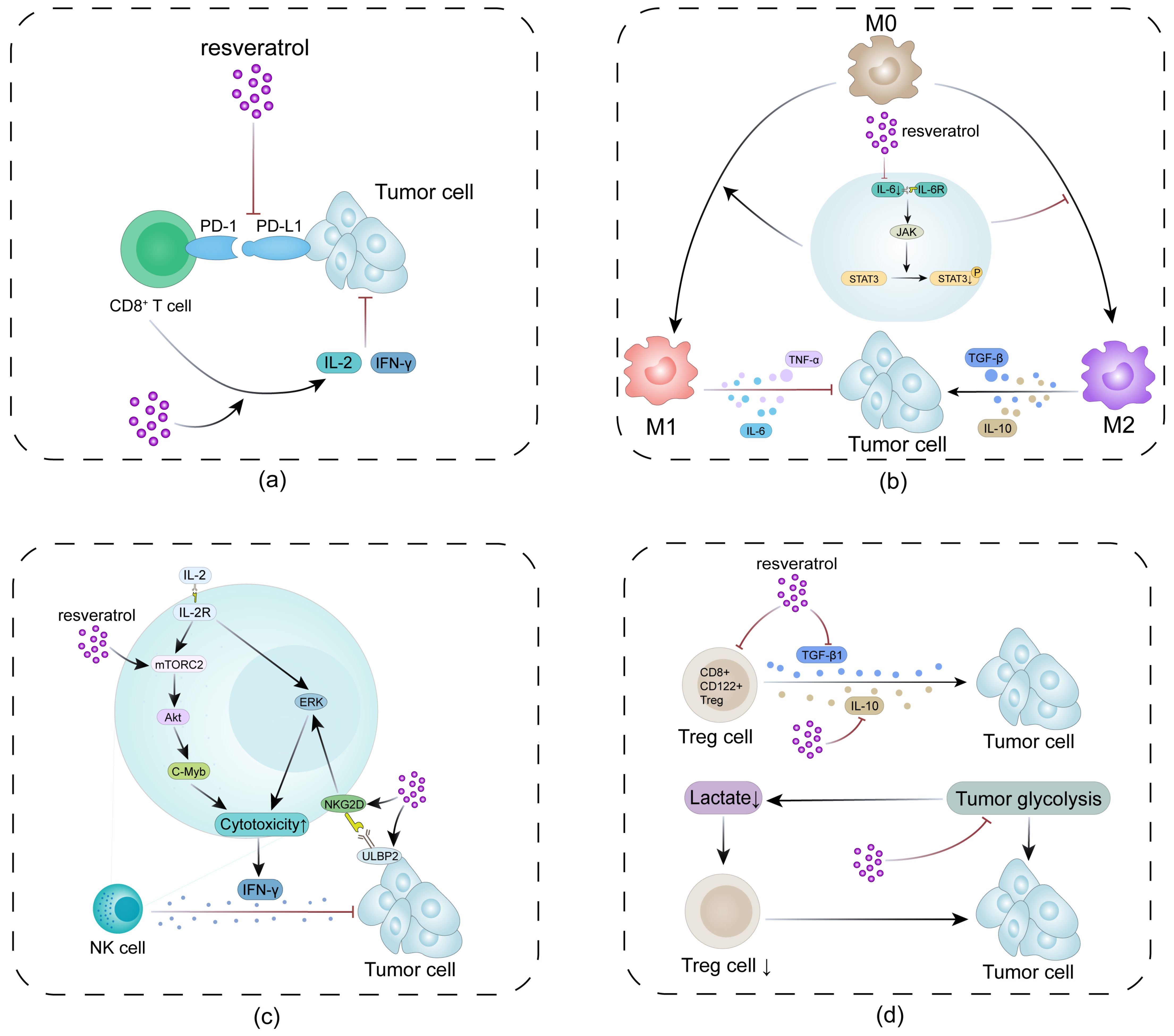
4.1. Effects on T Cell Function
4.2. Regulation of Macrophage Polarization
4.3. Increased NK Cell Activity
4.4. Suppression of Regulatory T Cells
4.5. Impact on MDSCs
5. Immunometabolic Reprogramming of T Cell Function
6. Resveratrol Remodels the Tumor Microenvironment via Metabolic–Immune Cross-Talk
7. Limitations and Future Research Direction
7.1. Limitations of Resveratrol in Cancer Therapy
7.2. Future Research Directions
7.3. Rational Design of Resveratrol Derivatives for Immunometabolic Optimization
8. Conclusions
Author Contributions
Funding
Institutional Review Board Statement
Informed Consent Statement
Data Availability Statement
Conflicts of Interest
Abbreviations
| ACC | acetyl-CoA carboxylase |
| ACLY | ATP citrate lyase |
| ADMET | absorption, distribution, metabolism, excretion, toxicity |
| AI | artificial intelligence |
| Akt | Akt serine/threonine kinase |
| Apaf-1 | apoptotic protease-activating factor 1 |
| Arg-1 | arginase-1 |
| ATP | adenosine triphosphate |
| Bax | Bcl-2-associated X protein |
| Bcl-2 | B-cell lymphoma 2 |
| Bid | BH3-interacting domain death agonist |
| CAR-NK | chimeric antigen receptor natural killer |
| CD36 | cluster of differentiation 36 |
| c-Myb | v-myb avian myeloblastosis viral oncogene homolog |
| COX-2 | cyclooxygenase-2 |
| CTL | cytotoxic T lymphocyte |
| ΔΨm | mitochondrial membrane potential |
| EMT | epithelial–mesenchymal transition |
| ERK | extracellular signal-regulated kinase |
| ETC | electron transport chain |
| FABP5 | fatty acid-binding protein 5 |
| FADD | Fas-associated via death domain |
| FASN | fatty acid synthase |
| FAOX | fatty acid oxidation |
| G-MDSC | granulocytic myeloid-derived suppressor cell |
| GLUT1 | glucose transporter type 1 |
| GLUT4 | glucose transporter type 4 |
| GPx | glutathione peroxidase |
| GSK-3β | glycogen synthase kinase 3 beta |
| HK2 | hexokinase 2 |
| HMGB1 | high-mobility group box 1 |
| IAPs | inhibitor of apoptosis proteins |
| IFN-γ | interferon gamma |
| IκB | inhibitor of kappa B |
| JAK2 | Janus kinase 2 |
| JNK | c-Jun N-terminal kinase |
| LDHA | lactate dehydrogenase A |
| MAPK | mitogen-activated protein kinase |
| MINK1 | misshapen-like kinase 1 |
| M-MDSC | monocytic myeloid-derived suppressor cell |
| mPTP | mitochondrial permeability transition pore |
| mTOR | mechanistic target of rapamycin |
| mTORC2 | mTOR complex 2 |
| mtROS | mitochondrial reactive oxygen species |
| NF-κB | nuclear factor kappa-light-chain-enhancer of activated B cells |
| NHL | non-Hodgkin’s lymphoma |
| NKG2D | natural killer group 2D |
| NLRP3 | NLR family pyrin domain containing 3 |
| Nrf2 | nuclear factor erythroid 2–related factor 2 |
| OXPHOS | oxidative phosphorylation |
| PD-1 | programmed cell death protein 1 |
| PD-L1 | programmed death-ligand 1 |
| PGC-1α | peroxisome proliferator-activated receptor gamma coactivator 1-alpha |
| PI3K | phosphoinositide 3-kinase |
| PIM-1 | proviral integration site for Moloney murine leukemia virus-1 |
| PKM2 | pyruvate kinase M2 |
| PLGA | poly(lactic-co-glycolic acid) |
| PPAR-α | peroxisome proliferator-activated receptor α |
| PPARβ/δ | peroxisome proliferator-activated receptor β/δ |
| QSAR | quantitative structure–activity relationship |
| ROS | reactive oxygen species |
| SAR | structure–activity relationship |
| SIRT1 | sirtuin 1 |
| SIRT3 | sirtuin 3 |
| SOD | superoxide dismutase |
| STAT3 | signal transducer and activator of transcription 3 |
| TAM | tumor-associated macrophage |
| TGF-β1 | transforming growth factor beta 1 |
| TLR4 | toll-like receptor 4 |
| TME | tumor microenvironment |
| TNF-α | tumor necrosis factor alpha |
| Treg | regulatory T cell |
| TXNIP | thioredoxin-interacting protein |
| ULBP2 | UL16 binding protein 2 |
| XIAP | X-linked inhibitor of apoptosis protein |
References
- American Cancer Society and the International Agency for Research on Cancer. The Cancer Atlas, 4th ed.; American Cancer Society, Inc.: Atlanta, GA, USA, 2025; Available online: https://canceratlas.cancer.org/burden-of-cancer/ (accessed on 13 December 2025).
- Kaur, R.; Bhardwaj, A.; Gupta, S. Cancer treatment therapies: Traditional to modern approaches to combat cancers. Mol. Biol. Rep. 2023, 50, 9663–9676. [Google Scholar] [CrossRef] [PubMed]
- Halma, M.T.J.; Tuszynski, J.A.; Marik, P.E. Cancer Metabolism as a Therapeutic Target and Review of Interventions. Nutrients 2023, 15, 4245. [Google Scholar] [CrossRef] [PubMed]
- You, M.; Xie, Z.; Zhang, N.; Zhang, Y.; Xiao, D.; Liu, S.; Zhuang, W.; Li, L.; Tao, Y. Signaling pathways in cancer metabolism: Mechanisms and therapeutic targets. Signal Transduct. Target. Ther. 2023, 8, 196. [Google Scholar] [CrossRef] [PubMed]
- Bertoldo, A.; Pizzol, D.; Yon, D.K.; Callegari, M.; Gobbo, V.; Cuccurese, P.; Butler, L.; Caminada, S.; Stebbing, J.; Richardson, F.; et al. Resveratrol and Female Fertility: A Systematic Review. Int. J. Mol. Sci. 2024, 25, 12792. [Google Scholar] [CrossRef]
- Poortalebi, H.; ZareDini, M.; Foroughi-Nematollahi, S.; Farkhondeh, T.; Samarghandian, S.; Pourhanifeh, M.H. Therapeutic Effect of Resveratrol and its Novel Formulations on Lung Cancer: Focus on Biological Aspects and Underlying Pathways. Curr. Med. Chem. 2024, 31, 4340–4361. [Google Scholar] [CrossRef]
- Moon, D.O. A comprehensive review of the effects of resveratrol on glucose metabolism: Unveiling the molecular pathways and therapeutic potential in diabetes management. Mol. Biol. Rep. 2023, 50, 8743–8755. [Google Scholar] [CrossRef]
- Dariya, B.; Girish, B.P.; Merchant, N.; Srilatha, M.; Nagaraju, G.P. Resveratrol: Biology, metabolism, and detrimental role on the tumor microenvironment of colorectal cancer. Nutr. Rev. 2024, 82, 1420–1436. [Google Scholar] [CrossRef]
- Lalani, A.R.; Fakhari, F.; Radgoudarzi, S.; Rastegar-Pouyani, N.; Moloudi, K.; Khodamoradi, E.; Taeb, S.; Najafi, M. Immunoregulation by resveratrol; implications for normal tissue protection and tumour suppression. Clin. Exp. Pharmacol. Physiol. 2023, 50, 353–368. [Google Scholar] [CrossRef]
- Wei, H.; Fang, G.; Song, W.; Cao, H.; Dong, R.; Huang, Y. Resveratrol’s bibliometric and visual analysis from 2014 to 2023. Front. Plant Sci. 2024, 15, 1423323. [Google Scholar] [CrossRef]
- Gadag, S.; Narayan, R.; Nayak, Y.; Garg, S.; Nayak, U.Y. Design, development and evaluation of Resveratrol transdermal patches for breast cancer therapy. Int. J. Pharm. 2023, 632, 122558. [Google Scholar] [CrossRef]
- Chaichian, S.; Bidgoli, S.A.; Nikfar, B.; Moazzami, B. LncRNAs and MiRNAs: New Targets for Resveratrol in Ovarian Cancer Research. Curr. Med. Chem. 2023, 30, 3238–3248. [Google Scholar] [CrossRef] [PubMed]
- Chen, X.; Tian, J.; Zhao, C.; Wu, Y.; Li, J.; Ji, Z.; Lian, D.; Jia, Z.; Chen, X.; Zhou, Z.; et al. Resveratrol, a novel inhibitor of fatty acid binding protein 5, inhibits cervical cancer metastasis by suppressing fatty acid transport into nucleus and downstream pathways. Br. J. Pharmacol. 2024, 181, 1614–1634. [Google Scholar] [CrossRef] [PubMed]
- Marko, M.; Pawliczak, R. Resveratrol and Its Derivatives in Inflammatory Skin Disorders-Atopic Dermatitis and Psoriasis: A Review. Antioxidants 2023, 12, 1954. [Google Scholar] [CrossRef]
- Wu, S.X.; Xiong, R.G.; Huang, S.Y.; Zhou, D.D.; Saimaiti, A.; Zhao, C.N.; Shang, A.; Zhang, Y.J.; Gan, R.Y.; Li, H.B. Effects and mechanisms of resveratrol for prevention and management of cancers: An updated review. Crit. Rev. Food Sci. Nutr. 2023, 63, 12422–12440. [Google Scholar] [CrossRef] [PubMed]
- Farhan, M.; Rizvi, A. The Pharmacological Properties of Red Grape Polyphenol Resveratrol: Clinical Trials and Obstacles in Drug Development. Nutrients 2023, 15, 4486. [Google Scholar] [CrossRef]
- Wang, B.; Jiang, H.M.; Qi, L.M.; Li, X.; Huang, Q.; Xie, X.; Xia, Q. Deciphering resveratrol’s role in modulating pathological pain: From molecular mechanisms to clinical relevance. Phytother. Res. 2024, 38, 59–73. [Google Scholar] [CrossRef]
- Tian, B.; Liu, J. Resveratrol: A review of plant sources, synthesis, stability, modification and food application. J. Sci. Food Agric. 2020, 100, 1392–1404. [Google Scholar] [CrossRef]
- Zhang, L.X.; Li, C.X.; Kakar, M.U.; Khan, M.S.; Wu, P.F.; Amir, R.M.; Dai, D.F.; Naveed, M.; Li, Q.Y.; Saeed, M.; et al. Resveratrol (RV): A pharmacological review and call for further research. Biomed. Pharmacother. 2021, 143, 112164. [Google Scholar] [CrossRef]
- Huang, X.T.; Li, X.; Xie, M.L.; Huang, Z.; Huang, Y.X.; Wu, G.X.; Peng, Z.R.; Sun, Y.N.; Ming, Q.L.; Liu, Y.X.; et al. Resveratrol: Review on its discovery, anti-leukemia effects and pharmacokinetics. Chem. Biol. Interact. 2019, 306, 29–38. [Google Scholar] [CrossRef]
- Xu, Y.; Zhang, S.X.; Guo, J.; Chen, L.J.; Liou, Y.L.; Rao, T.; Peng, J.B.; Guo, Y.; Huang, W.H.; Tan, Z.R.; et al. A Joint Technology Combining the Advantages of Capillary Microsampling with Mass Spectrometry Applied to the Trans-Resveratrol Pharmacokinetic Study in Mice. J. Anal. Methods Chem. 2022, 2022, 5952436. [Google Scholar] [CrossRef]
- Li, Y.; Sun, K.; Chen, S.; Zhao, J.; Lei, Y.; Geng, L. Nano-Resveratrol Liposome: Physicochemical Stability, In Vitro Release, and Cytotoxicity. Appl. Biochem. Biotechnol. 2023, 195, 5950–5965. [Google Scholar] [CrossRef]
- Kamenova, K.; Radeva, L.; Konstantinov, S.; Petrov, P.D.; Yoncheva, K. Copolymeric Micelles of Poly(ε-caprolactone) and Poly(methacrylic acid) as Carriers for the Oral Delivery of Resveratrol. Polymers 2023, 15, 3769. [Google Scholar] [CrossRef] [PubMed]
- Liu, X.; Pei, J.; Li, J.; Zhu, H.; Zheng, X.; Zhang, X.; Ruan, B.; Chen, L. Recent Advances in Resveratrol Derivatives: Structural Modifications and Biological Activities. Molecules 2025, 30, 958. [Google Scholar] [CrossRef]
- Salla, M.; Pandya, V.; Bhullar, K.S.; Kerek, E.; Wong, Y.F.; Losch, R.; Ou, J.; Aldawsari, F.S.; Velazquez-Martinez, C.; Thiesen, A.; et al. Resveratrol and Resveratrol-Aspirin Hybrid Compounds as Potent Intestinal Anti-Inflammatory and Anti-Tumor Drugs. Molecules 2020, 25, 3849. [Google Scholar] [CrossRef] [PubMed]
- Pandey, P.; Verma, M.; Lakhanpal, S.; Pandey, S.; Kumar, M.R.; Bhat, M.; Sharma, S.; Alam, M.W.; Khan, F. An Updated Review Summarizing the Anticancer Potential of Poly(Lactic-co-Glycolic Acid) (PLGA) Based Curcumin, Epigallocatechin Gallate, and Resveratrol Nanocarriers. Biopolymers 2025, 116, e23637. [Google Scholar] [CrossRef] [PubMed]
- Vasdev, N.; Gupta, T.; Bain, A.; Kalyane, D.; Polaka, S.; Tekade, R.K. Harnessing Exercise-Like Benefits of Protonation prone Liposomal Resveratrol in Differentiated Fat Cells: A Proof-of-Concept Study. AAPS PharmSciTech 2025, 26, 98. [Google Scholar] [CrossRef]
- Katila, N.; Duwa, R.; Bhurtel, S.; Khanal, S.; Maharjan, S.; Jeong, J.H.; Lee, S.; Choi, D.Y.; Yook, S. Enhancement of blood-brain barrier penetration and the neuroprotective effect of resveratrol. J. Control. Release 2022, 346, 1–19. [Google Scholar] [CrossRef]
- Ali Fadlalmola, H.; Elhusein, A.M.; Al-Sayaghi, K.M.; Albadrani, M.S.; Swamy, D.V.; Mamanao, D.M.; El-Amin, E.I.; Ibrahim, S.E.; Abbas, S.M. Efficacy of resveratrol in women with polycystic ovary syndrome: A systematic review and meta-analysis of randomized clinical trials. Pan Afr. Med. J. 2023, 44, 134. [Google Scholar] [CrossRef]
- Liu, L.; Wei, W. Pharmacological Mechanisms and Therapeutic Potential of Resveratrol in Rheumatoid Arthritis. Drug Des. Devel. Ther. 2025, 19, 6111–6123. [Google Scholar] [CrossRef]
- Saleem, U.; Farrukh, M.; Saadullah, M.; Siddique, R.; Gul, H.; Ahmad, A.; Shaukat, B.; Shah, M.A. Role of polyphenolics in the management of rheumatoid arthritis through intracellular signaling pathways: A mechanistic review. Inflammopharmacology 2025, 33, 2263–2275. [Google Scholar] [CrossRef]
- Vidoni, C.; Ferraresi, A.; Vallino, L.; Salwa, A.; Ha, J.H.; Seca, C.; Garavaglia, B.; Dhanasekaran, D.N.; Isidoro, C. Glycolysis Inhibition of Autophagy Drives Malignancy in Ovarian Cancer: Exacerbation by IL-6 and Attenuation by Resveratrol. Int. J. Mol. Sci. 2023, 24, 1723. [Google Scholar] [CrossRef] [PubMed]
- Yarahmadi, S.; Sotoudeheian, M.; Farahmandian, N.; Mohammadi, Y.; Koushki, M.; Babaeenezhad, E.; Yousefi, Z.; Fallah, S. Effect of resveratrol on key signaling pathways including SIRT1/AMPK/Smad3/TGF-β and miRNA-141 related to NAFLD in an animal model. Res. Pharm. Sci. 2025, 20, 434–444. [Google Scholar] [CrossRef] [PubMed]
- Salah, A.; Hussein, A.; Hassan, S.A.; Hussein, M.A.; Bassiouny, K. Green Synthesis of RES-CMCS: A Promising Modulator of the GLUT-4/Leptin Signaling Pathway in HFD-induced Insulin Resistance. Biomed. Res. Ther. 2022, 9, 5166–5178. [Google Scholar] [CrossRef]
- Alesci, A.; Nicosia, N.; Fumia, A.; Giorgianni, F.; Santini, A.; Cicero, N. Resveratrol and Immune Cells: A Link to Improve Human Health. Molecules 2022, 27, 424. [Google Scholar] [CrossRef]
- Djaldetti, M. Immunomodulatory and chemopreventive effects of resveratrol on the digestive system cancers. Oncol. Res. 2024, 32, 1389–1399. [Google Scholar] [CrossRef]
- Wang, X.; Ma, G.; Liu, R.; Qi, R.; Qi, J.; Ren, Y. The effects of resveratrol on osteosarcoma cells: Regulation of the interaction between JAK2/STAT3 signaling pathway and tumor immune microenvironment. Chin. J. Cell. Mol. Immunol. 2025, 41, 420–427. [Google Scholar]
- Xing, Y.; Tan, C.; Liu, Z.; Liu, Y.; Liu, S.; Wang, G.; Zhong, Y. Resveratrol as a BCL6 natural inhibitor suppresses germinal center derived Non-Hodgkin lymphoma cells growth. J. Nat. Med. 2025, 79, 399–411. [Google Scholar] [CrossRef]
- Shao, B.; Nong, Y.; Lin, Y.; Meng, Y.; Zhou, Y.; Huang, M.; Huang, F.; Wang, J. Study on the Influence and Mechanism of Resveratrol on Cognitive Impairment in Chronic Kidney Disease Rats Through Regulating Gut Microbiota and the TLR4/NFκB Pathway. J. Inflamm. Res. 2025, 18, 6049–6060. [Google Scholar] [CrossRef]
- Ahmed, M. Targeting aging pathways with natural compounds: A review of curcumin, epigallocatechin gallate, thymoquinone, and resveratrol. Immun. Ageing 2025, 22, 28. [Google Scholar] [CrossRef]
- Su, M.; Zhao, W.; Xu, S.; Weng, J. Resveratrol in Treating Diabetes and Its Cardiovascular Complications: A Review of Its Mechanisms of Action. Antioxidants 2022, 11, 1085. [Google Scholar] [CrossRef]
- Prakash, V.; Bose, C.; Sunilkumar, D.; Cherian, R.M.; Thomas, S.S.; Nair, B.G. Resveratrol as a Promising Nutraceutical: Implications in Gut Microbiota Modulation, Inflammatory Disorders, and Colorectal Cancer. Int. J. Mol. Sci. 2024, 25, 3370. [Google Scholar] [CrossRef] [PubMed]
- Islam, M.R.; Ajaj, R.; Rauf, A.; Shanta, S.S.; Al-Imran, M.I.K.; Fakir, M.N.H.; Gianoncelli, A.; Ribaudo, G. The Potential of Resveratrol as an Anticancer Agent: Updated Overview of Mechanisms, Applications, and Perspectives. Arch. Pharm. 2025, 358, e70109. [Google Scholar] [CrossRef] [PubMed]
- Geng, C.; Yan, L.; Li, Y.; Li, H.; Ji, Y.; Xiao, Y.; Wang, Z.; Chen, X.; Chen, C.; Yang, Q.; et al. Layered Double Hydroxide Nanoparticles Loaded with Resveratrol Inhibit Glycolysis and Show Efficacy in the Treatment of Breast Cancer. Int. J. Nanomed. 2025, 20, 3423–3444. [Google Scholar] [CrossRef] [PubMed]
- Ferraresi, A.; Girone, C.; Maheshwari, C.; Vallino, L.; Dhanasekaran, D.N.; Isidoro, C. Ovarian Cancer Cell-Conditioning Medium Induces Cancer-Associated Fibroblast Phenoconversion through Glucose-Dependent Inhibition of Autophagy. Int. J. Mol. Sci. 2024, 25, 5691. [Google Scholar] [CrossRef]
- Li, S.; Yin, S.; Ding, H.; Shao, Y.; Zhou, S.; Pu, W.; Han, L.; Wang, T.; Yu, H. Polyphenols as potential metabolism mechanisms regulators in liver protection and liver cancer prevention. Cell Prolif. 2023, 56, e13346. [Google Scholar] [CrossRef]
- Gomez, L.S.; Zancan, P.; Marcondes, M.C.; Ramos-Santos, L.; Meyer-Fernandes, J.R.; Sola-Penna, M.; Da Silva, D. Resveratrol decreases breast cancer cell viability and glucose metabolism by inhibiting 6-phosphofructo-1-kinase. Biochimie 2013, 95, 1336–1343. [Google Scholar] [CrossRef]
- Ben-Zichri, S.; Rajendran, S.; Bhunia, S.K.; Jelinek, R. Resveratrol Carbon Dots Disrupt Mitochondrial Function in Cancer Cells. Bioconjug. Chem. 2022, 33, 1663–1671. [Google Scholar] [CrossRef]
- Fu, Y.; Ye, Y.; Zhu, G.; Xu, Y.; Sun, J.; Wu, H.; Feng, F.; Wen, Z.; Jiang, S.; Li, Y.; et al. Resveratrol induces human colorectal cancer cell apoptosis by activating the mitochondrial pathway via increasing reactive oxygen species. Mol. Med. Rep. 2021, 23, 170. [Google Scholar] [CrossRef]
- Peng, A.; Peng, J.; Lai, R.; Liu, W.; Chen, X.; Hu, B.; Xu, Y.; Li, L. Resveratrol Reduces Cisplatin-induced Cochlear Hair Cell Pyroptosis by Inhibiting the mtROS/TXNIP/NLRP3 Pathway. Comb. Chem. High. Throughput Screen. 2025, 28, 2737–2749. [Google Scholar] [CrossRef]
- Li, W.; Li, C.; Ma, L.; Jin, F. Resveratrol inhibits viability and induces apoptosis in the small-cell lung cancer H446 cell line via the PI3K/Akt/c-Myc pathway. Oncol. Rep. 2020, 44, 1821–1830. [Google Scholar] [CrossRef]
- Saiful Hakim, A.R.; Chee, C.F.; Wong, T.W.; Abu Kasim, N.H.; Nasruddin, N.S.; Yazid, F. Exploring resveratrol’s inhibitory potential on lung cancer stem cells: A scoping review of mechanistic pathways across cancer models. Med. Oncol. 2025, 42, 318. [Google Scholar] [CrossRef] [PubMed]
- Shen, S.; Shen, M.; Kuang, L.; Yang, K.; Wu, S.; Liu, X.; Wang, Y.; Wang, Y. SIRT1/SREBPs-mediated regulation of lipid metabolism. Pharmacol. Res. 2024, 199, 107037. [Google Scholar] [CrossRef] [PubMed]
- Global burden and strength of evidence for 88 risk factors in 204 countries and 811 subnational locations, 1990-2021: A systematic analysis for the Global Burden of Disease Study 2021. Lancet 2024, 403, 2162–2203. [CrossRef] [PubMed]
- Ballav, S.; Lokhande, K.B.; Yadav, R.S.; Ghosh, P.; Swamy, K.V.; Basu, S. Exploring binding mode assessment of novel kaempferol, resveratrol, and quercetin derivatives with PPAR-α as potent drug candidates against cancer. Mol. Divers. 2023, 27, 2867–2885. [Google Scholar] [CrossRef]
- Shamardl, H.; Ibrahim, N.A.; Merzeban, D.H.; Elamir, A.M.; Golam, R.M.; Elsayed, A.M. Resveratrol and Dulaglutide ameliorate adiposity and liver dysfunction in rats with diet-induced metabolic syndrome: Role of SIRT-1/adipokines/PPARγ and IGF-1. Daru 2023, 31, 13–27. [Google Scholar] [CrossRef]
- Li, P.; Liang, Y.; Ma, X. Functional Role of Resveratrol in Inducing Apoptosis in Breast Cancer Subtypes via Inhibition of Intracellular Fatty Acid Synthase. Molecules 2025, 30, 2891. [Google Scholar] [CrossRef]
- Acerbi, G.; Montali, I.; Ferrigno, G.D.; Barili, V.; Schivazappa, S.; Alfieri, A.; Laccabue, D.; Loglio, A.; Borghi, M.; Massari, M.; et al. Functional reconstitution of HBV-specific CD8 T cells by in vitro polyphenol treatment in chronic hepatitis B. J. Hepatol. 2021, 74, 783–793. [Google Scholar] [CrossRef]
- Han, X.; Zhao, N.; Zhu, W.; Wang, J.; Liu, B.; Teng, Y. Resveratrol attenuates TNBC lung metastasis by down-regulating PD-1 expression on pulmonary T cells and converting macrophages to M1 phenotype in a murine tumor model. Cell Immunol. 2021, 368, 104423. [Google Scholar] [CrossRef]
- Wang, Y.; Zeng, Y.; Yang, W.; Wang, X.; Jiang, J. Targeting CD8+ T cells with natural products for tumor therapy: Revealing insights into the mechanisms. Phytomedicine 2024, 129, 155608. [Google Scholar] [CrossRef]
- Tuerxun, H.; Zhao, Y.; Li, Y.; Liu, X.; Wen, S.; Zhao, Y. Resveratrol alleviates testicular toxicity induced by anti-PD-1 through regulating the NRF2-SLC7A11-GPX4 pathway. Front. Immunol. 2025, 16, 1529991. [Google Scholar] [CrossRef]
- Luo, B.; An, Q.; Lei, J.; Tan, D.; Liu, X.; Li, H.; Zhao, Y.; Qin, J.; Zhang, C.; Zhang, Y.; et al. Resveratrol amplifies the anti-tumor effect of α-PD-1 by altering the intestinal microbiome and PGD2 content. Gut Microbes 2025, 17, 2447821. [Google Scholar] [CrossRef] [PubMed]
- He, J.; Qiu, N.; Zhou, X.; Meng, M.; Liu, Z.; Li, J.; Du, S.; Sun, Z.; Wang, H. Resveratrol analog, triacetylresveratrol, a potential immunomodulator of lung adenocarcinoma immunotherapy combination therapies. Front. Oncol. 2022, 12, 1007653. [Google Scholar] [CrossRef] [PubMed]
- Huang, X.; Wang, Y.; Yang, W.; Dong, J.; Li, L. Regulation of dietary polyphenols on cancer cell pyroptosis and the tumor immune microenvironment. Front. Nutr. 2022, 9, 974896. [Google Scholar] [CrossRef]
- Sun, L.; Chen, B.; Jiang, R.; Li, J.; Wang, B. Resveratrol inhibits lung cancer growth by suppressing M2-like polarization of tumor associated macrophages. Cell Immunol. 2017, 311, 86–93. [Google Scholar] [CrossRef] [PubMed]
- Cheuk, I.W.; Chen, J.; Siu, M.; Ho, J.C.; Lam, S.S.; Shin, V.Y.; Kwong, A. Resveratrol enhanced chemosensitivity by reversing macrophage polarization in breast cancer. Clin. Transl. Oncol. 2022, 24, 854–863. [Google Scholar] [CrossRef]
- Alanazi, F.J.; Alruwaili, A.N.; Aldhafeeri, N.A.; Ballal, S.; Sharma, R.; Debnath, S.; Sinha, A.; Rekha, A.; Khan, N.H.; Alrashoud, M.M.; et al. Pathological interplay of NF-κB and M1 macrophages in chronic inflammatory lung diseases. Pathol. Res. Pract. 2025, 269, 155903. [Google Scholar] [CrossRef]
- Guo, L.; Zhang, X.; Lv, N.; Wang, L.; Gan, J.; Jiang, X.; Wang, Y. Therapeutic Role and Potential Mechanism of Resveratrol in Atherosclerosis: TLR4/NF-κB/HIF-1α. Mediat. Inflamm. 2023, 2023, 1097706. [Google Scholar] [CrossRef]
- Lee, Y.J.; Kim, J. Resveratrol Activates Natural Killer Cells through Akt- and mTORC2-Mediated c-Myb Upregulation. Int. J. Mol. Sci. 2020, 21, 9575. [Google Scholar] [CrossRef]
- Mu, Q.; Najafi, M. Resveratrol for targeting the tumor microenvironment and its interactions with cancer cells. Int. Immunopharmacol. 2021, 98, 107895. [Google Scholar] [CrossRef]
- Ding, B.; Li, J.; Yan, J.L.; Jiang, C.Y.; Qian, L.B.; Pan, J. Resveratrol contributes to NK cell-mediated breast cancer cytotoxicity by upregulating ULBP2 through miR-17-5p downmodulation and activation of MINK1/JNK/c-Jun signaling. Front. Immunol. 2025, 16, 1515605. [Google Scholar] [CrossRef]
- Shi, X.; Wu, X.; Yang, F.; Hu, X.; Kang, Q. Resveratrol Enhances CAR NK Cell Function in Cellular Immunotherapy of Non-Hodgkin Lymphoma. Mol. Nutr. Food Res. 2025, 69, e70112. [Google Scholar] [CrossRef] [PubMed]
- Zhang, Q.; Huang, H.; Zheng, F.; Liu, H.; Qiu, F.; Chen, Y.; Liang, C.L.; Dai, Z. Resveratrol exerts antitumor effects by downregulating CD8(+)CD122(+) Tregs in murine hepatocellular carcinoma. Oncoimmunology 2020, 9, 1829346. [Google Scholar] [CrossRef]
- Jia, L.; Gao, Y.; Zhou, T.; Zhao, X.L.; Hu, H.Y.; Chen, D.W.; Qiao, M.X. Enhanced response to PD-L1 silencing by modulation of TME via balancing glucose metabolism and robust co-delivery of siRNA/Resveratrol with dual-responsive polyplexes. Biomaterials 2021, 271, 120711. [Google Scholar] [CrossRef] [PubMed]
- Zhao, Y.; Shao, Q.; Zhu, H.; Xu, H.; Long, W.; Yu, B.; Zhou, L.; Xu, H.; Wu, Y.; Su, Z. Resveratrol ameliorates Lewis lung carcinoma-bearing mice development, decreases granulocytic myeloid-derived suppressor cell accumulation and impairs its suppressive ability. Cancer Sci. 2018, 109, 2677–2686. [Google Scholar] [CrossRef] [PubMed]
- Chen, J.; Huang, S.T.; Chen, J.G.; He, J.H.; Lin, W.M.; Huang, Z.H.; Ye, H.Y.; He, S.Y. Resveratrol reduces lactate production and modifies the ovarian cancer immune microenvironment. Neoplasma 2022, 69, 1129–1137. [Google Scholar] [CrossRef]
- Zheng, Z.Y.; Lu, S.; Wu, Y.; Kayitmazer, A.B.; Ahmad, A.; Ramzan, N.; Rafique, M.S.; Yang, J.T.; Zhou, X.L.; Xu, Y.S.; et al. Modulating glucose metabolism and relieving hypoxia for enhanced Chemo/Photoimmunotherapy with photosensitizing enzymatic nanodrugs. Chem. Eng. J. 2024, 498, 155024. [Google Scholar] [CrossRef]
- Chimento, A.; De Luca, A.; Venditti, M.; De Amicis, F.; Pezzi, V. Beneficial Effects of Resveratrol on Testicular Functions: Focus on Its Antioxidant Properties. Cells 2025, 14, 1122. [Google Scholar] [CrossRef]
- Alanazi, A.Z.; Algahtani, M.M.; Alotaibi, F.A.; Al-Rejaie, S.S.; Alqinyah, M.; Alhamed, A.S.; Alhamami, H.N.; Nadeem, A.; Raish, M.; Aljerian, K.; et al. Investigation of The Hepatoprotective Potential of Liposomal Resveratrol as Polyphenols Against Liver Damage in Streptozotocin Diabetic Rat Model. Int. J. Med. Sci. 2025, 22, 3380–3392. [Google Scholar] [CrossRef]
- Brockmueller, A.; Buhrmann, C.; Moravejolahkami, A.R.; Shakibaei, M. Resveratrol and p53: How are they involved in CRC plasticity and apoptosis? J. Adv. Res. 2024, 66, 181–195. [Google Scholar] [CrossRef]
- Song, T.; Chen, J.; Yang, S.; Liu, B.; Zhang, L.; Zhang, Q.; Cheng, J.C.; Fang, L. Resveratrol stimulates StAR expression and progesterone production by GPER-mediated downregulation of Snail expression in human granulosa cells. J. Food Drug Anal. 2023, 31, 315–325. [Google Scholar] [CrossRef]
- Doghish, A.S.; Mageed, S.S.A.; Zaki, M.B.; Abd-Elmawla, M.A.; Sayed, G.A.; Hatawsh, A.; Aborehab, N.M.; Moussa, R.; Mohammed, O.A.; Abdel-Reheim, M.A.; et al. Role of long non-coding RNAs and natural products in prostate cancer: Insights into key signaling pathways. Funct. Integr. Genom. 2025, 25, 16. [Google Scholar] [CrossRef]
- Wang, J.; Huang, P.; Pan, X.; Xia, C.; Zhang, H.; Zhao, H.; Yuan, Z.; Liu, J.; Meng, C.; Liu, F. Resveratrol reverses TGF-β1-mediated invasion and metastasis of breast cancer cells via the SIRT3/AMPK/autophagy signal axis. Phytother. Res. 2023, 37, 211–230. [Google Scholar] [CrossRef]
- Kim, S.; Kim, W.; Kim, D.H.; Jang, J.H.; Kim, S.J.; Park, S.A.; Hahn, H.; Han, B.W.; Na, H.K.; Chun, K.S.; et al. Resveratrol suppresses gastric cancer cell proliferation and survival through inhibition of PIM-1 kinase activity. Arch. Biochem. Biophys. 2020, 689, 108413. [Google Scholar] [CrossRef] [PubMed]
- He, Y.; Wang, H.; Lin, S.; Chen, T.; Chang, D.; Sun, Y.; Wang, C.; Liu, Y.; Lu, Y.; Song, J.; et al. Advanced effect of curcumin and resveratrol on mitigating hepatic steatosis in metabolic associated fatty liver disease via the PI3K/AKT/mTOR and HIF-1/VEGF cascade. Biomed. Pharmacother. 2023, 165, 115279. [Google Scholar] [CrossRef] [PubMed]
- Ungurianu, A.; Zanfirescu, A.; Margină, D. Sirtuins, resveratrol and the intertwining cellular pathways connecting them. Ageing Res. Rev. 2023, 88, 101936. [Google Scholar] [CrossRef] [PubMed]
- Harikumar, K.B.; Aggarwal, B.B. Resveratrol: A multitargeted agent for age-associated chronic diseases. Cell Cycle 2008, 7, 1020–1035. [Google Scholar] [CrossRef]
- Rasheduzzaman, M.; Jeong, J.K.; Park, S.Y. Resveratrol sensitizes lung cancer cell to TRAIL by p53 independent and suppression of Akt/NF-κB signaling. Life Sci. 2018, 208, 208–220. [Google Scholar] [CrossRef]
- Jang, J.Y.; Im, E.; Kim, N.D. Mechanism of Resveratrol-Induced Programmed Cell Death and New Drug Discovery against Cancer: A Review. Int. J. Mol. Sci. 2022, 23, 13689. [Google Scholar] [CrossRef]
- Alfawaz, M.; Elmorsy, E.M.; Alshammari, A.N.; Emam, M.N.; Hegab, I.I.; Shaalan, A.A.M.; Fawzy, M.S.; Mohammed, L.A. Nanoparticle-Based Delivery of Resveratrol Suppresses Ehrlich Ascites Carcinoma and Protects Testicular Function via Antioxidant, Anti-Angiogenic, Anti-Inflammatory, and Pro-Apoptotic Mechanisms. Biomolecules 2025, 15, 1605. [Google Scholar] [CrossRef]
- Choi, Y.; No, M.H.; Heo, J.W.; Cho, E.J.; Park, D.H.; Kang, J.H.; Kim, C.J.; Seo, D.Y.; Han, J.; Kwak, H.B. Resveratrol attenuates aging-induced mitochondrial dysfunction and mitochondria-mediated apoptosis in the rat heart. Nutr. Res. Pract. 2025, 19, 186–199. [Google Scholar] [CrossRef]
- Ma, R.; Yu, D.; Peng, Y.; Yi, H.; Wang, Y.; Cheng, T.; Shi, B.; Yang, G.; Lai, W.; Wu, X.; et al. Resveratrol induces AMPK and mTOR signaling inhibition-mediated autophagy and apoptosis in multiple myeloma cells. Acta Biochim. Biophys. Sin. 2021, 53, 775–783. [Google Scholar] [CrossRef]
- Gogada, R.; Prabhu, V.; Amadori, M.; Scott, R.; Hashmi, S.; Chandra, D. Resveratrol induces p53-independent, X-linked inhibitor of apoptosis protein (XIAP)-mediated Bax protein oligomerization on mitochondria to initiate cytochrome c release and caspase activation. J. Biol. Chem. 2011, 286, 28749–28760. [Google Scholar] [CrossRef]
- Delmas, D.; Rébé, C.; Lacour, S.; Filomenko, R.; Athias, A.; Gambert, P.; Cherkaoui-Malki, M.; Jannin, B.; Dubrez-Daloz, L.; Latruffe, N.; et al. Resveratrol-induced apoptosis is associated with Fas redistribution in the rafts and the formation of a death-inducing signaling complex in colon cancer cells. J. Biol. Chem. 2003, 278, 41482–41490. [Google Scholar] [CrossRef] [PubMed]
- Meng, T.; Deng, J.; Xiao, D.; Arowolo, M.A.; Liu, C.; Chen, L.; Deng, W.; He, S.; He, J. Protective Effects and Potential Mechanisms of Dietary Resveratrol Supplementation on the Spleen of Broilers Under Heat Stress. Front. Nutr. 2022, 9, 821272. [Google Scholar] [CrossRef] [PubMed]
- Gavrilas, L.I.; Cruceriu, D.; Ionescu, C.; Miere, D.; Balacescu, O. Pro-apoptotic genes as new targets for single and combinatorial treatments with resveratrol and curcumin in colorectal cancer. Food Funct. 2019, 10, 3717–3726. [Google Scholar] [CrossRef] [PubMed]
- Wong, R.S. Apoptosis in cancer: From pathogenesis to treatment. J. Exp. Clin. Cancer Res. 2011, 30, 87. [Google Scholar] [CrossRef]
- Hotchkiss, R.S.; Strasser, A.; McDunn, J.E.; Swanson, P.E. Cell death. N. Engl. J. Med. 2009, 361, 1570–1583. [Google Scholar] [CrossRef]
- Saxena, R.; Welsh, C.M.; He, Y.W. Targeting regulated cell death pathways in cancers for effective treatment: A comprehensive review. Front. Cell Dev. Biol. 2024, 12, 1462339. [Google Scholar] [CrossRef]
- Dorstyn, L.; Akey, C.W.; Kumar, S. New insights into apoptosome structure and function. Cell Death Differ. 2018, 25, 1194–1208. [Google Scholar] [CrossRef]
- Mouasni, S.; Tourneur, L. FADD at the Crossroads between Cancer and Inflammation. Trends Immunol. 2018, 39, 1036–1053. [Google Scholar] [CrossRef]
- Burigotto, M.; Fava, L.L. The PIDDosome: Centrosome guardian and backup on the DNA damage response. Mol. Cell Oncol. 2021, 8, 1893625. [Google Scholar] [CrossRef]
- Nakamura, H.; Taguchi, A.; Kawana, K.; Baba, S.; Kawata, A.; Yoshida, M.; Fujimoto, A.; Ogishima, J.; Sato, M.; Inoue, T.; et al. Therapeutic significance of targeting survivin in cervical cancer and possibility of combination therapy with TRAIL. Oncotarget 2018, 9, 13451–13461. [Google Scholar] [CrossRef] [PubMed][Green Version]
- Elena-Real, C.A.; Díaz-Quintana, A.; González-Arzola, K.; Velázquez-Campoy, A.; Orzáez, M.; López-Rivas, A.; Gil-Caballero, S.; De la Rosa, M.; Díaz-Moreno, I. Cytochrome c speeds up caspase cascade activation by blocking 14-3-3ε-dependent Apaf-1 inhibition. Cell Death Dis. 2018, 9, 365. [Google Scholar] [CrossRef] [PubMed]
- Kesavardhana, S.; Malireddi, R.K.S.; Kanneganti, T.D. Caspases in Cell Death, Inflammation, and Pyroptosis. Annu. Rev. Immunol. 2020, 38, 567–595. [Google Scholar] [CrossRef] [PubMed]
- Wyżewski, Z.; Gregorczyk-Zboroch, K.P.; Mielcarska, M.B.; Świtlik, W.; Niedzielska, A. Bid Protein: A Participant in the Apoptotic Network with Roles in Viral Infections. Int. J. Mol. Sci. 2025, 26, 2385. [Google Scholar] [CrossRef]
- Chelakkot, C.; Chelakkot, V.S.; Shin, Y.; Song, K. Modulating Glycolysis to Improve Cancer Therapy. Int. J. Mol. Sci. 2023, 24, 2606. [Google Scholar] [CrossRef]
- Liao, M.; Yao, D.; Wu, L.; Luo, C.; Wang, Z.; Zhang, J.; Liu, B. Targeting the Warburg effect: A revisited perspective from molecular mechanisms to traditional and innovative therapeutic strategies in cancer. Acta Pharm. Sin. B 2024, 14, 953–1008. [Google Scholar] [CrossRef]
- Uslu, C.; Kapan, E.; Lyakhovich, A. Cancer resistance and metastasis are maintained through oxidative phosphorylation. Cancer Lett. 2024, 587, 216705. [Google Scholar] [CrossRef]
- Liu, Y.; Sun, Y.; Guo, Y.; Shi, X.; Chen, X.; Feng, W.; Wu, L.L.; Zhang, J.; Yu, S.; Wang, Y.; et al. An Overview: The Diversified Role of Mitochondria in Cancer Metabolism. Int. J. Biol. Sci. 2023, 19, 897–915. [Google Scholar] [CrossRef]
- Cadassou, O.; Jordheim, L.P. OXPHOS inhibitors, metabolism and targeted therapies in cancer. Biochem. Pharmacol. 2023, 211, 115531. [Google Scholar] [CrossRef]
- Li, B.; Allela, O.Q.B.; Alkhazali, W.H.; Vadia, N.; Renuka Jyothi, S.; Panigrahi, R.; Chauhan, A.S.; Singh, S.; Akhrorova, M.; Sameer, H.N.; et al. Resveratrol in oral cancer: A systematic review of preclinical studies on its anticancer mechanisms and therapeutic potential. Med. Oncol. 2025, 42, 329. [Google Scholar] [CrossRef] [PubMed]
- Santandreu, F.M.; Valle, A.; Oliver, J.; Roca, P. Resveratrol potentiates the cytotoxic oxidative stress induced by chemotherapy in human colon cancer cells. Cell Physiol. Biochem. 2011, 28, 219–228. [Google Scholar] [CrossRef] [PubMed]
- Yang, Y.; Liu, X.; Yang, D.; Li, L.; Li, S.; Lu, S.; Li, N. Interplay of CD36, autophagy, and lipid metabolism: Insights into cancer progression. Metabolism 2024, 155, 155905. [Google Scholar] [CrossRef] [PubMed]
- Broadfield, L.A.; Pane, A.A.; Talebi, A.; Swinnen, J.V.; Fendt, S.M. Lipid metabolism in cancer: New perspectives and emerging mechanisms. Dev. Cell 2021, 56, 1363–1393. [Google Scholar] [CrossRef]
- Chakravarti, B.; Akhtar Siddiqui, J.; Anthony Sinha, R.; Raza, S. Targeting autophagy and lipid metabolism in cancer stem cells. Biochem. Pharmacol. 2023, 212, 115550. [Google Scholar] [CrossRef]
- Chopp, L.; Redmond, C.; O’Shea, J.J.; Schwartz, D.M. From thymus to tissues and tumors: A review of T-cell biology. J. Allergy Clin. Immunol. 2023, 151, 81–97. [Google Scholar] [CrossRef]
- Wang, Q.; Qin, Y.; Li, B. CD8+ T cell exhaustion and cancer immunotherapy. Cancer Lett. 2023, 559, 216043. [Google Scholar] [CrossRef]
- Park, J.; Hsueh, P.C.; Li, Z.; Ho, P.C. Microenvironment-driven metabolic adaptations guiding CD8+ T cell anti-tumor immunity. Immunity 2023, 56, 32–42. [Google Scholar] [CrossRef]
- Chen, Y.; Yu, D.; Qian, H.; Shi, Y.; Tao, Z. CD8+ T cell-based cancer immunotherapy. J. Transl. Med. 2024, 22, 394. [Google Scholar] [CrossRef]
- Chen, S.; Saeed, A.; Liu, Q.; Jiang, Q.; Xu, H.; Xiao, G.G.; Rao, L.; Duo, Y. Macrophages in immunoregulation and therapeutics. Signal Transduct. Target. Ther. 2023, 8, 207. [Google Scholar] [CrossRef]
- Brady, R.V.; Thamm, D.H. Tumor-associated macrophages: Prognostic and therapeutic targets for cancer in humans and dogs. Front. Immunol. 2023, 14, 1176807. [Google Scholar] [CrossRef] [PubMed]
- Locati, M.; Curtale, G.; Mantovani, A. Diversity, Mechanisms, and Significance of Macrophage Plasticity. Annu. Rev. Pathol. 2020, 15, 123–147. [Google Scholar] [CrossRef] [PubMed]
- Wu, K.; Lin, K.; Li, X.; Yuan, X.; Xu, P.; Ni, P.; Xu, D. Redefining Tumor-Associated Macrophage Subpopulations and Functions in the Tumor Microenvironment. Front. Immunol. 2020, 11, 1731. [Google Scholar] [CrossRef] [PubMed]
- Hang, R.; Wang, J.; Tian, X.; Wu, R.; Hang, R.; Zhao, Y.; Sun, Y.; Wang, H. Resveratrol promotes osteogenesis and angiogenesis through mediating immunology of senescent macrophages. Biomed. Mater. 2022, 17, 055005. [Google Scholar] [CrossRef]
- Wang, P.; Li, Z.; Song, Y.; Zhang, B.; Fan, C. Resveratrol-driven macrophage polarization: Unveiling mechanisms and therapeutic potential. Front. Pharmacol. 2024, 15, 1516609. [Google Scholar] [CrossRef]
- Qi, Y.; Yan, J.; Huang, X.; Jiang, X.; Li, R.; Wan, J.; Li, Y.; Miao, Z.; Song, Z.; Liu, Y.; et al. Targeting tumor-associated macrophage polarization with traditional Chinese medicine active ingredients: Dual reversal of chemoresistance and immunosuppression in tumor microenvironment. Pharmacol. Res. 2025, 216, 107788. [Google Scholar] [CrossRef]
- Vivier, E.; Rebuffet, L.; Narni-Mancinelli, E.; Cornen, S.; Igarashi, R.Y.; Fantin, V.R. Natural killer cell therapies. Nature 2024, 626, 727–736. [Google Scholar] [CrossRef]
- O’Brien, K.L.; Finlay, D.K. Immunometabolism and natural killer cell responses. Nat. Rev. Immunol. 2019, 19, 282–290. [Google Scholar] [CrossRef]
- Wu, S.Y.; Fu, T.; Jiang, Y.Z.; Shao, Z.M. Natural killer cells in cancer biology and therapy. Mol. Cancer 2020, 19, 120. [Google Scholar] [CrossRef]
- Hodgins, J.J.; Khan, S.T.; Park, M.M.; Auer, R.C.; Ardolino, M. Killers 2.0: NK cell therapies at the forefront of cancer control. J. Clin. Investig. 2019, 129, 3499–3510. [Google Scholar] [CrossRef]
- Myers, J.A.; Miller, J.S. Exploring the NK cell platform for cancer immunotherapy. Nat. Rev. Clin. Oncol. 2021, 18, 85–100. [Google Scholar] [CrossRef] [PubMed]
- Lee, Y.; Shin, H.; Kim, J. In vivo Anti-Cancer Effects of Resveratrol Mediated by NK Cell Activation. J. Innate Immun. 2021, 13, 94–106. [Google Scholar] [CrossRef] [PubMed]
- Elhanani, O.; Ben-Uri, R.; Keren, L. Spatial profiling technologies illuminate the tumor microenvironment. Cancer Cell 2023, 41, 404–420. [Google Scholar] [CrossRef] [PubMed]
- Kang, J.H.; Zappasodi, R. Modulating Treg stability to improve cancer immunotherapy. Trends Cancer 2023, 9, 911–927. [Google Scholar] [CrossRef]
- Gao, J.; Liu, W.R.; Tang, Z.; Fan, J.; Shi, Y.H. Myeloid-derived suppressor cells in cancer. iLIVER 2022, 1, 81–89. [Google Scholar] [CrossRef]
- Lasser, S.A.; Ozbay Kurt, F.G.; Arkhypov, I.; Utikal, J.; Umansky, V. Myeloid-derived suppressor cells in cancer and cancer therapy. Nat. Rev. Clin. Oncol. 2024, 21, 147–164. [Google Scholar] [CrossRef]
- Chang, C.H.; Qiu, J.; O’Sullivan, D.; Buck, M.D.; Noguchi, T.; Curtis, J.D.; Chen, Q.; Gindin, M.; Gubin, M.M.; van der Windt, G.J.; et al. Metabolic Competition in the Tumor Microenvironment Is a Driver of Cancer Progression. Cell 2015, 162, 1229–1241. [Google Scholar] [CrossRef]
- Verma, N.K.; Wong, B.H.S.; Poh, Z.S.; Udayakumar, A.; Verma, R.; Goh, R.K.J.; Duggan, S.P.; Shelat, V.G.; Chandy, K.G.; Grigoropoulos, N.F. Obstacles for T-lymphocytes in the tumour microenvironment: Therapeutic challenges, advances and opportunities beyond immune checkpoint. eBioMedicine 2022, 83, 104216. [Google Scholar] [CrossRef]
- Yu, Y.R.; Imrichova, H.; Wang, H.; Chao, T.; Xiao, Z.; Gao, M.; Rincon-Restrepo, M.; Franco, F.; Genolet, R.; Cheng, W.C.; et al. Disturbed mitochondrial dynamics in CD8+ TILs reinforce T cell exhaustion. Nat. Immunol. 2020, 21, 1540–1551. [Google Scholar] [CrossRef]
- Jeng, M.Y.; Hull, P.A.; Fei, M.; Kwon, H.S.; Tsou, C.L.; Kasler, H.; Ng, C.P.; Gordon, D.E.; Johnson, J.; Krogan, N.; et al. Metabolic reprogramming of human CD8+ memory T cells through loss of SIRT1. J. Exp. Med. 2018, 215, 51–62. [Google Scholar] [CrossRef]
- Shaito, A.; Al-Mansoob, M.; Ahmad, S.M.S.; Haider, M.Z.; Eid, A.H.; Posadino, A.M.; Pintus, G.; Giordo, R. Resveratrol-Mediated Regulation of Mitochondria Biogenesis-associated Pathways in Neurodegenerative Diseases: Molecular Insights and Potential Therapeutic Applications. Curr. Neuropharmacol. 2023, 21, 1184–1201. [Google Scholar] [CrossRef] [PubMed]
- Mercier-Letondal, P.; Marton, C.; Royer, B.; Peixoto, P.; Dehecq, B.; Adotévi, O.; Galaine, J.; Godet, Y. Beneficial effect of resveratrol on T cell oxidative metabolism and anti-tumor function is conditioned by prior in vivo T cell history. Mol. Ther. Methods Clin. Dev. 2025, 33, 101553. [Google Scholar] [CrossRef] [PubMed]
- Verdura, S.; Cuyàs, E.; Cortada, E.; Brunet, J.; Lopez-Bonet, E.; Martin-Castillo, B.; Bosch-Barrera, J.; Encinar, J.A.; Menendez, J.A. Resveratrol targets PD-L1 glycosylation and dimerization to enhance antitumor T-cell immunity. Aging 2020, 12, 8–34. [Google Scholar] [CrossRef] [PubMed]
- Boldyreva, Y.; Lebedev, I.; Zakharchuk, E.; Suplotov, S.; Tersenov, A. Interaction Between Natural Polyphenol Resveratrol and Immune System: Biochemical Aspects. Georgian Med. News 2024, 346, 152–155. [Google Scholar]
- Focaccetti, C.; Palumbo, C.; Benvenuto, M.; Carrano, R.; Melaiu, O.; Nardozi, D.; Angiolini, V.; Lucarini, V.; Kërpi, B.; Masuelli, L.; et al. The Combination of Bioavailable Concentrations of Curcumin and Resveratrol Shapes Immune Responses While Retaining the Ability to Reduce Cancer Cell Survival. Int. J. Mol. Sci. 2023, 25, 232. [Google Scholar] [CrossRef]
- Doh, K.C.; Kim, B.M.; Kim, K.W.; Chung, B.H.; Yang, C.W. Effects of resveratrol on Th17 cell-related immune responses under tacrolimus-based immunosuppression. BMC Complement. Altern. Med. 2019, 19, 54. [Google Scholar] [CrossRef]
- De Martino, M.; Rathmell, J.C.; Galluzzi, L.; Vanpouille-Box, C. Cancer cell metabolism and antitumour immunity. Nat. Rev. Immunol. 2024, 24, 654–669. [Google Scholar] [CrossRef]
- Chen, S.; Xu, Y.; Zhuo, W.; Zhang, L. The emerging role of lactate in tumor microenvironment and its clinical relevance. Cancer Lett. 2024, 590, 216837. [Google Scholar] [CrossRef]
- Wang, Y.; Qi, C.; Feng, F.; Hu, X.; Zhao, N.; Zhao, J.; Di, T.; Meng, Y.; Yang, D.; Zhu, H.; et al. Resveratrol Ameliorates Imiquimod-Induced Psoriasis-Like Mouse Model via Reducing Macrophage Infiltration and Inhibiting Glycolysis. J. Inflamm. Res. 2023, 16, 3823–3836. [Google Scholar] [CrossRef]
- Barber, T.M.; Kabisch, S.; Randeva, H.S.; Pfeiffer, A.F.H.; Weickert, M.O. Implications of Resveratrol in Obesity and Insulin Resistance: A State-of-the-Art Review. Nutrients 2022, 14, 2870. [Google Scholar] [CrossRef]
- Ren, B.; Kwah, M.X.; Liu, C.; Ma, Z.; Shanmugam, M.K.; Ding, L.; Xiang, X.; Ho, P.C.; Wang, L.; Ong, P.S.; et al. Resveratrol for cancer therapy: Challenges and future perspectives. Cancer Lett. 2021, 515, 63–72. [Google Scholar] [CrossRef] [PubMed]
- Howells, L.M.; Berry, D.P.; Elliott, P.J.; Jacobson, E.W.; Hoffmann, E.; Hegarty, B.; Brown, K.; Steward, W.P.; Gescher, A.J. Phase I randomized, double-blind pilot study of micronized resveratrol (SRT501) in patients with hepatic metastases--safety, pharmacokinetics, and pharmacodynamics. Cancer Prev. Res. 2011, 4, 1419–1425. [Google Scholar] [CrossRef] [PubMed]
- Popat, R.; Plesner, T.; Davies, F.; Cook, G.; Cook, M.; Elliott, P.; Jacobson, E.; Gumbleton, T.; Oakervee, H.; Cavenagh, J. A phase 2 study of SRT501 (resveratrol) with bortezomib for patients with relapsed and or refractory multiple myeloma. Br. J. Haematol. 2013, 160, 714–717. [Google Scholar] [CrossRef]
- Patel, K.R.; Brown, V.A.; Jones, D.J.; Britton, R.G.; Hemingway, D.; Miller, A.S.; West, K.P.; Booth, T.D.; Perloff, M.; Crowell, J.A.; et al. Clinical pharmacology of resveratrol and its metabolites in colorectal cancer patients. Cancer Res. 2010, 70, 7392–7399. [Google Scholar] [CrossRef] [PubMed]
- Zhu, W.; Qin, W.; Zhang, K.; Rottinghaus, G.E.; Chen, Y.C.; Kliethermes, B.; Sauter, E.R. Trans-resveratrol alters mammary promoter hypermethylation in women at increased risk for breast cancer. Nutr. Cancer 2012, 64, 393–400. [Google Scholar] [CrossRef]
- Paller, C.J.; Rudek, M.A.; Zhou, X.C.; Wagner, W.D.; Hudson, T.S.; Anders, N.; Hammers, H.J.; Dowling, D.; King, S.; Antonarakis, E.S.; et al. A phase I study of muscadine grape skin extract in men with biochemically recurrent prostate cancer: Safety, tolerability, and dose determination. Prostate 2015, 75, 1518–1525. [Google Scholar] [CrossRef]
- Kjær, T.N.; Ornstrup, M.J.; Poulsen, M.M.; Stødkilde-Jørgensen, H.; Jessen, N.; Jørgensen, J.O.L.; Richelsen, B.; Pedersen, S.B. No Beneficial Effects of Resveratrol on the Metabolic Syndrome: A Randomized Placebo-Controlled Clinical Trial. J. Clin. Endocrinol. Metab. 2017, 102, 1642–1651. [Google Scholar] [CrossRef]
- Shaito, A.; Posadino, A.M.; Younes, N.; Hasan, H.; Halabi, S.; Alhababi, D.; Al-Mohannadi, A.; Abdel-Rahman, W.M.; Eid, A.H.; Nasrallah, G.K.; et al. Potential Adverse Effects of Resveratrol: A Literature Review. Int. J. Mol. Sci. 2020, 21, 2084. [Google Scholar] [CrossRef]
- Brockmueller, A.; Girisa, S.; Kunnumakkara, A.B.; Shakibaei, M. Resveratrol Modulates Chemosensitisation to 5-FU via β1-Integrin/HIF-1α Axis in CRC Tumor Microenvironment. Int. J. Mol. Sci. 2023, 24, 4988. [Google Scholar] [CrossRef]
- Wu, H.; Liu, L.; Song, M.; Yin, X.; Chen, M.; Lv, G.; Zhao, F.; Mou, X. Synthesis, biological evaluation and docking studies of N-substituted resveratrol derivatives. Fitoterapia 2024, 174, 105872. [Google Scholar] [CrossRef]
- Varga, K.; Paszternák, A.; Kovács, V.; Guczogi, A.; Sikur, N.; Patakfalvi, D.; Bagaméry, F.; Szökő, É.; Tábi, T. Differential Cytoprotective Effect of Resveratrol and Its Derivatives: Focus on Antioxidant and Autophagy-Inducing Effects. Int. J. Mol. Sci. 2024, 25, 11274. [Google Scholar] [CrossRef]
- Akash, S.; Islam, M.R.; Bhuiyan, A.A.; Islam, M.N.; Bayıl, I.; Saleem, R.M.; Albadrani, G.M.; Al-Ghadi, M.Q.; Abdel-Daim, M.M. In silico evaluation of anti-colorectal cancer inhibitors by Resveratrol derivatives targeting Armadillo repeats domain of APC: Molecular docking and molecular dynamics simulation. Front. Oncol. 2024, 14, 1360745. [Google Scholar] [CrossRef]
- Pande, A.; Manchanda, M.; Bhat, H.R.; Bairy, P.S.; Kumar, N.; Gahtori, P. Molecular insights into a mechanism of resveratrol action using hybrid computational docking/CoMFA and machine learning approach. J. Biomol. Struct. Dyn. 2022, 40, 8286–8300. [Google Scholar] [CrossRef]
- Xiao, Z.; Ye, Q.; Duan, X.; Xiang, T. Network Pharmacology Reveals That Resveratrol Can Alleviate COVID-19-Related Hyperinflammation. Dis. Markers 2021, 2021, 4129993. [Google Scholar] [CrossRef]
- Zhang, Y.; Li, X.; Zhao, R.; Hu, W.; Xiao, X.; Xiao, Y.; Liu, F. Mitochondrial UPR is required for resveratrol mediated anti-bacterial immunity. Food Funct. 2025, 16, 8604–8615. [Google Scholar] [CrossRef]



| Category | Targets/Pathways Involved | Mechanisms of Action | Functional Outcome | Refs. |
|---|---|---|---|---|
| Metabolic Modulation | ||||
| Glycolysis Inhibition | GLUT1, HK2, PKM2, LDHA, PFK; AMPK/mTOR pathway | Inhibits key glycolytic enzymes and glucose transporters; Activates AMPK signaling, antagonizing the Warburg effect and induce autophagy. | Impedes energy supply, inhibits tumor proliferation and metastasis. | [44,45,46,47] |
| Mitochondrial Modulation | ETC complexes II/III; mPTP; mtROS; TXNIP/NLRP3; AMPK/SIRT1/PGC-1α; PI3K/Akt/mTOR | Impairs OXPHOS, collapses ΔΨm, and induces cytochrome c release-mediated apoptosis; Triggers mtROS accumulation and NLRP3 inflammasome activation; Suppresses mitochondrial biogenesis. | Induces apoptotic and pyroptotic cell death. | [48,49,50,51,52] |
| Lipid Metabolism Reprogramming | SIRT1, PPAR-α; FASN; FABP5; PPARβ/δ | Promotes fatty acid β-oxidation; Suppresses de novo lipogenesis by inhibiting FASN; Antagonizes FABP5 to block fatty acid nuclear transport and pro-metastatic signaling. | Inhibits biosynthetic pathways and cancer cell migration/invasion. | [13,53,54,55,56,57] |
| Immunoregulation | ||||
| T cell Function | CD107a; PD-1; | Enhances CD8+ T cell cytotoxicity (IFN-γ, IL-2, CD107a); Attenuates exhaustion by downregulating PD-1; Note: Biphasic effect may occur at high concentrations. | Reverses T cell exhaustion and enhances antitumor immunity. | [58,59,60,61,62,63,64] |
| Macrophage Polarization | SIRT1/AMPK; NF-κB; IL-6/STAT3 | Promotes repolarization from pro-tumoral M2 to antitumoral M1 phenotype; Enhances antigen presentation and pro-inflammatory cytokine secretion; Inhibits NF-κB-mediated inflammation. | Reprograms the TME, enhances phagocytosis, and improves chemosensitivity. | [65,66,67,68] |
| NK Cell Activation | NKG2D/MAPKs; mTORC2/Akt/c-Myb; MINK1/JNK/c-Jun: ULBP2 | Upregulate the activity of NK cells; Downregulates miR-17-5p to elevate ULBP2 ligand expression on tumor cells via MINK1/JNK. | Boosts NK cell recognition and killing of tumor cells; Enhances cytotoxicity of CAR-NK cells. | [69,70,71,72] |
| Tregs Suppression | CD8+CD122+ Tregs; Tumor glycolysis; | Reduce CD8+CD122+ Treg frequency, decrease IL-10 and TGF-β1 levels, inhibit tumor glycolysis, decrease lactate production, disrupt lactate-dependent Treg stability | Alleviate immunosuppression and enhances antitumor immunity | [73,74] |
| MDSC Modulation | HMGB1; Arginase-1; ROS; M-MDSC differentiation pathways | Reduces G-MDSC accumulation, inhibit HMGB1-mediated recruitment, induces programmed cell death, decreases Arg-1 and ROS levels, promotes M-MDSC differentiation into mature myeloid cells. | Alleviates MDSC-mediated immunosuppression and restores CD8+ T-cell anti-tumor activity. | [75] |
| Metabolic-Immune Crosstalk | ||||
| Lactate Metabolism | PKM2, LDHA | Inhibits tumor glycolysis, reducing lactate production and accumulation in the TME. | Reverses lactate-mediated suppression of CTL and NK cell function and inhibits Treg activity. | [76,77] |
| Another Biological activities | ||||
| Apoptosis Induction | caspase-3, -8, -9; COX-2; AR/Akt; PIM-1 kinase; Bcl-2; Bax; Survivin; XIAP; Apoptosome; FADDosome; PI3K/Akt; Apaf-1; Bid; tBid | Activates intrinsic/extrinsic apoptotic pathways; Downregulates anti-apoptotic proteins; Inhibits pro-survival kinase signaling. | Directly induces tumor cell death. | [78,79,80,81,82,83,84,85,86,87,88,89,90,91,92,93,94,95,96] |
| Metastasis Suppression | NF-κB; Akt/GSK-3β/Snail axis; BCL6 BTB domain | Inhibits EMT by suppressing transcription factors (e.g., Snail); Downregulates EMT-related proteins; Disrupts oncogenic driver BCL6 (e.g., in NHL). | Suppresses tumor invasion and metastasis. | [38,78,79,80,81,82,83] |
| Antioxidant and Anti-inflammatory | Nrf2; NF-κB | Scavenges ROS directly; Activates Nrf2 pathway to upregulate antioxidant enzymes (SOD, GPx); Inhibits NF-κB activation and subsequent pro-inflammatory cytokine production. | Alleviates oxidative stress and chronic inflammation, preventing a procarcinogenic microenvironment. | [30,31,68] |
| Study Phase/Design | Population (n) | Intervention and Dose | Key Outcomes (Positive and Negative) | Reference |
|---|---|---|---|---|
| Phase I (Pilot) | Colorectal Cancer (n = 9) | 0.5–1.0 g/day for 8 days (pre-surgery) | Positive: Reduced tumor cell proliferation (Ki-67 decreased by 5%). Negative: No significant histological regression observed. | [155] |
| Phase I | Colorectal Cancer (n = 20) | Micronized resveratrol (SRT501), 5.0 g/day | Positive: Increased cleaved caspase-3 (apoptosis) in malignant tissue by 39%. Negative: Mild gastrointestinal adverse events (diarrhea). | [153] |
| Phase II | Multiple Myeloma (n = 24) | SRT501 (5.0 g/day) + Bortezomib | Positive: None significant in this setting. Negative: Trial halted early due to severe nephrotoxicity (cast nephropathy) in 5 patients; minimal efficacy. | [154] |
| RCT (Double-blind) | Breast Cancer Risk (n = 39) | 50 mg or 500 mg (bid) for 12 weeks | Positive: Decreased methylation of tumor suppressor gene RASSF-1α. Negative: No significant effect on other genes or systemic estradiol levels. | [156] |
| Phase I | Prostate Cancer (n = 14) | Muscadine Grape Skin (MPX) 4000 mg/day | Positive: Lengthened PSA doubling time (5.3 months increase) in a subset of patients. Negative: Gastrointestinal toxicity at high doses; lack of effect in some genetic subtypes. | [157] |
| RCT | Metabolic Syndrome (n = 74) | 150 mg or 1000 mg/day for 16 weeks | Positive: None. Negative: No improvement in inflammatory or metabolic markers; high dose increased total cholesterol. | [158] |
Disclaimer/Publisher’s Note: The statements, opinions and data contained in all publications are solely those of the individual author(s) and contributor(s) and not of MDPI and/or the editor(s). MDPI and/or the editor(s) disclaim responsibility for any injury to people or property resulting from any ideas, methods, instructions or products referred to in the content. |
© 2026 by the authors. Licensee MDPI, Basel, Switzerland. This article is an open access article distributed under the terms and conditions of the Creative Commons Attribution (CC BY) license.
Share and Cite
Bao, R.; Wang, T.; Jiang, W. Resveratrol for Cancer Treatment: Effects on Metabolism and Immune Cells. Biomolecules 2026, 16, 118. https://doi.org/10.3390/biom16010118
Bao R, Wang T, Jiang W. Resveratrol for Cancer Treatment: Effects on Metabolism and Immune Cells. Biomolecules. 2026; 16(1):118. https://doi.org/10.3390/biom16010118
Chicago/Turabian StyleBao, Rongrong, Tianrui Wang, and Wenkai Jiang. 2026. "Resveratrol for Cancer Treatment: Effects on Metabolism and Immune Cells" Biomolecules 16, no. 1: 118. https://doi.org/10.3390/biom16010118
APA StyleBao, R., Wang, T., & Jiang, W. (2026). Resveratrol for Cancer Treatment: Effects on Metabolism and Immune Cells. Biomolecules, 16(1), 118. https://doi.org/10.3390/biom16010118